Concrete Technology I
Lecture 3
By
Dr. Zainab Hataf
2021-2022
1
DIYALA UNIVERSITY
DEPARTMENT OF CIVIL ENGINEERING
‫ا‬
‫مل‬
‫ت‬
‫ر‬
‫ج‬
‫م‬
:
‫ز‬
‫ه‬
‫ر‬
‫ا‬
‫ء‬
‫ا‬
‫ل‬
‫ي‬
‫ا‬
‫س‬
‫ر‬
‫ي‬
Cement
❑ Calcium Silicate hydrate :
• The rates of hydration of C3
S and C2
S in a pure state differ considerably , as
shown in Fig. below .
2
‫ه‬
‫ي‬
‫د‬
‫ر‬
‫ا‬
‫ت‬
‫س‬
‫ي‬
‫ل‬
‫ي‬
‫ك‬
‫ا‬
‫ت‬
‫ا‬
‫ل‬
‫ك‬
‫ا‬
‫ل‬
‫س‬
‫ي‬
‫و‬
‫م‬
:
•
‫ت‬
‫خ‬
‫ت‬
‫ل‬
‫ف‬
‫م‬
‫ع‬
‫د‬
5
‫ت‬
‫ت‬
‫ر‬
‫ط‬
‫ي‬
‫ب‬
C3S
‫و‬
C2S
‫ف‬
‫ي‬
‫ح‬
‫ا‬
‫ل‬
‫ة‬
‫ن‬
‫ق‬
‫ي‬
‫ة‬
‫ا‬
‫خ‬
‫ت‬
A
‫ف‬
‫ا‬
‫ك‬
‫ب‬
‫ي‬
‫ر‬
‫ا‬
،
‫ك‬
‫م‬
‫ا‬
‫ه‬
‫و‬
‫م‬
‫و‬
‫ض‬
‫ح‬
‫ف‬
‫ي‬
‫ا‬
‫ل‬
‫ش‬
‫ك‬
‫ل‬
‫أ‬
‫د‬
‫ن‬
‫ا‬
‫ه‬
.
Cement
• when the various compounds are present all together in cement, their rates of
hydration are affected by compound interaction.
• In commercial cement, the calcium silicates contain small impurities of some of
the oxides present in the clinker.
• The impure C3
S is known as alite and the impure C2
S is known as belite.
• These impurities have a strong effect on the properties of the calcium silicate
hydrates.
3
•
‫ع‬
‫ن‬
‫د‬
‫م‬
‫ا‬
‫ت‬
‫ك‬
‫و‬
‫ن‬
‫ا‬
+
‫ر‬
‫ك‬
‫ب‬
‫ا‬
‫ت‬
‫ا‬
+
‫خ‬
‫ت‬
‫ل‬
‫ف‬
‫ة‬
‫م‬
‫و‬
‫ج‬
‫و‬
‫د‬
‫ة‬
‫م‬
‫ع‬
‫ا‬
‫ف‬
‫ي‬
‫ا‬
;
‫س‬
‫م‬
‫ن‬
‫ت‬
،
‫ت‬
‫ت‬
‫أ‬
‫ث‬
‫ر‬
‫م‬
‫ع‬
‫د‬
B
‫ت‬
‫ت‬
‫ر‬
‫ط‬
‫ي‬
‫ب‬
‫ه‬
‫ا‬
‫ب‬
‫ا‬
‫ل‬
‫ت‬
‫ف‬
‫ا‬
‫ع‬
‫ل‬
‫ا‬
+
‫ر‬
‫ك‬
‫ب‬
.
•
‫ف‬
‫ي‬
‫ا‬
;
‫س‬
‫م‬
‫ن‬
‫ت‬
‫ا‬
‫ل‬
‫ت‬
‫ج‬
‫ا‬
‫ر‬
‫ي‬
،
‫ت‬
‫ح‬
‫ت‬
‫و‬
‫ي‬
‫س‬
‫ي‬
‫ل‬
‫ي‬
‫ك‬
‫ا‬
‫ت‬
‫ا‬
‫ل‬
‫ك‬
‫ا‬
‫ل‬
‫س‬
‫ي‬
‫و‬
‫م‬
‫ع‬
‫ل‬
‫ى‬
‫ش‬
‫و‬
‫ا‬
‫ئ‬
‫ب‬
‫ص‬
‫غ‬
‫ي‬
‫ر‬
‫ة‬
‫ل‬
‫ب‬
‫ع‬
‫ض‬
‫ا‬
;
‫ك‬
‫ا‬
‫س‬
‫ي‬
‫د‬
‫ا‬
+
‫و‬
‫ج‬
‫و‬
‫د‬
‫ة‬
‫ف‬
‫ي‬
‫ا‬
‫ل‬
‫ك‬
‫ل‬
‫ن‬
‫ك‬
‫ر‬
.
•
‫ي‬
‫ع‬
‫ر‬
‫ف‬
C3S
‫ا‬
‫ل‬
‫ن‬
‫ج‬
‫س‬
‫ب‬
‫ا‬
‫س‬
‫م‬
alite
‫و‬
‫ي‬
‫ع‬
‫ر‬
‫ف‬
C2S
‫ا‬
‫ل‬
‫ن‬
‫ج‬
‫س‬
‫ب‬
‫ا‬
‫س‬
‫م‬
belite
.
•
‫ه‬
‫ذ‬
‫ه‬
‫ا‬
‫ل‬
‫ش‬
‫و‬
‫ا‬
‫ئ‬
‫ب‬
‫ل‬
‫ه‬
‫ا‬
‫ت‬
‫أ‬
‫ث‬
‫ي‬
‫ر‬
‫ق‬
‫و‬
‫ي‬
‫ع‬
‫ل‬
‫ى‬
‫خ‬
‫ص‬
‫ا‬
‫ئ‬
‫ص‬
‫ه‬
‫ي‬
‫د‬
‫ر‬
‫ا‬
‫ت‬
‫س‬
‫ي‬
‫ل‬
‫ي‬
‫ك‬
‫ا‬
‫ت‬
‫ا‬
‫ل‬
‫ك‬
‫ا‬
‫ل‬
‫س‬
‫ي‬
‫و‬
‫م‬
.
Cement
The product of hydration is called is called Tobermorrite (CSH) and C3
S
produce more than twice as much Ca(OH)2
as formed by the hydration C2
S
C2
S. 2C3
S + 6 H = C3
S2
H3
+ 3Ca(OH)2
2C2
S + 4 H = C3
S2
H3
+3Ca(OH)2
❑ Since calcium silicates (C3
S and C2
S) – are the main cement compounds
(occupies about 75% of cement weight) – they are responsible for the final
strength of the hardened cement paste.
4
‫ي‬
‫س‬
‫م‬
‫ى‬
‫م‬
‫ن‬
‫ت‬
‫ج‬
‫ا‬
‫ل‬
‫ت‬
‫ر‬
‫ط‬
‫ي‬
‫ب‬
Tobermorrite (CSH)
‫و‬
‫ي‬
‫ن‬
‫ت‬
‫ج‬
C3S
‫أ‬
‫ك‬
‫ث‬
‫ر‬
‫م‬
‫ن‬
‫ض‬
‫ع‬
‫ف‬
‫ك‬
‫م‬
‫ي‬
‫ة‬
Ca (OH) 2
‫ا‬
‫ل‬
‫ت‬
‫ي‬
‫ش‬
‫ك‬
‫ل‬
‫ه‬
‫ا‬
‫ا‬
‫ل‬
‫ت‬
‫ر‬
‫ط‬
‫ي‬
‫ب‬
C2S
‫ب‬
‫م‬
‫ا‬
‫أ‬
‫ن‬
‫س‬
‫ي‬
‫ل‬
‫ي‬
‫ك‬
‫ا‬
‫ت‬
‫ا‬
‫ل‬
‫ك‬
‫ا‬
‫ل‬
‫س‬
‫ي‬
‫و‬
‫م‬
)
C3S
‫و‬
C2S
(
-
‫ه‬
‫ي‬
‫م‬
‫ر‬
‫ك‬
‫ب‬
‫ا‬
‫ت‬
‫ا‬
7
‫س‬
‫م‬
‫ن‬
‫ت‬
‫ا‬
‫ل‬
‫ر‬
‫ئ‬
‫ي‬
‫س‬
‫ي‬
‫ة‬
)
‫ت‬
‫ش‬
‫غ‬
‫ل‬
‫ح‬
‫و‬
‫ا‬
‫ل‬
‫ي‬
75
٪
‫م‬
‫ن‬
‫و‬
‫ز‬
‫ن‬
‫ا‬
7
‫س‬
‫م‬
‫ن‬
‫ت‬
(
-
‫ف‬
‫ه‬
‫ي‬
‫م‬
‫س‬
‫ؤ‬
‫و‬
‫ل‬
‫ة‬
‫ع‬
‫ن‬
‫ا‬
‫ل‬
‫ق‬
‫و‬
‫ة‬
‫ا‬
‫ل‬
‫ن‬
‫ه‬
‫ا‬
‫ئ‬
‫ي‬
‫ة‬
J
‫ع‬
‫ج‬
‫و‬
‫ن‬
‫ا‬
7
‫س‬
‫م‬
‫ن‬
‫ت‬
‫ا‬
J
‫ت‬
‫ص‬
‫ل‬
‫ب‬
.
Cement
❑ Tricalcium aluminate hydrate and the action of gypsum
• The amount of C3
A present in most cement is comparatively small but its
behavior and structural relationship with the other phases in cement make it of
interest.
• The Tricalcium aluminate hydrate forms a prismatic dark interstitial
material, possibly with other substances in solid solution, and is often in the
form of flat plates individually surrounded by the calcium silicate hydrates.
• The reaction of pure C3
A with water is very violent and leads to immediate
stiffening of the paste, known as Flash Set.
• To prevent this from happening gypsum (CaSO4
.2H2
O) is added to cement
clinker
5
‫ه‬
‫ي‬
‫د‬
‫ر‬
‫ا‬
‫ت‬
‫أ‬
‫ل‬
‫و‬
‫م‬
‫ي‬
‫ن‬
‫ا‬
‫ت‬
‫ا‬
‫ل‬
‫ت‬
‫ر‬
‫ي‬
‫ك‬
‫ا‬
‫ل‬
‫س‬
‫ي‬
‫و‬
‫م‬
‫و‬
‫ع‬
‫م‬
‫ل‬
‫ا‬
‫ل‬
‫ج‬
‫ب‬
‫س‬
•
‫ك‬
‫م‬
‫ي‬
‫ة‬
C3A
‫ا‬
<
‫و‬
‫ج‬
‫و‬
‫د‬
‫ة‬
‫ف‬
‫ي‬
‫م‬
‫ع‬
‫ظ‬
‫م‬
‫ا‬
E
‫س‬
‫م‬
‫ن‬
‫ت‬
‫ص‬
‫غ‬
‫ي‬
‫ر‬
‫ة‬
‫ن‬
‫س‬
‫ب‬
‫ي‬
‫ا‬
‫و‬
‫ل‬
‫ك‬
‫ن‬
‫ه‬
‫ا‬
‫ا‬
‫ل‬
‫س‬
‫ل‬
‫و‬
‫ك‬
‫و‬
‫ا‬
‫ل‬
‫ع‬
N
‫ق‬
‫ة‬
‫ا‬
‫ل‬
‫ه‬
‫ي‬
‫ك‬
‫ل‬
‫ي‬
‫ة‬
‫م‬
‫ع‬
‫ا‬
<
‫ر‬
‫ا‬
‫ح‬
‫ل‬
‫ا‬
E
‫خ‬
‫ر‬
‫ى‬
‫ف‬
‫ي‬
‫ا‬
E
‫س‬
‫م‬
‫ن‬
‫ت‬
‫ت‬
‫ج‬
‫ع‬
‫ل‬
‫ه‬
‫ا‬
‫م‬
‫ن‬
‫ا‬
V
‫ه‬
‫ت‬
‫م‬
‫ا‬
‫م‬
.
•
‫ي‬
‫ش‬
‫ك‬
‫ل‬
‫ه‬
‫ي‬
‫د‬
‫ر‬
‫ا‬
‫ت‬
‫أ‬
‫ل‬
‫و‬
‫م‬
‫ي‬
‫ن‬
‫ا‬
‫ت‬
‫ا‬
‫ل‬
‫ت‬
‫ر‬
‫ي‬
‫ك‬
‫ا‬
‫ل‬
‫س‬
‫ي‬
‫و‬
‫م‬
‫ا‬
‫ل‬
‫خ‬
6
‫ل‬
‫ي‬
‫ا‬
‫ل‬
‫د‬
‫ا‬
‫ك‬
‫ن‬
‫ا‬
:
‫ن‬
‫ش‬
‫و‬
‫ر‬
‫ي‬
‫ا‬
:
‫و‬
‫ا‬
‫د‬
،
‫ر‬
‫ب‬
‫م‬
‫ا‬
‫م‬
‫ع‬
‫م‬
‫و‬
‫ا‬
‫د‬
‫أ‬
‫خ‬
‫ر‬
‫ى‬
‫ف‬
‫ي‬
‫م‬
‫ح‬
‫ل‬
‫و‬
‫ل‬
‫ص‬
‫ل‬
‫ب‬
،
‫و‬
‫غ‬
‫ا‬
‫ل‬
‫ب‬
‫ا‬
‫م‬
‫ا‬
‫ت‬
‫ك‬
‫و‬
‫ن‬
‫ف‬
‫ي‬
‫ش‬
‫ك‬
‫ل‬
‫ل‬
‫و‬
‫ح‬
‫ا‬
‫ت‬
‫م‬
‫س‬
‫ط‬
‫ح‬
‫ة‬
‫م‬
‫ح‬
‫ا‬
‫ط‬
‫ة‬
‫ب‬
‫ش‬
‫ك‬
‫ل‬
‫ف‬
‫ر‬
‫د‬
‫ي‬
‫ب‬
‫ه‬
‫ي‬
‫د‬
‫ر‬
‫ا‬
‫ت‬
‫س‬
‫ي‬
‫ل‬
‫ي‬
‫ك‬
‫ا‬
‫ت‬
‫ا‬
‫ل‬
‫ك‬
‫ا‬
‫ل‬
‫س‬
‫ي‬
‫و‬
‫م‬
.
•
‫ر‬
‫د‬
‫ف‬
‫ع‬
‫ل‬
C3A
‫ا‬
‫ل‬
‫ن‬
‫ق‬
‫ي‬
‫ب‬
‫ا‬
:
‫ا‬
‫ء‬
‫ع‬
‫ن‬
‫ي‬
‫ف‬
‫ل‬
‫ل‬
‫غ‬
‫ا‬
‫ي‬
‫ة‬
‫و‬
‫ي‬
‫ؤ‬
‫د‬
‫ي‬
‫إ‬
‫ل‬
‫ى‬
‫ف‬
‫و‬
‫ر‬
‫ي‬
‫ت‬
‫ص‬
‫ل‬
‫ب‬
‫ا‬
‫ل‬
‫ع‬
‫ج‬
‫ي‬
‫ن‬
‫ة‬
،
‫و‬
‫ا‬
:
‫ع‬
‫ر‬
‫و‬
‫ف‬
‫ة‬
‫ب‬
‫ا‬
‫س‬
‫م‬
‫م‬
‫ج‬
‫م‬
‫و‬
‫ع‬
‫ة‬
‫ا‬
‫ل‬
‫ف‬
6
‫ش‬
.
•
:
‫ن‬
‫ع‬
‫ح‬
‫د‬
‫و‬
‫ث‬
‫ذ‬
‫ل‬
‫ك‬
،
‫ي‬
‫ض‬
‫ا‬
‫ف‬
‫ا‬
‫ل‬
‫ج‬
‫ب‬
‫س‬
)
CaSO4.2H2O
(
‫إ‬
‫ل‬
‫ى‬
‫ا‬
i
‫س‬
‫م‬
‫ن‬
‫ت‬
‫ا‬
‫ل‬
‫ك‬
‫ل‬
‫ن‬
‫ك‬
‫ر‬
Cement
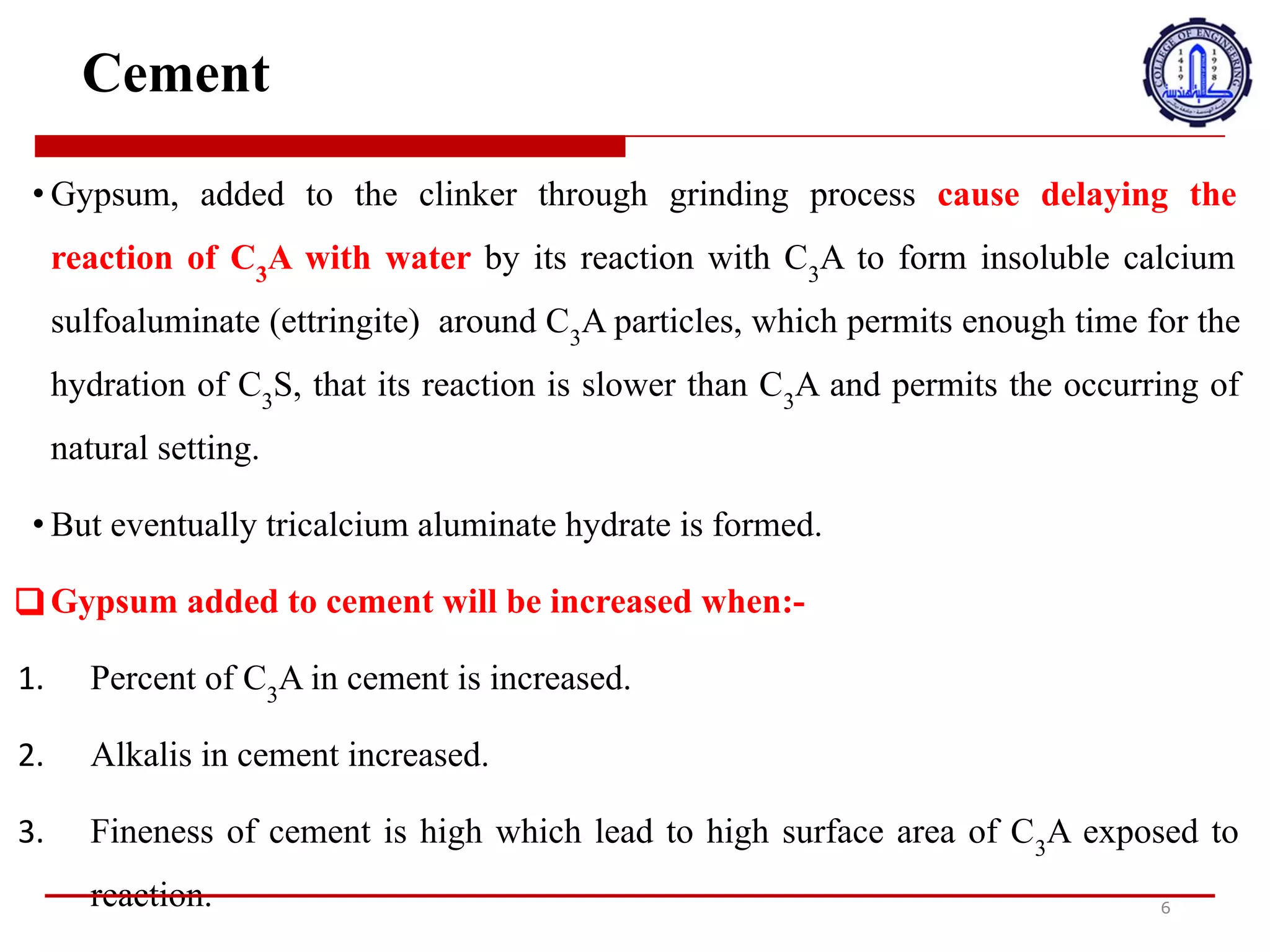
• Gypsum, added to the clinker through grinding process cause delaying the
reaction of C3
A with water by its reaction with C3
A to form insoluble calcium
sulfoaluminate (ettringite) around C3
A particles, which permits enough time for the
hydration of C3
S, that its reaction is slower than C3
A and permits the occurring of
natural setting.
• But eventually tricalcium aluminate hydrate is formed.
❑ Gypsum added to cement will be increased when:-
1. Percent of C3
A in cement is increased.
2. Alkalis in cement increased.
3. Fineness of cement is high which lead to high surface area of C3
A exposed to
reaction. 6
•
‫ي‬
‫ت‬
‫س‬
‫ب‬
‫ب‬
‫ا‬
‫ل‬
‫ج‬
‫ب‬
‫س‬
،
‫ا‬
‫ل‬
‫ذ‬
‫ي‬
‫ي‬
‫ض‬
‫ا‬
‫ف‬
‫إ‬
‫ل‬
‫ى‬
‫ا‬
‫ل‬
‫ك‬
‫ل‬
‫ن‬
‫ك‬
‫ر‬
‫م‬
‫ن‬
‫خ‬
9
‫ل‬
‫ع‬
‫م‬
‫ل‬
‫ي‬
‫ة‬
‫ا‬
‫ل‬
‫ط‬
‫ح‬
‫ن‬
،
‫ف‬
‫ي‬
‫ت‬
‫أ‬
‫خ‬
‫ي‬
‫ر‬
‫ت‬
‫ف‬
‫ا‬
‫ع‬
‫ل‬
C3A
‫م‬
‫ع‬
‫ا‬
H
‫ا‬
‫ء‬
‫م‬
‫ن‬
‫خ‬
9
‫ل‬
‫ت‬
‫ف‬
‫ا‬
‫ع‬
‫ل‬
‫ه‬
‫م‬
‫ع‬
C3A
‫ل‬
‫ت‬
‫ش‬
‫ك‬
‫ي‬
‫ل‬
‫س‬
‫ل‬
‫ف‬
‫و‬
‫ا‬
‫ل‬
‫ي‬
‫ن‬
‫و‬
‫م‬
‫ا‬
‫ل‬
‫ك‬
‫ا‬
‫ل‬
‫س‬
‫ي‬
‫و‬
‫م‬
‫غ‬
‫ي‬
‫ر‬
‫ا‬
‫ل‬
‫ق‬
‫ا‬
‫ب‬
‫ل‬
‫ل‬
‫ل‬
‫ذ‬
‫و‬
‫ب‬
‫ا‬
‫ن‬
)
ettringite
(
‫ح‬
‫و‬
‫ل‬
‫ج‬
‫ز‬
‫ي‬
‫ئ‬
‫ا‬
‫ت‬
C3A
،
‫م‬
‫م‬
‫ا‬
‫ي‬
‫س‬
‫م‬
‫ح‬
‫ب‬
‫و‬
‫ق‬
‫ت‬
‫ك‬
‫ا‬
‫ف‬
‫ل‬
‫ت‬
‫ر‬
‫ط‬
‫ي‬
‫ب‬
C3S
،
‫ب‬
‫ح‬
‫ي‬
‫ث‬
‫ي‬
‫ك‬
‫و‬
‫ن‬
‫ت‬
‫ف‬
‫ا‬
‫ع‬
‫ل‬
‫ه‬
‫أ‬
‫ب‬
‫ط‬
‫أ‬
‫م‬
‫ن‬
C3A
‫و‬
‫ي‬
‫س‬
‫م‬
‫ح‬
‫ب‬
‫ح‬
‫د‬
‫و‬
‫ث‬
‫ا‬
b
‫ع‬
‫د‬
‫ا‬
‫د‬
‫ا‬
‫ل‬
‫ط‬
‫ب‬
‫ي‬
‫ع‬
‫ي‬
.
•
‫و‬
‫ل‬
‫ك‬
‫ن‬
‫ف‬
‫ي‬
‫ا‬
‫ل‬
‫ن‬
‫ه‬
‫ا‬
‫ي‬
‫ة‬
‫ي‬
‫ت‬
‫م‬
‫ت‬
‫ش‬
‫ك‬
‫ي‬
‫ل‬
‫ه‬
‫ي‬
‫د‬
‫ر‬
‫ا‬
‫ت‬
‫أ‬
‫ل‬
‫و‬
‫م‬
‫ي‬
‫ن‬
‫ا‬
‫ت‬
‫ا‬
‫ل‬
‫ت‬
‫ر‬
‫ا‬
‫ي‬
‫ا‬
‫ل‬
‫ك‬
‫ا‬
‫ل‬
‫س‬
‫ي‬
‫و‬
‫م‬
.
‫س‬
‫ي‬
‫ت‬
‫م‬
‫ز‬
‫ي‬
‫ا‬
‫د‬
‫ة‬
‫ا‬
‫ل‬
‫ج‬
‫ب‬
‫س‬
‫ا‬
/
‫ض‬
‫ا‬
‫ف‬
‫إ‬
‫ل‬
‫ى‬
‫ا‬
4
‫س‬
‫م‬
‫ن‬
‫ت‬
‫ع‬
‫ن‬
‫د‬
‫م‬
‫ا‬
:
1
.
‫ي‬
‫ت‬
‫م‬
‫ز‬
‫ي‬
‫ا‬
‫د‬
‫ة‬
‫ا‬
‫ل‬
‫ن‬
‫س‬
‫ب‬
‫ة‬
‫ا‬
/
‫ئ‬
‫و‬
‫ي‬
‫ة‬
‫ل‬
C3A
‫ف‬
‫ي‬
‫ا‬
4
‫س‬
‫م‬
‫ن‬
‫ت‬
.
2
.
‫ز‬
‫ا‬
‫د‬
‫ت‬
‫ا‬
‫ل‬
‫ق‬
‫ل‬
‫و‬
‫ي‬
‫ا‬
‫ت‬
‫ف‬
‫ي‬
‫ا‬
4
‫س‬
‫م‬
‫ن‬
‫ت‬
.
3
.
‫ص‬
‫ف‬
‫ا‬
‫ء‬
‫ا‬
4
‫س‬
‫م‬
‫ن‬
‫ت‬
‫م‬
‫ر‬
‫ت‬
‫ف‬
‫ع‬
‫م‬
‫م‬
‫ا‬
‫ي‬
‫ؤ‬
‫د‬
‫ي‬
‫إ‬
‫ل‬
‫ى‬
‫ت‬
‫ع‬
‫ر‬
‫ض‬
‫م‬
‫س‬
‫ا‬
‫ح‬
‫ة‬
‫س‬
‫ط‬
‫ح‬
‫ع‬
‫ا‬
‫ل‬
‫ي‬
‫ة‬
‫م‬
‫ن‬
C3A
‫ر‬
‫د‬
‫ف‬
‫ع‬
‫ل‬
.
Cement
❑ Why the rate of hydration decreases continuously.
1. Accumulation of hydration products around the unhydrated cement grains
which lead to prevent water from channeling to them.
2. Reduction of the amount of water either due to chemical reaction or
evaporation.
3. Reduction of the amount of cement due to reaction.
7
!
‫ا‬
‫ذ‬
‫ا‬
‫ي‬
‫ن‬
‫خ‬
‫ف‬
‫ض‬
‫م‬
‫ع‬
‫د‬
‫ل‬
‫ا‬
‫ل‬
‫ت‬
‫ر‬
‫ط‬
‫ي‬
‫ب‬
‫ب‬
‫ا‬
‫س‬
‫ت‬
‫م‬
‫ر‬
‫ا‬
‫ر‬
‫؟‬
1
.
‫ت‬
‫ر‬
‫ا‬
‫ك‬
‫م‬
‫م‬
‫ن‬
‫ت‬
‫ج‬
‫ا‬
‫ت‬
‫ا‬
‫ل‬
‫ت‬
‫ر‬
‫ط‬
‫ي‬
‫ب‬
‫ح‬
‫و‬
‫ل‬
‫ح‬
‫ب‬
‫ي‬
‫ب‬
‫ا‬
‫ت‬
‫ا‬
A
‫س‬
‫م‬
‫ن‬
‫ت‬
‫غ‬
‫ي‬
‫ر‬
‫ا‬
!
‫ا‬
‫ئ‬
‫ي‬
‫ة‬
‫م‬
‫م‬
‫ا‬
‫ي‬
‫ؤ‬
‫د‬
‫ي‬
‫إ‬
‫ل‬
‫ى‬
‫م‬
‫ن‬
‫ع‬
‫ا‬
!
‫ي‬
‫ا‬
‫ه‬
‫م‬
‫ن‬
‫ا‬
‫ل‬
‫ت‬
‫و‬
‫ج‬
‫ي‬
‫ه‬
‫إ‬
‫ل‬
‫ي‬
‫ه‬
‫ا‬
.
2
.
‫ت‬
‫ق‬
‫ل‬
‫ي‬
‫ل‬
‫ك‬
‫م‬
‫ي‬
‫ة‬
‫ا‬
!
‫ا‬
‫ء‬
‫إ‬
‫م‬
‫ا‬
‫ب‬
‫س‬
‫ب‬
‫ب‬
‫ا‬
‫ل‬
‫ت‬
‫ف‬
‫ا‬
‫ع‬
‫ل‬
‫ا‬
‫ل‬
‫ك‬
‫ي‬
‫م‬
‫ي‬
‫ا‬
‫ئ‬
‫ي‬
‫أ‬
‫و‬
‫ا‬
‫ل‬
‫ت‬
‫ب‬
‫خ‬
‫ر‬
.
3
.
‫ت‬
‫ق‬
‫ل‬
‫ي‬
‫ل‬
‫ك‬
‫م‬
‫ي‬
‫ة‬
‫ا‬
A
‫س‬
‫م‬
‫ن‬
‫ت‬
‫ب‬
‫س‬
‫ب‬
‫ب‬
‫ا‬
‫ل‬
‫ت‬
‫ف‬
‫ا‬
‫ع‬
‫ل‬
.
Cement
❑ Influence of the compounds composition on properties of cement
• C3
S and C2
S are the most important compounds responsible for strength .
• C3
S: Contributes most to the strength development during the first four weeks.
• C2
S: Influences the gain in strength from 4-weeks onwards. At the age about one
year the two compounds contribute approximately equally to ultimate strength.
• C3
A: contributes to the strength of the cement paste at one to three days , and
possibility longer , but may caucuses retrogression at an advanced age
particularly in cements with high C3
A or (C3
A + C4
AF) content.
• C4
AF: the development of strength of cement is still not clear , but there certainly
is no appreciable positive contribution.
8
‫ت‬
‫أ‬
‫ث‬
‫ي‬
‫ر‬
‫ت‬
‫ك‬
‫و‬
‫ي‬
‫ن‬
‫ا‬
+
‫ر‬
‫ك‬
‫ب‬
‫ا‬
‫ت‬
‫ع‬
‫ل‬
‫ى‬
‫خ‬
‫ص‬
‫ا‬
‫ئ‬
‫ص‬
‫ا‬
7
‫س‬
‫م‬
‫ن‬
‫ت‬
•
C3S
‫و‬
C2S
‫ه‬
‫م‬
‫ا‬
‫أ‬
‫ه‬
‫م‬
‫ا‬
+
‫ر‬
‫ك‬
‫ب‬
‫ا‬
‫ت‬
‫ا‬
+
‫س‬
‫ؤ‬
‫و‬
‫ل‬
‫ة‬
‫ع‬
‫ن‬
‫ا‬
‫ل‬
‫ق‬
‫و‬
‫ة‬
.
•
C3S
:
‫ي‬
‫س‬
‫ا‬
‫ه‬
‫م‬
‫أ‬
‫ك‬
‫ث‬
‫ر‬
‫ف‬
‫ي‬
‫ت‬
‫ط‬
‫و‬
‫ي‬
‫ر‬
‫ا‬
‫ل‬
‫ق‬
‫و‬
‫ة‬
‫خ‬
J
‫ل‬
‫ا‬
7
‫س‬
‫ا‬
‫ب‬
‫ي‬
‫ع‬
‫ا‬
7
‫ر‬
‫ب‬
‫ع‬
‫ة‬
‫ا‬
7
‫و‬
‫ل‬
‫ى‬
.
•
C2S
:
‫ي‬
‫ؤ‬
‫ث‬
‫ر‬
‫ع‬
‫ل‬
‫ى‬
‫ا‬
‫ك‬
‫ت‬
‫س‬
‫ا‬
‫ب‬
‫ا‬
‫ل‬
‫ق‬
‫و‬
‫ة‬
‫م‬
‫ن‬
4
‫أ‬
‫س‬
‫ا‬
‫ب‬
‫ي‬
‫ع‬
‫ف‬
‫ص‬
‫ا‬
‫ع‬
‫د‬
‫ا‬
.
‫ف‬
‫ي‬
‫س‬
‫ن‬
‫ع‬
‫ا‬
‫م‬
‫و‬
‫ا‬
‫ح‬
‫د‬
‫ت‬
‫ق‬
‫ر‬
‫ي‬
‫ب‬
‫ا‬
،
‫ي‬
‫س‬
‫ا‬
‫ه‬
‫م‬
‫ا‬
+
‫ر‬
‫ك‬
‫ب‬
‫ا‬
‫ن‬
‫ب‬
‫ا‬
‫ل‬
‫ت‬
‫س‬
‫ا‬
‫و‬
‫ي‬
‫ت‬
‫ق‬
‫ر‬
‫ي‬
‫ب‬
‫ا‬
‫ف‬
‫ي‬
‫ا‬
‫ل‬
‫ق‬
‫و‬
‫ة‬
‫ا‬
‫ل‬
‫ق‬
‫ص‬
‫و‬
‫ى‬
.
•
C3A
:
‫ي‬
‫س‬
‫ا‬
‫ه‬
‫م‬
‫ف‬
‫ي‬
‫ق‬
‫و‬
‫ة‬
‫م‬
‫ع‬
‫ج‬
‫و‬
‫ن‬
‫ا‬
0
‫س‬
‫م‬
‫ن‬
‫ت‬
‫ف‬
‫ي‬
‫ي‬
‫و‬
‫م‬
‫إ‬
‫ل‬
‫ى‬
‫ث‬
:
‫ث‬
‫ة‬
‫أ‬
‫ي‬
‫ا‬
‫م‬
،
‫و‬
‫إ‬
‫م‬
‫ك‬
‫ا‬
‫ن‬
‫ي‬
‫ة‬
‫أ‬
‫ط‬
‫و‬
‫ل‬
،
‫و‬
‫ل‬
‫ك‬
‫ن‬
‫ه‬
‫ق‬
‫د‬
‫ي‬
‫س‬
‫ب‬
‫ب‬
‫ا‬
‫ل‬
‫ت‬
‫ر‬
‫ا‬
‫ج‬
‫ع‬
‫ف‬
‫ي‬
‫س‬
‫ن‬
‫م‬
‫ت‬
‫ق‬
‫د‬
‫م‬
‫ة‬
‫خ‬
‫ا‬
‫ص‬
‫ة‬
‫ف‬
‫ي‬
‫ا‬
0
‫س‬
‫م‬
‫ن‬
‫ت‬
‫ذ‬
‫ي‬
‫ا‬
R
‫ح‬
‫ت‬
‫و‬
‫ى‬
‫ا‬
‫ل‬
‫ع‬
‫ا‬
‫ل‬
‫ي‬
C3A
‫أ‬
‫و‬
)
C3A + C4AF
(
.
•
C4AF
:
U
‫ي‬
‫ز‬
‫ا‬
‫ل‬
‫ت‬
‫ط‬
‫و‬
‫ي‬
‫ر‬
‫ق‬
‫و‬
‫ة‬
‫ا‬
0
‫س‬
‫م‬
‫ن‬
‫ت‬
‫غ‬
‫ي‬
‫ر‬
‫و‬
‫ا‬
‫ض‬
‫ح‬
،
‫و‬
‫ل‬
‫ك‬
‫ن‬
‫ب‬
‫ا‬
‫ل‬
‫ت‬
‫أ‬
‫ك‬
‫ي‬
‫د‬
U
‫ت‬
‫و‬
‫ج‬
‫د‬
‫م‬
‫س‬
‫ا‬
‫ه‬
‫م‬
‫ة‬
‫إ‬
‫ي‬
‫ج‬
‫ا‬
‫ب‬
‫ي‬
‫ة‬
‫م‬
‫ل‬
‫م‬
‫و‬
‫س‬
‫ة‬
.
Cement
C4
AF C3
A C2
S C3
S Property
Slow Fast Slow Medium Rate of reaction
Small Large Small Medium
Heat liberated per unit
compound
Poor Good Poor Good At early age strength
Poor Poor Good Good At later age strength
9
❑ Main characteristics of the major compounds of Portland cement
Cement
10
❑ Effect of alkalis on properties of cement
• The effects of the minor compounds on the strength of cement paste are
complex and not yet fully established. Tests on the influence of alkalis have
shown that the increase in strength beyond the age of 28 days is strongly
affected by the alkalis content: the greater the amount of alkalis present the
lower the gain in strength.
‫ت‬
‫أ‬
‫ث‬
‫ي‬
‫ر‬
‫ا‬
‫ل‬
‫ق‬
‫ل‬
‫و‬
‫ي‬
‫ا‬
‫ت‬
‫ع‬
‫ل‬
‫ى‬
‫خ‬
‫ص‬
‫ا‬
‫ئ‬
‫ص‬
‫ا‬
4
‫س‬
‫م‬
‫ن‬
‫ت‬
•
‫آ‬
‫ث‬
‫ا‬
‫ر‬
‫ا‬
;
‫ر‬
‫ك‬
‫ب‬
‫ا‬
‫ت‬
‫ا‬
‫ل‬
‫ث‬
‫ا‬
‫ن‬
‫و‬
‫ي‬
‫ة‬
‫ع‬
‫ل‬
‫ى‬
‫ق‬
‫و‬
‫ة‬
‫ع‬
‫ج‬
‫ي‬
‫ن‬
‫ة‬
‫ا‬
4
‫س‬
‫م‬
‫ن‬
‫ت‬
‫م‬
‫ع‬
‫ق‬
‫د‬
‫ة‬
‫و‬
‫ل‬
‫م‬
‫ي‬
‫ت‬
‫م‬
‫ت‬
‫أ‬
‫س‬
‫ي‬
‫س‬
‫ه‬
‫ا‬
‫ب‬
‫ا‬
‫ل‬
‫ك‬
‫ا‬
‫م‬
‫ل‬
‫ب‬
‫ع‬
‫د‬
.
‫أ‬
‫ظ‬
‫ه‬
‫ر‬
‫ت‬
‫ا‬
Q
‫خ‬
‫ت‬
‫ب‬
‫ا‬
‫ر‬
‫ا‬
‫ت‬
‫ع‬
‫ل‬
‫ى‬
‫ت‬
‫أ‬
‫ث‬
‫ي‬
‫ر‬
‫ا‬
‫ل‬
‫ق‬
‫ل‬
‫و‬
‫ي‬
‫ا‬
‫ت‬
‫أ‬
‫ن‬
‫ا‬
‫ل‬
‫ز‬
‫ي‬
‫ا‬
‫د‬
‫ة‬
‫ف‬
‫ي‬
‫ا‬
‫ل‬
‫ق‬
‫و‬
‫ة‬
‫ب‬
‫ع‬
‫د‬
‫س‬
‫ن‬
28
‫ي‬
‫و‬
‫م‬
‫ا‬
‫ت‬
‫ت‬
‫أ‬
‫ث‬
‫ر‬
‫ب‬
‫ش‬
‫د‬
‫ة‬
‫ب‬
‫م‬
‫ح‬
‫ت‬
‫و‬
‫ى‬
‫ا‬
‫ل‬
‫ق‬
‫ل‬
‫و‬
‫ي‬
‫ا‬
‫ت‬
:
‫ك‬
‫ل‬
‫م‬
‫ا‬
‫ز‬
‫ا‬
‫د‬
‫ت‬
‫ك‬
‫م‬
‫ي‬
‫ة‬
‫ا‬
‫ل‬
‫ق‬
‫ل‬
‫و‬
‫ي‬
‫ا‬
‫ت‬
‫ا‬
;
‫و‬
‫ج‬
‫و‬
‫د‬
‫ة‬
‫ك‬
‫ل‬
‫م‬
‫ا‬
‫ا‬
‫ن‬
‫خ‬
‫ف‬
‫ض‬
‫ا‬
‫ل‬
‫ك‬
‫س‬
‫ب‬
‫ف‬
‫ي‬
‫ا‬
‫ل‬
‫ق‬
‫و‬
‫ة‬
.
Cement
11
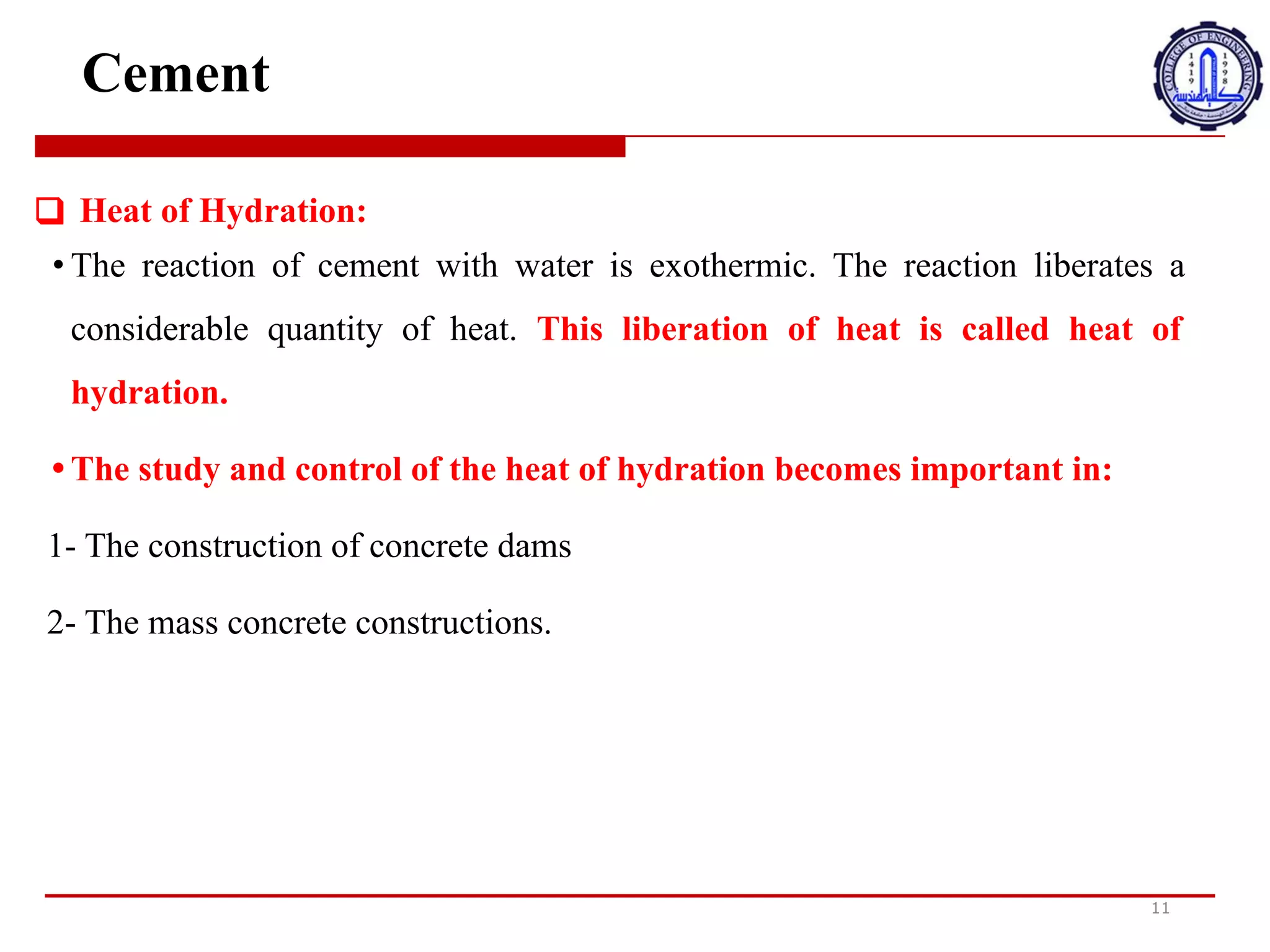
❑ Heat of Hydration:
• The reaction of cement with water is exothermic. The reaction liberates a
considerable quantity of heat. This liberation of heat is called heat of
hydration.
• The study and control of the heat of hydration becomes important in:
1- The construction of concrete dams
2- The mass concrete constructions.
‫ح‬
‫ر‬
‫ا‬
‫ر‬
‫ة‬
‫ا‬
‫ل‬
‫ت‬
‫ر‬
‫ط‬
‫ي‬
‫ب‬
:
•
‫ت‬
‫ف‬
‫ا‬
‫ع‬
‫ل‬
‫ا‬
0
‫س‬
‫م‬
‫ن‬
‫ت‬
‫م‬
‫ع‬
‫ا‬
7
‫ا‬
‫ء‬
‫ط‬
‫ا‬
‫ر‬
‫د‬
‫ل‬
‫ل‬
‫ح‬
‫ر‬
‫ا‬
‫ر‬
‫ة‬
.
‫ي‬
‫ح‬
‫ر‬
‫ر‬
‫ا‬
‫ل‬
‫ت‬
‫ف‬
‫ا‬
‫ع‬
‫ل‬
‫ك‬
‫م‬
‫ي‬
‫ة‬
‫ك‬
‫ب‬
‫ي‬
‫ر‬
‫ة‬
‫م‬
‫ن‬
‫ا‬
‫ل‬
‫ح‬
‫ر‬
‫ا‬
‫ر‬
‫ة‬
.
‫ي‬
‫س‬
‫م‬
‫ى‬
‫ه‬
‫ذ‬
‫ا‬
‫ا‬
‫ل‬
‫ت‬
‫ح‬
‫ر‬
‫ر‬
‫م‬
‫ن‬
‫ا‬
‫ل‬
‫ح‬
‫ر‬
‫ا‬
‫ر‬
‫ة‬
‫ح‬
‫ر‬
‫ا‬
‫ر‬
‫ة‬
‫ا‬
‫ل‬
‫ت‬
‫ر‬
‫ط‬
‫ي‬
‫ب‬
.
•
‫ت‬
‫ص‬
‫ب‬
‫ح‬
‫د‬
‫ر‬
‫ا‬
‫س‬
‫ة‬
‫ح‬
‫ر‬
‫ا‬
‫ر‬
‫ة‬
‫ا‬
‫ل‬
‫ت‬
‫ر‬
‫ط‬
‫ي‬
‫ب‬
‫و‬
‫ا‬
‫ل‬
‫ت‬
‫ح‬
‫ك‬
‫م‬
‫ف‬
‫ي‬
‫ه‬
‫ا‬
‫م‬
‫ه‬
‫م‬
‫ة‬
‫ف‬
‫ي‬
:
1
-
‫ب‬
‫ن‬
‫ا‬
‫ء‬
‫ا‬
‫ل‬
‫س‬
‫د‬
‫و‬
‫د‬
‫ا‬
‫ل‬
‫خ‬
‫ر‬
‫س‬
‫ا‬
‫ن‬
‫ي‬
‫ة‬
2
-
‫ا‬
C
‫ن‬
‫ش‬
‫ا‬
‫ء‬
‫ا‬
‫ت‬
‫ا‬
‫ل‬
‫خ‬
‫ر‬
‫س‬
‫ا‬
‫ن‬
‫ي‬
‫ة‬
‫ا‬
‫ل‬
‫ج‬
‫م‬
‫ا‬
‫ع‬
‫ي‬
‫ة‬
.
Cement
12
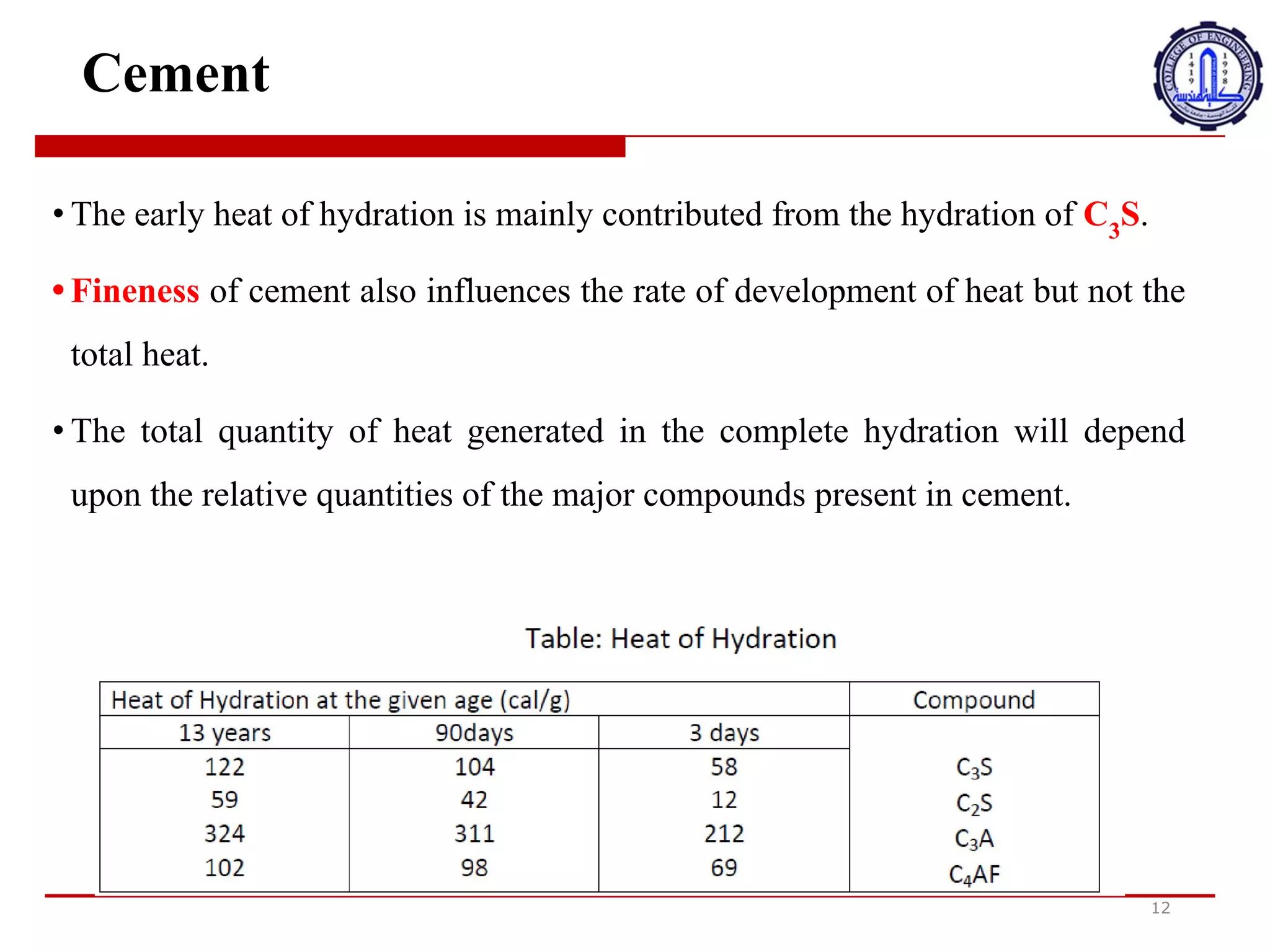
• The early heat of hydration is mainly contributed from the hydration of C3
S.
• Fineness of cement also influences the rate of development of heat but not the
total heat.
• The total quantity of heat generated in the complete hydration will depend
upon the relative quantities of the major compounds present in cement.
•
‫ت‬
‫س‬
‫ا‬
‫ه‬
‫م‬
‫ا‬
‫ل‬
‫ح‬
‫ر‬
‫ا‬
‫ر‬
‫ة‬
‫ا‬
,
‫ب‬
‫ك‬
‫ر‬
‫ة‬
‫ل‬
‫ل‬
‫ت‬
‫ر‬
‫ط‬
‫ي‬
‫ب‬
‫ب‬
‫ش‬
‫ك‬
‫ل‬
‫ر‬
‫ئ‬
‫ي‬
‫س‬
‫ي‬
‫م‬
‫ن‬
‫ت‬
‫ر‬
‫ط‬
‫ي‬
‫ب‬
C3S
.
•
‫ت‬
‫ؤ‬
‫ث‬
‫ر‬
‫ص‬
‫ف‬
‫ا‬
‫ء‬
‫ا‬
@
‫س‬
‫م‬
‫ن‬
‫ت‬
‫أ‬
‫ي‬
‫ض‬
‫ا‬
‫ع‬
‫ل‬
‫ى‬
‫م‬
‫ع‬
‫د‬
‫ل‬
‫ت‬
‫ط‬
‫و‬
‫ر‬
‫ا‬
‫ل‬
‫ح‬
‫ر‬
‫ا‬
‫ر‬
‫ة‬
‫و‬
‫ل‬
‫ك‬
‫ن‬
‫ل‬
‫ي‬
‫س‬
‫ع‬
‫ل‬
‫ى‬
‫ا‬
‫ل‬
‫ح‬
‫ر‬
‫ا‬
‫ر‬
‫ة‬
‫ا‬
‫ل‬
‫ك‬
‫ل‬
‫ي‬
‫ة‬
.
•
‫ت‬
‫ع‬
‫ت‬
‫م‬
‫د‬
‫ا‬
‫ل‬
‫ك‬
‫م‬
‫ي‬
‫ة‬
‫ا‬
+
‫ج‬
‫م‬
‫ا‬
‫ل‬
‫ي‬
‫ة‬
‫ل‬
‫ل‬
‫ح‬
‫ر‬
‫ا‬
‫ر‬
‫ة‬
‫ا‬
3
‫ت‬
‫و‬
‫ل‬
‫د‬
‫ة‬
‫ف‬
‫ي‬
‫ا‬
‫ل‬
‫ت‬
‫ر‬
‫ط‬
‫ي‬
‫ب‬
‫ا‬
‫ل‬
‫ك‬
‫ا‬
‫م‬
‫ل‬
‫ع‬
‫ل‬
‫ى‬
‫ا‬
‫ل‬
‫ك‬
‫م‬
‫ي‬
‫ا‬
‫ت‬
‫ا‬
‫ل‬
‫ن‬
‫س‬
‫ب‬
‫ي‬
‫ة‬
‫ل‬
‫ل‬
‫م‬
‫ر‬
‫ك‬
‫ب‬
‫ا‬
‫ت‬
‫ا‬
‫ل‬
‫ر‬
‫ئ‬
‫ي‬
‫س‬
‫ي‬
‫ة‬
‫ا‬
3
‫و‬
‫ج‬
‫و‬
‫د‬
‫ة‬
‫ف‬
‫ي‬
‫ا‬
D
‫س‬
‫م‬
‫ن‬
‫ت‬
.
Cement
13
❑ Setting: refers to a change from a fluid to a rigid stage
• Cement + water → cement paste → lose its plasticity gradually→ when it lose
its plasticity completely → setting occurs.
• The stages of setting include:
1. Initial setting
2. Final setting
• It is important to distinguish setting from hardening, which refers to the gain of
strength of a set cement paste.
• The two first to react are C3
A and C3
S.
• The setting time of cement decreases with a rise in temperature.
‫ا‬
"
‫ع‬
‫د‬
‫ا‬
‫د‬
:
‫ي‬
‫ش‬
‫ي‬
‫ر‬
‫إ‬
‫ل‬
‫ى‬
‫ا‬
‫ل‬
‫ت‬
‫غ‬
‫ي‬
‫ي‬
‫ر‬
‫م‬
‫ن‬
‫س‬
‫ا‬
‫ئ‬
‫ل‬
‫إ‬
‫ل‬
‫ى‬
‫م‬
‫ر‬
‫ح‬
‫ل‬
‫ة‬
‫ص‬
‫ل‬
‫ب‬
‫ة‬
•
‫ا‬
:
‫س‬
‫م‬
‫ن‬
‫ت‬
+
‫ا‬
>
‫ا‬
‫ء‬
←
‫م‬
‫ع‬
‫ج‬
‫و‬
‫ن‬
‫ا‬
:
‫س‬
‫م‬
‫ن‬
‫ت‬
←
‫ي‬
‫ف‬
‫ق‬
‫د‬
‫ا‬
‫ل‬
‫ل‬
‫د‬
‫و‬
‫ن‬
‫ة‬
‫ت‬
‫د‬
‫ر‬
‫ي‬
‫ج‬
‫ي‬
‫ا‬
←
‫ع‬
‫ن‬
‫د‬
‫م‬
‫ا‬
‫ي‬
‫ف‬
‫ق‬
‫د‬
‫ا‬
‫ل‬
‫ل‬
‫د‬
‫و‬
‫ن‬
‫ة‬
‫ت‬
‫م‬
‫ا‬
‫م‬
‫ا‬
→
‫ي‬
‫ح‬
‫د‬
‫ث‬
‫ا‬
"
‫ع‬
‫د‬
‫ا‬
‫د‬
.
•
‫ت‬
‫ش‬
‫م‬
‫ل‬
‫م‬
‫ر‬
‫ا‬
‫ح‬
‫ل‬
‫ا‬
)
‫ع‬
‫د‬
‫ا‬
‫د‬
‫م‬
‫ا‬
‫ي‬
‫ل‬
‫ي‬
:
1
.
‫ا‬
)
‫ع‬
‫د‬
‫ا‬
‫د‬
‫ا‬
1
‫و‬
‫ل‬
‫ي‬
2
.
‫ا‬
)
‫ع‬
‫د‬
‫ا‬
‫د‬
‫ا‬
‫ل‬
‫ن‬
‫ه‬
‫ا‬
‫ئ‬
‫ي‬
•
‫م‬
‫ن‬
‫ا‬
$
‫ه‬
‫م‬
‫ا‬
‫ل‬
‫ت‬
‫م‬
‫ي‬
‫ي‬
‫ز‬
‫ب‬
-
‫ا‬
.
‫ع‬
‫د‬
‫ا‬
‫د‬
‫و‬
‫ا‬
‫ل‬
‫ت‬
‫ص‬
‫ل‬
‫ب‬
،
‫و‬
‫ا‬
‫ل‬
‫ذ‬
‫ي‬
‫ي‬
‫ش‬
‫ي‬
‫ر‬
‫إ‬
‫ل‬
‫ى‬
‫ا‬
‫ك‬
‫ت‬
‫س‬
‫ا‬
‫ب‬
‫ق‬
‫و‬
‫ة‬
‫م‬
‫ع‬
‫ج‬
‫و‬
‫ن‬
‫ا‬
H
‫س‬
‫م‬
‫ن‬
‫ت‬
‫ا‬
$
‫ح‬
‫د‬
‫د‬
.
•
‫أ‬
‫و‬
‫ل‬
‫م‬
‫ن‬
‫ي‬
‫ت‬
‫ف‬
‫ا‬
‫ع‬
‫ل‬
‫ه‬
‫م‬
‫ا‬
C3A
‫و‬
C3S
.
•
‫ي‬
‫ن‬
‫خ‬
‫ف‬
‫ض‬
‫و‬
‫ق‬
‫ت‬
‫إ‬
‫ع‬
‫د‬
‫ا‬
‫د‬
‫ا‬
H
‫س‬
‫م‬
‫ن‬
‫ت‬
‫م‬
‫ع‬
‫ا‬
‫ر‬
‫ت‬
‫ف‬
‫ا‬
‫ع‬
‫د‬
‫ر‬
‫ج‬
‫ة‬
‫ا‬
‫ل‬
‫ح‬
‫ر‬
‫ا‬
‫ر‬
‫ة‬
.
Cement
14
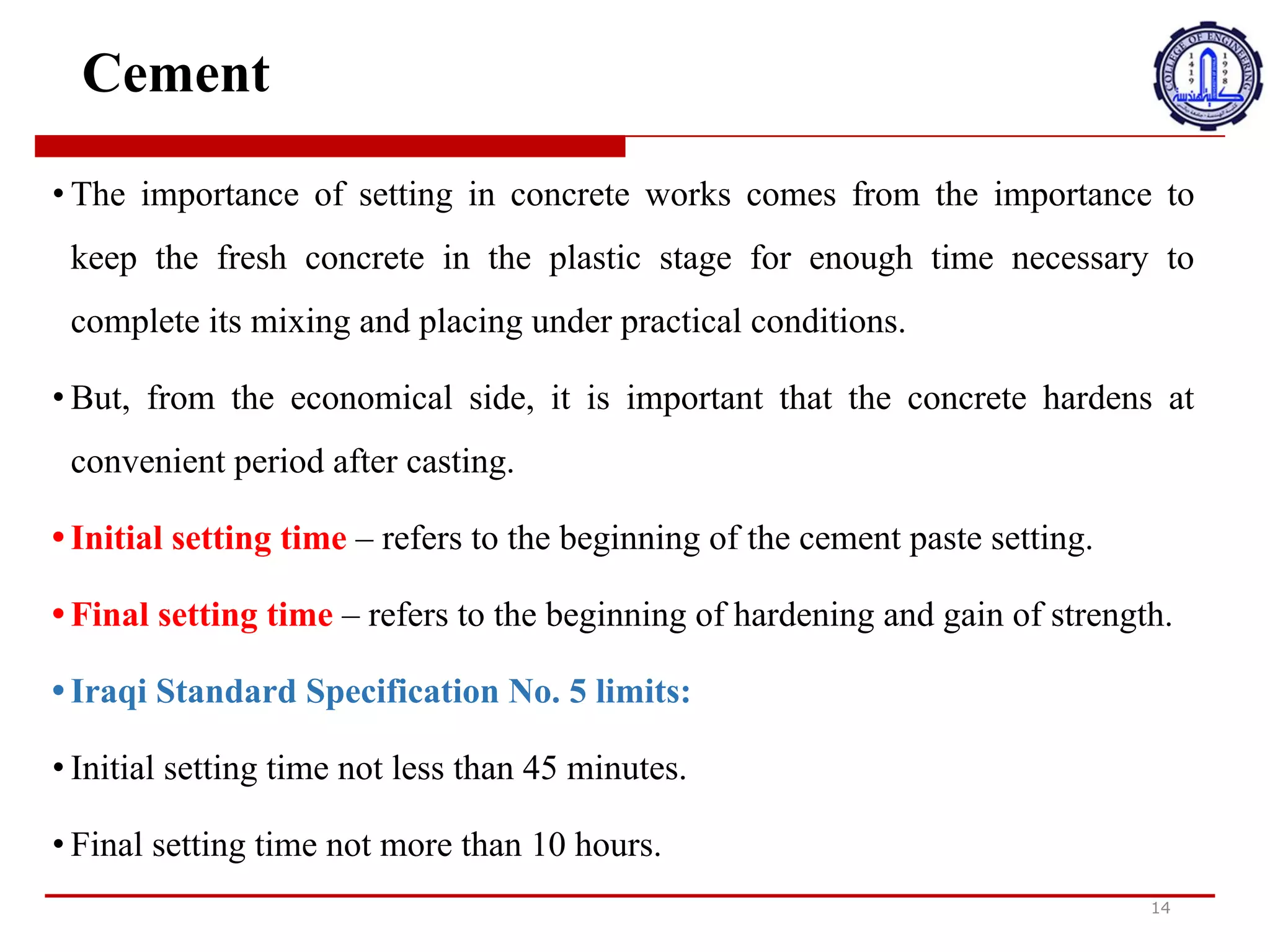
• The importance of setting in concrete works comes from the importance to
keep the fresh concrete in the plastic stage for enough time necessary to
complete its mixing and placing under practical conditions.
• But, from the economical side, it is important that the concrete hardens at
convenient period after casting.
• Initial setting time – refers to the beginning of the cement paste setting.
• Final setting time – refers to the beginning of hardening and gain of strength.
• Iraqi Standard Specification No. 5 limits:
• Initial setting time not less than 45 minutes.
• Final setting time not more than 10 hours.
•
‫ت‬
‫أ‬
‫ت‬
‫ي‬
‫أ‬
‫ه‬
‫م‬
‫ي‬
‫ة‬
‫ا‬
*
‫ع‬
‫د‬
‫ا‬
‫د‬
‫ف‬
‫ي‬
‫ا‬
/
‫ع‬
‫م‬
‫ا‬
‫ل‬
‫ا‬
‫ل‬
‫خ‬
‫ر‬
‫س‬
‫ا‬
‫ن‬
‫ي‬
‫ة‬
‫م‬
‫ن‬
‫أ‬
‫ه‬
‫م‬
‫ي‬
‫ة‬
‫ا‬
‫ل‬
‫ح‬
‫ف‬
‫ا‬
‫ظ‬
‫ع‬
‫ل‬
‫ى‬
‫ا‬
‫ل‬
‫خ‬
‫ر‬
‫س‬
‫ا‬
‫ن‬
‫ة‬
‫ا‬
‫ل‬
‫ط‬
‫ا‬
‫ز‬
‫ج‬
‫ة‬
‫ف‬
‫ي‬
‫ا‬
A
‫ر‬
‫ح‬
‫ل‬
‫ة‬
‫ا‬
‫ل‬
‫ب‬
D
‫س‬
‫ت‬
‫ي‬
‫ك‬
‫ي‬
‫ة‬
‫ل‬
‫ف‬
‫ت‬
‫ر‬
‫ة‬
‫ك‬
‫ا‬
‫ف‬
‫ي‬
‫ة‬
‫م‬
‫ن‬
‫ا‬
‫ل‬
‫و‬
‫ق‬
‫ت‬
‫ا‬
‫ل‬
D
‫ز‬
‫م‬
*
‫ك‬
‫م‬
‫ا‬
‫ل‬
‫خ‬
‫ل‬
‫ط‬
‫ه‬
‫ا‬
‫و‬
‫و‬
‫ض‬
‫ع‬
‫ه‬
‫ا‬
‫ف‬
‫ي‬
‫ظ‬
‫ل‬
‫ظ‬
‫ر‬
‫و‬
‫ف‬
‫ع‬
‫م‬
‫ل‬
‫ي‬
‫ة‬
.
•
‫و‬
‫ل‬
‫ك‬
‫ن‬
،
‫م‬
‫ن‬
‫ا‬
‫ل‬
‫ج‬
‫ا‬
‫ن‬
‫ب‬
‫ا‬
,
‫ق‬
‫ت‬
‫ص‬
‫ا‬
‫د‬
‫ي‬
،
‫م‬
‫ن‬
‫ا‬
2
‫ه‬
‫م‬
‫أ‬
‫ن‬
‫ت‬
‫ص‬
‫ل‬
‫ب‬
‫ا‬
‫ل‬
‫خ‬
‫ر‬
‫س‬
‫ا‬
‫ن‬
‫ة‬
‫ف‬
‫ي‬
‫ف‬
‫ت‬
‫ر‬
‫ة‬
‫م‬
‫ن‬
‫ا‬
‫س‬
‫ب‬
‫ة‬
‫ب‬
‫ع‬
‫د‬
‫ا‬
‫ل‬
‫ص‬
‫ب‬
.
•
‫و‬
‫ق‬
‫ت‬
‫ا‬
%
‫ع‬
‫د‬
‫ا‬
‫د‬
‫ا‬
)
‫و‬
‫ل‬
‫ي‬
-
‫ي‬
‫ش‬
‫ي‬
‫ر‬
‫إ‬
‫ل‬
‫ى‬
‫ب‬
‫د‬
‫ا‬
‫ي‬
‫ة‬
‫إ‬
‫ع‬
‫د‬
‫ا‬
‫د‬
‫م‬
‫ع‬
‫ج‬
‫و‬
‫ن‬
‫ا‬
)
‫س‬
‫م‬
‫ن‬
‫ت‬
.
•
‫و‬
‫ق‬
‫ت‬
‫ا‬
%
‫ع‬
‫د‬
‫ا‬
‫د‬
‫ا‬
‫ل‬
‫ن‬
‫ه‬
‫ا‬
‫ئ‬
‫ي‬
-
‫ي‬
‫ش‬
‫ي‬
‫ر‬
‫إ‬
‫ل‬
‫ى‬
‫ب‬
‫د‬
‫ا‬
‫ي‬
‫ة‬
‫ا‬
‫ل‬
‫ت‬
‫ص‬
‫ل‬
‫ب‬
‫و‬
‫ا‬
‫ك‬
‫ت‬
‫س‬
‫ا‬
‫ب‬
‫ا‬
‫ل‬
‫ق‬
‫و‬
‫ة‬
.
•
‫ا‬
H
‫و‬
‫ا‬
‫ص‬
‫ف‬
‫ة‬
‫ا‬
‫ل‬
‫ق‬
‫ي‬
‫ا‬
‫س‬
‫ي‬
‫ة‬
‫ا‬
‫ل‬
‫ع‬
‫ر‬
‫ا‬
‫ق‬
‫ي‬
‫ة‬
‫ر‬
‫ق‬
‫م‬
5
‫ح‬
‫د‬
‫و‬
‫د‬
:
•
‫و‬
‫ق‬
‫ت‬
‫ا‬
%
‫ع‬
‫د‬
‫ا‬
‫د‬
‫ا‬
)
‫و‬
‫ل‬
‫ي‬
N
‫ي‬
‫ق‬
‫ل‬
‫ع‬
‫ن‬
45
‫د‬
‫ق‬
‫ي‬
‫ق‬
‫ة‬
.
•
‫و‬
‫ق‬
‫ت‬
‫ا‬
%
‫ع‬
‫د‬
‫ا‬
‫د‬
‫ا‬
‫ل‬
‫ن‬
‫ه‬
‫ا‬
‫ئ‬
‫ي‬
N
‫ي‬
‫ز‬
‫ي‬
‫د‬
‫ع‬
‫ن‬
10
‫س‬
‫ا‬
‫ع‬
‫ا‬
‫ت‬
.
Cement
15
❑ Factors affecting the setting
1. Water/cement (w/c) ratio – The setting time of cement increases with the
increase of w/c ratio.
2. Temperature and relative humidity - The setting time of cement decreases
with a rise in temperature and decrease of relative humidity.
3. Fineness of cement - The setting time of cement decreases with a rise in
fineness of cement.
4. Chemical composition
‫ا‬
‫ل‬
‫ع‬
‫و‬
‫ا‬
‫م‬
‫ل‬
‫ا‬
‫ل‬
‫ت‬
‫ي‬
‫ت‬
‫ؤ‬
‫ث‬
‫ر‬
‫ع‬
‫ل‬
‫ى‬
‫ا‬
0
‫ع‬
‫د‬
‫ا‬
‫د‬
1
.
‫ن‬
‫س‬
‫ب‬
‫ة‬
‫ا‬
7
‫ا‬
‫ء‬
/
‫ا‬
:
‫س‬
‫م‬
‫ن‬
‫ت‬
)
w/c
(
-
‫ي‬
‫ز‬
‫د‬
‫ا‬
‫د‬
‫و‬
‫ق‬
‫ت‬
‫ت‬
‫ح‬
‫د‬
‫ي‬
‫د‬
‫ا‬
:
‫س‬
‫م‬
‫ن‬
‫ت‬
‫م‬
‫ع‬
‫ز‬
‫ي‬
‫ا‬
‫د‬
‫ة‬
‫ن‬
‫س‬
‫ب‬
‫ة‬
w/
c
.
2
.
‫د‬
‫ر‬
‫ج‬
‫ة‬
‫ا‬
‫ل‬
‫ح‬
‫ر‬
‫ا‬
‫ر‬
‫ة‬
‫و‬
‫ا‬
‫ل‬
‫ر‬
‫ط‬
‫و‬
‫ب‬
‫ة‬
‫ا‬
‫ل‬
‫ن‬
‫س‬
‫ب‬
‫ي‬
‫ة‬
-
‫ي‬
‫ن‬
‫خ‬
‫ف‬
‫ض‬
‫و‬
‫ق‬
‫ت‬
‫إ‬
‫ع‬
‫د‬
‫ا‬
‫د‬
‫ا‬
:
‫س‬
‫م‬
‫ن‬
‫ت‬
‫م‬
‫ع‬
‫ا‬
‫ر‬
‫ت‬
‫ف‬
‫ا‬
‫ع‬
‫د‬
‫ر‬
‫ج‬
‫ة‬
‫ا‬
‫ل‬
‫ح‬
‫ر‬
‫ا‬
‫ر‬
‫ة‬
‫و‬
‫ا‬
‫ن‬
‫خ‬
‫ف‬
‫ا‬
‫ض‬
‫ا‬
‫ل‬
‫ر‬
‫ط‬
‫و‬
‫ب‬
‫ة‬
‫ا‬
‫ل‬
‫ن‬
‫س‬
‫ب‬
‫ي‬
‫ة‬
.
3
.
‫ص‬
‫ف‬
‫ا‬
‫ء‬
‫ا‬
:
‫س‬
‫م‬
‫ن‬
‫ت‬
-
‫ي‬
‫ن‬
‫خ‬
‫ف‬
‫ض‬
‫و‬
‫ق‬
‫ت‬
‫إ‬
‫ع‬
‫د‬
‫ا‬
‫د‬
‫ا‬
:
‫س‬
‫م‬
‫ن‬
‫ت‬
‫م‬
‫ع‬
‫ا‬
‫ر‬
‫ت‬
‫ف‬
‫ا‬
‫ع‬
‫ص‬
‫ف‬
‫ا‬
‫ء‬
‫ا‬
:
‫س‬
‫م‬
‫ن‬
‫ت‬
.
4
.
‫ا‬
‫ل‬
‫ت‬
‫ر‬
‫ك‬
‫ي‬
‫ب‬
‫ا‬
‫ل‬
‫ك‬
‫ي‬
‫م‬
‫ي‬
‫ا‬
‫ئ‬
‫ي‬
Cement
16
❑ False setting: It is abnormal premature stiffening of cement within a few minutes
of mixing with water. – It differs from flash set in that:
• No appreciable heat is evolved.
• Remixing the cement paste without addition of water restores plasticity of the paste
until it sets in the normal manner and without a loss of strength.
❑ Causes of false setting
1. Dehydration of gypsum – when inter ground with too hot a clinker formed:
✔ hemihydrates (CaSO4
. 0.5H2
O) – when temperature between 100-190℃
✔ Or anhydrite (CaSO4
) - when temperature >190℃. And when the cement is mixed
with water these hydrate to form gypsum, with a result stiffening of the paste.
‫ا‬
"
‫ع‬
‫د‬
‫ا‬
‫د‬
‫ا‬
‫ل‬
‫خ‬
‫ا‬
‫ط‬
‫ئ‬
:
‫إ‬
‫ن‬
‫ه‬
‫ت‬
‫ص‬
‫ل‬
‫ب‬
‫س‬
‫ا‬
‫ب‬
‫ق‬
5
‫و‬
‫ا‬
‫ن‬
‫ه‬
‫غ‬
‫ي‬
‫ر‬
‫ط‬
‫ب‬
‫ي‬
‫ع‬
‫ي‬
‫ل‬
=
‫س‬
‫م‬
‫ن‬
‫ت‬
‫ف‬
‫ي‬
‫غ‬
‫ض‬
‫و‬
‫ن‬
‫ب‬
‫ض‬
‫ع‬
‫د‬
‫ق‬
‫ا‬
‫ئ‬
‫ق‬
‫م‬
‫ن‬
‫ا‬
J
‫خ‬
‫ت‬
M
‫ط‬
‫ب‬
‫ا‬
O
‫ا‬
‫ء‬
.
-
‫و‬
‫ه‬
‫و‬
‫ي‬
‫خ‬
‫ت‬
‫ل‬
‫ف‬
‫ع‬
‫ن‬
‫ا‬
‫ل‬
‫ف‬
M
‫ش‬
‫ا‬
O
‫ح‬
‫د‬
‫د‬
‫ف‬
‫ي‬
‫ذ‬
‫ل‬
‫ك‬
:
•
!
‫ت‬
‫ت‬
‫ط‬
‫و‬
‫ر‬
‫ح‬
‫ر‬
‫ا‬
‫ر‬
‫ة‬
‫م‬
‫ل‬
‫م‬
‫و‬
‫س‬
‫ة‬
.
•
‫إ‬
‫ع‬
‫ا‬
‫د‬
‫ة‬
‫م‬
‫ز‬
‫ج‬
‫م‬
‫ع‬
‫ج‬
‫و‬
‫ن‬
‫ا‬
9
‫س‬
‫م‬
‫ن‬
‫ت‬
‫د‬
‫و‬
‫ن‬
‫إ‬
‫ض‬
‫ا‬
‫ف‬
‫ة‬
‫م‬
‫ا‬
‫ء‬
‫ي‬
‫ع‬
‫ي‬
‫د‬
‫م‬
‫ر‬
‫و‬
‫ن‬
‫ة‬
‫ا‬
‫ل‬
‫ع‬
‫ج‬
‫ي‬
‫ن‬
‫ة‬
‫ح‬
‫ت‬
‫ى‬
‫ي‬
‫ت‬
‫م‬
‫ض‬
‫ب‬
‫ط‬
‫ه‬
‫ب‬
‫ا‬
‫ل‬
‫ط‬
‫ر‬
‫ي‬
‫ق‬
‫ة‬
‫ا‬
‫ل‬
‫ع‬
‫ا‬
‫د‬
‫ي‬
‫ة‬
‫و‬
‫د‬
‫و‬
‫ن‬
‫ف‬
‫ق‬
‫د‬
‫ا‬
‫ن‬
‫ا‬
‫ل‬
‫ق‬
‫و‬
‫ة‬
.
‫أ‬
‫س‬
‫ب‬
‫ا‬
‫ب‬
‫ا‬
'
‫ع‬
‫د‬
‫ا‬
‫د‬
‫ا‬
‫ل‬
‫خ‬
‫ا‬
‫ط‬
‫ئ‬
‫؟‬
1
.
‫ج‬
‫ف‬
‫ا‬
‫ف‬
‫ا‬
‫ل‬
‫ج‬
‫ب‬
‫س‬
-
‫ع‬
‫ن‬
‫د‬
‫م‬
‫ا‬
‫ي‬
‫ت‬
‫ش‬
‫ك‬
‫ل‬
‫ا‬
‫ل‬
‫ك‬
‫ل‬
‫ن‬
‫ك‬
‫ر‬
‫ا‬
‫ل‬
‫س‬
‫ا‬
‫خ‬
‫ن‬
‫ج‬
‫د‬
‫ا‬
:
‫ه‬
‫ي‬
‫م‬
‫ي‬
‫ه‬
‫ي‬
‫د‬
‫ر‬
‫ا‬
‫ت‬
)
CaSO4
(
.
0.5H2O
(
-
‫ع‬
‫ن‬
‫د‬
‫م‬
‫ا‬
‫ت‬
‫ك‬
‫و‬
‫ن‬
‫د‬
‫ر‬
‫ج‬
‫ة‬
‫ا‬
‫ل‬
‫ح‬
‫ر‬
‫ا‬
‫ر‬
‫ة‬
‫ب‬
N
100
-
190
‫د‬
‫ر‬
‫ج‬
‫ة‬
‫م‬
‫ئ‬
‫و‬
‫ي‬
‫ة‬
‫أ‬
‫و‬
‫أ‬
‫ن‬
‫ه‬
‫ي‬
‫د‬
‫ر‬
‫ي‬
‫ت‬
)
CaSO4
(
-
‫ع‬
‫ن‬
‫د‬
‫د‬
‫ر‬
‫ج‬
‫ة‬
‫ا‬
‫ل‬
‫ح‬
‫ر‬
‫ا‬
‫ر‬
‫ة‬
<
190
‫د‬
‫ر‬
‫ج‬
‫ة‬
‫م‬
‫ئ‬
‫و‬
‫ي‬
‫ة‬
.
‫و‬
‫ع‬
‫ن‬
‫د‬
‫م‬
‫ا‬
‫ي‬
‫ت‬
‫م‬
‫خ‬
‫ل‬
‫ط‬
‫ا‬
U
‫س‬
‫م‬
‫ن‬
‫ت‬
‫ب‬
‫ا‬
V
‫ا‬
‫ء‬
،
‫ف‬
‫إ‬
‫ن‬
‫ه‬
‫ذ‬
‫ه‬
‫ا‬
‫ل‬
‫ه‬
‫ي‬
‫د‬
‫ر‬
‫ا‬
‫ت‬
‫ت‬
‫ش‬
‫ك‬
‫ل‬
‫ا‬
‫ل‬
‫ج‬
‫ب‬
‫س‬
،
‫م‬
‫م‬
‫ا‬
‫ي‬
‫ؤ‬
‫د‬
‫ي‬
‫إ‬
‫ل‬
‫ى‬
‫ت‬
‫ص‬
‫ل‬
‫ب‬
‫ا‬
‫ل‬
‫ع‬
‫ج‬
‫ي‬
‫ن‬
‫ة‬
.
Cement
17
2. Reaction of alkalis of the cement
• During bad storage – alkalis in the cement react with CO2
(in the atmosphere)
to form alkali carbonates which they react with Ca(OH)2
liberated by the
hydrolysis of C3
S to form CaCO3
. This precipices and induces a rigidity of
the paste.
3. Activation of C3
S subjected to wet atmosphere
2
.
‫ت‬
‫ف‬
‫ا‬
‫ع‬
‫ل‬
‫ق‬
‫ل‬
‫و‬
‫ي‬
‫ا‬
‫ت‬
‫ا‬
,
‫س‬
‫م‬
‫ن‬
‫ت‬
•
‫أ‬
‫ث‬
‫ن‬
‫ا‬
‫ء‬
‫ا‬
‫ل‬
‫ت‬
‫خ‬
‫ز‬
‫ي‬
‫ن‬
‫ا‬
‫ل‬
‫س‬
‫ي‬
‫ئ‬
-
‫ت‬
‫ت‬
‫ف‬
‫ا‬
‫ع‬
‫ل‬
‫ا‬
‫ل‬
‫ق‬
‫ل‬
‫و‬
‫ي‬
‫ا‬
‫ت‬
‫ا‬
=
‫و‬
‫ج‬
‫و‬
‫د‬
‫ة‬
‫ف‬
‫ي‬
‫ا‬
,
‫س‬
‫م‬
‫ن‬
‫ت‬
‫م‬
‫ع‬
‫ث‬
‫ا‬
‫ن‬
‫ي‬
‫أ‬
‫ك‬
‫س‬
‫ي‬
‫د‬
‫ا‬
‫ل‬
‫ك‬
‫ر‬
‫ب‬
‫و‬
‫ن‬
)
‫ف‬
‫ي‬
‫ا‬
‫ل‬
‫غ‬
M
‫ف‬
‫ا‬
‫ل‬
‫ج‬
‫و‬
‫ي‬
(
‫ل‬
‫ت‬
‫ش‬
‫ك‬
‫ي‬
‫ل‬
‫ك‬
‫ر‬
‫ب‬
‫و‬
‫ن‬
‫ا‬
‫ت‬
‫ق‬
‫ل‬
‫و‬
‫ي‬
‫ة‬
‫ت‬
‫ت‬
‫ف‬
‫ا‬
‫ع‬
‫ل‬
‫م‬
‫ع‬
Ca (OH) 2
‫ي‬
‫ت‬
‫م‬
‫ت‬
‫ح‬
‫ر‬
‫ي‬
‫ر‬
‫ه‬
‫ا‬
‫ع‬
‫ن‬
‫ط‬
‫ر‬
‫ي‬
‫ق‬
‫ا‬
‫ل‬
‫ت‬
‫ح‬
‫ل‬
‫ل‬
‫ا‬
=
‫ا‬
‫ئ‬
‫ي‬
‫ل‬
C3S
‫ل‬
‫ت‬
‫ش‬
‫ك‬
‫ي‬
‫ل‬
CaCO3
.
‫ه‬
‫ذ‬
‫ا‬
‫ي‬
‫س‬
‫ت‬
‫ع‬
‫د‬
‫و‬
‫ي‬
‫ح‬
‫ف‬
‫ز‬
‫ص‬
M
‫ب‬
‫ة‬
‫ا‬
‫ل‬
‫ع‬
‫ج‬
‫ي‬
‫ن‬
‫ة‬
.
3
.
‫ت‬
‫ف‬
‫ع‬
‫ي‬
‫ل‬
C3S
‫ا‬
‫ل‬
‫خ‬
‫ا‬
‫ض‬
‫ع‬
‫ل‬
‫ل‬
‫غ‬
M
‫ف‬
‫ا‬
‫ل‬
‫ج‬
‫و‬
‫ي‬
‫ا‬
‫ل‬
‫ر‬
‫ط‬
‫ب‬
Cement
18
❑ Structure of hydrated cement
At any stage of hydration, the hardened paste consists of very poorly crystallized
hydrates of the various compounds
• calcium silicates hydrate, tricalcium aluminates hydrate and calcium ferrite),
referred to collectively as gel,
• Crystals of Ca(OH) produced from the hydration of the silicates,
• Some minor components, unhydrated cement
• The residue of the water-filled spaces in the fresh paste.
• Voids Capillary pores: The voids are called capillary pores but, within the gel
itself, there exist interstitial voids, called gel pores.
‫ه‬
‫ي‬
‫ك‬
‫ل‬
‫ا‬
&
‫س‬
‫م‬
‫ن‬
‫ت‬
‫ا‬
+
‫ا‬
‫ئ‬
‫ي‬
‫ف‬
‫ي‬
‫أ‬
‫ي‬
‫م‬
‫ر‬
‫ح‬
‫ل‬
‫ة‬
‫م‬
‫ن‬
‫م‬
‫ر‬
‫ا‬
‫ح‬
‫ل‬
‫ا‬
‫ل‬
‫ت‬
‫ر‬
‫ط‬
‫ي‬
‫ب‬
،
‫ي‬
‫ت‬
‫ك‬
‫و‬
‫ن‬
‫ا‬
‫ل‬
‫ع‬
‫ج‬
‫ي‬
‫ن‬
‫ة‬
‫ا‬
+
‫ت‬
‫ص‬
‫ل‬
‫ب‬
‫ة‬
‫م‬
‫ن‬
‫ه‬
‫ي‬
‫د‬
‫ر‬
‫ا‬
‫ت‬
‫م‬
‫ت‬
‫ب‬
‫ل‬
‫و‬
‫ر‬
‫ة‬
‫ب‬
‫ش‬
‫ك‬
‫ل‬
‫س‬
‫ي‬
‫ء‬
‫ل‬
‫ل‬
‫غ‬
‫ا‬
‫ي‬
‫ة‬
‫م‬
‫ن‬
‫ا‬
+
‫ر‬
‫ك‬
‫ب‬
‫ا‬
‫ت‬
‫ا‬
+
‫خ‬
‫ت‬
‫ل‬
‫ف‬
‫ة‬
•
‫س‬
‫ي‬
‫ل‬
‫ي‬
‫ك‬
‫ا‬
‫ت‬
‫ا‬
‫ل‬
‫ك‬
‫ا‬
‫ل‬
‫س‬
‫ي‬
‫و‬
‫م‬
‫ه‬
‫ي‬
‫د‬
‫ر‬
‫ا‬
‫ت‬
،
‫ث‬
1
‫ث‬
‫ي‬
‫ا‬
‫ل‬
‫ك‬
‫ا‬
‫ل‬
‫س‬
‫ي‬
‫و‬
‫م‬
‫أ‬
‫ل‬
‫و‬
‫م‬
‫ي‬
‫ن‬
‫ا‬
‫ت‬
‫ه‬
‫ي‬
‫د‬
‫ر‬
‫ا‬
‫ت‬
‫و‬
‫ف‬
‫ر‬
‫ي‬
‫ت‬
‫ا‬
‫ل‬
‫ك‬
‫ا‬
‫ل‬
‫س‬
‫ي‬
‫و‬
‫م‬
(
،
‫ي‬
‫ش‬
‫ا‬
‫ر‬
‫إ‬
‫ل‬
‫ي‬
‫ه‬
‫ا‬
‫م‬
‫ج‬
‫ت‬
‫م‬
‫ع‬
‫ة‬
‫ب‬
‫ا‬
‫س‬
‫م‬
‫ا‬
‫ل‬
‫ج‬
‫ل‬
،
•
‫ب‬
‫ل‬
‫و‬
‫ر‬
‫ا‬
‫ت‬
Ca(OH)
‫ا‬
'
‫ن‬
‫ت‬
‫ج‬
‫ة‬
‫م‬
‫ن‬
‫ت‬
‫ر‬
‫ط‬
‫ي‬
‫ب‬
‫ا‬
‫ل‬
‫س‬
‫ي‬
‫ل‬
‫ي‬
‫ك‬
‫ا‬
‫ت‬
،
•
‫ب‬
‫ع‬
‫ض‬
‫ا‬
'
‫ك‬
‫و‬
‫ن‬
‫ا‬
‫ت‬
‫ا‬
‫ل‬
‫ث‬
‫ا‬
‫ن‬
‫و‬
‫ي‬
‫ة‬
،
‫ا‬
=
‫س‬
‫م‬
‫ن‬
‫ت‬
‫غ‬
‫ي‬
‫ر‬
‫ا‬
'
‫ا‬
‫ئ‬
‫ي‬
•
‫ب‬
‫ق‬
‫ا‬
‫ي‬
‫ا‬
‫ا‬
'
‫س‬
‫ا‬
‫ح‬
‫ا‬
‫ت‬
‫ا‬
'
‫م‬
‫ل‬
‫و‬
‫ء‬
‫ة‬
‫ب‬
‫ا‬
'
‫ا‬
‫ء‬
‫ف‬
‫ي‬
‫ا‬
‫ل‬
‫ع‬
‫ج‬
‫ي‬
‫ن‬
‫ة‬
‫ا‬
‫ل‬
‫ط‬
‫ا‬
‫ز‬
‫ج‬
‫ة‬
.
•
‫ا‬
‫ل‬
‫ف‬
‫ر‬
‫ا‬
‫غ‬
‫ا‬
‫ت‬
‫ا‬
(
‫س‬
‫ا‬
‫م‬
‫ا‬
‫ل‬
‫ش‬
‫ع‬
‫ر‬
‫ي‬
‫ة‬
:
‫ت‬
‫س‬
‫م‬
‫ى‬
‫ا‬
‫ل‬
‫ف‬
‫ر‬
‫ا‬
‫غ‬
‫ا‬
‫ت‬
‫ا‬
(
‫س‬
‫ا‬
‫م‬
‫ا‬
‫ل‬
‫ش‬
‫ع‬
‫ر‬
‫ي‬
‫ة‬
‫و‬
‫ل‬
‫ك‬
‫ن‬
‫د‬
‫ا‬
‫خ‬
‫ل‬
‫ا‬
‫ل‬
‫ج‬
‫ل‬
‫ن‬
‫ف‬
‫س‬
‫ه‬
،
‫ت‬
‫و‬
‫ج‬
‫د‬
‫ف‬
‫ر‬
‫ا‬
‫غ‬
‫ا‬
‫ت‬
‫ب‬
‫ي‬
‫ن‬
‫ي‬
‫ة‬
،
‫ت‬
‫س‬
‫م‬
‫ى‬
‫م‬
‫س‬
‫ا‬
‫م‬
‫ا‬
‫ل‬
‫ج‬
‫ل‬
.
Cement
19
❑ Capillary Pores:
At any stage of hydration the capillary pores represent that part of the gross volume
which has not been filled by the products of hydration . The volume of the capillary
system is reduced with the progress of hydration.
❑ The capillary porosity of the paste depends both on:
1. W/C ratio of the mix
2. Degree of hydration
‫ا‬
"
‫س‬
‫ا‬
‫م‬
‫ا‬
‫ل‬
‫ش‬
‫ع‬
‫ر‬
‫ي‬
‫ة‬
:
‫ف‬
‫ي‬
‫أ‬
‫ي‬
‫م‬
‫ر‬
‫ح‬
‫ل‬
‫ة‬
‫م‬
‫ن‬
‫م‬
‫ر‬
‫ا‬
‫ح‬
‫ل‬
‫ا‬
‫ل‬
‫ت‬
‫ر‬
‫ط‬
‫ي‬
‫ب‬
،
‫ت‬
‫م‬
‫ث‬
‫ل‬
‫ا‬
"
‫س‬
‫ا‬
‫م‬
‫ا‬
‫ل‬
‫ش‬
‫ع‬
‫ر‬
‫ي‬
‫ة‬
‫ذ‬
‫ل‬
‫ك‬
‫ا‬
‫ل‬
‫ج‬
‫ز‬
‫ء‬
‫م‬
‫ن‬
‫ا‬
‫ل‬
‫ح‬
‫ج‬
‫م‬
‫ا‬
D
‫ج‬
‫م‬
‫ا‬
‫ل‬
‫ي‬
‫ا‬
‫ل‬
‫ذ‬
‫ي‬
‫ل‬
‫م‬
‫ي‬
‫ت‬
‫م‬
‫م‬
‫ل‬
‫ؤ‬
‫ه‬
‫ب‬
‫م‬
‫ن‬
‫ت‬
‫ج‬
‫ا‬
‫ت‬
‫ا‬
‫ل‬
‫ت‬
‫ر‬
‫ط‬
‫ي‬
‫ب‬
.
‫ي‬
‫ت‬
‫م‬
‫ت‬
‫ق‬
‫ل‬
‫ي‬
‫ل‬
‫ح‬
‫ج‬
‫م‬
‫ا‬
‫ل‬
‫ج‬
‫ه‬
‫ا‬
‫ز‬
‫ا‬
‫ل‬
‫ش‬
‫ع‬
‫ر‬
‫ي‬
‫م‬
‫ع‬
‫ت‬
‫ق‬
‫د‬
‫م‬
‫ا‬
‫ل‬
‫ت‬
‫ر‬
‫ط‬
‫ي‬
‫ب‬
.
‫ت‬
‫ع‬
‫ت‬
‫م‬
‫د‬
‫ا‬
'
‫س‬
‫ا‬
‫م‬
‫ي‬
‫ة‬
‫ا‬
‫ل‬
‫ش‬
‫ع‬
‫ر‬
‫ي‬
‫ة‬
‫ل‬
‫ل‬
‫ع‬
‫ج‬
‫ي‬
‫ن‬
‫ة‬
‫ع‬
‫ل‬
‫ى‬
:
1
.
‫ن‬
‫س‬
‫ب‬
‫ة‬
W/C
‫ل‬
‫ل‬
‫م‬
‫ز‬
‫ي‬
‫ج‬
2
.
‫د‬
‫ر‬
‫ج‬
‫ة‬
‫ا‬
‫ل‬
‫ت‬
‫ر‬
‫ط‬
‫ي‬
‫ب‬
‫؟‬
Cement
20
The nominal diameter of gel pores is about 3 nm while capillary pores are one or
two orders of magnitude larger. There are thus, in hydrated paste, two distinct
classes of pores represented diagrammatically in the figure below.
❑ Physical Tests on Cement
1- Soundness of cement
The cement considers unsound if it undergo a large change in volume (expansion)
that cause cracking of hardened cement paste when it is under condition of restraint.
‫ي‬
‫ب‬
‫ل‬
‫غ‬
‫ا‬
‫ل‬
‫ق‬
‫ط‬
‫ر‬
‫ا‬
*
‫س‬
‫م‬
‫ي‬
.
‫س‬
‫ا‬
‫م‬
‫ا‬
‫ل‬
‫ج‬
‫ل‬
‫ح‬
‫و‬
‫ا‬
‫ل‬
‫ي‬
3
‫ن‬
‫ا‬
‫ن‬
‫و‬
‫م‬
‫ت‬
‫ر‬
‫ب‬
‫ي‬
‫ن‬
‫م‬
‫ا‬
‫ت‬
‫ك‬
‫و‬
‫ن‬
‫ا‬
.
‫س‬
‫ا‬
‫م‬
‫ا‬
‫ل‬
‫ش‬
‫ع‬
‫ر‬
‫ي‬
‫ة‬
‫أ‬
‫ك‬
‫ب‬
‫ر‬
‫ب‬
‫م‬
‫ق‬
‫د‬
‫ا‬
‫ر‬
‫و‬
‫ا‬
‫ح‬
‫د‬
‫أ‬
‫و‬
‫أ‬
‫م‬
‫ر‬
‫ي‬
‫ن‬
.
‫و‬
‫ب‬
‫ا‬
‫ل‬
‫ت‬
‫ا‬
‫ل‬
‫ي‬
،
‫ف‬
‫ي‬
‫ا‬
‫ل‬
‫ع‬
‫ج‬
‫ي‬
‫ن‬
‫ة‬
‫ا‬
.
‫ا‬
‫ئ‬
‫ي‬
‫ة‬
،
‫ه‬
‫ن‬
‫ا‬
‫ك‬
‫ف‬
‫ئ‬
‫ت‬
‫ا‬
‫ن‬
‫م‬
‫ت‬
‫م‬
‫ي‬
‫ز‬
‫ت‬
‫ا‬
‫ن‬
‫م‬
‫ن‬
‫ا‬
.
‫س‬
‫ا‬
‫م‬
‫م‬
‫م‬
‫ث‬
‫ل‬
‫ة‬
‫ت‬
‫خ‬
‫ط‬
‫ي‬
‫ط‬
‫ي‬
‫ا‬
‫ف‬
‫ي‬
‫ا‬
‫ل‬
‫ش‬
‫ك‬
‫ل‬
‫أ‬
‫د‬
‫ن‬
‫ا‬
‫ه‬
.
‫ا‬
‫ال‬
‫خ‬
‫ت‬
‫ب‬
‫ا‬
‫ر‬
‫ا‬
‫ت‬
‫ا‬
‫ل‬
‫ف‬
‫ي‬
‫ز‬
‫ي‬
‫ا‬
‫ئ‬
‫ي‬
‫ة‬
‫ع‬
‫ل‬
‫ى‬
‫ا‬
‫أل‬
‫س‬
‫م‬
‫ن‬
‫ت‬
1
-
‫س‬
‫ال‬
‫م‬
‫ة‬
‫ا‬
‫أل‬
‫س‬
‫م‬
‫ن‬
‫ت‬
‫ي‬
‫ع‬
‫ت‬
‫ب‬
‫ر‬
‫ا‬
‫أل‬
‫س‬
‫م‬
‫ن‬
‫ت‬
‫غ‬
‫ي‬
‫ر‬
‫س‬
‫ل‬
‫ي‬
‫م‬
‫إ‬
‫ذ‬
‫ا‬
‫خ‬
‫ض‬
‫ع‬
‫ل‬
‫ت‬
‫غ‬
‫ي‬
‫ي‬
‫ر‬
‫ك‬
‫ب‬
‫ي‬
‫ر‬
‫ف‬
‫ي‬
‫ا‬
‫ل‬
‫ح‬
‫ج‬
‫م‬
)
‫ا‬
‫ل‬
‫ت‬
‫و‬
‫س‬
‫ع‬
(
‫ي‬
‫س‬
‫ب‬
‫ب‬
‫ت‬
‫ك‬
‫س‬
‫ي‬
‫ر‬
‫م‬
‫ع‬
‫ج‬
‫و‬
‫ن‬
‫ا‬
‫أل‬
‫س‬
‫م‬
‫ن‬
‫ت‬
‫ا‬
‫مل‬
‫ت‬
‫ص‬
‫ل‬
‫ب‬
‫ع‬
‫ن‬
‫د‬
‫م‬
‫ا‬
‫ي‬
‫ك‬
‫و‬
‫ن‬
‫ف‬
‫ي‬
‫ح‬
‫ا‬
‫ل‬
‫ة‬
‫ض‬
‫ب‬
‫ط‬
‫ا‬
‫ل‬
‫ن‬
‫ف‬
‫س‬
.
Cement
21
❑ Causes of expansion
1. Free lime CaO
• If the raw materials fed into the kiln contain more lime that can combine with
the acidic oxides, or if burning or cooling are unsatisfactory, the excess lime
will remain in a free condition.
• This hard-burnt lime hydrates only very slowly and because slaked lime
occupies a larger volume than the original free calcium oxide, expansion takes
place.
• Cements which exhibit this expansion are described as unsound.
‫أ‬
‫س‬
‫ب‬
‫ا‬
‫ب‬
‫ا‬
‫ل‬
‫ت‬
‫و‬
‫س‬
‫ع‬
1
.
.
‫ا‬
‫ل‬
‫ج‬
‫ي‬
‫ر‬
‫ا‬
‫مل‬
‫ج‬
‫ا‬
‫ن‬
‫ي‬
CaO
•
‫إ‬
‫ذ‬
‫ا‬
‫ك‬
‫ا‬
‫ن‬
‫ت‬
‫ا‬
‫مل‬
‫و‬
‫ا‬
‫د‬
‫ا‬
‫ل‬
‫خ‬
‫ا‬
‫م‬
‫ا‬
‫ل‬
‫ت‬
‫ي‬
‫ي‬
‫ت‬
‫م‬
‫ت‬
‫غ‬
‫ذ‬
‫ي‬
‫ت‬
‫ه‬
‫ا‬
‫ف‬
‫ي‬
‫ا‬
‫ل‬
‫ف‬
‫ر‬
‫ن‬
‫ت‬
‫ح‬
‫ت‬
‫و‬
‫ي‬
‫ع‬
‫ل‬
‫ى‬
‫ا‬
‫مل‬
‫ز‬
‫ي‬
‫د‬
‫م‬
‫ن‬
‫ا‬
‫ل‬
‫ج‬
‫ي‬
‫ر‬
‫ا‬
‫ل‬
‫ذ‬
‫ي‬
‫ي‬
‫م‬
‫ك‬
‫ن‬
‫أ‬
‫ن‬
‫ي‬
‫ت‬
‫ح‬
‫د‬
‫م‬
‫ع‬
‫ا‬
‫أل‬
‫ك‬
‫ا‬
‫س‬
‫ي‬
‫د‬
‫ا‬
‫ل‬
‫ح‬
‫م‬
‫ض‬
‫ي‬
‫ة‬
،
‫أ‬
‫و‬
‫إ‬
‫ذ‬
‫ا‬
‫ك‬
‫ا‬
‫ن‬
‫ا‬
‫ل‬
‫ح‬
‫ر‬
‫ق‬
‫أ‬
‫و‬
‫ا‬
‫ل‬
‫ت‬
‫ب‬
‫ر‬
‫ي‬
‫د‬
‫غ‬
‫ي‬
‫ر‬
‫م‬
‫ر‬
‫ض‬
‫ي‬
‫ني‬
،
‫ف‬
‫س‬
‫ي‬
‫ظ‬
‫ل‬
‫ا‬
‫ل‬
‫ج‬
‫ي‬
‫ر‬
‫ا‬
‫ل‬
‫ز‬
‫ا‬
‫ئ‬
‫د‬
‫ف‬
‫ي‬
‫ح‬
‫ا‬
‫ل‬
‫ة‬
‫ح‬
‫ر‬
‫ة‬
.
•
‫ي‬
‫ر‬
‫ط‬
‫ب‬
‫ه‬
‫ذ‬
‫ا‬
‫ا‬
‫ل‬
‫ج‬
‫ي‬
‫ر‬
‫ا‬
‫مل‬
‫ح‬
‫ت‬
‫ر‬
‫ق‬
‫ب‬
‫ش‬
‫د‬
‫ة‬
‫ب‬
‫ب‬
‫ط‬
‫ء‬
‫ش‬
‫د‬
‫ي‬
‫د‬
‫و‬
‫أل‬
‫ن‬
‫ا‬
‫ل‬
‫ج‬
‫ي‬
‫ر‬
‫ا‬
‫مل‬
‫ا‬
‫ئ‬
‫ل‬
‫ي‬
‫ح‬
‫ت‬
‫ل‬
‫ح‬
‫ج‬
‫م‬
‫ا‬
‫أ‬
‫ك‬
‫ب‬
‫ر‬
‫م‬
‫ن‬
‫أ‬
‫ك‬
‫س‬
‫ي‬
‫د‬
‫ا‬
‫ل‬
‫ك‬
‫ا‬
‫ل‬
‫س‬
‫ي‬
‫و‬
‫م‬
‫ا‬
‫ل‬
‫ح‬
‫ر‬
‫ا‬
‫أل‬
‫ص‬
‫ل‬
‫ي‬
،
‫ي‬
‫ح‬
‫د‬
‫ث‬
‫ا‬
‫ل‬
‫ت‬
‫و‬
‫س‬
‫ع‬
.
•
‫ي‬
‫و‬
‫ص‬
‫ف‬
‫ا‬
‫أل‬
‫س‬
‫م‬
‫ن‬
‫ت‬
‫ا‬
‫ل‬
‫ذ‬
‫ي‬
‫ي‬
‫ظ‬
‫ه‬
‫ر‬
‫ه‬
‫ذ‬
‫ا‬
‫ا‬
‫ل‬
‫ت‬
‫و‬
‫س‬
‫ع‬
‫ب‬
‫أ‬
‫ن‬
‫ه‬
‫غ‬
‫ي‬
‫ر‬
‫س‬
‫ل‬
‫ي‬
‫م‬
.
Cement
22
2. Free MgO
• Cement can also be unsound due to the presence of MgO, which reacts with
water in a manner similar to CaO.
• However only periclase that is dead-burnt crystalline MgO is deleteriously
reactive and MgO present in glass is harmless, because it hydrates quickly
transforming to the stable state in the hardened paste. ASTM --- 6%,
IQS----5%
• MgO+ H2
O----- Mg(OH)2
2
.
‫أ‬
‫ه‬
‫د‬
‫ا‬
‫ب‬
‫ا‬
‫ل‬
‫ش‬
‫و‬
‫ق‬
‫ا‬
‫ل‬
‫ح‬
‫ر‬
‫ة‬
•
‫ي‬
‫م‬
‫ك‬
‫ن‬
‫أ‬
‫ن‬
‫ي‬
‫ك‬
‫و‬
‫ن‬
‫ا‬
‫أل‬
‫س‬
‫م‬
‫ن‬
‫ت‬
‫غ‬
‫ي‬
‫ر‬
‫س‬
‫ل‬
‫ي‬
‫م‬
‫أ‬
‫ي‬
‫ض‬
‫ا‬
‫ب‬
‫س‬
‫ب‬
‫ب‬
‫و‬
‫ج‬
‫و‬
‫د‬
‫أ‬
‫ه‬
‫د‬
‫ا‬
‫ب‬
‫ا‬
‫ل‬
‫ش‬
‫و‬
‫ق‬
،
‫ا‬
‫ل‬
‫ذ‬
‫ي‬
‫ي‬
‫ت‬
‫ف‬
‫ا‬
‫ع‬
‫ل‬
‫م‬
‫ع‬
‫ا‬
‫مل‬
‫ا‬
‫ء‬
‫ب‬
‫ط‬
‫ر‬
‫ي‬
‫ق‬
‫ة‬
‫م‬
‫م‬
‫ا‬
‫ث‬
‫ل‬
‫ة‬
‫ل‬
CaO
.
•
‫و‬
‫م‬
‫ع‬
‫ذ‬
‫ل‬
‫ك‬
،
‫ف‬
‫إ‬
‫ن‬
‫ا‬
‫ل‬
‫ع‬
‫ر‬
‫ي‬
‫ش‬
‫ف‬
‫ق‬
‫ط‬
MgO
‫ا‬
‫ل‬
‫ب‬
‫ل‬
‫و‬
‫ر‬
‫ي‬
‫ا‬
‫مل‬
‫ح‬
‫ت‬
‫ر‬
‫ق‬
‫ا‬
‫مل‬
‫ي‬
‫ت‬
‫ه‬
‫و‬
‫م‬
‫ت‬
‫ف‬
‫ا‬
‫ع‬
‫ل‬
‫ب‬
‫ش‬
‫ك‬
‫ل‬
‫ض‬
‫ا‬
‫ر‬
‫و‬
MgO
‫ا‬
‫مل‬
‫و‬
‫ج‬
‫و‬
‫د‬
‫ف‬
‫ي‬
‫ا‬
‫ل‬
‫ز‬
‫ج‬
‫ا‬
‫ج‬
‫غ‬
‫ي‬
‫ر‬
‫ض‬
‫ا‬
‫ر‬
،
‫أل‬
‫ن‬
‫ه‬
‫ي‬
‫ر‬
‫ط‬
‫ب‬
‫ب‬
‫س‬
‫ر‬
‫ع‬
‫ة‬
‫و‬
‫ي‬
‫ت‬
‫ح‬
‫و‬
‫ل‬
‫إ‬
‫ل‬
‫ى‬
‫ا‬
‫ل‬
‫ح‬
‫ا‬
‫ل‬
‫ة‬
‫ا‬
‫مل‬
‫س‬
‫ت‬
‫ق‬
‫ر‬
‫ة‬
‫ف‬
‫ي‬
‫ا‬
‫ل‬
‫ع‬
‫ج‬
‫ي‬
‫ن‬
‫ة‬
‫ا‬
‫مل‬
‫ت‬
‫ص‬
‫ل‬
‫ب‬
‫ة‬
.
ASTM --- 6٪، IQS ---- 5٪
Cement
23
3. Calcium sulfates (gypsum)
• Gypsum added to the clinker during its grinding in order to prevent flash set,
but if gypsum present in excess of the amount that can react with C3
A during
setting , unsoundness is in the form of a slow expansion will result.
• There are two methods to determine the soundness of cement
1. Autoclave test
2. Le chatlier
3
.
‫ك‬
‫ب‬
‫ر‬
‫ي‬
‫ت‬
‫ا‬
‫ت‬
‫ا‬
‫ل‬
‫ك‬
‫ا‬
‫ل‬
‫س‬
‫ي‬
‫و‬
‫م‬
)
‫ا‬
‫ل‬
‫ج‬
‫ب‬
‫س‬
(
•
‫ي‬
‫ض‬
‫ا‬
‫ف‬
‫ا‬
‫ل‬
‫ج‬
‫ب‬
‫س‬
‫إ‬
‫ل‬
‫ى‬
‫ا‬
‫ل‬
‫ك‬
‫ل‬
‫ن‬
‫ك‬
‫ر‬
‫أ‬
‫ث‬
‫ن‬
‫ا‬
‫ء‬
‫ط‬
‫ح‬
‫ن‬
‫ه‬
‫م‬
‫ن‬
‫أ‬
‫ج‬
‫ل‬
‫م‬
‫ن‬
‫ع‬
‫م‬
‫ج‬
‫م‬
‫و‬
‫ع‬
‫ة‬
‫ا‬
‫ل‬
‫ف‬
‫ال‬
‫ش‬
،
‫و‬
‫ل‬
‫ك‬
‫ن‬
‫إ‬
‫ذ‬
‫ا‬
‫ك‬
‫ا‬
‫ن‬
‫ا‬
‫ل‬
‫ج‬
‫ب‬
‫س‬
‫م‬
‫و‬
‫ج‬
‫و‬
‫د‬
‫ا‬
‫ب‬
‫م‬
‫ا‬
‫ي‬
‫ز‬
‫ي‬
‫د‬
‫ع‬
‫ن‬
‫ا‬
‫ل‬
‫ك‬
‫م‬
‫ي‬
‫ة‬
‫ا‬
‫ل‬
‫ت‬
‫ي‬
‫ي‬
‫م‬
‫ك‬
‫ن‬
‫أ‬
‫ن‬
‫ت‬
‫ت‬
‫ف‬
‫ا‬
‫ع‬
‫ل‬
‫م‬
‫ع‬
C3A
‫أ‬
‫ث‬
‫ن‬
‫ا‬
‫ء‬
‫ا‬
‫إل‬
‫ع‬
‫د‬
‫ا‬
‫د‬
،
‫ف‬
‫إ‬
‫ن‬
‫ع‬
‫د‬
‫م‬
‫ا‬
‫ل‬
‫د‬
‫ق‬
‫ة‬
‫ف‬
‫ي‬
‫ش‬
‫ك‬
‫ل‬
‫ت‬
‫و‬
‫س‬
‫ع‬
‫ب‬
‫ط‬
‫ي‬
‫ء‬
‫س‬
‫ي‬
‫ؤ‬
‫د‬
‫ي‬
‫إ‬
‫ل‬
‫ى‬
‫ذ‬
‫ل‬
‫ك‬
.
•
‫ه‬
‫ن‬
‫ا‬
‫ك‬
‫ط‬
‫ر‬
‫ي‬
‫ق‬
‫ت‬
‫ا‬
‫ن‬
‫ل‬
‫ت‬
‫ح‬
‫د‬
‫ي‬
‫د‬
‫س‬
‫ال‬
‫م‬
‫ة‬
‫ا‬
‫أل‬
‫س‬
‫م‬
‫ن‬
‫ت‬
1
.
‫ا‬
‫خ‬
‫ت‬
‫ب‬
‫ا‬
‫ر‬
‫ا‬
‫أل‬
‫و‬
‫ت‬
‫و‬
‫ك‬
‫ال‬
‫ف‬
2
.
‫ل‬
‫و‬
‫ش‬
‫ا‬
‫ل‬
‫ي‬
‫ي‬
‫ه‬
Cement
24
2. Fineness of cement
• The last step in the manufacture of cement is the grinding of clinker mixed with
gypsum. Because hydration starts at the surface of the cement particles, it is the
total surface area of cement that presents the material available for hydration.
Thus the rate of hydration depends on the fineness of the cement particles.
The high fineness is necessary for:
• Rapid development of strength
• To cover surface of the fine aggregate particles at better manner leading to better
adhesion between cement mortar constituents.
• To improve the workability of the concrete mix, but it will increase the amount of
water required for the standard consistency.
2
.
‫ص‬
‫ف‬
‫ا‬
‫ء‬
‫ا‬
‫أل‬
‫س‬
‫م‬
‫ن‬
‫ت‬
•
‫ا‬
‫ل‬
‫خ‬
‫ط‬
‫و‬
‫ة‬
‫ا‬
‫أل‬
‫خ‬
‫ي‬
‫ر‬
‫ة‬
‫ف‬
‫ي‬
‫ت‬
‫ص‬
‫ن‬
‫ي‬
‫ع‬
‫ا‬
‫أل‬
‫س‬
‫م‬
‫ن‬
‫ت‬
‫ه‬
‫ي‬
‫ط‬
‫ح‬
‫ن‬
‫ا‬
‫ل‬
‫ك‬
‫ل‬
‫ن‬
‫ك‬
‫ر‬
‫ا‬
‫مل‬
‫م‬
‫ز‬
‫و‬
‫ج‬
‫ب‬
‫ا‬
‫ل‬
‫ج‬
‫ب‬
‫س‬
.
‫ن‬
‫ظ‬
‫ر‬
‫ا‬
‫أل‬
‫ن‬
‫ا‬
‫ل‬
‫ت‬
‫ر‬
‫ط‬
‫ي‬
‫ب‬
‫ي‬
‫ب‬
‫د‬
‫أ‬
‫م‬
‫ن‬
‫س‬
‫ط‬
‫ح‬
‫ج‬
‫ز‬
‫ي‬
‫ئ‬
‫ا‬
‫ت‬
‫ا‬
‫أل‬
‫س‬
‫م‬
‫ن‬
‫ت‬
،
‫ف‬
‫إ‬
‫ن‬
‫ا‬
‫مل‬
‫س‬
‫ا‬
‫ح‬
‫ة‬
‫ا‬
‫إل‬
‫ج‬
‫م‬
‫ا‬
‫ل‬
‫ي‬
‫ة‬
‫ل‬
‫أل‬
‫س‬
‫م‬
‫ن‬
‫ت‬
‫ه‬
‫ي‬
‫ا‬
‫ل‬
‫ت‬
‫ي‬
‫ت‬
‫ق‬
‫د‬
‫م‬
‫ا‬
‫مل‬
‫و‬
‫ا‬
‫د‬
‫ا‬
‫مل‬
‫ت‬
‫ا‬
‫ح‬
‫ة‬
‫ل‬
‫ل‬
‫ت‬
‫ر‬
‫ط‬
‫ي‬
‫ب‬
.
‫و‬
‫ب‬
‫ا‬
‫ل‬
‫ت‬
‫ا‬
‫ل‬
‫ي‬
‫ف‬
‫إ‬
‫ن‬
‫م‬
‫ع‬
‫د‬
‫ل‬
‫ا‬
‫ل‬
‫ت‬
‫ر‬
‫ط‬
‫ي‬
‫ب‬
‫ي‬
‫ع‬
‫ت‬
‫م‬
‫د‬
‫ع‬
‫ل‬
‫ى‬
‫ص‬
‫ف‬
‫ا‬
‫ء‬
‫ج‬
‫ز‬
‫ي‬
‫ئ‬
‫ا‬
‫ت‬
‫ا‬
‫أل‬
‫س‬
‫م‬
‫ن‬
‫ت‬
.
‫ا‬
‫ل‬
‫د‬
‫ق‬
‫ة‬
‫ا‬
‫ل‬
‫ع‬
‫ا‬
‫ل‬
‫ي‬
‫ة‬
‫ض‬
‫ر‬
‫و‬
‫ر‬
‫ي‬
‫ة‬
‫م‬
‫ن‬
‫أ‬
‫ج‬
‫ل‬
:
•
‫ا‬
‫ل‬
‫ت‬
‫ط‬
‫و‬
‫ر‬
‫ا‬
‫ل‬
‫س‬
‫ر‬
‫ي‬
‫ع‬
‫ل‬
‫ل‬
‫ق‬
‫و‬
‫ة‬
•
‫ل‬
‫ت‬
‫غ‬
‫ط‬
‫ي‬
‫ة‬
‫س‬
‫ط‬
‫ح‬
‫ا‬
‫ل‬
‫ج‬
‫س‬
‫ي‬
‫م‬
‫ا‬
‫ت‬
‫ا‬
‫ل‬
‫ك‬
‫ل‬
‫ي‬
‫ة‬
‫ا‬
‫ل‬
‫د‬
‫ق‬
‫ي‬
‫ق‬
‫ة‬
‫ب‬
‫ط‬
‫ر‬
‫ي‬
‫ق‬
‫ة‬
‫أ‬
‫ف‬
‫ض‬
‫ل‬
‫م‬
‫م‬
‫ا‬
‫ي‬
‫ؤ‬
‫د‬
‫ي‬
‫إ‬
‫ل‬
‫ى‬
‫ت‬
‫ح‬
‫س‬
‫ني‬
‫ا‬
‫ال‬
‫ل‬
‫ت‬
‫ص‬
‫ا‬
‫ق‬
‫ب‬
‫ني‬
‫م‬
‫ك‬
‫و‬
‫ن‬
‫ا‬
‫ت‬
‫م‬
‫ال‬
‫ط‬
‫ا‬
‫أل‬
‫س‬
‫م‬
‫ن‬
‫ت‬
.
•
‫ل‬
‫ت‬
‫ح‬
‫س‬
‫ني‬
‫ق‬
‫ا‬
‫ب‬
‫ل‬
‫ي‬
‫ة‬
‫ت‬
‫ش‬
‫غ‬
‫ي‬
‫ل‬
‫ا‬
‫مل‬
‫ز‬
‫ي‬
‫ج‬
‫ا‬
‫ل‬
‫خ‬
‫ر‬
‫س‬
‫ا‬
‫ن‬
‫ي‬
،
‫و‬
‫ل‬
‫ك‬
‫ن‬
‫ه‬
‫س‬
‫ي‬
‫ز‬
‫ي‬
‫د‬
‫م‬
‫ن‬
‫ك‬
‫م‬
‫ي‬
‫ة‬
‫ا‬
‫مل‬
‫ي‬
‫ا‬
‫ه‬
‫ا‬
‫ل‬
‫ال‬
‫ز‬
‫م‬
‫ة‬
‫ل‬
‫ال‬
‫ت‬
‫س‬
‫ا‬
‫ق‬
‫ا‬
‫ل‬
‫ق‬
‫ي‬
‫ا‬
‫س‬
‫ي‬
.
Cement
25
❑ The disadvantage of high fineness:
• The cost of grinding to a higher fineness is considerable.
• The finer the cement the more rapidly it deteriorates on exposure to the
atmosphere during storage.
• Finer cement increases the surface area of its alkalies leads to stronger reaction
with alkali- reactive aggregate – cracks and deterioration of concrete.
• Finer cement exhibits a higher shrinkage and a greater proneness to cracking.
• An increase in fineness increases the amount of gypsum required .
‫ع‬
‫ي‬
‫ب‬
‫ا‬
‫ل‬
‫د‬
‫ق‬
‫ة‬
‫ا‬
‫ل‬
‫ع‬
‫ا‬
‫ل‬
‫ي‬
‫ة‬
:
•
‫ت‬
‫ك‬
‫ل‬
‫ف‬
‫ة‬
‫ا‬
‫ل‬
‫ط‬
‫ح‬
‫ن‬
‫إ‬
‫ل‬
‫ى‬
‫ص‬
‫ف‬
‫ا‬
‫ء‬
‫أ‬
‫ع‬
‫ل‬
‫ى‬
‫ك‬
‫ب‬
‫ي‬
‫ر‬
‫ة‬
.
•
‫ك‬
‫ل‬
‫م‬
‫ا‬
‫ك‬
‫ا‬
‫ن‬
‫ا‬
‫أل‬
‫س‬
‫م‬
‫ن‬
‫ت‬
‫أ‬
‫د‬
‫ق‬
‫ك‬
‫ل‬
‫م‬
‫ا‬
‫ت‬
‫د‬
‫ه‬
‫و‬
‫ر‬
‫ب‬
‫س‬
‫ر‬
‫ع‬
‫ة‬
‫أ‬
‫ك‬
‫ب‬
‫ر‬
‫ع‬
‫ن‬
‫د‬
‫ا‬
‫ل‬
‫ت‬
‫ع‬
‫ر‬
‫ض‬
‫ل‬
‫ل‬
‫ا‬
‫ل‬
‫ج‬
‫و‬
‫أ‬
‫ث‬
‫ن‬
‫ا‬
‫ء‬
‫ا‬
‫ل‬
‫ت‬
‫خ‬
‫ز‬
‫ي‬
‫ن‬
.
•
‫ي‬
‫ز‬
‫ي‬
‫د‬
‫ا‬
‫أل‬
‫س‬
‫م‬
‫ن‬
‫ت‬
‫ا‬
‫أل‬
‫د‬
‫ق‬
‫م‬
‫ن‬
‫م‬
‫س‬
‫ا‬
‫ح‬
‫ة‬
‫س‬
‫ط‬
‫ح‬
‫ق‬
‫ل‬
‫و‬
‫ي‬
‫ا‬
‫ت‬
‫ه‬
‫و‬
‫ي‬
‫ؤ‬
‫د‬
‫ي‬
‫إ‬
‫ل‬
‫ى‬
‫ت‬
‫ف‬
‫ا‬
‫ع‬
‫ل‬
‫أ‬
‫ق‬
‫و‬
‫ى‬
‫م‬
‫ع‬
‫ا‬
‫ل‬
‫ر‬
‫ك‬
‫ا‬
‫م‬
‫ا‬
‫ل‬
‫ت‬
‫ف‬
‫ا‬
‫ع‬
‫ل‬
‫ي‬
‫ا‬
‫ل‬
‫ق‬
‫ل‬
‫و‬
‫ي‬
-
‫ا‬
‫ل‬
‫ش‬
‫ق‬
‫و‬
‫ق‬
‫و‬
‫ت‬
‫د‬
‫ه‬
‫و‬
‫ر‬
‫ا‬
‫ل‬
‫خ‬
‫ر‬
‫س‬
‫ا‬
‫ن‬
‫ة‬
.
•
‫ي‬
‫ظ‬
‫ه‬
‫ر‬
‫ا‬
‫أل‬
‫س‬
‫م‬
‫ن‬
‫ت‬
‫ا‬
‫أل‬
‫د‬
‫ق‬
‫ا‬
‫ن‬
‫ك‬
‫م‬
‫ا‬
‫ش‬
‫ا‬
‫أ‬
‫ع‬
‫ل‬
‫ى‬
‫و‬
‫ع‬
‫ر‬
‫ض‬
‫ة‬
‫أ‬
‫ك‬
‫ب‬
‫ر‬
‫ل‬
‫ل‬
‫ت‬
‫ك‬
‫س‬
‫ي‬
‫ر‬
.
•
‫ز‬
‫ي‬
‫ا‬
‫د‬
‫ة‬
‫ا‬
‫ل‬
‫د‬
‫ق‬
‫ة‬
‫ت‬
‫ز‬
‫ي‬
‫د‬
‫م‬
‫ن‬
‫ك‬
‫م‬
‫ي‬
‫ة‬
‫ا‬
‫ل‬
‫ج‬
‫ب‬
‫س‬
‫ا‬
‫مل‬
‫ط‬
‫ل‬
‫و‬
‫ب‬
‫ة‬
.
Cement
26
❑ There are four methods to determine the fineness of cement:
• Sieve analysis
• Blaine (air permeability)
• Sedimentation principle
3. Consistency of standard paste : The Consistency is measured by the Vicat
apparatus, using a 10mm diameter plunger fitted into the needle holder.
4. Setting time :The setting times of cement are measured using the Vicat
apparatus with different penetrating attachments.
‫ه‬
‫ن‬
‫ا‬
‫ك‬
‫أ‬
‫ر‬
‫ب‬
‫ع‬
‫ط‬
‫ر‬
‫ق‬
‫ل‬
‫ت‬
‫ح‬
‫د‬
‫ي‬
‫د‬
‫ص‬
‫ف‬
‫ا‬
‫ء‬
‫ا‬
‫أل‬
‫س‬
‫م‬
‫ن‬
‫ت‬
:
•
‫ت‬
‫ح‬
‫ل‬
‫ي‬
‫ل‬
‫ا‬
‫مل‬
‫ن‬
‫خ‬
‫ل‬
•
‫ب‬
‫ل‬
‫ني‬
)
‫ن‬
‫ف‬
‫ا‬
‫ذ‬
‫ي‬
‫ة‬
‫ا‬
‫ل‬
‫ه‬
‫و‬
‫ا‬
‫ء‬
(
•
‫م‬
‫ب‬
‫د‬
‫أ‬
‫ا‬
‫ل‬
‫ت‬
‫ر‬
‫س‬
‫ي‬
‫ب‬
3. ‫ا‬
‫ت‬
‫س‬
‫ا‬
‫ق‬
‫ا‬
‫ل‬
‫ع‬
‫ج‬
‫ي‬
‫ن‬
‫ة‬
‫ا‬
‫ل‬
‫ق‬
‫ي‬
‫ا‬
‫س‬
‫ي‬
‫ة‬
:
‫ي‬
‫ت‬
‫م‬
‫ق‬
‫ي‬
‫ا‬
‫س‬
‫ا‬
‫ال‬
‫ت‬
‫س‬
‫ا‬
‫ق‬
‫ب‬
‫و‬
‫ا‬
‫س‬
‫ط‬
‫ة‬
‫ج‬
‫ه‬
‫ا‬
‫ز‬ Vicat، ‫ب‬
‫ا‬
‫س‬
‫ت‬
‫خ‬
‫د‬
‫ا‬
‫م‬
‫م‬
‫ك‬
‫ب‬
‫س‬
‫ق‬
‫ط‬
‫ر‬
‫ه‬
10
‫م‬
‫م‬
‫م‬
‫ث‬
‫ب‬
‫ت‬
‫ف‬
‫ي‬
‫ح‬
‫ا‬
‫م‬
‫ل‬
‫ا‬
‫إل‬
‫ب‬
‫ر‬
‫ة‬ .
4. ‫و‬
‫ق‬
‫ت‬
‫ا‬
‫إل‬
‫ع‬
‫د‬
‫ا‬
‫د‬
:
‫ي‬
‫ت‬
‫م‬
‫ق‬
‫ي‬
‫ا‬
‫س‬
‫أ‬
‫و‬
‫ق‬
‫ا‬
‫ت‬
‫إ‬
‫ع‬
‫د‬
‫ا‬
‫د‬
‫ا‬
‫أل‬
‫س‬
‫م‬
‫ن‬
‫ت‬
‫ب‬
‫ا‬
‫س‬
‫ت‬
‫خ‬
‫د‬
‫ا‬
‫م‬
‫ج‬
‫ه‬
‫ا‬
‫ز‬ Vicat ‫م‬
‫ع‬
‫م‬
‫ر‬
‫ف‬
‫ق‬
‫ا‬
‫ت‬
‫ا‬
‫خ‬
‫ت‬
‫ر‬
‫ا‬
‫ق‬
‫م‬
‫خ‬
‫ت‬
‫ل‬
‫ف‬
‫ة‬ .
Cement
27
5. Strength of Cement
• The mechanical strength of hardened cement is the property of the material that
is perhaps most obviously required for structural use.
• Cement–sand mortar and, in some cases, concrete of prescribed proportions and
made with specified materials under strictly controlled conditions, are used for
the purpose of determining the strength of cement.
• There are several forms of strength tests: direct tension, direct compression,
and flexure. 5. ‫ﻗ‬
‫ﻮ‬
‫ة‬
‫ا‬
‫ﻷ‬
‫ﺳ‬
‫ﻤ‬
‫ﻨ‬
‫ﺖ‬
• ‫ا‬
‫ﻟ‬
‫ـ‬
‫ﻘ‬
‫ﻮ‬
‫ة‬
‫ا‬
‫ﻟ‬
‫ـ‬
‫ﻤ‬
‫ﯿ‬
‫ﻜ‬
‫ﺎ‬
‫ﻧ‬
‫ـ‬
‫ﯿ‬
‫ﻜ‬
‫ﯿ‬
‫ﺔ‬
‫ﻟ‬
‫ـ‬
‫ﻸ‬
‫ﺳ‬
‫ـ‬
‫ﻤ‬
‫ﻨ‬
‫ﺖ‬
‫ا‬
‫ﻟ‬
‫ـ‬
‫ﻤ‬
‫ﺘ‬
‫ﺼ‬
‫ﻠ‬
‫ﺐ‬
‫ھ‬
‫ـ‬
‫ﻲ‬
‫ﺧ‬
‫ـ‬
‫ﺎ‬
‫ﺻ‬
‫ـ‬
‫ﯿ‬
‫ﺔ‬
‫ا‬
‫ﻟ‬
‫ـ‬
‫ﻤ‬
‫ﺎ‬
‫د‬
‫ة‬
‫ا‬
‫ﻟ‬
‫ـ‬
‫ﺘ‬
‫ﻲ‬
‫ر‬
‫ﺑ‬
‫ـ‬
‫ﻤ‬
‫ﺎ‬
‫ﺗ‬
‫ـ‬
‫ﻜ‬
‫ﻮ‬
‫ن‬
‫ﻣ‬
‫ـ‬
‫ﻄ‬
‫ﻠ‬
‫ﻮ‬
‫ﺑ‬
‫ـ‬
‫ﺔ‬
‫ﺑ‬
‫ـ‬
‫ﺸ‬
‫ﻜ‬
‫ﻞ‬
‫و‬
‫ا‬
‫ﺿ‬
‫ـ‬
‫ﺢ‬
‫ﻟ‬
‫ـ‬
‫ﻼ‬
‫ﺳ‬
‫ـ‬
‫ﺘ‬
‫ﺨ‬
‫ﺪ‬
‫ا‬
‫م‬
‫ا‬
‫ﻟ‬
‫ﮭ‬
‫ﯿ‬
‫ﻜ‬
‫ﻠ‬
‫ﻲ‬
• ‫ﯾ‬
‫ـ‬
‫ﺘ‬
‫ﻢ‬
‫ا‬
‫ﺳ‬
‫ـ‬
‫ﺘ‬
‫ﺨ‬
‫ﺪ‬
‫ا‬
‫م‬
‫ا‬
‫ﻟ‬
‫ـ‬
‫ﻤ‬
‫ﻼ‬
‫ط‬
‫ا‬
‫ﻷ‬
‫ﺳ‬
‫ـ‬
‫ﻤ‬
‫ﻨ‬
‫ﺘ‬
‫ﻲ‬
‫و‬
‫ا‬
‫ﻟ‬
‫ـ‬
‫ﺮ‬
‫ﻣ‬
‫ـ‬
‫ﺎ‬
‫ﻟ‬
‫ـ‬
‫ﻲ‬
،
‫و‬
‫ﻓ‬
‫ـ‬
‫ﻲ‬
‫ﺑ‬
‫ـ‬
‫ﻌ‬
‫ﺾ‬
‫ا‬
‫ﻟ‬
‫ـ‬
‫ﺤ‬
‫ﺎ‬
‫ﻻ‬
‫ت‬
،
‫ا‬
‫ﻟ‬
‫ﺨ‬
‫ـ‬
‫ﺮ‬
‫ﺳ‬
‫ـ‬
‫ﺎ‬
‫ﻧ‬
‫ـ‬
‫ﺔ‬
‫ذ‬
‫ا‬
‫ت‬
‫ا‬
‫ﻟ‬
‫ﻨ‬
‫ﺴ‬
‫ـ‬
‫ﺐ‬
‫ا‬
‫ﻟ‬
‫ـ‬
‫ﻤ‬
‫ﻘ‬
‫ﺮ‬
‫ر‬
‫ة‬
‫و‬
‫ا‬
‫ﻟ‬
‫ـ‬
‫ﻤ‬
‫ﺼ‬
‫ﻨ‬
‫ﻮ‬
‫ﻋ‬
‫ـ‬
‫ﺔ‬
‫ﻣ‬
‫ﻦ‬
‫ﻣ‬
‫ﻮ‬
‫ا‬
‫د‬
‫ﻣ‬
‫ﺤ‬
‫ﺪ‬
‫د‬
‫ة‬
‫ﻓ‬
‫ﻲ‬
‫ظ‬
‫ﻞ‬
‫ظ‬
‫ﺮ‬
‫و‬
‫ف‬
‫ﺧ‬
‫ﺎ‬
‫ﺿ‬
‫ﻌ‬
‫ﺔ‬
‫ﻟ‬
‫ﺮ‬
‫ﻗ‬
‫ﺎ‬
‫ﺑ‬
‫ﺔ‬
‫ﺻ‬
‫ﺎ‬
‫ر‬
‫ﻣ‬
‫ﺔ‬
،
‫ﻟ‬
‫ﻐ‬
‫ﺮ‬
‫ض‬
‫ﺗ‬
‫ﺤ‬
‫ﺪ‬
‫ﯾ‬
‫ﺪ‬
‫ﻗ‬
‫ﻮ‬
‫ة‬
‫ا‬
‫ﻷ‬
‫ﺳ‬
‫ﻤ‬
‫ﻨ‬
‫ﺖ‬ .
• ‫ھ‬
‫ﻨ‬
‫ﺎ‬
‫ك‬
‫ﻋ‬
‫ﺪ‬
‫ة‬
‫أ‬
‫ﺷ‬
‫ﻜ‬
‫ﺎ‬
‫ل‬
‫ﻣ‬
‫ﻦ‬
‫ا‬
‫ﺧ‬
‫ﺘ‬
‫ﺒ‬
‫ﺎ‬
‫ر‬
‫ا‬
‫ت‬
‫ا‬
‫ﻟ‬
‫ﻘ‬
‫ﻮ‬
‫ة‬
:
‫ا‬
‫ﻟ‬
‫ﺘ‬
‫ﻮ‬
‫ﺗ‬
‫ﺮ‬
‫ا‬
‫ﻟ‬
‫ﻤ‬
‫ﺒ‬
‫ﺎ‬
‫ﺷ‬
‫ﺮ‬
‫و‬
‫ا‬
‫ﻟ‬
‫ﻀ‬
‫ﻐ‬
‫ﻂ‬
‫ا‬
‫ﻟ‬
‫ﻤ‬
‫ﺒ‬
‫ﺎ‬
‫ﺷ‬
‫ﺮ‬
‫و‬
‫ا‬
‫ﻻ‬
‫ﻧ‬
‫ﺜ‬
‫ﻨ‬
‫ﺎ‬
‫ء‬ .
28
Thank you

concrete .pdf

  • 1.
    Concrete Technology I Lecture3 By Dr. Zainab Hataf 2021-2022 1 DIYALA UNIVERSITY DEPARTMENT OF CIVIL ENGINEERING ‫ا‬ ‫مل‬ ‫ت‬ ‫ر‬ ‫ج‬ ‫م‬ : ‫ز‬ ‫ه‬ ‫ر‬ ‫ا‬ ‫ء‬ ‫ا‬ ‫ل‬ ‫ي‬ ‫ا‬ ‫س‬ ‫ر‬ ‫ي‬
  • 2.
    Cement ❑ Calcium Silicatehydrate : • The rates of hydration of C3 S and C2 S in a pure state differ considerably , as shown in Fig. below . 2 ‫ه‬ ‫ي‬ ‫د‬ ‫ر‬ ‫ا‬ ‫ت‬ ‫س‬ ‫ي‬ ‫ل‬ ‫ي‬ ‫ك‬ ‫ا‬ ‫ت‬ ‫ا‬ ‫ل‬ ‫ك‬ ‫ا‬ ‫ل‬ ‫س‬ ‫ي‬ ‫و‬ ‫م‬ : • ‫ت‬ ‫خ‬ ‫ت‬ ‫ل‬ ‫ف‬ ‫م‬ ‫ع‬ ‫د‬ 5 ‫ت‬ ‫ت‬ ‫ر‬ ‫ط‬ ‫ي‬ ‫ب‬ C3S ‫و‬ C2S ‫ف‬ ‫ي‬ ‫ح‬ ‫ا‬ ‫ل‬ ‫ة‬ ‫ن‬ ‫ق‬ ‫ي‬ ‫ة‬ ‫ا‬ ‫خ‬ ‫ت‬ A ‫ف‬ ‫ا‬ ‫ك‬ ‫ب‬ ‫ي‬ ‫ر‬ ‫ا‬ ، ‫ك‬ ‫م‬ ‫ا‬ ‫ه‬ ‫و‬ ‫م‬ ‫و‬ ‫ض‬ ‫ح‬ ‫ف‬ ‫ي‬ ‫ا‬ ‫ل‬ ‫ش‬ ‫ك‬ ‫ل‬ ‫أ‬ ‫د‬ ‫ن‬ ‫ا‬ ‫ه‬ .
  • 3.
    Cement • when thevarious compounds are present all together in cement, their rates of hydration are affected by compound interaction. • In commercial cement, the calcium silicates contain small impurities of some of the oxides present in the clinker. • The impure C3 S is known as alite and the impure C2 S is known as belite. • These impurities have a strong effect on the properties of the calcium silicate hydrates. 3 • ‫ع‬ ‫ن‬ ‫د‬ ‫م‬ ‫ا‬ ‫ت‬ ‫ك‬ ‫و‬ ‫ن‬ ‫ا‬ + ‫ر‬ ‫ك‬ ‫ب‬ ‫ا‬ ‫ت‬ ‫ا‬ + ‫خ‬ ‫ت‬ ‫ل‬ ‫ف‬ ‫ة‬ ‫م‬ ‫و‬ ‫ج‬ ‫و‬ ‫د‬ ‫ة‬ ‫م‬ ‫ع‬ ‫ا‬ ‫ف‬ ‫ي‬ ‫ا‬ ; ‫س‬ ‫م‬ ‫ن‬ ‫ت‬ ، ‫ت‬ ‫ت‬ ‫أ‬ ‫ث‬ ‫ر‬ ‫م‬ ‫ع‬ ‫د‬ B ‫ت‬ ‫ت‬ ‫ر‬ ‫ط‬ ‫ي‬ ‫ب‬ ‫ه‬ ‫ا‬ ‫ب‬ ‫ا‬ ‫ل‬ ‫ت‬ ‫ف‬ ‫ا‬ ‫ع‬ ‫ل‬ ‫ا‬ + ‫ر‬ ‫ك‬ ‫ب‬ . • ‫ف‬ ‫ي‬ ‫ا‬ ; ‫س‬ ‫م‬ ‫ن‬ ‫ت‬ ‫ا‬ ‫ل‬ ‫ت‬ ‫ج‬ ‫ا‬ ‫ر‬ ‫ي‬ ، ‫ت‬ ‫ح‬ ‫ت‬ ‫و‬ ‫ي‬ ‫س‬ ‫ي‬ ‫ل‬ ‫ي‬ ‫ك‬ ‫ا‬ ‫ت‬ ‫ا‬ ‫ل‬ ‫ك‬ ‫ا‬ ‫ل‬ ‫س‬ ‫ي‬ ‫و‬ ‫م‬ ‫ع‬ ‫ل‬ ‫ى‬ ‫ش‬ ‫و‬ ‫ا‬ ‫ئ‬ ‫ب‬ ‫ص‬ ‫غ‬ ‫ي‬ ‫ر‬ ‫ة‬ ‫ل‬ ‫ب‬ ‫ع‬ ‫ض‬ ‫ا‬ ; ‫ك‬ ‫ا‬ ‫س‬ ‫ي‬ ‫د‬ ‫ا‬ + ‫و‬ ‫ج‬ ‫و‬ ‫د‬ ‫ة‬ ‫ف‬ ‫ي‬ ‫ا‬ ‫ل‬ ‫ك‬ ‫ل‬ ‫ن‬ ‫ك‬ ‫ر‬ . • ‫ي‬ ‫ع‬ ‫ر‬ ‫ف‬ C3S ‫ا‬ ‫ل‬ ‫ن‬ ‫ج‬ ‫س‬ ‫ب‬ ‫ا‬ ‫س‬ ‫م‬ alite ‫و‬ ‫ي‬ ‫ع‬ ‫ر‬ ‫ف‬ C2S ‫ا‬ ‫ل‬ ‫ن‬ ‫ج‬ ‫س‬ ‫ب‬ ‫ا‬ ‫س‬ ‫م‬ belite . • ‫ه‬ ‫ذ‬ ‫ه‬ ‫ا‬ ‫ل‬ ‫ش‬ ‫و‬ ‫ا‬ ‫ئ‬ ‫ب‬ ‫ل‬ ‫ه‬ ‫ا‬ ‫ت‬ ‫أ‬ ‫ث‬ ‫ي‬ ‫ر‬ ‫ق‬ ‫و‬ ‫ي‬ ‫ع‬ ‫ل‬ ‫ى‬ ‫خ‬ ‫ص‬ ‫ا‬ ‫ئ‬ ‫ص‬ ‫ه‬ ‫ي‬ ‫د‬ ‫ر‬ ‫ا‬ ‫ت‬ ‫س‬ ‫ي‬ ‫ل‬ ‫ي‬ ‫ك‬ ‫ا‬ ‫ت‬ ‫ا‬ ‫ل‬ ‫ك‬ ‫ا‬ ‫ل‬ ‫س‬ ‫ي‬ ‫و‬ ‫م‬ .
  • 4.
    Cement The product ofhydration is called is called Tobermorrite (CSH) and C3 S produce more than twice as much Ca(OH)2 as formed by the hydration C2 S C2 S. 2C3 S + 6 H = C3 S2 H3 + 3Ca(OH)2 2C2 S + 4 H = C3 S2 H3 +3Ca(OH)2 ❑ Since calcium silicates (C3 S and C2 S) – are the main cement compounds (occupies about 75% of cement weight) – they are responsible for the final strength of the hardened cement paste. 4 ‫ي‬ ‫س‬ ‫م‬ ‫ى‬ ‫م‬ ‫ن‬ ‫ت‬ ‫ج‬ ‫ا‬ ‫ل‬ ‫ت‬ ‫ر‬ ‫ط‬ ‫ي‬ ‫ب‬ Tobermorrite (CSH) ‫و‬ ‫ي‬ ‫ن‬ ‫ت‬ ‫ج‬ C3S ‫أ‬ ‫ك‬ ‫ث‬ ‫ر‬ ‫م‬ ‫ن‬ ‫ض‬ ‫ع‬ ‫ف‬ ‫ك‬ ‫م‬ ‫ي‬ ‫ة‬ Ca (OH) 2 ‫ا‬ ‫ل‬ ‫ت‬ ‫ي‬ ‫ش‬ ‫ك‬ ‫ل‬ ‫ه‬ ‫ا‬ ‫ا‬ ‫ل‬ ‫ت‬ ‫ر‬ ‫ط‬ ‫ي‬ ‫ب‬ C2S ‫ب‬ ‫م‬ ‫ا‬ ‫أ‬ ‫ن‬ ‫س‬ ‫ي‬ ‫ل‬ ‫ي‬ ‫ك‬ ‫ا‬ ‫ت‬ ‫ا‬ ‫ل‬ ‫ك‬ ‫ا‬ ‫ل‬ ‫س‬ ‫ي‬ ‫و‬ ‫م‬ ) C3S ‫و‬ C2S ( - ‫ه‬ ‫ي‬ ‫م‬ ‫ر‬ ‫ك‬ ‫ب‬ ‫ا‬ ‫ت‬ ‫ا‬ 7 ‫س‬ ‫م‬ ‫ن‬ ‫ت‬ ‫ا‬ ‫ل‬ ‫ر‬ ‫ئ‬ ‫ي‬ ‫س‬ ‫ي‬ ‫ة‬ ) ‫ت‬ ‫ش‬ ‫غ‬ ‫ل‬ ‫ح‬ ‫و‬ ‫ا‬ ‫ل‬ ‫ي‬ 75 ٪ ‫م‬ ‫ن‬ ‫و‬ ‫ز‬ ‫ن‬ ‫ا‬ 7 ‫س‬ ‫م‬ ‫ن‬ ‫ت‬ ( - ‫ف‬ ‫ه‬ ‫ي‬ ‫م‬ ‫س‬ ‫ؤ‬ ‫و‬ ‫ل‬ ‫ة‬ ‫ع‬ ‫ن‬ ‫ا‬ ‫ل‬ ‫ق‬ ‫و‬ ‫ة‬ ‫ا‬ ‫ل‬ ‫ن‬ ‫ه‬ ‫ا‬ ‫ئ‬ ‫ي‬ ‫ة‬ J ‫ع‬ ‫ج‬ ‫و‬ ‫ن‬ ‫ا‬ 7 ‫س‬ ‫م‬ ‫ن‬ ‫ت‬ ‫ا‬ J ‫ت‬ ‫ص‬ ‫ل‬ ‫ب‬ .
  • 5.
    Cement ❑ Tricalcium aluminatehydrate and the action of gypsum • The amount of C3 A present in most cement is comparatively small but its behavior and structural relationship with the other phases in cement make it of interest. • The Tricalcium aluminate hydrate forms a prismatic dark interstitial material, possibly with other substances in solid solution, and is often in the form of flat plates individually surrounded by the calcium silicate hydrates. • The reaction of pure C3 A with water is very violent and leads to immediate stiffening of the paste, known as Flash Set. • To prevent this from happening gypsum (CaSO4 .2H2 O) is added to cement clinker 5 ‫ه‬ ‫ي‬ ‫د‬ ‫ر‬ ‫ا‬ ‫ت‬ ‫أ‬ ‫ل‬ ‫و‬ ‫م‬ ‫ي‬ ‫ن‬ ‫ا‬ ‫ت‬ ‫ا‬ ‫ل‬ ‫ت‬ ‫ر‬ ‫ي‬ ‫ك‬ ‫ا‬ ‫ل‬ ‫س‬ ‫ي‬ ‫و‬ ‫م‬ ‫و‬ ‫ع‬ ‫م‬ ‫ل‬ ‫ا‬ ‫ل‬ ‫ج‬ ‫ب‬ ‫س‬ • ‫ك‬ ‫م‬ ‫ي‬ ‫ة‬ C3A ‫ا‬ < ‫و‬ ‫ج‬ ‫و‬ ‫د‬ ‫ة‬ ‫ف‬ ‫ي‬ ‫م‬ ‫ع‬ ‫ظ‬ ‫م‬ ‫ا‬ E ‫س‬ ‫م‬ ‫ن‬ ‫ت‬ ‫ص‬ ‫غ‬ ‫ي‬ ‫ر‬ ‫ة‬ ‫ن‬ ‫س‬ ‫ب‬ ‫ي‬ ‫ا‬ ‫و‬ ‫ل‬ ‫ك‬ ‫ن‬ ‫ه‬ ‫ا‬ ‫ا‬ ‫ل‬ ‫س‬ ‫ل‬ ‫و‬ ‫ك‬ ‫و‬ ‫ا‬ ‫ل‬ ‫ع‬ N ‫ق‬ ‫ة‬ ‫ا‬ ‫ل‬ ‫ه‬ ‫ي‬ ‫ك‬ ‫ل‬ ‫ي‬ ‫ة‬ ‫م‬ ‫ع‬ ‫ا‬ < ‫ر‬ ‫ا‬ ‫ح‬ ‫ل‬ ‫ا‬ E ‫خ‬ ‫ر‬ ‫ى‬ ‫ف‬ ‫ي‬ ‫ا‬ E ‫س‬ ‫م‬ ‫ن‬ ‫ت‬ ‫ت‬ ‫ج‬ ‫ع‬ ‫ل‬ ‫ه‬ ‫ا‬ ‫م‬ ‫ن‬ ‫ا‬ V ‫ه‬ ‫ت‬ ‫م‬ ‫ا‬ ‫م‬ . • ‫ي‬ ‫ش‬ ‫ك‬ ‫ل‬ ‫ه‬ ‫ي‬ ‫د‬ ‫ر‬ ‫ا‬ ‫ت‬ ‫أ‬ ‫ل‬ ‫و‬ ‫م‬ ‫ي‬ ‫ن‬ ‫ا‬ ‫ت‬ ‫ا‬ ‫ل‬ ‫ت‬ ‫ر‬ ‫ي‬ ‫ك‬ ‫ا‬ ‫ل‬ ‫س‬ ‫ي‬ ‫و‬ ‫م‬ ‫ا‬ ‫ل‬ ‫خ‬ 6 ‫ل‬ ‫ي‬ ‫ا‬ ‫ل‬ ‫د‬ ‫ا‬ ‫ك‬ ‫ن‬ ‫ا‬ : ‫ن‬ ‫ش‬ ‫و‬ ‫ر‬ ‫ي‬ ‫ا‬ : ‫و‬ ‫ا‬ ‫د‬ ، ‫ر‬ ‫ب‬ ‫م‬ ‫ا‬ ‫م‬ ‫ع‬ ‫م‬ ‫و‬ ‫ا‬ ‫د‬ ‫أ‬ ‫خ‬ ‫ر‬ ‫ى‬ ‫ف‬ ‫ي‬ ‫م‬ ‫ح‬ ‫ل‬ ‫و‬ ‫ل‬ ‫ص‬ ‫ل‬ ‫ب‬ ، ‫و‬ ‫غ‬ ‫ا‬ ‫ل‬ ‫ب‬ ‫ا‬ ‫م‬ ‫ا‬ ‫ت‬ ‫ك‬ ‫و‬ ‫ن‬ ‫ف‬ ‫ي‬ ‫ش‬ ‫ك‬ ‫ل‬ ‫ل‬ ‫و‬ ‫ح‬ ‫ا‬ ‫ت‬ ‫م‬ ‫س‬ ‫ط‬ ‫ح‬ ‫ة‬ ‫م‬ ‫ح‬ ‫ا‬ ‫ط‬ ‫ة‬ ‫ب‬ ‫ش‬ ‫ك‬ ‫ل‬ ‫ف‬ ‫ر‬ ‫د‬ ‫ي‬ ‫ب‬ ‫ه‬ ‫ي‬ ‫د‬ ‫ر‬ ‫ا‬ ‫ت‬ ‫س‬ ‫ي‬ ‫ل‬ ‫ي‬ ‫ك‬ ‫ا‬ ‫ت‬ ‫ا‬ ‫ل‬ ‫ك‬ ‫ا‬ ‫ل‬ ‫س‬ ‫ي‬ ‫و‬ ‫م‬ . • ‫ر‬ ‫د‬ ‫ف‬ ‫ع‬ ‫ل‬ C3A ‫ا‬ ‫ل‬ ‫ن‬ ‫ق‬ ‫ي‬ ‫ب‬ ‫ا‬ : ‫ا‬ ‫ء‬ ‫ع‬ ‫ن‬ ‫ي‬ ‫ف‬ ‫ل‬ ‫ل‬ ‫غ‬ ‫ا‬ ‫ي‬ ‫ة‬ ‫و‬ ‫ي‬ ‫ؤ‬ ‫د‬ ‫ي‬ ‫إ‬ ‫ل‬ ‫ى‬ ‫ف‬ ‫و‬ ‫ر‬ ‫ي‬ ‫ت‬ ‫ص‬ ‫ل‬ ‫ب‬ ‫ا‬ ‫ل‬ ‫ع‬ ‫ج‬ ‫ي‬ ‫ن‬ ‫ة‬ ، ‫و‬ ‫ا‬ : ‫ع‬ ‫ر‬ ‫و‬ ‫ف‬ ‫ة‬ ‫ب‬ ‫ا‬ ‫س‬ ‫م‬ ‫م‬ ‫ج‬ ‫م‬ ‫و‬ ‫ع‬ ‫ة‬ ‫ا‬ ‫ل‬ ‫ف‬ 6 ‫ش‬ . • : ‫ن‬ ‫ع‬ ‫ح‬ ‫د‬ ‫و‬ ‫ث‬ ‫ذ‬ ‫ل‬ ‫ك‬ ، ‫ي‬ ‫ض‬ ‫ا‬ ‫ف‬ ‫ا‬ ‫ل‬ ‫ج‬ ‫ب‬ ‫س‬ ) CaSO4.2H2O ( ‫إ‬ ‫ل‬ ‫ى‬ ‫ا‬ i ‫س‬ ‫م‬ ‫ن‬ ‫ت‬ ‫ا‬ ‫ل‬ ‫ك‬ ‫ل‬ ‫ن‬ ‫ك‬ ‫ر‬
  • 6.
    Cement • Gypsum, addedto the clinker through grinding process cause delaying the reaction of C3 A with water by its reaction with C3 A to form insoluble calcium sulfoaluminate (ettringite) around C3 A particles, which permits enough time for the hydration of C3 S, that its reaction is slower than C3 A and permits the occurring of natural setting. • But eventually tricalcium aluminate hydrate is formed. ❑ Gypsum added to cement will be increased when:- 1. Percent of C3 A in cement is increased. 2. Alkalis in cement increased. 3. Fineness of cement is high which lead to high surface area of C3 A exposed to reaction. 6 • ‫ي‬ ‫ت‬ ‫س‬ ‫ب‬ ‫ب‬ ‫ا‬ ‫ل‬ ‫ج‬ ‫ب‬ ‫س‬ ، ‫ا‬ ‫ل‬ ‫ذ‬ ‫ي‬ ‫ي‬ ‫ض‬ ‫ا‬ ‫ف‬ ‫إ‬ ‫ل‬ ‫ى‬ ‫ا‬ ‫ل‬ ‫ك‬ ‫ل‬ ‫ن‬ ‫ك‬ ‫ر‬ ‫م‬ ‫ن‬ ‫خ‬ 9 ‫ل‬ ‫ع‬ ‫م‬ ‫ل‬ ‫ي‬ ‫ة‬ ‫ا‬ ‫ل‬ ‫ط‬ ‫ح‬ ‫ن‬ ، ‫ف‬ ‫ي‬ ‫ت‬ ‫أ‬ ‫خ‬ ‫ي‬ ‫ر‬ ‫ت‬ ‫ف‬ ‫ا‬ ‫ع‬ ‫ل‬ C3A ‫م‬ ‫ع‬ ‫ا‬ H ‫ا‬ ‫ء‬ ‫م‬ ‫ن‬ ‫خ‬ 9 ‫ل‬ ‫ت‬ ‫ف‬ ‫ا‬ ‫ع‬ ‫ل‬ ‫ه‬ ‫م‬ ‫ع‬ C3A ‫ل‬ ‫ت‬ ‫ش‬ ‫ك‬ ‫ي‬ ‫ل‬ ‫س‬ ‫ل‬ ‫ف‬ ‫و‬ ‫ا‬ ‫ل‬ ‫ي‬ ‫ن‬ ‫و‬ ‫م‬ ‫ا‬ ‫ل‬ ‫ك‬ ‫ا‬ ‫ل‬ ‫س‬ ‫ي‬ ‫و‬ ‫م‬ ‫غ‬ ‫ي‬ ‫ر‬ ‫ا‬ ‫ل‬ ‫ق‬ ‫ا‬ ‫ب‬ ‫ل‬ ‫ل‬ ‫ل‬ ‫ذ‬ ‫و‬ ‫ب‬ ‫ا‬ ‫ن‬ ) ettringite ( ‫ح‬ ‫و‬ ‫ل‬ ‫ج‬ ‫ز‬ ‫ي‬ ‫ئ‬ ‫ا‬ ‫ت‬ C3A ، ‫م‬ ‫م‬ ‫ا‬ ‫ي‬ ‫س‬ ‫م‬ ‫ح‬ ‫ب‬ ‫و‬ ‫ق‬ ‫ت‬ ‫ك‬ ‫ا‬ ‫ف‬ ‫ل‬ ‫ت‬ ‫ر‬ ‫ط‬ ‫ي‬ ‫ب‬ C3S ، ‫ب‬ ‫ح‬ ‫ي‬ ‫ث‬ ‫ي‬ ‫ك‬ ‫و‬ ‫ن‬ ‫ت‬ ‫ف‬ ‫ا‬ ‫ع‬ ‫ل‬ ‫ه‬ ‫أ‬ ‫ب‬ ‫ط‬ ‫أ‬ ‫م‬ ‫ن‬ C3A ‫و‬ ‫ي‬ ‫س‬ ‫م‬ ‫ح‬ ‫ب‬ ‫ح‬ ‫د‬ ‫و‬ ‫ث‬ ‫ا‬ b ‫ع‬ ‫د‬ ‫ا‬ ‫د‬ ‫ا‬ ‫ل‬ ‫ط‬ ‫ب‬ ‫ي‬ ‫ع‬ ‫ي‬ . • ‫و‬ ‫ل‬ ‫ك‬ ‫ن‬ ‫ف‬ ‫ي‬ ‫ا‬ ‫ل‬ ‫ن‬ ‫ه‬ ‫ا‬ ‫ي‬ ‫ة‬ ‫ي‬ ‫ت‬ ‫م‬ ‫ت‬ ‫ش‬ ‫ك‬ ‫ي‬ ‫ل‬ ‫ه‬ ‫ي‬ ‫د‬ ‫ر‬ ‫ا‬ ‫ت‬ ‫أ‬ ‫ل‬ ‫و‬ ‫م‬ ‫ي‬ ‫ن‬ ‫ا‬ ‫ت‬ ‫ا‬ ‫ل‬ ‫ت‬ ‫ر‬ ‫ا‬ ‫ي‬ ‫ا‬ ‫ل‬ ‫ك‬ ‫ا‬ ‫ل‬ ‫س‬ ‫ي‬ ‫و‬ ‫م‬ . ‫س‬ ‫ي‬ ‫ت‬ ‫م‬ ‫ز‬ ‫ي‬ ‫ا‬ ‫د‬ ‫ة‬ ‫ا‬ ‫ل‬ ‫ج‬ ‫ب‬ ‫س‬ ‫ا‬ / ‫ض‬ ‫ا‬ ‫ف‬ ‫إ‬ ‫ل‬ ‫ى‬ ‫ا‬ 4 ‫س‬ ‫م‬ ‫ن‬ ‫ت‬ ‫ع‬ ‫ن‬ ‫د‬ ‫م‬ ‫ا‬ : 1 . ‫ي‬ ‫ت‬ ‫م‬ ‫ز‬ ‫ي‬ ‫ا‬ ‫د‬ ‫ة‬ ‫ا‬ ‫ل‬ ‫ن‬ ‫س‬ ‫ب‬ ‫ة‬ ‫ا‬ / ‫ئ‬ ‫و‬ ‫ي‬ ‫ة‬ ‫ل‬ C3A ‫ف‬ ‫ي‬ ‫ا‬ 4 ‫س‬ ‫م‬ ‫ن‬ ‫ت‬ . 2 . ‫ز‬ ‫ا‬ ‫د‬ ‫ت‬ ‫ا‬ ‫ل‬ ‫ق‬ ‫ل‬ ‫و‬ ‫ي‬ ‫ا‬ ‫ت‬ ‫ف‬ ‫ي‬ ‫ا‬ 4 ‫س‬ ‫م‬ ‫ن‬ ‫ت‬ . 3 . ‫ص‬ ‫ف‬ ‫ا‬ ‫ء‬ ‫ا‬ 4 ‫س‬ ‫م‬ ‫ن‬ ‫ت‬ ‫م‬ ‫ر‬ ‫ت‬ ‫ف‬ ‫ع‬ ‫م‬ ‫م‬ ‫ا‬ ‫ي‬ ‫ؤ‬ ‫د‬ ‫ي‬ ‫إ‬ ‫ل‬ ‫ى‬ ‫ت‬ ‫ع‬ ‫ر‬ ‫ض‬ ‫م‬ ‫س‬ ‫ا‬ ‫ح‬ ‫ة‬ ‫س‬ ‫ط‬ ‫ح‬ ‫ع‬ ‫ا‬ ‫ل‬ ‫ي‬ ‫ة‬ ‫م‬ ‫ن‬ C3A ‫ر‬ ‫د‬ ‫ف‬ ‫ع‬ ‫ل‬ .
  • 7.
    Cement ❑ Why therate of hydration decreases continuously. 1. Accumulation of hydration products around the unhydrated cement grains which lead to prevent water from channeling to them. 2. Reduction of the amount of water either due to chemical reaction or evaporation. 3. Reduction of the amount of cement due to reaction. 7 ! ‫ا‬ ‫ذ‬ ‫ا‬ ‫ي‬ ‫ن‬ ‫خ‬ ‫ف‬ ‫ض‬ ‫م‬ ‫ع‬ ‫د‬ ‫ل‬ ‫ا‬ ‫ل‬ ‫ت‬ ‫ر‬ ‫ط‬ ‫ي‬ ‫ب‬ ‫ب‬ ‫ا‬ ‫س‬ ‫ت‬ ‫م‬ ‫ر‬ ‫ا‬ ‫ر‬ ‫؟‬ 1 . ‫ت‬ ‫ر‬ ‫ا‬ ‫ك‬ ‫م‬ ‫م‬ ‫ن‬ ‫ت‬ ‫ج‬ ‫ا‬ ‫ت‬ ‫ا‬ ‫ل‬ ‫ت‬ ‫ر‬ ‫ط‬ ‫ي‬ ‫ب‬ ‫ح‬ ‫و‬ ‫ل‬ ‫ح‬ ‫ب‬ ‫ي‬ ‫ب‬ ‫ا‬ ‫ت‬ ‫ا‬ A ‫س‬ ‫م‬ ‫ن‬ ‫ت‬ ‫غ‬ ‫ي‬ ‫ر‬ ‫ا‬ ! ‫ا‬ ‫ئ‬ ‫ي‬ ‫ة‬ ‫م‬ ‫م‬ ‫ا‬ ‫ي‬ ‫ؤ‬ ‫د‬ ‫ي‬ ‫إ‬ ‫ل‬ ‫ى‬ ‫م‬ ‫ن‬ ‫ع‬ ‫ا‬ ! ‫ي‬ ‫ا‬ ‫ه‬ ‫م‬ ‫ن‬ ‫ا‬ ‫ل‬ ‫ت‬ ‫و‬ ‫ج‬ ‫ي‬ ‫ه‬ ‫إ‬ ‫ل‬ ‫ي‬ ‫ه‬ ‫ا‬ . 2 . ‫ت‬ ‫ق‬ ‫ل‬ ‫ي‬ ‫ل‬ ‫ك‬ ‫م‬ ‫ي‬ ‫ة‬ ‫ا‬ ! ‫ا‬ ‫ء‬ ‫إ‬ ‫م‬ ‫ا‬ ‫ب‬ ‫س‬ ‫ب‬ ‫ب‬ ‫ا‬ ‫ل‬ ‫ت‬ ‫ف‬ ‫ا‬ ‫ع‬ ‫ل‬ ‫ا‬ ‫ل‬ ‫ك‬ ‫ي‬ ‫م‬ ‫ي‬ ‫ا‬ ‫ئ‬ ‫ي‬ ‫أ‬ ‫و‬ ‫ا‬ ‫ل‬ ‫ت‬ ‫ب‬ ‫خ‬ ‫ر‬ . 3 . ‫ت‬ ‫ق‬ ‫ل‬ ‫ي‬ ‫ل‬ ‫ك‬ ‫م‬ ‫ي‬ ‫ة‬ ‫ا‬ A ‫س‬ ‫م‬ ‫ن‬ ‫ت‬ ‫ب‬ ‫س‬ ‫ب‬ ‫ب‬ ‫ا‬ ‫ل‬ ‫ت‬ ‫ف‬ ‫ا‬ ‫ع‬ ‫ل‬ .
  • 8.
    Cement ❑ Influence ofthe compounds composition on properties of cement • C3 S and C2 S are the most important compounds responsible for strength . • C3 S: Contributes most to the strength development during the first four weeks. • C2 S: Influences the gain in strength from 4-weeks onwards. At the age about one year the two compounds contribute approximately equally to ultimate strength. • C3 A: contributes to the strength of the cement paste at one to three days , and possibility longer , but may caucuses retrogression at an advanced age particularly in cements with high C3 A or (C3 A + C4 AF) content. • C4 AF: the development of strength of cement is still not clear , but there certainly is no appreciable positive contribution. 8 ‫ت‬ ‫أ‬ ‫ث‬ ‫ي‬ ‫ر‬ ‫ت‬ ‫ك‬ ‫و‬ ‫ي‬ ‫ن‬ ‫ا‬ + ‫ر‬ ‫ك‬ ‫ب‬ ‫ا‬ ‫ت‬ ‫ع‬ ‫ل‬ ‫ى‬ ‫خ‬ ‫ص‬ ‫ا‬ ‫ئ‬ ‫ص‬ ‫ا‬ 7 ‫س‬ ‫م‬ ‫ن‬ ‫ت‬ • C3S ‫و‬ C2S ‫ه‬ ‫م‬ ‫ا‬ ‫أ‬ ‫ه‬ ‫م‬ ‫ا‬ + ‫ر‬ ‫ك‬ ‫ب‬ ‫ا‬ ‫ت‬ ‫ا‬ + ‫س‬ ‫ؤ‬ ‫و‬ ‫ل‬ ‫ة‬ ‫ع‬ ‫ن‬ ‫ا‬ ‫ل‬ ‫ق‬ ‫و‬ ‫ة‬ . • C3S : ‫ي‬ ‫س‬ ‫ا‬ ‫ه‬ ‫م‬ ‫أ‬ ‫ك‬ ‫ث‬ ‫ر‬ ‫ف‬ ‫ي‬ ‫ت‬ ‫ط‬ ‫و‬ ‫ي‬ ‫ر‬ ‫ا‬ ‫ل‬ ‫ق‬ ‫و‬ ‫ة‬ ‫خ‬ J ‫ل‬ ‫ا‬ 7 ‫س‬ ‫ا‬ ‫ب‬ ‫ي‬ ‫ع‬ ‫ا‬ 7 ‫ر‬ ‫ب‬ ‫ع‬ ‫ة‬ ‫ا‬ 7 ‫و‬ ‫ل‬ ‫ى‬ . • C2S : ‫ي‬ ‫ؤ‬ ‫ث‬ ‫ر‬ ‫ع‬ ‫ل‬ ‫ى‬ ‫ا‬ ‫ك‬ ‫ت‬ ‫س‬ ‫ا‬ ‫ب‬ ‫ا‬ ‫ل‬ ‫ق‬ ‫و‬ ‫ة‬ ‫م‬ ‫ن‬ 4 ‫أ‬ ‫س‬ ‫ا‬ ‫ب‬ ‫ي‬ ‫ع‬ ‫ف‬ ‫ص‬ ‫ا‬ ‫ع‬ ‫د‬ ‫ا‬ . ‫ف‬ ‫ي‬ ‫س‬ ‫ن‬ ‫ع‬ ‫ا‬ ‫م‬ ‫و‬ ‫ا‬ ‫ح‬ ‫د‬ ‫ت‬ ‫ق‬ ‫ر‬ ‫ي‬ ‫ب‬ ‫ا‬ ، ‫ي‬ ‫س‬ ‫ا‬ ‫ه‬ ‫م‬ ‫ا‬ + ‫ر‬ ‫ك‬ ‫ب‬ ‫ا‬ ‫ن‬ ‫ب‬ ‫ا‬ ‫ل‬ ‫ت‬ ‫س‬ ‫ا‬ ‫و‬ ‫ي‬ ‫ت‬ ‫ق‬ ‫ر‬ ‫ي‬ ‫ب‬ ‫ا‬ ‫ف‬ ‫ي‬ ‫ا‬ ‫ل‬ ‫ق‬ ‫و‬ ‫ة‬ ‫ا‬ ‫ل‬ ‫ق‬ ‫ص‬ ‫و‬ ‫ى‬ . • C3A : ‫ي‬ ‫س‬ ‫ا‬ ‫ه‬ ‫م‬ ‫ف‬ ‫ي‬ ‫ق‬ ‫و‬ ‫ة‬ ‫م‬ ‫ع‬ ‫ج‬ ‫و‬ ‫ن‬ ‫ا‬ 0 ‫س‬ ‫م‬ ‫ن‬ ‫ت‬ ‫ف‬ ‫ي‬ ‫ي‬ ‫و‬ ‫م‬ ‫إ‬ ‫ل‬ ‫ى‬ ‫ث‬ : ‫ث‬ ‫ة‬ ‫أ‬ ‫ي‬ ‫ا‬ ‫م‬ ، ‫و‬ ‫إ‬ ‫م‬ ‫ك‬ ‫ا‬ ‫ن‬ ‫ي‬ ‫ة‬ ‫أ‬ ‫ط‬ ‫و‬ ‫ل‬ ، ‫و‬ ‫ل‬ ‫ك‬ ‫ن‬ ‫ه‬ ‫ق‬ ‫د‬ ‫ي‬ ‫س‬ ‫ب‬ ‫ب‬ ‫ا‬ ‫ل‬ ‫ت‬ ‫ر‬ ‫ا‬ ‫ج‬ ‫ع‬ ‫ف‬ ‫ي‬ ‫س‬ ‫ن‬ ‫م‬ ‫ت‬ ‫ق‬ ‫د‬ ‫م‬ ‫ة‬ ‫خ‬ ‫ا‬ ‫ص‬ ‫ة‬ ‫ف‬ ‫ي‬ ‫ا‬ 0 ‫س‬ ‫م‬ ‫ن‬ ‫ت‬ ‫ذ‬ ‫ي‬ ‫ا‬ R ‫ح‬ ‫ت‬ ‫و‬ ‫ى‬ ‫ا‬ ‫ل‬ ‫ع‬ ‫ا‬ ‫ل‬ ‫ي‬ C3A ‫أ‬ ‫و‬ ) C3A + C4AF ( . • C4AF : U ‫ي‬ ‫ز‬ ‫ا‬ ‫ل‬ ‫ت‬ ‫ط‬ ‫و‬ ‫ي‬ ‫ر‬ ‫ق‬ ‫و‬ ‫ة‬ ‫ا‬ 0 ‫س‬ ‫م‬ ‫ن‬ ‫ت‬ ‫غ‬ ‫ي‬ ‫ر‬ ‫و‬ ‫ا‬ ‫ض‬ ‫ح‬ ، ‫و‬ ‫ل‬ ‫ك‬ ‫ن‬ ‫ب‬ ‫ا‬ ‫ل‬ ‫ت‬ ‫أ‬ ‫ك‬ ‫ي‬ ‫د‬ U ‫ت‬ ‫و‬ ‫ج‬ ‫د‬ ‫م‬ ‫س‬ ‫ا‬ ‫ه‬ ‫م‬ ‫ة‬ ‫إ‬ ‫ي‬ ‫ج‬ ‫ا‬ ‫ب‬ ‫ي‬ ‫ة‬ ‫م‬ ‫ل‬ ‫م‬ ‫و‬ ‫س‬ ‫ة‬ .
  • 9.
    Cement C4 AF C3 A C2 SC3 S Property Slow Fast Slow Medium Rate of reaction Small Large Small Medium Heat liberated per unit compound Poor Good Poor Good At early age strength Poor Poor Good Good At later age strength 9 ❑ Main characteristics of the major compounds of Portland cement
  • 10.
    Cement 10 ❑ Effect ofalkalis on properties of cement • The effects of the minor compounds on the strength of cement paste are complex and not yet fully established. Tests on the influence of alkalis have shown that the increase in strength beyond the age of 28 days is strongly affected by the alkalis content: the greater the amount of alkalis present the lower the gain in strength. ‫ت‬ ‫أ‬ ‫ث‬ ‫ي‬ ‫ر‬ ‫ا‬ ‫ل‬ ‫ق‬ ‫ل‬ ‫و‬ ‫ي‬ ‫ا‬ ‫ت‬ ‫ع‬ ‫ل‬ ‫ى‬ ‫خ‬ ‫ص‬ ‫ا‬ ‫ئ‬ ‫ص‬ ‫ا‬ 4 ‫س‬ ‫م‬ ‫ن‬ ‫ت‬ • ‫آ‬ ‫ث‬ ‫ا‬ ‫ر‬ ‫ا‬ ; ‫ر‬ ‫ك‬ ‫ب‬ ‫ا‬ ‫ت‬ ‫ا‬ ‫ل‬ ‫ث‬ ‫ا‬ ‫ن‬ ‫و‬ ‫ي‬ ‫ة‬ ‫ع‬ ‫ل‬ ‫ى‬ ‫ق‬ ‫و‬ ‫ة‬ ‫ع‬ ‫ج‬ ‫ي‬ ‫ن‬ ‫ة‬ ‫ا‬ 4 ‫س‬ ‫م‬ ‫ن‬ ‫ت‬ ‫م‬ ‫ع‬ ‫ق‬ ‫د‬ ‫ة‬ ‫و‬ ‫ل‬ ‫م‬ ‫ي‬ ‫ت‬ ‫م‬ ‫ت‬ ‫أ‬ ‫س‬ ‫ي‬ ‫س‬ ‫ه‬ ‫ا‬ ‫ب‬ ‫ا‬ ‫ل‬ ‫ك‬ ‫ا‬ ‫م‬ ‫ل‬ ‫ب‬ ‫ع‬ ‫د‬ . ‫أ‬ ‫ظ‬ ‫ه‬ ‫ر‬ ‫ت‬ ‫ا‬ Q ‫خ‬ ‫ت‬ ‫ب‬ ‫ا‬ ‫ر‬ ‫ا‬ ‫ت‬ ‫ع‬ ‫ل‬ ‫ى‬ ‫ت‬ ‫أ‬ ‫ث‬ ‫ي‬ ‫ر‬ ‫ا‬ ‫ل‬ ‫ق‬ ‫ل‬ ‫و‬ ‫ي‬ ‫ا‬ ‫ت‬ ‫أ‬ ‫ن‬ ‫ا‬ ‫ل‬ ‫ز‬ ‫ي‬ ‫ا‬ ‫د‬ ‫ة‬ ‫ف‬ ‫ي‬ ‫ا‬ ‫ل‬ ‫ق‬ ‫و‬ ‫ة‬ ‫ب‬ ‫ع‬ ‫د‬ ‫س‬ ‫ن‬ 28 ‫ي‬ ‫و‬ ‫م‬ ‫ا‬ ‫ت‬ ‫ت‬ ‫أ‬ ‫ث‬ ‫ر‬ ‫ب‬ ‫ش‬ ‫د‬ ‫ة‬ ‫ب‬ ‫م‬ ‫ح‬ ‫ت‬ ‫و‬ ‫ى‬ ‫ا‬ ‫ل‬ ‫ق‬ ‫ل‬ ‫و‬ ‫ي‬ ‫ا‬ ‫ت‬ : ‫ك‬ ‫ل‬ ‫م‬ ‫ا‬ ‫ز‬ ‫ا‬ ‫د‬ ‫ت‬ ‫ك‬ ‫م‬ ‫ي‬ ‫ة‬ ‫ا‬ ‫ل‬ ‫ق‬ ‫ل‬ ‫و‬ ‫ي‬ ‫ا‬ ‫ت‬ ‫ا‬ ; ‫و‬ ‫ج‬ ‫و‬ ‫د‬ ‫ة‬ ‫ك‬ ‫ل‬ ‫م‬ ‫ا‬ ‫ا‬ ‫ن‬ ‫خ‬ ‫ف‬ ‫ض‬ ‫ا‬ ‫ل‬ ‫ك‬ ‫س‬ ‫ب‬ ‫ف‬ ‫ي‬ ‫ا‬ ‫ل‬ ‫ق‬ ‫و‬ ‫ة‬ .
  • 11.
    Cement 11 ❑ Heat ofHydration: • The reaction of cement with water is exothermic. The reaction liberates a considerable quantity of heat. This liberation of heat is called heat of hydration. • The study and control of the heat of hydration becomes important in: 1- The construction of concrete dams 2- The mass concrete constructions. ‫ح‬ ‫ر‬ ‫ا‬ ‫ر‬ ‫ة‬ ‫ا‬ ‫ل‬ ‫ت‬ ‫ر‬ ‫ط‬ ‫ي‬ ‫ب‬ : • ‫ت‬ ‫ف‬ ‫ا‬ ‫ع‬ ‫ل‬ ‫ا‬ 0 ‫س‬ ‫م‬ ‫ن‬ ‫ت‬ ‫م‬ ‫ع‬ ‫ا‬ 7 ‫ا‬ ‫ء‬ ‫ط‬ ‫ا‬ ‫ر‬ ‫د‬ ‫ل‬ ‫ل‬ ‫ح‬ ‫ر‬ ‫ا‬ ‫ر‬ ‫ة‬ . ‫ي‬ ‫ح‬ ‫ر‬ ‫ر‬ ‫ا‬ ‫ل‬ ‫ت‬ ‫ف‬ ‫ا‬ ‫ع‬ ‫ل‬ ‫ك‬ ‫م‬ ‫ي‬ ‫ة‬ ‫ك‬ ‫ب‬ ‫ي‬ ‫ر‬ ‫ة‬ ‫م‬ ‫ن‬ ‫ا‬ ‫ل‬ ‫ح‬ ‫ر‬ ‫ا‬ ‫ر‬ ‫ة‬ . ‫ي‬ ‫س‬ ‫م‬ ‫ى‬ ‫ه‬ ‫ذ‬ ‫ا‬ ‫ا‬ ‫ل‬ ‫ت‬ ‫ح‬ ‫ر‬ ‫ر‬ ‫م‬ ‫ن‬ ‫ا‬ ‫ل‬ ‫ح‬ ‫ر‬ ‫ا‬ ‫ر‬ ‫ة‬ ‫ح‬ ‫ر‬ ‫ا‬ ‫ر‬ ‫ة‬ ‫ا‬ ‫ل‬ ‫ت‬ ‫ر‬ ‫ط‬ ‫ي‬ ‫ب‬ . • ‫ت‬ ‫ص‬ ‫ب‬ ‫ح‬ ‫د‬ ‫ر‬ ‫ا‬ ‫س‬ ‫ة‬ ‫ح‬ ‫ر‬ ‫ا‬ ‫ر‬ ‫ة‬ ‫ا‬ ‫ل‬ ‫ت‬ ‫ر‬ ‫ط‬ ‫ي‬ ‫ب‬ ‫و‬ ‫ا‬ ‫ل‬ ‫ت‬ ‫ح‬ ‫ك‬ ‫م‬ ‫ف‬ ‫ي‬ ‫ه‬ ‫ا‬ ‫م‬ ‫ه‬ ‫م‬ ‫ة‬ ‫ف‬ ‫ي‬ : 1 - ‫ب‬ ‫ن‬ ‫ا‬ ‫ء‬ ‫ا‬ ‫ل‬ ‫س‬ ‫د‬ ‫و‬ ‫د‬ ‫ا‬ ‫ل‬ ‫خ‬ ‫ر‬ ‫س‬ ‫ا‬ ‫ن‬ ‫ي‬ ‫ة‬ 2 - ‫ا‬ C ‫ن‬ ‫ش‬ ‫ا‬ ‫ء‬ ‫ا‬ ‫ت‬ ‫ا‬ ‫ل‬ ‫خ‬ ‫ر‬ ‫س‬ ‫ا‬ ‫ن‬ ‫ي‬ ‫ة‬ ‫ا‬ ‫ل‬ ‫ج‬ ‫م‬ ‫ا‬ ‫ع‬ ‫ي‬ ‫ة‬ .
  • 12.
    Cement 12 • The earlyheat of hydration is mainly contributed from the hydration of C3 S. • Fineness of cement also influences the rate of development of heat but not the total heat. • The total quantity of heat generated in the complete hydration will depend upon the relative quantities of the major compounds present in cement. • ‫ت‬ ‫س‬ ‫ا‬ ‫ه‬ ‫م‬ ‫ا‬ ‫ل‬ ‫ح‬ ‫ر‬ ‫ا‬ ‫ر‬ ‫ة‬ ‫ا‬ , ‫ب‬ ‫ك‬ ‫ر‬ ‫ة‬ ‫ل‬ ‫ل‬ ‫ت‬ ‫ر‬ ‫ط‬ ‫ي‬ ‫ب‬ ‫ب‬ ‫ش‬ ‫ك‬ ‫ل‬ ‫ر‬ ‫ئ‬ ‫ي‬ ‫س‬ ‫ي‬ ‫م‬ ‫ن‬ ‫ت‬ ‫ر‬ ‫ط‬ ‫ي‬ ‫ب‬ C3S . • ‫ت‬ ‫ؤ‬ ‫ث‬ ‫ر‬ ‫ص‬ ‫ف‬ ‫ا‬ ‫ء‬ ‫ا‬ @ ‫س‬ ‫م‬ ‫ن‬ ‫ت‬ ‫أ‬ ‫ي‬ ‫ض‬ ‫ا‬ ‫ع‬ ‫ل‬ ‫ى‬ ‫م‬ ‫ع‬ ‫د‬ ‫ل‬ ‫ت‬ ‫ط‬ ‫و‬ ‫ر‬ ‫ا‬ ‫ل‬ ‫ح‬ ‫ر‬ ‫ا‬ ‫ر‬ ‫ة‬ ‫و‬ ‫ل‬ ‫ك‬ ‫ن‬ ‫ل‬ ‫ي‬ ‫س‬ ‫ع‬ ‫ل‬ ‫ى‬ ‫ا‬ ‫ل‬ ‫ح‬ ‫ر‬ ‫ا‬ ‫ر‬ ‫ة‬ ‫ا‬ ‫ل‬ ‫ك‬ ‫ل‬ ‫ي‬ ‫ة‬ . • ‫ت‬ ‫ع‬ ‫ت‬ ‫م‬ ‫د‬ ‫ا‬ ‫ل‬ ‫ك‬ ‫م‬ ‫ي‬ ‫ة‬ ‫ا‬ + ‫ج‬ ‫م‬ ‫ا‬ ‫ل‬ ‫ي‬ ‫ة‬ ‫ل‬ ‫ل‬ ‫ح‬ ‫ر‬ ‫ا‬ ‫ر‬ ‫ة‬ ‫ا‬ 3 ‫ت‬ ‫و‬ ‫ل‬ ‫د‬ ‫ة‬ ‫ف‬ ‫ي‬ ‫ا‬ ‫ل‬ ‫ت‬ ‫ر‬ ‫ط‬ ‫ي‬ ‫ب‬ ‫ا‬ ‫ل‬ ‫ك‬ ‫ا‬ ‫م‬ ‫ل‬ ‫ع‬ ‫ل‬ ‫ى‬ ‫ا‬ ‫ل‬ ‫ك‬ ‫م‬ ‫ي‬ ‫ا‬ ‫ت‬ ‫ا‬ ‫ل‬ ‫ن‬ ‫س‬ ‫ب‬ ‫ي‬ ‫ة‬ ‫ل‬ ‫ل‬ ‫م‬ ‫ر‬ ‫ك‬ ‫ب‬ ‫ا‬ ‫ت‬ ‫ا‬ ‫ل‬ ‫ر‬ ‫ئ‬ ‫ي‬ ‫س‬ ‫ي‬ ‫ة‬ ‫ا‬ 3 ‫و‬ ‫ج‬ ‫و‬ ‫د‬ ‫ة‬ ‫ف‬ ‫ي‬ ‫ا‬ D ‫س‬ ‫م‬ ‫ن‬ ‫ت‬ .
  • 13.
    Cement 13 ❑ Setting: refersto a change from a fluid to a rigid stage • Cement + water → cement paste → lose its plasticity gradually→ when it lose its plasticity completely → setting occurs. • The stages of setting include: 1. Initial setting 2. Final setting • It is important to distinguish setting from hardening, which refers to the gain of strength of a set cement paste. • The two first to react are C3 A and C3 S. • The setting time of cement decreases with a rise in temperature. ‫ا‬ " ‫ع‬ ‫د‬ ‫ا‬ ‫د‬ : ‫ي‬ ‫ش‬ ‫ي‬ ‫ر‬ ‫إ‬ ‫ل‬ ‫ى‬ ‫ا‬ ‫ل‬ ‫ت‬ ‫غ‬ ‫ي‬ ‫ي‬ ‫ر‬ ‫م‬ ‫ن‬ ‫س‬ ‫ا‬ ‫ئ‬ ‫ل‬ ‫إ‬ ‫ل‬ ‫ى‬ ‫م‬ ‫ر‬ ‫ح‬ ‫ل‬ ‫ة‬ ‫ص‬ ‫ل‬ ‫ب‬ ‫ة‬ • ‫ا‬ : ‫س‬ ‫م‬ ‫ن‬ ‫ت‬ + ‫ا‬ > ‫ا‬ ‫ء‬ ← ‫م‬ ‫ع‬ ‫ج‬ ‫و‬ ‫ن‬ ‫ا‬ : ‫س‬ ‫م‬ ‫ن‬ ‫ت‬ ← ‫ي‬ ‫ف‬ ‫ق‬ ‫د‬ ‫ا‬ ‫ل‬ ‫ل‬ ‫د‬ ‫و‬ ‫ن‬ ‫ة‬ ‫ت‬ ‫د‬ ‫ر‬ ‫ي‬ ‫ج‬ ‫ي‬ ‫ا‬ ← ‫ع‬ ‫ن‬ ‫د‬ ‫م‬ ‫ا‬ ‫ي‬ ‫ف‬ ‫ق‬ ‫د‬ ‫ا‬ ‫ل‬ ‫ل‬ ‫د‬ ‫و‬ ‫ن‬ ‫ة‬ ‫ت‬ ‫م‬ ‫ا‬ ‫م‬ ‫ا‬ → ‫ي‬ ‫ح‬ ‫د‬ ‫ث‬ ‫ا‬ " ‫ع‬ ‫د‬ ‫ا‬ ‫د‬ . • ‫ت‬ ‫ش‬ ‫م‬ ‫ل‬ ‫م‬ ‫ر‬ ‫ا‬ ‫ح‬ ‫ل‬ ‫ا‬ ) ‫ع‬ ‫د‬ ‫ا‬ ‫د‬ ‫م‬ ‫ا‬ ‫ي‬ ‫ل‬ ‫ي‬ : 1 . ‫ا‬ ) ‫ع‬ ‫د‬ ‫ا‬ ‫د‬ ‫ا‬ 1 ‫و‬ ‫ل‬ ‫ي‬ 2 . ‫ا‬ ) ‫ع‬ ‫د‬ ‫ا‬ ‫د‬ ‫ا‬ ‫ل‬ ‫ن‬ ‫ه‬ ‫ا‬ ‫ئ‬ ‫ي‬ • ‫م‬ ‫ن‬ ‫ا‬ $ ‫ه‬ ‫م‬ ‫ا‬ ‫ل‬ ‫ت‬ ‫م‬ ‫ي‬ ‫ي‬ ‫ز‬ ‫ب‬ - ‫ا‬ . ‫ع‬ ‫د‬ ‫ا‬ ‫د‬ ‫و‬ ‫ا‬ ‫ل‬ ‫ت‬ ‫ص‬ ‫ل‬ ‫ب‬ ، ‫و‬ ‫ا‬ ‫ل‬ ‫ذ‬ ‫ي‬ ‫ي‬ ‫ش‬ ‫ي‬ ‫ر‬ ‫إ‬ ‫ل‬ ‫ى‬ ‫ا‬ ‫ك‬ ‫ت‬ ‫س‬ ‫ا‬ ‫ب‬ ‫ق‬ ‫و‬ ‫ة‬ ‫م‬ ‫ع‬ ‫ج‬ ‫و‬ ‫ن‬ ‫ا‬ H ‫س‬ ‫م‬ ‫ن‬ ‫ت‬ ‫ا‬ $ ‫ح‬ ‫د‬ ‫د‬ . • ‫أ‬ ‫و‬ ‫ل‬ ‫م‬ ‫ن‬ ‫ي‬ ‫ت‬ ‫ف‬ ‫ا‬ ‫ع‬ ‫ل‬ ‫ه‬ ‫م‬ ‫ا‬ C3A ‫و‬ C3S . • ‫ي‬ ‫ن‬ ‫خ‬ ‫ف‬ ‫ض‬ ‫و‬ ‫ق‬ ‫ت‬ ‫إ‬ ‫ع‬ ‫د‬ ‫ا‬ ‫د‬ ‫ا‬ H ‫س‬ ‫م‬ ‫ن‬ ‫ت‬ ‫م‬ ‫ع‬ ‫ا‬ ‫ر‬ ‫ت‬ ‫ف‬ ‫ا‬ ‫ع‬ ‫د‬ ‫ر‬ ‫ج‬ ‫ة‬ ‫ا‬ ‫ل‬ ‫ح‬ ‫ر‬ ‫ا‬ ‫ر‬ ‫ة‬ .
  • 14.
    Cement 14 • The importanceof setting in concrete works comes from the importance to keep the fresh concrete in the plastic stage for enough time necessary to complete its mixing and placing under practical conditions. • But, from the economical side, it is important that the concrete hardens at convenient period after casting. • Initial setting time – refers to the beginning of the cement paste setting. • Final setting time – refers to the beginning of hardening and gain of strength. • Iraqi Standard Specification No. 5 limits: • Initial setting time not less than 45 minutes. • Final setting time not more than 10 hours. • ‫ت‬ ‫أ‬ ‫ت‬ ‫ي‬ ‫أ‬ ‫ه‬ ‫م‬ ‫ي‬ ‫ة‬ ‫ا‬ * ‫ع‬ ‫د‬ ‫ا‬ ‫د‬ ‫ف‬ ‫ي‬ ‫ا‬ / ‫ع‬ ‫م‬ ‫ا‬ ‫ل‬ ‫ا‬ ‫ل‬ ‫خ‬ ‫ر‬ ‫س‬ ‫ا‬ ‫ن‬ ‫ي‬ ‫ة‬ ‫م‬ ‫ن‬ ‫أ‬ ‫ه‬ ‫م‬ ‫ي‬ ‫ة‬ ‫ا‬ ‫ل‬ ‫ح‬ ‫ف‬ ‫ا‬ ‫ظ‬ ‫ع‬ ‫ل‬ ‫ى‬ ‫ا‬ ‫ل‬ ‫خ‬ ‫ر‬ ‫س‬ ‫ا‬ ‫ن‬ ‫ة‬ ‫ا‬ ‫ل‬ ‫ط‬ ‫ا‬ ‫ز‬ ‫ج‬ ‫ة‬ ‫ف‬ ‫ي‬ ‫ا‬ A ‫ر‬ ‫ح‬ ‫ل‬ ‫ة‬ ‫ا‬ ‫ل‬ ‫ب‬ D ‫س‬ ‫ت‬ ‫ي‬ ‫ك‬ ‫ي‬ ‫ة‬ ‫ل‬ ‫ف‬ ‫ت‬ ‫ر‬ ‫ة‬ ‫ك‬ ‫ا‬ ‫ف‬ ‫ي‬ ‫ة‬ ‫م‬ ‫ن‬ ‫ا‬ ‫ل‬ ‫و‬ ‫ق‬ ‫ت‬ ‫ا‬ ‫ل‬ D ‫ز‬ ‫م‬ * ‫ك‬ ‫م‬ ‫ا‬ ‫ل‬ ‫خ‬ ‫ل‬ ‫ط‬ ‫ه‬ ‫ا‬ ‫و‬ ‫و‬ ‫ض‬ ‫ع‬ ‫ه‬ ‫ا‬ ‫ف‬ ‫ي‬ ‫ظ‬ ‫ل‬ ‫ظ‬ ‫ر‬ ‫و‬ ‫ف‬ ‫ع‬ ‫م‬ ‫ل‬ ‫ي‬ ‫ة‬ . • ‫و‬ ‫ل‬ ‫ك‬ ‫ن‬ ، ‫م‬ ‫ن‬ ‫ا‬ ‫ل‬ ‫ج‬ ‫ا‬ ‫ن‬ ‫ب‬ ‫ا‬ , ‫ق‬ ‫ت‬ ‫ص‬ ‫ا‬ ‫د‬ ‫ي‬ ، ‫م‬ ‫ن‬ ‫ا‬ 2 ‫ه‬ ‫م‬ ‫أ‬ ‫ن‬ ‫ت‬ ‫ص‬ ‫ل‬ ‫ب‬ ‫ا‬ ‫ل‬ ‫خ‬ ‫ر‬ ‫س‬ ‫ا‬ ‫ن‬ ‫ة‬ ‫ف‬ ‫ي‬ ‫ف‬ ‫ت‬ ‫ر‬ ‫ة‬ ‫م‬ ‫ن‬ ‫ا‬ ‫س‬ ‫ب‬ ‫ة‬ ‫ب‬ ‫ع‬ ‫د‬ ‫ا‬ ‫ل‬ ‫ص‬ ‫ب‬ . • ‫و‬ ‫ق‬ ‫ت‬ ‫ا‬ % ‫ع‬ ‫د‬ ‫ا‬ ‫د‬ ‫ا‬ ) ‫و‬ ‫ل‬ ‫ي‬ - ‫ي‬ ‫ش‬ ‫ي‬ ‫ر‬ ‫إ‬ ‫ل‬ ‫ى‬ ‫ب‬ ‫د‬ ‫ا‬ ‫ي‬ ‫ة‬ ‫إ‬ ‫ع‬ ‫د‬ ‫ا‬ ‫د‬ ‫م‬ ‫ع‬ ‫ج‬ ‫و‬ ‫ن‬ ‫ا‬ ) ‫س‬ ‫م‬ ‫ن‬ ‫ت‬ . • ‫و‬ ‫ق‬ ‫ت‬ ‫ا‬ % ‫ع‬ ‫د‬ ‫ا‬ ‫د‬ ‫ا‬ ‫ل‬ ‫ن‬ ‫ه‬ ‫ا‬ ‫ئ‬ ‫ي‬ - ‫ي‬ ‫ش‬ ‫ي‬ ‫ر‬ ‫إ‬ ‫ل‬ ‫ى‬ ‫ب‬ ‫د‬ ‫ا‬ ‫ي‬ ‫ة‬ ‫ا‬ ‫ل‬ ‫ت‬ ‫ص‬ ‫ل‬ ‫ب‬ ‫و‬ ‫ا‬ ‫ك‬ ‫ت‬ ‫س‬ ‫ا‬ ‫ب‬ ‫ا‬ ‫ل‬ ‫ق‬ ‫و‬ ‫ة‬ . • ‫ا‬ H ‫و‬ ‫ا‬ ‫ص‬ ‫ف‬ ‫ة‬ ‫ا‬ ‫ل‬ ‫ق‬ ‫ي‬ ‫ا‬ ‫س‬ ‫ي‬ ‫ة‬ ‫ا‬ ‫ل‬ ‫ع‬ ‫ر‬ ‫ا‬ ‫ق‬ ‫ي‬ ‫ة‬ ‫ر‬ ‫ق‬ ‫م‬ 5 ‫ح‬ ‫د‬ ‫و‬ ‫د‬ : • ‫و‬ ‫ق‬ ‫ت‬ ‫ا‬ % ‫ع‬ ‫د‬ ‫ا‬ ‫د‬ ‫ا‬ ) ‫و‬ ‫ل‬ ‫ي‬ N ‫ي‬ ‫ق‬ ‫ل‬ ‫ع‬ ‫ن‬ 45 ‫د‬ ‫ق‬ ‫ي‬ ‫ق‬ ‫ة‬ . • ‫و‬ ‫ق‬ ‫ت‬ ‫ا‬ % ‫ع‬ ‫د‬ ‫ا‬ ‫د‬ ‫ا‬ ‫ل‬ ‫ن‬ ‫ه‬ ‫ا‬ ‫ئ‬ ‫ي‬ N ‫ي‬ ‫ز‬ ‫ي‬ ‫د‬ ‫ع‬ ‫ن‬ 10 ‫س‬ ‫ا‬ ‫ع‬ ‫ا‬ ‫ت‬ .
  • 15.
    Cement 15 ❑ Factors affectingthe setting 1. Water/cement (w/c) ratio – The setting time of cement increases with the increase of w/c ratio. 2. Temperature and relative humidity - The setting time of cement decreases with a rise in temperature and decrease of relative humidity. 3. Fineness of cement - The setting time of cement decreases with a rise in fineness of cement. 4. Chemical composition ‫ا‬ ‫ل‬ ‫ع‬ ‫و‬ ‫ا‬ ‫م‬ ‫ل‬ ‫ا‬ ‫ل‬ ‫ت‬ ‫ي‬ ‫ت‬ ‫ؤ‬ ‫ث‬ ‫ر‬ ‫ع‬ ‫ل‬ ‫ى‬ ‫ا‬ 0 ‫ع‬ ‫د‬ ‫ا‬ ‫د‬ 1 . ‫ن‬ ‫س‬ ‫ب‬ ‫ة‬ ‫ا‬ 7 ‫ا‬ ‫ء‬ / ‫ا‬ : ‫س‬ ‫م‬ ‫ن‬ ‫ت‬ ) w/c ( - ‫ي‬ ‫ز‬ ‫د‬ ‫ا‬ ‫د‬ ‫و‬ ‫ق‬ ‫ت‬ ‫ت‬ ‫ح‬ ‫د‬ ‫ي‬ ‫د‬ ‫ا‬ : ‫س‬ ‫م‬ ‫ن‬ ‫ت‬ ‫م‬ ‫ع‬ ‫ز‬ ‫ي‬ ‫ا‬ ‫د‬ ‫ة‬ ‫ن‬ ‫س‬ ‫ب‬ ‫ة‬ w/ c . 2 . ‫د‬ ‫ر‬ ‫ج‬ ‫ة‬ ‫ا‬ ‫ل‬ ‫ح‬ ‫ر‬ ‫ا‬ ‫ر‬ ‫ة‬ ‫و‬ ‫ا‬ ‫ل‬ ‫ر‬ ‫ط‬ ‫و‬ ‫ب‬ ‫ة‬ ‫ا‬ ‫ل‬ ‫ن‬ ‫س‬ ‫ب‬ ‫ي‬ ‫ة‬ - ‫ي‬ ‫ن‬ ‫خ‬ ‫ف‬ ‫ض‬ ‫و‬ ‫ق‬ ‫ت‬ ‫إ‬ ‫ع‬ ‫د‬ ‫ا‬ ‫د‬ ‫ا‬ : ‫س‬ ‫م‬ ‫ن‬ ‫ت‬ ‫م‬ ‫ع‬ ‫ا‬ ‫ر‬ ‫ت‬ ‫ف‬ ‫ا‬ ‫ع‬ ‫د‬ ‫ر‬ ‫ج‬ ‫ة‬ ‫ا‬ ‫ل‬ ‫ح‬ ‫ر‬ ‫ا‬ ‫ر‬ ‫ة‬ ‫و‬ ‫ا‬ ‫ن‬ ‫خ‬ ‫ف‬ ‫ا‬ ‫ض‬ ‫ا‬ ‫ل‬ ‫ر‬ ‫ط‬ ‫و‬ ‫ب‬ ‫ة‬ ‫ا‬ ‫ل‬ ‫ن‬ ‫س‬ ‫ب‬ ‫ي‬ ‫ة‬ . 3 . ‫ص‬ ‫ف‬ ‫ا‬ ‫ء‬ ‫ا‬ : ‫س‬ ‫م‬ ‫ن‬ ‫ت‬ - ‫ي‬ ‫ن‬ ‫خ‬ ‫ف‬ ‫ض‬ ‫و‬ ‫ق‬ ‫ت‬ ‫إ‬ ‫ع‬ ‫د‬ ‫ا‬ ‫د‬ ‫ا‬ : ‫س‬ ‫م‬ ‫ن‬ ‫ت‬ ‫م‬ ‫ع‬ ‫ا‬ ‫ر‬ ‫ت‬ ‫ف‬ ‫ا‬ ‫ع‬ ‫ص‬ ‫ف‬ ‫ا‬ ‫ء‬ ‫ا‬ : ‫س‬ ‫م‬ ‫ن‬ ‫ت‬ . 4 . ‫ا‬ ‫ل‬ ‫ت‬ ‫ر‬ ‫ك‬ ‫ي‬ ‫ب‬ ‫ا‬ ‫ل‬ ‫ك‬ ‫ي‬ ‫م‬ ‫ي‬ ‫ا‬ ‫ئ‬ ‫ي‬
  • 16.
    Cement 16 ❑ False setting:It is abnormal premature stiffening of cement within a few minutes of mixing with water. – It differs from flash set in that: • No appreciable heat is evolved. • Remixing the cement paste without addition of water restores plasticity of the paste until it sets in the normal manner and without a loss of strength. ❑ Causes of false setting 1. Dehydration of gypsum – when inter ground with too hot a clinker formed: ✔ hemihydrates (CaSO4 . 0.5H2 O) – when temperature between 100-190℃ ✔ Or anhydrite (CaSO4 ) - when temperature >190℃. And when the cement is mixed with water these hydrate to form gypsum, with a result stiffening of the paste. ‫ا‬ " ‫ع‬ ‫د‬ ‫ا‬ ‫د‬ ‫ا‬ ‫ل‬ ‫خ‬ ‫ا‬ ‫ط‬ ‫ئ‬ : ‫إ‬ ‫ن‬ ‫ه‬ ‫ت‬ ‫ص‬ ‫ل‬ ‫ب‬ ‫س‬ ‫ا‬ ‫ب‬ ‫ق‬ 5 ‫و‬ ‫ا‬ ‫ن‬ ‫ه‬ ‫غ‬ ‫ي‬ ‫ر‬ ‫ط‬ ‫ب‬ ‫ي‬ ‫ع‬ ‫ي‬ ‫ل‬ = ‫س‬ ‫م‬ ‫ن‬ ‫ت‬ ‫ف‬ ‫ي‬ ‫غ‬ ‫ض‬ ‫و‬ ‫ن‬ ‫ب‬ ‫ض‬ ‫ع‬ ‫د‬ ‫ق‬ ‫ا‬ ‫ئ‬ ‫ق‬ ‫م‬ ‫ن‬ ‫ا‬ J ‫خ‬ ‫ت‬ M ‫ط‬ ‫ب‬ ‫ا‬ O ‫ا‬ ‫ء‬ . - ‫و‬ ‫ه‬ ‫و‬ ‫ي‬ ‫خ‬ ‫ت‬ ‫ل‬ ‫ف‬ ‫ع‬ ‫ن‬ ‫ا‬ ‫ل‬ ‫ف‬ M ‫ش‬ ‫ا‬ O ‫ح‬ ‫د‬ ‫د‬ ‫ف‬ ‫ي‬ ‫ذ‬ ‫ل‬ ‫ك‬ : • ! ‫ت‬ ‫ت‬ ‫ط‬ ‫و‬ ‫ر‬ ‫ح‬ ‫ر‬ ‫ا‬ ‫ر‬ ‫ة‬ ‫م‬ ‫ل‬ ‫م‬ ‫و‬ ‫س‬ ‫ة‬ . • ‫إ‬ ‫ع‬ ‫ا‬ ‫د‬ ‫ة‬ ‫م‬ ‫ز‬ ‫ج‬ ‫م‬ ‫ع‬ ‫ج‬ ‫و‬ ‫ن‬ ‫ا‬ 9 ‫س‬ ‫م‬ ‫ن‬ ‫ت‬ ‫د‬ ‫و‬ ‫ن‬ ‫إ‬ ‫ض‬ ‫ا‬ ‫ف‬ ‫ة‬ ‫م‬ ‫ا‬ ‫ء‬ ‫ي‬ ‫ع‬ ‫ي‬ ‫د‬ ‫م‬ ‫ر‬ ‫و‬ ‫ن‬ ‫ة‬ ‫ا‬ ‫ل‬ ‫ع‬ ‫ج‬ ‫ي‬ ‫ن‬ ‫ة‬ ‫ح‬ ‫ت‬ ‫ى‬ ‫ي‬ ‫ت‬ ‫م‬ ‫ض‬ ‫ب‬ ‫ط‬ ‫ه‬ ‫ب‬ ‫ا‬ ‫ل‬ ‫ط‬ ‫ر‬ ‫ي‬ ‫ق‬ ‫ة‬ ‫ا‬ ‫ل‬ ‫ع‬ ‫ا‬ ‫د‬ ‫ي‬ ‫ة‬ ‫و‬ ‫د‬ ‫و‬ ‫ن‬ ‫ف‬ ‫ق‬ ‫د‬ ‫ا‬ ‫ن‬ ‫ا‬ ‫ل‬ ‫ق‬ ‫و‬ ‫ة‬ . ‫أ‬ ‫س‬ ‫ب‬ ‫ا‬ ‫ب‬ ‫ا‬ ' ‫ع‬ ‫د‬ ‫ا‬ ‫د‬ ‫ا‬ ‫ل‬ ‫خ‬ ‫ا‬ ‫ط‬ ‫ئ‬ ‫؟‬ 1 . ‫ج‬ ‫ف‬ ‫ا‬ ‫ف‬ ‫ا‬ ‫ل‬ ‫ج‬ ‫ب‬ ‫س‬ - ‫ع‬ ‫ن‬ ‫د‬ ‫م‬ ‫ا‬ ‫ي‬ ‫ت‬ ‫ش‬ ‫ك‬ ‫ل‬ ‫ا‬ ‫ل‬ ‫ك‬ ‫ل‬ ‫ن‬ ‫ك‬ ‫ر‬ ‫ا‬ ‫ل‬ ‫س‬ ‫ا‬ ‫خ‬ ‫ن‬ ‫ج‬ ‫د‬ ‫ا‬ : ‫ه‬ ‫ي‬ ‫م‬ ‫ي‬ ‫ه‬ ‫ي‬ ‫د‬ ‫ر‬ ‫ا‬ ‫ت‬ ) CaSO4 ( . 0.5H2O ( - ‫ع‬ ‫ن‬ ‫د‬ ‫م‬ ‫ا‬ ‫ت‬ ‫ك‬ ‫و‬ ‫ن‬ ‫د‬ ‫ر‬ ‫ج‬ ‫ة‬ ‫ا‬ ‫ل‬ ‫ح‬ ‫ر‬ ‫ا‬ ‫ر‬ ‫ة‬ ‫ب‬ N 100 - 190 ‫د‬ ‫ر‬ ‫ج‬ ‫ة‬ ‫م‬ ‫ئ‬ ‫و‬ ‫ي‬ ‫ة‬ ‫أ‬ ‫و‬ ‫أ‬ ‫ن‬ ‫ه‬ ‫ي‬ ‫د‬ ‫ر‬ ‫ي‬ ‫ت‬ ) CaSO4 ( - ‫ع‬ ‫ن‬ ‫د‬ ‫د‬ ‫ر‬ ‫ج‬ ‫ة‬ ‫ا‬ ‫ل‬ ‫ح‬ ‫ر‬ ‫ا‬ ‫ر‬ ‫ة‬ < 190 ‫د‬ ‫ر‬ ‫ج‬ ‫ة‬ ‫م‬ ‫ئ‬ ‫و‬ ‫ي‬ ‫ة‬ . ‫و‬ ‫ع‬ ‫ن‬ ‫د‬ ‫م‬ ‫ا‬ ‫ي‬ ‫ت‬ ‫م‬ ‫خ‬ ‫ل‬ ‫ط‬ ‫ا‬ U ‫س‬ ‫م‬ ‫ن‬ ‫ت‬ ‫ب‬ ‫ا‬ V ‫ا‬ ‫ء‬ ، ‫ف‬ ‫إ‬ ‫ن‬ ‫ه‬ ‫ذ‬ ‫ه‬ ‫ا‬ ‫ل‬ ‫ه‬ ‫ي‬ ‫د‬ ‫ر‬ ‫ا‬ ‫ت‬ ‫ت‬ ‫ش‬ ‫ك‬ ‫ل‬ ‫ا‬ ‫ل‬ ‫ج‬ ‫ب‬ ‫س‬ ، ‫م‬ ‫م‬ ‫ا‬ ‫ي‬ ‫ؤ‬ ‫د‬ ‫ي‬ ‫إ‬ ‫ل‬ ‫ى‬ ‫ت‬ ‫ص‬ ‫ل‬ ‫ب‬ ‫ا‬ ‫ل‬ ‫ع‬ ‫ج‬ ‫ي‬ ‫ن‬ ‫ة‬ .
  • 17.
    Cement 17 2. Reaction ofalkalis of the cement • During bad storage – alkalis in the cement react with CO2 (in the atmosphere) to form alkali carbonates which they react with Ca(OH)2 liberated by the hydrolysis of C3 S to form CaCO3 . This precipices and induces a rigidity of the paste. 3. Activation of C3 S subjected to wet atmosphere 2 . ‫ت‬ ‫ف‬ ‫ا‬ ‫ع‬ ‫ل‬ ‫ق‬ ‫ل‬ ‫و‬ ‫ي‬ ‫ا‬ ‫ت‬ ‫ا‬ , ‫س‬ ‫م‬ ‫ن‬ ‫ت‬ • ‫أ‬ ‫ث‬ ‫ن‬ ‫ا‬ ‫ء‬ ‫ا‬ ‫ل‬ ‫ت‬ ‫خ‬ ‫ز‬ ‫ي‬ ‫ن‬ ‫ا‬ ‫ل‬ ‫س‬ ‫ي‬ ‫ئ‬ - ‫ت‬ ‫ت‬ ‫ف‬ ‫ا‬ ‫ع‬ ‫ل‬ ‫ا‬ ‫ل‬ ‫ق‬ ‫ل‬ ‫و‬ ‫ي‬ ‫ا‬ ‫ت‬ ‫ا‬ = ‫و‬ ‫ج‬ ‫و‬ ‫د‬ ‫ة‬ ‫ف‬ ‫ي‬ ‫ا‬ , ‫س‬ ‫م‬ ‫ن‬ ‫ت‬ ‫م‬ ‫ع‬ ‫ث‬ ‫ا‬ ‫ن‬ ‫ي‬ ‫أ‬ ‫ك‬ ‫س‬ ‫ي‬ ‫د‬ ‫ا‬ ‫ل‬ ‫ك‬ ‫ر‬ ‫ب‬ ‫و‬ ‫ن‬ ) ‫ف‬ ‫ي‬ ‫ا‬ ‫ل‬ ‫غ‬ M ‫ف‬ ‫ا‬ ‫ل‬ ‫ج‬ ‫و‬ ‫ي‬ ( ‫ل‬ ‫ت‬ ‫ش‬ ‫ك‬ ‫ي‬ ‫ل‬ ‫ك‬ ‫ر‬ ‫ب‬ ‫و‬ ‫ن‬ ‫ا‬ ‫ت‬ ‫ق‬ ‫ل‬ ‫و‬ ‫ي‬ ‫ة‬ ‫ت‬ ‫ت‬ ‫ف‬ ‫ا‬ ‫ع‬ ‫ل‬ ‫م‬ ‫ع‬ Ca (OH) 2 ‫ي‬ ‫ت‬ ‫م‬ ‫ت‬ ‫ح‬ ‫ر‬ ‫ي‬ ‫ر‬ ‫ه‬ ‫ا‬ ‫ع‬ ‫ن‬ ‫ط‬ ‫ر‬ ‫ي‬ ‫ق‬ ‫ا‬ ‫ل‬ ‫ت‬ ‫ح‬ ‫ل‬ ‫ل‬ ‫ا‬ = ‫ا‬ ‫ئ‬ ‫ي‬ ‫ل‬ C3S ‫ل‬ ‫ت‬ ‫ش‬ ‫ك‬ ‫ي‬ ‫ل‬ CaCO3 . ‫ه‬ ‫ذ‬ ‫ا‬ ‫ي‬ ‫س‬ ‫ت‬ ‫ع‬ ‫د‬ ‫و‬ ‫ي‬ ‫ح‬ ‫ف‬ ‫ز‬ ‫ص‬ M ‫ب‬ ‫ة‬ ‫ا‬ ‫ل‬ ‫ع‬ ‫ج‬ ‫ي‬ ‫ن‬ ‫ة‬ . 3 . ‫ت‬ ‫ف‬ ‫ع‬ ‫ي‬ ‫ل‬ C3S ‫ا‬ ‫ل‬ ‫خ‬ ‫ا‬ ‫ض‬ ‫ع‬ ‫ل‬ ‫ل‬ ‫غ‬ M ‫ف‬ ‫ا‬ ‫ل‬ ‫ج‬ ‫و‬ ‫ي‬ ‫ا‬ ‫ل‬ ‫ر‬ ‫ط‬ ‫ب‬
  • 18.
    Cement 18 ❑ Structure ofhydrated cement At any stage of hydration, the hardened paste consists of very poorly crystallized hydrates of the various compounds • calcium silicates hydrate, tricalcium aluminates hydrate and calcium ferrite), referred to collectively as gel, • Crystals of Ca(OH) produced from the hydration of the silicates, • Some minor components, unhydrated cement • The residue of the water-filled spaces in the fresh paste. • Voids Capillary pores: The voids are called capillary pores but, within the gel itself, there exist interstitial voids, called gel pores. ‫ه‬ ‫ي‬ ‫ك‬ ‫ل‬ ‫ا‬ & ‫س‬ ‫م‬ ‫ن‬ ‫ت‬ ‫ا‬ + ‫ا‬ ‫ئ‬ ‫ي‬ ‫ف‬ ‫ي‬ ‫أ‬ ‫ي‬ ‫م‬ ‫ر‬ ‫ح‬ ‫ل‬ ‫ة‬ ‫م‬ ‫ن‬ ‫م‬ ‫ر‬ ‫ا‬ ‫ح‬ ‫ل‬ ‫ا‬ ‫ل‬ ‫ت‬ ‫ر‬ ‫ط‬ ‫ي‬ ‫ب‬ ، ‫ي‬ ‫ت‬ ‫ك‬ ‫و‬ ‫ن‬ ‫ا‬ ‫ل‬ ‫ع‬ ‫ج‬ ‫ي‬ ‫ن‬ ‫ة‬ ‫ا‬ + ‫ت‬ ‫ص‬ ‫ل‬ ‫ب‬ ‫ة‬ ‫م‬ ‫ن‬ ‫ه‬ ‫ي‬ ‫د‬ ‫ر‬ ‫ا‬ ‫ت‬ ‫م‬ ‫ت‬ ‫ب‬ ‫ل‬ ‫و‬ ‫ر‬ ‫ة‬ ‫ب‬ ‫ش‬ ‫ك‬ ‫ل‬ ‫س‬ ‫ي‬ ‫ء‬ ‫ل‬ ‫ل‬ ‫غ‬ ‫ا‬ ‫ي‬ ‫ة‬ ‫م‬ ‫ن‬ ‫ا‬ + ‫ر‬ ‫ك‬ ‫ب‬ ‫ا‬ ‫ت‬ ‫ا‬ + ‫خ‬ ‫ت‬ ‫ل‬ ‫ف‬ ‫ة‬ • ‫س‬ ‫ي‬ ‫ل‬ ‫ي‬ ‫ك‬ ‫ا‬ ‫ت‬ ‫ا‬ ‫ل‬ ‫ك‬ ‫ا‬ ‫ل‬ ‫س‬ ‫ي‬ ‫و‬ ‫م‬ ‫ه‬ ‫ي‬ ‫د‬ ‫ر‬ ‫ا‬ ‫ت‬ ، ‫ث‬ 1 ‫ث‬ ‫ي‬ ‫ا‬ ‫ل‬ ‫ك‬ ‫ا‬ ‫ل‬ ‫س‬ ‫ي‬ ‫و‬ ‫م‬ ‫أ‬ ‫ل‬ ‫و‬ ‫م‬ ‫ي‬ ‫ن‬ ‫ا‬ ‫ت‬ ‫ه‬ ‫ي‬ ‫د‬ ‫ر‬ ‫ا‬ ‫ت‬ ‫و‬ ‫ف‬ ‫ر‬ ‫ي‬ ‫ت‬ ‫ا‬ ‫ل‬ ‫ك‬ ‫ا‬ ‫ل‬ ‫س‬ ‫ي‬ ‫و‬ ‫م‬ ( ، ‫ي‬ ‫ش‬ ‫ا‬ ‫ر‬ ‫إ‬ ‫ل‬ ‫ي‬ ‫ه‬ ‫ا‬ ‫م‬ ‫ج‬ ‫ت‬ ‫م‬ ‫ع‬ ‫ة‬ ‫ب‬ ‫ا‬ ‫س‬ ‫م‬ ‫ا‬ ‫ل‬ ‫ج‬ ‫ل‬ ، • ‫ب‬ ‫ل‬ ‫و‬ ‫ر‬ ‫ا‬ ‫ت‬ Ca(OH) ‫ا‬ ' ‫ن‬ ‫ت‬ ‫ج‬ ‫ة‬ ‫م‬ ‫ن‬ ‫ت‬ ‫ر‬ ‫ط‬ ‫ي‬ ‫ب‬ ‫ا‬ ‫ل‬ ‫س‬ ‫ي‬ ‫ل‬ ‫ي‬ ‫ك‬ ‫ا‬ ‫ت‬ ، • ‫ب‬ ‫ع‬ ‫ض‬ ‫ا‬ ' ‫ك‬ ‫و‬ ‫ن‬ ‫ا‬ ‫ت‬ ‫ا‬ ‫ل‬ ‫ث‬ ‫ا‬ ‫ن‬ ‫و‬ ‫ي‬ ‫ة‬ ، ‫ا‬ = ‫س‬ ‫م‬ ‫ن‬ ‫ت‬ ‫غ‬ ‫ي‬ ‫ر‬ ‫ا‬ ' ‫ا‬ ‫ئ‬ ‫ي‬ • ‫ب‬ ‫ق‬ ‫ا‬ ‫ي‬ ‫ا‬ ‫ا‬ ' ‫س‬ ‫ا‬ ‫ح‬ ‫ا‬ ‫ت‬ ‫ا‬ ' ‫م‬ ‫ل‬ ‫و‬ ‫ء‬ ‫ة‬ ‫ب‬ ‫ا‬ ' ‫ا‬ ‫ء‬ ‫ف‬ ‫ي‬ ‫ا‬ ‫ل‬ ‫ع‬ ‫ج‬ ‫ي‬ ‫ن‬ ‫ة‬ ‫ا‬ ‫ل‬ ‫ط‬ ‫ا‬ ‫ز‬ ‫ج‬ ‫ة‬ . • ‫ا‬ ‫ل‬ ‫ف‬ ‫ر‬ ‫ا‬ ‫غ‬ ‫ا‬ ‫ت‬ ‫ا‬ ( ‫س‬ ‫ا‬ ‫م‬ ‫ا‬ ‫ل‬ ‫ش‬ ‫ع‬ ‫ر‬ ‫ي‬ ‫ة‬ : ‫ت‬ ‫س‬ ‫م‬ ‫ى‬ ‫ا‬ ‫ل‬ ‫ف‬ ‫ر‬ ‫ا‬ ‫غ‬ ‫ا‬ ‫ت‬ ‫ا‬ ( ‫س‬ ‫ا‬ ‫م‬ ‫ا‬ ‫ل‬ ‫ش‬ ‫ع‬ ‫ر‬ ‫ي‬ ‫ة‬ ‫و‬ ‫ل‬ ‫ك‬ ‫ن‬ ‫د‬ ‫ا‬ ‫خ‬ ‫ل‬ ‫ا‬ ‫ل‬ ‫ج‬ ‫ل‬ ‫ن‬ ‫ف‬ ‫س‬ ‫ه‬ ، ‫ت‬ ‫و‬ ‫ج‬ ‫د‬ ‫ف‬ ‫ر‬ ‫ا‬ ‫غ‬ ‫ا‬ ‫ت‬ ‫ب‬ ‫ي‬ ‫ن‬ ‫ي‬ ‫ة‬ ، ‫ت‬ ‫س‬ ‫م‬ ‫ى‬ ‫م‬ ‫س‬ ‫ا‬ ‫م‬ ‫ا‬ ‫ل‬ ‫ج‬ ‫ل‬ .
  • 19.
    Cement 19 ❑ Capillary Pores: Atany stage of hydration the capillary pores represent that part of the gross volume which has not been filled by the products of hydration . The volume of the capillary system is reduced with the progress of hydration. ❑ The capillary porosity of the paste depends both on: 1. W/C ratio of the mix 2. Degree of hydration ‫ا‬ " ‫س‬ ‫ا‬ ‫م‬ ‫ا‬ ‫ل‬ ‫ش‬ ‫ع‬ ‫ر‬ ‫ي‬ ‫ة‬ : ‫ف‬ ‫ي‬ ‫أ‬ ‫ي‬ ‫م‬ ‫ر‬ ‫ح‬ ‫ل‬ ‫ة‬ ‫م‬ ‫ن‬ ‫م‬ ‫ر‬ ‫ا‬ ‫ح‬ ‫ل‬ ‫ا‬ ‫ل‬ ‫ت‬ ‫ر‬ ‫ط‬ ‫ي‬ ‫ب‬ ، ‫ت‬ ‫م‬ ‫ث‬ ‫ل‬ ‫ا‬ " ‫س‬ ‫ا‬ ‫م‬ ‫ا‬ ‫ل‬ ‫ش‬ ‫ع‬ ‫ر‬ ‫ي‬ ‫ة‬ ‫ذ‬ ‫ل‬ ‫ك‬ ‫ا‬ ‫ل‬ ‫ج‬ ‫ز‬ ‫ء‬ ‫م‬ ‫ن‬ ‫ا‬ ‫ل‬ ‫ح‬ ‫ج‬ ‫م‬ ‫ا‬ D ‫ج‬ ‫م‬ ‫ا‬ ‫ل‬ ‫ي‬ ‫ا‬ ‫ل‬ ‫ذ‬ ‫ي‬ ‫ل‬ ‫م‬ ‫ي‬ ‫ت‬ ‫م‬ ‫م‬ ‫ل‬ ‫ؤ‬ ‫ه‬ ‫ب‬ ‫م‬ ‫ن‬ ‫ت‬ ‫ج‬ ‫ا‬ ‫ت‬ ‫ا‬ ‫ل‬ ‫ت‬ ‫ر‬ ‫ط‬ ‫ي‬ ‫ب‬ . ‫ي‬ ‫ت‬ ‫م‬ ‫ت‬ ‫ق‬ ‫ل‬ ‫ي‬ ‫ل‬ ‫ح‬ ‫ج‬ ‫م‬ ‫ا‬ ‫ل‬ ‫ج‬ ‫ه‬ ‫ا‬ ‫ز‬ ‫ا‬ ‫ل‬ ‫ش‬ ‫ع‬ ‫ر‬ ‫ي‬ ‫م‬ ‫ع‬ ‫ت‬ ‫ق‬ ‫د‬ ‫م‬ ‫ا‬ ‫ل‬ ‫ت‬ ‫ر‬ ‫ط‬ ‫ي‬ ‫ب‬ . ‫ت‬ ‫ع‬ ‫ت‬ ‫م‬ ‫د‬ ‫ا‬ ' ‫س‬ ‫ا‬ ‫م‬ ‫ي‬ ‫ة‬ ‫ا‬ ‫ل‬ ‫ش‬ ‫ع‬ ‫ر‬ ‫ي‬ ‫ة‬ ‫ل‬ ‫ل‬ ‫ع‬ ‫ج‬ ‫ي‬ ‫ن‬ ‫ة‬ ‫ع‬ ‫ل‬ ‫ى‬ : 1 . ‫ن‬ ‫س‬ ‫ب‬ ‫ة‬ W/C ‫ل‬ ‫ل‬ ‫م‬ ‫ز‬ ‫ي‬ ‫ج‬ 2 . ‫د‬ ‫ر‬ ‫ج‬ ‫ة‬ ‫ا‬ ‫ل‬ ‫ت‬ ‫ر‬ ‫ط‬ ‫ي‬ ‫ب‬ ‫؟‬
  • 20.
    Cement 20 The nominal diameterof gel pores is about 3 nm while capillary pores are one or two orders of magnitude larger. There are thus, in hydrated paste, two distinct classes of pores represented diagrammatically in the figure below. ❑ Physical Tests on Cement 1- Soundness of cement The cement considers unsound if it undergo a large change in volume (expansion) that cause cracking of hardened cement paste when it is under condition of restraint. ‫ي‬ ‫ب‬ ‫ل‬ ‫غ‬ ‫ا‬ ‫ل‬ ‫ق‬ ‫ط‬ ‫ر‬ ‫ا‬ * ‫س‬ ‫م‬ ‫ي‬ . ‫س‬ ‫ا‬ ‫م‬ ‫ا‬ ‫ل‬ ‫ج‬ ‫ل‬ ‫ح‬ ‫و‬ ‫ا‬ ‫ل‬ ‫ي‬ 3 ‫ن‬ ‫ا‬ ‫ن‬ ‫و‬ ‫م‬ ‫ت‬ ‫ر‬ ‫ب‬ ‫ي‬ ‫ن‬ ‫م‬ ‫ا‬ ‫ت‬ ‫ك‬ ‫و‬ ‫ن‬ ‫ا‬ . ‫س‬ ‫ا‬ ‫م‬ ‫ا‬ ‫ل‬ ‫ش‬ ‫ع‬ ‫ر‬ ‫ي‬ ‫ة‬ ‫أ‬ ‫ك‬ ‫ب‬ ‫ر‬ ‫ب‬ ‫م‬ ‫ق‬ ‫د‬ ‫ا‬ ‫ر‬ ‫و‬ ‫ا‬ ‫ح‬ ‫د‬ ‫أ‬ ‫و‬ ‫أ‬ ‫م‬ ‫ر‬ ‫ي‬ ‫ن‬ . ‫و‬ ‫ب‬ ‫ا‬ ‫ل‬ ‫ت‬ ‫ا‬ ‫ل‬ ‫ي‬ ، ‫ف‬ ‫ي‬ ‫ا‬ ‫ل‬ ‫ع‬ ‫ج‬ ‫ي‬ ‫ن‬ ‫ة‬ ‫ا‬ . ‫ا‬ ‫ئ‬ ‫ي‬ ‫ة‬ ، ‫ه‬ ‫ن‬ ‫ا‬ ‫ك‬ ‫ف‬ ‫ئ‬ ‫ت‬ ‫ا‬ ‫ن‬ ‫م‬ ‫ت‬ ‫م‬ ‫ي‬ ‫ز‬ ‫ت‬ ‫ا‬ ‫ن‬ ‫م‬ ‫ن‬ ‫ا‬ . ‫س‬ ‫ا‬ ‫م‬ ‫م‬ ‫م‬ ‫ث‬ ‫ل‬ ‫ة‬ ‫ت‬ ‫خ‬ ‫ط‬ ‫ي‬ ‫ط‬ ‫ي‬ ‫ا‬ ‫ف‬ ‫ي‬ ‫ا‬ ‫ل‬ ‫ش‬ ‫ك‬ ‫ل‬ ‫أ‬ ‫د‬ ‫ن‬ ‫ا‬ ‫ه‬ . ‫ا‬ ‫ال‬ ‫خ‬ ‫ت‬ ‫ب‬ ‫ا‬ ‫ر‬ ‫ا‬ ‫ت‬ ‫ا‬ ‫ل‬ ‫ف‬ ‫ي‬ ‫ز‬ ‫ي‬ ‫ا‬ ‫ئ‬ ‫ي‬ ‫ة‬ ‫ع‬ ‫ل‬ ‫ى‬ ‫ا‬ ‫أل‬ ‫س‬ ‫م‬ ‫ن‬ ‫ت‬ 1 - ‫س‬ ‫ال‬ ‫م‬ ‫ة‬ ‫ا‬ ‫أل‬ ‫س‬ ‫م‬ ‫ن‬ ‫ت‬ ‫ي‬ ‫ع‬ ‫ت‬ ‫ب‬ ‫ر‬ ‫ا‬ ‫أل‬ ‫س‬ ‫م‬ ‫ن‬ ‫ت‬ ‫غ‬ ‫ي‬ ‫ر‬ ‫س‬ ‫ل‬ ‫ي‬ ‫م‬ ‫إ‬ ‫ذ‬ ‫ا‬ ‫خ‬ ‫ض‬ ‫ع‬ ‫ل‬ ‫ت‬ ‫غ‬ ‫ي‬ ‫ي‬ ‫ر‬ ‫ك‬ ‫ب‬ ‫ي‬ ‫ر‬ ‫ف‬ ‫ي‬ ‫ا‬ ‫ل‬ ‫ح‬ ‫ج‬ ‫م‬ ) ‫ا‬ ‫ل‬ ‫ت‬ ‫و‬ ‫س‬ ‫ع‬ ( ‫ي‬ ‫س‬ ‫ب‬ ‫ب‬ ‫ت‬ ‫ك‬ ‫س‬ ‫ي‬ ‫ر‬ ‫م‬ ‫ع‬ ‫ج‬ ‫و‬ ‫ن‬ ‫ا‬ ‫أل‬ ‫س‬ ‫م‬ ‫ن‬ ‫ت‬ ‫ا‬ ‫مل‬ ‫ت‬ ‫ص‬ ‫ل‬ ‫ب‬ ‫ع‬ ‫ن‬ ‫د‬ ‫م‬ ‫ا‬ ‫ي‬ ‫ك‬ ‫و‬ ‫ن‬ ‫ف‬ ‫ي‬ ‫ح‬ ‫ا‬ ‫ل‬ ‫ة‬ ‫ض‬ ‫ب‬ ‫ط‬ ‫ا‬ ‫ل‬ ‫ن‬ ‫ف‬ ‫س‬ .
  • 21.
    Cement 21 ❑ Causes ofexpansion 1. Free lime CaO • If the raw materials fed into the kiln contain more lime that can combine with the acidic oxides, or if burning or cooling are unsatisfactory, the excess lime will remain in a free condition. • This hard-burnt lime hydrates only very slowly and because slaked lime occupies a larger volume than the original free calcium oxide, expansion takes place. • Cements which exhibit this expansion are described as unsound. ‫أ‬ ‫س‬ ‫ب‬ ‫ا‬ ‫ب‬ ‫ا‬ ‫ل‬ ‫ت‬ ‫و‬ ‫س‬ ‫ع‬ 1 . . ‫ا‬ ‫ل‬ ‫ج‬ ‫ي‬ ‫ر‬ ‫ا‬ ‫مل‬ ‫ج‬ ‫ا‬ ‫ن‬ ‫ي‬ CaO • ‫إ‬ ‫ذ‬ ‫ا‬ ‫ك‬ ‫ا‬ ‫ن‬ ‫ت‬ ‫ا‬ ‫مل‬ ‫و‬ ‫ا‬ ‫د‬ ‫ا‬ ‫ل‬ ‫خ‬ ‫ا‬ ‫م‬ ‫ا‬ ‫ل‬ ‫ت‬ ‫ي‬ ‫ي‬ ‫ت‬ ‫م‬ ‫ت‬ ‫غ‬ ‫ذ‬ ‫ي‬ ‫ت‬ ‫ه‬ ‫ا‬ ‫ف‬ ‫ي‬ ‫ا‬ ‫ل‬ ‫ف‬ ‫ر‬ ‫ن‬ ‫ت‬ ‫ح‬ ‫ت‬ ‫و‬ ‫ي‬ ‫ع‬ ‫ل‬ ‫ى‬ ‫ا‬ ‫مل‬ ‫ز‬ ‫ي‬ ‫د‬ ‫م‬ ‫ن‬ ‫ا‬ ‫ل‬ ‫ج‬ ‫ي‬ ‫ر‬ ‫ا‬ ‫ل‬ ‫ذ‬ ‫ي‬ ‫ي‬ ‫م‬ ‫ك‬ ‫ن‬ ‫أ‬ ‫ن‬ ‫ي‬ ‫ت‬ ‫ح‬ ‫د‬ ‫م‬ ‫ع‬ ‫ا‬ ‫أل‬ ‫ك‬ ‫ا‬ ‫س‬ ‫ي‬ ‫د‬ ‫ا‬ ‫ل‬ ‫ح‬ ‫م‬ ‫ض‬ ‫ي‬ ‫ة‬ ، ‫أ‬ ‫و‬ ‫إ‬ ‫ذ‬ ‫ا‬ ‫ك‬ ‫ا‬ ‫ن‬ ‫ا‬ ‫ل‬ ‫ح‬ ‫ر‬ ‫ق‬ ‫أ‬ ‫و‬ ‫ا‬ ‫ل‬ ‫ت‬ ‫ب‬ ‫ر‬ ‫ي‬ ‫د‬ ‫غ‬ ‫ي‬ ‫ر‬ ‫م‬ ‫ر‬ ‫ض‬ ‫ي‬ ‫ني‬ ، ‫ف‬ ‫س‬ ‫ي‬ ‫ظ‬ ‫ل‬ ‫ا‬ ‫ل‬ ‫ج‬ ‫ي‬ ‫ر‬ ‫ا‬ ‫ل‬ ‫ز‬ ‫ا‬ ‫ئ‬ ‫د‬ ‫ف‬ ‫ي‬ ‫ح‬ ‫ا‬ ‫ل‬ ‫ة‬ ‫ح‬ ‫ر‬ ‫ة‬ . • ‫ي‬ ‫ر‬ ‫ط‬ ‫ب‬ ‫ه‬ ‫ذ‬ ‫ا‬ ‫ا‬ ‫ل‬ ‫ج‬ ‫ي‬ ‫ر‬ ‫ا‬ ‫مل‬ ‫ح‬ ‫ت‬ ‫ر‬ ‫ق‬ ‫ب‬ ‫ش‬ ‫د‬ ‫ة‬ ‫ب‬ ‫ب‬ ‫ط‬ ‫ء‬ ‫ش‬ ‫د‬ ‫ي‬ ‫د‬ ‫و‬ ‫أل‬ ‫ن‬ ‫ا‬ ‫ل‬ ‫ج‬ ‫ي‬ ‫ر‬ ‫ا‬ ‫مل‬ ‫ا‬ ‫ئ‬ ‫ل‬ ‫ي‬ ‫ح‬ ‫ت‬ ‫ل‬ ‫ح‬ ‫ج‬ ‫م‬ ‫ا‬ ‫أ‬ ‫ك‬ ‫ب‬ ‫ر‬ ‫م‬ ‫ن‬ ‫أ‬ ‫ك‬ ‫س‬ ‫ي‬ ‫د‬ ‫ا‬ ‫ل‬ ‫ك‬ ‫ا‬ ‫ل‬ ‫س‬ ‫ي‬ ‫و‬ ‫م‬ ‫ا‬ ‫ل‬ ‫ح‬ ‫ر‬ ‫ا‬ ‫أل‬ ‫ص‬ ‫ل‬ ‫ي‬ ، ‫ي‬ ‫ح‬ ‫د‬ ‫ث‬ ‫ا‬ ‫ل‬ ‫ت‬ ‫و‬ ‫س‬ ‫ع‬ . • ‫ي‬ ‫و‬ ‫ص‬ ‫ف‬ ‫ا‬ ‫أل‬ ‫س‬ ‫م‬ ‫ن‬ ‫ت‬ ‫ا‬ ‫ل‬ ‫ذ‬ ‫ي‬ ‫ي‬ ‫ظ‬ ‫ه‬ ‫ر‬ ‫ه‬ ‫ذ‬ ‫ا‬ ‫ا‬ ‫ل‬ ‫ت‬ ‫و‬ ‫س‬ ‫ع‬ ‫ب‬ ‫أ‬ ‫ن‬ ‫ه‬ ‫غ‬ ‫ي‬ ‫ر‬ ‫س‬ ‫ل‬ ‫ي‬ ‫م‬ .
  • 22.
    Cement 22 2. Free MgO •Cement can also be unsound due to the presence of MgO, which reacts with water in a manner similar to CaO. • However only periclase that is dead-burnt crystalline MgO is deleteriously reactive and MgO present in glass is harmless, because it hydrates quickly transforming to the stable state in the hardened paste. ASTM --- 6%, IQS----5% • MgO+ H2 O----- Mg(OH)2 2 . ‫أ‬ ‫ه‬ ‫د‬ ‫ا‬ ‫ب‬ ‫ا‬ ‫ل‬ ‫ش‬ ‫و‬ ‫ق‬ ‫ا‬ ‫ل‬ ‫ح‬ ‫ر‬ ‫ة‬ • ‫ي‬ ‫م‬ ‫ك‬ ‫ن‬ ‫أ‬ ‫ن‬ ‫ي‬ ‫ك‬ ‫و‬ ‫ن‬ ‫ا‬ ‫أل‬ ‫س‬ ‫م‬ ‫ن‬ ‫ت‬ ‫غ‬ ‫ي‬ ‫ر‬ ‫س‬ ‫ل‬ ‫ي‬ ‫م‬ ‫أ‬ ‫ي‬ ‫ض‬ ‫ا‬ ‫ب‬ ‫س‬ ‫ب‬ ‫ب‬ ‫و‬ ‫ج‬ ‫و‬ ‫د‬ ‫أ‬ ‫ه‬ ‫د‬ ‫ا‬ ‫ب‬ ‫ا‬ ‫ل‬ ‫ش‬ ‫و‬ ‫ق‬ ، ‫ا‬ ‫ل‬ ‫ذ‬ ‫ي‬ ‫ي‬ ‫ت‬ ‫ف‬ ‫ا‬ ‫ع‬ ‫ل‬ ‫م‬ ‫ع‬ ‫ا‬ ‫مل‬ ‫ا‬ ‫ء‬ ‫ب‬ ‫ط‬ ‫ر‬ ‫ي‬ ‫ق‬ ‫ة‬ ‫م‬ ‫م‬ ‫ا‬ ‫ث‬ ‫ل‬ ‫ة‬ ‫ل‬ CaO . • ‫و‬ ‫م‬ ‫ع‬ ‫ذ‬ ‫ل‬ ‫ك‬ ، ‫ف‬ ‫إ‬ ‫ن‬ ‫ا‬ ‫ل‬ ‫ع‬ ‫ر‬ ‫ي‬ ‫ش‬ ‫ف‬ ‫ق‬ ‫ط‬ MgO ‫ا‬ ‫ل‬ ‫ب‬ ‫ل‬ ‫و‬ ‫ر‬ ‫ي‬ ‫ا‬ ‫مل‬ ‫ح‬ ‫ت‬ ‫ر‬ ‫ق‬ ‫ا‬ ‫مل‬ ‫ي‬ ‫ت‬ ‫ه‬ ‫و‬ ‫م‬ ‫ت‬ ‫ف‬ ‫ا‬ ‫ع‬ ‫ل‬ ‫ب‬ ‫ش‬ ‫ك‬ ‫ل‬ ‫ض‬ ‫ا‬ ‫ر‬ ‫و‬ MgO ‫ا‬ ‫مل‬ ‫و‬ ‫ج‬ ‫و‬ ‫د‬ ‫ف‬ ‫ي‬ ‫ا‬ ‫ل‬ ‫ز‬ ‫ج‬ ‫ا‬ ‫ج‬ ‫غ‬ ‫ي‬ ‫ر‬ ‫ض‬ ‫ا‬ ‫ر‬ ، ‫أل‬ ‫ن‬ ‫ه‬ ‫ي‬ ‫ر‬ ‫ط‬ ‫ب‬ ‫ب‬ ‫س‬ ‫ر‬ ‫ع‬ ‫ة‬ ‫و‬ ‫ي‬ ‫ت‬ ‫ح‬ ‫و‬ ‫ل‬ ‫إ‬ ‫ل‬ ‫ى‬ ‫ا‬ ‫ل‬ ‫ح‬ ‫ا‬ ‫ل‬ ‫ة‬ ‫ا‬ ‫مل‬ ‫س‬ ‫ت‬ ‫ق‬ ‫ر‬ ‫ة‬ ‫ف‬ ‫ي‬ ‫ا‬ ‫ل‬ ‫ع‬ ‫ج‬ ‫ي‬ ‫ن‬ ‫ة‬ ‫ا‬ ‫مل‬ ‫ت‬ ‫ص‬ ‫ل‬ ‫ب‬ ‫ة‬ . ASTM --- 6٪، IQS ---- 5٪
  • 23.
    Cement 23 3. Calcium sulfates(gypsum) • Gypsum added to the clinker during its grinding in order to prevent flash set, but if gypsum present in excess of the amount that can react with C3 A during setting , unsoundness is in the form of a slow expansion will result. • There are two methods to determine the soundness of cement 1. Autoclave test 2. Le chatlier 3 . ‫ك‬ ‫ب‬ ‫ر‬ ‫ي‬ ‫ت‬ ‫ا‬ ‫ت‬ ‫ا‬ ‫ل‬ ‫ك‬ ‫ا‬ ‫ل‬ ‫س‬ ‫ي‬ ‫و‬ ‫م‬ ) ‫ا‬ ‫ل‬ ‫ج‬ ‫ب‬ ‫س‬ ( • ‫ي‬ ‫ض‬ ‫ا‬ ‫ف‬ ‫ا‬ ‫ل‬ ‫ج‬ ‫ب‬ ‫س‬ ‫إ‬ ‫ل‬ ‫ى‬ ‫ا‬ ‫ل‬ ‫ك‬ ‫ل‬ ‫ن‬ ‫ك‬ ‫ر‬ ‫أ‬ ‫ث‬ ‫ن‬ ‫ا‬ ‫ء‬ ‫ط‬ ‫ح‬ ‫ن‬ ‫ه‬ ‫م‬ ‫ن‬ ‫أ‬ ‫ج‬ ‫ل‬ ‫م‬ ‫ن‬ ‫ع‬ ‫م‬ ‫ج‬ ‫م‬ ‫و‬ ‫ع‬ ‫ة‬ ‫ا‬ ‫ل‬ ‫ف‬ ‫ال‬ ‫ش‬ ، ‫و‬ ‫ل‬ ‫ك‬ ‫ن‬ ‫إ‬ ‫ذ‬ ‫ا‬ ‫ك‬ ‫ا‬ ‫ن‬ ‫ا‬ ‫ل‬ ‫ج‬ ‫ب‬ ‫س‬ ‫م‬ ‫و‬ ‫ج‬ ‫و‬ ‫د‬ ‫ا‬ ‫ب‬ ‫م‬ ‫ا‬ ‫ي‬ ‫ز‬ ‫ي‬ ‫د‬ ‫ع‬ ‫ن‬ ‫ا‬ ‫ل‬ ‫ك‬ ‫م‬ ‫ي‬ ‫ة‬ ‫ا‬ ‫ل‬ ‫ت‬ ‫ي‬ ‫ي‬ ‫م‬ ‫ك‬ ‫ن‬ ‫أ‬ ‫ن‬ ‫ت‬ ‫ت‬ ‫ف‬ ‫ا‬ ‫ع‬ ‫ل‬ ‫م‬ ‫ع‬ C3A ‫أ‬ ‫ث‬ ‫ن‬ ‫ا‬ ‫ء‬ ‫ا‬ ‫إل‬ ‫ع‬ ‫د‬ ‫ا‬ ‫د‬ ، ‫ف‬ ‫إ‬ ‫ن‬ ‫ع‬ ‫د‬ ‫م‬ ‫ا‬ ‫ل‬ ‫د‬ ‫ق‬ ‫ة‬ ‫ف‬ ‫ي‬ ‫ش‬ ‫ك‬ ‫ل‬ ‫ت‬ ‫و‬ ‫س‬ ‫ع‬ ‫ب‬ ‫ط‬ ‫ي‬ ‫ء‬ ‫س‬ ‫ي‬ ‫ؤ‬ ‫د‬ ‫ي‬ ‫إ‬ ‫ل‬ ‫ى‬ ‫ذ‬ ‫ل‬ ‫ك‬ . • ‫ه‬ ‫ن‬ ‫ا‬ ‫ك‬ ‫ط‬ ‫ر‬ ‫ي‬ ‫ق‬ ‫ت‬ ‫ا‬ ‫ن‬ ‫ل‬ ‫ت‬ ‫ح‬ ‫د‬ ‫ي‬ ‫د‬ ‫س‬ ‫ال‬ ‫م‬ ‫ة‬ ‫ا‬ ‫أل‬ ‫س‬ ‫م‬ ‫ن‬ ‫ت‬ 1 . ‫ا‬ ‫خ‬ ‫ت‬ ‫ب‬ ‫ا‬ ‫ر‬ ‫ا‬ ‫أل‬ ‫و‬ ‫ت‬ ‫و‬ ‫ك‬ ‫ال‬ ‫ف‬ 2 . ‫ل‬ ‫و‬ ‫ش‬ ‫ا‬ ‫ل‬ ‫ي‬ ‫ي‬ ‫ه‬
  • 24.
    Cement 24 2. Fineness ofcement • The last step in the manufacture of cement is the grinding of clinker mixed with gypsum. Because hydration starts at the surface of the cement particles, it is the total surface area of cement that presents the material available for hydration. Thus the rate of hydration depends on the fineness of the cement particles. The high fineness is necessary for: • Rapid development of strength • To cover surface of the fine aggregate particles at better manner leading to better adhesion between cement mortar constituents. • To improve the workability of the concrete mix, but it will increase the amount of water required for the standard consistency. 2 . ‫ص‬ ‫ف‬ ‫ا‬ ‫ء‬ ‫ا‬ ‫أل‬ ‫س‬ ‫م‬ ‫ن‬ ‫ت‬ • ‫ا‬ ‫ل‬ ‫خ‬ ‫ط‬ ‫و‬ ‫ة‬ ‫ا‬ ‫أل‬ ‫خ‬ ‫ي‬ ‫ر‬ ‫ة‬ ‫ف‬ ‫ي‬ ‫ت‬ ‫ص‬ ‫ن‬ ‫ي‬ ‫ع‬ ‫ا‬ ‫أل‬ ‫س‬ ‫م‬ ‫ن‬ ‫ت‬ ‫ه‬ ‫ي‬ ‫ط‬ ‫ح‬ ‫ن‬ ‫ا‬ ‫ل‬ ‫ك‬ ‫ل‬ ‫ن‬ ‫ك‬ ‫ر‬ ‫ا‬ ‫مل‬ ‫م‬ ‫ز‬ ‫و‬ ‫ج‬ ‫ب‬ ‫ا‬ ‫ل‬ ‫ج‬ ‫ب‬ ‫س‬ . ‫ن‬ ‫ظ‬ ‫ر‬ ‫ا‬ ‫أل‬ ‫ن‬ ‫ا‬ ‫ل‬ ‫ت‬ ‫ر‬ ‫ط‬ ‫ي‬ ‫ب‬ ‫ي‬ ‫ب‬ ‫د‬ ‫أ‬ ‫م‬ ‫ن‬ ‫س‬ ‫ط‬ ‫ح‬ ‫ج‬ ‫ز‬ ‫ي‬ ‫ئ‬ ‫ا‬ ‫ت‬ ‫ا‬ ‫أل‬ ‫س‬ ‫م‬ ‫ن‬ ‫ت‬ ، ‫ف‬ ‫إ‬ ‫ن‬ ‫ا‬ ‫مل‬ ‫س‬ ‫ا‬ ‫ح‬ ‫ة‬ ‫ا‬ ‫إل‬ ‫ج‬ ‫م‬ ‫ا‬ ‫ل‬ ‫ي‬ ‫ة‬ ‫ل‬ ‫أل‬ ‫س‬ ‫م‬ ‫ن‬ ‫ت‬ ‫ه‬ ‫ي‬ ‫ا‬ ‫ل‬ ‫ت‬ ‫ي‬ ‫ت‬ ‫ق‬ ‫د‬ ‫م‬ ‫ا‬ ‫مل‬ ‫و‬ ‫ا‬ ‫د‬ ‫ا‬ ‫مل‬ ‫ت‬ ‫ا‬ ‫ح‬ ‫ة‬ ‫ل‬ ‫ل‬ ‫ت‬ ‫ر‬ ‫ط‬ ‫ي‬ ‫ب‬ . ‫و‬ ‫ب‬ ‫ا‬ ‫ل‬ ‫ت‬ ‫ا‬ ‫ل‬ ‫ي‬ ‫ف‬ ‫إ‬ ‫ن‬ ‫م‬ ‫ع‬ ‫د‬ ‫ل‬ ‫ا‬ ‫ل‬ ‫ت‬ ‫ر‬ ‫ط‬ ‫ي‬ ‫ب‬ ‫ي‬ ‫ع‬ ‫ت‬ ‫م‬ ‫د‬ ‫ع‬ ‫ل‬ ‫ى‬ ‫ص‬ ‫ف‬ ‫ا‬ ‫ء‬ ‫ج‬ ‫ز‬ ‫ي‬ ‫ئ‬ ‫ا‬ ‫ت‬ ‫ا‬ ‫أل‬ ‫س‬ ‫م‬ ‫ن‬ ‫ت‬ . ‫ا‬ ‫ل‬ ‫د‬ ‫ق‬ ‫ة‬ ‫ا‬ ‫ل‬ ‫ع‬ ‫ا‬ ‫ل‬ ‫ي‬ ‫ة‬ ‫ض‬ ‫ر‬ ‫و‬ ‫ر‬ ‫ي‬ ‫ة‬ ‫م‬ ‫ن‬ ‫أ‬ ‫ج‬ ‫ل‬ : • ‫ا‬ ‫ل‬ ‫ت‬ ‫ط‬ ‫و‬ ‫ر‬ ‫ا‬ ‫ل‬ ‫س‬ ‫ر‬ ‫ي‬ ‫ع‬ ‫ل‬ ‫ل‬ ‫ق‬ ‫و‬ ‫ة‬ • ‫ل‬ ‫ت‬ ‫غ‬ ‫ط‬ ‫ي‬ ‫ة‬ ‫س‬ ‫ط‬ ‫ح‬ ‫ا‬ ‫ل‬ ‫ج‬ ‫س‬ ‫ي‬ ‫م‬ ‫ا‬ ‫ت‬ ‫ا‬ ‫ل‬ ‫ك‬ ‫ل‬ ‫ي‬ ‫ة‬ ‫ا‬ ‫ل‬ ‫د‬ ‫ق‬ ‫ي‬ ‫ق‬ ‫ة‬ ‫ب‬ ‫ط‬ ‫ر‬ ‫ي‬ ‫ق‬ ‫ة‬ ‫أ‬ ‫ف‬ ‫ض‬ ‫ل‬ ‫م‬ ‫م‬ ‫ا‬ ‫ي‬ ‫ؤ‬ ‫د‬ ‫ي‬ ‫إ‬ ‫ل‬ ‫ى‬ ‫ت‬ ‫ح‬ ‫س‬ ‫ني‬ ‫ا‬ ‫ال‬ ‫ل‬ ‫ت‬ ‫ص‬ ‫ا‬ ‫ق‬ ‫ب‬ ‫ني‬ ‫م‬ ‫ك‬ ‫و‬ ‫ن‬ ‫ا‬ ‫ت‬ ‫م‬ ‫ال‬ ‫ط‬ ‫ا‬ ‫أل‬ ‫س‬ ‫م‬ ‫ن‬ ‫ت‬ . • ‫ل‬ ‫ت‬ ‫ح‬ ‫س‬ ‫ني‬ ‫ق‬ ‫ا‬ ‫ب‬ ‫ل‬ ‫ي‬ ‫ة‬ ‫ت‬ ‫ش‬ ‫غ‬ ‫ي‬ ‫ل‬ ‫ا‬ ‫مل‬ ‫ز‬ ‫ي‬ ‫ج‬ ‫ا‬ ‫ل‬ ‫خ‬ ‫ر‬ ‫س‬ ‫ا‬ ‫ن‬ ‫ي‬ ، ‫و‬ ‫ل‬ ‫ك‬ ‫ن‬ ‫ه‬ ‫س‬ ‫ي‬ ‫ز‬ ‫ي‬ ‫د‬ ‫م‬ ‫ن‬ ‫ك‬ ‫م‬ ‫ي‬ ‫ة‬ ‫ا‬ ‫مل‬ ‫ي‬ ‫ا‬ ‫ه‬ ‫ا‬ ‫ل‬ ‫ال‬ ‫ز‬ ‫م‬ ‫ة‬ ‫ل‬ ‫ال‬ ‫ت‬ ‫س‬ ‫ا‬ ‫ق‬ ‫ا‬ ‫ل‬ ‫ق‬ ‫ي‬ ‫ا‬ ‫س‬ ‫ي‬ .
  • 25.
    Cement 25 ❑ The disadvantageof high fineness: • The cost of grinding to a higher fineness is considerable. • The finer the cement the more rapidly it deteriorates on exposure to the atmosphere during storage. • Finer cement increases the surface area of its alkalies leads to stronger reaction with alkali- reactive aggregate – cracks and deterioration of concrete. • Finer cement exhibits a higher shrinkage and a greater proneness to cracking. • An increase in fineness increases the amount of gypsum required . ‫ع‬ ‫ي‬ ‫ب‬ ‫ا‬ ‫ل‬ ‫د‬ ‫ق‬ ‫ة‬ ‫ا‬ ‫ل‬ ‫ع‬ ‫ا‬ ‫ل‬ ‫ي‬ ‫ة‬ : • ‫ت‬ ‫ك‬ ‫ل‬ ‫ف‬ ‫ة‬ ‫ا‬ ‫ل‬ ‫ط‬ ‫ح‬ ‫ن‬ ‫إ‬ ‫ل‬ ‫ى‬ ‫ص‬ ‫ف‬ ‫ا‬ ‫ء‬ ‫أ‬ ‫ع‬ ‫ل‬ ‫ى‬ ‫ك‬ ‫ب‬ ‫ي‬ ‫ر‬ ‫ة‬ . • ‫ك‬ ‫ل‬ ‫م‬ ‫ا‬ ‫ك‬ ‫ا‬ ‫ن‬ ‫ا‬ ‫أل‬ ‫س‬ ‫م‬ ‫ن‬ ‫ت‬ ‫أ‬ ‫د‬ ‫ق‬ ‫ك‬ ‫ل‬ ‫م‬ ‫ا‬ ‫ت‬ ‫د‬ ‫ه‬ ‫و‬ ‫ر‬ ‫ب‬ ‫س‬ ‫ر‬ ‫ع‬ ‫ة‬ ‫أ‬ ‫ك‬ ‫ب‬ ‫ر‬ ‫ع‬ ‫ن‬ ‫د‬ ‫ا‬ ‫ل‬ ‫ت‬ ‫ع‬ ‫ر‬ ‫ض‬ ‫ل‬ ‫ل‬ ‫ا‬ ‫ل‬ ‫ج‬ ‫و‬ ‫أ‬ ‫ث‬ ‫ن‬ ‫ا‬ ‫ء‬ ‫ا‬ ‫ل‬ ‫ت‬ ‫خ‬ ‫ز‬ ‫ي‬ ‫ن‬ . • ‫ي‬ ‫ز‬ ‫ي‬ ‫د‬ ‫ا‬ ‫أل‬ ‫س‬ ‫م‬ ‫ن‬ ‫ت‬ ‫ا‬ ‫أل‬ ‫د‬ ‫ق‬ ‫م‬ ‫ن‬ ‫م‬ ‫س‬ ‫ا‬ ‫ح‬ ‫ة‬ ‫س‬ ‫ط‬ ‫ح‬ ‫ق‬ ‫ل‬ ‫و‬ ‫ي‬ ‫ا‬ ‫ت‬ ‫ه‬ ‫و‬ ‫ي‬ ‫ؤ‬ ‫د‬ ‫ي‬ ‫إ‬ ‫ل‬ ‫ى‬ ‫ت‬ ‫ف‬ ‫ا‬ ‫ع‬ ‫ل‬ ‫أ‬ ‫ق‬ ‫و‬ ‫ى‬ ‫م‬ ‫ع‬ ‫ا‬ ‫ل‬ ‫ر‬ ‫ك‬ ‫ا‬ ‫م‬ ‫ا‬ ‫ل‬ ‫ت‬ ‫ف‬ ‫ا‬ ‫ع‬ ‫ل‬ ‫ي‬ ‫ا‬ ‫ل‬ ‫ق‬ ‫ل‬ ‫و‬ ‫ي‬ - ‫ا‬ ‫ل‬ ‫ش‬ ‫ق‬ ‫و‬ ‫ق‬ ‫و‬ ‫ت‬ ‫د‬ ‫ه‬ ‫و‬ ‫ر‬ ‫ا‬ ‫ل‬ ‫خ‬ ‫ر‬ ‫س‬ ‫ا‬ ‫ن‬ ‫ة‬ . • ‫ي‬ ‫ظ‬ ‫ه‬ ‫ر‬ ‫ا‬ ‫أل‬ ‫س‬ ‫م‬ ‫ن‬ ‫ت‬ ‫ا‬ ‫أل‬ ‫د‬ ‫ق‬ ‫ا‬ ‫ن‬ ‫ك‬ ‫م‬ ‫ا‬ ‫ش‬ ‫ا‬ ‫أ‬ ‫ع‬ ‫ل‬ ‫ى‬ ‫و‬ ‫ع‬ ‫ر‬ ‫ض‬ ‫ة‬ ‫أ‬ ‫ك‬ ‫ب‬ ‫ر‬ ‫ل‬ ‫ل‬ ‫ت‬ ‫ك‬ ‫س‬ ‫ي‬ ‫ر‬ . • ‫ز‬ ‫ي‬ ‫ا‬ ‫د‬ ‫ة‬ ‫ا‬ ‫ل‬ ‫د‬ ‫ق‬ ‫ة‬ ‫ت‬ ‫ز‬ ‫ي‬ ‫د‬ ‫م‬ ‫ن‬ ‫ك‬ ‫م‬ ‫ي‬ ‫ة‬ ‫ا‬ ‫ل‬ ‫ج‬ ‫ب‬ ‫س‬ ‫ا‬ ‫مل‬ ‫ط‬ ‫ل‬ ‫و‬ ‫ب‬ ‫ة‬ .
  • 26.
    Cement 26 ❑ There arefour methods to determine the fineness of cement: • Sieve analysis • Blaine (air permeability) • Sedimentation principle 3. Consistency of standard paste : The Consistency is measured by the Vicat apparatus, using a 10mm diameter plunger fitted into the needle holder. 4. Setting time :The setting times of cement are measured using the Vicat apparatus with different penetrating attachments. ‫ه‬ ‫ن‬ ‫ا‬ ‫ك‬ ‫أ‬ ‫ر‬ ‫ب‬ ‫ع‬ ‫ط‬ ‫ر‬ ‫ق‬ ‫ل‬ ‫ت‬ ‫ح‬ ‫د‬ ‫ي‬ ‫د‬ ‫ص‬ ‫ف‬ ‫ا‬ ‫ء‬ ‫ا‬ ‫أل‬ ‫س‬ ‫م‬ ‫ن‬ ‫ت‬ : • ‫ت‬ ‫ح‬ ‫ل‬ ‫ي‬ ‫ل‬ ‫ا‬ ‫مل‬ ‫ن‬ ‫خ‬ ‫ل‬ • ‫ب‬ ‫ل‬ ‫ني‬ ) ‫ن‬ ‫ف‬ ‫ا‬ ‫ذ‬ ‫ي‬ ‫ة‬ ‫ا‬ ‫ل‬ ‫ه‬ ‫و‬ ‫ا‬ ‫ء‬ ( • ‫م‬ ‫ب‬ ‫د‬ ‫أ‬ ‫ا‬ ‫ل‬ ‫ت‬ ‫ر‬ ‫س‬ ‫ي‬ ‫ب‬ 3. ‫ا‬ ‫ت‬ ‫س‬ ‫ا‬ ‫ق‬ ‫ا‬ ‫ل‬ ‫ع‬ ‫ج‬ ‫ي‬ ‫ن‬ ‫ة‬ ‫ا‬ ‫ل‬ ‫ق‬ ‫ي‬ ‫ا‬ ‫س‬ ‫ي‬ ‫ة‬ : ‫ي‬ ‫ت‬ ‫م‬ ‫ق‬ ‫ي‬ ‫ا‬ ‫س‬ ‫ا‬ ‫ال‬ ‫ت‬ ‫س‬ ‫ا‬ ‫ق‬ ‫ب‬ ‫و‬ ‫ا‬ ‫س‬ ‫ط‬ ‫ة‬ ‫ج‬ ‫ه‬ ‫ا‬ ‫ز‬ Vicat، ‫ب‬ ‫ا‬ ‫س‬ ‫ت‬ ‫خ‬ ‫د‬ ‫ا‬ ‫م‬ ‫م‬ ‫ك‬ ‫ب‬ ‫س‬ ‫ق‬ ‫ط‬ ‫ر‬ ‫ه‬ 10 ‫م‬ ‫م‬ ‫م‬ ‫ث‬ ‫ب‬ ‫ت‬ ‫ف‬ ‫ي‬ ‫ح‬ ‫ا‬ ‫م‬ ‫ل‬ ‫ا‬ ‫إل‬ ‫ب‬ ‫ر‬ ‫ة‬ . 4. ‫و‬ ‫ق‬ ‫ت‬ ‫ا‬ ‫إل‬ ‫ع‬ ‫د‬ ‫ا‬ ‫د‬ : ‫ي‬ ‫ت‬ ‫م‬ ‫ق‬ ‫ي‬ ‫ا‬ ‫س‬ ‫أ‬ ‫و‬ ‫ق‬ ‫ا‬ ‫ت‬ ‫إ‬ ‫ع‬ ‫د‬ ‫ا‬ ‫د‬ ‫ا‬ ‫أل‬ ‫س‬ ‫م‬ ‫ن‬ ‫ت‬ ‫ب‬ ‫ا‬ ‫س‬ ‫ت‬ ‫خ‬ ‫د‬ ‫ا‬ ‫م‬ ‫ج‬ ‫ه‬ ‫ا‬ ‫ز‬ Vicat ‫م‬ ‫ع‬ ‫م‬ ‫ر‬ ‫ف‬ ‫ق‬ ‫ا‬ ‫ت‬ ‫ا‬ ‫خ‬ ‫ت‬ ‫ر‬ ‫ا‬ ‫ق‬ ‫م‬ ‫خ‬ ‫ت‬ ‫ل‬ ‫ف‬ ‫ة‬ .
  • 27.
    Cement 27 5. Strength ofCement • The mechanical strength of hardened cement is the property of the material that is perhaps most obviously required for structural use. • Cement–sand mortar and, in some cases, concrete of prescribed proportions and made with specified materials under strictly controlled conditions, are used for the purpose of determining the strength of cement. • There are several forms of strength tests: direct tension, direct compression, and flexure. 5. ‫ﻗ‬ ‫ﻮ‬ ‫ة‬ ‫ا‬ ‫ﻷ‬ ‫ﺳ‬ ‫ﻤ‬ ‫ﻨ‬ ‫ﺖ‬ • ‫ا‬ ‫ﻟ‬ ‫ـ‬ ‫ﻘ‬ ‫ﻮ‬ ‫ة‬ ‫ا‬ ‫ﻟ‬ ‫ـ‬ ‫ﻤ‬ ‫ﯿ‬ ‫ﻜ‬ ‫ﺎ‬ ‫ﻧ‬ ‫ـ‬ ‫ﯿ‬ ‫ﻜ‬ ‫ﯿ‬ ‫ﺔ‬ ‫ﻟ‬ ‫ـ‬ ‫ﻸ‬ ‫ﺳ‬ ‫ـ‬ ‫ﻤ‬ ‫ﻨ‬ ‫ﺖ‬ ‫ا‬ ‫ﻟ‬ ‫ـ‬ ‫ﻤ‬ ‫ﺘ‬ ‫ﺼ‬ ‫ﻠ‬ ‫ﺐ‬ ‫ھ‬ ‫ـ‬ ‫ﻲ‬ ‫ﺧ‬ ‫ـ‬ ‫ﺎ‬ ‫ﺻ‬ ‫ـ‬ ‫ﯿ‬ ‫ﺔ‬ ‫ا‬ ‫ﻟ‬ ‫ـ‬ ‫ﻤ‬ ‫ﺎ‬ ‫د‬ ‫ة‬ ‫ا‬ ‫ﻟ‬ ‫ـ‬ ‫ﺘ‬ ‫ﻲ‬ ‫ر‬ ‫ﺑ‬ ‫ـ‬ ‫ﻤ‬ ‫ﺎ‬ ‫ﺗ‬ ‫ـ‬ ‫ﻜ‬ ‫ﻮ‬ ‫ن‬ ‫ﻣ‬ ‫ـ‬ ‫ﻄ‬ ‫ﻠ‬ ‫ﻮ‬ ‫ﺑ‬ ‫ـ‬ ‫ﺔ‬ ‫ﺑ‬ ‫ـ‬ ‫ﺸ‬ ‫ﻜ‬ ‫ﻞ‬ ‫و‬ ‫ا‬ ‫ﺿ‬ ‫ـ‬ ‫ﺢ‬ ‫ﻟ‬ ‫ـ‬ ‫ﻼ‬ ‫ﺳ‬ ‫ـ‬ ‫ﺘ‬ ‫ﺨ‬ ‫ﺪ‬ ‫ا‬ ‫م‬ ‫ا‬ ‫ﻟ‬ ‫ﮭ‬ ‫ﯿ‬ ‫ﻜ‬ ‫ﻠ‬ ‫ﻲ‬ • ‫ﯾ‬ ‫ـ‬ ‫ﺘ‬ ‫ﻢ‬ ‫ا‬ ‫ﺳ‬ ‫ـ‬ ‫ﺘ‬ ‫ﺨ‬ ‫ﺪ‬ ‫ا‬ ‫م‬ ‫ا‬ ‫ﻟ‬ ‫ـ‬ ‫ﻤ‬ ‫ﻼ‬ ‫ط‬ ‫ا‬ ‫ﻷ‬ ‫ﺳ‬ ‫ـ‬ ‫ﻤ‬ ‫ﻨ‬ ‫ﺘ‬ ‫ﻲ‬ ‫و‬ ‫ا‬ ‫ﻟ‬ ‫ـ‬ ‫ﺮ‬ ‫ﻣ‬ ‫ـ‬ ‫ﺎ‬ ‫ﻟ‬ ‫ـ‬ ‫ﻲ‬ ، ‫و‬ ‫ﻓ‬ ‫ـ‬ ‫ﻲ‬ ‫ﺑ‬ ‫ـ‬ ‫ﻌ‬ ‫ﺾ‬ ‫ا‬ ‫ﻟ‬ ‫ـ‬ ‫ﺤ‬ ‫ﺎ‬ ‫ﻻ‬ ‫ت‬ ، ‫ا‬ ‫ﻟ‬ ‫ﺨ‬ ‫ـ‬ ‫ﺮ‬ ‫ﺳ‬ ‫ـ‬ ‫ﺎ‬ ‫ﻧ‬ ‫ـ‬ ‫ﺔ‬ ‫ذ‬ ‫ا‬ ‫ت‬ ‫ا‬ ‫ﻟ‬ ‫ﻨ‬ ‫ﺴ‬ ‫ـ‬ ‫ﺐ‬ ‫ا‬ ‫ﻟ‬ ‫ـ‬ ‫ﻤ‬ ‫ﻘ‬ ‫ﺮ‬ ‫ر‬ ‫ة‬ ‫و‬ ‫ا‬ ‫ﻟ‬ ‫ـ‬ ‫ﻤ‬ ‫ﺼ‬ ‫ﻨ‬ ‫ﻮ‬ ‫ﻋ‬ ‫ـ‬ ‫ﺔ‬ ‫ﻣ‬ ‫ﻦ‬ ‫ﻣ‬ ‫ﻮ‬ ‫ا‬ ‫د‬ ‫ﻣ‬ ‫ﺤ‬ ‫ﺪ‬ ‫د‬ ‫ة‬ ‫ﻓ‬ ‫ﻲ‬ ‫ظ‬ ‫ﻞ‬ ‫ظ‬ ‫ﺮ‬ ‫و‬ ‫ف‬ ‫ﺧ‬ ‫ﺎ‬ ‫ﺿ‬ ‫ﻌ‬ ‫ﺔ‬ ‫ﻟ‬ ‫ﺮ‬ ‫ﻗ‬ ‫ﺎ‬ ‫ﺑ‬ ‫ﺔ‬ ‫ﺻ‬ ‫ﺎ‬ ‫ر‬ ‫ﻣ‬ ‫ﺔ‬ ، ‫ﻟ‬ ‫ﻐ‬ ‫ﺮ‬ ‫ض‬ ‫ﺗ‬ ‫ﺤ‬ ‫ﺪ‬ ‫ﯾ‬ ‫ﺪ‬ ‫ﻗ‬ ‫ﻮ‬ ‫ة‬ ‫ا‬ ‫ﻷ‬ ‫ﺳ‬ ‫ﻤ‬ ‫ﻨ‬ ‫ﺖ‬ . • ‫ھ‬ ‫ﻨ‬ ‫ﺎ‬ ‫ك‬ ‫ﻋ‬ ‫ﺪ‬ ‫ة‬ ‫أ‬ ‫ﺷ‬ ‫ﻜ‬ ‫ﺎ‬ ‫ل‬ ‫ﻣ‬ ‫ﻦ‬ ‫ا‬ ‫ﺧ‬ ‫ﺘ‬ ‫ﺒ‬ ‫ﺎ‬ ‫ر‬ ‫ا‬ ‫ت‬ ‫ا‬ ‫ﻟ‬ ‫ﻘ‬ ‫ﻮ‬ ‫ة‬ : ‫ا‬ ‫ﻟ‬ ‫ﺘ‬ ‫ﻮ‬ ‫ﺗ‬ ‫ﺮ‬ ‫ا‬ ‫ﻟ‬ ‫ﻤ‬ ‫ﺒ‬ ‫ﺎ‬ ‫ﺷ‬ ‫ﺮ‬ ‫و‬ ‫ا‬ ‫ﻟ‬ ‫ﻀ‬ ‫ﻐ‬ ‫ﻂ‬ ‫ا‬ ‫ﻟ‬ ‫ﻤ‬ ‫ﺒ‬ ‫ﺎ‬ ‫ﺷ‬ ‫ﺮ‬ ‫و‬ ‫ا‬ ‫ﻻ‬ ‫ﻧ‬ ‫ﺜ‬ ‫ﻨ‬ ‫ﺎ‬ ‫ء‬ .
  • 28.