CONCEPT OF VARIABLES IN RESEARCH
BY SAMAJA DEVAN
Types of Variables
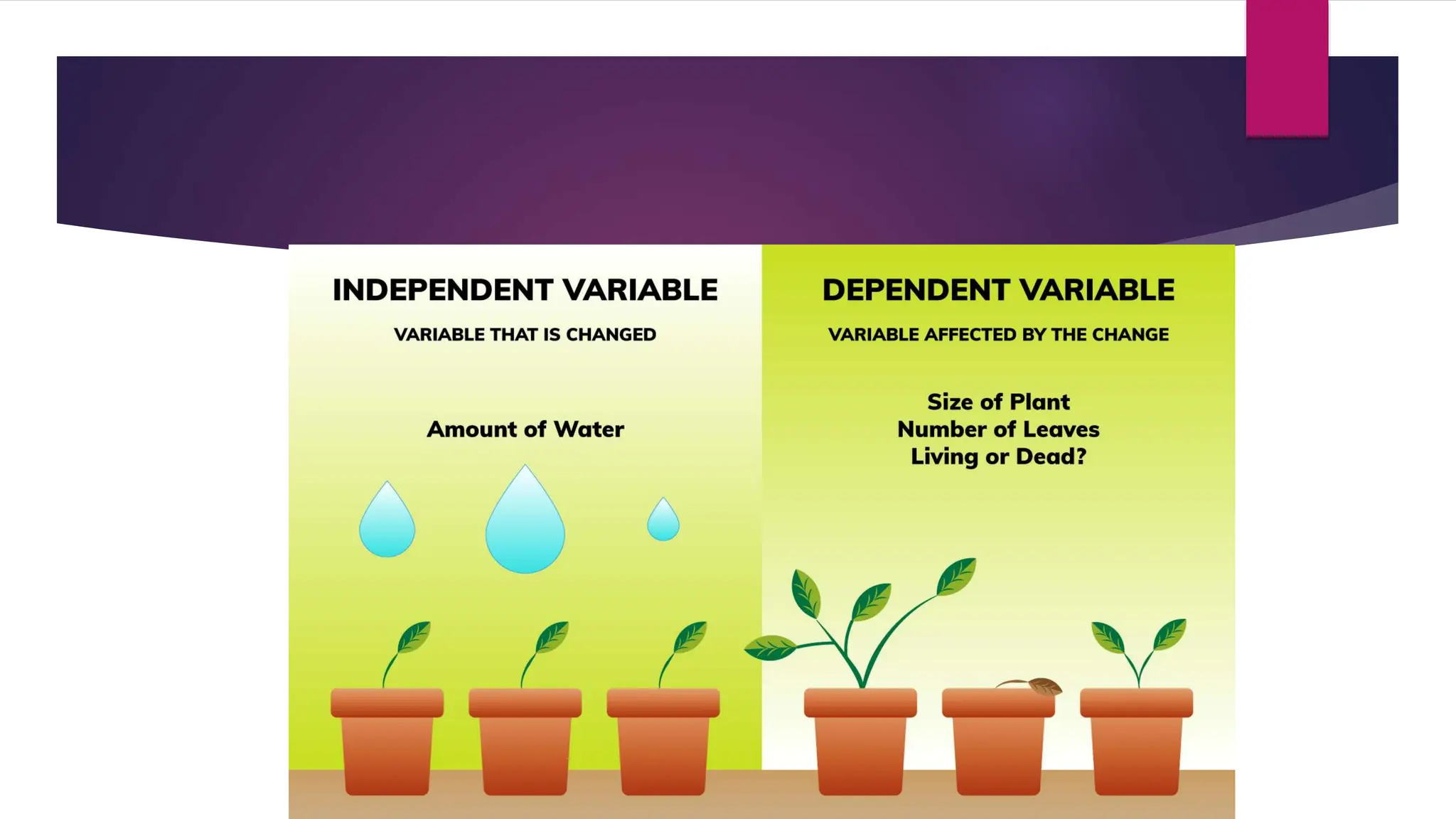
1 Dependent Variable
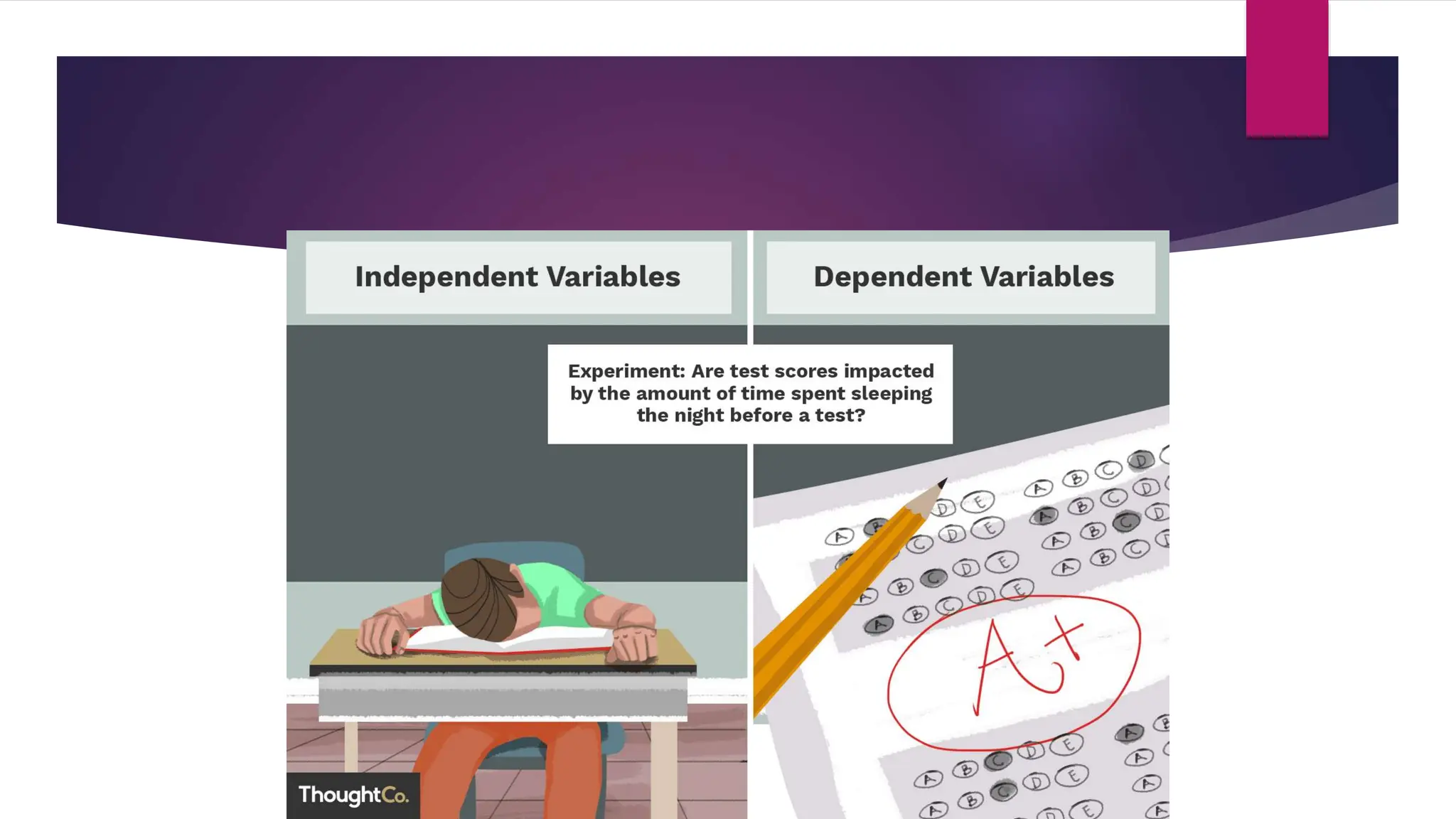
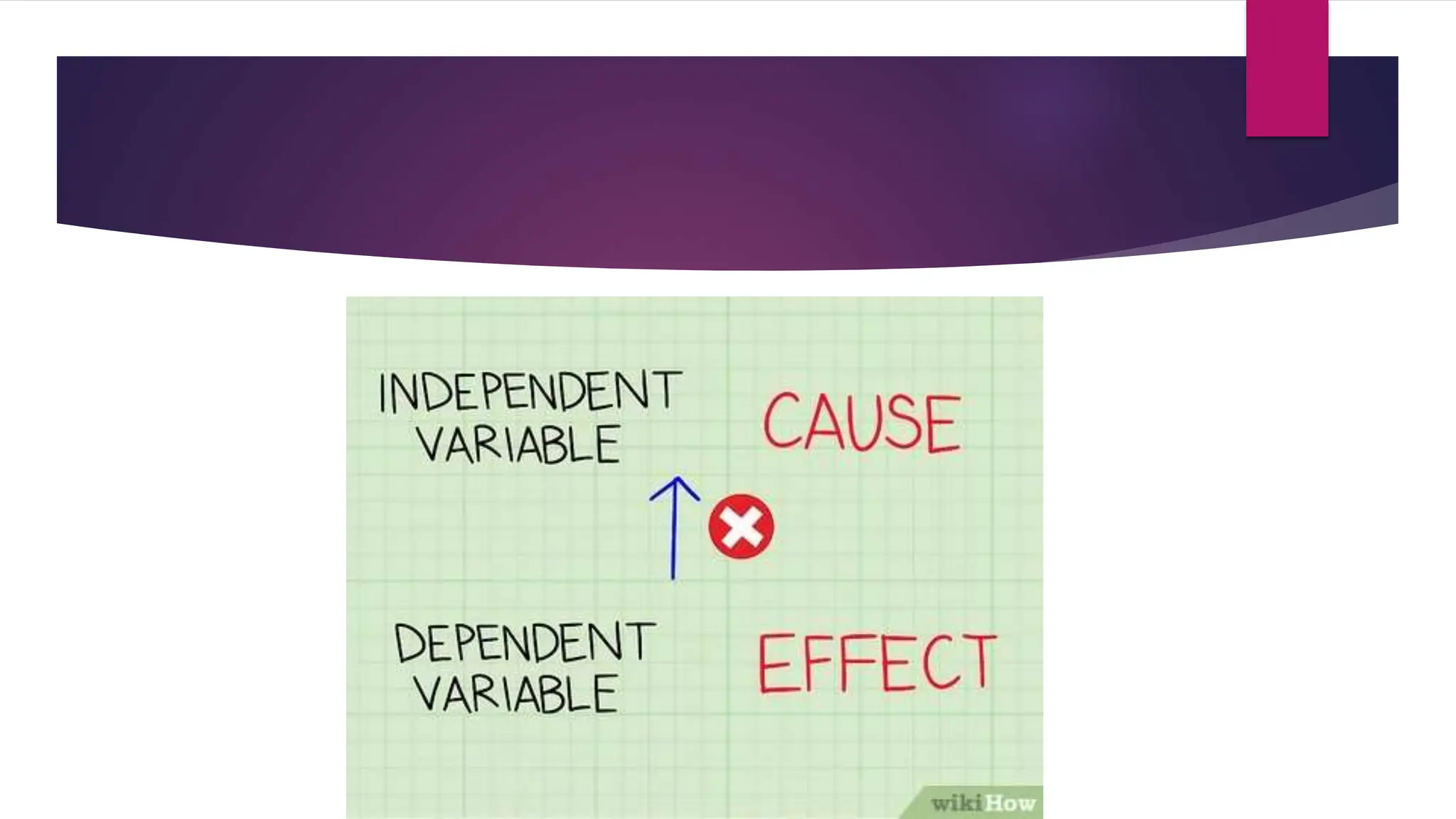
The outcome or response that is being
studied and measured.
2 Independent Variable
The variable that is manipulated or
controlled by the researcher.
3 Intervening Variable
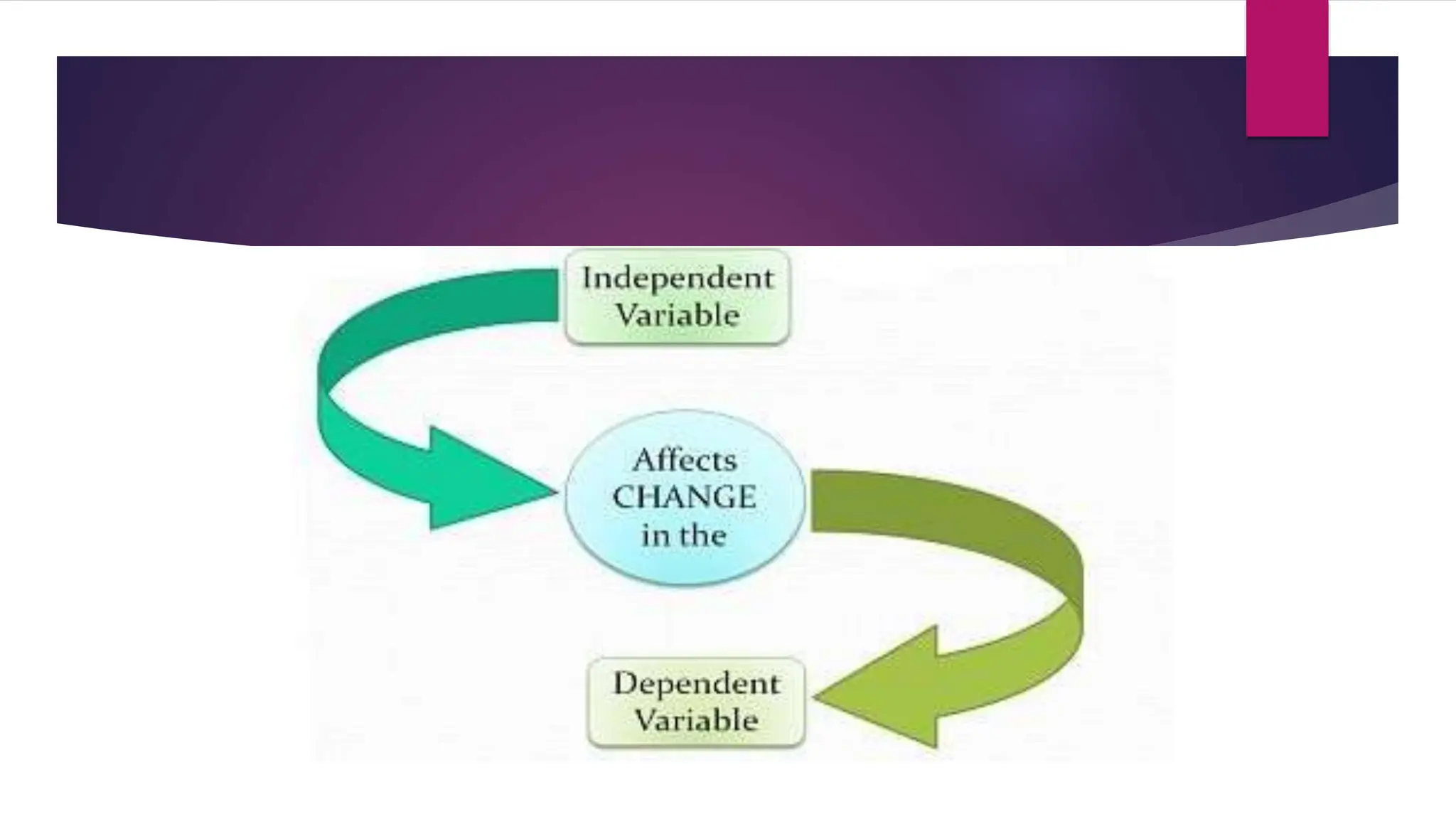
A variable that explains the relationship
between the independent and
dependent variables.
4 Extraneous Variable
Variables other than the independent
variable that can affect the dependent
variable.
5 Confounding variables
Type of extraneous variable that is related to both the independent and dependent variables.
The Significance of Controlled
Variables
Ensuring Internal Validity
Controlled variables are essential to
enhance the internal validity of
research studies.
Preventing Bias
They help in preventing bias and
ensuring that the outcomes are directly
related to the manipulation of the
independent variable.
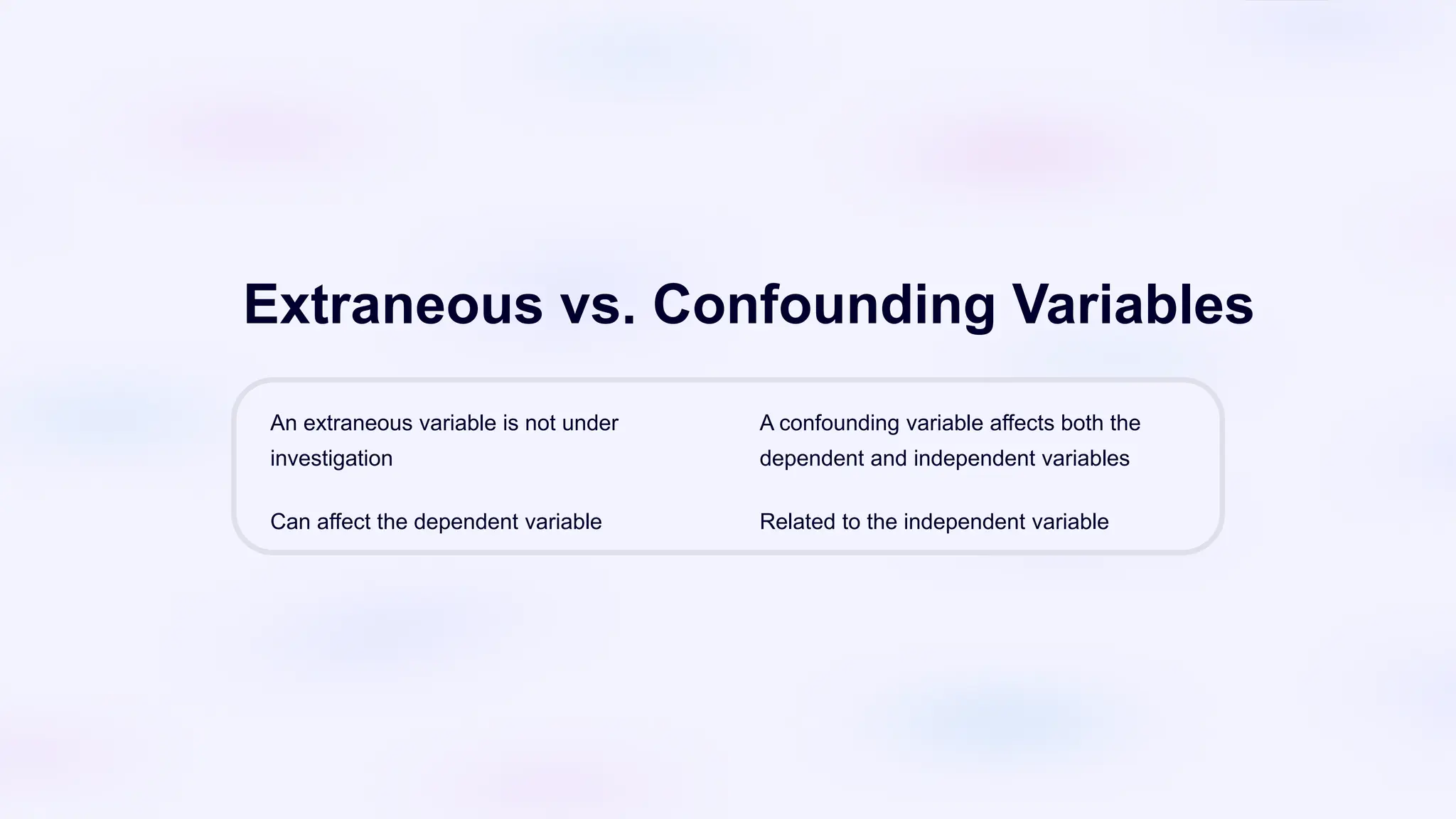
Extraneous vs. Confounding Variables
An extraneous variable is not under
investigation
A confounding variable affects both the
dependent and independent variables
Can affect the dependent variable Related to the independent variable
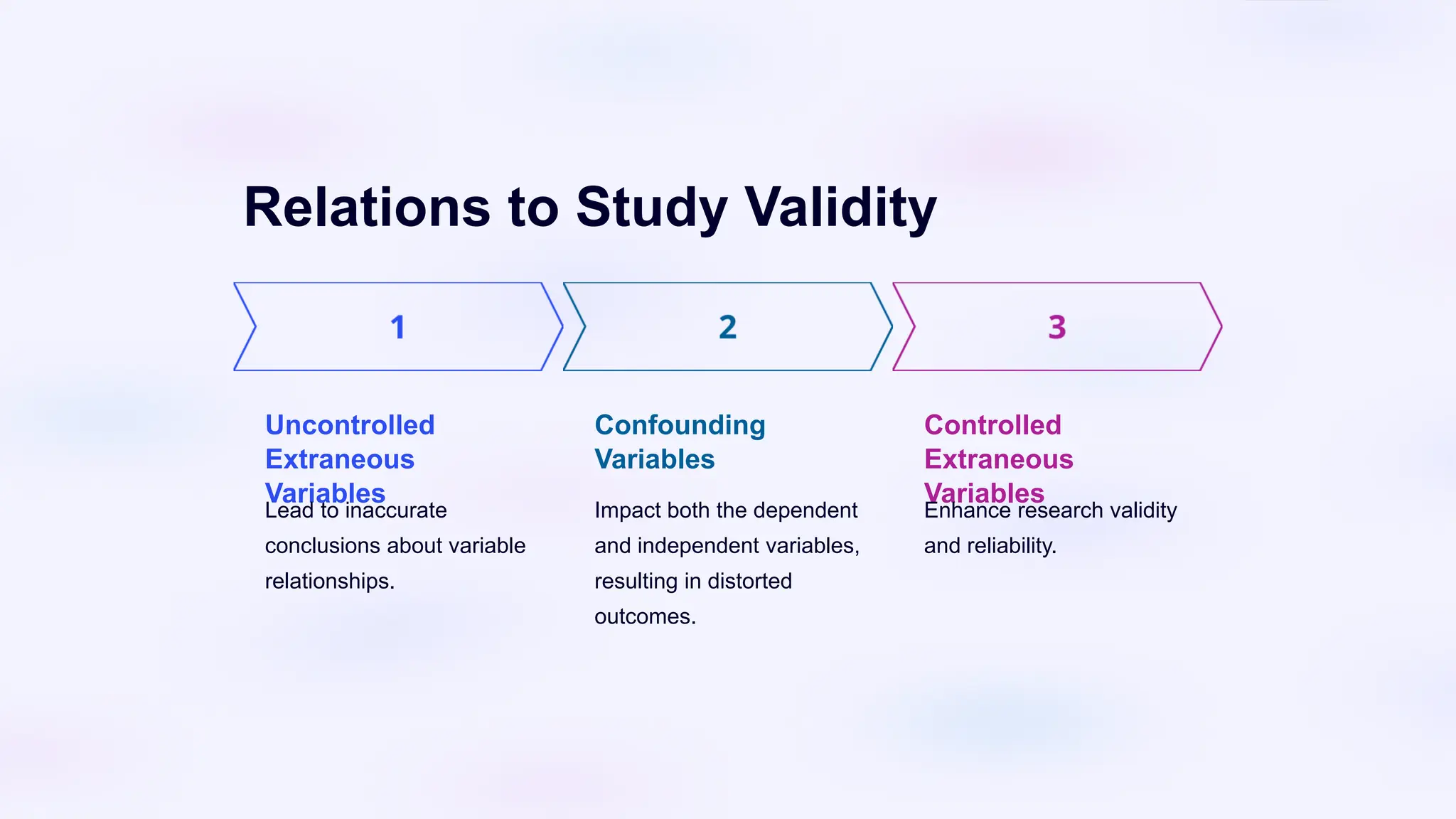
Relations to Study Validity
Uncontrolled
Extraneous
Variables
Lead to inaccurate
conclusions about variable
relationships.
Confounding
Variables
Impact both the dependent
and independent variables,
resulting in distorted
outcomes.
Controlled
Extraneous
Variables
Enhance research validity
and reliability.
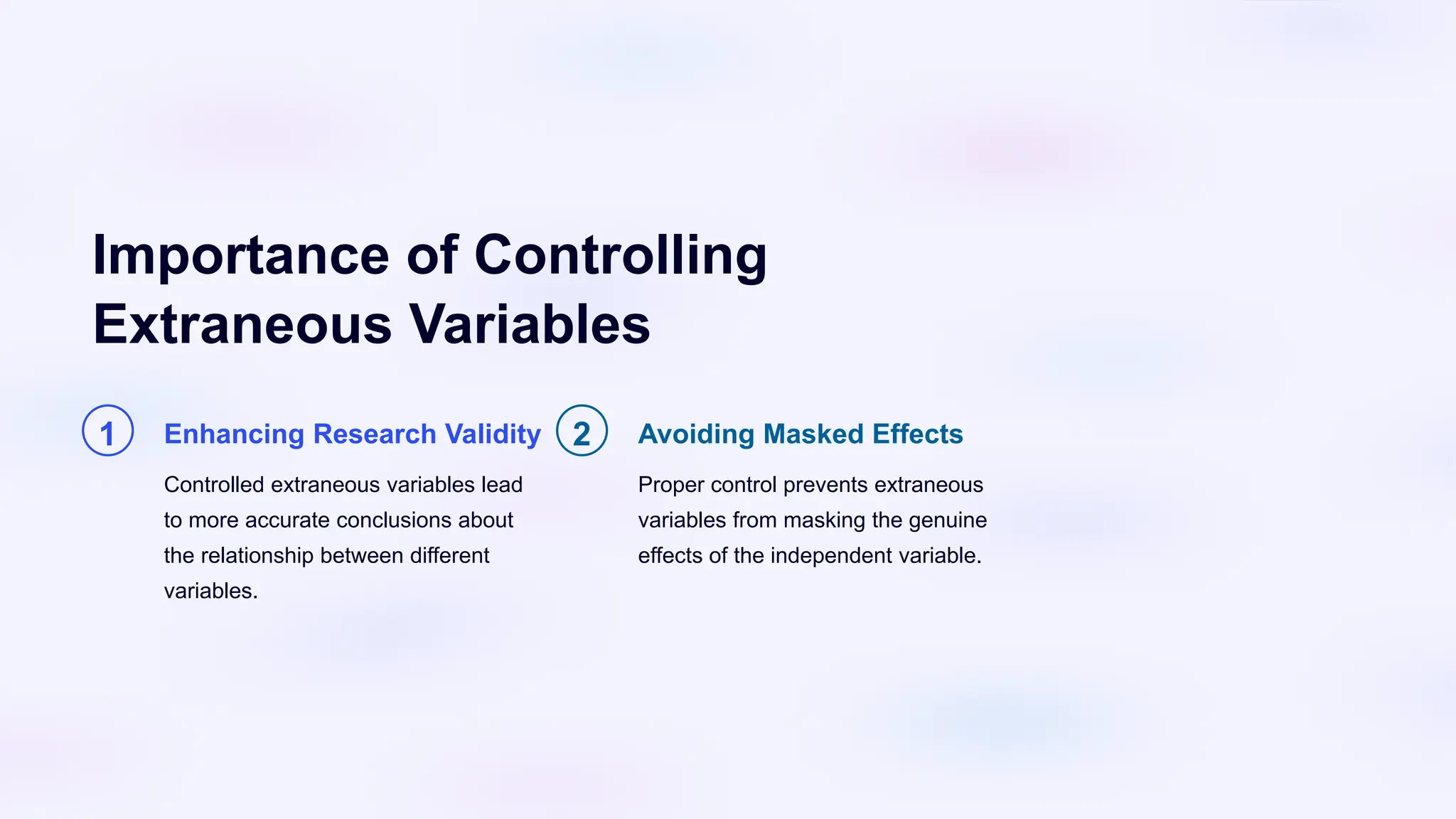
Importance of Controlling
Extraneous Variables
1 Enhancing Research Validity
Controlled extraneous variables lead
to more accurate conclusions about
the relationship between different
variables.
2 Avoiding Masked Effects
Proper control prevents extraneous
variables from masking the genuine
effects of the independent variable.
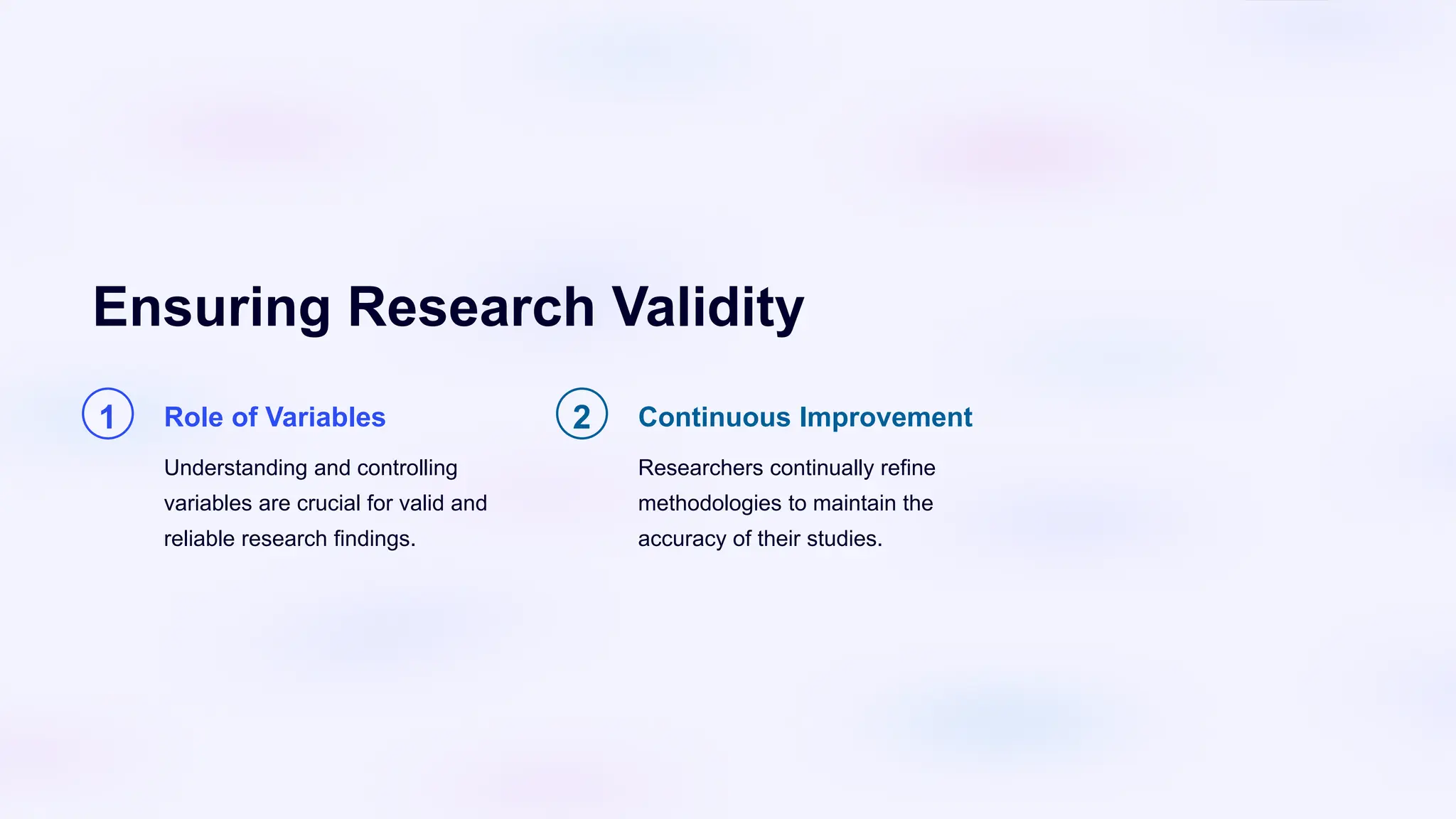
Ensuring Research Validity
1 Role of Variables
Understanding and controlling
variables are crucial for valid and
reliable research findings.
2 Continuous Improvement
Researchers continually refine
methodologies to maintain the
accuracy of their studies.
THANK YOU

Concept-of-Variables-in-Research .pptx

  • 1.
    CONCEPT OF VARIABLESIN RESEARCH BY SAMAJA DEVAN
  • 2.
    Types of Variables 1Dependent Variable The outcome or response that is being studied and measured. 2 Independent Variable The variable that is manipulated or controlled by the researcher. 3 Intervening Variable A variable that explains the relationship between the independent and dependent variables. 4 Extraneous Variable Variables other than the independent variable that can affect the dependent variable. 5 Confounding variables Type of extraneous variable that is related to both the independent and dependent variables.
  • 3.
    The Significance ofControlled Variables Ensuring Internal Validity Controlled variables are essential to enhance the internal validity of research studies. Preventing Bias They help in preventing bias and ensuring that the outcomes are directly related to the manipulation of the independent variable.
  • 9.
    Extraneous vs. ConfoundingVariables An extraneous variable is not under investigation A confounding variable affects both the dependent and independent variables Can affect the dependent variable Related to the independent variable
  • 10.
    Relations to StudyValidity Uncontrolled Extraneous Variables Lead to inaccurate conclusions about variable relationships. Confounding Variables Impact both the dependent and independent variables, resulting in distorted outcomes. Controlled Extraneous Variables Enhance research validity and reliability.
  • 11.
    Importance of Controlling ExtraneousVariables 1 Enhancing Research Validity Controlled extraneous variables lead to more accurate conclusions about the relationship between different variables. 2 Avoiding Masked Effects Proper control prevents extraneous variables from masking the genuine effects of the independent variable.
  • 12.
    Ensuring Research Validity 1Role of Variables Understanding and controlling variables are crucial for valid and reliable research findings. 2 Continuous Improvement Researchers continually refine methodologies to maintain the accuracy of their studies.
  • 13.