MEANING AND TYPES OF
VARIABLES
MEANING OF VARIABLES
• A variable represents the measurable traits that can change over a
scientific experiment (Agravante,2018)
• This term refer to the measurable characteristics, qualities, traits, or
attributes of a particular individual , object, or situation being studied.
• A variable is not only something that we measure but also
something we can control for.
2
TYPES OF VARIABLES
DEPENDENT AND INDEPENDENT VARIABLE
• independent variable, sometimes called an experimental or predictor
variable. It is being manipulated in an experiment to observe the effect on a
dependent variable, sometimes called an outcome variable.
Presumed or possible cause
• Dependent variable are variables for which we calculate statistical. The
variable which changes on account of independent variable is known as
dependent variable.
• Presumed results ( effect )
3
EXAMPLE
4
Solution
5
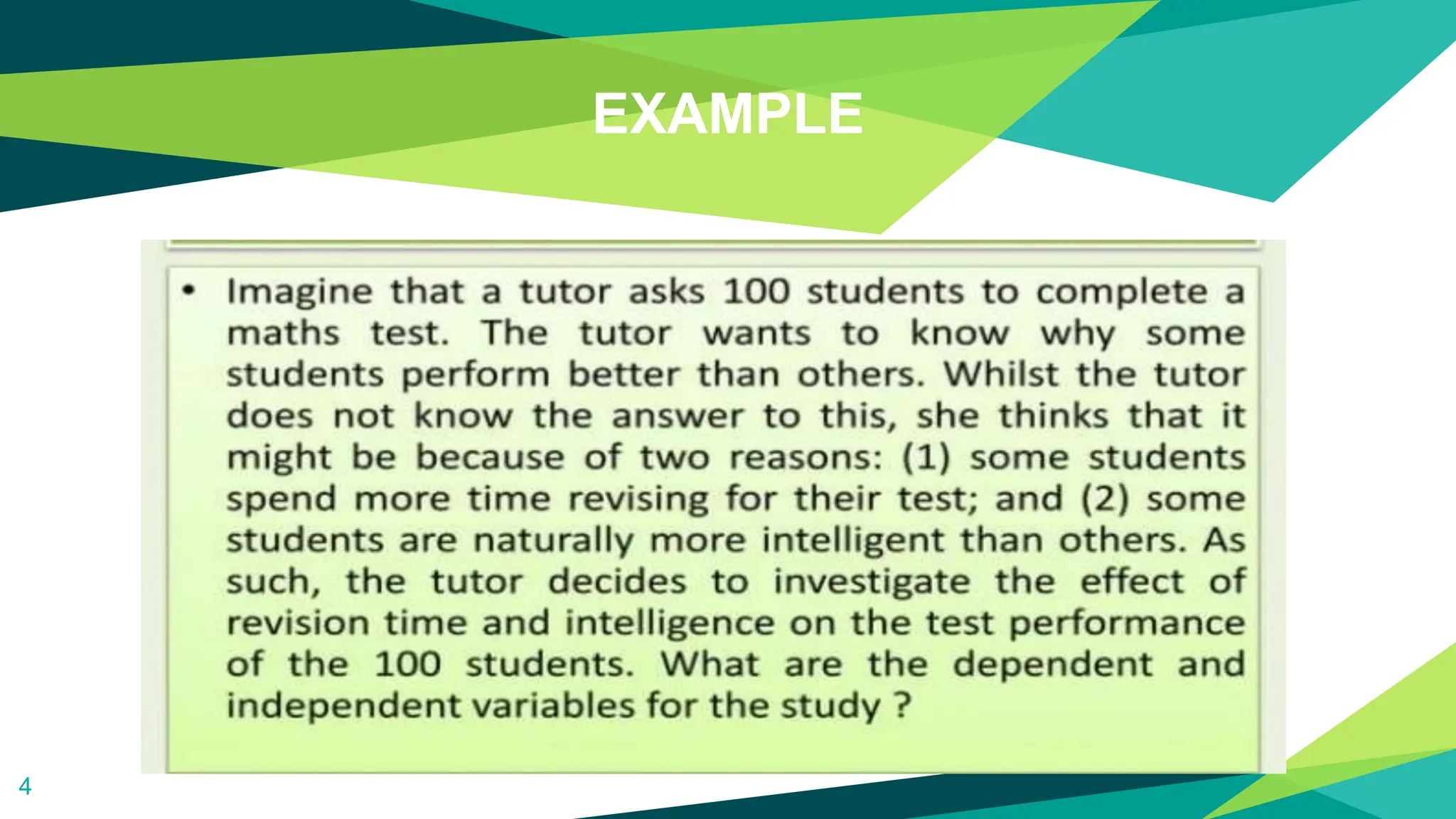
• Dependent Variable: Test Mark (measured from 0 to 100)
• Independent Variables: Revision time (measured in hours) Intelligence
(measured using IQ score)
Experimental and Non-Experimental
Research
• Experimental research: In experimental research , the aim is to
manipulate an independent variable(s) and then examine the effect that this
change has on a dependent variable(s).
• Non- experimental research: In non-experimental research, the
researcher does not manipulate the independent variable(s). This is not to
say that it is impossible to do so, but it will either be impractical or unethical
to do so.
6
Categorical and Continuous Variables
Categorical variables are also known as discrete or qualitative variables. Categorical
variables can be further categorized as either nominal, ordinal or dichotomous.
• Nominal variables are variables that have two or more categories, but which do not
have an intrinsic order. Example: type of property
• Dichotomous variables which have only two categories or levels.
Example: gender categorize as either “male” or female”
• Ordinal variables is more than two categories that follow a particular order.
7
Continuous variables are also known as quantitative variables. Continuous
variables can be further categorized as either interval or ratio.
• Interval variables are variables for which their central characteristics is that
they can be measured along a continuum and they have a numerical
value. For instance, temperature measured in degrees celcius or
Fahrenheit
• Ratio variables are interval variables, but with the added condition that 0
of the measurement indicates that there is none of that variable.
examples of ratio variables include height, mass, distance and many
more.
8
Moderator Variable
• It is a special type of independent variable.
• The independent variable’s relationship with the dependent
variable may change under different conditions. That
condition is the moderator variable.
9
• Example:
A strong relationship has been observed between the quality of library
facilities(X) and the performance of the students (Y).
In this relationship interest and inclination is moderating variable i.e.
which moderates the strength of the association between X and Y
variables.
10
• For Blue(2018), control variables are components that remain the
same, despite additional changes made within the experiment.
• Sometimes certain characteristics of the objects under scrutiny are
deliberately left unchanged. These are known as constant or
controlled variables.
Controllable Variable
11
Extraneous variable
• Variables that may affect research outcomes but have not
been adequately considered in the study are termed as
extraneous variables.
• Extraneous variables that are not recognized until the study is
in process, or are recognized before the study is initiated but
cannot be controlled , are referred to as confounding variables.
These variables interferes the results of the existing activity.
12
Sources:
Khan,R.(2014),types of variables in research
https://www.scribd,com/document/210747879/Types-of-Variables-in-Research
Chaturvedi,A.(2018),Types of Variables in research
http://www.slideshare.net/ankitachaturvedi2360/types-of-variables-in-research
Bevans,R.(2019), Understanding types of Variables
https://www.scribbr.com/metgodology/types-of-variables/
Agravante,Mariecor(2018).wha id the Meaning of the variables in
Research?”sciencing.com
https://sciencing .com/meaning-variables-research-6164225.html.22 April
2021.
13
Thank you!
14

types of variables.ppt a research presen

  • 1.
    MEANING AND TYPESOF VARIABLES
  • 2.
    MEANING OF VARIABLES •A variable represents the measurable traits that can change over a scientific experiment (Agravante,2018) • This term refer to the measurable characteristics, qualities, traits, or attributes of a particular individual , object, or situation being studied. • A variable is not only something that we measure but also something we can control for. 2
  • 3.
    TYPES OF VARIABLES DEPENDENTAND INDEPENDENT VARIABLE • independent variable, sometimes called an experimental or predictor variable. It is being manipulated in an experiment to observe the effect on a dependent variable, sometimes called an outcome variable. Presumed or possible cause • Dependent variable are variables for which we calculate statistical. The variable which changes on account of independent variable is known as dependent variable. • Presumed results ( effect ) 3
  • 4.
  • 5.
    Solution 5 • Dependent Variable:Test Mark (measured from 0 to 100) • Independent Variables: Revision time (measured in hours) Intelligence (measured using IQ score)
  • 6.
    Experimental and Non-Experimental Research •Experimental research: In experimental research , the aim is to manipulate an independent variable(s) and then examine the effect that this change has on a dependent variable(s). • Non- experimental research: In non-experimental research, the researcher does not manipulate the independent variable(s). This is not to say that it is impossible to do so, but it will either be impractical or unethical to do so. 6
  • 7.
    Categorical and ContinuousVariables Categorical variables are also known as discrete or qualitative variables. Categorical variables can be further categorized as either nominal, ordinal or dichotomous. • Nominal variables are variables that have two or more categories, but which do not have an intrinsic order. Example: type of property • Dichotomous variables which have only two categories or levels. Example: gender categorize as either “male” or female” • Ordinal variables is more than two categories that follow a particular order. 7
  • 8.
    Continuous variables arealso known as quantitative variables. Continuous variables can be further categorized as either interval or ratio. • Interval variables are variables for which their central characteristics is that they can be measured along a continuum and they have a numerical value. For instance, temperature measured in degrees celcius or Fahrenheit • Ratio variables are interval variables, but with the added condition that 0 of the measurement indicates that there is none of that variable. examples of ratio variables include height, mass, distance and many more. 8
  • 9.
    Moderator Variable • Itis a special type of independent variable. • The independent variable’s relationship with the dependent variable may change under different conditions. That condition is the moderator variable. 9
  • 10.
    • Example: A strongrelationship has been observed between the quality of library facilities(X) and the performance of the students (Y). In this relationship interest and inclination is moderating variable i.e. which moderates the strength of the association between X and Y variables. 10
  • 11.
    • For Blue(2018),control variables are components that remain the same, despite additional changes made within the experiment. • Sometimes certain characteristics of the objects under scrutiny are deliberately left unchanged. These are known as constant or controlled variables. Controllable Variable 11
  • 12.
    Extraneous variable • Variablesthat may affect research outcomes but have not been adequately considered in the study are termed as extraneous variables. • Extraneous variables that are not recognized until the study is in process, or are recognized before the study is initiated but cannot be controlled , are referred to as confounding variables. These variables interferes the results of the existing activity. 12
  • 13.
    Sources: Khan,R.(2014),types of variablesin research https://www.scribd,com/document/210747879/Types-of-Variables-in-Research Chaturvedi,A.(2018),Types of Variables in research http://www.slideshare.net/ankitachaturvedi2360/types-of-variables-in-research Bevans,R.(2019), Understanding types of Variables https://www.scribbr.com/metgodology/types-of-variables/ Agravante,Mariecor(2018).wha id the Meaning of the variables in Research?”sciencing.com https://sciencing .com/meaning-variables-research-6164225.html.22 April 2021. 13
  • 14.