Introduction to Business
  Concept of business
Business

    “Every human activity which is
     engaged in for the sake of earning
     profit may be called business.”


2
 According to L. H. Haney
 “Business may be defined as human activities directed
    toward providing or acquiring wealth through buying
    and selling of goods.”


 In the words of B. W. Wheeler
 “An institution organized and operated to provide
    goods and services to the society, under the incentive
    of private gain” is business.

3
A Short History of Business
     Industrial revolution


     Entrepreneurship Era


     Production Era


     Marketing Era


     Global Era


4    Information and internet Era
Economy

     The large set of inter-related economic production
     and consumption activities which aid in
     determining how scarce resources are allocated.


5
Organization


 An entity where 2 persons or
             more
working together for a common
            purpose
Market
     A market is one of many varieties of systems,
     institutions, procedures, social relations and
     infrastructures whereby parties engage in
     exchange.

     Physical retail markets
     Internet markets (non-physical)
     Auction markets
     Markets for intermediate goods
     Labor market
     Currency market
7
     Stock market
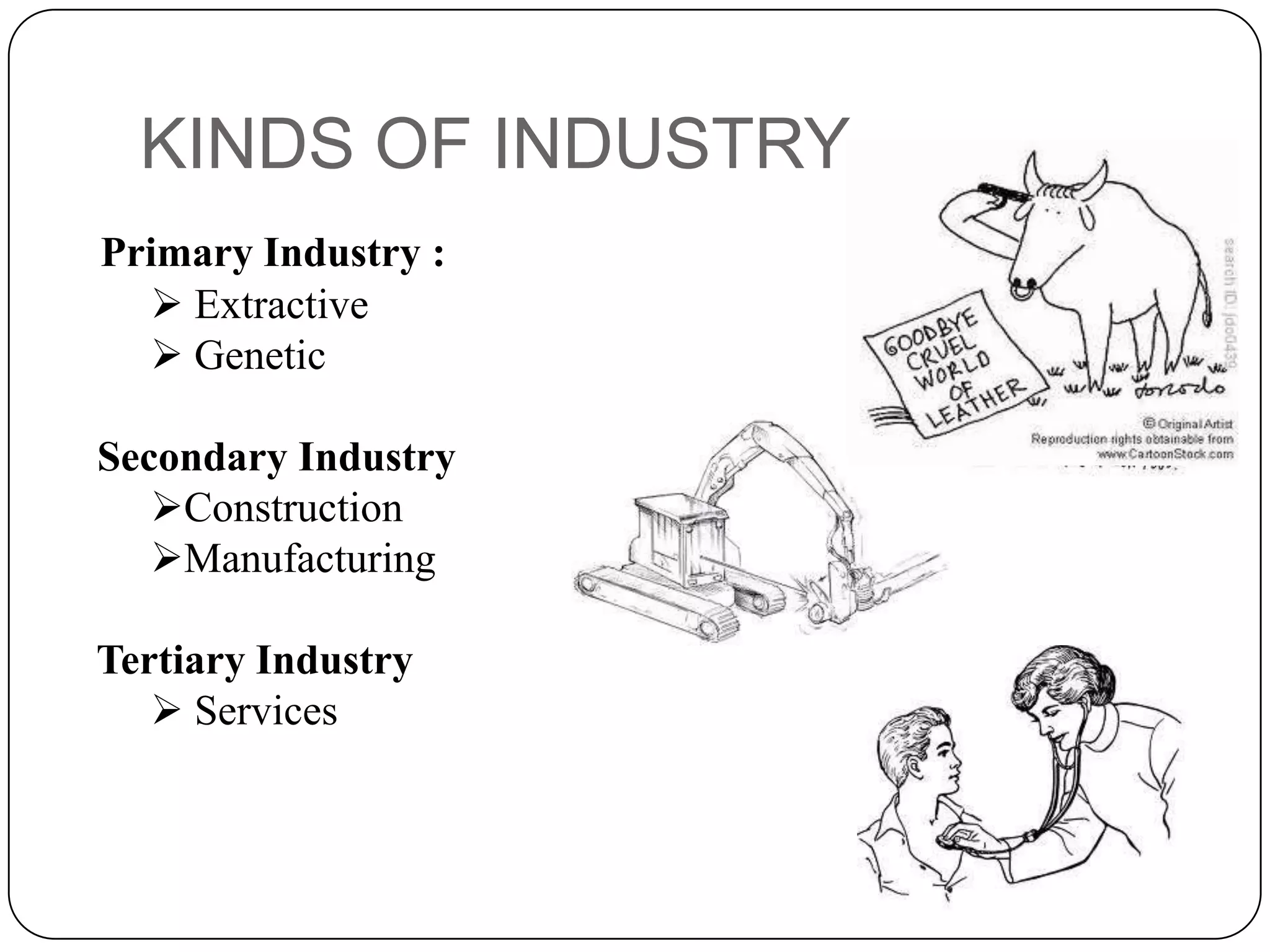
KINDS OF INDUSTRY
Primary Industry :
   Extractive
   Genetic

Secondary Industry
   Construction
   Manufacturing

Tertiary Industry
    Services
Kinds of Industries

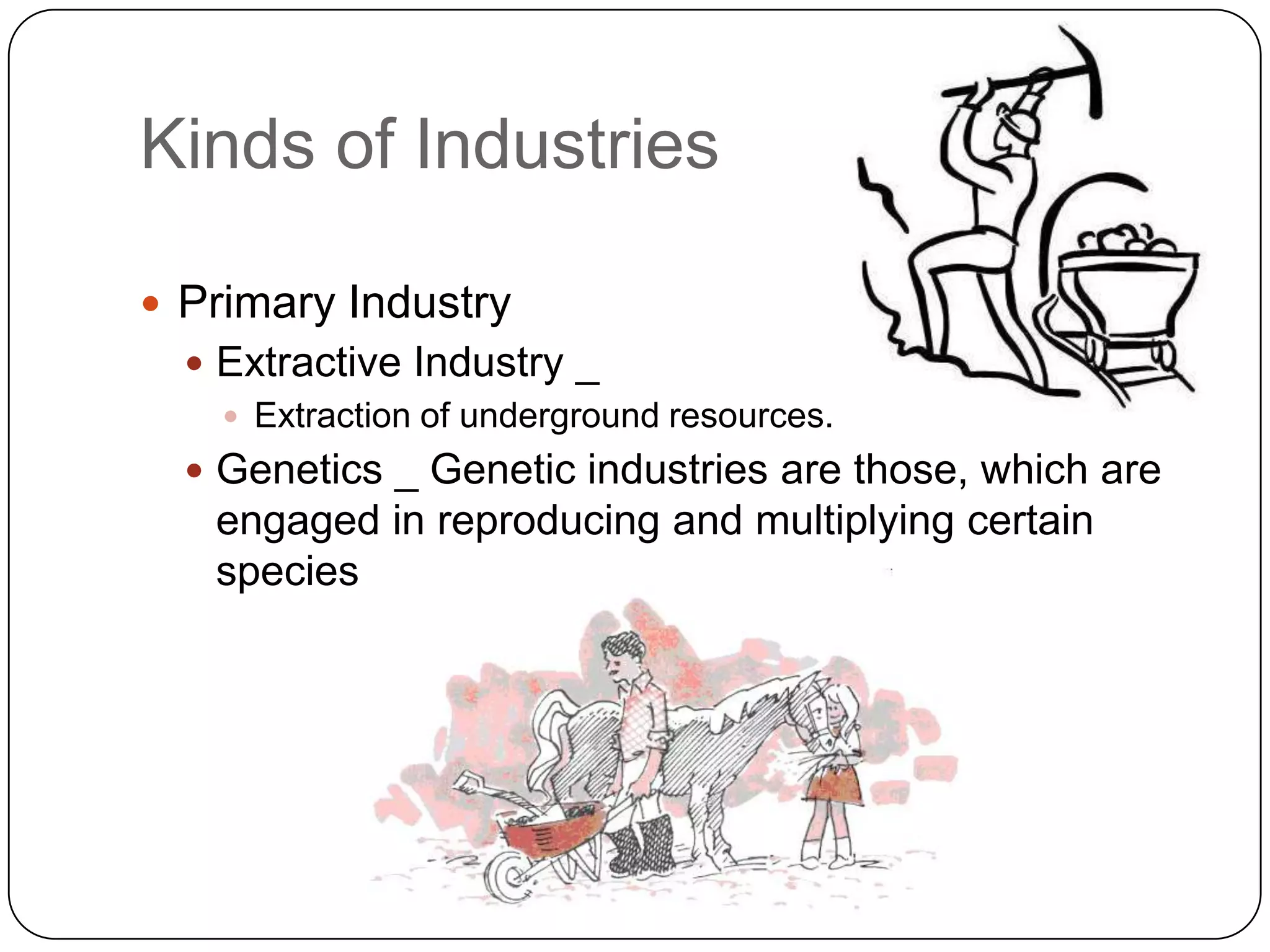
 Primary Industry
   Extractive Industry _
     Extraction of underground resources.
   Genetics _ Genetic industries are those, which are
   engaged in reproducing and multiplying certain
   species of animals and plants.
Kinds of industries

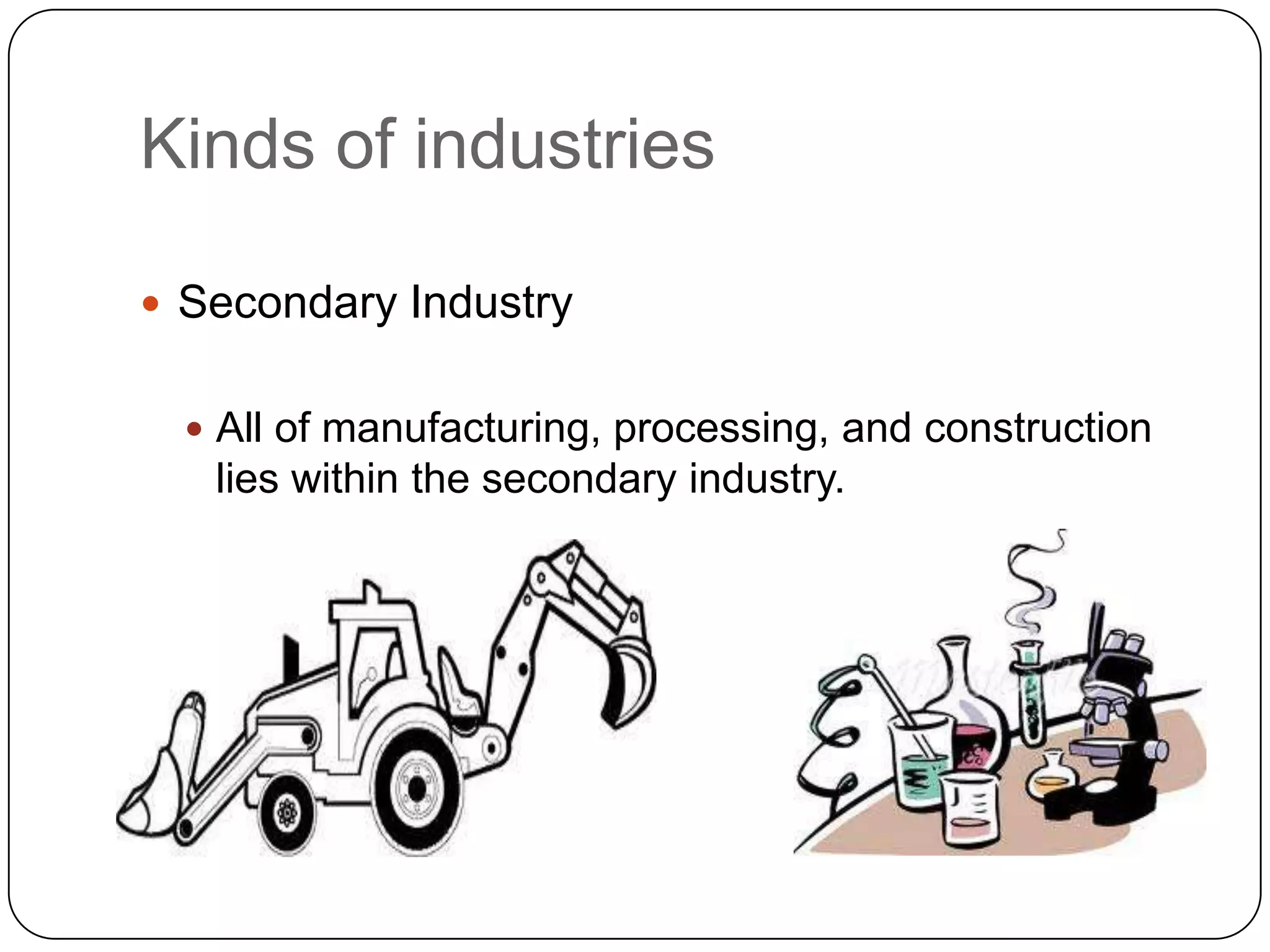
 Secondary Industry


   All of manufacturing, processing, and construction
   lies within the secondary industry.
Kinds of industries

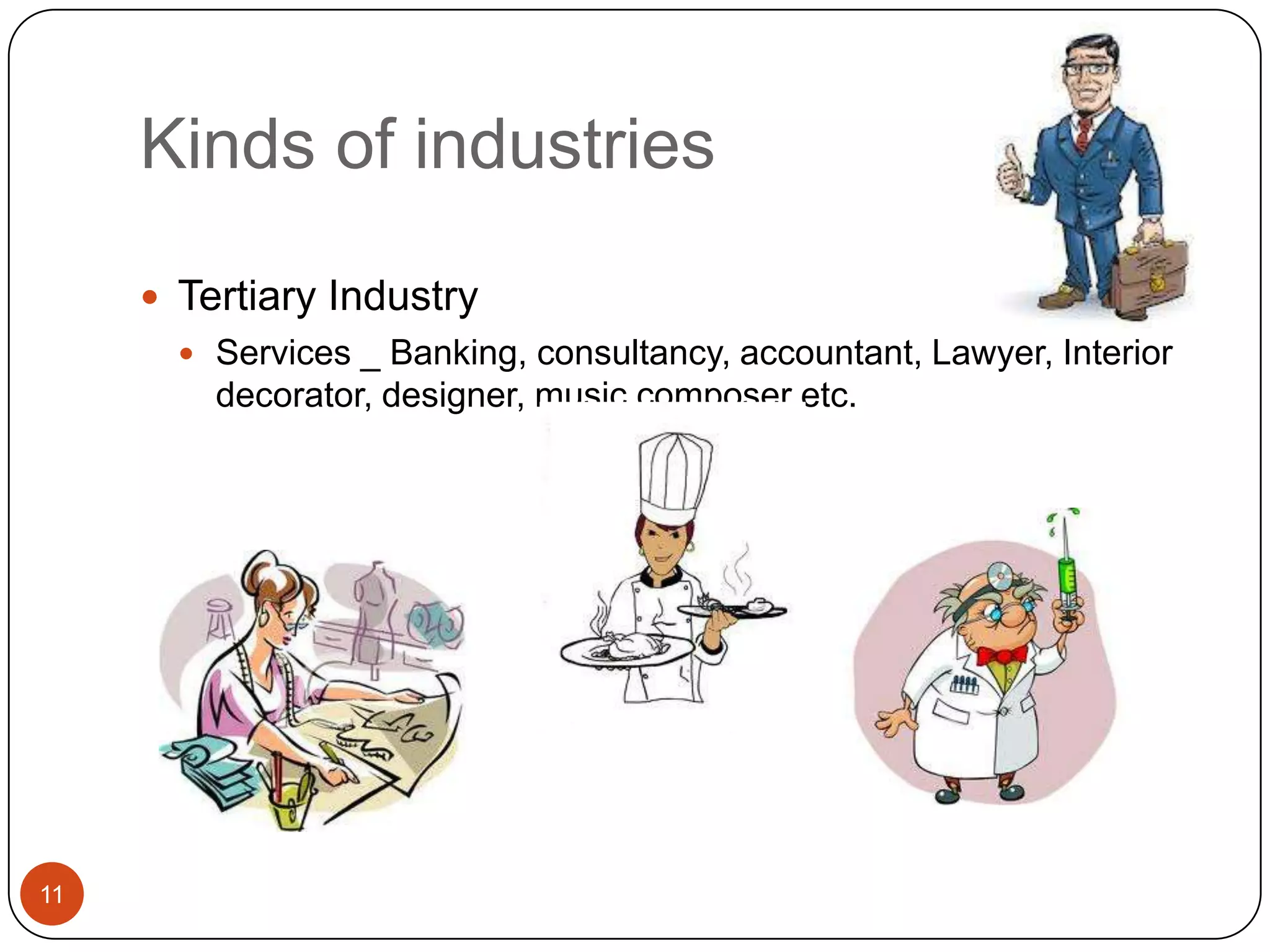
      Tertiary Industry
        Services _ Banking, consultancy, accountant, Lawyer, Interior
         decorator, designer, music composer etc.


11
Factors of production
 Labor _ People working in an organization.


 Capital _ Amount invested by investor in the
 business.

 Entrepreneurship _ Management ability of the
 people who are running the business.

 Physical Resources _ Land, building, vehicles,
 machinery etc.
Types of Environmental Forces

 Internal Forces
   Factors within the organization.
   These are controllable by the organization.


 External Forces
   Factors found outside an organization.
   These factors are not controllable by the
   organization.
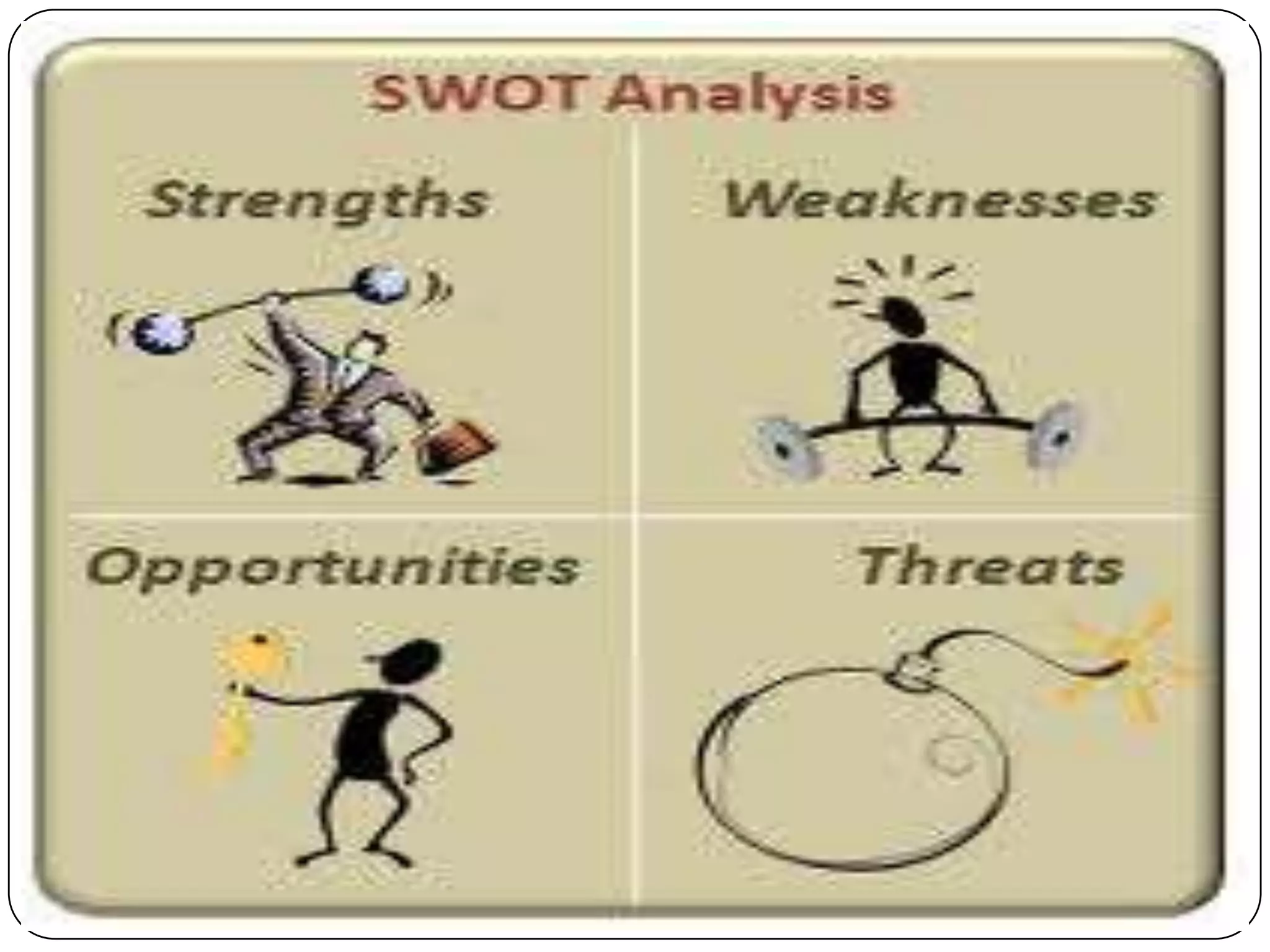
SWOT Analysis
 Strengths
 Weaknesses
 Opportunities
 Threats

Concept of business[1]

  • 1.
    Introduction to Business Concept of business
  • 2.
    Business “Every human activity which is engaged in for the sake of earning profit may be called business.” 2
  • 3.
     According toL. H. Haney  “Business may be defined as human activities directed toward providing or acquiring wealth through buying and selling of goods.”  In the words of B. W. Wheeler  “An institution organized and operated to provide goods and services to the society, under the incentive of private gain” is business. 3
  • 4.
    A Short Historyof Business  Industrial revolution  Entrepreneurship Era  Production Era  Marketing Era  Global Era 4  Information and internet Era
  • 5.
    Economy  The large set of inter-related economic production and consumption activities which aid in determining how scarce resources are allocated. 5
  • 6.
    Organization An entitywhere 2 persons or more working together for a common purpose
  • 7.
    Market  A market is one of many varieties of systems, institutions, procedures, social relations and infrastructures whereby parties engage in exchange.  Physical retail markets  Internet markets (non-physical)  Auction markets  Markets for intermediate goods  Labor market  Currency market 7  Stock market
  • 8.
    KINDS OF INDUSTRY PrimaryIndustry :  Extractive  Genetic Secondary Industry Construction Manufacturing Tertiary Industry  Services
  • 9.
    Kinds of Industries Primary Industry  Extractive Industry _  Extraction of underground resources.  Genetics _ Genetic industries are those, which are engaged in reproducing and multiplying certain species of animals and plants.
  • 10.
    Kinds of industries Secondary Industry  All of manufacturing, processing, and construction lies within the secondary industry.
  • 11.
    Kinds of industries  Tertiary Industry  Services _ Banking, consultancy, accountant, Lawyer, Interior decorator, designer, music composer etc. 11
  • 12.
    Factors of production Labor _ People working in an organization.  Capital _ Amount invested by investor in the business.  Entrepreneurship _ Management ability of the people who are running the business.  Physical Resources _ Land, building, vehicles, machinery etc.
  • 13.
    Types of EnvironmentalForces  Internal Forces  Factors within the organization.  These are controllable by the organization.  External Forces  Factors found outside an organization.  These factors are not controllable by the organization.
  • 14.
    SWOT Analysis  Strengths Weaknesses  Opportunities  Threats