 A business is usually defined as a commercial enterprise
 Some are run by only one person who carry out all of the
required functions
 Others employ thousands of people and provide goods
and services to people all over the world
 Each business can be defined or described by its type of
ownership, the goods produced or services offered,
the types of jobs provided, or the functions
it performs in a community
 Businesses are started by entrepreneurs who see a need,
recognize the opportunity, and go into business to meet
that need
 Business and people need each other – there are many
stakeholders – we depend on businesses for products and
services, but also for employment
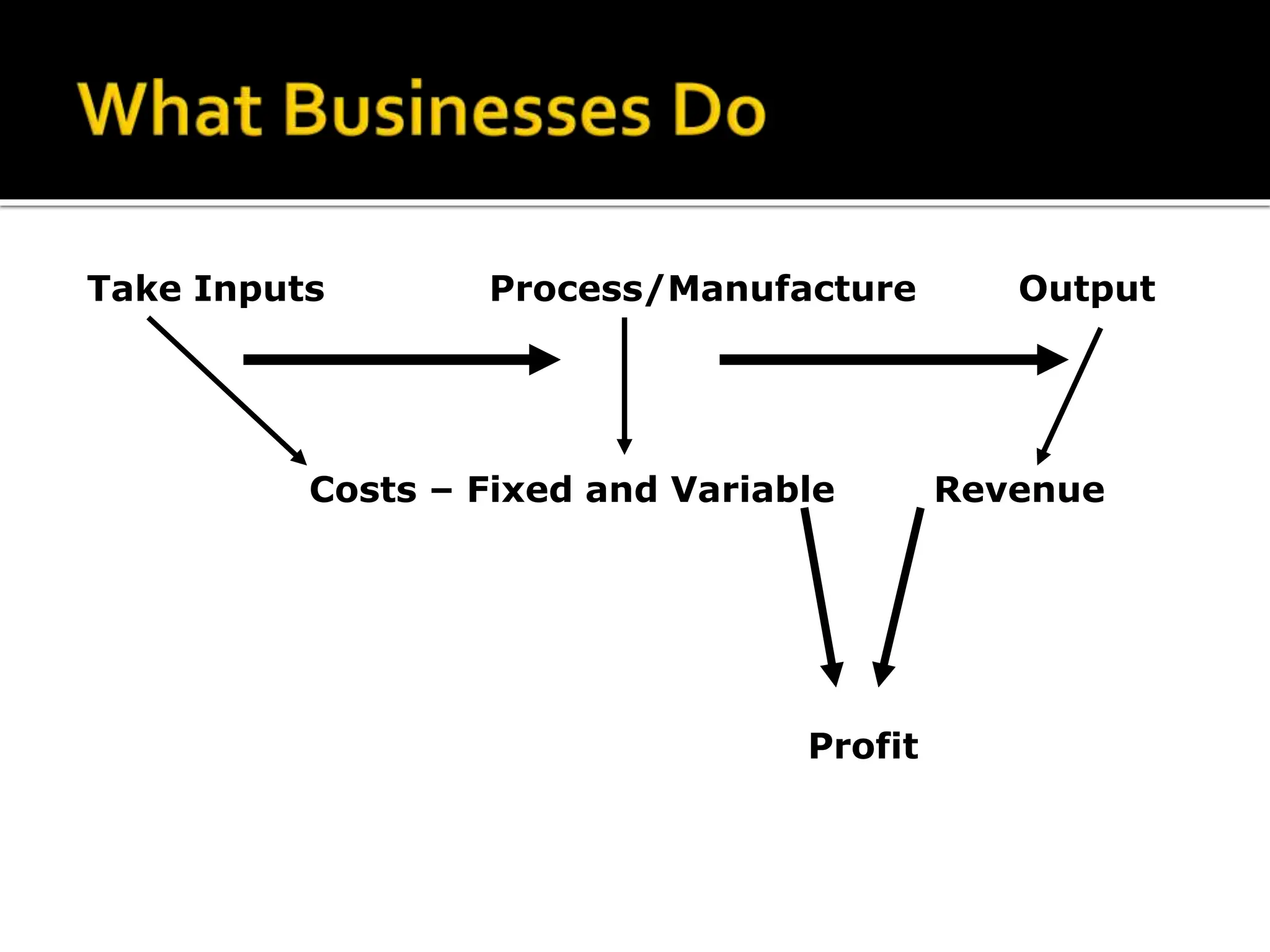
 Buy inputs – raw materials, labour, machinery and
equipment, and land
 Produce outputs – goods and services
 Focus on efficient use of resources
 Generate profit/surplus
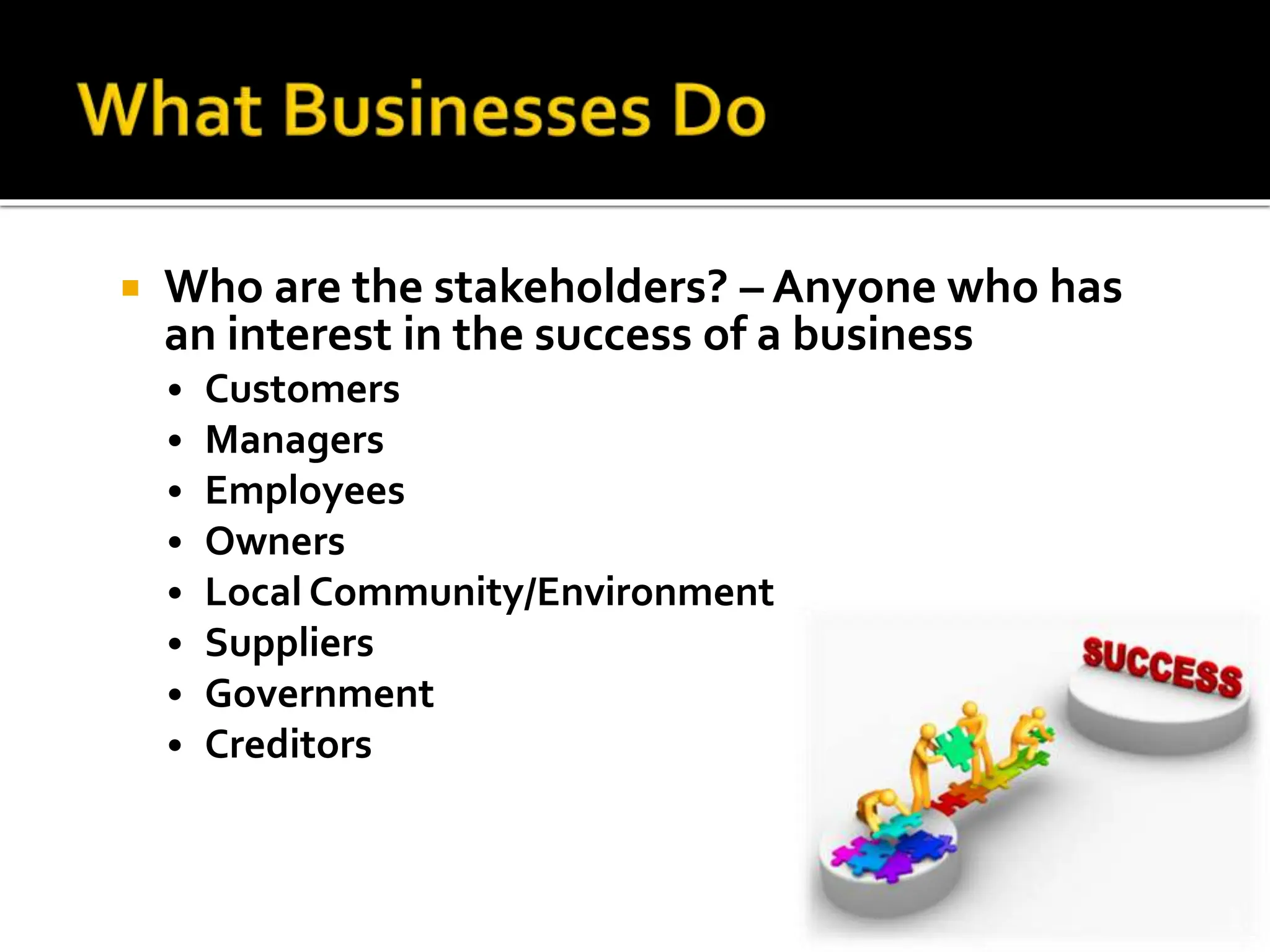
 Who are the stakeholders? – Anyone who has
an interest in the success of a business
• Customers
• Managers
• Employees
• Owners
• Local Community/Environment
• Suppliers
• Government
• Creditors
Take Inputs Process/Manufacture Output
Costs – Fixed and Variable Revenue
Profit
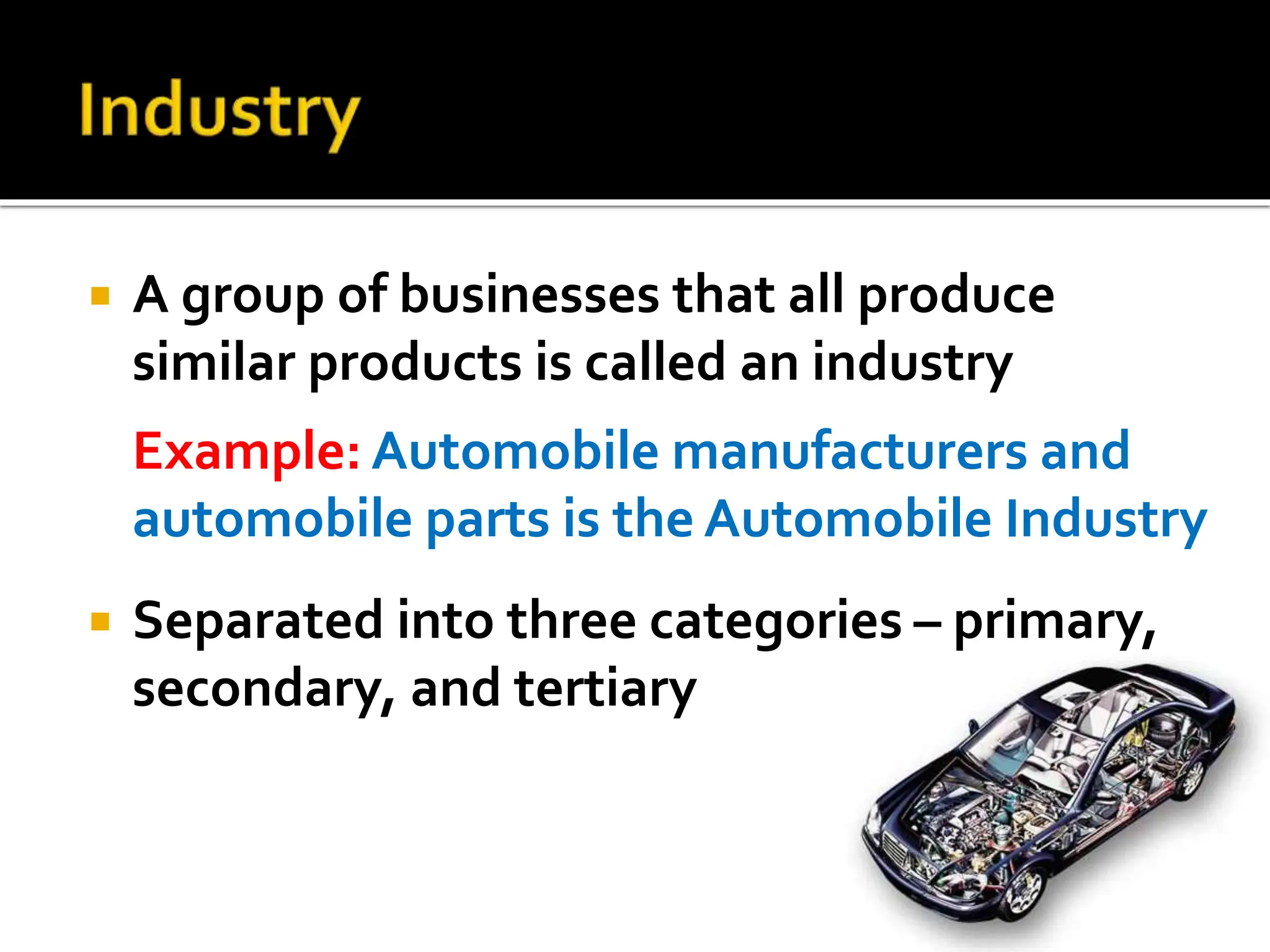
 A group of businesses that all produce
similar products is called an industry
Example: Automobile manufacturers and
automobile parts is the Automobile Industry
 Separated into three categories – primary,
secondary, and tertiary
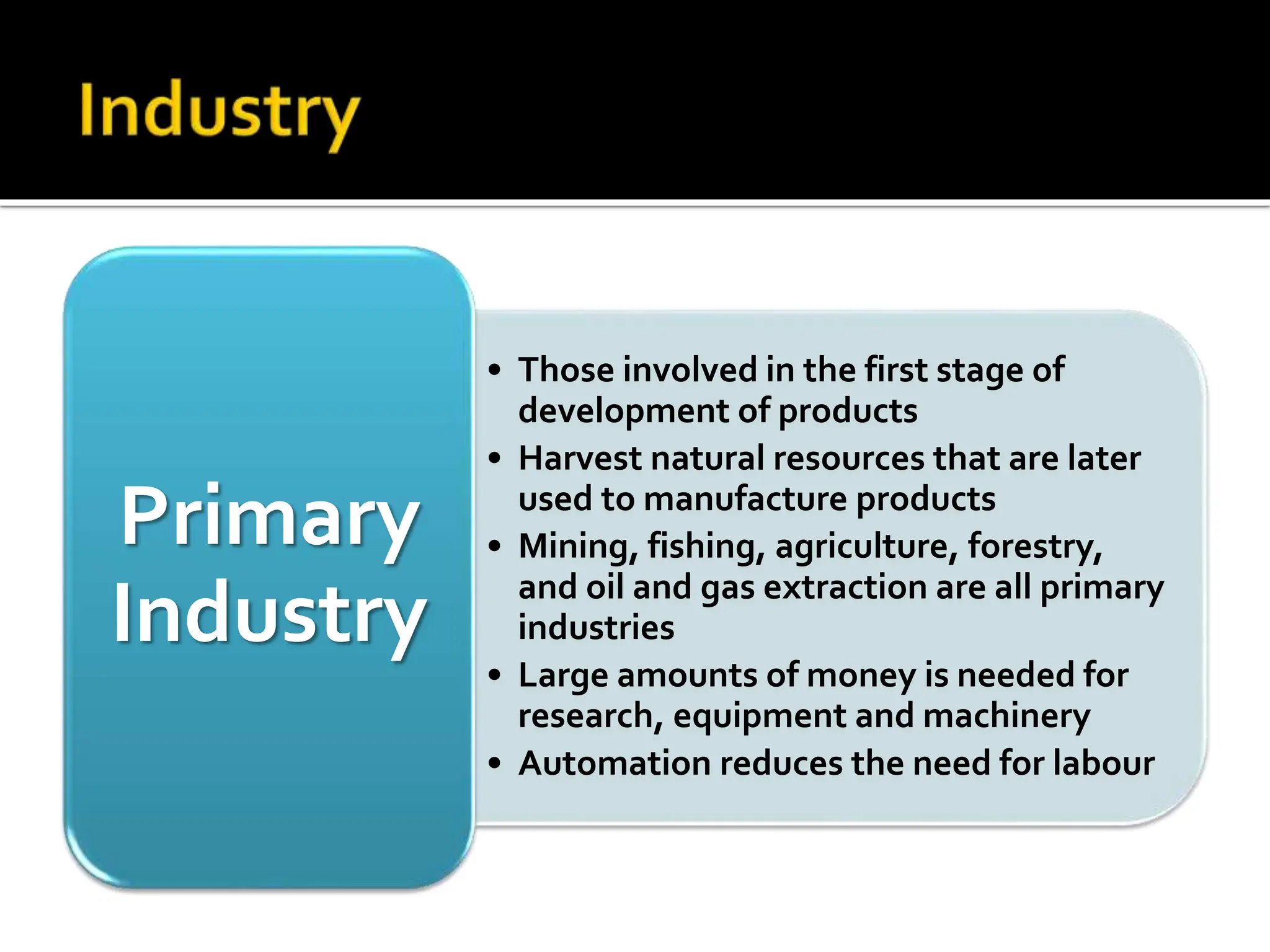
• Those involved in the first stage of
development of products
• Harvest natural resources that are later
used to manufacture products
• Mining, fishing, agriculture, forestry,
and oil and gas extraction are all primary
industries
• Large amounts of money is needed for
research, equipment and machinery
• Automation reduces the need for labour
Primary
Industry
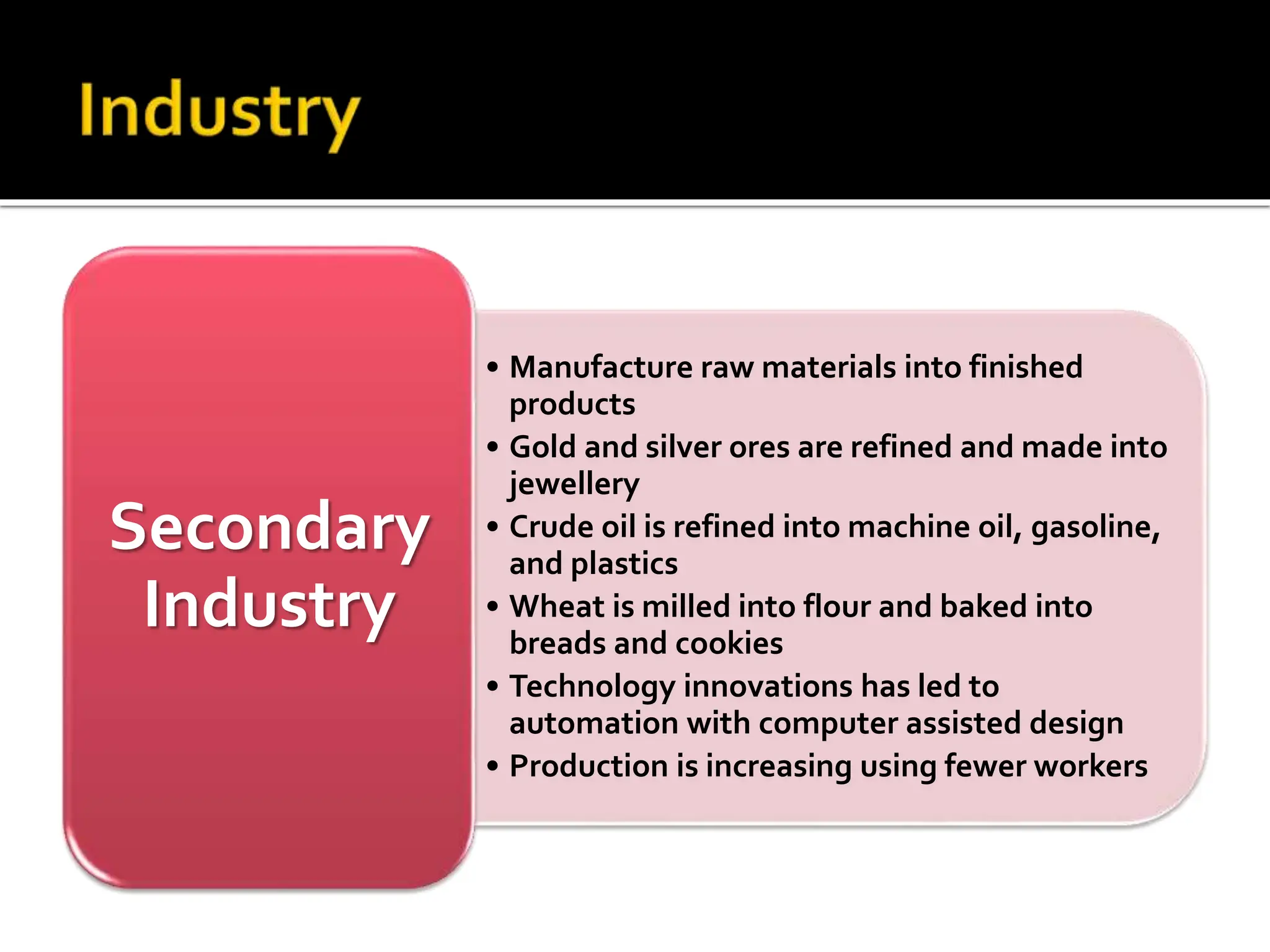
• Manufacture raw materials into finished
products
• Gold and silver ores are refined and made into
jewellery
• Crude oil is refined into machine oil, gasoline,
and plastics
• Wheat is milled into flour and baked into
breads and cookies
• Technology innovations has led to
automation with computer assisted design
• Production is increasing using fewer workers
Secondary
Industry
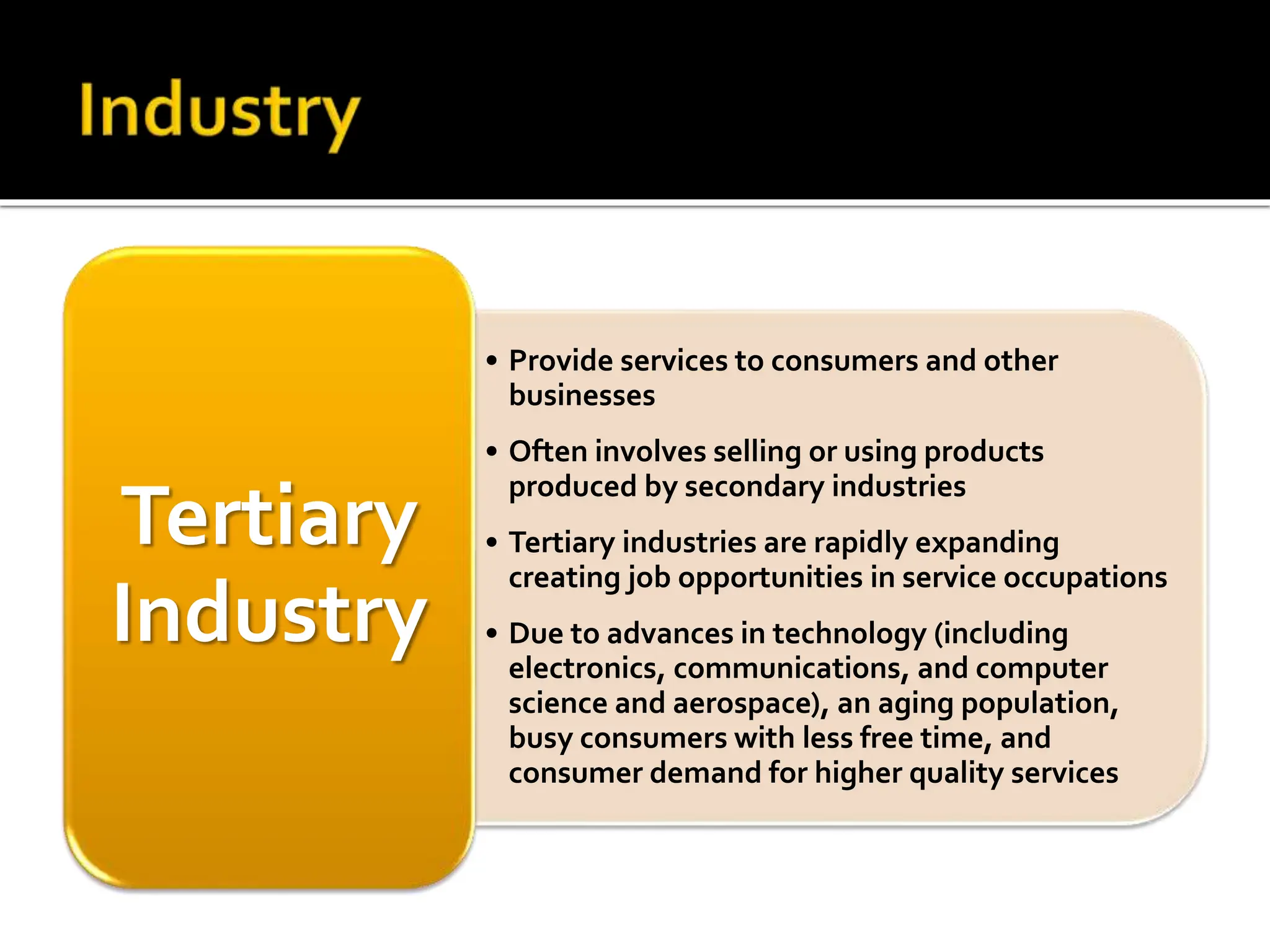
• Provide services to consumers and other
businesses
• Often involves selling or using products
produced by secondary industries
• Tertiary industries are rapidly expanding
creating job opportunities in service occupations
• Due to advances in technology (including
electronics, communications, and computer
science and aerospace), an aging population,
busy consumers with less free time, and
consumer demand for higher quality services
Tertiary
Industry
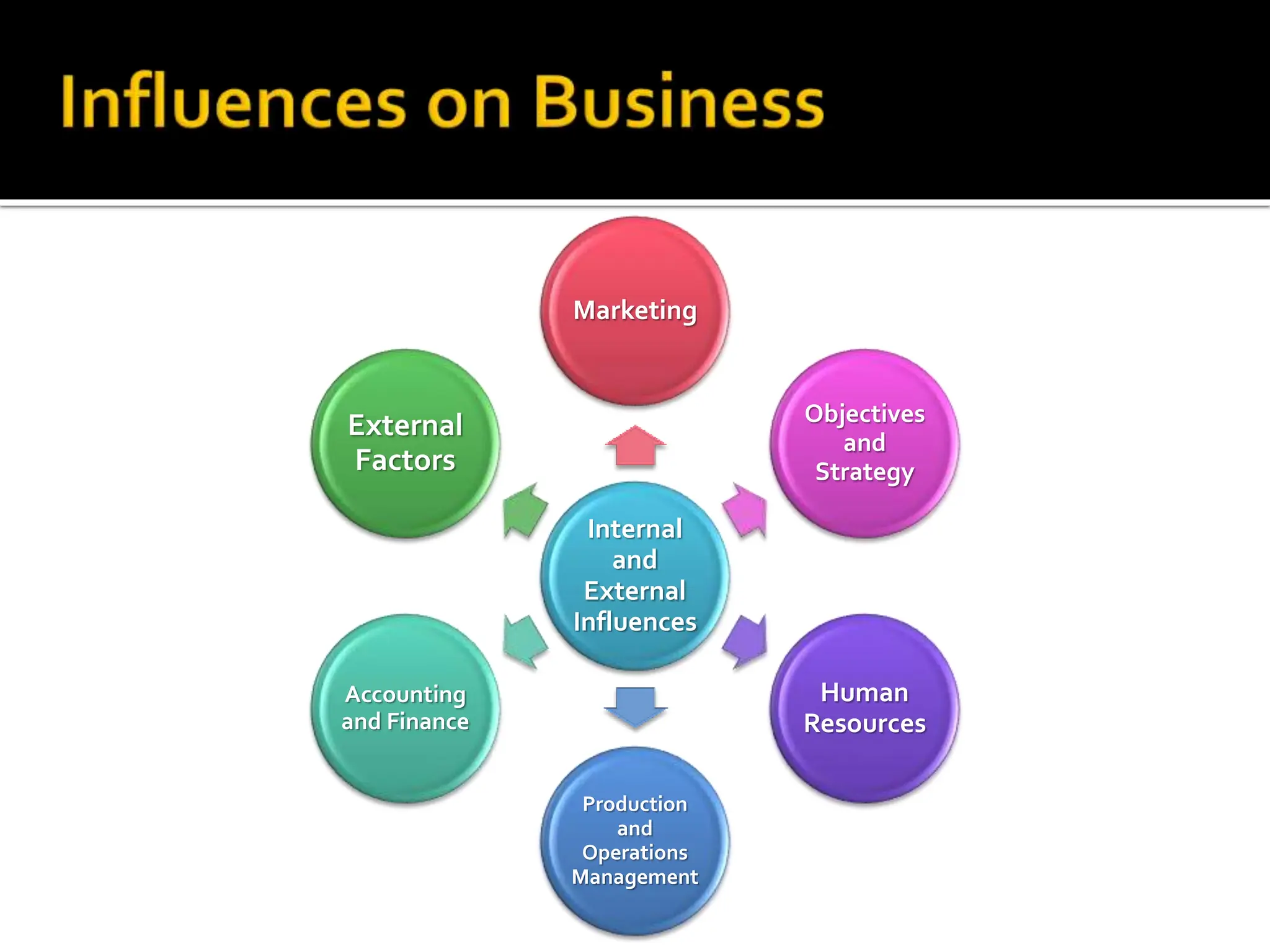
Internal
and
External
Influences
Marketing
Objectives
and
Strategy
Human
Resources
Production
and
Operations
Management
Accounting
and Finance
External
Factors
Internal
and
External
Influences
Marketing
Objectives
and
Strategy
Human
Resources
Production
and
Operations
Management
Accounting
and Finance
External
Factors
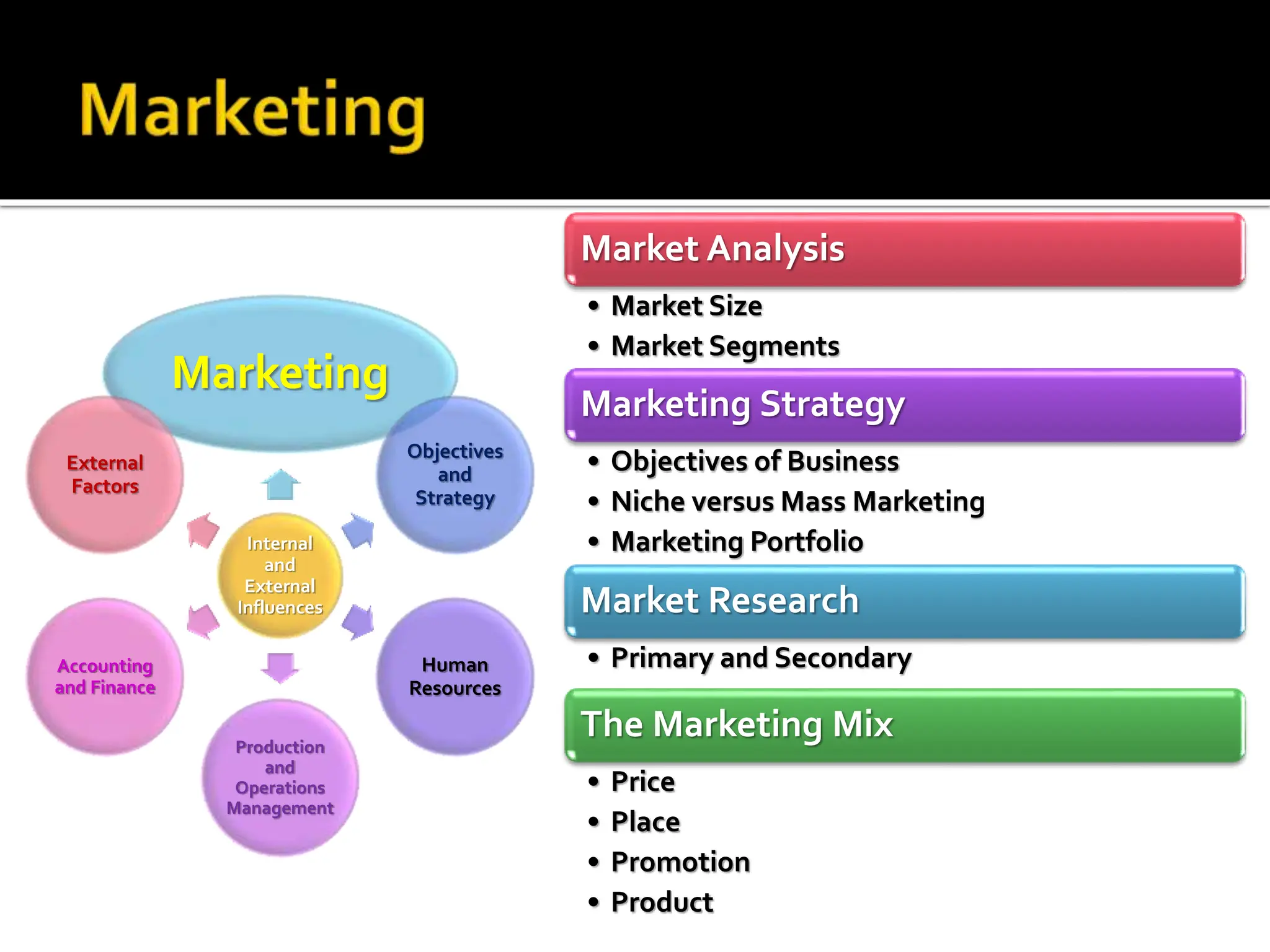
Market Analysis
• Market Size
• Market Segments
Marketing Strategy
• Objectives of Business
• Niche versus Mass Marketing
• Marketing Portfolio
Market Research
• Primary and Secondary
The Marketing Mix
• Price
• Place
• Promotion
• Product
Internal
and
External
Influences
Objectives
and Strategy
Human
Resources
Production
and
Operations
Management
Accounting
and Finance
External
Factors
Marketing
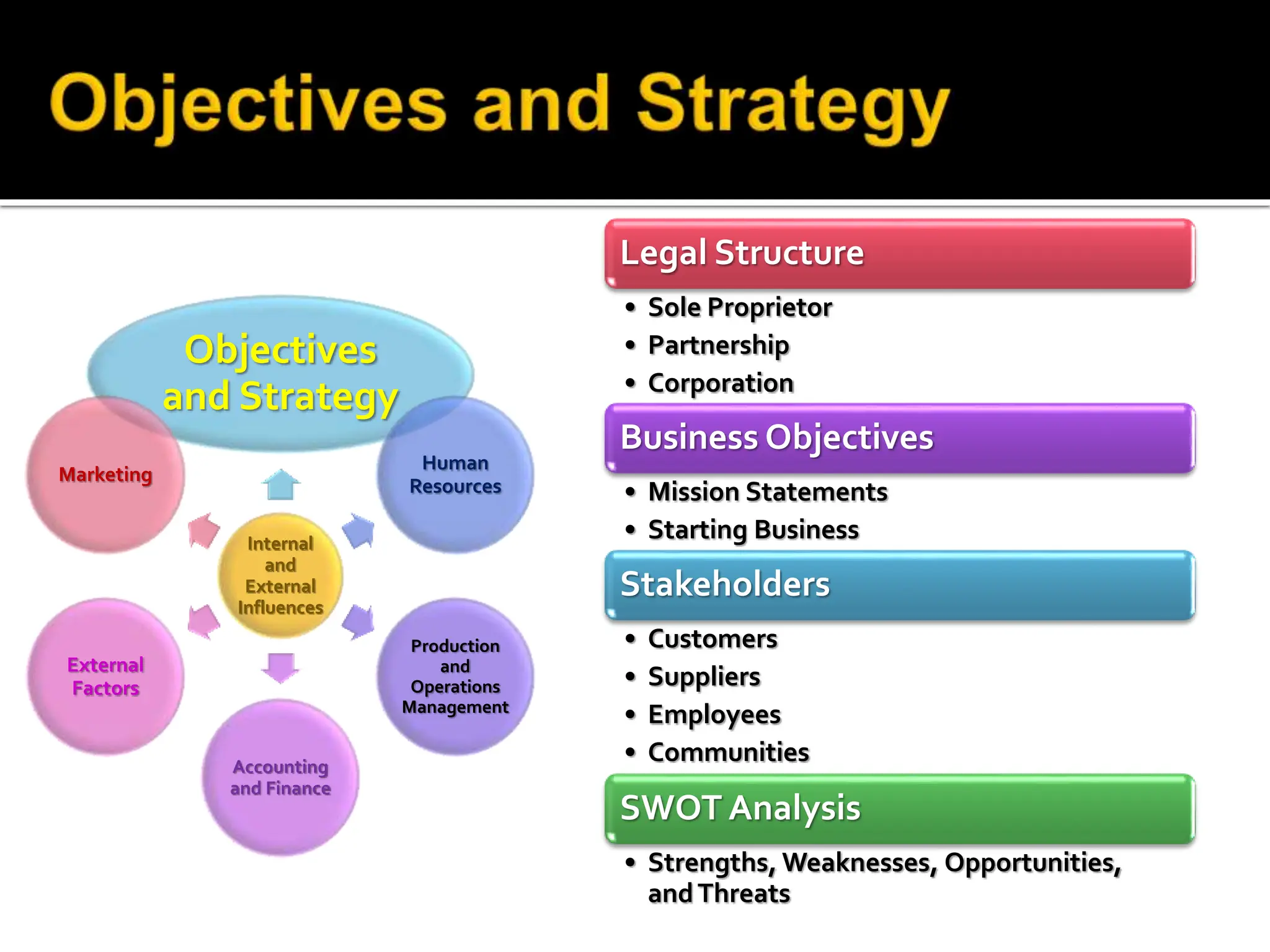
Legal Structure
• Sole Proprietor
• Partnership
• Corporation
Business Objectives
• Mission Statements
• Starting Business
Stakeholders
• Customers
• Suppliers
• Employees
• Communities
SWOT Analysis
• Strengths, Weaknesses, Opportunities,
andThreats
Internal
and
External
Influences
Human
Resources
Production
and
Operations
Management
Accounting
and Finance
External
Factors
Marketing
Objectives
and
Strategy
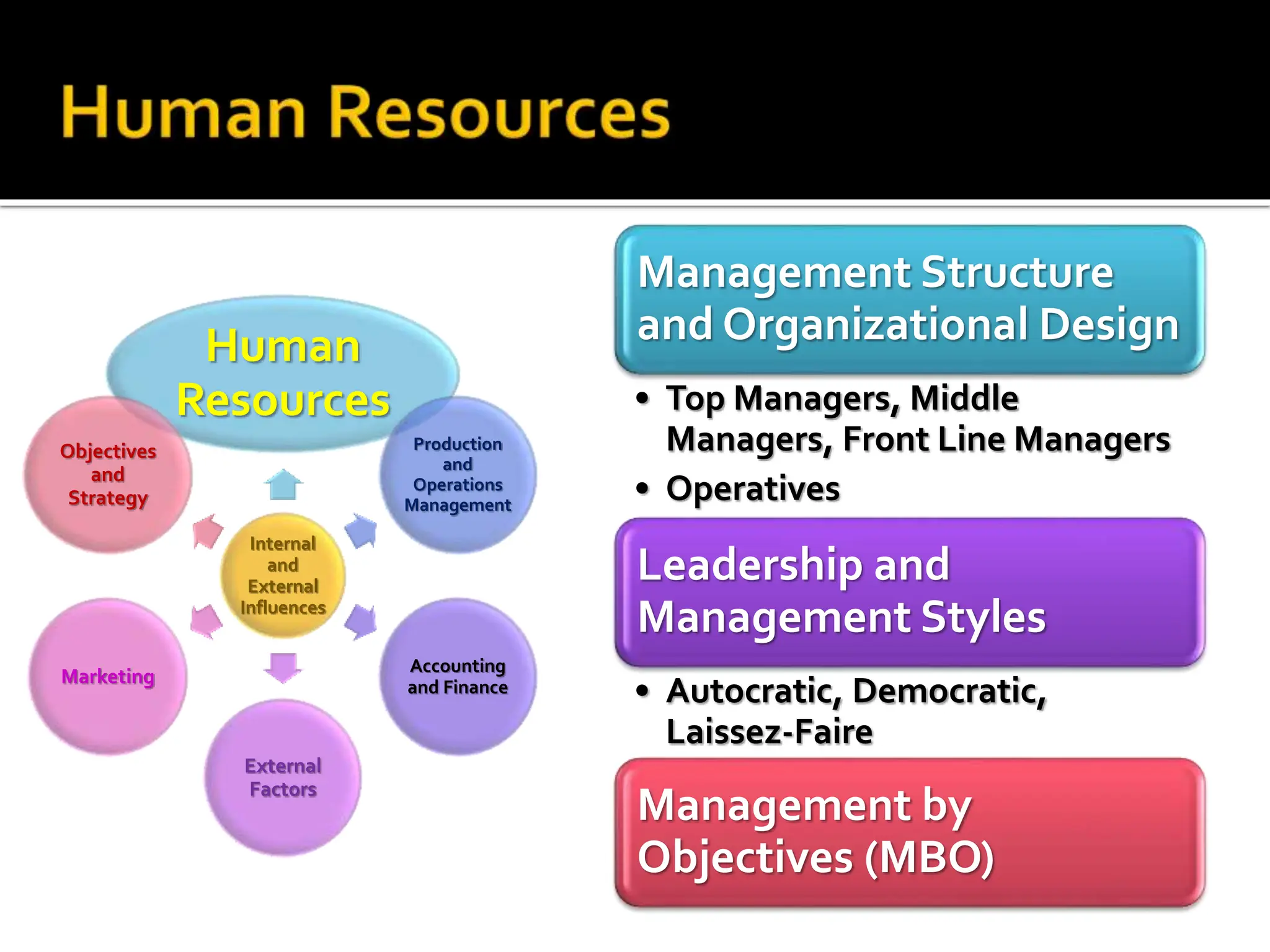
Management Structure
and Organizational Design
• Top Managers, Middle
Managers, Front Line Managers
• Operatives
Leadership and
Management Styles
• Autocratic, Democratic,
Laissez-Faire
Management by
Objectives (MBO)
Internal
and
External
Influences
Human
Resources
Production
and
Operations
Management
Accounting
and Finance
External
Factors
Marketing
Objectives
and
Strategy
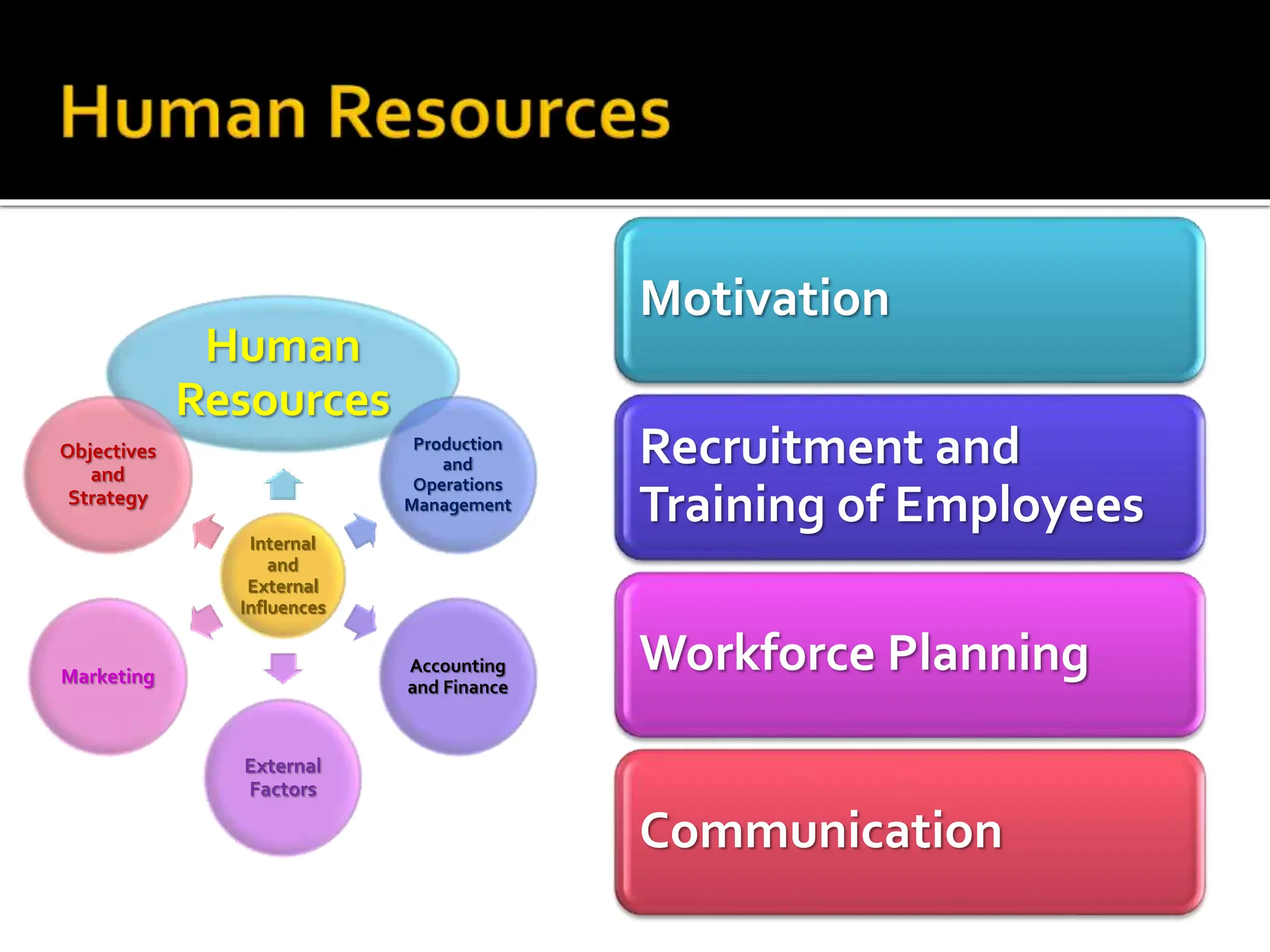
Motivation
Recruitment and
Training of Employees
Workforce Planning
Communication
Internal
and
External
Influences
Production and
Operations
Management
Accounting
and Finance
External
Factors
Marketing
Objectives
and
Strategy
Human
Resources
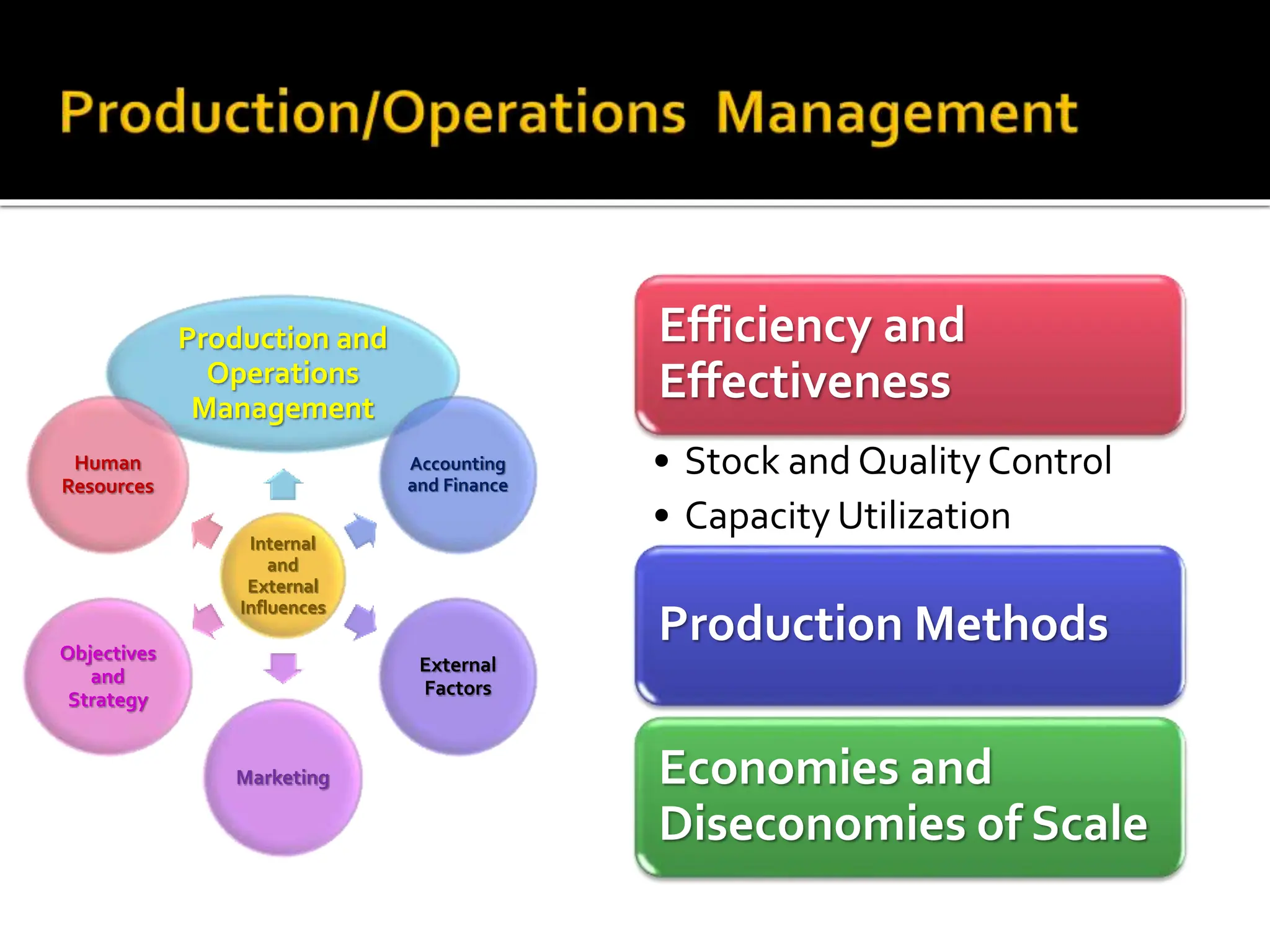
Efficiency and
Effectiveness
• Stock and QualityControl
• Capacity Utilization
Production Methods
Economies and
Diseconomies of Scale
Internal
and
External
Influences
Accounting and
Finance
External
Factors
Marketing
Objectives
and
Strategy
Human
Resources
Production
and
Operations
Managemen
t
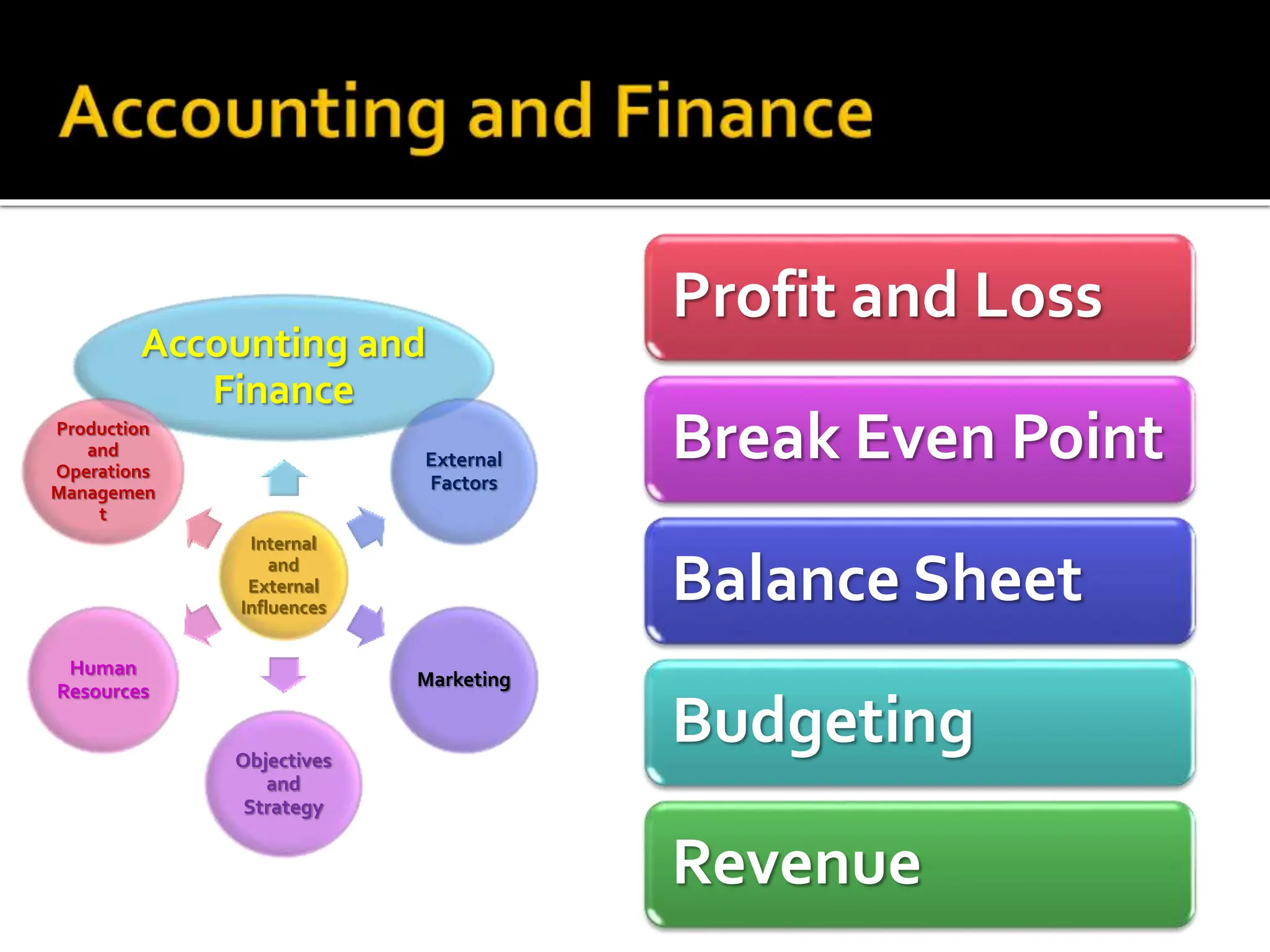
Profit and Loss
Break Even Point
Balance Sheet
Budgeting
Revenue
Internal
and
External
Influences
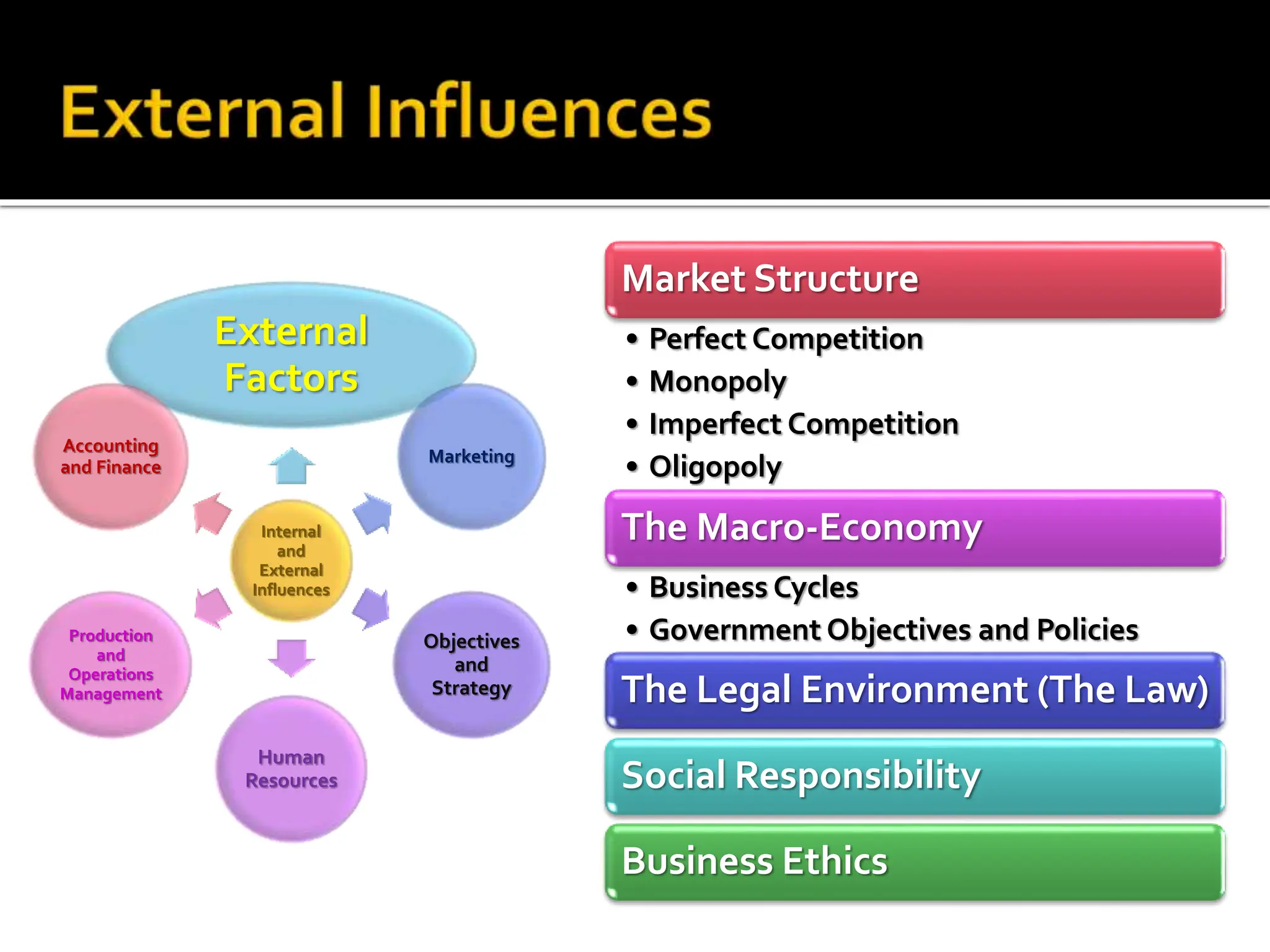
External
Factors
Marketing
Objectives
and
Strategy
Human
Resources
Production
and
Operations
Management
Accounting
and Finance
Market Structure
• Perfect Competition
• Monopoly
• Imperfect Competition
• Oligopoly
The Macro-Economy
• Business Cycles
• Government Objectives and Policies
The Legal Environment (The Law)
Social Responsibility
Business Ethics

Nature and Purpose of Business org.pptxx.