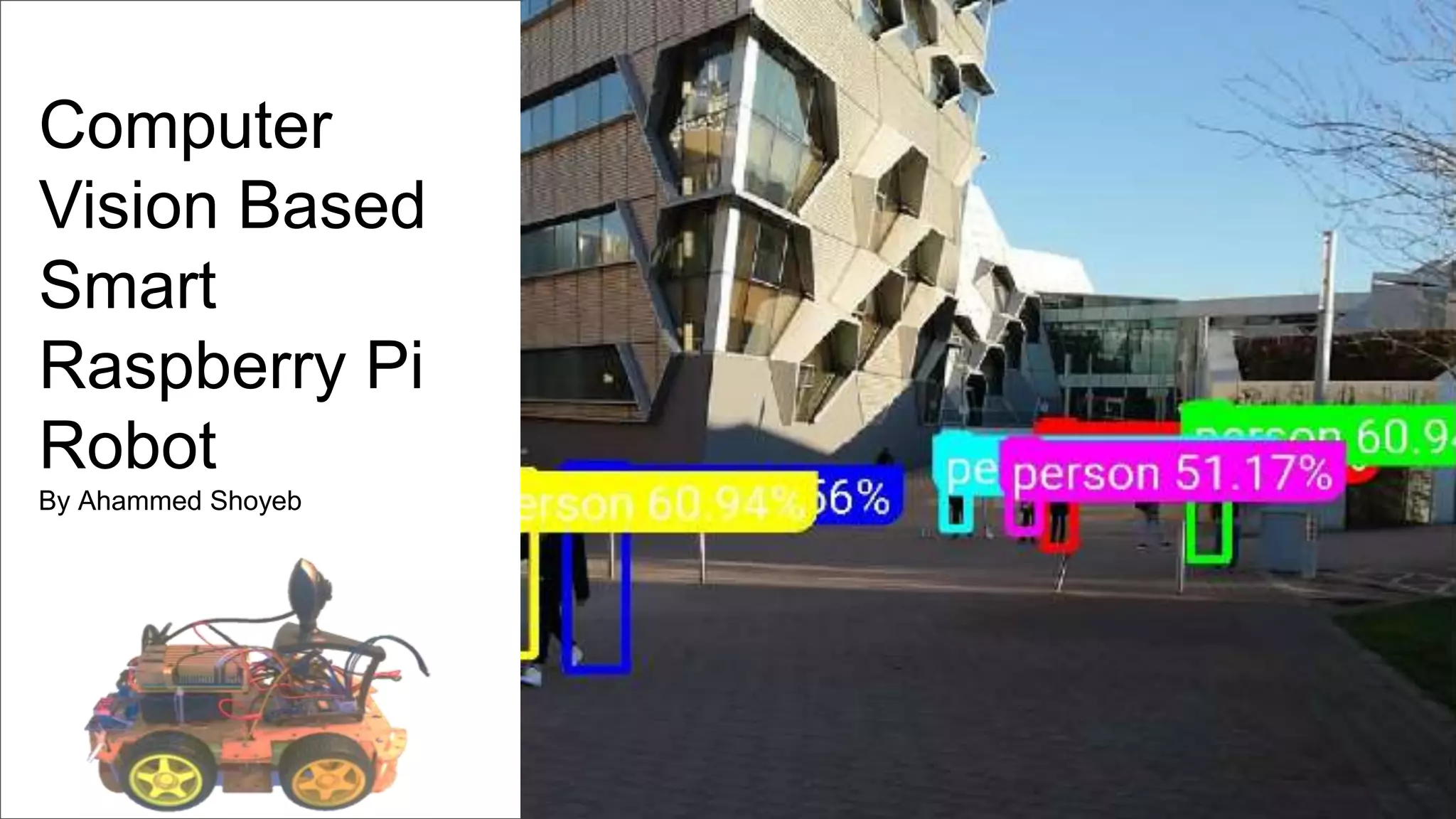
Computer
Vision Based
Smart
Raspberry Pi
Robot
By Ahammed Shoyeb
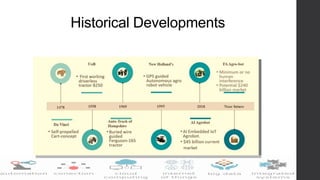
Historical Developments
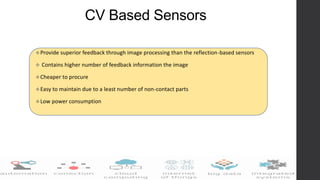
CV Based Sensors
Provide superior feedback through image processing than the reflection-based sensors
 Contains higher number of feedback information the image
Cheaper to procure
Easy to maintain due to a least number of non-contact parts
Low power consumption
Aim of the project
This project is aimed at developing an efficient, deployable Computer Vision (CV) based
Raspberry Pi 4 powered mobile autonomous robot vehicle.
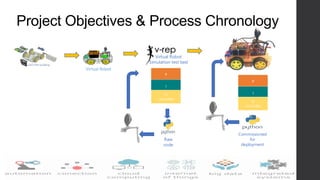
Project Objectives & Process Chronology
Virtual Robot
Simulation test bed
P
I
D
controller
Raw
code
Commissioned
for
deployment
P
I
D
controller
Virtual Robot
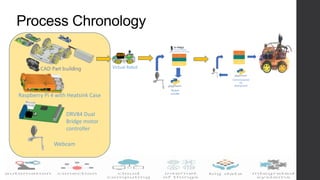
Process Chronology
Virtual Robot
Simulation test bed
P
I
D
controller
Raw
code
Commissioned
for
deployment
P
I
D
controller
Virtual Robot
Raspberry Pi 4 with Heatsink Case
DRV84 Dual
Bridge motor
controller
Webcam
Process Chronology
Commissioned
for
deployment
P
I
D
controller
Virtual Robot
Virtual Robot
Simulation test bed
P
I
D
controller
Raw
code
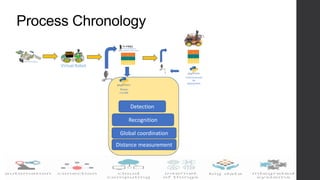
Detection
Recognition
Global coordination
Distance measurement
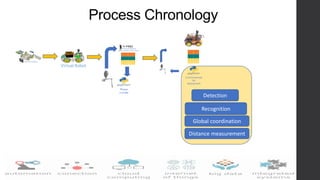
Process Chronology
Virtual Robot
Simulation test bed
P
I
D
controller
Raw
code
Virtual Robot
Commissioned
for
deployment
P
I
D
controller
Detection
Recognition
Global coordination
Distance measurement
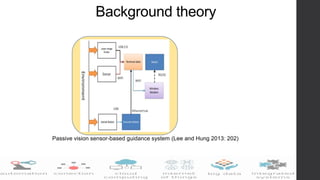
Background theory
Passive vision sensor-based guidance system (Lee and Hung 2013: 202)
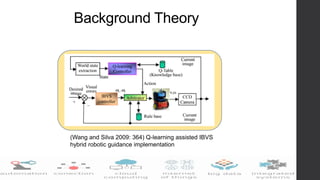
Background Theory
(Wang and Silva 2009: 364) Q-learning assisted IBVS
hybrid robotic guidance implementation
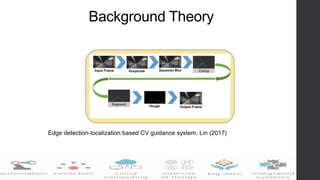
Background Theory
Edge detection-localization based CV guidance system, Lin (2017)
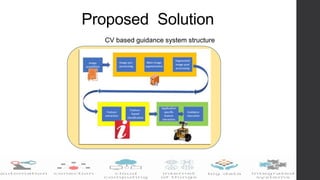
Proposed Solution
CV based guidance system structure
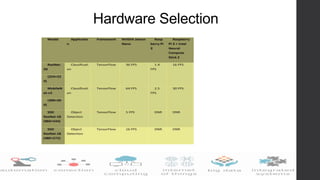
Hardware Selection
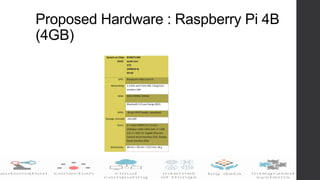
Proposed Hardware : Raspberry Pi 4B
(4GB)
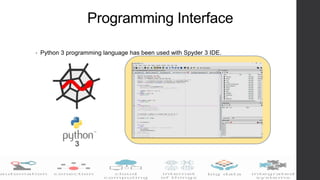
Programming Interface
• Python 3 programming language has been used with Spyder 3 IDE.
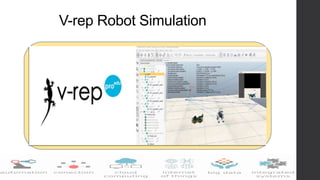
V-rep Robot Simulation
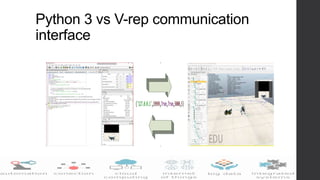
Python 3 vs V-rep communication
interface
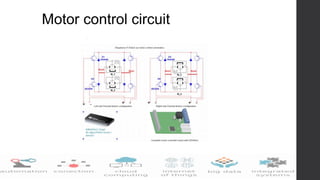
Motor control circuit
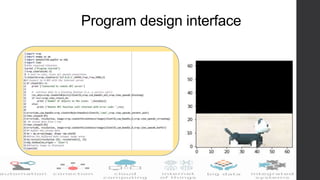
Program design interface
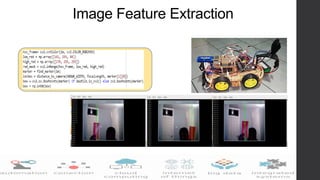
Image Feature Extraction
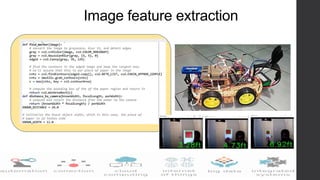
Image feature extraction
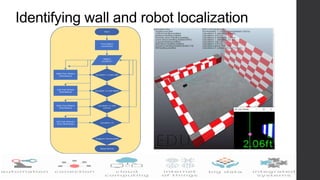
Identifying wall and robot localization
Start
Find object
coordinate
Object
Location?
Location >1 and Left
Location >1 and Right
Location >1 and
Centre
Location <1
Left Pair Wheel
(Clockwise)
Right Pair Wheel
(Clockwise)
Both Pair Wheel
(Clockwise)
Left Pair Wheel (
Anti-Clockwise)
Program Terminated
Reset & End
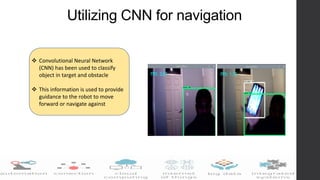
Utilizing CNN for navigation
 Convolutional Neural Network
(CNN) has been used to classify
object in target and obstacle
 This information is used to provide
guidance to the robot to move
forward or navigate against
Project Outcome
The robotic guidance system developed is able to identify targets and navigate
to it
It can identify the obstacles (walls) and navigate against it
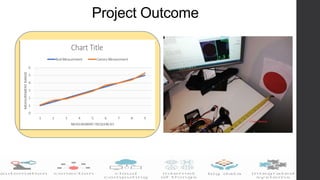
It can measure the target and obstacle distance, thus it can localize it’s own co-
ordinates
It follows a red blob and keep 1 feet distance away
It navigates against the wall
Project Outcome
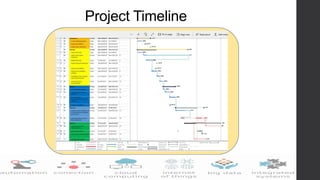
Project Timeline
Project process reflection
Field of advanced robotic has been explored
Python robotic capability explored
Robotic hardware integration practiced
Real life entrepreneurship option explored
Project Conclusion
• The project aim and objectives have been accomplished.
• A computer vision based robotic guidance system have been designed and
deployed
• It’s performance have been analyzed and documented
• Future project works will be to make the operational parameters more precise
and multi programming environment deployable.
Thanks For Attending
List of References
 Bellis, M. (Jul. 3, 2019, thoughtco.com/definition-of-a-robot-1992364.) the
Definition of a Robot [online] available from <www.thoughtco.com/definition-of-a-
robot-1992364.> [11/10 2019]
 Billingsley, J. e. and Brett, P. e. (2015) Machine Vision and Mechatronics in
Practice. 1st ed. 2015.. edn
 Chaumette, F. (2015) Potential Problems of Unstability and Divergence in
Image-Based and Position-Based Visual Servoing.
 Chesi, G. and Hung, Y. S. (2007) 'Global Path-Planning for Constrained and
Optimal Visual Servoing'. IEEE Transactions on Robotics 23 (5), 1050-1060
 Dastur, J. and Khawaja, A. (2010) Robotic Arm Actuation with 7 DOF using Haar
Classifier Gesture Recognition.
 Di Castro, M., Almagro, C. V., Lunghi, G., Marin, R., Ferre, M., and Masi, A.
(2018) Tracking-Based Depth Estimation of Metallic Pieces for Robotic Guidance.

Computer Vision (CV) based Raspberry Pi robot vehicle

  • 1.
  • 2.
  • 3.
    CV Based Sensors Providesuperior feedback through image processing than the reflection-based sensors  Contains higher number of feedback information the image Cheaper to procure Easy to maintain due to a least number of non-contact parts Low power consumption
  • 4.
    Aim of theproject This project is aimed at developing an efficient, deployable Computer Vision (CV) based Raspberry Pi 4 powered mobile autonomous robot vehicle.
  • 5.
    Project Objectives &Process Chronology Virtual Robot Simulation test bed P I D controller Raw code Commissioned for deployment P I D controller Virtual Robot
  • 6.
    Process Chronology Virtual Robot Simulationtest bed P I D controller Raw code Commissioned for deployment P I D controller Virtual Robot Raspberry Pi 4 with Heatsink Case DRV84 Dual Bridge motor controller Webcam
  • 7.
    Process Chronology Commissioned for deployment P I D controller Virtual Robot VirtualRobot Simulation test bed P I D controller Raw code Detection Recognition Global coordination Distance measurement
  • 8.
    Process Chronology Virtual Robot Simulationtest bed P I D controller Raw code Virtual Robot Commissioned for deployment P I D controller Detection Recognition Global coordination Distance measurement
  • 9.
    Background theory Passive visionsensor-based guidance system (Lee and Hung 2013: 202)
  • 10.
    Background Theory (Wang andSilva 2009: 364) Q-learning assisted IBVS hybrid robotic guidance implementation
  • 11.
    Background Theory Edge detection-localizationbased CV guidance system, Lin (2017)
  • 12.
    Proposed Solution CV basedguidance system structure
  • 13.
  • 14.
    Proposed Hardware :Raspberry Pi 4B (4GB)
  • 15.
    Programming Interface • Python3 programming language has been used with Spyder 3 IDE.
  • 16.
  • 17.
    Python 3 vsV-rep communication interface
  • 18.
  • 19.
  • 20.
  • 21.
  • 22.
    Identifying wall androbot localization Start Find object coordinate Object Location? Location >1 and Left Location >1 and Right Location >1 and Centre Location <1 Left Pair Wheel (Clockwise) Right Pair Wheel (Clockwise) Both Pair Wheel (Clockwise) Left Pair Wheel ( Anti-Clockwise) Program Terminated Reset & End
  • 23.
    Utilizing CNN fornavigation  Convolutional Neural Network (CNN) has been used to classify object in target and obstacle  This information is used to provide guidance to the robot to move forward or navigate against
  • 24.
    Project Outcome The roboticguidance system developed is able to identify targets and navigate to it It can identify the obstacles (walls) and navigate against it It can measure the target and obstacle distance, thus it can localize it’s own co- ordinates It follows a red blob and keep 1 feet distance away It navigates against the wall
  • 25.
  • 26.
  • 27.
    Project process reflection Fieldof advanced robotic has been explored Python robotic capability explored Robotic hardware integration practiced Real life entrepreneurship option explored
  • 28.
    Project Conclusion • Theproject aim and objectives have been accomplished. • A computer vision based robotic guidance system have been designed and deployed • It’s performance have been analyzed and documented • Future project works will be to make the operational parameters more precise and multi programming environment deployable.
  • 29.
  • 30.
    List of References Bellis, M. (Jul. 3, 2019, thoughtco.com/definition-of-a-robot-1992364.) the Definition of a Robot [online] available from <www.thoughtco.com/definition-of-a- robot-1992364.> [11/10 2019]  Billingsley, J. e. and Brett, P. e. (2015) Machine Vision and Mechatronics in Practice. 1st ed. 2015.. edn  Chaumette, F. (2015) Potential Problems of Unstability and Divergence in Image-Based and Position-Based Visual Servoing.  Chesi, G. and Hung, Y. S. (2007) 'Global Path-Planning for Constrained and Optimal Visual Servoing'. IEEE Transactions on Robotics 23 (5), 1050-1060  Dastur, J. and Khawaja, A. (2010) Robotic Arm Actuation with 7 DOF using Haar Classifier Gesture Recognition.  Di Castro, M., Almagro, C. V., Lunghi, G., Marin, R., Ferre, M., and Masi, A. (2018) Tracking-Based Depth Estimation of Metallic Pieces for Robotic Guidance.