Computer system security and
control
Information security is the protection of
computer systems and networks from theft or
damage to the hardware, software or electronic
data as well as from the disruption or
misdirection of the services they provide.
Objectives of information security
It focuses on three goals:
1. Confidentiality: preventing the disclosure of
information to unauthorized users.
2. Data integrity : ensuring the accuracy and
authenticity of data. Only authorized persons
may edit data and they need to follow
procedures to prevent former employees from
retaining the ability to alter company data
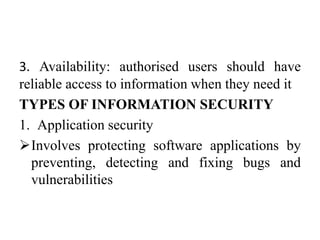
3. Availability: authorised users should have
reliable access to information when they need it
TYPES OF INFORMATION SECURITY
1. Application security
Involves protecting software applications by
preventing, detecting and fixing bugs and
vulnerabilities
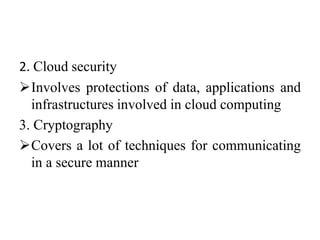
2. Cloud security
Involves protections of data, applications and
infrastructures involved in cloud computing
3. Cryptography
Covers a lot of techniques for communicating
in a secure manner
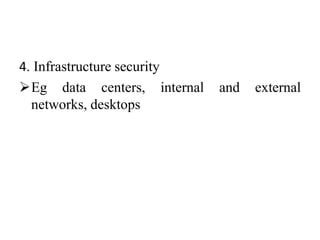
4. Infrastructure security
Eg data centers, internal and external
networks, desktops
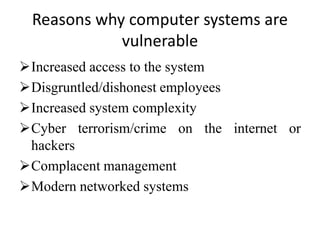
Reasons why computer systems are
vulnerable
Increased access to the system
Disgruntled/dishonest employees
Increased system complexity
Cyber terrorism/crime on the internet or
hackers
Complacent management
Modern networked systems
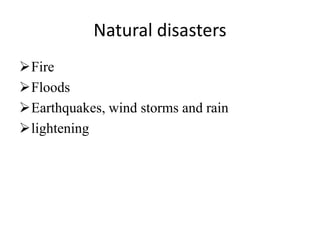
Natural disasters
Fire
Floods
Earthquakes, wind storms and rain
lightening
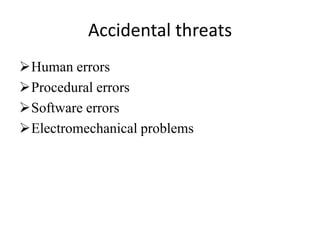
Accidental threats
Human errors
Procedural errors
Software errors
Electromechanical problems
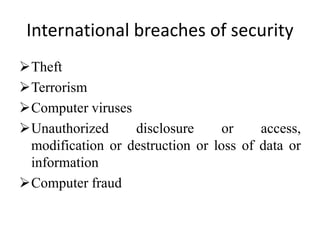
International breaches of security
Theft
Terrorism
Computer viruses
Unauthorized disclosure or access,
modification or destruction or loss of data or
information
Computer fraud
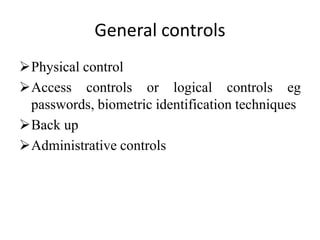
General controls
Physical control
Access controls or logical controls eg
passwords, biometric identification techniques
Back up
Administrative controls
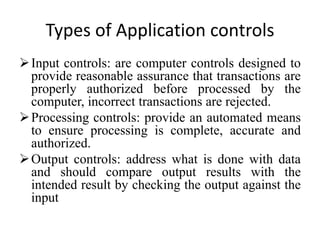
Types of Application controls
Input controls: are computer controls designed to
provide reasonable assurance that transactions are
properly authorized before processed by the
computer, incorrect transactions are rejected.
Processing controls: provide an automated means
to ensure processing is complete, accurate and
authorized.
Output controls: address what is done with data
and should compare output results with the
intended result by checking the output against the
input
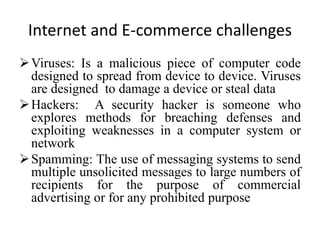
Internet and E-commerce challenges
Viruses: Is a malicious piece of computer code
designed to spread from device to device. Viruses
are designed to damage a device or steal data
Hackers: A security hacker is someone who
explores methods for breaching defenses and
exploiting weaknesses in a computer system or
network
Spamming: The use of messaging systems to send
multiple unsolicited messages to large numbers of
recipients for the purpose of commercial
advertising or for any prohibited purpose
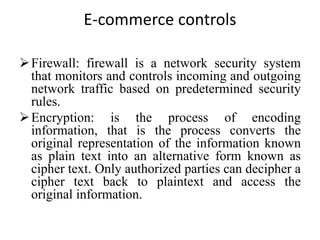
E-commerce controls
Firewall: firewall is a network security system
that monitors and controls incoming and outgoing
network traffic based on predetermined security
rules.
Encryption: is the process of encoding
information, that is the process converts the
original representation of the information known
as plain text into an alternative form known as
cipher text. Only authorized parties can decipher a
cipher text back to plaintext and access the
original information.
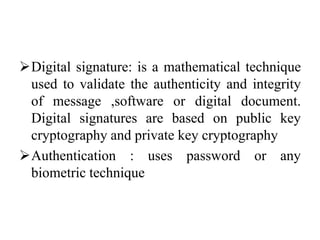
Digital signature: is a mathematical technique
used to validate the authenticity and integrity
of message ,software or digital document.
Digital signatures are based on public key
cryptography and private key cryptography
Authentication : uses password or any
biometric technique

Computer system security and control-2.pptx

  • 1.
  • 2.
    Information security isthe protection of computer systems and networks from theft or damage to the hardware, software or electronic data as well as from the disruption or misdirection of the services they provide.
  • 3.
    Objectives of informationsecurity It focuses on three goals: 1. Confidentiality: preventing the disclosure of information to unauthorized users. 2. Data integrity : ensuring the accuracy and authenticity of data. Only authorized persons may edit data and they need to follow procedures to prevent former employees from retaining the ability to alter company data
  • 4.
    3. Availability: authorisedusers should have reliable access to information when they need it TYPES OF INFORMATION SECURITY 1. Application security Involves protecting software applications by preventing, detecting and fixing bugs and vulnerabilities
  • 5.
    2. Cloud security Involvesprotections of data, applications and infrastructures involved in cloud computing 3. Cryptography Covers a lot of techniques for communicating in a secure manner
  • 6.
    4. Infrastructure security Egdata centers, internal and external networks, desktops
  • 7.
    Reasons why computersystems are vulnerable Increased access to the system Disgruntled/dishonest employees Increased system complexity Cyber terrorism/crime on the internet or hackers Complacent management Modern networked systems
  • 8.
  • 9.
    Accidental threats Human errors Proceduralerrors Software errors Electromechanical problems
  • 10.
    International breaches ofsecurity Theft Terrorism Computer viruses Unauthorized disclosure or access, modification or destruction or loss of data or information Computer fraud
  • 11.
    General controls Physical control Accesscontrols or logical controls eg passwords, biometric identification techniques Back up Administrative controls
  • 12.
    Types of Applicationcontrols Input controls: are computer controls designed to provide reasonable assurance that transactions are properly authorized before processed by the computer, incorrect transactions are rejected. Processing controls: provide an automated means to ensure processing is complete, accurate and authorized. Output controls: address what is done with data and should compare output results with the intended result by checking the output against the input
  • 13.
    Internet and E-commercechallenges Viruses: Is a malicious piece of computer code designed to spread from device to device. Viruses are designed to damage a device or steal data Hackers: A security hacker is someone who explores methods for breaching defenses and exploiting weaknesses in a computer system or network Spamming: The use of messaging systems to send multiple unsolicited messages to large numbers of recipients for the purpose of commercial advertising or for any prohibited purpose
  • 14.
    E-commerce controls Firewall: firewallis a network security system that monitors and controls incoming and outgoing network traffic based on predetermined security rules. Encryption: is the process of encoding information, that is the process converts the original representation of the information known as plain text into an alternative form known as cipher text. Only authorized parties can decipher a cipher text back to plaintext and access the original information.
  • 15.
    Digital signature: isa mathematical technique used to validate the authenticity and integrity of message ,software or digital document. Digital signatures are based on public key cryptography and private key cryptography Authentication : uses password or any biometric technique