COMPOSITE
CONSTRUCTION
METHOD
COMPOSITE CONSTRUCTION
METHOD
The term is used to describe construction work that involves the use of more
than work material to create a structurally sound building foundation.
Composite construction is commonly used in large commercial building
projects, including multi-storey car parks, retail stores, warehouses and even
skyscrapers.
2
Common examples of composite materials include:
• Reinforced Concrete: Concrete combined with steel
reinforcement bars (rebar) to improve tensile strength.
• Fiber-Reinforced Polymers (FRP): Materials like carbon
or glass fibers embedded in a polymer matrix, used in
various structural applications.
• Steel-Concrete Composite Beams: Beams that combine
the compressive strength of concrete with the tensile
strength of steel.
3
WHERE IS COMPOSITE
CONSTRUCTION USED?
IN STRUCTURAL ENGINEERING
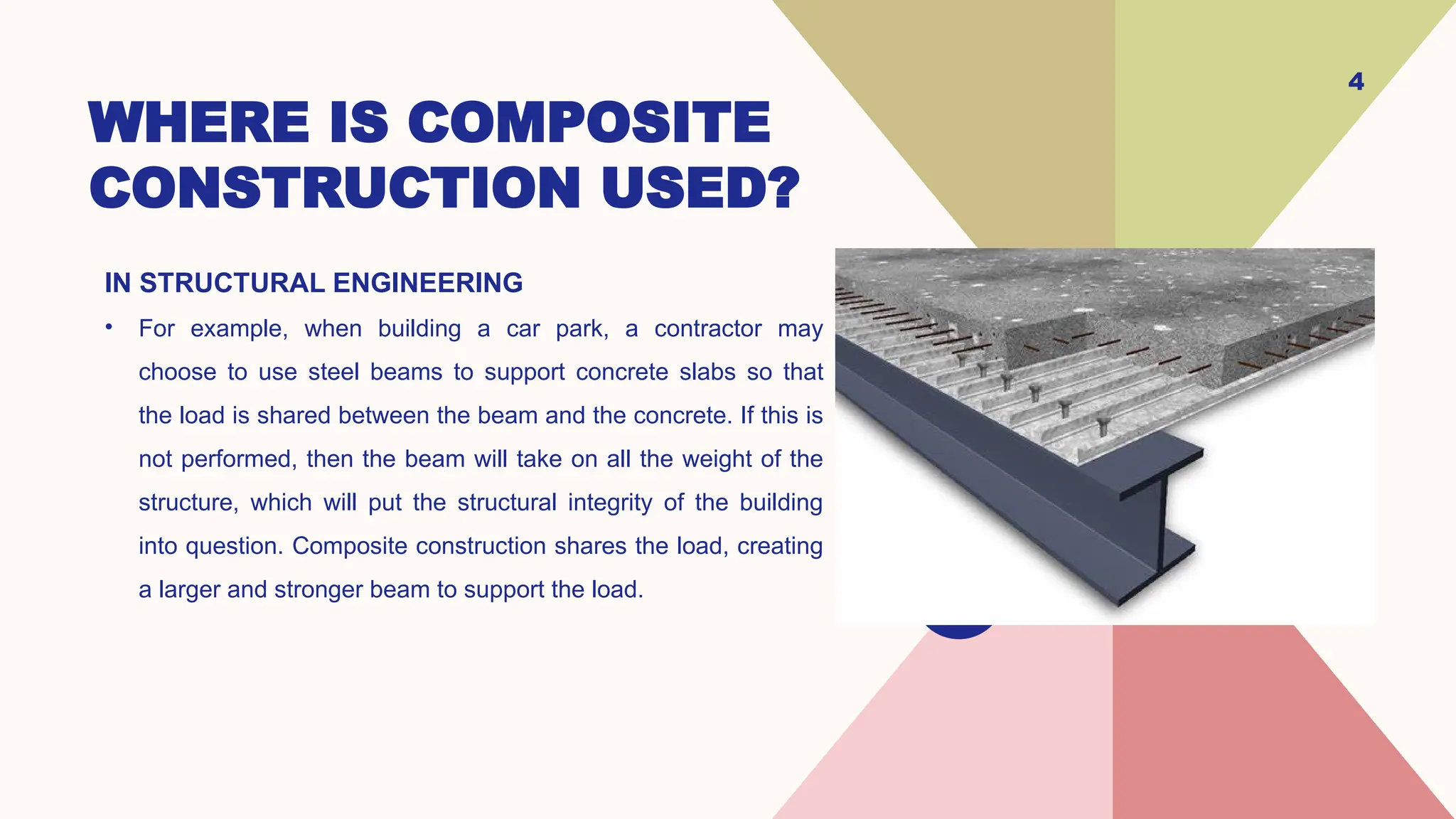
• For example, when building a car park, a contractor may
choose to use steel beams to support concrete slabs so that
the load is shared between the beam and the concrete. If this is
not performed, then the beam will take on all the weight of the
structure, which will put the structural integrity of the building
into question. Composite construction shares the load, creating
a larger and stronger beam to support the load.
4
WHERE IS COMPOSITE
CONSTRUCTION USED?
COMPOSITE STEEL DECKING
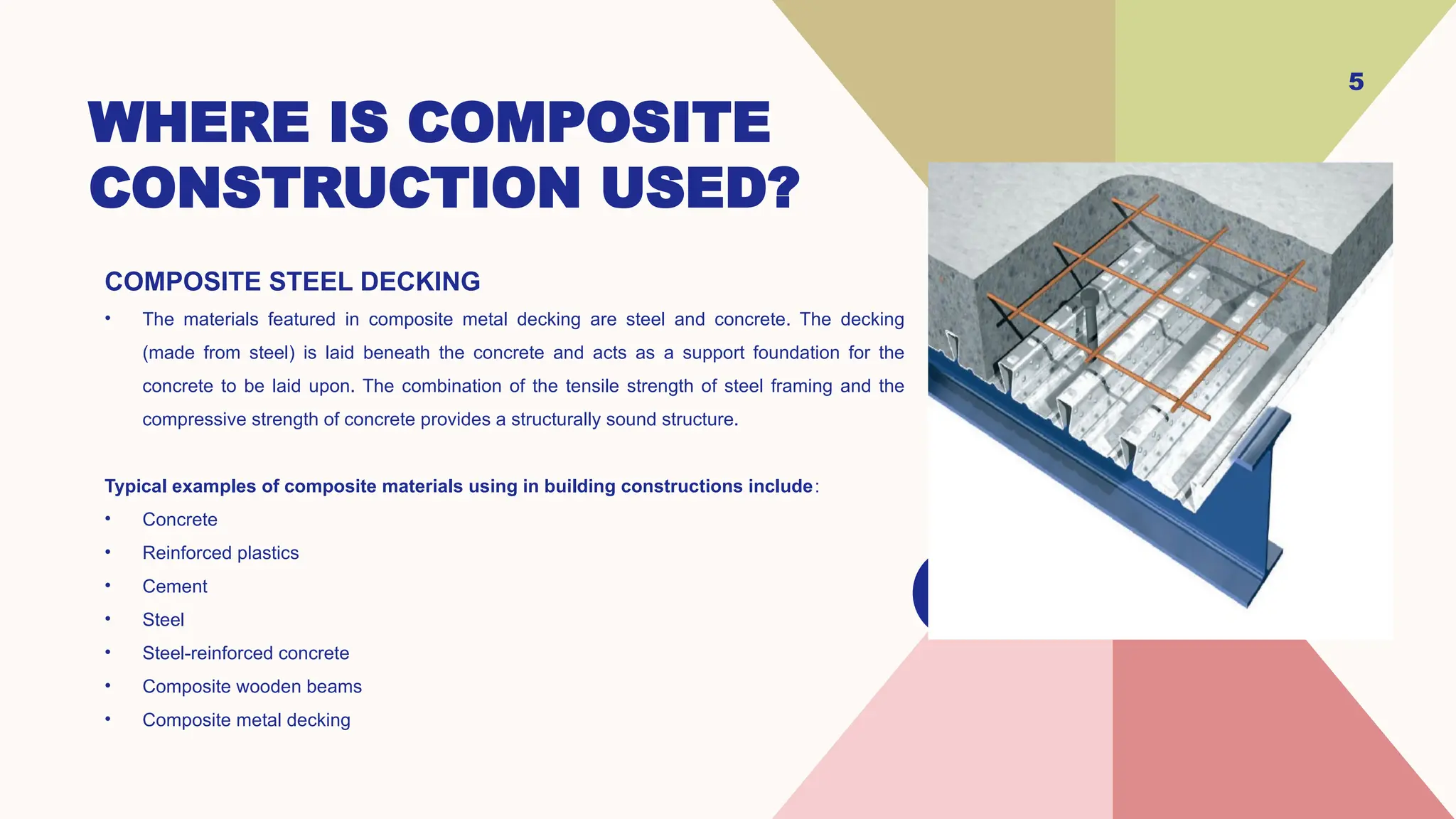
• The materials featured in composite metal decking are steel and concrete. The decking
(made from steel) is laid beneath the concrete and acts as a support foundation for the
concrete to be laid upon. The combination of the tensile strength of steel framing and the
compressive strength of concrete provides a structurally sound structure.
Typical examples of composite materials using in building constructions include:
• Concrete
• Reinforced plastics
• Cement
• Steel
• Steel-reinforced concrete
• Composite wooden beams
• Composite metal decking
5
TYPES OF COMPOSITE
BEAMS
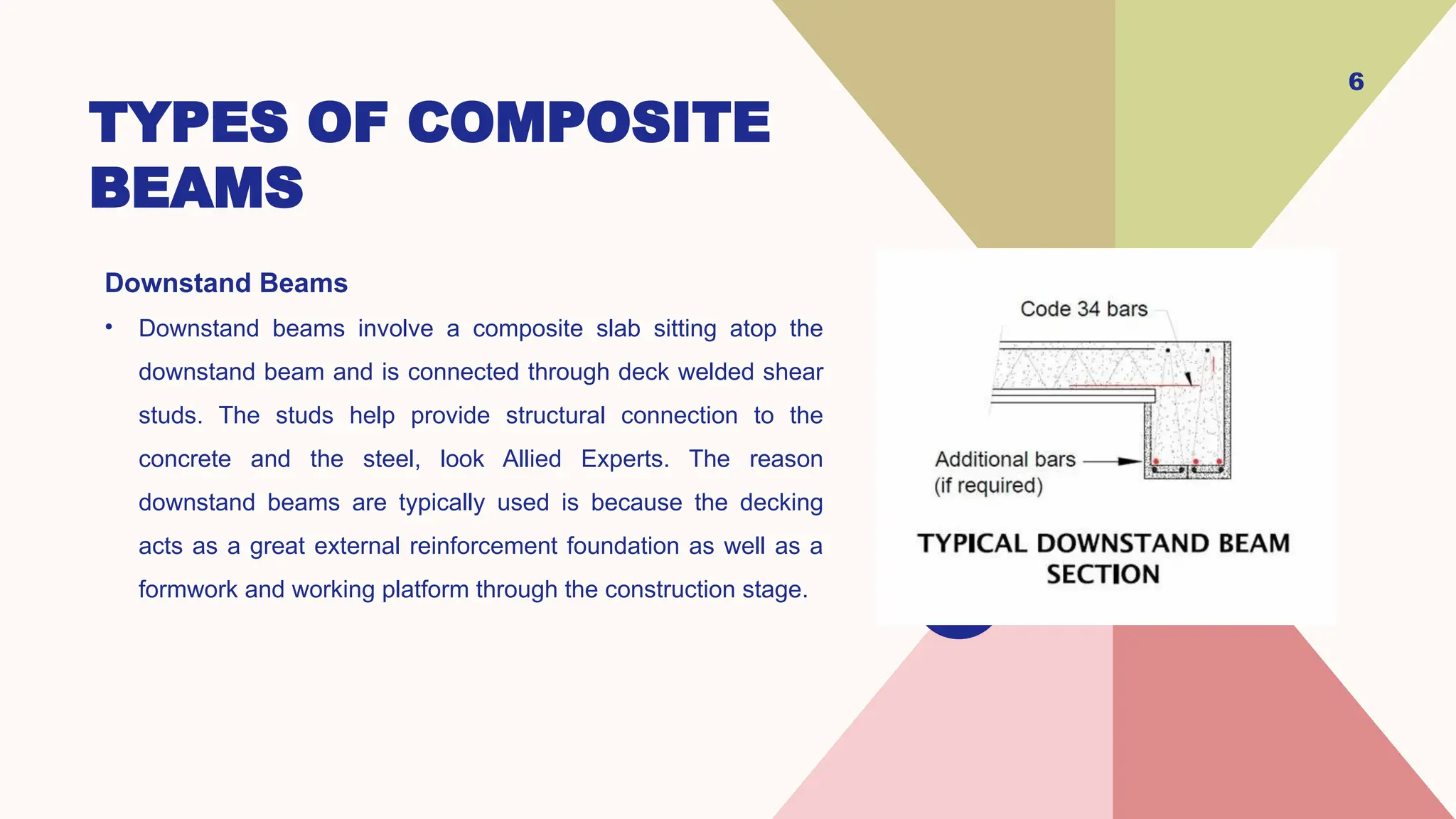
Downstand Beams
• Downstand beams involve a composite slab sitting atop the
downstand beam and is connected through deck welded shear
studs. The studs help provide structural connection to the
concrete and the steel, look Allied Experts. The reason
downstand beams are typically used is because the decking
acts as a great external reinforcement foundation as well as a
formwork and working platform through the construction stage.
6
TYPES OF COMPOSITE
BEAMS
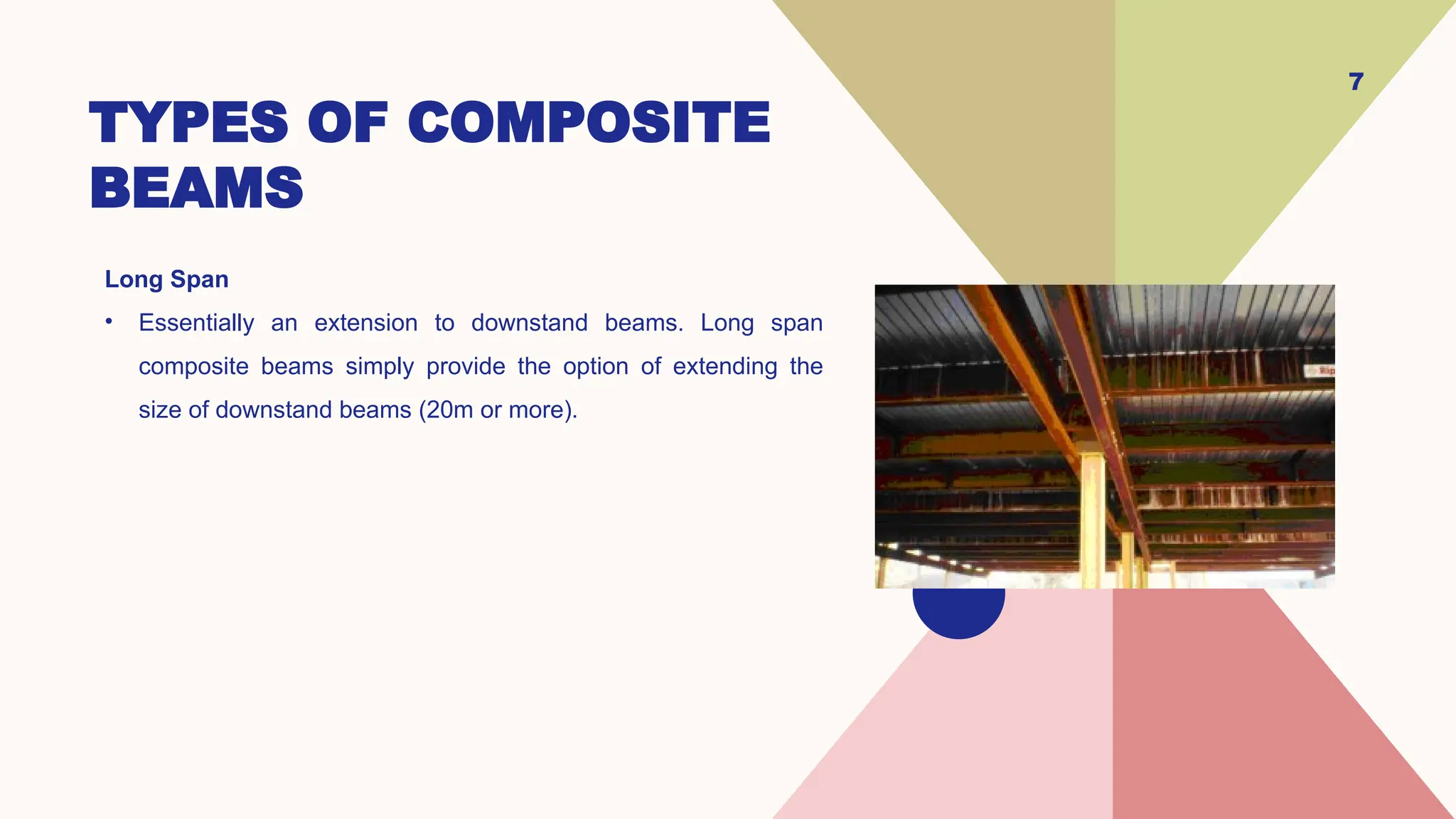
Long Span
• Essentially an extension to downstand beams. Long span
composite beams simply provide the option of extending the
size of downstand beams (20m or more).
7
THE ADVANTAGES OF
COMPOSITE CONSTRUCTION
• High Strength-to-Weight Ratio: Composites are strong yet
lightweight, making them ideal for applications where reducing
weight is crucial.
• Durability and Longevity: Many composite materials are
resistant to corrosion, chemicals, and UV exposure, leading to
longer service lives and lower maintenance costs.
• Cost-Effectiveness: Although initial costs may be higher,
composites can reduce overall construction costs due to lower
labor, maintenance, and repair expenses over time.
8

COMPOSITECONSTRUCTIONBUILDINGTECHNOLOGY5

  • 1.
  • 2.
    COMPOSITE CONSTRUCTION METHOD The termis used to describe construction work that involves the use of more than work material to create a structurally sound building foundation. Composite construction is commonly used in large commercial building projects, including multi-storey car parks, retail stores, warehouses and even skyscrapers. 2
  • 3.
    Common examples ofcomposite materials include: • Reinforced Concrete: Concrete combined with steel reinforcement bars (rebar) to improve tensile strength. • Fiber-Reinforced Polymers (FRP): Materials like carbon or glass fibers embedded in a polymer matrix, used in various structural applications. • Steel-Concrete Composite Beams: Beams that combine the compressive strength of concrete with the tensile strength of steel. 3
  • 4.
    WHERE IS COMPOSITE CONSTRUCTIONUSED? IN STRUCTURAL ENGINEERING • For example, when building a car park, a contractor may choose to use steel beams to support concrete slabs so that the load is shared between the beam and the concrete. If this is not performed, then the beam will take on all the weight of the structure, which will put the structural integrity of the building into question. Composite construction shares the load, creating a larger and stronger beam to support the load. 4
  • 5.
    WHERE IS COMPOSITE CONSTRUCTIONUSED? COMPOSITE STEEL DECKING • The materials featured in composite metal decking are steel and concrete. The decking (made from steel) is laid beneath the concrete and acts as a support foundation for the concrete to be laid upon. The combination of the tensile strength of steel framing and the compressive strength of concrete provides a structurally sound structure. Typical examples of composite materials using in building constructions include: • Concrete • Reinforced plastics • Cement • Steel • Steel-reinforced concrete • Composite wooden beams • Composite metal decking 5
  • 6.
    TYPES OF COMPOSITE BEAMS DownstandBeams • Downstand beams involve a composite slab sitting atop the downstand beam and is connected through deck welded shear studs. The studs help provide structural connection to the concrete and the steel, look Allied Experts. The reason downstand beams are typically used is because the decking acts as a great external reinforcement foundation as well as a formwork and working platform through the construction stage. 6
  • 7.
    TYPES OF COMPOSITE BEAMS LongSpan • Essentially an extension to downstand beams. Long span composite beams simply provide the option of extending the size of downstand beams (20m or more). 7
  • 8.
    THE ADVANTAGES OF COMPOSITECONSTRUCTION • High Strength-to-Weight Ratio: Composites are strong yet lightweight, making them ideal for applications where reducing weight is crucial. • Durability and Longevity: Many composite materials are resistant to corrosion, chemicals, and UV exposure, leading to longer service lives and lower maintenance costs. • Cost-Effectiveness: Although initial costs may be higher, composites can reduce overall construction costs due to lower labor, maintenance, and repair expenses over time. 8