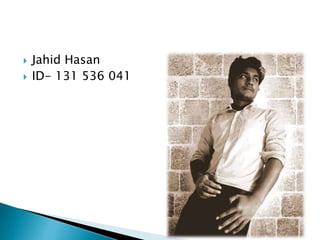
 Jahid Hasan
 ID- 131 536 041
 Study On Compliance Issues
 In
 BD Textile Industry
 Bangladesh has emerged as a key player in RMG
(Ready Made Garment) sector since 1978. Textiles
and clothing account for about 85% of total export
earnings of Bangladesh. Out of which, 76% comes
from the apparel sector which covers the major
products of knit and woven shirts, blouses, trousers,
skirts, shorts, jackets, sweaters, sports wears and
many more casual and fashion items. The sector
currently employs approximately 10.5 million
workers, mostly females from underprivileged social
classes.
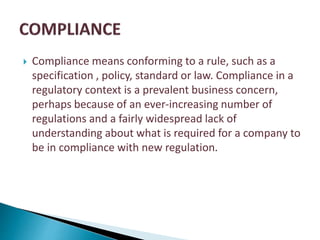
 Compliance means conforming to a rule, such as a
specification , policy, standard or law. Compliance in a
regulatory context is a prevalent business concern,
perhaps because of an ever-increasing number of
regulations and a fairly widespread lack of
understanding about what is required for a company to
be in compliance with new regulation.
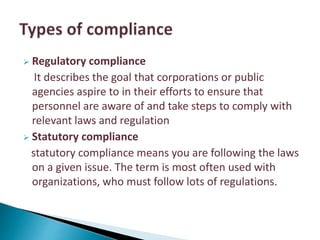
 Regulatory compliance
It describes the goal that corporations or public
agencies aspire to in their efforts to ensure that
personnel are aware of and take steps to comply with
relevant laws and regulation
 Statutory compliance
statutory compliance means you are following the laws
on a given issue. The term is most often used with
organizations, who must follow lots of regulations.
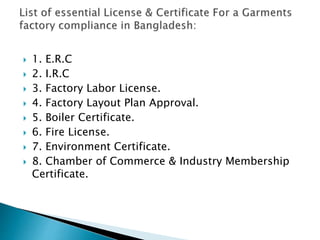
 1. E.R.C
 2. I.R.C
 3. Factory Labor License.
 4. Factory Layout Plan Approval.
 5. Boiler Certificate.
 6. Fire License.
 7. Environment Certificate.
 8. Chamber of Commerce & Industry Membership
Certificate.
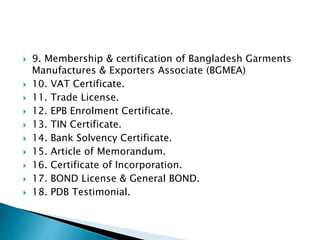
 9. Membership & certification of Bangladesh Garments
Manufactures & Exporters Associate (BGMEA)
 10. VAT Certificate.
 11. Trade License.
 12. EPB Enrolment Certificate.
 13. TIN Certificate.
 14. Bank Solvency Certificate.
 15. Article of Memorandum.
 16. Certificate of Incorporation.
 17. BOND License & General BOND.
 18. PDB Testimonial.
 A code of conduct is a set of rules outlining
the social norms and rules and
responsibilities of, or proper practices for, an
individual, party or organization. Related
concepts include ethical, honor, moral codes
and religious laws.
 Child labor
 Forced labor
 Health and safety
 Compensation
 Working hours
 Discrimination
 Free association and collective bargaining
 WRAP is an independent, objective, non-profit team
of global social compliance experts dedicated to
promoting safe, lawful, humane and ethical
manufacturing around the world through certification
and education. The WRAP Certification Program is
based on 12 Principles focusing on compliance with
local laws, workplace regulations, universal workers’
rights, the environment, customs compliance and
security.
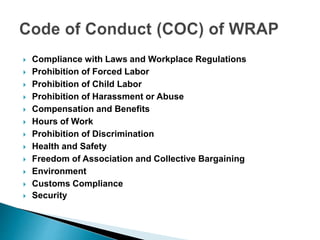
 Compliance with Laws and Workplace Regulations
 Prohibition of Forced Labor
 Prohibition of Child Labor
 Prohibition of Harassment or Abuse
 Compensation and Benefits
 Hours of Work
 Prohibition of Discrimination
 Health and Safety
 Freedom of Association and Collective Bargaining
 Environment
 Customs Compliance
 Security
 Social compliance of RMG factories is a key
requirement for most of the worldwide
reputed garments buyers. It ensures all
labour rights, labour standards, fair labor
practices and Code of Conduct according to
the ILO.
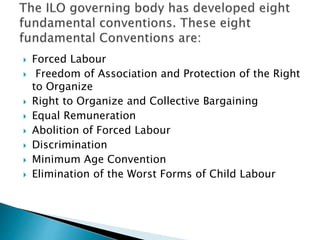
 Forced Labour
 Freedom of Association and Protection of the Right
to Organize
 Right to Organize and Collective Bargaining
 Equal Remuneration
 Abolition of Forced Labour
 Discrimination
 Minimum Age Convention
 Elimination of the Worst Forms of Child Labour
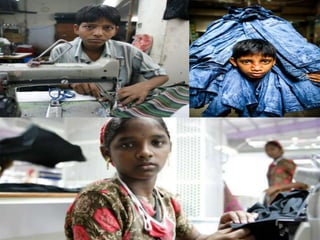
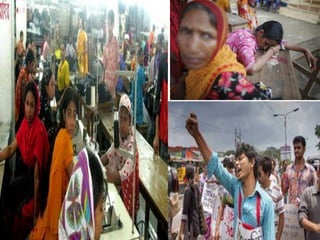
 The Garment industry is the most important source of
foreign currency. Bangladesh has about 2,500
garment factories and 10 million people are
dependent one it directly or indirectly an about 80
percent garment workers are woman. The garments
sector has become an important institution for
reduction of poverty. But the workers face many
problems during working time and outside. The main
problems faced by garments worker are:-
 Lower wages.
 No leisure time.
 Torture [physically and mentally]
 Negative outlook to them of the society.
 In order to protect labour rights, job security and other
benefits, workers should be provided with appointment
letters detailing the conditions of employment. Fair labor,
modern HRM practice and IR activities are needed to
improve working conditions in the RMG sector.
The introduction of modern HRM would ensure that
>labor standards are addressed
> that workers’ rights are not violated,
>safe working environment
>enhances job satisfaction
>job security
> introducing flexible working times
> encouraging new technology and introducing rewards,
benefits and other fringe payments.
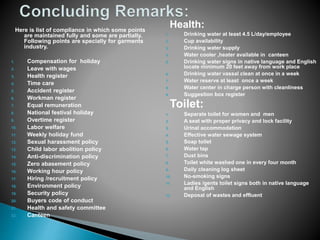
Here is list of compliance in which some points
are maintained fully and some are partially.
Following points are specially for garments
industry.
1. Compensation for holiday
2. Leave with wages
3. Health register
4. Time care
5. Accident register
6. Workman register
7. Equal remuneration
8. National festival holiday
9. Overtime register
10. Labor welfare
11. Weekly holiday fund
12. Sexual harassment policy
13. Child labor abolition policy
14. Anti-discrimination policy
15. Zero abasement policy
16. Working hour policy
17. Hiring /recruitment policy
18. Environment policy
19. Security policy
20. Buyers code of conduct
21. Health and safety committee
22. Canteen
Health:
1. Drinking water at least 4.5 L/day/employee
2. Cup availability
3. Drinking water supply
4. Water cooler ,heater available in canteen
5. Drinking water signs in native language and English
locate minimum 20 feet away from work place
6. Drinking water vassal clean at once in a week
7. Water reserve at least once a week
8. Water center in charge person with cleanliness
9. Suggestion box register
Toilet:
1. Separate toilet for women and men
2. A seat with proper privacy and lock facility
3. Urinal accommodation
4. Effective water sewage system
5. Soap toilet
6. Water tap
7. Dust bins
8. Toilet white washed one in every four month
9. Daily cleaning log sheet
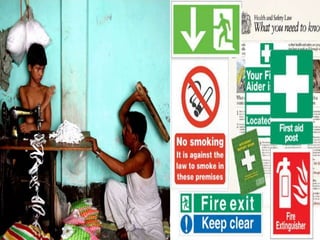
10. No-smoking signs
11. Ladies /gents toilet signs both in native language
and English
12. Deposal of wastes and effluent
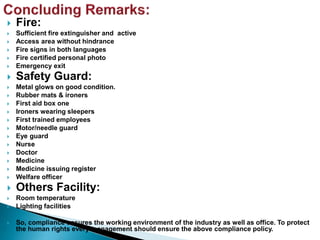
 Fire:
 Sufficient fire extinguisher and active
 Access area without hindrance
 Fire signs in both languages
 Fire certified personal photo
 Emergency exit
 Safety Guard:
 Metal glows on good condition.
 Rubber mats & ironers
 First aid box one
 Ironers wearing sleepers
 First trained employees
 Motor/needle guard
 Eye guard
 Nurse
 Doctor
 Medicine
 Medicine issuing register
 Welfare officer
 Others Facility:
 Room temperature
 Lighting facilities
 So, compliance ensures the working environment of the industry as well as office. To protect
the human rights every management should ensure the above compliance policy.
Compliance issues on bd gmt

Compliance issues on bd gmt

  • 2.
     Jahid Hasan ID- 131 536 041
  • 3.
     Study OnCompliance Issues  In  BD Textile Industry
  • 4.
     Bangladesh hasemerged as a key player in RMG (Ready Made Garment) sector since 1978. Textiles and clothing account for about 85% of total export earnings of Bangladesh. Out of which, 76% comes from the apparel sector which covers the major products of knit and woven shirts, blouses, trousers, skirts, shorts, jackets, sweaters, sports wears and many more casual and fashion items. The sector currently employs approximately 10.5 million workers, mostly females from underprivileged social classes.
  • 6.
     Compliance meansconforming to a rule, such as a specification , policy, standard or law. Compliance in a regulatory context is a prevalent business concern, perhaps because of an ever-increasing number of regulations and a fairly widespread lack of understanding about what is required for a company to be in compliance with new regulation.
  • 7.
     Regulatory compliance Itdescribes the goal that corporations or public agencies aspire to in their efforts to ensure that personnel are aware of and take steps to comply with relevant laws and regulation  Statutory compliance statutory compliance means you are following the laws on a given issue. The term is most often used with organizations, who must follow lots of regulations.
  • 8.
     1. E.R.C 2. I.R.C  3. Factory Labor License.  4. Factory Layout Plan Approval.  5. Boiler Certificate.  6. Fire License.  7. Environment Certificate.  8. Chamber of Commerce & Industry Membership Certificate.
  • 9.
     9. Membership& certification of Bangladesh Garments Manufactures & Exporters Associate (BGMEA)  10. VAT Certificate.  11. Trade License.  12. EPB Enrolment Certificate.  13. TIN Certificate.  14. Bank Solvency Certificate.  15. Article of Memorandum.  16. Certificate of Incorporation.  17. BOND License & General BOND.  18. PDB Testimonial.
  • 11.
     A codeof conduct is a set of rules outlining the social norms and rules and responsibilities of, or proper practices for, an individual, party or organization. Related concepts include ethical, honor, moral codes and religious laws.
  • 12.
     Child labor Forced labor  Health and safety  Compensation  Working hours  Discrimination  Free association and collective bargaining
  • 16.
     WRAP isan independent, objective, non-profit team of global social compliance experts dedicated to promoting safe, lawful, humane and ethical manufacturing around the world through certification and education. The WRAP Certification Program is based on 12 Principles focusing on compliance with local laws, workplace regulations, universal workers’ rights, the environment, customs compliance and security.
  • 17.
     Compliance withLaws and Workplace Regulations  Prohibition of Forced Labor  Prohibition of Child Labor  Prohibition of Harassment or Abuse  Compensation and Benefits  Hours of Work  Prohibition of Discrimination  Health and Safety  Freedom of Association and Collective Bargaining  Environment  Customs Compliance  Security
  • 19.
     Social complianceof RMG factories is a key requirement for most of the worldwide reputed garments buyers. It ensures all labour rights, labour standards, fair labor practices and Code of Conduct according to the ILO.
  • 20.
     Forced Labour Freedom of Association and Protection of the Right to Organize  Right to Organize and Collective Bargaining  Equal Remuneration  Abolition of Forced Labour  Discrimination  Minimum Age Convention  Elimination of the Worst Forms of Child Labour
  • 21.
     The Garmentindustry is the most important source of foreign currency. Bangladesh has about 2,500 garment factories and 10 million people are dependent one it directly or indirectly an about 80 percent garment workers are woman. The garments sector has become an important institution for reduction of poverty. But the workers face many problems during working time and outside. The main problems faced by garments worker are:-  Lower wages.  No leisure time.  Torture [physically and mentally]  Negative outlook to them of the society.
  • 23.
     In orderto protect labour rights, job security and other benefits, workers should be provided with appointment letters detailing the conditions of employment. Fair labor, modern HRM practice and IR activities are needed to improve working conditions in the RMG sector. The introduction of modern HRM would ensure that >labor standards are addressed > that workers’ rights are not violated, >safe working environment >enhances job satisfaction >job security > introducing flexible working times > encouraging new technology and introducing rewards, benefits and other fringe payments.
  • 24.
    Here is listof compliance in which some points are maintained fully and some are partially. Following points are specially for garments industry. 1. Compensation for holiday 2. Leave with wages 3. Health register 4. Time care 5. Accident register 6. Workman register 7. Equal remuneration 8. National festival holiday 9. Overtime register 10. Labor welfare 11. Weekly holiday fund 12. Sexual harassment policy 13. Child labor abolition policy 14. Anti-discrimination policy 15. Zero abasement policy 16. Working hour policy 17. Hiring /recruitment policy 18. Environment policy 19. Security policy 20. Buyers code of conduct 21. Health and safety committee 22. Canteen Health: 1. Drinking water at least 4.5 L/day/employee 2. Cup availability 3. Drinking water supply 4. Water cooler ,heater available in canteen 5. Drinking water signs in native language and English locate minimum 20 feet away from work place 6. Drinking water vassal clean at once in a week 7. Water reserve at least once a week 8. Water center in charge person with cleanliness 9. Suggestion box register Toilet: 1. Separate toilet for women and men 2. A seat with proper privacy and lock facility 3. Urinal accommodation 4. Effective water sewage system 5. Soap toilet 6. Water tap 7. Dust bins 8. Toilet white washed one in every four month 9. Daily cleaning log sheet 10. No-smoking signs 11. Ladies /gents toilet signs both in native language and English 12. Deposal of wastes and effluent
  • 25.
     Fire:  Sufficientfire extinguisher and active  Access area without hindrance  Fire signs in both languages  Fire certified personal photo  Emergency exit  Safety Guard:  Metal glows on good condition.  Rubber mats & ironers  First aid box one  Ironers wearing sleepers  First trained employees  Motor/needle guard  Eye guard  Nurse  Doctor  Medicine  Medicine issuing register  Welfare officer  Others Facility:  Room temperature  Lighting facilities  So, compliance ensures the working environment of the industry as well as office. To protect the human rights every management should ensure the above compliance policy.