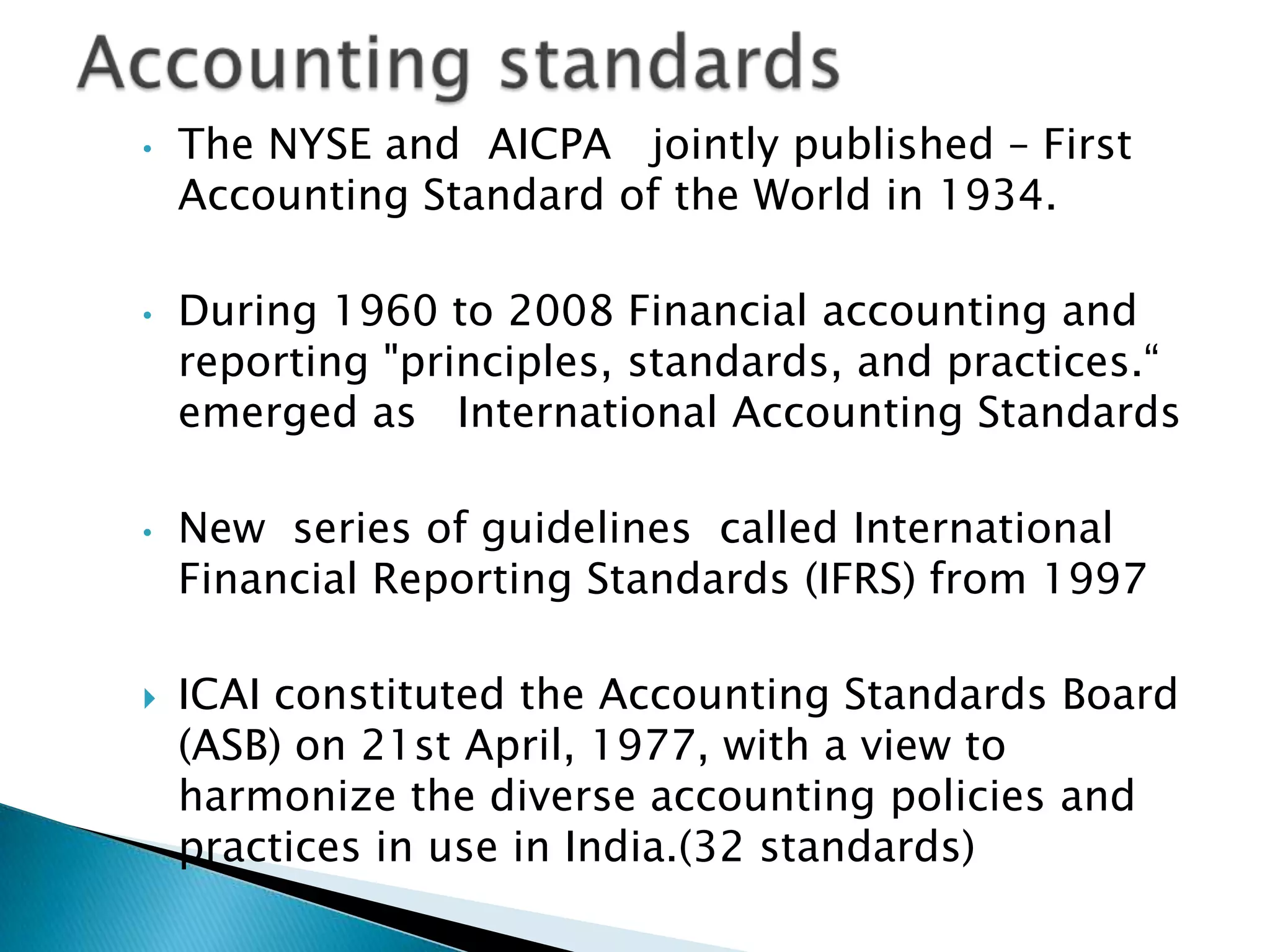
•   The NYSE and AICPA jointly published – First
    Accounting Standard of the World in 1934.

•   During 1960 to 2008 Financial accounting and
    reporting "principles, standards, and practices.“
    emerged as International Accounting Standards

•   New series of guidelines called International
    Financial Reporting Standards (IFRS) from 1997

   ICAI constituted the Accounting Standards Board
    (ASB) on 21st April, 1977, with a view to
    harmonize the diverse accounting policies and
    practices in use in India.(32 standards)
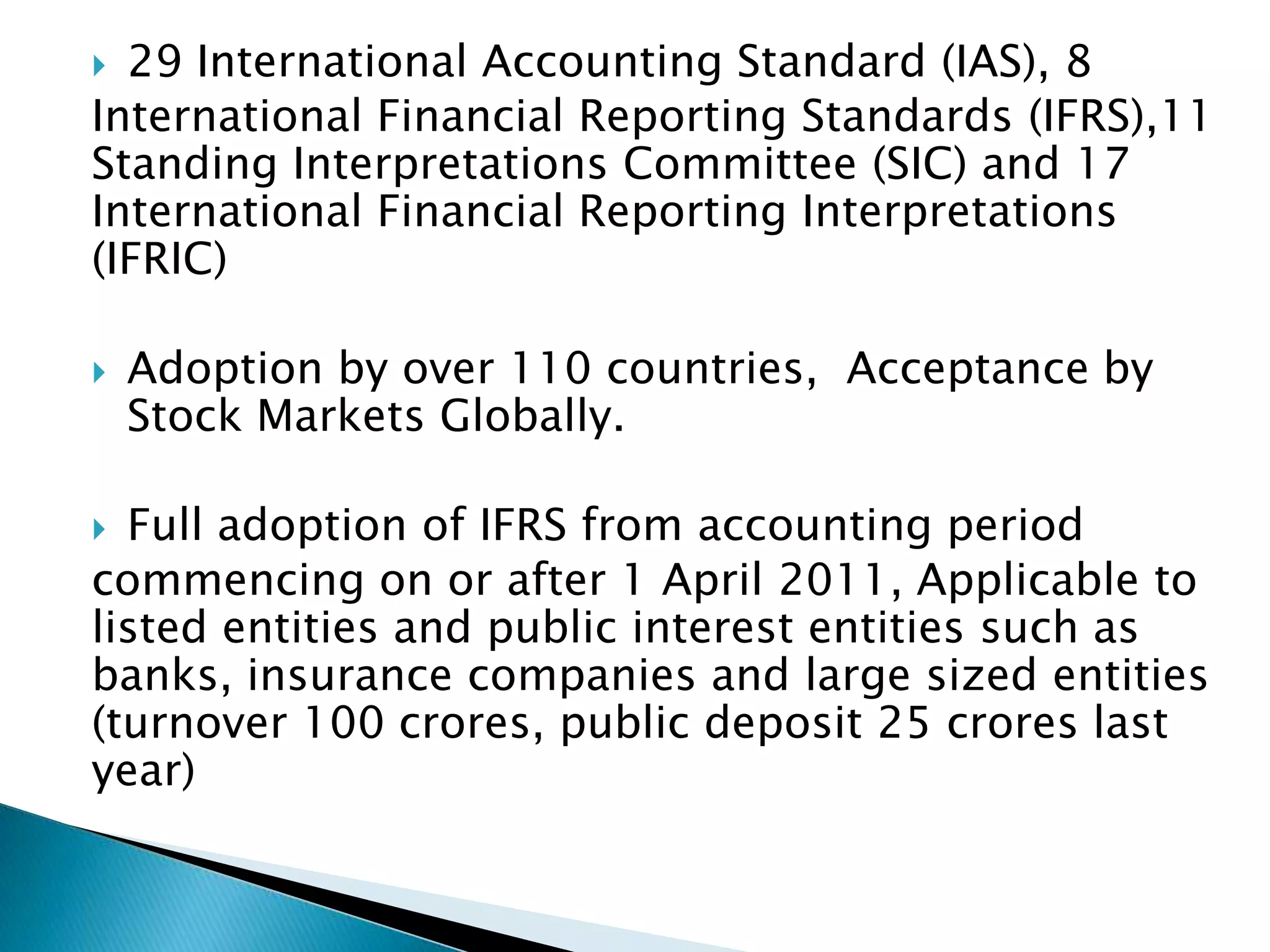
 29 International Accounting Standard (IAS), 8
International Financial Reporting Standards (IFRS),11
Standing Interpretations Committee (SIC) and 17
International Financial Reporting Interpretations
(IFRIC)

   Adoption by over 110 countries, Acceptance by
    Stock Markets Globally.

 Full adoption of IFRS from accounting period
commencing on or after 1 April 2011, Applicable to
listed entities and public interest entities such as
banks, insurance companies and large sized entities
(turnover 100 crores, public deposit 25 crores last
year)
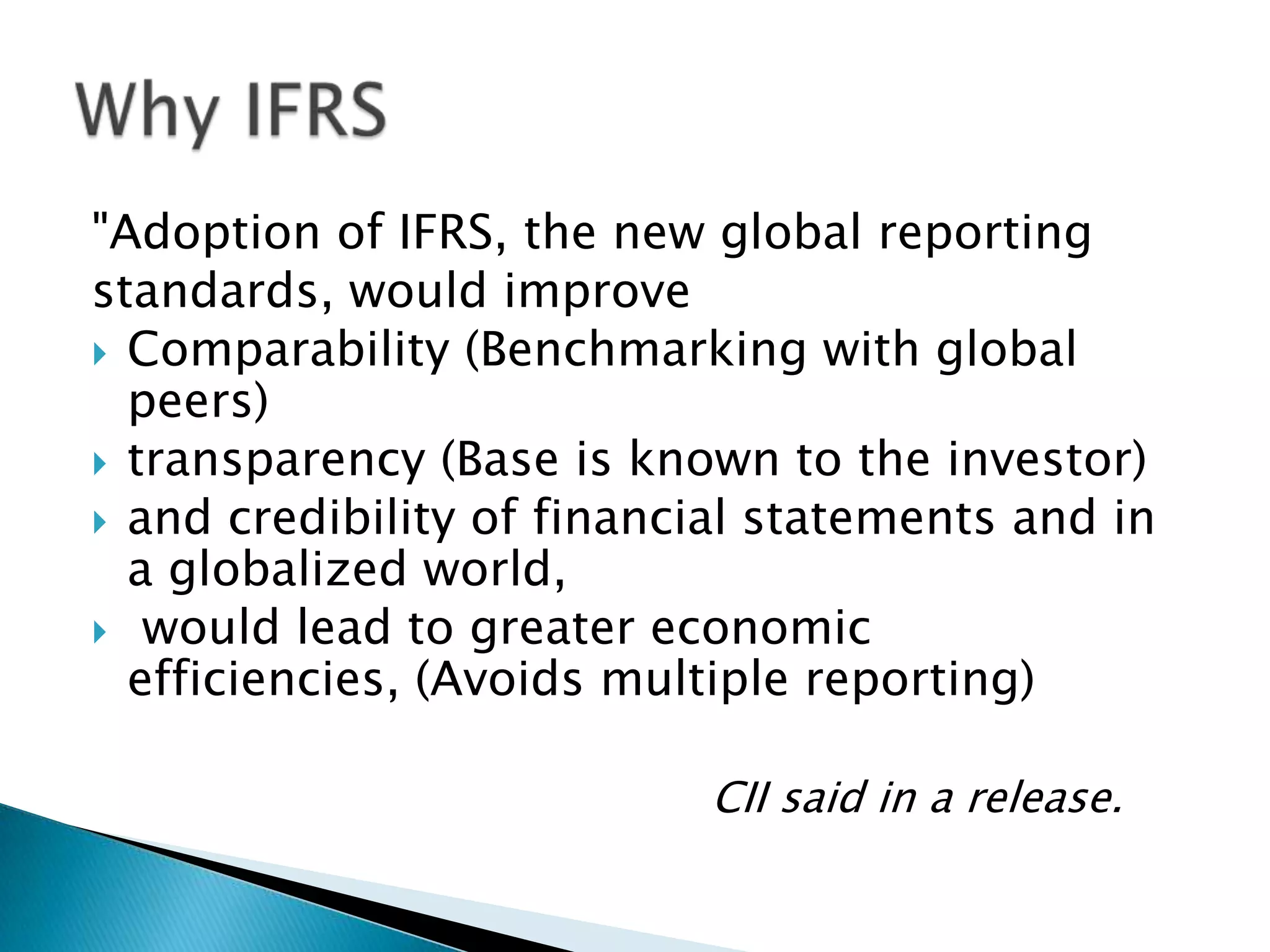
"Adoption of IFRS, the new global reporting
standards, would improve
 Comparability (Benchmarking with global
  peers)
 transparency (Base is known to the investor)
 and credibility of financial statements and in
  a globalized world,
 would lead to greater economic
  efficiencies, (Avoids multiple reporting)

                           CII said in a release.
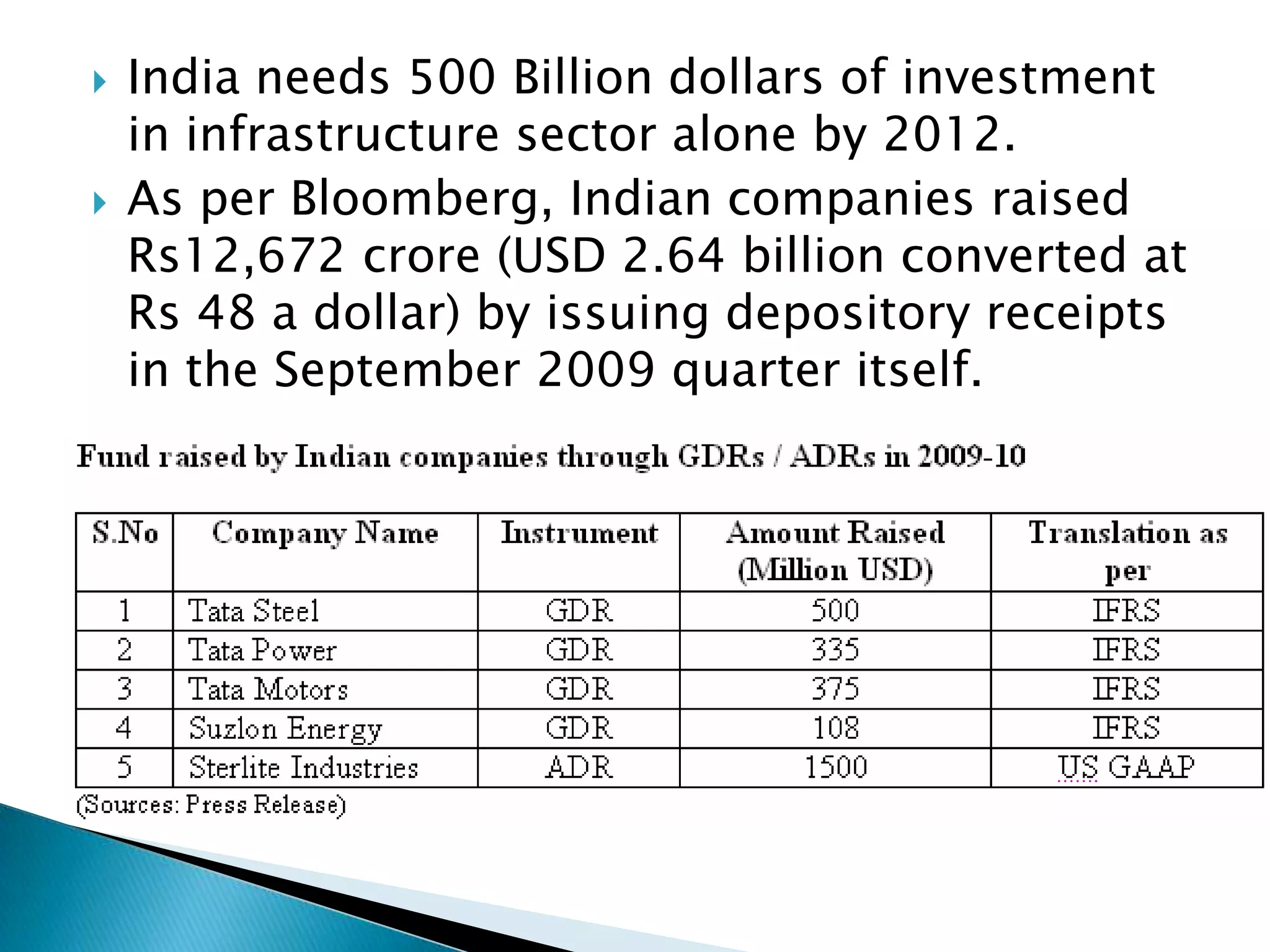
   India needs 500 Billion dollars of investment
    in infrastructure sector alone by 2012.
   As per Bloomberg, Indian companies raised
    Rs12,672 crore (USD 2.64 billion converted at
    Rs 48 a dollar) by issuing depository receipts
    in the September 2009 quarter itself.
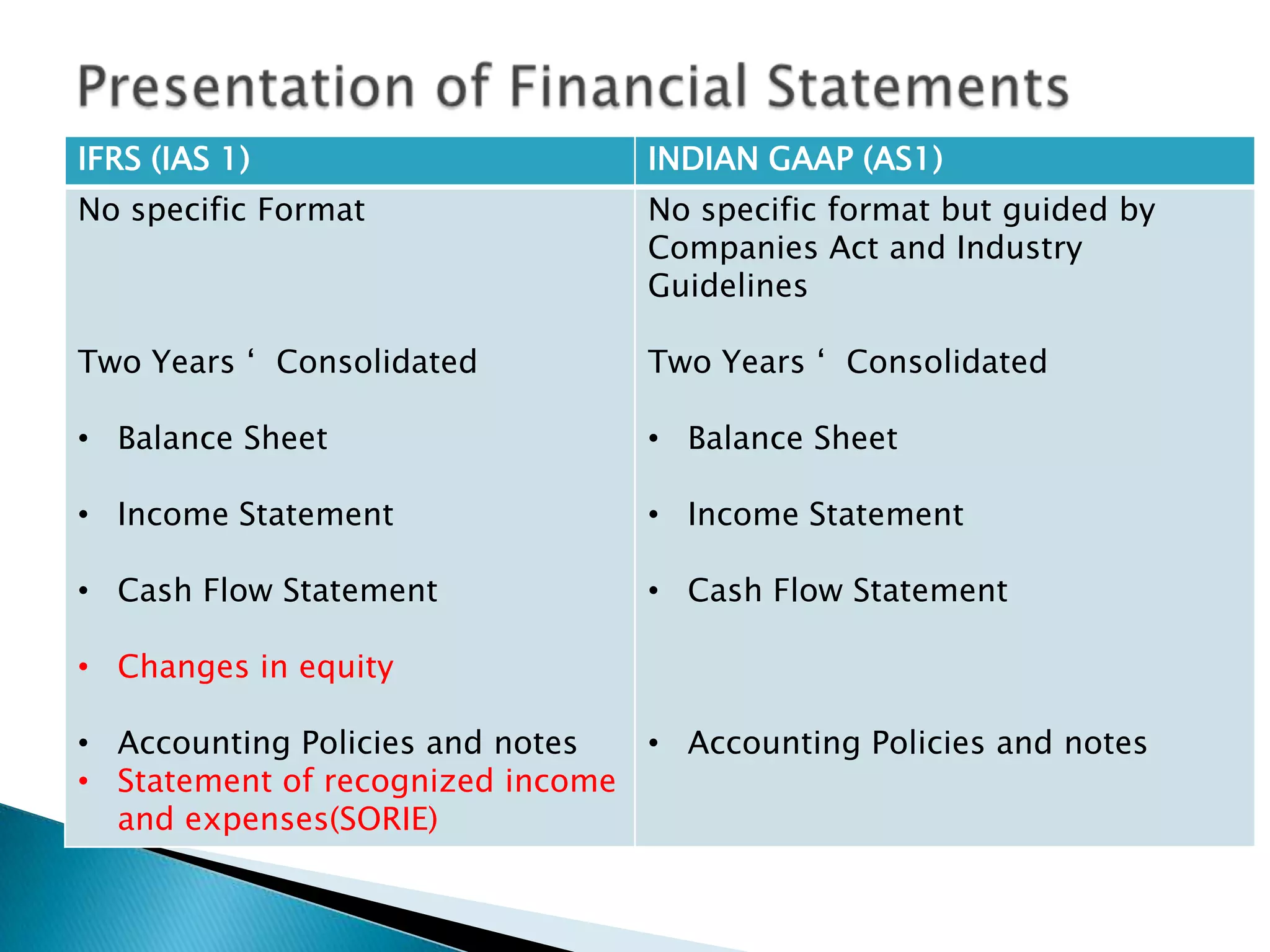
IFRS (IAS 1)                      INDIAN GAAP (AS1)
No specific Format                No specific format but guided by
                                  Companies Act and Industry
                                  Guidelines

Two Years ‘ Consolidated          Two Years ‘ Consolidated

• Balance Sheet                   • Balance Sheet

• Income Statement                • Income Statement

• Cash Flow Statement             • Cash Flow Statement

• Changes in equity

• Accounting Policies and notes  • Accounting Policies and notes
• Statement of recognized income
  and expenses(SORIE)
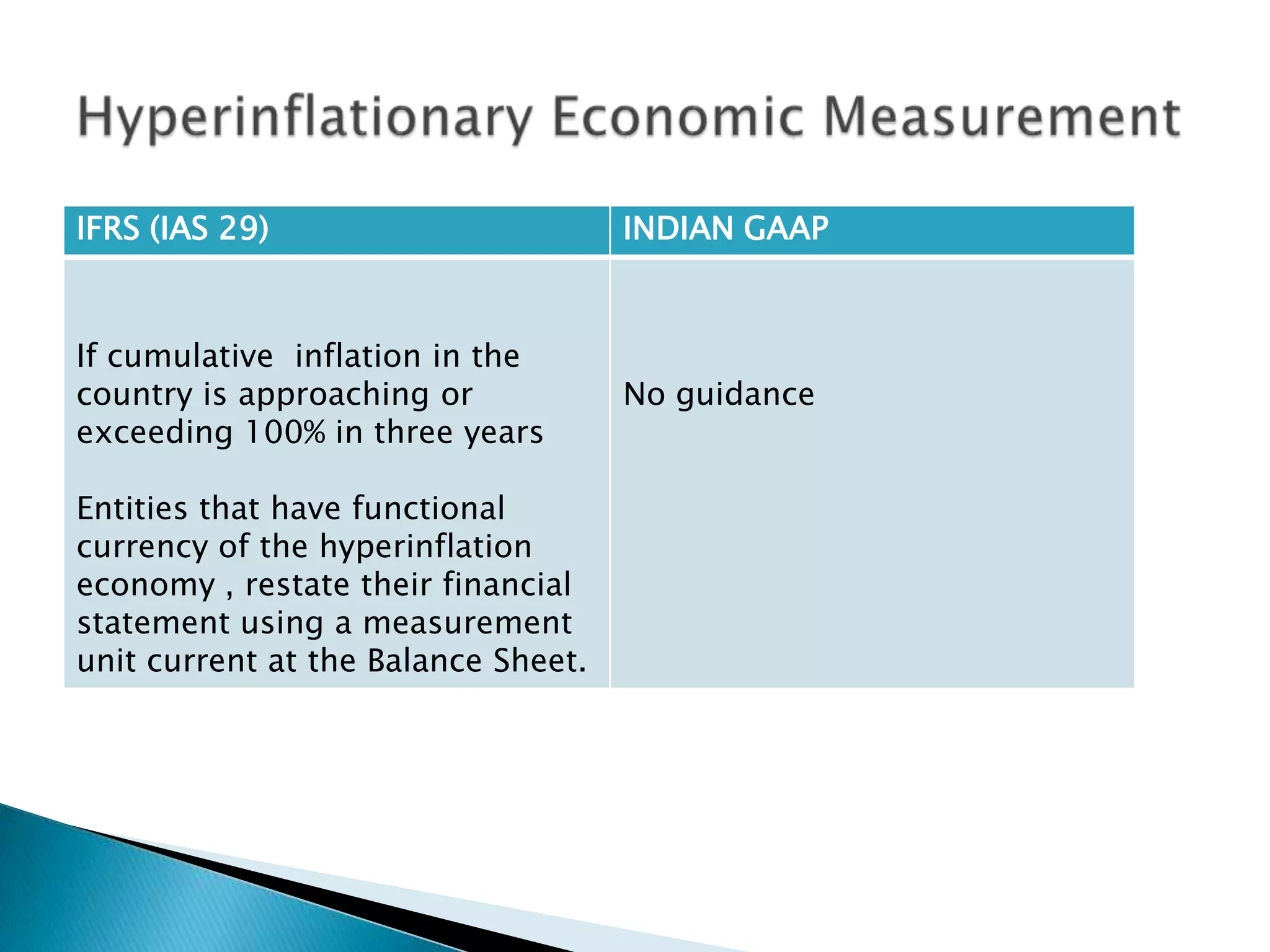
IFRS (IAS 29)                        INDIAN GAAP


If cumulative inflation in the
country is approaching or            No guidance
exceeding 100% in three years

Entities that have functional
currency of the hyperinflation
economy , restate their financial
statement using a measurement
unit current at the Balance Sheet.
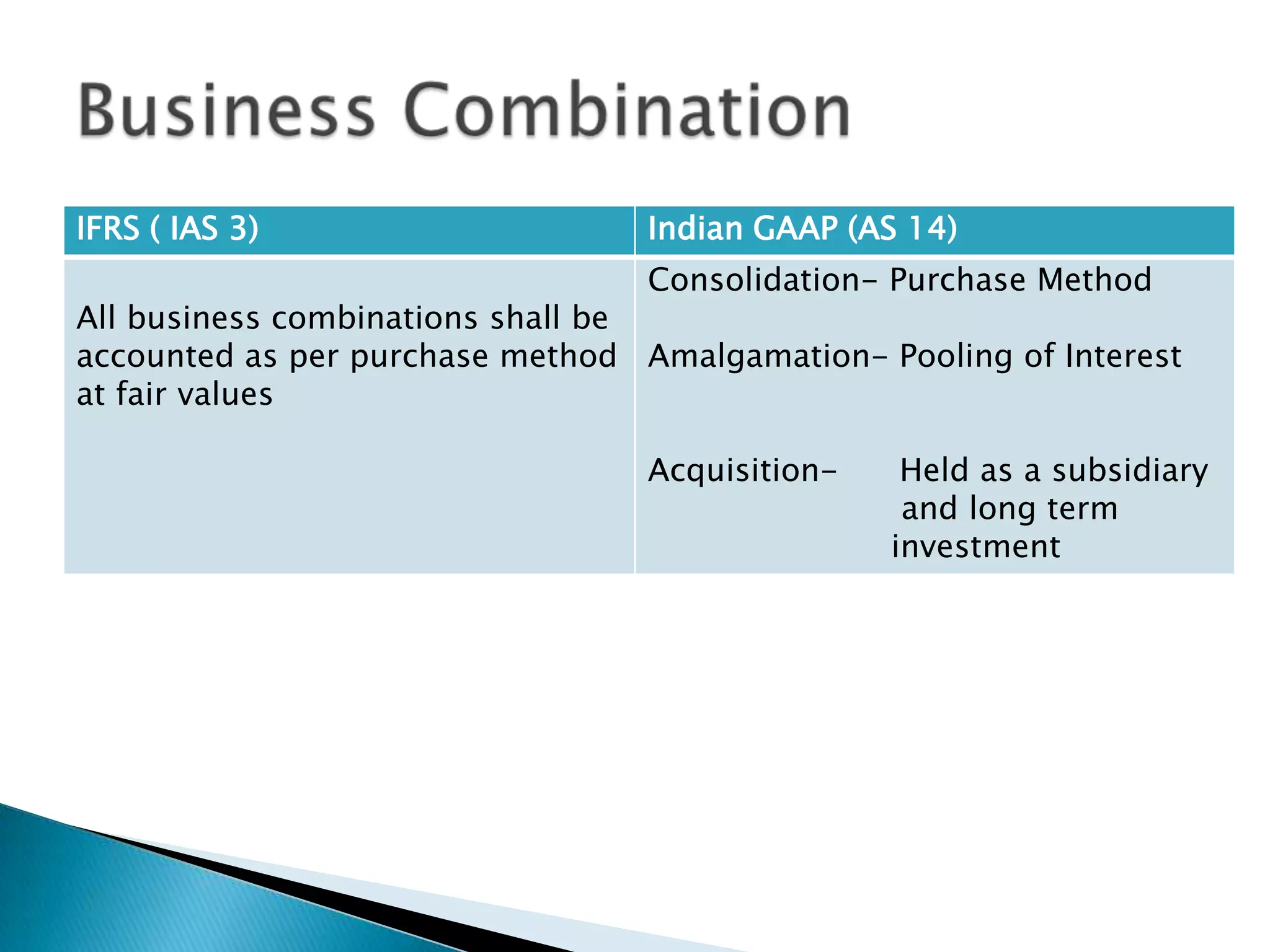
IFRS ( IAS 3)                     Indian GAAP (AS 14)
                                  Consolidation- Purchase Method
All business combinations shall be
accounted as per purchase method Amalgamation- Pooling of Interest
at fair values

                                  Acquisition-    Held as a subsidiary
                                                  and long term
                                                 investment
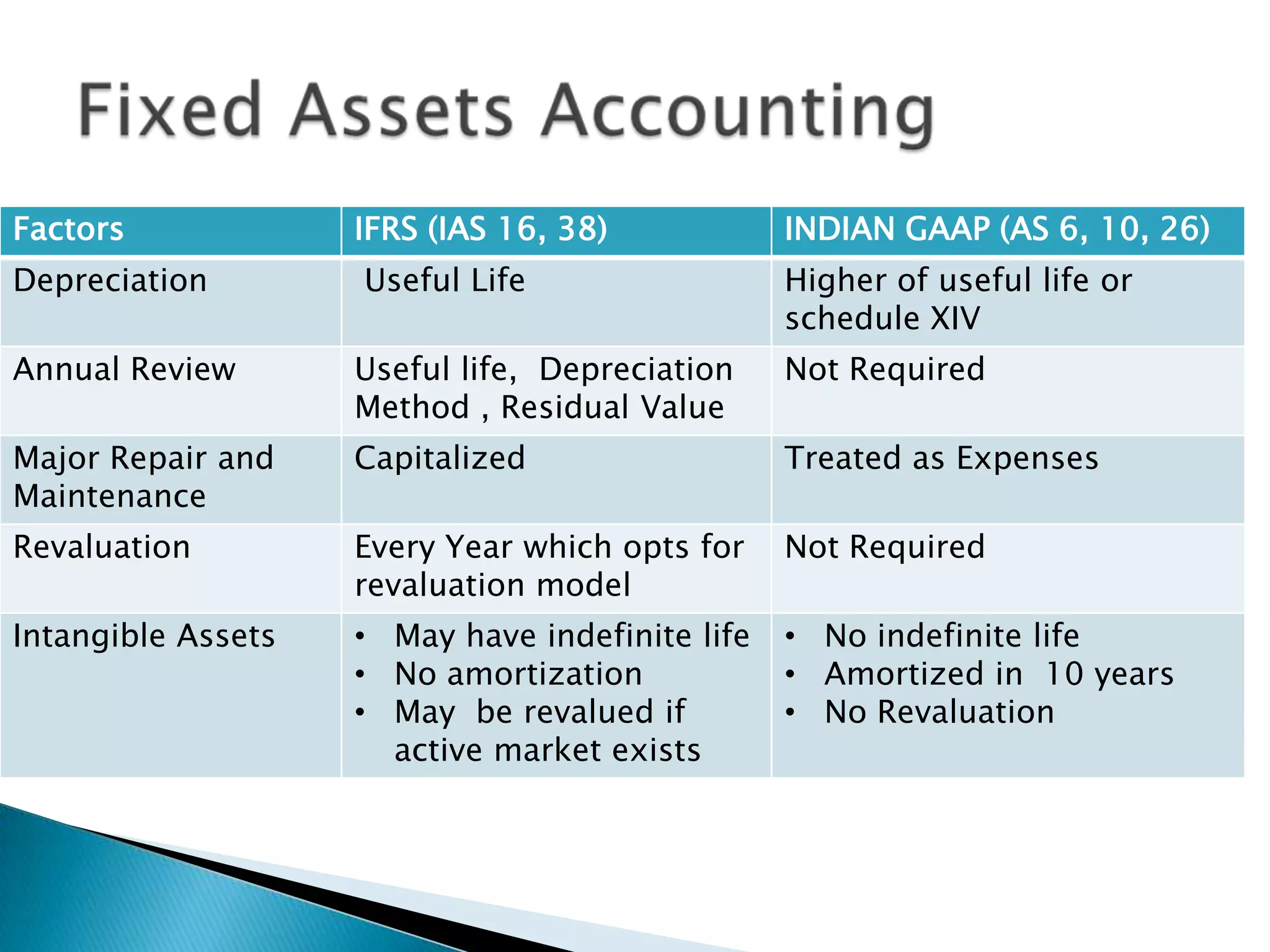
Factors             IFRS (IAS 16, 38)            INDIAN GAAP (AS 6, 10, 26)
Depreciation        Useful Life                  Higher of useful life or
                                                 schedule XIV
Annual Review       Useful life, Depreciation    Not Required
                    Method , Residual Value
Major Repair and    Capitalized                  Treated as Expenses
Maintenance
Revaluation         Every Year which opts for    Not Required
                    revaluation model
Intangible Assets   • May have indefinite life   • No indefinite life
                    • No amortization            • Amortized in 10 years
                    • May be revalued if         • No Revaluation
                      active market exists

Comparison of accounting standards (2)

  • 2.
    The NYSE and AICPA jointly published – First Accounting Standard of the World in 1934. • During 1960 to 2008 Financial accounting and reporting "principles, standards, and practices.“ emerged as International Accounting Standards • New series of guidelines called International Financial Reporting Standards (IFRS) from 1997  ICAI constituted the Accounting Standards Board (ASB) on 21st April, 1977, with a view to harmonize the diverse accounting policies and practices in use in India.(32 standards)
  • 3.
     29 InternationalAccounting Standard (IAS), 8 International Financial Reporting Standards (IFRS),11 Standing Interpretations Committee (SIC) and 17 International Financial Reporting Interpretations (IFRIC)  Adoption by over 110 countries, Acceptance by Stock Markets Globally.  Full adoption of IFRS from accounting period commencing on or after 1 April 2011, Applicable to listed entities and public interest entities such as banks, insurance companies and large sized entities (turnover 100 crores, public deposit 25 crores last year)
  • 4.
    "Adoption of IFRS,the new global reporting standards, would improve  Comparability (Benchmarking with global peers)  transparency (Base is known to the investor)  and credibility of financial statements and in a globalized world,  would lead to greater economic efficiencies, (Avoids multiple reporting) CII said in a release.
  • 5.
    India needs 500 Billion dollars of investment in infrastructure sector alone by 2012.  As per Bloomberg, Indian companies raised Rs12,672 crore (USD 2.64 billion converted at Rs 48 a dollar) by issuing depository receipts in the September 2009 quarter itself.
  • 6.
    IFRS (IAS 1) INDIAN GAAP (AS1) No specific Format No specific format but guided by Companies Act and Industry Guidelines Two Years ‘ Consolidated Two Years ‘ Consolidated • Balance Sheet • Balance Sheet • Income Statement • Income Statement • Cash Flow Statement • Cash Flow Statement • Changes in equity • Accounting Policies and notes • Accounting Policies and notes • Statement of recognized income and expenses(SORIE)
  • 7.
    IFRS (IAS 29) INDIAN GAAP If cumulative inflation in the country is approaching or No guidance exceeding 100% in three years Entities that have functional currency of the hyperinflation economy , restate their financial statement using a measurement unit current at the Balance Sheet.
  • 8.
    IFRS ( IAS3) Indian GAAP (AS 14) Consolidation- Purchase Method All business combinations shall be accounted as per purchase method Amalgamation- Pooling of Interest at fair values Acquisition- Held as a subsidiary and long term investment
  • 9.
    Factors IFRS (IAS 16, 38) INDIAN GAAP (AS 6, 10, 26) Depreciation Useful Life Higher of useful life or schedule XIV Annual Review Useful life, Depreciation Not Required Method , Residual Value Major Repair and Capitalized Treated as Expenses Maintenance Revaluation Every Year which opts for Not Required revaluation model Intangible Assets • May have indefinite life • No indefinite life • No amortization • Amortized in 10 years • May be revalued if • No Revaluation active market exists