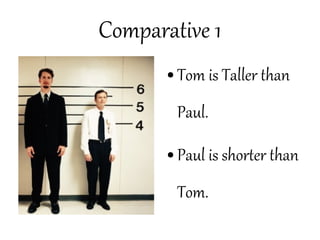
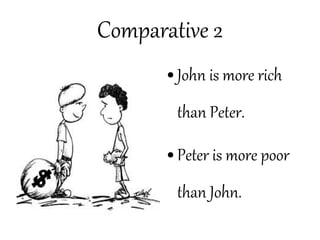
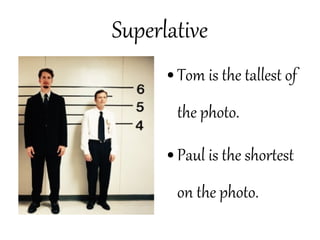
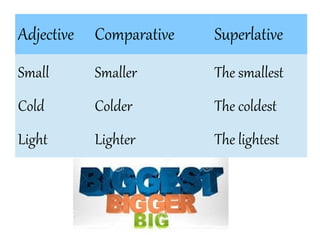
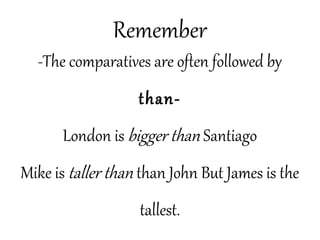
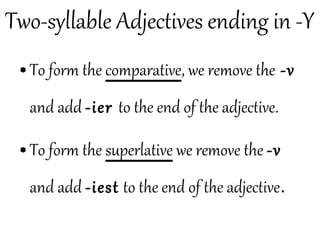
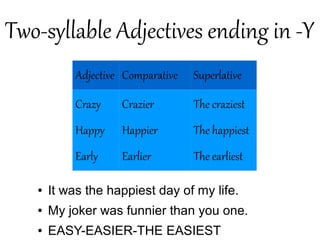
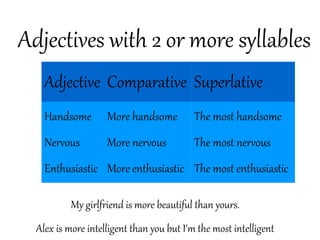
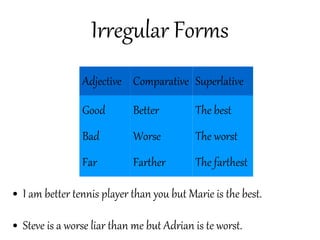
The document discusses comparative and superlative forms of adjectives in English. It provides rules and examples for forming comparatives using "-er" and superlatives using "-est" for one-syllable adjectives like "small," "cold," and "light." For two-syllable adjectives ending in "-y," the "y" is changed to "ier/iest" (e.g. "happy/happier/happiest"). Irregular forms like "good/better/best" and "bad/worse/worst" are also covered. The document provides examples of using comparatives and superlatives to compare people and things.


![5G Explained! A High Level Overview [Introduction]](https://cdn.slidesharecdn.com/ss_thumbnails/5gexplainedahighleveloverview-260119165306-cc137a3e-thumbnail.jpg?width=640&height=640&fit=bounds)


