COMMUNITY
PROGRAMS
Keren Joani L. Morales
Agricultural
Modernization
2.1 Agricultural Modernization
Agriculture -the science or practice of farming, including
cultivation of the soil for the growing of crops and the rearing
of animals to provide food, wool, and other products.
Modernization, in sociology, the transformation from a
traditional, rural, agrarian society to a secular, urban,
industrial society.
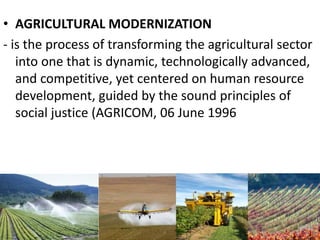
• AGRICULTURAL MODERNIZATION
- is the process of transforming the agricultural sector
into one that is dynamic, technologically advanced,
and competitive, yet centered on human resource
development, guided by the sound principles of
social justice (AGRICOM, 06 June 1996
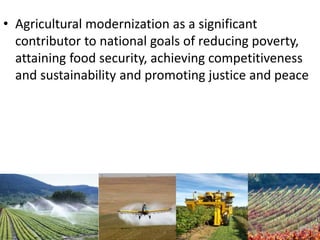
• Agricultural modernization as a significant
contributor to national goals of reducing poverty,
attaining food security, achieving competitiveness
and sustainability and promoting justice and peace
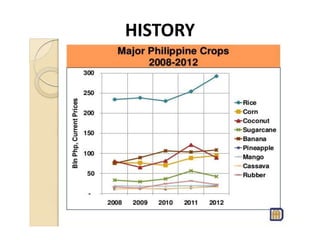
HISTORY
HISTORY
• Human Power
• Use of Inorganic Fertilizers
• Low transportation of goods
Department of Agrarian Reform
Formed: June 23, 1898
Annual budget: ₱48.7 Billion (2015)
Department executive: Manny Piñol, Secretary
Advantages and Disadvantages
Developments
• Encourage farmers to use organic fertilizers
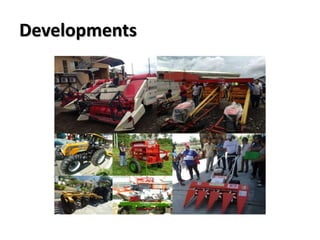
• Use of machineries
• Farm-market road construction
Developments
Developments
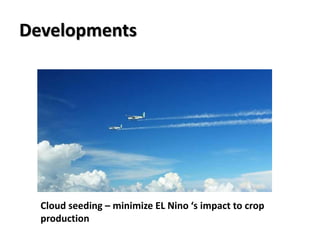
Cloud seeding – minimize EL Nino ‘s impact to crop
production
Disadvantage
• Low quality goods
• Wasted goods
Advantages
• Surplus production
• Low cost products
• employment
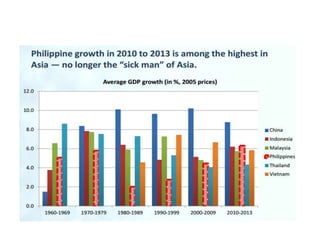
Boom and Bust
• The Philippines has finally shed its image
as the sick man of Asia, after the
economy grew by an average of 6.2
percent in recent years.
2.1.1 AGRARIAN REFORM PROGRAM
• refers to
- the accompanying human relations regarding
land, including economic, social and political
relations. Such as the reform of tenure ,
production and supporting services structure and
the reform and development of complementary
institutional framework (administrative agencies
of the national government, rural educational,
social welfare institutions.
2.1.2 Cooperative Development Program
Cooperative Development Authority (CDA) is a government
agency created by virtue of Republic Act No. 6939 in
compliance with the provisions of Section 15, Article XII of the
Philippine Constitution of 1987 which mandates Congress to
create an agency to promote the viability and growth of
cooperatives as instruments for equity, social justice and
economic development. RA 6939 was signed into law on
March 10, 1990.
2.1.2 Cooperative Development Program
- It is an attempt “to develop a national co-op sector strategy
for development to enhance and complement individual
cooperative programs and services, and to facilitate
cooperation among cooperatives".
a) Formulate, adopt and implement integrated and
comprehensive plans and programs on cooperative
development consistent with the national policy on
cooperatives and the overall socio-economic development
plans of the government.."
2.2 Fisheries Development
Program
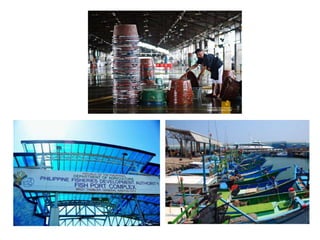
PFDA
• is the government agency mandated to
strengthen the government's developmental
thrusts in fisheries through a program that
would balance production ventures with
adequate post-harvest support facilities.
HISTORY
• Created on August 11, 1976
• Presidential Decree 977, creating the Philippine
Fish Marketing Authority (PFMA), was
promulgated on August 11, 1976 to address and
provide solutions to the fishing industry's post-
harvest problems
• Executive Order No. 772 was issued on February
8, 1982 to amend P.D. 977. By virtue of this E.O.,
the PFMA was renamed as Philippine Fisheries
Development Authority (PFDA)
Developments
• The Philippine fishing industry was
experiencing an annual production growth
rate of 5.5% on the national level due through
its program and services
Programs & Services
• three core programs
(1) the Regional Fish Ports Program;
• 2)the Municipal Fish Ports Program;
• (3) the Ice Plants and Cold Storages Program , PFDA continuously
responds to the need of the sector for post-harvest facilities and
services.
• Services Offered:
• Landing Facilities - Pier, Fish unloading
Market Facilities - Fish trading
Processing Facilities - Fish Processing
Refrigeration Facilities - Cold Storage, Freezers and Ice Plants
Auxiliary Facilities - Fuel depots, Ship Repair yards, Fishing Supplies
Shops, Fishing Net Repair Areas, and food stalls
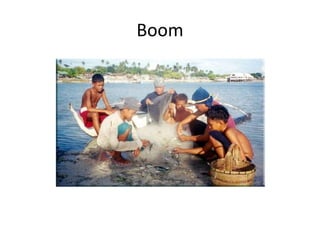
Boom
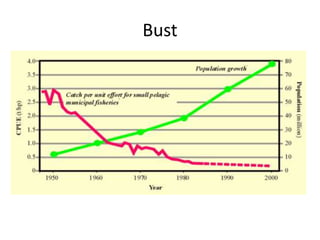
Bust
2.3 Forest Development Program
• is the executive department of the Philippine
government responsible for governing and
supervising the exploration, development, utilization,
and conservation of the country's natural resources.
2.3 Forest Development Program
• Formed: January 1, 1917
• Annual budget: ₱211.1 Billion (2015)
• Department executive: Gina Lopez, Secretary
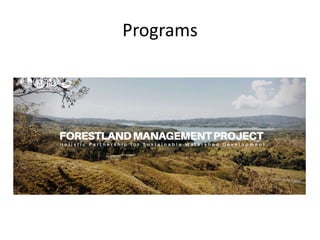
Programs
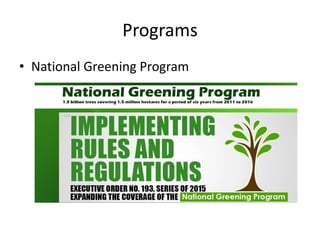
• National Greening Program
Programs
Programs

Community Programs

  • 1.
  • 2.
  • 3.
    2.1 Agricultural Modernization Agriculture-the science or practice of farming, including cultivation of the soil for the growing of crops and the rearing of animals to provide food, wool, and other products. Modernization, in sociology, the transformation from a traditional, rural, agrarian society to a secular, urban, industrial society.
  • 4.
    • AGRICULTURAL MODERNIZATION -is the process of transforming the agricultural sector into one that is dynamic, technologically advanced, and competitive, yet centered on human resource development, guided by the sound principles of social justice (AGRICOM, 06 June 1996
  • 5.
    • Agricultural modernizationas a significant contributor to national goals of reducing poverty, attaining food security, achieving competitiveness and sustainability and promoting justice and peace
  • 6.
  • 7.
    HISTORY • Human Power •Use of Inorganic Fertilizers • Low transportation of goods
  • 8.
    Department of AgrarianReform Formed: June 23, 1898 Annual budget: ₱48.7 Billion (2015) Department executive: Manny Piñol, Secretary
  • 9.
  • 10.
    Developments • Encourage farmersto use organic fertilizers • Use of machineries • Farm-market road construction
  • 11.
  • 12.
    Developments Cloud seeding –minimize EL Nino ‘s impact to crop production
  • 13.
    Disadvantage • Low qualitygoods • Wasted goods
  • 14.
    Advantages • Surplus production •Low cost products • employment
  • 15.
    Boom and Bust •The Philippines has finally shed its image as the sick man of Asia, after the economy grew by an average of 6.2 percent in recent years.
  • 17.
    2.1.1 AGRARIAN REFORMPROGRAM • refers to - the accompanying human relations regarding land, including economic, social and political relations. Such as the reform of tenure , production and supporting services structure and the reform and development of complementary institutional framework (administrative agencies of the national government, rural educational, social welfare institutions.
  • 18.
  • 19.
    2.1.2 Cooperative DevelopmentProgram Cooperative Development Authority (CDA) is a government agency created by virtue of Republic Act No. 6939 in compliance with the provisions of Section 15, Article XII of the Philippine Constitution of 1987 which mandates Congress to create an agency to promote the viability and growth of cooperatives as instruments for equity, social justice and economic development. RA 6939 was signed into law on March 10, 1990.
  • 20.
    2.1.2 Cooperative DevelopmentProgram - It is an attempt “to develop a national co-op sector strategy for development to enhance and complement individual cooperative programs and services, and to facilitate cooperation among cooperatives". a) Formulate, adopt and implement integrated and comprehensive plans and programs on cooperative development consistent with the national policy on cooperatives and the overall socio-economic development plans of the government.."
  • 21.
  • 23.
    PFDA • is thegovernment agency mandated to strengthen the government's developmental thrusts in fisheries through a program that would balance production ventures with adequate post-harvest support facilities.
  • 24.
    HISTORY • Created onAugust 11, 1976 • Presidential Decree 977, creating the Philippine Fish Marketing Authority (PFMA), was promulgated on August 11, 1976 to address and provide solutions to the fishing industry's post- harvest problems • Executive Order No. 772 was issued on February 8, 1982 to amend P.D. 977. By virtue of this E.O., the PFMA was renamed as Philippine Fisheries Development Authority (PFDA)
  • 25.
    Developments • The Philippinefishing industry was experiencing an annual production growth rate of 5.5% on the national level due through its program and services
  • 26.
    Programs & Services •three core programs (1) the Regional Fish Ports Program; • 2)the Municipal Fish Ports Program; • (3) the Ice Plants and Cold Storages Program , PFDA continuously responds to the need of the sector for post-harvest facilities and services. • Services Offered: • Landing Facilities - Pier, Fish unloading Market Facilities - Fish trading Processing Facilities - Fish Processing Refrigeration Facilities - Cold Storage, Freezers and Ice Plants Auxiliary Facilities - Fuel depots, Ship Repair yards, Fishing Supplies Shops, Fishing Net Repair Areas, and food stalls
  • 28.
  • 29.
  • 30.
  • 31.
    2.3 Forest DevelopmentProgram • is the executive department of the Philippine government responsible for governing and supervising the exploration, development, utilization, and conservation of the country's natural resources.
  • 32.
    2.3 Forest DevelopmentProgram • Formed: January 1, 1917 • Annual budget: ₱211.1 Billion (2015) • Department executive: Gina Lopez, Secretary
  • 33.
  • 34.
  • 35.