NOTES
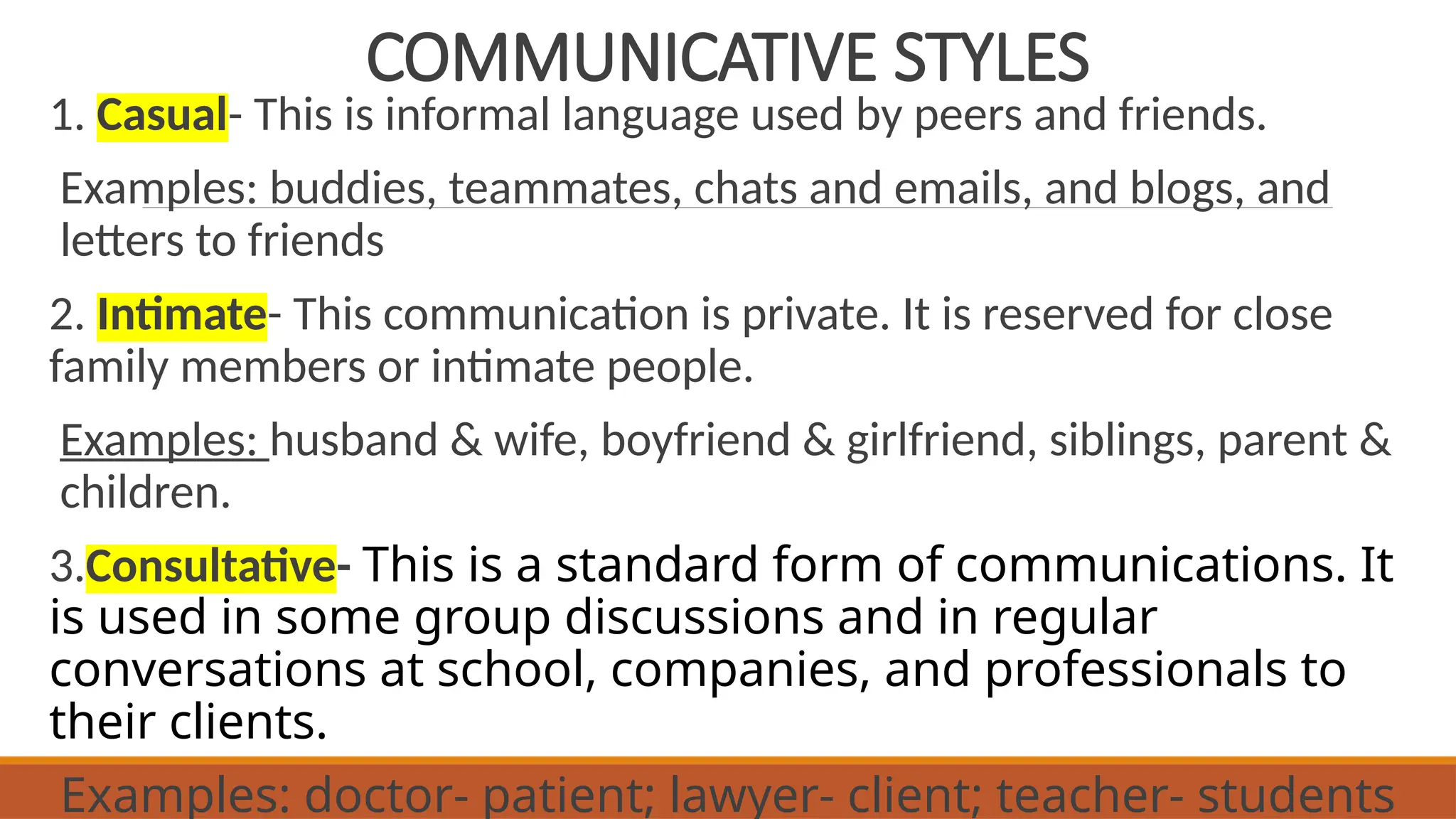
COMMUNICATIVE STYLES
1. Casual- This is informal language used by peers and friends.
Examples: buddies, teammates, chats and emails, and blogs, and
letters to friends
2. Intimate- This communication is private. It is reserved for close
family members or intimate people.
Examples: husband & wife, boyfriend & girlfriend, siblings, parent &
children.
3.Consultative- This is a standard form of communications. It
is used in some group discussions and in regular
conversations at school, companies, and professionals to
their clients.
Examples: doctor- patient; lawyer- client; teacher- students
4. Frozen. This style of communication RARELY or NEVER
changes. It is “frozen” in time and content.
Examples: the Pledge of Allegiance, the Lord’s Prayer, the
Constitution, the Alma Mater, a bibliographic reference,
laws.
5. Formal. This language is used in formal setting and is one-
way in nature. This use of language usually follows a
commonly accepted format. It is usually impersonal and
formal. A common format for this register are speeches.
Examples: sermons, speeches, pronouncements made by
judges, announcements
ARGUMENTATION
The aim of writing argumentative essays is
to convince or persuade the reader.
One attempts to change the reader’s mind
and convince the reader to agree with the
point of view or claim of the writer.
COMMUNICATIVE STYLES notes..........pptx

COMMUNICATIVE STYLES notes..........pptx

  • 1.
  • 2.
    COMMUNICATIVE STYLES 1. Casual-This is informal language used by peers and friends. Examples: buddies, teammates, chats and emails, and blogs, and letters to friends 2. Intimate- This communication is private. It is reserved for close family members or intimate people. Examples: husband & wife, boyfriend & girlfriend, siblings, parent & children. 3.Consultative- This is a standard form of communications. It is used in some group discussions and in regular conversations at school, companies, and professionals to their clients. Examples: doctor- patient; lawyer- client; teacher- students
  • 3.
    4. Frozen. Thisstyle of communication RARELY or NEVER changes. It is “frozen” in time and content. Examples: the Pledge of Allegiance, the Lord’s Prayer, the Constitution, the Alma Mater, a bibliographic reference, laws. 5. Formal. This language is used in formal setting and is one- way in nature. This use of language usually follows a commonly accepted format. It is usually impersonal and formal. A common format for this register are speeches. Examples: sermons, speeches, pronouncements made by judges, announcements
  • 4.
    ARGUMENTATION The aim ofwriting argumentative essays is to convince or persuade the reader. One attempts to change the reader’s mind and convince the reader to agree with the point of view or claim of the writer.