COMMUNICATIVE
STYLES
OBJECTIVES
• recognize the different communicative
styles on various situations;
• give personal experience where you used
communicative styles in a particular
situation; and
• appreciate the importance of
communicative styles for effective
communication.
Communicative styles
• Based from the definition of Martin Joos’ (1976), it is the
form of language that speaker uses which characterized
by the degree of formality for the most formal to the
least formal style.
• It only means that the language, vocabulary and level of
formality you use differ depending on the situation and
the person you are talking to.
• For example, the words you use when you talk to your
friends are different when you talk to your teacher. Same
goes when you talk to you parents and to your teacher.
They differ depending on the level of formality.
Five different communicative styles
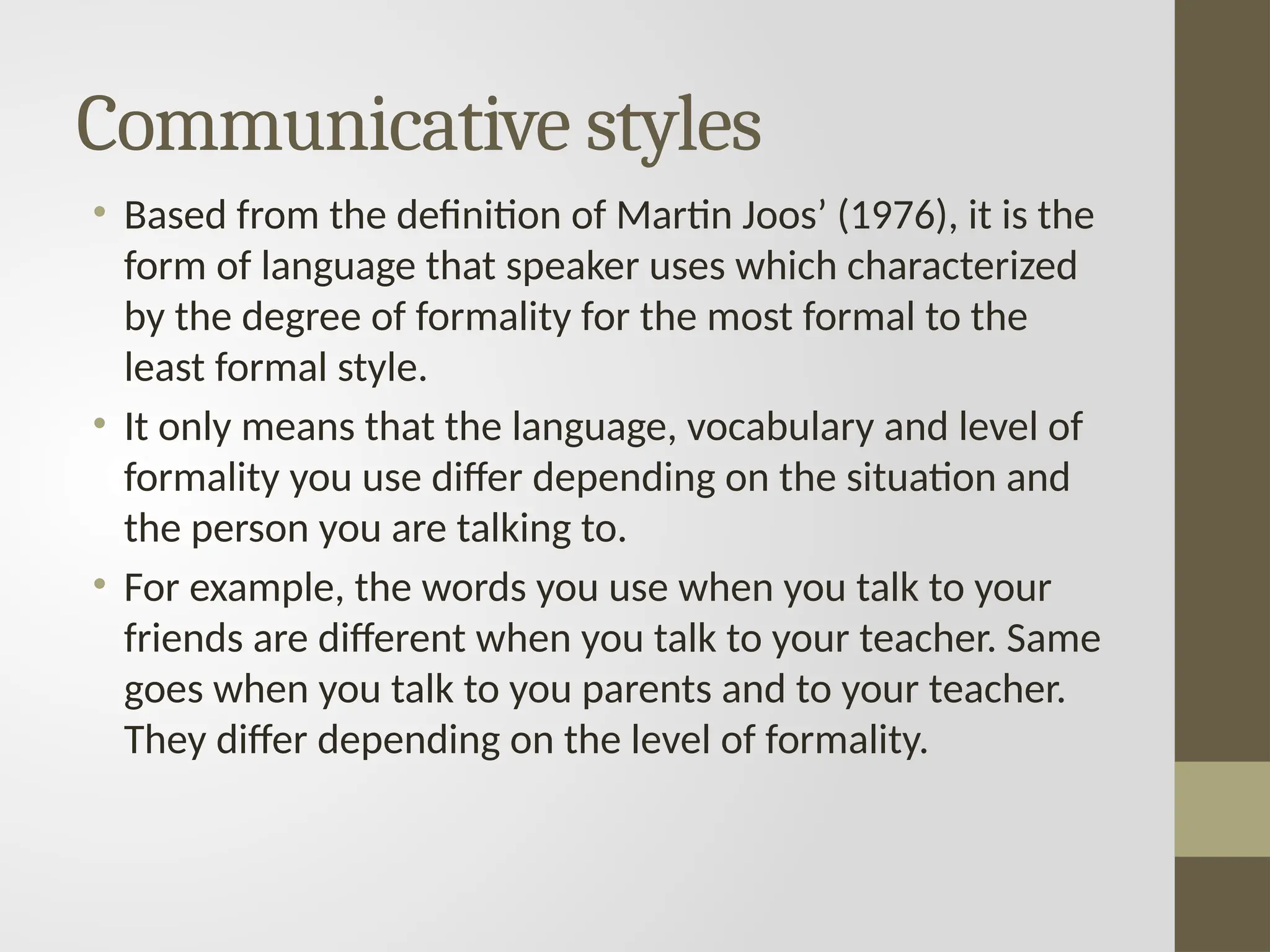
1. Intimate- it is a style among intimate
members of a family or very close friends
that do not need a complete language
with clear articulation.
Five different communicative styles
2. Casual- also known as informal
information sharing is typically used in
personal conversations with friends or
family members. Often very relaxed and
focused on just getting the information out.
Five different communicative styles
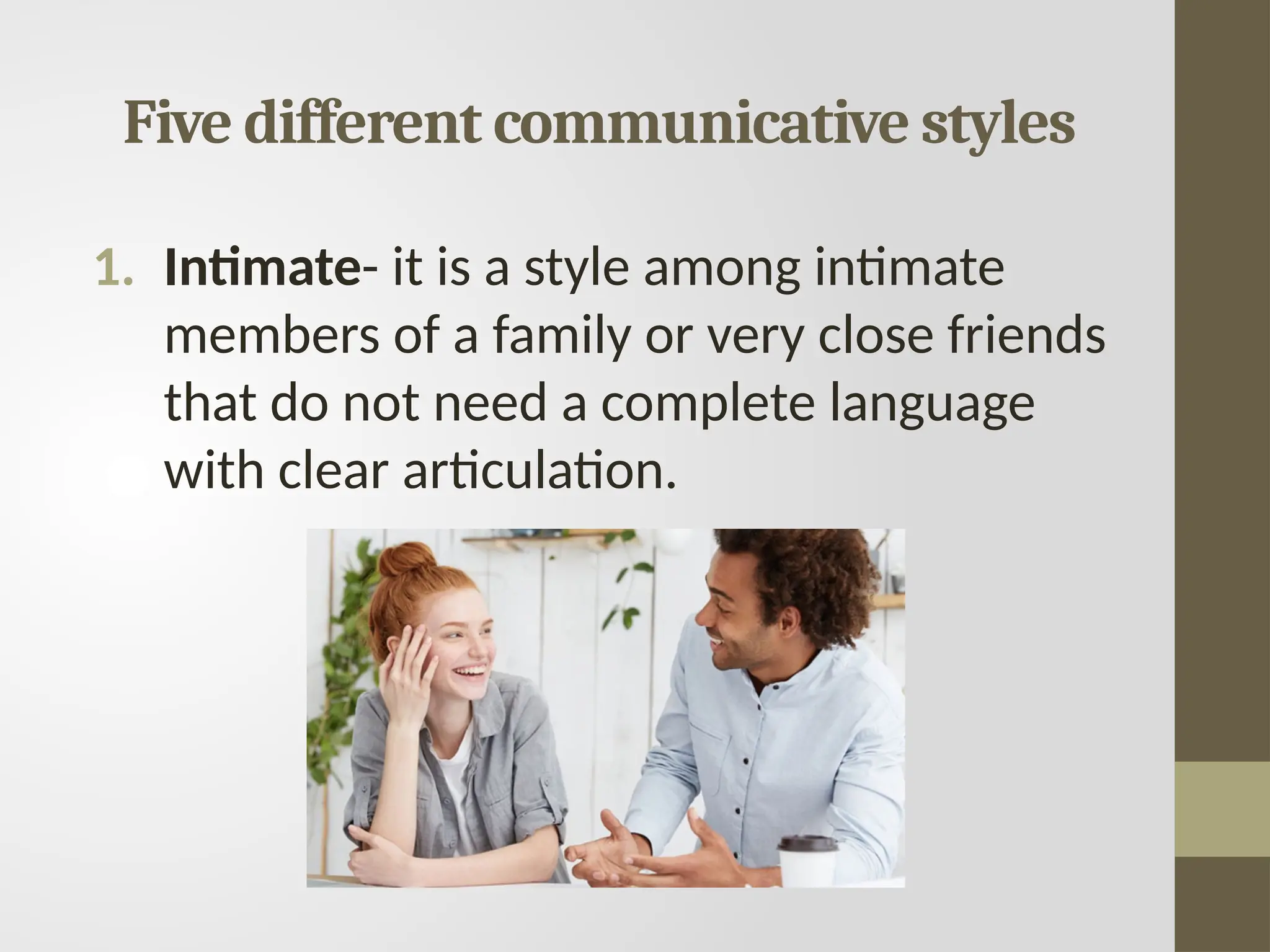
3. Consultative- it is used in some group
discussion, regular conversation at school,
companies, trade, speech conversation, etc.
It was the most operational among the
other styles.
Five different communicative styles
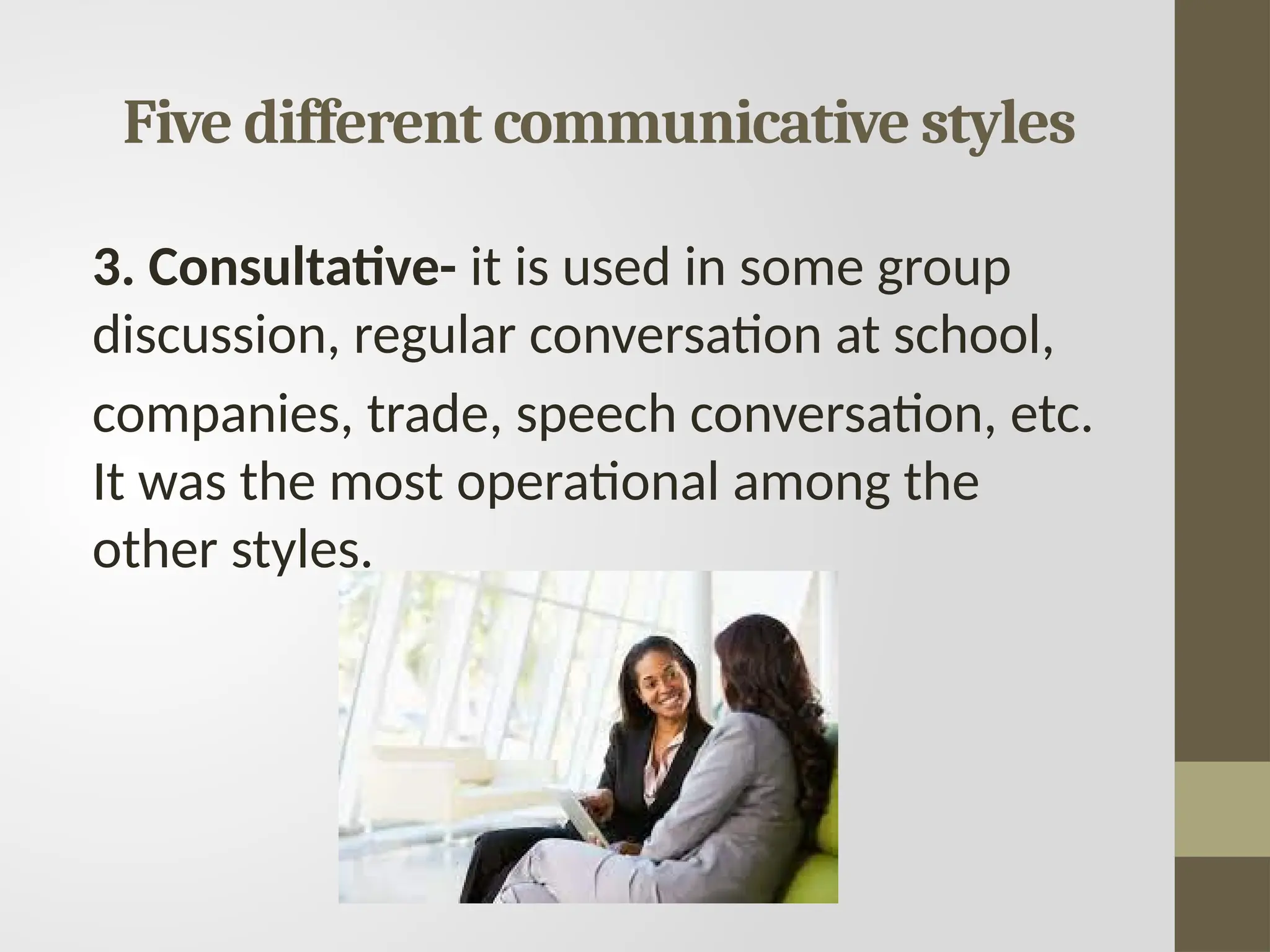
4. Formal- A type of verbal presentation or
document intended to share information in
which conforms to establish professional
rules, standards and processes and avoids
using slang terminology.
Five different communicative styles
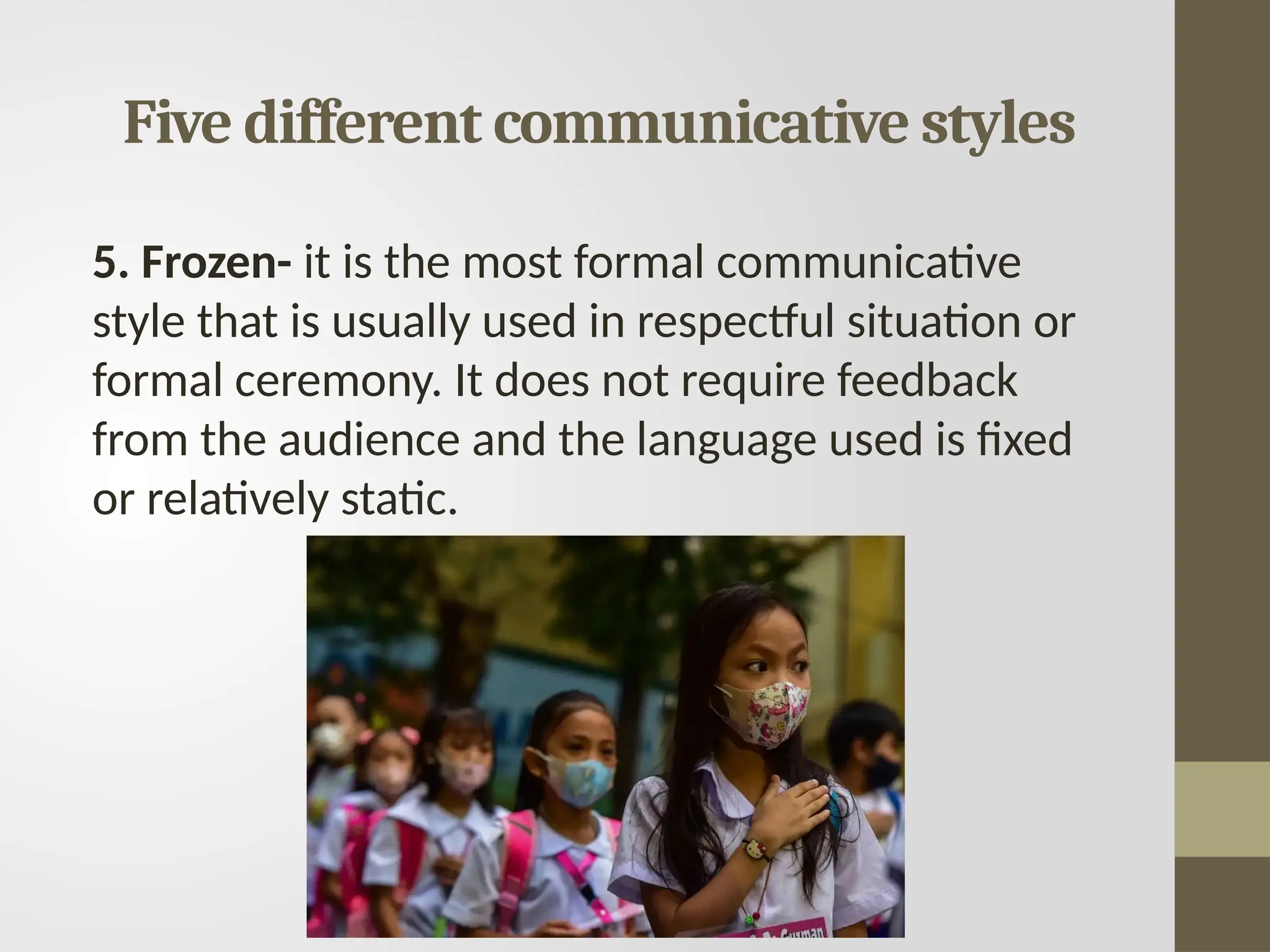
5. Frozen- it is the most formal communicative
style that is usually used in respectful situation or
formal ceremony. It does not require feedback
from the audience and the language used is fixed
or relatively static.
THANKYOU FOR LISTENING!

ENGLISH9-COMMUNICATIVE-STYLES122447.pptx

  • 1.
  • 2.
    OBJECTIVES • recognize thedifferent communicative styles on various situations; • give personal experience where you used communicative styles in a particular situation; and • appreciate the importance of communicative styles for effective communication.
  • 3.
    Communicative styles • Basedfrom the definition of Martin Joos’ (1976), it is the form of language that speaker uses which characterized by the degree of formality for the most formal to the least formal style. • It only means that the language, vocabulary and level of formality you use differ depending on the situation and the person you are talking to. • For example, the words you use when you talk to your friends are different when you talk to your teacher. Same goes when you talk to you parents and to your teacher. They differ depending on the level of formality.
  • 4.
    Five different communicativestyles 1. Intimate- it is a style among intimate members of a family or very close friends that do not need a complete language with clear articulation.
  • 5.
    Five different communicativestyles 2. Casual- also known as informal information sharing is typically used in personal conversations with friends or family members. Often very relaxed and focused on just getting the information out.
  • 6.
    Five different communicativestyles 3. Consultative- it is used in some group discussion, regular conversation at school, companies, trade, speech conversation, etc. It was the most operational among the other styles.
  • 7.
    Five different communicativestyles 4. Formal- A type of verbal presentation or document intended to share information in which conforms to establish professional rules, standards and processes and avoids using slang terminology.
  • 8.
    Five different communicativestyles 5. Frozen- it is the most formal communicative style that is usually used in respectful situation or formal ceremony. It does not require feedback from the audience and the language used is fixed or relatively static.
  • 9.