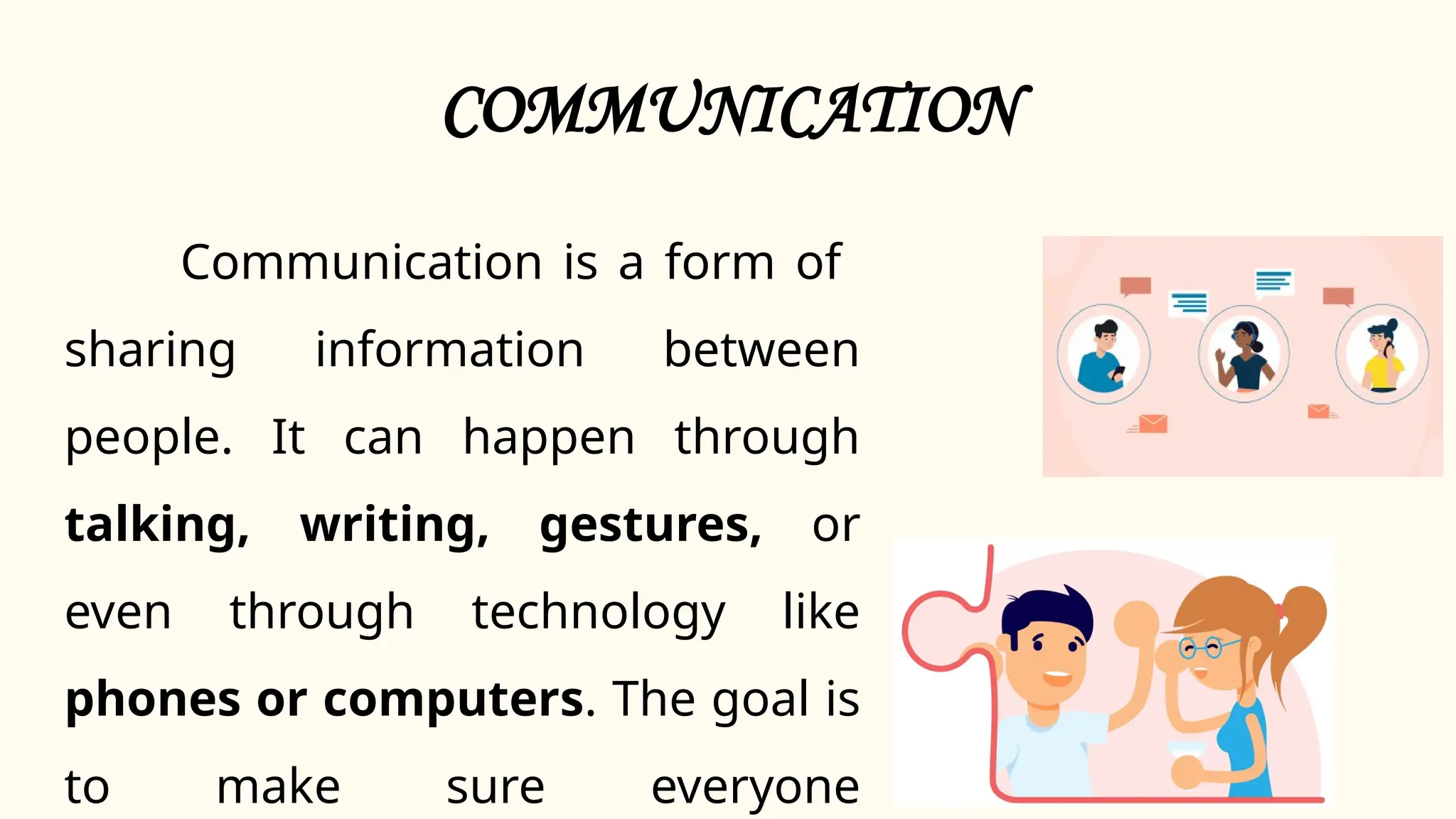
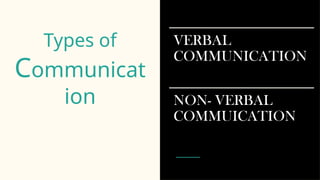
Communication is a form of
sharing information between
people. It can happen through
talking, writing, gestures, or
even through technology like
phones or computers. The goal is
to make sure everyone
COMMUNICATION
Types of
Communicat
ion
VERBAL
COMMUNICATION
NON- VERBAL
COMMUICATION
VERBAL COMMUICATION
 It refers to the form of communication in which message is
transmitted verbally.
 Communication is done by word of mouth and a piece of writing.
 In verbal communication remember the acronym “KISS” (keep it
short and simple).
Verbal Communication is divided into:
Oral Communication
Written Communication
ORAL COMMUNICATION
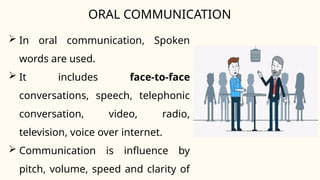
 In oral communication, Spoken
words are used.
 It includes face-to-face
conversations, speech, telephonic
conversation, video, radio,
television, voice over internet.
 Communication is influence by
pitch, volume, speed and clarity of
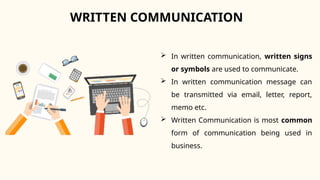
WRITTEN COMMUNICATION
 In written communication, written signs
or symbols are used to communicate.
 In written communication message can
be transmitted via email, letter, report,
memo etc.
 Written Communication is most common
form of communication being used in
business.
NON-VERBAL COMMUNICATION
● Nonverbal communication is the sending or receiving
of wordless messages. Such as gesture, body
language, posture, tone of voice or facial
expressions, is called nonverbal communication.
● Nonverbal communication is all about the body
language of speaker.
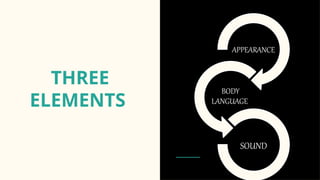
THREE
ELEMENTS
APPEARANCE
BODY
LANGUAGE
SOUND
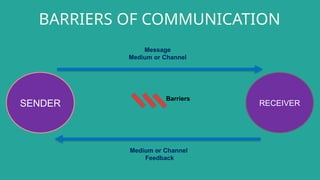
BARRIERS OF COMMUNICATION
SENDER RECEIVER
Message
Medium or Channel
Medium or Channel
Feedback
Barriers
Physical Barriers
• Distance
• Noise
• Environmental factors
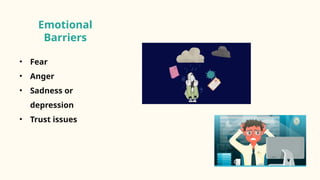
Emotional
Barriers
• Fear
• Anger
• Sadness or
depression
• Trust issues
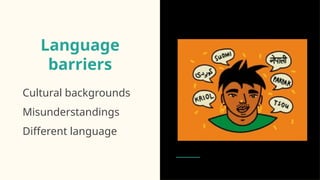
Language
barriers
• Cultural backgrounds
• Misunderstandings
• Different language
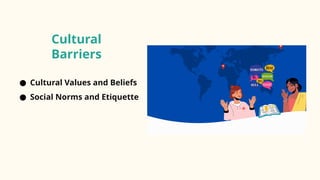
Cultural
Barriers
● Cultural Values and Beliefs
● Social Norms and Etiquette
Gender
Barriers
• Different communication
styles
• Language use

communication ppt for all the age group.

Editor's Notes

  • #1 Communication is like passing notes in class