






Keynote Presentation Digital Media Conference Glasgow Metropolitan College, Glasgow Friday 5 March 2010 Changing Texts in the 2010s: Scotland – Leader or Loser?
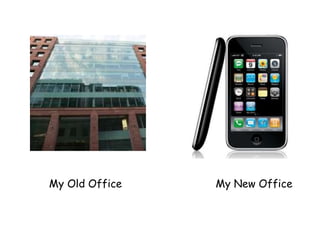
My Old Office My New Office
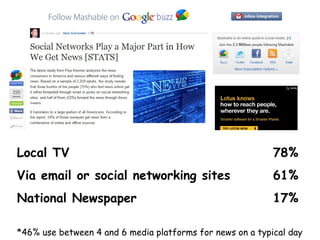
Local TV  78% Via email or social networking sites 61% National Newspaper 17% *46% use between 4 and 6 media platforms for news on a typical day
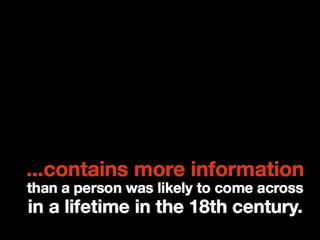
It is estimated that a week’s worth of The Times…
 
 
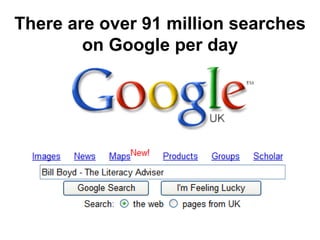
There are over 91 million searches on Google per day
“ 32% of British schoolchildren believe Google search results are ranked according to how true they are.” Ofcom Media Literacy Report (Interim) 2009
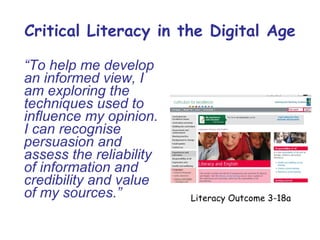
Critical Literacy in the Digital Age “ To help me develop an informed view, I am exploring the techniques used to influence my opinion. I can recognise persuasion and assess the reliability of information and credibility and value of my sources.” Literacy Outcome 3-18a
Wikipedia, the online user-created encylopedia, has  8 million articles   in 253 languages
1 visitor in 20 will edit its content.


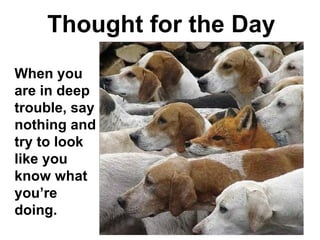
When you are in deep trouble, say nothing and try to look like you know what you’re doing. Thought for the Day
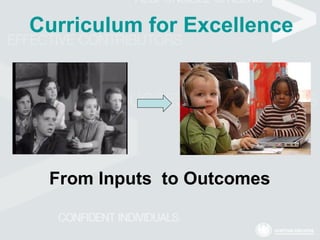
Curriculum for Excellence From Inputs  to Outcomes
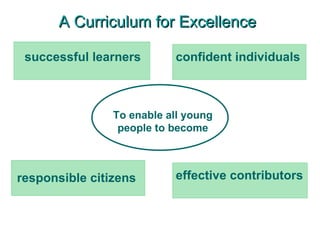
successful learners confident individuals responsible citizens effective contributors To enable all young people to become A Curriculum for Excellence
Definition of literacy “ Literacy is the set of skills which allows an individual to engage fully in society and in learning, through the different forms of language which society values and finds useful.” Literacy and English Principles and Practice 2009


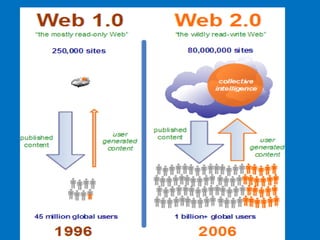
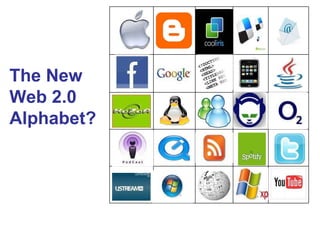
The New Web 2.0 Alphabet?
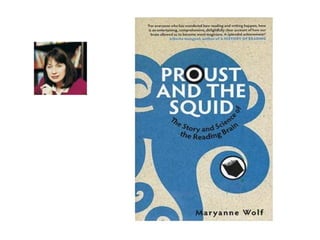
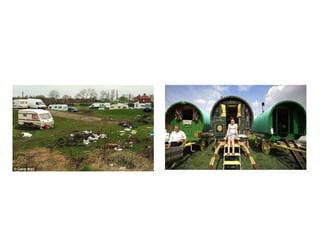
Definition of Texts “ a text is   the medium through which ideas, experiences, opinions and information can be communicated” Literacy Principles and Practice 2009
Definition of Texts “ In planning for learning in any curriculum area it is important for practitioners to ensure that children and young people encounter a wide range of different types of text in different media.” Literacy Principles and Practice 2009
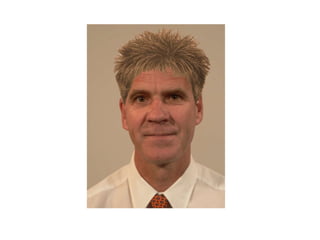
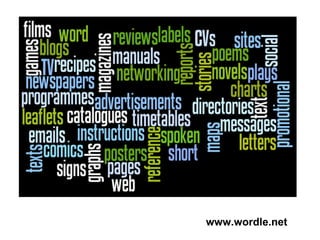
www.wordle.net
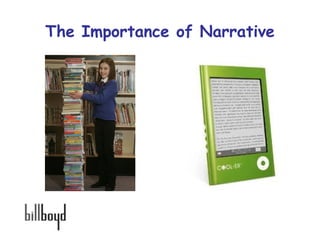
The Importance of Narrative
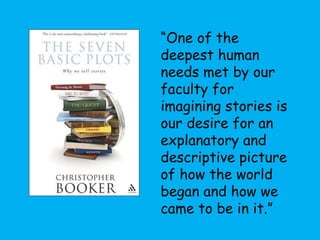
“ One of the deepest human needs met by our faculty for imagining stories is our desire for an explanatory and descriptive picture of how the world began and how we came to be in it.”
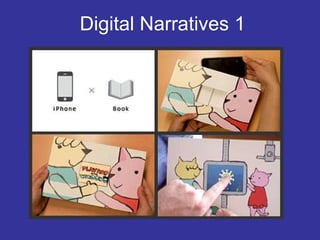
Digital Narratives 1
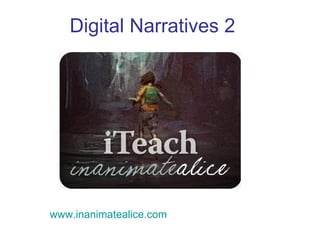
Digital Narratives 2 www.inanimatealice.com
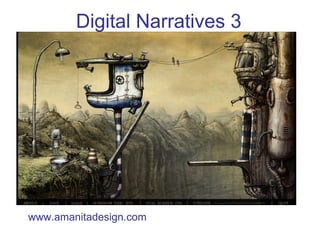
Digital Narratives 3 www.amanitadesign.com
How Do We Construct Our Own Narratives? Social Networking Sites Collaborative Communities Blogs and Wikis Digital Media
Question How do you, as a teacher, construct your narratives for effective learning and teaching?
Can Scotland Be A Winner?
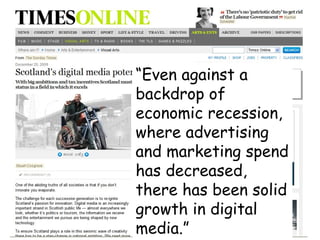
“ Even against a backdrop of economic recession, where advertising and marketing spend has decreased, there has been solid growth in digital media.”
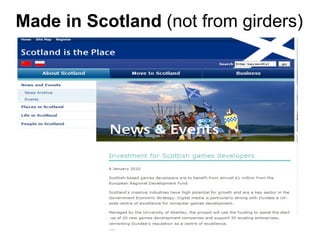
Made in Scotland  (not from girders)
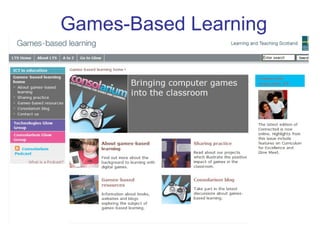
Games-Based Learning
 
 
Keep working Believe in yourself Remember - it’s a team game! To Be A Winner
www.theliteracyadviser.co.uk

Changing Texts in the Twenty Tens - Scotland: Leader or Loser?

  • 1.
    Keynote Presentation DigitalMedia Conference Glasgow Metropolitan College, Glasgow Friday 5 March 2010 Changing Texts in the 2010s: Scotland – Leader or Loser?
  • 2.
    My Old OfficeMy New Office
  • 3.
    Local TV 78% Via email or social networking sites 61% National Newspaper 17% *46% use between 4 and 6 media platforms for news on a typical day
  • 4.
    It is estimatedthat a week’s worth of The Times…
  • 5.
  • 6.
  • 7.
    There are over91 million searches on Google per day
  • 8.
    “ 32% ofBritish schoolchildren believe Google search results are ranked according to how true they are.” Ofcom Media Literacy Report (Interim) 2009
  • 9.
    Critical Literacy inthe Digital Age “ To help me develop an informed view, I am exploring the techniques used to influence my opinion. I can recognise persuasion and assess the reliability of information and credibility and value of my sources.” Literacy Outcome 3-18a
  • 10.
    Wikipedia, the onlineuser-created encylopedia, has 8 million articles in 253 languages
  • 11.
    1 visitor in20 will edit its content.
  • 12.
  • 13.
  • 14.
  • 15.
  • 16.
  • 17.
    When you arein deep trouble, say nothing and try to look like you know what you’re doing. Thought for the Day
  • 18.
    Curriculum for ExcellenceFrom Inputs to Outcomes
  • 19.
    successful learners confidentindividuals responsible citizens effective contributors To enable all young people to become A Curriculum for Excellence
  • 20.
    Definition of literacy“ Literacy is the set of skills which allows an individual to engage fully in society and in learning, through the different forms of language which society values and finds useful.” Literacy and English Principles and Practice 2009
  • 21.
  • 22.
  • 23.
  • 24.
  • 25.
    The New Web2.0 Alphabet?
  • 26.
    Definition of Texts“ a text is the medium through which ideas, experiences, opinions and information can be communicated” Literacy Principles and Practice 2009
  • 27.
    Definition of Texts“ In planning for learning in any curriculum area it is important for practitioners to ensure that children and young people encounter a wide range of different types of text in different media.” Literacy Principles and Practice 2009
  • 28.
  • 29.
  • 30.
    “ One ofthe deepest human needs met by our faculty for imagining stories is our desire for an explanatory and descriptive picture of how the world began and how we came to be in it.”
  • 31.
  • 32.
    Digital Narratives 2www.inanimatealice.com
  • 33.
    Digital Narratives 3www.amanitadesign.com
  • 34.
    How Do WeConstruct Our Own Narratives? Social Networking Sites Collaborative Communities Blogs and Wikis Digital Media
  • 35.
    Question How doyou, as a teacher, construct your narratives for effective learning and teaching?
  • 36.
    Can Scotland BeA Winner?
  • 37.
    “ Even againsta backdrop of economic recession, where advertising and marketing spend has decreased, there has been solid growth in digital media.”
  • 38.
    Made in Scotland (not from girders)
  • 39.
  • 40.
  • 41.
  • 42.
    Keep working Believein yourself Remember - it’s a team game! To Be A Winner
  • 43.

Editor's Notes

  • #2 Good morning. I’m going to talk to you briefly today about the meaning of literacy in 2010, the new meaning of ‘text’ and the potential for Scotland’s Curriculum for Excellence to provide a curriculum model that is the envy of the world.
  • #3 We live in interesting times. The world is becoming bigger and smaller at the same time. As the amount of information, and the number of communication tools available to us far exceed what we are able to process comfortably, we now have the technology to carry it all in our pockets.
  • #4 The way we keep in touch with what’s happening in the world is changing rapidly. These results are from a recent survey by Pew Internet in America, and they demonstrate the fact that although television is still the preferred medium for news coverage, online media are snapping at their heels. Notice that almost 50% of those interviewed said that they find their news via at least four media platforms. It looks like we are now snacking on news throughout the day rather than sitting down in the evening to a three-course meal.
  • #5 The availability of news is a good illustration of how information-rich we have become.
  • #6 And where do people go to find all this information?
  • #7 I’ll give you a clue. It isn’t here!
  • #8 You’ve guessed it. Google has had such an impact on our lives that we have adopted it into the language as a verb.
  • #9 However, very few of us really know exactly how it works. This is the chance for us to learn along with our students.
  • #10 And that is also why this particular outcome, at the heart of the Literacy framework in Curriculum for Excellence, is so crucial. In an age when most people now look for information online as a matter of course, it is absolutely vital that young people learn to make informed judgements as early as possible.
  • #11 For less urgent information, most of us will turn to Wikipedia, the growth of which has been one of the phenomena of the past decade.
  • #12 Anyone with internet access can edit the online encyclopaedia, surely the ultimate symbol of the democratisation of knowledge, and the best possible place to teach young people ‘how to assess the reliability of information and credibility and value of my sources’. More importantly, it is the perfect environment in which to demonstrate how the world wide web has evolved in its brief 20 year history.
  • #13 For ten years or so we marvelled at what we could find on the web. Now we are just as likely to contribute to it as to take from it. It has become a two-way process, with user-generated content contributing to the ‘collective intelligence’.
  • #14 We are now living in a predominantly visual age. In the 20 th Century our books were occasionally illustrated with pictures. In the 21 st Century, words are more often used to explain the image, which is the primary text. In ‘Proust and the Squid, the story and science of the reading brain’, Professor Maryanne Wolf describes the significance of the changes we are undergoing in our understanding of the meaning of reading, and compares them to the concerns of Socrates in the 4 th Century BC. Wolf says: ‘ In words unnerringly prescient today, Socrates described what would be lost to human beings in the transition from oral to written culture. Socrates’ protests, and the silent rebellion of Plato as he recorded every word, are notably relevant today as we and our children negotiate our own transition from a written culture to one that is increasingly driven by visual images and massive streams of digital information.’ We are so surrounded by visual images today, and it is so easy to manipulate them, that we often underestimate how the choice of image can significantly influence our attitudes towards people…….
  • #15 Whether it is a group, or a race.
  • #16 Or an individual.
  • #17 Almost anything or anyone can be digitally enhanced.
  • #18 And the impossible becomes possible with editing tools.
  • #19 How well is Scotland placed to take advantage of this rapidly changing environment? In fact, Curriculum for Excellence gives us the perfect opportunity to prepare our young people for this century and not the last one. The key difference is that the curriculum is no longer defined solely in terms of inputs, but is described from the point of view of the learner. The curriculum framework documents, which make up the totality of the curriculum, set out to describe what the learner ‘ can do ’ or has experienced.
  • #20 The four capacities, or ‘purposes’, encapsulate what we think education is about. They are a bold statement about what we value, but if we are serious about this, they must be valued equally, and those with responsibility for measuring the effectiveness of schools and other educational establishments must begin to use them as the benchmark for improvement, and move away from the tyranny of judgement by league tables of examination results.
  • #21 Literacy had to be re-defined for the 21 st Century. Although there is at least one too many references to society too many for my liking in this definition, it is true that the forms of language which society values and finds useful changes through time. Let’s just take a random sample of the different forms of language which society finds useful and see how literate you are!
  • #22 Let me hear you hum that tune.
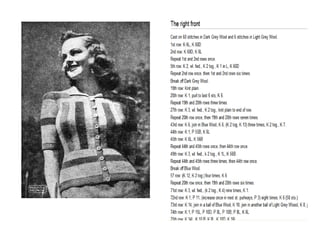
  • #23 Raise your hand if you couldn’t begin to make that beautiful cardigan by following the instructions on the right hand side of the page.
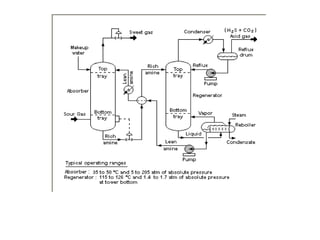
  • #24 Who can tell me what this represents?
  • #25 Is there anyone who doesn’t understand what every one of these buttons does?
  • #26 How many of these online tools and applications do you recognise?
  • #27 It is crucial for the promotion of literacy as the responsibility of all, that teachers (and learners) understand what is meant by text. It doesn’t refer to a ‘text’ message – although that is one form of text – nor does it mean a text book in the traditional sense. Rather it covers the whole range of media through which we communicate, including moving image texts (TV and film) which are the texts most of us engage with most often.
  • #28 The Principles and Practice document is quit unequivocal about the range of texts which young people should have the opportunity to engage with in the course of their learning.
  • #29 The Principles and Practice paper also provides a list of possible texts, which I have represented here as a Wordle. This is a free online tool which analyses a piece of written text and highlights the key words.
  • #30 So is there anything constant in this sea of change? I believe there is a constant, and that the constant is narrative . Incidentally, I put this slide together to represent the fact that I don’t see this as a battle between traditional Literacy and technology. The technology is simply the means of delivery.
  • #31 In The Seven Basic Plots , a fascinating discourse which suggests that all successful stories fall into one of only seven categories, and which is sub-titled Why We Read Stories , Christopher Booker explains that it’s through stories that we try to explain the world and our place in it.
  • #32 The way we tell these stories, however, evolves with time, and with the development of new technologies. In this new ‘phone book’ for children, the iPhone is inserted into the book and provides a touchscreen of interactive pictures which the adult can use to develop the child’s vocabulary.
  • #33 Inanimate Alice is a truly multimedia text, which combines a printed narrative, still photographs, moving images, drawings, diagrams and a soundtrack. Is it a book? Is it a film? Is it a game? You can find it by searching Google!
  • #34 Interactive games like Samorost and Machinarium from Amanita Design, require the player to solve an increasingly complex series of problems, and have a very strong narrative element. Games like these involve elements of language, maths, physics, art, music, geography, technology, philosophy and morality.
  • #35 Web 2.0 isn’t just about reading however. It’s also about creating. So how do people create their own narratives? Increasingly it is through social networking sites, by joining common-interest, collaborative communities, by writing and commenting on blogs, or by telling stories through still and moving images.
  • #36 How do you, as a teacher, construct your narratives for effective learning and teaching? I think this is a question all of us involved in learning and teaching should ask ourselves on a regular basis.
  • #37 But back to the question posed at the start of the presentation. Scotland – leader or loser?
  • #38 One of the current success stories, the digital media sector in Scotland currently employs around 42,000 people, with revenues of £3.6 billion. Growth in employment and turnover are currently running at 6% and 35% respectively.
  • #39 And the Scottish Government recently announced that Scottish games-based developers are to benefit by £1million from the European Regional Development Fund, assisting the start-up of 20 new companies and supporting 30 existing enterprises.
  • #40 Scotland is one of the few countries in the world which is taking seriously the huge potential of games-based learning. The Consolarium at Learning and Teaching Scotland attracts interest from the four corners of the globe.
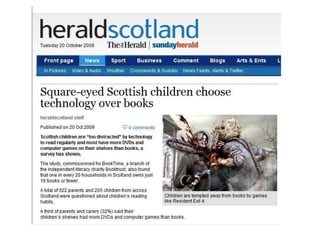
  • #41 Not everyone, however, is convinced of the benefits of technology! This recent scare story resorts to cliches to suggest that if young people are embracing technology they aren’t reading books. Whether they are ‘tempted away from books by games like Resident Evil 4’, as the caption suggests, I’ll let you decide for yourselves.
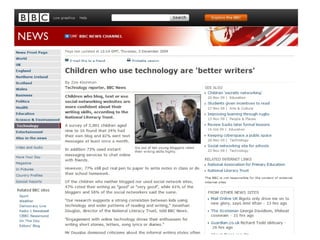
  • #42 As I said earlier though, I don’t believe it is an ‘either/or ’ scenario . A recent survey for the National Literacy Trust in England and Wales, found that children who blog, text or use social networking websites are more confident about their reading and writing skills.
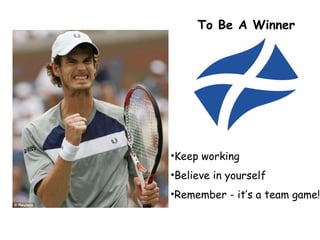
  • #43 So, can Scotland be a winner? Of course it can. But to be a winner you need certain qualities. You need to keep working, especially when faced with obstacles. You need to believe in yourself. And, you need to learn in collaboration with others. Even Andy Murray, competing in an individual event, couldn’t possibly make it to the top without the help and support of a dedicated team with a broad range of talents. I hope you have an enjoyable and productive day, and I wish you well on your own journey to excellence.
  • #44 Thank you for listening.