Prepared By:
Mercy Parneetha K.A.
 Communication is the process of exchanging
the information, and the process of generating
and transmitting meanings, between two or
more individuals. It is the foundation of society
and the most primary aspect of a nurse patient
interaction.
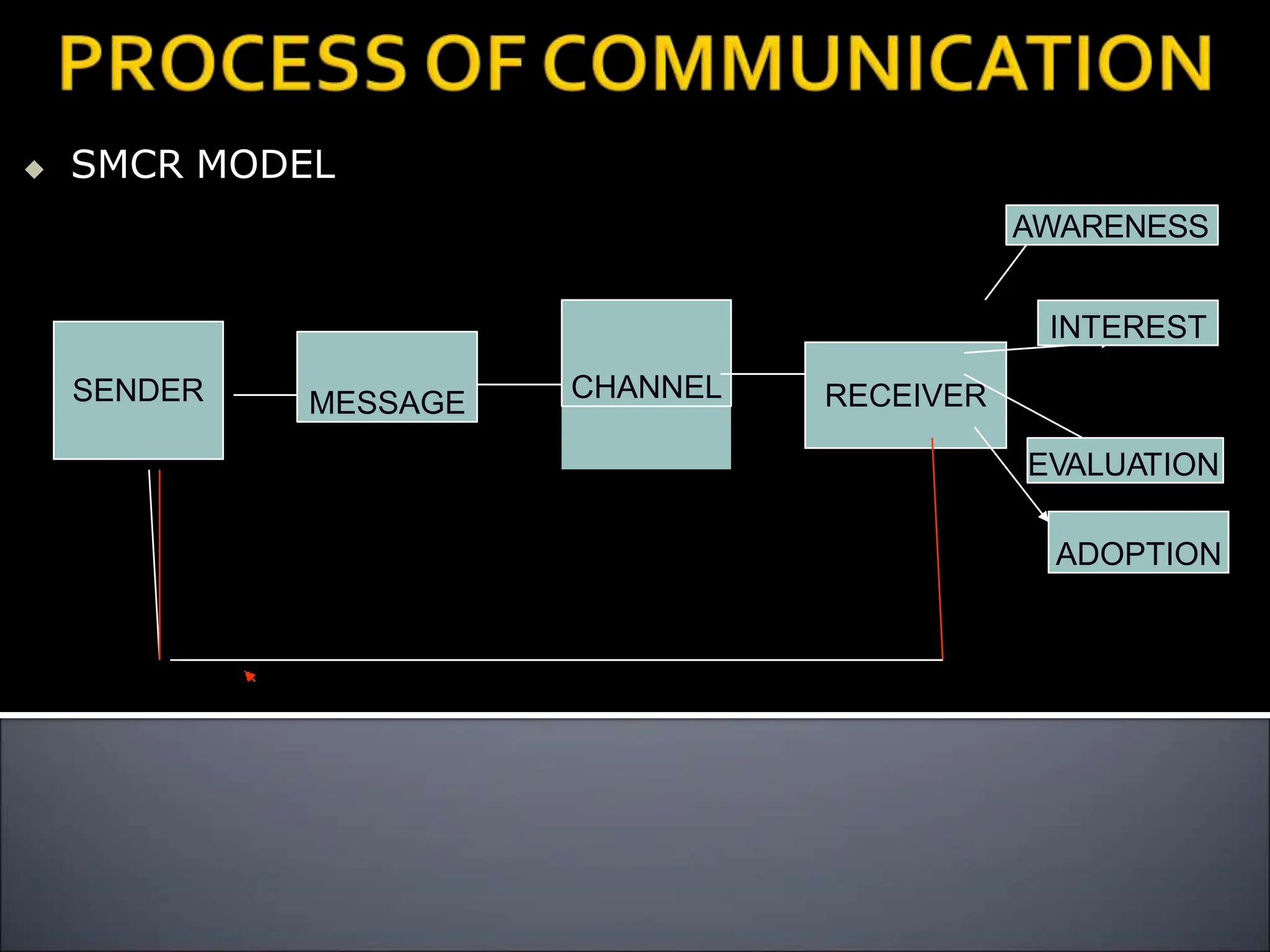
 SMCR MODEL
SENDER MESSAGE CHANNEL RECEIVER
AWARENESS
INTEREST
EVALUATION
ADOPTION
1. To transfer information between patients and all classes
of employees.
2. To interpret and adopt polices in the organization.
3. To include motivation, co- operation and co-ordination
in the employees and patients.
4. To improve nurse-patient relationship
5. To recruit, select, train and develop the personnel in the
organization.
Continued
6. To encourage participation in decision making.
7. To delegate or decentralize authority.
8. To boost the group morale of the workers
9. To ensure patient safety and job satisfaction.
10.To help the grievance procedure and disciplinary
actions.
1. Intrapersonal communication- self talk, self instruction,
2. Interpersonal communication- interaction between two people
or in a small group.
3. Group communication:
I. Small group communication
II. Organizational communication
III. Group dynamics
It is the medium the sender has selected to send the message. It
can be:
Verbal communication-
1. Discussion
2. Meetings
3. Suggestions
4. Advice
5. Announcements
6. Periodical talk between employer and employee
7. Staff conferences
8. Social gatherings
9. Employee counseling's
Continued
TYPES OF COMMUNICATION IN HEALTH CARE SYSTEM
10. Records and reports
11. Standing order
12. Protocols
13. Handbooks
14. Patient files
15. Manuals
16. Complaint book/feedback forms
17. Hospital magazine
18. Annual reports
TYPES OF COMMUNICATION IN HEALTH CARE SYSTEM
Non-verbal communication in health care setup:
1. Alarm system
2. Bulletin boards
3. Suggestion systems
4. Telecommunication system.
5. Enquiry office or public relation office.
6. Patient information booklets.
7. Sign posts for patients and general public
TYPES OF COMMUNICATION IN HEALTH CARE SYSTEM
Nursing care delivery
1. Touch.
2. Eye contact.
3. Facial expression.
4. Posture.
5. Gesture
6. Mode of dress and grooming.
7. Sounds.
8. Silence.
9. General physical appearance
FACTORS INFLUENCING COMMUNICATION.
1. Developmental level.
2. Gender.
3. Sociocultural differences.
4. Roles and responsibilities.
5. SPACE AND TERRITORIALITY.
6. PHYSICAL MENTAL AND EMOTIONAL STATE.
7. VALUES.
8. ENVIRONMENT
THERAPEUTIC COMMUNICATIONTECHNIQUES.
1. Active listening.
Listening is a skill that can be developed by following the
bellow mentioned guidelines:
a. Physically show that you are ready to Listen.
b. Ignore the client’s appearance or manner of delivery.
c. Watch your nonverbal communication.
d. Keep your mind on what the patient is saying.
e. Visualize the situation from the client’s point of view.
f. Do not interrupt immediately.
g. Evaluate the logic and credibility of what you hear.
h. Do not give your last word.
THERAPEUTIC COMMUNICATIONTECHNIQUES.
1. Sharing observation.
2. Sharing sympathy.
3. Sharing hope.
4. Sharing humor.
5. Sharing feeling.
6. Using touch.
7. Using silence.
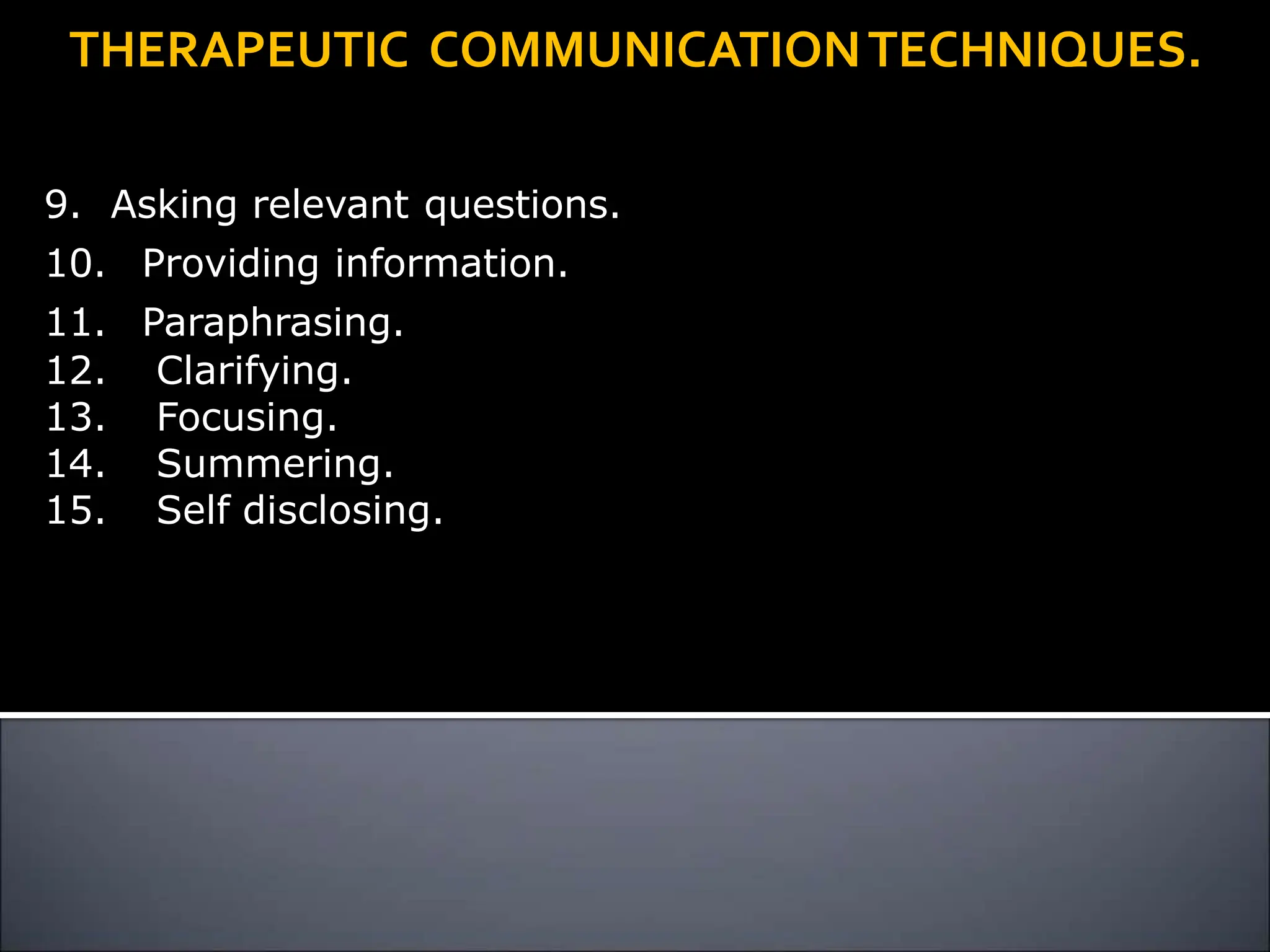
9. Asking relevant questions.
10. Providing information.
11. Paraphrasing.
12. Clarifying.
13. Focusing.
14. Summering.
15. Self disclosing.
THERAPEUTIC COMMUNICATIONTECHNIQUES.
1. Failure to perceive patient as human being.
2. Failure to listen.
3. Inappropriate comments and questions.
4. Using clichés.
5. Using questions requiring only yes or no answer.
6. Using questions that probe for information.
7. Using leading questions.
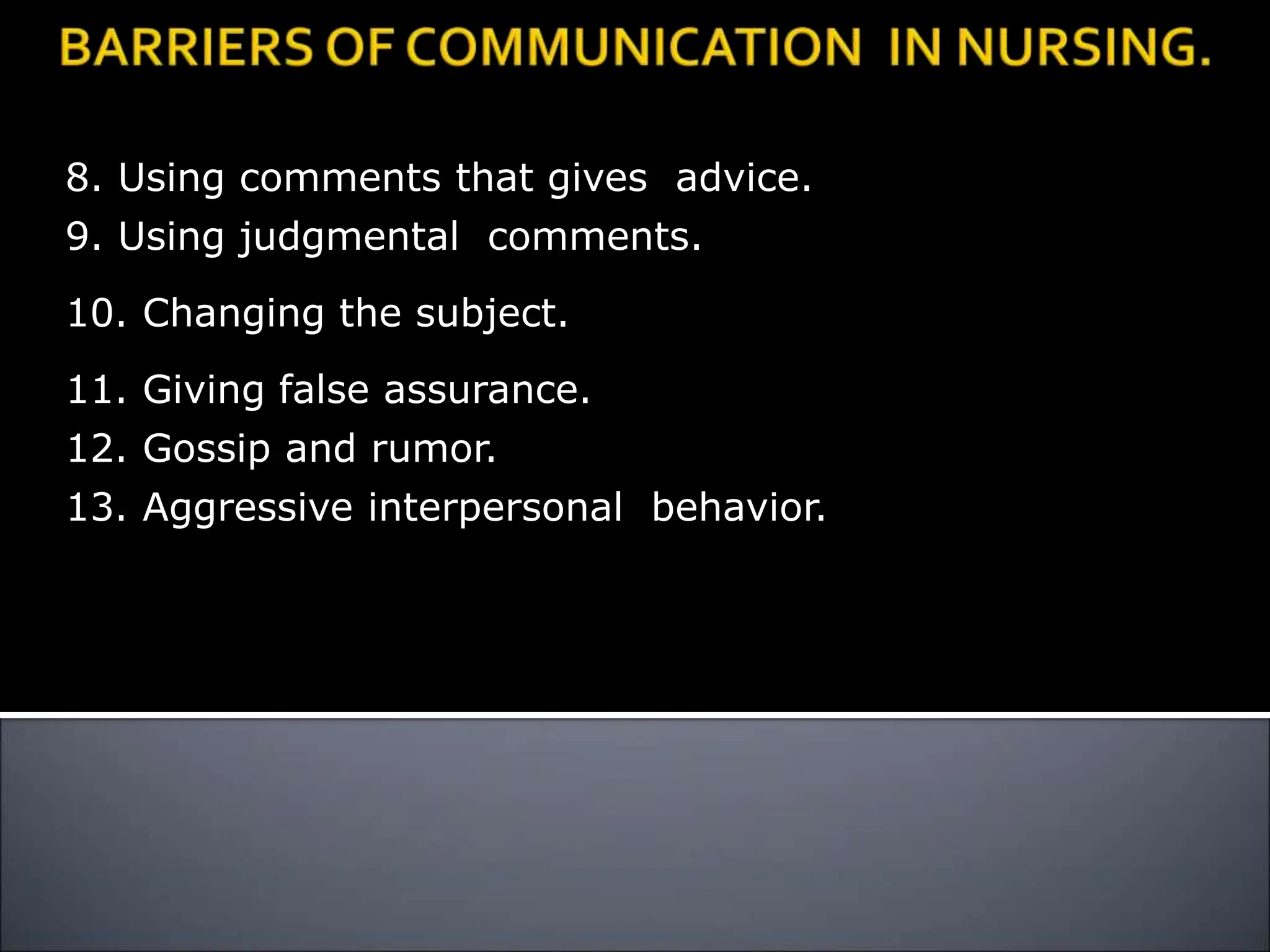
8. Using comments that gives advice.
9. Using judgmental comments.
10. Changing the subject.
11. Giving false assurance.
12. Gossip and rumor.
13. Aggressive interpersonal behavior.
Nurse’s action:
a. Realize that the aggressor ,not you, is at fault.
b. Develop a plan of action.
c. Take action by objectively recording the pattern of
incidents.
d. Address the aggressor either by yourself or with a
support staff member.
e. Make a formal written complaint.
f. As a last resort consider legal action.
Communication in Nursing.pptmmmmmmmmmmmm

Communication in Nursing.pptmmmmmmmmmmmm

  • 1.
  • 2.
     Communication isthe process of exchanging the information, and the process of generating and transmitting meanings, between two or more individuals. It is the foundation of society and the most primary aspect of a nurse patient interaction.
  • 4.
     SMCR MODEL SENDERMESSAGE CHANNEL RECEIVER AWARENESS INTEREST EVALUATION ADOPTION
  • 5.
    1. To transferinformation between patients and all classes of employees. 2. To interpret and adopt polices in the organization. 3. To include motivation, co- operation and co-ordination in the employees and patients. 4. To improve nurse-patient relationship 5. To recruit, select, train and develop the personnel in the organization. Continued
  • 6.
    6. To encourageparticipation in decision making. 7. To delegate or decentralize authority. 8. To boost the group morale of the workers 9. To ensure patient safety and job satisfaction. 10.To help the grievance procedure and disciplinary actions.
  • 7.
    1. Intrapersonal communication-self talk, self instruction, 2. Interpersonal communication- interaction between two people or in a small group. 3. Group communication: I. Small group communication II. Organizational communication III. Group dynamics
  • 8.
    It is themedium the sender has selected to send the message. It can be: Verbal communication- 1. Discussion 2. Meetings 3. Suggestions 4. Advice 5. Announcements 6. Periodical talk between employer and employee 7. Staff conferences 8. Social gatherings 9. Employee counseling's Continued TYPES OF COMMUNICATION IN HEALTH CARE SYSTEM
  • 9.
    10. Records andreports 11. Standing order 12. Protocols 13. Handbooks 14. Patient files 15. Manuals 16. Complaint book/feedback forms 17. Hospital magazine 18. Annual reports TYPES OF COMMUNICATION IN HEALTH CARE SYSTEM
  • 10.
    TYPES OF COMMUNICATIONIN HEALTH CARE SYSTEM Non-verbal communication in health care setup: 1. Alarm system 2. Bulletin boards 3. Suggestion systems 4. Telecommunication system. 5. Enquiry office or public relation office. 6. Patient information booklets. 7. Sign posts for patients and general public
  • 11.
    TYPES OF COMMUNICATIONIN HEALTH CARE SYSTEM Nursing care delivery 1. Touch. 2. Eye contact. 3. Facial expression. 4. Posture. 5. Gesture 6. Mode of dress and grooming. 7. Sounds. 8. Silence. 9. General physical appearance
  • 12.
    FACTORS INFLUENCING COMMUNICATION. 1.Developmental level. 2. Gender. 3. Sociocultural differences. 4. Roles and responsibilities. 5. SPACE AND TERRITORIALITY. 6. PHYSICAL MENTAL AND EMOTIONAL STATE. 7. VALUES. 8. ENVIRONMENT
  • 13.
    THERAPEUTIC COMMUNICATIONTECHNIQUES. 1. Activelistening. Listening is a skill that can be developed by following the bellow mentioned guidelines: a. Physically show that you are ready to Listen. b. Ignore the client’s appearance or manner of delivery. c. Watch your nonverbal communication. d. Keep your mind on what the patient is saying. e. Visualize the situation from the client’s point of view. f. Do not interrupt immediately. g. Evaluate the logic and credibility of what you hear. h. Do not give your last word.
  • 14.
    THERAPEUTIC COMMUNICATIONTECHNIQUES. 1. Sharingobservation. 2. Sharing sympathy. 3. Sharing hope. 4. Sharing humor. 5. Sharing feeling. 6. Using touch. 7. Using silence.
  • 15.
    9. Asking relevantquestions. 10. Providing information. 11. Paraphrasing. 12. Clarifying. 13. Focusing. 14. Summering. 15. Self disclosing. THERAPEUTIC COMMUNICATIONTECHNIQUES.
  • 16.
    1. Failure toperceive patient as human being. 2. Failure to listen. 3. Inappropriate comments and questions. 4. Using clichés. 5. Using questions requiring only yes or no answer. 6. Using questions that probe for information. 7. Using leading questions.
  • 17.
    8. Using commentsthat gives advice. 9. Using judgmental comments. 10. Changing the subject. 11. Giving false assurance. 12. Gossip and rumor. 13. Aggressive interpersonal behavior.
  • 18.
    Nurse’s action: a. Realizethat the aggressor ,not you, is at fault. b. Develop a plan of action. c. Take action by objectively recording the pattern of incidents. d. Address the aggressor either by yourself or with a support staff member. e. Make a formal written complaint. f. As a last resort consider legal action.