Communicating effectively
to your stakeholders
June 2018
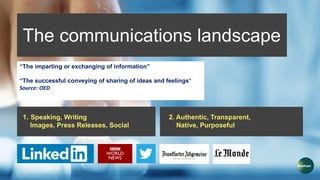
The communications landscape
1. Speaking, Writing
Images, Press Releases, Social
2. Authentic, Transparent,
Native, Purposeful
“The imparting or exchanging of information”
“The successful conveying of sharing of ideas and feelings”
Source: OED
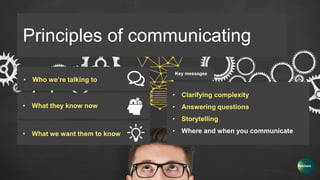
• Clarifying complexity
• Answering questions
• Storytelling
• Where and when you communicate
Key messages
Principles of communicating
• Who we’re talking to
• What they know now
• What we want them to know
Workshop
The stakeholder universe
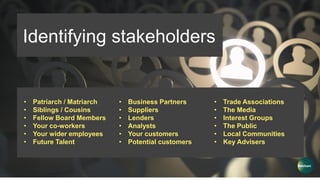
Identifying stakeholders
• Patriarch / Matriarch
• Siblings / Cousins
• Fellow Board Members
• Your co-workers
• Your wider employees
• Future Talent
• Business Partners
• Suppliers
• Lenders
• Analysts
• Your customers
• Potential customers
• Trade Associations
• The Media
• Interest Groups
• The Public
• Local Communities
• Key Advisers
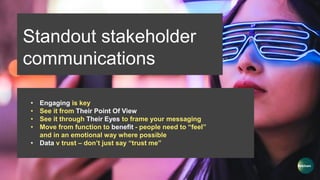
Standout stakeholder
communications
• Engaging is key
• See it from Their Point Of View
• See it through Their Eyes to frame your messaging
• Move from function to benefit - people need to “feel”
and in an emotional way where possible
• Data v trust – don’t just say “trust me”
Getting your message on target
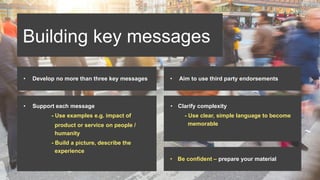
Building key messages
• Develop no more than three key messages
• Support each message
- Use examples e.g. impact of
product or service on people /
humanity
- Build a picture, describe the
experience
• Aim to use third party endorsements
• Clarify complexity
- Use clear, simple language to become
memorable
• Be confident – prepare your material
Workshop
When it gets difficult
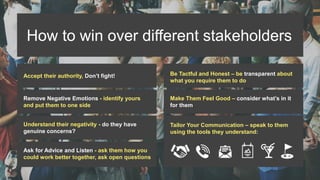
How to win over different stakeholders
Accept their authority, Don’t fight!
Remove Negative Emotions - identify yours
and put them to one side
Understand their negativity - do they have
genuine concerns?
Ask for Advice and Listen - ask them how you
could work better together, ask open questions
Be Tactful and Honest – be transparent about
what you require them to do
Make Them Feel Good – consider what’s in it
for them
Tailor Your Communication – speak to them
using the tools they understand:
Workshop

Communicating Effectively To Your Stakeholders June 2018

  • 1.
    Communicating effectively to yourstakeholders June 2018
  • 2.
    The communications landscape 1.Speaking, Writing Images, Press Releases, Social 2. Authentic, Transparent, Native, Purposeful “The imparting or exchanging of information” “The successful conveying of sharing of ideas and feelings” Source: OED
  • 3.
    • Clarifying complexity •Answering questions • Storytelling • Where and when you communicate Key messages Principles of communicating • Who we’re talking to • What they know now • What we want them to know
  • 4.
  • 5.
  • 6.
    Identifying stakeholders • Patriarch/ Matriarch • Siblings / Cousins • Fellow Board Members • Your co-workers • Your wider employees • Future Talent • Business Partners • Suppliers • Lenders • Analysts • Your customers • Potential customers • Trade Associations • The Media • Interest Groups • The Public • Local Communities • Key Advisers
  • 7.
    Standout stakeholder communications • Engagingis key • See it from Their Point Of View • See it through Their Eyes to frame your messaging • Move from function to benefit - people need to “feel” and in an emotional way where possible • Data v trust – don’t just say “trust me”
  • 8.
  • 9.
    Building key messages •Develop no more than three key messages • Support each message - Use examples e.g. impact of product or service on people / humanity - Build a picture, describe the experience • Aim to use third party endorsements • Clarify complexity - Use clear, simple language to become memorable • Be confident – prepare your material
  • 10.
  • 11.
    When it getsdifficult
  • 12.
    How to winover different stakeholders Accept their authority, Don’t fight! Remove Negative Emotions - identify yours and put them to one side Understand their negativity - do they have genuine concerns? Ask for Advice and Listen - ask them how you could work better together, ask open questions Be Tactful and Honest – be transparent about what you require them to do Make Them Feel Good – consider what’s in it for them Tailor Your Communication – speak to them using the tools they understand:
  • 13.