Parent education session:
Common core Q&A
Michael J. Maher, PhD
Assistant Dean, College of Education
NC State University
April 24, 2014
Introduction
• Michael Maher
• Current:
• Assistant Dean for Professional Education & Accreditation,
College of Education, NC State
• Oversight of teacher education and other school professionals
programs (counseling, social work, school administration,
psychology)
• K-12 & Teacher Education Policy
• Former:
• Assistant Professor, Teacher Education
• High School Science Teacher
• Family
• Two daughters enrolled in the Wake County Public Schools
Foundational
Concepts
• Perception is selective
• Perception filters through
our past experience
• Perception narrows when
we perceive a threat to our
sense of self, goals, or safety
• Problems arise when our
perception of a situation is
incomplete or distorted
Foundational
Concepts
• Perceptions and
interpretations occur almost
simultaneously
• Interpretations come from
our past relationships, it is
the “story” we tell ourselves
about what is happening
Foundational
Concepts
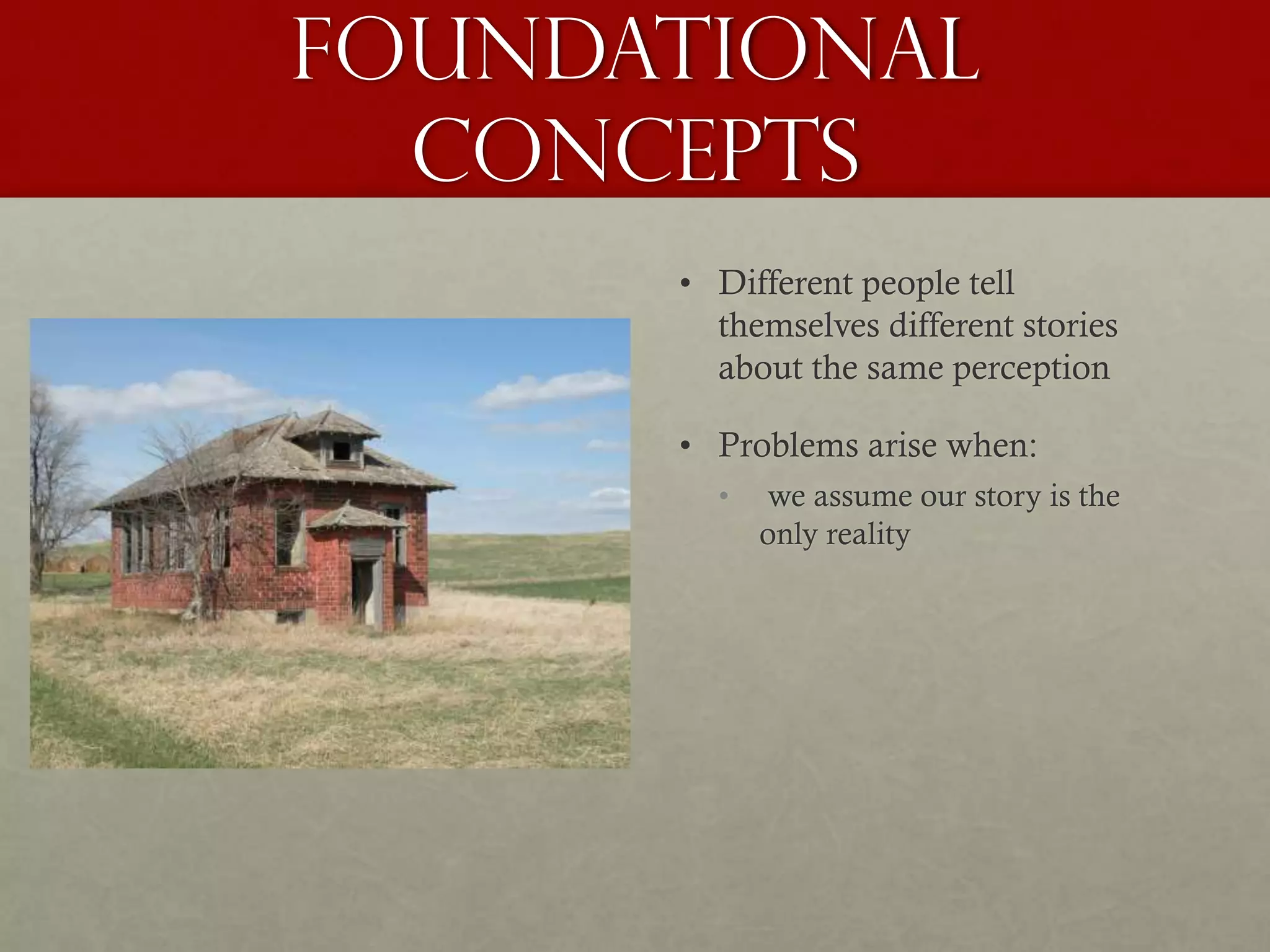
• Different people tell
themselves different stories
about the same perception
• Problems arise when:
• we assume our story is the
only reality
Foundational
Concepts
• New goals for education require intellectually demanding
experiences that are developmental and continuous as
opposed to brief and episodic.
• What we do in school can essentially be divided into two
categories
• Algorithmic: follow a set of established instructions down a
singular path to one conclusion
• Heuristic: a problem in which one experiments with
possibilities to devise a novel solution
What?
• What is the Common Core?
• The Common Core is a set of College and Career-Ready
standards for grades k-12 in Mathematics &
English/Language Arts
• The standards represent goals for student learning
• They are NOT a curriculum
• They DO include both algorithmic and heuristic
standards.
When?
• When were the Common Core standards adopted by
NC?
• The Standards were adopted by NC in 2010
• Full implementation began in 2012-2013
When?
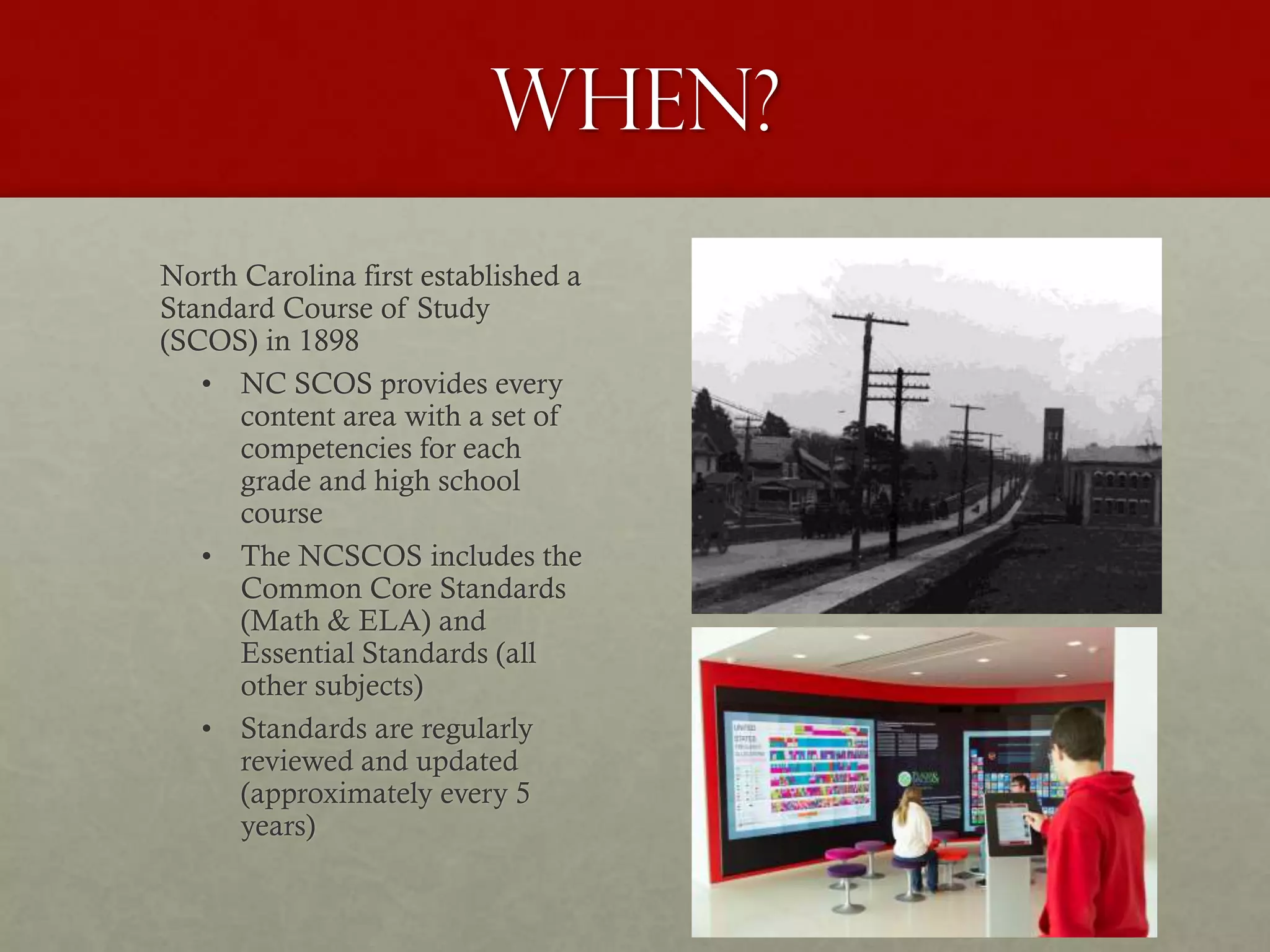
North Carolina first established a
Standard Course of Study
(SCOS) in 1898
• NC SCOS provides every
content area with a set of
competencies for each
grade and high school
course
• The NCSCOS includes the
Common Core Standards
(Math & ELA) and
Essential Standards (all
other subjects)
• Standards are regularly
reviewed and updated
(approximately every 5
years)
WHy?
• Why did NC adopt the Common Core Standards?
• In 2010, NC was one of 12 states to win a federal Race to
the Top grant totaling nearly $400 million.
• One requirement of the grant competition was that the
state utilize College & Career Ready standards.
Who?
• Who was involved in the development of the Common
Core Standards?
• The standards began with the work of the National
Governors Association (NGA) and the Council of Chief
State School Officers
• The standards themselves were developed by teachers,
content & pedagogy experts, administrators, parents, and
state leaders in work groups and feedback groups.
Where?
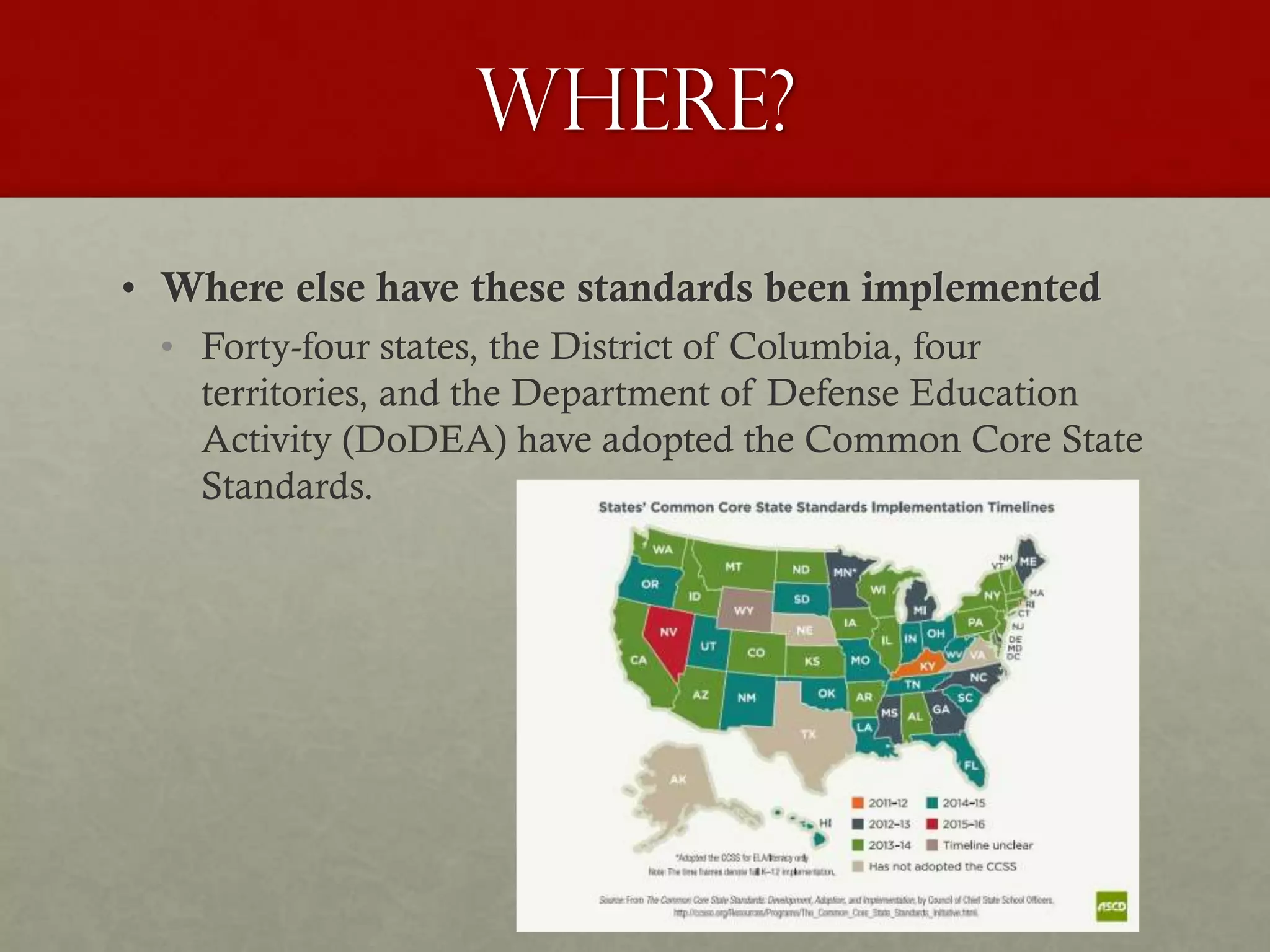
• Where else have these standards been implemented
• Forty-four states, the District of Columbia, four
territories, and the Department of Defense Education
Activity (DoDEA) have adopted the Common Core State
Standards.
How?
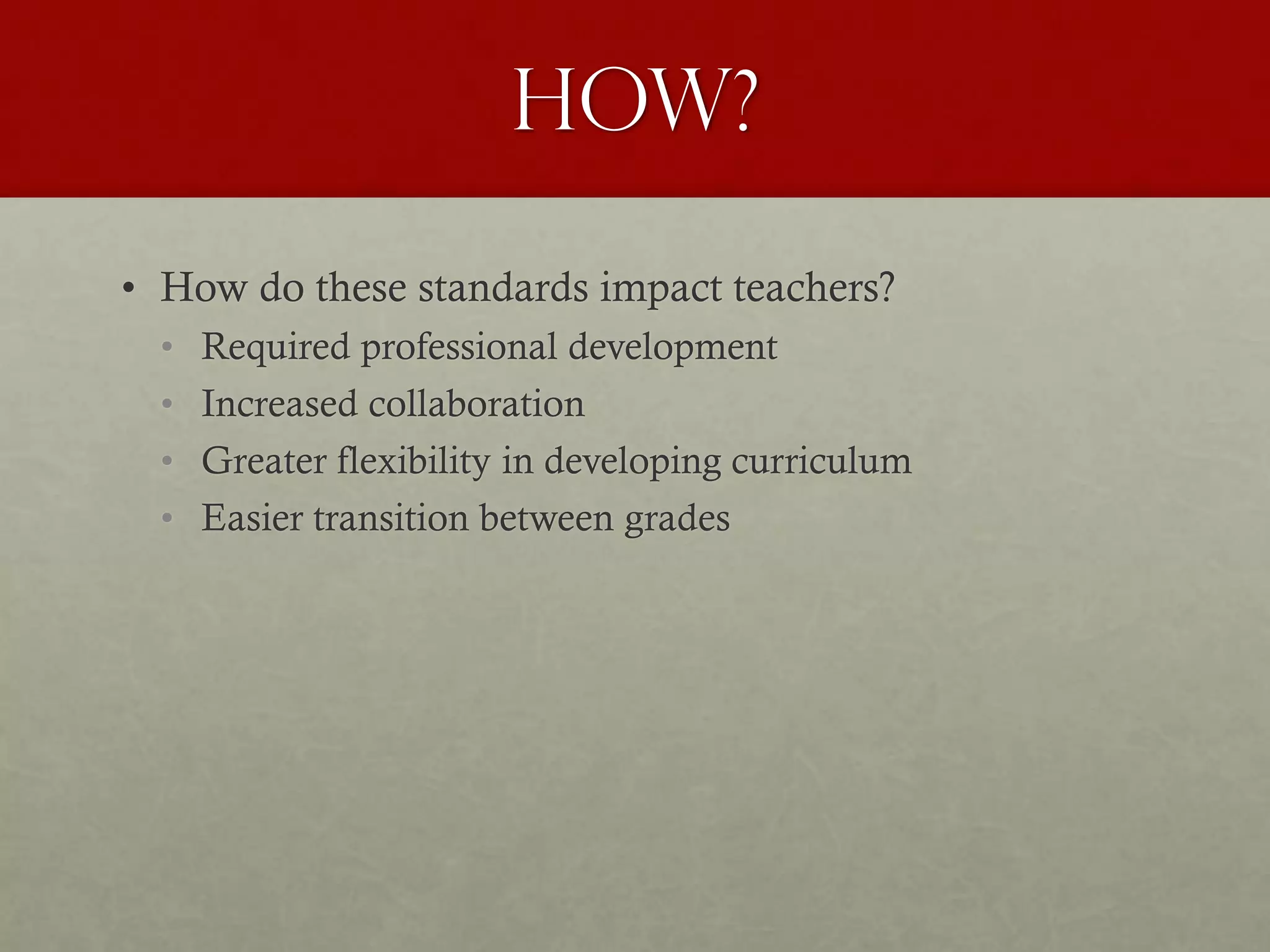
• How do these standards impact teachers?
• Required professional development
• Increased collaboration
• Greater flexibility in developing curriculum
• Easier transition between grades
How?
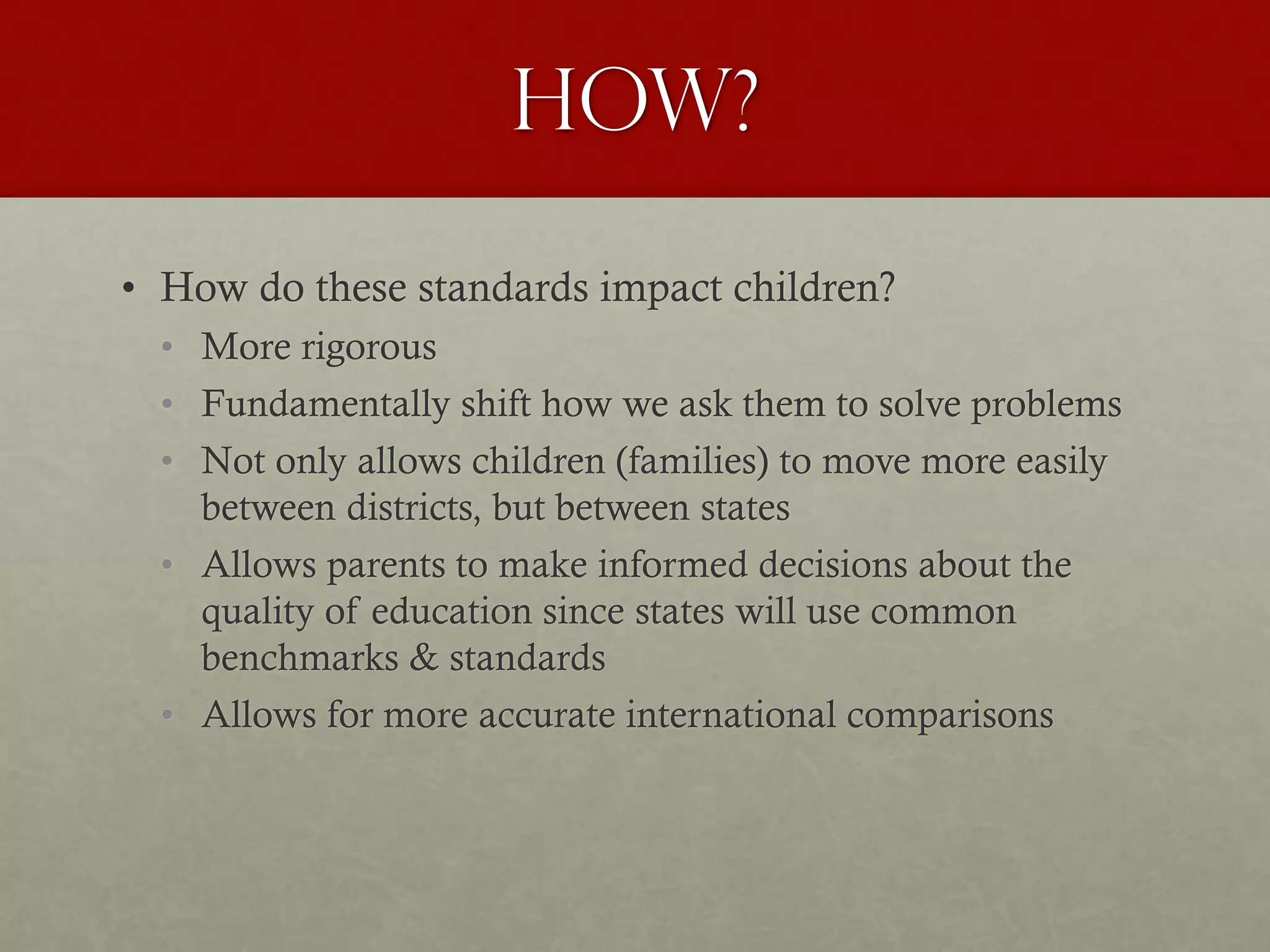
• How do these standards impact children?
• More rigorous
• Fundamentally shift how we ask them to solve problems
• Not only allows children (families) to move more easily
between districts, but between states
• Allows parents to make informed decisions about the
quality of education since states will use common
benchmarks & standards
• Allows for more accurate international comparisons
How?
• Should I support the Common Core?
• That’s entirely up to you.
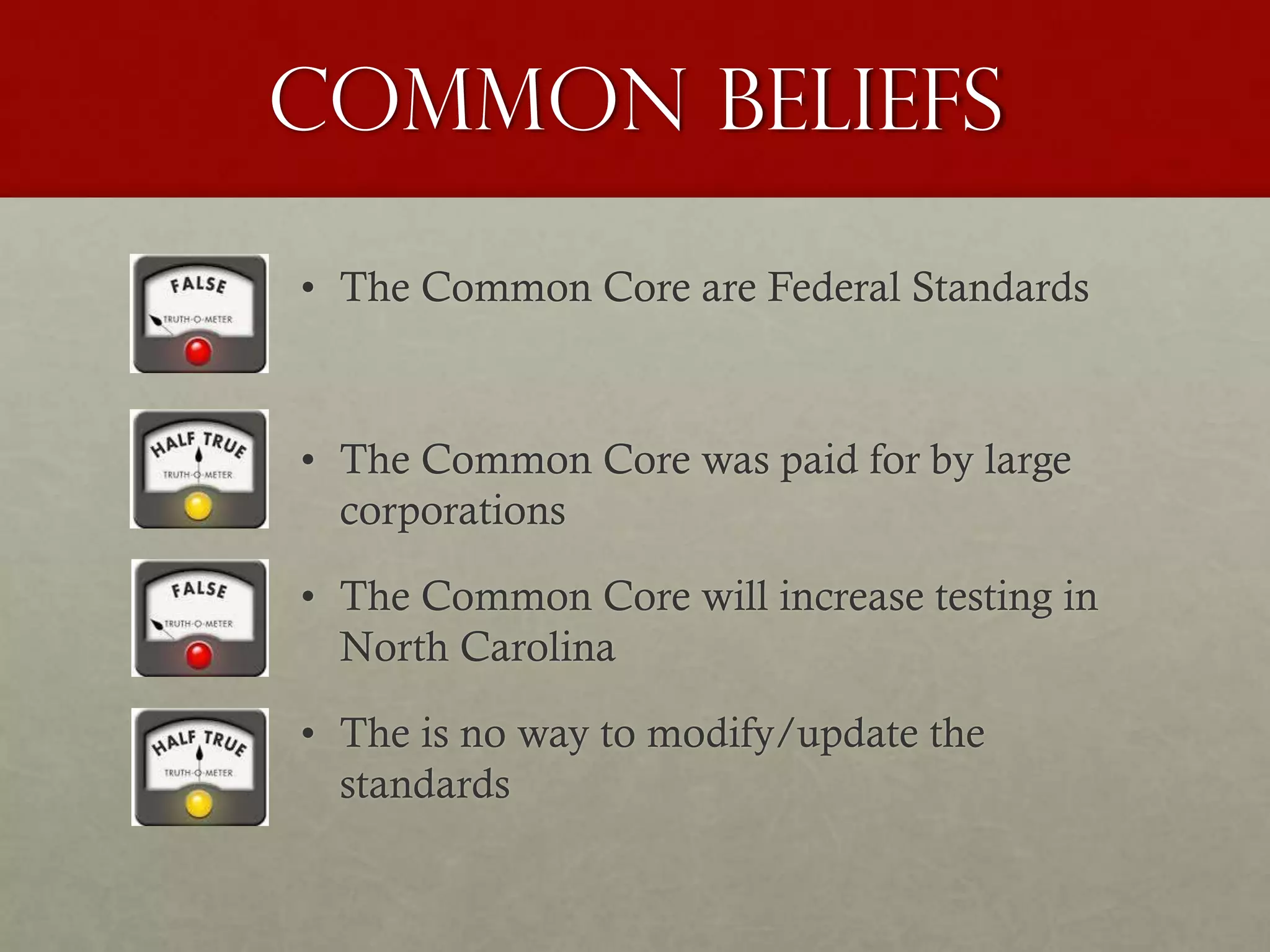
Common beliefs
• The Common Core are Federal Standards
• The Common Core was paid for by large
corporations
• The Common Core will increase testing in
North Carolina
• The is no way to modify/update the
standards
Questions?
• Contact Information:
• Email
• mjmaher@ncsu.edu
• Twitter
• @mj_maher
• Facebook
• Professional Education @ NCSU
• Website
• http://mjmaher.weebly.com/
• Slides
• http://www.slideshare.net/mjmaher
Resources
• Common Core Website::
http://www.corestandards.or
g/
• NPR:http://www.npr.org/20
14/03/18/291166780/q-a-a-
crash-course-on-common-
core?ft=1&f=1013
• Atlantic:http://www.theatlan
tic.com/education/archive/2
014/04/confusing-math-
homework-don-t-blame-the-
common-core/360064/
• Hechinger
Report:http://hechingerrepor
t.org/content/first-grade-
teacher-dives-into-common-
core-with-cautious-
optimism_13033/
• http://hechingerreport.org/c
ontent/parents-return-to-
school-to-help-children-with-
common-core-inspired-
homework_13873/
• http://hechingerreport.org/c
ontent/just-facts-please-
common-core-transforms-
schools-teach-writing_15452/
Resources
• WUNC:http://wunc.org/post/fa
ct-check-clearing-7-common-core-
claims
• US News & World
Report:http://www.usnews.com/
news/special-reports/a-guide-to-
common-
core/articles/2014/03/04/comm
on-core-myths-and-facts
• http://www.usnews.com/news/s
pecial-reports/a-guide-to-
common-
core/articles/2014/04/17/comm
on-core-honoring-the-societal-
contract-of-success-through-
education
• Edutopia:http://www.edutopia.o
rg/blog/common-core-critical-
thinking-aesop-vincent-mastro
• Education
Week:http://www.edweek.org/e
w/collections/common-core-in-
action-report-2014/index.html
• Common Core
Hearing:http://youtu.be/CpBjio
T7Z1Y 10:33

Common Core Presentation Wake Forest Elementary 4.24.14

  • 1.
    Parent education session: Commoncore Q&A Michael J. Maher, PhD Assistant Dean, College of Education NC State University April 24, 2014
  • 2.
    Introduction • Michael Maher •Current: • Assistant Dean for Professional Education & Accreditation, College of Education, NC State • Oversight of teacher education and other school professionals programs (counseling, social work, school administration, psychology) • K-12 & Teacher Education Policy • Former: • Assistant Professor, Teacher Education • High School Science Teacher • Family • Two daughters enrolled in the Wake County Public Schools
  • 3.
    Foundational Concepts • Perception isselective • Perception filters through our past experience • Perception narrows when we perceive a threat to our sense of self, goals, or safety • Problems arise when our perception of a situation is incomplete or distorted
  • 4.
    Foundational Concepts • Perceptions and interpretationsoccur almost simultaneously • Interpretations come from our past relationships, it is the “story” we tell ourselves about what is happening
  • 5.
    Foundational Concepts • Different peopletell themselves different stories about the same perception • Problems arise when: • we assume our story is the only reality
  • 6.
    Foundational Concepts • New goalsfor education require intellectually demanding experiences that are developmental and continuous as opposed to brief and episodic. • What we do in school can essentially be divided into two categories • Algorithmic: follow a set of established instructions down a singular path to one conclusion • Heuristic: a problem in which one experiments with possibilities to devise a novel solution
  • 7.
    What? • What isthe Common Core? • The Common Core is a set of College and Career-Ready standards for grades k-12 in Mathematics & English/Language Arts • The standards represent goals for student learning • They are NOT a curriculum • They DO include both algorithmic and heuristic standards.
  • 8.
    When? • When werethe Common Core standards adopted by NC? • The Standards were adopted by NC in 2010 • Full implementation began in 2012-2013
  • 9.
    When? North Carolina firstestablished a Standard Course of Study (SCOS) in 1898 • NC SCOS provides every content area with a set of competencies for each grade and high school course • The NCSCOS includes the Common Core Standards (Math & ELA) and Essential Standards (all other subjects) • Standards are regularly reviewed and updated (approximately every 5 years)
  • 10.
    WHy? • Why didNC adopt the Common Core Standards? • In 2010, NC was one of 12 states to win a federal Race to the Top grant totaling nearly $400 million. • One requirement of the grant competition was that the state utilize College & Career Ready standards.
  • 11.
    Who? • Who wasinvolved in the development of the Common Core Standards? • The standards began with the work of the National Governors Association (NGA) and the Council of Chief State School Officers • The standards themselves were developed by teachers, content & pedagogy experts, administrators, parents, and state leaders in work groups and feedback groups.
  • 12.
    Where? • Where elsehave these standards been implemented • Forty-four states, the District of Columbia, four territories, and the Department of Defense Education Activity (DoDEA) have adopted the Common Core State Standards.
  • 13.
    How? • How dothese standards impact teachers? • Required professional development • Increased collaboration • Greater flexibility in developing curriculum • Easier transition between grades
  • 14.
    How? • How dothese standards impact children? • More rigorous • Fundamentally shift how we ask them to solve problems • Not only allows children (families) to move more easily between districts, but between states • Allows parents to make informed decisions about the quality of education since states will use common benchmarks & standards • Allows for more accurate international comparisons
  • 15.
    How? • Should Isupport the Common Core? • That’s entirely up to you.
  • 16.
    Common beliefs • TheCommon Core are Federal Standards • The Common Core was paid for by large corporations • The Common Core will increase testing in North Carolina • The is no way to modify/update the standards
  • 17.
    Questions? • Contact Information: •Email • mjmaher@ncsu.edu • Twitter • @mj_maher • Facebook • Professional Education @ NCSU • Website • http://mjmaher.weebly.com/ • Slides • http://www.slideshare.net/mjmaher
  • 18.
    Resources • Common CoreWebsite:: http://www.corestandards.or g/ • NPR:http://www.npr.org/20 14/03/18/291166780/q-a-a- crash-course-on-common- core?ft=1&f=1013 • Atlantic:http://www.theatlan tic.com/education/archive/2 014/04/confusing-math- homework-don-t-blame-the- common-core/360064/ • Hechinger Report:http://hechingerrepor t.org/content/first-grade- teacher-dives-into-common- core-with-cautious- optimism_13033/ • http://hechingerreport.org/c ontent/parents-return-to- school-to-help-children-with- common-core-inspired- homework_13873/ • http://hechingerreport.org/c ontent/just-facts-please- common-core-transforms- schools-teach-writing_15452/
  • 19.
    Resources • WUNC:http://wunc.org/post/fa ct-check-clearing-7-common-core- claims • USNews & World Report:http://www.usnews.com/ news/special-reports/a-guide-to- common- core/articles/2014/03/04/comm on-core-myths-and-facts • http://www.usnews.com/news/s pecial-reports/a-guide-to- common- core/articles/2014/04/17/comm on-core-honoring-the-societal- contract-of-success-through- education • Edutopia:http://www.edutopia.o rg/blog/common-core-critical- thinking-aesop-vincent-mastro • Education Week:http://www.edweek.org/e w/collections/common-core-in- action-report-2014/index.html • Common Core Hearing:http://youtu.be/CpBjio T7Z1Y 10:33