COMIC

 HELLO
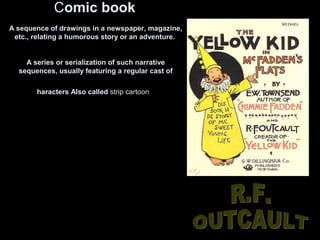
Comic book
A sequence of drawings in a newspaper, magazine,
 etc., relating a humorous story or an adventure.


    A series or serialization of such narrative
  sequences, usually featuring a regular cast of

       haracters Also called strip cartoon
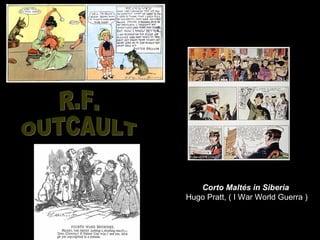
Corto Maltés in Siberia
Hugo Pratt, ( I War World Guerra )
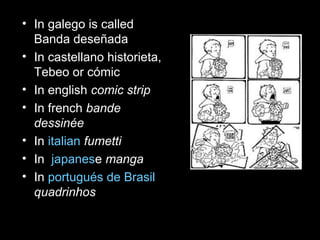
• In galego is called
  Banda deseñada
• In castellano historieta,
  Tebeo or cómic
• In english comic strip
• In french bande
  dessinée
• In italian fumetti
• In japanese manga
• In portugués de Brasil
  quadrinhos
•
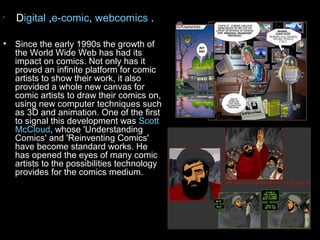
    Digital ,e-comic, webcomics .

• Since the early 1990s the growth of
  the World Wide Web has had its
  impact on comics. Not only has it
  proved an infinite platform for comic
  artists to show their work, it also
  provided a whole new canvas for
  comic artists to draw their comics on,
  using new computer techniques such
  as 3D and animation. One of the first
  to signal this development was Scott
  McCloud, whose 'Understanding
  Comics' and 'Reinventing Comics'
  have become standard works. He
  has opened the eyes of many comic
  artists to the possibilities technology
  provides for the comics medium.
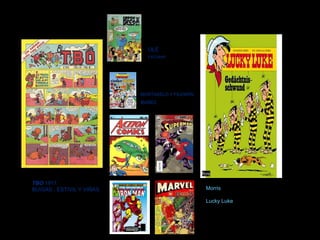
OLÉ
                             ESCOBAR


                           MORTADELO Y FILEMÓN
                           IBAÑEZ


TBO 1917
BUIGAS , ESTIVIL Y VIÑAS                         Morris

                                                 Lucky Luke
VISUAL METAPHORS
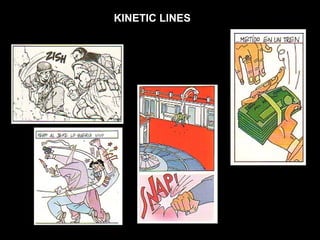
                                     KINETIC LINES
                                   ONOMATOPOEIAS

            BALLOONS AND LABELS

FRAMING                                   TEXT


          POINTS OF VIEW
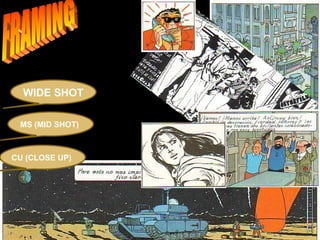
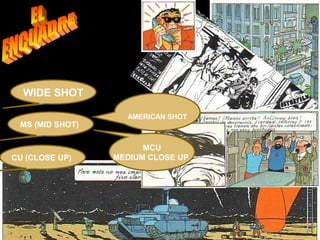
WIDE SHOT

 MS (MID SHOT)


CU (CLOSE UP)
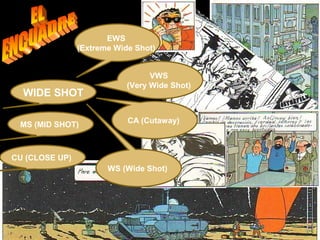
EWS
                (Extreme Wide Shot)


                                  VWS
                            (Very Wide Shot)
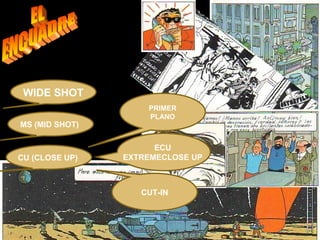
  WIDE SHOT

                            CA (Cutaway)
 MS (MID SHOT)


CU (CLOSE UP)
                       WS (Wide Shot)
WIDE SHOT

                   AMERICAN SHOT
 MS (MID SHOT)

                       MCU
CU (CLOSE UP)    MEDIUM CLOSE UP
WIDE SHOT
                    PRIMER
                    PLANO
MS (MID SHOT)

                      ECU
CU (CLOSE UP)   EXTREMECLOSE UP


                   CUT-IN
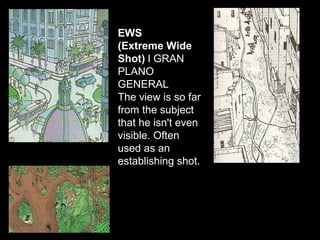
EWS
(Extreme Wide
Shot) l GRAN
PLANO
GENERAL
The view is so far
from the subject
that he isn't even
visible. Often
used as an
establishing shot.
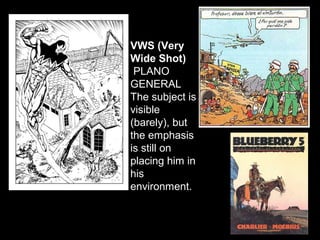
VWS (Very
Wide Shot)
 PLANO
GENERAL
The subject is
visible
(barely), but
the emphasis
is still on
placing him in
his
environment.
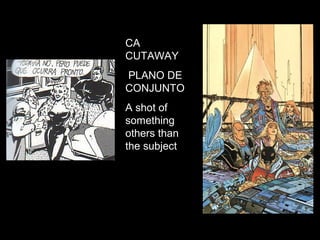
CA
CUTAWAY
PLANO DE
CONJUNTO
A shot of
something
others than
the subject
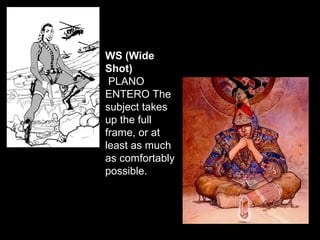
WS (Wide
Shot)
 PLANO
ENTERO The
subject takes
up the full
frame, or at
least as much
as comfortably
possible.
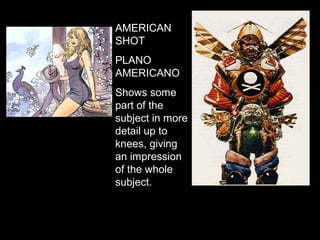
AMERICAN
SHOT
PLANO
AMERICANO
Shows some
part of the
subject in more
detail up to
knees, giving
an impression
of the whole
subject.
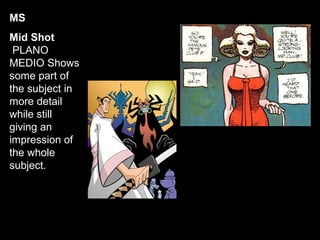
MS
Mid Shot
 PLANO
MEDIO Shows
some part of
the subject in
more detail
while still
giving an
impression of
the whole
subject.
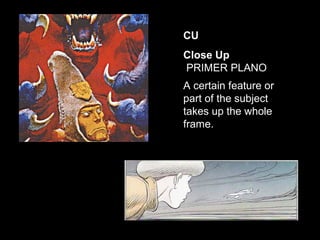
CU
Close Up
PRIMER PLANO
A certain feature or
part of the subject
takes up the whole
frame.
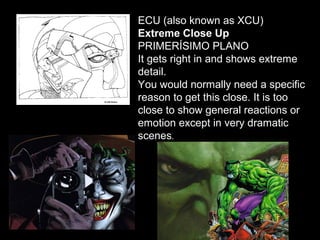
ECU (also known as XCU)
Extreme Close Up
PRIMERÍSIMO PLANO
It gets right in and shows extreme
detail.
You would normally need a specific
reason to get this close. It is too
close to show general reactions or
emotion except in very dramatic
scenes.
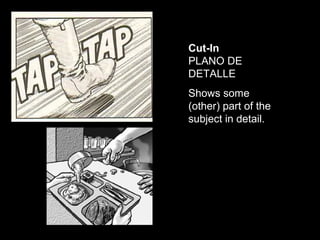
Cut-In
PLANO DE
DETALLE
Shows some
(other) part of the
subject in detail.
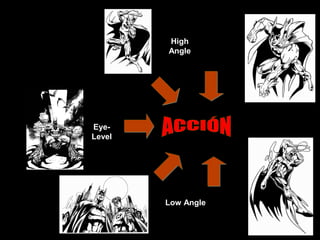
Camera Angles
The term camera angle means
slightly different things to
different people but it always
refers to the way a shot is
composed. It means the angle
between the camera and the
subject. We will concentrate on
the literal interpretation of
camera angles, that is, the angle
of the camera relative to the
subject.
High
        Angle


Eye-
Level


        Low Angle
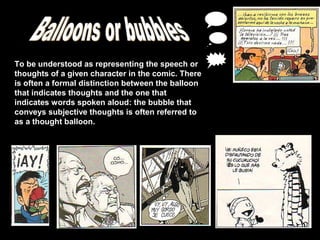
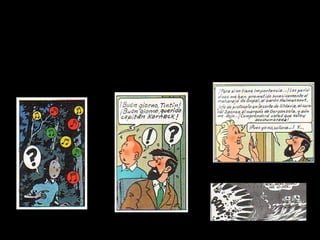
To be understood as representing the speech or
thoughts of a given character in the comic. There
is often a formal distinction between the balloon
that indicates thoughts and the one that
indicates words spoken aloud: the bubble that
conveys subjective thoughts is often referred to
as a thought balloon.
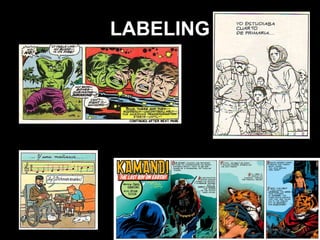
LABELING
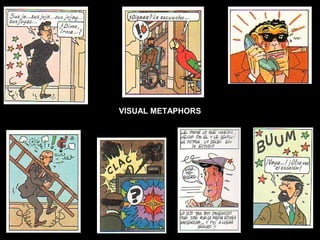
VISUAL METAPHORS
KINETIC LINES
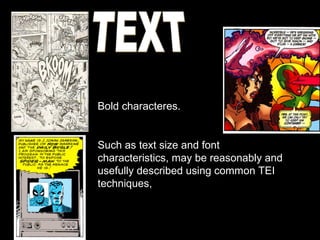
Bold characteres.


Such as text size and font
characteristics, may be reasonably and
usefully described using common TEI
techniques,
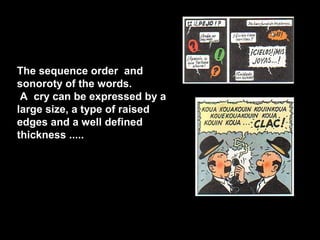
The sequence order and
sonoroty of the words.
 A cry can be expressed by a
large size, a type of raised
edges and a well defined
thickness .....
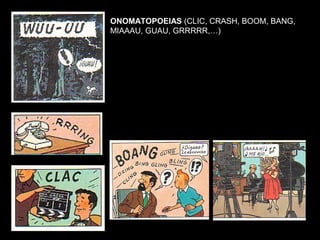
ONOMATOPOEIAS (CLIC, CRASH, BOOM, BANG,
MIAAAU, GUAU, GRRRRR,…)
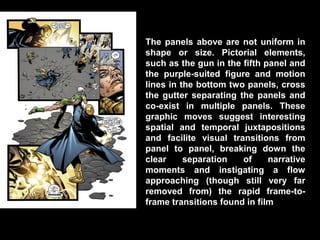
The panels above are not uniform in
shape or size. Pictorial elements,
such as the gun in the fifth panel and
the purple-suited figure and motion
lines in the bottom two panels, cross
the gutter separating the panels and
co-exist in multiple panels. These
graphic moves suggest interesting
spatial and temporal juxtapositions
and facilite visual transitions from
panel to panel, breaking down the
clear     separation   of     narrative
moments and instigating a flow
approaching (though still very far
removed from) the rapid frame-to-
frame transitions found in film

Comic presentation

  • 1.
  • 3.
    Comic book A sequenceof drawings in a newspaper, magazine, etc., relating a humorous story or an adventure. A series or serialization of such narrative sequences, usually featuring a regular cast of haracters Also called strip cartoon
  • 4.
    Corto Maltés inSiberia Hugo Pratt, ( I War World Guerra )
  • 5.
    • In galegois called Banda deseñada • In castellano historieta, Tebeo or cómic • In english comic strip • In french bande dessinée • In italian fumetti • In japanese manga • In portugués de Brasil quadrinhos
  • 8.
    Digital ,e-comic, webcomics . • Since the early 1990s the growth of the World Wide Web has had its impact on comics. Not only has it proved an infinite platform for comic artists to show their work, it also provided a whole new canvas for comic artists to draw their comics on, using new computer techniques such as 3D and animation. One of the first to signal this development was Scott McCloud, whose 'Understanding Comics' and 'Reinventing Comics' have become standard works. He has opened the eyes of many comic artists to the possibilities technology provides for the comics medium.
  • 9.
    OLÉ ESCOBAR MORTADELO Y FILEMÓN IBAÑEZ TBO 1917 BUIGAS , ESTIVIL Y VIÑAS Morris Lucky Luke
  • 10.
    VISUAL METAPHORS KINETIC LINES ONOMATOPOEIAS BALLOONS AND LABELS FRAMING TEXT POINTS OF VIEW
  • 11.
    WIDE SHOT MS(MID SHOT) CU (CLOSE UP)
  • 12.
    EWS (Extreme Wide Shot) VWS (Very Wide Shot) WIDE SHOT CA (Cutaway) MS (MID SHOT) CU (CLOSE UP) WS (Wide Shot)
  • 13.
    WIDE SHOT AMERICAN SHOT MS (MID SHOT) MCU CU (CLOSE UP) MEDIUM CLOSE UP
  • 14.
    WIDE SHOT PRIMER PLANO MS (MID SHOT) ECU CU (CLOSE UP) EXTREMECLOSE UP CUT-IN
  • 15.
    EWS (Extreme Wide Shot) lGRAN PLANO GENERAL The view is so far from the subject that he isn't even visible. Often used as an establishing shot.
  • 16.
    VWS (Very Wide Shot) PLANO GENERAL The subject is visible (barely), but the emphasis is still on placing him in his environment.
  • 17.
    CA CUTAWAY PLANO DE CONJUNTO A shotof something others than the subject
  • 18.
    WS (Wide Shot) PLANO ENTEROThe subject takes up the full frame, or at least as much as comfortably possible.
  • 19.
    AMERICAN SHOT PLANO AMERICANO Shows some part ofthe subject in more detail up to knees, giving an impression of the whole subject.
  • 20.
    MS Mid Shot PLANO MEDIOShows some part of the subject in more detail while still giving an impression of the whole subject.
  • 21.
    CU Close Up PRIMER PLANO Acertain feature or part of the subject takes up the whole frame.
  • 22.
    ECU (also knownas XCU) Extreme Close Up PRIMERÍSIMO PLANO It gets right in and shows extreme detail. You would normally need a specific reason to get this close. It is too close to show general reactions or emotion except in very dramatic scenes.
  • 23.
    Cut-In PLANO DE DETALLE Shows some (other)part of the subject in detail.
  • 24.
    Camera Angles The termcamera angle means slightly different things to different people but it always refers to the way a shot is composed. It means the angle between the camera and the subject. We will concentrate on the literal interpretation of camera angles, that is, the angle of the camera relative to the subject.
  • 25.
    High Angle Eye- Level Low Angle
  • 26.
    To be understoodas representing the speech or thoughts of a given character in the comic. There is often a formal distinction between the balloon that indicates thoughts and the one that indicates words spoken aloud: the bubble that conveys subjective thoughts is often referred to as a thought balloon.
  • 27.
  • 28.
  • 29.
  • 30.
    Bold characteres. Such astext size and font characteristics, may be reasonably and usefully described using common TEI techniques,
  • 32.
    The sequence orderand sonoroty of the words. A cry can be expressed by a large size, a type of raised edges and a well defined thickness .....
  • 33.
    ONOMATOPOEIAS (CLIC, CRASH,BOOM, BANG, MIAAAU, GUAU, GRRRRR,…)
  • 34.
    The panels aboveare not uniform in shape or size. Pictorial elements, such as the gun in the fifth panel and the purple-suited figure and motion lines in the bottom two panels, cross the gutter separating the panels and co-exist in multiple panels. These graphic moves suggest interesting spatial and temporal juxtapositions and facilite visual transitions from panel to panel, breaking down the clear separation of narrative moments and instigating a flow approaching (though still very far removed from) the rapid frame-to- frame transitions found in film