Combinatorial chemistry
Name – Rahul Pandey
42720210011
Green Chemistry 20CYH-211B
What is Combinatorial Chemistry
• Synthesising a large number of similar
compounds in a short period of time.
• Compounds that are generated are analogues of
compounds that are already biologically active
• Chemists want to find a new medicine that is
more effective than an existing one, or causes
fewer side effects
1. Take some beads made from a polymer
2. React the beads with a group called a linker
3. Mix the bead in with an alcohol that you want
to use in a chemical reaction. The linker will
bind to it and hold it on the bead.
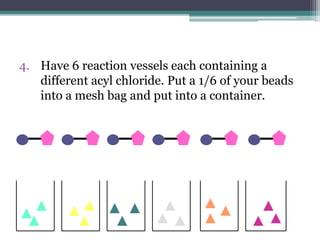
4. Have 6 reaction vessels each containing a
different acyl chloride. Put a 1/6 of your beads
into a mesh bag and put into a container.
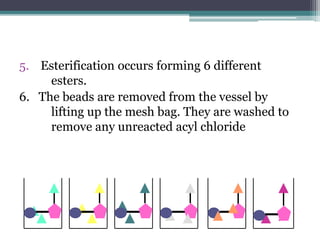
5. Esterification occurs forming 6 different
esters.
6. The beads are removed from the vessel by
lifting up the mesh bag. They are washed to
remove any unreacted acyl chloride
7. A reaction is used to break the linker
group down.
8. The polymer beads are reused
9. You have made 6 different esters which can
now be tested for biological activity
Large numbers of similar compounds have
been synthesised in a very short period
of time. Imagine how much longer it would
take if you did the reaction with one alcohol
and acyl chloride, and then did it again with a
different acyl chloride, and then again,
and again…. 36 times!
Combinatorial chemistry Rahul.pptx

Combinatorial chemistry Rahul.pptx

  • 1.
    Combinatorial chemistry Name –Rahul Pandey 42720210011 Green Chemistry 20CYH-211B
  • 2.
    What is CombinatorialChemistry • Synthesising a large number of similar compounds in a short period of time. • Compounds that are generated are analogues of compounds that are already biologically active • Chemists want to find a new medicine that is more effective than an existing one, or causes fewer side effects
  • 3.
    1. Take somebeads made from a polymer 2. React the beads with a group called a linker 3. Mix the bead in with an alcohol that you want to use in a chemical reaction. The linker will bind to it and hold it on the bead.
  • 4.
    4. Have 6reaction vessels each containing a different acyl chloride. Put a 1/6 of your beads into a mesh bag and put into a container.
  • 5.
    5. Esterification occursforming 6 different esters. 6. The beads are removed from the vessel by lifting up the mesh bag. They are washed to remove any unreacted acyl chloride
  • 6.
    7. A reactionis used to break the linker group down. 8. The polymer beads are reused 9. You have made 6 different esters which can now be tested for biological activity
  • 7.
    Large numbers ofsimilar compounds have been synthesised in a very short period of time. Imagine how much longer it would take if you did the reaction with one alcohol and acyl chloride, and then did it again with a different acyl chloride, and then again, and again…. 36 times!