October 24, 2013








Jan 24 Workshop - Gig.U Executive Director Blair
Levin addressed Council about the Gig.U initiative
and why bandwidth was needed.
April – RVTC formed under the RVP to coordinate
and guide the initiative.
April 25th Council Meeting, Consent item 2.b was
approved to amend College Station’s Funding
Agreement with the RVP to add the $25,000 for the
next generation bandwidth effort.
Oct 15th – RFI issued by the RVP
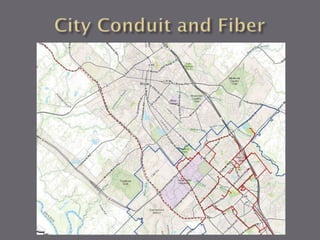
The City owns and maintains over 170 miles of
fiber optic cable that is used to provide
connectivity to and between city facilities and
equipment.






Consider the installation of fiber optic cable as
basic infrastructure
Consider making available for possible
lease/rent to private entities city installed fiber
optic conduit that contains inner duct that is
not used or held in reserve by the city.
Consider making available for possible
lease/rent by private entities dark fiber that is
not held in reserve by the city.


Should fiber optic cable be considered basic infrastructure,
similar to water, electric and sewer during the construction or
major rehabilitation of roadways*
 Pros
 Fiber and related infrastructure installed early and included in
initial project planning – prevents having to install “after the fact”
 Potential cost savings



Cons

 Installed infrastructure may not be used for substantial period of
time
 Will significantly increase construction costs by increasing scope
(Past project info: Tauber/Stasney cost $20.51/ft, Royder Rd cost
~$25/ft)

*four lane major arterial or higher


This option would make available to private
entities installed city fiber optic conduit that
contains inner duct that is not used or held in
reserve by the city. Two locations, 1) Texas
Ave: Harvey Mitchell – City Hall, 2) Harvey
Mitchell: Holleman Dr – Sandy Point


Pros

 Possible revenue source
 Attractive to private entities as cost savings and

immediate availability



Cons

 City becomes a service provider responsible for

restoration and repair (Specific service levels would be
addressed in contract documents).


This option would make available to private
entities installed city fiber optic cable fiber
strands
 Pros
 Possible revenue source
 Attractive to private entities as cost savings



Cons

 City becomes a service provider responsible for

restoration and repair (Specific service levels
would be addressed in contract documents.)
 Additional resources may be needed.
 Private strands would have to be broken off and
not run through secure facilities
College Station Fiber Optic Cable

College Station Fiber Optic Cable

  • 1.
  • 2.
        Jan 24 Workshop- Gig.U Executive Director Blair Levin addressed Council about the Gig.U initiative and why bandwidth was needed. April – RVTC formed under the RVP to coordinate and guide the initiative. April 25th Council Meeting, Consent item 2.b was approved to amend College Station’s Funding Agreement with the RVP to add the $25,000 for the next generation bandwidth effort. Oct 15th – RFI issued by the RVP
  • 3.
    The City ownsand maintains over 170 miles of fiber optic cable that is used to provide connectivity to and between city facilities and equipment.
  • 4.
       Consider the installationof fiber optic cable as basic infrastructure Consider making available for possible lease/rent to private entities city installed fiber optic conduit that contains inner duct that is not used or held in reserve by the city. Consider making available for possible lease/rent by private entities dark fiber that is not held in reserve by the city.
  • 5.
     Should fiber opticcable be considered basic infrastructure, similar to water, electric and sewer during the construction or major rehabilitation of roadways*  Pros  Fiber and related infrastructure installed early and included in initial project planning – prevents having to install “after the fact”  Potential cost savings  Cons  Installed infrastructure may not be used for substantial period of time  Will significantly increase construction costs by increasing scope (Past project info: Tauber/Stasney cost $20.51/ft, Royder Rd cost ~$25/ft) *four lane major arterial or higher
  • 6.
     This option wouldmake available to private entities installed city fiber optic conduit that contains inner duct that is not used or held in reserve by the city. Two locations, 1) Texas Ave: Harvey Mitchell – City Hall, 2) Harvey Mitchell: Holleman Dr – Sandy Point  Pros  Possible revenue source  Attractive to private entities as cost savings and immediate availability  Cons  City becomes a service provider responsible for restoration and repair (Specific service levels would be addressed in contract documents).
  • 7.
     This option wouldmake available to private entities installed city fiber optic cable fiber strands  Pros  Possible revenue source  Attractive to private entities as cost savings  Cons  City becomes a service provider responsible for restoration and repair (Specific service levels would be addressed in contract documents.)  Additional resources may be needed.  Private strands would have to be broken off and not run through secure facilities