Collective Story

a toolkit for community engagement

Anke, Meg, Pam and Rae . SVA IXD Public Interfaces . December 10 2013
Objectives
Promote civic engagement, critical thinking and
intergenerational storytelling in public queues
or waiting areas. Connect people through stories.
Insights
Insights
Through quick low-fidelity experiments with different
prompts and in different locations, we gained insights
about engaging people and understanding potential barriers
to interaction. We learned how to combine message,
medium and location to most effectively reach people.
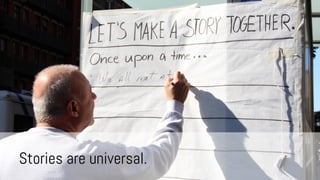
Stories are universal.
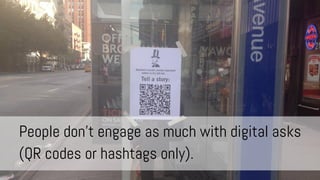
People don’t engage as much with digital asks
(QR codes or hashtags only).
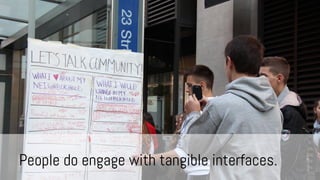
People do engage with tangible interfaces.
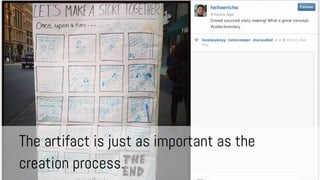
The artifact is just as important as the
creation process.
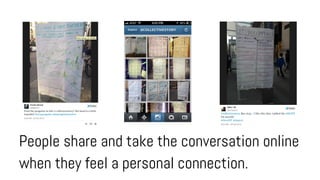
People share and take the conversation online
when they feel a personal connection.
Concept
Collective Story is a toolkit for community engagement. The toolkit
provides opportunities for anyone — individuals, groups, schools and
other local organizations — to gauge public opinion, provoke
discussion and create collectively.
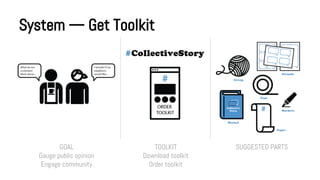
System — Get Toolkit

GOAL
Gauge public opinion
Engage community

TOOLKIT
Download toolkit
Order toolkit

SUGGESTED PARTS
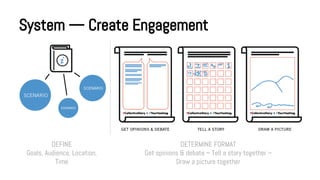
System — Create Engagement

DEFINE
Goals, Audience, Location,
Time

DETERMINE FORMAT
Get opinions & debate – Tell a story together –
Draw a picture together
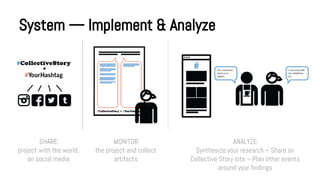
System — Implement & Analyze

SHARE
project with the world,
on social media

MONITOR
the project and collect
artifacts

ANALYZE
Synthesize your research – Share on
Collective Story site – Plan other events
around your findings
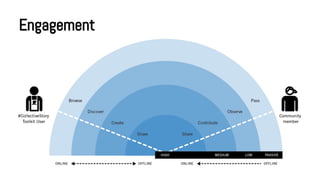
Engagement
Use Cases
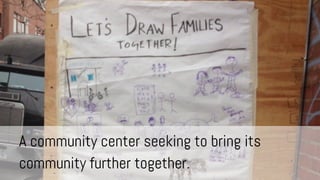
A community center seeking to bring its
community further together.
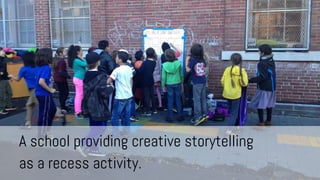
A school providing creative storytelling
as a recess activity.
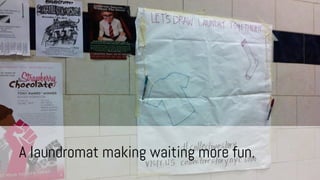
A laundromat making waiting more fun.
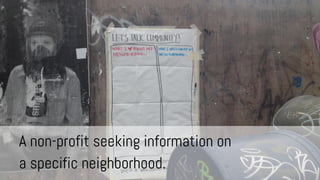
A non-profit seeking information on
a specific neighborhood.
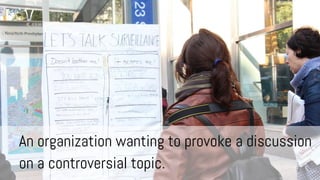
An organization wanting to provoke a discussion
on a controversial topic.
Frida & Collective Story
Next Steps
Next Steps
Collective Story will be working with Border Crossers to help them
create interactive activities for their Spring Gala.
Thank you.
Appendix
Research
Existing Behaviors
Some of the existing behaviors we viewed in people waiting for the bus included:
● reading a book or a newspaper
● browsing the ads
● interacting with their phones
● standing with their necks craned, looking out hopefully for the bus
● sitting/resting
● listening to music
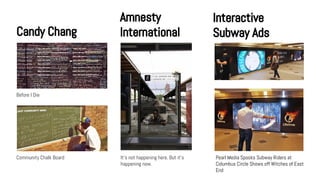
Candy Chang

Amnesty
International

Interactive
Subway Ads

Before I Die

Community Chalk Board

It’s not happening here. But it’s
happening now.

Pearl Media Spooks Subway Riders at
Columbus Circle Shows off Witches of East
End
“Strangers may occasionally chat with each other if
something annoying is happening (why is the bus so
late?), but it’s not often that strangers get a chance
to connect over something fun.”
- Smart Urban Stage, Creating Public Spaces which Encourage Strangers to Interact

CollectiveStory

  • 1.
    Collective Story a toolkitfor community engagement Anke, Meg, Pam and Rae . SVA IXD Public Interfaces . December 10 2013
  • 2.
    Objectives Promote civic engagement,critical thinking and intergenerational storytelling in public queues or waiting areas. Connect people through stories.
  • 3.
  • 4.
    Insights Through quick low-fidelityexperiments with different prompts and in different locations, we gained insights about engaging people and understanding potential barriers to interaction. We learned how to combine message, medium and location to most effectively reach people.
  • 5.
  • 6.
    People don’t engageas much with digital asks (QR codes or hashtags only).
  • 7.
    People do engagewith tangible interfaces.
  • 8.
    The artifact isjust as important as the creation process.
  • 9.
    People share andtake the conversation online when they feel a personal connection.
  • 11.
    Concept Collective Story isa toolkit for community engagement. The toolkit provides opportunities for anyone — individuals, groups, schools and other local organizations — to gauge public opinion, provoke discussion and create collectively.
  • 12.
    System — GetToolkit GOAL Gauge public opinion Engage community TOOLKIT Download toolkit Order toolkit SUGGESTED PARTS
  • 13.
    System — CreateEngagement DEFINE Goals, Audience, Location, Time DETERMINE FORMAT Get opinions & debate – Tell a story together – Draw a picture together
  • 14.
    System — Implement& Analyze SHARE project with the world, on social media MONITOR the project and collect artifacts ANALYZE Synthesize your research – Share on Collective Story site – Plan other events around your findings
  • 15.
  • 16.
  • 17.
    A community centerseeking to bring its community further together.
  • 18.
    A school providingcreative storytelling as a recess activity.
  • 19.
    A laundromat makingwaiting more fun.
  • 20.
    A non-profit seekinginformation on a specific neighborhood.
  • 21.
    An organization wantingto provoke a discussion on a controversial topic.
  • 22.
  • 24.
  • 25.
    Next Steps Collective Storywill be working with Border Crossers to help them create interactive activities for their Spring Gala.
  • 26.
  • 27.
  • 28.
  • 29.
    Existing Behaviors Some ofthe existing behaviors we viewed in people waiting for the bus included: ● reading a book or a newspaper ● browsing the ads ● interacting with their phones ● standing with their necks craned, looking out hopefully for the bus ● sitting/resting ● listening to music
  • 30.
    Candy Chang Amnesty International Interactive Subway Ads BeforeI Die Community Chalk Board It’s not happening here. But it’s happening now. Pearl Media Spooks Subway Riders at Columbus Circle Shows off Witches of East End
  • 31.
    “Strangers may occasionallychat with each other if something annoying is happening (why is the bus so late?), but it’s not often that strangers get a chance to connect over something fun.” - Smart Urban Stage, Creating Public Spaces which Encourage Strangers to Interact