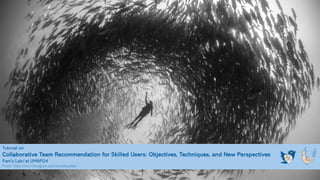
Tutorial on
Collaborative Team Recommendation for Skilled Users: Objectives, Techniques, and New Perspectives
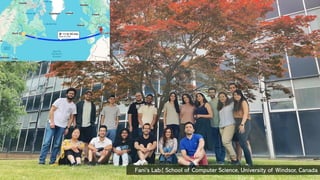
Fani’s Lab! at UMAP24
Photo: https://www.instagram.com/daviddoubilet/
2
Fani’s Lab!, School of Computer Science, University of Windsor, Canada
Mahdis Saeedi, PhD
Post Doctoral Researcher
University of Windsor, Canada
Hossein Fani, PhD
Assistant Professor
University of Windsor, Canada
Christine Wong
Undergrad Student
University of Windsor, Canada
Organizers
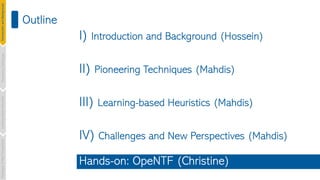
Outline
I) Introduction and Background (Hossein)
II) Pioneering Techniques (Mahdis)
III) Learning-based Heuristics (Mahdis)
IV) Challenges and New Perspectives (Mahdis)
Introduction
and
Background
Pioneering
Techniques
Learning-based
Heuristics
Challenges
&
New
Perspectives
Hands-on: OpeNTF (Christine)
5
Outline
Introduction
and
Background
Pioneering
Techniques
Learning-based
Heuristics
Challenges
&
New
Perspectives
I) Introduction and Background (Hossein)
II) Pioneering Techniques
III) Learning-based Heuristics
IV) Challenges and New Perspectives
Hands-on: OpeNTF
6
What Is a Team?
A group of users who collaborate together with a common
purpose in order to accomplish the requirements of a task.
[Brannik et al., Psychology Press, 1997]
Introduction
and
Background
Pioneering
Techniques
Learning-based
Heuristics
Challenges
&
New
Perspectives
7
What Is a Team?
A group of users who independently endeavor to
accomplish their individual tasks to reach a shared goal or
value, while actively interacting and adapting.
[Zzkarian et. Al., IIE transactions,1999]
Introduction
and
Background
Pioneering
Techniques
Learning-based
Heuristics
Challenges
&
New
Perspectives
8
Team vs. Group
Main differences:
- Coordination
- Being responsible for the success
Introduction
and
Background
Pioneering
Techniques
Learning-based
Heuristics
Challenges
&
New
Perspectives
9
Dead Poet Society, 1998
Peter Weir
Robin Williams, We don’t read and write poetry because it’s cute …
10
The Big Lebowski, 1998
Joel & Ethan Coen
Jeff Bridges, John Goodman, Steve Buscemi
11
12
Italy, 2006
13
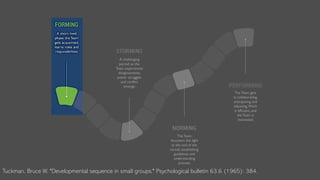
Development for a Team
Four distinct phases of development for a team
[Tuckman et. Al., Psychological bulletin ,1965]
Introduction
and
Background
Pioneering
Techniques
Learning-based
Heuristics
Challenges
&
New
Perspectives
14
Development for a Team
• Forming: human resource allocation by a leader,
Four distinct phases of development for a team
[Tuckman et. Al., Psychological bulletin ,1965]
Introduction
and
Background
Pioneering
Techniques
Learning-based
Heuristics
Challenges
&
New
Perspectives
15
Development for a Team
• Forming: human resource allocation by a leader,
• Storming: developing shared goals and values resulting in conflicts,
Four distinct phases of development for a team
[Tuckman et. Al., Psychological bulletin ,1965]
Introduction
and
Background
Pioneering
Techniques
Learning-based
Heuristics
Challenges
&
New
Perspectives
16
Development for a Team
• Forming: human resource allocation by a leader,
• Storming: developing shared goals and values resulting in conflicts,
• Norming: conflict resolution between team members,
Four distinct phases of development for a team
[Tuckman et. Al., Psychological bulletin ,1965]
Introduction
and
Background
Pioneering
Techniques
Learning-based
Heuristics
Challenges
&
New
Perspectives
17
Development for a Team
• Forming: human resource allocation by a leader,
• Storming: developing shared goals and values resulting in conflicts,
• Norming: conflict resolution between team members,
• Performing: focusing on individual tasks to reach the shared goal or value.
Four distinct phases of development for a team
[Tuckman et. Al., Psychological bulletin ,1965]
Introduction
and
Background
Pioneering
Techniques
Learning-based
Heuristics
Challenges
&
New
Perspectives
Tuckman, Bruce W. "Developmental sequence in small groups." Psychological bulletin 63.6 (1965): 384.
19
Development for a Team
• Forming: human resource allocation by a leader,
• Storming: developing shared goals and values resulting in conflicts,
• Norming: conflict resolution between team members,
• Performing: focusing on individual tasks to reach the shared goal or value.
Four distinct phases of development for a team
[Tuckman et. Al., Psychological bulletin ,1965]
Are all developed teams successful?
Introduction
and
Background
Pioneering
Techniques
Learning-based
Heuristics
Challenges
&
New
Perspectives
20
Development for a Team
• Forming: human resource allocation by a leader,
• Storming: developing shared goals and values resulting in conflicts,
• Norming: conflict resolution between team members,
• Performing: focusing on individual tasks to reach the shared goal or value.
Four distinct phases of development for a team
[Tuckman et. Al., Psychological bulletin ,1965]
Are all developed teams successful? What is success?!
Introduction
and
Background
Pioneering
Techniques
Learning-based
Heuristics
Challenges
&
New
Perspectives
21
Italy, World Cup 2006
What is success?
US$1.446 billion vs. no Oscar!
22
What is success?
23
What is success?
https://www.facebook.com/share/p/kXYaYaRvRCr5K2Ze
https://openreview.net/forum?id=idpCdOWtqXd60
24
What is success?
25
Successful Team
A team that achieve a desired outcome or fulfill a goal is a successful team.
Introduction
and
Background
Pioneering
Techniques
Learning-based
Heuristics
Challenges
&
New
Perspectives
26
Produced Published
Issued
Released
Success
27
Traditional approach
Teams were formed manually by relying on human experience and instinct in a tedious,
error-prone, and suboptimal process.
Introduction
and
Background
Pioneering
Techniques
Learning-based
Heuristics
Challenges
&
New
Perspectives
28
Teams were formed manually by relying on human experience and instinct in a tedious,
error-prone, and suboptimal process.
Difficulties:
Traditional approach
Introduction
and
Background
Pioneering
Techniques
Learning-based
Heuristics
Challenges
&
New
Perspectives
29
o Large number of candidates
- Different knowledge
- Different culture
- Different characteristic
o Hidden personal and societal biases
- Race
- Gender
- Popularity
o Multitude of criteria to optimize
- Communication cost
- Budget
- Time
Traditional approach
Teams were formed manually by relying on human experience and instinct in a tedious,
error-prone, and suboptimal process.
Difficulties:
Introduction
and
Background
Pioneering
Techniques
Learning-based
Heuristics
Challenges
&
New
Perspectives
30
o Large number of candidates
- Different knowledge
- Different culture
- Different characteristic
o Hidden personal and societal biases
- Race
- Gender
- Popularity
o Multitude of criteria to optimize
- Communication cost
- Budget
- Time
Traditional approach
Teams were formed manually by relying on human experience and instinct in a tedious,
error-prone, and suboptimal process.
Difficulties:
Introduction
and
Background
Pioneering
Techniques
Learning-based
Heuristics
Challenges
&
New
Perspectives
Manual team recommendation on a large scale is almost impossible
31
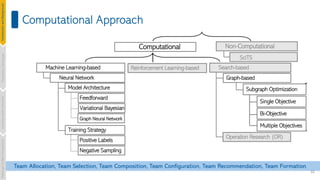
Computational Approach
A variety of disciplines have long been endeavoring to find algorithmic solutions.
Introduction
and
Background
Pioneering
Techniques
Learning-based
Heuristics
Challenges
&
New
Perspectives
Team Allocation, Team Selection, Team Composition, Team Configuration, Team Recommendation, Team Formation
32
Computational Approach
Introduction
and
Background
Pioneering
Techniques
Learning-based
Heuristics
Challenges
&
New
Perspectives
33
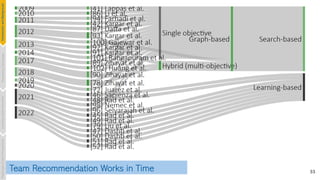
Team Recommendation Works in Time
Introduction
and
Background
Pioneering
Techniques
Learning-based
Heuristics
Challenges
&
New
Perspectives
34
Outline
Introduction
and
Background
Pioneering
Techniques
Learning-based
Heuristics
Challenges
&
New
Perspectives
I) Introduction and Background
II) Pioneering Techniques
III) Learning-based Heuristics
IV) Challenges and New Perspectives
Hands-on: OpeNTF
35
Graph-based Team Recommendation
Underlying network structure is a key factor to form an effective team.
[Miller, Computational Modeling and Organization Theories. AAAI Press, 2001]
[Gaston et al., Proceedings of the 1st NAACSOS Conference, 2003]
[Gaston et al., AAAI Technical Report, 2004]
[Chen, INCoS, 2010]
• Organizations’inherent hierarchical network structure.
• Users' social and collaborative ties
Introduction
and
Background
Pioneering
Techniques
Learning-based
Heuristics
Challenges
&
New
Perspectives
36
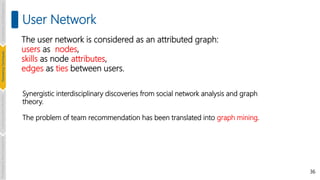
User Network
Synergistic interdisciplinary discoveries from social network analysis and graph
theory.
The problem of team recommendation has been translated into graph mining.
The user network is considered as an attributed graph:
users as nodes,
skills as node attributes,
edges as ties between users.
Introduction
and
Background
Pioneering
Techniques
Learning-based
Heuristics
Challenges
&
New
Perspectives
37
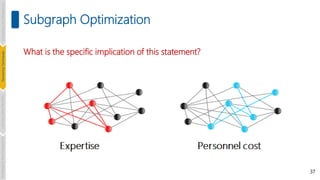
Subgraph Optimization
What is the specific implication of this statement?
Introduction
and
Background
Pioneering
Techniques
Learning-based
Heuristics
Challenges
&
New
Perspectives
38
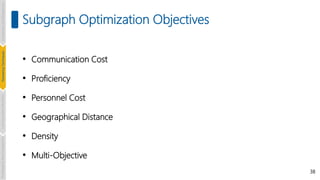
Subgraph Optimization Objectives
• Communication Cost
• Proficiency
• Personnel Cost
• Geographical Distance
• Density
• Multi-Objective
Introduction
and
Background
Pioneering
Techniques
Learning-based
Heuristics
Challenges
&
New
Perspectives
39
Subgraph Optimization Objectives
• Communication Cost
• Proficiency
• Personnel Cost
• Geographical Distance
• Density
• Multi-Objective
Introduction
and
Background
Pioneering
Techniques
Learning-based
Heuristics
Challenges
&
New
Perspectives
40
• A metric to measures how effectively users communicate.
• lower communication cost in a team indicates easier
communication, better understanding and collaborations among
team members.
• Communication cost Team performance
Communication Cost (φ)
Introduction
and
Background
Pioneering
Techniques
Learning-based
Heuristics
Challenges
&
New
Perspectives
41
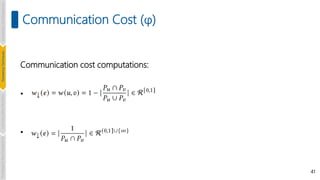
Communication cost computations:
•
•
Communication Cost (φ)
Introduction
and
Background
Pioneering
Techniques
Learning-based
Heuristics
Challenges
&
New
Perspectives
42
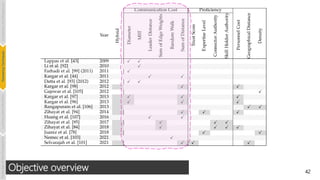
Objective overview
Introduction
and
Background
Pioneering
Techniques
Learning-based
Heuristics
Challenges
&
New
Perspectives
• Non-temporal (Static)
• Temporal (Dynamic)
43
Communication Cost Minimization Methods
Introduction
and
Background
Pioneering
Techniques
Learning-based
Heuristics
Challenges
&
New
Perspectives
• Non-temporal (Static)
• Temporal (Dynamic)
44
Communication Cost Minimization Algorithms (φ)
Introduction
and
Background
Pioneering
Techniques
Learning-based
Heuristics
Challenges
&
New
Perspectives
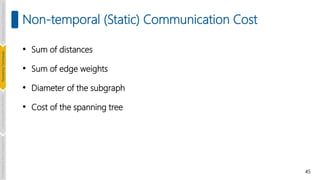
• Sum of distances
• Sum of edge weights
• Diameter of the subgraph
• Cost of the spanning tree
45
Non-temporal (Static) Communication Cost
Introduction
and
Background
Pioneering
Techniques
Learning-based
Heuristics
Challenges
&
New
Perspectives
• Non-temporal (Static)
• Temporal (Dynamic)
46
Communication Cost Minimization Algorithms (φ)
Introduction
and
Background
Pioneering
Techniques
Learning-based
Heuristics
Challenges
&
New
Perspectives
47
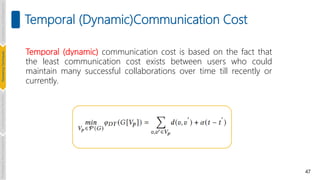
Temporal (Dynamic)Communication Cost
Temporal (dynamic) communication cost is based on the fact that
the least communication cost exists between users who could
maintain many successful collaborations over time till recently or
currently.
Introduction
and
Background
Pioneering
Techniques
Learning-based
Heuristics
Challenges
&
New
Perspectives
48
Subgraph Optimization Objectives
• Communication Cost
• Proficiency
• Personnel Cost
• Geographical Distance
• Density
• Multi-Objective
Introduction
and
Background
Pioneering
Techniques
Learning-based
Heuristics
Challenges
&
New
Perspectives
49
Proficiency of users indicates the level of expertise in a particular profession
or a skill.
• h-index
• number of citations
Proficiency(ϕ)
Introduction
and
Background
Pioneering
Techniques
Learning-based
Heuristics
Challenges
&
New
Perspectives
50
Proficiency(ϕ)
Authority [Zihayat et. Al., Authority-based Team Discovery in Social Networks. In EDBT. OpenProceedings.org, 2017]
Sum of inverse of experties level
Introduction
and
Background
Pioneering
Techniques
Learning-based
Heuristics
Challenges
&
New
Perspectives
51
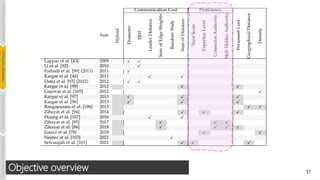
Objective overview
Introduction
and
Background
Pioneering
Techniques
Learning-based
Heuristics
Challenges
&
New
Perspectives
52
Multi-Objective Optimization
• Communication cost and proficiency
[Zihayat et. al., AMW, 2018]
[Zihayat et. al., EDBT, 2017]
• Communication cost and personnel cost
[Aijun et. al., SDM, 2013]
[Kargar et. al., CSE, 2013]
[Zihayat et. al., AMW, 2018]
• Density and proficiency
[Juarez et. al., GECCO., 2018]
• Communication cost, personnel cost and proficiency
[Zihayat et. al., WI-IAT, 2014]
• Dynamic communication cost, geographical proximity, and proficiency
[Selvarajah et. al., Expert Syst. Appl., 2021]
Introduction
and
Background
Pioneering
Techniques
Learning-based
Heuristics
Challenges
&
New
Perspectives
53
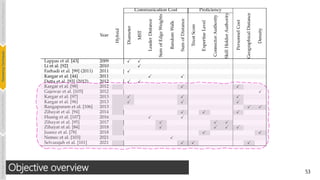
Objective overview
Introduction
and
Background
Pioneering
Techniques
Learning-based
Heuristics
Challenges
&
New
Perspectives
54
Pioneering Techniques
• Subgraph Optimization Objectives
• Subgraph Optimization Algorithms
Introduction
and
Background
Pioneering
Techniques
Learning-based
Heuristics
Challenges
&
New
Perspectives
55
Subgraph Optimization Algorithms
Subgraph optimization problems are proven to be NP-hard
[Karp, Complexity of computer computations, Springer, 2010]
Heuristics have been developed to solve this problem in polynomial
time through greedy and approximation algorithms.
Introduction
and
Background
Pioneering
Techniques
Learning-based
Heuristics
Challenges
&
New
Perspectives
56
Communication Cost Minimization Algorithms
Lappas et al. is the first attempt to form a team based on the subgraph
optimization on the user network. [Lappas et. al., KDD, 2009]
Key Concept: Reducing the cost of communication between team
members.
 Diameter-Based Optimization RarestFirst
 Spanning Tree-Based Optimization CoverSteiner and
EnhancedSteiner
Introduction
and
Background
Pioneering
Techniques
Learning-based
Heuristics
Challenges
&
New
Perspectives
57
Outline
Introduction
and
Background
Pioneering
Techniques
Learning-based
Heuristics
Challenges
and
New
Perspectives
I) Introduction and Background
II) Pioneering Techniques
III) Learning-based Heuristics
IV) Challenges and New Perspectives
Hands-on: OpeNTF
58
Learning-based Heuristics
Paradigm Shift to Learning-Based Methods
• Learn the inherent structure of ties among users and their skills.
• Utilize all past (un)successful team compositions as training samples.
• Predict future teams and their performance.
Introduction
and
Background
Pioneering
Techniques
Learning-based
Heuristics
Challenges
and
New
Perspectives
59
Learning-based Heuristics
Advantages of Learning-Based Methods:
Introduction
and
Background
Pioneering
Techniques
Learning-based
Heuristics
Challenges
and
New
Perspectives
60
Learning-based Heuristics
Advantages of Learning-Based Methods:
• Efficiency: Enhanced by iterative and online learning procedures.
Introduction
and
Background
Pioneering
Techniques
Learning-based
Heuristics
Challenges
and
New
Perspectives
61
Learning-based Heuristics
Advantages of Learning-Based Methods:
• Efficiency: Enhanced by iterative and online learning procedures.
• Efficacy: Improved prediction and team performance.
Introduction
and
Background
Pioneering
Techniques
Learning-based
Heuristics
Challenges
and
New
Perspectives
62
Learning-based Heuristics
Advantages of Learning-Based Methods:
• Efficiency: Enhanced by iterative and online learning procedures.
• Efficacy: Improved prediction and team performance.
• Scalability: Can handle larger and more dynamic user networks.
Introduction
and
Background
Pioneering
Techniques
Learning-based
Heuristics
Challenges
and
New
Perspectives
63
Learning-based Heuristics
Advantages of Learning-Based Methods:
• Efficiency: Enhanced by iterative and online learning procedures.
• Efficacy: Improved prediction and team performance.
• Scalability: Can handle larger and more dynamic user networks.
• Dynamic Adaptation: Better suited for temporal conditions.
Introduction
and
Background
Pioneering
Techniques
Learning-based
Heuristics
Challenges
and
New
Perspectives
64
Learning-based Heuristics
• Model Architecture
• Training Strategies
Introduction
and
Background
Pioneering
Techniques
Learning-based
Heuristics
Challenges
and
New
Perspectives
65
Model Architecture
o Feedforward
o Variational Bayesian
o Graph Representation Learning
Introduction
and
Background
Pioneering
Techniques
Learning-based
Heuristics
Challenges
and
New
Perspectives
66
Learning-based Heuristics
Team
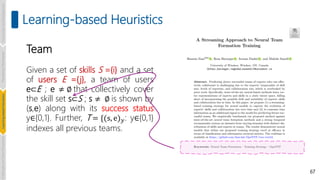
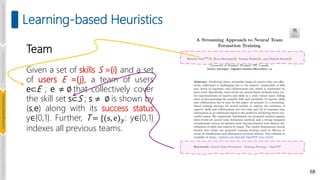
Given a set of skills S ={i} and a set
of users E ={j}, a team of users
e⊂E ; e ≠ ∅ that collectively cover
the skill set s⊂S ; s ≠ ∅ is shown by
(s,e) along with its success status
y∈{0,1}. Further, T = {(s, e)𝑦: y∈{0,1}
indexes all previous teams.
Introduction
and
Background
Pioneering
Techniques
Learning-based
Heuristics
Challenges
and
New
Perspectives
67
Learning-based Heuristics
Team
Given a set of skills S ={i} and a set
of users E ={j}, a team of users
e⊂E ; e ≠ ∅ that collectively cover
the skill set s⊂S ; s ≠ ∅ is shown by
(s,e) along with its success status
y∈{0,1}. Further, T = {(s, e)𝑦: y∈{0,1}
indexes all previous teams.
Introduction
and
Background
Pioneering
Techniques
Learning-based
Heuristics
Challenges
and
New
Perspectives
68
Learning-based Heuristics
Team
Given a set of skills S ={i} and a set
of users E ={j}, a team of users
e⊂E ; e ≠ ∅ that collectively cover
the skill set s⊂S ; s ≠ ∅ is shown by
(s,e) along with its success status
y∈{0,1}. Further, T = {(s, e)𝑦: y∈{0,1}
indexes all previous teams.
Introduction
and
Background
Pioneering
Techniques
Learning-based
Heuristics
Challenges
and
New
Perspectives
69
Learning-based Heuristics
Team Recommendation
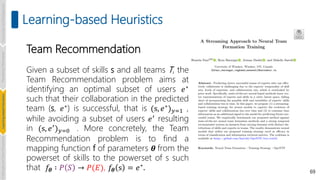
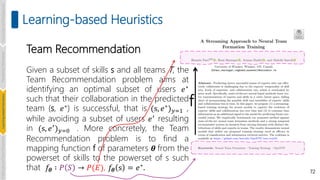
Given a subset of skills s and all teams T, the
Team Recommendation problem aims at
identifying an optimal subset of users 𝑒∗
such that their collaboration in the predicted
team (s, 𝑒∗) is successful, that is (s, 𝑒∗)𝑦=1 ,
while avoiding a subset of users 𝑒′ resulting
in (s, 𝑒′)𝑦=0 . More concretely, the Team
Recommendation problem is to find a
mapping function f of parameters 𝜽 from the
powerset of skills to the powerset of s such
that 𝑓𝜽 ∶ 𝑃 𝑆 → 𝑃(𝐸), 𝑓𝜽 s = 𝑒∗
.
Introduction
and
Background
Pioneering
Techniques
Learning-based
Heuristics
Challenges
and
New
Perspectives
Team Recommendation
Given a subset of skills s and all teams T, the
Team Recommendation problem aims at
identifying an optimal subset of users 𝑒∗
such that their collaboration in the predicted
team (s, 𝑒∗) is successful, that is (s, 𝑒∗)𝑦=1 ,
while avoiding a subset of users 𝑒′ resulting
in (s, 𝑒′)𝑦=0 . More concretely, the Team
Recommendation problem is to find a
mapping function f of parameters 𝜽 from the
powerset of skills to the powerset of s such
that 𝑓𝜽 ∶ 𝑃 𝑆 → 𝑃(𝐸), 𝑓𝜽 s = 𝑒∗
. 70
Learning-based Heuristics
Introduction
and
Background
Pioneering
Techniques
Learning-based
Heuristics
Challenges
and
New
Perspectives
Team Recommendation
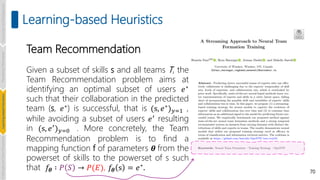
Given a subset of skills s and all teams T, the
Team Recommendation problem aims at
identifying an optimal subset of users 𝑒∗
such that their collaboration in the predicted
team (s, 𝑒∗) is successful, that is (s, 𝑒∗)𝑦=1 ,
while avoiding a subset of users 𝑒′ resulting
in (s, 𝑒′)𝑦=0 . More concretely, the Team
Recommendation problem is to find a
mapping function f of parameters 𝜽 from the
powerset of skills to the powerset of s such
that 𝑓𝜽 ∶ 𝑃 𝑆 → 𝑃(𝐸), 𝑓𝜽 s = 𝑒∗
. 71
Learning-based Heuristics
f
Introduction
and
Background
Pioneering
Techniques
Learning-based
Heuristics
Challenges
and
New
Perspectives
Team Recommendation
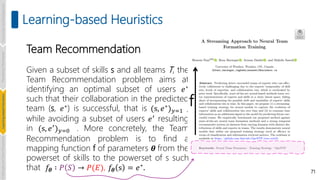
Given a subset of skills s and all teams T, the
Team Recommendation problem aims at
identifying an optimal subset of users 𝑒∗
such that their collaboration in the predicted
team (s, 𝑒∗) is successful, that is (s, 𝑒∗)𝑦=1 ,
while avoiding a subset of users 𝑒′ resulting
in (s, 𝑒′)𝑦=0 . More concretely, the Team
Recommendation problem is to find a
mapping function f of parameters 𝜽 from the
powerset of skills to the powerset of s such
that 𝑓𝜽 ∶ 𝑃 𝑆 → 𝑃(𝐸), 𝑓𝜽 s = 𝑒∗
. 72
Learning-based Heuristics
f
Introduction
and
Background
Pioneering
Techniques
Learning-based
Heuristics
Challenges
and
New
Perspectives
73
Model Architecture
o Feedforward
o Variational Bayesian
o Graph Representation Learning
Introduction
and
Background
Pioneering
Techniques
Learning-based
Heuristics
Challenges
and
New
Perspectives
74
Feedforward
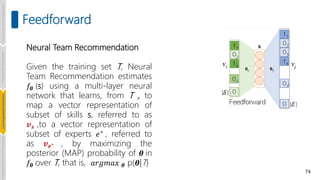
Neural Team Recommendation
Given the training set T, Neural
Team Recommendation estimates
𝑓𝜽 (s) using a multi-layer neural
network that learns, from T , to
map a vector representation of
subset of skills s, referred to as
𝒗𝒔 ,to a vector representation of
subset of experts 𝑒∗ , referred to
as 𝒗𝒆∗ , by maximizing the
posterior (MAP) probability of 𝜽 in
𝑓𝜽 over T, that is, 𝑎𝑟𝑔𝑚𝑎𝑥 𝜽 p(𝜽|T)
Introduction
and
Background
Pioneering
Techniques
Learning-based
Heuristics
Challenges
and
New
Perspectives
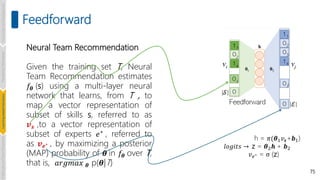
h = 𝜋(𝜽1𝑣𝒔+𝒃1)
𝑙𝑜𝑔𝑖𝑡𝑠 → z = 𝜽2𝒉 + 𝒃2
𝑣𝑒∗ = σ (z)
75
Neural Team Recommendation
Given the training set T, Neural
Team Recommendation estimates
𝑓𝜽 (s) using a multi-layer neural
network that learns, from T , to
map a vector representation of
subset of skills s, referred to as
𝒗𝒔 ,to a vector representation of
subset of experts 𝑒∗ , referred to
as 𝒗𝒆∗ , by maximizing a posterior
(MAP) probability of 𝜽 in 𝑓𝜽 over T,
that is, 𝑎𝑟𝑔𝑚𝑎𝑥 𝜽 p(𝜽|T)
Feedforward
Introduction
and
Background
Pioneering
Techniques
Learning-based
Heuristics
Challenges
and
New
Perspectives
76
Neural Architecture
o Feedforward
o Variational Bayesian
o Graph Representation Learning
Introduction
and
Background
Pioneering
Techniques
Learning-based
Heuristics
Challenges
and
New
Perspectives
77
𝜽~(𝜇, 𝜎) q(𝜽)=𝒩 𝜇, 𝜎
Parameters' means and variances are
estimated by minimizing the Kullback-
Leibler divergence between q and p
KL(q∥ p(𝜽|T )= ‫׬‬ q(𝜽|𝜇, 𝜎) log[
𝑞
𝑝(𝜽|𝑇)
]d𝜽
= 𝐸𝑞 log [
𝑞
𝑝(𝜽|𝑇)
] , KL(q∥
p)≥ 0
Variational Bayesian
Introduction
and
Background
Pioneering
Techniques
Learning-based
Heuristics
Challenges
and
New
Perspectives
78
Neural Architecture
o Feedforward
o Variational Bayesian
o Graph Representation Learning
Introduction
and
Background
Pioneering
Techniques
Learning-based
Heuristics
Challenges
and
New
Perspectives
79
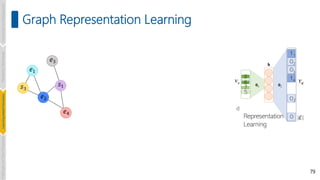
Graph Representation Learning
Introduction
and
Background
Pioneering
Techniques
Learning-based
Heuristics
Challenges
and
New
Perspectives
80
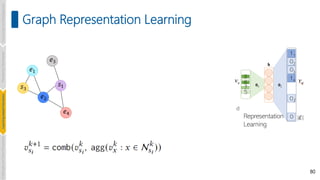
Graph Representation Learning
Introduction
and
Background
Pioneering
Techniques
Learning-based
Heuristics
Challenges
and
New
Perspectives
81
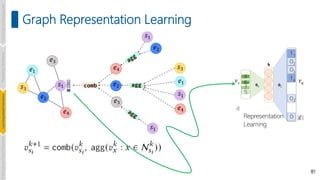
Graph Representation Learning
Introduction
and
Background
Pioneering
Techniques
Learning-based
Heuristics
Challenges
and
New
Perspectives
82
Learning-based Heuristics
• Model Architecture
• Training Strategies
Introduction
and
Background
Pioneering
Techniques
Learning-based
Heuristics
Challenges
and
New
Perspectives
83
Training Strategies
• Negative Sampling
• Streaming Strategy
Introduction
and
Background
Pioneering
Techniques
Learning-based
Heuristics
Challenges
and
New
Perspectives
84
Training Strategies
• Negative Sampling
• Streaming Strategy
Introduction
and
Background
Pioneering
Techniques
Learning-based
Heuristics
Challenges
and
New
Perspectives
85
Negative Sampling
Most available data in team recommendation domain only consists
of successful teams.
Introduction
and
Background
Pioneering
Techniques
Learning-based
Heuristics
Challenges
and
New
Perspectives
86
Negative Sampling
Most available data in team recommendation domain only consists
of successful teams.
Introduction
and
Background
Pioneering
Techniques
Learning-based
Heuristics
Challenges
and
New
Perspectives
87
Negative Sampling
Closed-World Assumption
• No currently known successful team is considered unsuccessful
Introduction
and
Background
Pioneering
Techniques
Learning-based
Heuristics
Challenges
and
New
Perspectives
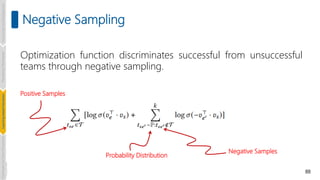
Optimization function discriminates successful from unsuccessful
teams through negative sampling.
88
Negative Sampling
Introduction
and
Background
Pioneering
Techniques
Learning-based
Heuristics
Challenges
and
New
Perspectives
Positive Samples
Probability Distribution
Negative Samples
Introduction
and
Background
Pioneering
Techniques
Learning-based
Heuristics
Challenges
and
New
Perspectives
89
Training Strategies
• Negative Sampling
• Streaming Strategy
Introduction
and
Background
Pioneering
Techniques
Learning-based
Heuristics
Challenges
and
New
Perspectives
90
Streaming Strategy
Predicting future successful teams of users who can effectively collaborate is
challenging due to experts’ temporality of
• Skill sets
• Levels of expertise
• Collaboration ties
Introduction
and
Background
Pioneering
Techniques
Learning-based
Heuristics
Challenges
and
New
Perspectives
91
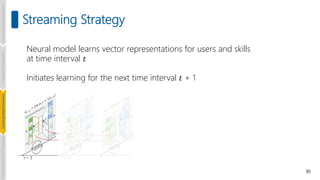
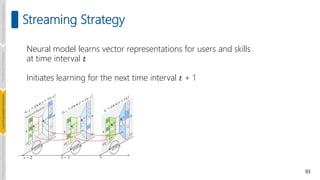
Neural model learns vector representations for users and skills
at time interval 𝑡
Initiates learning for the next time interval 𝑡 + 1
Streaming Strategy
Introduction
and
Background
Pioneering
Techniques
Learning-based
Heuristics
Challenges
and
New
Perspectives
92
Streaming Strategy
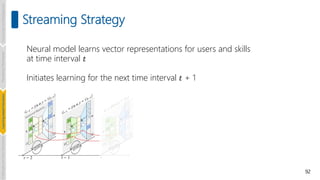
Neural model learns vector representations for users and skills
at time interval 𝑡
Initiates learning for the next time interval 𝑡 + 1
Introduction
and
Background
Pioneering
Techniques
Learning-based
Heuristics
Challenges
and
New
Perspectives
93
Streaming Strategy
Neural model learns vector representations for users and skills
at time interval 𝑡
Initiates learning for the next time interval 𝑡 + 1
Introduction
and
Background
Pioneering
Techniques
Learning-based
Heuristics
Challenges
and
New
Perspectives
94
• Dataset
• Effectiveness
Introduction
and
Background
Pioneering
Techniques
Learning-based
Heuristics
Challenges
and
New
Perspectives
Evaluation Methodology
• Dataset
• Effectiveness
Introduction
and
Background
Pioneering
Techniques
Learning-based
Heuristics
Challenges
and
New
Perspectives
Dataset
o DBLP
o IMDB
o USPT
o GitHub
Introduction
and
Background
Pioneering
Techniques
Learning-based
Heuristics
Challenges
and
New
Perspectives
Dataset
o DBLP
o IMDB
o USPT
o GitHub
Introduction
and
Background
Pioneering
Techniques
Learning-based
Heuristics
Challenges
and
New
Perspectives
Dataset
o DBLP
o IMDB
o USPT
o GitHub
Introduction
and
Background
Pioneering
Techniques
Learning-based
Heuristics
Challenges
and
New
Perspectives
Dataset
o DBLP
o IMDB
o USPT
o GitHub
Introduction
and
Background
Pioneering
Techniques
Learning-based
Heuristics
Challenges
and
New
Perspectives
Dataset
o DBLP
o IMDB
o USPT
o GitHub
Introduction
and
Background
Pioneering
Techniques
Learning-based
Heuristics
Challenges
and
New
Perspectives
101
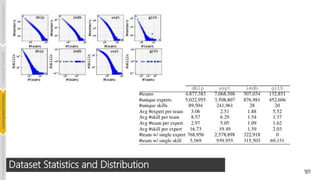
Dataset Statistics and Distribution
Introduction
and
Background
Pioneering
Techniques
Learning-based
Heuristics
Challenges
and
New
Perspectives
Evaluation Methodology
• Dataset
• Effectiveness
Introduction
and
Background
Pioneering
Techniques
Learning-based
Heuristics
Challenges
and
New
Perspectives
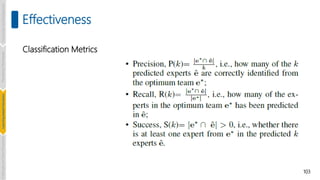
103
Effectiveness
Classification Metrics
Introduction
and
Background
Pioneering
Techniques
Learning-based
Heuristics
Challenges
and
New
Perspectives
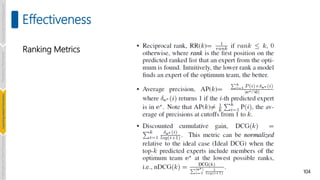
104
Effectiveness
Ranking Metrics
Introduction
and
Background
Pioneering
Techniques
Learning-based
Heuristics
Challenges
and
New
Perspectives
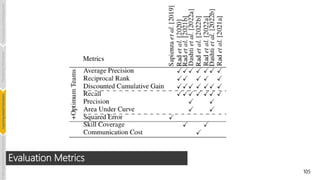
105
Evaluation Metrics
Introduction
and
Background
Pioneering
Techniques
Learning-based
Heuristics
Challenges
and
New
Perspectives
106
Outline
Introduction
and
Background
Pioneering
Techniques
Learning-based
Heuristics
hallenges
and
New
Perspectives
I) Introduction and Background
II) Pioneering Techniques
III) Learning-based Heuristics
IV) Challenges and New Perspectives
Hands-on: OpeNTF
107
Challenges and New Perspectives
• Fair and Diverse Team Recommendation
• Spatial Team Recommendation
Introduction
and
Background
Pioneering
Techniques
Learning-based
Heuristics
hallenges
and
New
Perspectives
108
Challenges and New Perspectives
• Fair and Diverse Team Recommendation
• Spatial Team Recommendation
Introduction
and
Background
Pioneering
Techniques
Learning-based
Heuristics
hallenges
and
New
Perspectives
109
Fair and Diverse Team Recommendation
Introduction
and
Background
Pioneering
Techniques
Learning-based
Heuristics
hallenges
and
New
Perspectives
The primary focus of existing team recommendation methods is
maximizing the models’ efficacy, largely ignoring diversity in the
recommended users.
110
Fair and Diverse Team Recommendation
The primary focus of existing team recommendation methods is
maximizing the models’ efficacy, largely ignoring diversity in the
recommended users.
Fairness in machine learning algorithms guarantees where a disadvantaged
group also known as a protected group, should be treated similarly to the
advantaged group as a whole.
[Altenburger et.al., AAAI Conference on Web and Social Media, 2017]
Introduction
and
Background
Pioneering
Techniques
Learning-based
Heuristics
hallenges
and
New
Perspectives
111
Fair and Diverse Team Recommendation
Introduction
and
Background
Pioneering
Techniques
Learning-based
Heuristics
hallenges
and
New
Perspectives
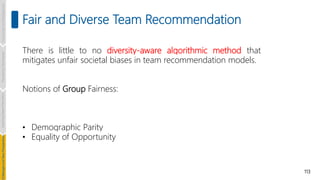
There is little to no diversity-aware algorithmic method that
mitigates unfair societal biases in team recommendation models.
112
Fair and Diverse Team Recommendation
There is little to no diversity-aware algorithmic method that
mitigates unfair societal biases in team recommendation models.
Notions of Group Fairness:
Introduction
and
Background
Pioneering
Techniques
Learning-based
Heuristics
hallenges
and
New
Perspectives
113
Fair and Diverse Team Recommendation
Introduction
and
Background
Pioneering
Techniques
Learning-based
Heuristics
hallenges
and
New
Perspectives
There is little to no diversity-aware algorithmic method that
mitigates unfair societal biases in team recommendation models.
Notions of Group Fairness:
• Demographic Parity
• Equality of Opportunity
114
Fair and Diverse Team Recommendation
Demographic Parity :
Enforces the membership in a team to be independent of values of a
protected attribute for team members.
Male Female
[P(𝑒0 ∈ 𝑇) = P(𝑒1
′
∈ 𝑇)] ∧ [P(𝑒0 ∉ 𝑇) = P(𝑒1
′
∉ 𝑇)]
Introduction
and
Background
Pioneering
Techniques
Learning-based
Heuristics
hallenges
and
New
Perspectives
115
Fair and Diverse Team Recommendation
Skilled Male
Skilled Female
[P(𝑒0 ∈ 𝑇|𝑒0 , ) = P(𝑒1
′
∈ 𝑇|𝑒1
′
, )]
𝑆𝑒1
′ ∩ 𝑆 ≠ ∅
𝑆𝑒0
∩ 𝑆 ≠ ∅
Equality of Opportunity:
Enforces the skilled membership in a team to be independent of values of
a protected attribute for team members.
Introduction
and
Background
Pioneering
Techniques
Learning-based
Heuristics
hallenges
and
New
Perspectives
116
Fair and Diverse Team Recommendation
Debiasing algorithms can be categorized based on their integration into
the machine learning pipeline:
- Pre-process: No work, to the best of our knowledge
- In-process: Little work, vivaFemme [Moasses et.al., BIAS-SIGIR, 2024]
- Post-process: Little work, Adila [Loghmani et.al., BIAS-ECIR, 2022], [Geyik et.al., KDD, 2019],
Introduction
and
Background
Pioneering
Techniques
Learning-based
Heuristics
hallenges
and
New
Perspectives
117
Fair and Diverse Team Recommendation
• Pre-processing methods modify data or label through re-sampling
heuristics before model training.
Introduction
and
Background
Pioneering
Techniques
Learning-based
Heuristics
hallenges
and
New
Perspectives
118
Fair and Diverse Team Recommendation
• In-processing techniques adjust the optimization process of models to
balance accuracy and fairness.
[Moasses et.al., BIAS-SIGIR, 2024]
Introduction
and
Background
Pioneering
Techniques
Learning-based
Heuristics
hallenges
and
New
Perspectives
119
Fair and Diverse Team Recommendation
• Post-processing methods modify model outputs during inference,
which may involve altering thresholds, scoring rules, or reranking the
recommended list of items.
[Loghmani et.al., BIAS-ECIR, 2022], [Geyik et.al., KDD, 2019]
Introduction
and
Background
Pioneering
Techniques
Learning-based
Heuristics
hallenges
and
New
Perspectives
120
Challenges and New Perspectives
• Fair and Diverse Team Recommendation
• Spatial Team Recommendation
Introduction
and
Background
Pioneering
Techniques
Learning-based
Heuristics
hallenges
and
New
Perspectives
121
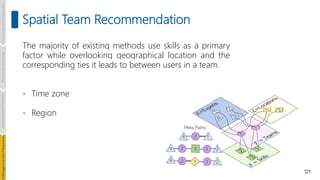
Spatial Team Recommendation
The majority of existing methods use skills as a primary
factor while overlooking geographical location and the
corresponding ties it leads to between users in a team.
- Time zone
- Region
Introduction
and
Background
Pioneering
Techniques
Learning-based
Heuristics
hallenges
and
New
Perspectives
https://fani-lab.github.io/OpeNTF/tutorial/umap24/
All materials are available on the tutorial website.
• List of related papers
• Slides
• Video
• Link to libraries
122
Resources
Introduction
and
Background
Pioneering
Techniques
Learning-based
Heuristics
hallenges
and
New
Perspectives

Collaborative Team Recommendation for Skilled Users: Objectives, Techniques, and New Perspectives

  • 1.
    Tutorial on Collaborative TeamRecommendation for Skilled Users: Objectives, Techniques, and New Perspectives Fani’s Lab! at UMAP24 Photo: https://www.instagram.com/daviddoubilet/
  • 2.
    2 Fani’s Lab!, Schoolof Computer Science, University of Windsor, Canada
  • 3.
    Mahdis Saeedi, PhD PostDoctoral Researcher University of Windsor, Canada Hossein Fani, PhD Assistant Professor University of Windsor, Canada Christine Wong Undergrad Student University of Windsor, Canada Organizers
  • 4.
    Outline I) Introduction andBackground (Hossein) II) Pioneering Techniques (Mahdis) III) Learning-based Heuristics (Mahdis) IV) Challenges and New Perspectives (Mahdis) Introduction and Background Pioneering Techniques Learning-based Heuristics Challenges & New Perspectives Hands-on: OpeNTF (Christine)
  • 5.
    5 Outline Introduction and Background Pioneering Techniques Learning-based Heuristics Challenges & New Perspectives I) Introduction andBackground (Hossein) II) Pioneering Techniques III) Learning-based Heuristics IV) Challenges and New Perspectives Hands-on: OpeNTF
  • 6.
    6 What Is aTeam? A group of users who collaborate together with a common purpose in order to accomplish the requirements of a task. [Brannik et al., Psychology Press, 1997] Introduction and Background Pioneering Techniques Learning-based Heuristics Challenges & New Perspectives
  • 7.
    7 What Is aTeam? A group of users who independently endeavor to accomplish their individual tasks to reach a shared goal or value, while actively interacting and adapting. [Zzkarian et. Al., IIE transactions,1999] Introduction and Background Pioneering Techniques Learning-based Heuristics Challenges & New Perspectives
  • 8.
    8 Team vs. Group Maindifferences: - Coordination - Being responsible for the success Introduction and Background Pioneering Techniques Learning-based Heuristics Challenges & New Perspectives
  • 9.
    9 Dead Poet Society,1998 Peter Weir Robin Williams, We don’t read and write poetry because it’s cute …
  • 10.
  • 11.
    The Big Lebowski,1998 Joel & Ethan Coen Jeff Bridges, John Goodman, Steve Buscemi 11
  • 12.
  • 13.
    13 Development for aTeam Four distinct phases of development for a team [Tuckman et. Al., Psychological bulletin ,1965] Introduction and Background Pioneering Techniques Learning-based Heuristics Challenges & New Perspectives
  • 14.
    14 Development for aTeam • Forming: human resource allocation by a leader, Four distinct phases of development for a team [Tuckman et. Al., Psychological bulletin ,1965] Introduction and Background Pioneering Techniques Learning-based Heuristics Challenges & New Perspectives
  • 15.
    15 Development for aTeam • Forming: human resource allocation by a leader, • Storming: developing shared goals and values resulting in conflicts, Four distinct phases of development for a team [Tuckman et. Al., Psychological bulletin ,1965] Introduction and Background Pioneering Techniques Learning-based Heuristics Challenges & New Perspectives
  • 16.
    16 Development for aTeam • Forming: human resource allocation by a leader, • Storming: developing shared goals and values resulting in conflicts, • Norming: conflict resolution between team members, Four distinct phases of development for a team [Tuckman et. Al., Psychological bulletin ,1965] Introduction and Background Pioneering Techniques Learning-based Heuristics Challenges & New Perspectives
  • 17.
    17 Development for aTeam • Forming: human resource allocation by a leader, • Storming: developing shared goals and values resulting in conflicts, • Norming: conflict resolution between team members, • Performing: focusing on individual tasks to reach the shared goal or value. Four distinct phases of development for a team [Tuckman et. Al., Psychological bulletin ,1965] Introduction and Background Pioneering Techniques Learning-based Heuristics Challenges & New Perspectives
  • 18.
    Tuckman, Bruce W."Developmental sequence in small groups." Psychological bulletin 63.6 (1965): 384.
  • 19.
    19 Development for aTeam • Forming: human resource allocation by a leader, • Storming: developing shared goals and values resulting in conflicts, • Norming: conflict resolution between team members, • Performing: focusing on individual tasks to reach the shared goal or value. Four distinct phases of development for a team [Tuckman et. Al., Psychological bulletin ,1965] Are all developed teams successful? Introduction and Background Pioneering Techniques Learning-based Heuristics Challenges & New Perspectives
  • 20.
    20 Development for aTeam • Forming: human resource allocation by a leader, • Storming: developing shared goals and values resulting in conflicts, • Norming: conflict resolution between team members, • Performing: focusing on individual tasks to reach the shared goal or value. Four distinct phases of development for a team [Tuckman et. Al., Psychological bulletin ,1965] Are all developed teams successful? What is success?! Introduction and Background Pioneering Techniques Learning-based Heuristics Challenges & New Perspectives
  • 21.
    21 Italy, World Cup2006 What is success?
  • 22.
    US$1.446 billion vs.no Oscar! 22 What is success?
  • 23.
  • 24.
  • 25.
    25 Successful Team A teamthat achieve a desired outcome or fulfill a goal is a successful team. Introduction and Background Pioneering Techniques Learning-based Heuristics Challenges & New Perspectives
  • 26.
  • 27.
    27 Traditional approach Teams wereformed manually by relying on human experience and instinct in a tedious, error-prone, and suboptimal process. Introduction and Background Pioneering Techniques Learning-based Heuristics Challenges & New Perspectives
  • 28.
    28 Teams were formedmanually by relying on human experience and instinct in a tedious, error-prone, and suboptimal process. Difficulties: Traditional approach Introduction and Background Pioneering Techniques Learning-based Heuristics Challenges & New Perspectives
  • 29.
    29 o Large numberof candidates - Different knowledge - Different culture - Different characteristic o Hidden personal and societal biases - Race - Gender - Popularity o Multitude of criteria to optimize - Communication cost - Budget - Time Traditional approach Teams were formed manually by relying on human experience and instinct in a tedious, error-prone, and suboptimal process. Difficulties: Introduction and Background Pioneering Techniques Learning-based Heuristics Challenges & New Perspectives
  • 30.
    30 o Large numberof candidates - Different knowledge - Different culture - Different characteristic o Hidden personal and societal biases - Race - Gender - Popularity o Multitude of criteria to optimize - Communication cost - Budget - Time Traditional approach Teams were formed manually by relying on human experience and instinct in a tedious, error-prone, and suboptimal process. Difficulties: Introduction and Background Pioneering Techniques Learning-based Heuristics Challenges & New Perspectives Manual team recommendation on a large scale is almost impossible
  • 31.
    31 Computational Approach A varietyof disciplines have long been endeavoring to find algorithmic solutions. Introduction and Background Pioneering Techniques Learning-based Heuristics Challenges & New Perspectives
  • 32.
    Team Allocation, TeamSelection, Team Composition, Team Configuration, Team Recommendation, Team Formation 32 Computational Approach Introduction and Background Pioneering Techniques Learning-based Heuristics Challenges & New Perspectives
  • 33.
    33 Team Recommendation Worksin Time Introduction and Background Pioneering Techniques Learning-based Heuristics Challenges & New Perspectives
  • 34.
    34 Outline Introduction and Background Pioneering Techniques Learning-based Heuristics Challenges & New Perspectives I) Introduction andBackground II) Pioneering Techniques III) Learning-based Heuristics IV) Challenges and New Perspectives Hands-on: OpeNTF
  • 35.
    35 Graph-based Team Recommendation Underlyingnetwork structure is a key factor to form an effective team. [Miller, Computational Modeling and Organization Theories. AAAI Press, 2001] [Gaston et al., Proceedings of the 1st NAACSOS Conference, 2003] [Gaston et al., AAAI Technical Report, 2004] [Chen, INCoS, 2010] • Organizations’inherent hierarchical network structure. • Users' social and collaborative ties Introduction and Background Pioneering Techniques Learning-based Heuristics Challenges & New Perspectives
  • 36.
    36 User Network Synergistic interdisciplinarydiscoveries from social network analysis and graph theory. The problem of team recommendation has been translated into graph mining. The user network is considered as an attributed graph: users as nodes, skills as node attributes, edges as ties between users. Introduction and Background Pioneering Techniques Learning-based Heuristics Challenges & New Perspectives
  • 37.
    37 Subgraph Optimization What isthe specific implication of this statement? Introduction and Background Pioneering Techniques Learning-based Heuristics Challenges & New Perspectives
  • 38.
    38 Subgraph Optimization Objectives •Communication Cost • Proficiency • Personnel Cost • Geographical Distance • Density • Multi-Objective Introduction and Background Pioneering Techniques Learning-based Heuristics Challenges & New Perspectives
  • 39.
    39 Subgraph Optimization Objectives •Communication Cost • Proficiency • Personnel Cost • Geographical Distance • Density • Multi-Objective Introduction and Background Pioneering Techniques Learning-based Heuristics Challenges & New Perspectives
  • 40.
    40 • A metricto measures how effectively users communicate. • lower communication cost in a team indicates easier communication, better understanding and collaborations among team members. • Communication cost Team performance Communication Cost (φ) Introduction and Background Pioneering Techniques Learning-based Heuristics Challenges & New Perspectives
  • 41.
    41 Communication cost computations: • • CommunicationCost (φ) Introduction and Background Pioneering Techniques Learning-based Heuristics Challenges & New Perspectives
  • 42.
  • 43.
    • Non-temporal (Static) •Temporal (Dynamic) 43 Communication Cost Minimization Methods Introduction and Background Pioneering Techniques Learning-based Heuristics Challenges & New Perspectives
  • 44.
    • Non-temporal (Static) •Temporal (Dynamic) 44 Communication Cost Minimization Algorithms (φ) Introduction and Background Pioneering Techniques Learning-based Heuristics Challenges & New Perspectives
  • 45.
    • Sum ofdistances • Sum of edge weights • Diameter of the subgraph • Cost of the spanning tree 45 Non-temporal (Static) Communication Cost Introduction and Background Pioneering Techniques Learning-based Heuristics Challenges & New Perspectives
  • 46.
    • Non-temporal (Static) •Temporal (Dynamic) 46 Communication Cost Minimization Algorithms (φ) Introduction and Background Pioneering Techniques Learning-based Heuristics Challenges & New Perspectives
  • 47.
    47 Temporal (Dynamic)Communication Cost Temporal(dynamic) communication cost is based on the fact that the least communication cost exists between users who could maintain many successful collaborations over time till recently or currently. Introduction and Background Pioneering Techniques Learning-based Heuristics Challenges & New Perspectives
  • 48.
    48 Subgraph Optimization Objectives •Communication Cost • Proficiency • Personnel Cost • Geographical Distance • Density • Multi-Objective Introduction and Background Pioneering Techniques Learning-based Heuristics Challenges & New Perspectives
  • 49.
    49 Proficiency of usersindicates the level of expertise in a particular profession or a skill. • h-index • number of citations Proficiency(ϕ) Introduction and Background Pioneering Techniques Learning-based Heuristics Challenges & New Perspectives
  • 50.
    50 Proficiency(ϕ) Authority [Zihayat et.Al., Authority-based Team Discovery in Social Networks. In EDBT. OpenProceedings.org, 2017] Sum of inverse of experties level Introduction and Background Pioneering Techniques Learning-based Heuristics Challenges & New Perspectives
  • 51.
  • 52.
    52 Multi-Objective Optimization • Communicationcost and proficiency [Zihayat et. al., AMW, 2018] [Zihayat et. al., EDBT, 2017] • Communication cost and personnel cost [Aijun et. al., SDM, 2013] [Kargar et. al., CSE, 2013] [Zihayat et. al., AMW, 2018] • Density and proficiency [Juarez et. al., GECCO., 2018] • Communication cost, personnel cost and proficiency [Zihayat et. al., WI-IAT, 2014] • Dynamic communication cost, geographical proximity, and proficiency [Selvarajah et. al., Expert Syst. Appl., 2021] Introduction and Background Pioneering Techniques Learning-based Heuristics Challenges & New Perspectives
  • 53.
  • 54.
    54 Pioneering Techniques • SubgraphOptimization Objectives • Subgraph Optimization Algorithms Introduction and Background Pioneering Techniques Learning-based Heuristics Challenges & New Perspectives
  • 55.
    55 Subgraph Optimization Algorithms Subgraphoptimization problems are proven to be NP-hard [Karp, Complexity of computer computations, Springer, 2010] Heuristics have been developed to solve this problem in polynomial time through greedy and approximation algorithms. Introduction and Background Pioneering Techniques Learning-based Heuristics Challenges & New Perspectives
  • 56.
    56 Communication Cost MinimizationAlgorithms Lappas et al. is the first attempt to form a team based on the subgraph optimization on the user network. [Lappas et. al., KDD, 2009] Key Concept: Reducing the cost of communication between team members.  Diameter-Based Optimization RarestFirst  Spanning Tree-Based Optimization CoverSteiner and EnhancedSteiner Introduction and Background Pioneering Techniques Learning-based Heuristics Challenges & New Perspectives
  • 57.
    57 Outline Introduction and Background Pioneering Techniques Learning-based Heuristics Challenges and New Perspectives I) Introduction andBackground II) Pioneering Techniques III) Learning-based Heuristics IV) Challenges and New Perspectives Hands-on: OpeNTF
  • 58.
    58 Learning-based Heuristics Paradigm Shiftto Learning-Based Methods • Learn the inherent structure of ties among users and their skills. • Utilize all past (un)successful team compositions as training samples. • Predict future teams and their performance. Introduction and Background Pioneering Techniques Learning-based Heuristics Challenges and New Perspectives
  • 59.
    59 Learning-based Heuristics Advantages ofLearning-Based Methods: Introduction and Background Pioneering Techniques Learning-based Heuristics Challenges and New Perspectives
  • 60.
    60 Learning-based Heuristics Advantages ofLearning-Based Methods: • Efficiency: Enhanced by iterative and online learning procedures. Introduction and Background Pioneering Techniques Learning-based Heuristics Challenges and New Perspectives
  • 61.
    61 Learning-based Heuristics Advantages ofLearning-Based Methods: • Efficiency: Enhanced by iterative and online learning procedures. • Efficacy: Improved prediction and team performance. Introduction and Background Pioneering Techniques Learning-based Heuristics Challenges and New Perspectives
  • 62.
    62 Learning-based Heuristics Advantages ofLearning-Based Methods: • Efficiency: Enhanced by iterative and online learning procedures. • Efficacy: Improved prediction and team performance. • Scalability: Can handle larger and more dynamic user networks. Introduction and Background Pioneering Techniques Learning-based Heuristics Challenges and New Perspectives
  • 63.
    63 Learning-based Heuristics Advantages ofLearning-Based Methods: • Efficiency: Enhanced by iterative and online learning procedures. • Efficacy: Improved prediction and team performance. • Scalability: Can handle larger and more dynamic user networks. • Dynamic Adaptation: Better suited for temporal conditions. Introduction and Background Pioneering Techniques Learning-based Heuristics Challenges and New Perspectives
  • 64.
    64 Learning-based Heuristics • ModelArchitecture • Training Strategies Introduction and Background Pioneering Techniques Learning-based Heuristics Challenges and New Perspectives
  • 65.
    65 Model Architecture o Feedforward oVariational Bayesian o Graph Representation Learning Introduction and Background Pioneering Techniques Learning-based Heuristics Challenges and New Perspectives
  • 66.
    66 Learning-based Heuristics Team Given aset of skills S ={i} and a set of users E ={j}, a team of users e⊂E ; e ≠ ∅ that collectively cover the skill set s⊂S ; s ≠ ∅ is shown by (s,e) along with its success status y∈{0,1}. Further, T = {(s, e)𝑦: y∈{0,1} indexes all previous teams. Introduction and Background Pioneering Techniques Learning-based Heuristics Challenges and New Perspectives
  • 67.
    67 Learning-based Heuristics Team Given aset of skills S ={i} and a set of users E ={j}, a team of users e⊂E ; e ≠ ∅ that collectively cover the skill set s⊂S ; s ≠ ∅ is shown by (s,e) along with its success status y∈{0,1}. Further, T = {(s, e)𝑦: y∈{0,1} indexes all previous teams. Introduction and Background Pioneering Techniques Learning-based Heuristics Challenges and New Perspectives
  • 68.
    68 Learning-based Heuristics Team Given aset of skills S ={i} and a set of users E ={j}, a team of users e⊂E ; e ≠ ∅ that collectively cover the skill set s⊂S ; s ≠ ∅ is shown by (s,e) along with its success status y∈{0,1}. Further, T = {(s, e)𝑦: y∈{0,1} indexes all previous teams. Introduction and Background Pioneering Techniques Learning-based Heuristics Challenges and New Perspectives
  • 69.
    69 Learning-based Heuristics Team Recommendation Givena subset of skills s and all teams T, the Team Recommendation problem aims at identifying an optimal subset of users 𝑒∗ such that their collaboration in the predicted team (s, 𝑒∗) is successful, that is (s, 𝑒∗)𝑦=1 , while avoiding a subset of users 𝑒′ resulting in (s, 𝑒′)𝑦=0 . More concretely, the Team Recommendation problem is to find a mapping function f of parameters 𝜽 from the powerset of skills to the powerset of s such that 𝑓𝜽 ∶ 𝑃 𝑆 → 𝑃(𝐸), 𝑓𝜽 s = 𝑒∗ . Introduction and Background Pioneering Techniques Learning-based Heuristics Challenges and New Perspectives
  • 70.
    Team Recommendation Given asubset of skills s and all teams T, the Team Recommendation problem aims at identifying an optimal subset of users 𝑒∗ such that their collaboration in the predicted team (s, 𝑒∗) is successful, that is (s, 𝑒∗)𝑦=1 , while avoiding a subset of users 𝑒′ resulting in (s, 𝑒′)𝑦=0 . More concretely, the Team Recommendation problem is to find a mapping function f of parameters 𝜽 from the powerset of skills to the powerset of s such that 𝑓𝜽 ∶ 𝑃 𝑆 → 𝑃(𝐸), 𝑓𝜽 s = 𝑒∗ . 70 Learning-based Heuristics Introduction and Background Pioneering Techniques Learning-based Heuristics Challenges and New Perspectives
  • 71.
    Team Recommendation Given asubset of skills s and all teams T, the Team Recommendation problem aims at identifying an optimal subset of users 𝑒∗ such that their collaboration in the predicted team (s, 𝑒∗) is successful, that is (s, 𝑒∗)𝑦=1 , while avoiding a subset of users 𝑒′ resulting in (s, 𝑒′)𝑦=0 . More concretely, the Team Recommendation problem is to find a mapping function f of parameters 𝜽 from the powerset of skills to the powerset of s such that 𝑓𝜽 ∶ 𝑃 𝑆 → 𝑃(𝐸), 𝑓𝜽 s = 𝑒∗ . 71 Learning-based Heuristics f Introduction and Background Pioneering Techniques Learning-based Heuristics Challenges and New Perspectives
  • 72.
    Team Recommendation Given asubset of skills s and all teams T, the Team Recommendation problem aims at identifying an optimal subset of users 𝑒∗ such that their collaboration in the predicted team (s, 𝑒∗) is successful, that is (s, 𝑒∗)𝑦=1 , while avoiding a subset of users 𝑒′ resulting in (s, 𝑒′)𝑦=0 . More concretely, the Team Recommendation problem is to find a mapping function f of parameters 𝜽 from the powerset of skills to the powerset of s such that 𝑓𝜽 ∶ 𝑃 𝑆 → 𝑃(𝐸), 𝑓𝜽 s = 𝑒∗ . 72 Learning-based Heuristics f Introduction and Background Pioneering Techniques Learning-based Heuristics Challenges and New Perspectives
  • 73.
    73 Model Architecture o Feedforward oVariational Bayesian o Graph Representation Learning Introduction and Background Pioneering Techniques Learning-based Heuristics Challenges and New Perspectives
  • 74.
    74 Feedforward Neural Team Recommendation Giventhe training set T, Neural Team Recommendation estimates 𝑓𝜽 (s) using a multi-layer neural network that learns, from T , to map a vector representation of subset of skills s, referred to as 𝒗𝒔 ,to a vector representation of subset of experts 𝑒∗ , referred to as 𝒗𝒆∗ , by maximizing the posterior (MAP) probability of 𝜽 in 𝑓𝜽 over T, that is, 𝑎𝑟𝑔𝑚𝑎𝑥 𝜽 p(𝜽|T) Introduction and Background Pioneering Techniques Learning-based Heuristics Challenges and New Perspectives
  • 75.
    h = 𝜋(𝜽1𝑣𝒔+𝒃1) 𝑙𝑜𝑔𝑖𝑡𝑠→ z = 𝜽2𝒉 + 𝒃2 𝑣𝑒∗ = σ (z) 75 Neural Team Recommendation Given the training set T, Neural Team Recommendation estimates 𝑓𝜽 (s) using a multi-layer neural network that learns, from T , to map a vector representation of subset of skills s, referred to as 𝒗𝒔 ,to a vector representation of subset of experts 𝑒∗ , referred to as 𝒗𝒆∗ , by maximizing a posterior (MAP) probability of 𝜽 in 𝑓𝜽 over T, that is, 𝑎𝑟𝑔𝑚𝑎𝑥 𝜽 p(𝜽|T) Feedforward Introduction and Background Pioneering Techniques Learning-based Heuristics Challenges and New Perspectives
  • 76.
    76 Neural Architecture o Feedforward oVariational Bayesian o Graph Representation Learning Introduction and Background Pioneering Techniques Learning-based Heuristics Challenges and New Perspectives
  • 77.
    77 𝜽~(𝜇, 𝜎) q(𝜽)=𝒩𝜇, 𝜎 Parameters' means and variances are estimated by minimizing the Kullback- Leibler divergence between q and p KL(q∥ p(𝜽|T )= ‫׬‬ q(𝜽|𝜇, 𝜎) log[ 𝑞 𝑝(𝜽|𝑇) ]d𝜽 = 𝐸𝑞 log [ 𝑞 𝑝(𝜽|𝑇) ] , KL(q∥ p)≥ 0 Variational Bayesian Introduction and Background Pioneering Techniques Learning-based Heuristics Challenges and New Perspectives
  • 78.
    78 Neural Architecture o Feedforward oVariational Bayesian o Graph Representation Learning Introduction and Background Pioneering Techniques Learning-based Heuristics Challenges and New Perspectives
  • 79.
  • 80.
  • 81.
  • 82.
    82 Learning-based Heuristics • ModelArchitecture • Training Strategies Introduction and Background Pioneering Techniques Learning-based Heuristics Challenges and New Perspectives
  • 83.
    83 Training Strategies • NegativeSampling • Streaming Strategy Introduction and Background Pioneering Techniques Learning-based Heuristics Challenges and New Perspectives
  • 84.
    84 Training Strategies • NegativeSampling • Streaming Strategy Introduction and Background Pioneering Techniques Learning-based Heuristics Challenges and New Perspectives
  • 85.
    85 Negative Sampling Most availabledata in team recommendation domain only consists of successful teams. Introduction and Background Pioneering Techniques Learning-based Heuristics Challenges and New Perspectives
  • 86.
    86 Negative Sampling Most availabledata in team recommendation domain only consists of successful teams. Introduction and Background Pioneering Techniques Learning-based Heuristics Challenges and New Perspectives
  • 87.
    87 Negative Sampling Closed-World Assumption •No currently known successful team is considered unsuccessful Introduction and Background Pioneering Techniques Learning-based Heuristics Challenges and New Perspectives
  • 88.
    Optimization function discriminatessuccessful from unsuccessful teams through negative sampling. 88 Negative Sampling Introduction and Background Pioneering Techniques Learning-based Heuristics Challenges and New Perspectives Positive Samples Probability Distribution Negative Samples Introduction and Background Pioneering Techniques Learning-based Heuristics Challenges and New Perspectives
  • 89.
    89 Training Strategies • NegativeSampling • Streaming Strategy Introduction and Background Pioneering Techniques Learning-based Heuristics Challenges and New Perspectives
  • 90.
    90 Streaming Strategy Predicting futuresuccessful teams of users who can effectively collaborate is challenging due to experts’ temporality of • Skill sets • Levels of expertise • Collaboration ties Introduction and Background Pioneering Techniques Learning-based Heuristics Challenges and New Perspectives
  • 91.
    91 Neural model learnsvector representations for users and skills at time interval 𝑡 Initiates learning for the next time interval 𝑡 + 1 Streaming Strategy Introduction and Background Pioneering Techniques Learning-based Heuristics Challenges and New Perspectives
  • 92.
    92 Streaming Strategy Neural modellearns vector representations for users and skills at time interval 𝑡 Initiates learning for the next time interval 𝑡 + 1 Introduction and Background Pioneering Techniques Learning-based Heuristics Challenges and New Perspectives
  • 93.
    93 Streaming Strategy Neural modellearns vector representations for users and skills at time interval 𝑡 Initiates learning for the next time interval 𝑡 + 1 Introduction and Background Pioneering Techniques Learning-based Heuristics Challenges and New Perspectives
  • 94.
  • 95.
    Evaluation Methodology • Dataset •Effectiveness Introduction and Background Pioneering Techniques Learning-based Heuristics Challenges and New Perspectives
  • 96.
    Dataset o DBLP o IMDB oUSPT o GitHub Introduction and Background Pioneering Techniques Learning-based Heuristics Challenges and New Perspectives
  • 97.
    Dataset o DBLP o IMDB oUSPT o GitHub Introduction and Background Pioneering Techniques Learning-based Heuristics Challenges and New Perspectives
  • 98.
    Dataset o DBLP o IMDB oUSPT o GitHub Introduction and Background Pioneering Techniques Learning-based Heuristics Challenges and New Perspectives
  • 99.
    Dataset o DBLP o IMDB oUSPT o GitHub Introduction and Background Pioneering Techniques Learning-based Heuristics Challenges and New Perspectives
  • 100.
    Dataset o DBLP o IMDB oUSPT o GitHub Introduction and Background Pioneering Techniques Learning-based Heuristics Challenges and New Perspectives
  • 101.
    101 Dataset Statistics andDistribution Introduction and Background Pioneering Techniques Learning-based Heuristics Challenges and New Perspectives
  • 102.
    Evaluation Methodology • Dataset •Effectiveness Introduction and Background Pioneering Techniques Learning-based Heuristics Challenges and New Perspectives
  • 103.
  • 104.
  • 105.
  • 106.
    106 Outline Introduction and Background Pioneering Techniques Learning-based Heuristics hallenges and New Perspectives I) Introduction andBackground II) Pioneering Techniques III) Learning-based Heuristics IV) Challenges and New Perspectives Hands-on: OpeNTF
  • 107.
    107 Challenges and NewPerspectives • Fair and Diverse Team Recommendation • Spatial Team Recommendation Introduction and Background Pioneering Techniques Learning-based Heuristics hallenges and New Perspectives
  • 108.
    108 Challenges and NewPerspectives • Fair and Diverse Team Recommendation • Spatial Team Recommendation Introduction and Background Pioneering Techniques Learning-based Heuristics hallenges and New Perspectives
  • 109.
    109 Fair and DiverseTeam Recommendation Introduction and Background Pioneering Techniques Learning-based Heuristics hallenges and New Perspectives The primary focus of existing team recommendation methods is maximizing the models’ efficacy, largely ignoring diversity in the recommended users.
  • 110.
    110 Fair and DiverseTeam Recommendation The primary focus of existing team recommendation methods is maximizing the models’ efficacy, largely ignoring diversity in the recommended users. Fairness in machine learning algorithms guarantees where a disadvantaged group also known as a protected group, should be treated similarly to the advantaged group as a whole. [Altenburger et.al., AAAI Conference on Web and Social Media, 2017] Introduction and Background Pioneering Techniques Learning-based Heuristics hallenges and New Perspectives
  • 111.
    111 Fair and DiverseTeam Recommendation Introduction and Background Pioneering Techniques Learning-based Heuristics hallenges and New Perspectives There is little to no diversity-aware algorithmic method that mitigates unfair societal biases in team recommendation models.
  • 112.
    112 Fair and DiverseTeam Recommendation There is little to no diversity-aware algorithmic method that mitigates unfair societal biases in team recommendation models. Notions of Group Fairness: Introduction and Background Pioneering Techniques Learning-based Heuristics hallenges and New Perspectives
  • 113.
    113 Fair and DiverseTeam Recommendation Introduction and Background Pioneering Techniques Learning-based Heuristics hallenges and New Perspectives There is little to no diversity-aware algorithmic method that mitigates unfair societal biases in team recommendation models. Notions of Group Fairness: • Demographic Parity • Equality of Opportunity
  • 114.
    114 Fair and DiverseTeam Recommendation Demographic Parity : Enforces the membership in a team to be independent of values of a protected attribute for team members. Male Female [P(𝑒0 ∈ 𝑇) = P(𝑒1 ′ ∈ 𝑇)] ∧ [P(𝑒0 ∉ 𝑇) = P(𝑒1 ′ ∉ 𝑇)] Introduction and Background Pioneering Techniques Learning-based Heuristics hallenges and New Perspectives
  • 115.
    115 Fair and DiverseTeam Recommendation Skilled Male Skilled Female [P(𝑒0 ∈ 𝑇|𝑒0 , ) = P(𝑒1 ′ ∈ 𝑇|𝑒1 ′ , )] 𝑆𝑒1 ′ ∩ 𝑆 ≠ ∅ 𝑆𝑒0 ∩ 𝑆 ≠ ∅ Equality of Opportunity: Enforces the skilled membership in a team to be independent of values of a protected attribute for team members. Introduction and Background Pioneering Techniques Learning-based Heuristics hallenges and New Perspectives
  • 116.
    116 Fair and DiverseTeam Recommendation Debiasing algorithms can be categorized based on their integration into the machine learning pipeline: - Pre-process: No work, to the best of our knowledge - In-process: Little work, vivaFemme [Moasses et.al., BIAS-SIGIR, 2024] - Post-process: Little work, Adila [Loghmani et.al., BIAS-ECIR, 2022], [Geyik et.al., KDD, 2019], Introduction and Background Pioneering Techniques Learning-based Heuristics hallenges and New Perspectives
  • 117.
    117 Fair and DiverseTeam Recommendation • Pre-processing methods modify data or label through re-sampling heuristics before model training. Introduction and Background Pioneering Techniques Learning-based Heuristics hallenges and New Perspectives
  • 118.
    118 Fair and DiverseTeam Recommendation • In-processing techniques adjust the optimization process of models to balance accuracy and fairness. [Moasses et.al., BIAS-SIGIR, 2024] Introduction and Background Pioneering Techniques Learning-based Heuristics hallenges and New Perspectives
  • 119.
    119 Fair and DiverseTeam Recommendation • Post-processing methods modify model outputs during inference, which may involve altering thresholds, scoring rules, or reranking the recommended list of items. [Loghmani et.al., BIAS-ECIR, 2022], [Geyik et.al., KDD, 2019] Introduction and Background Pioneering Techniques Learning-based Heuristics hallenges and New Perspectives
  • 120.
    120 Challenges and NewPerspectives • Fair and Diverse Team Recommendation • Spatial Team Recommendation Introduction and Background Pioneering Techniques Learning-based Heuristics hallenges and New Perspectives
  • 121.
    121 Spatial Team Recommendation Themajority of existing methods use skills as a primary factor while overlooking geographical location and the corresponding ties it leads to between users in a team. - Time zone - Region Introduction and Background Pioneering Techniques Learning-based Heuristics hallenges and New Perspectives
  • 122.
    https://fani-lab.github.io/OpeNTF/tutorial/umap24/ All materials areavailable on the tutorial website. • List of related papers • Slides • Video • Link to libraries 122 Resources Introduction and Background Pioneering Techniques Learning-based Heuristics hallenges and New Perspectives