MPG Handout Pack
Cognitive Skills and Coping
Nancy Doyle MSc C. Psychol. AfBPsS
MPG Handout Pack
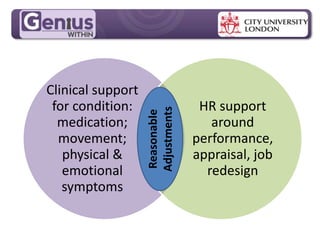
Clinical support
for condition:
medication;
movement;
physical &
emotional
symptoms
HR support
around
performance,
appraisal, job
redesign
Reasonable
Adjustments
MPG Handout Pack
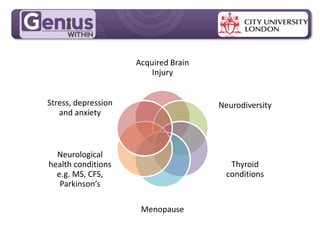
Acquired Brain
Injury
Neurodiversity
Thyroid
conditions
Menopause
Neurological
health conditions
e.g. MS, CFS,
Parkinson’s
Stress, depression
and anxiety
MPG Handout Pack
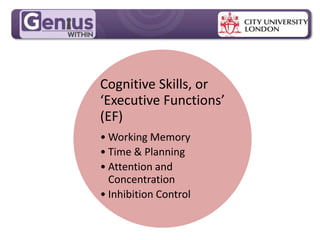
Cognitive Skills, or
‘Executive Functions’
(EF)
• Working Memory
• Time & Planning
• Attention and
Concentration
• Inhibition Control
MPG Handout Pack
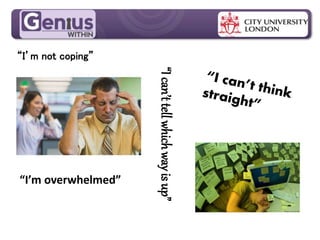
“I’m not coping”
“Ican’ttellwhichwayisup”
“I’m overwhelmed”
MPG Handout Pack
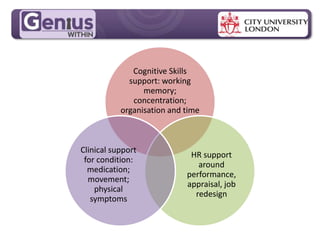
Cognitive Skills
support: working
memory;
concentration;
organisation and time
HR support
around
performance,
appraisal, job
redesign
Clinical support
for condition:
medication;
movement;
physical
symptoms
MPG Handout Pack
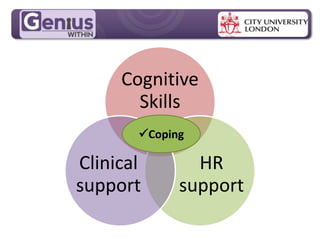
Cognitive
Skills
HR
support
Clinical
support
Coping
MPG Handout Pack
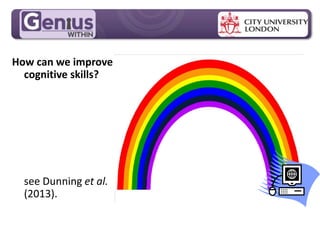
How can we improve
cognitive skills?
see Dunning et al.
(2013).
MPG Handout Pack
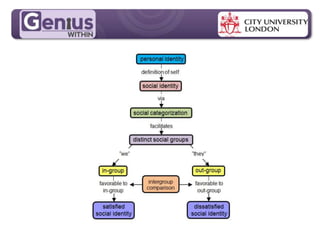
Henri Tajfel and John C. Turner
“Social Identity Theory”
MPG Handout Pack
MPG Handout Pack
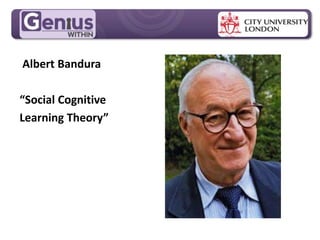
Albert Bandura
“Social Cognitive
Learning Theory”
MPG Handout Pack
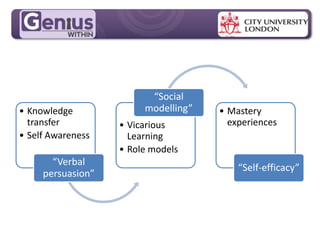
• Knowledge
transfer
• Self Awareness
“Verbal
persuasion”
• Vicarious
Learning
• Role models
“Social
modelling” • Mastery
experiences
“Self-efficacy”
MPG Handout Pack
Can Cognitive
Skills be improved
via training or
coaching?
MPG Handout Pack
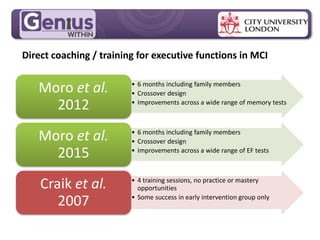
• 6 months including family members
• Crossover design
• Improvements across a wide range of memory tests
Moro et al.
2012
• 6 months including family members
• Crossover design
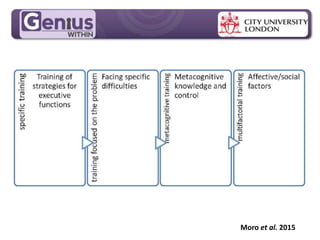
• Improvements across a wide range of EF tests
Moro et al.
2015
• 4 training sessions, no practice or mastery
opportunities
• Some success in early intervention group only
Craik et al.
2007
Direct coaching / training for executive functions in MCI
MPG Handout Pack
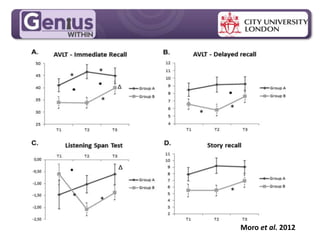
Moro et al. 2012
MPG Handout Pack
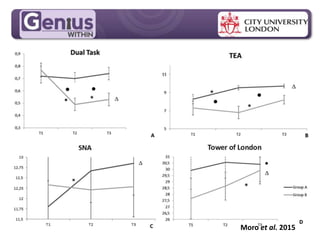
Moro et al. 2015
MPG Handout Pack
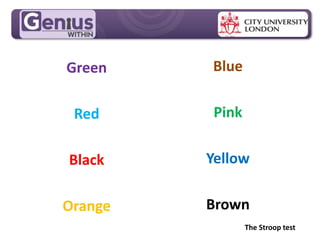
Green
Red
Black
Orange
The Stroop test
Blue
Pink
Yellow
Brown
MPG Handout Pack
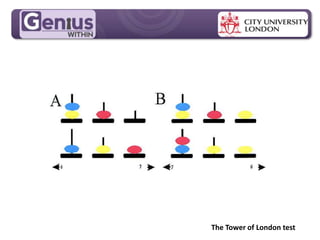
The Tower of London test
MPG Handout Pack
Moro et al. 2015
MPG Handout Pack
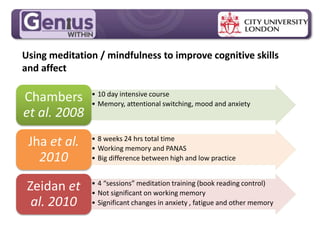
• 10 day intensive course
• Memory, attentional switching, mood and anxiety
Chambers
et al. 2008
• 8 weeks 24 hrs total time
• Working memory and PANAS
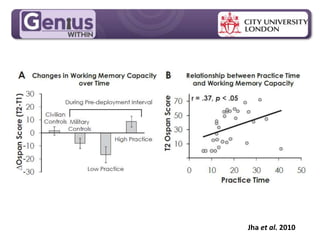
• Big difference between high and low practice
Jha et al.
2010
• 4 “sessions” meditation training (book reading control)
• Not significant on working memory
• Significant changes in anxiety , fatigue and other memory
Zeidan et
al. 2010
Using meditation / mindfulness to improve cognitive skills
and affect
MPG Handout Pack
Jha et al. 2010
MPG Handout Pack
Year
Age
sample
size
WM
deficit?
SCLT
Score
MC
YorN
teaching
methods
used
Pvalueof
working
memory
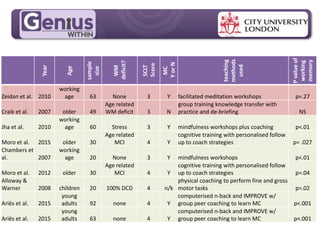
Zeidan et al. 2010
working
age 63 None 3 Y facilitated meditation workshops p=.27
Craik et al. 2007 older 49
Age related
WM deficit 3 N
group training knowledge transfer with
practice and de-briefing NS
Jha et al. 2010
working
age 60 Stress 3 Y mindfulness workshops plus coaching p<.01
Moro et al. 2015 older 30
Age related
MCI 4 Y
cognitive training with personalised follow
up to coach strategies p= .027
Chambers et
al. 2007
working
age 20 None 3 Y mindfulness workshops p<.01
Moro et al. 2012 older 30
Age related
MCI 4 Y
cognitive training with personalised follow
up to coach strategies p=.04
Alloway &
Warner 2008 children 20 100% DCD 4 n/k
physical coaching to perform fine and gross
motor tasks p=.02
Ariës et al. 2015
young
adults 92 none 4 Y
computerised n-back and IMPROVE w/
group peer coaching to learn MC p<.001
Ariës et al. 2015
young
adults 63 none 4 Y
computerised n-back and IMPROVE w/
group peer coaching to learn MC p<.001
MPG Handout Pack
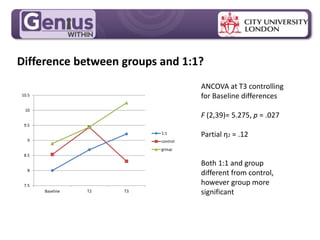
Difference between groups and 1:1?
7.5
8
8.5
9
9.5
10
10.5
Baseline T2 T3
1:1
control
group
ANCOVA at T3 controlling
for Baseline differences
F (2,39)= 5.275, p = .027
Partial η2 = .12
Both 1:1 and group
different from control,
however group more
significant
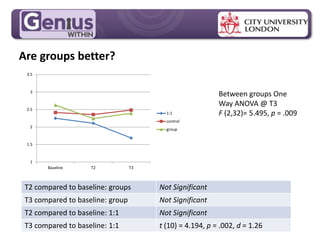
Are groups better?
T2 compared to baseline: groups Not Significant
T3 compared to baseline: group Not Significant
T2 compared to baseline: 1:1 Not Significant
T3 compared to baseline: 1:1 t (10) = 4.194, p = .002, d = 1.26
1
1.5
2
2.5
3
3.5
Baseline T2 T3
1:1
control
group
Between groups One
Way ANOVA @ T3
F (2,32)= 5.495, p = .009
MPG Handout Pack
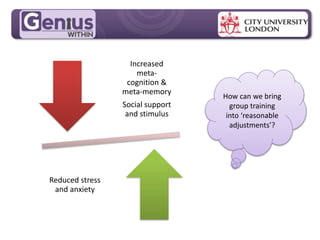
Increased
meta-
cognition &
meta-memory
Social support
and stimulus
Reduced stress
and anxiety
How can we bring
group training
into ‘reasonable
adjustments’?

Cognitive Skills and Coping

  • 1.
    MPG Handout Pack CognitiveSkills and Coping Nancy Doyle MSc C. Psychol. AfBPsS
  • 2.
    MPG Handout Pack Clinicalsupport for condition: medication; movement; physical & emotional symptoms HR support around performance, appraisal, job redesign Reasonable Adjustments
  • 3.
    MPG Handout Pack AcquiredBrain Injury Neurodiversity Thyroid conditions Menopause Neurological health conditions e.g. MS, CFS, Parkinson’s Stress, depression and anxiety
  • 4.
    MPG Handout Pack CognitiveSkills, or ‘Executive Functions’ (EF) • Working Memory • Time & Planning • Attention and Concentration • Inhibition Control
  • 5.
    MPG Handout Pack “I’mnot coping” “Ican’ttellwhichwayisup” “I’m overwhelmed”
  • 6.
    MPG Handout Pack CognitiveSkills support: working memory; concentration; organisation and time HR support around performance, appraisal, job redesign Clinical support for condition: medication; movement; physical symptoms
  • 7.
  • 8.
    MPG Handout Pack Howcan we improve cognitive skills? see Dunning et al. (2013).
  • 9.
    MPG Handout Pack HenriTajfel and John C. Turner “Social Identity Theory”
  • 10.
  • 11.
    MPG Handout Pack AlbertBandura “Social Cognitive Learning Theory”
  • 12.
    MPG Handout Pack •Knowledge transfer • Self Awareness “Verbal persuasion” • Vicarious Learning • Role models “Social modelling” • Mastery experiences “Self-efficacy”
  • 13.
    MPG Handout Pack CanCognitive Skills be improved via training or coaching?
  • 14.
    MPG Handout Pack •6 months including family members • Crossover design • Improvements across a wide range of memory tests Moro et al. 2012 • 6 months including family members • Crossover design • Improvements across a wide range of EF tests Moro et al. 2015 • 4 training sessions, no practice or mastery opportunities • Some success in early intervention group only Craik et al. 2007 Direct coaching / training for executive functions in MCI
  • 15.
  • 16.
  • 17.
    MPG Handout Pack Green Red Black Orange TheStroop test Blue Pink Yellow Brown
  • 18.
    MPG Handout Pack TheTower of London test
  • 19.
  • 20.
    MPG Handout Pack •10 day intensive course • Memory, attentional switching, mood and anxiety Chambers et al. 2008 • 8 weeks 24 hrs total time • Working memory and PANAS • Big difference between high and low practice Jha et al. 2010 • 4 “sessions” meditation training (book reading control) • Not significant on working memory • Significant changes in anxiety , fatigue and other memory Zeidan et al. 2010 Using meditation / mindfulness to improve cognitive skills and affect
  • 21.
  • 22.
    MPG Handout Pack Year Age sample size WM deficit? SCLT Score MC YorN teaching methods used Pvalueof working memory Zeidanet al. 2010 working age 63 None 3 Y facilitated meditation workshops p=.27 Craik et al. 2007 older 49 Age related WM deficit 3 N group training knowledge transfer with practice and de-briefing NS Jha et al. 2010 working age 60 Stress 3 Y mindfulness workshops plus coaching p<.01 Moro et al. 2015 older 30 Age related MCI 4 Y cognitive training with personalised follow up to coach strategies p= .027 Chambers et al. 2007 working age 20 None 3 Y mindfulness workshops p<.01 Moro et al. 2012 older 30 Age related MCI 4 Y cognitive training with personalised follow up to coach strategies p=.04 Alloway & Warner 2008 children 20 100% DCD 4 n/k physical coaching to perform fine and gross motor tasks p=.02 Ariës et al. 2015 young adults 92 none 4 Y computerised n-back and IMPROVE w/ group peer coaching to learn MC p<.001 Ariës et al. 2015 young adults 63 none 4 Y computerised n-back and IMPROVE w/ group peer coaching to learn MC p<.001
  • 23.
    MPG Handout Pack Differencebetween groups and 1:1? 7.5 8 8.5 9 9.5 10 10.5 Baseline T2 T3 1:1 control group ANCOVA at T3 controlling for Baseline differences F (2,39)= 5.275, p = .027 Partial η2 = .12 Both 1:1 and group different from control, however group more significant
  • 24.
    Are groups better? T2compared to baseline: groups Not Significant T3 compared to baseline: group Not Significant T2 compared to baseline: 1:1 Not Significant T3 compared to baseline: 1:1 t (10) = 4.194, p = .002, d = 1.26 1 1.5 2 2.5 3 3.5 Baseline T2 T3 1:1 control group Between groups One Way ANOVA @ T3 F (2,32)= 5.495, p = .009
  • 25.
    MPG Handout Pack Increased meta- cognition& meta-memory Social support and stimulus Reduced stress and anxiety How can we bring group training into ‘reasonable adjustments’?

Editor's Notes

  • #6 Cognitive Skills are the psychological variables by which we experience ‘not coping’
  • #16 Auditory Verbal Learning Test
  • #17 he Tower of London (ToL),35 - stacking the Dual Task – 2 at once the Attention Elevator (TEA) Symbol-Number Association (SNA) test39
  • #18 he Tower of London (ToL),35 - stacking the Dual Task – 2 at once the Attention Elevator (TEA) Symbol-Number Association (SNA) test39
  • #19 he Tower of London (ToL),35 - stacking the Dual Task – 2 at once the Attention Elevator (TEA) Symbol-Number Association (SNA) test39