Why is Change hard?
Surjit Singh Jandu
What are your insights on
why change is hard?
(Breakout)
Feedback
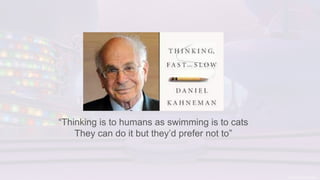
“Thinking is to humans as swimming is to cats
They can do it but they’d prefer not to”
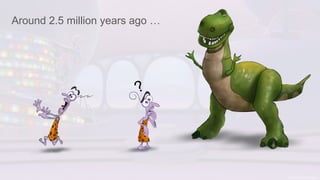
Around 2.5 million years ago …
?
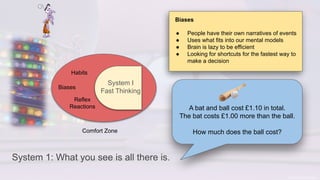
System I
Fast Thinking
Comfort Zone
Habits
Biases
Reflex
Reactions
Biases
● People have their own narratives of events
● Uses what fits into our mental models
● Brain is lazy to be efficient
● Looking for shortcuts for the fastest way to
make a decision
System 1: What you see is all there is.
A bat and ball cost £1.10 in total.
The bat costs £1.00 more than the ball.
How much does the ball cost?
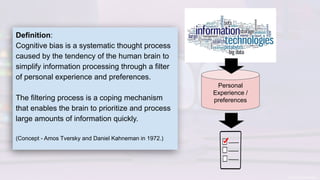
Definition:
Cognitive bias is a systematic thought process
caused by the tendency of the human brain to
simplify information processing through a filter
of personal experience and preferences.
The filtering process is a coping mechanism
that enables the brain to prioritize and process
large amounts of information quickly.
(Concept - Amos Tversky and Daniel Kahneman in 1972.)
Personal
Experience /
preferences
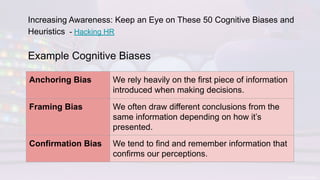
Example Cognitive Biases
Anchoring Bias We rely heavily on the first piece of information
introduced when making decisions.
Framing Bias We often draw different conclusions from the
same information depending on how it’s
presented.
Confirmation Bias We tend to find and remember information that
confirms our perceptions.
Increasing Awareness: Keep an Eye on These 50 Cognitive Biases and
Heuristics - Hacking HR
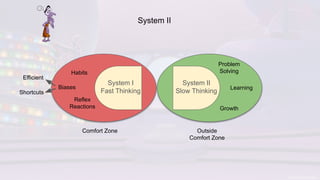
System I
Fast Thinking
System II
Slow Thinking
Comfort Zone
Habits
Biases
Efficient
Shortcuts
Problem
Solving
Learning
Growth
Outside
Comfort Zone
System II
Reflex
Reactions
System I
Fast Thinking
System II
Slow Thinking
Comfort Zone
Habits
Biases
Reflex
Reactions
Efficient
Shortcuts
Problem
Solving
Learning
Growth
Outside
Comfort Zone
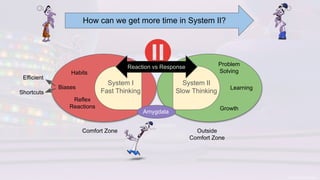
How can we get more time in System II?
Amygdala
Reaction vs Response
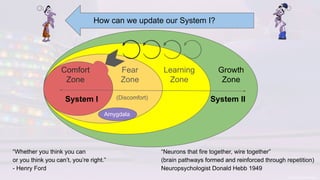
How can we update our System I?
Comfort
Zone
Fear
Zone
Learning
Zone
Growth
Zone
System I System II
“Whether you think you can
or you think you can’t, you’re right.”
- Henry Ford
Amygdala
“Neurons that fire together, wire together”
(brain pathways formed and reinforced through repetition)
Neuropsychologist Donald Hebb 1949
(Discomfort)
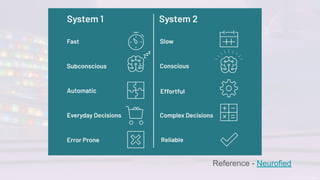
Reference - Neurofied
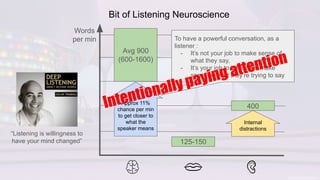
Avg 900
(600-1600)
125-150
400
Words
per min
Internal
distractions
Approx 11%
chance per min
to get closer to
what the
speaker means
To have a powerful conversation, as a
listener :
- It’s not your job to make sense of
what they say,
- It’s your job to help them make
sense of what they’re trying to say
Bit of Listening Neuroscience
Intentionally paying attention
“Listening is willingness to
have your mind changed”
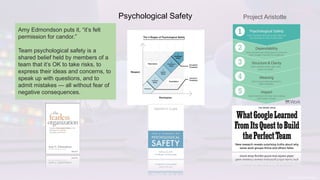
Amy Edmondson puts it, “it’s felt
permission for candor.”
Team psychological safety is a
shared belief held by members of a
team that it’s OK to take risks, to
express their ideas and concerns, to
speak up with questions, and to
admit mistakes — all without fear of
negative consequences.
Project Aristotle
Psychological Safety
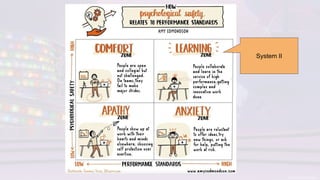
System II
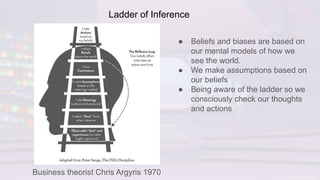
Business theorist Chris Argyris 1970
● Beliefs and biases are based on
our mental models of how we
see the world.
● We make assumptions based on
our beliefs
● Being aware of the ladder so we
consciously check our thoughts
and actions
Ladder of Inference
Resource vs People
David Marquet
“Knowing is not enough, we must APPLY.
Willing is not enough, we must DO”
Bruce Lee
Have a bias towards Action
What could you do to make
change easier for ourselves and others?
(Breakout)
Summary
● Take time to talk about the Why (Fear Zone)
● Create a pause to respond rather than to react
● Be more aware of (our own) biases and question their
validity
● Change the environment to be in the Learning Zone
● Language makes a difference
● Growth mindset - ‘failures’ are learnings
● Realise your potential by coming out of the comfort zone

Why is change hard?

  • 1.
    Why is Changehard? Surjit Singh Jandu
  • 2.
    What are yourinsights on why change is hard? (Breakout)
  • 3.
  • 4.
    “Thinking is tohumans as swimming is to cats They can do it but they’d prefer not to”
  • 5.
    Around 2.5 millionyears ago … ?
  • 6.
    System I Fast Thinking ComfortZone Habits Biases Reflex Reactions Biases ● People have their own narratives of events ● Uses what fits into our mental models ● Brain is lazy to be efficient ● Looking for shortcuts for the fastest way to make a decision System 1: What you see is all there is. A bat and ball cost £1.10 in total. The bat costs £1.00 more than the ball. How much does the ball cost?
  • 7.
    Definition: Cognitive bias isa systematic thought process caused by the tendency of the human brain to simplify information processing through a filter of personal experience and preferences. The filtering process is a coping mechanism that enables the brain to prioritize and process large amounts of information quickly. (Concept - Amos Tversky and Daniel Kahneman in 1972.) Personal Experience / preferences
  • 8.
    Example Cognitive Biases AnchoringBias We rely heavily on the first piece of information introduced when making decisions. Framing Bias We often draw different conclusions from the same information depending on how it’s presented. Confirmation Bias We tend to find and remember information that confirms our perceptions. Increasing Awareness: Keep an Eye on These 50 Cognitive Biases and Heuristics - Hacking HR
  • 9.
    System I Fast Thinking SystemII Slow Thinking Comfort Zone Habits Biases Efficient Shortcuts Problem Solving Learning Growth Outside Comfort Zone System II Reflex Reactions
  • 10.
    System I Fast Thinking SystemII Slow Thinking Comfort Zone Habits Biases Reflex Reactions Efficient Shortcuts Problem Solving Learning Growth Outside Comfort Zone How can we get more time in System II? Amygdala Reaction vs Response
  • 11.
    How can weupdate our System I? Comfort Zone Fear Zone Learning Zone Growth Zone System I System II “Whether you think you can or you think you can’t, you’re right.” - Henry Ford Amygdala “Neurons that fire together, wire together” (brain pathways formed and reinforced through repetition) Neuropsychologist Donald Hebb 1949 (Discomfort)
  • 12.
  • 13.
    Avg 900 (600-1600) 125-150 400 Words per min Internal distractions Approx11% chance per min to get closer to what the speaker means To have a powerful conversation, as a listener : - It’s not your job to make sense of what they say, - It’s your job to help them make sense of what they’re trying to say Bit of Listening Neuroscience Intentionally paying attention “Listening is willingness to have your mind changed”
  • 14.
    Amy Edmondson putsit, “it’s felt permission for candor.” Team psychological safety is a shared belief held by members of a team that it’s OK to take risks, to express their ideas and concerns, to speak up with questions, and to admit mistakes — all without fear of negative consequences. Project Aristotle Psychological Safety
  • 15.
  • 16.
    Business theorist ChrisArgyris 1970 ● Beliefs and biases are based on our mental models of how we see the world. ● We make assumptions based on our beliefs ● Being aware of the ladder so we consciously check our thoughts and actions Ladder of Inference
  • 17.
  • 18.
  • 19.
    “Knowing is notenough, we must APPLY. Willing is not enough, we must DO” Bruce Lee Have a bias towards Action
  • 20.
    What could youdo to make change easier for ourselves and others? (Breakout)
  • 21.
    Summary ● Take timeto talk about the Why (Fear Zone) ● Create a pause to respond rather than to react ● Be more aware of (our own) biases and question their validity ● Change the environment to be in the Learning Zone ● Language makes a difference ● Growth mindset - ‘failures’ are learnings ● Realise your potential by coming out of the comfort zone