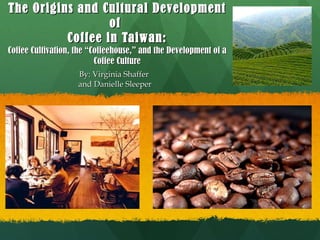
The Origins and Cultural Development of  Coffee in Taiwan: Coffee Cultivation, the “Coffeehouse,” and the Development of a Coffee Culture By: Virginia Shaffer  and Danielle Sleeper
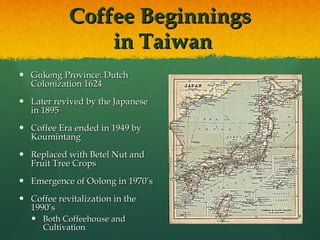
  Coffee Beginnings  in Taiwan Gukeng Province: Dutch Colonization 1624 Later revived by the Japanese in 1895 Coffee Era ended in 1949 by Koumintang  Replaced with Betel Nut and Fruit Tree Crops Emergence of Oolong in 1970’s Coffee revitalization in the 1990’s Both Coffeehouse and Cultivation
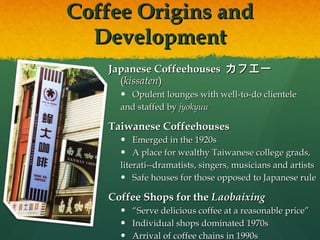
Coffee Origins and Development Japanese Coffeehouses  カフエー  ( kissaten )  Opulent lounges with well-to-do clientele  and staffed by  jyokyuu Taiwanese Coffeehouses Emerged in the 1920s A place for wealthy Taiwanese college grads,  literati--dramatists, singers, musicians and artists Safe houses for those opposed to Japanese rule Coffee Shops for the  Laobaixing   “ Serve delicious coffee at a reasonable price” Individual shops dominated 1970s Arrival of coffee chains in 1990s
Coffee is a way of life. Shifted food habits and changed the Taiwanese breakfast meal
Taiwan’s Unique Coffee Bean and Innovative Techniques -Quality vs. Quantity: Taiwan ranks among  the first class coffee qualities of the world -Climate Advantages -Yunlin, Gukeng and the Formosan Rock Monkey Sweeter Coffee with bold vanilla scent @ USD$56.00 per pound http://www.reuters.com/article/video/idUSSP22138820071114?videoId=70786 - Cultural Innovation: 85C’s Sea Salt Coffee: 2009’s Best Seller Future Forecasts: Adding Cheese and Crushed Fruit Using  alternative energy to brew coffee – a REAL Cup of Joe! -Specialty Comes with a Price: NT$120 (US$3.70) a cup to NT$200 (US$6.15)
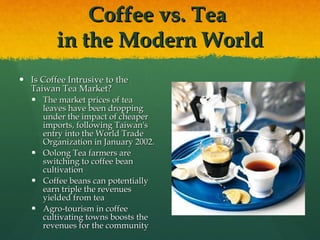
Coffee vs. Tea  in the Modern World Is Coffee Intrusive to the Taiwan Tea Market? The market prices of tea leaves have been dropping under the impact of cheaper imports, following Taiwan's entry into the World Trade Organization in January 2002. Oolong Tea farmers are switching to coffee bean cultivation Coffee beans can potentially earn triple the revenues yielded from tea  Agro-tourism in coffee cultivating towns boosts the revenues for the community
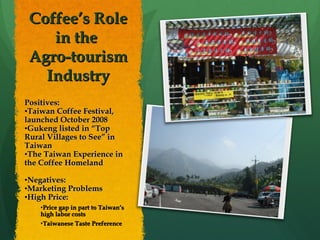
Coffee’s Role in the  Agro-tourism Industry Positives: Taiwan Coffee Festival, launched October 2008 Gukeng listed in “Top Rural Villages to See” in Taiwan The Taiwan Experience in the Coffee Homeland Negatives: Marketing Problems High Price: Price gap in part to Taiwan’s high labor costs Taiwanese Taste Preference
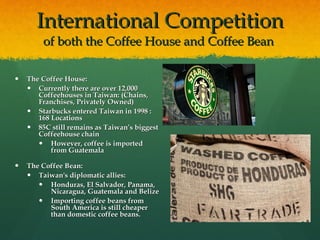
International Competition  of both the Coffee House and Coffee Bean  The Coffee House:  Currently there are over 12,000 Coffeehouses in Taiwan: (Chains, Franchises, Privately Owned) Starbucks entered Taiwan in 1998 : 168 Locations 85C still remains as Taiwan’s biggest Coffeehouse chain However, coffee is imported from Guatemala  The Coffee Bean: Taiwan's diplomatic allies: Honduras, El Salvador, Panama, Nicaragua, Guatemala and Belize Importing coffee beans from South America is still cheaper than domestic coffee beans.
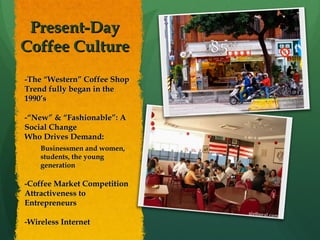
Present-Day  Coffee Culture  -The “Western” Coffee Shop Trend fully began in the 1990’s -“New” & “Fashionable”: A Social Change Who Drives Demand:  Businessmen and women, students, the young generation -Coffee Market Competition Attractiveness to Entrepreneurs -Wireless Internet
Discussion Topics: Is a coffee culture new to a Taiwanese Society or is it being revived?  Is it possible that this is a hybrid of both old and new tradition? Do you foresee the addition of coffee tourism in rural villages as a positive way to help communities? Do you foresee any negative aspects to this social movement?

Coffee in Taiwan

  • 1.
    The Origins andCultural Development of Coffee in Taiwan: Coffee Cultivation, the “Coffeehouse,” and the Development of a Coffee Culture By: Virginia Shaffer and Danielle Sleeper
  • 2.
      Coffee Beginnings in Taiwan Gukeng Province: Dutch Colonization 1624 Later revived by the Japanese in 1895 Coffee Era ended in 1949 by Koumintang Replaced with Betel Nut and Fruit Tree Crops Emergence of Oolong in 1970’s Coffee revitalization in the 1990’s Both Coffeehouse and Cultivation
  • 3.
    Coffee Origins andDevelopment Japanese Coffeehouses カフエー ( kissaten ) Opulent lounges with well-to-do clientele and staffed by jyokyuu Taiwanese Coffeehouses Emerged in the 1920s A place for wealthy Taiwanese college grads, literati--dramatists, singers, musicians and artists Safe houses for those opposed to Japanese rule Coffee Shops for the Laobaixing “ Serve delicious coffee at a reasonable price” Individual shops dominated 1970s Arrival of coffee chains in 1990s
  • 4.
    Coffee is away of life. Shifted food habits and changed the Taiwanese breakfast meal
  • 5.
    Taiwan’s Unique CoffeeBean and Innovative Techniques -Quality vs. Quantity: Taiwan ranks among the first class coffee qualities of the world -Climate Advantages -Yunlin, Gukeng and the Formosan Rock Monkey Sweeter Coffee with bold vanilla scent @ USD$56.00 per pound http://www.reuters.com/article/video/idUSSP22138820071114?videoId=70786 - Cultural Innovation: 85C’s Sea Salt Coffee: 2009’s Best Seller Future Forecasts: Adding Cheese and Crushed Fruit Using alternative energy to brew coffee – a REAL Cup of Joe! -Specialty Comes with a Price: NT$120 (US$3.70) a cup to NT$200 (US$6.15)
  • 6.
    Coffee vs. Tea in the Modern World Is Coffee Intrusive to the Taiwan Tea Market? The market prices of tea leaves have been dropping under the impact of cheaper imports, following Taiwan's entry into the World Trade Organization in January 2002. Oolong Tea farmers are switching to coffee bean cultivation Coffee beans can potentially earn triple the revenues yielded from tea Agro-tourism in coffee cultivating towns boosts the revenues for the community
  • 7.
    Coffee’s Role inthe Agro-tourism Industry Positives: Taiwan Coffee Festival, launched October 2008 Gukeng listed in “Top Rural Villages to See” in Taiwan The Taiwan Experience in the Coffee Homeland Negatives: Marketing Problems High Price: Price gap in part to Taiwan’s high labor costs Taiwanese Taste Preference
  • 8.
    International Competition of both the Coffee House and Coffee Bean The Coffee House: Currently there are over 12,000 Coffeehouses in Taiwan: (Chains, Franchises, Privately Owned) Starbucks entered Taiwan in 1998 : 168 Locations 85C still remains as Taiwan’s biggest Coffeehouse chain However, coffee is imported from Guatemala The Coffee Bean: Taiwan's diplomatic allies: Honduras, El Salvador, Panama, Nicaragua, Guatemala and Belize Importing coffee beans from South America is still cheaper than domestic coffee beans.
  • 9.
    Present-Day CoffeeCulture -The “Western” Coffee Shop Trend fully began in the 1990’s -“New” & “Fashionable”: A Social Change Who Drives Demand: Businessmen and women, students, the young generation -Coffee Market Competition Attractiveness to Entrepreneurs -Wireless Internet
  • 10.
    Discussion Topics: Isa coffee culture new to a Taiwanese Society or is it being revived? Is it possible that this is a hybrid of both old and new tradition? Do you foresee the addition of coffee tourism in rural villages as a positive way to help communities? Do you foresee any negative aspects to this social movement?

Editor's Notes

  • #4 Japanese Coffeehouses (kissaten) were located in the Sakaemachi (around today’s HengYang Road) -Chung Yang Restaurant, Parma Café, Dalichi Eiraku Taiwanese Coffeehouses located mostly in Dadocheng District (around today’s DiHua Street) -Werther, Tianma Teahouse Bolero
  • #5 Bolero 1934 Tianma Teahouse Astoria Café 1949 Fong Da Coffee 1956 Bar-Den
  • #8 Viable? How prosperous is it? => See recent article