Codes and Conventions of Teen
Films
My Media group have decided to create the
opening sequence to a hybrid teen/thriller
film, similar to film such as Heathers,
Heavenly Creatures and Mean Girls
Extreme Stereotypical Characters
There are usually no in-between characters. There
are only extreme stereotypes, such as:
• Mean popular girl – Blonde, wears makeup, is the
‘leader’ of her clique
• New girl- Pretty, smart, innocent and naive
• Jock- A bad student and secretly insecure
• Nerd- Unpopular,
• Outsider/Misfit- Sees people for who they really
are, sarcastic, underdog
Cliques
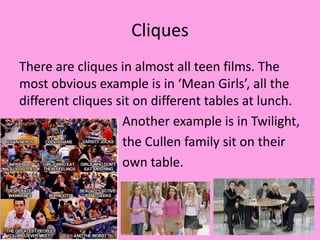
There are cliques in almost all teen films. The
most obvious example is in ‘Mean Girls’, all the
different cliques sit on different tables at lunch.
Another example is in Twilight,
the Cullen family sit on their
own table.
Iconography
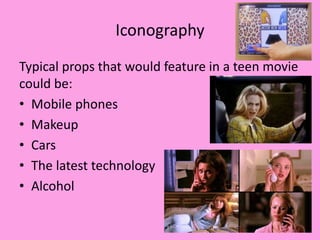
Typical props that would feature in a teen movie
could be:
• Mobile phones
• Makeup
• Cars
• The latest technology
• Alcohol
Setting
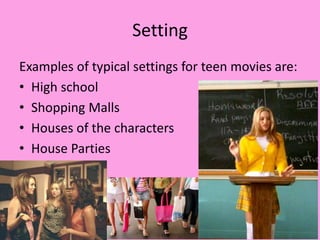
Examples of typical settings for teen movies are:
• High school
• Shopping Malls
• Houses of the characters
• House Parties
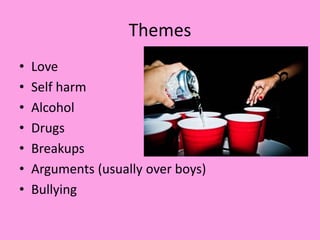
Themes
• Love
• Self harm
• Alcohol
• Drugs
• Breakups
• Arguments (usually over boys)
• Bullying
Codes and Conventions of Thriller
Films
Characters
• Protagonists are usually brave
• Antagonists usually reveal their identity during
the film/are unknown to the audience at the
beginning of the film
• The antagonist seeks revenge for something
the protagonist didn’t do
Cinematography
• Usually lots of close ups to show the
characters’ emotions and reactions
• Quick cuts when the antagonist is on screen to
hide their identity and make the audience
more eager to know who it is
• Low angle shots used of antagonist to reflect
their high amount of power
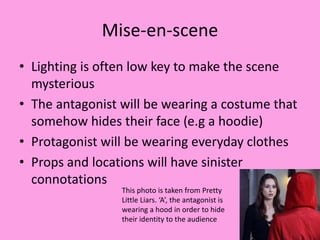
Mise-en-scene
• Lighting is often low key to make the scene
mysterious
• The antagonist will be wearing a costume that
somehow hides their face (e.g a hoodie)
• Protagonist will be wearing everyday clothes
• Props and locations will have sinister
connotations
This photo is taken from Pretty
Little Liars. ‘A’, the antagonist is
wearing a hood in order to hide
their identity to the audience
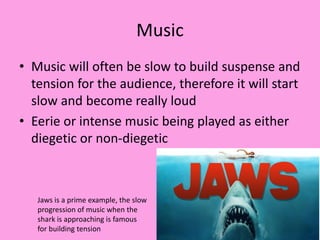
Music
• Music will often be slow to build suspense and
tension for the audience, therefore it will start
slow and become really loud
• Eerie or intense music being played as either
diegetic or non-diegetic
Jaws is a prime example, the slow
progression of music when the
shark is approaching is famous
for building tension
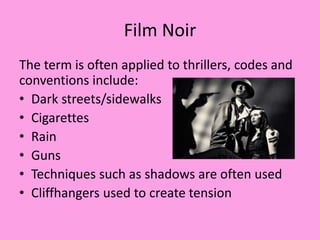
Film Noir
The term is often applied to thrillers, codes and
conventions include:
• Dark streets/sidewalks
• Cigarettes
• Rain
• Guns
• Techniques such as shadows are often used
• Cliffhangers used to create tension

Codes and conventions

  • 1.
    Codes and Conventionsof Teen Films My Media group have decided to create the opening sequence to a hybrid teen/thriller film, similar to film such as Heathers, Heavenly Creatures and Mean Girls
  • 2.
    Extreme Stereotypical Characters Thereare usually no in-between characters. There are only extreme stereotypes, such as: • Mean popular girl – Blonde, wears makeup, is the ‘leader’ of her clique • New girl- Pretty, smart, innocent and naive • Jock- A bad student and secretly insecure • Nerd- Unpopular, • Outsider/Misfit- Sees people for who they really are, sarcastic, underdog
  • 3.
    Cliques There are cliquesin almost all teen films. The most obvious example is in ‘Mean Girls’, all the different cliques sit on different tables at lunch. Another example is in Twilight, the Cullen family sit on their own table.
  • 4.
    Iconography Typical props thatwould feature in a teen movie could be: • Mobile phones • Makeup • Cars • The latest technology • Alcohol
  • 5.
    Setting Examples of typicalsettings for teen movies are: • High school • Shopping Malls • Houses of the characters • House Parties
  • 6.
    Themes • Love • Selfharm • Alcohol • Drugs • Breakups • Arguments (usually over boys) • Bullying
  • 7.
    Codes and Conventionsof Thriller Films
  • 8.
    Characters • Protagonists areusually brave • Antagonists usually reveal their identity during the film/are unknown to the audience at the beginning of the film • The antagonist seeks revenge for something the protagonist didn’t do
  • 9.
    Cinematography • Usually lotsof close ups to show the characters’ emotions and reactions • Quick cuts when the antagonist is on screen to hide their identity and make the audience more eager to know who it is • Low angle shots used of antagonist to reflect their high amount of power
  • 10.
    Mise-en-scene • Lighting isoften low key to make the scene mysterious • The antagonist will be wearing a costume that somehow hides their face (e.g a hoodie) • Protagonist will be wearing everyday clothes • Props and locations will have sinister connotations This photo is taken from Pretty Little Liars. ‘A’, the antagonist is wearing a hood in order to hide their identity to the audience
  • 11.
    Music • Music willoften be slow to build suspense and tension for the audience, therefore it will start slow and become really loud • Eerie or intense music being played as either diegetic or non-diegetic Jaws is a prime example, the slow progression of music when the shark is approaching is famous for building tension
  • 12.
    Film Noir The termis often applied to thrillers, codes and conventions include: • Dark streets/sidewalks • Cigarettes • Rain • Guns • Techniques such as shadows are often used • Cliffhangers used to create tension