CONVENTIONS OF GENRE 
Horror 
SAM HATCHER 13G
WHEN MAKING A GENRE PIECE: D.I.S.T.I.N.C.T 
• D ont 
• I gnore 
• S etting 
• T echnical Code 
• I conography 
• N arrative 
• C haracterisation/Character 
• T hemes
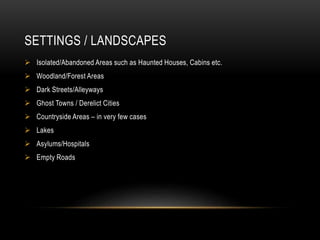
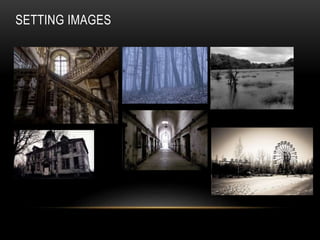
SETTINGS / LANDSCAPES 
 Isolated/Abandoned Areas such as Haunted Houses, Cabins etc. 
 Woodland/Forest Areas 
 Dark Streets/Alleyways 
 Ghost Towns / Derelict Cities 
 Countryside Areas – in very few cases 
 Lakes 
 Asylums/Hospitals 
 Empty Roads
SETTING IMAGES
TECHNICAL CODE 
 High and Low Angle shots in sequence to display the shift in power between the 
antagonists and their victims. 
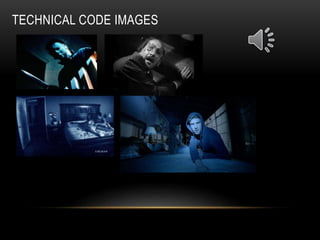
 Point of View (P.O.V) shots used to give the audience a view from either the Antagonist, 
Protagonist or other characters in order to show the true extent of the terror being 
displayed on the screen. 
 Handheld Camera Shots to give the ‘shake’ effect to portray the fear of the characters 
within the scene and also to increase the tempo/speed of the scene. 
 Sound Effects used to emphasise the fear and panic within the scene, most commonly 
Diegetic Sound such as Screams and Heartbeats. 
 Editing Techniques used to increase/decrease the speed of scenes to build tension, such 
as Quick Cuts to create a sense of panic, or colour edits to give a ghostly effect.
TECHNICAL CODE IMAGES
ICONOGRAPHY 
 Visual Style – often dark colours such as Blacks/Blues and shades of red are used to connote 
Evil, Death and Fear. 
 Lighting is usually un-naturalistic and is used to create effect such as shadows within the scene 
or strange shapes in the background. Dark Lighting is synonymous with the Horror genre. In 
some films, lighting is motivated through the use of fire (in the form of Bonfires, Torches etc.) 
 Props are a key part of the iconography for a horror film as they often come in the from of 
weapons or devices used by the main villain/antagonist or other key characters throughout the 
piece. In some cases, the iconography leads to the direct relation of the prop to a specific 
character (for example – Leatherface, from Texas Chainsaw Massacre is commonly identified 
through his use of a chainsaw within the film.) 
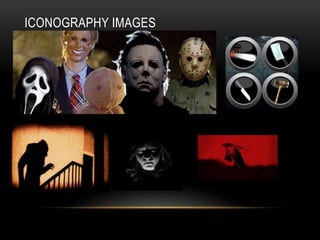
 Costume is also used to clearly identify horror films, as the costumes usually relate to death or 
darkness, and in many cases are used to hide the identity of the killer. In some cases, costume 
is used to identify characters through the use of masks. (for example : Scream Mask (Scream 
Saga), Jason’s Hockey Mask (Friday the 13th), Michael Myers Mask (Halloween).
ICONOGRAPHY IMAGES
NARRATIVE STRUCTURE 
 The structure of Horror Films classically begins with a small introduction to the protagonist, 
antagonist and other characters that are generally victims to the events of the film. Commonly, 
the antagonist will kill off/ scare away the other characters leaving the protagonist(s) alone for a 
battle with the antagonist. The battle is usually a climatic scene which ultimately ends with the 
death or capture of the antagonist and the protagonists attempt to get back into normal life. 
However in many horror films, the film has a twist at the end which leads to the resurrection or 
freedom of the antagonist, leaving the ability for sequels/prequels. 
 In very few cases does the film end with complete negativity and no goodness overcoming the 
evil. 
 In most horror films, there is a ‘Damsel in Distress’ character portrayed by a female, which 
ultimately leads to a rescue by the male lead. 
 In sub-genres such as ‘slasher’ films, there is a generic formula that is followed by the 
directors/producers. For example in the ‘Scream’ film saga, every killer is different, however all 
of them have a vendetta against the protagonist ‘Sidney Prescott’ which keeps the saga and 
killer mystery alive.
CHARACTER TYPES 
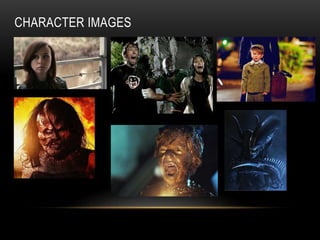
• The Main Protagonist – ultimately either the ‘Hero’ or the ‘final victim’ within the film, is the 
focus of the narrative. 
• The Main Antagonist – the ‘killer’ or ‘villain’ within the narrative, usually mentally or 
physically unstable or supernatural 
• Immoral Teens – young characters who are killed off to boost the importance of the 
narrative and the two main roles 
• Children – Used to create an innocent contrast to the narrative, or to make it more intense 
through the use of eerie effects and demonic characteristics. 
• Other Monsters
CHARACTER IMAGES
THEMES 
 Good vs Evil 
 Depression 
 Religion 
 Childhood 
 Revenge 
 Supernatural 
 Beyond the grave 
 Zombie Apocalypse 
 Evil Science 
 Nightmares 
 Insanity 
 Envy 
 Murder 
 Suicide 
 Self Consciousness
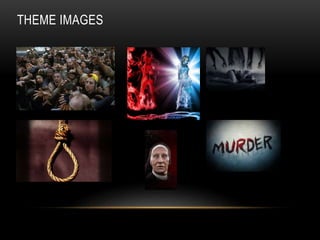
THEME IMAGES

Horror Genre Conventions A2 Media

  • 1.
    CONVENTIONS OF GENRE Horror SAM HATCHER 13G
  • 2.
    WHEN MAKING AGENRE PIECE: D.I.S.T.I.N.C.T • D ont • I gnore • S etting • T echnical Code • I conography • N arrative • C haracterisation/Character • T hemes
  • 3.
    SETTINGS / LANDSCAPES  Isolated/Abandoned Areas such as Haunted Houses, Cabins etc.  Woodland/Forest Areas  Dark Streets/Alleyways  Ghost Towns / Derelict Cities  Countryside Areas – in very few cases  Lakes  Asylums/Hospitals  Empty Roads
  • 4.
  • 5.
    TECHNICAL CODE High and Low Angle shots in sequence to display the shift in power between the antagonists and their victims.  Point of View (P.O.V) shots used to give the audience a view from either the Antagonist, Protagonist or other characters in order to show the true extent of the terror being displayed on the screen.  Handheld Camera Shots to give the ‘shake’ effect to portray the fear of the characters within the scene and also to increase the tempo/speed of the scene.  Sound Effects used to emphasise the fear and panic within the scene, most commonly Diegetic Sound such as Screams and Heartbeats.  Editing Techniques used to increase/decrease the speed of scenes to build tension, such as Quick Cuts to create a sense of panic, or colour edits to give a ghostly effect.
  • 6.
  • 7.
    ICONOGRAPHY  VisualStyle – often dark colours such as Blacks/Blues and shades of red are used to connote Evil, Death and Fear.  Lighting is usually un-naturalistic and is used to create effect such as shadows within the scene or strange shapes in the background. Dark Lighting is synonymous with the Horror genre. In some films, lighting is motivated through the use of fire (in the form of Bonfires, Torches etc.)  Props are a key part of the iconography for a horror film as they often come in the from of weapons or devices used by the main villain/antagonist or other key characters throughout the piece. In some cases, the iconography leads to the direct relation of the prop to a specific character (for example – Leatherface, from Texas Chainsaw Massacre is commonly identified through his use of a chainsaw within the film.)  Costume is also used to clearly identify horror films, as the costumes usually relate to death or darkness, and in many cases are used to hide the identity of the killer. In some cases, costume is used to identify characters through the use of masks. (for example : Scream Mask (Scream Saga), Jason’s Hockey Mask (Friday the 13th), Michael Myers Mask (Halloween).
  • 8.
  • 9.
    NARRATIVE STRUCTURE The structure of Horror Films classically begins with a small introduction to the protagonist, antagonist and other characters that are generally victims to the events of the film. Commonly, the antagonist will kill off/ scare away the other characters leaving the protagonist(s) alone for a battle with the antagonist. The battle is usually a climatic scene which ultimately ends with the death or capture of the antagonist and the protagonists attempt to get back into normal life. However in many horror films, the film has a twist at the end which leads to the resurrection or freedom of the antagonist, leaving the ability for sequels/prequels.  In very few cases does the film end with complete negativity and no goodness overcoming the evil.  In most horror films, there is a ‘Damsel in Distress’ character portrayed by a female, which ultimately leads to a rescue by the male lead.  In sub-genres such as ‘slasher’ films, there is a generic formula that is followed by the directors/producers. For example in the ‘Scream’ film saga, every killer is different, however all of them have a vendetta against the protagonist ‘Sidney Prescott’ which keeps the saga and killer mystery alive.
  • 10.
    CHARACTER TYPES •The Main Protagonist – ultimately either the ‘Hero’ or the ‘final victim’ within the film, is the focus of the narrative. • The Main Antagonist – the ‘killer’ or ‘villain’ within the narrative, usually mentally or physically unstable or supernatural • Immoral Teens – young characters who are killed off to boost the importance of the narrative and the two main roles • Children – Used to create an innocent contrast to the narrative, or to make it more intense through the use of eerie effects and demonic characteristics. • Other Monsters
  • 11.
  • 12.
    THEMES  Goodvs Evil  Depression  Religion  Childhood  Revenge  Supernatural  Beyond the grave  Zombie Apocalypse  Evil Science  Nightmares  Insanity  Envy  Murder  Suicide  Self Consciousness
  • 13.