THE 1975
Codes and
Conventions of Music
Video’s
G325 Ellie-Mae Davies
What are Codes and
Conventions?
The purpose of codes and conventions are ultimately to use certain
techniques in order to construct meaning within the video. There are
essentially divided into two segments; technical and symbolic.
- Technical is how the meaning is conveyed using technical equipment
e.g. the way camera angles are used, different types of shots, sound
either diegetic and non-diegetic sound, the pace and style of editing, as
well as the genre.
- Symbolic techniques are ways of portraying meaning beyond what you
can see, for example through facial expressions, gestures, poses and
mis en scene.
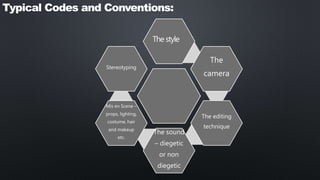
Typical Codes and Conventions:
The style
The
camera
The editing
technique
The sound
– diegetic
or non
diegetic
Mis en Scene –
props, lighting,
costume, hair
and makeup
etc.
Stereotyping
Performance
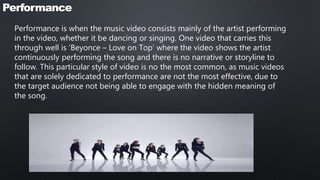
Performance is when the music video consists mainly of the artist performing
in the video, whether it be dancing or singing. One video that carries this
through well is ‘Beyonce – Love on Top’ where the video shows the artist
continuously performing the song and there is no narrative or storyline to
follow. This particular style of video is no the most common, as music videos
that are solely dedicated to performance are not the most effective, due to
the target audience not being able to engage with the hidden meaning of
the song.
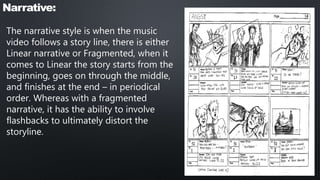
Narrative:
The narrative style is when the music
video follows a story line, there is either
Linear narrative or Fragmented, when it
comes to Linear the story starts from the
beginning, goes on through the middle,
and finishes at the end – in periodical
order. Whereas with a fragmented
narrative, it has the ability to involve
flashbacks to ultimately distort the
storyline.
The Camera
The way the camera is used is critical when producing any music video. It
can involve different effects by different angles as well as movements. In
general every music video uses a variety of camera shots, angles and
movements to create different techniques to result in a unique music
video that differs from the rest on the current market.
Wide shot Mid shot
Medium
close up
Extreme close
up
Over the
shoulder shot
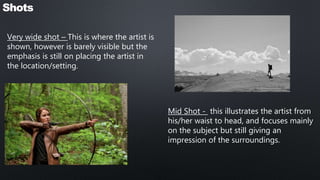
Very wide shot – This is where the artist is
shown, however is barely visible but the
emphasis is still on placing the artist in
the location/setting.
Shots
Mid Shot - this illustrates the artist from
his/her waist to head, and focuses mainly
on the subject but still giving an
impression of the surroundings.
Shots
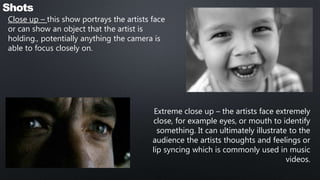
Close up – this show portrays the artists face
or can show an object that the artist is
holding., potentially anything the camera is
able to focus closely on.
Extreme close up – the artists face extremely
close, for example eyes, or mouth to identify
something. It can ultimately illustrate to the
audience the artists thoughts and feelings or
lip syncing which is commonly used in music
videos.
Sound
Sound consists of two main forms diegetic, which is already present in the film, and
non-diegetic which can be edited in. Sound is absolutely essential in any music video as
it is the main reason for why people watch and listen to them, to gain a sense of art via
different artists. Sound, like footage can be edited to create different effects and
variations to the normal vocals we hear.
Sound parallel sound is when the music matches the mood of the video. An example
would be if the song was slow to go with the mood of the song. Also, if it was a sad
song then the video would also be sad. Some music videos have diegetic sound, where
they include sound from the surroundings, such as birds that make the video seem
more realistic. However the music itself is non-diegetic sound.

Codes and conventions

  • 1.
    THE 1975 Codes and Conventionsof Music Video’s G325 Ellie-Mae Davies
  • 2.
    What are Codesand Conventions? The purpose of codes and conventions are ultimately to use certain techniques in order to construct meaning within the video. There are essentially divided into two segments; technical and symbolic. - Technical is how the meaning is conveyed using technical equipment e.g. the way camera angles are used, different types of shots, sound either diegetic and non-diegetic sound, the pace and style of editing, as well as the genre. - Symbolic techniques are ways of portraying meaning beyond what you can see, for example through facial expressions, gestures, poses and mis en scene.
  • 3.
    Typical Codes andConventions: The style The camera The editing technique The sound – diegetic or non diegetic Mis en Scene – props, lighting, costume, hair and makeup etc. Stereotyping
  • 4.
    Performance Performance is whenthe music video consists mainly of the artist performing in the video, whether it be dancing or singing. One video that carries this through well is ‘Beyonce – Love on Top’ where the video shows the artist continuously performing the song and there is no narrative or storyline to follow. This particular style of video is no the most common, as music videos that are solely dedicated to performance are not the most effective, due to the target audience not being able to engage with the hidden meaning of the song.
  • 5.
    Narrative: The narrative styleis when the music video follows a story line, there is either Linear narrative or Fragmented, when it comes to Linear the story starts from the beginning, goes on through the middle, and finishes at the end – in periodical order. Whereas with a fragmented narrative, it has the ability to involve flashbacks to ultimately distort the storyline.
  • 6.
    The Camera The waythe camera is used is critical when producing any music video. It can involve different effects by different angles as well as movements. In general every music video uses a variety of camera shots, angles and movements to create different techniques to result in a unique music video that differs from the rest on the current market. Wide shot Mid shot Medium close up Extreme close up Over the shoulder shot
  • 7.
    Very wide shot– This is where the artist is shown, however is barely visible but the emphasis is still on placing the artist in the location/setting. Shots Mid Shot - this illustrates the artist from his/her waist to head, and focuses mainly on the subject but still giving an impression of the surroundings.
  • 8.
    Shots Close up –this show portrays the artists face or can show an object that the artist is holding., potentially anything the camera is able to focus closely on. Extreme close up – the artists face extremely close, for example eyes, or mouth to identify something. It can ultimately illustrate to the audience the artists thoughts and feelings or lip syncing which is commonly used in music videos.
  • 9.
    Sound Sound consists oftwo main forms diegetic, which is already present in the film, and non-diegetic which can be edited in. Sound is absolutely essential in any music video as it is the main reason for why people watch and listen to them, to gain a sense of art via different artists. Sound, like footage can be edited to create different effects and variations to the normal vocals we hear. Sound parallel sound is when the music matches the mood of the video. An example would be if the song was slow to go with the mood of the song. Also, if it was a sad song then the video would also be sad. Some music videos have diegetic sound, where they include sound from the surroundings, such as birds that make the video seem more realistic. However the music itself is non-diegetic sound.