
CODE OF ETHICS FOR TEACHERS
Presented by: ABHISHEK SHARMA
SUBMITTED TO:
DR. KIRAN GUPTA
What is code of ethics in teaching
profession?
A professional code of ethics outlines teachers'
main responsibilities to their students and
defines their role in students' lives. Above
all, teachers must demonstrate integrity,
impartiality and ethical behavior in the
classroom and in their conduct with parents
and coworkers.
TEACHING
ETHICS
Why ethics are important in teaching?
Education represents success in one’s
life—in both their personal and
professional life. Educators prepare
students for the future. However, in
order for students to become
successful individuals in the future; the
students must come across effective
teachers throughout their educational
careers. An effective teacher must
know what is ethically right and wrong.
Therefore, I find it significant for future
educators to have background
knowledge in moral decision-making.
Article I (Scope and Limitation)
All educational institutions shall offer quality
education. This code shall apply to all teachers in all
schools including persons performing supervisory
and/or administrative functions.
Article II (The Teacher and the State)
• The schools are nurseries of the future citizens of
the state. ( here state is nothing else but the
whole nation)
• Each teacher is a trustee of the cultural and
educational heritage of the nation.
• Under obligation to transmit to learners such
heritage as well as elevate national morality,
promote national pride, cultivate love for country,
inculcate loyalty/faithfulness to the Constitution
and respect for all duly constituted authorities,
and promote obedience to the laws of the state.
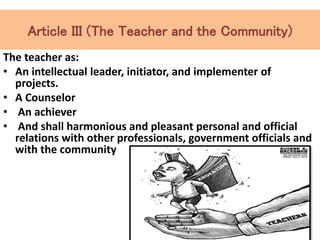
Article III (The Teacher and the Community)
The teacher as:
• An intellectual leader, initiator, and implementer of
projects.
• A Counselor
• An achiever
• And shall harmonious and pleasant personal and official
relations with other professionals, government officials and
with the community
Article IV (The Teacher and the Profession)
The teacher:
• Shall maintain the nobility and dignity of the
teaching profession
• Shall continue professional growth to improve
efficiency.
Article V
(The Teacher and the Teaching Community)
Emphasizes that the teacher shall be pervaded with
the spirit of professional loyalty, mutual confidence
and faith in one another, self sacrifice for the
common good, and full cooperation with
colleagues.
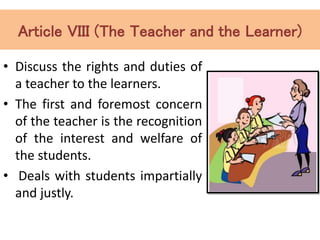
Article VIII (The Teacher and the Learner)
• Discuss the rights and duties of
a teacher to the learners.
• The first and foremost concern
of the teacher is the recognition
of the interest and welfare of
the students.
• Deals with students impartially
and justly.
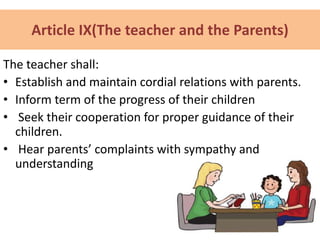
Article IX(The teacher and the Parents)
The teacher shall:
• Establish and maintain cordial relations with parents.
• Inform term of the progress of their children
• Seek their cooperation for proper guidance of their
children.
• Hear parents’ complaints with sympathy and
understanding
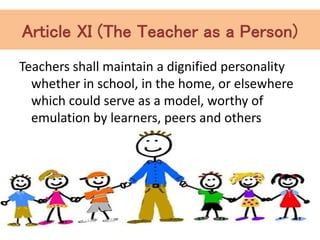
Article XI (The Teacher as a Person)
Teachers shall maintain a dignified personality
whether in school, in the home, or elsewhere
which could serve as a model, worthy of
emulation by learners, peers and others
CODE OF ETHICS FOR TEACHERS

CODE OF ETHICS FOR TEACHERS

  • 1.
    CODE OF ETHICSFOR TEACHERS Presented by: ABHISHEK SHARMA SUBMITTED TO: DR. KIRAN GUPTA
  • 2.
    What is codeof ethics in teaching profession? A professional code of ethics outlines teachers' main responsibilities to their students and defines their role in students' lives. Above all, teachers must demonstrate integrity, impartiality and ethical behavior in the classroom and in their conduct with parents and coworkers. TEACHING ETHICS
  • 3.
    Why ethics areimportant in teaching? Education represents success in one’s life—in both their personal and professional life. Educators prepare students for the future. However, in order for students to become successful individuals in the future; the students must come across effective teachers throughout their educational careers. An effective teacher must know what is ethically right and wrong. Therefore, I find it significant for future educators to have background knowledge in moral decision-making.
  • 4.
    Article I (Scopeand Limitation) All educational institutions shall offer quality education. This code shall apply to all teachers in all schools including persons performing supervisory and/or administrative functions.
  • 5.
    Article II (TheTeacher and the State) • The schools are nurseries of the future citizens of the state. ( here state is nothing else but the whole nation) • Each teacher is a trustee of the cultural and educational heritage of the nation. • Under obligation to transmit to learners such heritage as well as elevate national morality, promote national pride, cultivate love for country, inculcate loyalty/faithfulness to the Constitution and respect for all duly constituted authorities, and promote obedience to the laws of the state.
  • 6.
    Article III (TheTeacher and the Community) The teacher as: • An intellectual leader, initiator, and implementer of projects. • A Counselor • An achiever • And shall harmonious and pleasant personal and official relations with other professionals, government officials and with the community
  • 7.
    Article IV (TheTeacher and the Profession) The teacher: • Shall maintain the nobility and dignity of the teaching profession • Shall continue professional growth to improve efficiency.
  • 8.
    Article V (The Teacherand the Teaching Community) Emphasizes that the teacher shall be pervaded with the spirit of professional loyalty, mutual confidence and faith in one another, self sacrifice for the common good, and full cooperation with colleagues.
  • 9.
    Article VIII (TheTeacher and the Learner) • Discuss the rights and duties of a teacher to the learners. • The first and foremost concern of the teacher is the recognition of the interest and welfare of the students. • Deals with students impartially and justly.
  • 10.
    Article IX(The teacherand the Parents) The teacher shall: • Establish and maintain cordial relations with parents. • Inform term of the progress of their children • Seek their cooperation for proper guidance of their children. • Hear parents’ complaints with sympathy and understanding
  • 11.
    Article XI (TheTeacher as a Person) Teachers shall maintain a dignified personality whether in school, in the home, or elsewhere which could serve as a model, worthy of emulation by learners, peers and others