Introduction to Domain Driven
Design
Frank Levering
• PHP Developer
• DevMob
Quality software
• Writing tests
• Using design patterns
• Manual testing
• SOLID
Quality software doesn’t give
an insurance for a quality
software model
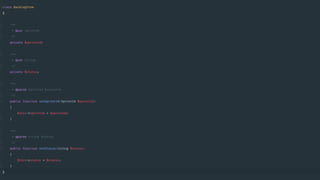
Code example
Date - Name
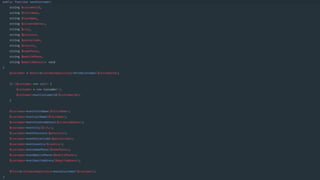
It saves a customer no
matter what, awesome right?
This model is suffering from
Anemia
We have no idea under what
business situations this
method is used
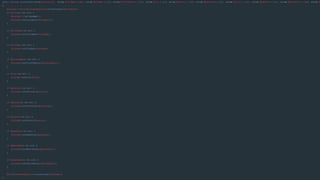
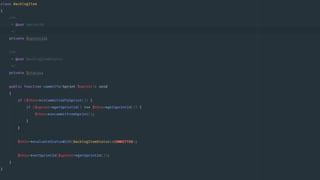
And it even gets worse
Code example
Date - Name
Can we really test this?
DDD helps you creating a
more high-quality software
model
It helps you create software
that makes sense to the
business
You would be making software that
is as close as possible to what the
business leaders and experts would
create if they were the developers
Disclaimer
• A domain is not DNS or
anything internet related
• Domain is the area your
business relies
So how does DDD work?
• Strategic design
• Tactical design
We will mostly be talking
about strategic design today
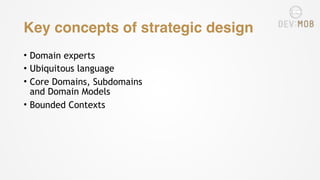
Key concepts of strategic design
• Domain experts
• Ubiquitous language
• Core Domains, Subdomains
and Domain Models
• Bounded Contexts
Not doing any strategic
design results in doing DDD-
Lite
Domain experts
Bringing domain experts and
developers to the same playing
field which produces software
that makes sense to the business
Introducing Ubiquitous
language
It’s not the language of the
business
It must not adopt industry
standard terminology
It’s also not the language
used by domain experts
It’s a shared language
developed by a team, a team
composed of both domain
experts and developers
Ubiquitous language
develops on the way
No translations between the
domain experts, software
developers and the software
Date - Name
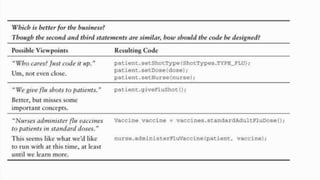
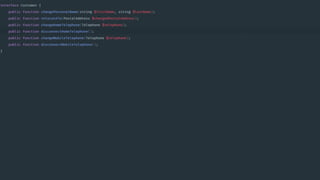
Ubiquitous language is
important when designing
the behaviour of objects
Code example
Date - Name
Code example
Date - Name
This was kind of an extreme
example
Code example
Date - Name
Code example
Date - Name
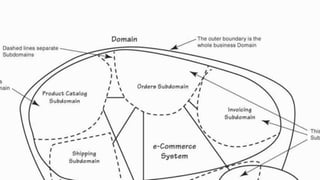
Domains
A domain, in the broad
sense, is what an
organisation does
But the term domain is a bit
overloaded
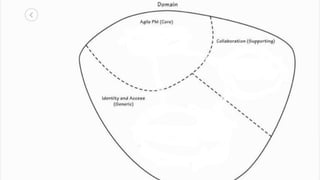
So let’s use Core Domain
and Subdomains
The whole Domain of the
organisation is composed of
Subdomains
Retailer example
Date - Name
But what is the Core
Domain?
Generic vs Supporting
Subdomains
Why is this so important?
Developers like to focus on
the technical part of a
product
We focus on Entities, Value
Objects, Services,
Aggregates
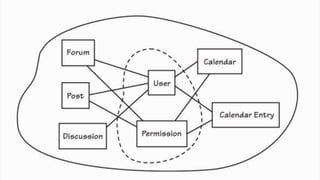
By doing that, we blend core
concepts with generic ones
Causing the creation of two
models into one
Date - Name
Agile PM tool example
Date - Name
Focus on Core Domain
The Domain is your problem
space
Domain Model
What is the Domain Model?
The Domain Model is your organised
and structured knowledge of the problem.
• It should represent the
vocabulary and key concepts
of the problem domain
• It should identify the
relationships among all of the
entities
It could be a diagram
Or written documentation
But in our case..
It’s a software model of the very
specific domain you are working in
It should be accessible and
understandable by everyone
involved in the project
Bounded Contexts
Bounded Context is an
explicit boundary in which a
domain model exists
The boundary is created because
each of the model’s concepts
inside, with its properties and
operations, has a special meaning
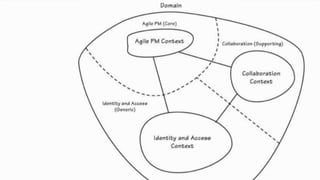
Example with Bounded
Contexts
Date - Name
Inside a Subdomain, you can
have multiple Bounded
Contexts
A Bounded Context should be
as big as it needs to be in order
to fully express its complete
Ubiquitous Language
Concepts that are not truly
part of the domain should be
factored out
Naming a Bounded Context
So why should you do DDD?
Bringing domain experts and
developers to the same playing
field which produces software
that makes sense to the business
You would be making software that
is as close as possible to what the
business leaders and experts would
create if they were the developers
Learning more about the
business, both domain
experts and developers
No translations between the
domain experts, software
developers and the software
Centralizing knowledge is
key
Thank you

Code & Cannoli - Domain Driven Design