Domain
Driven
Design
Big Picture

DDD-Meetup Cincinnati
2019-08-20

https://github.com/mwindholtz/presentations/tree/master/DDD
Wikimedia Commons
Domain-driven design (DDD)
An approach to software development
for complex needs
by connecting the implementation
to an evolving model.
The term was coined by Eric Evans
A Short Review or Overview …
Meeting Topic Areas
1. Strategic Patterns
• Context Maps, Sub Domains, etc
2. Tactical Patterns
• DomainEvents, Aggregates, etc
3. Communication Tips
• Whirlpool, Knowledge Crunching, Event Storming
4. Code Examples
• Build In Your Own Language: The Cargo Shipping Example
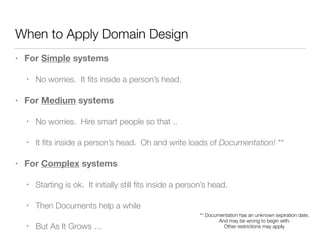
When to Apply Domain Design
• For Simple systems
• No worries. It fits inside a person’s head.
• For Medium systems
• No worries. Hire smart people so that ..
• It fits inside a person’s head. Oh and write loads of Documentation! **
• For Complex systems
• Starting is ok. It initially still fits inside a person’s head.
• Then Documents help a while
• But As It Grows …
** Documentation has an unknown expiration date.
And may be wrong to begin with.
Other restrictions may apply.
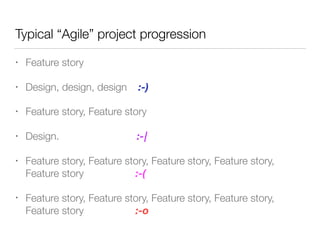
Typical “Agile” project progression
• Feature story
• Design, design, design :-)
• Feature story, Feature story
• Design. :-|
• Feature story, Feature story, Feature story, Feature story,
Feature story :-(
• Feature story, Feature story, Feature story, Feature story,
Feature story :-o
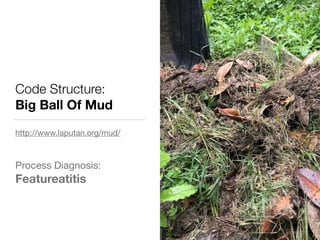
Code Structure:
Big Ball Of Mud
http://www.laputan.org/mud/

Process Diagnosis:

Featureatitis
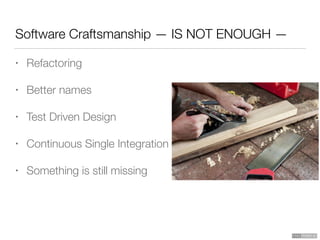
Software Craftsmanship — IS NOT ENOUGH —
• Refactoring
• Better names
• Test Driven Design
• Continuous Single Integration
• Something is still missing
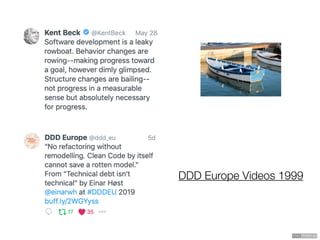
DDD Europe Videos 1999
“Doing” DDD
• Find Bounded Contexts

• Build Context Map

• Focus on Core Domain

• Apply Building Blocks

• Engage Domain Experts to
build Ubiquitous Language

• Repeat … and Revisit :||
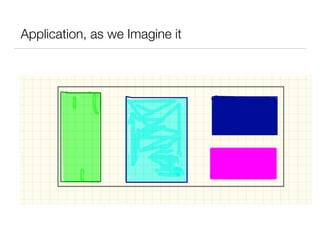
Application, as we Imagine it
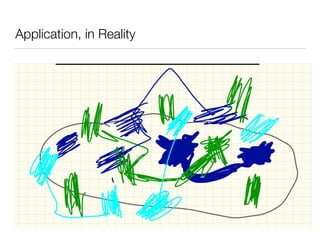
Application, in Reality
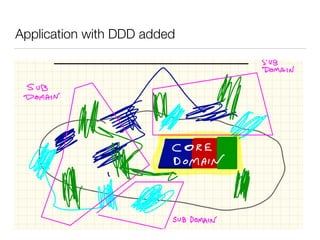
Application with DDD added
Domain
• A sphere of knowledge, influence, or activity.
• The subject area to which the user applies a program is
the domain of the software.
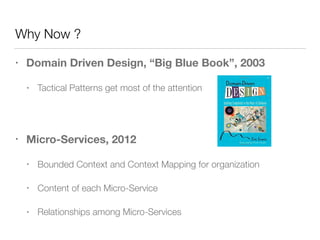
Why Now ?
• Domain Driven Design, “Big Blue Book”, 2003
• Tactical Patterns get most of the attention
• Micro-Services, 2012
• Bounded Context and Context Mapping for organization
• Content of each Micro-Service
• Relationships among Micro-Services
Why is DDD Difficult to Explain?
• Since the Problem is Complex and Subtle
• The Solution is also Complex and Subtle
• Difficult to scale down into examples
• Large Vocabulary of Interrelated Patterns
• Pattern Languages
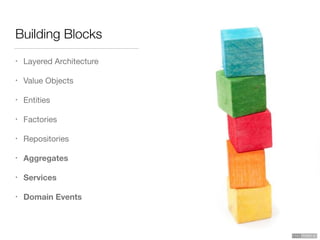
Building Blocks
• Layered Architecture

• Value Objects

• Entities

• Factories

• Repositories

• Aggregates
• Services
• Domain Events
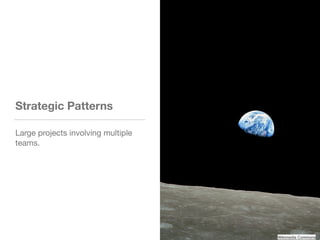
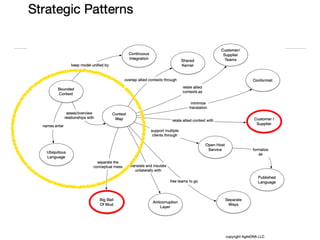
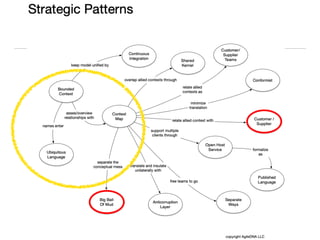
Strategic Patterns
Large projects involving multiple
teams.
Wikimedia Commons
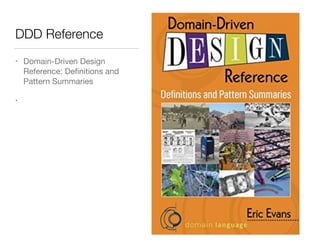
DDD Reference
• Domain-Driven Design
Reference: Definitions and
Pattern Summaries

•
Model
• A system of abstractions that
describes selected aspects of a
domain

• Can be used to solve problems
related to the domain
<< Some UML class diagram >>
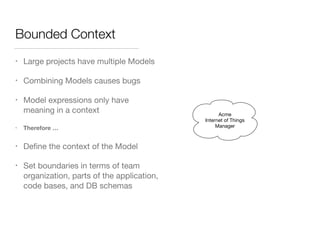
Bounded Context
• Large projects have multiple Models

• Combining Models causes bugs

• Model expressions only have
meaning in a context

• Therefore …
• Define the context of the Model

• Set boundaries in terms of team
organization, parts of the application,
code bases, and DB schemas
Acme
Internet of Things
Manager
Ubiquitous Language
• Translating between User speak
and software developer speak is
losses fidelity and is error prone.

• Therefore …
• Define a set of names for
interrelated concepts from the
domain

• Use these names in the
implementation code
• User: Fuel onload price at a
given port varies based on
supplier and region

• Dev: Price has a foreign key to
the SupplierRegion table.
ContextMap
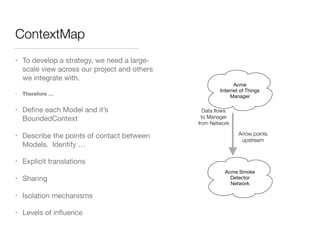
• To develop a strategy, we need a large-
scale view across our project and others
we integrate with.

• Therefore …
• Define each Model and it’s
BoundedContext

• Describe the points of contact between
Models. Identify …

• Explicit translations

• Sharing

• Isolation mechanisms

• Levels of influence
Acme
Internet of Things
Manager
Acme Smoke
Detector
Network
Arrow points
upstream
Data flows
to Manager
from Network
Context Relationship Types
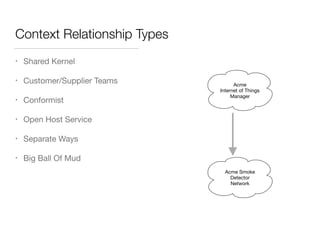
• Shared Kernel

• Customer/Supplier Teams

• Conformist

• Open Host Service

• Separate Ways

• Big Ball Of Mud
Acme
Internet of Things
Manager
Acme Smoke
Detector
Network
Shared Kernel
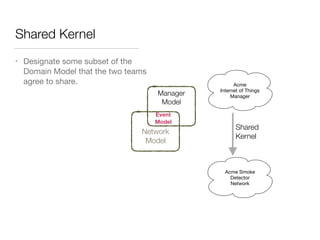
• Designate some subset of the
Domain Model that the two teams
agree to share. Acme
Internet of Things
Manager
Acme Smoke
Detector
Network
Network
Model
Manager
Model
Event
Model
Shared
Kernel
Customer/Supplier Teams
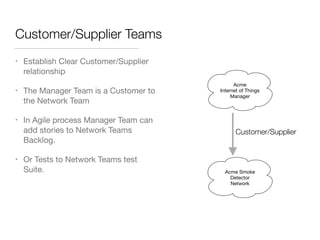
• Establish Clear Customer/Supplier
relationship

• The Manager Team is a Customer to
the Network Team

• In Agile process Manager Team can
add stories to Network Teams
Backlog. 

• Or Tests to Network Teams test
Suite.
Acme
Internet of Things
Manager
Acme Smoke
Detector
Network
Customer/Supplier
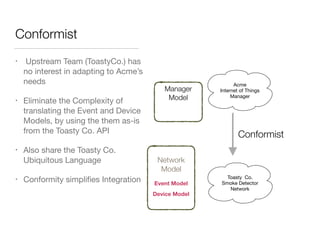
Conformist
• Upstream Team (ToastyCo.) has
no interest in adapting to Acme’s
needs

• Eliminate the Complexity of
translating the Event and Device
Models, by using the them as-is
from the Toasty Co. API

• Also share the Toasty Co.
Ubiquitous Language

• Conformity simplifies Integration
Acme
Internet of Things
Manager
Network
Model
Manager
Model
Event Model
Conformist
Device Model
Toasty Co.
Smoke Detector
Network
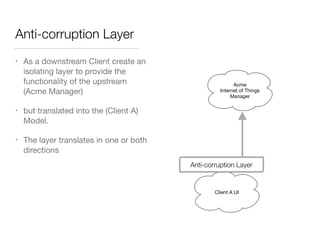
Anti-corruption Layer
• As a downstream Client create an
isolating layer to provide the
functionality of the upstream
(Acme Manager) 

• but translated into the (Client A)
Model.

• The layer translates in one or both
directions
Acme
Internet of Things
Manager
Client A UI
Anti-corruption Layer
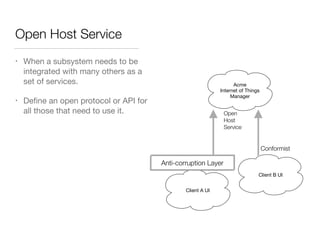
Open Host Service
• When a subsystem needs to be
integrated with many others as a
set of services.

• Define an open protocol or API for
all those that need to use it.
Acme
Internet of Things
Manager
Open
Host
Service
Client A UI
Client B UI
Conformist
Anti-corruption Layer
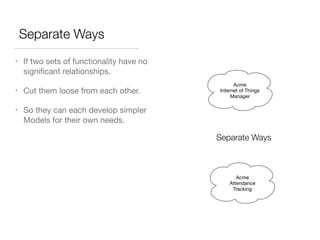
Separate Ways
• If two sets of functionality have no
significant relationships.

• Cut them loose from each other.

• So they can each develop simpler
Models for their own needs.
Acme
Internet of Things
Manager
Separate Ways
Acme
Attendance
Tracking
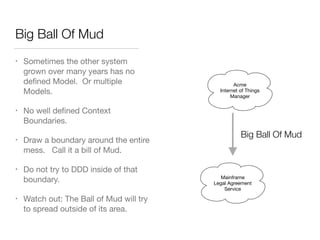
Big Ball Of Mud
• Sometimes the other system
grown over many years has no
defined Model. Or multiple
Models.

• No well defined Context
Boundaries.

• Draw a boundary around the entire
mess. Call it a bill of Mud.

• Do not try to DDD inside of that
boundary. 

• Watch out: The Ball of Mud will try
to spread outside of its area.
Acme
Internet of Things
Manager
Big Ball Of Mud
Mainframe
Legal Agreement
Service
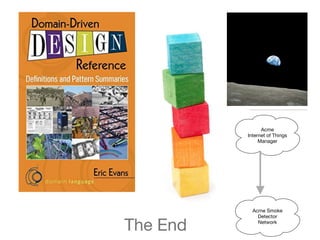
The End
Acme
Internet of Things
Manager
Acme Smoke
Detector
Network

Domain Driven Design Big Picture Strategic Patterns

  • 1.
  • 2.
    Domain-driven design (DDD) Anapproach to software development for complex needs by connecting the implementation to an evolving model. The term was coined by Eric Evans
  • 3.
    A Short Reviewor Overview …
  • 4.
    Meeting Topic Areas 1.Strategic Patterns • Context Maps, Sub Domains, etc 2. Tactical Patterns • DomainEvents, Aggregates, etc 3. Communication Tips • Whirlpool, Knowledge Crunching, Event Storming 4. Code Examples • Build In Your Own Language: The Cargo Shipping Example
  • 5.
    When to ApplyDomain Design • For Simple systems • No worries. It fits inside a person’s head. • For Medium systems • No worries. Hire smart people so that .. • It fits inside a person’s head. Oh and write loads of Documentation! ** • For Complex systems • Starting is ok. It initially still fits inside a person’s head. • Then Documents help a while • But As It Grows … ** Documentation has an unknown expiration date. And may be wrong to begin with. Other restrictions may apply.
  • 6.
    Typical “Agile” projectprogression • Feature story • Design, design, design :-) • Feature story, Feature story • Design. :-| • Feature story, Feature story, Feature story, Feature story, Feature story :-( • Feature story, Feature story, Feature story, Feature story, Feature story :-o
  • 7.
    Code Structure: Big BallOf Mud http://www.laputan.org/mud/ Process Diagnosis: Featureatitis
  • 8.
    Software Craftsmanship —IS NOT ENOUGH — • Refactoring • Better names • Test Driven Design • Continuous Single Integration • Something is still missing
  • 9.
  • 10.
    “Doing” DDD • FindBounded Contexts • Build Context Map • Focus on Core Domain • Apply Building Blocks • Engage Domain Experts to build Ubiquitous Language • Repeat … and Revisit :||
  • 11.
  • 12.
  • 13.
  • 14.
    Domain • A sphereof knowledge, influence, or activity. • The subject area to which the user applies a program is the domain of the software.
  • 15.
    Why Now ? •Domain Driven Design, “Big Blue Book”, 2003 • Tactical Patterns get most of the attention • Micro-Services, 2012 • Bounded Context and Context Mapping for organization • Content of each Micro-Service • Relationships among Micro-Services
  • 16.
    Why is DDDDifficult to Explain? • Since the Problem is Complex and Subtle • The Solution is also Complex and Subtle • Difficult to scale down into examples • Large Vocabulary of Interrelated Patterns • Pattern Languages
  • 17.
    Building Blocks • LayeredArchitecture • Value Objects • Entities • Factories • Repositories • Aggregates • Services • Domain Events
  • 18.
    Strategic Patterns Large projectsinvolving multiple teams. Wikimedia Commons
  • 20.
    DDD Reference • Domain-DrivenDesign Reference: Definitions and Pattern Summaries •
  • 21.
    Model • A systemof abstractions that describes selected aspects of a domain • Can be used to solve problems related to the domain << Some UML class diagram >>
  • 22.
    Bounded Context • Largeprojects have multiple Models • Combining Models causes bugs • Model expressions only have meaning in a context • Therefore … • Define the context of the Model • Set boundaries in terms of team organization, parts of the application, code bases, and DB schemas Acme Internet of Things Manager
  • 23.
    Ubiquitous Language • Translatingbetween User speak and software developer speak is losses fidelity and is error prone. • Therefore … • Define a set of names for interrelated concepts from the domain • Use these names in the implementation code • User: Fuel onload price at a given port varies based on supplier and region • Dev: Price has a foreign key to the SupplierRegion table.
  • 24.
    ContextMap • To developa strategy, we need a large- scale view across our project and others we integrate with. • Therefore … • Define each Model and it’s BoundedContext • Describe the points of contact between Models. Identify … • Explicit translations • Sharing • Isolation mechanisms • Levels of influence Acme Internet of Things Manager Acme Smoke Detector Network Arrow points upstream Data flows to Manager from Network
  • 25.
    Context Relationship Types •Shared Kernel • Customer/Supplier Teams • Conformist • Open Host Service • Separate Ways • Big Ball Of Mud Acme Internet of Things Manager Acme Smoke Detector Network
  • 26.
    Shared Kernel • Designatesome subset of the Domain Model that the two teams agree to share. Acme Internet of Things Manager Acme Smoke Detector Network Network Model Manager Model Event Model Shared Kernel
  • 27.
    Customer/Supplier Teams • EstablishClear Customer/Supplier relationship • The Manager Team is a Customer to the Network Team • In Agile process Manager Team can add stories to Network Teams Backlog. • Or Tests to Network Teams test Suite. Acme Internet of Things Manager Acme Smoke Detector Network Customer/Supplier
  • 28.
    Conformist • Upstream Team(ToastyCo.) has no interest in adapting to Acme’s needs • Eliminate the Complexity of translating the Event and Device Models, by using the them as-is from the Toasty Co. API • Also share the Toasty Co. Ubiquitous Language • Conformity simplifies Integration Acme Internet of Things Manager Network Model Manager Model Event Model Conformist Device Model Toasty Co. Smoke Detector Network
  • 29.
    Anti-corruption Layer • Asa downstream Client create an isolating layer to provide the functionality of the upstream (Acme Manager) • but translated into the (Client A) Model. • The layer translates in one or both directions Acme Internet of Things Manager Client A UI Anti-corruption Layer
  • 30.
    Open Host Service •When a subsystem needs to be integrated with many others as a set of services. • Define an open protocol or API for all those that need to use it. Acme Internet of Things Manager Open Host Service Client A UI Client B UI Conformist Anti-corruption Layer
  • 31.
    Separate Ways • Iftwo sets of functionality have no significant relationships. • Cut them loose from each other. • So they can each develop simpler Models for their own needs. Acme Internet of Things Manager Separate Ways Acme Attendance Tracking
  • 32.
    Big Ball OfMud • Sometimes the other system grown over many years has no defined Model. Or multiple Models. • No well defined Context Boundaries. • Draw a boundary around the entire mess. Call it a bill of Mud. • Do not try to DDD inside of that boundary. • Watch out: The Ball of Mud will try to spread outside of its area. Acme Internet of Things Manager Big Ball Of Mud Mainframe Legal Agreement Service
  • 34.
    The End Acme Internet ofThings Manager Acme Smoke Detector Network