COCOON HARVESTING AND
PROCESSING
AEN 301- ECONOMIC ENTOMOLOGY
Presented by
P.Thirumoorthy
M,Sc (Agri),GKVK
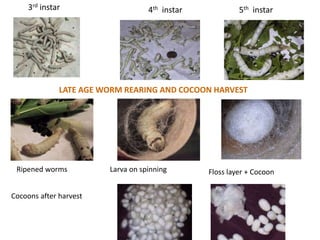
LATE AGE WORM REARING AND COCOON HARVEST
3rd instar
Cocoons after harvest
Floss layer + CocoonLarva on spinningRipened worms
5th instar4th instar
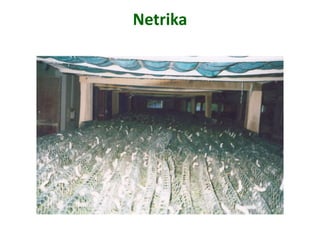
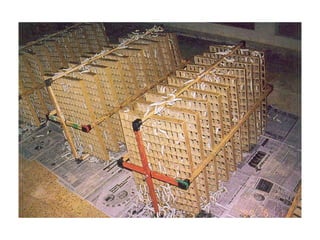
Netrika
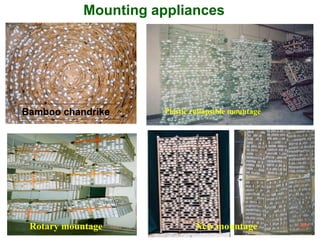
Mounting appliances
Rotary mountage
Plastic collapsible mountageBamboo chandrike
New mountage
COCOON PROOCESSING
SELECTION OF THE COCOON
• Compactness : firm, compact and slightly elastic.
• Grain : Coarse granular cocoons make poor reeling.
• Weight of the cocoon : Quality of raw silk -reeled.
• Shell weight : Higher shell weight greater is the silk yield.
• Shell ratio : 12-24 %.
COCOON STIFLING / DRYING
killing the pupa inside the cocoon
Purpose :
• To avoid the moth emergence and thereby
preserving the continuity of the silk filament.
• To protect the cocoon quality
• To preserve the cocoons for reeling
• Dried cocoons can be stored for a longer
period without purification and moulds.
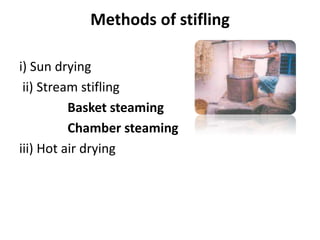
Methods of stifling
i) Sun drying
ii) Stream stifling
Basket steaming
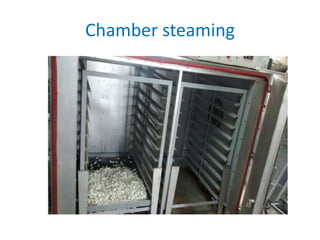
Chamber steaming
iii) Hot air drying
Chamber steaming
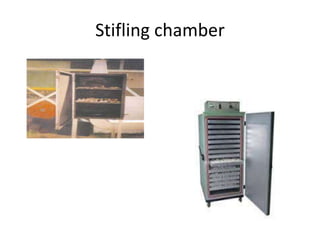
Stifling chamber
COCOON STORAGE
• Air space for ventilation
• Humidity should not exceeds 70%
• Temperature should be 27oC
SORTING OF COCOONS
• Double cocoons,
• crushed and stained cocoons,
• cocoons with print of cocooning frame,
• flimsy cocoons,
• insect damaged cocoons,
• thin shelled cocoons,
• immature cocoons,
• pierced cocoons,
are to be removed
COCOON MIXING / BLENDING
producing high-grade raw silk
• It ensures speed and uniformity of reeling
• To obtain desired effect in raw silk
• Ensures a high degree of efficiency of
automatic reeling machines
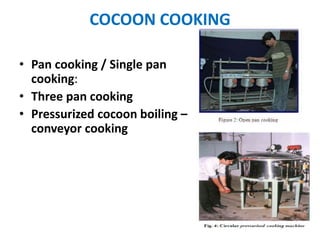
COCOON COOKING
• Pan cooking / Single pan
cooking:
• Three pan cooking
• Pressurized cocoon boiling –
conveyor cooking
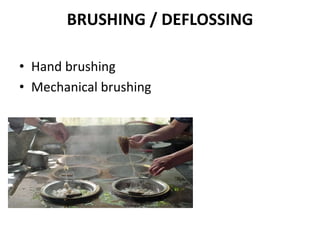
BRUSHING / DEFLOSSING
• Hand brushing
• Mechanical brushing
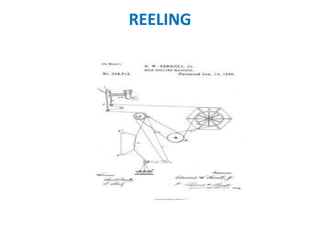
REELING
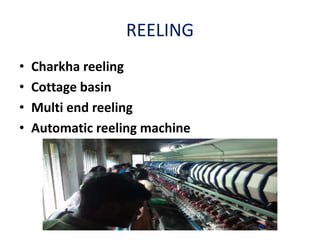
REELING
• Charkha reeling
• Cottage basin
• Multi end reeling
• Automatic reeling machine
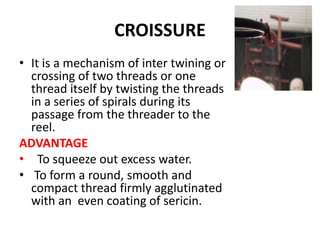
CROISSURE
• It is a mechanism of inter twining or
crossing of two threads or one
thread itself by twisting the threads
in a series of spirals during its
passage from the threader to the
reel.
ADVANTAGE
• To squeeze out excess water.
• To form a round, smooth and
compact thread firmly agglutinated
with an even coating of sericin.
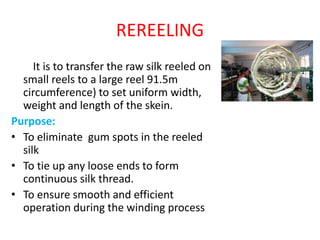
REREELING
It is to transfer the raw silk reeled on
small reels to a large reel 91.5m
circumference) to set uniform width,
weight and length of the skein.
Purpose:
• To eliminate gum spots in the reeled
silk
• To tie up any loose ends to form
continuous silk thread.
• To ensure smooth and efficient
operation during the winding process
WINDING
• To put the yarn in a long continuous length to
suit the weaving processes. It eliminates
imperfections such as slubs, weak places, dirt
and so on.
• Quality of the silk thread in the bobbin is
comparatively better than that on the hank.
REWINDING
• Bobbins produced on twisting machine are
placed on the rewinding machine and the
thread is rewound on to the double flanged
bobbins
• The rewound bobbins are fed to the warping
machine for preparing warp beams .
DOUBLING
Individual threads are doubled
• To avoid unevenness
• increase the strength of the yarn.
• It is done using doubling machine
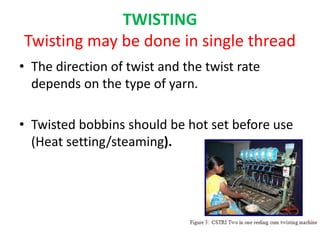
TWISTING
Twisting may be done in single thread
• The direction of twist and the twist rate
depends on the type of yarn.
• Twisted bobbins should be hot set before use
(Heat setting/steaming).
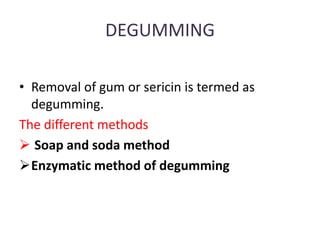
DEGUMMING
• Removal of gum or sericin is termed as
degumming.
The different methods
 Soap and soda method
Enzymatic method of degumming
BLEACHING OF SILK
Removal of natural pigmentation
• Silk whiteness can be improved by bleaching with
reducing agents like hydrosulphite and rongalite or
oxidising agents like potassium permanganate, sodium
peroxide and hydrogen peroxide.
The process of bleaching
• Boiling the material concerned for 2 h with 1-2
volumes of hydrogen per oxide concentration with 2g/l
sodium silicate followed by a hot wash.
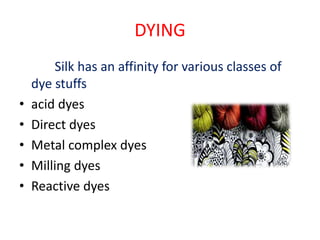
DYING
Silk has an affinity for various classes of
dye stuffs
• acid dyes
• Direct dyes
• Metal complex dyes
• Milling dyes
• Reactive dyes
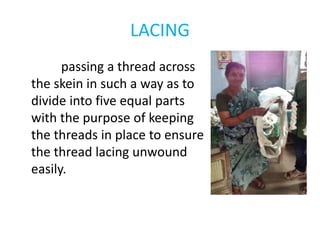
LACING
passing a thread across
the skein in such a way as to
divide into five equal parts
with the purpose of keeping
the threads in place to ensure
the thread lacing unwound
easily.
SKEINING
Twisting of raw silk several
times. A skeining machine or a
turner does skeining.
BOOK MAKING
Twisted skeins are packed
bundles of 2 kgs and they are
known as books. Books are
packed in bales. Indian silk
bales is 20 kgs.
REFERENCES
• lntroduction to silkworm rearing by Japarr Silk
Association, Inc'' Japau ' L96j
• Sericultural malual on silkworm rearitrq b1'S'
Krishnaswami, M'N'Narasimhanna. s.K.
Suryanarayan, atttl S. Kutnararaj, FAO, AgricultLrral
ServiceBulletin. Roarn, 1973

Cocoon harvesting and processing

  • 1.
    COCOON HARVESTING AND PROCESSING AEN301- ECONOMIC ENTOMOLOGY Presented by P.Thirumoorthy M,Sc (Agri),GKVK
  • 3.
    LATE AGE WORMREARING AND COCOON HARVEST 3rd instar Cocoons after harvest Floss layer + CocoonLarva on spinningRipened worms 5th instar4th instar
  • 4.
  • 6.
    Mounting appliances Rotary mountage Plasticcollapsible mountageBamboo chandrike New mountage
  • 7.
  • 8.
    SELECTION OF THECOCOON • Compactness : firm, compact and slightly elastic. • Grain : Coarse granular cocoons make poor reeling. • Weight of the cocoon : Quality of raw silk -reeled. • Shell weight : Higher shell weight greater is the silk yield. • Shell ratio : 12-24 %.
  • 9.
    COCOON STIFLING /DRYING killing the pupa inside the cocoon Purpose : • To avoid the moth emergence and thereby preserving the continuity of the silk filament. • To protect the cocoon quality • To preserve the cocoons for reeling • Dried cocoons can be stored for a longer period without purification and moulds.
  • 10.
    Methods of stifling i)Sun drying ii) Stream stifling Basket steaming Chamber steaming iii) Hot air drying
  • 11.
  • 12.
  • 13.
    COCOON STORAGE • Airspace for ventilation • Humidity should not exceeds 70% • Temperature should be 27oC
  • 14.
    SORTING OF COCOONS •Double cocoons, • crushed and stained cocoons, • cocoons with print of cocooning frame, • flimsy cocoons, • insect damaged cocoons, • thin shelled cocoons, • immature cocoons, • pierced cocoons, are to be removed
  • 15.
    COCOON MIXING /BLENDING producing high-grade raw silk • It ensures speed and uniformity of reeling • To obtain desired effect in raw silk • Ensures a high degree of efficiency of automatic reeling machines
  • 16.
    COCOON COOKING • Pancooking / Single pan cooking: • Three pan cooking • Pressurized cocoon boiling – conveyor cooking
  • 17.
    BRUSHING / DEFLOSSING •Hand brushing • Mechanical brushing
  • 18.
  • 19.
    REELING • Charkha reeling •Cottage basin • Multi end reeling • Automatic reeling machine
  • 20.
    CROISSURE • It isa mechanism of inter twining or crossing of two threads or one thread itself by twisting the threads in a series of spirals during its passage from the threader to the reel. ADVANTAGE • To squeeze out excess water. • To form a round, smooth and compact thread firmly agglutinated with an even coating of sericin.
  • 21.
    REREELING It is totransfer the raw silk reeled on small reels to a large reel 91.5m circumference) to set uniform width, weight and length of the skein. Purpose: • To eliminate gum spots in the reeled silk • To tie up any loose ends to form continuous silk thread. • To ensure smooth and efficient operation during the winding process
  • 22.
    WINDING • To putthe yarn in a long continuous length to suit the weaving processes. It eliminates imperfections such as slubs, weak places, dirt and so on. • Quality of the silk thread in the bobbin is comparatively better than that on the hank.
  • 23.
    REWINDING • Bobbins producedon twisting machine are placed on the rewinding machine and the thread is rewound on to the double flanged bobbins • The rewound bobbins are fed to the warping machine for preparing warp beams .
  • 24.
    DOUBLING Individual threads aredoubled • To avoid unevenness • increase the strength of the yarn. • It is done using doubling machine
  • 25.
    TWISTING Twisting may bedone in single thread • The direction of twist and the twist rate depends on the type of yarn. • Twisted bobbins should be hot set before use (Heat setting/steaming).
  • 26.
    DEGUMMING • Removal ofgum or sericin is termed as degumming. The different methods  Soap and soda method Enzymatic method of degumming
  • 27.
    BLEACHING OF SILK Removalof natural pigmentation • Silk whiteness can be improved by bleaching with reducing agents like hydrosulphite and rongalite or oxidising agents like potassium permanganate, sodium peroxide and hydrogen peroxide. The process of bleaching • Boiling the material concerned for 2 h with 1-2 volumes of hydrogen per oxide concentration with 2g/l sodium silicate followed by a hot wash.
  • 28.
    DYING Silk has anaffinity for various classes of dye stuffs • acid dyes • Direct dyes • Metal complex dyes • Milling dyes • Reactive dyes
  • 29.
    LACING passing a threadacross the skein in such a way as to divide into five equal parts with the purpose of keeping the threads in place to ensure the thread lacing unwound easily.
  • 30.
    SKEINING Twisting of rawsilk several times. A skeining machine or a turner does skeining. BOOK MAKING Twisted skeins are packed bundles of 2 kgs and they are known as books. Books are packed in bales. Indian silk bales is 20 kgs.
  • 31.
    REFERENCES • lntroduction tosilkworm rearing by Japarr Silk Association, Inc'' Japau ' L96j • Sericultural malual on silkworm rearitrq b1'S' Krishnaswami, M'N'Narasimhanna. s.K. Suryanarayan, atttl S. Kutnararaj, FAO, AgricultLrral ServiceBulletin. Roarn, 1973