Know the magic of
Kubernetes with AWS
EKS
AWS User Group Rajkot Leader
Nipun Parekh
CNCF Community Rajkot Leader
Aman Makwana
CNCF Community
Rajkot
Agenda
What is Kubernetes Why Kubernetes?
Features and Architecture of
Kubernetes
Hands-on
01
03
02
04
What is Kubernetes?
Kubernetes is designed Google and currently
maintained by Cloud Native Computing
Foundation(CNCF).
Its and open-source container orchestration
system. And also a CNCF Graduated project.
Also it helps in Automating application
deployment, Scaling and Management.
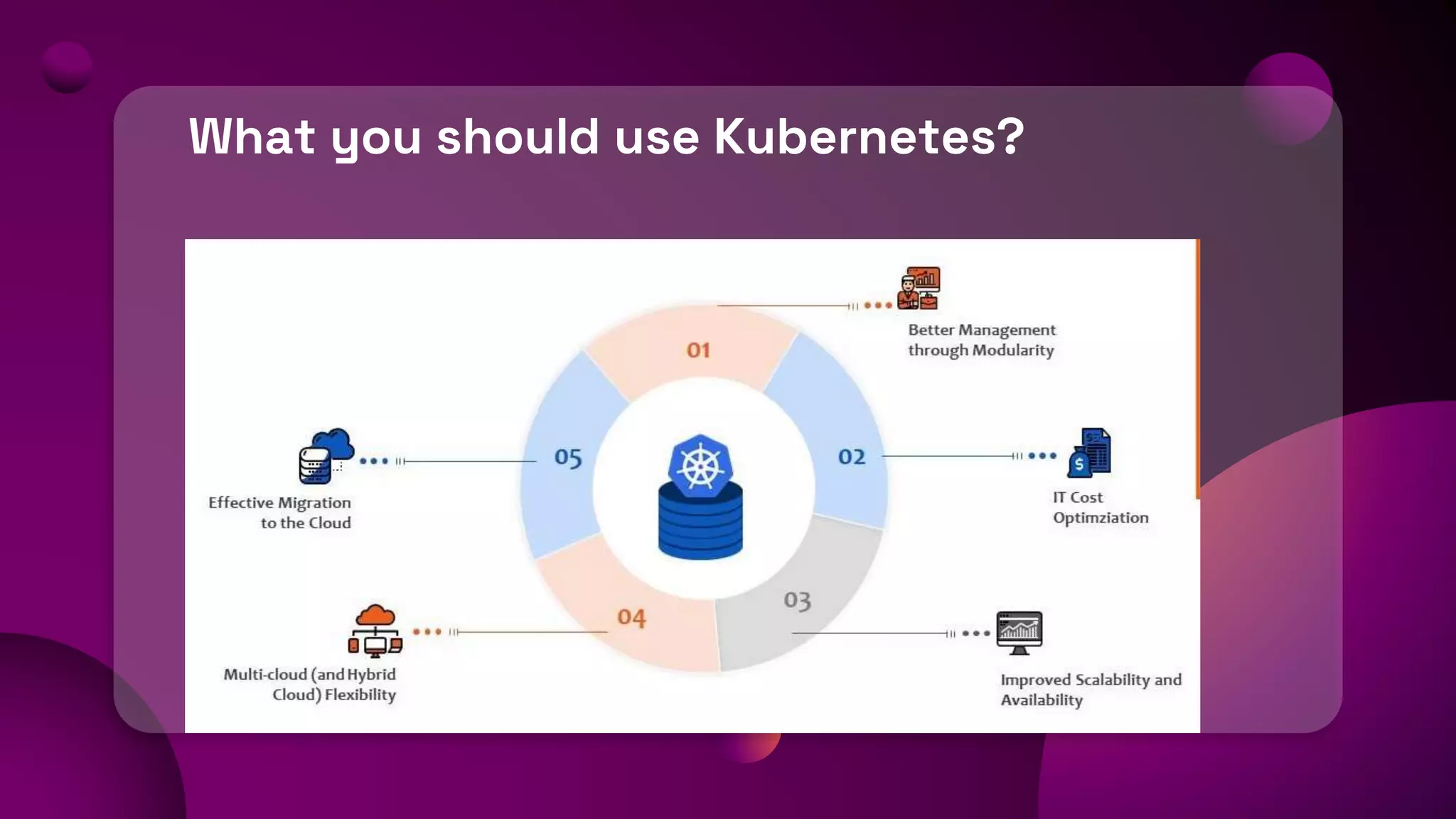
What you should use Kubernetes?
What can kubernetes do?
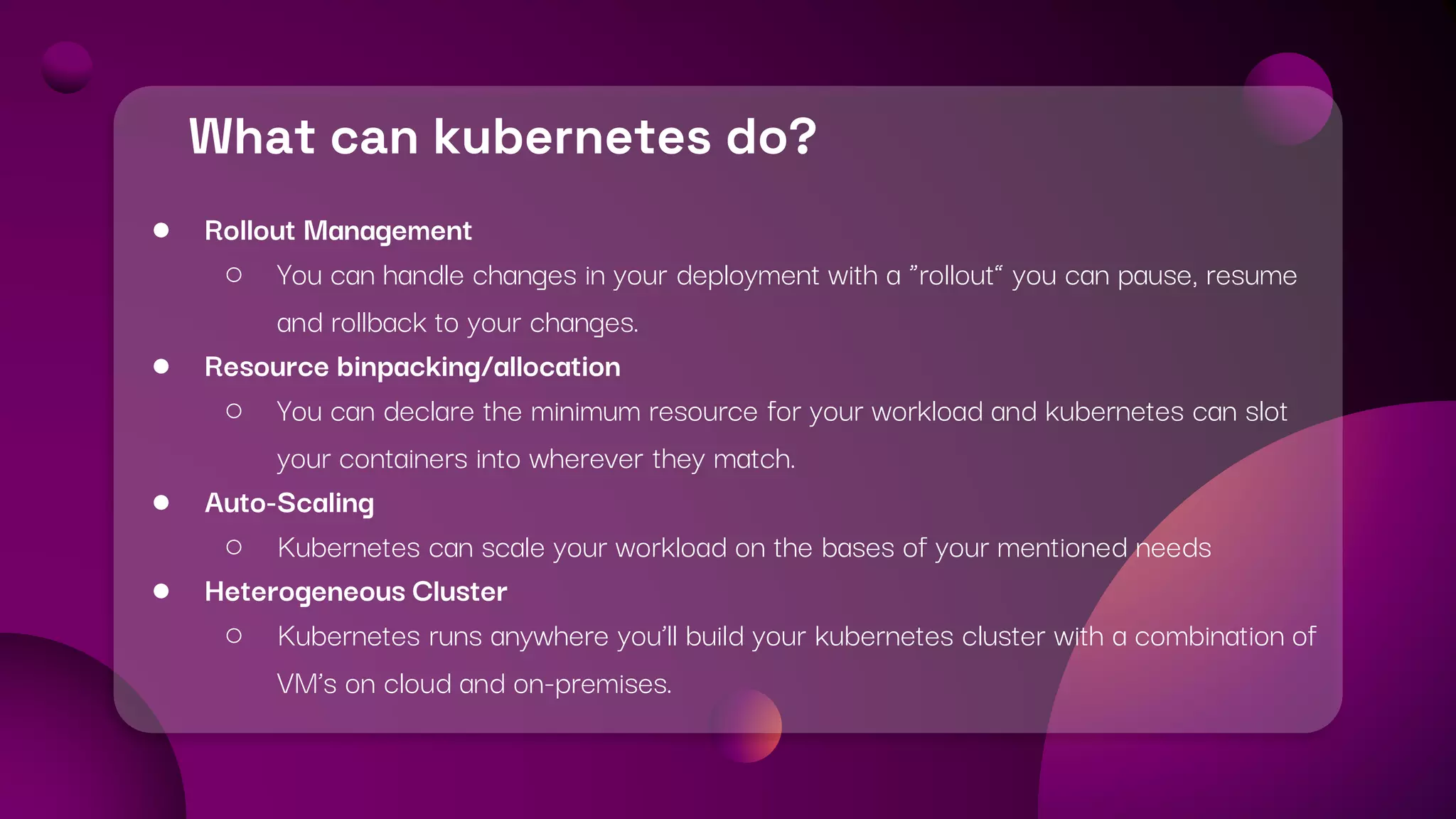
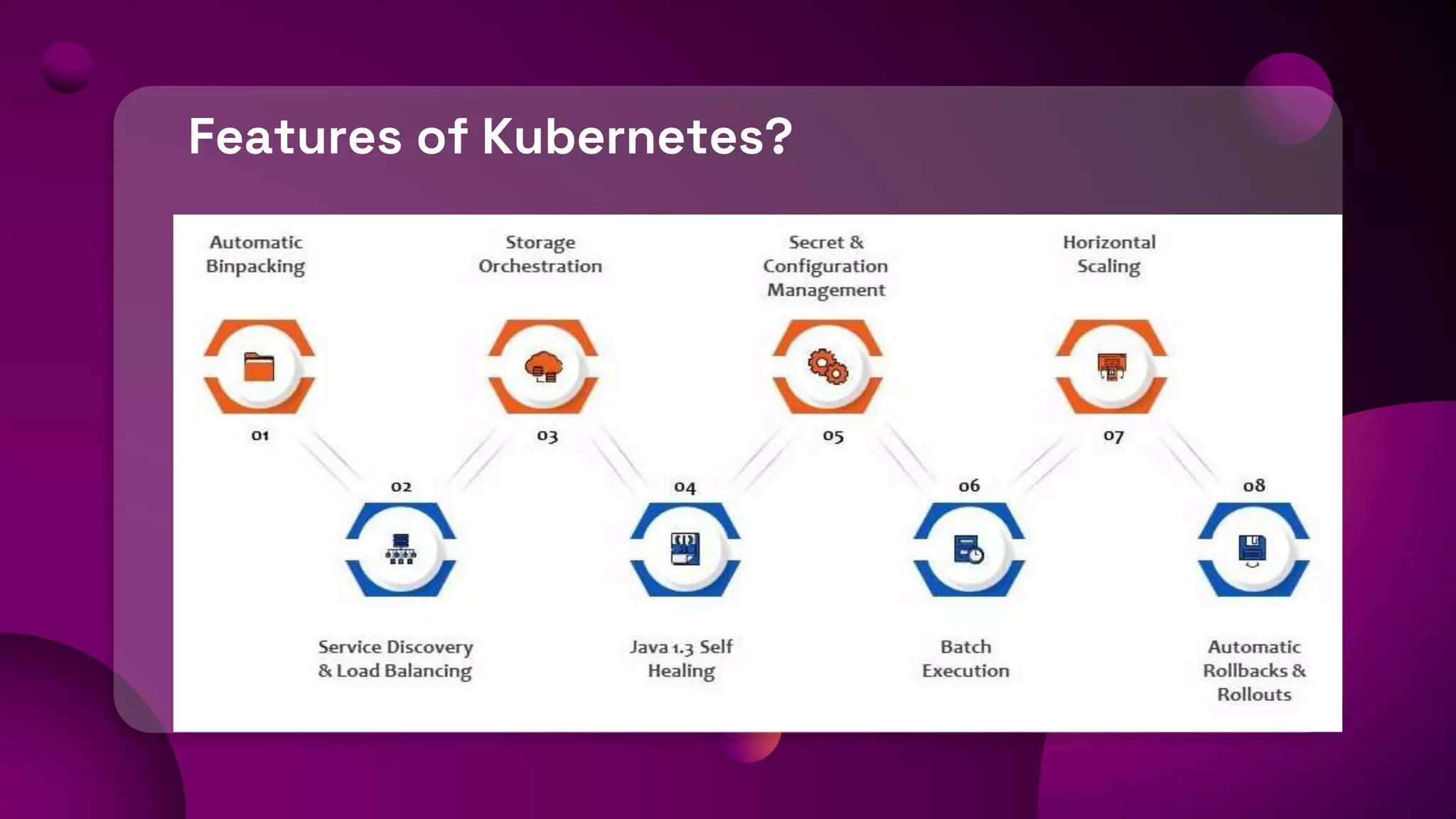
● Rollout Management
○ You can handle changes in your deployment with a “rollout” you can pause, resume
and rollback to your changes.
● Resource binpacking/allocation
○ You can declare the minimum resource for your workload and kubernetes can slot
your containers into wherever they match.
● Auto-Scaling
○ Kubernetes can scale your workload on the bases of your mentioned needs
● Heterogeneous Cluster
○ Kubernetes runs anywhere you’ll build your kubernetes cluster with a combination of
VM’s on cloud and on-premises.
What can kubernetes do?
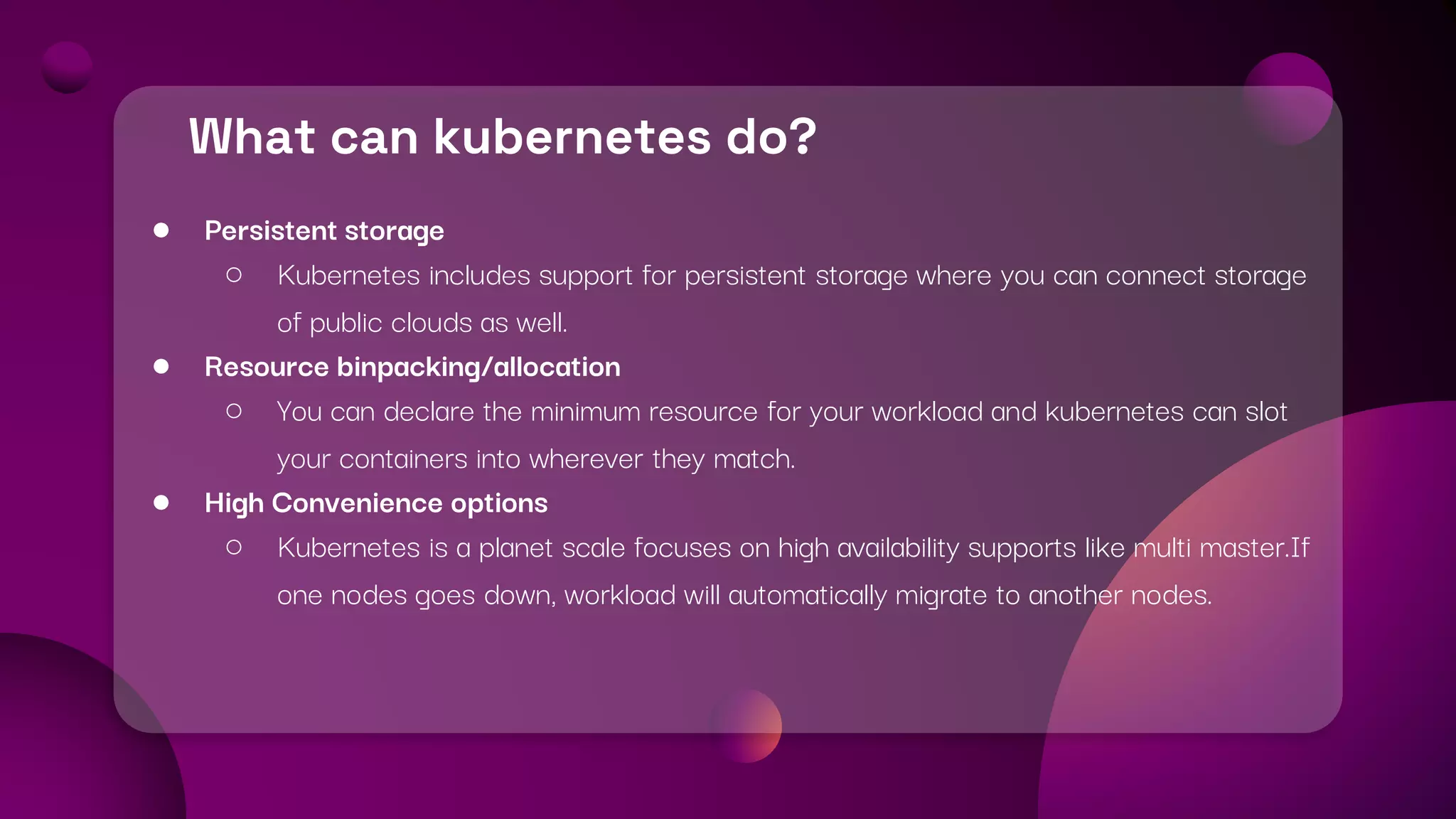
● Persistent storage
○ Kubernetes includes support for persistent storage where you can connect storage
of public clouds as well.
● Resource binpacking/allocation
○ You can declare the minimum resource for your workload and kubernetes can slot
your containers into wherever they match.
● High Convenience options
○ Kubernetes is a planet scale focuses on high availability supports like multi master.If
one nodes goes down, workload will automatically migrate to another nodes.
Features of Kubernetes?
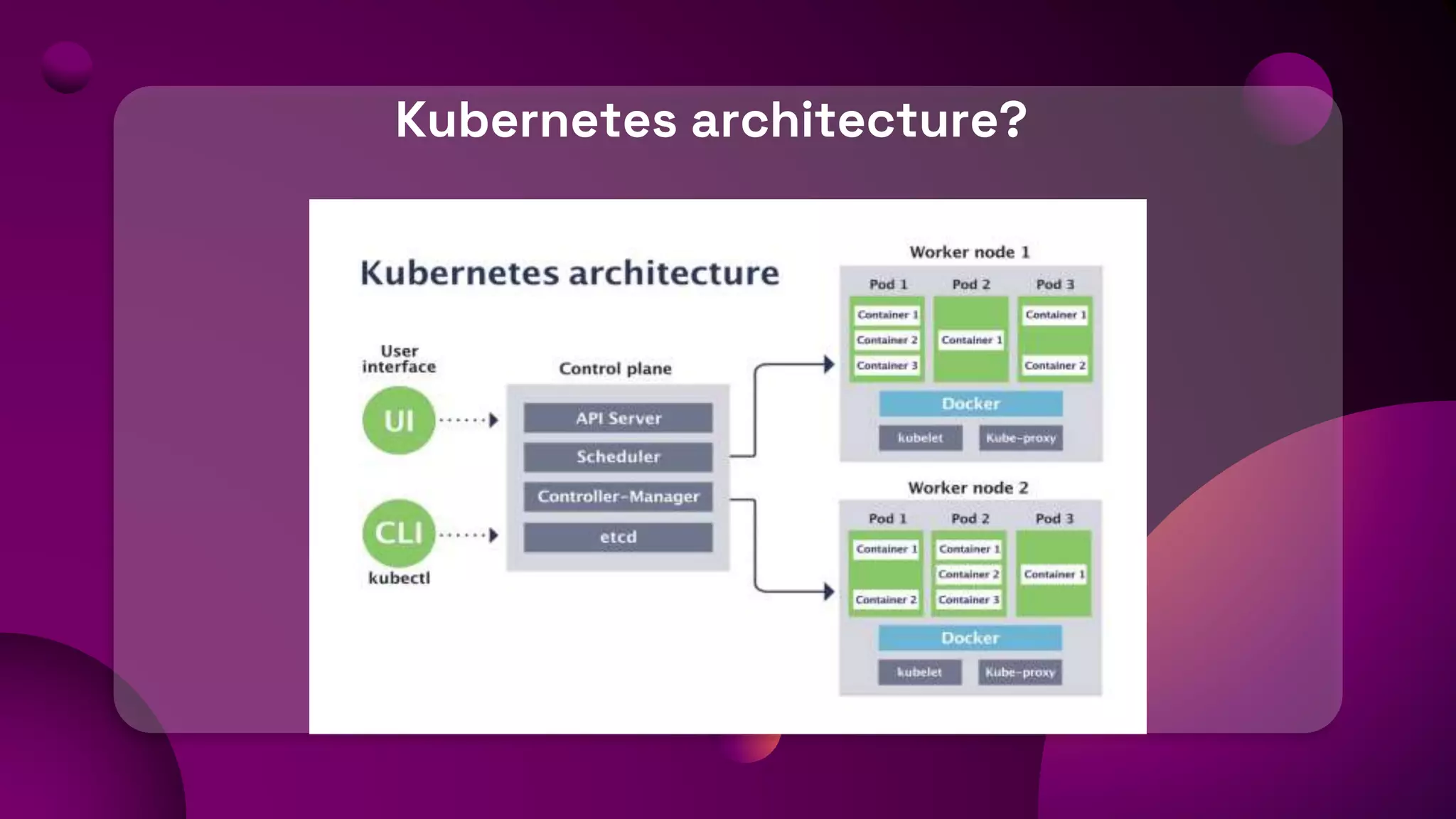
Kubernetes architecture?
Master plane
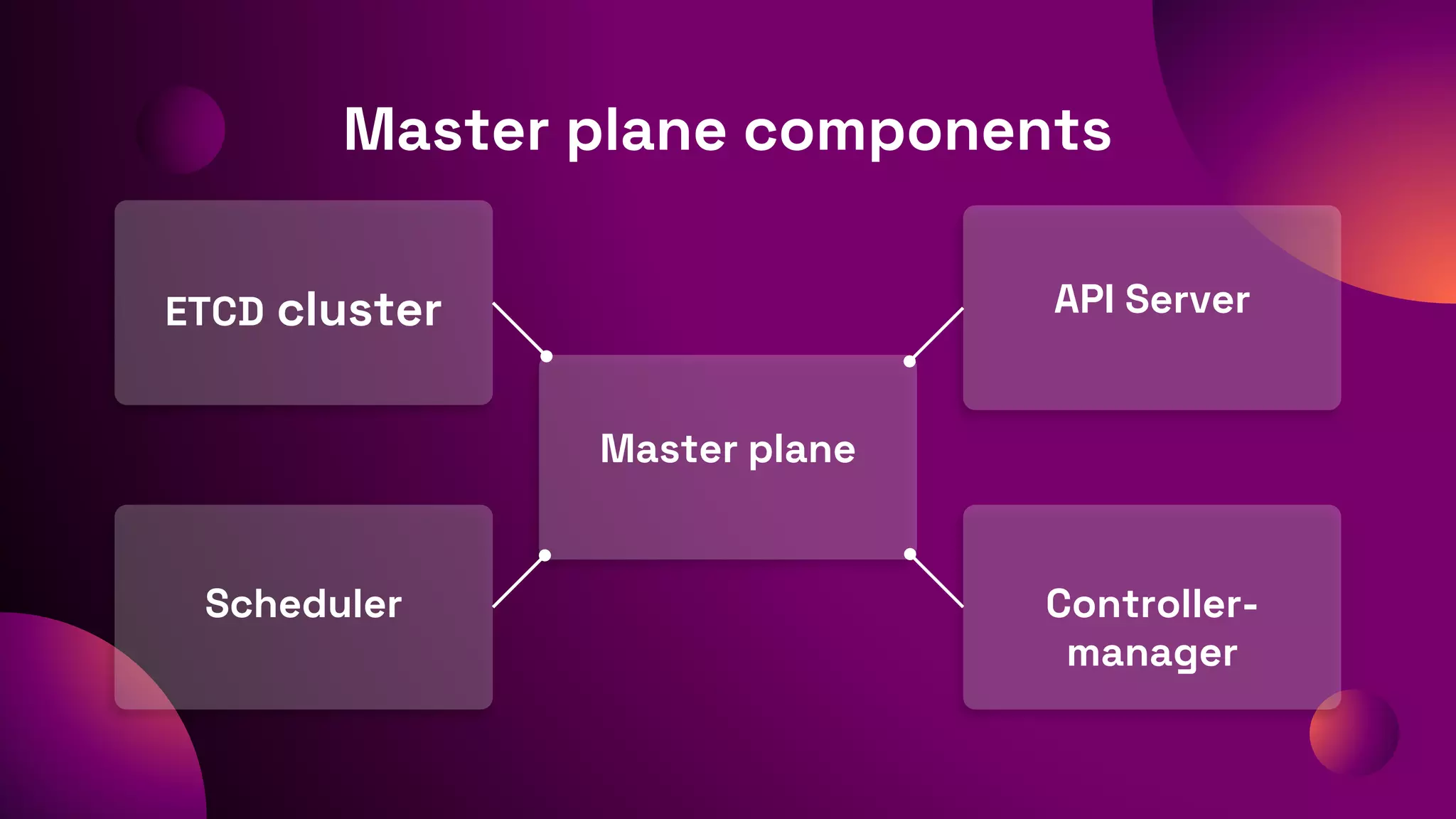
Master plane components
API Server
Controller-
manager
Scheduler
ETCD cluster
ETCD Cluster
ETCD is a consistent and highly-available key value store used as Kubernetes' backing
store for all cluster data.
ETCD stores information regarding the clusters such as Nodes, pods, configs, secrets,
accounts, roles, bindings.
Every info we are getting by kubectl get command is from etcd server any addition or
deletion is updated in etcd cluster.
We can setup etcd in two ways :-> from scratch, from kubeadm(deploys the etcd
server as pod)
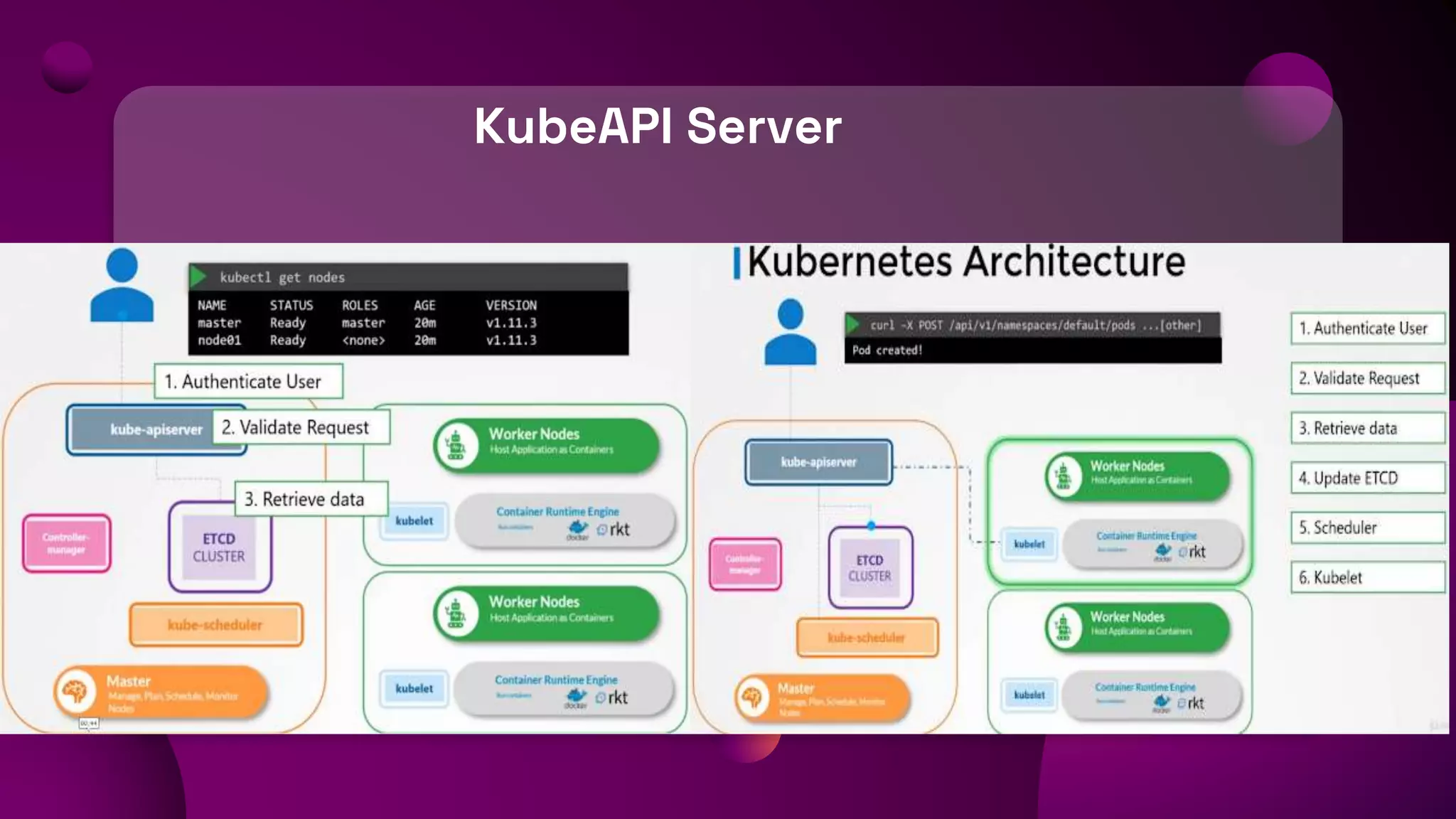
KubeAPI Server
The Kubernetes API server validates and configures data for the api objects which
include pods, services, replicationcontrollers, and others.
The API Server services REST operations and provides the frontend to the cluster's
shared state through which all other components interact.
It's the primary service that orchestrates the components of Kubernetes.
KubeAPI Server
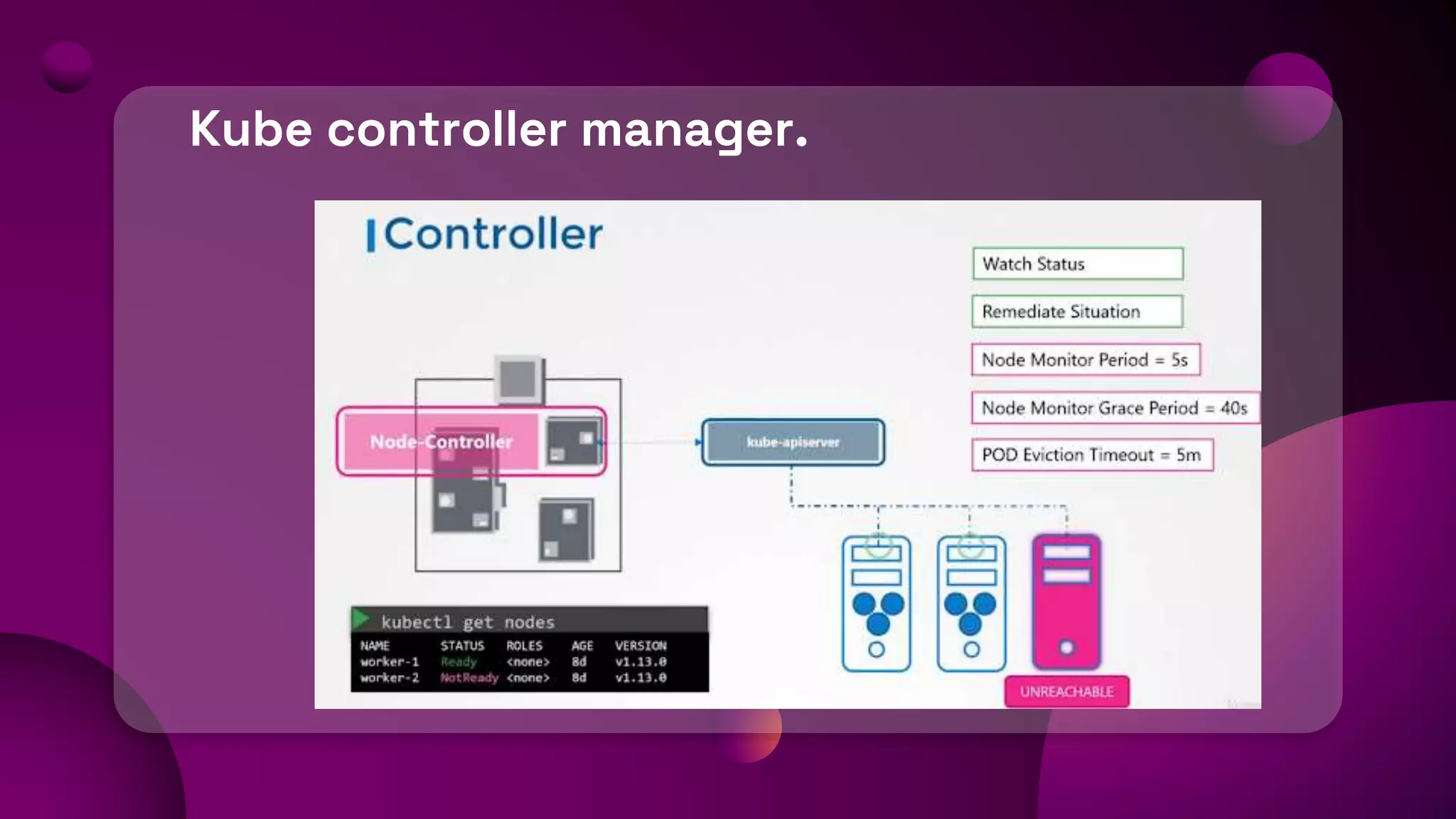
Kube controller manager.
It manages various controllers in Kubernetes. Controllers are control loops that
continuously watch the state of your cluster, then make or request changes where
needed. Each controller tries to move the current cluster state closer to the desired
state.
Controllers continuously talk to the kube-apiserver and the kube-apiserver receives all
information of nodes through Kubelet.
Kube controller manager.
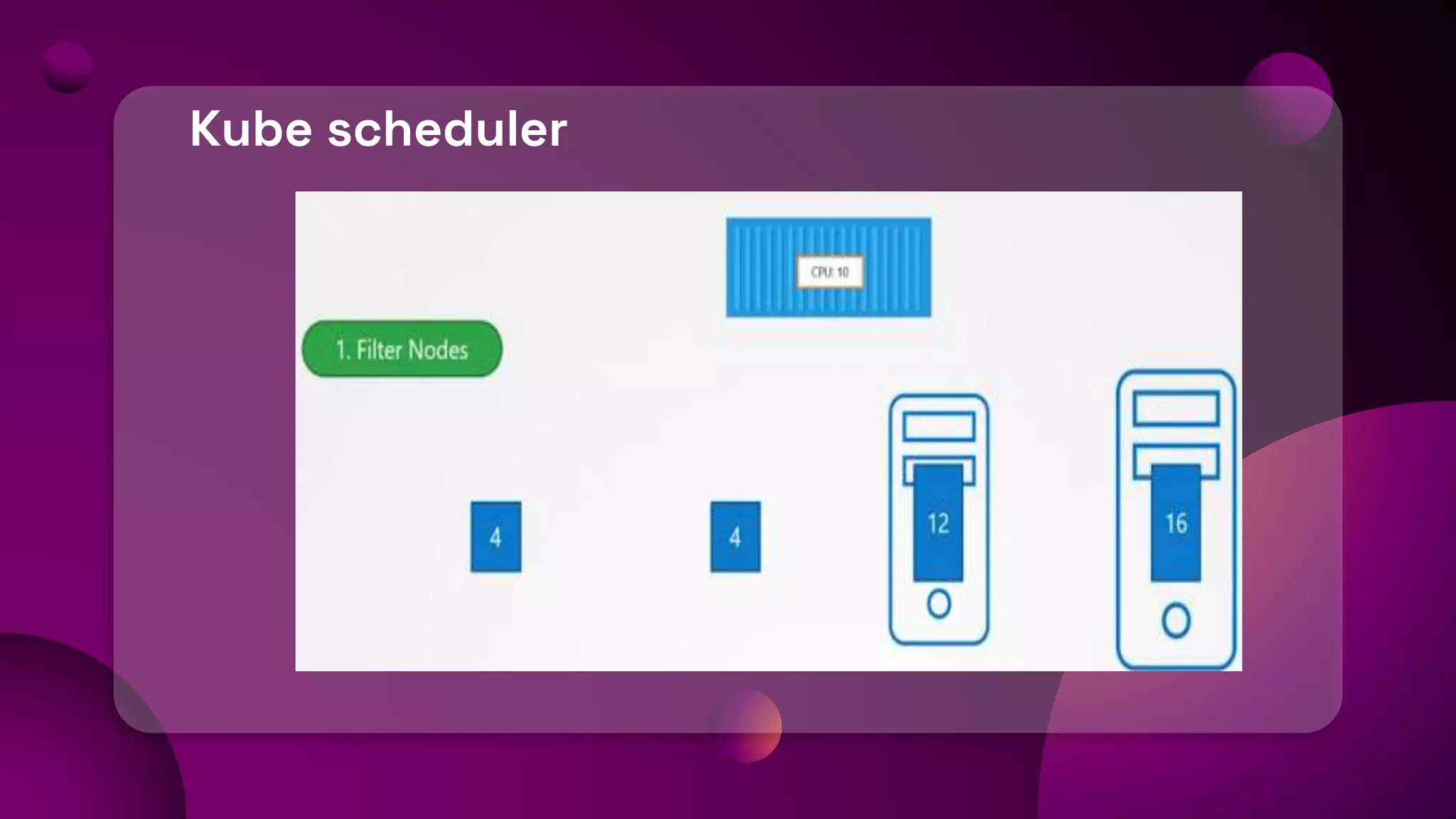
Kube scheduler
The Kubernetes scheduler is a control plane process which assigns Pods to Nodes.
The scheduler determines which Nodes are valid placements for each Pod in the
scheduling queue according to constraints and available resources. The scheduler then
ranks each valid Node and binds the Pod to a suitable Node.
Kube scheduler
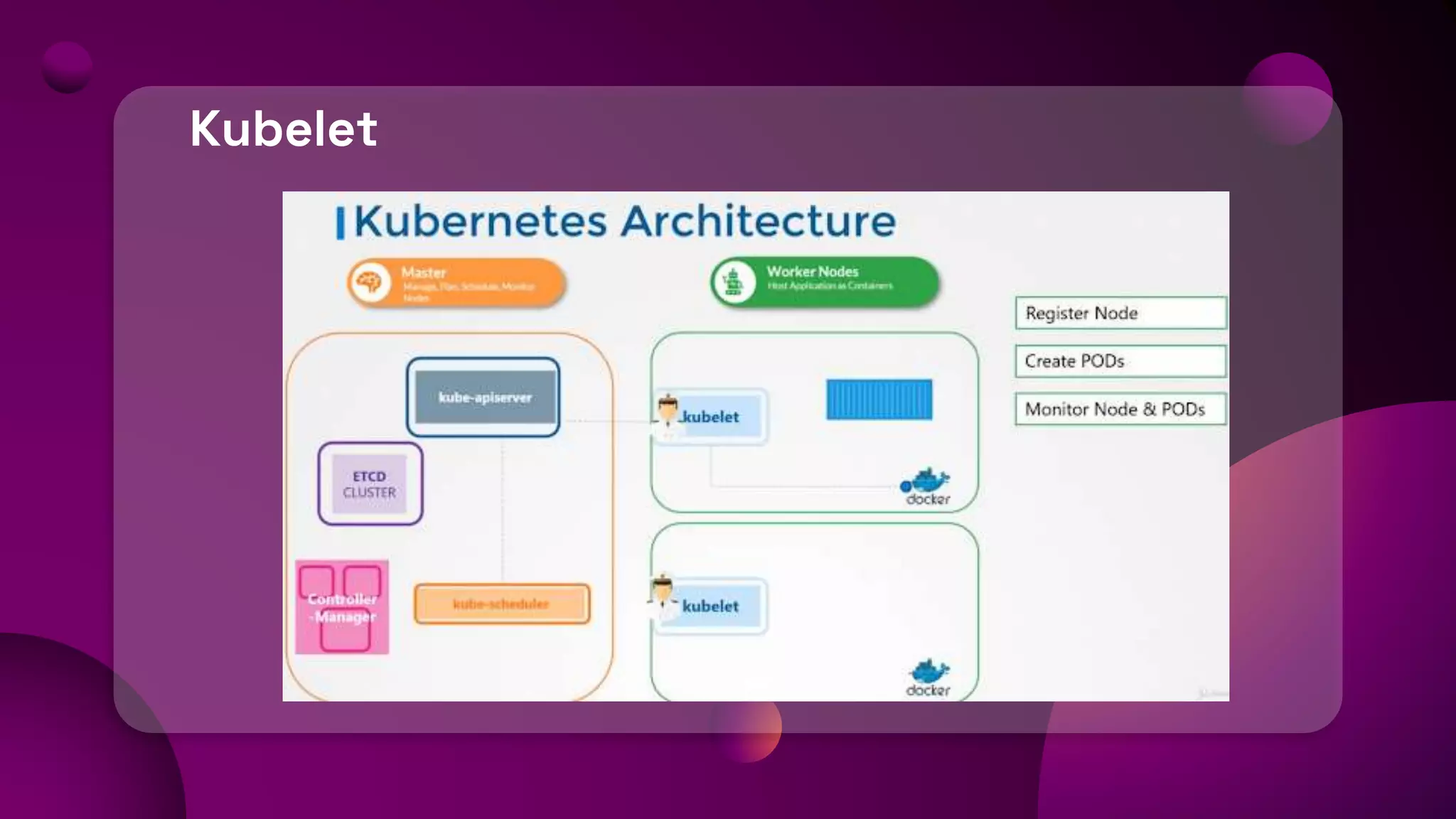
Kubelet
The kubelet is the primary "node agent" that runs on each node. It can register the node
with the apiserver using one of: the hostname; a flag to override the hostname; or
specific logic for a cloud provider.
Ensures that desires number of pods are up and healthy all the time as per the
PodsSpec given by users.
Kubelet
Hands on..
Any Questions?
Thank you!

CNCF Rajkot group- Know the magic of kubernetes with AWS EKS

  • 1.
    Know the magicof Kubernetes with AWS EKS
  • 2.
    AWS User GroupRajkot Leader Nipun Parekh
  • 3.
    CNCF Community RajkotLeader Aman Makwana
  • 4.
  • 5.
    Agenda What is KubernetesWhy Kubernetes? Features and Architecture of Kubernetes Hands-on 01 03 02 04
  • 6.
    What is Kubernetes? Kubernetesis designed Google and currently maintained by Cloud Native Computing Foundation(CNCF). Its and open-source container orchestration system. And also a CNCF Graduated project. Also it helps in Automating application deployment, Scaling and Management.
  • 7.
    What you shoulduse Kubernetes?
  • 8.
    What can kubernetesdo? ● Rollout Management ○ You can handle changes in your deployment with a “rollout” you can pause, resume and rollback to your changes. ● Resource binpacking/allocation ○ You can declare the minimum resource for your workload and kubernetes can slot your containers into wherever they match. ● Auto-Scaling ○ Kubernetes can scale your workload on the bases of your mentioned needs ● Heterogeneous Cluster ○ Kubernetes runs anywhere you’ll build your kubernetes cluster with a combination of VM’s on cloud and on-premises.
  • 9.
    What can kubernetesdo? ● Persistent storage ○ Kubernetes includes support for persistent storage where you can connect storage of public clouds as well. ● Resource binpacking/allocation ○ You can declare the minimum resource for your workload and kubernetes can slot your containers into wherever they match. ● High Convenience options ○ Kubernetes is a planet scale focuses on high availability supports like multi master.If one nodes goes down, workload will automatically migrate to another nodes.
  • 10.
  • 11.
  • 12.
    Master plane Master planecomponents API Server Controller- manager Scheduler ETCD cluster
  • 13.
    ETCD Cluster ETCD isa consistent and highly-available key value store used as Kubernetes' backing store for all cluster data. ETCD stores information regarding the clusters such as Nodes, pods, configs, secrets, accounts, roles, bindings. Every info we are getting by kubectl get command is from etcd server any addition or deletion is updated in etcd cluster. We can setup etcd in two ways :-> from scratch, from kubeadm(deploys the etcd server as pod)
  • 14.
    KubeAPI Server The KubernetesAPI server validates and configures data for the api objects which include pods, services, replicationcontrollers, and others. The API Server services REST operations and provides the frontend to the cluster's shared state through which all other components interact. It's the primary service that orchestrates the components of Kubernetes.
  • 15.
  • 16.
    Kube controller manager. Itmanages various controllers in Kubernetes. Controllers are control loops that continuously watch the state of your cluster, then make or request changes where needed. Each controller tries to move the current cluster state closer to the desired state. Controllers continuously talk to the kube-apiserver and the kube-apiserver receives all information of nodes through Kubelet.
  • 17.
  • 18.
    Kube scheduler The Kubernetesscheduler is a control plane process which assigns Pods to Nodes. The scheduler determines which Nodes are valid placements for each Pod in the scheduling queue according to constraints and available resources. The scheduler then ranks each valid Node and binds the Pod to a suitable Node.
  • 19.
  • 20.
    Kubelet The kubelet isthe primary "node agent" that runs on each node. It can register the node with the apiserver using one of: the hostname; a flag to override the hostname; or specific logic for a cloud provider. Ensures that desires number of pods are up and healthy all the time as per the PodsSpec given by users.
  • 21.
  • 22.
  • 23.
  • 24.