• What is computing?
The process of utilizing computer technology to complete a task.
Computing may involve computer hardware and/or software, but must involve some form of a computer system.
• What is paradigms?
A style or a way of doing something.
A set of practices to be followed to accomplish a task.
• Computing Paradigms
In the domain of computing, there are many different standard practices being followed based on inventions and technological advancements.
Computing Paradigms
• The various computing paradigms:
~ High performance computing,
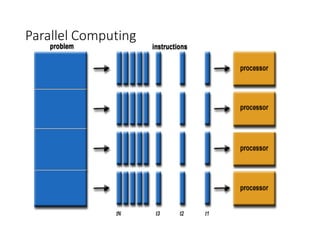
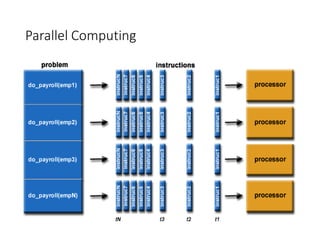
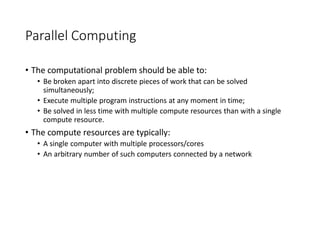
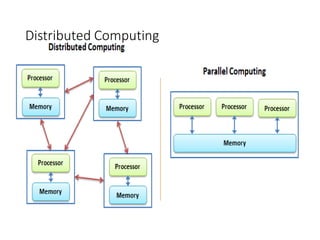
~ Parallel computing
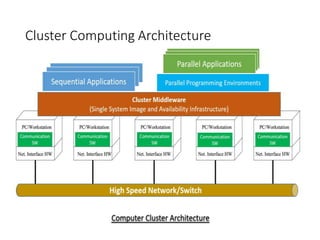
~ Cluster computing,
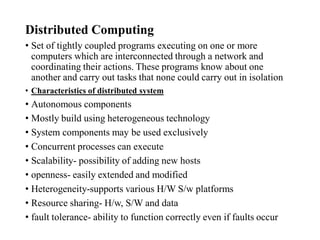
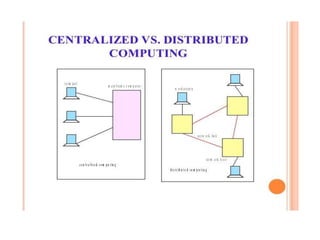
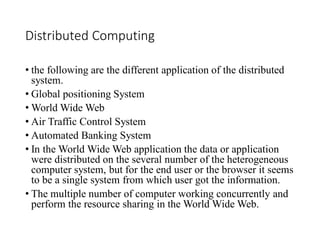
~ Distributed computing
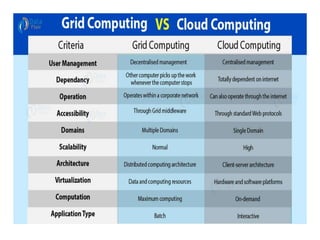
Grid computing,
~ Cloud computing,
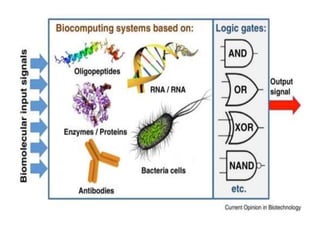
~ Bio-computing,
~ Mobile computing,
~ Quantum computing,
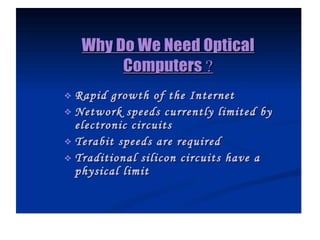
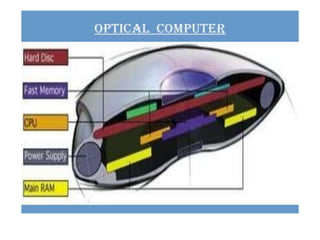
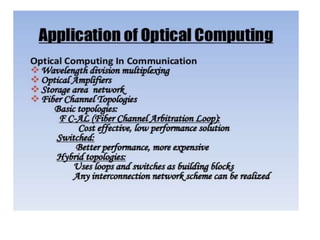
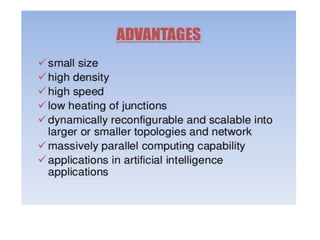
~ Optical computing,
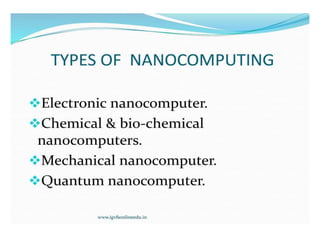
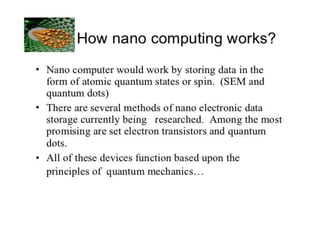
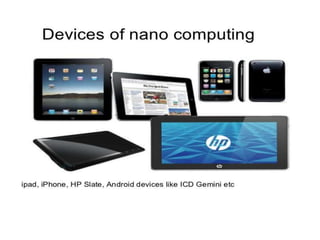
~ Nano computing.
• High Performance Computing
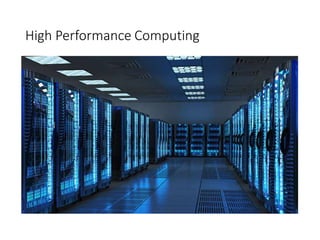
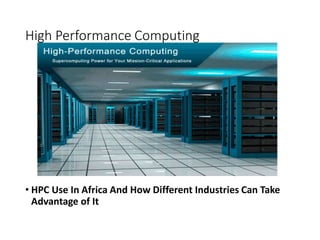
• In high-performance computing systems, a pool of processors are connected with other resources like memory, storage, and input and output devices, and the deployed software is enabled to run in the entire system of connected components.
• The processor machines can be of homogeneous or heterogeneous type.
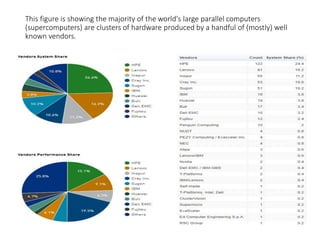
• The legacy meaning of high-performance computing (HPC) is the supercomputers; however, it is not true in present-day computing scenarios.
• Thus, examples of HPC include a small cluster of desktop computers or personal computers (PCs) to the fastest supercomputers.
• HPC systems are normally found in those applications where it is required to use or solve scientific problems.
• Most of the time, the challenge in working with these kinds of problems is to perform suitable simulation study, and this can be accomplished by HPC without any difficulty.
• Scientific examples such as protein folding in molecular biology and studies on developing models and applications based on nuclear fusion are worth noting as potential applications for HPC.