





IMF + Dalet xN Solutions
Media Workflows in the Cloud
Reimagining Media
IMF – The Interoperable Mastering Format
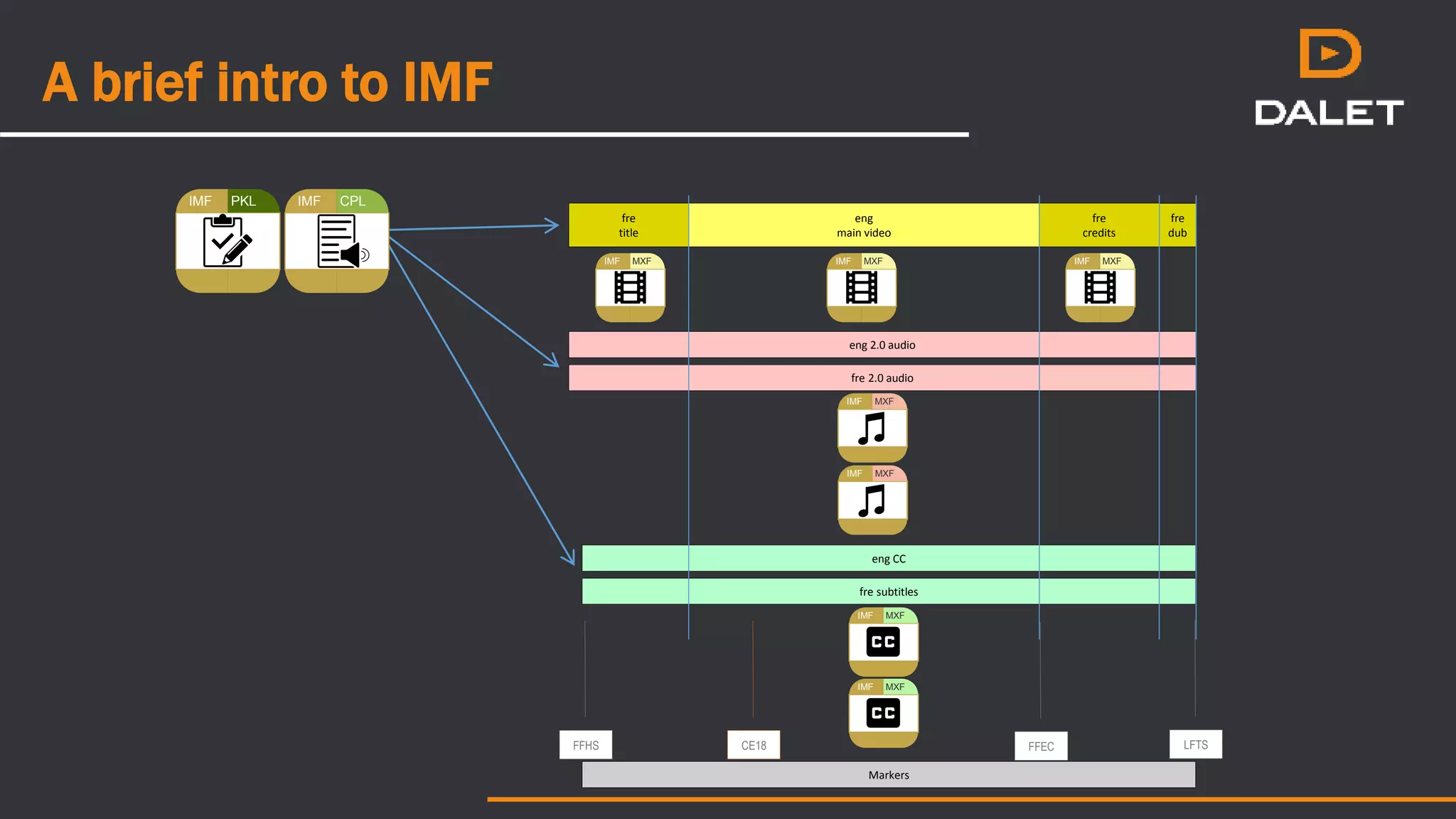
A brief intro to IMF
fre
title
eng
main video
fre
credits
eng 2.0 audio
eng CC
fre
dub
fre 2.0 audio
fre subtitles
Markers
FFHS FFEC LFTSCE18
IMF CPL
IMF MXF IMF MXF IMF MXF
IMF MXF
IMF MXF
IMF MXF
IMF MXF
IMF PKL
An IMF sample
fre
title
eng
main video
fre
credits
eng 2.0 audio
eng CC
fre
dub
fre 2.0 audio
fre subtitles
Markers
FFHS FFEC LFTSCE18
IMF CPL
IMF MXF IMF MXF IMF MXF
IMF MXF
IMF MXF
IMF MXF
IMF MXF
IMF PKL
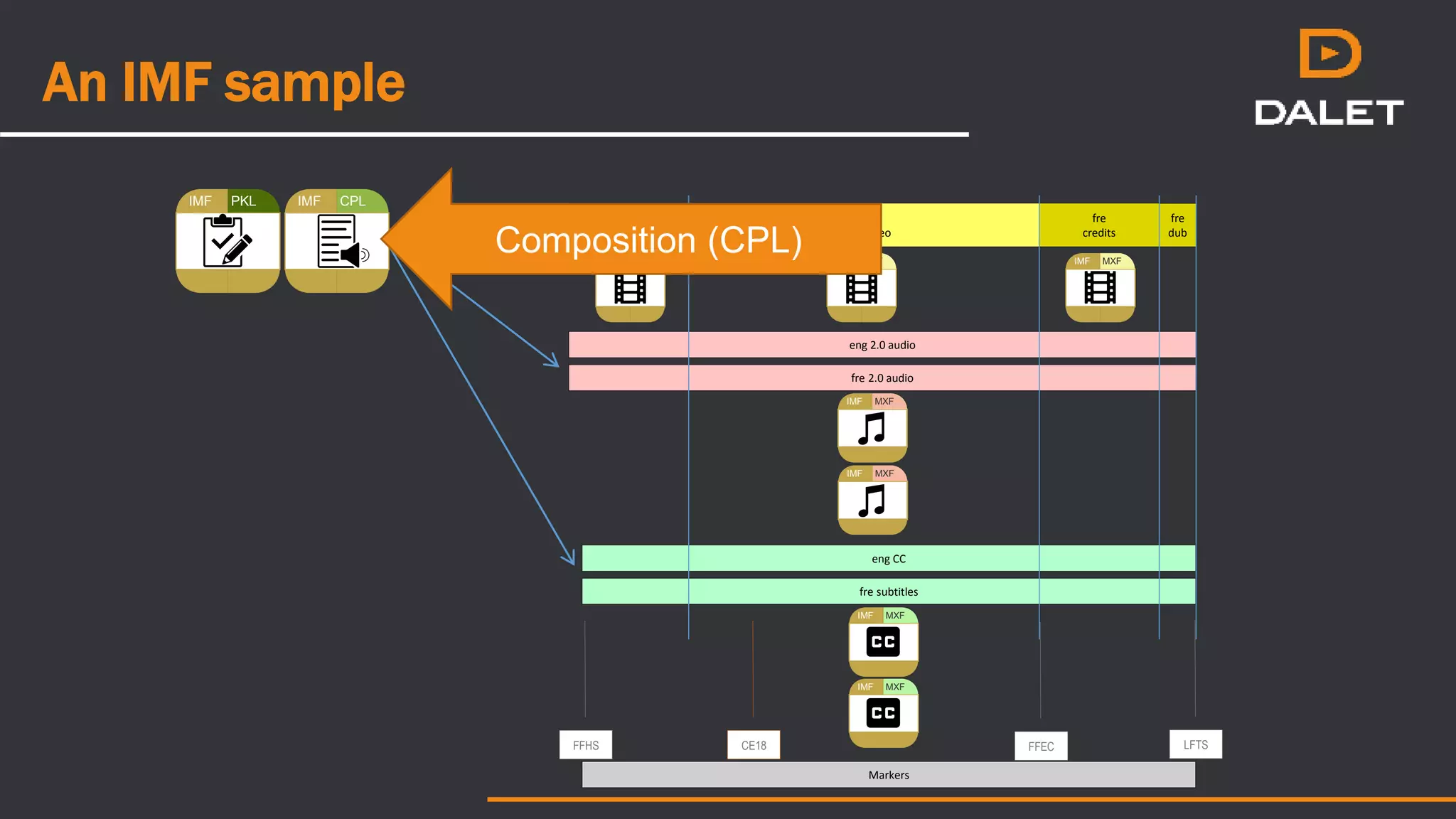
Composition (CPL)
An IMF sample
fre
title
eng
main video
fre
credits
eng 2.0 audio
eng CC
fre
dub
fre 2.0 audio
fre subtitles
Markers
FFHS FFEC LFTSCE18
IMF CPL
IMF MXF IMF MXF IMF MXF
IMF MXF
IMF MXF
IMF MXF
IMF MXF
IMF PKL
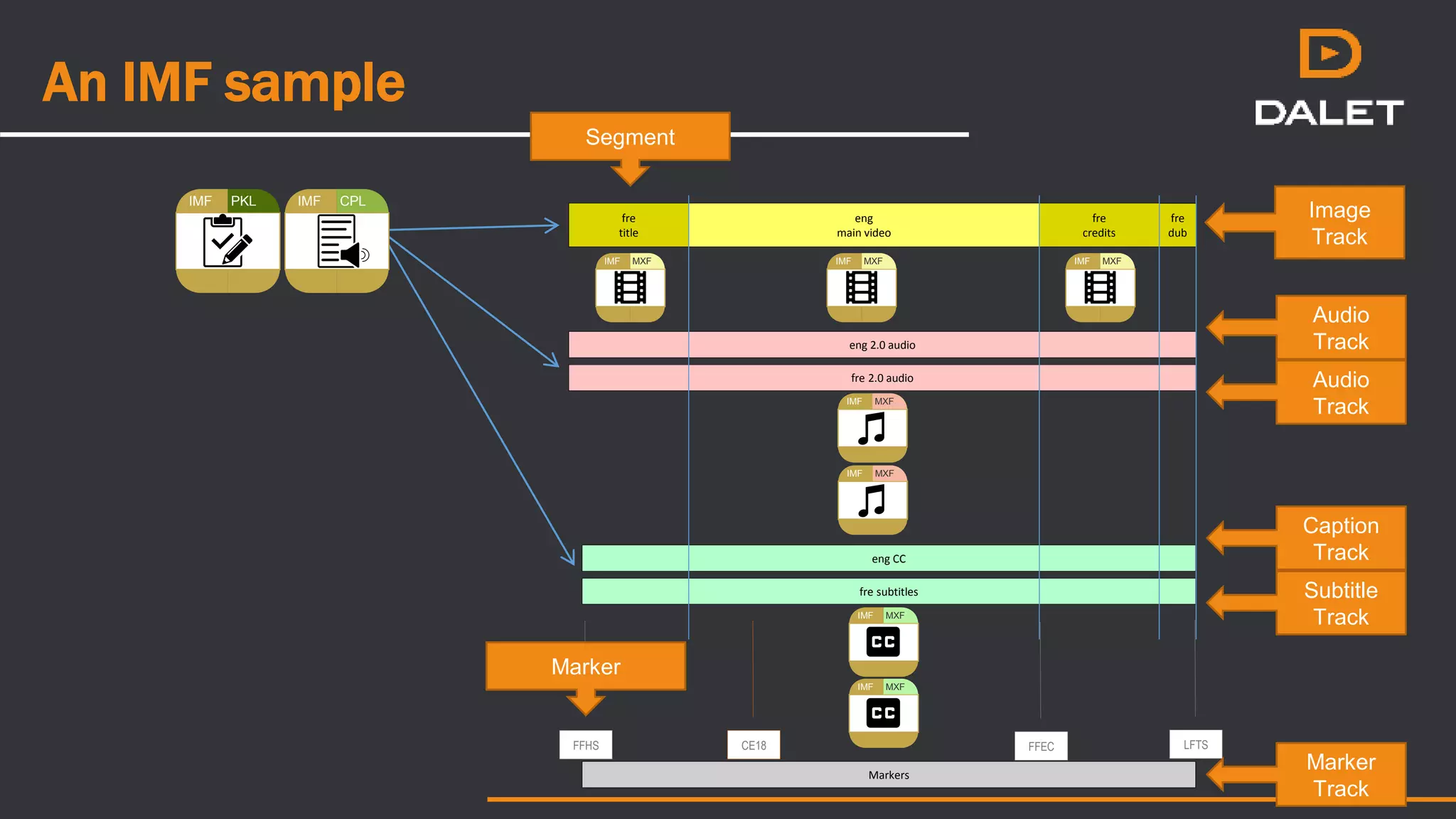
Segment
Marker
Image
Track
Audio
Track
Audio
Track
Subtitle
Track
Caption
Track
Marker
Track
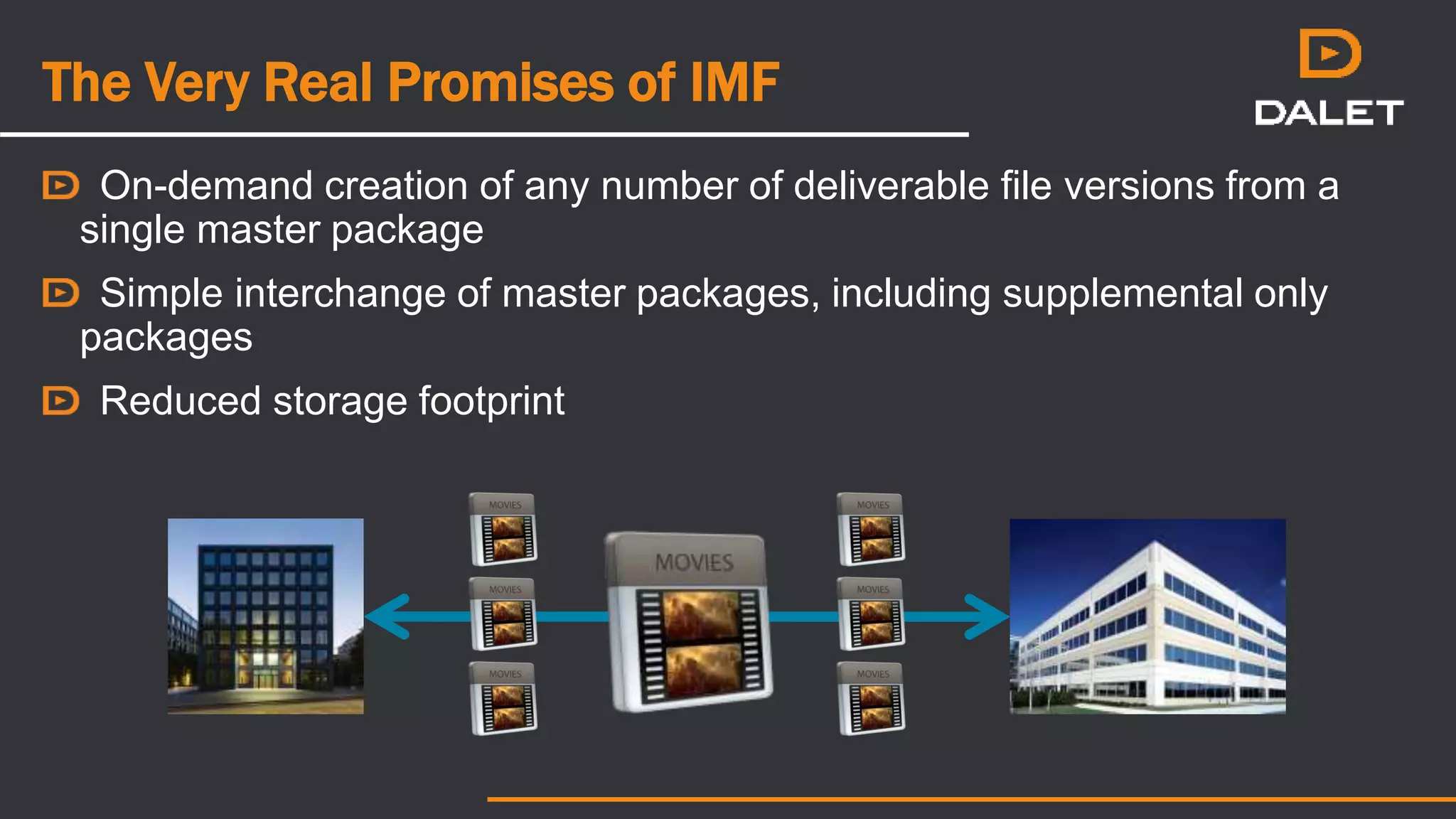
The Very Real Promises of IMF
On-demand creation of any number of deliverable file versions from a
single master package
Simple interchange of master packages, including supplemental only
packages
Reduced storage footprint
Reimagining The Media Enterprise
Introducing Dalet xN Solutions
Beyond replicating existing infrastructures and media workflows,
Dalet xN Solutions provide new business and technological possibilities
brought about through the advancement of
virtualization, dynamic scalability and flexible deployment locations
We are expanding opportunities and increasing effectiveness
in the Media Economy.
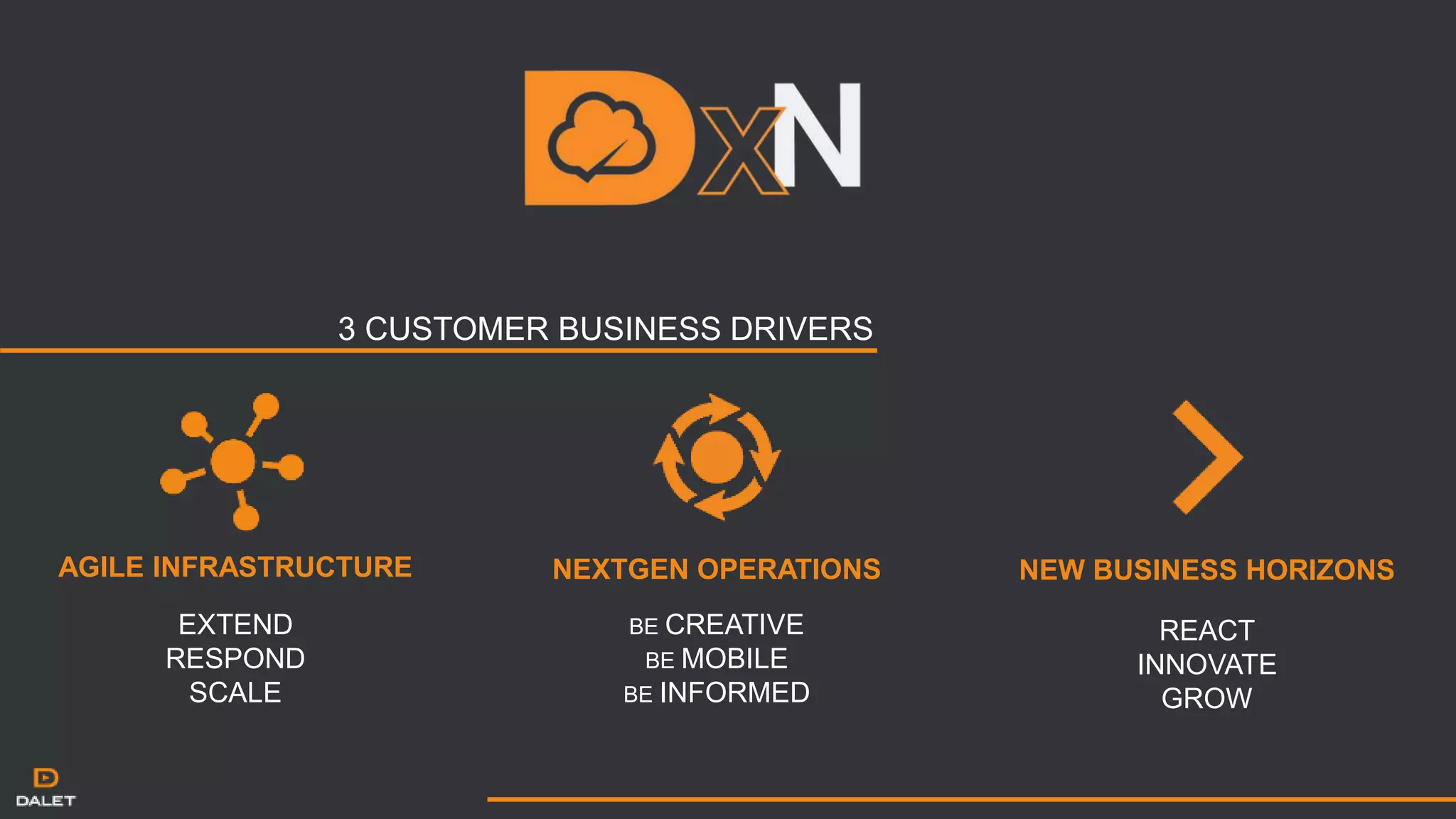
3 CUSTOMER BUSINESS DRIVERS
AGILE INFRASTRUCTURE NEXTGEN OPERATIONS NEW BUSINESS HORIZONS
EXTEND
RESPOND
SCALE
BE CREATIVE
BE MOBILE
BE INFORMED
REACT
INNOVATE
GROW
3 different approaches
HYBRID
OPERATIONS
NATIVE
CLOUD
EDGE CLOUD
SOLUTIONS
Using IaaS to bring flexibility
End-to-end workflows
in the cloud
Sub workflows moved to the cloud
Marketplace Apps
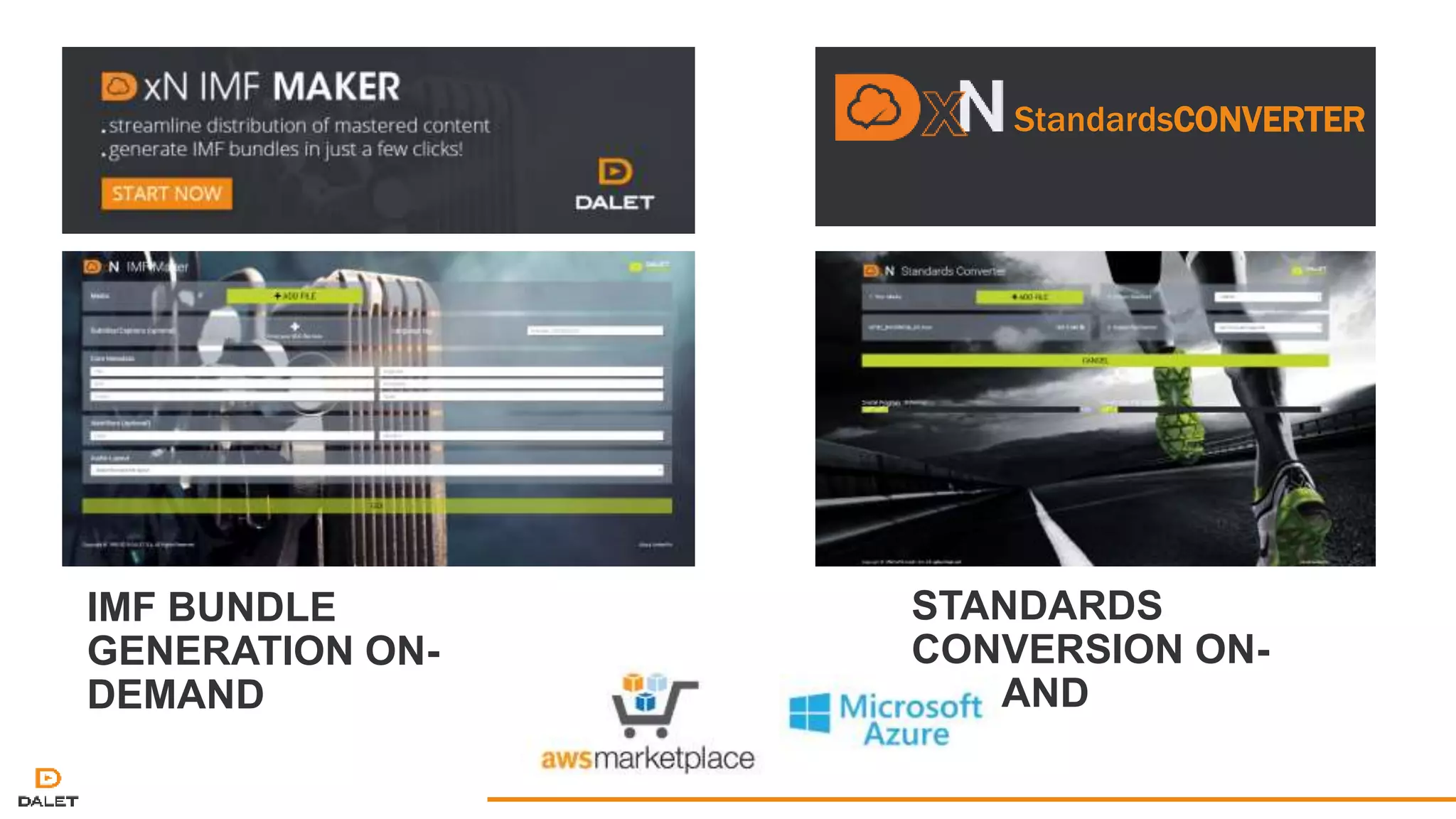
Initial Marriage of xN + IMF
IMF BUNDLE
GENERATION ON-
DEMAND
STANDARDS
CONVERSION ON-
DEMAND
StandardsCONVERTER
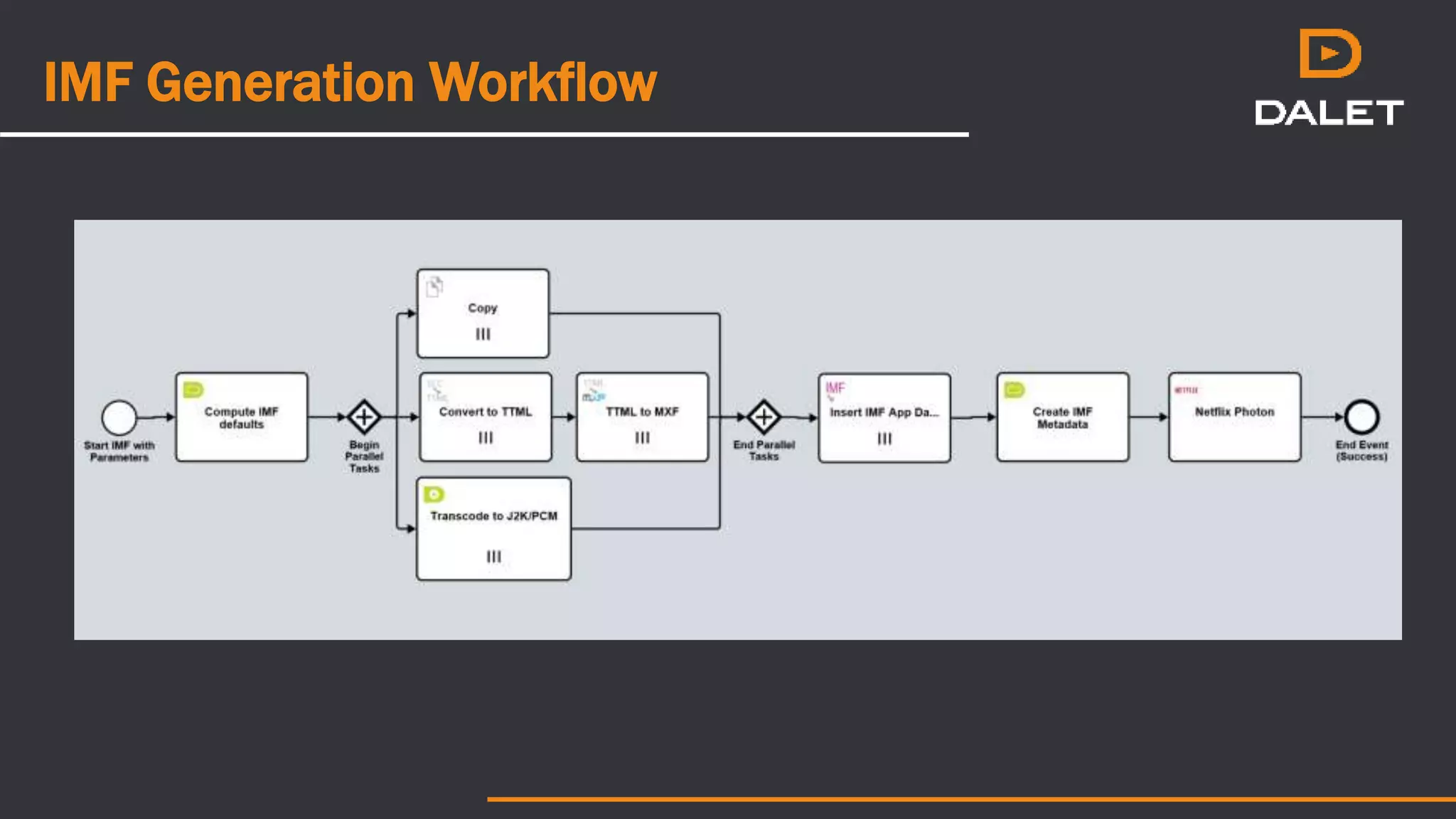
IMF Generation Workflow
Beyond IMF Generation
Dalet xN Solutions in practice
IMF Today
IMF Today
The Very Real Problems
No inherent linking between the OV and supplemental packages
No defined naming convention for IMP folders
Difficulty in tracking the intended use of the package
Difficulty in the discovery of packages
Categorizing The Problems
1. Sheer volume
2. Retaining a link between the OV & supplemental packages for a given
title
A
A
?
A
A
A
A
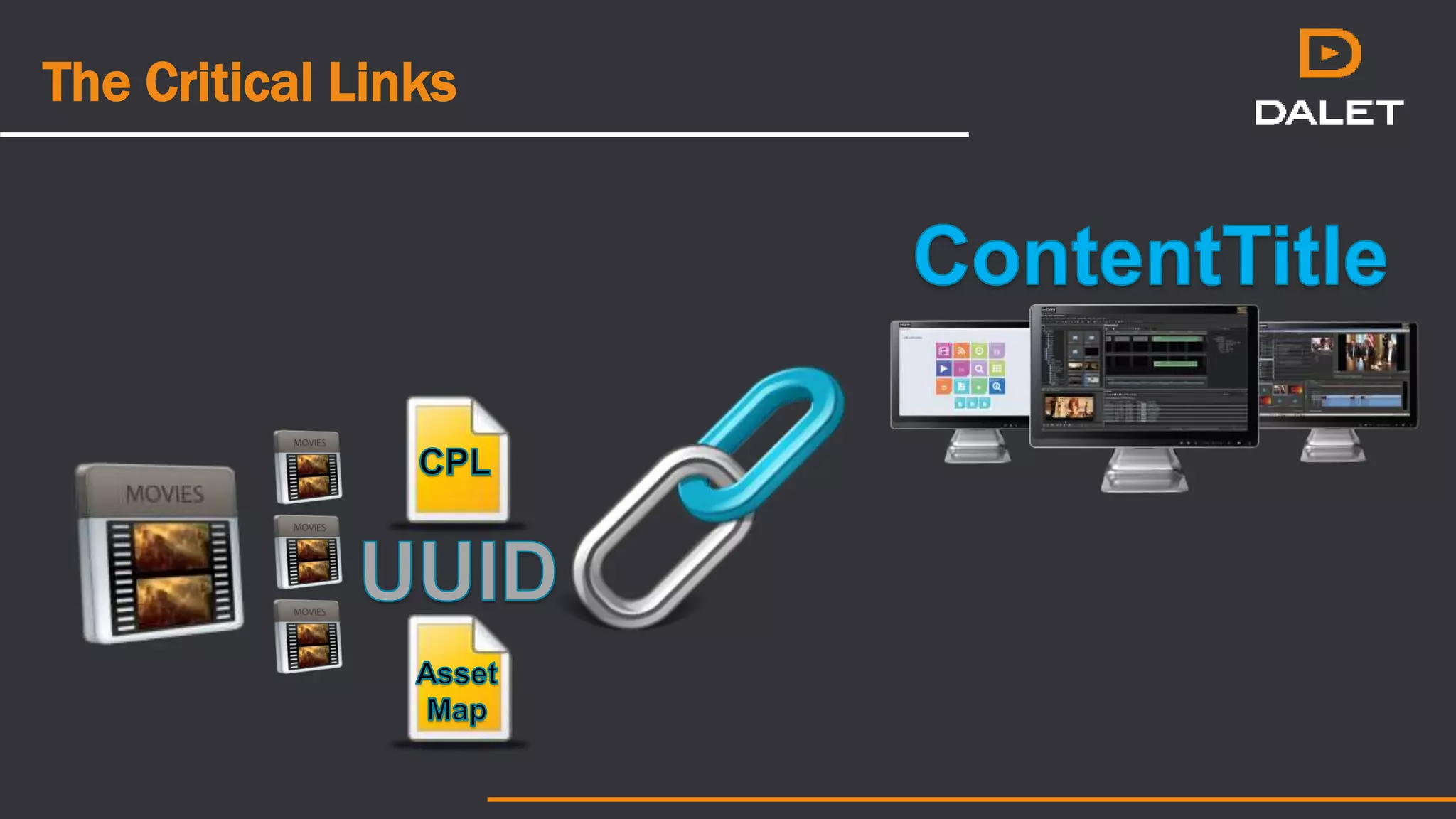
The Critical Links
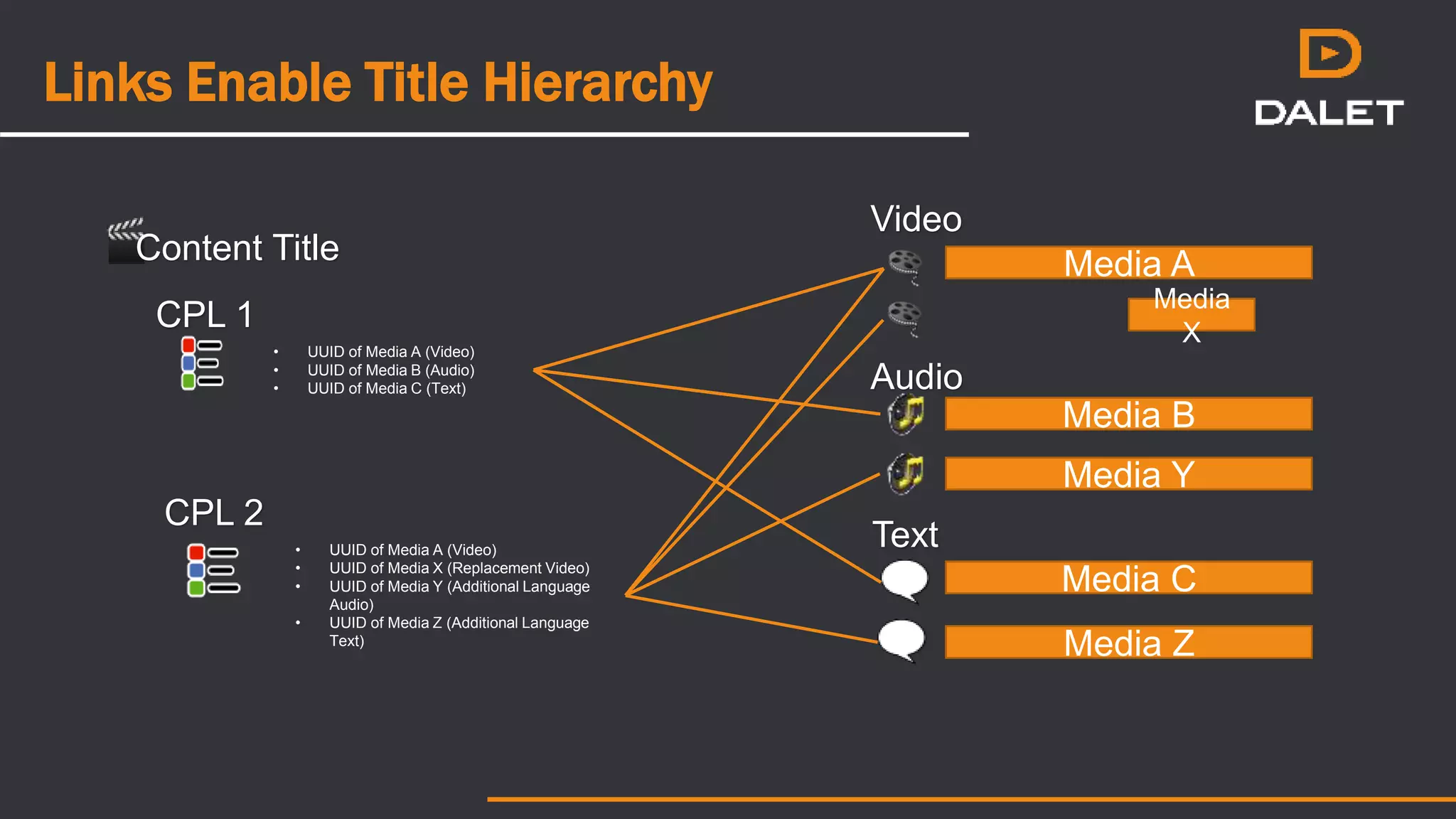
Links Enable Title Hierarchy
Content Title Media A
Media
X
Video
Media B
Media Y
Audio
CPL 1
• UUID of Media A (Video)
• UUID of Media B (Audio)
• UUID of Media C (Text)
CPL 2
• UUID of Media A (Video)
• UUID of Media X (Replacement Video)
• UUID of Media Y (Additional Language
Audio)
• UUID of Media Z (Additional Language
Text)
Media C
Media Z
Text
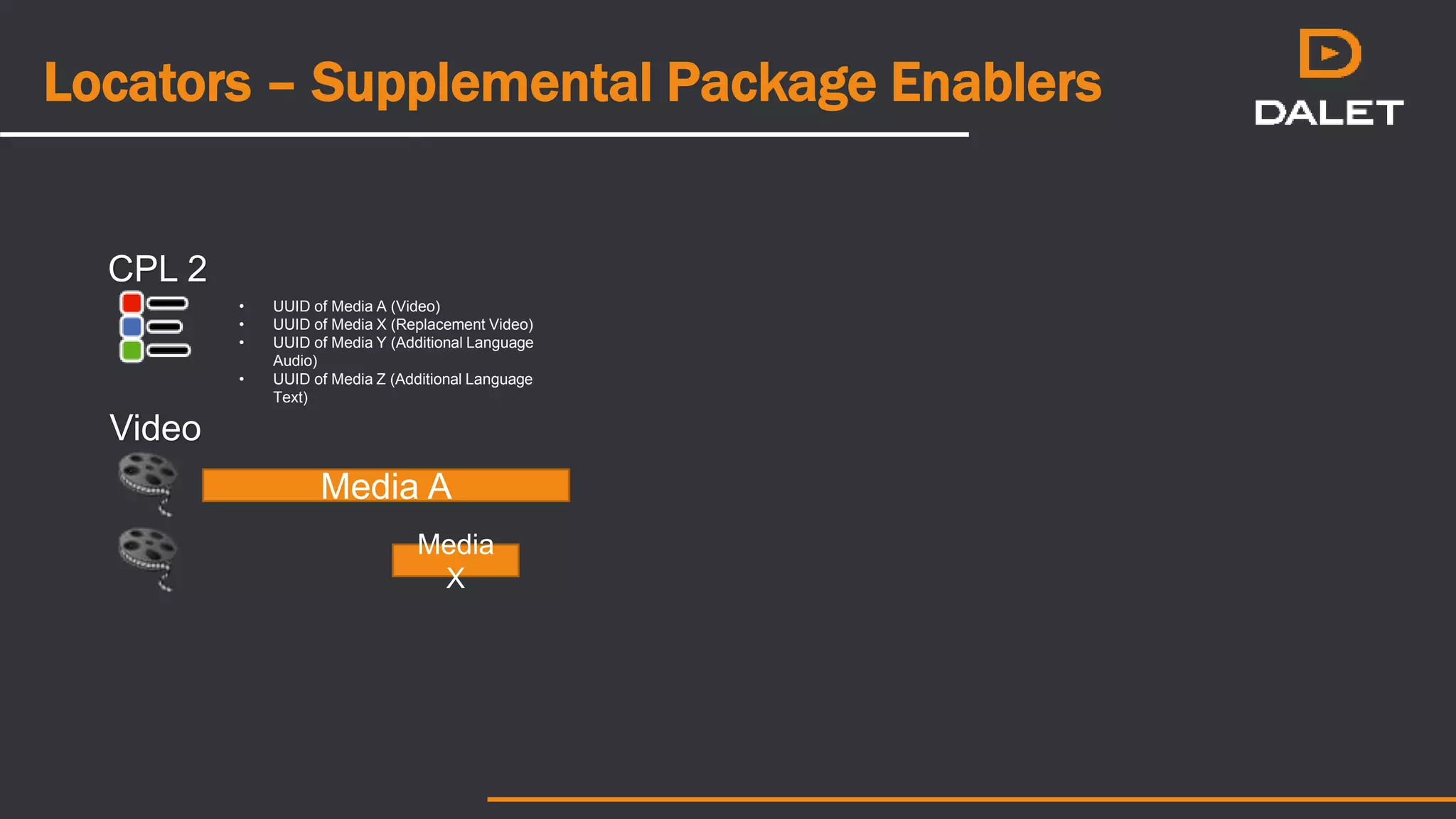
Locators – Supplemental Package Enablers
CPL 2
• UUID of Media A (Video)
• UUID of Media X (Replacement Video)
• UUID of Media Y (Additional Language
Audio)
• UUID of Media Z (Additional Language
Text)
Media A
Media
X
Video
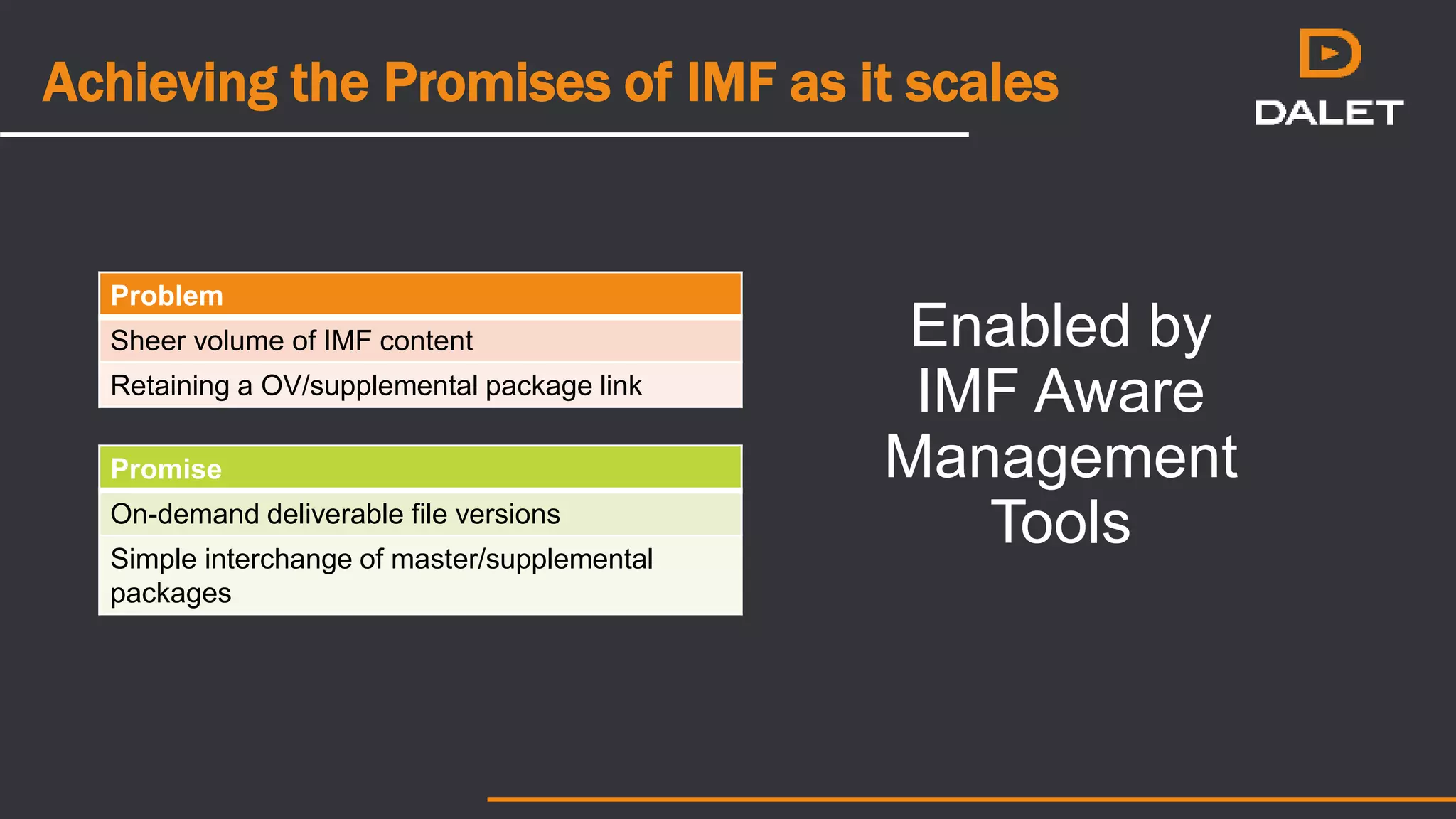
Achieving the Promises of IMF as it scales
Problem
Sheer volume of IMF content
Retaining a OV/supplemental package link
Promise
On-demand deliverable file versions
Simple interchange of master/supplemental
packages
Enabled by
IMF Aware
Management
Tools
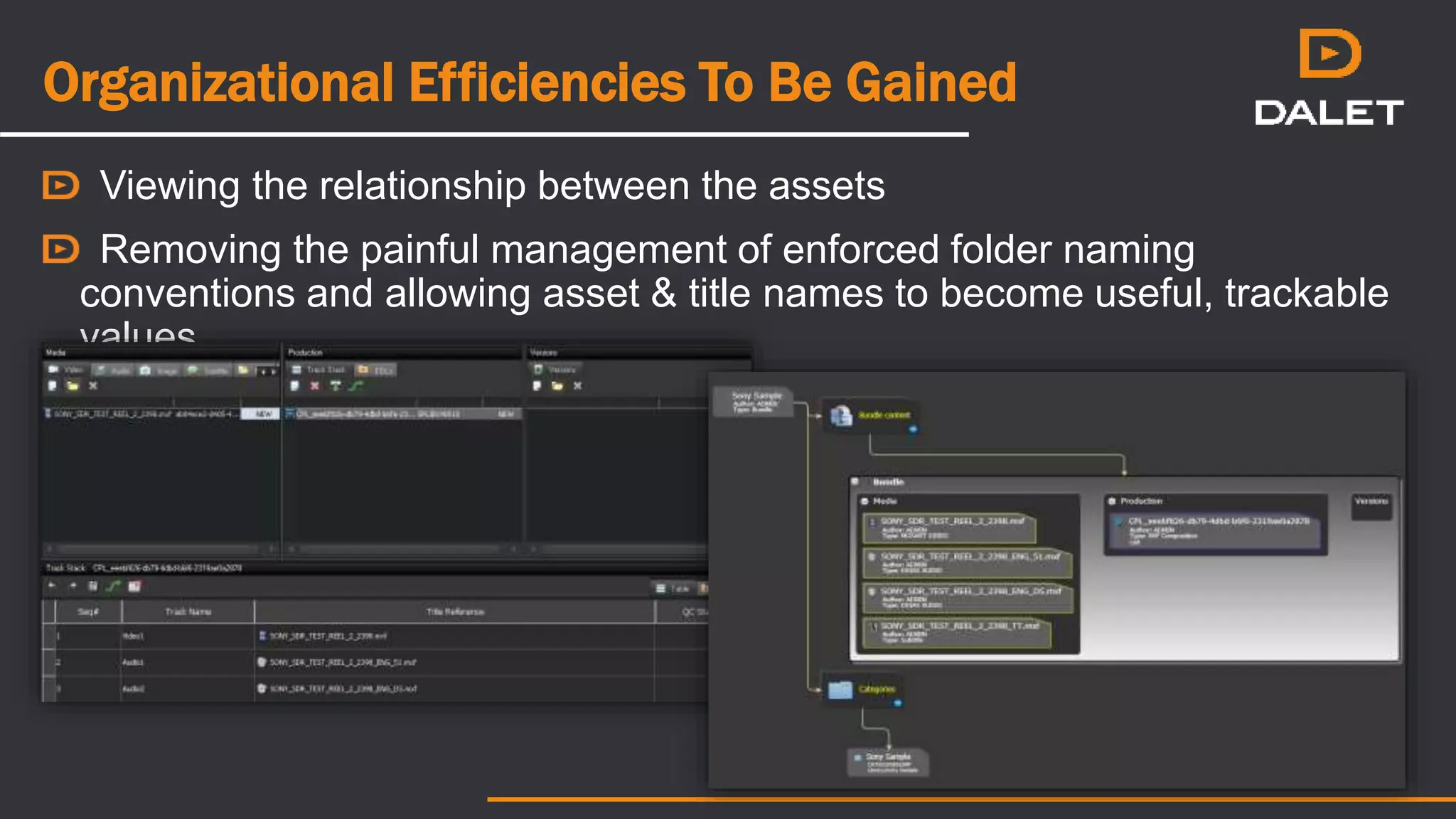
Organizational Efficiencies To Be Gained
Viewing the relationship between the assets
Removing the painful management of enforced folder naming
conventions and allowing asset & title names to become useful, trackable
values.
And What If Something Else Became Possible?
What if you could reduce your storage footprint while you convert to
using IMF?
Reimaging The Media Enterprise
xn.dalet.com

Cloud Apps for Media Processing: IMF Packaging-on-Demand

  • 1.
    IMF + DaletxN Solutions Media Workflows in the Cloud
  • 2.
    Reimagining Media IMF –The Interoperable Mastering Format
  • 3.
    A brief introto IMF fre title eng main video fre credits eng 2.0 audio eng CC fre dub fre 2.0 audio fre subtitles Markers FFHS FFEC LFTSCE18 IMF CPL IMF MXF IMF MXF IMF MXF IMF MXF IMF MXF IMF MXF IMF MXF IMF PKL
  • 4.
    An IMF sample fre title eng mainvideo fre credits eng 2.0 audio eng CC fre dub fre 2.0 audio fre subtitles Markers FFHS FFEC LFTSCE18 IMF CPL IMF MXF IMF MXF IMF MXF IMF MXF IMF MXF IMF MXF IMF MXF IMF PKL Composition (CPL)
  • 5.
    An IMF sample fre title eng mainvideo fre credits eng 2.0 audio eng CC fre dub fre 2.0 audio fre subtitles Markers FFHS FFEC LFTSCE18 IMF CPL IMF MXF IMF MXF IMF MXF IMF MXF IMF MXF IMF MXF IMF MXF IMF PKL Segment Marker Image Track Audio Track Audio Track Subtitle Track Caption Track Marker Track
  • 6.
    The Very RealPromises of IMF On-demand creation of any number of deliverable file versions from a single master package Simple interchange of master packages, including supplemental only packages Reduced storage footprint
  • 7.
    Reimagining The MediaEnterprise Introducing Dalet xN Solutions
  • 8.
    Beyond replicating existinginfrastructures and media workflows, Dalet xN Solutions provide new business and technological possibilities brought about through the advancement of virtualization, dynamic scalability and flexible deployment locations We are expanding opportunities and increasing effectiveness in the Media Economy.
  • 9.
    3 CUSTOMER BUSINESSDRIVERS AGILE INFRASTRUCTURE NEXTGEN OPERATIONS NEW BUSINESS HORIZONS EXTEND RESPOND SCALE BE CREATIVE BE MOBILE BE INFORMED REACT INNOVATE GROW
  • 10.
    3 different approaches HYBRID OPERATIONS NATIVE CLOUD EDGECLOUD SOLUTIONS Using IaaS to bring flexibility End-to-end workflows in the cloud Sub workflows moved to the cloud
  • 11.
  • 12.
  • 13.
  • 14.
    Beyond IMF Generation DaletxN Solutions in practice
  • 15.
  • 16.
  • 17.
    The Very RealProblems No inherent linking between the OV and supplemental packages No defined naming convention for IMP folders Difficulty in tracking the intended use of the package Difficulty in the discovery of packages
  • 18.
    Categorizing The Problems 1.Sheer volume 2. Retaining a link between the OV & supplemental packages for a given title A A ? A A A A
  • 19.
  • 20.
    Links Enable TitleHierarchy Content Title Media A Media X Video Media B Media Y Audio CPL 1 • UUID of Media A (Video) • UUID of Media B (Audio) • UUID of Media C (Text) CPL 2 • UUID of Media A (Video) • UUID of Media X (Replacement Video) • UUID of Media Y (Additional Language Audio) • UUID of Media Z (Additional Language Text) Media C Media Z Text
  • 21.
    Locators – SupplementalPackage Enablers CPL 2 • UUID of Media A (Video) • UUID of Media X (Replacement Video) • UUID of Media Y (Additional Language Audio) • UUID of Media Z (Additional Language Text) Media A Media X Video
  • 22.
    Achieving the Promisesof IMF as it scales Problem Sheer volume of IMF content Retaining a OV/supplemental package link Promise On-demand deliverable file versions Simple interchange of master/supplemental packages Enabled by IMF Aware Management Tools
  • 23.
    Organizational Efficiencies ToBe Gained Viewing the relationship between the assets Removing the painful management of enforced folder naming conventions and allowing asset & title names to become useful, trackable values.
  • 24.
    And What IfSomething Else Became Possible? What if you could reduce your storage footprint while you convert to using IMF?
  • 25.
    Reimaging The MediaEnterprise xn.dalet.com

Editor's Notes

  • #4 We’re well past the infancy of the Interoperable Master Format (IMF) age and so we will only spend a couple of minutes on the basics in todays presentation. EXPLAIN SIMPLE PACKAGE
  • #7 So lets look at the promises of IMF today The concepts of storing multiple versions together in a single IMF Package allows for different versions to be created and exported on demand. With IMF, you have the option to send the entire IMP with all of its versions or just send or receive the supplemental packages for individual versions which dramatically cuts down on data transfers. And thirdly a reduced storage footprint – Storing your content as an IMP saves large amounts of data as we no longer have to store 50 full localized versions of each title.
  • #9 Going FAR BEYOND A SIMPLE REPLICATION OF EXISTING INFRASTRUCTURE AND MEDIA WORKFLOW, DALET XN SOLUTIONS EXPLOIT THE NEW BUSINESS AND TECHNOLOGICAL POSSIBILITIES BROUGHT ABOUT THROUGH THE ADVANCEMENT OF CLOUD, VIRTUALIZATION, DYNAMIC SCALABILITY AND HYBRID ON/OFF-PREMISE DEPLOYMENTS; EXPANDING OPPORTUNITIES AND INCREASING THE EFFECTIVENESS OF THE MEDIA ECONOMY.
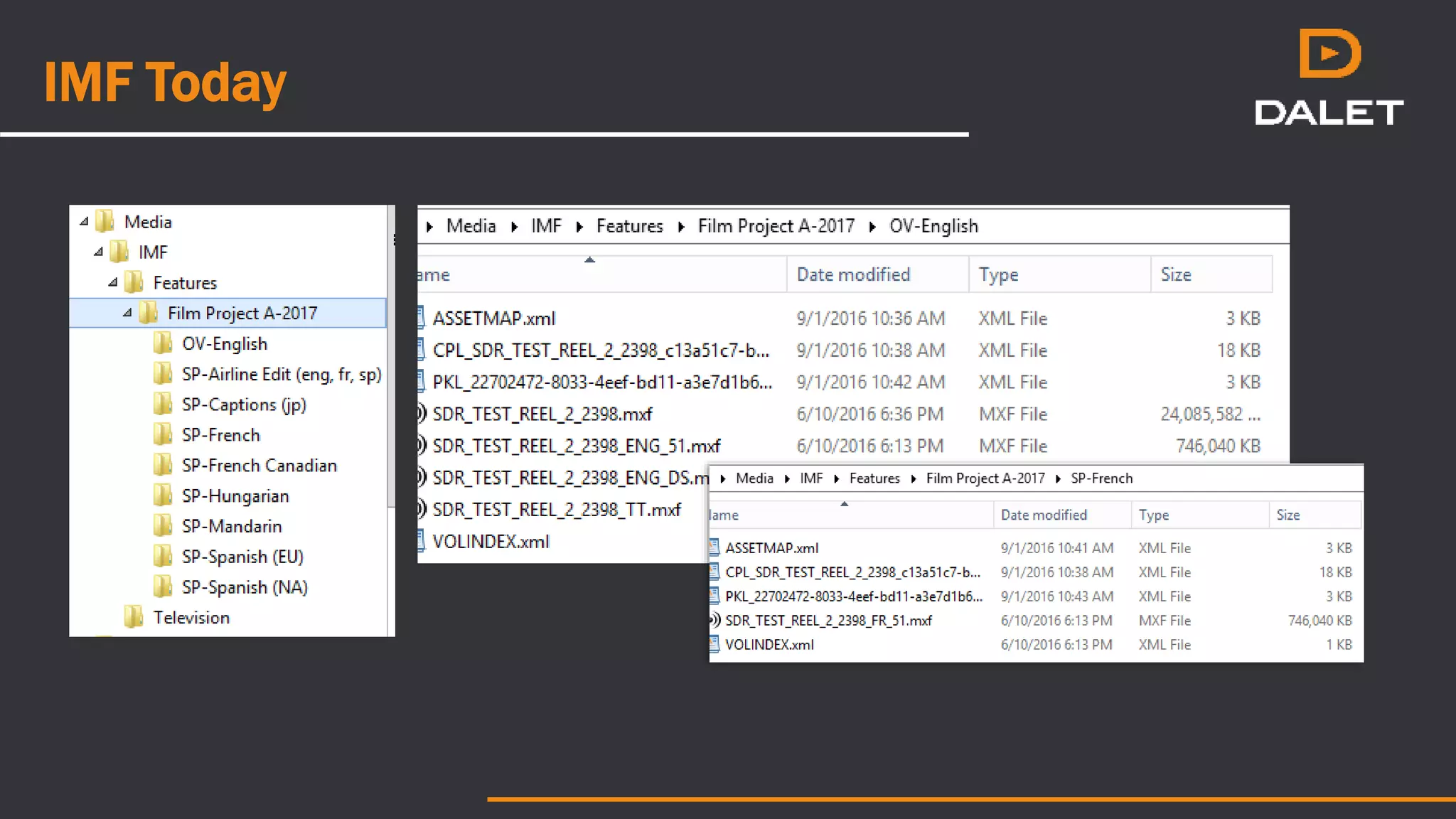
  • #16 While creating an IMP is becoming a fairly simple procedure, the management of IMF after the creation of all of these packages can seriously hinder the promises of the format. For example, creating a deliverable file often requires that the Original Version (OV) and the supplemental packages in the correct location and registered properly in a craft tool before the distribution file can be created. Finding all of those packages, particularly if parts of them were sent separately, from different departments or post houses, can be an interesting challenge. This brings up the second issue of trying to achieve simple interchange. Trying to tie together an Original Version and supplemental package, when they are sent separately, without any externally visible, unique ID, can be as hard as making Mexico build and pay for a wall. We are all used to managing complex folder structures containing self-contained media files and the odd sidecar XML, but as an IMF library expands, this management becomes increasingly challenging.
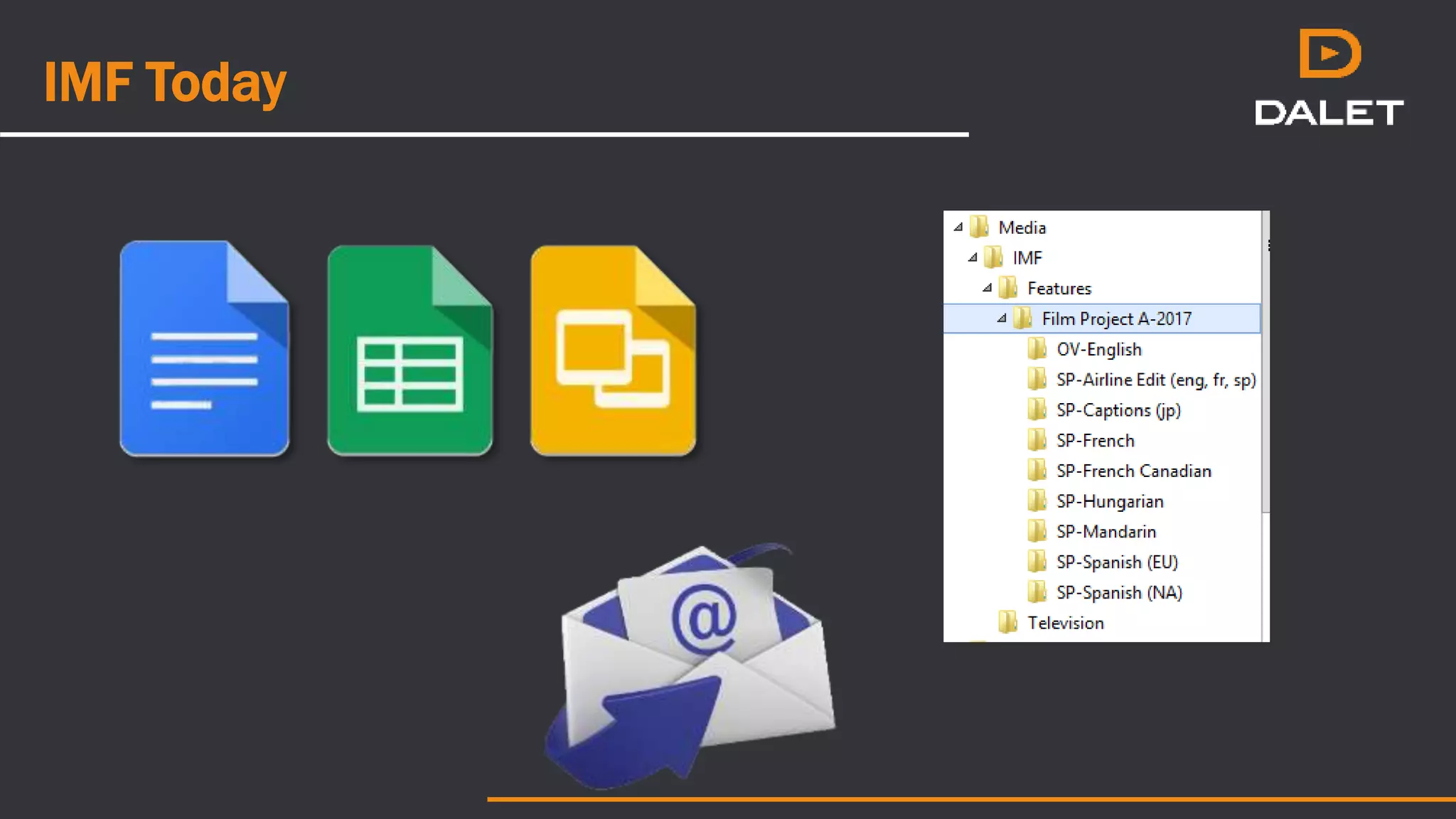
  • #17 Within the confines of a folder and file structure on a standard file system, the most common method of tying together an Original Version and the supplemental packages for any given ‘TITLE’ is to create a deep sub-folder structure. The folder structure and naming convention become essential metadata for tracking the different versions of the title together, but search, browse and retrieve becomes more difficult the deeper these trees become. And with all of the investment in the actual content creation, many organizations utilize solutions such as spreadsheets and emails (on a secure email server, of course) to track titles, versions and file system locations. Like with any large group of media assets, this only holds up for so long and we are all human so simple mistakes can take a long time to rectify and can lead to re-delivery.
  • #18 So lets look at the list of problems we have found with some of the IMF workflows as we scale. No obvious or quick way for a user to link content together which leads to issues when content is accidentally moved or deleted and can render a supplemental package unusable. Folder names are often not necessarily descriptive of the contents of the package inside, since (by design) there is no defined naming convention for IMF As there is no naming convention, Intended use problems are not always clear, leading to, in several cases, duplicate package creation And finally Difficulty in the discovery of packages without bringing the entire package back into a craft tool. The requirement may only be to do a minor update due to an IMF specification change (such as adding Multi Channel Audio “MCA” metadata) but this is not always a simple or quick process today.
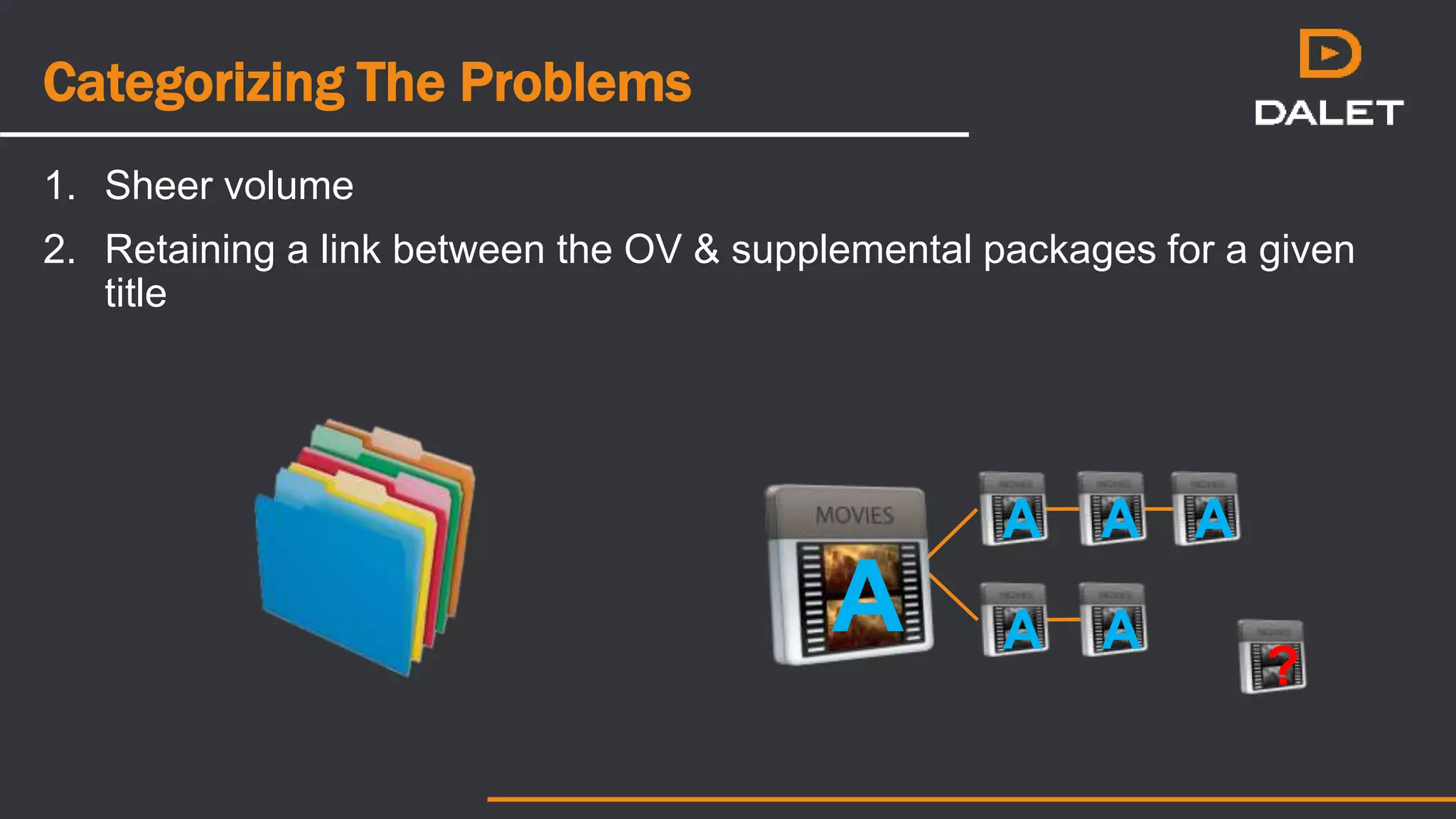
  • #19 So we end up with two primary categories of problems hindering IMF from hitting its’ intended promises. The first is Sheer volume – this is general solved by asset management systems today but the problem is that traditional MAM’s often leads to contextual relationships between the media, CPLs and supplements being lost. This leads to our second problem category…retaining the link between the OV & supplemental packages (plus their associated media & CPLs) for a given title. And this problem has a solution Hidden within the IMF standard itself. So lets delve a little deeper into that
  • #20 Every IMF package, whether it is the OV or supplemental package, contains two pieces of metadata that allow all related IMP for that title to be linked together by a management system. The key piece of metadata that exists in the ASSETMAP is the UUID for each media essence file in the package. The asset management system can use this UUID to link each ingested media file to both the current CPL and any further CPLs for the title. Linking the OV CPL to supplemental CPLs ingested by the system can be accomplished by using the ContentTitle, which is the key metadata from the CPL for management. Any CPLs ingested with the same ContentTitle can be stored within the same title or asset within a media asset management system.
  • #21 What becomes possible when establishing a data model of this nature, is that a single title is now capable of managing multiple CPLs with a simple unique identifier in the UUID. This establishes the relationship between the media present in the system and the playlist’s need for that media, even if the media is not present when ingesting the IMP (such as in the case of a supplemental package).
  • #22 Think of a CPL as a complex edit decision list (EDL) that allows a system to reuse the existing concept of edit locators within a title. These locators will be specific to the CPL itself, rather than tied to an individual media file, since a single media file could be referenced in multiple CPLs. Retrieving these locators is simply a matter of parsing the SegmentList and its children in the CPL by matching the UUID from Resource List/Resource/Id in the CPL and the UUID of the media file from am:Id in the ASSETMAP. For example, Media X could be the replacement frames to remove the Bad Hombres in Media A.  
  • #23 In conclusion, with any IMF-aware management system, the problems of both file volume management and linking IMF packages to their respective titles can be achieved…all by using the data structures within the IMF specification. And once you have solved those core issues of managing an IMF library, the promises of on-demand deliverable files and simplified interchange become very realistic.
  • #24 While the concept of IMF is becoming well understood in technical circles, at the operational level, it can be difficult to perceive the multiple relationships that exist within a title, particularly one where several supplemental packages exist. A MAM system can use its’ knowledge of the linkages at the Content title, CPL, media file and segment level to produce both user interfaces for manipulation of the IMP and visualization of the asset relationships. This dramatically simplifies everyday operators understanding of IMF and media processing.