Closing the Loop: Strategies to
Extend Care in the ED
April 13, 2015
Timothy Kelly, MS, MBA / Director
DISCLAIMER: The views and opinions expressed in this presentation are those of the author and do not necessarily represent official policy or position of HIMSS.
Tom Scaletta, MD / ED Chair and Medical Director
Edward-Elmhurst
HEALTHCARE
© HIMSS 2015
Conflict of Interest
Timothy Kelly, MS, MBA
Mr. Kelly receives a salary from The Standard Register Company. He does not
own any stock, options or other interest in The Standard Register Company or
its affiliates.
Tom Scaletta, MD
In addition to his full-time position at Edward-Elmhurst Healthcare, Dr. Scaletta,
is the CEO and Principal of Smart-ER, LLC, which is a business partner of
Standard Register Healthcare.
© HIMSS 2015
Learning Objectives
• Define the unique challenges faced by Emergency Departments
(EDs) that can be addressed by post-discharge patient contact
systems.
• Contrast the optimum queries to present to discharged ED patients
to confirm well-being, understanding of instructions and
satisfaction with the care experience.
• Design a system that closes the loop with discharged ED patients
by leveraging the EHR and other HIT tools to contact patients,
document responses, alert providers to reported issues and reply
to patients acknowledging any reported concerns.
© HIMSS 2015
Strategies to Extend Care in the ED:
An Introduction to the Benefits Realized
for the Value of Health IT
http://www.himss.org/ValueSuite
S
T
E
P
S
Satisfaction – organizations are focused on enhancing
patient satisfaction and instilling patient loyalty
Treatment – hospitals seek to extend care outside their walls
while avoiding readmissions and return visits to the ED
Electronic – patients increasingly demand electronic
communications while hospitals struggle with portal utilization
Prevention – hospitals seeks initiatives that help to avoid
missed diagnoses and resolve follow-up issues
Savings – organizations continue to struggle with financial
challenges ranging from the Two-Midnight Rule to patients
who present with poor reimbursement
© HIMSS 2015
Why Focus on the ED?
© HIMSS 2015
Volume
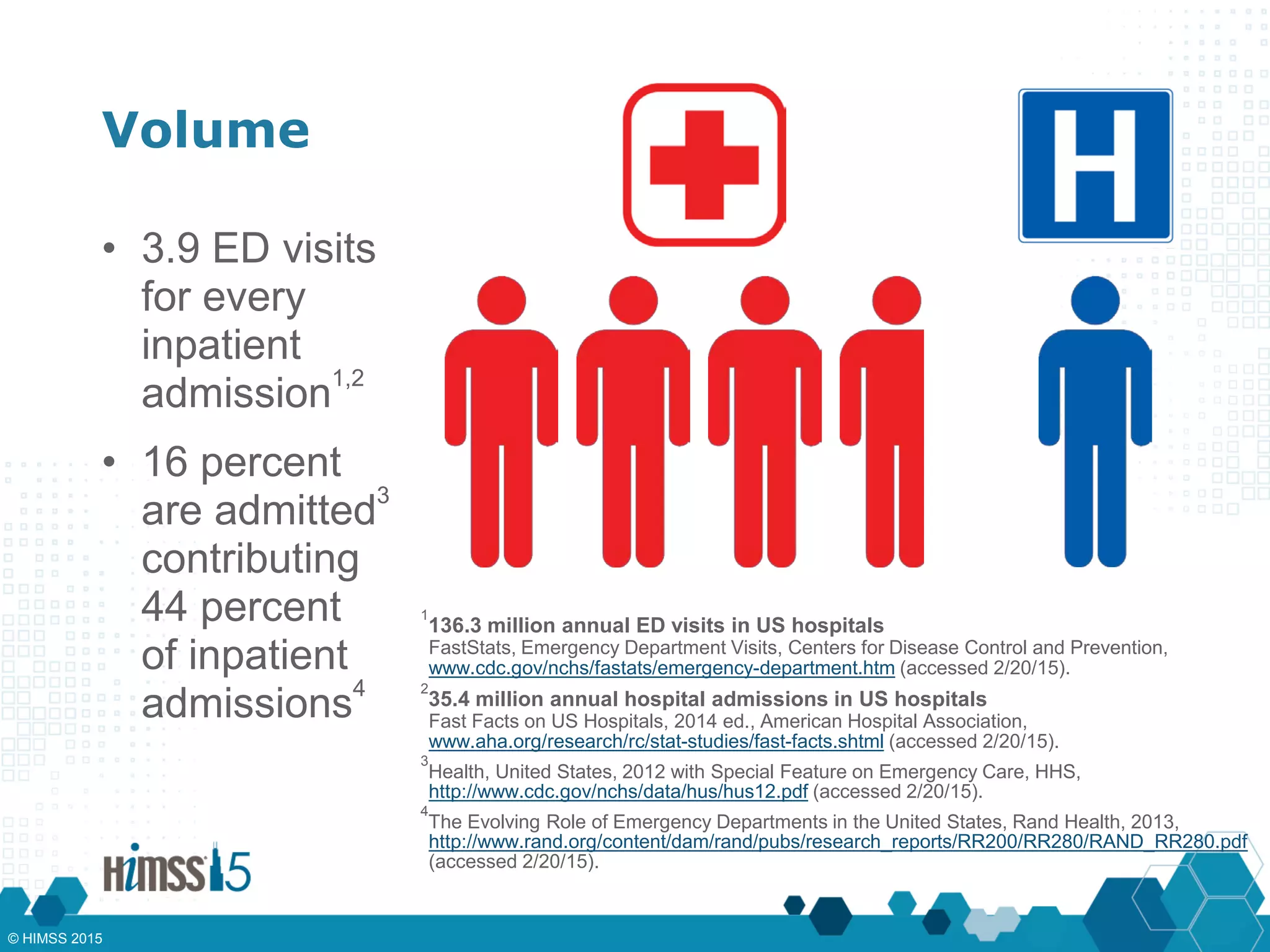
• 3.9 ED visits
for every
inpatient
admission
1,2
• 16 percent
are admitted
3
contributing
44 percent
of inpatient
admissions
4
1
136.3 million annual ED visits in US hospitals
FastStats, Emergency Department Visits, Centers for Disease Control and Prevention,
www.cdc.gov/nchs/fastats/emergency-department.htm (accessed 2/20/15).
2
35.4 million annual hospital admissions in US hospitals
Fast Facts on US Hospitals, 2014 ed., American Hospital Association,
www.aha.org/research/rc/stat-studies/fast-facts.shtml (accessed 2/20/15).
3
Health, United States, 2012 with Special Feature on Emergency Care, HHS,
http://www.cdc.gov/nchs/data/hus/hus12.pdf (accessed 2/20/15).
4
The Evolving Role of Emergency Departments in the United States, Rand Health, 2013,
http://www.rand.org/content/dam/rand/pubs/research_reports/RR200/RR280/RAND_RR280.pdf
(accessed 2/20/15).
© HIMSS 2015
Increasing Load and Increasing Competition
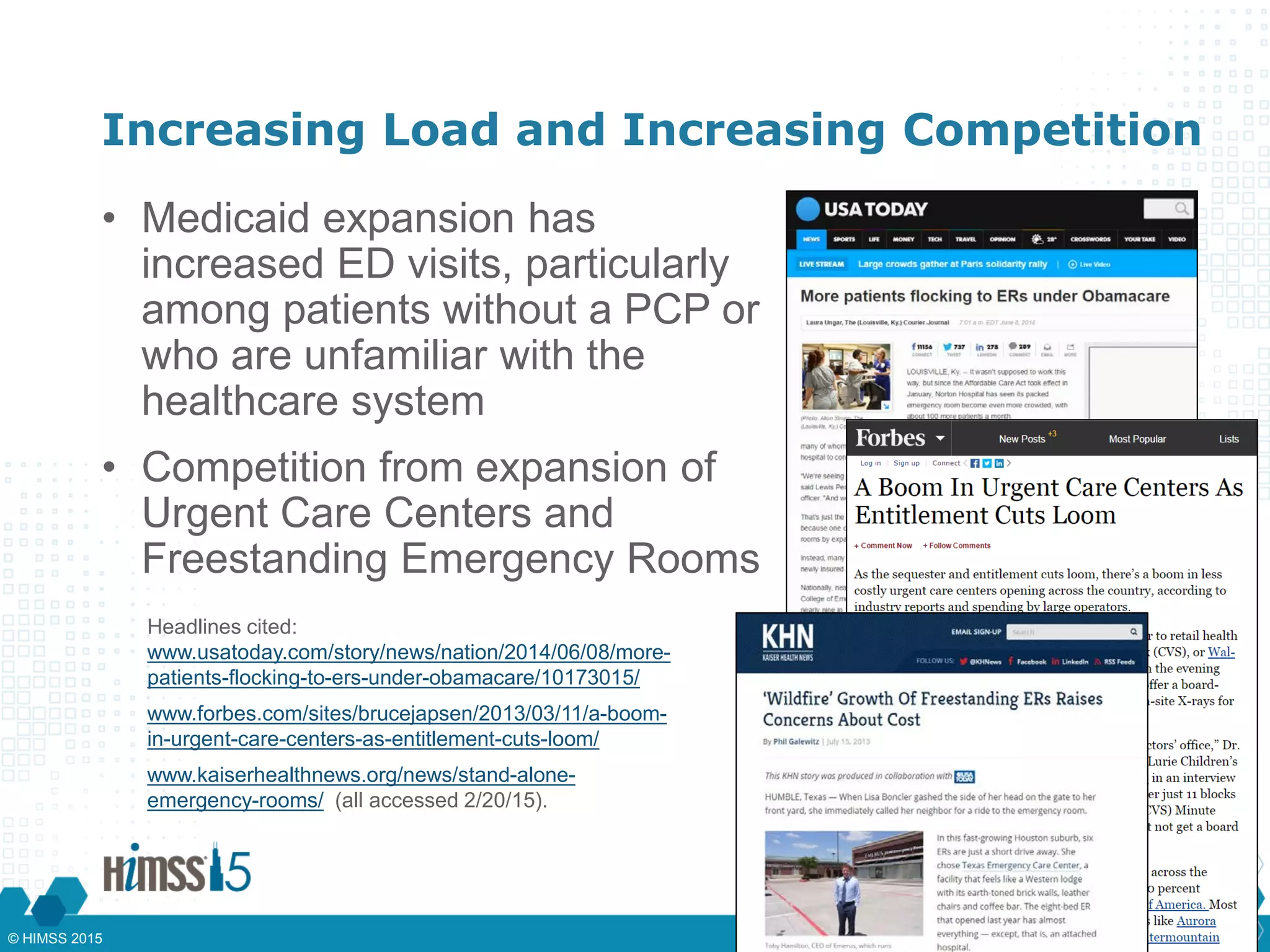
• Medicaid expansion has
increased ED visits, particularly
among patients without a PCP or
who are unfamiliar with the
healthcare system
• Competition from expansion of
Urgent Care Centers and
Freestanding Emergency Rooms
Headlines cited:
www.usatoday.com/story/news/nation/2014/06/08/more-
patients-flocking-to-ers-under-obamacare/10173015/
www.forbes.com/sites/brucejapsen/2013/03/11/a-boom-
in-urgent-care-centers-as-entitlement-cuts-loom/
www.kaiserhealthnews.org/news/stand-alone-
emergency-rooms/ (all accessed 2/20/15).
© HIMSS 2015
Emphasis on Patient Satisfaction
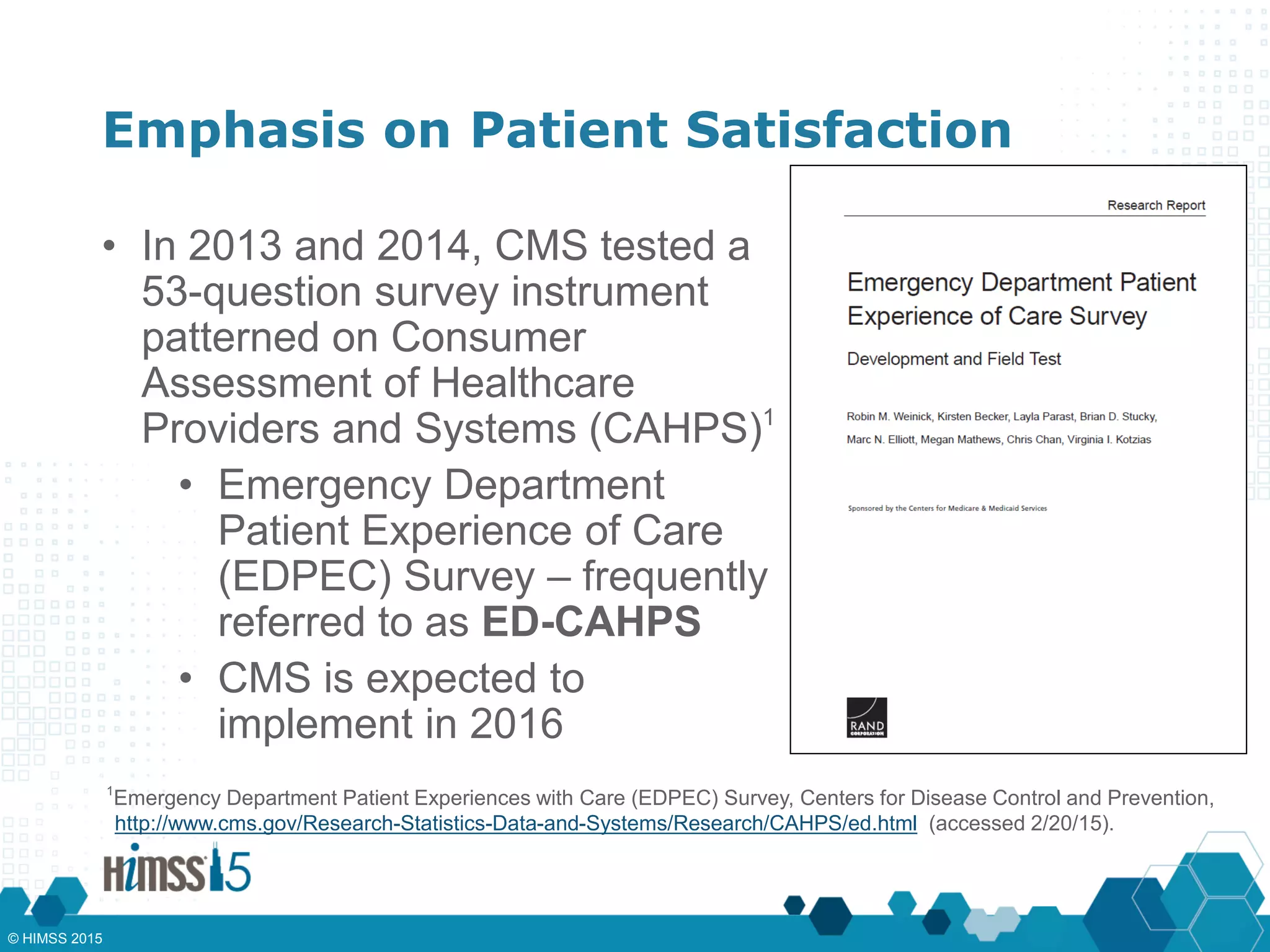
• In 2013 and 2014, CMS tested a
53-question survey instrument
patterned on Consumer
Assessment of Healthcare
Providers and Systems (CAHPS)1
• Emergency Department
Patient Experience of Care
(EDPEC) Survey – frequently
referred to as ED-CAHPS
• CMS is expected to
implement in 2016
1
Emergency Department Patient Experiences with Care (EDPEC) Survey, Centers for Disease Control and Prevention,
http://www.cms.gov/Research-Statistics-Data-and-Systems/Research/CAHPS/ed.html (accessed 2/20/15).
© HIMSS 2015
Review of the
CAHPS Approach
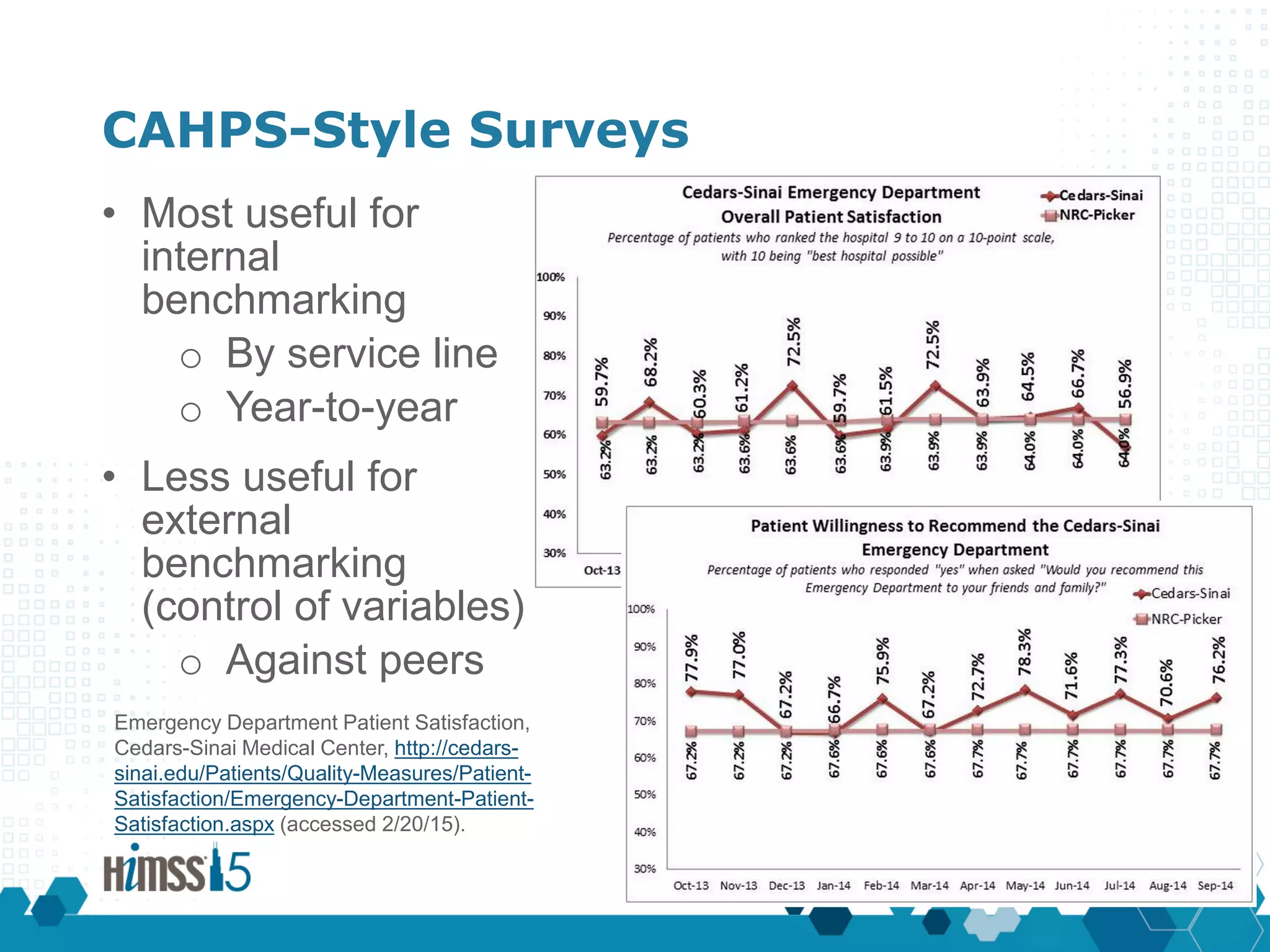
CAHPS-Style Surveys
• Most useful for
internal
benchmarking
o By service line
o Year-to-year
• Less useful for
external
benchmarking
(control of variables)
o Against peers
Emergency Department Patient Satisfaction,
Cedars-Sinai Medical Center, http://cedars-
sinai.edu/Patients/Quality-Measures/Patient-
Satisfaction/Emergency-Department-Patient-
Satisfaction.aspx (accessed 2/20/15).
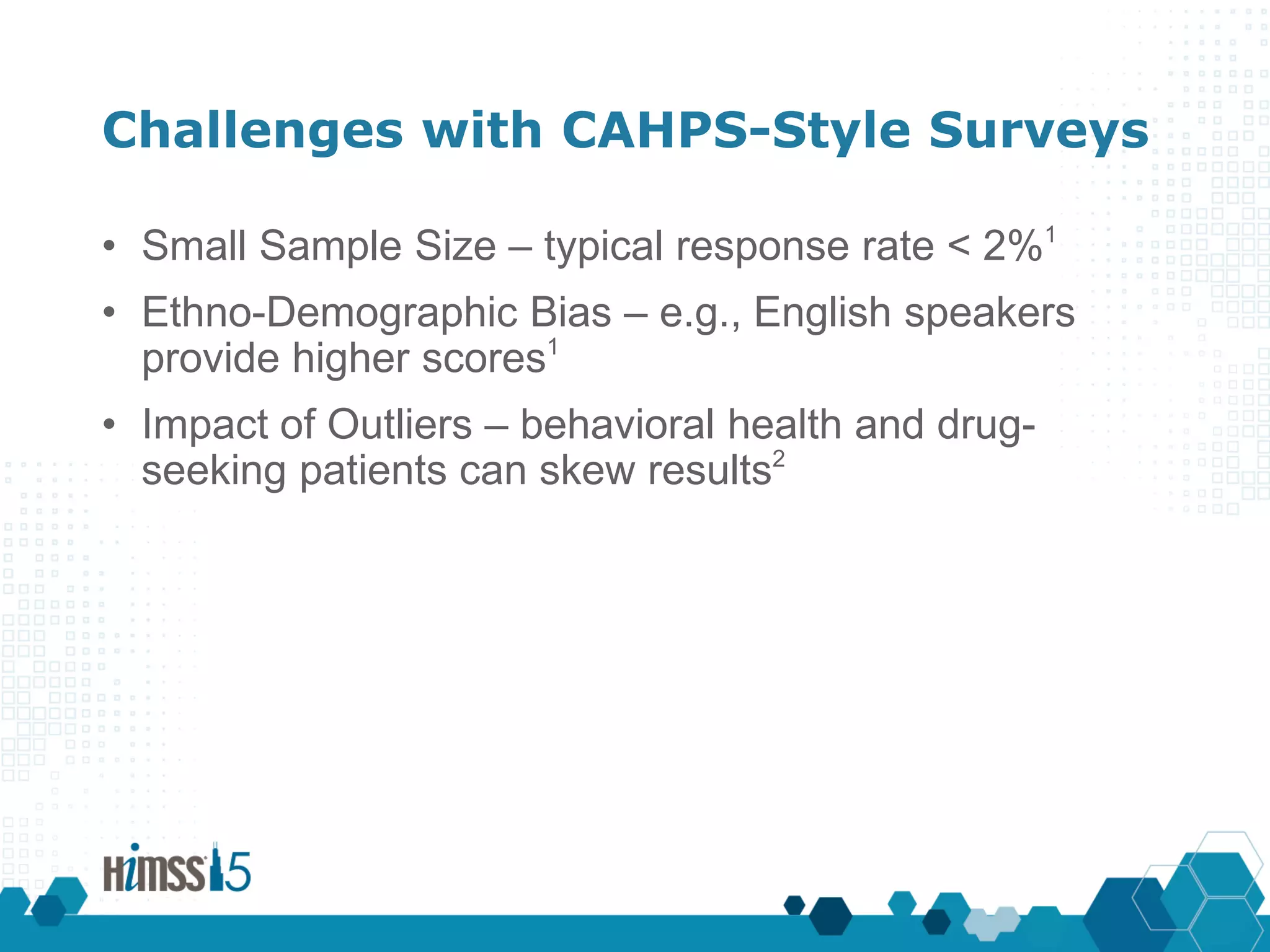
Challenges with CAHPS-Style Surveys
• Small Sample Size – typical response rate < 2%1
• Ethno-Demographic Bias – e.g., English speakers
provide higher scores1
• Impact of Outliers – behavioral health and drug-
seeking patients can skew results2
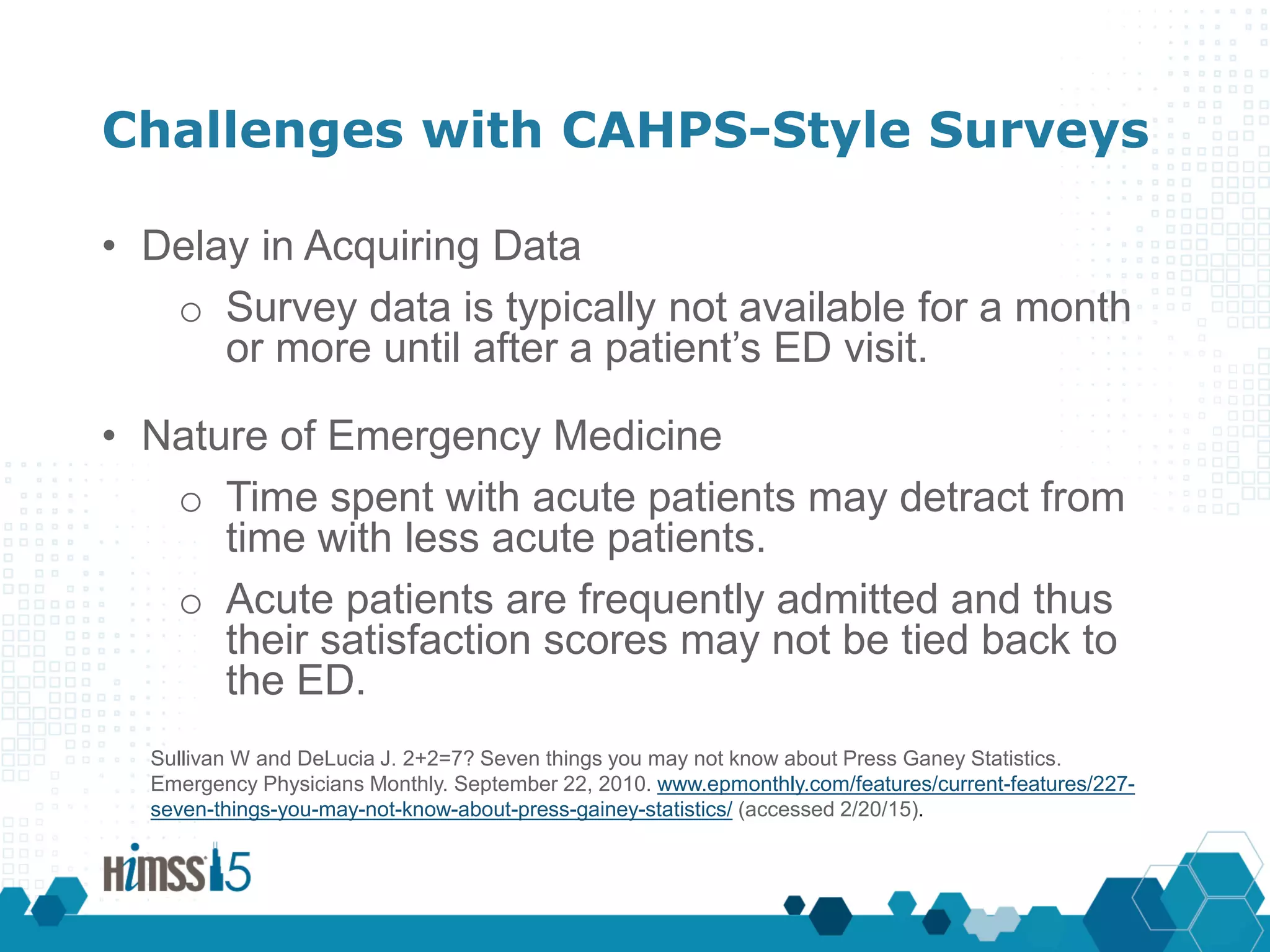
Challenges with CAHPS-Style Surveys
• Delay in Acquiring Data
o Survey data is typically not available for a month
or more until after a patient’s ED visit.
• Nature of Emergency Medicine
o Time spent with acute patients may detract from
time with less acute patients.
o Acute patients are frequently admitted and thus
their satisfaction scores may not be tied back to
the ED.
Sullivan W and DeLucia J. 2+2=7? Seven things you may not know about Press Ganey Statistics.
Emergency Physicians Monthly. September 22, 2010. www.epmonthly.com/features/current-features/227-
seven-things-you-may-not-know-about-press-gainey-statistics/ (accessed 2/20/15).
System Design –
Optimum Queries
Objectives for an ED Follow-up System
• Efficiently assess patient wellbeing on the day after
discharge1
• Alert providers to gaps in post-discharge knowledge
(instructions, medications) or access to follow-up care1
• Document patient satisfaction with providers and with
the overall ED experience1
• Provide specific patient experiences to review in the
daily huddle in the Emergency Department2
1
Scaletta T. Automating Patient Contact After ED Discharge Enhances Safety and Reduces Risk.
Storyboard presented at the 26th Annual National Forum on Quality Improvement in Health Care.
December 7-10, 2014, Orlando, Florida.
2
Steenbergen P. Incorporating “Medical Minute” Into Daily Huddles in the Emergency Department. Studer
Group. June 11, 2014. www.studergroup.com/resources/news-media/publications/insights/june-
2014/incorporating-medical-minute%E2%80%9D-into-daily-huddles-i (accessed 2/20/15).
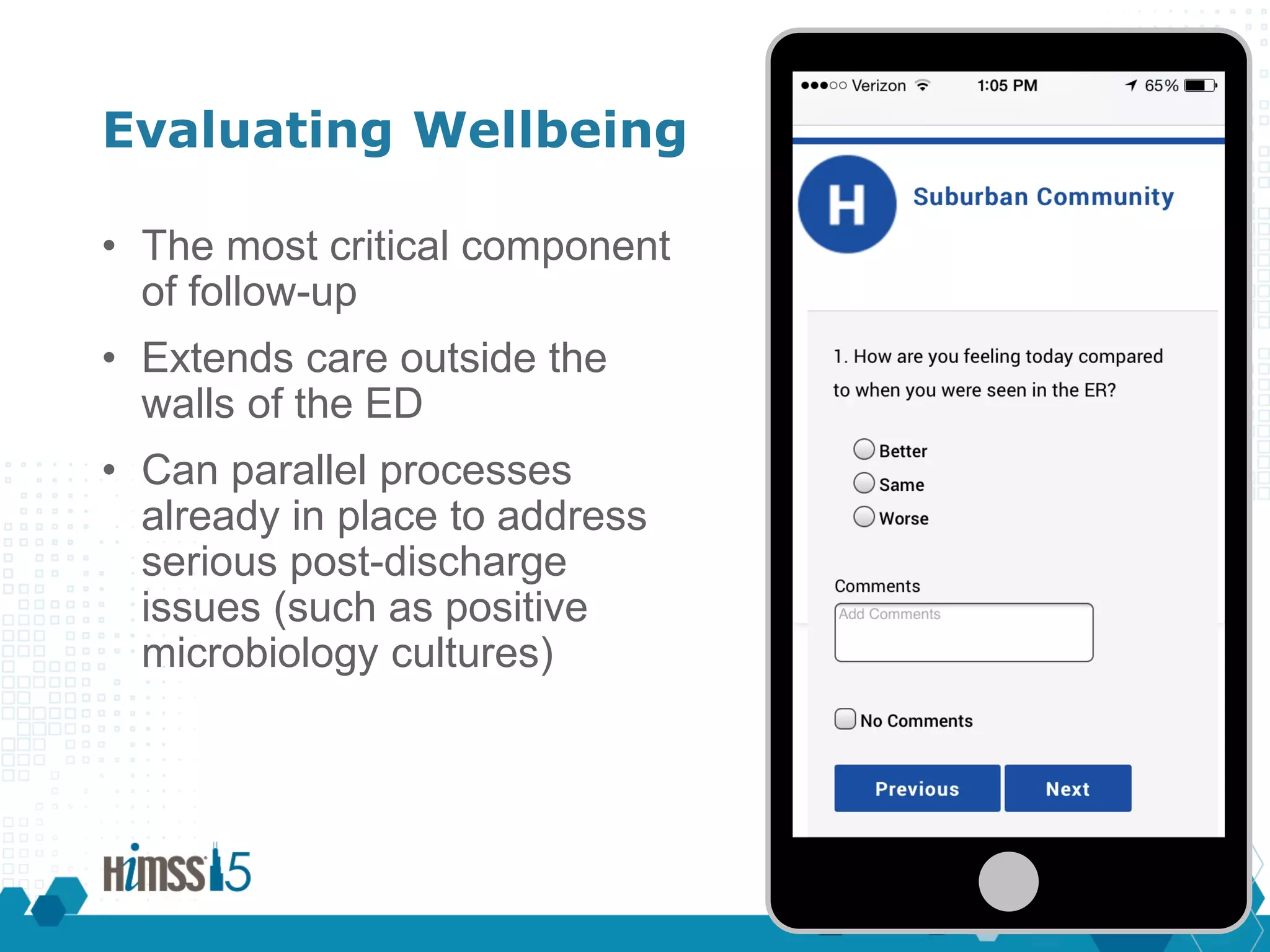
Evaluating Wellbeing
• The most critical component
of follow-up
• Extends care outside the
walls of the ED
• Can parallel processes
already in place to address
serious post-discharge
issues (such as positive
microbiology cultures)
CVVV
CVVV
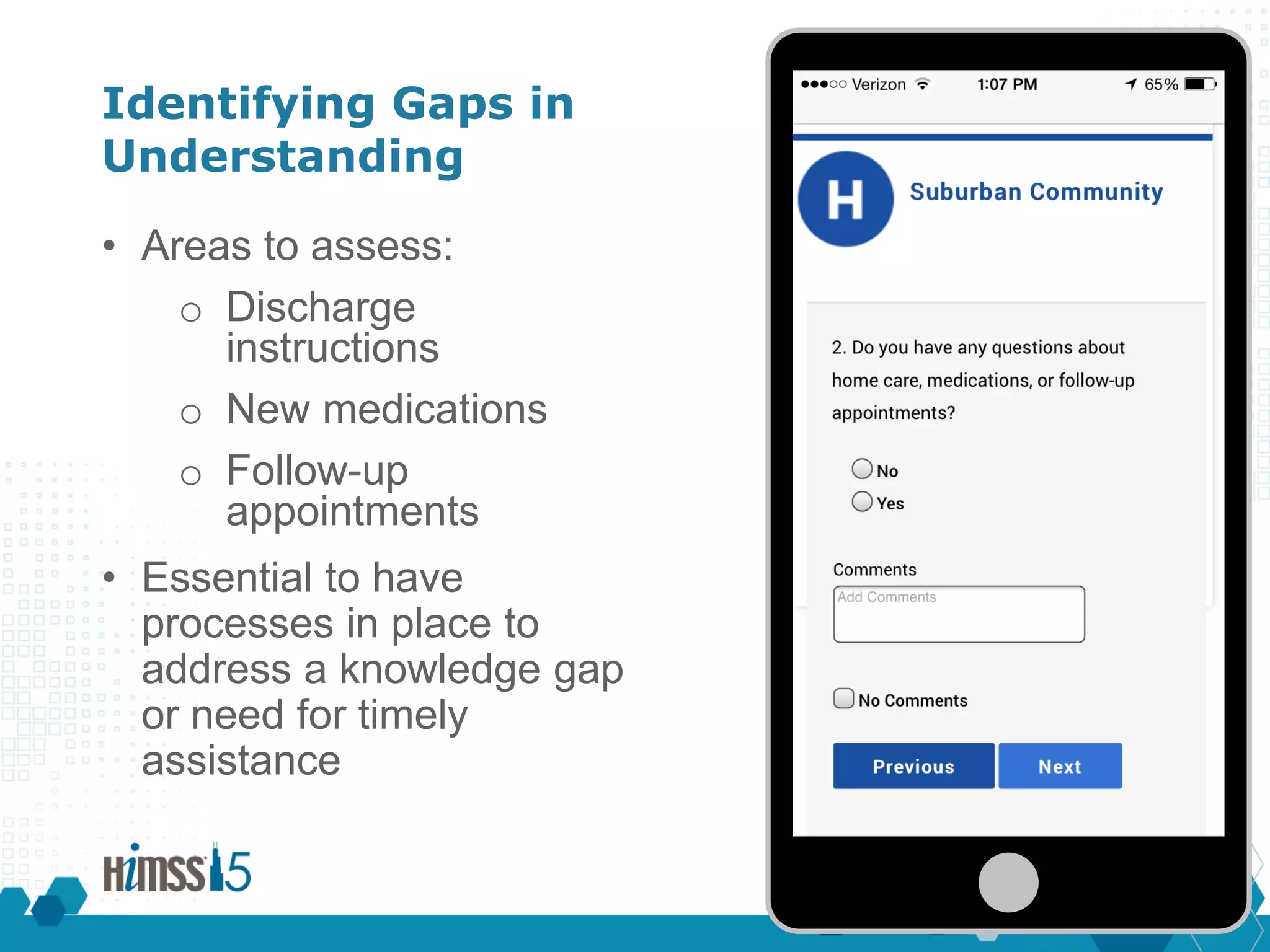
Identifying Gaps in
Understanding
• Areas to assess:
o Discharge
instructions
o New medications
o Follow-up
appointments
• Essential to have
processes in place to
address a knowledge gap
or need for timely
assistance
CVVV
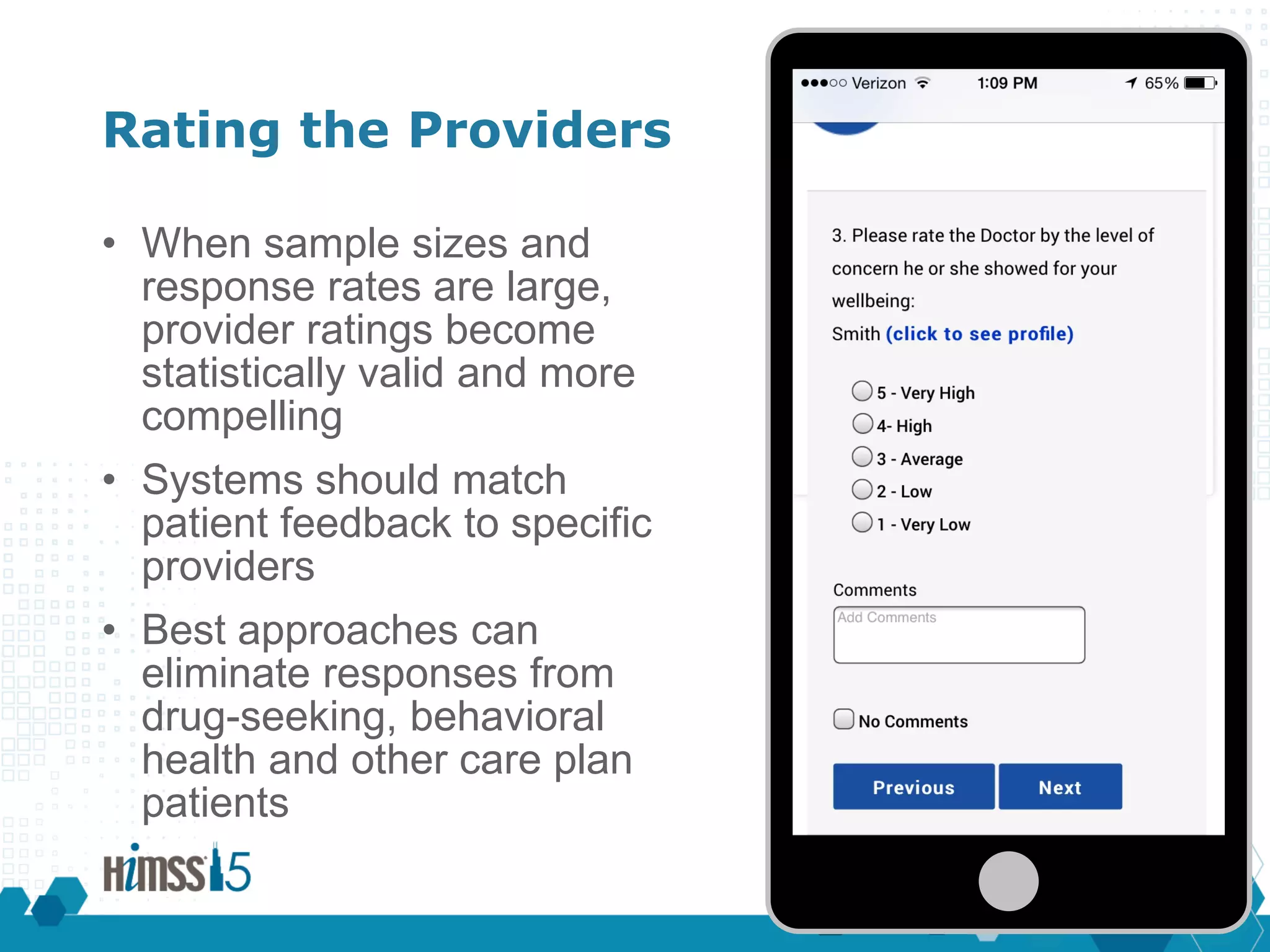
Rating the Providers
• When sample sizes and
response rates are large,
provider ratings become
statistically valid and more
compelling
• Systems should match
patient feedback to specific
providers
• Best approaches can
eliminate responses from
drug-seeking, behavioral
health and other care plan
patients
CVVV
Rating the Providers
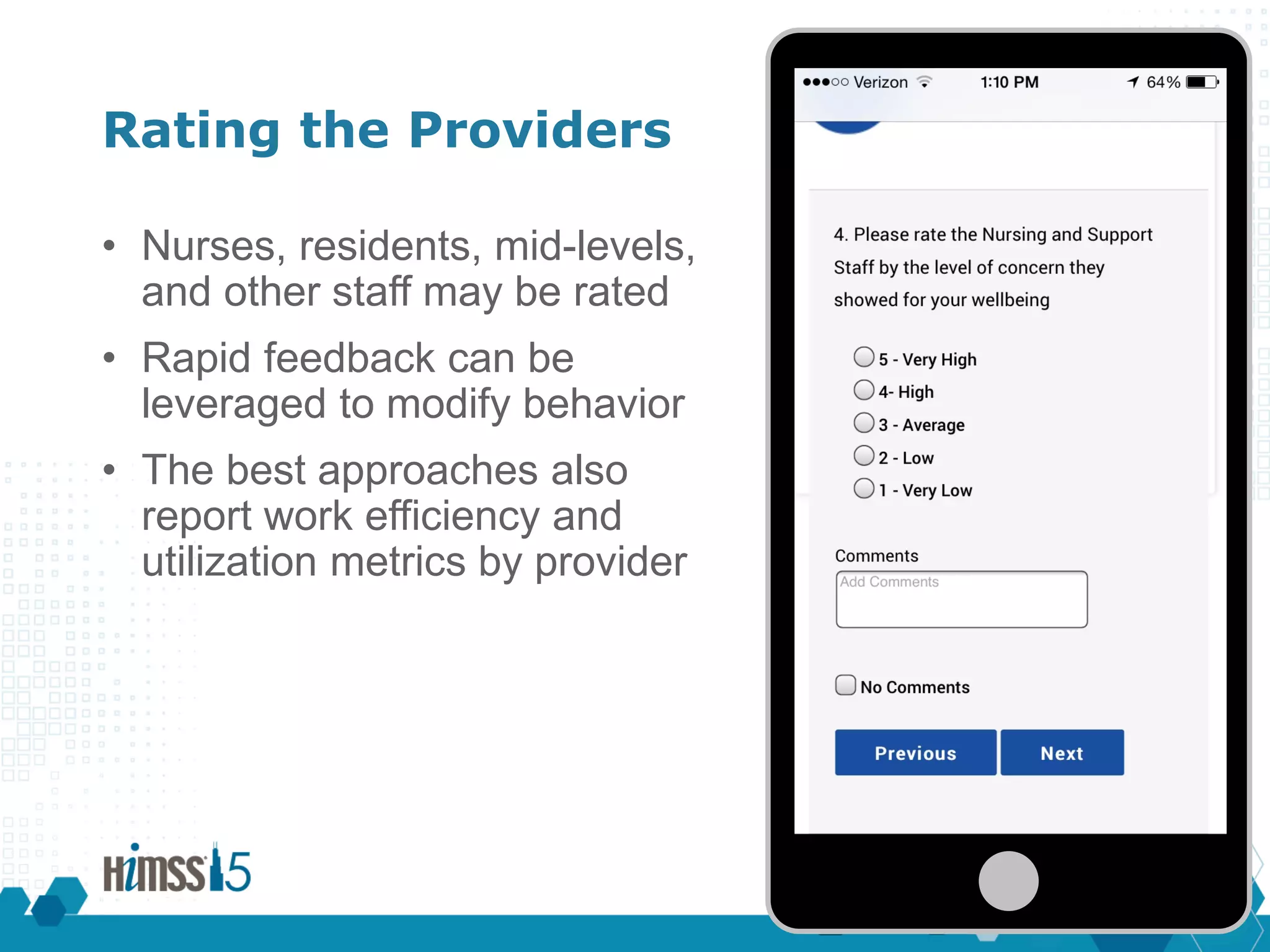
• Nurses, residents, mid-levels,
and other staff may be rated
• Rapid feedback can be
leveraged to modify behavior
• The best approaches also
report work efficiency and
utilization metrics by provider
CVVV
Evaluating Other Aspects
of the Care Experience
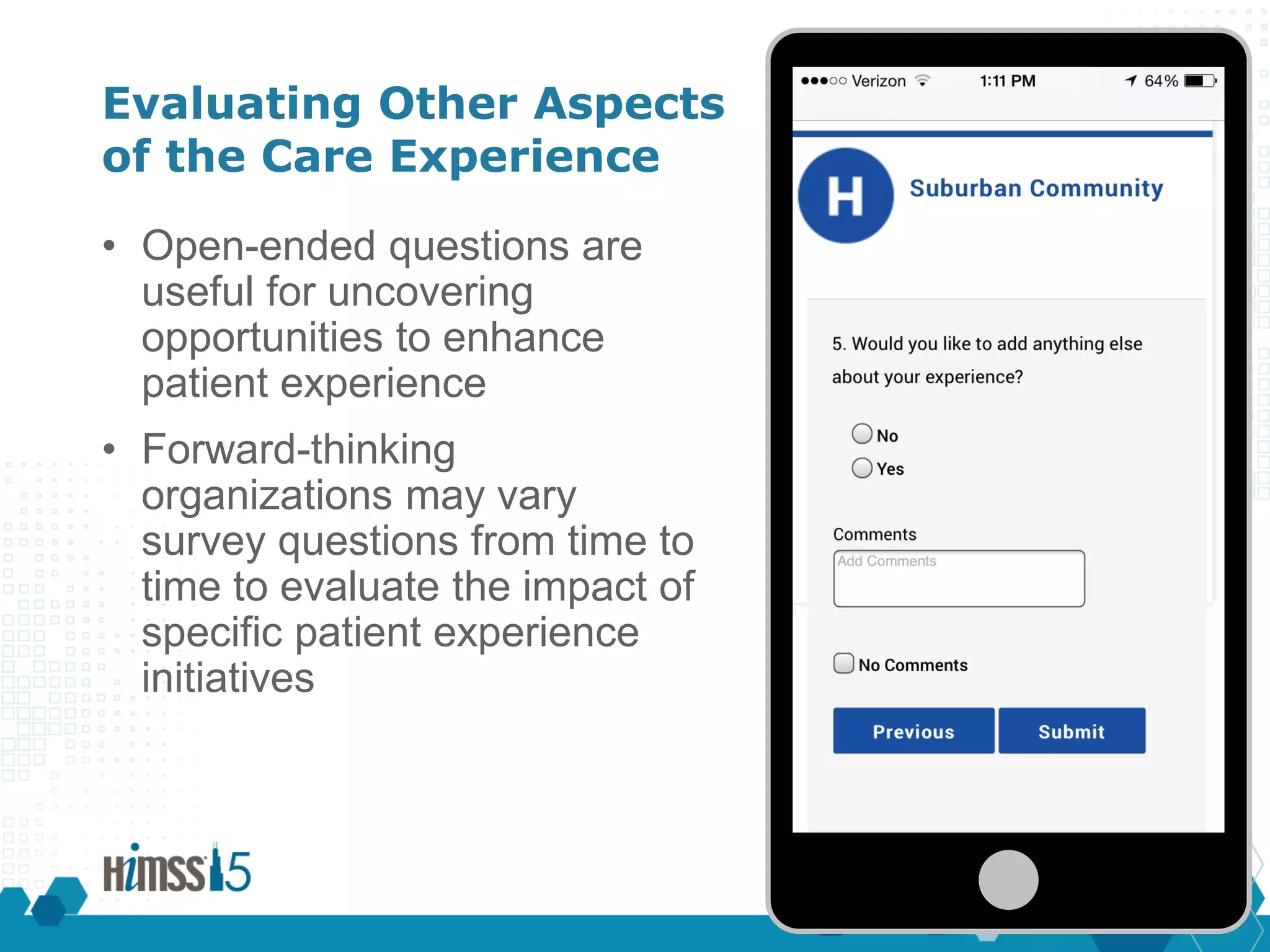
• Open-ended questions are
useful for uncovering
opportunities to enhance
patient experience
• Forward-thinking
organizations may vary
survey questions from time to
time to evaluate the impact of
specific patient experience
initiatives
System Design –
Approaches to Patient
Follow-Up
© HIMSS 2015
In-House Survey
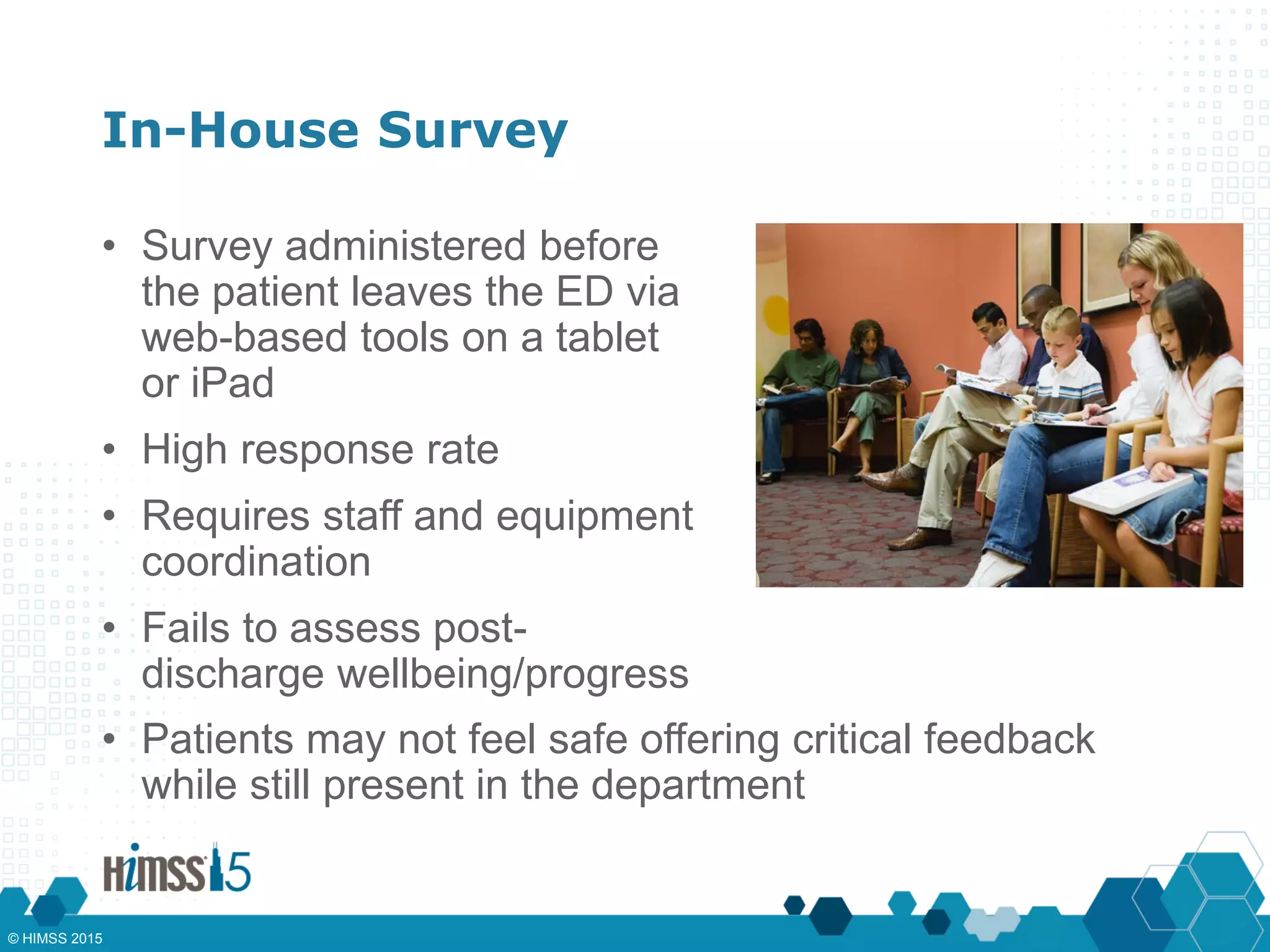
• Survey administered before
the patient leaves the ED via
web-based tools on a tablet
or iPad
• High response rate
• Requires staff and equipment
coordination
• Fails to assess post-
discharge wellbeing/progress
• Patients may not feel safe offering critical feedback
while still present in the department
© HIMSS 2015
Call-back
• Easy to implement (from daily list
to commercial call-back consoles)
• Calls from physician, nurse, clerical
personnel or outsourced
• Call-backs completed by nurses
and physicians boost satisfaction
scores regardless of waiting time,
length of stay or triage class1
• Labor intensive and costly
1
Guss DA, Gray S, Castillo EM. The impact of patient telephone call after discharge on likelihood
to recommend in an academic emergency department. J Emerg Med. 2014;46(4):560-6.
• Requires an immediate response – may thus be less thoughtful
• May be perceived as interruptive or inconvenient by patients
© HIMSS 2015
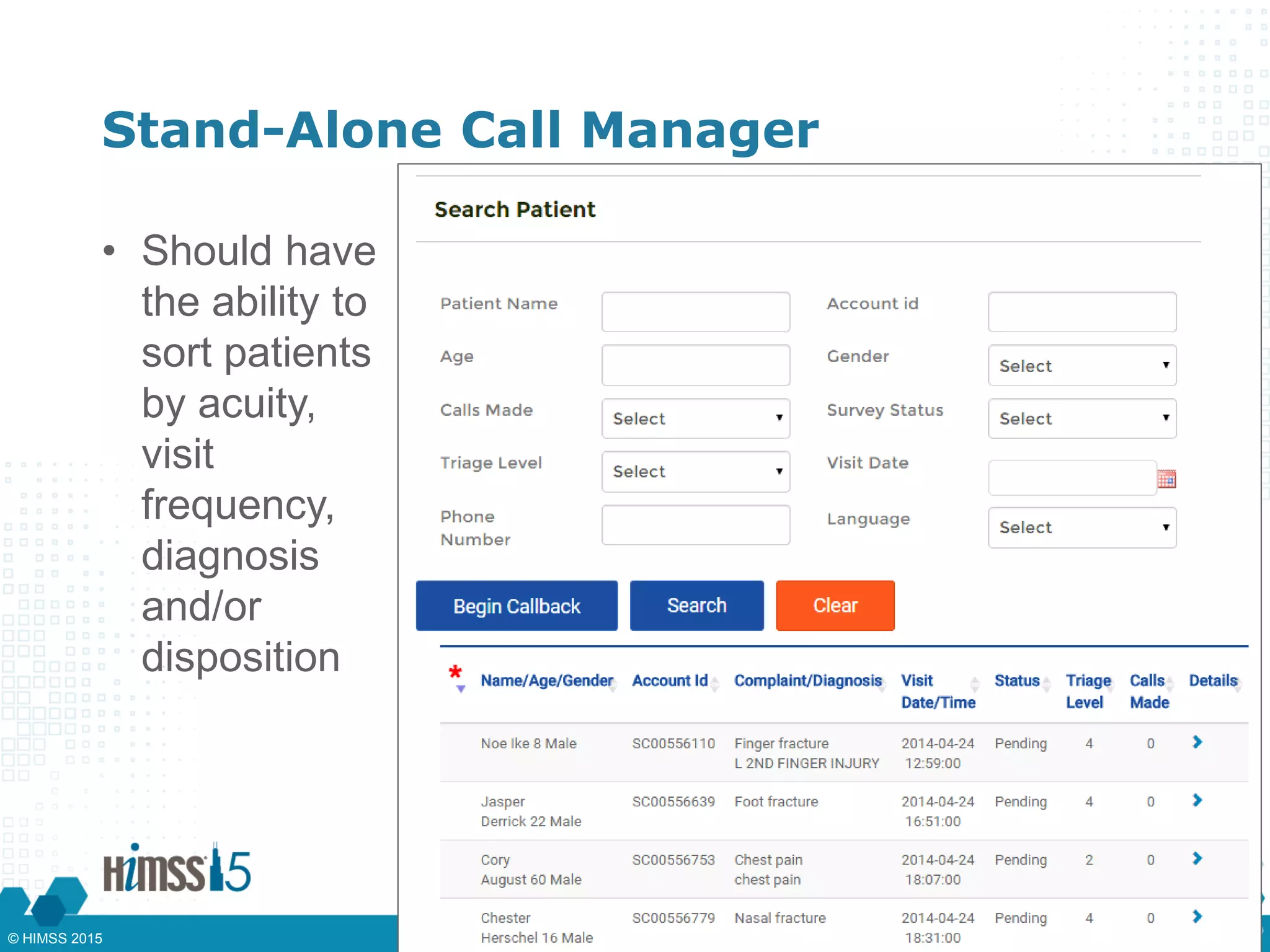
Stand-Alone Call Manager
• Should have
the ability to
sort patients
by acuity,
visit
frequency,
diagnosis
and/or
disposition
© HIMSS 2015
EHR-Embedded Call Manager
• During the ED visit, the provider selects in the EHR
whether the patient is to receive a call back and by
whom (attending, specific mid-level or mid-level pool)
• EHR sends email alert to an appropriate provider’s
“Call-Back Folder” (queue)
• Provider initiates telephone encounter via link in email
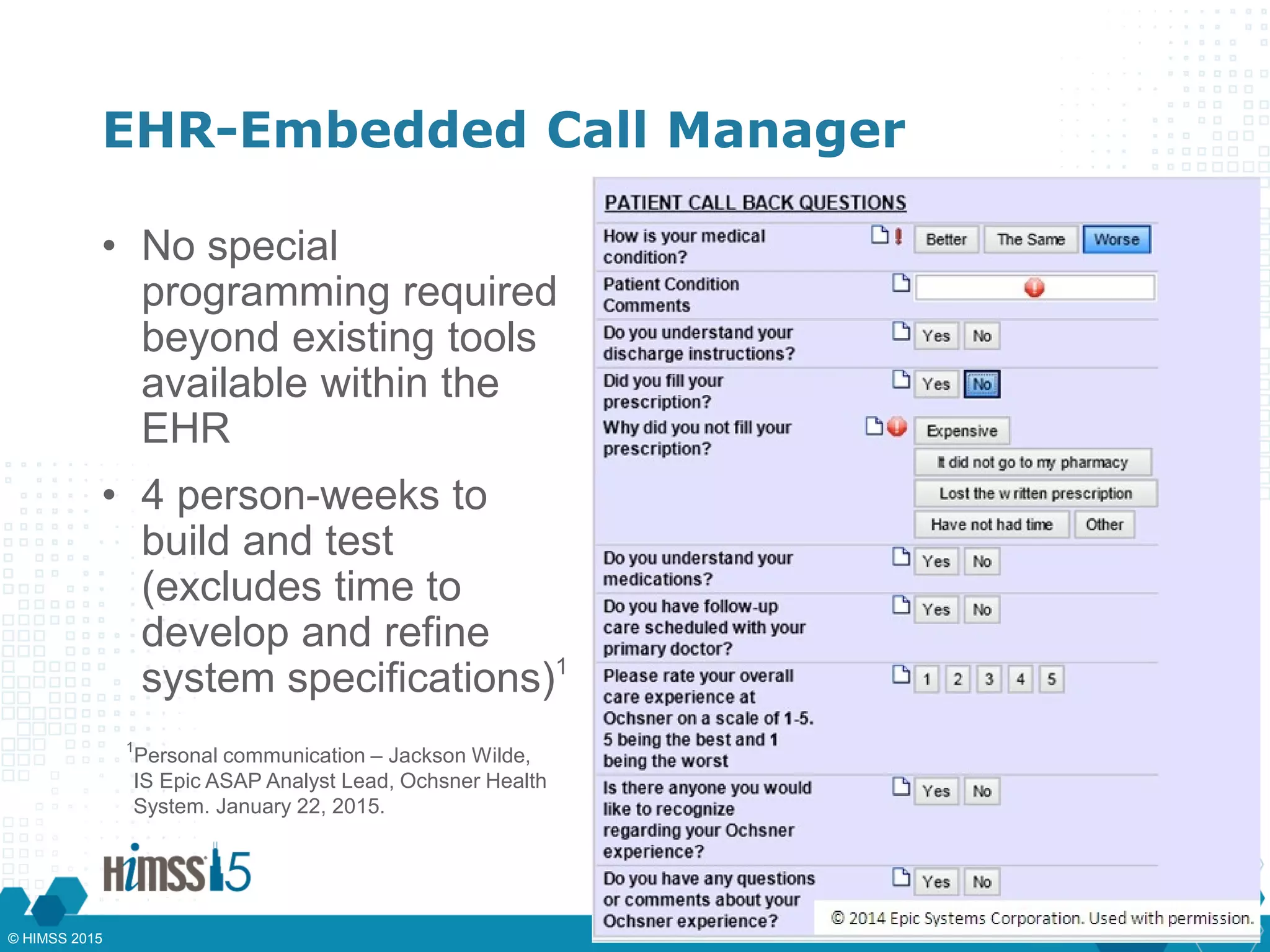
• Navigation template facilitates documentation of patient
responses to survey questions within the EHR
• Full business rules and logic including ability to quickly
generate a new prescription
EHR-Embedded Call Manager
• No special
programming required
beyond existing tools
available within the
EHR
• 4 person-weeks to
build and test
(excludes time to
develop and refine
system specifications)1
1
Personal communication – Jackson Wilde,
IS Epic ASAP Analyst Lead, Ochsner Health
System. January 22, 2015.
© HIMSS 2015
Interactive Voice Response (IVR)
• Very useful for patient reminders
• Supports automated surveys
• Cost-efficient
• Does not require patient to be
“on-line”
• May be perceived as
impersonal, interruptive or
inconvenient
• Requires an immediate response and may thus be less
thoughtful
© HIMSS 2015
Text or Email
• Survey mechanisms transmitted
to patients via text or email
• Cost-effective
• Requires patient to be “on-line”
or to have a smart device
• Allows patient to respond when
convenient yielding potentially a
more thoughtful response
1
Patel PB, Vinson DR. Physician e-mail and telephone contact after emergency department visit
improves patient satisfaction: a crossover trial. Ann Emerg Med. 2013;61(6):631-7.
• Satisfaction advantages similar to call-back1
© HIMSS 2015
Hybrid Approaches
• A combination of any of these approaches:
• In-house survey
• Call-back
• IVR
• Email
• Text (SMS messaging)
• Multiple methodologies may increase overall response
rates
• Effective systems attempt one approach and then “roll”
to the next approach
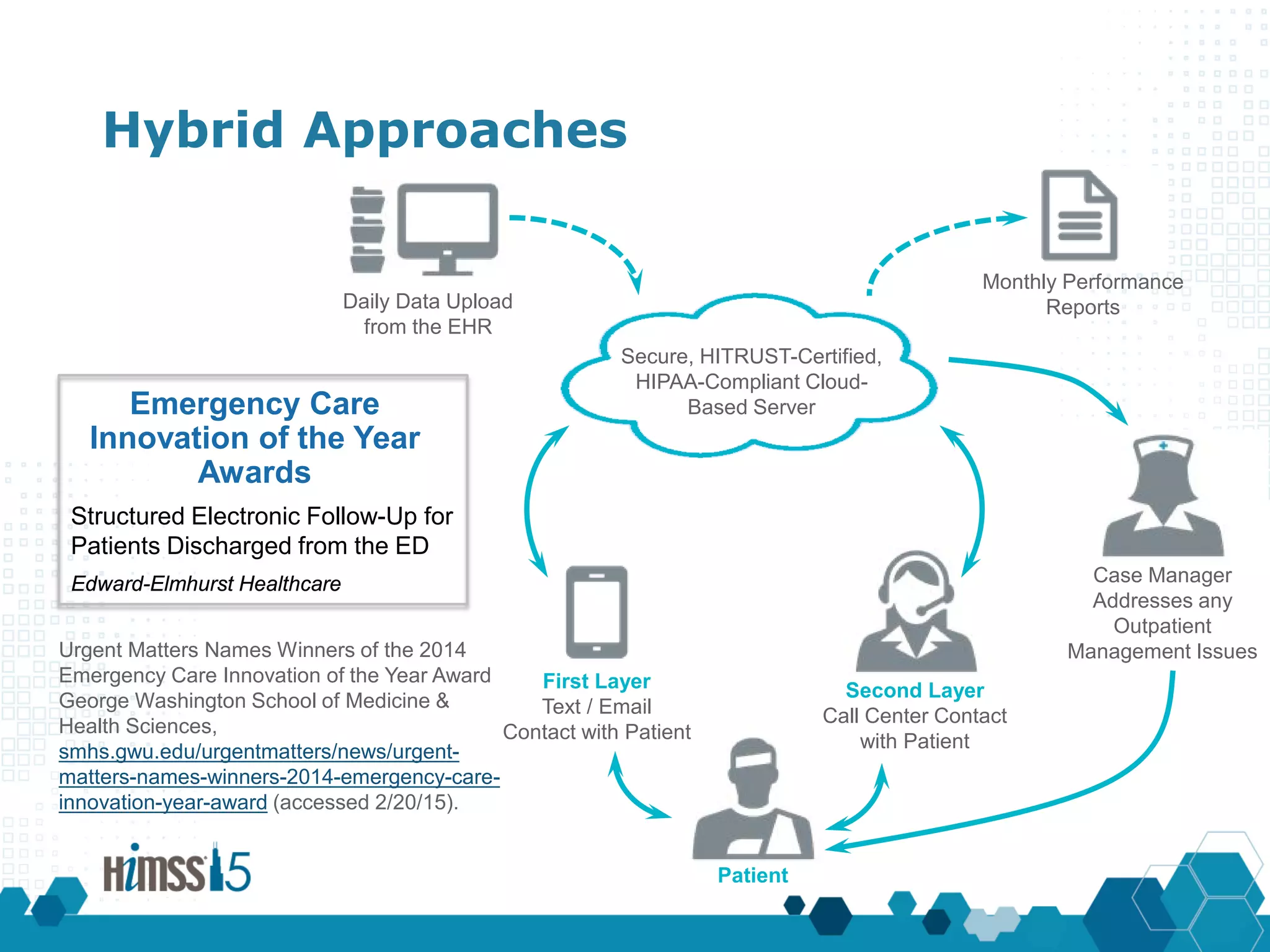
Hybrid Approaches
Daily Data Upload
from the EHR
Secure, HITRUST-Certified,
HIPAA-Compliant Cloud-
Based ServerEmergency Care
Innovation of the Year
Awards
Structured Electronic Follow-Up for
Patients Discharged from the ED
Edward-Elmhurst Healthcare
Urgent Matters Names Winners of the 2014
Emergency Care Innovation of the Year Award,
George Washington School of Medicine &
Health Sciences,
smhs.gwu.edu/urgentmatters/news/urgent-
matters-names-winners-2014-emergency-care-
innovation-year-award (accessed 2/20/15).
First Layer
Text / Email
Contact with Patient
Second Layer
Call Center Contact
with Patient
Patient
Monthly Performance
Reports
Case Manager
Addresses any
Outpatient
Management Issues
Additional Benefits of
Automating the Follow-Up
of Discharged ED Patients
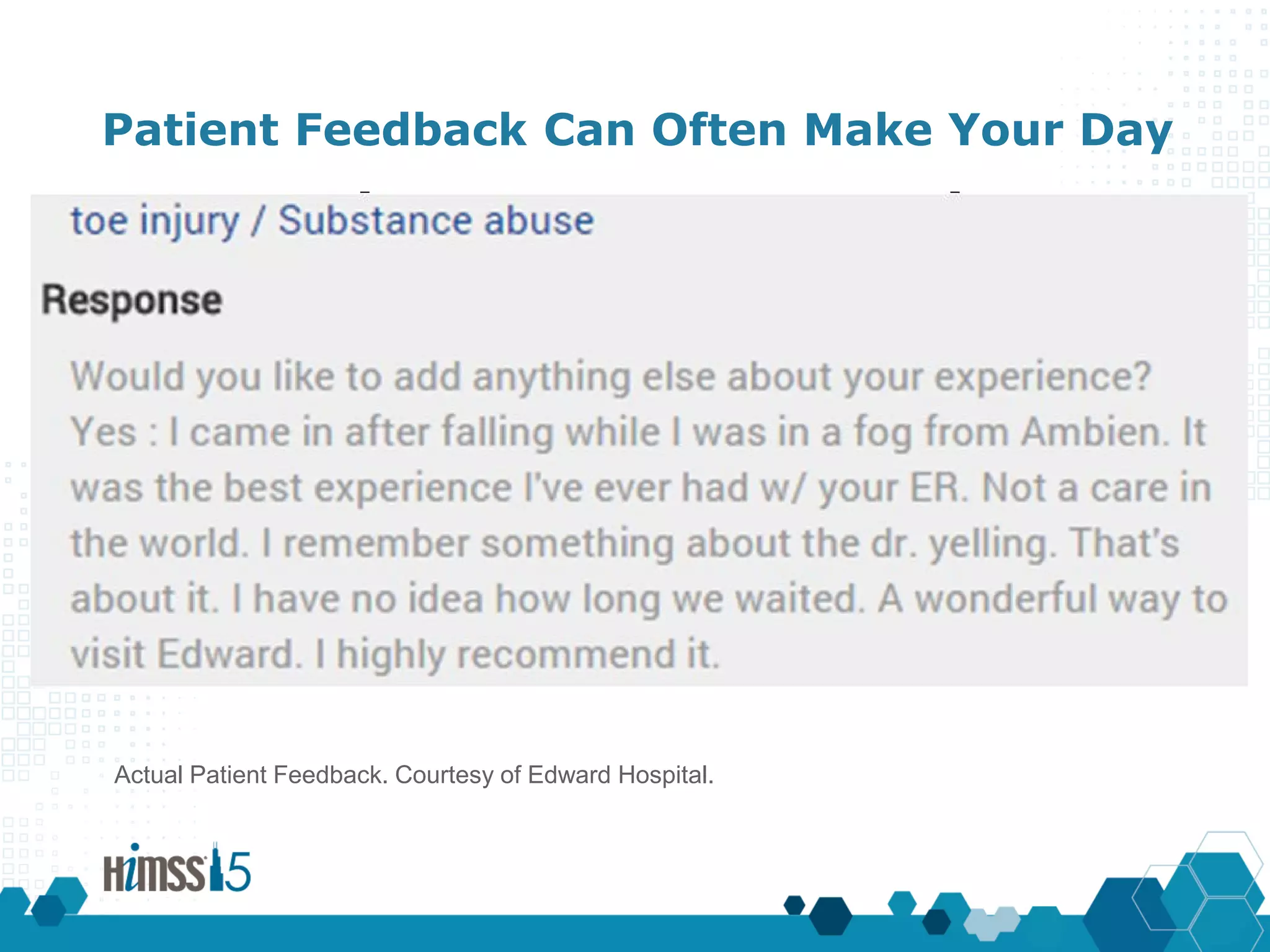
Patient Feedback Can Often Make Your Day
Actual Patient Feedback. Courtesy of Edward Hospital.
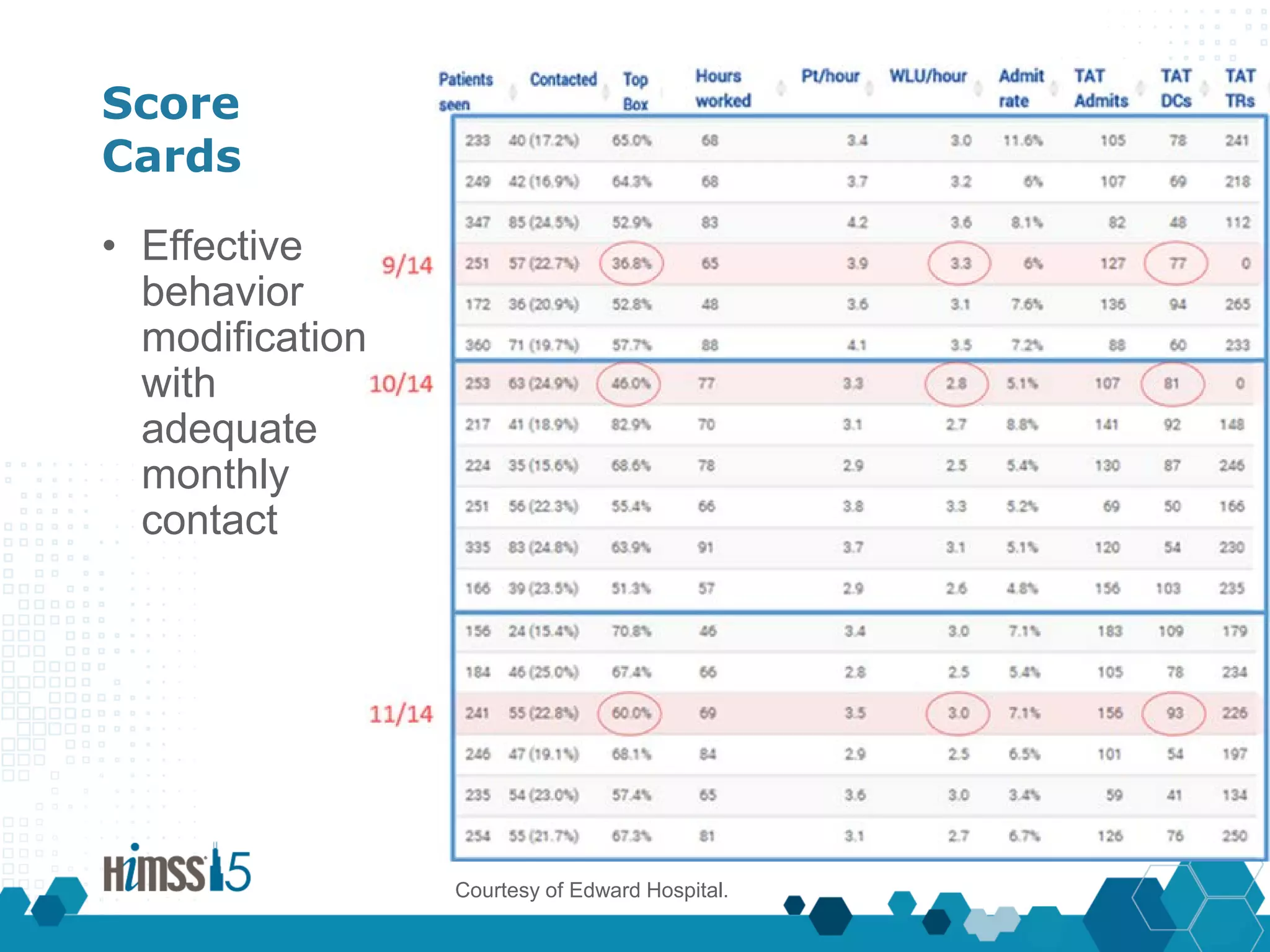
Score
Cards
• Effective
behavior
modification
with
adequate
monthly
contact
Courtesy of Edward Hospital.
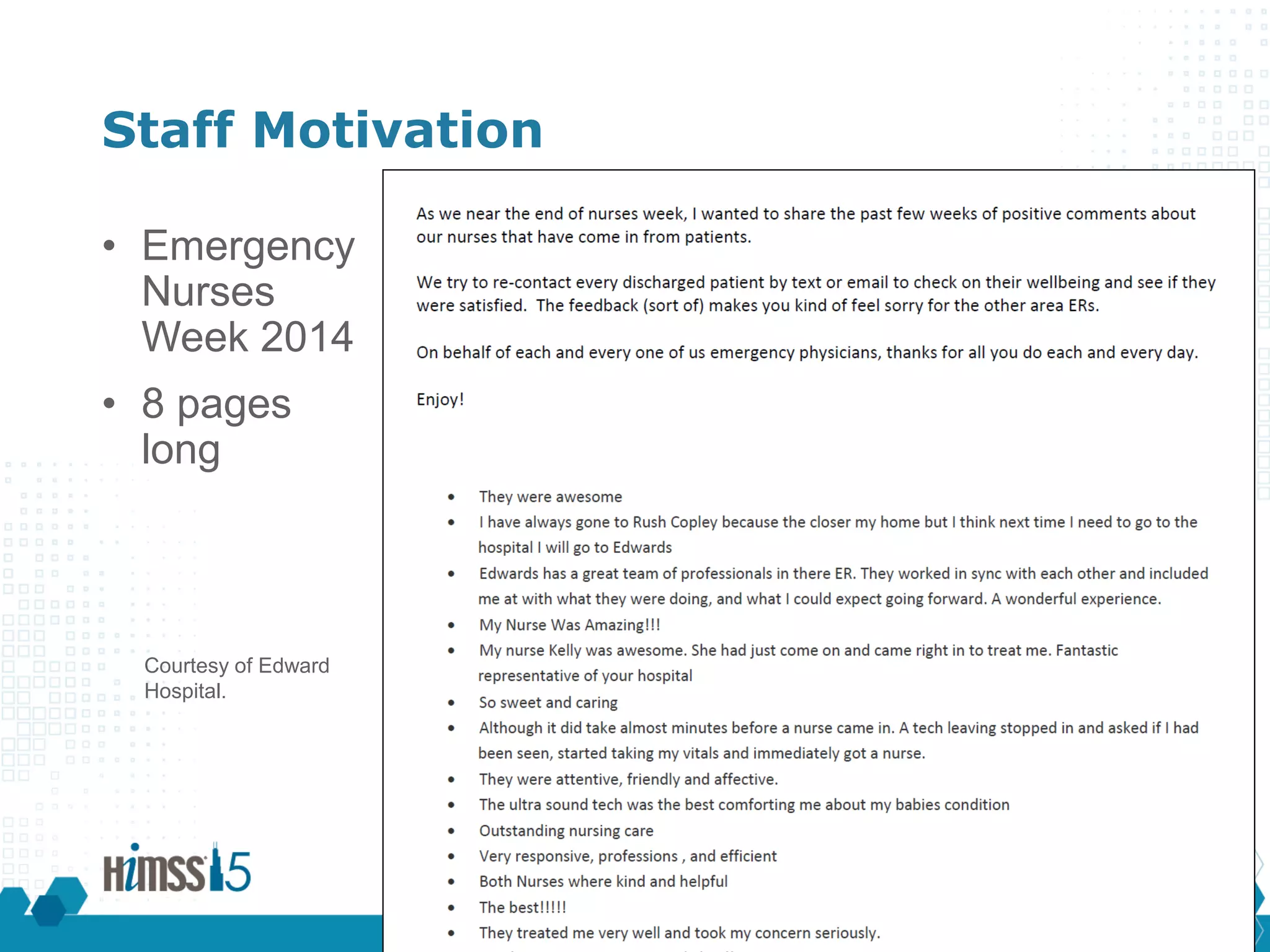
Staff Motivation
• Emergency
Nurses
Week 2014
• 8 pages
long
Courtesy of Edward
Hospital.
Frequent ED Users
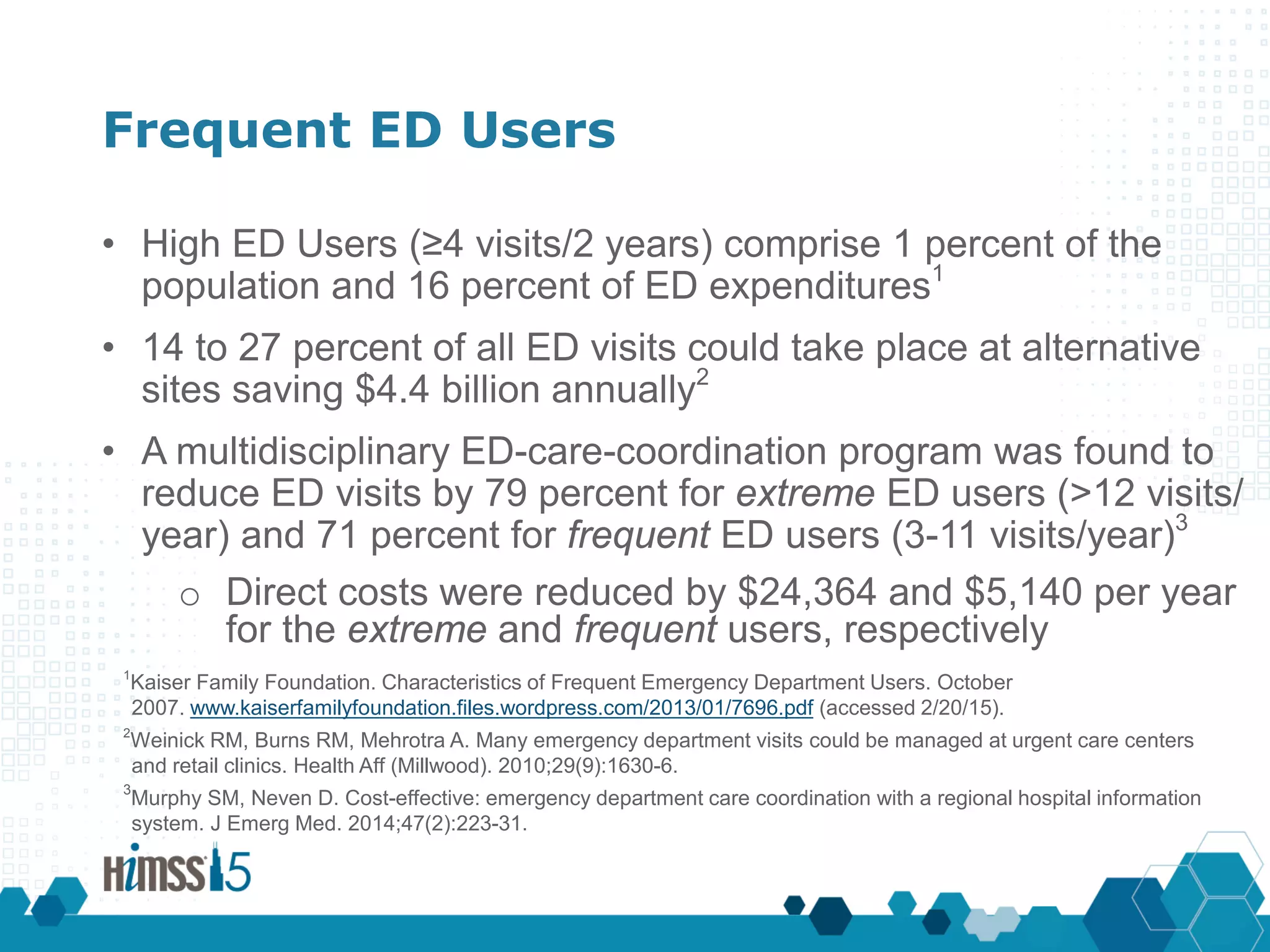
• High ED Users (≥4 visits/2 years) comprise 1 percent of the
population and 16 percent of ED expenditures1
• 14 to 27 percent of all ED visits could take place at alternative
sites saving $4.4 billion annually2
• A multidisciplinary ED-care-coordination program was found to
reduce ED visits by 79 percent for extreme ED users (>12 visits/
year) and 71 percent for frequent ED users (3-11 visits/year)3
o Direct costs were reduced by $24,364 and $5,140 per year
for the extreme and frequent users, respectively
1
Kaiser Family Foundation. Characteristics of Frequent Emergency Department Users. October
2007. www.kaiserfamilyfoundation.files.wordpress.com/2013/01/7696.pdf (accessed 2/20/15).
2
Weinick RM, Burns RM, Mehrotra A. Many emergency department visits could be managed at urgent care centers
and retail clinics. Health Aff (Millwood). 2010;29(9):1630-6.
3
Murphy SM, Neven D. Cost-effective: emergency department care coordination with a regional hospital information
system. J Emerg Med. 2014;47(2):223-31.
Potential to Reduce Observation Admissions
• Short-Stay Observation Admission
o Challenging for the hospital –
“soft” admission reimbursement is
less than for inpatient admissions
o Challenging for the patient –
Medicare patients are covered
under Part B (higher out-of-pocket
charges and co-pays)
o May adversely impact satisfaction
• Observation admissions may be
reduced with post-discharge wellness
checking
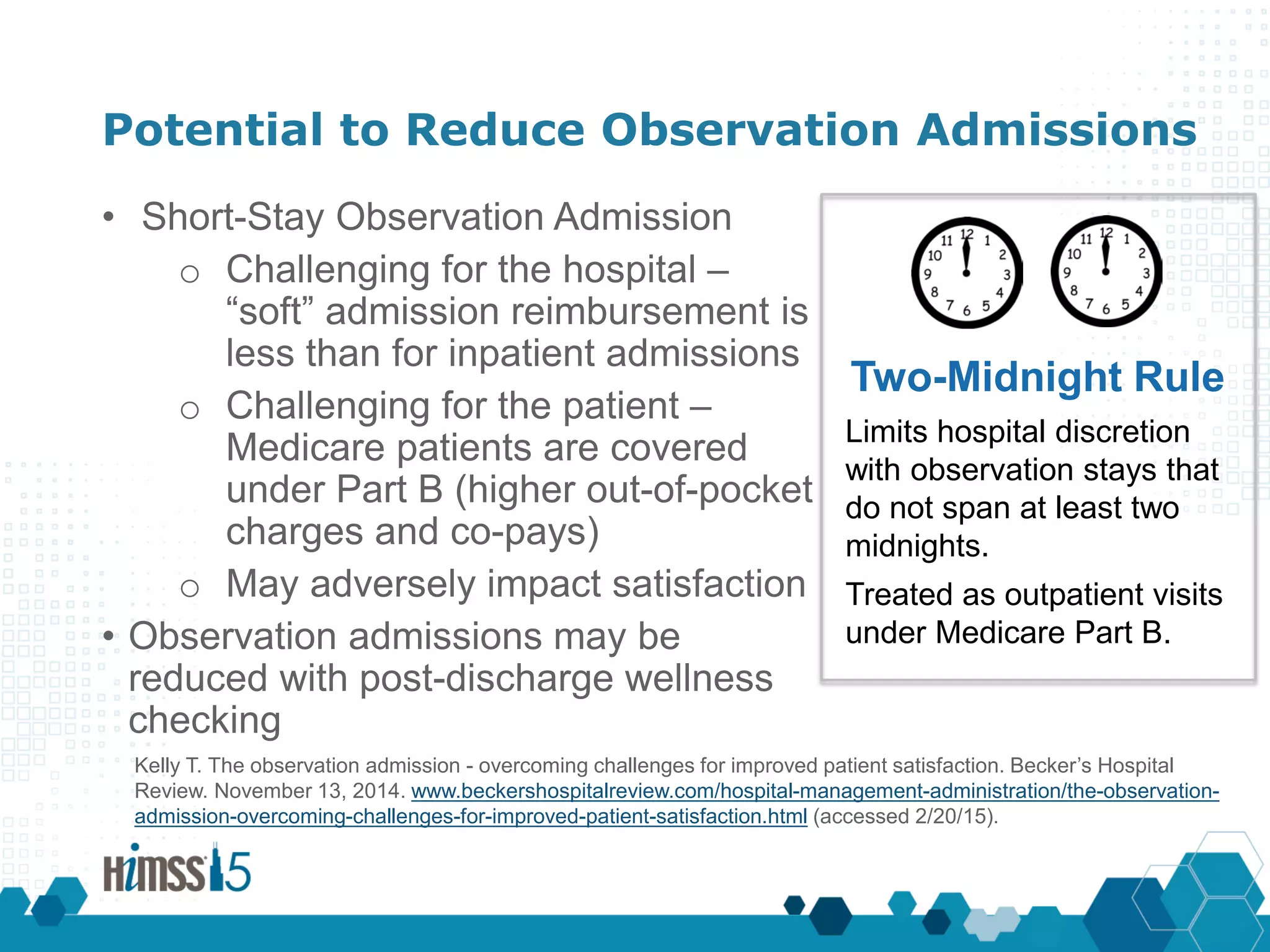
Two-Midnight Rule
Limits hospital discretion
with observation stays that
do not span at least two
midnights.
Treated as outpatient visits
under Medicare Part B.
Kelly T. The observation admission - overcoming challenges for improved patient satisfaction. Becker’s Hospital
Review. November 13, 2014. www.beckershospitalreview.com/hospital-management-administration/the-observation-
admission-overcoming-challenges-for-improved-patient-satisfaction.html (accessed 2/20/15).
Risk Reduction
• Proactive
o Identify and respond to patients
who take a turn for the worse
o Assist patients who fail to
understand or follow their care plan
o Address complaints and
misperceptions before they
progress to a claim
• Defensive
o Document patient improvement,
understanding of instructions and
satisfaction with care
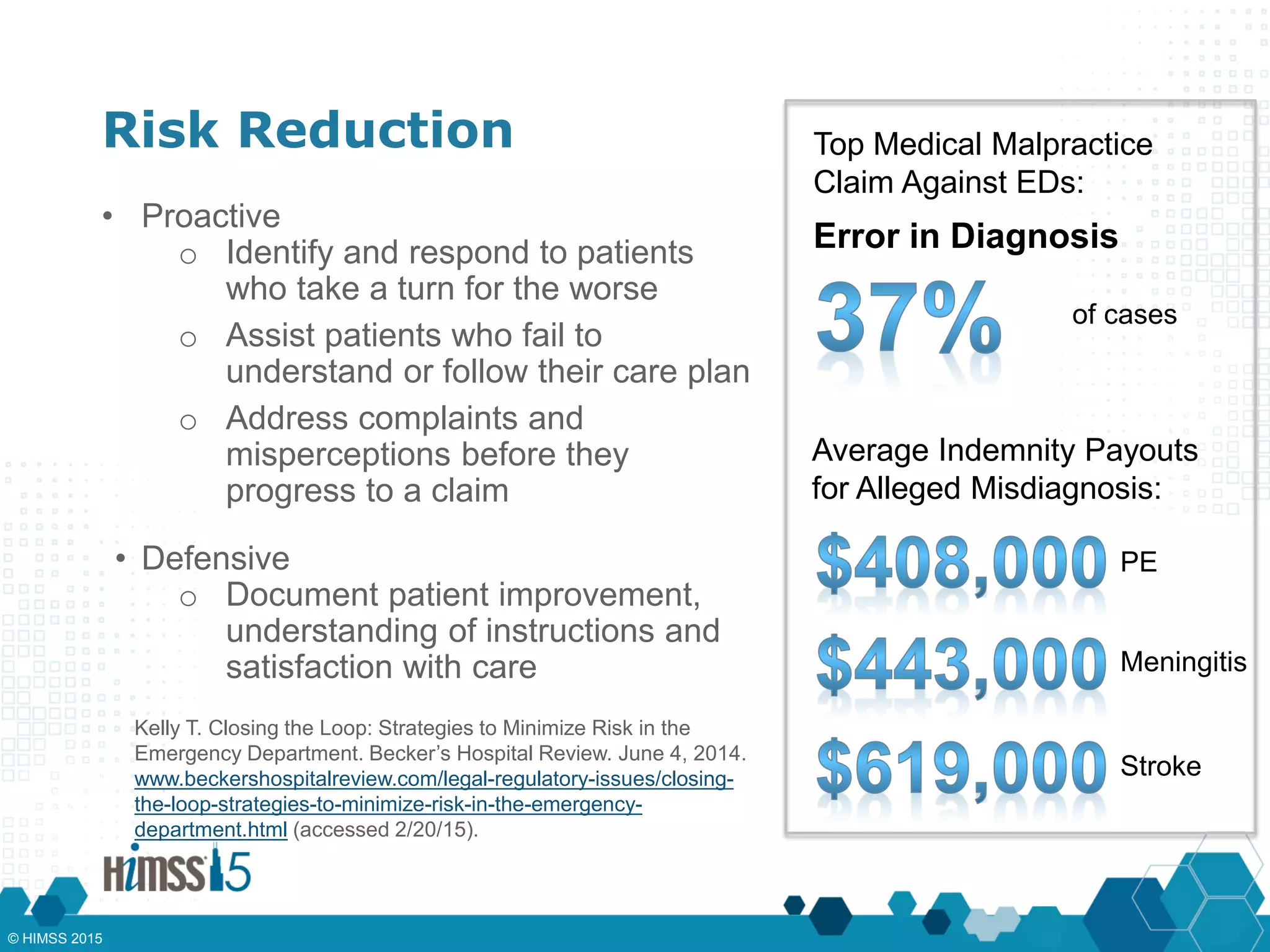
Top Medical Malpractice
Claim Against EDs:
of cases
Error in Diagnosis
Average Indemnity Payouts
for Alleged Misdiagnosis:
PE
Meningitis
Stroke
Kelly T. Closing the Loop: Strategies to Minimize Risk in the
Emergency Department. Becker’s Hospital Review. June 4, 2014.
www.beckershospitalreview.com/legal-regulatory-issues/closing-
the-loop-strategies-to-minimize-risk-in-the-emergency-
department.html (accessed 2/20/15).
© HIMSS 2015
Support for Your Patient Portal
• MU Stage 2 Objective – View, Download, and
Transmit to Third Party
• Must satisfy both of the following requirements:
o > 50% of those discharged from the
inpatient or emergency department
have their information available
online within 36 hours of discharge
o > 5% of those discharged from the
inpatient or ED view, download or
transmit to a third party
Meaningful Use Final Stage 2 – 2014 Edition Objective.
© HIMSS 2015
Support for Your Patient Portal
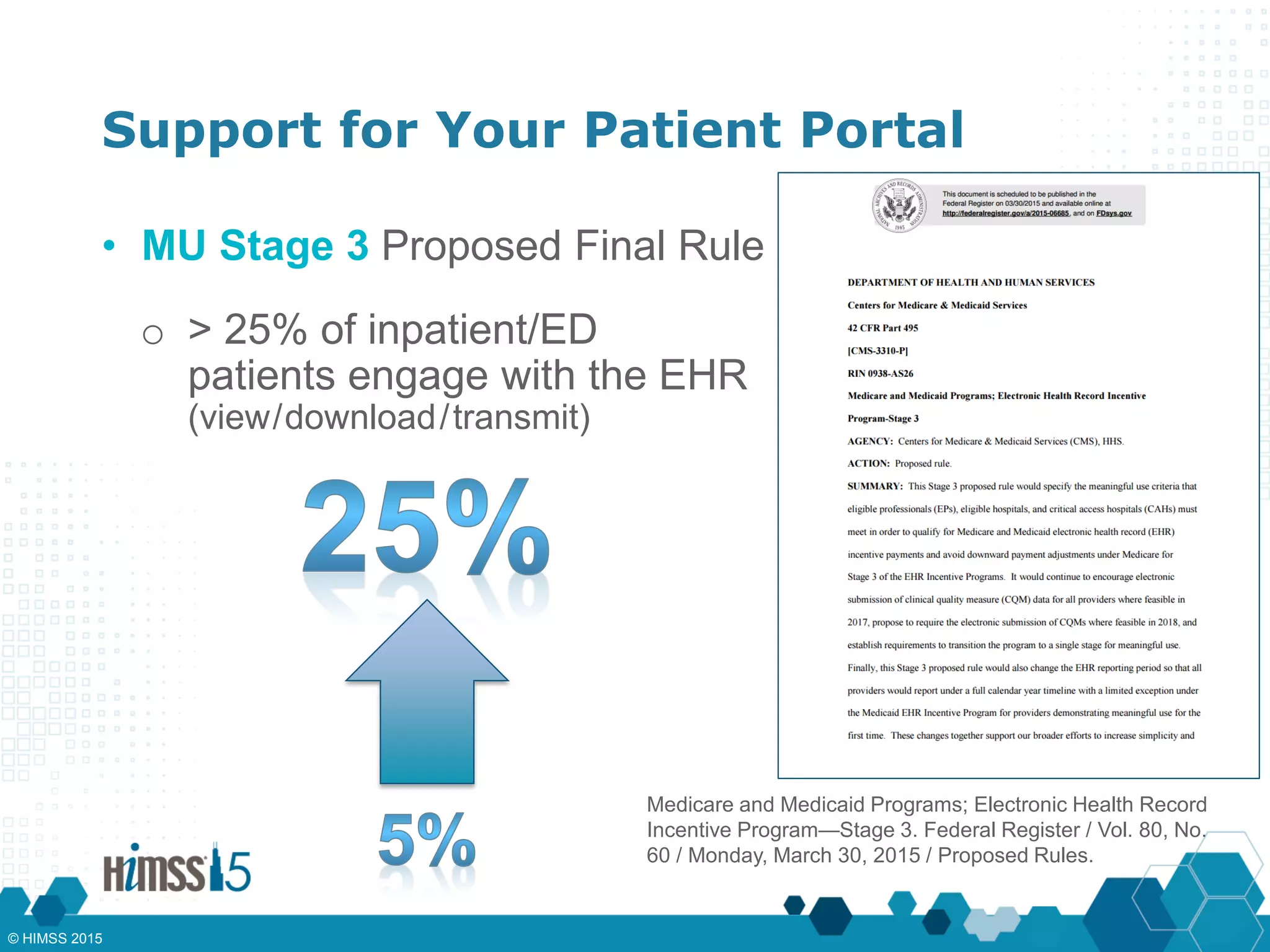
• MU Stage 3 Proposed Final Rule
o > 25% of inpatient/ED
patients engage with the EHR
(view/download/transmit)
Medicare and Medicaid Programs; Electronic Health Record
Incentive Program—Stage 3. Federal Register / Vol. 80, No.
60 / Monday, March 30, 2015 / Proposed Rules.
© HIMSS 2015
Support for Your
Patient Portal
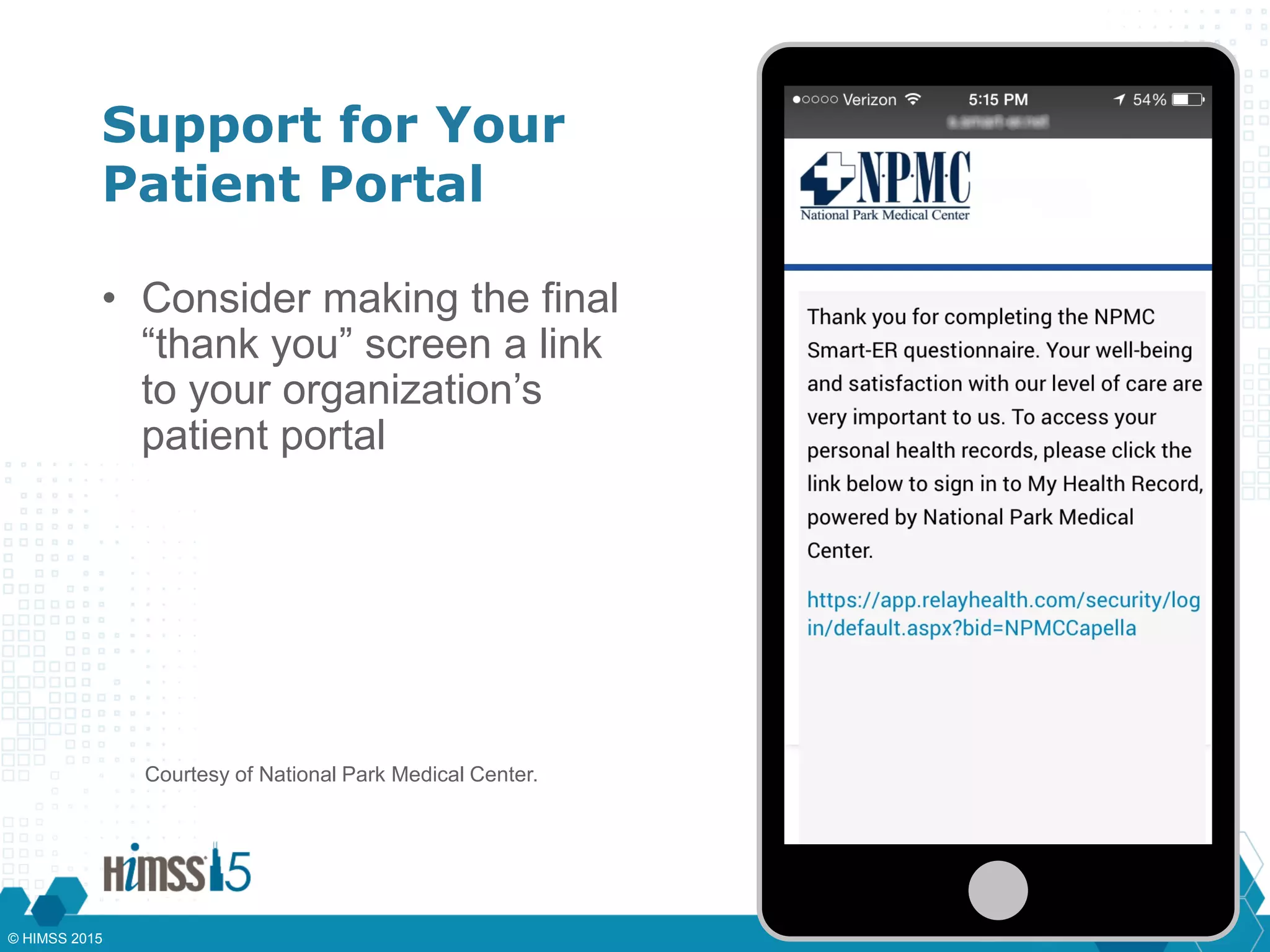
• Consider making the final
“thank you” screen a link
to your organization’s
patient portal
Courtesy of National Park Medical Center.
CVVV
© HIMSS 2015
Support for Your
Patient Portal
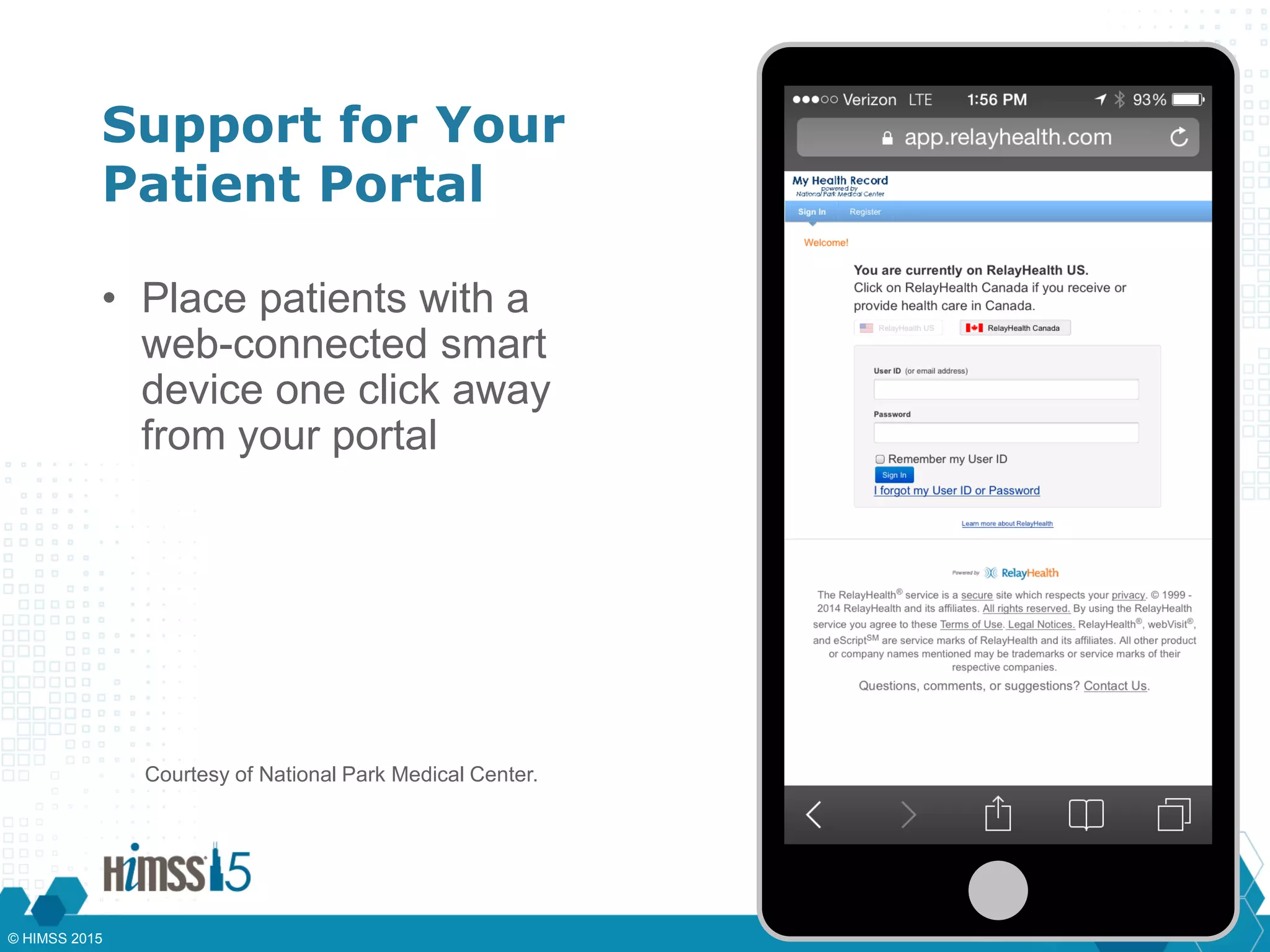
• Place patients with a
web-connected smart
device one click away
from your portal
Courtesy of National Park Medical Center.
CVVV
© HIMSS 2015
Next Steps
© HIMSS 2015
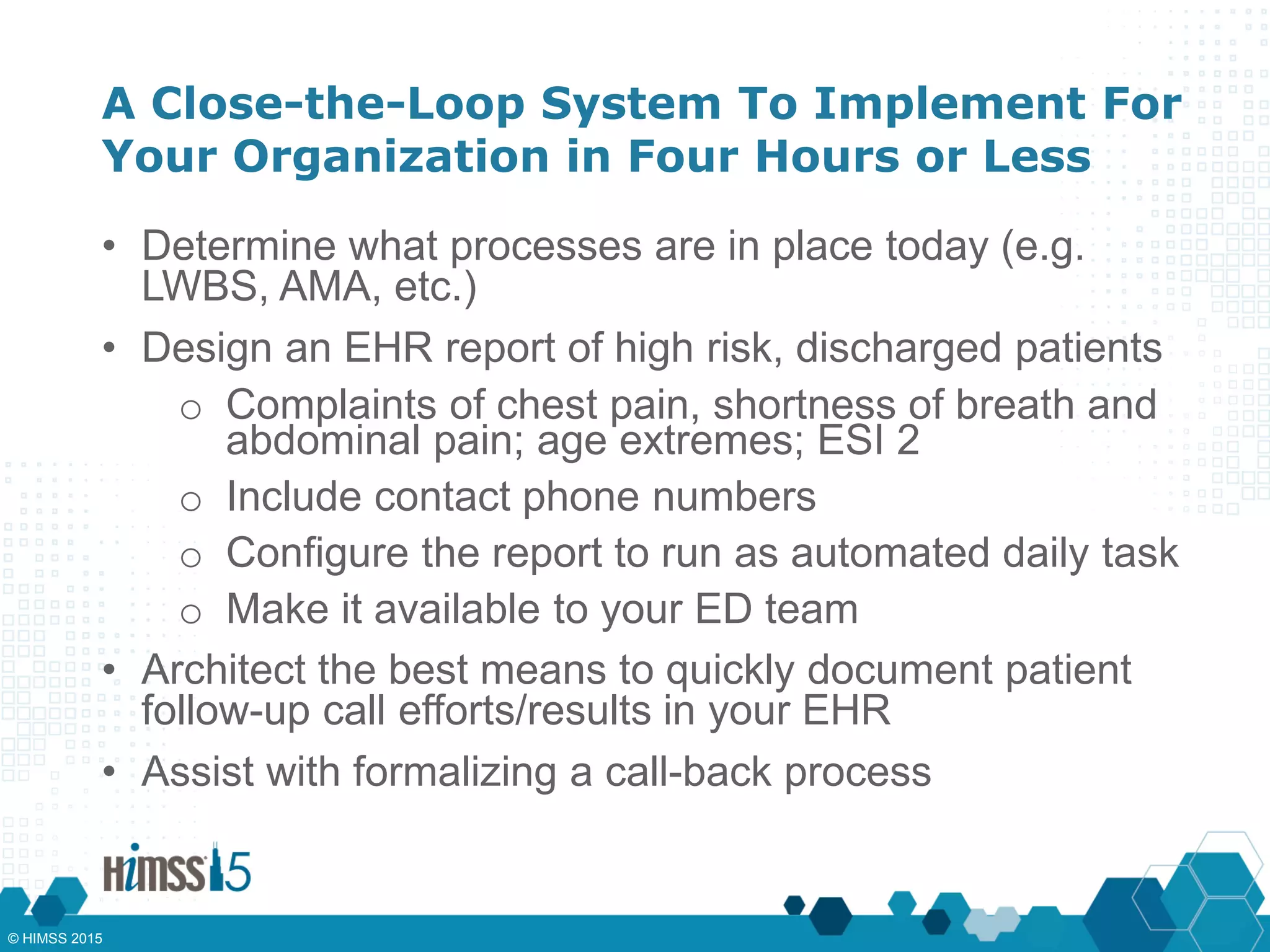
A Close-the-Loop System To Implement For
Your Organization in Four Hours or Less
• Determine what processes are in place today (e.g.
LWBS, AMA, etc.)
• Design an EHR report of high risk, discharged patients
o Complaints of chest pain, shortness of breath and
abdominal pain; age extremes; ESI 2
o Include contact phone numbers
o Configure the report to run as automated daily task
o Make it available to your ED team
• Architect the best means to quickly document patient
follow-up call efforts/results in your EHR
• Assist with formalizing a call-back process
© HIMSS 2015
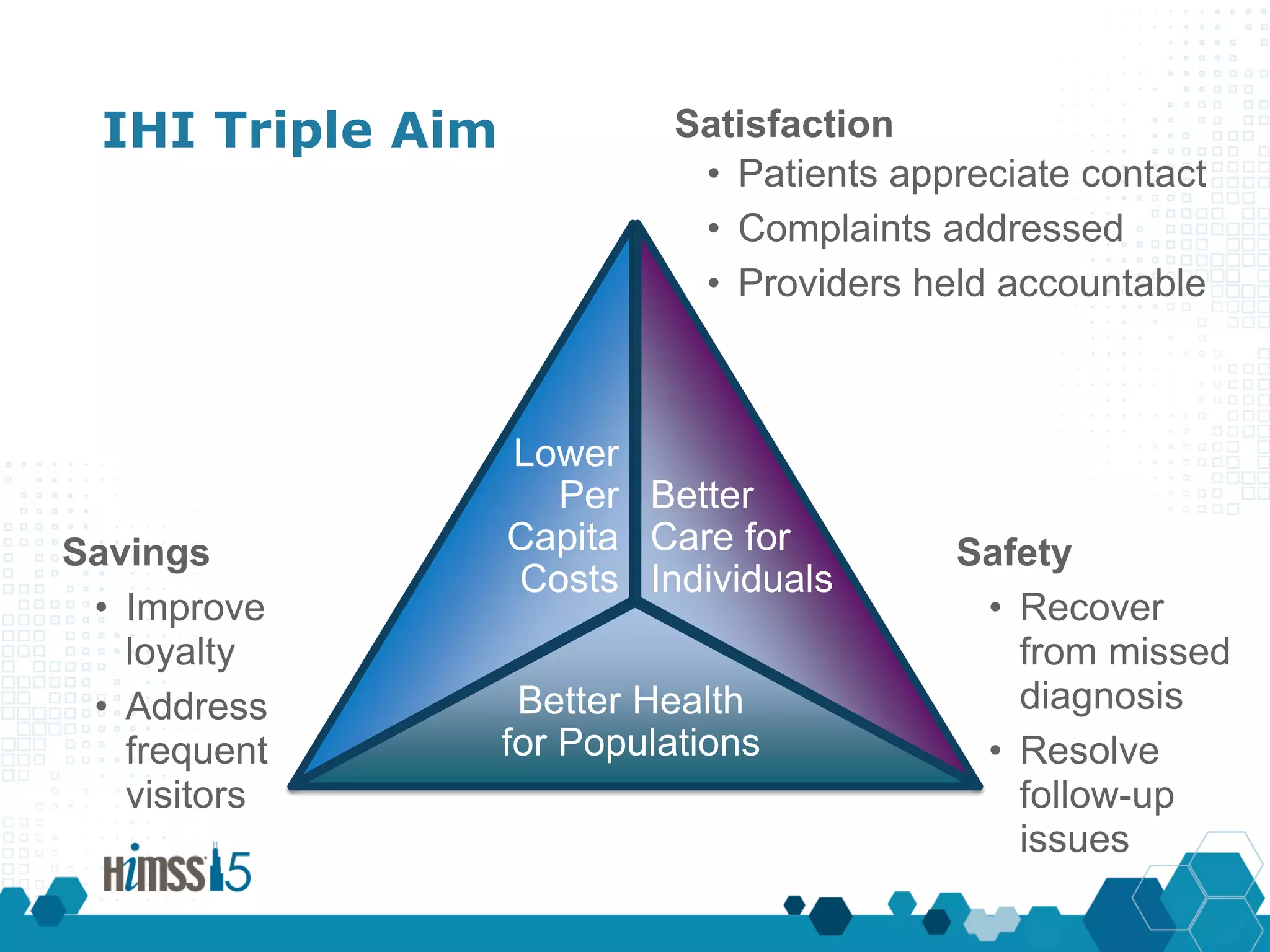
IHI Triple Aim Satisfaction
• Patients appreciate contact
• Complaints addressed
• Providers held accountable
Better Health
for Populations
Lower
Per
Capita
Costs
Better
Care for
Individuals
Safety
• Recover
from missed
diagnosis
• Resolve
follow-up
issues
Savings
• Improve
loyalty
• Address
frequent
visitors
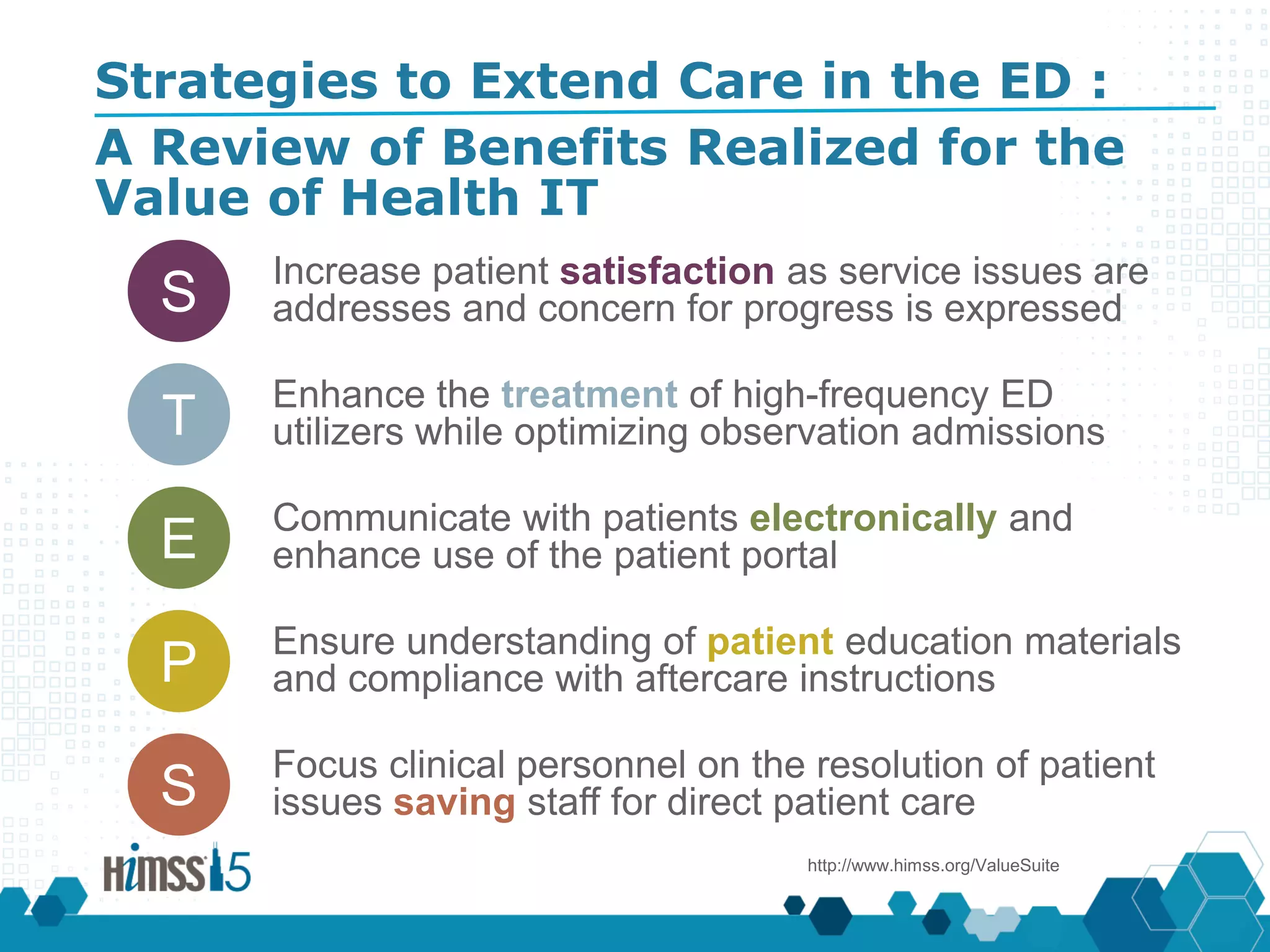
Strategies to Extend Care in the ED :
A Review of Benefits Realized for the
Value of Health IT
http://www.himss.org/ValueSuite
S
T
E
P
S
Increase patient satisfaction as service issues are
addresses and concern for progress is expressed
Enhance the treatment of high-frequency ED
utilizers while optimizing observation admissions
Communicate with patients electronically and
enhance use of the patient portal
Ensure understanding of patient education materials
and compliance with aftercare instructions
Focus clinical personnel on the resolution of patient
issues saving staff for direct patient care
Questions
Tim Kelly
Timothy.Kelly@StandardRegister.com
@T_J_Kelly
Tom Scaletta, MD
TomScaletta@gmail.com
www.engagingpatients.org/author/tscaletta/
Edward-Elmhurst
HEALTHCARE

Closing the Loop: Strategies to Extend Care in the ED

  • 1.
    Closing the Loop:Strategies to Extend Care in the ED April 13, 2015 Timothy Kelly, MS, MBA / Director DISCLAIMER: The views and opinions expressed in this presentation are those of the author and do not necessarily represent official policy or position of HIMSS. Tom Scaletta, MD / ED Chair and Medical Director Edward-Elmhurst HEALTHCARE © HIMSS 2015
  • 2.
    Conflict of Interest TimothyKelly, MS, MBA Mr. Kelly receives a salary from The Standard Register Company. He does not own any stock, options or other interest in The Standard Register Company or its affiliates. Tom Scaletta, MD In addition to his full-time position at Edward-Elmhurst Healthcare, Dr. Scaletta, is the CEO and Principal of Smart-ER, LLC, which is a business partner of Standard Register Healthcare. © HIMSS 2015
  • 3.
    Learning Objectives • Definethe unique challenges faced by Emergency Departments (EDs) that can be addressed by post-discharge patient contact systems. • Contrast the optimum queries to present to discharged ED patients to confirm well-being, understanding of instructions and satisfaction with the care experience. • Design a system that closes the loop with discharged ED patients by leveraging the EHR and other HIT tools to contact patients, document responses, alert providers to reported issues and reply to patients acknowledging any reported concerns. © HIMSS 2015
  • 4.
    Strategies to ExtendCare in the ED: An Introduction to the Benefits Realized for the Value of Health IT http://www.himss.org/ValueSuite S T E P S Satisfaction – organizations are focused on enhancing patient satisfaction and instilling patient loyalty Treatment – hospitals seek to extend care outside their walls while avoiding readmissions and return visits to the ED Electronic – patients increasingly demand electronic communications while hospitals struggle with portal utilization Prevention – hospitals seeks initiatives that help to avoid missed diagnoses and resolve follow-up issues Savings – organizations continue to struggle with financial challenges ranging from the Two-Midnight Rule to patients who present with poor reimbursement © HIMSS 2015
  • 5.
    Why Focus onthe ED? © HIMSS 2015
  • 6.
    Volume • 3.9 EDvisits for every inpatient admission 1,2 • 16 percent are admitted 3 contributing 44 percent of inpatient admissions 4 1 136.3 million annual ED visits in US hospitals FastStats, Emergency Department Visits, Centers for Disease Control and Prevention, www.cdc.gov/nchs/fastats/emergency-department.htm (accessed 2/20/15). 2 35.4 million annual hospital admissions in US hospitals Fast Facts on US Hospitals, 2014 ed., American Hospital Association, www.aha.org/research/rc/stat-studies/fast-facts.shtml (accessed 2/20/15). 3 Health, United States, 2012 with Special Feature on Emergency Care, HHS, http://www.cdc.gov/nchs/data/hus/hus12.pdf (accessed 2/20/15). 4 The Evolving Role of Emergency Departments in the United States, Rand Health, 2013, http://www.rand.org/content/dam/rand/pubs/research_reports/RR200/RR280/RAND_RR280.pdf (accessed 2/20/15). © HIMSS 2015
  • 7.
    Increasing Load andIncreasing Competition • Medicaid expansion has increased ED visits, particularly among patients without a PCP or who are unfamiliar with the healthcare system • Competition from expansion of Urgent Care Centers and Freestanding Emergency Rooms Headlines cited: www.usatoday.com/story/news/nation/2014/06/08/more- patients-flocking-to-ers-under-obamacare/10173015/ www.forbes.com/sites/brucejapsen/2013/03/11/a-boom- in-urgent-care-centers-as-entitlement-cuts-loom/ www.kaiserhealthnews.org/news/stand-alone- emergency-rooms/ (all accessed 2/20/15). © HIMSS 2015
  • 8.
    Emphasis on PatientSatisfaction • In 2013 and 2014, CMS tested a 53-question survey instrument patterned on Consumer Assessment of Healthcare Providers and Systems (CAHPS)1 • Emergency Department Patient Experience of Care (EDPEC) Survey – frequently referred to as ED-CAHPS • CMS is expected to implement in 2016 1 Emergency Department Patient Experiences with Care (EDPEC) Survey, Centers for Disease Control and Prevention, http://www.cms.gov/Research-Statistics-Data-and-Systems/Research/CAHPS/ed.html (accessed 2/20/15). © HIMSS 2015
  • 9.
  • 10.
    CAHPS-Style Surveys • Mostuseful for internal benchmarking o By service line o Year-to-year • Less useful for external benchmarking (control of variables) o Against peers Emergency Department Patient Satisfaction, Cedars-Sinai Medical Center, http://cedars- sinai.edu/Patients/Quality-Measures/Patient- Satisfaction/Emergency-Department-Patient- Satisfaction.aspx (accessed 2/20/15).
  • 11.
    Challenges with CAHPS-StyleSurveys • Small Sample Size – typical response rate < 2%1 • Ethno-Demographic Bias – e.g., English speakers provide higher scores1 • Impact of Outliers – behavioral health and drug- seeking patients can skew results2
  • 12.
    Challenges with CAHPS-StyleSurveys • Delay in Acquiring Data o Survey data is typically not available for a month or more until after a patient’s ED visit. • Nature of Emergency Medicine o Time spent with acute patients may detract from time with less acute patients. o Acute patients are frequently admitted and thus their satisfaction scores may not be tied back to the ED. Sullivan W and DeLucia J. 2+2=7? Seven things you may not know about Press Ganey Statistics. Emergency Physicians Monthly. September 22, 2010. www.epmonthly.com/features/current-features/227- seven-things-you-may-not-know-about-press-gainey-statistics/ (accessed 2/20/15).
  • 13.
  • 14.
    Objectives for anED Follow-up System • Efficiently assess patient wellbeing on the day after discharge1 • Alert providers to gaps in post-discharge knowledge (instructions, medications) or access to follow-up care1 • Document patient satisfaction with providers and with the overall ED experience1 • Provide specific patient experiences to review in the daily huddle in the Emergency Department2 1 Scaletta T. Automating Patient Contact After ED Discharge Enhances Safety and Reduces Risk. Storyboard presented at the 26th Annual National Forum on Quality Improvement in Health Care. December 7-10, 2014, Orlando, Florida. 2 Steenbergen P. Incorporating “Medical Minute” Into Daily Huddles in the Emergency Department. Studer Group. June 11, 2014. www.studergroup.com/resources/news-media/publications/insights/june- 2014/incorporating-medical-minute%E2%80%9D-into-daily-huddles-i (accessed 2/20/15).
  • 15.
    Evaluating Wellbeing • Themost critical component of follow-up • Extends care outside the walls of the ED • Can parallel processes already in place to address serious post-discharge issues (such as positive microbiology cultures) CVVV
  • 16.
    CVVV Identifying Gaps in Understanding •Areas to assess: o Discharge instructions o New medications o Follow-up appointments • Essential to have processes in place to address a knowledge gap or need for timely assistance
  • 17.
    CVVV Rating the Providers •When sample sizes and response rates are large, provider ratings become statistically valid and more compelling • Systems should match patient feedback to specific providers • Best approaches can eliminate responses from drug-seeking, behavioral health and other care plan patients
  • 18.
    CVVV Rating the Providers •Nurses, residents, mid-levels, and other staff may be rated • Rapid feedback can be leveraged to modify behavior • The best approaches also report work efficiency and utilization metrics by provider
  • 19.
    CVVV Evaluating Other Aspects ofthe Care Experience • Open-ended questions are useful for uncovering opportunities to enhance patient experience • Forward-thinking organizations may vary survey questions from time to time to evaluate the impact of specific patient experience initiatives
  • 20.
    System Design – Approachesto Patient Follow-Up © HIMSS 2015
  • 21.
    In-House Survey • Surveyadministered before the patient leaves the ED via web-based tools on a tablet or iPad • High response rate • Requires staff and equipment coordination • Fails to assess post- discharge wellbeing/progress • Patients may not feel safe offering critical feedback while still present in the department © HIMSS 2015
  • 22.
    Call-back • Easy toimplement (from daily list to commercial call-back consoles) • Calls from physician, nurse, clerical personnel or outsourced • Call-backs completed by nurses and physicians boost satisfaction scores regardless of waiting time, length of stay or triage class1 • Labor intensive and costly 1 Guss DA, Gray S, Castillo EM. The impact of patient telephone call after discharge on likelihood to recommend in an academic emergency department. J Emerg Med. 2014;46(4):560-6. • Requires an immediate response – may thus be less thoughtful • May be perceived as interruptive or inconvenient by patients © HIMSS 2015
  • 23.
    Stand-Alone Call Manager •Should have the ability to sort patients by acuity, visit frequency, diagnosis and/or disposition © HIMSS 2015
  • 24.
    EHR-Embedded Call Manager •During the ED visit, the provider selects in the EHR whether the patient is to receive a call back and by whom (attending, specific mid-level or mid-level pool) • EHR sends email alert to an appropriate provider’s “Call-Back Folder” (queue) • Provider initiates telephone encounter via link in email • Navigation template facilitates documentation of patient responses to survey questions within the EHR • Full business rules and logic including ability to quickly generate a new prescription
  • 25.
    EHR-Embedded Call Manager •No special programming required beyond existing tools available within the EHR • 4 person-weeks to build and test (excludes time to develop and refine system specifications)1 1 Personal communication – Jackson Wilde, IS Epic ASAP Analyst Lead, Ochsner Health System. January 22, 2015. © HIMSS 2015
  • 26.
    Interactive Voice Response(IVR) • Very useful for patient reminders • Supports automated surveys • Cost-efficient • Does not require patient to be “on-line” • May be perceived as impersonal, interruptive or inconvenient • Requires an immediate response and may thus be less thoughtful © HIMSS 2015
  • 27.
    Text or Email •Survey mechanisms transmitted to patients via text or email • Cost-effective • Requires patient to be “on-line” or to have a smart device • Allows patient to respond when convenient yielding potentially a more thoughtful response 1 Patel PB, Vinson DR. Physician e-mail and telephone contact after emergency department visit improves patient satisfaction: a crossover trial. Ann Emerg Med. 2013;61(6):631-7. • Satisfaction advantages similar to call-back1 © HIMSS 2015
  • 28.
    Hybrid Approaches • Acombination of any of these approaches: • In-house survey • Call-back • IVR • Email • Text (SMS messaging) • Multiple methodologies may increase overall response rates • Effective systems attempt one approach and then “roll” to the next approach
  • 29.
    Hybrid Approaches Daily DataUpload from the EHR Secure, HITRUST-Certified, HIPAA-Compliant Cloud- Based ServerEmergency Care Innovation of the Year Awards Structured Electronic Follow-Up for Patients Discharged from the ED Edward-Elmhurst Healthcare Urgent Matters Names Winners of the 2014 Emergency Care Innovation of the Year Award, George Washington School of Medicine & Health Sciences, smhs.gwu.edu/urgentmatters/news/urgent- matters-names-winners-2014-emergency-care- innovation-year-award (accessed 2/20/15). First Layer Text / Email Contact with Patient Second Layer Call Center Contact with Patient Patient Monthly Performance Reports Case Manager Addresses any Outpatient Management Issues
  • 30.
    Additional Benefits of Automatingthe Follow-Up of Discharged ED Patients
  • 31.
    Patient Feedback CanOften Make Your Day Actual Patient Feedback. Courtesy of Edward Hospital.
  • 32.
  • 33.
    Staff Motivation • Emergency Nurses Week2014 • 8 pages long Courtesy of Edward Hospital.
  • 34.
    Frequent ED Users •High ED Users (≥4 visits/2 years) comprise 1 percent of the population and 16 percent of ED expenditures1 • 14 to 27 percent of all ED visits could take place at alternative sites saving $4.4 billion annually2 • A multidisciplinary ED-care-coordination program was found to reduce ED visits by 79 percent for extreme ED users (>12 visits/ year) and 71 percent for frequent ED users (3-11 visits/year)3 o Direct costs were reduced by $24,364 and $5,140 per year for the extreme and frequent users, respectively 1 Kaiser Family Foundation. Characteristics of Frequent Emergency Department Users. October 2007. www.kaiserfamilyfoundation.files.wordpress.com/2013/01/7696.pdf (accessed 2/20/15). 2 Weinick RM, Burns RM, Mehrotra A. Many emergency department visits could be managed at urgent care centers and retail clinics. Health Aff (Millwood). 2010;29(9):1630-6. 3 Murphy SM, Neven D. Cost-effective: emergency department care coordination with a regional hospital information system. J Emerg Med. 2014;47(2):223-31.
  • 35.
    Potential to ReduceObservation Admissions • Short-Stay Observation Admission o Challenging for the hospital – “soft” admission reimbursement is less than for inpatient admissions o Challenging for the patient – Medicare patients are covered under Part B (higher out-of-pocket charges and co-pays) o May adversely impact satisfaction • Observation admissions may be reduced with post-discharge wellness checking Two-Midnight Rule Limits hospital discretion with observation stays that do not span at least two midnights. Treated as outpatient visits under Medicare Part B. Kelly T. The observation admission - overcoming challenges for improved patient satisfaction. Becker’s Hospital Review. November 13, 2014. www.beckershospitalreview.com/hospital-management-administration/the-observation- admission-overcoming-challenges-for-improved-patient-satisfaction.html (accessed 2/20/15).
  • 36.
    Risk Reduction • Proactive oIdentify and respond to patients who take a turn for the worse o Assist patients who fail to understand or follow their care plan o Address complaints and misperceptions before they progress to a claim • Defensive o Document patient improvement, understanding of instructions and satisfaction with care Top Medical Malpractice Claim Against EDs: of cases Error in Diagnosis Average Indemnity Payouts for Alleged Misdiagnosis: PE Meningitis Stroke Kelly T. Closing the Loop: Strategies to Minimize Risk in the Emergency Department. Becker’s Hospital Review. June 4, 2014. www.beckershospitalreview.com/legal-regulatory-issues/closing- the-loop-strategies-to-minimize-risk-in-the-emergency- department.html (accessed 2/20/15). © HIMSS 2015
  • 37.
    Support for YourPatient Portal • MU Stage 2 Objective – View, Download, and Transmit to Third Party • Must satisfy both of the following requirements: o > 50% of those discharged from the inpatient or emergency department have their information available online within 36 hours of discharge o > 5% of those discharged from the inpatient or ED view, download or transmit to a third party Meaningful Use Final Stage 2 – 2014 Edition Objective. © HIMSS 2015
  • 38.
    Support for YourPatient Portal • MU Stage 3 Proposed Final Rule o > 25% of inpatient/ED patients engage with the EHR (view/download/transmit) Medicare and Medicaid Programs; Electronic Health Record Incentive Program—Stage 3. Federal Register / Vol. 80, No. 60 / Monday, March 30, 2015 / Proposed Rules. © HIMSS 2015
  • 39.
    Support for Your PatientPortal • Consider making the final “thank you” screen a link to your organization’s patient portal Courtesy of National Park Medical Center. CVVV © HIMSS 2015
  • 40.
    Support for Your PatientPortal • Place patients with a web-connected smart device one click away from your portal Courtesy of National Park Medical Center. CVVV © HIMSS 2015
  • 41.
  • 42.
    A Close-the-Loop SystemTo Implement For Your Organization in Four Hours or Less • Determine what processes are in place today (e.g. LWBS, AMA, etc.) • Design an EHR report of high risk, discharged patients o Complaints of chest pain, shortness of breath and abdominal pain; age extremes; ESI 2 o Include contact phone numbers o Configure the report to run as automated daily task o Make it available to your ED team • Architect the best means to quickly document patient follow-up call efforts/results in your EHR • Assist with formalizing a call-back process © HIMSS 2015
  • 43.
    IHI Triple AimSatisfaction • Patients appreciate contact • Complaints addressed • Providers held accountable Better Health for Populations Lower Per Capita Costs Better Care for Individuals Safety • Recover from missed diagnosis • Resolve follow-up issues Savings • Improve loyalty • Address frequent visitors
  • 44.
    Strategies to ExtendCare in the ED : A Review of Benefits Realized for the Value of Health IT http://www.himss.org/ValueSuite S T E P S Increase patient satisfaction as service issues are addresses and concern for progress is expressed Enhance the treatment of high-frequency ED utilizers while optimizing observation admissions Communicate with patients electronically and enhance use of the patient portal Ensure understanding of patient education materials and compliance with aftercare instructions Focus clinical personnel on the resolution of patient issues saving staff for direct patient care
  • 45.
    Questions Tim Kelly Timothy.Kelly@StandardRegister.com @T_J_Kelly Tom Scaletta,MD TomScaletta@gmail.com www.engagingpatients.org/author/tscaletta/ Edward-Elmhurst HEALTHCARE