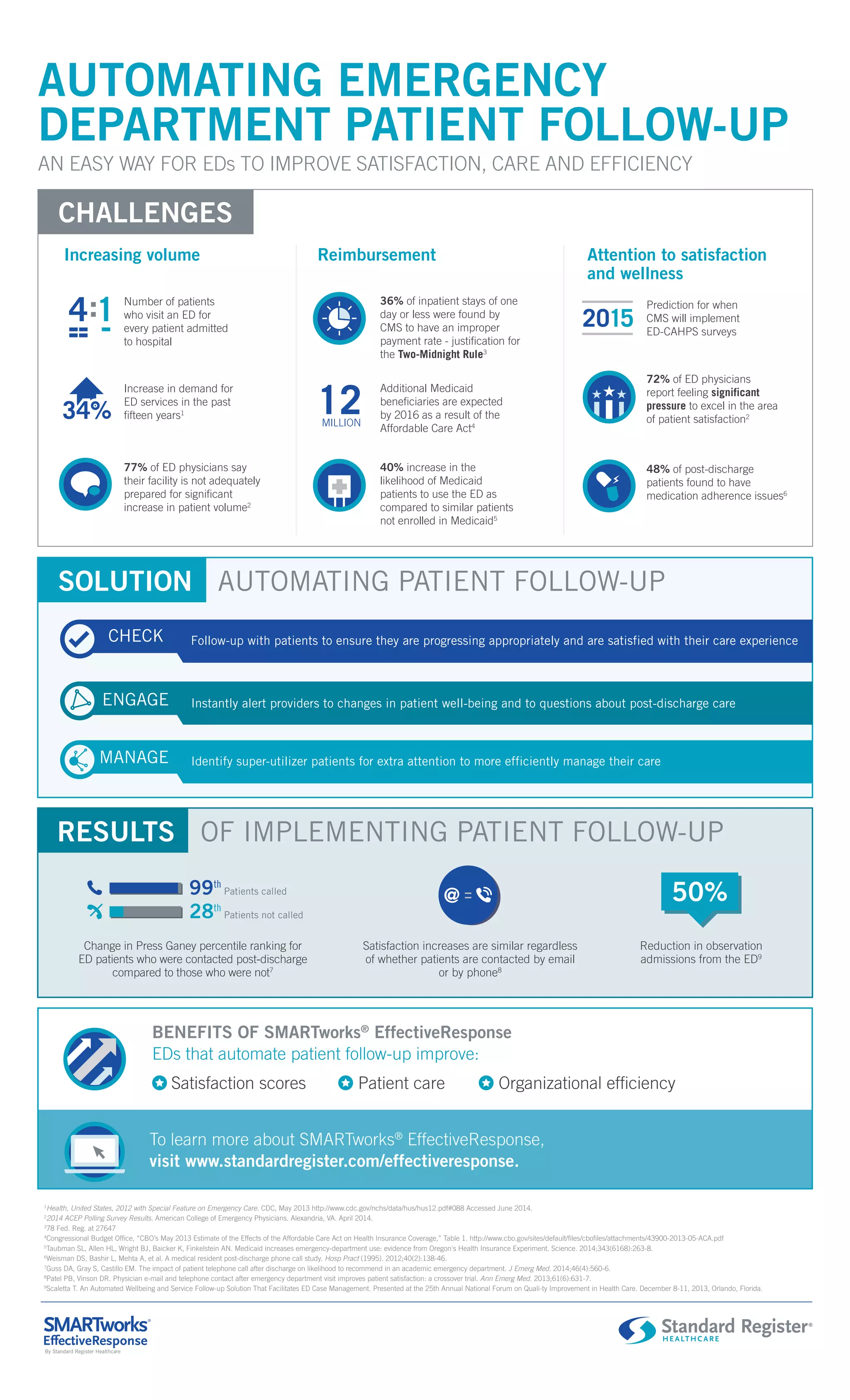
AUTOMATING EMERGENCY 
DEPARTMENT PATIENT FOLLOW-UP 
AN EASY WAY FOR EDs TO IMPROVE SATISFACTION, CARE AND EFFICIENCY 
CHALLENGES 
Increasing volume Reimbursement Attention to satisfaction 
Prediction for when 
CMS will implement 
ED-CAHPS surveys 4:1 2015 
Number of patients 
who visit an ED for 
every patient admitted 
to hospital 
36% of inpatient stays of one 
day or less were found by 
CMS to have an improper 
payment rate - justification for 
the Two-Midnight Rule3 
12 MILLION 
Additional Medicaid 
beneficiaries are expected 
by 2016 as a result of the 
Affordable Care Act4 
40% increase in the 
likelihood of Medicaid 
patients to use the ED as 
compared to similar patients 
not enrolled in Medicaid5 
Increase in demand for 
ED services in the past 
fifteen years1 
77% of ED physicians say 
their facility is not adequately 
prepared for significant 
increase in patient volume2 
34% 
SOLUTION AUTOMATING PATIENT FOLLOW-UP 
CHECK Follow-up with patients to ensure they are progressing appropriately and are satisfied with their care experience 
ENGAGE Instantly alert providers to changes in patient well-being and to questions about post-discharge care 
MANAGE Identify super-utilizer patients for extra attention to more efficiently manage their care 
RESULTS OF IMPLEMENTING PATIENT FOLLOW-UP 
99th Patients called 
50% 
28th 
Patients not called 
Change in Press Ganey percentile ranking for 
ED patients who were contacted post-discharge 
compared to those who were not7 
@ 
Satisfaction increases are similar regardless 
of whether patients are contacted by email 
or by phone8 
Reduction in observation 
admissions from the ED9 
BENEFITS OF SMARTworks® EffectiveResponse 
EDs that automate patient follow-up improve: 
Satisfaction scores Patient care Organizational efficiency 
To learn more about SMARTworks® EffectiveResponse, 
visit www.standardregister.com/effectiveresponse. 
and wellness 
72% of ED physicians 
report feeling significant 
pressure to excel in the area 
of patient satisfaction2 
48% of post-discharge 
patients found to have 
medication adherence issues6 
1Health, United States, 2012 with Special Feature on Emergency Care. CDC, May 2013 http://www.cdc.gov/nchs/data/hus/hus12.pdf#088 Accessed June 2014. 
22014 ACEP Polling Survey Results. American College of Emergency Physicians. Alexandria, VA. April 2014. 
378 Fed. Reg. at 27647 
4Congressional Budget Office, “CBO’s May 2013 Estimate of the Effects of the Affordable Care Act on Health Insurance Coverage,” Table 1. http://www.cbo.gov/sites/default/files/cbofiles/attachments/43900-2013-05-ACA.pdf 
5Taubman SL, Allen HL, Wright BJ, Baicker K, Finkelstein AN. Medicaid increases emergency-department use: evidence from Oregon's Health Insurance Experiment. Science. 2014;343(6168):263-8. 
6Weisman DS, Bashir L, Mehta A, et al. A medical resident post-discharge phone call study. Hosp Pract (1995). 2012;40(2):138-46. 
7Guss DA, Gray S, Castillo EM. The impact of patient telephone call after discharge on likelihood to recommend in an academic emergency department. J Emerg Med. 2014;46(4):560-6. 
8Patel PB, Vinson DR. Physician e-mail and telephone contact after emergency department visit improves patient satisfaction: a crossover trial. Ann Emerg Med. 2013;61(6):631-7. 
9Scaletta T. An Automated Wellbeing and Service Follow-up Solution That Facilitates ED Case Management. Presented at the 25th Annual National Forum on Quali-ty Improvement in Health Care. December 8-11, 2013, Orlando, Florida.

Automating ED Patient Follow-Up: INFOGRAPHIC

  • 1.
    AUTOMATING EMERGENCY DEPARTMENTPATIENT FOLLOW-UP AN EASY WAY FOR EDs TO IMPROVE SATISFACTION, CARE AND EFFICIENCY CHALLENGES Increasing volume Reimbursement Attention to satisfaction Prediction for when CMS will implement ED-CAHPS surveys 4:1 2015 Number of patients who visit an ED for every patient admitted to hospital 36% of inpatient stays of one day or less were found by CMS to have an improper payment rate - justification for the Two-Midnight Rule3 12 MILLION Additional Medicaid beneficiaries are expected by 2016 as a result of the Affordable Care Act4 40% increase in the likelihood of Medicaid patients to use the ED as compared to similar patients not enrolled in Medicaid5 Increase in demand for ED services in the past fifteen years1 77% of ED physicians say their facility is not adequately prepared for significant increase in patient volume2 34% SOLUTION AUTOMATING PATIENT FOLLOW-UP CHECK Follow-up with patients to ensure they are progressing appropriately and are satisfied with their care experience ENGAGE Instantly alert providers to changes in patient well-being and to questions about post-discharge care MANAGE Identify super-utilizer patients for extra attention to more efficiently manage their care RESULTS OF IMPLEMENTING PATIENT FOLLOW-UP 99th Patients called 50% 28th Patients not called Change in Press Ganey percentile ranking for ED patients who were contacted post-discharge compared to those who were not7 @ Satisfaction increases are similar regardless of whether patients are contacted by email or by phone8 Reduction in observation admissions from the ED9 BENEFITS OF SMARTworks® EffectiveResponse EDs that automate patient follow-up improve: Satisfaction scores Patient care Organizational efficiency To learn more about SMARTworks® EffectiveResponse, visit www.standardregister.com/effectiveresponse. and wellness 72% of ED physicians report feeling significant pressure to excel in the area of patient satisfaction2 48% of post-discharge patients found to have medication adherence issues6 1Health, United States, 2012 with Special Feature on Emergency Care. CDC, May 2013 http://www.cdc.gov/nchs/data/hus/hus12.pdf#088 Accessed June 2014. 22014 ACEP Polling Survey Results. American College of Emergency Physicians. Alexandria, VA. April 2014. 378 Fed. Reg. at 27647 4Congressional Budget Office, “CBO’s May 2013 Estimate of the Effects of the Affordable Care Act on Health Insurance Coverage,” Table 1. http://www.cbo.gov/sites/default/files/cbofiles/attachments/43900-2013-05-ACA.pdf 5Taubman SL, Allen HL, Wright BJ, Baicker K, Finkelstein AN. Medicaid increases emergency-department use: evidence from Oregon's Health Insurance Experiment. Science. 2014;343(6168):263-8. 6Weisman DS, Bashir L, Mehta A, et al. A medical resident post-discharge phone call study. Hosp Pract (1995). 2012;40(2):138-46. 7Guss DA, Gray S, Castillo EM. The impact of patient telephone call after discharge on likelihood to recommend in an academic emergency department. J Emerg Med. 2014;46(4):560-6. 8Patel PB, Vinson DR. Physician e-mail and telephone contact after emergency department visit improves patient satisfaction: a crossover trial. Ann Emerg Med. 2013;61(6):631-7. 9Scaletta T. An Automated Wellbeing and Service Follow-up Solution That Facilitates ED Case Management. Presented at the 25th Annual National Forum on Quali-ty Improvement in Health Care. December 8-11, 2013, Orlando, Florida.