
CLASSIFYING
DIFFERENT
MATERIALS
BASED ON THEIR
PROPERTIES
PART 1
CLASSIFYING
MATTER BASED ON
ITS ABILITY TO
FLOAT ON OR SINK IN
WATER
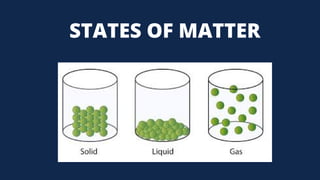
STATES OF MATTER
MASS
The amount of matter in an object.
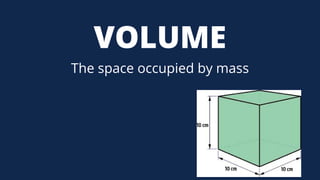
VOLUME
The space occupied by mass
DENSITY
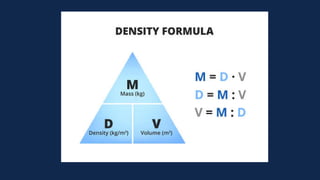
•The mass of an object per space occupied by its volume.
density= mass/volume
•It can be expressed in gram per cubic centimeter or
kilogram, per cubic meter.
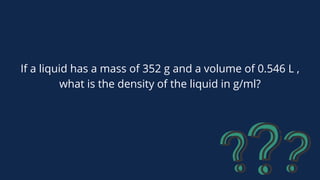
If a liquid has a mass of 352 g and a volume of 0.546 L ,
what is the density of the liquid in g/ml?
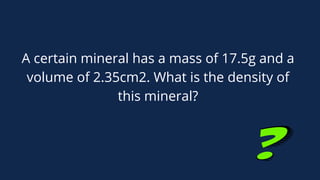
A certain mineral has a mass of 17.5g and a
volume of 2.35cm2. What is the density of
this mineral?
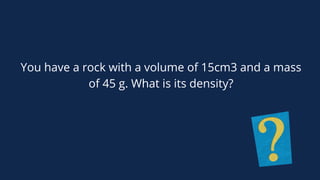
You have a rock with a volume of 15cm3 and a mass
of 45 g. What is its density?
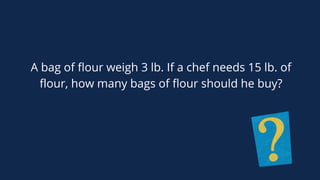
A bag of flour weigh 3 lb. If a chef needs 15 lb. of
flour, how many bags of flour should he buy?
If a 96.5g piece of aluminum has a density of 2.7
g/cm3 , what is its volume?
PART 2
CLASSIFYING MATTER
BASED ON ITS ABILITY
TO ABSORB WATER
What is the difference between absorbent and
non-absorbent?
LET'S CHECK YOUR
ANSWERS!
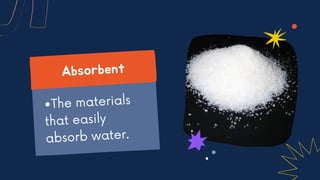
•The materials
that easily
absorb water.
Absorbent
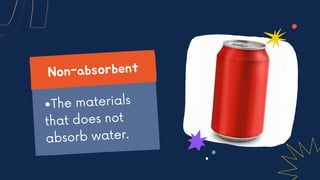
•The materials
that does not
absorb water.
Non-absorbent
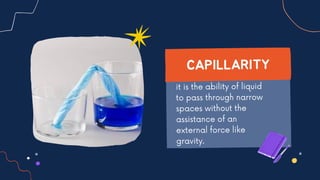
it is the ability of liquid
to pass through narrow
spaces without the
assistance of an
external force like
gravity.
CAPILLARITY
PART 3
CLASSIFYING MATTER
BASED ON TEXTURE
TEXTURE
The roughness or smoothness of materials
PART 4
CLASSIFYING MATTER
BASED ON ITS
DECAYING AND NON
DECAYING
CHARACTERISTICS
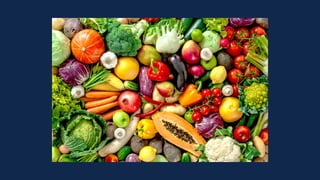
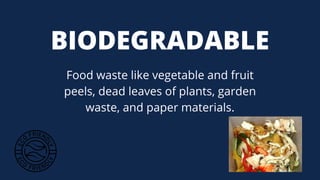
Food waste like vegetable and fruit
peels, dead leaves of plants, garden
waste, and paper materials.
BIODEGRADABLE
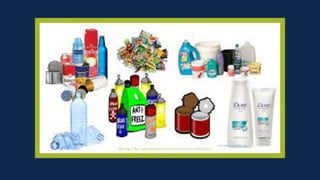
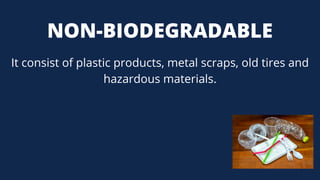
NON-BIODEGRADABLE
It consist of plastic products, metal scraps, old tires and
hazardous materials.
What is
the effect
of decaying
materials
on one's
health?
Decay is an important life process.
Decaying materials can be referred to as garbage. It can be
toxic or poisonous, too.

Classifying different materials based on their properties