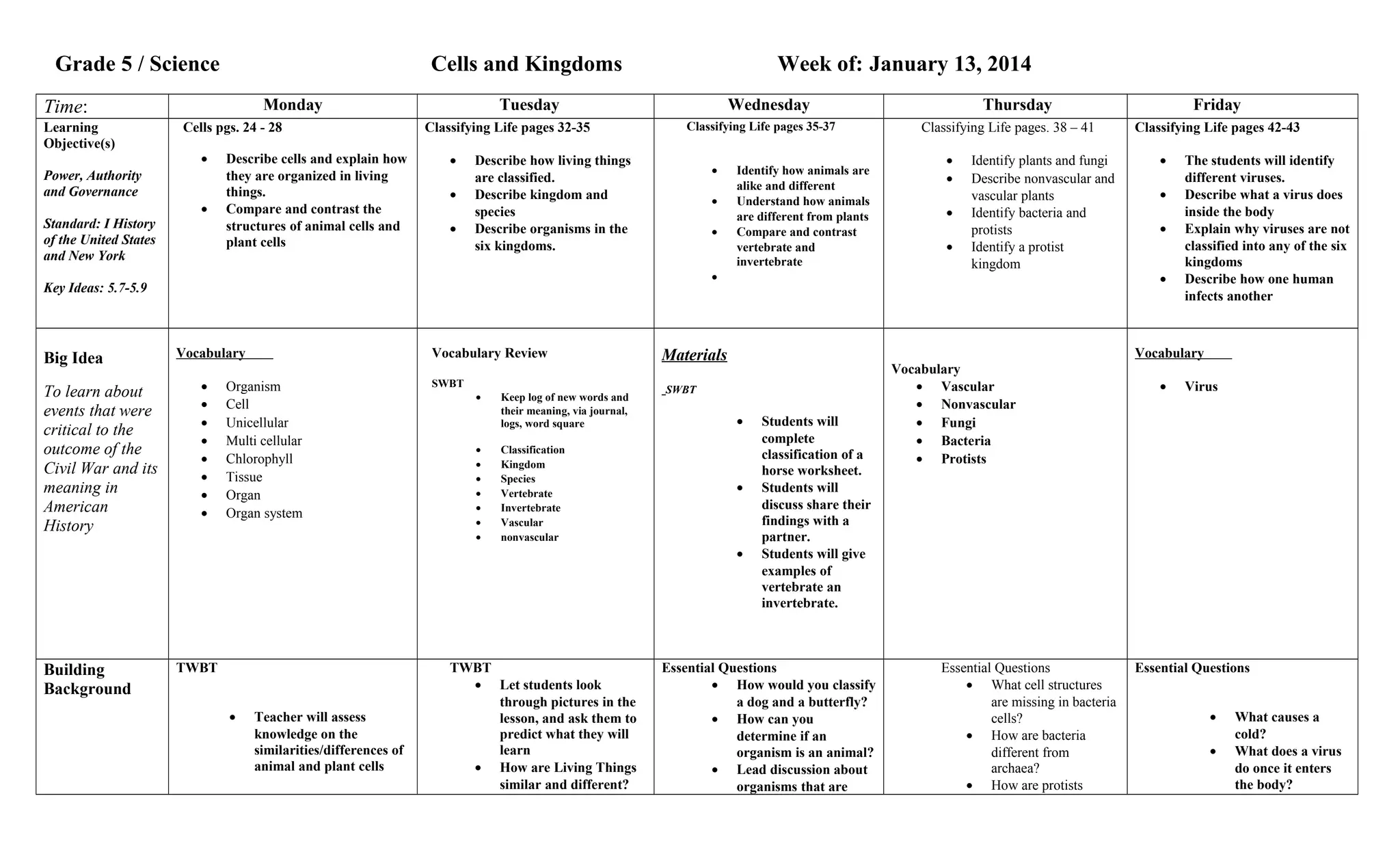
Grade 5 / Science

Cells and Kingdoms
Monday

Time:
Learning
Objective(s)

Cells pgs. 24 - 28
•

Power, Authority
and Governance
Standard: I History
of the United States
and New York

•

Describe cells and explain how
they are organized in living
things.
Compare and contrast the
structures of animal cells and
plant cells

Week of: January 13, 2014

Tuesday
Classifying Life pages 32-35
•
•
•

Wednesday
Classifying Life pages 35-37

Describe how living things
are classified.
Describe kingdom and
species
Describe organisms in the
six kingdoms.

•
•
•
•

Key Ideas: 5.7-5.9

Big Idea
To learn about
events that were
critical to the
outcome of the
Civil War and its
meaning in
American
History

Vocabulary
•
•
•
•
•
•
•
•

Vocabulary Review

Organism
Cell
Unicellular
Multi cellular
Chlorophyll
Tissue
Organ
Organ system

SWBT

•

•
•
•
•
•
•
•

Keep log of new words and
their meaning, via journal,
logs, word square
Classification
Kingdom
Species
Vertebrate
Invertebrate
Vascular
nonvascular

Identify how animals are
alike and different
Understand how animals
are different from plants
Compare and contrast
vertebrate and
invertebrate

TWBT
•

Teacher will assess
knowledge on the
similarities/differences of
animal and plant cells

TWBT
• Let students look
through pictures in the
lesson, and ask them to
predict what they will
learn
• How are Living Things
similar and different?

Classifying Life pages. 38 – 41
•
•
•
•

Identify plants and fungi
Describe nonvascular and
vascular plants
Identify bacteria and
protists
Identify a protist
kingdom

Friday
Classifying Life pages 42-43
•
•
•
•

The students will identify
different viruses.
Describe what a virus does
inside the body
Explain why viruses are not
classified into any of the six
kingdoms
Describe how one human
infects another

Vocabulary

Materials
SWBT

•

•

•

Building
Background

Thursday

Students will
complete
classification of a
horse worksheet.
Students will
discuss share their
findings with a
partner.
Students will give
examples of
vertebrate an
invertebrate.

Essential Questions
• How would you classify
a dog and a butterfly?
• How can you
determine if an
organism is an animal?
• Lead discussion about
organisms that are

Vocabulary
• Vascular
• Nonvascular
• Fungi
• Bacteria
• Protists

Essential Questions
• What cell structures
are missing in bacteria
cells?
• How are bacteria
different from
archaea?
• How are protists

•

Virus

Essential Questions
•
•

What causes a
cold?
What does a virus
do once it enters
the body?
animals and plants

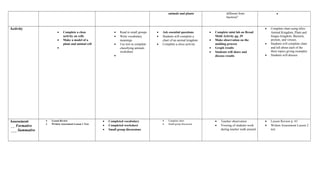
Activity

•
•

•
•

Complete a cloze
activity on cells
Make a model of a
plant and animal cell

•

•

Read in small groups
Write vocabulary
meanings
Use text to complete
classifying animals
worksheet

•
•
•

Ask essential questions
Students will complete a
chart of an animal kingdom
Complete a cloze activity

•

Assessment
__ Formative
___ Summative

•
•

Lesson Review
Written Assessment Lesson 1 Test

•
•
•

Completed vocabulary
Completed worksheet
Small group discussions

•
•

Complete chart
Small group discussion

•

different from
bacteria?

•
•
•
•

Complete mini lab on Bread
Mold Activity pg. 39
Make observation on the
molding process
Graph results
Students will share and
discuss results

•
•

Teacher observation
Viewing of students work
during teacher walk around

•

•
•

•
•

Complete chart using titles:
Animal Kingdom, Plant and
fungus kingdom, Bacteria,
protists, and viruses.
Students will complete chart
and tell about each of the
three topics giving examples
Students will discuss

Lesson Review p. 43
Written Assessment Lesson 2
test

Classification/Science

  • 1.
    Grade 5 /Science Cells and Kingdoms Monday Time: Learning Objective(s) Cells pgs. 24 - 28 • Power, Authority and Governance Standard: I History of the United States and New York • Describe cells and explain how they are organized in living things. Compare and contrast the structures of animal cells and plant cells Week of: January 13, 2014 Tuesday Classifying Life pages 32-35 • • • Wednesday Classifying Life pages 35-37 Describe how living things are classified. Describe kingdom and species Describe organisms in the six kingdoms. • • • • Key Ideas: 5.7-5.9 Big Idea To learn about events that were critical to the outcome of the Civil War and its meaning in American History Vocabulary • • • • • • • • Vocabulary Review Organism Cell Unicellular Multi cellular Chlorophyll Tissue Organ Organ system SWBT • • • • • • • • Keep log of new words and their meaning, via journal, logs, word square Classification Kingdom Species Vertebrate Invertebrate Vascular nonvascular Identify how animals are alike and different Understand how animals are different from plants Compare and contrast vertebrate and invertebrate TWBT • Teacher will assess knowledge on the similarities/differences of animal and plant cells TWBT • Let students look through pictures in the lesson, and ask them to predict what they will learn • How are Living Things similar and different? Classifying Life pages. 38 – 41 • • • • Identify plants and fungi Describe nonvascular and vascular plants Identify bacteria and protists Identify a protist kingdom Friday Classifying Life pages 42-43 • • • • The students will identify different viruses. Describe what a virus does inside the body Explain why viruses are not classified into any of the six kingdoms Describe how one human infects another Vocabulary Materials SWBT • • • Building Background Thursday Students will complete classification of a horse worksheet. Students will discuss share their findings with a partner. Students will give examples of vertebrate an invertebrate. Essential Questions • How would you classify a dog and a butterfly? • How can you determine if an organism is an animal? • Lead discussion about organisms that are Vocabulary • Vascular • Nonvascular • Fungi • Bacteria • Protists Essential Questions • What cell structures are missing in bacteria cells? • How are bacteria different from archaea? • How are protists • Virus Essential Questions • • What causes a cold? What does a virus do once it enters the body?
  • 2.
    animals and plants Activity • • • • Completea cloze activity on cells Make a model of a plant and animal cell • • Read in small groups Write vocabulary meanings Use text to complete classifying animals worksheet • • • Ask essential questions Students will complete a chart of an animal kingdom Complete a cloze activity • Assessment __ Formative ___ Summative • • Lesson Review Written Assessment Lesson 1 Test • • • Completed vocabulary Completed worksheet Small group discussions • • Complete chart Small group discussion • different from bacteria? • • • • Complete mini lab on Bread Mold Activity pg. 39 Make observation on the molding process Graph results Students will share and discuss results • • Teacher observation Viewing of students work during teacher walk around • • • • • Complete chart using titles: Animal Kingdom, Plant and fungus kingdom, Bacteria, protists, and viruses. Students will complete chart and tell about each of the three topics giving examples Students will discuss Lesson Review p. 43 Written Assessment Lesson 2 test