Classification of MAPs
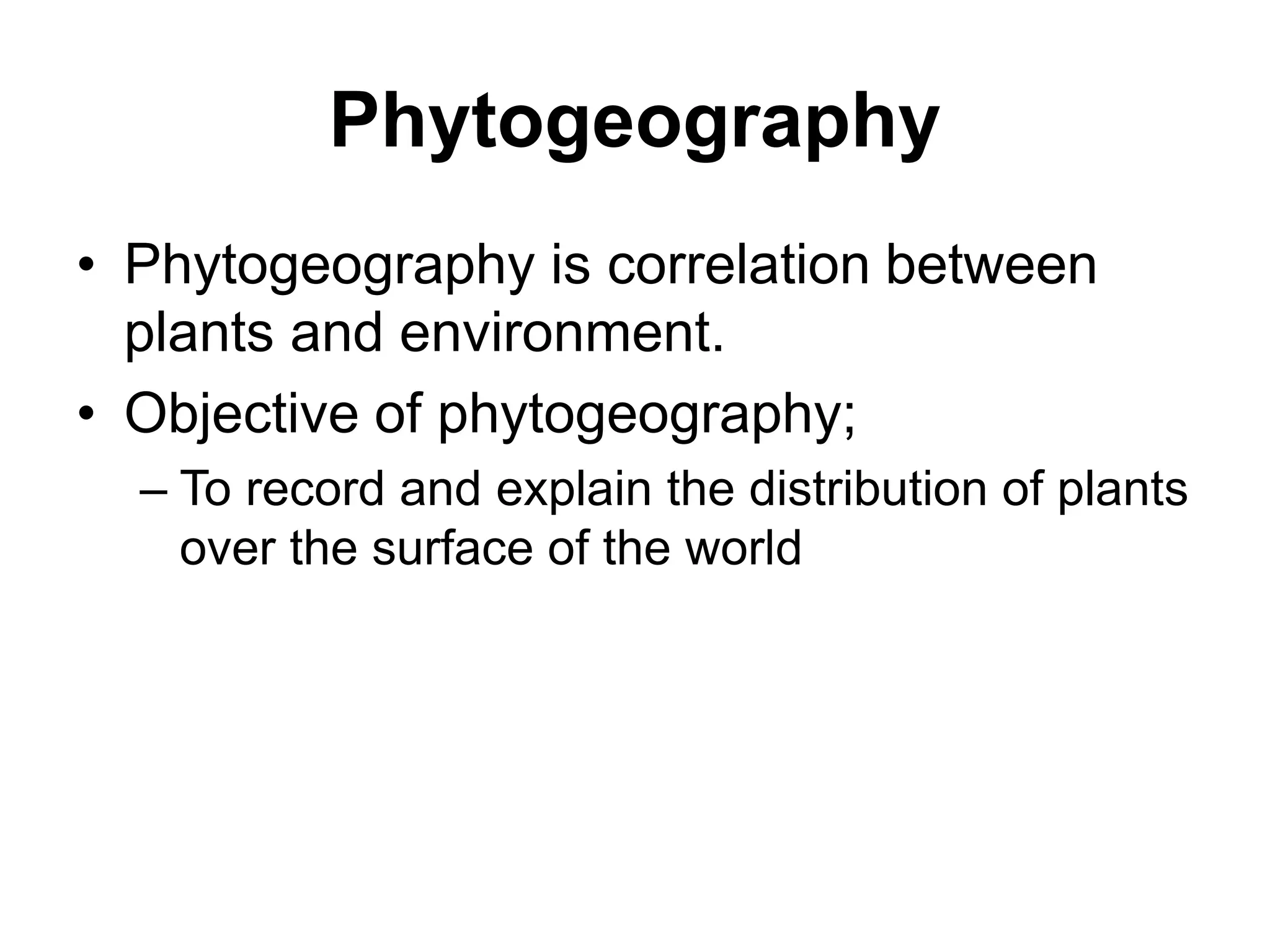
Phytogeography
• Phytogeography is correlation between
plants and environment.
• Objective of phytogeography;
– To record and explain the distribution of plants
over the surface of the world
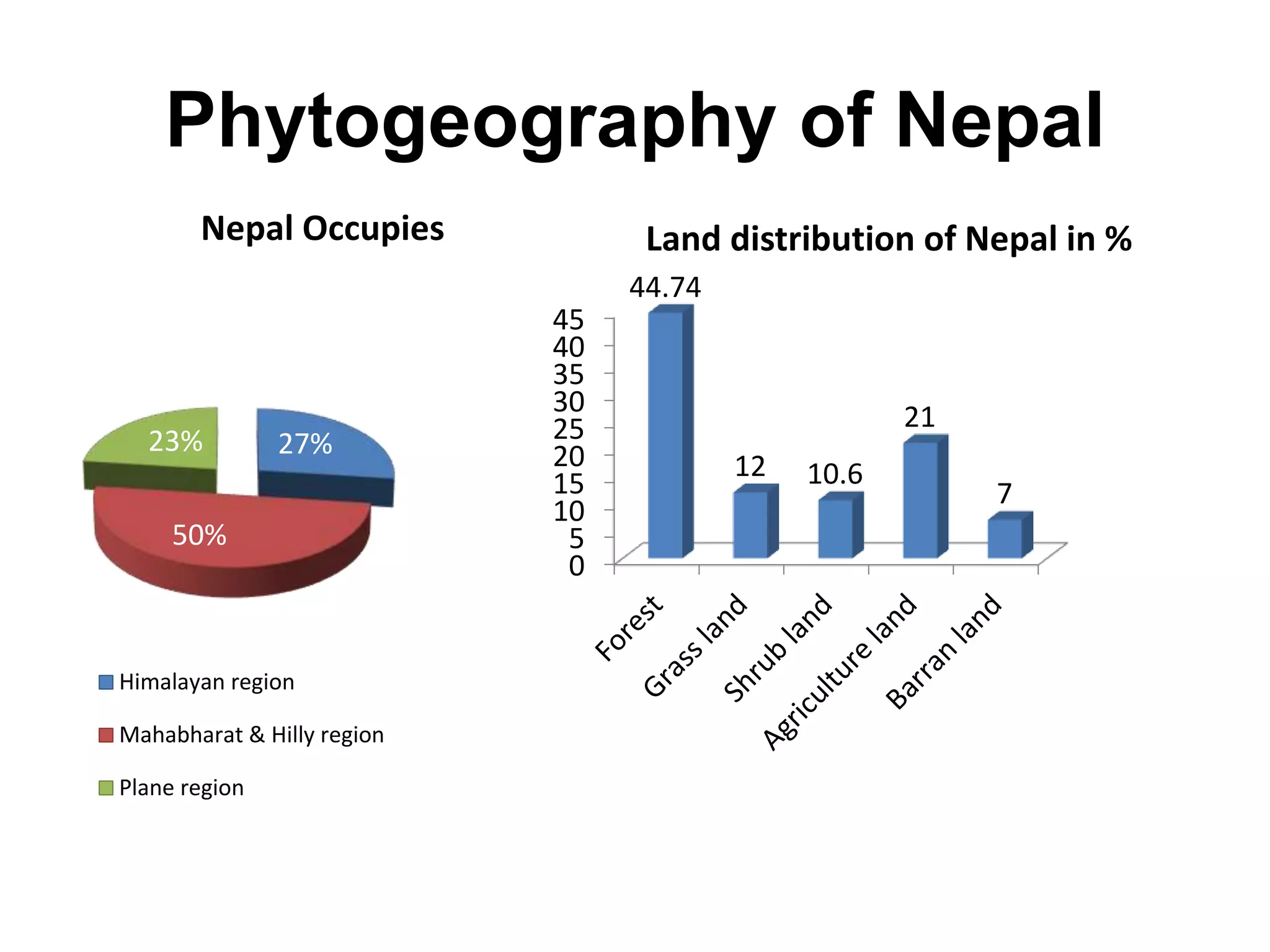
Phytogeography of Nepal
27%
50%
23%
Nepal Occupies
Himalayan region
Mahabharat & Hilly region
Plane region
0
5
10
15
20
25
30
35
40
45
44.74
12 10.6
21
7
Land distribution of Nepal in %
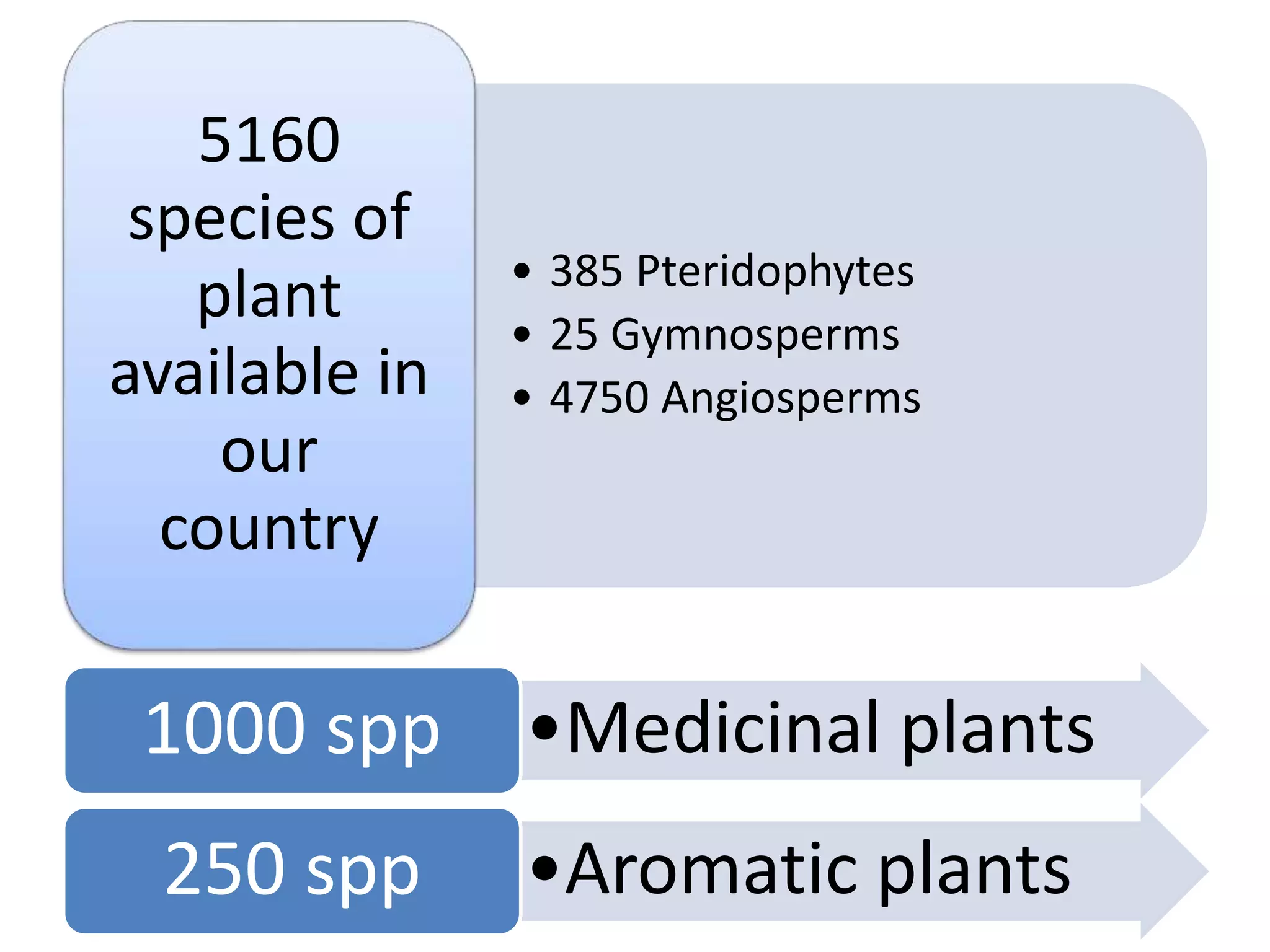
• 385 Pteridophytes
• 25 Gymnosperms
• 4750 Angiosperms
5160
species of
plant
available in
our
country
•Medicinal plants
1000 spp
•Aromatic plants
250 spp
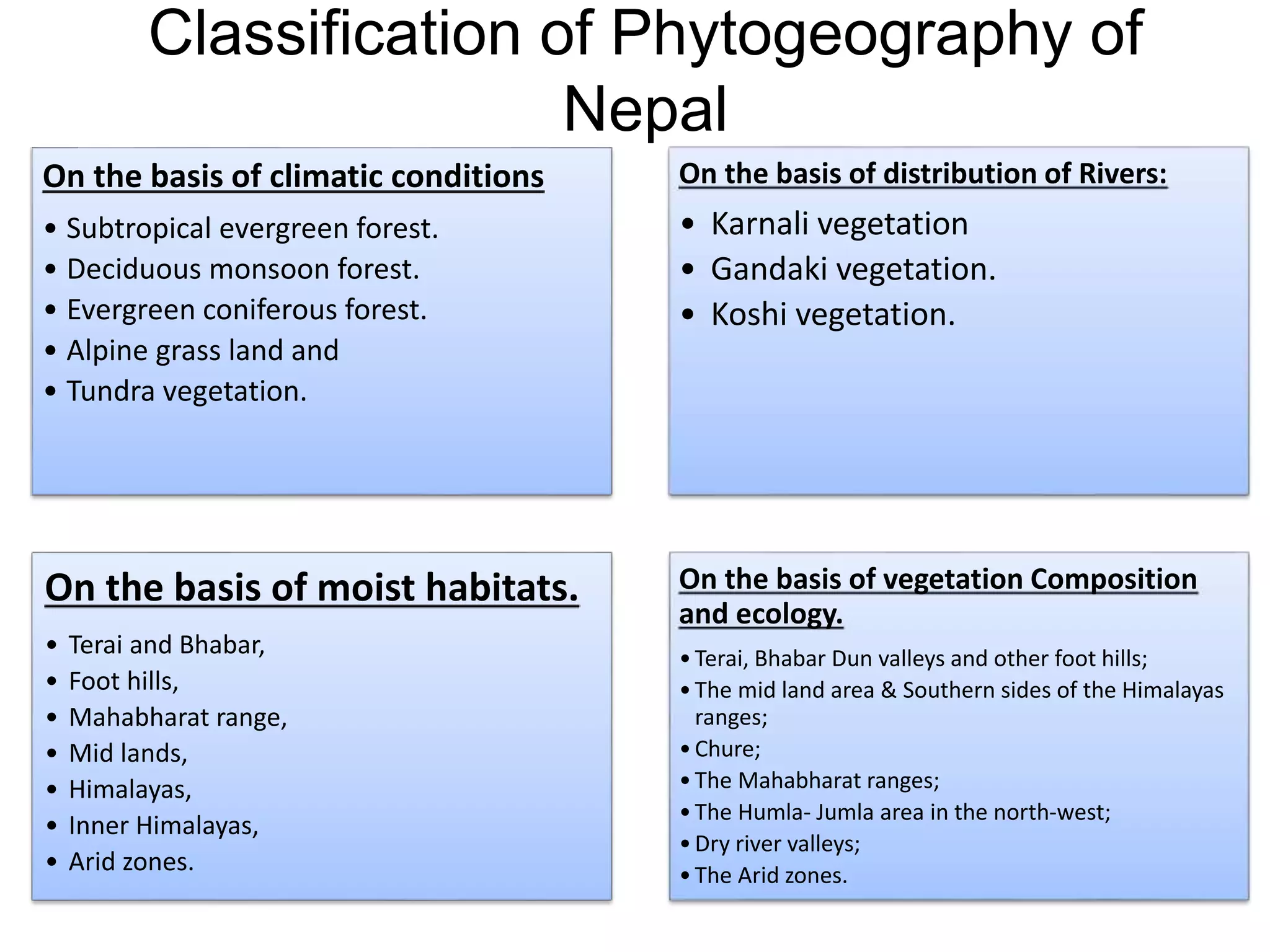
Classification of Phytogeography of
Nepal
On the basis of climatic conditions
• Subtropical evergreen forest.
• Deciduous monsoon forest.
• Evergreen coniferous forest.
• Alpine grass land and
• Tundra vegetation.
On the basis of distribution of Rivers:
• Karnali vegetation
• Gandaki vegetation.
• Koshi vegetation.
On the basis of moist habitats.
• Terai and Bhabar,
• Foot hills,
• Mahabharat range,
• Mid lands,
• Himalayas,
• Inner Himalayas,
• Arid zones.
On the basis of vegetation Composition
and ecology.
•Terai, Bhabar Dun valleys and other foot hills;
•The mid land area & Southern sides of the Himalayas
ranges;
•Chure;
•The Mahabharat ranges;
•The Humla- Jumla area in the north-west;
•Dry river valleys;
•The Arid zones.
Classification Of MAPs
Classification of
MAPS
According to
Motoyoshi
Satake (2000)
• Systematic medical treatment:
Transfer from generation to
generation by means of written
documents.
Egyptian and Mesopotamian
civilizations evolve into Western
and Arabian medicine via the
Greek and Roman civilizations,
Indus civilization evolved into
Ayurveda medicine
Yellow river civilizations into
Chinese medicine and Kampo
medicine.
• Non systematic medical
treatment
Most of these medicinal plants
have not been handed over
down to us by written materials
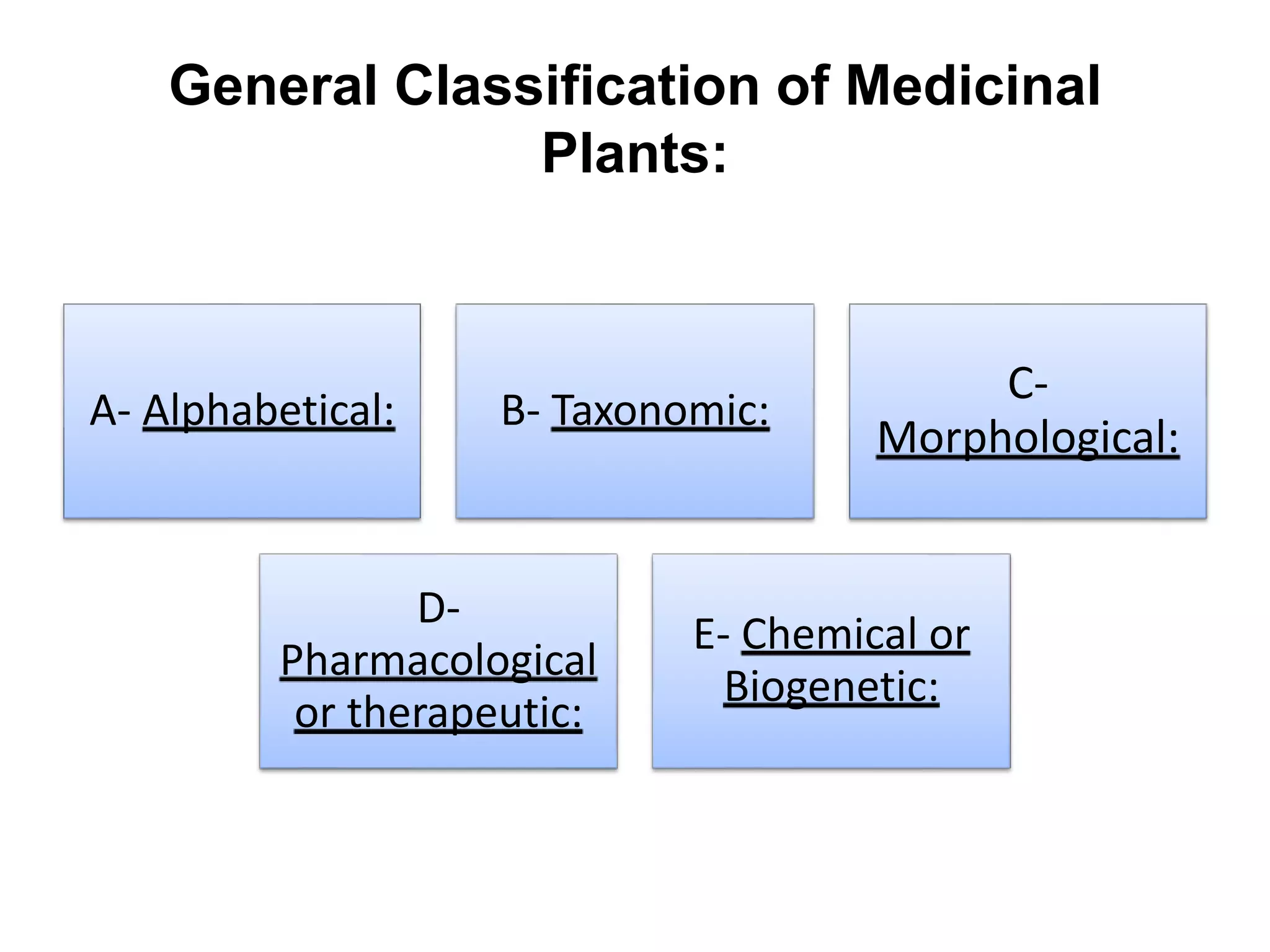
A- Alphabetical: B- Taxonomic:
C-
Morphological:
D-
Pharmacological
or therapeutic:
E- Chemical or
Biogenetic:
General Classification of Medicinal
Plants:
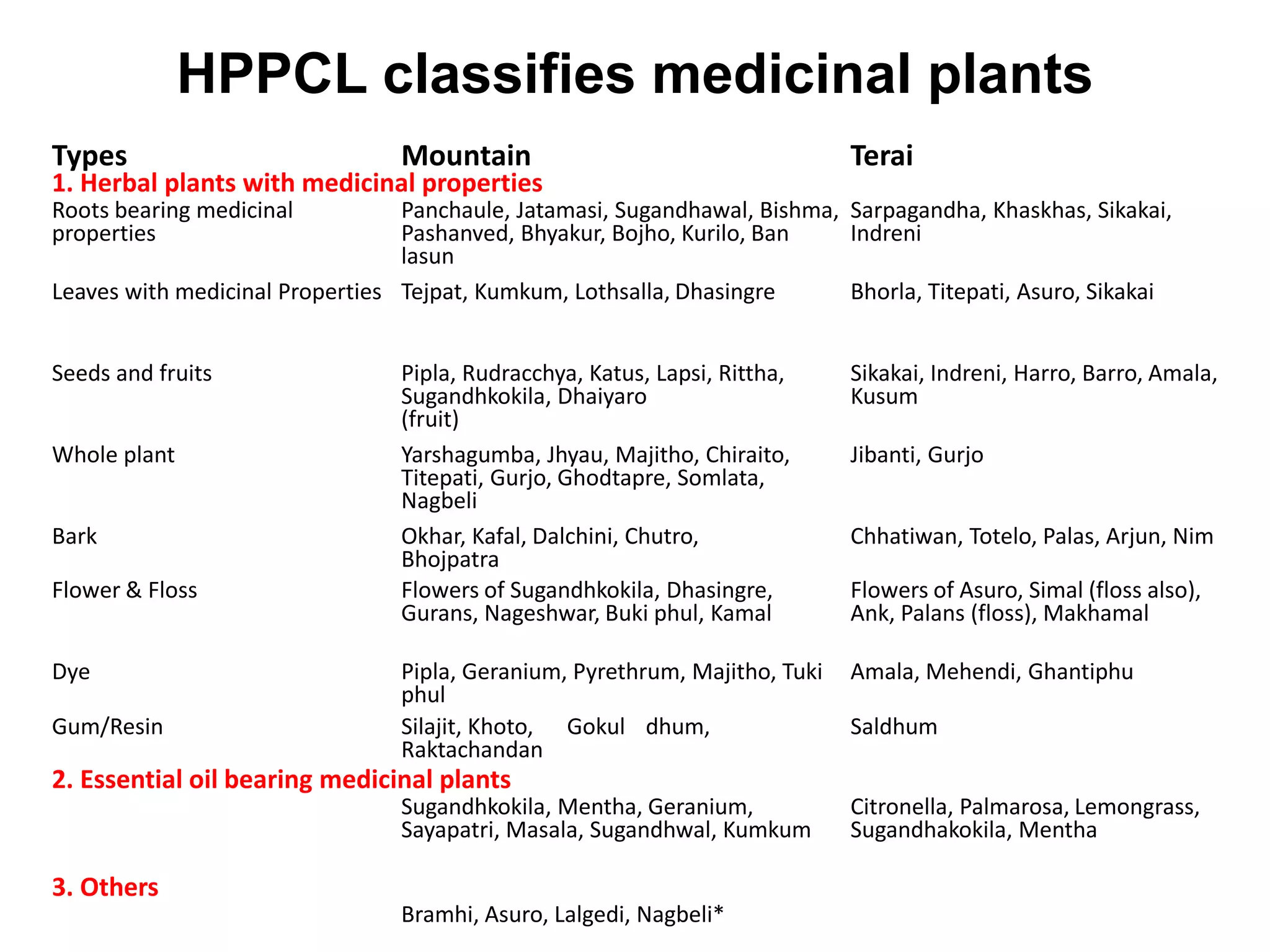
HPPCL classifies medicinal plants
Types Mountain Terai
1. Herbal plants with medicinal properties
Roots bearing medicinal
properties
Panchaule, Jatamasi, Sugandhawal, Bishma,
Pashanved, Bhyakur, Bojho, Kurilo, Ban
lasun
Sarpagandha, Khaskhas, Sikakai,
Indreni
Leaves with medicinal Properties Tejpat, Kumkum, Lothsalla, Dhasingre Bhorla, Titepati, Asuro, Sikakai
Seeds and fruits Pipla, Rudracchya, Katus, Lapsi, Rittha,
Sugandhkokila, Dhaiyaro
(fruit)
Sikakai, Indreni, Harro, Barro, Amala,
Kusum
Whole plant Yarshagumba, Jhyau, Majitho, Chiraito,
Titepati, Gurjo, Ghodtapre, Somlata,
Nagbeli
Jibanti, Gurjo
Bark Okhar, Kafal, Dalchini, Chutro,
Bhojpatra
Chhatiwan, Totelo, Palas, Arjun, Nim
Flower & Floss Flowers of Sugandhkokila, Dhasingre,
Gurans, Nageshwar, Buki phul, Kamal
Flowers of Asuro, Simal (floss also),
Ank, Palans (floss), Makhamal
Dye Pipla, Geranium, Pyrethrum, Majitho, Tuki
phul
Amala, Mehendi, Ghantiphu
Gum/Resin Silajit, Khoto, Gokul dhum,
Raktachandan
Saldhum
2. Essential oil bearing medicinal plants
Sugandhkokila, Mentha, Geranium,
Sayapatri, Masala, Sugandhwal, Kumkum
Citronella, Palmarosa, Lemongrass,
Sugandhakokila, Mentha
3. Others
Bramhi, Asuro, Lalgedi, Nagbeli*
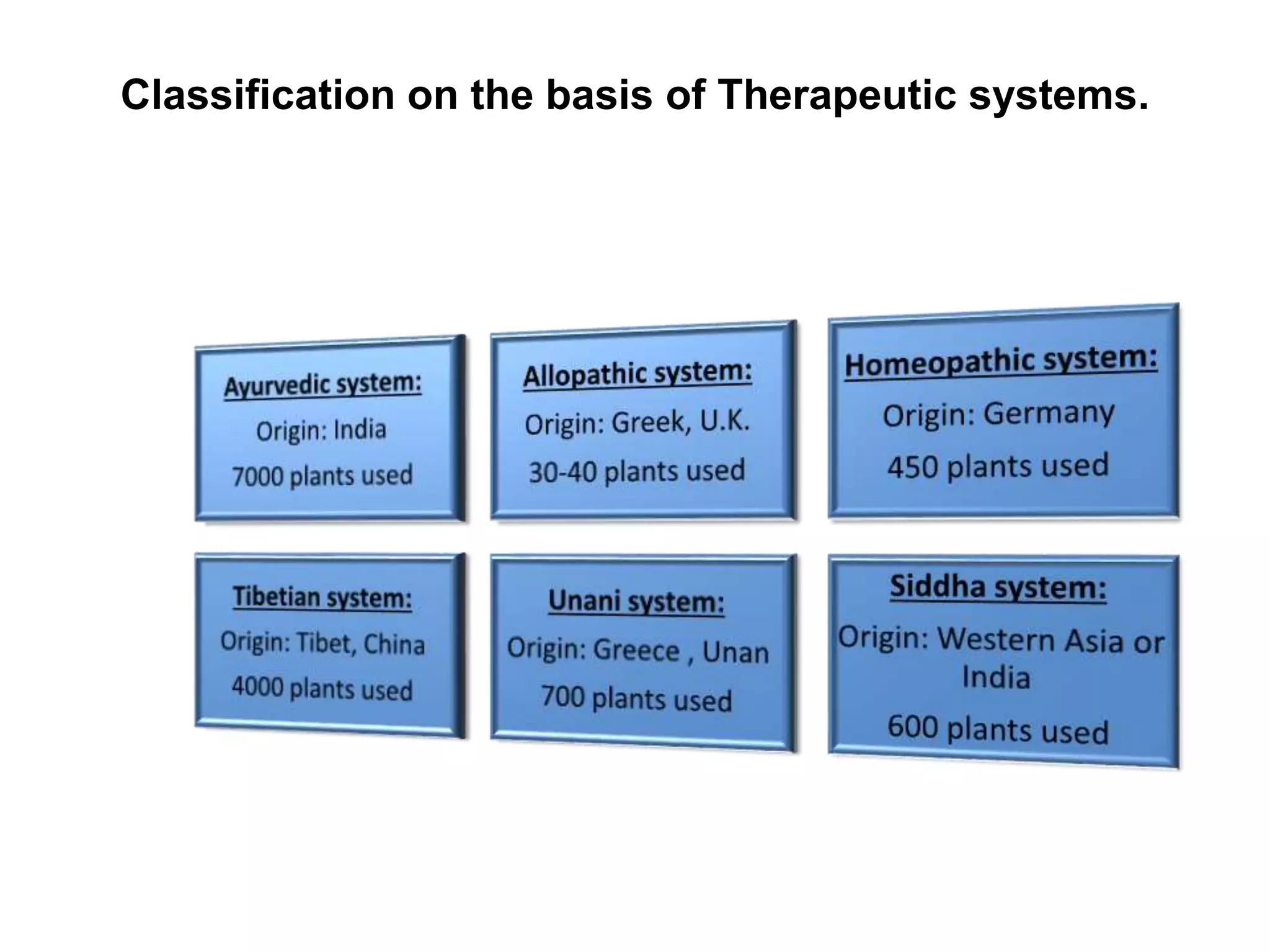
Classification on the basis of Therapeutic systems.
Classification on the basis of
the Angiospermic families
Dicotyledonous
Families.
Monocotyledonous
Families.
Classification on the basis of Odour or
Perfume
• Winter Green oil - Gaultheria procumbens (American mountain
tea)
• Otto of rose oil – Rose
• Citrus oil - Lemon, Rosemary, Sweet oranges.
• Floral oils - Jasmine oil, Vanilla, Carnation, Geranium oil
• Spicy oil - Ginger, Pipper, Clove, Cinnamomun.
• Chyper oil- obtained from sweet warm spices, woody and
floral parts. Heavy and clinging type of perfume. e.g
Lavandula angustifolia
• Fougere oil - Sandalwood, Vetiver, Jasmine, Rose flower.
• Woody oil - Cedar wood, Sandal wood, Camphor, Patchouli
(like mint).
• Almond oil, Bergamot oil – Citrus, bergenia
• Citronella oil ,Chamomile oil - Matricaria recutita
• Ylang – Ylang oil - Cananga odorata (perfume tree)
Classification of Aromatic plants based on their
scented plants parts.
S.N Classification of aromatic plant on the basis of
scented part
Examples
1 Plants with Scented Leaves Artemisia dracunculus, Aloe vera, Citrus aurantium, Cymbopogon sps, Cinnamomun
comphara, Digitalis purpurea, Eucalyptus globules. Mentha sps. Ocimum basilicum,
2 Plants with Scented Young Twigs, Flowering
tops, Needles and adherent Leaves
Eucalyptus citriodora, E. globulus. Pinus sp, Thuja Occidentalis
3 Plants with Scented Flowers Citrus aurantium, Jasminum sps, Magnolia grandiflora, Rosa damascena R.
moschata, R. centifolia, Matricularia chamomilla.
4 Plants with Aromatic Wood Acacia catecheu, Cinnamomum camphora, Pinus sps.
5 Plants with Aromatic Bark Cinnamomum sp., Melia azedarach, Terminalia arjuna
6 Plants with Aromatic Gums Cistus cypricus, Gardenia arborea, G. lucida
7 Plants with scented Underground Parts Acorus calamus, Allium cepa. A.sativa, Valeriana officinalis, V. wallichii, Zingibar
officinale
8 Plants with Scented Fruits and Berries Cuminum cyminum, Piper longum. Elettaria cardamomum, Solanum nigrum,
Terminalia chebula, T. bellerica
9 Fruits with Scented Peel Citrus lemon, C. limettioides.
10 Plants with Aromatic Seeds Apium graveolens, Digitalis prupurea, Sesamun indicum
11 All parts of plants scented Artemesia absinthum, Catharanthus roseus, Mentha sps.
12 Plants with Aromatic Roots Atropa belladona, Atropa acuminate,Apium graveolens, Rauvolfia serpentine
Thank you

Classification of MAPs.pptx

  • 1.
  • 2.
    Phytogeography • Phytogeography iscorrelation between plants and environment. • Objective of phytogeography; – To record and explain the distribution of plants over the surface of the world
  • 3.
    Phytogeography of Nepal 27% 50% 23% NepalOccupies Himalayan region Mahabharat & Hilly region Plane region 0 5 10 15 20 25 30 35 40 45 44.74 12 10.6 21 7 Land distribution of Nepal in %
  • 4.
    • 385 Pteridophytes •25 Gymnosperms • 4750 Angiosperms 5160 species of plant available in our country •Medicinal plants 1000 spp •Aromatic plants 250 spp
  • 5.
    Classification of Phytogeographyof Nepal On the basis of climatic conditions • Subtropical evergreen forest. • Deciduous monsoon forest. • Evergreen coniferous forest. • Alpine grass land and • Tundra vegetation. On the basis of distribution of Rivers: • Karnali vegetation • Gandaki vegetation. • Koshi vegetation. On the basis of moist habitats. • Terai and Bhabar, • Foot hills, • Mahabharat range, • Mid lands, • Himalayas, • Inner Himalayas, • Arid zones. On the basis of vegetation Composition and ecology. •Terai, Bhabar Dun valleys and other foot hills; •The mid land area & Southern sides of the Himalayas ranges; •Chure; •The Mahabharat ranges; •The Humla- Jumla area in the north-west; •Dry river valleys; •The Arid zones.
  • 7.
    Classification Of MAPs Classificationof MAPS According to Motoyoshi Satake (2000) • Systematic medical treatment: Transfer from generation to generation by means of written documents. Egyptian and Mesopotamian civilizations evolve into Western and Arabian medicine via the Greek and Roman civilizations, Indus civilization evolved into Ayurveda medicine Yellow river civilizations into Chinese medicine and Kampo medicine. • Non systematic medical treatment Most of these medicinal plants have not been handed over down to us by written materials
  • 8.
    A- Alphabetical: B-Taxonomic: C- Morphological: D- Pharmacological or therapeutic: E- Chemical or Biogenetic: General Classification of Medicinal Plants:
  • 9.
    HPPCL classifies medicinalplants Types Mountain Terai 1. Herbal plants with medicinal properties Roots bearing medicinal properties Panchaule, Jatamasi, Sugandhawal, Bishma, Pashanved, Bhyakur, Bojho, Kurilo, Ban lasun Sarpagandha, Khaskhas, Sikakai, Indreni Leaves with medicinal Properties Tejpat, Kumkum, Lothsalla, Dhasingre Bhorla, Titepati, Asuro, Sikakai Seeds and fruits Pipla, Rudracchya, Katus, Lapsi, Rittha, Sugandhkokila, Dhaiyaro (fruit) Sikakai, Indreni, Harro, Barro, Amala, Kusum Whole plant Yarshagumba, Jhyau, Majitho, Chiraito, Titepati, Gurjo, Ghodtapre, Somlata, Nagbeli Jibanti, Gurjo Bark Okhar, Kafal, Dalchini, Chutro, Bhojpatra Chhatiwan, Totelo, Palas, Arjun, Nim Flower & Floss Flowers of Sugandhkokila, Dhasingre, Gurans, Nageshwar, Buki phul, Kamal Flowers of Asuro, Simal (floss also), Ank, Palans (floss), Makhamal Dye Pipla, Geranium, Pyrethrum, Majitho, Tuki phul Amala, Mehendi, Ghantiphu Gum/Resin Silajit, Khoto, Gokul dhum, Raktachandan Saldhum 2. Essential oil bearing medicinal plants Sugandhkokila, Mentha, Geranium, Sayapatri, Masala, Sugandhwal, Kumkum Citronella, Palmarosa, Lemongrass, Sugandhakokila, Mentha 3. Others Bramhi, Asuro, Lalgedi, Nagbeli*
  • 10.
    Classification on thebasis of Therapeutic systems.
  • 11.
    Classification on thebasis of the Angiospermic families Dicotyledonous Families. Monocotyledonous Families.
  • 12.
    Classification on thebasis of Odour or Perfume • Winter Green oil - Gaultheria procumbens (American mountain tea) • Otto of rose oil – Rose • Citrus oil - Lemon, Rosemary, Sweet oranges. • Floral oils - Jasmine oil, Vanilla, Carnation, Geranium oil • Spicy oil - Ginger, Pipper, Clove, Cinnamomun. • Chyper oil- obtained from sweet warm spices, woody and floral parts. Heavy and clinging type of perfume. e.g Lavandula angustifolia • Fougere oil - Sandalwood, Vetiver, Jasmine, Rose flower. • Woody oil - Cedar wood, Sandal wood, Camphor, Patchouli (like mint). • Almond oil, Bergamot oil – Citrus, bergenia • Citronella oil ,Chamomile oil - Matricaria recutita • Ylang – Ylang oil - Cananga odorata (perfume tree)
  • 13.
    Classification of Aromaticplants based on their scented plants parts. S.N Classification of aromatic plant on the basis of scented part Examples 1 Plants with Scented Leaves Artemisia dracunculus, Aloe vera, Citrus aurantium, Cymbopogon sps, Cinnamomun comphara, Digitalis purpurea, Eucalyptus globules. Mentha sps. Ocimum basilicum, 2 Plants with Scented Young Twigs, Flowering tops, Needles and adherent Leaves Eucalyptus citriodora, E. globulus. Pinus sp, Thuja Occidentalis 3 Plants with Scented Flowers Citrus aurantium, Jasminum sps, Magnolia grandiflora, Rosa damascena R. moschata, R. centifolia, Matricularia chamomilla. 4 Plants with Aromatic Wood Acacia catecheu, Cinnamomum camphora, Pinus sps. 5 Plants with Aromatic Bark Cinnamomum sp., Melia azedarach, Terminalia arjuna 6 Plants with Aromatic Gums Cistus cypricus, Gardenia arborea, G. lucida 7 Plants with scented Underground Parts Acorus calamus, Allium cepa. A.sativa, Valeriana officinalis, V. wallichii, Zingibar officinale 8 Plants with Scented Fruits and Berries Cuminum cyminum, Piper longum. Elettaria cardamomum, Solanum nigrum, Terminalia chebula, T. bellerica 9 Fruits with Scented Peel Citrus lemon, C. limettioides. 10 Plants with Aromatic Seeds Apium graveolens, Digitalis prupurea, Sesamun indicum 11 All parts of plants scented Artemesia absinthum, Catharanthus roseus, Mentha sps. 12 Plants with Aromatic Roots Atropa belladona, Atropa acuminate,Apium graveolens, Rauvolfia serpentine
  • 14.