CLASS THREE:
•Idea Generation and Opportunity Analysis
•Build or Buy
Elikem Nutifafa Kuenyhia
Management Consultant & Corporate Lawyer
 Recap of Class Two
 The Process of Purchasing a Business
 Cost-Conscious Marketing Research
 Spend a Day in the Life of Your Customer
 Speaker: Kekeli Gadzekpo
 Questions
 Starting from scratch
 Acquiring an existing business
 Operating a franchise
 Inheriting a business
 Self-Assessment
 Be clear on why you want to make a purchase
 Expectations
 Risk profile
 Personal Values
 Preparation
 Thoroughly research the opportunity
 Patience? Wait for the right deal
 Seek advice. Early!
 Are you ready to acquire a company?
 Deal Criteria
 To be efficient, must have a screening criteria
 Consistent - comparing apples to apples?
 Size of deal (purchase price)
 Type of company – technology focused, marketing etc
 Type of customer – industrial v. Consumer, international
etc
 Geographic focus – Accra/Tema vs. Kumasi? Ghana?
West Africa?
 Profile of current ownership
 Thorough – all relevant aspects of the acquisition
 Future?
 Potential for improving earnings and cashflow?
 Predictable cash flow
 Existing debt? - refinancing? Or servicing?
 Asset base to support new borrowings?
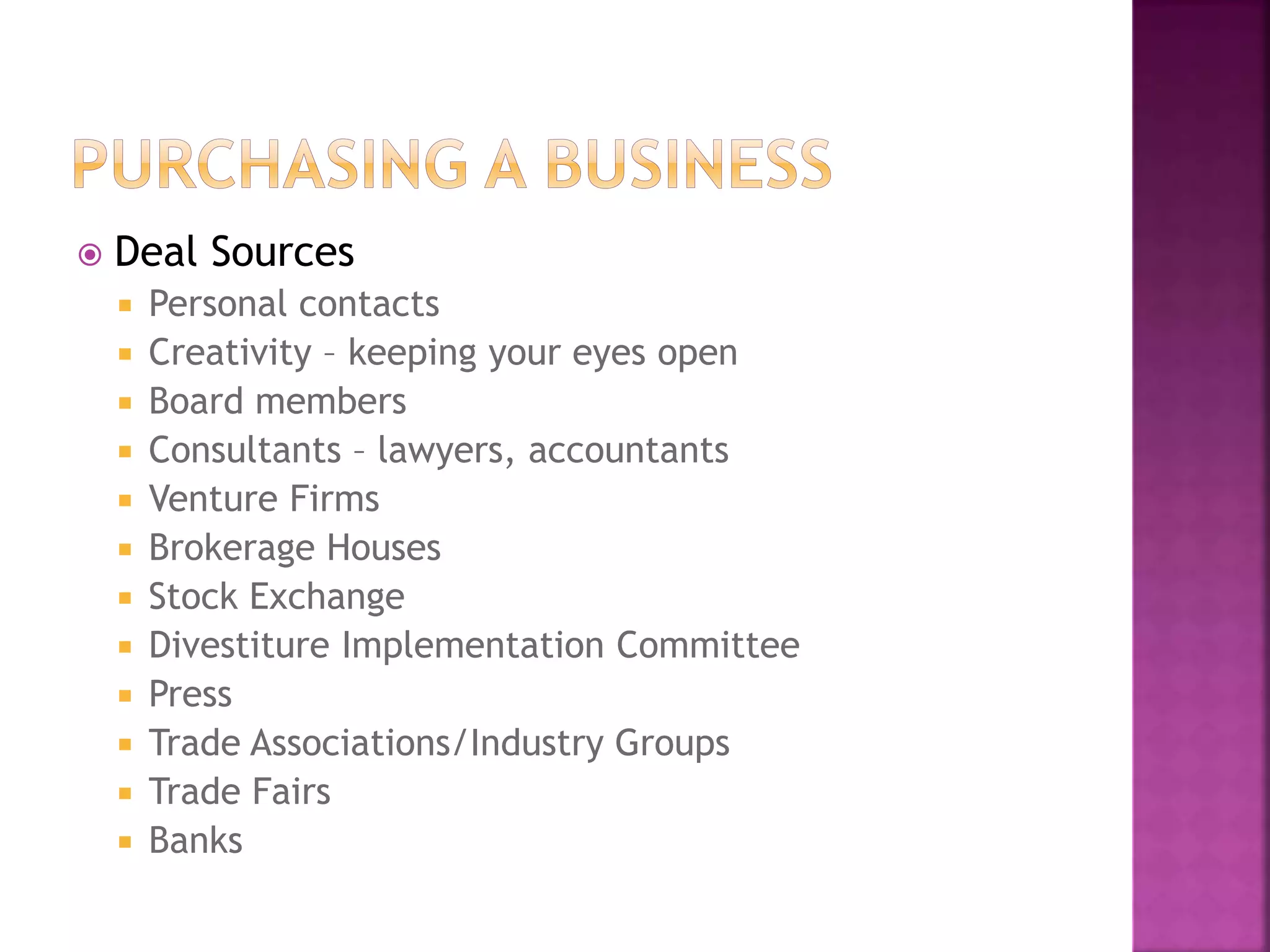
 Deal Sources
 Personal contacts
 Creativity – keeping your eyes open
 Board members
 Consultants – lawyers, accountants
 Venture Firms
 Brokerage Houses
 Stock Exchange
 Divestiture Implementation Committee
 Press
 Trade Associations/Industry Groups
 Trade Fairs
 Banks
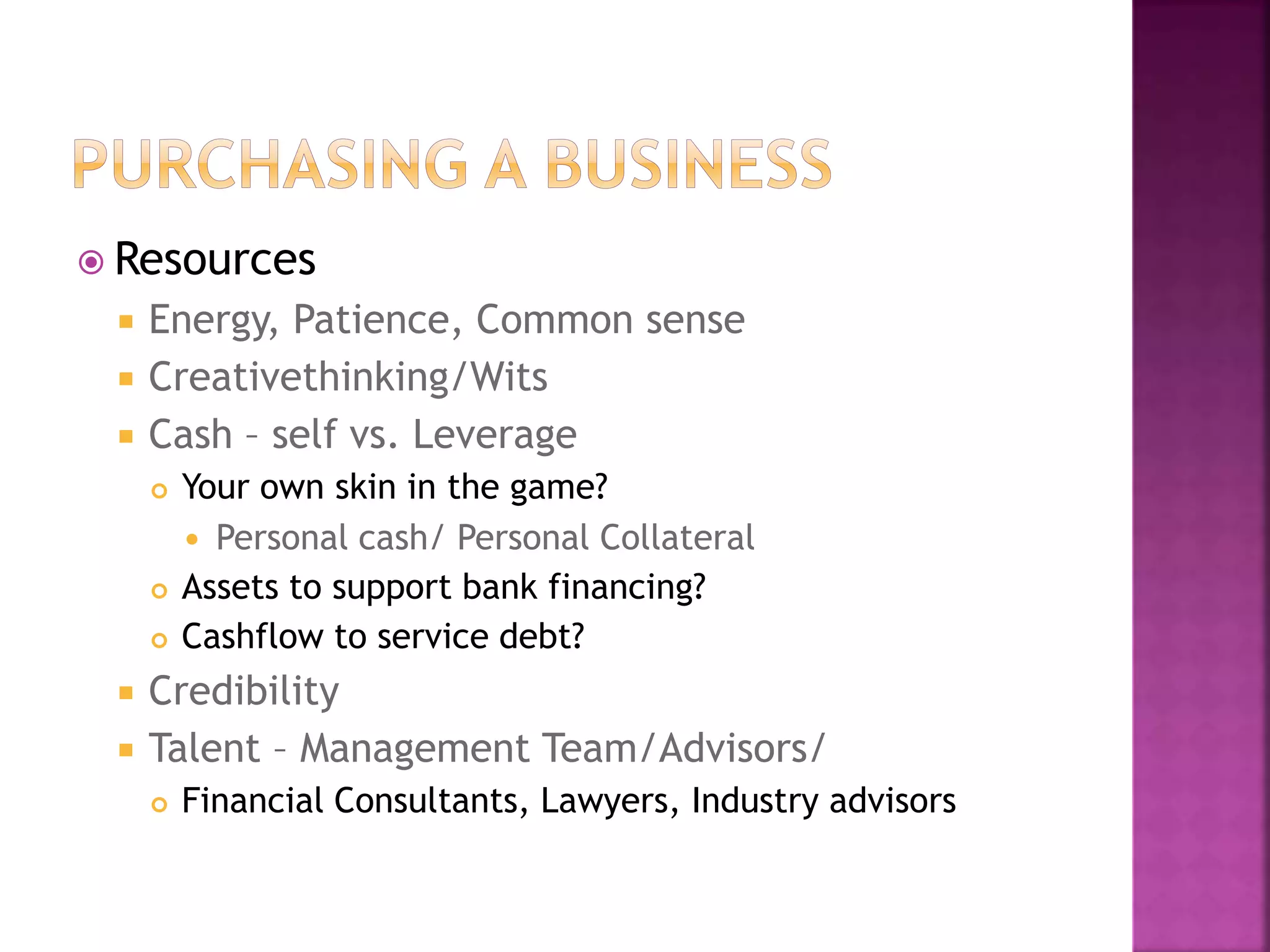
 Resources
 Energy, Patience, Common sense
 Creativethinking/Wits
 Cash – self vs. Leverage
 Your own skin in the game?
 Personal cash/ Personal Collateral
 Assets to support bank financing?
 Cashflow to service debt?
 Credibility
 Talent – Management Team/Advisors/
 Financial Consultants, Lawyers, Industry advisors
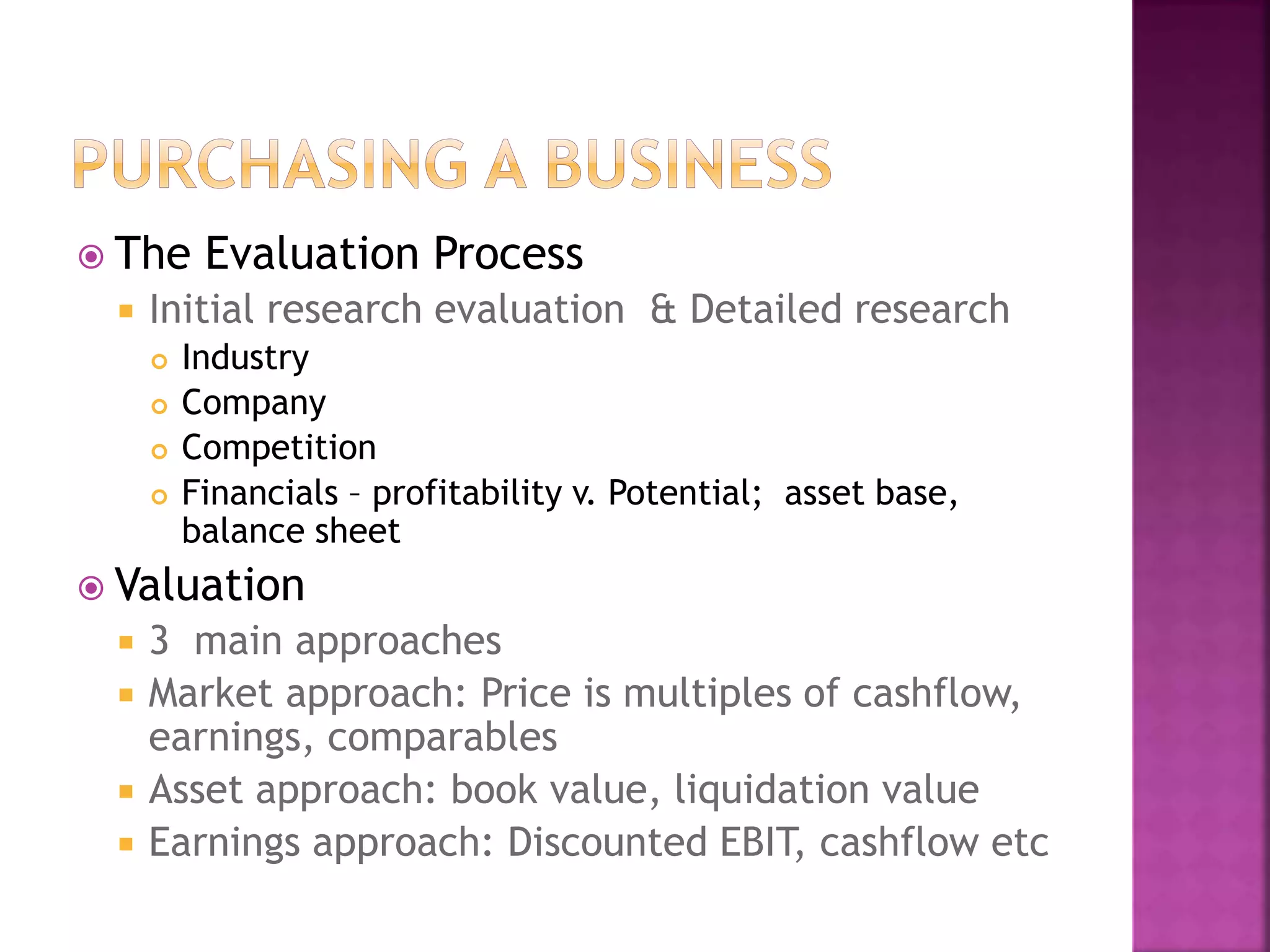
 The Evaluation Process
 Initial research evaluation & Detailed research
 Industry
 Company
 Competition
 Financials – profitability v. Potential; asset base,
balance sheet
 Valuation
 3 main approaches
 Market approach: Price is multiples of cashflow,
earnings, comparables
 Asset approach: book value, liquidation value
 Earnings approach: Discounted EBIT, cashflow etc
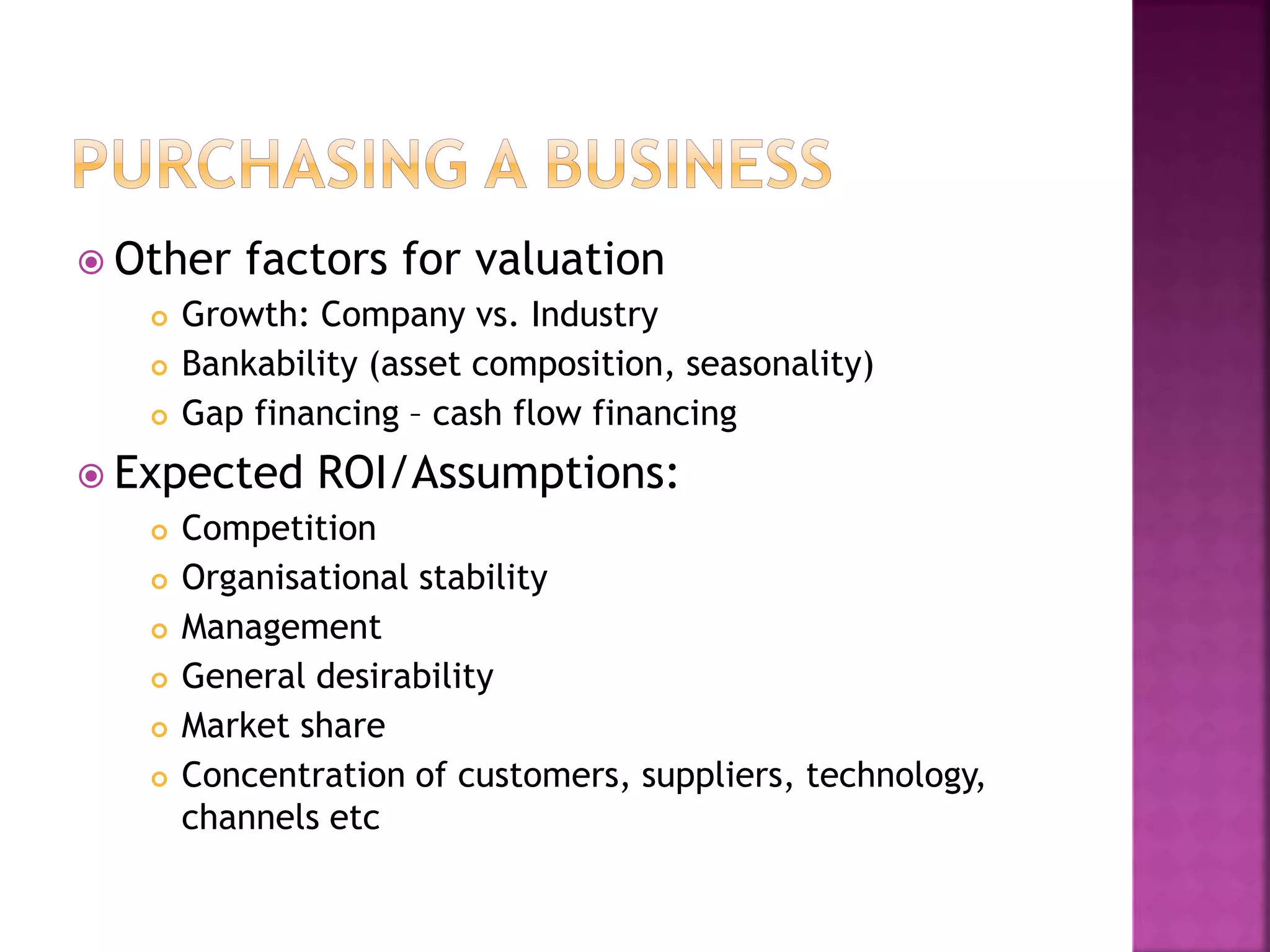
 Other factors for valuation
 Growth: Company vs. Industry
 Bankability (asset composition, seasonality)
 Gap financing – cash flow financing
 Expected ROI/Assumptions:
 Competition
 Organisational stability
 Management
 General desirability
 Market share
 Concentration of customers, suppliers, technology,
channels etc
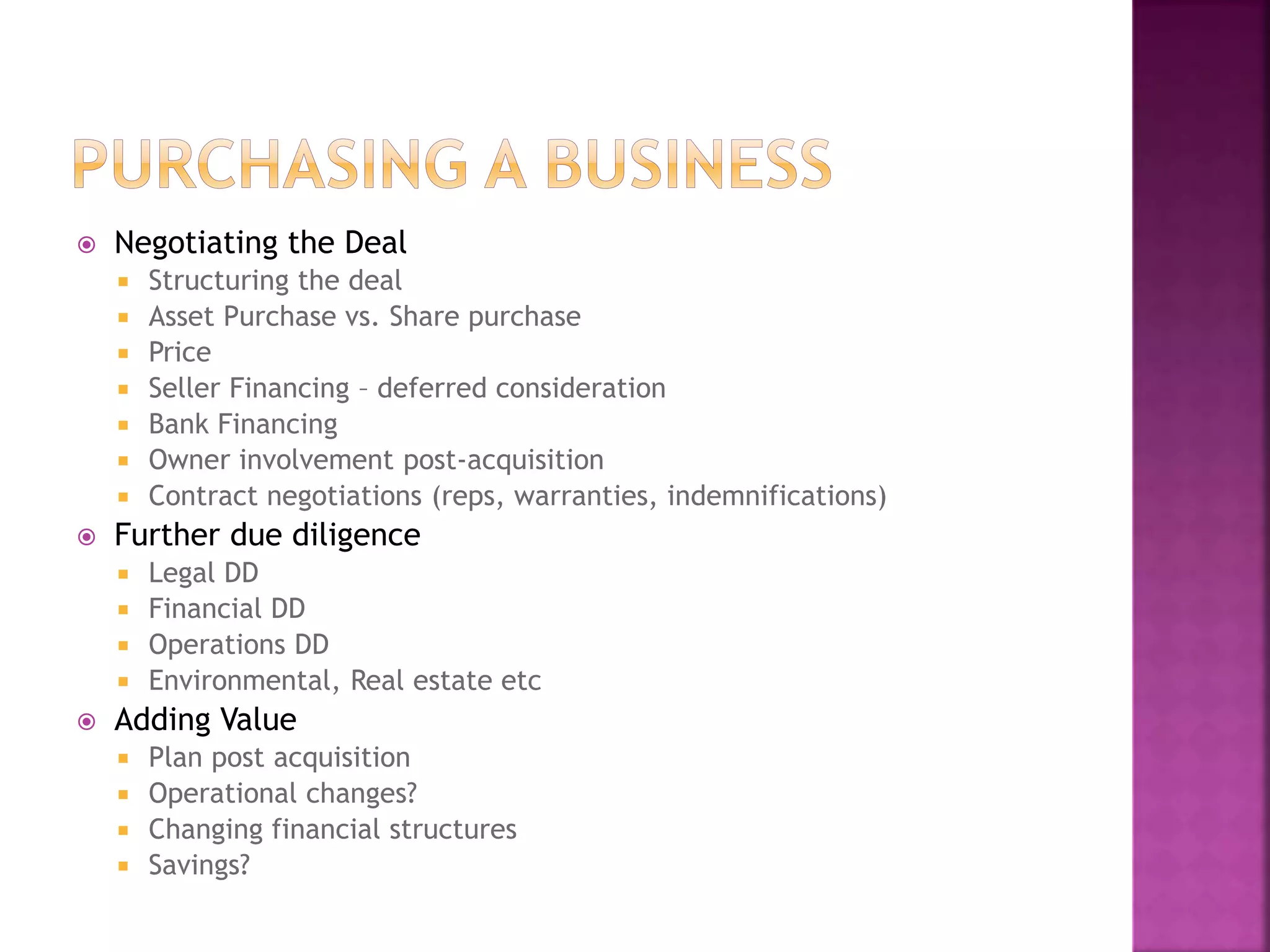
 Negotiating the Deal
 Structuring the deal
 Asset Purchase vs. Share purchase
 Price
 Seller Financing – deferred consideration
 Bank Financing
 Owner involvement post-acquisition
 Contract negotiations (reps, warranties, indemnifications)
 Further due diligence
 Legal DD
 Financial DD
 Operations DD
 Environmental, Real estate etc
 Adding Value
 Plan post acquisition
 Operational changes?
 Changing financial structures
 Savings?
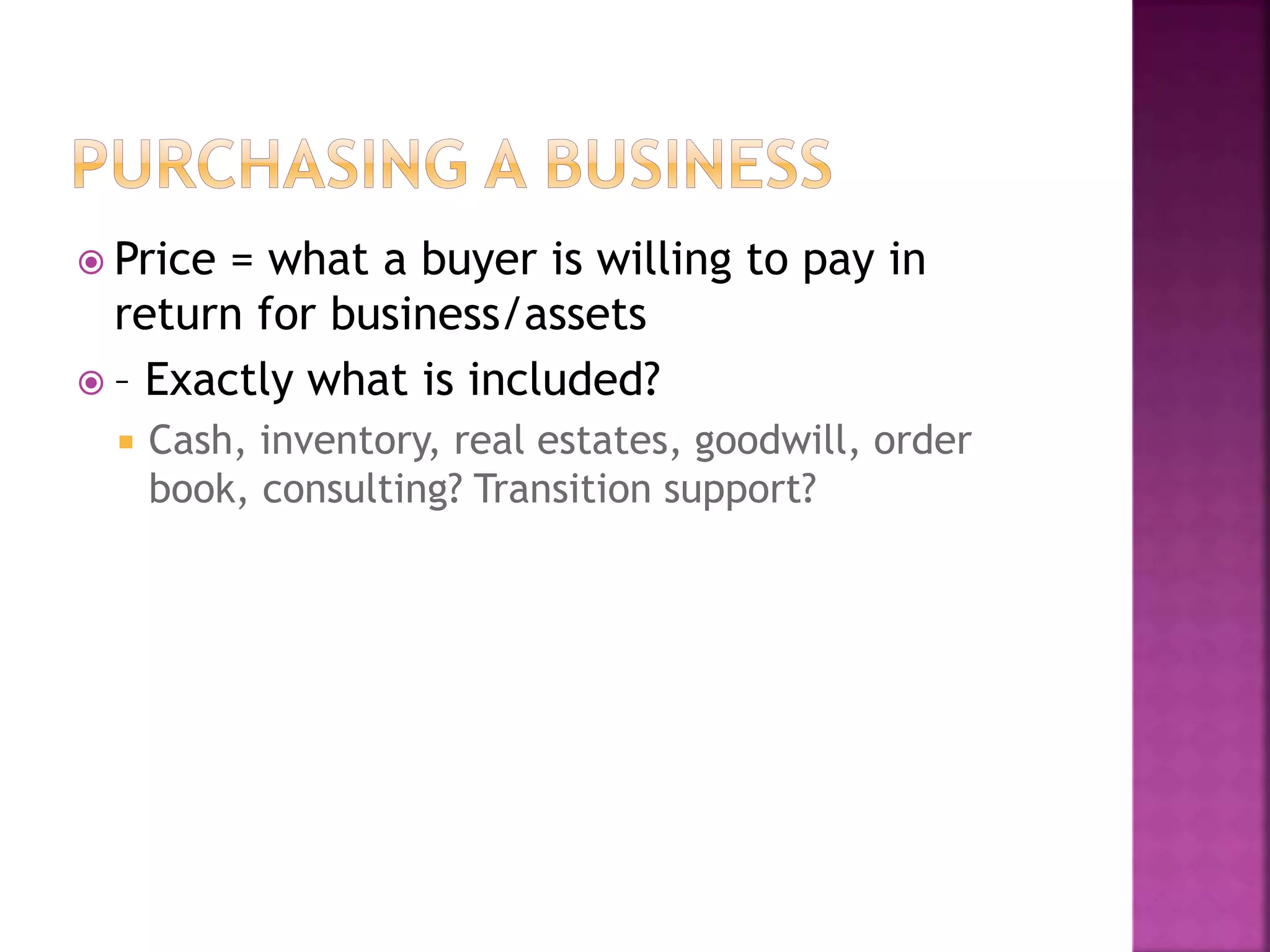
 Price = what a buyer is willing to pay in
return for business/assets
 – Exactly what is included?
 Cash, inventory, real estates, goodwill, order
book, consulting? Transition support?
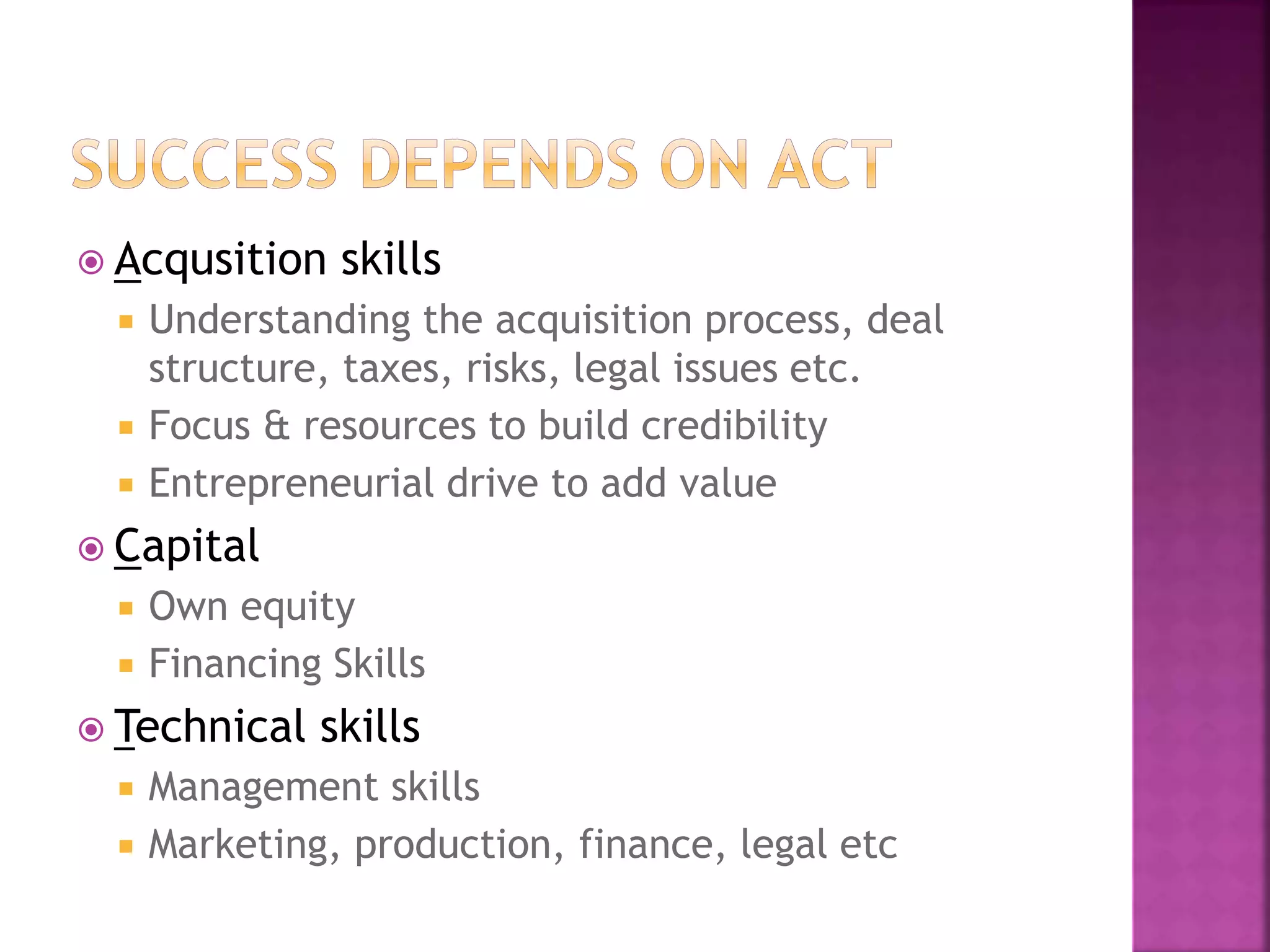
 Acqusition skills
 Understanding the acquisition process, deal
structure, taxes, risks, legal issues etc.
 Focus & resources to build credibility
 Entrepreneurial drive to add value
 Capital
 Own equity
 Financing Skills
 Technical skills
 Management skills
 Marketing, production, finance, legal etc
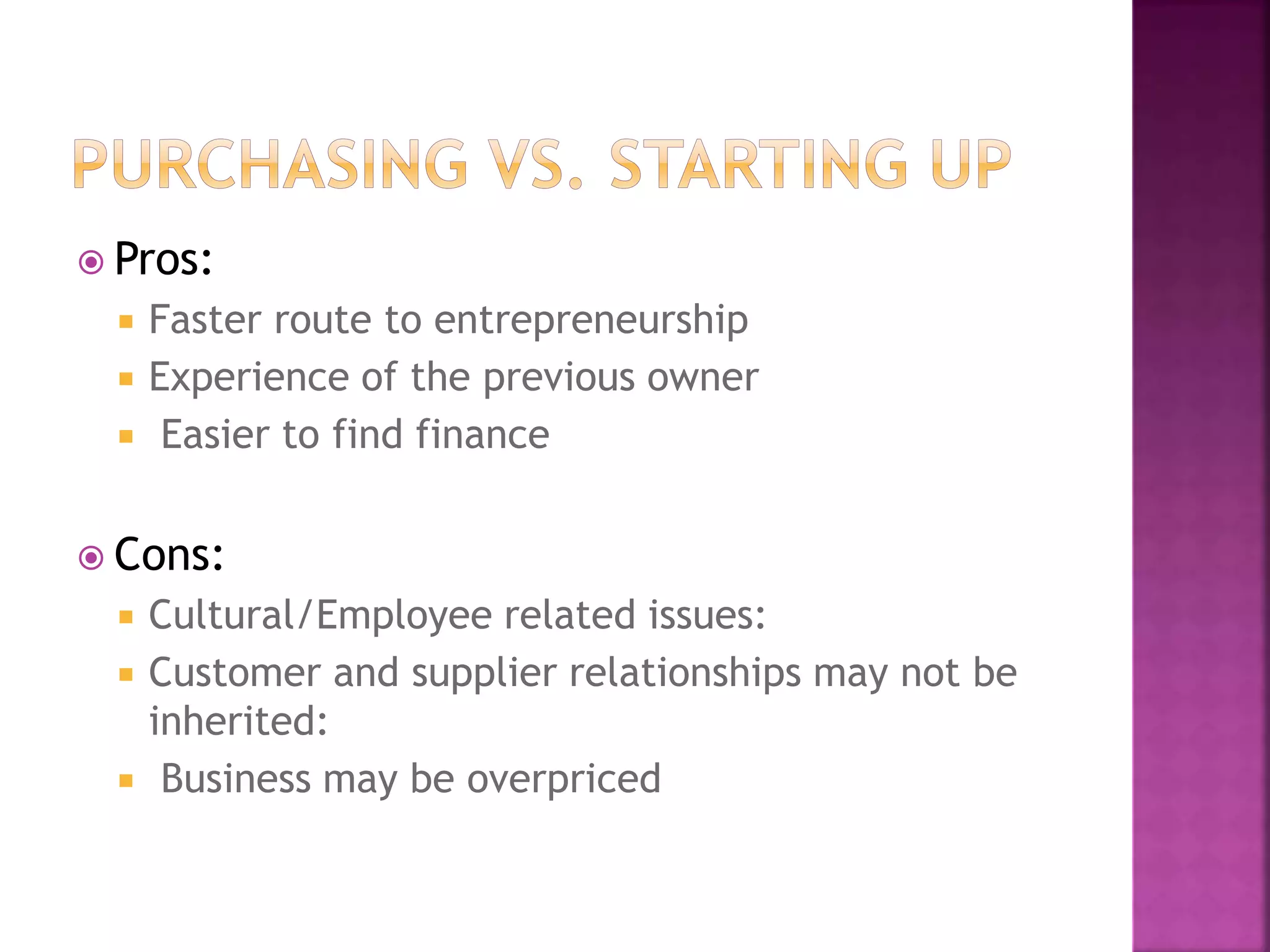
 Pros:
 Faster route to entrepreneurship
 Experience of the previous owner
 Easier to find finance
 Cons:
 Cultural/Employee related issues:
 Customer and supplier relationships may not be
inherited:
 Business may be overpriced
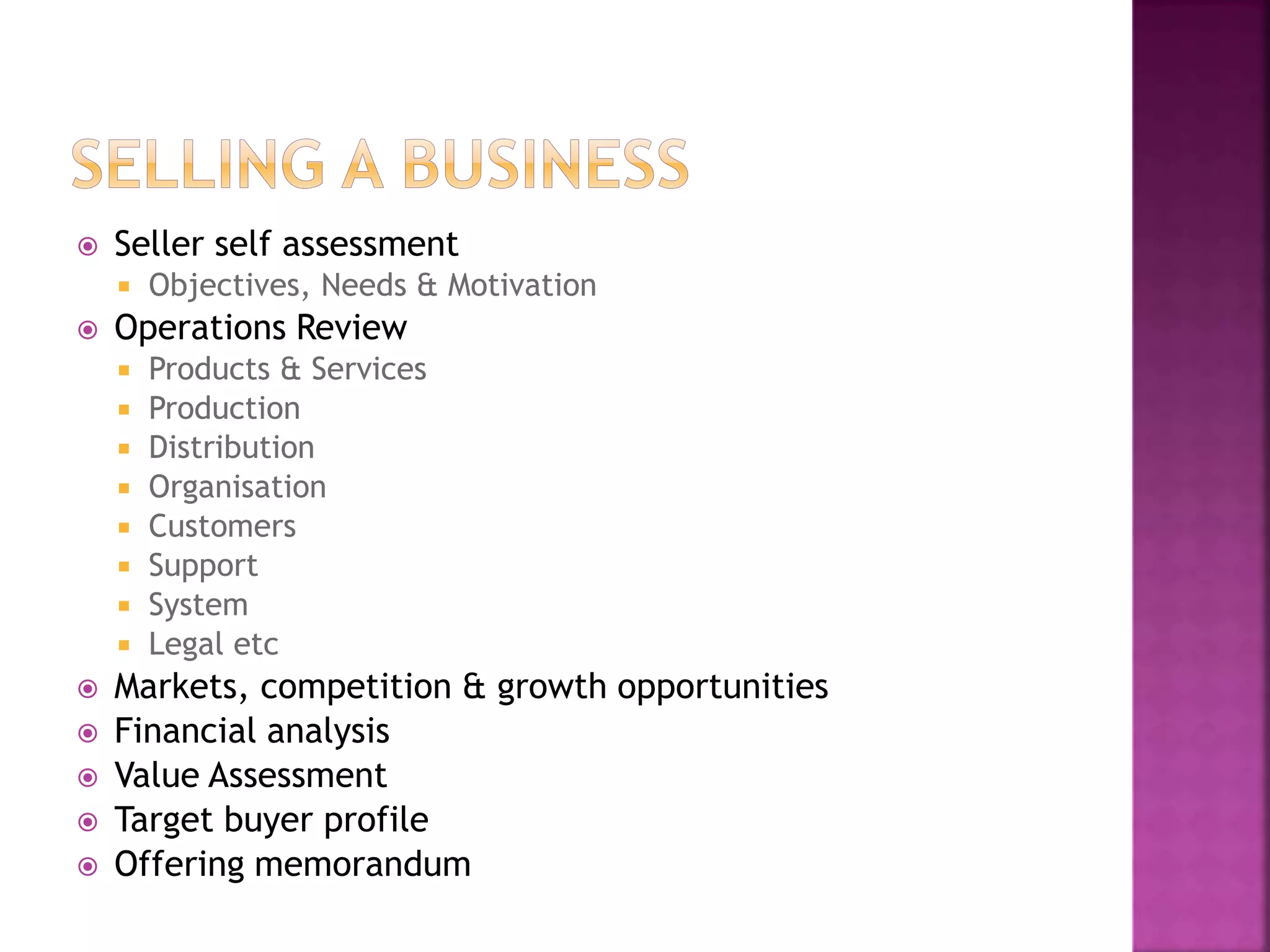
 Seller self assessment
 Objectives, Needs & Motivation
 Operations Review
 Products & Services
 Production
 Distribution
 Organisation
 Customers
 Support
 System
 Legal etc
 Markets, competition & growth opportunities
 Financial analysis
 Value Assessment
 Target buyer profile
 Offering memorandum
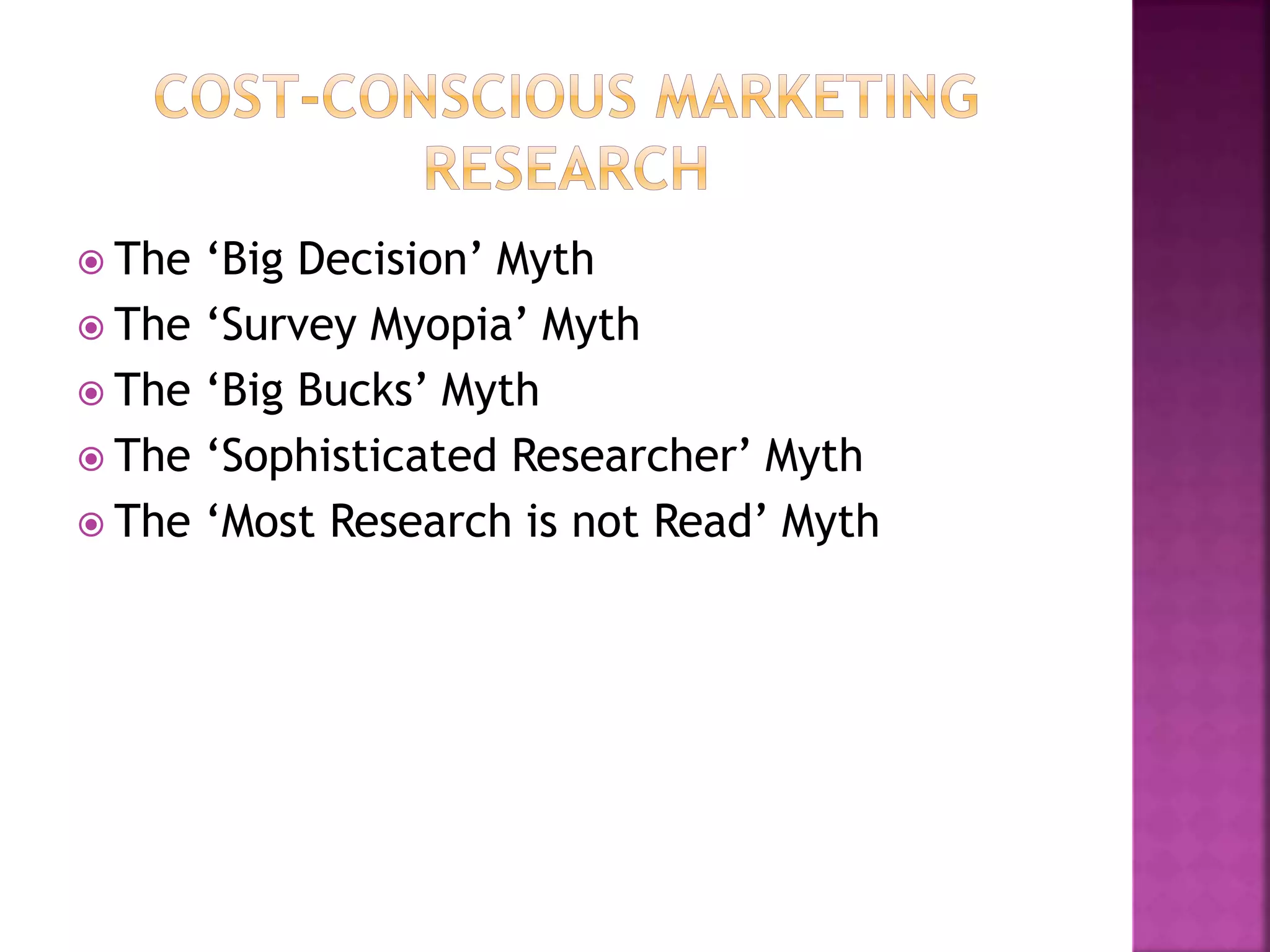
 The ‘Big Decision’ Myth
 The ‘Survey Myopia’ Myth
 The ‘Big Bucks’ Myth
 The ‘Sophisticated Researcher’ Myth
 The ‘Most Research is not Read’ Myth
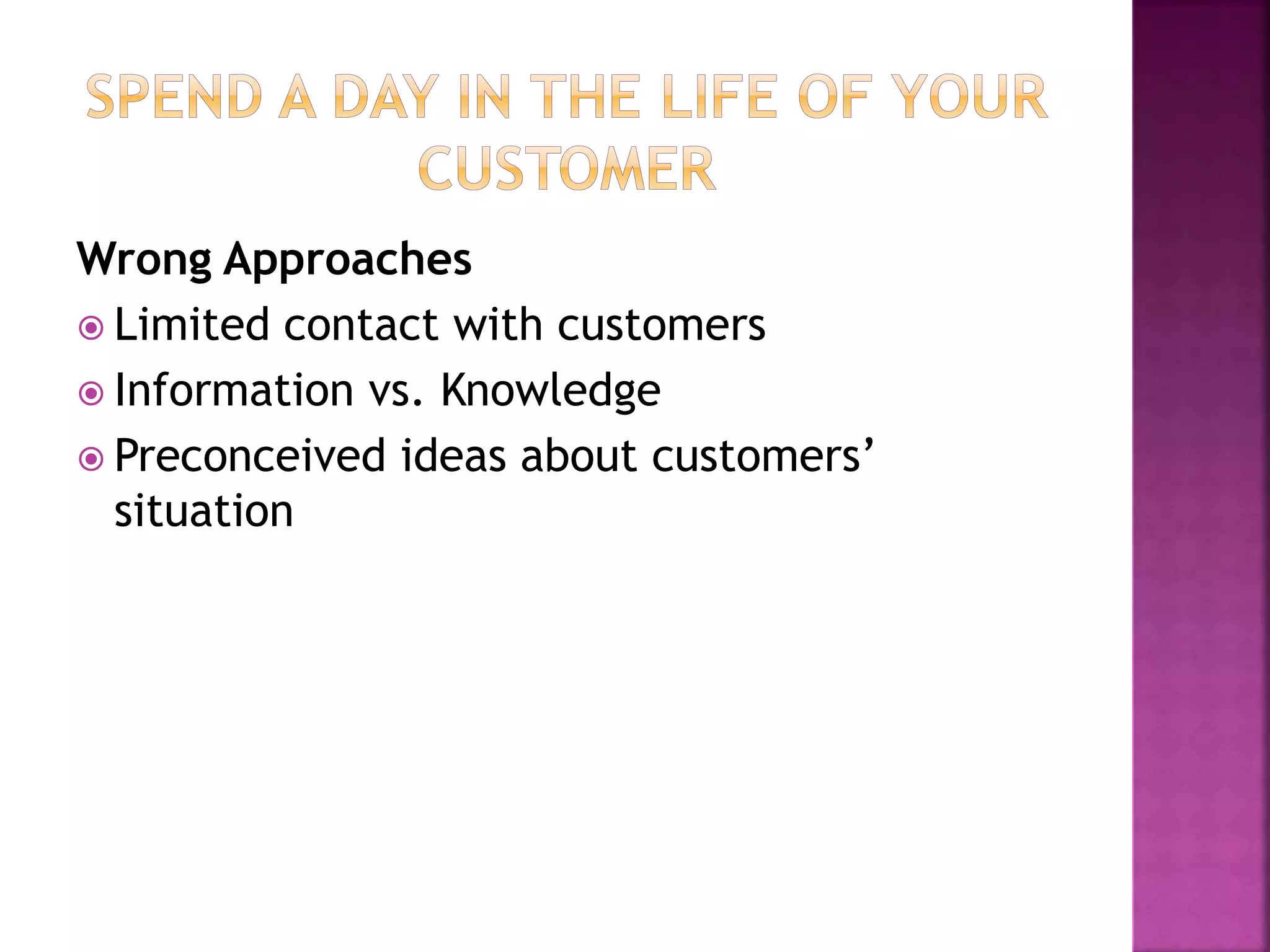
Wrong Approaches
 Limited contact with customers
 Information vs. Knowledge
 Preconceived ideas about customers’
situation
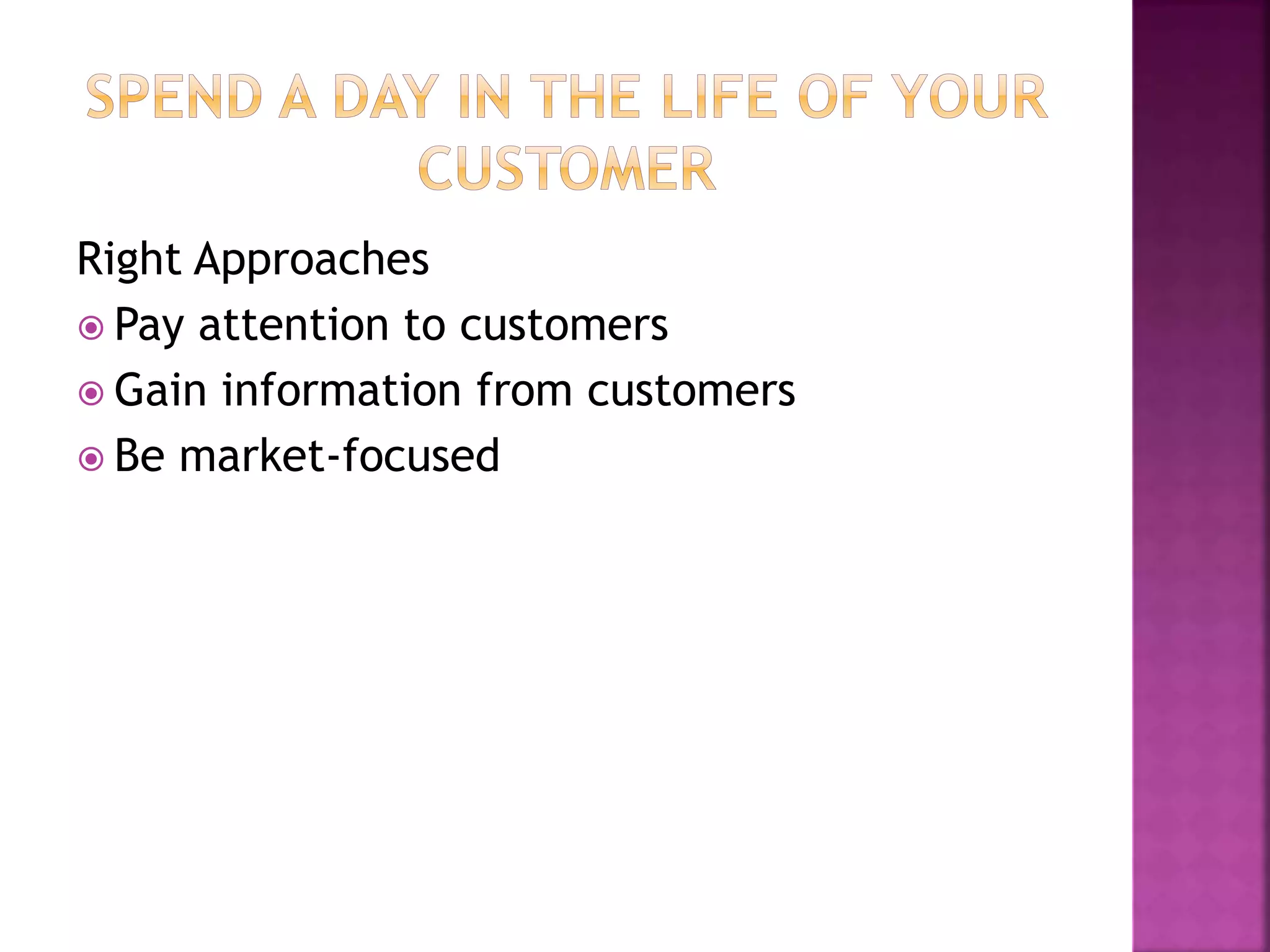
Right Approaches
 Pay attention to customers
 Gain information from customers
 Be market-focused
Becoming Market-Focused:
 Recognise that ‘customer’ means more than
the next step in distribution chain
 Count on customers for information not
insight
 Don’t expect brilliant insights each time you
study a customer
 Involve all levels of the organization in the
drive to become market focused

Class three slide.ppt

  • 1.
    CLASS THREE: •Idea Generationand Opportunity Analysis •Build or Buy Elikem Nutifafa Kuenyhia Management Consultant & Corporate Lawyer
  • 2.
     Recap ofClass Two  The Process of Purchasing a Business  Cost-Conscious Marketing Research  Spend a Day in the Life of Your Customer  Speaker: Kekeli Gadzekpo  Questions
  • 3.
     Starting fromscratch  Acquiring an existing business  Operating a franchise  Inheriting a business
  • 4.
     Self-Assessment  Beclear on why you want to make a purchase  Expectations  Risk profile  Personal Values  Preparation  Thoroughly research the opportunity  Patience? Wait for the right deal  Seek advice. Early!  Are you ready to acquire a company?
  • 5.
     Deal Criteria To be efficient, must have a screening criteria  Consistent - comparing apples to apples?  Size of deal (purchase price)  Type of company – technology focused, marketing etc  Type of customer – industrial v. Consumer, international etc  Geographic focus – Accra/Tema vs. Kumasi? Ghana? West Africa?  Profile of current ownership  Thorough – all relevant aspects of the acquisition  Future?  Potential for improving earnings and cashflow?  Predictable cash flow  Existing debt? - refinancing? Or servicing?  Asset base to support new borrowings?
  • 6.
     Deal Sources Personal contacts  Creativity – keeping your eyes open  Board members  Consultants – lawyers, accountants  Venture Firms  Brokerage Houses  Stock Exchange  Divestiture Implementation Committee  Press  Trade Associations/Industry Groups  Trade Fairs  Banks
  • 7.
     Resources  Energy,Patience, Common sense  Creativethinking/Wits  Cash – self vs. Leverage  Your own skin in the game?  Personal cash/ Personal Collateral  Assets to support bank financing?  Cashflow to service debt?  Credibility  Talent – Management Team/Advisors/  Financial Consultants, Lawyers, Industry advisors
  • 8.
     The EvaluationProcess  Initial research evaluation & Detailed research  Industry  Company  Competition  Financials – profitability v. Potential; asset base, balance sheet  Valuation  3 main approaches  Market approach: Price is multiples of cashflow, earnings, comparables  Asset approach: book value, liquidation value  Earnings approach: Discounted EBIT, cashflow etc
  • 9.
     Other factorsfor valuation  Growth: Company vs. Industry  Bankability (asset composition, seasonality)  Gap financing – cash flow financing  Expected ROI/Assumptions:  Competition  Organisational stability  Management  General desirability  Market share  Concentration of customers, suppliers, technology, channels etc
  • 10.
     Negotiating theDeal  Structuring the deal  Asset Purchase vs. Share purchase  Price  Seller Financing – deferred consideration  Bank Financing  Owner involvement post-acquisition  Contract negotiations (reps, warranties, indemnifications)  Further due diligence  Legal DD  Financial DD  Operations DD  Environmental, Real estate etc  Adding Value  Plan post acquisition  Operational changes?  Changing financial structures  Savings?
  • 11.
     Price =what a buyer is willing to pay in return for business/assets  – Exactly what is included?  Cash, inventory, real estates, goodwill, order book, consulting? Transition support?
  • 12.
     Acqusition skills Understanding the acquisition process, deal structure, taxes, risks, legal issues etc.  Focus & resources to build credibility  Entrepreneurial drive to add value  Capital  Own equity  Financing Skills  Technical skills  Management skills  Marketing, production, finance, legal etc
  • 13.
     Pros:  Fasterroute to entrepreneurship  Experience of the previous owner  Easier to find finance  Cons:  Cultural/Employee related issues:  Customer and supplier relationships may not be inherited:  Business may be overpriced
  • 14.
     Seller selfassessment  Objectives, Needs & Motivation  Operations Review  Products & Services  Production  Distribution  Organisation  Customers  Support  System  Legal etc  Markets, competition & growth opportunities  Financial analysis  Value Assessment  Target buyer profile  Offering memorandum
  • 15.
     The ‘BigDecision’ Myth  The ‘Survey Myopia’ Myth  The ‘Big Bucks’ Myth  The ‘Sophisticated Researcher’ Myth  The ‘Most Research is not Read’ Myth
  • 16.
    Wrong Approaches  Limitedcontact with customers  Information vs. Knowledge  Preconceived ideas about customers’ situation
  • 17.
    Right Approaches  Payattention to customers  Gain information from customers  Be market-focused
  • 18.
    Becoming Market-Focused:  Recognisethat ‘customer’ means more than the next step in distribution chain  Count on customers for information not insight  Don’t expect brilliant insights each time you study a customer  Involve all levels of the organization in the drive to become market focused

Editor's Notes

  • #5 Particularly important when you are purchasing a business with someone else, must all be aligned Are you going to run it personally or are you going to hire people?
  • #6 But flexibility is important. Should know your own no go areas. What you can compromise on
  • #7 New World, Gold Coast securities etc – may take a percentage of the deal. Might be hired by the company to find purchaser but purchaser can also hire to help find target VC firms looking for liquidity in investments. Invest for a short time horizon and look to exit. Likely to be expensive. Want liquidity so probably want all cash right now. But opportunity to pick up companies no longer of interest to VC firms, strategic fit for example Stock exchange probably over priced but opportunities for firms that are not performing or undervalued Reading the press might give an indications of companies in trouble, companies seeking expansion capital etc, interesting companies to cold call; family owned businesses with owner retiring Banks involved in workouts, insolvency, also investment banks Usually appears that it is a ‘closed’ market – you are informed about opportunites so should let as many people as possible hear about this
  • #8 Sellers character and integrity would also affect how they have managed the business in the past Depending on the size of deal and type of company, who is backing you can be very important If relying on other people’s cash, need element of commitment Sellers psychology – in some cases there is no emotional attachment to the business and they will sell to the highest bidder. In other cases, especially in small enterprises, there might be a high degree of emotional involvement so he will sell to you because he likes you or because he likes your ideas for what you will do with the business once you acquire it. May want evidence that you will preserve the business as is or may want evidence that he will grow it etc, keep staff, continue certain marketing efforts or corporate social responsibilty etc
  • #9 Review financial statements, interviewing key employees and customers Difficulty of getting information bcos of competitive or tax reasons – registrar general? But many don’t file also some have two separate financial statements Initial desktop or thumbnail research before detailed research Discounted Cash flow - indicates the underlying operating value of the business and its ability to service debt. Asset valuation – essentially the liquidation value and/or adjusted book value of assets Multiples – multiples of cash flow, profit/equity ratios, sales, EBIT etc establish a sense for market value relative to other firms in the smae industry or give some indication of harvest potential. Difficulties in Ghana Both cash flow analysis and multiples analysis estimate value based on future events Assumptions Level of risk – how volatile are the company’s cash flows? Competition – how fiercely contested is the market for the company’s products? Industry – is this a growing or declining industry? What profitability trends exist? Organisational stability – how well established is this company in the intended line of business? Management – is there a competent team in place? Company growth – historicaly has the company been growing or shrinking and how fast? General desirability – to what degree deos the market place find this line of business attractive? Valuation usually done on a risk free basis – assumption that there is no debt Market approach: Price is multiples of cashflow, earnings, comparables Appropriate for business with history, not applicable for turn-around and start ups Valuation – many sellers will have unrealistic expectations. May be ill advised eg. Govt of Ghana Ghana Telecom
  • #10 Review financial statements, interviewing key employees and customers Difficulty of getting information bcos of competitive or tax reasons – registrar general? But many don’t file also some have two separate financial statements Initial desktop or thumbnail research before detailed research Discounted Cash flow - indicates the underlying operating value of the business and its ability to service debt. Asset valuation – essentially the liquidation value and/or adjusted book value of assets Multiples – multiples of cash flow, profit/equity ratios, sales, EBIT etc establish a sense for market value relative to other firms in the smae industry or give some indication of harvest potential. Difficulties in Ghana Both cash flow analysis and multiples analysis estimate value based on future events Assumptions Level of risk – how volatile are the company’s cash flows? Competition – how fiercely contested is the market for the company’s products? Industry – is this a growing or declining industry? What profitability trends exist? Organisational stability – how well established is this company in the intended line of business? Management – is there a competent team in place? Company growth – historicaly has the company been growing or shrinking and how fast? General desirability – to what degree deos the market place find this line of business attractive? Valuation usually done on a risk free basis – assumption that there is no debt
  • #11 Operational changes – removing layers in distribution, human capital etc, introducing technology In share purchase, you acquire the company lock stock and barrel , you assume all the debts and assets of the company and all liabilities (more detail in legal and regulatory) The sellers are the shareholders and they are the ones who receive the money Taxation – capital gains payable on the sale price Ask, Ask, Ask: You should ask as many questions as you can of the seller, its management and other stakeholders. When you hear an answer, make sure you also see the answer: This means don't just rely on the seller or management to feed you with fanciful answers. Double check things. If they tell you they have 3 warehouses in Kumasi, go and visit these warehouses to ensure they are in fact warehouses not simply sheds in Kumasi. Use the Colombo method: That is, inquire politely but persistently. Also ask key questions multiple times in a variety of ways – in this case you are looking for consistency in answers. When co-investing do your own due diligence: Don't rely only on the due diligence carried out by the other co-investors. Painstakingly review information about all aspects of the company: The point of due diligence is to help you make an informed decision about whether or not to proceed with making the purchasing decision you are contemplating. As a result, you should ensure that you find out as much as you can about the company. Review financials (see audited financial statements, calculate the key financial ratios and carry out a ratio analysis). Review key documentation such as contracts, R&D information etc. Ask questions about the product or service and find out about the key drivers of the business. Check the trend for sales, market share, cashflow etc. Visit the physical plant if any, speak to key customers and supppliers.    
  • #12 Remember that for most sellers selling the business will be a first time experience for them
  • #14 Experience of the previous owner: In many cases in which the business has a long history of success, the new owner may be able to negotiate with the previous owner to stay on for a short time to introduce him to customers, suppliers etc. Even if he does not stay on, it is often possible to at least tap into his wealth of knowledge in the form of an informal 'quasi consultant'  Easier to find finance: The risk involved in purchasing an existing business with a demonstrated track record of success is lower than for a completely new business. It is therefore relatively easier to find money to fund such purchases. It is also easy to access loans for an already existing business. The African Development Bank for instance only gives aid to companies that have been in existence for at least a year. It is normally difficult for start-ups to get financing due to their lack of a track record. An entrepreneur who intends to source for funds for his/her business will therefore find it easier buying an already existing company than starting one. In addition, it is generally easier to find money for other financing needs of this business because (at least in the cases of successful businesses) there is a stream of cashflows and assets against which banks could lend. Cultural/Employee related issues: The employees that are 'inherited' with the purchase of the business may not be the employees that the new business owner may necessarily want to work with. They may have their own ways of doing things that may be inconsistent with what the new owner plans for the business. The culture of the enterprise may be different from what the new owner wants and implementing change could be difficult.   Customer and supplier relationships may not be inherited: It should not be taken for granted the customers would continue to patronise the business without the old owner. This is true of smaller businesses such as hairdressing shops where the relationship with the customers is very personal. In addition, it should not be taken for granted that the new business would inherit the current suppliers or indeed on the same supply terms.   Business may be overpriced: There is always the risk that the seller may paint the business to look so good as to get a good price for it. So it is quite possible to inherit a business with many 'skeletons in the cupboard' which in effect take away from the sale price. It is therefore important to carry out extensive due diligence before proceeding with the purchase.
  • #15 Many of the issues will be the same as in the purchasing process