COMP113
Web 2.0 and Online Communities

introduction to marketing for
      web 2.0 projects

         Phil Osborne
             2010
Slide 2
Slide 3
Slide 4
Slide 5
Slide 6
Slide 7
Slide 8
Slide 9
what is marketing?
        as old as business itself

        misunderstood
         marketers reputation as bad as
         politicians, lawyers, used car
         salesman

        marketing as selling
         most people perceive marketing as
         promotion
           advertisements, sales promotions
           convincing people to consume / purchase
           things they don’t need
Slide
   10
beyond selling things
 marketer as agent for the firm

 marketer as agent for the customer

 good marketing decreases the need for promotion
        customers as advocates
        word of mouth and word of mouse

 ultimate aim is to understand the market (particularly
 customers) and align the companies efforts

 the right product, at the right place, at the right
 time, at the right price


Slide
   11
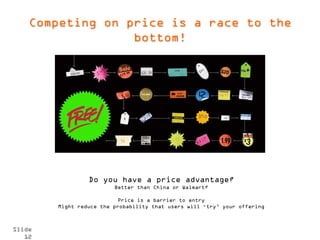
Competing on price is a race to the
                  bottom!


                 Do you have a price advantage?
                         Better than China or Walmart?

                           Price is a barrier to entry
        Might reduce the probability that users will ‘try’ your offering


Slide
   12
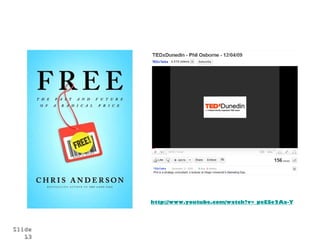
http://www.youtube.com/watch?v=_peESe2Aa-Y


Slide
   13
real marketing attempts to

 know and understand the customer so well
 that that market offering fits him/her/them
 and sells itself
        though the marketer will have to let the customer
        know it is available


 create enough value so both the customer
 and organisation are satisfied

 it should result in a customer who is ready
 to interact (again and again)


Slide
   14
value
 generally represented by money in
 exchange
        can be non economic in both benefit
        and cost calculation
           customer benefits can include emotional, status
           costs can include time, convenience


 subjective

 determined by the user…
Slide
   15
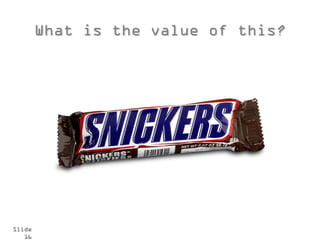
What is the value of this?


Slide
   16
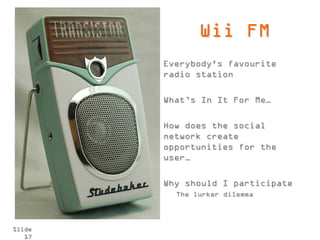
Wii FM
        Everybody's favourite
        radio station

        What’s In It For Me…

        How does the social
        network create
        opportunities for the
        user…

        Why should I participate
          The lurker dilemma


Slide
   17
implications
 you (producer) cannot produce value
        only value propositions


 requires users!
        co-creation


 you won’t know what they value!
        flexible, adaptable, customisable


Slide
   18
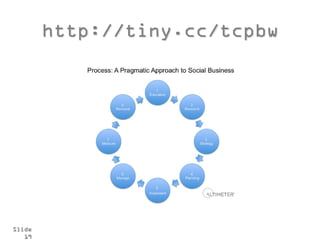
http://tiny.cc/tcpbw


Slide
   19
Slide 20
one size fits no one


Slide
   21
Slide
   22
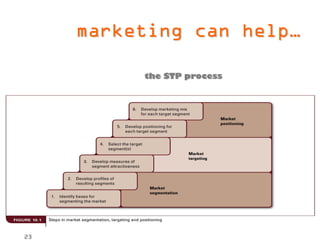
marketing can help…

             the STP process


Slide
   23
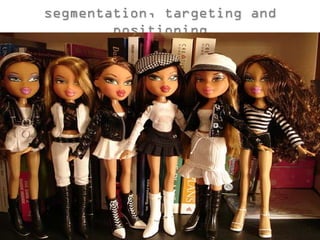
segmentation, targeting and
                positioning


Slide
   24
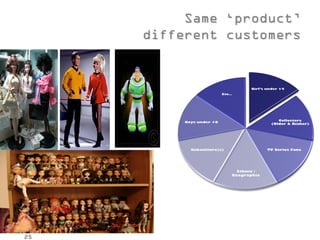
Same ‘product’
        different customers


Slide
   25
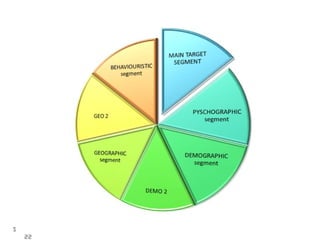
segments
      there are a number of different ways to
    identify the composition of a market using
    geographic, demographic, psychographic and
              behaviouristic variables

     in practice, a marketer will use as many
   segmentation variables as possible to get a
         clear description of the segment

      describing segments of a market lets us
     profile who the typical customer in that
                  segment will be

     this ‘picture’ is used to determine which

     segments within the market we will target
Slide
  (based   on your value proposition _ what do you have that they
   26
targeting
            evaluate the
         attractiveness of
              segments
                 AND
        make a choice which
         segments to serve

    target markets are
    those segments of a
  market at which we will
      direct marketing
          activity

   developing a marketing
  mix that will appeal to
        that segment
Slide
   27
positioning
   positioning aims to shape the way
   consumer’s perceive the offer by
   creating a distinct image of the
   product in the consumer’s mind

   positioning works to determine a
   product’s position in relation to
   competing products and has the effect
   of influencing people’s opinions as it
   recognises that consumers set a
   product’s position based on their
   understanding of it

Slide
   28
choosing a positioning
                           strategy
product’s position - the way the
product is defined by consumers on
important attributes
        the place the product occupies in
        consumers’ minds relative to competing
        products

marketers must:
        plan positions to give their offerings the
        greatest advantage in selected target
        markets
        design marketing mixes to create these
        planned positions
Slide
   29
so…
 you will be expected to understand ‘the
 market’ and justify your decisions…
        by investors (venture capitalists, bankers etc)
        by employers

           KNOWING THIS STUFF GIVES YOU A COMPETITIVE
                            ADVANTAGE


 market information makes it easier to make
 decisions…

 marketing can’t be considered an
 afterthought
        retro-fitting anything makes it harder
Slide
   30
Information Sources
            Primary Research
             Secondary Data
              Internal Data
         Asking your customers


Slide
   31
Questions to Ask
 How much is the information worth?
 How accurate is the information?
 How are you going to use the
 information?
 When (and how often) will you collect
 the information?


Slide
   32
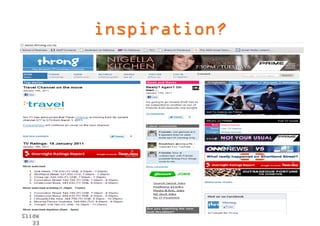
inspiration?


Slide
   33
Slide
   34
Slide
   35
books


Slide
   36

Class 8b: Social marketing for web 2.0 projects

  • 1.
    COMP113 Web 2.0 andOnline Communities introduction to marketing for web 2.0 projects Phil Osborne 2010
  • 2.
  • 3.
  • 4.
  • 5.
  • 6.
  • 7.
  • 8.
  • 9.
  • 10.
    what is marketing? as old as business itself misunderstood marketers reputation as bad as politicians, lawyers, used car salesman marketing as selling most people perceive marketing as promotion advertisements, sales promotions convincing people to consume / purchase things they don’t need Slide 10
  • 11.
    beyond selling things marketer as agent for the firm marketer as agent for the customer good marketing decreases the need for promotion customers as advocates word of mouth and word of mouse ultimate aim is to understand the market (particularly customers) and align the companies efforts the right product, at the right place, at the right time, at the right price Slide 11
  • 12.
    Competing on priceis a race to the bottom! Do you have a price advantage? Better than China or Walmart? Price is a barrier to entry Might reduce the probability that users will ‘try’ your offering Slide 12
  • 13.
  • 14.
    real marketing attemptsto know and understand the customer so well that that market offering fits him/her/them and sells itself though the marketer will have to let the customer know it is available create enough value so both the customer and organisation are satisfied it should result in a customer who is ready to interact (again and again) Slide 14
  • 15.
    value generally representedby money in exchange can be non economic in both benefit and cost calculation customer benefits can include emotional, status costs can include time, convenience subjective determined by the user… Slide 15
  • 16.
    What is thevalue of this? Slide 16
  • 17.
    Wii FM Everybody's favourite radio station What’s In It For Me… How does the social network create opportunities for the user… Why should I participate The lurker dilemma Slide 17
  • 18.
    implications you (producer)cannot produce value only value propositions requires users! co-creation you won’t know what they value! flexible, adaptable, customisable Slide 18
  • 19.
  • 20.
  • 21.
    one size fitsno one Slide 21
  • 22.
  • 23.
    marketing can help… the STP process Slide 23
  • 24.
    segmentation, targeting and positioning Slide 24
  • 25.
    Same ‘product’ different customers Slide 25
  • 26.
    segments there are a number of different ways to identify the composition of a market using geographic, demographic, psychographic and behaviouristic variables in practice, a marketer will use as many segmentation variables as possible to get a clear description of the segment describing segments of a market lets us profile who the typical customer in that segment will be this ‘picture’ is used to determine which segments within the market we will target Slide (based on your value proposition _ what do you have that they 26
  • 27.
    targeting evaluate the attractiveness of segments AND make a choice which segments to serve target markets are those segments of a market at which we will direct marketing activity developing a marketing mix that will appeal to that segment Slide 27
  • 28.
    positioning positioning aims to shape the way consumer’s perceive the offer by creating a distinct image of the product in the consumer’s mind positioning works to determine a product’s position in relation to competing products and has the effect of influencing people’s opinions as it recognises that consumers set a product’s position based on their understanding of it Slide 28
  • 29.
    choosing a positioning strategy product’s position - the way the product is defined by consumers on important attributes the place the product occupies in consumers’ minds relative to competing products marketers must: plan positions to give their offerings the greatest advantage in selected target markets design marketing mixes to create these planned positions Slide 29
  • 30.
    so… you willbe expected to understand ‘the market’ and justify your decisions… by investors (venture capitalists, bankers etc) by employers KNOWING THIS STUFF GIVES YOU A COMPETITIVE ADVANTAGE market information makes it easier to make decisions… marketing can’t be considered an afterthought retro-fitting anything makes it harder Slide 30
  • 31.
    Information Sources Primary Research Secondary Data Internal Data Asking your customers Slide 31
  • 32.
    Questions to Ask How much is the information worth? How accurate is the information? How are you going to use the information? When (and how often) will you collect the information? Slide 32
  • 33.
  • 34.
  • 35.
  • 36.