A Strategy for Education on the Critical Issues of U.S.
Groundwater for Policymakers and Investors
Final Report and Handbook for Designing a Curriculum for an Education Program
MPA-ESP Spring 2016 Workshop
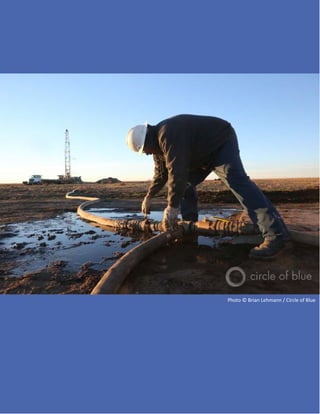
Photo © J. Carl Ganter / Circle of Blue
ii
Credits
Prepared for | Circle of Blue
Prepared by |Columbia University in the City of New York
School of International and Public Affairs
The Earth Institute
Master of Public Administration in Environmental Science and Policy
Workshop in Applied Earth Systems and Policy Analysis
May 2016
Faculty Advisor | Dr. Nancy Degnan, Director of Academic Initiatives, Earth Institute
Columbia University
Managers | Victoria Wagner Mastrobuono
| Sejal Soni
Editors | Michael D’Agostino
| Lindsay Garten
Team | Dylan Adler
| Daniel Giddings
| Stav Gilutz
| Lei Ma
| Chelsea McGimpsey
| Alexander Pharmakis
| Erin Quetell
iii
“Groundwater availability is a function of the quantity and
quality of water, and also the laws, rules, regulations, and
socioeconomic factors that control its demand and uses.”
- Reilly, T.E. et al., 2008
Preface
This report is the final deliverable for the Workshop in Applied Earth Systems and Policy Analysis course,
the capstone requirement for the Master of Public Administration in Environmental Science and Policy
(MPA-ESP) at Columbia University’s School of International and Public Affairs (SIPA).
The Workshop course consists of a student team completing a pro bono consultancy assignment for a
real-world public-sector client. This report was created by 11 MPA-ESP students working for the Michigan-
based nonprofit Circle of Blue. The student group was tasked with researching and developing a
comprehensive Strategy for Education on the critical issue of U.S. groundwater.
Columbia University’s MPA-ESP Program is an intensive one-year degree focused on developing future
environmental sustainability leaders. Students develop quantitative and qualitative skills required to
address current and emerging environmental issues, including climate change, world water shortages,
environmental contamination, and renewable energy. The degree emphasizes applied science, project
management, economics, and policy analysis both through real-world case studies and simulations.
Additionally, the Program facilitates interdisciplinary problem-solving and fosters systems-thinking as well
as systems-based approaches to public policy problems, preparing students for careers in government,
nonprofit and for-profit sectors. The MPA-ESP degree was created in 2002 and has over 700 alumni to
date.
Circle of Blue was founded in 2000 by leading journalists and scientists with the goal of using written
storytelling, compelling visuals, and timely data analysis to educate the public about the world’s water
crises, including the nexus of water and agriculture, energy, and industry. The organization’s four pillars
of news coverage include evidence, relevance, consequence, and action. Combining scientific expertise
with a journalistic approach to conveying information clearly and accessibly, the organization emphasizes
collaboration, ethics, ideation, and research to expose global water issues and report possible solutions.
Circle of Blue has received numerous awards and recognition, including those from the Society of
Environmental Journalists and The Rockefeller Foundation.
iv
Acknowledgements
The MPA-ESP team wants to express its sincerest gratitude to everyone at Circle of Blue, especially
Matthew Welch, J. Carl Ganter, and Laura Herd. The opportunity to work with each of them in developing
a strategy for groundwater education has been a tremendous learning experience. The continual guidance
and feedback provided by Circle of Blue staff members were instrumental in shaping the direction and
focus of this report, which we hope can be leveraged to develop a variety of future water education
programs.
We would also like to thank our faculty advisor, Dr. Nancy Degnan, who served as a continued source of
ideas, encouragement and inspiration. Furthermore, Dr. Upmanu Lall at the Columbia Water Center
played a fundamental role in assisting our team with focusing on the full range of U.S. groundwater issues,
including those related to policy, management and data. We also want to thank the organizers, panelists
and moderators of the Columbia University “America’s Water Conference” held in March 2015, which
provided critical insights regarding public perception of water infrastructure and innovative sustainability
solutions.
We additionally want to thank the 28 individuals who agreed to be interviewed during spring 2016. Their
candid responses provided key insights into barriers and best practices for groundwater management,
and provided a foundation of knowledge upon which this report was developed. Interview insights
included communications, education and outreach techniques for key audiences, in addition to a variety
of tools, conferences and partnerships that Circle of Blue can leverage moving forward. Furthermore, we
want to provide a special thanks to Kylie Newman, who delivered a pivotal training on adult education.
Lastly, we want to thank Dr. Adela J. Gondek for supporting our project, and the selection committee for
the J.P. Leous and Neal Parry Award for Progressive Sustainability at Columbia University’s School of
International and Public Affairs. We are honored and humbled to receive this award based on the MPA-
ESP team’s in-depth analysis of cross-disciplinary solutions to addressing the growing U.S. water crisis.
Disclaimer
This document contains some copyrighted material for educational purposes. These materials are
included under the fair use exemption of U.S. Copyright Law and are restricted from further use.
Please note that this document has been prepared on an “All Care and No Responsibility” basis. Neither
the authors nor Columbia University make any express or implied representation or warranty as to the
currency, accuracy or completeness of the information contained herein.
v
Contents
MPA-ESP Team Biographies................................................................................................................................ vii
Definition of Key Terms and Abbreviations........................................................................................................ xii
Table of Figures.................................................................................................................................................. xiii
Executive Summary............................................................................................................................................ xiv
Part 1: Final Report...............................................................................................................................................1
U.S. Groundwater Overview.................................................................................................................................1
Project Background...............................................................................................................................................2
Research Methods Overview................................................................................................................................3
Vision, Mission and Goal.......................................................................................................................................5
A Strategic Approach to Groundwater Education ................................................................................................6
Component #1: Facilitate an Interdisciplinary Understanding of Groundwater..............................................6
Component #2: Integrate Existing Information and Resources on Groundwater..........................................29
Component #3: Implement Mechanisms for Emergent Research and Knowledge Integration.....................31
Component #4: Connect with Experts and Build Partnerships ......................................................................33
Component #5: Implement Pilot Education Program ....................................................................................52
Conclusion and Next Steps .................................................................................................................................57
References ..........................................................................................................................................................58
Appendices .........................................................................................................................................................72
Appendix I: Baseline Knowledge for Groundwater ........................................................................................72
Appendix II: Regional Approach on U.S. Groundwater Issues........................................................................77
Appendix III: Regional Policies on Groundwater ............................................................................................81
Appendix IV: Recommendations for Sub-audiences ......................................................................................89
Appendix V: List of Interviewed Organizations...............................................................................................90
Appendix VI: Expert Interviews Research Methods .......................................................................................91
Part 2: Handbook for Designing a Curriculum for an Education Program on the Critical Issues of U.S.
Groundwater for Policymakers and Investors....................................................................................................96
Preface................................................................................................................................................................98
Theme 1. A Cohesive Perspective on Groundwater: An Overview of the Current Groundwater Science,
Relationships, and Risks within the U.S. Context..............................................................................................100
Theme 2. The Regulatory and Pricing Framework of Groundwater: Revealing the Historic, Legal and Economic
Picture of Water in the United States...............................................................................................................100
vi
Theme 3. A Dynamic and Integrated Perspective on Risk: Groundwater at the Nexus of Climate, Energy,
Agriculture, Industry, Human Health, and National Security ...........................................................................100
Theme 4. A Pathway to Stewardship of Our Critical National Resource: Framing the Regulatory and
Investment Solutions to Groundwater Challenges...........................................................................................101
References ........................................................................................................................................................102
Appendices .......................................................................................................................................................102
Appendix I: Job Descriptions for Recommended Personnel .........................................................................119
Appendix II: Estimated Financial Resources for Conferences .......................................................................129
Appendix III: Gantt Chart, Years 1-3..............................................................................................................130
Appendix IV: Potential Partner Organizations, Conferences and Communications Channels......................134
vii
MPA-ESP Team Biographies
Nancy Degnan (Faculty Advisor)
I am the Director, Academic Initiatives for the Earth Institute (EI), Columbia University
where I spearhead initiatives and programming in education, training and applied
research in sustainability science and practice, as well as in STEM (science, technology,
engineering and mathematics).
My chief goal is to bridge the science and non-science communities, so that groups can
understand more about each other and about the challenges and opportunities of
sustainability from multiple perspectives. These groups comprise EI researchers,
faculty, graduate and undergraduate students as well as K-12 educators, investment professionals, policy
makers and life-long learners.
For the past decade, I’ve been a Principal, co-Principal Investigator or senior personnel on several public and
private grants totaling nearly $10M. Among these are four National Science Foundation (NSF) multi-year
grants specific to sustainability and STEM education at the secondary, undergraduate and graduate levels.
The most recent is America’s Water: The Changing Landscape of Risk, Competing Demands and Climate, a
Comprehensive Research Model (PI: Upmanu Lall). America’s Water is about interdisciplinary natural and
social science research at the nexus of water, energy, agriculture and industry, in four key regions of the
United States. For the grant, I endeavor to use this comprehensive research approach to frame an equally
comprehensive education and outreach program that builds and transfers knowledge. I am thrilled to be
able to advise this talented MPA-ESP Team as they conduct their important work this semester.
I received my BA from the College of New Rochelle, New Rochelle, New York, in international relations with a
minor in chemistry, and my MPA and Ph.D. from Columbia University’s School of International and Public
Affairs, and Graduate School of Arts and Sciences (respectively). I am a life-long resident of New York.
Victoria Wagner Mastrobuono (Project Manager)
Prior to coming to Columbia University I headed the environmental practice of a law
firm in Sao Paulo, Brazil, where I analyzed environmental risks and compliance, and
participated in power plant, mining, water, sanitation, and waste disposal projects,
among others. This experience provided me with a solid background of legal and
regulatory foundation, and first-hand experience on the challenges faced by the public
and private sectors in implementing and complying with environmental policies and
regulations. In 2014 I specialized in infrastructure law, which gave me further
understanding on the economic and financial aspects related to energy and infrastructure projects, and the
importance of collaboration amongst stakeholders for structuring intelligent and effective solutions for
problems of public interest.
The decision to pursue the MPA-ESP Program was driven by a desire to complement my background with a
comprehensive understanding of policy making tools, and the fundamental science behind environmental
problems, necessary to guide effective policy making and regulation in the environmental field. Through my
work and academic preparation I have built analytical, teamwork, and integration skills, and the capacity to
combine different perspectives needed for building solutions for environmental challenges, which will guide
my work in this project. My career vision to participate in the ongoing dialogue between stakeholders to
create and implement new and effective solutions for complex issues of public interest related to energy,
water, sanitation, and transportation, and to promote tangible improvements in governance and more
equitable and sustainable practices.
viii
Sejal Soni (Deputy Manager)
I come to the MPA ESP program from the field of environmental science. I decided on
this graduate program because it combines scientific, political, and economic
approaches to solving environmental problems. Since finishing my undergraduate
degree in Environmental Studies and Geology at Tufts University, I have worked as a
scuba diver, teacher’s aid, private tutor, canvass director, and environmental educator.
I also cofounded an organization called AweSTEM ebooks, which aims to inspire
interest in STEM education through multidisciplinary ebooks.
I hope to bring my expertise in education and environmental science to this project. To me, the most exciting
aspect of this project is the opportunity to learn how best to reach decision-makers to drive the focus of U.S.
water strategy. Solutions to the global water crisis will take many different forms, and engaging the public
sector with the private sector is crucial to realizing diverse strategies.
Michael D'Agostino (Co-Editor)
I am an MPA in Environmental Science and Policy student at Columbia University’s
School of International and Public Affairs (SIPA). I am specializing in strategic
communications and digital media, and will graduate in May 2016. I am particularly
interested in the fields of science, policy, media and external relations.
My undergraduate studies at University of Pittsburgh focused on biology, chemistry,
film and writing.
My career goal is to combine these interests using writing and digital media to engage and educate key
stakeholders about pressing public health, sustainability and environmental resiliency issues. I worked for
one year as an environmental education intern at the US Fish and Wildlife Service after graduating from
college in 2012. Following that, I worked for two years at the NYC Department of Health and Mental Hygiene
as an outreach, events and digital media coordinator. I hope to pursue career opportunities in government
affairs and science communications.
Lindsay Garten (Co-Editor)
I graduated from Barnard College, Columbia University in 2013 with a degree in
environmental science. For my senior thesis I received a grant from the Merck
Foundation to develop an educational sand-tank model to teach stakeholders about
water contamination issues caused by hydraulic fracturing.
Prior to attending the MPA-ESP program, I interned at the Earth Policy Institute (EPI), a
small nonprofit in Washington, D.C. where I led a literature review and data analysis of
the hydroelectricity and geothermal chapters of the organization’s newest book The
Great Transition: Shifting From Fossil Fuels to Wind and Solar Energy. I also managed many of EPI’s Excel
databases and helped fact check and edit smaller publications.
After I graduated from Barnard, I interned at the Sierra Club for the communications team working on the
Beyond Natural Gas campaign.
ix
Dylan Adler
I grew up in New Rochelle, NY with a strong interest in science. As someone who is
passionate about the application of scientific concepts to government policy, my goal is
to use my education and experience to better the world. I am interested in the changes
that are occurring in the environment and the challenges that arise. I am passionate
about the preservation of ecosystems for the benefit of humans, animals and plants.
I attended Franklin and Marshall College where I majored in biology and minored in
film. In college, I worked for four years at the North Museum of Nature and Science,
where I created promotional media and communicated scientific ideas to the public. I was thrilled to attend
Columbia University for an MPA in Environmental Science and Policy. In this program I have learned how
scientific concepts and tools can be applied to policy formation. I have also worked at the Columbia Climate
Center conducting outreach, data management and analysis, and writing blog articles for the Earth Institute’s
State of the Planet website.
Daniel Giddings
I come from an agricultural background, growing up on a small farm in southwest
Missouri. My interest in issues at the intersection between agriculture and
environmental policy derives from my experience growing up and my formal training as
a political science undergrad, and as an MPA-ESP at Columbia University. I want to
pursue policy solutions that increase long-term agricultural production, protect and
conserve natural resources, and stimulate the agricultural economy. For the last two
years, I gained experience towards these goals within the context of small-scale
traditional farming in Cameroon as a U.S. Peace Corps agroforestry volunteer. The environmental impacts of
how, where, and who produces our food quickly became clear to me.
I have observed the tangible links between agriculture, environmental protection, and economic policy.
Though those linkages represent different issues in the U.S. than in Cameroon, I am interested in pursuing
solutions that capitalize on the synergies between these policy elements to move all stakeholders forward.
Through my coursework at SIPA I have researched the carbon sequestration potentials of agroforestry and
biochar in the U.S. context, the effect of ethanol price supports on U.S. grain prices, the water footprint of
microbrewery beer production in the Pacific Northwest, soybean production potential in post-embargo Cuba,
and the climate impact of beef production among other topics. I am excited to collaborate with diverse
stakeholders across the country to address U.S. water issues - particularly in agriculture.
Stav Gilutz
I am an environmental lawyer with experience working on environmental legal and
policy issues from the side of the government and the nonprofit sector. Most of my
experience in water policy is in the Israeli context, my country of origin, while I worked
at the Ministry of Justice on environmental legislation and the regulation of natural
resources. I also consulted pro-bono for the Mystic River Watershed Association in
Arlington, MA in its initiative to propose stormwater regulations for the Watershed’s
municipalities.
Other than legal expertise, I have experience in education and community organizing. I was an educator for
political science at a leadership program for youth, and a community organizer at Harvard University Office
for Sustainability, where I proposed and implemented sustainable policies for Harvard Housing and its
residential community. At Columbia I am an organizer with Columbia Divest for Climate Justice, I am a
x
member of the Earth Institute Student Advisory Council, and on the organizing team of a delegation to Israel
of SIPA students, which focuses on the environmental challenges of the country.
Lei Ma
I studied finance and public affairs at Indiana University Bloomington. During my study
there, I did a variety of volunteer work in different areas including recycling centers and
Panama’s rural area. After graduation, I interned with the Global Alliance for
Incinerator Alternatives at Berkeley, CA and researched waste management methods
for both clients in the U.S. and China.
I am currently an MPA candidate in Environmental Science and Policy. I chose this topic
due to my concern of the current water issues China is facing. After studying at SIPA, I
hope to work with nonprofits in New York that aim to solve environmental problems around the world.
Chelsea McGimpsey
My background is in field conservation of critically endangered bird species. Most
recently I was stationed in Hawai’i at the Keauhou Bird Conservation Center functioning
as an incubation and hand-rearing specialist for the Hawai’i Endangered Bird
Conservation Program. Previous to that I worked at various zoological institutions
across the country breeding endangered species for Species Survival Plans.
I am passionate about biodiversity issues and aim to work at the nexus of biodiversity
and human development. An important component of this relationship is reliance upon
potable and freshwater resources, which is rapidly becoming one of the defining environmental issues of our
time. Strengthening understanding of water issues across all sectors will be critically important in ensuring a
viable future for both human and non-human inhabitants of our planet.
Alex Pharmakis
I am currently a Master's of Public Administration in Environmental Science and Policy
candidate at Columbia University. Previously, I graduated with a Bachelor's of Science
in Environmental Geoscience from Texas A&M University. My work experience includes
working for a non-profit organization in New York City and working in environmental
health and safety for the largest campus in the state of Texas.
My undergraduate research focused primarily on carbon sequestration in rainforests
and carbon-offset farms in Costa Rica, and also urban forestry effects on Texas A&M's
campus. My graduate studies have focused on a legislative analysis of water policy and energy systems. My
water policy study has been supplemented by a consulting simulation of the H.R. 291 Water in the 21st
Century Act with a focus on the expansion of the EPA's WaterSense program. My energy studies have
focused on the electricity system, oil and gas, and renewable energy markets. These studies are
complemented by an understanding of environmental management and its policy/legal components. I plan
to seek employment in the state of Texas focusing on these issues that are significant in the state and in the
nation.
xi
Erin Quetell
My undergraduate degree is a Bachelor of Science in Biology from Grand Valley State
University. Following graduation, I worked at the Detroit Zoological Society in the
education department as a teacher for the Camp Safari program. I then spent a year as
an AmeriCorps member where I served a small land conservancy and a local Trout
Unlimited chapter with conservation easement monitoring and acquisition, water
quality monitoring, and invasive species mitigation and control. After my AmeriCorps
service I worked for two years at the Greening of Detroit as their Community Forester
and Research Analyst. I worked on a variety of green infrastructure projects throughout Detroit where I was
project manager of the Dendroremediation Research Project, and the Detroit Green Corridor Initiative.
I am deeply passionate about the Great Lakes Region and excited to return to Michigan after graduation from
Columbia. Water resource protection is very important to me.
xii
Definition of Key Terms and Abbreviations
CDC Centers for Disease Control and Prevention
DOE U.S. Department of Energy
DOI U.S. Department of the Interior
EIA Energy Information Administration
EPA U.S. Environmental Protection Agency
FDA U.S. Food and Drug Administration
FEMA Federal Emergency Management Agency
GWR Ground Water Rule
IEA International Energy Agency
mgd Million gallons per day
NASA National Aeronautics and Space Administration
NIH National Institutes of Health
NOAA National Oceanic and Atmospheric Administration
USACE U.S. Army Corps of Engineers
USDA U.S. Department of Agriculture
USGS U.S. Geological Survey
xiii
Table of Figures
Figure 1. Breakdown of Interviews by Sector…………………………………………………………………………………………4
Figure 2. Map of the United States by Region ……………………………………………………………………………………....8
Figure 3. U.S. Freshwater withdrawals and consumption………….…………………………………………….…………….12
Figure 4. Existing and proposed cooling systems by source type………………………………………………...………...12
Figure 5. Center Pivot Irrigation……...…………………………………...………………………………………………………..……..15
Figure 6. Value Added to GDP by Agriculture and Related Industries, 2007-14……………………………….……..16
Figure 7. Summary of Impacts of the 2015 California Drought..................................................................17
Figure 8. California Crop Revenue, by crop type, 200-2014 (in billions of dollars)………………………………….18
Figure 9. California Drought Severity and Change in Consumer Price Index..............................................19
Figures in the Appendices (Part 1)
Figure 1. The Water Cycle…………………………………………………………………………………………………………………….. 73
Figure 2. What is Groundwater………………………………………………………………………………………………………………74
Figure 3. Groundwater Withdrawals by Category, 2005…………………………………………………………………………75
Figure 4. Trends in Groundwater Withdrawals, 1950-2005……………………………………………………………………75
xiv
Executive Summary
The nexus between groundwater and surface water as well as with energy, industry, and agriculture is of
paramount importance to the United States’ economy and to individual and collective human well-being.
National security is linked to groundwater sustainability, as groundwater supplies 38% of the U.S. population
with drinking water (Groundwater Use in the United States of America, 2016).
Yet, while the United States’ groundwater dependence is significant, water problems are deeply complex, and
expert interviews reveal an overall lack of basic understanding about groundwater science, threats, and
emerging issues among public policymakers and private investors. This indicates significant gaps in a full picture
of U.S. water knowledge and best practices, despite an abundance of available information. Especially, the
complexities of groundwater still need to be understood by key-stakeholders in the public policy and
investment sector.
This report proposes a strategy for education by which Circle of Blue can build knowledge about groundwater
among public and private sector leaders. The strategy also encourages Circle of Blue to be in dynamic exchange
with these leaders and other partners, so that together, real change is seen, resulting in effective stewardship
of this essential resource for the immediate and long-term. Thus, education will achieve genuine change in
groundwater use, investment and finance, and in regulatory and public policy, regionally and nationally.
The Strategy has 5 components: (i) understanding groundwater as a dynamic system facing critical issues: (ii)
integrating high-quality information into the education program; (iii) implementing mechanisms to incorporate
emergent research and knowledge (e.g. Circle of Blue’s Data Dashboard); (iv) connecting with experts and
building partnerships; and, (v) implementing a pilot education program.
Each component of the Strategy advances groundwater education in a comprehensive way to achieve a vision
of driving sustainable groundwater policy and investment across the United States.
The education design for the Pilot Program is comprised of 4 Themes and 16 Topics and Issues of Discussion
focused on basic groundwater concepts, groundwater’s relationship with energy, agriculture, and industry, and
legal and regulatory frameworks at the national, regional, state and local level. The Themes encompass the key
groundwater science and water’s nexus with the U.S. economy and society. The Themes further highlight
specific topics and issues that can be adapted to fit the needs of different education platforms and target
audiences. Guided discussion questions will facilitate interactive, cross-collaborative sessions to catalyze
knowledge exchange and solution ideation between participants and faculty, allowing for actionable, tangible
takeaways and next steps.
The Pilot Program also includes specific details on communication, marketing and education delivery methods;
human, operational and capital resources needed; and a timeline for implementation and evaluation. This
Report has been divided into three components: the primary five-component Strategy; the Pilot Education
Program Handbook; and a set of detailed Appendices.
This Strategy is grounded on an interdisciplinary approach necessary to understand groundwater as a dynamic
system influenced by a variety of factors, including: science, culture, sociology, psychology and politics. This
holistic approach to groundwater will facilitate a critical, systems-thinking process that allows for more
sustainable management of U.S. water resources across sectors to ensure a healthy, productive and water-rich
future for current and future generations.
1
Part 1: Final Report
U.S. Groundwater Overview
Groundwater is the Earth’s most abundant source of freshwater (The World’s Water, 2016). The planet
contains 25 times more groundwater than surface water (The World’s Water, 2016). Roughly two billion
people rely on groundwater as a primary source of drinking water, and it comprises nearly half of the
water used to irrigate crops (Atlas of Transboundary Aquifers, 2009; Irrigation Water Use, 2015).
The nexus between groundwater and surface water as well as with energy, industry, and agriculture is of
paramount importance to the U.S. economy and to individual and collective human well-being. Moreover,
national security is linked to groundwater sustainability, as recently highlighted in President Obama’s
National Summit on Water (Fact Sheet: Working Together to Build, 2016).
Yet, while the United States’ groundwater dependence is significant, baseline knowledge among
policymakers and investment professionals about how to properly manage this critical resource is severely
lacking, posing a threat to current and future generations.
Indeed, groundwater mismanagement abounds. For example, groundwater is being withdrawn at
unsustainable rates in many regions of the United States, with 30% of the groundwater from the Ogallala
aquifer in the Great Plains already depleted, and another 39% projected to be exhausted over the next 50
years. Indeed, while the Ogallala aquifer currently supplies nearly 30% of the United States’ irrigated
groundwater, at current rates of withdrawal it will be nearly dried up by the end of the century (Steward
et al., 2013).
Furthermore, the San Joaquin Valley in California has experienced “the largest human alteration of the
Earth’s surface” due to groundwater mining for agriculture, resulting in 28 feet of land subsidence
(Galloway and Riley, 1999). Thus, multiple areas of the California Central Valley are literally sinking
because of geological instabilities triggered by groundwater overpumping and intensified in the recent
years by the region’s ongoing drought.
These are just a few examples illustrating the critical situation of groundwater depletion across the United
States, which require immediate attention and action from national, state and local governments, the
private sector, nonprofit partners and communities.
Groundwater contamination is another threat only recently receiving widespread national attention, with
the mismanagement of Flint, Michigan’s public water supply and citizens’ subsequent lead exposures in
particular leading to an ongoing dialogue about America’s failing water infrastructure and questions about
U.S. drinking water safety more generally.1
1
In March 2016 the White House hosted a Water Summit to “to shine a spotlight on the importance of cross-cutting,
creative solutions to solving the water problems of today, as well as to highlight the innovative strategies that will
catalyze change in how we use, conserve, protect, and think about water in the years to come” (Fact Sheet: Working
Together to Build, 2016). The event coincided with the United Nations’ World Water Day and more than 150
2
Thus, groundwater management at the local, state and federal level–and between public and private
sectors–remains largely emergent and highly fragmented. Furthermore, groundwater is often not
explicitly addressed. And so a comprehensive, integrated, multidisciplinary, and strategic groundwater
understanding, framework, and management approach is required.
Project Background
Founded in 2000 by leading journalists and scientists, Circle of Blue is a nonprofit organization providing
relevant, reliable, and actionable on-the-ground information about the global water crisis. Circle of Blue’s
ultimate goal is to influence decision-making processes impacting water and foster sustainable policies
and practices based on science and evidence-based research.
In September 2015, Circle of Blue, together with five collaborators–Columbia University Water Center,
Qlik, Twitter, University of California at Irvine, The Pacific Institute–partnered with the Clinton Global
Initiative to develop a comprehensive global groundwater data dashboard to leverage analytics platforms
and integrate historical data with real-time information.
To date, the collaborators are using NOAA and NASA data to visualize groundwater information and make
it accessible to global decision-makers in the public and private sectors. The tool is in early beta testing
with ongoing input from the scientific community.
Next steps include effectively reaching public and private sector leaders to increase their understanding
of and decision-making capacities about groundwater at the nexus of energy, agriculture and industry in
the United States.
Thus, a Pilot Education Program will supplement the data dashboard to provide additional context, insight
and baseline knowledge among targeted stakeholder groups.
Circle of Blue consequently assigned 11 students in Columbia University’s Master of Public Administration
in Environmental Science and Policy (MPA-ESP) Program to develop a Strategy for Education, focusing on
two stakeholder groups: 1.) county and state level public-sector officials; and, 2.) private and public
investment and finance professionals.
Primary and secondary research were used to identify current levels and gaps in knowledge surrounding
U.S. groundwater issues, including challenges at the nexus of energy, agriculture, industry and climate
change. These research results informed the Strategy for Education presented in this report, which
includes five integrated components essential to advancing groundwater education. The components
focus on the what, why and how of groundwater, in addition to allowing for tailored regional and
audience-specific content:
institutions as well as the federal government announced new initiatives and commitments to ensuring that U.S.
water resources and infrastructure are managed sustainably. For example, it was announced that: 1) $4 billion in
private capital will be invested in water infrastructure; 2) $1 billion from the private sector will be given to research
and to develop new technologies, 3) a national action plan for drought resilience will be developed; 4) $35 million
in 2016 will be allocated as federal grants supporting water science; and, 5) release of a National Water Model to
improve river-forecasting capabilities (Fact Sheet: Working Together to Build, 2016).
3
● Component #1: Facilitate an Interdisciplinary Understanding of Groundwater
● Component #2: Integrate Existing Information and Resources on Groundwater
● Component #3: Implement Mechanisms for Emergent Research and Knowledge Integration
● Component #4: Connect with Experts and Build Partnerships
● Component #5: Implement Pilot Education Program
Facilitating a basic understanding about groundwater, integrating and incorporating new and existing
information into the curriculum, and building a network of partners will ensure a comprehensive
education approach. The Pilot Program’s main objective is to increase the level of knowledge about
groundwater and its challenges, while the Strategy for Education provides a framework for developing
the Education Program and fostering sustainable groundwater management and policy practices among
participants.
A series of Appendices are also included at the end of this report, which include additional details, context
and references about research methods, data analysis, key findings, and recommendations.
Research Methods Overview
The MPA-ESP team divided into three task groups, which conducted primary and secondary research to
identify current issues and gaps in knowledge surrounding U.S. groundwater.
The Data and Literature team reviewed online resources, including scientific journals and research
organization platforms, such as the United States Geological Survey website, to identify available
information on groundwater and its importance, as well as to assess the accessibility of this information for
interested parties.
The Expert Interviews team spoke with 28 leaders in nonprofits, academia, government, business, and
investment to characterize the a baseline range of groundwater understanding among and between sectors,
including perceived importance of groundwater issues among target audiences.
The Education Design and Development team researched methods to effectively deliver critical
groundwater information to professional audiences, how to best integrate relevant information into
education formats, and how to implement a comprehensive education program. In addition, relevant adult
education theories and practices were reviewed to ensure successful and innovative approaches are
imbedded into the Education Program.
Data and Literature: The team conducted primary data and literature review to map available information
on groundwater science and challenges. The web-based search strategy involved analyzing peer-reviewed
4
journal articles, federal agency publications and reports, and information available via digital platforms of
academic centers, research institutes, and nonprofits, such as Circle of Blue.
Through the use of Google search tool and Columbia University’s Library Catalogue, the team identified
and assessed over 90 information sources, including those from the U.S. Geological Survey (USGS), the
U.S. Environmental Protection Agency (EPA), and the National Groundwater Association.
Some of the search phrases entered to identify sources of groundwater information using Google
included: What is groundwater?, What is the water cycle?, Why is groundwater important?, and How and
when does groundwater get replenished? These searches were key to determining the breadth, depth,
and extent of groundwater data, research, and general information readily available and accessible online.
A regional approach was applied to identify and characterize U.S. groundwater issues. Five regions were
defined based on the similarity of groundwater issues faced by bordering states within a particular
geography. Also, as no two states have the same groundwater policies, a state-by-state analysis was
conducted to determine regional similarities and differences of U.S. groundwater laws and regulations.
Research into the economics of groundwater and the science behind the nexuses between groundwater
and industry, energy, agriculture, and climate change was additionally conducted.
Expert Interviews: The team identified and contacted prominent experts related to U.S. groundwater
science and policy to solicit first-hand knowledge, opinions, and experiences. The experts represent fields
of academia, business, politics, nonprofits, finance, investment, and research. Twenty-eight experts were
interviewed in total between February and April 2016.
Figure 1. Breakdown of Interviews by Sector
Experts provided information regarding a variety of topics, including:
● Communicating a baseline understanding of groundwater and hydrological systems to policy-
makers and investors
● Sharing expertise and thoughts regarding existing policies and knowledge about these policies
among target audiences
● Recommending relevant organizations for partnership-building and collaboration
5
● Recommending additional experts and stakeholders for knowledge-sharing, network-building,
and subject matter expertise
● Facilitating a compilation of case studies providing insights into the risks, opportunities, and best
practices associated with groundwater use
● Identifying preferred communications channels and educational methods for public policy-
makers and investors
● Identifying target audience subgroups for a U.S. groundwater education program
Expert interviews additionally facilitated building foundational working relationships for future
engagement with Circle of Blue. Many experts identified are potential speakers, strategic partners,
collaborators, or consultants for the Education Program. A detailed explanation of the research methods
used by the Expert Interviews team is found in Appendix VIII.
Education and Outreach: The team researched the effectiveness of education platforms and delivery
methods for critical groundwater information to professional audiences, and how to best integrate
relevant information into education formats and implement a comprehensive education program. Existing
education programs and conferences related to water and their effectiveness were assessed to guide the
preparation of this program. In addition, relevant important high impact adult educational theories and
practices were reviewed to ensure that successful and innovative approaches are imbedded into the Pilot
Education Program.
Vision, Mission and Goal
The Strategy for Education thus seeks to effectively drive changes in decision-making processes by
empowering public- and private-sector leaders with an accurate, accessible and relevant body of
knowledge to increase awareness about groundwater issues, and enable them to lead sustainable
solutions through data-informed policy, practice and collaboration.
The Vision is to drive sustainable groundwater policy and investment across the United States.
The Mission of the Strategy is to increase policymakers’ and investors’ awareness of groundwater, engage
key stakeholders in thinking about solutions to address groundwater issues, and transform policy and
investment decision-making processes foster sustainable management of groundwater resources.
The overall Goal of the Strategy is to fulfill the Mission and Vision through an integrated approach to
groundwater education. The actionable and measurable goal of the Strategy is to support the
implementation of the Pilot Education Program starting at the end of 2017.
The Goal can be achieved by incorporating the following components into the Strategy for Education:
● Identifying potential inflection points in policy-making and investment to achieve more
sustainable water conservation and management practices, including the role of innovation and
technology
6
● Catalyzing knowledge exchange and formation through participant and faculty interaction and
guided discussions to engage audiences in solutions
● Expanding access to an interdisciplinary and comprehensive body of knowledge that integrates
dynamic, multi-platform, experiential learning, and emerging data research
● Increasing awareness about relevant factors in the public and private sectors that impact on water
resources, management and conservation
● Supporting the development of an economic value for groundwater and making tools available to
quantify monetary values, risks, and opportunities associated with groundwater
A Strategic Approach to Groundwater Education
The Strategy for Education is based on five components that come together to advance education on
groundwater issues among policymakers and investment professionals and drive forward an education
program. These components focus on promoting the understanding of groundwater as a dynamic system,
integrating high-quality information on groundwater into the education program, updating this program
for emergent research and knowledge, developing partnerships and connecting with experts that can help
advance the program and, finally, implementing a pilot education program.
Component #1: Facilitate an Interdisciplinary Understanding of Groundwater
The first key aspect of the Strategy focuses on building a common foundation of essential groundwater
information for policymakers and investors, drawing from science, regulations and legal policies, and
economics. Additionally, a firm understanding about the nexuses of groundwater and energy, agriculture,
industry, and climate change is critical to facilitate policy dialogue and action.
As noted in one of the expert interviews, growing groundwater scarcity and contamination across the United
States are receiving increasing recognition, bringing this issue to the forefront of people’s minds. Experts
across all fields emphasized that, while there tends to be a focus on either water quality or quantity, it is vital
to examine both simultaneously, while allowing for a regional approach to sustainable water management.
Basic Groundwater Science
The science of groundwater is highly technical, complex, and relegated largely to the worlds of academia,
water managers, public health officials, and other water professionals. The issues surrounding
groundwater and its use, however, have significant repercussions for public health, economic
productivity, political strategy, and individual and community livelihood. It is therefore critical that
decision-makers possess a baseline level of understanding about this groundwater to ensure its protection
and economic viability.
7
By providing policymakers and investors with a foundation in groundwater science and facilitating
dialogue between groundwater experts and other stakeholders, the Strategy for Education can facilitate
meaningful discussions on groundwater regulation and consumption. Knowledge about efficient
groundwater use, for instance, is imperative to ensuring a sustainable future for human health,
agriculture, industry, and the environment.
A basic understanding of the water cycle is also necessary, particularly in relation to groundwater
replenishment and the interaction between groundwater and surface water. Due slow recharge rates
compared to the rates of human withdrawal, groundwater can be characterized as a finite resource. The
science behind groundwater scarcity must therefore be incorporated into policymaking across all sectors
and industries. .
Appendix I further details critical baseline knowledge concerning groundwater, providing a foundation for
policymakers and investors to navigate groundwater issues in their regions, and support the expansion of
awareness at the national, state, and community level. As new challenges arise, policymakers and
investors should be able to draw from this foundational knowledge to inform effective laws, regulations,
policies and strategies to reduce and ameliorate adverse impacts on groundwater quality and quantity.
Regional Approach to Groundwater Issues
A regional approach to U.S. groundwater challenges is essential given the diversity of ecological,
geological, political, and topological environments across the nation. Identifying major groundwater
themes and issues by region allows for a targeted approach to engaging relevant policymakers and
industry leaders to foster a comprehensive characterization of problems and discussions about cross-
sector solutions.
The regional approach complements baseline groundwater knowledge and allows for the creation of
educational programs geared towards specific areas in the United States, rather than developing a one-
size-fits-all curriculum. As the availability of clean and plentiful supplies of groundwater continues to
decrease, it is important that policymakers and investors are informed about regional contexts so that
they may implement appropriate solutions.
Appendix II contains a regional analysis of groundwater issues in the continental United States. The
regions have been defined according to similar issues and challenges that various bordering states face
regarding to groundwater. Figure 2 below depicts our regional characterizations.
8
Figure 2. Map of the United States by Region
Midwest2
: The pervasiveness of agriculture and livestock industries in the Midwest has contaminated
karst aquifers (e.g. limestone) with nutrients, pesticides, and bacteria (Midwest Paleozoic Carbonate
Aquifers, 2012). Nonpoint source pollution in the Midwest has increased due to agricultural runoff and
increased water temperatures, leading to dead zones in the Great Lakes, Mississippi River, Missouri River,
and numerous other bodies of water. Land-use changes and the expansion of urban areas have reduced
water infiltration into the soil and increased runoff, which have exacerbated the impacts of increased
precipitation intensity (Pryor et al., 2014).
Northeast3
: Water contamination, mostly from industrial contaminants that settle in the sediments of
major waterways, is the overarching issue in the Northeast (Three Universities Form an Alliance, 2014).
Much freshwater in this region exhibits high concentrations of mercury, although some studies suggest
that the mercury concentration in groundwater is generally low (Driscoll et al., 2007). Further, MTBE has
been found in groundwater from wells used primarily for drinking water (Squillace and Moran, 2000). Due
to the consumption of water containing inorganic arsenic, which may have originated from historic
pesticide use, the New England area experienced higher-than-average mortality rates from bladder cancer
in both males and females in 1950-1994 (Ayotte et al., 2006).
Southeast4
: The states in the Southeast suffer primarily from over-withdrawal of groundwater that
endangers their water security. Pumpage rates in the Southeast increased more than tenfold over the
course of 40 years in Baton Rouge, Louisiana with the water table declining over 200 feet in this aquifer
(Reilly et al., 2008). The Floridan, Northern Atlantic Coastal Plain, and Southeastern Coastal Plain Aquifers
2
Ohio, Michigan, Indiana, Illinois, Minnesota, Wisconsin, North Dakota, South Dakota, Missouri, Iowa, and Michigan.
3
Maine, Vermont, New Hampshire, Massachusetts, Rhode Island, Connecticut, Pennsylvania, New York, New Jersey,
and Delaware.
4
Maryland, West Virginia, Virginia, North Carolina, South Carolina, Kentucky, Tennessee, Georgia, Florida, Alabama,
Mississippi, Louisiana, Arkansas, and the District of Columbia
9
are all being overdrawn as population increases along coastal areas (Reilly et al., 2008). Groundwater
withdrawal is projected to increase by 25% in Florida, the Mississippi River Basin, and populated areas in
the southern Atlantic states (Spencer and Altman, 2010). Other critical water challenges in the Southeast
include flooding, severe storm activity, and aging septic systems.
Northwest5
: The Northwest’s most critical challenge is changes in precipitation patterns thought to be a
result of climate change. This region is expected to suffer a decline in the seasonal snowpack that
recharges its aquifers (Mote et al., 2014). A U.S. Geological Survey report also indicates that groundwater
levels are rising in some areas of the Northwest due to oversaturation of the soils from irrigation, while
other parts of the same aquifers have declined by up to 200 feet from overdrafting (Reilly et al., 2008).
The Southwest6
: The Southwest is the hottest and driest region of the country, and its most critical
problem is the supply of freshwater (Garfin et al., 2014). Issues of water supply have been aggravated by
the severe drought impacting the region for four years (Schneider, 2014). Lack of rainfall, which can lead
to decreased snowpack and streamflow, has lowered the amount of water available in many states,
especially California (Garfin et al., 2014). A decrease in available surface water that feeds into the
groundwater supply leads to a decrease in this natural resource; this problem is worsened by
unprecedented overpumping of groundwater (Walton, 2015). Pumping is occurring at such a rapid rate
that the California Central Valley is collapsing because of the space left behind in the absence of
groundwater (Walton, 2015). The Central Valley is a particularly important area because it produces most
of the fruits and nuts sold in America’s grocery stores (Walton, 2015). According to the California
Department of Water Resources, 73.4% of groundwater wells have shown a decrease in water level over
the past 10 years (Map: Groundwater Level Change, 2015).
The Groundwater Nexus
Groundwater is intrinsically connected to surface water, and impacted by climate change, industry,
agriculture, and energy. Incorporating the understanding of these nexuses into the body of knowledge
disseminated through an education program is thus a critical aspect of this Strategy for Education.
Since a productive personal life, economy, or agricultural food system is not possible without water, one
interviewed expert strongly believes that water will become the next big area of focus for policymakers, the
public, and industry, including recognition of the need for policy updates, technology adoption, and
additional research and evidence-based recommendations.
Groundwater and Surface Water
Surface water and groundwater interact during the water cycle. If an aquifer is shallow it can be in contact
with a stream bed where it is said to be a hydraulically connected system (Water Interaction, 2015). There
are three ways in which streams interact with groundwater: 1.) gaining water from the inflow of
groundwater; 2.) losing water from the outflow of groundwater; or, 3.) both gaining and losing water due
to groundwater flows (How do Groundwater and Surface Water Interact?, 2016). Groundwater and
5
Washington, Oregon, Idaho, Montana, and Wyoming
6
California, Nevada, Utah, New Mexico, Arizona, Colorado, Kansas, Oklahoma, and Texas
10
surface water exchange when there is a difference in elevation between the groundwater table and the
water level of the stream (Water Interaction, 2015). Groundwater is the reason streams keeping flowing
in between precipitation events (How do Groundwater and Surface Water Interact?, 2016).
Groundwater interacts with lakes and wetlands as well through inflows and groundwater recharge. When
water moves between groundwater and surface water systems, the water qualities mix. High
concentrations of nutrients or other chemicals in surface water sources can thus be transferred into
groundwater systems (How do Groundwater and Surface Water Interact?, 2016).
Groundwater and Energy
Energy and water are mutually linked resources. Meeting energy needs and producing energy requires
water, often in large quantities. Water is used in multiple stages of the hydraulic fracturing process and
to cool power plant generators, for instance. Water is also a primary energy source for hydropower.
Power plants across the country contribute to water-supply stress, and water availability could become an
increasingly serious issue for unconventional gas development and power generation in the United States.
Thus better technology deployment and greater integration of energy and water policies is required (World
Energy Outlook, 2012).
On the other hand, energy is required for pumping, treatment, distribution, and discharge of freshwater
and wastewater.
Water Efficiency as Key to Saving Energy: The California Case
Energy efficiency offers great opportunities for significant water savings while also reducing carbon
emissions (Copeland, 2014). According to water expert Peter Gleick, President and Co-Founder of the Pacific
Institute, “In regions where pumping and distributing water requires significant electricity use, policies that
lead to reduced water consumption could address climate change more efficiently than requiring businesses
and households to use less energy” (Block, 2013).
In California, the majority of energy is being used for water pumping and irrigation, especially during the
summer growing season. Many farmers rely on groundwater, which is one of the region’s most energy
intensive water sources. During drought years when the water supply shifts from surface to groundwater,
this results in increased on-farm energy use due to groundwater pumping (Water & Energy).
Given concerns over drought conditions, targeted programs from a national or state water agency, or
private-sector market solutions that result in water demand reduction and increased water use efficiency,
treatment, and reuse could be developed (Developing a Water Road Map Whitepaper, 2016). However,
decreasing the demand may induce water utilities to increase water rates. As the cost of water has increased,
especially during drought years, consumers have reduced consumption, and utilities have faced dramatic
revenue reduction in some cases, even as debt and water rates have increased. Employee and facilities
maintenance comprise a large part of the utility’s annual expenses, so continued revenue reductions pose a
challenge to water utilities management. In areas facing water scarcity or drought, there is an increasing
11
interest in wastewater treatment and water reuse. As wastewater system infrastructure changes in response
to these challenges, a combined effort from different sectors is necessary for better utilities management
and energy savings (Developing a Water Road Map Whitepaper, 2016).
Groundwater and Hydraulic Fracturing
Energy production and mining – both activities that rely heavily on water – account for a large percentage
of some state economies. Sixty-three percent of water used for mining is groundwater (Groundwater Use
in the United States). At the national level, the mining sector accounted for approximately 2% of the U.S.
economy in 2013. Hydraulic fracturing requires a large amount of surface water in most states; however,
Texas, a semi-arid to arid southwestern state generally uses a mixed supply of surface and groundwater
(Copeland, 2014; Nicot et al., 2014).
Information about water usage in hydraulic fracturing is scarce and fragmented because of trade secrets
in the industry. Available data suggests that water for hydraulic fracturing comes both from groundwater
and surface water in roughly equal amounts. Around 13 Mm3
of groundwater withdrawal for hydraulic
fracturing in the Barnett Shale (located in Texas) in 2011 came from the Trinity Aquifer system, one of the
most depleted aquifers in the state. Although groundwater use for hydraulic fracturing is a small fraction
of total water use, it still poses stress to depleted aquifers in water-scarce regions (Nicot et al., 2014).
Hydraulic fracturing has expanded its application to horizontal drilling, aggravating controversies
surrounding the use of water for energy production. The major issues include groundwater contamination
from the chemicals used in this process, waste disposal, and accidental chemical spills (Rahm, 2011).
A study from the University of Texas Arlington shows that well water in the Barnett Shale area displays
elevated levels of 10 different heavy metals. Also, 19 different chemical compounds were associated with
hydraulic fracturing in the North Texas Barnett Shale Region. Hydraulic fracturing is exempt to many
federal regulations, which allow companies to withhold names, chemical formulas, and impacts of the
chemicals used in hydraulic fracturing fluid; results from this and other studies provide strong evidence of
the need for continuous monitoring and analysis regarding groundwater quality (Sullivan, 2015). As a large
fraction of Trinity Aquifer withdrawals are for municipal use, heavy metal contamination from hydraulic
fracturing is a public health concern.
Groundwater and Thermopower
Water is largely used in thermal power generation (fossil fuel, nuclear, and bioenergy), mainly for cooling
generators. Water usage in energy production can be assessed from the perspectives of withdrawal and
consumption, where withdrawal is the volume of water removed from a source, and consumption is the
volume of water withdrawn that is not returned to the source (World Energy Outlook, 2012). Water
withdrawals for cooling purposes impact groundwater availability, affecting water use for other purposes
such as agriculture and human consumption, which can lead to aquifer depletion depending on the rates
of withdrawal (Martı́n, 2012).
In the United States, around 40% of the total freshwater withdrawn annually is used for thermoelectric
cooling purposes. However, thermoelectric cooling only accounts for 3.3% of total freshwater consumed,
12
as shown in Figure 3 (Martı́n, 2012). Water required for cooling could have a huge impact on the water
availability of a region, especially in water scarce-regions (Martı ́n, 2012).
Figure 3. U.S. freshwater withdrawals (left) and consumption (right) (USGS 2005 data) (Source: Martı́n, 2012)
Currently, 76% of the water needed for cooling generators in thermopower plants is from surface water,
while 13% is from groundwater. With the transition to new cooling system technologies and fuels, this
percentage will decrease to 20% for surface water, and increase to 30% for groundwater (The Water-
Energy Nexus: Challenges and Opportunities, 2014).
Figure 4. Existing and proposed cooling systems by source type
In the dry Southwest of the United States, where water is being used at unsustainable rates, water scarcity
is a key concern for both new and existing power plants. Population growth and growing demand for water
and electricity threaten the region with blackouts and higher electricity costs in the near future (World
Energy Outlook, 2012).
Groundwater and Renewable Energy
Renewable energy supplied 10% of the total energy consumed in the United States in 2014. This number
is expected to increase as a component of achieving U.S. climate change policy goals, since renewable
energies contribute to reducing U.S. carbon dioxide emissions (Americans Use Many Types of Energy,
13
2015). But low-carbon electricity technologies also require water. For instance, water is used for boiler
feed and cooling purposes in geothermal and solar power.
The water intensity of renewable energy technologies varies. While wind farms use a relatively small
amount of water, some concentrating solar power plants consume more water per unit of electricity than
the average coal plant (World Energy Outlook, 2012).
Groundwater is the main source of dependable, year-round water supplies necessary for the development
of geothermal energy, which has high potential in the United States (Joint Groundwater and Energy Study,
2015).
In 2014, biomass made up the largest portion of renewable energy consumption in the U.S (Americans
Use Many Types of Energy, 2015). Groundwater recharge and surface water runoff determines the water
supply for growing the principle energy crops that have a high water demand. In the U.S., groundwater is
being pumped 10 times faster than its natural recharge rates in some western regions with irrigated corn.
The water needs for biofuels in the future will depend upon whether feedstock crops are from irrigated
or rain-fed land and whether advanced biofuels that are less water-intensive penetrate markets. Fossil
fuel production’s water requirements are lower, but water quality impacts are a potential concern
(Harvey, 2010).
U.S. Biofuels Policy: A Short-sighted Solution?
The U.S. biofuels policy was criticized by numerous experts across industries and sectors as a one-sided
policy solution to a multidimensional problem. Many interviewees highlighted the U.S. biofuels policy as
particularly short-sighted because while it clearly benefits some individuals and industries, and provides a
small degree of energy independence, biofuel production has also inadvertently contributed to significantly
depleting groundwater resources in parts of the United States that were historically water-rich. This again
highlights a critical lack of understanding and foresight regarding the water-energy nexus, added several
experts.
Thus, considering only energy and economic impacts, without also calculating the long-term consequences
for water resources, has resulted in a biofuels policy that, among water experts and others, is unjustified
and demonstrates the complexities of competing priorities and the need for a cohesive and focused national
dialogue, strategy or framework regarding groundwater.
To date, there simply “hasn’t been a good national strategy that’s coordinated across agencies” focused on
groundwater, noted one expert. As a result, “efficiency just isn’t there,” in terms of having federal agencies
managing groundwater together as a shared responsibility, added the same interviewee.
It was further noted that even within an agency, such as the EPA, various divisions might not necessarily
agree with all water policies being implemented. Thus, a national groundwater strategy could streamline
both intra-agency and interagency groundwater policy and actions.
Nuclear power consumption represented 19% of total U.S. electricity generation in 2014 (Nuclear
Explained: Nuclear Power and the Environment, 2015). The nuclear sector, which plays a major role in
employment in the electric power generation industry (Census Bureau Economic Data Show Electric
Power Generation, 2014), withdraws nearly eight times more freshwater, both surface and groundwater,
than natural gas plants per unit of electricity generated (Nuclear Power and Water, 2011). Withdrawals
14
can be reduced significantly with advanced cooling systems, although this likely implies higher capital
costs.
Another issue related to groundwater and nuclear power is the radioactive waste generated, which may
leak into groundwater and result in heavy aquifer contamination (Nuclear Explained: Nuclear Power and
the Environment, 2015).
Thus, water, and groundwater in particular, is essential for energy generation and energy security. Policies
and regulation that account for interactions between water and energy are necessary to ensure both
water and energy sustainability in the United States.
Groundwater and Industry
Around 17.3% of water use in the manufacturing industry is sourced from groundwater, representing
3.82% of U.S. groundwater consumption. This is the most important sector of the U.S. economy in terms
of total output and employment. In 2013, this water-intensive sector had a gross output of $5.9 trillion,
or 35.4% of the U.S. GDP, and supported 29.1 million direct and indirect jobs, or 21.3% of total U.S.
employment (Scott, 2015).
Water is essential to many different industrial practices, especially for industries that produce metals,
wood products, chemicals, gasoline and oils (Industrial Water Use, 2005). Practically every manufactured
product uses water at some point during the manufacturing process, such as fabricating, washing, diluting
or cooling (Industrial Water Use, 2005).
Food commodities industries are highly water-intensive given the large amounts needed for agricultural
irrigation, 65.1% of U.S. groundwater, and livestock supply, 3.97% of U.S. groundwater (Industrial Water
Use, 2005; Groundwater Use in the United States of America, 2016). Other industries, such as nonalcoholic
beverages, use only 0.03% of U.S. groundwater, according to the American Beverage Association (Geller,
2009).
In 2005, the largest industrial groundwater withdrawals were in Georgia, Louisiana, and Texas, which
together accounted for 23% of the total groundwater withdrawals in the United States (Estimated Use of
Water in the United States, 2005). Although industries only source about 17% of water from groundwater,
this number is expected to increase as droughts intensify and reduce surface water supply (Industrial
Water Use, 2005). This is already the case in California, due to ongoing drought conditions drought
(Estimated Use of Water in the United States, 2005).
Groundwater and Agriculture
Agricultural irrigation uses 49,000 million gallons per day (mgd), which constitutes 38.4% of total irrigation
water use. Livestock uses 3,020 mgd, resulting in 3.97% of total groundwater use and 23.5% of total
livestock water use (Groundwater Use in the United States of America, 2016).
Agriculture relies heavily on groundwater, with numbers ranging up to 68% of total groundwater
withdrawals in the United States, according to the U.S. Geological Survey (Irrigation Water Use, 2015) or
65.1%, as per the National Groundwater Association (Groundwater Use in the United States of America,
2016). Unlike industry use however, where water can be recycled, only about half of the water used for
15
irrigation is returned to the environment, as the rest is lost through evaporation, evapotranspiration, or
through leaks (Irrigation Water Use, 2015).
Many farmers still pour water straight onto fields for irrigation (e.g. flood irrigation), although more
modern and efficient methods, such as center-pivot irrigation and drip irrigation, can minimize water
usage (Irrigation Water Use, 2015).
Figure 5. Photo via NASA. Center-pivot irrigation can be seen from up in the sky and appears as green circles
as shown in the picture below (Irrigation Water Use, 2015)
Drip irrigation sends water through pipes with holes in them that are laid along rows of crops or buried at
the rootlines, reducing evaporation and saving up to one-fourth of water in comparison with flood
irrigation (Perlman, 2015).
Farmers can also become more efficient with their water use by leveling fields, using surge flooding, and
capturing and reusing runoff. By leveling fields, water can flow evenly throughout the land surface,
ensuring that all crops receive water. Surge flooding releases water at prearranged intervals to reduce
unwanted runoff. Farmers can also capture runoff in ponds and pump it back to the field to use again for
irrigation (Perlman, 2015).
Eighty-five percent of groundwater withdrawn for irrigation is used by 17 Western states that receive an
annual average precipitation of less than 20 inches; this is not sufficient to support crops without a
supplemental water source (Irrigation Water Use, 2015).
Overall Economics of Groundwater and Agriculture
Total output from farms in the United States contributed $177.2 billion to the economy or approximately
1% of total GDP (What is Agriculture’s Share of the Overall U.S. Economy?, 2016).
16
Figure 6. Value added to GDP by agriculture and related industries, 2007-14. Image from United States
Department of Agriculture Economic Research Service
In 2011 the total production value for irrigated agriculture in 17 states in the Western United States was
about $117 billion. The total annual direct household income alone from irrigated agriculture in the West
is about $64 billion, while the total direct, indirect, and induced impacts (the impact of spending by people
employed in agriculture) taken together account for $156 billion annually (Keppen, 2013). The direct
benefits from irrigated agriculture include the opportunity costs of the economic tradeoffs that must be
made when considering water resources allocations (Keppen, 2013).
The Economic Research Service of the United States Department of Agriculture estimated that in 2014
every dollar of agricultural exports stimulated $1.27 in business activity. Furthermore, in 2014, $150 billion
of agricultural exports added an additional $190.6 billion in economic activity, totaling $340.6 billion. Also
in 2014, each $1 billion of agricultural exports from the United States required about 7,550 government
jobs, 1,132,000 full-time civilian jobs including 808,000 nonfarm jobs (Effects of Trade on the U.S.
Economy 2014 Data Overview, 2016).
Case Study: The California Drought
The drought in California is a useful case study illustrating the economic impacts of groundwater losses on
agriculture. Nineteen percent of total groundwater withdrawn for irrigation in the United States is used in
17
California (Irrigation Water Use, 2015). According to the USGS, the California is ranked number one in both
total agricultural production and in crop sales (US Farms and Farmers, 2014). In average years, groundwater
supplies 40% of the total water used for agriculture in California (Cooley et al., 2015). In 10 counties along
the coast, groundwater accounts for more than 90% of irrigation withdrawals (Cooley et al., 2015). When
there is a drought, however, groundwater becomes an even more important water source.
The ongoing drought in California has had serious economic impacts. The statewide economic impact on
agriculture and related industries is $2.74 billion and 21,000 jobs. The direct agricultural costs of this drought
are $1.84 billion and 10,100 seasonal jobs. Total crop losses are estimated to be $900 million, a number
which will grow to $940 million by 2017 (Howitt et al.). The table below details these economic losses in
greater detail.
Figure 7. Image from Howitt et al., 2015
California farm output was valued at $50.2 billion in 2013, approximately 10% of the U.S. total. As shown in
the figure below, total crop revenue slightly decreased between 2013 and 2014 from $33.8 billion to $33.4
billion. However, revenue peaked in 2013, so even during the drought crop revenues can be high. Overall,
revenue has been increasing since 2000, which can be attributed to an increase in fruit and nut crop acreage
and strong market prices (Cooley et al., 2015).
If states like California are unable to farm, this could dramatically affect the United States’ economy.
18
Figure 8. Image from Cooley et al., 2015.
California is also the largest agricultural exporter in the U.S., with its exports reaching $21.59 billion in 2014
(California Agricultural Exports 2014-2015, 2015). In 2014, California’s share of total U.S. agricultural exports
was 14.3%. Because California exports much of what it produces, the United States would not be the only
country affected if there is an increase in food prices or a crop shortage (California Agricultural Exports 2014-
2015, 2015).
In fact, since 2000, food prices have increased. As the percentage of California land in conditions drought
increased, the consumer price index for fresh fruits and vegetables also increased. The increase in the price
of fresh fruits can be mostly attributed to an increase in the price of citrus fruits. Yet, the price of fresh
vegetables fell in 2014, although it is important to note that prices in 2013 were higher than average. Indeed,
it was predicted that in 2015 fresh fruit prices could fall by 2.25% and fresh vegetable prices may rise by
1.75% (Effects of Trade on the U.S. Economy - 2014 Data Overview, 2015).
19
Figure 9. Image from U.S. Department of Agriculture.
Farmers in California and in the Western United States should heed warnings from the current drought and
use water more efficiently and grow less-water intensive crops.
Groundwater and Climate Change
Scientific investigation into climate change’s potential impacts on water availability has largely focused on
surface water resources. The predicted effects on groundwater resources are still poorly defined and lack
even the conservative confidence afforded to surface water predictions. The highly variable residence
times of groundwater, which range from days to tens of thousands of years, can delay and dilute the
impact of climate change. Furthermore, pumping for human consumption is occurring at a similar time
scale as climate change and confounds data during climate change impact analyses. Because of these
uncertainties, it may be more feasible to discuss the impact of climate change on groundwater resources
from the perspective of its effects on the surface components of the water cycle that interact with
groundwater systems, such as precipitation and baseflow (Effects of Climate Variability, 2009).
A recent article published in Nature found that aquifers could be impacted differently by climate change
at different elevations and latitudes, with high latitude and high elevation aquifers relying upon snowmelt
for recharge. These aquifers are likely to feel the strongest reductions in recharge due to declining
snowpack in these areas, such as the Pacific Northwest. Aquifers at lower latitudes and elevations, and
especially in semi-arid regions, rely primarily on precipitation to recharge, and will be impacted by
20
changing precipitation patterns as climate change occurs. Semi-arid regions are predicted to receive more
intense rainfall events with climate change, which creates the perfect environment for bacterial
contamination of groundwater reserves. Critical irrigation and drinking water resources in these areas,
such as the San Joaquin Valley and Ogallala Aquifers, could potentially be in danger from this threat
(Taylor, 2013).
In addition to changes in the water cycle, climate change also impacts groundwater resources through
changing human consumption patterns. As precipitation regimes change, water consumption in areas that
get drier will shift toward increased reliance on groundwater. This will exacerbate the overdrawing
problems already experienced by many of the nation’s aquifers and represents a significant regulatory
challenge for the protection of our groundwater resources into the future. In fact, given the relatively slow
natural rate of recharge and extraction, as well as response time to climate perturbations, it is reasonable
to assume that climate change most harmful impact on groundwater will be increasing human
consumption patterns.
Groundwater Policies and Regulations in the United States
Groundwater policies in the United States differ largely both by region and by state; there is no uniform
policy for the entire country. These differing policies are necessary because each state and region is faced
with different groundwater issues. An overall picture of federal policies and regulations related to
groundwater as well as a state-by-state analysis is an essential part of education on groundwater issues
and must be incorporated into the education program.
The result of the multitude of regulations surrounding water, and the lack of a federal groundwater policy
is a fragmented and sometimes contradictory legal and policy landscape, with some experts suggesting
that a federal commission on water issues may be an ideal strategy for streamlining and coordinating
among groundwater policies nationwide, in addition to integrating agriculture, energy, and environmental
laws into the dialogue.
Another key recommendation mentioned by several experts includes prioritizing updates to decades-old
federal water laws, such as the Clean Water Act and the Safe Drinking Water Act, so that these policies
more accurately address 21st Century problems, including groundwater depletion and contamination.
Indeed, the Clean Water Act has been applied to groundwater only in cases related to tributary
groundwater contamination, but not instances involving solitary, nontributary groundwater pollution
(Quatrochi, 1996). Overall, U.S. courts appear to be divided about the extent to which tributary
groundwater is protected under the Clean Water Act, creating area of debate, confusion, and contention
(Quatrochi, 1996).
Furthermore, groundwater is not regulated under the EPA’s Clean Water Rule, which protects streams
and wetlands (Clean Water Rule, EPA, 2015). Additionally, the EPA’s Ground Water Rule, published in
2006, only requires testing for microorganism contamination and does not explicitly address other sources
of pollution (EPA, Ground Water Rule, 2015).
One expert fittingly stated, “We don’t have federal water policy [in the United States]. We have federal
laws.” The federal government, in this expert’s opinion, can play a key role in elevating the importance of
21
groundwater nationally, but ultimately this is a policy area that to date has been left largely to state and
local governments regarding the regulation and management of water budgets on a local and regional
scale.
A larger issue raised by experts in both the public and private sectors is the diffuse and fragmented
regulatory system across the federal government regarding groundwater. Numerous agencies, including
the Department of the Interior, EPA, Army Corps of Engineers, Department of Energy, USDA and many
others have policies and practices clearly impacting groundwater. Yet there is no existing national strategy
encouraging these organizations to consider how their actions and policies interact and impact
groundwater overall.
Another expert noted the importance of the 2014 Farm Bill as it relates to water management, citing this
legislation, which governs U.S. agricultural and food initiatives, as an important step forward. The bill
addresses, research, jobs, innovation, nutrition, conservation, and health. The aim of the legislation,
according to the USDA website, is to “enable USDA to further expand markets for agricultural products at
home and abroad, strengthen conservation efforts, create new opportunities for local and regional food
systems and grow the biobased economy.” This includes providing financial incentives to farmers for
implementing environmentally-friendly practices. The USDA is also working to protect water resources
through the National Water Quality Program within the National Institute of Food and Agriculture. Thus,
the 2014 Farm Bill highlights a recent multidisciplinary approach at the federal level for addressing
agricultural practices and water management.
Indeed, there are several successful and illustrative instances where policy efforts have been streamlined
and improved by establishing a national strategy across federal agencies and departments, as a one expert
noted.
For instance, the 2015 The National Action Plan for Combating Antibiotic-Resistant Bacteria was an
initiative developed under an Executive Order by President Obama and involved the collaboration of
numerous federal agencies, including the FDA, CDC, NIH, and USDA.
Similarly, the Great Lakes Restoration Initiative Interagency Task Force is a representative body of 12
federal departments, led by the EPA Administrator, that work together on public health, environmental
quality and water management issues in the Great Lakes basin, which border eight States and Canada.
The Great Lakes Interagency Task Force was also established using an Executive Order under President
George W. Bush in 2004.
In this way, an Executive Order establishing a National Groundwater Strategy Task Force comprised of all
relevant federal agencies that have policies affecting groundwater could be used to overcome the current
patchwork of fragmented policy, regulatory and legal barriers to moving forward with a cohesive and
comprehensive national groundwater strategy that would readily integrate the most recent science,
evidence-based solutions, and coordinated data collection.
One interview subject noted that it is generally very difficult, regardless of the political climate, for
Congress to draft a legislative bill including other federal agencies. The issue stems not from disputes
between political parties, noted this expert, but more so from “turf battles” between various committees.
22
For example, the House Committee on Agriculture and Senate Committee on Environmental and Public
Works may have some members who do not want others to influence their decision-making powers or
policy jurisdiction, making it difficult overall for Congress to address sweeping, multi-departmental
changes.
Importantly, it was noted by one expert that while federal regulation and enforcement can become hot-
button issues, coordination among agencies to increase efficiency is generally not controversial. When
handled tactfully, an Executive Order establishing a national groundwater task force could thus be
achieved in a non-partisan way.
An Executive Order, thus could be used as an effective tool for coordinating the appropriate federal
agencies together, each with their own areas of expertise and varying degrees of water oversight,
research, monitoring, to address U.S. groundwater sustainability.
Additionally, another expert recommended the possibility of appointing a centralized national “water
czar” as another way to drive conversations about long-term groundwater quality and quantity issues
forward. A different expert noted that establishing a new agency for water is unlikely and largely
unnecessary. Rather, coordination of existing federal agencies is key.
Overview of U.S. Groundwater Laws and Doctrines
There are five basic groundwater doctrines in the United States: Absolute Ownership, Reasonable Use,
Correlative Rights, Prior Appropriation, and Restatement of Torts. In the Western United States and
Alaska, with the exception of California, Oklahoma, and Nebraska, the doctrine used is Prior
Appropriation. Correlative rights are used in Hawaii, California, Oklahoma, Nebraska, New Jersey, and
Delaware. Most of the states in the Eastern United States use the Reasonable Use doctrine. Restatement
of Torts is used in Michigan, Ohio, and Wisconsin (Schempp, 2016).
Absolute Ownership Doctrine. The absolute ownership doctrine means that landowners can extract as
much groundwater as they wish from below their land regardless of whether this causes injury to other
landowners and groundwater users. In many states that still use this rule, there are exceptions and there
can be liability found for injuries that are caused by malicious, negligent, or wasteful pumping. Except
Louisiana, the other states that use this rule have aspects of regulated riparianism (Schempp, 2016).
Reasonable Use Doctrine. The reasonable use doctrine states that landowners can use groundwater from
below their land that they need to reasonably use to enjoy the overlying land. In determining what a
reasonable use is, courts look at these uses in relation to each other while weighing the social utility and
harm of each use. Most of the states that have this rule require a permit or registration for withdrawals
(Schempp, 2016).
Correlative Rights Doctrine. The correlative rights doctrine states that the owners of overlying land should
receive a fair portion of the common groundwater source, which is based on the proportion of their
overlying land. Those who do not own overlying land can use groundwater if there is excess water
available. At any time, overlying landowners can assert their rights to the groundwater.
Prior Appropriation Doctrine. Priority of right is granted to the first landowner to use the groundwater for
their benefit. All states with this doctrine require permits for most groundwater withdrawals.
23
Restatement of Torts. Using groundwater for a beneficial purpose is not subject to liability for interfering
with someone else’s use of the water. There are exceptions such as when the withdrawal of groundwater
harms a neighboring owner by lowering the water table.
Federal Policies
Ground Water Rule (2006). The Ground Water Rule (GWR) issued by the Environmental Protection Agency,
aims to improve drinking water quality and protect municipal groundwater supplies that are used as
drinking water from disease-causing microorganisms. These municipal water systems that rely on
groundwater as a drinking water source, could be affected by fecal contamination that can consist of
disease causing pathogens. The GWR seeks to reduce the number of diseases that are associated with
microorganisms in drinking water supplies. In addition to municipal water systems that use groundwater
as a drinking water source, this rule also applies to systems that deliver surface and groundwater to
consumers where the groundwater is not treated prior to its addition to the distribution system (Ground
Water Rule, 2015).
The GWR protects approximately 70 million people who use groundwater as drinking water that is not
disinfected or that does not receive enough treatment to eliminate microorganisms. This will avoid 42,000
viral illnesses and one related death annually (Ground Water Rule: A Quick Reference Guide, 2008).
National Drought Resilience Partnership. The National Drought Resilience Partnership, established in
November 2013 at part of President Obama’s Climate Action Plan, is comprised of the: USDA, NOAA,
Department of the Interior, the Assistant Secretary of the Army for Civil Works, FEMA, EPA, and the DOE.
This partnership is dedicated to helping communities prepare for and reduce the impact of droughts on
livelihoods and the economy. This partnership supports both State and local drought strategies. It also
engages with stakeholders, for example it hosted a Drought Symposium that brought high-level experts
on water and drought issues from governments, academia, the agricultural sector, conservation
organizations, and the private sector (Enhancing Community Preparedness for Drought, 2015).
Safe Drinking Water Act (1974). The Safe Drinking Water Act of 1974 requires the EPA to create minimum
federal requirements for Underground Injection Control (UIC) programs that protect public health by
preventing injection wells from contaminating underground sources of drinking water (Underground
Injection Control Regulations and Safe Drinking Water Act Provisions, 2015). These UIC programs regulate
the construction, operation, and closure of injection wells (Underground Injection Control Regulations,
2015).
Southeast: Groundwater in the Southeast is allocated mainly through a reasonable use doctrine, meaning
that landowners can use groundwater beneath their land for “reasonable use” and enjoyment of the land.
Three states in this region, Georgia, Louisiana, and Mississippi use an absolute ownership system, which
means that one can use as much groundwater as they want from beneath their land regardless of whether
it harms other groundwater users or landowners (Schempp, 2016).
Northeast: Groundwater in the Northeast is allocated mainly through a reasonable use doctrine, meaning
that landowners can use groundwater beneath their land for “reasonable use” and enjoyment of the land.
Two states in this region, New Jersey and Delaware use a correlative rights doctrine, while four states in
24
this region, Maine, Massachusetts, Rhode Island, and Connecticut use an absolute ownership doctrine
(Schempp, 2016).
Midwest: Groundwater in the Midwest is allocated through all five doctrines. Minnesota, Iowa, Missouri,
and Illinois use a reasonable use doctrine while Wisconsin, Michigan, and Ohio use restatement of tort
framework. Both North Dakota and South Dakota use a prior appropriation doctrine. While Nevada uses
a correlative rights doctrine, Indiana enjoys absolute ownership (Schempp, 2016).
Southwest: Groundwater policy in the Southwest is focused on conserving water resources. Most states
focus on a local approach to groundwater management and follow prior appropriation. Texas’ program
focuses on absolute ownership and each of the state’s districts are in charge of their own plans. Oklahoma
have does not any groundwater conservation policy. California’s relatively new program focuses on
dealing with drought and preparing local areas for groundwater conservation (Schempp, 2016).
Northwest: All of the northwest states follow the prior appropriation system for groundwater
management. The policies in Wyoming and Montana focus on groundwater contamination as opposed to
withdrawal. Idaho, Oregon, and Washington focus on groundwater withdrawal management. The
northwest states do not have comprehensive local groundwater policies and are focused on state
regulations (Schempp, 2016).
Economic Valuation of Groundwater
Estimates of the economic value of water have been calculated for some industries, but are relatively few
in number and vary greatly both within and across economic sectors. These values range from as little as
$1 to $4,500, per acre-foot. The National Groundwater Association suggests that estimates for
groundwater value in the manufacturing industry range from $14 to $1,600 per acre-foot. Estimates for
groundwater value in mining and energy resource extraction range from $40 to $2,700 per acre-foot
(Groundwater Use in the United States of America, 2016).
Financial Instruments for Risk Management to balance water supply and demand
Because water is essential to all life, its total value cannot only be measured via the discipline of economics
and economic values alone. However, information on water’s economic value is important to try to figure
out. On one hand, prices signal the market to provide incentives to use water in an economically efficient
way. On the other hand, prices can also reveal market failures, like information asymmetries and
externalities. Thus, pricing is a mechanism for effective regulation and sound policy making.
At present, information about water’s economic value, or price, is difficult to calculate and of limited
usefulness. According to the EPA, for most decisions regarding water resources, the relevant economic
consideration is the net benefit or cost associated with marginal changes in water use or management.
Due to the fact that the economic value of water is low in wet periods and high in dry periods, renewable
supply and demand are imbalanced at both the local and regional scales. Given the constraints on
developing new surface storage, with the fact that significant impacts on ecosystems occur during
extreme conditions, innovations in alternative storage mechanisms are important to consider for better
managing demand for water and water quality maintenance (The Importance of Water to the US
Economy: EPA’s Background Report, 2012).
25
Financial instruments can be used for this risk management. When compared to direct human use,
economic and ecosystem impacts are the dominant concerns for infrastructure managers and regulators.
Reserve funds, index insurance, and weather derivatives, by ecosystem managers, energy companies,
industries, and water utilities, is an underused opportunity. Regions that have negatively correlated
climate patterns may cooperate by pooling their risks and subscribing to a common financial instruments.
Regionally indexed parametric products can be attractive to a regional multi-sectoral or single sectoral
consortia. The agriculture and energy sectors have implemented strategies in this direction that can be
further developed. A climate informed water information system is a strong facilitator for innovations in
this direction (Developing a Roadmap for the Future, 2016.)
Water Pricing/Municipal Utilities/Water Districts
Many experts raised the issue that groundwater (and water in general) is not being charged at its true
value, although this can become difficult and contentious topic due to barriers such as politics, economics,
and private interests among key stakeholders that may be opposed to such measures for a variety of
reasons. According to multiple experts, the pricing of water is generally only thought about once
groundwater has been pumped to such an extent that drilling deeper for water and the energy associated
with pumping becomes expensive and cost-prohibitive, or when groundwater resources are depleted to
critically urgent levels.
Several experts suggest that providing water usage data to consumers, similar to the way energy
consumption data is available through the Green Button program, may reduce water consumption, since
consumers can use their personal data to curtail wasteful water use and minimize costs.
Water Valuation
A recurring theme raised by many interviewees was that U.S. customers do not currently pay for water’s
true value, because the “true value” is not being charged. Interviewees cited the costs of infrastructure
and services required for water delivery and treatment as being part of the true value. Some noted,
however, that tiered water pricing has become more common in certain regions, such as the
Southwestern U.S., California and Florida, noted one interviewee. While water pricing rate structures vary,
such a tiered pricing system might impose an extra charge on watering lawns, for instance. For
municipalities in which water and wastewater plants must be self-sustaining, these charges allow their
operations to break even, one interviewee noted.
An important concept that several experts highlighted must be conveyed to the American public in general
is the difference between paying for water itself, a resource, and paying for water infrastructure and
treatment, a service. This concept is controversial and will likely be viewed through, perhaps scrutinized
through, economic, social and social justice, as well as environmental lenses.
Rainwater capture is also being explored as an alternate water source in several U.S. locales, as mentioned
by several interview subjects, although it was noted there may be pushback from health departments and
other regulatory agencies due to concerns about the quality of the water collected. Thus, rainwater
capture may be a fruitful area for continued research and education, as policies surrounding rainwater
capture and reuse could have important implications for water demand and availability, and could have
26
implications for both the private and public sector in terms of local or regional water management
practices.
Groundwater and Infrastructure
Groundwater supplies 37% of source water for public water systems in the United States (Stillwell et al.,
2009). In 2000, 98% of the water supply in rural areas was through groundwater wells. Collection and
conveyance of groundwater requires more electricity than surface water sources due to the energy
requirements of pumping water from underground aquifers (Stillwell et al., 2009).
Water Infrastructure and Drinking Water System Failures
Drinking water systems that were constructed around or before World War II are in dire need of
replacement. Although it will be costly to rebuild these systems, there are large costs to avoiding these
fixes (Foley, 2015). The EPA estimates a need to invest $384.2 billion in U.S. drinking water infrastructure
over the next 20 years, “for thousands of miles of pipe[s] as well as thousands of treatment plants, storage
tanks, and other key assets to ensure the public health, security, and economic well-being of our cities,
towns, and communities” (Drinking Water Infrastructure Needs, 2013). Additionally, approximately $3.3
billion is needed for water systems that serve American Indians and Alaska Native Villages. While this need
is small compared to the nationwide total, these groups experience higher average household costs
because of the challenges that these water experience; they are in small, remote rural areas some of
which have permafrost. These communities may also lack access to a public water supply. These unique
conditions make it more difficult to provide drinking water to these areas (Drinking Water Infrastructure
Needs, 2013).
In California, more than one million residents lack access to safe and reliable drinking water (El Nasser,
2015). In these communities, tap water is mostly from wells that violated the EPA’s maximum
contaminant level for arsenic standards at least once in 2012, which is the most recent annual compliance
report from California’s drinking water program (El Nasser, 2015). There were arsenic violations in more
than 100 areas with fewer than 10,000 people (El Nasser, 2015). These small and rural communities are
mostly Hispanic, small, and poor. Some residents in these communities have to spend up to 10% of their
household income on bottled water (El Nasser, 2015). These problems are caused by aging infrastructure
combined with the expenses associated with drilling new wells (El Nasser, 2015). Advocacy campaigns and
the state government are working to solve this problem. Agua4All, a campaign led by a coalition of state
and advocacy groups, is working to bring water fountains and refilling stations to local schools and parks.
These groups also sponsored a bill, the Human Right to Water Bill, signed into law in 2012, that made this
state the first to recognize that all humans have the right to clean, affordable, and accessible drinking
water (El Nasser, 2015).
In addition to arsenic contamination, residents in California are also affected by nitrate contamination in
their groundwater. Although there are acute health effects of nitrate contamination, there are still some
communities in California where for more than a decade, they have been waiting for clean drinking water
to be restored. Small community water systems with less than 200 connections have persistent nitrate
violations. These same communities do not have the means to independently finance the projects that
would reduce nitrate levels to ensure safe drinking water. These contaminated systems tend to be in low-
27
income areas that also have a high percentage of Latino households. Public policy and regulatory
programs have not incorporated these costs. The total average household water costs of 4.6% of median
household income in these areas, is three times the affordability threshold for drinking water developed
by the EPA. Policy changes are needed to provide funding to these communities and ensure that residents
understand the health consequences of drinking their tap water (Moore and Matalon, 2011).
Lead poisoning is yet another issue with drinking water in the United States. Over 20% of lead-poisoning
in children is from drinking water, with low-income, African American, and Latino children consistently
having disproportionately high levels of lead in their blood (Christian-Smith et al., 2012).
There are hundreds of cities in the United States that cannot locate their water pipes that contain lead,
meaning that regular water tests may not detect homes receiving tainted water. Although there is no
national database of lead pipes, some estimates have said that there are between three million and 10
million lead pipes in the U.S. Replacing these pipes can cost utilities between $250 and $3,200 with
homeowners paying between $450 and $10,000. With a conservative estimate of 6.1 million lead pipes,
the cost of replacing them is in the billions (Wisley and Spangler, 2016).
In 2011, the Madison Water Utility in Madison, Wisconsin, a predominantly white city, launched its Lead
Service Replacement Program, which sought to replace all 8,000 known lead service pipes in the city (EPA
Looks to Madison, 2016). This process took 11 years and cost the city $15.5 million. Although data still
shows that there is lead present in the water, the levels are well below EPA limits. Lansing, Michigan, is
following Madison’s lead by working to replace its lead pipes (Corley, 2016). Since 2004, Lansing has
replaced 13,500 lead pipes and has only 650 pipes to go (Wines and Schwartz, 2016).
Other cities though, such as Flint, Michigan; Sebring, Ohio; Durham and Greenville, North Carolina; and
Washington, D.C., have experienced unsafe levels of lead in their drinking water supply (Wines and
Schwartz, 2016).
In Flint, it has been alleged that the state government failed to act sooner on the lead contamination in
their drinking water because the city’s population is made up of predominantly poor and black residents
(Eligon, 2016). According to Paul Mohai, a professor at the University of Michigan’s School of Natural
Resources & Environment, Flint is one of the largest environmental justice disasters that he knows of, as
100,000 people who are largely poor and minorities cannot drink their tap water (Bernstein and Dennis,
2016). At the same time, Flint is also experiencing severe financial problems that are becoming even worse
as some residents are now refusing to pay for water service (Ridley, 2016). Flint’s Mayor Karen Weaver
stated that it would cost approximately $55 million to remove all lead pipes, which would place the city
in further financial stress (Fantz and Sgueglia, 2016).
Lead-tainted water can also affect communities that are predominantly white middle-class, like in Sebring,
Ohio. In the summer of 2016, seven out of 20 homes that were tested by the Ohio Environmental
Protection Agency (Ohio EPA) showed excessive lead levels. The Ohio EPA said the manager of the small
water system supplying Sebring did not notify the public within 60 days as required by law and submitted
reports that were both misleading and inaccurate or false (Another Town Gripped By Fear, 2016). This
situation, though similar to Flint, was mishandled. This led to two Ohio EPA employees being put on
administrative leave pending an investigation (Botelho, 2016).
28
Sources and methods of groundwater pollution should be further investigated for the Midwest and the
Northeast, while a heavier focus on groundwater extraction should be placed on the Southeast and the
Southwest. Given that there are very little groundwater reservoirs in the Northwest, research focus should
be shifted to sustainable water consumption strategies, as the annual snowpack that replenishes the
reservoirs is expected to decline as the climate changes. On a broader scale, further research on the
political climate should be incorporated into our program in order to frame the knowledge in a palatable
format. Furthermore, research into investor motivations should be incorporated in order to personalize
the messages for those living and working in each region.
A significant portion of the groundwater issues in the United States appear to result either directly or
indirectly from weak pumping and pollution regulations, as well as a lack of consideration for how these
activities affect the broader ecosystem. It is therefore recommended that Circle of Blue establish a whole
system approach to groundwater education in order to ensure that the target audiences understand the
entire range of implications of groundwater issues and policies. Policymakers and investors in regions
containing imperiled principal aquifers, such as in California and along the Ogallala and Floridan Aquifers,
should be made primary targets for groundwater education in order to encourage regulatory intervention
before further social, economic, or agricultural disasters occur.
Further inclusion of political climate, socioeconomic barriers, and industry interests should be used to
tailor our program to each region’s specific needs. Each region of the United States faces unique
challenges with regard to groundwater supply and consumption. The education program must therefore
incorporate elasticity into the design in order to reach audiences with varying motivations. Additionally,
the political climate of each region and state must be considered before tailoring the education strategy
to a specific audience.
Recommendations
● Provide a uniform foundation on groundwater for policymakers and investors across the United States
to support the expansion of groundwater mindfulness at the national, state, and community level
● Prepare an interdisciplinary body of knowledge including the basic science of groundwater, regional
issues, groundwater nexuses with surface water, energy, industry, agriculture, climate change,
groundwater policies and regulations, economic aspects, and infrastructure
● Apply a whole-system emphasis on groundwater alongside a regional discussion to firmly establish an
integrative approach to both solutions discussions and policy designs
● Facilitate understanding on groundwater issues by expert faculty and use of tools for dynamic, multi-
platform, and experiential learning
29
Component #2: Integrate Existing Information and Resources on Groundwater
Groundwater research and educational information is plentiful in some respects, despite current
challenges with data sharing within and across sectors and industries. However, when considering how
this information is framed, presented or accessed there are many additional issues regarding accessibility,
reliability, comprehensibility, and visualization.
The MPA-ESP team’s online research indicates that digital groundwater information is siloed, scattered
and highly variable in technical detail. Thus, the availability of information itself is not sufficient to bridge
current gaps in knowledge or to foster meaningful collaboration among leaders in the public and private
sector communities, especially with regard to policy, finance and investment.
Several existing groundwater data, education and informational resources (e.g. USGS) have great
potential to be used in a Pilot Education Program, so thoughtful integration of current and future high-
quality information from leading and reliable sources and experts is critical.
The Strategy for Education subsequently incorporates information from reputable digital resources,
academic journals, and leading expert input. A full list of potential Tools, Conferences, Strategic Partners
and Case Studies identified through online research and expert interviews is located in Appendix IV of the
Education Handbook (p. 134). It is recommended that these vast reserves of available information be
referenced, consolidated and organized when designing the focused education themes tailored to
regional audiences.
In the city of San Antonio Texas, there is a free program to adult county residents called the “Rain to Drain
Experience”. This one day program, which is offered 5-10 times per year, includes field trips to an aquifer
recharge cave, distribution plant, and water treatment facility. These trips are complemented by
powerpoints and presentations by water managers. The program which is offered on Fridays and
Saturdays, allows for an intensive view of the water on which county residents rely. More than 90% of San
Antonio’s water comes from groundwater, specifically the Edwards Aquifer. As of 2010, San Antonio had
the 7th highest population of all U.S. cities, so protecting their groundwater resources is paramount
("SAWS Education - From Rain to Drain", 2016).
California Natural Resource Agency, California Department of Food and Agriculture, and the California
Environmental Protection Agency have also teamed up to offer sustainable groundwater management
workshops. These day long workshops provide a variety of panels on sustainability and finance featuring
practitioners, experts, and academics. Circle of Blue could follow this panel model in other states or areas
with groundwater issues, as well as partner with these organization to increase awareness of these issues
(California Environmental Protection Agency, 2014).
Additionally, Appendix IV of the Education Handbook (p. 134) is likely the most comprehensive list of
groundwater resources in existence, as the experts interviewed all indicated that they knew of no single
database or go-to groundwater resources covering topics related to water public policymaking, water
investment, water finance, non-expert science, and management best practices all in one place.
30
Thus, Circle of Blue can add much value to the conversation by adapting, integrating and building upon
the information compiled in Appendix IV of the Education Handbook (p. 134), serving as the world’s most
comprehensive and multifaceted groundwater information source.
Challenges of Available Sources of Information
The MPA ESP team conducted Google searches to determine which sources of information are most
readily available for non-experts regarding baseline groundwater knowledge. This process was critical to
understanding how and to what extent groundwater information is reaching the general populous.
Searches conducted included:
● What is groundwater?
● Why is groundwater important?
● How much is groundwater worth?
For example, when Googling “What is groundwater?” the first two results are web pages from The
Groundwater Foundation website, a nonprofit that has an organizational mission to “educate people and
inspire action to ensure sustainable, clean groundwater for future generations.” One of the most useful
items on The Groundwater Foundation’s website is a “Groundwater Glossary” containing descriptions of
the scientific groundwater terminology. However, there does not appear to be any mention of economic
groundwater value.
A Google search of “Why is groundwater important?” yielded many results from USGS web pages that
could be difficult to navigate, in addition to URLs from a wide variety of less reputable sources, including
blogs. Again, there is little to no mention of groundwater’s financial value or and how much economic
opportunity could be lost due to mismanagement.
When conducting a Google search for “How much is groundwater worth?” the results returned several
URLS to in-depth economic analyses that were greatly technical and lengthy. There appeared to be little
consensus on the true worth of groundwater.
Additionally, academic journal articles may not be the best tool to use for non-scientists because of their
technical nature and because many peer-reviewed articles were not free or open sources, but rather
required a free or subscription. This notion was confirmed by numerous expert interviewed, who noted
that elected officials and investment and finance professionals require and prefer quick overviews, rather
than in-depth technical details.
Recommendations
 Circle of Blue can refer to existing education initiatives to support the development of its education
programs
 Circle of Blue can integrate existing high-quality information and resources on groundwater into the
curriculum and education initiatives
31
Component #3: Implement Mechanisms for Emergent Research and Knowledge Integration
In addition to organizing and integrating available high-quality information and resources, it is also crucial
to identify and incorporate emergent scientific knowledge into the body of knowledge. To advance
education strategically, there must be a mechanism in place to ensure that ongoing research and new
data continues to be integrated into the education program. The team has identified two mechanisms by
which new information will be incorporated into the education program: the utilization of an expert
faculty in designing and implementing the curriculum and the data dashboard being developed in
partnership with Qlik.
Expert Faculty
The expert faculty that will design and implement the curriculum of the education program represents an
important mechanism for integrating emergent information. These experts are at the very forefront of
their various fields. Whether through research, or new public or private initiatives, these experts not only
have a tremendous amount of background knowledge on many subjects, but they are also continuously
updating themselves on new information and ideas through recently published literature and their own
professional networks.
The cutting-edge thinking they can bring is invaluable to developing a curriculum that focuses on giving
program participants the tools to tackle problems that are not yet in the mainstream. The curriculum will
also be supplemented by discussions facilitated by these experts. In this in-person aspect of the education
program, the deep knowledge brought by the expert faculty will guide discussions toward tackling real-
world issues in a practical sense as these experts do in their careers.
Data Dashboard
The Data Dashboard project developed by Circle of Blue, the Columbia Water Center, Qlik, and other
partners under the America’s Water Initiative, aims to develop a comprehensive online platform for global
groundwater data, leveraging analytics platforms to unite historical big data and real-time information.
To date, data from NOAA, NASA, USGS, and twitter have been integrated. The dashboard focuses on
bringing multiple datasets to one platform and visualizing this data through charts, graphs, and maps. This
type of platform does not exist for groundwater. The team has put together a set of recommendations on
additional data to paint the picture of groundwater and the various nexus that this education strategy
explores. The recommendations fall into three main categories with the goal of increasing the potential
for successful integration of the dashboard into the education program.
Search Query Questionnaire
The data dashboard has integrated data from U.S. federal agencies that have relevant surface and
groundwater data, such as USGS. Hydrological data of this sort often spans many years and geographic
locations. Datasets of this size can be overwhelming and confusing to someone who has never worked
with hydrological data. Because this dashboard also includes other types of data, Qlik can introduce a
32
search query questionnaire to aid in narrowing down data before it is presented to an individual
participant.
For example, if an individual user would only like to look at five specific years, the search query
questionnaire will make only those five years available. Also, if an individual does not know what exactly
they are looking for but they would like to answer certain questions, such as “Is groundwater being used
sustainably in Idaho?”, the search query questionnaire can recommend that they look at data over the
past 20 years on Change in Depth to Water Level, Surface and Groundwater Use of Agriculture and
Industry, and Climate Change Trends in Idaho and the surrounding region. In this way, the dashboard can
be used to show patterns in water usage and the consequences of that usage.
Effective User Interface for Water Data
Currently, the Groundwater Data Dashboard is in development, but there are several key elements that
should be refined in order to make it more accessible to an audience unfamiliar with hydrological data.
Firstly, search functions often let the user narrow groundwater data down by aquifer. This seems useful
since aquifers are distinct from each other, but many people are not familiar with names of individual
aquifers. Searching by state or urban area is more useful when analyzing water availability and usage, but
a map of aquifers with state boundaries overlaid would help give users an idea of what these complex
structures look like. If this map could be 3-dimensional, the thickness of the aquifer and the type of rock
that it is composed of can be conveyed.
In addition to this, the units and scale of graphics are confusing at times, especially units that describe
water use such as “Water Rate by City for 150 gallons per HH”. One unique element of this dashboard is
the social media analysis through data on 20 twitter hashtags. This section can be leveraged to better
understand the way that people worldwide are perceiving their own relationship to groundwater. Once
the dashboard has launched, this social media section could be used to further spread awareness of this
powerful and accessible tool.
Additional Data for Inclusion in Dashboard
The data dashboard contains large, continuously updated hydrological datasets, however, because there
are many complex interactions between groundwater and other sectors like energy and agriculture, the
team recommends that data on other subjects be integrated into this platform so that trends and patterns
can be identified and visualized. Appendix IV of the Education Handbook (p. 134) lists potential partners,
tools, and organizations that may be willing to collect these recommended data or may have these
recommended data already collected and are willing to share it with Qlik and Circle of Blue.
Recommended additional data for the dashboard include:
Contamination Data: Contaminants that have historically been found in an area, contaminants that may
threaten public health or infrastructure, the sources of contaminants (naturally occurring vs. pollution).
Human Consumptive Uses: Quantities of groundwater and surface water used for agriculture, public
supply, industry, energy, and how these change over time.
33
Economic Data: Cost of water over the previous decades to municipal and other users, economic benefits
reaped from groundwater usage, such as by food and beverage industry.
Climate Change Trends: Regional precipitation, evaporation, temperature data, as well as relevant
climate change predictions.
Infiltration Estimates: This could incorporate precipitation and evapotranspiration data, but would have
to include estimates based on regional geology and watershed management.
Recommendations
● Continuously integrate emergent information into the education program and review the curriculum
for gaps in knowledge and outdated information to ensure the most cutting-edge and useful
information is delivered to participants
● Two mechanisms or incorporating emergent information are the inclusion of expert faculty in
curriculum development and program implementation and the data dashboard
● Use social media section of the Data Dashboard to further spread awareness of this powerful and
unique tool for users to identify trends in groundwater and visualize data
● The data dashboard should include a search query questionnaire, a more effective user interface, and
additional data to paint the complex picture of groundwater in the United States
Component #4: Connect with Experts and Build Partnerships
A total of 28 interviews were conducted with subject matter experts to assess: 1.) the current level of
knowledge amongst public policy, business, finance, and investment decision-makers; 2.) current gaps in
knowledge; and, 3.) perceived areas of importance about the nexus of water, energy, agriculture, and
industry.
A major takeaway is the importance of partnership building for Circle of Blue. There are many existing
experts and organizations highly knowledgeable about groundwater, yet this information is not readily
shared, integrated, or made widely available for cross-sector and cross-industry action required to sustain
the quality and quantity of U.S. groundwater sources.
Thus, facilitating collaboration and dialogue among organizations currently at the vanguard of
groundwater research, investment, finance, and management best practices may be the greatest value
Circle of Blue can provide, as these efforts can work to make groundwater a key policy issue moving
forward for both public and private sector leaders who can work together to optimize use of limited
resources and maximize knowledge sharing. Circle of Blue can serve as the conduit through which these
leading organizations interact, while driving forward a local, regional, and national conversation about the
growing threats to groundwater sustainability.
34
In addition to using the network developed through the interviews process, an extensive list of potential
partner organizations and conferences can be found in Appendix IV of the Education Handbook (p. 134).
Below is a comprehensive summary of the most pertinent findings from the interview process.
Current Level of Knowledge among Stakeholder Groups
General Public
Based on an overview of data collected from all interviews, baseline knowledge about groundwater varies
greatly among individuals, even within the same field or sector. In general, most people outside of
scientific research and academia lack a basic understanding about groundwater.
The general public is by and large “uneducated” when it comes to groundwater issues, noted one
interviewee, and this is in part due to “conflicting soundbites” or data points, often presented without
proper context that ultimately confuse rather than explain the public, concluded one interviewee. Thus,
clear and consistent messaging is key.
Based on all interviews conducted, it is evident that in general, professionals from various sectors appear
to fail in perceiving imminent and future threats to U.S. water–including groundwater quantity and
quality–unless it is made clear precisely how groundwater has immediate ties to individuals, their
community, their professional reputation, or business outcomes.
U.S. citizens are generally aware that water laws and regulations exist, noted several interviewees. Thus,
the general public may assume water resources are being properly monitored, regulated, and managed
without questioning the effectiveness of these efforts–or the degree to which this is actually practiced–
until a crisis occurs that necessitates action. For instance, several interview subjects noted private and
public sector leaders alike are motivated by economic and reputational crises.
Furthermore lack of cohesive and coordinated groundwater regulation, policies, and management
practices may actually dis-incentivize the public from learning more about the risks of groundwater
depletion and contamination until there is a crisis, noted several experts, since this information is so
complicated, diffuse and oftentimes, contradictory.
Greater capacity for information-sharing is thus needed for many stakeholders across and within sectors
regarding water sustainability, and different methods of achieving groundwater supplies will be required
in different regions of the United States, noted numerous experts. Indeed, every interviewee emphasized
the importance of a regional and localized education approach, whether focusing on the investment and
finance community or public-sector audiences.
The general consensus among experts is that even for the few sectors or industries with a high degree of
groundwater knowledge and data (e.g. food and beverage industry), information tends to be siloed, rather
than integrated. This is also as true for government agencies working on or impacted by groundwater
issues through policy, research and practice, as it is for nonprofits and businesses.
35
Private Sector
Investment professionals tend to either be highly aware about groundwater issue or not aware at all,
according to several industry-insiders. Some investors specializing in water infrastructure investments, for
example, are likely to be very well-informed, whereas hedge fund managers may be ignorant as to where
their tap water originates, noted one interview subject. Investment firms focusing on water, and
groundwater, especially, are extremely rare within the U.S.
Many interview subjects mentioned an emergent theme, it is often difficult for non-scientists to find
relevant and accessible information regarding groundwater resources, management and valuation.
Regardless of sector–and even among professionals who are aware of groundwater issues–best practices
are often not known, difficult to find, or presented in a technical means and language that is inaccessible
to non-experts.
A clear value proposition must also be apparent for a firm and its clients. It is vital to master the lexicon
of finance and investment as well because these audiences will be nearly impossible to engage or
persuade without speaking in their language, emphasized one speaker.
Among corporate managers, the level of groundwater knowledge also seems to be tied to the degree to
which water is central to the firm’s production model, based on the feedback of several interviewees. For
example, companies within the food and beverage industry are, in general, much more cognizant about
subsurface and surface water use than companies within the coal industry.
Investment and financial managers want to engage clients and have meaningful conversations about
client needs, which could serve as a major motivator for this audience to learn more regarding
groundwater importance and relevance when it is shown to impact their clients, noted one interviewee.
Investment and financial managers want to know specifically where the issues related to groundwater cut
into client needs, and precisely how clients would be affected, added the interviewee. For example, it was
noted that one large banking institution is currently concerned with groundwater primarily in relation to
onshore oil and gas development and associated market-based issues, such as a struggling fracking
industry.
Some private sector industries do possess a wealth of knowledge on groundwater, noted several experts.
For example, one interviewee noted that some large multinational corporations in the food and beverage
industry have detailed water reports, metrics and resources–ranging from building-specific impact
analyses to consultations with outside experts and development of in-house water management training
modules–yet this information is largely unavailable to the public.
For smaller businesses and government, human and capital resources required for more extensive
groundwater data collection, monitoring, and evaluation are likely more limited, confirmed numerous
interview experts across the public and private sector.
36
Thus, improving, standardizing, and sharing data findings and increasing data collection capacity appears
to be urgently needed. A lack of coordination within and between sectors appears to be a significant
barrier to national or regional sustainable groundwater policies, noted many experts from various fields.
Public Sector
Most elected officials understand the legislative system and judiciary implications of groundwater laws
and regulations, but generally know little about water management systems within jurisdictions, unless
they are local officials in areas with high-profile groundwater problems, noted on interview subject. For
example, in areas experiencing severe water crisis, such as California or Florida, policymakers tend to be
more informed because it is a common topic of conversation and governance; constituents generally hold
these elected officials accountable for water management, added the interviewee.
An issue raised by experts in both the public and private sectors is the diffuse and fragmented regulatory
system across the federal government regarding groundwater. Many interview subjects called for greater
collaboration and information-sharing between government agencies regarding groundwater
conservation and use. For instance the USGS, USDA, EPA, DOE, NOAA, DOI, USACE and others all have
knowledge, policies and practices impacting groundwater, but these are not necessarily meaningfully or
thoughtfully integrated to ensure groundwater sustainability nationwide.
One possible vehicle for escalating the groundwater management conversation to a federal level,
suggested one speaker, may be offering guidance for what a sustainable groundwater program would
look like through updating the Clean Water Act, for instance. This could drive a national conversation and
provide an updated framework regarding water policies, while providing flexibility to state officials for
feasible and appropriate local and regional contexts.
Cross-sector Takeaways
Risk-management was mentioned often by various interview subjects, particularly in relation to
investment and finance professionals, who seek to maximize profit and avoid brand and reputational
threats to their companies and clients. The same can be said for elected officials, who must carefully
manage and maintain their public image to retain position of power and influence in public office.
As such, risks related to groundwater should be demonstrated upfront, visually and succinctly for both
public- and private-sector individuals, noted numerous experts from all fields. People do not want to lose
money, status or power, so these can each be strong motivators for action when water scarcity or
contamination are shown to be viable and imminent threats, noted numerous interview subjects.
Thus, individuals and organizations want cost-savings and maximum investment impact, while avoiding
publicity crises at all costs. To the extent that government regulations mitigate risks for businesses, the
private-sector may support such measures if they are developed, implemented, framed, and
communicated properly, noted one interviewee.
Word of mouth is another powerful mode of communications, noted numerous interview subjects,
important for both private sector and public sector organizations from the local to national scale. It can
37
also evoke constructive competition among certain groups, facilitate peer learning networks, or manifest
through conferences, workshops, coalitions and other forms of benchmarking and knowledge-sharing,
noted experts.
Individuals and organizations also seek to differentiate themselves from competitors in terms of being
perceived as leaders and innovators, as mentioned by several interview subjects as another motivator in
both the public and private sectors. Numerous interview subjects thus discussed competition as a
motivator. For example, as best practices or new standards become widely adopted–e.g. city
governments or large businesses tracking and publically reporting water sustainability metrics–these
measures can pressure sectors to meet similar standards in transparency and accountability.
Expert Recommendations
Overall, groundwater must be made explicitly relevant to people’s everyday work, life, and community,
especially in terms of risk, competition, and money. Groundwater must be shown to have a human
dimension that connects it to current prosperity and sustained posterity.
Expert input further elucidates that framing groundwater stewardship, management, and transparency in
the both the public and private sectors as a component of standard operations is vital.
Also important may be encouraging voters, citizens, and customers to hold government agencies,
businesses, and other organizations accountable by expecting water reporting, data collection, and
metrics to be readily available for public consumption.
Circle of Blue can ultimately steer this dialogue by providing a solid framework for policies, programs,
budgeting, and planning for both public- and private-sector leaders, suggested one interviewee. It is clear
from all interviews that there is no single, go-to resource currently available for U.S. groundwater issues
(e.g. research, laws, regulations, and case studies) for non-experts, such as elected officials or finance and
investment professionals.
Thus, Circle of Blue can fill this critical gap by providing targeted, accessible and interdisciplinary outreach,
communications, and education materials that facilitate conversation to drive sustainable groundwater
practices within and between industry and sector leaders, states, governments, elected officials,
municipalities, community groups, citizens, and other stakeholders.
Ensuring compatibility and standardization of data collected within and across the public and private
sector also continues to pose as challenge, noted several interview subjects.
Ultimately, it is vital that policy is based upon sound quantitative and qualitative metrics and that data is
obtained in the correct formats, which will likely require standardization of metrics across industries,
sectors, and government agencies at the local, state and federal level.
It was also noted by one interviewee that U.S. counties are more focused on water delivery and everyday
needs, while U.S. states tend to be focused on higher-level regional data.
38
Indeed, the need for standardized measures for monitoring groundwater quality and quantity across
public and private sectors was emphasized by experts across various fields, some of which recommended
widespread adoption of water metering and efficiency metrics.
Also emphasized by many experts is the need for greater and higher-resolution data collection and data-
sharing between sectors and agencies, including centralized reporting mechanisms for groundwater and
surface water.
Water reuse, reclamation and rainwater harvesting were also mentioned by several interviewees as issues
to further explore, particularly with respect to industry, agriculture and public-policy professionals.
Water budgets should also become a standard industry practice among government agencies and
industries across sectors, noted multiple experts. For example, one interviewee discussed exploring
voluntary or regulated requirements for golf courses and other high-water use industries to actively track,
monitor, and curb water use.
Currently, not all water utilities are maintaining a water balance, although water table height
measurements are standard practice, noted one interviewee. Indeed, in some states water table
information is required by law to be mailed out to local citizens, added the expert, representing another
potential method of reaching public audiences, including business and investment leaders.
Policy efforts could also be aimed at incentivizing residents to maintain native flora, noted several
interview subjects, which might involve government subsidies. For example, desert plant gardens have
been widely promoted in parts of Nevada or California to reduce water use. Other effective policy
mechanisms for water conservation discussed by experts include mandatory watering schedules and turf
restrictions.
Lastly, one expert recommended further exploration of water tariffs to better fund infrastructure, in
addition to fees for agricultural runoff so that impoverished rural communities do not continue to bear
the burden of contamination.
Current Gaps of Knowledge
The interdependency between groundwater and surface water
Emphasizing water interconnectedness is key, noted all scientific experts and many from other sectors as
well. Groundwater and surface water are often viewed as a zero-sum game, which is not an accurate
perception, emphasized one interviewee.
While the level of available data concerning groundwater is greater than ever, all interviewees indicated
that there is a general lack of scientific and conceptual understanding among the public regarding the
interconnectedness between groundwater and surface water. This disconnect, in turn, leads to
insufficient or failed policy and mismanagement of groundwater (e.g. over-pumping and contamination).
Indeed, a common theme raised throughout the interview process is that groundwater and surface water
are often treated completely separately from a policy, legal, regulatory, and management perspective,
39
rather than in way that builds upon hydrology, geology, and other environmental factors vital to
understanding and sustaining clean and bountiful groundwater resources. Not only are government
surface water and groundwater policies often different, but here they vary greatly based on state, local,
and regional laws and regulations, for instance.
Additionally, while champions of surface water and watershed protection policy mentioned by subject-
matter experts include New York City and San Francisco, case studies for groundwater management are
more limited, one expert noted. Florida has implemented innovative policies for groundwater recharge
with wastewater discharges, highlighted one interviewee. Another expert mentioned Colorado as a
unique example of integrated groundwater and surface water policy, while a third example included the
Klamath River Basin in Oregon.
There are also difficulties calculating water balance at the local level, several experts noted. Barriers
include limited human, financial, capital, and technical resources. Calculating groundwater management’s
impacts on ecological integrity were mentioned by several interview subjects as particularly difficult, yet
vital for ensuring long-term environmental health. One interviewee emphasized that many U.S.
waterways are not swimmable nor fishable due to contamination.
Several interviewee indicated that trainings, especially for local public officials, focusing on how to create,
implement, and maintain groundwater metrics may be helpful for certain communities.
One expert noted that Congressional representatives serving on relevant environmental or agricultural
committees generally have at least some understanding about groundwater, but it was added that levels
of groundwater knowledge drop off precipitously among others. It was also emphasized by several
interview subjects that Congressional members tend to react to issues of urgency and immediacy, so
framing growing groundwater scarcity and contamination in this light is key.
Underestimation of the rate of groundwater recharge
Several experts from academia highlighted the misconceptions surrounding fluxes of groundwater
systems. Many people are unaware of slow recharge rates for some groundwater systems, or that deep
“fossil aquifers” will not recharge on a human timescale.
Also not well understood, according to various experts, is the fact that groundwater recharge rates can
vary greatly, depending upon the specific subsurface or groundwater sources, and these variations can be
drastically different depending upon factors including water depth, regional climate and weather
patterns, pumping rates, land subsidence, etc.
There is additionally little baseline knowledge among non-scientific audiences regarding which
groundwater sources recharge relatively quickly and can be replenished in the short-term and which
sources essentially cannot be replenished. Accordingly, current rates of groundwater withdrawal in many
areas in the United States largely exceed natural recharge rates, noted numerous scientific experts
interviewed, with agriculture generally regarded as the major driver of groundwater over-pumping and
depletion in most regions.
40
The physical impact on groundwater if there’s a lack of surface water (and vice versa, is also not well
understood by policymakers, added one interview subject. The expert cited political disputes in California
as a prime example, such as when Sacramento-San Joaquin River Delta water and groundwater are
discussed separately, but are in reality closely related, noted the expert. For instance, increased delta
pumping leads to decreased groundwater pumping, the expert added.
Misperception of the quantity of groundwater in an aquifer
According to several scientific experts, one common misconception is that groundwater is an
underground river, demonstrating the lack of knowledge regarding basic geographical and hydrological
concepts. One expert mentioned that when students are asked to draw the water cycle for a management
course taught to business students, many individuals fail to include groundwater on the diagram,
highlighting a pervasive “out of sight, out of mind” mindset.
A useful groundwater metaphor provided by one interviewee is comparing it to a bank account with a
drastic imbalance between income and spending, which illustrates what is happening to many U.S.
groundwater sources.
One expert also noted that, in general, quantity is the primary issue for deep aquifers, while quality is the
primary problem for shallow aquifers. A common issue highlighted by experts across sectors, however, is
that water quantity and quality are often discussed and managed in isolation–the same way surface water
and groundwater are similarly addressed separately–but they should be seen as interconnected and
addressed concurrently.
Since groundwater cannot be seen, it tends not to draw attention, noted many interviewees across
various sectors. However, changes in groundwater are no less dramatic than those in surface water, they
emphasized.
As an anecdote, one interviewee said to imagine a lake dropping in depth from 150 feet to just 50 feet.
Such a change would be readily apparent and quite shocking. With groundwater depletion, the decreased
water availability is not as readily visible, yet the decreased lake depth is analogous to land subsidence
that occurs due to excessive groundwater pumping.
One important concept noted by several interviewees is to get people asking, “Where does the water
coming out of my faucet come from? Is it sustainable?” It is vital to engage citizens, businesses,
governments and elected officials to ask these questions, noted several experts.
Other basic questions, noted one expert, that an adult water education program should address include:
● What is groundwater?
● How does it get there?
● Who’s taking it out?
● What’s it being used for?
● What is the state of groundwater quality and quantity?
41
Depending upon the audience, all interviewees noted that it will be important to emphasize various
financial, economic, environmental, urban, and agricultural aspects of groundwater sustainability. A
tailored, specific and regionally or locally relevant and actionable message is key for finance professionals,
investment professionals and elected officials who have little time and want the bottom line, added all
experts interviewed.
The impacts of climate change to water supply
According to numerous interviewees, knowledge regarding potential impacts of climate change on water
supply remain largely within the spheres of academia and research. From a scientific perspective, there
are uncertainties regarding the degree to which climate change will affect water in various areas, yet the
general consensus is that changing weather patterns will increasingly affect global water supplies with
local and regional differences.
In general, scientists anticipate increased evaporation, lower groundwater recharge rates, and less
reliable surface water flows, noted several experts. Another general consensus among scientists, as one
expert noted, is that “wet areas will become wetter and dry areas will become drier.”
This scenario has significant implications for groundwater availability and recharge rates in dry areas that
are generally not receiving adequate attention among public policymakers or private-sector professionals,
according to many interviewees. Conversely, other areas in the United States may experience increased
flooding, again highlighting the importance of a local and regional approach to climate change,
groundwater and water risk management.
Linking water to the discourse on climate change has been successful for some audiences, noted one
interview subject, such as corporations already planning and implementing climate change and
sustainability metrics. Thus, for large corporations, water can become an extension of sustainability
measurements when framed in the context of climate change.
One interview subject noted, for example, that when their organization was engaging stakeholders in
water education as an isolated subject, it did not gain traction until the issue was explicitly connected to
broader climate change ramifications.
Thus, emphasizing water supply vulnerability and volatility in connection to climate change may be an
effective motivator for businesses, especially when linked to financial outcomes.
The amount of water lost and contaminated due to aging and failing infrastructure
Another gap identified by several experts is a lack of awareness regarding the vast amounts of water lost
and contaminated due to broken and aging infrastructure. Too few funds, emphasized numerous experts,
are currently being invested in maintaining and updating existing water infrastructure with sensing
technology to improve water efficiency and reduce wasted water, for instance.
Several experts discussed the Flint water crisis as illuminating the poor state of water infrastructure across
the United States. They emphasized the need to highlight a sense of urgency to address looming water
42
problems across the United States. Additionally, one expert noted that despite insufficient funding and
policy prioritization across the United States, sufficient technology is already developed and available for
increasing water-delivery efficiency and updating infrastructure.
However, water contamination will become an increasingly growing problem in future decades, this
expert noted, and much research is needed to learn about unknown adverse human and ecological health
impacts of chemicals in water supplies, including contamination that occurred over many decades. Such
chemicals, which are contaminating both surface and groundwater supplies, noted the same expert,
include heavy metals, pharmaceuticals, and caffeine.
Additionally, mobilization of toxins–such as lead and arsenic–may also become a greater concern, one
expert noted. Lead can leach from old water piping, for instance, especially if the water chemistry changes,
as highlighted by Flint, Michigan.
Meanwhile, arsenic may be naturally present in or near groundwater sources. Human actions, such as
artificial groundwater recharge, can mobilize arsenic, noted one interviewee, who cited Arizona as a state
dealing with this public health issue.
The impact to water by the agricultural sector
All experts generally agreed that on a national scale agriculture, more than any other single sector, affects
water quantity and quality to a large extent. Indeed, agricultural impacts on water quantity and quantity
become a central point of conversation in many interviews, regardless of the individual’s sector or area
of expertise.
The agricultural sector is a huge consumer of both surface and groundwater, noted numerous experts.
Agricultural impacts on water quality through the extensive use of synthetic fertilizer, nutrient runoff,
subsurface water over-pumping (which may cause salt intrusion and land subsidence), and salinization of
soil were among the impacts noted by several experts.
Many water conservation efforts are currently directed at domestic water consumption, a few experts
pointed out, while domestic consumption’s contribution to overall water shortages in the United States
is miniscule compared to water quantities used for agriculture.
All experts agreed that agricultural water use practices must be explicitly addressed nationwide, although
they emphasized that this is complicated by legal frameworks, economic factors, and social, cultural, and
political complexities.
One expert noted that it is generally not difficult to convince farmers that if something makes sense
economically, then it’s a reasonable action.
43
Water use in the energy sector
The connections between groundwater and energy are not generally well understood by individuals
outside of academia, noted several interviewees. Even among researchers, it was noted, the water-energy
nexus is a nascent field of study and a new way of thinking.
One interviewee emphasized the importance of distinguishing between consumptive and
nonconsumptive water use, which has important implications for water management. For example, the
expert noted that power plants use water for cooling and release it back the environment, which is
considered non-consumptive water use. However, while the water itself is usually not polluted,
temperature changes may cause ecosystem damages.
Hydraulic fracturing, mentioned one expert, also generally involves a non-consumptive groundwater use,
although contamination is a concern. The adverse impacts of hydraulic fracturing were identified by
several experts as an area requiring additional research.
Conversely, agriculture consumes water, as it is absorbed by soil and plants, and lost via evaporation.
Thus, the differences between consumptive and nonconsumptive water use should be more clearly
articulated, particularly within and between sectors and industries, concluded one expert.
Another expert explicitly highlighted the need for cost-coupling benefits and constraints to showcase
financial and business ramifications (e.g. savings, risk and opportunity). Barriers to addressing the water-
energy nexus are not technical, noted the interviewee, but involve complexities related to community,
political, and industry interests.
It was emphasized by one interviewee that individuals and leaders are “not going to volunteer” out of the
blue to address water sustainability issues, so clear benefits must be made explicit.
It was noted by numerous experts that the water industry needs to undergo the same transformation that
the energy industry is experiencing (e.g. national policy and strategy, investments, innovation, data
collection and sharing, development and adoption of advanced technology, and the creation and
expansion of new and existing water markets). The U.S. water market is currently undeveloped, noted
one expert.
Similarly, water usage data is also in a fairly nascent stage and must develop, many experts noted, the
same way that energy use measurements and metrics have grown mainstream.
Several experts discussed the Green Button program, a federal initiative that includes an app allowing
utility customers to track their energy usage and use their own data to make decisions to reduce costs
of energy bills, allowing for better management of personal energy use. To date, the initiative has over
50 energy suppliers and utilities participating.
An analogous “Water Button” program could perhaps be developed or water data could be added to
the current Green Button initiative, emphasizing a focus on the water-energy nexus. Furthermore, the
app could potentially be expanded for use by business, industry and agriculture sectors.
44
Another expert noted the possibility of educating adults about the water-energy nexus through apps
delivering a curriculum related to resource use. This approach has been used for K-12 students and in
college courses, noted the expert.
The amount of energy expended on groundwater pumping and transport of water was also mentioned by
several experts as a topic that should be considered further in terms of research, best practices, and
education about efficiency.
The monetary value of water
Baseline groundwater knowledge, according to one interviewee, varies drastically within the finance and
investment industry, and important considerations include an individual or organization’s specific sector,
region, scale, business type and product type.
Based on several interviews, it is clear that investment and finance organizations currently focused on
water resources want additional tools for calculating water value and risk, although these tools currently
appear to be scarce, costly, and seemingly lacking in standardization.
Additionally, research and interviewees indicate that the number of individuals and organizations focused
specifically on water finance and investment is very small. Water finance and investment is still a very
young field in the U.S. and there appears to be much progress needed to make groundwater a central
focus.
As of 2016, noted one expert, water is still “an emerging focus area” among the banking and investment
community, with the greatest focus on risks and opportunities associated with water resources. Large
banks, according to one interviewee, generally have an awareness about green bonds and their standards
for impact investing as outlined by the International City/County Management Association’s green bond
principles.
One interview discussed the need to create hydro-economic models for local governments and businesses
for sustainable water use in relation to support micro- and macroeconomic growth.
Banking, Corporate, and Finance Sector
Some large-scale private institutions hold private conferences for their staff, clients and industry leaders
to discuss best practices, noted one banking expert. At one banking organization, such a meeting was held
between various senior executives to discuss sustainable investing, although water was not explicitly
discussed and no scientists or other subject matter experts were present, noted an interview subject.
One interviewee notes that the banking, finance and investment sectors appear to be focused more
broadly on climate change and sustainability policy, in addition to risks associated with human right
violations, rather than water specifically. However, these topics might be used to contextualize
groundwater issues.
45
For banks, noted one expert, sustainability initiatives tend to materialize through a bottom-up approach,
starting from within a specific company or sector, rather than by the bank itself, demonstrating the
importance of external pressures.
One interviewee emphasized the need to have “change agents” championing sustainability initiatives
within a private-sector organization. These individuals, who often have hybrid or multidisciplinary
backgrounds that lend themselves well to systems-thinking approaches, work to implement change from
the inside.
The most important considerations for banks, noted one interviewee, include demonstrating that clients
and investors care about the issue, and that in-house organizational support is present to back
sustainability finance. Therefore, managing stakeholders from both within and outside of the firm is key,
including shareholders.
Indeed, it was the threat of shareholder resolutions that led one large banking institution to develop a
high-profile environmental and sustainability investing framework, including ongoing partnerships with
various well-known environmental nonprofits.
Reputational risk can be mitigated by forming partnerships with reputable nonprofit organizations
advocating for environmental issues, noted one speaker, and the organizations can provide each other
with expertise to generate mutually beneficial outcomes.
Thus, providing a platform for the two-way flow of information between sectors and industries could
ultimately be Circle of Blue’s greatest value added through the Pilot Education Program.
Investing Sector
The green bond market is still a fairly nascent field in the United States., noted several experts. One
interviewee noted that the green bond market only originated in 2007 and was growing rapidly since then,
but has seemingly plateaued during the past two years.
“Blue bonds” are more niche, although there seems to be growing recognition and demand for these
types of investments, despite what appears to be a small marketplace overall within the investment
sector, according to several experts.
A possible reason for the recent plateau in green and blue bonds, noted one interviewee, is that their
benefits are being debated by issuers, since there is currently no pricing benefit for these bonds. However,
there is generally growth of participation in the Climate Bonds Initiative from select U.S. municipalities,
including wastewater treatment and infrastructure projects, as one interviewee noted.
Furthermore, there is general confusion within the diffuse sustainable investing community regarding
terminology and vocabulary, noted several interviewees, which has been a major barrier. Several experts
from the financial and investment sector noted that efforts are underway to develop a standard
“dictionary” of sustainable investing terms and concepts.
46
Thus, refining terminology will be an important step towards creating consensus around water in the
investment sector, and standardized vocabulary within a burgeoning field will be vital not only for
investors, but for public policymakers as well, in terms of discussing water valuation.
Understanding opportunities in a water market
According to numerous interviewees, a gap in knowledge for both investors and public policymakers
surrounds the U.S. water market’s untapped economic opportunities. Thus, policymakers, finance
professionals, and investors may consider examining other countries, such as Australia, Israel, and
Singapore, which are examples of thriving water industries and robust national water management
systems, noted several interviewees. The water market in these countries is essential to their economic
and geopolitical stability.
Overall, however, mainstream U.S. investors appear reluctant to take risks related to water infrastructure
or technology, or remain largely unaware of water investment opportunities, based on experts
interviewed. Limited availability of water data may be a contributing factor.
Conversely, public policymakers are generally not implementing the necessary economic incentives,
similar to those promulgated for the U.S. clean energy industry, that could distribute risks for investors
and encourage increased water investments, noted several interviewees.
Water rights trading was also mentioned by several interviewees both in the context of agricultural
stakeholders and corporate finance institutions. Implementing a water rights trading system, noted
several interviewees, may be another way to create a more judicious and efficient use of groundwater
resources.
Outreach Strategies and Communications Recommendations
State and Local Elected Officials
Driving change through a constituency group is the most effective means of impacting Congressional
representatives, noted one speaker. This can be achieved through local universities in Congressional
Districts, for instance, or by inviting Congressional members or their staff to a briefing, tour, or
presentation.
The most important takeaway for Congressional representatives is a clear understanding about why an
issue is important to their constituents and how it affects them, noted the same interviewee. Thus, having
an elected public official see or experience an issue first-hand can be a highly effective means of conveying
pertinent information, such as the availability new water technologies or irrigation techniques, added one
expert.
Elected officials from some areas, such as Las Vegas or Florida, are generally fairly knowledgeable about
water issues because water management is a central part of governance due to ongoing or historical water
scarcity, noted one interviewee. In these locales, water is a topic regularly addressed and actively
managed, so voters hold elected officials accountable for water-related problems, noted one interviewee.
47
In other parts of the country where water scarcity or contamination is not a long-standing issue, however
little may be known or understood by local officials.
It was also highlighted by an interviewee in the public sector that in-person, face-to-face communications
at the local level with constituents is best for building knowledge and awareness. Interviewees thus
emphasized the importance of making groundwater a tangible constituent issue and priority at the local
level.
For local government representatives, conferences can be an effective means of education, and industry
professionals can also be present to facilitate cross-sector dialogue and collaboration, noted one speaker.
It is important, however, to be mindful of Congressional schedules at the State level, noted one speaker.
Therefore, attention to legislative calendars can be used to strategically maximize awareness and
attendance at educational events, trainings or workshops.
Washington, D.C. Elected Officials
For Congressional members in Washington, D.C., briefings are the best way to educate elected officials
and their staff, noted one expert, although briefings can be hit or miss. The key to successful attendance
at a Washington, D.C. briefing is a strong marketing campaign, which includes developing close
relationships with Congressional members and their staff, including face-to-face interactions, the
interviewee continued. It would also be wise to focus on specific committees and jurisdictions that are
most relevant to groundwater, at least initially, in order to build rapport and credibility over time, the
interviewee added.
Circle of Blue could start out with quarterly Washington, D.C. briefings, suggested one interviewee. It is
vital to develop working relationships with individual Congress members based on their voting records,
district, committee, and relevant membership added the one interviewee, who also emphasized the
importance of building a following within both the Senate and House of Representatives, including
bipartisan engagement. Once a working relationship is developed among relevant staffers, the
interviewee added, monthly briefings could be established, although it is important that new and highly
relevant information be presented.
In general, noted one interviewee, D.C. Congress members do not have time to attend briefings,
workshops, trainings or conferences, even for half a day. It is thus important to focus on encouraging
staffers’ attendance. It was also emphasized by one interviewee that to have a significant policy impact in
Washington, D.C., an on-the-ground government relations representative is vital to directly engage with
delegates and committees; schedule briefings; facilitate marketing for educational events and policy
recommendations; and use digital communications to promote briefings multiple times.
It was noted by one expert that an attendance of 30-40 individuals is considered a successful Washington,
D.C. briefing. If less than five individuals are attending, it would have been better to set up one-to-one
meetings with those Congressional staff members, added the interviewee.
48
Free lunch consisting of sandwiches and chips is always a good incentive to encourage attendance, noted
the same expert. Briefings could be promoted as “Lunch and Learns” or “Snack and Fact” sessions, which
have been successful in the past among Washington, D.C. staffers, said the interviewee.
It was additionally noted by one expert that most staff want big-picture takeaways and a tie-ins showing
how issues directly relate to a district or constituency, so it is important that the briefing not be too
technical. Thus, briefings should answer the following questions:
● What is the issue?
● Why should I care?
● Why is this important for my boss? For my district?
● What’s needed to improve the situation?
Webinars and social media might be used too, noted one interviewee. However, the latter will be effective
less for details and more for awareness and big-picture messaging, or promoting more in-depth
educational events or policy briefs. Neither webinars nor social media should be considered a substitute
for in-person, face-to-face interactions with public policy officials, added the expert.
Another key to successful policy and education work in D.C., noted one expert, involves focusing on
“champions,” or individuals who are already making progress and validating a given cause or issue.
Champions can be used to build greater momentum towards policy change.
Stakeholders at the Nexus of Energy
It may be important to emphasize that a certain unit of energy expenditure is associated with a given unit
of water use, noted one expert. For example, saving one gallon of water also saves a certain amount of
energy associated with pumping and transporting that gallon of water. This simple example could serve
as a starting point for introducing lay audiences to the highly complex and nuanced water-energy nexus,
as it can also represent how finance, economics, and infrastructure are associated with water and energy
use.
There are also many leaks in municipal water systems, and more sensors to detect leaks are needed,
emphasized another expert. The energy consumption related to wasted water should be explicitly shown
as well, the interviewee added. Thus, it is not solely depletion of water resources, but also associated
energy costs that should be measured and assessed.
Stakeholders at the Nexus of Agriculture
The two areas of focus for farmers in relation to groundwater emphasized by numerous interviewees in
several sectors include: 1.) adoption and use of relevant technologies; 2.) agricultural practices that are
backed by science-based evidence.
49
While irrigation efficiency, in general, makes a lot of sense to farmers, noted numerous interviewees, clear
economic benefits must be demonstrated and may not necessarily lead to sustainable groundwater use
in the absence of additional regulations. From the business perspective, noted one interviewer, the “crop
per drop” is most enticing to a farmer, as technologies and best practices must demonstrate increased
productivity, quality or some other added value.
Yet major barriers to technological adoption include behaviors, costs, and knowledge. Farmers who are
set in certain ways and have been so for a long time may be of the mindset that “if it gets the job done”
they will continue using the same (inefficient) irrigation methods.
In terms of optimizing efficient use of groundwater extraction and surface water, several experts
emphasized that technologies required to do so are available, but must be employed one a wide scale.
Prices points have fallen, noted several experts, so costs are becoming less of a barrier.
Profits are a major driving force for many farmers and particularly for agribusiness, noted several
interviewees, and while government incentives can be helpful in promoting certain irrigation technologies
or practices, some farmers find the government cumbersome or do not want to be associated with
government initiatives for political or cultural reasons, added several experts.
One solution proposed by an expert is it to promote personal water management, such as having
individual farmers (or larger agribusinesses) use flow meters to measure and track water quantities they
are applying to crops.
One interviewee compared the large-scale use of irrigation to a factory system. Yet while a factory is
constantly monitored, such is rarely the case with irrigation and unlike most other business operations,
corrective action is seldom taken until after the system degrades. The interviewee used the analogy of a
dashboard on a vehicle: No one would drive a car without a speedometer, and similarly, irrigation should
not take place without properly measuring water and energy use.
A generational issue potentially remains a major barrier to technology adoption, noted one expert.
Younger farmers are much more engaged with apps and technology related to systems performance,
while older generations may have more resistance to change. This same expert noted that for this reason,
it may take a generational shift before efficiency is entirely adopted through use of advanced technology
and monitoring. Yet crisis conditions, such as the California drought have accelerated technology
adoption, the expert added.
Land-grant universities (LGUs) and Cooperative Extension Centers were highlighted by several
interviewees, especially in relation to agricultural education7
. These institutions have a long-history of
working with local communities and they are trusted resources, noted numerous experts. Thus,
developing a close relationship with these organizations may allow Circle of Blue to reach local and
7
Every U.S. State has a designated LGU and each county generally has an extension center, where agricultural
specialists provide free advice and expertise regarding best practices, including water management.
50
regional audiences for groundwater education, including local elected officials and farmer coalitions that
may impact water-related finance and investment initiatives on a local or regional scale.
The importance of private partnerships and working with public utilities commissions were mentioned by
one expert as another potential funding source that has proven mutually beneficial.
Hands-on demonstrations, such as those for free or low-cost for irrigation technologies, in addition to
providing incentives and subsidies for technology adoption, are all effective methods mentioned by
interview subjects. They can be implemented as part of Extension Center services or through local
universities, farming communities and public policymakers.
There are several ways to evaluate effectiveness of such outreach and education efforts. First,
performance-based metrics, such as measuring reduction of on-farm water use by attendees through
follow-up surveys and site-visits were noted by one expert. Second, government agencies or
agribusinesses may also work to quantify reduced nutrient runoff from farms based on implementing
water conservation agricultural practices. Third, the number of participating farmers implementing new
technologies or equipment can also be quantified. Lastly, output-based metrics such as attendance at
trainings, pre- and post-surveys or questionnaires, and six month follow-ups may provide snapshots about
training effectiveness.
It was noted by one expert, however, that agribusinesses are increasingly becoming the main source of
information for farmers, meaning that the Extension Centers are losing the one-to-one interactions that
have historically been their primary means of education. Decreased staffing at Extension Centers was also
noted by this expert. Thus, developing a working relationship with regional agribusinesses at a local level
may be a way to strategically communicate groundwater issues, as these local businesses have gained
credibility and farmers often reach out to them first. The agribusinesses are generally coops (large local
businesses) and there are usually two or three per county, noted one interviewee.
Local communities are also autonomously implementing innovative solutions, noted one expert, such as
some farmers in Kansas voluntarily restricting groundwater use to ensure long-term sustainability. These
cases should be studied and shared, noted several experts.
Thus, it was noted by several experts that the United States’ largely fragmented and at times seemingly
unregulated groundwater policy environment stems from a strong sense of entitlement and ownership
regarding groundwater rights, particularly among stakeholders engaged in agriculture.
There is a general feeling among some agricultural stakeholders, noted one interviewee that no
government entity should be permitted to tell a farmer whether he or she can sink a well on the land that
he or she owns, but rather, that it is a right. One interviewee noted the strong sense of emotion, culture,
history, and ideology that can underlie views about groundwater ownership and use.
Overhauling conflicting state groundwater policies in favor of a national policy will likely be politically
unpalatable noted one expert, and emphasized that a favorable legislative environment is secondary to
51
support among key stakeholders and constituents of elected officials, including local and regional farming
communities.
The existence of water and irrigation districts is seen by some experts as a potential tool that can be
leveraged to implement groundwater recharge programs during dry and drought years, for example.
Treatment wetlands (or constructed wetlands), bioreactors and cover crops were additionally mentioned
by one interviewee as potential methods of mitigating nutrient runoff using evidence-based science and
studies, although they may be expensive and can fall under the jurisdiction of disparate government
agencies and policies, adding legal and regulatory complications.
Highlighting innovative and successful opportunities for integrated water management strategies can
serve to show the value of such practices and facilitate more widespread adoption of best practices
nationwide, noted several interviewees. For example, numerous interviewees discussed California’s
Sustainable Groundwater Management Act as a useful case study, as it is the most comprehensive water
conservation law in California State history.
Stakeholders at the Nexus of Industry
It was recommended by one interviewee that Circle of Blue use credible communications channels such
as Business Week Magazine, Financial Times, or Responsible-investor.com to reach business-sector
leaders.
A major barrier to groundwater management in the private sector, noted by several experts, has been
getting companies to fully disclose their water policies, relevant water use and monitoring data, and best
practices related to water risk management. To date, water sustainability has largely been framed in the
context of global climate change among large national and multinational corporations, although these
firms are not necessarily focusing on groundwater, noted one expert.
Several interviewees added that one of the greatest challenges is getting corporate leaders to ask the
right questions and that different industries have various levels of in-house expertise and resources. The
food and beverage industry, for example, is seemingly at the vanguard in terms of groundwater awareness
and data collection, noted several interviewees; however, this information is often used strictly to drive
business.
Another significant barrier for industry, noted an interviewee, is that companies and individuals cannot as
easily boil down data into a single, simple number to create a water footprint the way organizations often
do when calculating a carbon footprint. Risk valuation is also important, emphasized several interviewees,
and much more needs to be done in characterizing financial and investment risks and opportunities
surrounding groundwater.
Another key takeaway is that small and medium-sized firms are likely being left out of this conversation,
as many coalitions, partnerships, and workgroups are currently composed of national and multinational
big players in various private sectors and industries, noted one interviewee. Thus, it seems likely that firms
with vast amounts of financial and capital resources tend to be more knowledgeable, in general, than
52
smaller or medium sized organizations, based on conversations with several interviewees in various
sectors.
Stakeholders at the Nexus of Investing and Finance
Numerous experts noted that monetizing such risks and opportunities in relation to groundwater
resources is vital for engaging the investment and finance sectors. Several experts are working on MBA
courses that teach students about water resources, including: an introduction to how water works
(hydrologically, biologically, ecologically); teaching students how to calculate a water balance using
spreadsheets; an introduction to water rights across the United States; demonstrating the impacts on
groundwater recharge when precipitation amounts change; and water pricing.
One interviewee said it’s important to demonstrate how water can pose a systemic risk to investor
portfolios. Little has been done so far to highlight large-scale, macro-level water risks (e.g. systemic issues)
that will affect entire sectors and industries, the interviewee added.
Another key message, noted one expert, is that investors have a responsibility to address risks stemming
from environmental issues, as these risks relate directly to bottom-lines. Engaging pension funds, added
another expert, can spur their asset managers and other clients on the supply-chains to focus on
groundwater issues.
Sand-tank models and models and YouTube videos have proven effective at illustrating groundwater
science concepts to business students, noted one interviewee, in addition to learning risk valuation tools
in relation to water. The use of specific examples and case studies relating to groundwater for business
functions and profits is key, noted one interviewee.
Component #5: Implement Pilot Education Program
The implementation of a pilot education program is the foremost goal of the Strategy. An education
design was prepared comprised of themes with topics focused on the science of groundwater and its
relationship with society, such as groundwater and human health, or groundwater and agriculture. In
addition, each Theme is complemented by a set of Issues for Discussion, which are questions developed
to guide and support rich conversations, ideas and outcomes in interactive sessions between participants
and faculty. The main idea is to catalyze new knowledge formation through these interactive sessions, as
this is a program focused on solutions.
Theme one is an overview of basic science and other technical information that provides the common
foundational knowledge for all audiences. The remainingthree themes can be mixed and matched to suit
the motivations of individual audiences to best drive change in groundwater practices across the United
States.
The Education Program design, with its four Themes and accompanying Topics, forms a Body of
Knowledge, which contains information on:
53
● Groundwater science and applied science, inclusive of quantitative data and information sources
● The environmental, economic, social, human, and national security risks of groundwater
● The potential regulatory and investment solutions to the groundwater challenges that face our
nation
Modular Framework for Groundwater Education
The Pilot Education Program Handbook, supplementary to this report, provides a process for designing
specific education programs. The education programs will differ depending on the audience and means
of delivery, but the general strategy remains the same. The educational strategy creates a framework that
can be used by Circle of Blue’s for different educational initiatives and provides the support to expand
into multiple topics.
As mentioned, the education design, which is contained within the supplementary Education Handbook,
is built around four themes:
● Theme 1. A Cohesive Perspective on Groundwater: An Overview of the Current Groundwater
Science, Relationships, and Risks within the U.S. Context
● Theme 2. The Regulatory and Pricing Framework of Groundwater: Revealing the Historic, Legal
and Economic Picture of Water in the U.S.
● Theme 3. A Dynamic and Integrated Perspective on Risk: Groundwater at the Nexus of Climate,
Energy, Agriculture, Industry, Human Health, and National Security
● Theme 4. A Pathway to Stewardship of Our Critical National Resource: Framing the Regulatory
and Investment Solutions to Groundwater Challenges
Theme 1 provides the fundamental knowledge of groundwater and should be included in any education
format. Themes 2 to 4 are constructed to be additive, expanding audience knowledge, and may be
presented on their own as customized learning modules. Topics within each Theme may be included or
excluded and adapted to suit audience needs.
Tailoring Content
A key finding of the research was the need to tailor content when preparing an education program as a
strategic approach to delivering information on groundwater effectively to target audiences.
Content can be tailored primarily according to target audiences, and using a regional approach to
groundwater issues in the United States. In terms of tailoring a program to specific audiences, all experts
noted the importance of highlighting and addressing the local contexts, using local problems and
partnering with trusted local stakeholders (e.g. Land Grant Universities). One interviewee emphasized
also the importance of engaging community foundations and local philanthropy, especially in the Midwest
(e.g. Community Foundation of Greater Memphis).
In addition to tailoring content by region, the pilot program can be customized to a certain subject. The
important topics to a specific subject can be mixed and matched and provide a framework of information
54
for a certain speaker to present. For example if Circle of Blue wants to have a conference on infrastructure,
the organization can select only the groundwater topics that directly relate to the focus of the conference.
The pilot program also allows for a delivery of topics on different levels of knowledge. For audiences that
know very little about groundwater, the program provides a foundation of basic knowledge and
vernacular. The more advanced topics can also be presented to practitioners and hydrological experts.
The comprehensive nature of the pilot program allows Circle of Blue to convey information in the proper
form to a certain audience.
Perhaps the greatest aspect of the pilot program is its versatility. Certain educational mediums have
advantages over others depending on the audience, costs, and convenience. The pilot program’s content
can be tailored to work as a distance or in person learning platform. Circle of Blue’s established internet
presence can be further supplemented by implementing online webinars and providing written
groundwater information for users to research at their convenience. The pilot program can also be used
in person at Circle of Blue events such as conferences, workshops, and panels. The versatility of the
program rejects restriction and allows for Circle of Blue to provide the most pertinent information in the
most effective manner.
Strategic Communication and Delivery Methods
The use of visuals, such as video animation, have been mentioned as highly effective ways to communicate
groundwater information to non-science experts. Multiple professionals across sectors appear to favor
catchy cartoons and animations as a quick, illustrative and memorable communications tool.
Other tips provided by experts for effective communication include:
● Presenting the business case for water by focusing on financial and reputational risk
● Providing multiple perspectives at the same event (e.g. diversity of stakeholders, such as public
and private sector representative)
● Minimizing the scientific curriculum and using it to set the tone of conversation
● Emphasizing the direct implications of science presented and future implication (e.g. as most
individuals do not plan further ahead than 2-5 years)
● Using a diverse panel discussion formation (e.g. water investors and water utility companies)
● Focus on both micro- and macroeconomic implications of groundwater sustainability
● Highlighting relevant case-studies
Employing the use of current information channels to reach state and municipal agency professionals may
be key strategy to success for Circle of Blue’s education and outreach efforts. The best way to reach
professionals working in state and municipal water agencies may be through journals and conferences
sponsored by the two largest water associations in the U.S.: the American Water Works Association and
the American Water Resources Association. To that end, a contact at the Nature Conservancy offered a
platform in his column in the Journal of the American Water Works Association for Circle of Blue to publish
some of their content. This individual has offered to help Circle of Blue get a permanent column in the
55
publication if they are interested. Conferences hosted by these and other water associations are usually
hosted at the state level, and focus on regional topics.
Pledge campaigns are another successful evidence-based outreach method that Circle of Blue may want
to incorporate into an education strategy. While interviewees advise against referring policymakers to
academic papers that are heavily science-based, investment professionals recommend publishing a paper
in a trade or association journal, and hosting a conference around it. Public sector and private sector
professionals can benefit from the employment of small round table discussion formats lasting one day
or shorter. The optimal size for such events is 45-50 participants including corporate managers, activists,
investors, academics, elected officials and their staffers, and government administrators. This approach is
effective at fostering cross-sector information-sharing and collective approaches to action. With that in
mind, organizers should be sensitive to potential conflicts between organizational goals and should use
Chatham House Rules, as recommended by one interviewee, whereby participants are free to use the
information received without revealing the identity of its source or other participants in the meeting.
Performance Metrics
Measuring the success of the Pilot Education Program is crucial to understanding how it should be adapted
for future cohorts. The four categories of metrics developed will measure the success of implementation.
These are designed to measure the success of the pilot program itself, changes in participant perception
of groundwater, participant actions following the program, and the spread of general awareness through
social media and internet traffic. The groundwater data dashboard and Twitter monitor several relevant
hashtags and provide an easy method of tracking discussions through social media.
A “before and after” survey of program participants and expert faculty is recommended to gauge the
changes in participant knowledge and awareness of groundwater issues and best management practices.
Direct Program Metrics
Survey Questions before Participating in the Education Program
● How many policymakers attended the program?
● How many investors and other stakeholders attended the program?
● How did attendees hear about the program?
o Word of mouth
o Referrals
o Marketing materials
o Social media
● Participant data collection
o Area of work
o Region
o Participant awareness and perception of policies in place per region
56
Survey Questions after Participating in the Education Program
● How many participants followed up and maintained a relationship with Circle of Blue after
attending the program?
● How many people who attended the program would or did refer others from their field?
● How many people who attended would, did, or plan to attend an alumni event?
● How much material from specific education themes is retained and used in decision-making?
● Have participant ideological changes about groundwater management changed?
Surveys Questions for Expert Faculty and Speakers in the Education Program
● Do participants actively engage in understanding material and deeper connections?
o Asking questions
o Preparing for discussions by reading background material
● What improvements can be made in the program structure or delivery to advance participant
engagement and learning?
● Have participant ideological changes about groundwater management changed?
Measuring Changes in Action
● For asset owners that attended the program: Did they take action to change their investment
policy following the program? What action?
● For policy makers who attended the program: Has progress been made on groundwater
legislation after they or their staff participated in a program?
o Revising legislation
o Refocusing implementation and outreach
● Have any participants kept in touch with Circle of Blue to keep up with emergent knowledge and
information?
● Have investors or policy makers publicly credited Circle of Blue or the education program in the
decisions they made?
Measuring External Changes in Perception
● Was the initiative mentioned in traditional media outside of Circle of Blue?
● How many times was the initiative mentioned in social media?
● In what context was the initiative mentioned in social and traditional media?
● Are groundwater and education program related hashtags being used, and in what context?
● Do visits and engagement with the Circle of Blue website change before and after implementation
of the education program?
57
Conclusion and Next Steps
Focusing on the primary goal of beginning the implementation of the pilot education program by the end
of 2017, three key next steps are recommended: (i) identifying potential affiliates, (ii) recruiting program
participants, and (iii) engaging with stakeholders.
Furthermore, additional funding should be secured to cover implementation costs, and additional staff
hired to develop the program curriculum.
The Pilot Education Program aims to address the weaknesses of general groundwater knowledge and of
the current regulatory framework to provide policymakers and stakeholders with tools and an
understanding of groundwater resources. By emphasizing that the continued prosperity of our nation is
intricately linked with the sustained health of our groundwater reserves, this Strategy seeks to raise
awareness on groundwater issues and engage key-stakeholders in discussion solutions and ideas to
approach challenges. Through this Strategy, the team hopes to aid Circle of Blue in driving sustainable
groundwater policy and investment across the United States for the 21st Century and beyond.
58
References
2012 Census of Agriculture Preliminary Report Highlights - U.S. Farms and Farmers (Rep.). (2014,
February). Retrieved April 7, 2016, from United States Department of Agricultural National Agriculture
Statistics Service website:
http://www.agcensus.usda.gov/Publications/2012/Preliminary_Report/Highlights.pdf
Agency of Natural Resources Department of Environmental Conservation. Wastewater Systems and
Potable Water Supplies. Retrieved from http://wastewater.vt.gov/rules.htm
American Geosciences Institute. How do Groundwater and Surface Water Interact?. Retrieved 6 April
2016, from http://www.americangeosciences.org/critical-issues/faq/how-do-groundwater-and-surface-
water-interact
Another Town Gripped By Fear Over Lead-Tainted Tap Water. (2016, January 26). Huffington Post.
Retrieved April 3, 2016, from http://www.huffingtonpost.com/entry/sebring-ohio-lead-
water_us_56a849ffe4b0f71799286b45
Arizona Department of Water Resources. History of Water Management in Arizona (2014). Retrieved
from http://www.azwater.gov/AzDWR/PublicInformationOfficer/history.htm
Atlas of Transboundary Aquifers (Rep.). (2009). Retrieved May 6, 2016, from UNESCO-IHP ISARM
Programme website: http://unesdoc.unesco.org/images/0019/001921/192145e.pdf
Ayotte, J. D., Nolan, B. T., Nuckols, J. R., Cantor, K. P., Robinson, G. R. J., Baris, D., Hayes, L., ... Lubin, J. H.
(January 01, 2006). Modeling the Probability of Arsenic in Groundwater in New England as a Tool for
Exposure Assessment. Environmental Science & Technology, 40, 11, 3578-85.
Bates, J. B., & Parker, A. A. (2014). Map of California’s Water Use. Retrieved April 07, 2016, from
http://circleofblue.org/california-water-use.html
Bates, J. B., & Parker, A. A. (2016). Interactive Map: Map of Kansas and Texas Irrigated Crop Acreage.
Data sourced from USGS. Retrieved from http://circleofblue.org/ogallala-irrigated-acres.html
Bernstein, L., & Dennis, B. (2016, January 24). Flint’s Water Crisis Reveals Government Failures at Every
Level. The Washington Post. Retrieved April 03, 2016, from
https://www.washingtonpost.com/national/health-science/flints-water-crisis-reveals-government-
failures-at-every-level/2016/01/23/03705f0c-c11e-11e5-bcda-62a36b394160_story.html
Block, B. (2013). Water Efficiency Key to Saving Energy, Expert Says. Retrieved May 12, 2016, from
http://www.worldwatch.org/node/6007
Botelho, G. (2016, February 4). Ohio EPA Staffers on Leave Over Lead in Sebring’s Water. CNN. Retrieved
from http://www.cnn.com/2016/02/04/us/sebring-ohio-water-lead/
59
Braxton, Jane. (2009, March 1). The Ogallala Aquifer: Saving a Vital US Water Source. Scientific
American. Retrieved from http://www.scientificamerican.com/article/the-ogallala-aquifer/
Brown, J., Wyers, A., Aldous, A., & Bach, L. (2007, December). Groundwater and Biodiversity
Conservation: A Methods Guide for Integrating Groundwater Needs of Ecosystems and Species Into
Conservation Plans in the Pacific Northwest (Rep.). Retrieved April 5, 2016, from Oregon Department of
State Lands website: http://www.oregon.gov/dsl/docs/groundwater_meth_08.pdf
California Agricultural Exports 2014-2015 (Rep.). (2015). Retrieved March 23, 2016, from California
Department of Food and Agriculture website: https://www.cdfa.ca.gov/statistics/PDFs/AgExports2014-
2015.pdf
California Agricultural Water Stewardship Initiative. Water & Energy. Retrieved from
http://agwaterstewards.org/index.php/practices/water_energy
California Department of Water Resources (2015). Water Interaction. Retrieved April 6, 2016, from
http://www.water.ca.gov/groundwater/groundwater_basics/gw_sw_interaction.cfm
California Environmental Protection Agency. (2014). SUSTAINABLE GROUNDWATER MANAGEMENT
WORKSHOPS. Sacramento, CA.
California Groundwater. Sustainable Groundwater Management. Retrieved from
http://groundwater.ca.gov/index.cfm
Carter, L. M., Jones, J. W., Berry, L., Burkett, V., Murley, J. F., Obeysekera, J., Wear, D. (2014, October).
National Climate Assessment 2014 Report: Southeast and the Caribbean (Rep.). Retrieved April 7, 2016,
from U.S. Global Change Research Program website:
http://nca2014.globalchange.gov/report/regions/southeast
Christian-Smith, J., Gleick, P. H., & Cooley, H. (2012). A Twenty-First Century US Water Policy. Oxford:
Oxford University Press.
Circle of Blue. (2014). Choke Point: The Ogallala Aquifer- A Freshwater Bonanza in Decline. Retrieved
from http://www.circleofblue.org/cpx/ogallala-aquifer/map-the-ogallala-aquifer-a-freshwater-bonanza-
in-decline/
City of Madison, Wisconsin. (2016). EPA Looks to Madison as Leader on Lead Pipe Issue. Retrieved April
03, 2016, from https://www.cityofmadison.com/water/insidemwu/epa-looks-to-madison-as-leader-on-
lead-pipe-issue
Colorado Division of Water Resources Department of Natural Resources. Colorado Ground Water
Commission Home (Designated Basins). Retrieved from http://water.state.co.us/cgwc
60
Columbia Water Center, Earth Institute, Columbia University. Developing a Water Road Map
Whitepaper. March 2016. Retrieved from: http://water.columbia.edu/2016/03/22/americas-water-
developing-a-road-map-for-the-future-of-our-nations-infrastructure/
Cooley, H., Donnelly, K., Phurisamban, R., & Subramanian, M. (2015, August). California’s Ongoing
Drought: Agriculture (Rep.). Retrieved March 22, 2016, from The Pacific Institute website:
http://pacinst.org/wp-content/uploads/sites/21/2015/08/ImpactsOnCaliforniaDrought-Ag.pdf
Copeland, C. (2014). Energy-Water Nexus: The Water Sector’s Energy Use (Rep.). Retrieved April 7, 2016,
from Congressional Research Service website: https://www.fas.org/sgp/crs/misc/R43200.pdf
Corley, C. (2016, March 31). Avoiding A Future Crisis, Madison Removed Lead Water Pipes 15 Years Ago.
National Public Radio. Retrieved April 03, 2016, from
http://www.npr.org/2016/03/31/472567733/avoiding-a-future-crisis-madison-removed-lead-water-
pipes-15-years-ago
Delgado Martín, A. (2012). Water Footprint of Electric Power Generation: Modeling its use and Analyzing
Options for a Water-Scarce Future (Doctoral dissertation, Massachusetts Institute of Technology).
Department of Ecology – State of Washington. Water Topics. Retrieved from
http://www.ecy.wa.gov/water/groundwater.html
Department of Environmental Conservation. (2016). Laws and Regulations. Retrieved from
http://dec.vermont.gov/water/laws
Department of Environmental Quality Policy and Procedure. (2012). Evaluating Mercury in Groundwater
Plumes Relative to the Groundwater/Surface Water Interface (GSI) Pursuant to Part 201. Retrieved from
https://www.michigan.gov/documents/deq/deq-dept-policies-09-014_389988_7.pdf
Department of Water Resources. (2015). Map: Groundwater Level Change - Spring 2005 to Spring 2015.
Retrieved from
http://www.water.ca.gov/groundwater/maps_and_reports/MAPS_CHANGE/DOTMAP_S2015-S2005.pdf
Dimmick, Dennis. (2014, August 21). If You Think the Water Crisis Can't Get Worse, Wait Until the
Aquifers Are Drained. National Geographic. Retrieved from
http://news.nationalgeographic.com/news/2014/08/140819-groundwater-california-drought-aquifers-
hidden-crisis/
Drinking Water Infrastructure Needs Survey and Assessment (Rep.). (2013, April). Retrieved April 3,
2016, from Environmental Protection Agency website:
https://www.epa.gov/sites/production/files/2015-07/documents/epa816r13006.pdf
61
Driscoll, C. T., Han, Y., Chen, C. Y., Evers, D. C., Lambert, K. F., Holsen, T. M., . . . Munson, R. K. (2007).
Mercury Contamination in Forest and Freshwater Ecosystems in the Northeastern United States.
BioScience, 57(1), 17-28. doi:10.1641/b570106
Driscoll, C. T., Whitall, D., Aber, J., Boyer, E., Castro, M., Cronan, C., . . . Ollinger, S. (2003). Nitrogen
Pollution in the Northeastern United States: Sources, Effects, and Management Options. BioScience,
53(4), 357-374. doi:10.1641/0006-3568(2003)053[0357:npitnu]2.0.co;2
El Nasser, H. (2015, April 6). More Than 1 Million Californians Don’t Have Reliable Access to Clean Water.
Al Jazeera. Retrieved April 03, 2016, from http://america.aljazeera.com/articles/2015/4/6/more-than-1-
million-californians-lack-clean-water.html
Eligon, J. (2016, January 22). A Question of Environmental Racism in Flint. The New York Times.
Retrieved April 6, 2016, from http://www.nytimes.com/2016/01/22/us/a-question-of-environmental-
racism-in-flint.html?_r=0
English, M. R., & Arthur, R. (2010, April). Statewide Water Resources Planning: A Nine-State Study (Rep.).
Retrieved March 31, 2016, from Tennessee Advisory Commission on Intergovernmental Relations
website: https://www.tn.gov/assets/entities/tacir/attachments/Statewide_Water_Resources.pdf
Evers, D. C., Burgess, N. M., Champoux, L., Hoskins, B., Major, A., Goodale, W. M., . . . Daigle, T. (2005).
Patterns and Interpretation of Mercury Exposure in Freshwater Avian Communities in Northeastern
North America. Ecotoxicology, 14 (1-2), 193-221. doi:10.1007/s10646-004-6269-7
Fantz, A., & Sgueglia, K. (2016, February 9). Flint Water Crisis: Mayor Says $55 Million Needed for Pipes.
CNN. Retrieved April 03, 2016, from http://www.cnn.com/2016/02/09/politics/flint-mayor-cost-replace-
pipes/
Florida Department of Environmental Protection. (2015). Florida Water Plan. Retrieved March 31, 2016,
from http://www.dep.state.fl.us/water/waterpolicy/fwplan.htm
Florida Department of Environmental Protection. (2013). Ground Water Management. Retrieved March
31, 2016, from http://www.dep.state.fl.us/water/groundwater/protect.htm
Florida Department of Environmental Protection. (2015). Ground Water Program. Retrieved March 31,
2016, from http://www.dep.state.fl.us/water/groundwater/
Foley, R. J. (2015, September 26). Drinking Water Systems Imperiled by Failing Infrastructure. Associated
Press. Retrieved April 03, 2016, from
http://bigstory.ap.org/article/5e1a4c0c661f4c6cb94d3b6b71e4a337/drinking-water-systems-imperiled-
failing-infrastructure
Forgey, Pat. (2015, June 26). For second year, Alaska’s GDP worst in the nation. Alaska Dispatch News.
Retrieved from: http://www.adn.com/article/20150626/second-year-alaskas-gdp-worst-nation
62
Galloway, D.L., and Riley, F.S., 1999, San Joaquin Valley, California—Largest Human Alteration of the
Earth’s surface: in Land Subsidence in the United States, Galloway, D.L., Jones, D.R., and Ingebritsen,
S.E., eds., U.S. Geological Survey Circular 1182, pp. 23-34, http://pubs.usgs.gov/circ/circ1182/.
Garfin, G., Franco, G., Blanco, H., Comrie, A., Gonzalez, P., Piechota, T., . . . Waskom, R. (2014).
Southwest. Climate Change Impacts in the United States: The Third National Climate Assessment (Rep.).
Retrieved April 7, 2016, from U.S. Global Change Research Program website:
http://nca2014.globalchange.gov/highlights/regions/southwest
Geller, Martinne (2009, January 19) Water Risks Ripple Through the Beverage Industry. Reuters.
http://www.reuters.com/article/us-water-beverages-idUSTRE55F05420090616
Gerlak, A. K., Medgal, S. B., Varady, R. G., & Richards, H. (2013, May). Groundwater Governance in the
U.S. Appendix B: Qualitative Survey Responses (Rep.). Retrieved May 13, 2016, from The University of
Arizona website:
https://wrrc.arizona.edu/sites/wrrc.arizona.edu/files/pdfs/GroundwaterGovernanceReport-
FINALAppendixB.pdf
Greiber, T., Van Ham, C., Jansse, G., & Gaworska, M. (2009). Final Report Study on the Economic Value of
Groundwater and Biodiversity in European Forests (Rep.). Retrieved April 7, 2016, from. The IUCN
Regional Office for Europe (IUCN ROfE) and IUCN Environmental Law Centre (IUCN ELC) website:
http://ec.europa.eu/environment/forests/pdf/grounwater_report.pdf
Harvey, L. D. D. (2010). Energy and the New reality: 2. London: Earthscan.
Howitt, R., MacEwan, D., Medellín-Azuara, J., & Lund, J. (2015, August 17). Economic Analysis of the
2015 Drought For California Agriculture (Rep.). Retrieved March 23, 2016, from UC Davis Center for
Watershed Sciences ERA Economics UC Agricultural Issues Center website:
https://watershed.ucdavis.edu/files/biblio/Final_DroughtReport_08182015_Full_Report_WithAppendic
es.pdf
Idaho Department of Environmental Quality. Groundwater Management Plans. Retrieved from
https://www.deq.idaho.gov/water-quality/ground-water/management-plans/
International Energy Agency. (2012). World Energy Outlook 2012. Paris: OECD/IEA.
International Finance Corporation & McKinsey and Company. (2009). Charting our Water Future:
Economic Frameworks to Inform Decision-making. S.I: 2030 Water Resources Group.
Kansas Department of Agriculture. Groundwater Management Districts. Retrieved from
https://agriculture.ks.gov/divisions-programs/dwr/managing-kansas-water-resources/groundwater-
management-districts
63
Keppen, Dan. The Economic Importance of Western Irrigated Agriculture Impacts, Water Values, and
Strategic Policy Questions (Rep.). (2013, August). Retrieved May 12, 2016, from Pacific Northwest
Project website: http://www.irrigation.org/uploadedFiles/Policy/PNP-WesternIrrigationImpact_8-
2013.pdf
Klein, Gary. (2005). California Energy Commission. California’s Water – Energy Relationship. (Rep.).
Retrieved from http://www.energy.ca.gov/2005publications/CEC-700-2005-011/CEC-700-2005-011-
SF.PDF
Marvinney, Robert G. (2004). Previous State Efforts in Water Use Policy. Retrieved from
http://www.maine.gov/dacf/mgs/explore/water/regs/feb06-r.htm
Maupin, Molly et al. (2010). Estimated Use of Water in the United States in 2010 (Rep.). Retrieved April
3, 2016, from the U.S. Geological Survey website: http://pubs.usgs.gov/circ/1405/pdf/circ1405.pdf
Michigan Technology University. Why is Groundwater Important. Retrieved from
http://techalive.mtu.edu/meec/module04/GroundwaterBasics.htm
Miller, James. (1990). HA 730-G: Groundwater Atlas of the United States - Floridian Water System. U.S.
Geological Survey. Retrieved from http://pubs.usgs.gov/ha/ha730/ch_g/G-text6.html
Milman, Oliver. (2016, April 7). Scientists Find Fracking Contaminated Wyoming Water After EPA Halted
study. The Guardian. Retrieved from: http://www.theguardian.com/us-news/2016/apr/07/wyoming-
fracking-water-contamination-dangerous-chemicals
Mohr, J. (2015). A Guide to Montana Water Quality Regulation (Rep.). Retrieved May 13, 2016, from
Legislative Environmental Policy Office website:
http://leg.mt.gov/content/Publications/Environmental/2015-water-quality-guide-final.pdf
Moore, E., & Matalon, E. (2011, March). The Human Costs of Nitrate-Contaminated Drinking Water in
the San Joaquin Valley (Rep.). Retrieved April 3, 2016, from The Pacific Institute website:
http://www.pacinst.org/wp-content/uploads/sites/21/2013/02/nitrate_contamination3.pdf
Mote, P., Snover, A. K., Capalbo, S., Eigenbrode, S. D., Glick, P., Littell, J., . . . Reeder, S. (2014).
Northwest. Climate Change Impacts in the United States: The Third National Climate Assessment, (Rep.).
Retrieved April 7, 2016, from U.S. Global Change Research Program website:
http://nca2014.globalchange.gov/report/regions/northwest.
Myszewski, M., Christy, D. R., & Kundell, J. E. (2005, March). A Comparison of Groundwater Laws and
Regulations from Southeastern States (Rep.). Retrieved March 31, 2016, from Carl Vinson Institute of
Government University of Georgia website:
http://athenaeum.libs.uga.edu/bitstream/handle/10724/18945/groundwater.pdf?sequence=1
64
National Groundwater Association. (2010). Groundwater Facts. Retrieved 24 February 2016, from
http://www.ngwa.org/fundamentals/use/pages/groundwater-facts.aspx
National Groundwater Association. (2010). Groundwater Use for America. Retrieved from
http://www.ngwa.org/Documents/Awareness/usfactsheet.pdf
National Groundwater Association. (2016). Groundwater Use in the United States of America. Retrieved
from http://www.ngwa.org/fundamentals/use/documents/usfactsheet.pdf
National Integrated Drought Information System. National Drought Resilience Partnership (NDRP)
Enhancing Community Preparedness for Drought. Retrieved March 31, 2016, from
http://www.drought.gov/media/pgfiles/ndrp/NDRP - One-Pager - Oct 2015.pdf
New Hampshire Department of Environmental Services. (2010). Large Groundwater Withdrawal
Permitting Process. Retrieved from
http://des.nh.gov/organization/commissioner/pip/factsheets/dwgb/documents/dwgb-22-15.pdf
New Mexico Environment Department. Ground Water Quality Bureau (2016). Retrieved from
https://www.env.nm.gov/gwb/NMED-GWQB-Regulations.htm
Nicot, J. P., Scanlon, B. R., Reedy, R. C., & Costley, R. A. (2014). Source and Fate of Hydraulic Fracturing
Water in the Barnett Shale: a Historical Perspective. Environmental Science & Technology, 48(4), 2464-
2471.
Norris, Anne. (2016). Lake Okeechobee Water Release Could Harm Delicate Parts of Florida. The
Weather Channel. Retrieved from https://weather.com/science/environment/news/lake-okeechobee-
water-release-harm-florida
Oregon Department of Environmental Quality. Oregon’s Groundwater Protection Program. Retrieved
from http://www.deq.state.or.us/wq/groundwater/agencies.htm
Parker, Aubrey. (2014). Central Valley’s Arsenic Contamination (2006 - 2013). Retrieved from
http://www.circleofblue.org/cpx/california-central-valley/map-central-valleys-arsenic-contamination-
2006-2013/
Perlman, H. (2015). Irrigation: Irrigation Techniques, USGS Water-Science School. U.S. Geological Survey.
Retrieved 8 March 2016, from http://water.usgs.gov/edu/irmethods.html
Policy and Program Report Water Resources (Rep.). (2016, April). Retrieved May 13, 2016, from
Research Division, Nevada Legislative Counsel Bureau website:
https://www.leg.state.nv.us/Division/Research/Publications/PandPReport/36-WR.pdf
Postel, Sandra. (2014, July 30). Groundwater Depletion in Colorado River Basin Poses Big Risk to Water
Security. National Geographic. Retrieved from
65
http://voices.nationalgeographic.com/2014/07/30/groundwater-depletion-in-colorado-river-basin-
adds-big-risks-to-water-security/
Presentation: The Importance of Water to the U.S. Economy: EPA’s Background Report. (2012).
Industrial Economics, Incorporated.
Pryor, S. C., Scavia, D., Downer, C., Gaden, M., Iverson, L., Nordstrom, R., . . . Robertson, G. P. (2014).
Midwest. Climate Change Impacts in the United States: The Third National Climate Assessment (Rep.).
Retrieved April 7, 2016, from U.S. Global Change Research Program website:
http://nca2014.globalchange.gov/report/regions/midwest
Quatrochi, Philip. "Groundwater Jurisdiction Under The Clean Water Act: The Tributary Groundwater
Dilemma". Boston College Environmental Affairs Law Review 23.3 (1996): n. pag. Web. 15 May 2016.
Rahm, D. (2011). Regulating Hydraulic Fracturing in Shale Gas Plays: The Case of Texas. Energy Policy,
39(5), 2,974-2,981.
Reilly, T.E., Dennehy, K.F., Alley, W.M., and Cunningham, W.L. (2008). Ground-Water Availability in the
United States: U.S. Geological Survey Circular 1323. U.S. Geological Survey. Retrieved from
http://water.usgs.gov/watercensus/AdHocComm/Background/Ground-
WaterAvailabilityintheUnitedStates.pdf
Ridley, G. (2016, January 25). Flint Water Crisis Leaves City Finances in ‘Very Precarious Situation’.
Retrieved April 03, 2016, from
http://www.mlive.com/news/flint/index.ssf/2016/01/flint_water_crisis_leaves_city.html
SAWS Education - From Rain to Drain. (2016). Saws.org. Retrieved from
http://www.saws.org/education/Raintodrain.cfm
Schempp, Adam. (February 2016) A Brief Overview of Water Law in the U.S. The El Nino and America's
Water Interdisciplinary Independent Research Seminar, the Columbia Water Center, and Fu Foundation
School of Engineering and Applied Science.
Schneider, Keith. (2014, February 11). New Era of Much Drier Conditions Forecast for California.
Retrieved from http://www.circleofblue.org/2014/world/california-drought/
Scott, R. E. (2015, January 22). The Manufacturing Footprint and the Importance of U.S. Manufacturing
Jobs. Retrieved May 13, 2016, from http://www.epi.org/publication/the-manufacturing-footprint-and-
the-importance-of-u-s-manufacturing-jobs/
Smith, A. H., Lingas, E. O., & Rahman, M. (2000). Contamination of Drinking-Water by Arsenic in
Bangladesh: A Public Health Emergency. Bulletin of the World Health Organization, 78, 9, 1093-103.
66
Spencer, T., & Altman, P. (2010, July). Climate Change, Water, and Risk: Current Water Demands Are Not
Sustainable (Rep.). Retrieved April 7, 2016, from Natural Resources Defense Council website:
https://www.nrdc.org/sites/default/files/WaterRisk.pdf
Squillace, Paul and Moran, Michael. (2000). Estimating the Likelihood of MTBE Occurrence in Drinking
Water Supplied by Ground-Water Sources in the Northeast and Mid-Atlantic Regions of the United
States. Rep. U.S. Department of the Interior and U.S. Geological Survey. Retrieved from
http://citeseerx.ist.psu.edu/viewdoc/download?doi=10.1.1.465.8088&rep=rep1&type=pdf
State of Connecticut Department of Environmental Protection. (2011). Water Quality Standards.
Retrieved from
http://www.ct.gov/deep/lib/deep/water/water_quality_standards/wqs_final_adopted_2_25_11.pdf
State of New Jersey Department of Environmental Protection. Ground Water Quality Standards.
Retrieved from http://www.nj.gov/dep/rules/rules/njac7_9c.pdf
Steward, D. R., Bruss, P. J., Yang, X., Staggenborg, S. A., Welch, S. M., & Apley, M. D. (2013). Tapping
Unsustainable Groundwater Stores for Agricultural Production in the High Plains Aquifer of Kansas,
Projections to 2110. Proceedings of the National Academy of Sciences, 110(37), E3477-E3486.
doi:10.1073/pnas.1220351110
Stillwell, A. S., King, C. W., Webber, M. E., Duncan, I. J., & Hardberger, A. (2009, April). The Energy-Water
Nexus in Texas (Rep.). Retrieved May 12, 2016, from The University of Texas at Austin, Environmental
Defense Fund website: http://www.edf.org/sites/default/files/Energy_Water_Nexus_in_Texas_1.pdf
Sullivan, Kristin. (2015, June 16). New Study Of Barnett Shale Area Well Water Finds Elevated Levels Of
Metals, Other Chemicals In Water Samples. University Of Texas Arlington. Retrieved from:
https://www.uta.edu/news/releases/2015/06/schug-oil-gas-study.php#sthash.a3yldLv9.dpuf.
Tarrant, B. (2014, December 22). Special Report: In Jakarta, that Sinking Feeling is all too Real. Reuters.
Retrieved May 6, 2016, from http://www.reuters.com/article/us-sealevel-subsidence-jakarta-sr-
idUSKBN0K016S20141222
Taylor, R. G. (2013). Ground water and Climate Change. Nature Climate Change, 3, 322-329.
The Groundwater Foundation. Get Informed: The Basics - What is Groundwater. Retrieved 24 February
2016, from http://www.groundwater.org/get-informed/basics/whatis.html
The Oklahoma Water Resources Board. (2016). Water Quality Standards. Retrieved from
https://www.owrb.ok.gov/quality/standards/standards.php
Title 61 Waters. North Dakota Legislature. Retrieved from
http://www.legis.nd.gov/cencode/t61c01.pdf?20160401092402
67
U.S. Department of Agriculture. Effects of Trade on the U.S. Economy - 2014 Data Overview. (2016).
Retrieved April 18, 2016, from http://www.ers.usda.gov/data-products/agricultural-trade-
multipliers/effects-of-trade-on-the-us-economy.aspx
U.S. Department of Agriculture. (2016). What is Agriculture’s Share of the Overall U.S. Economy?.
Retrieved 9 March 2016, from http://www.ers.usda.gov/data-products/chart-
gallery/detail.aspx?chartId=40037
U.S. Department of Energy. (2014). The Water-Energy Nexus: Challenges and Opportunities Overview
and Summary. Retrieved from:
http://energy.gov/sites/prod/files/2014/07/f17/Water%20Energy%20Nexus%20Executive%20Summary
%20July%202014.pdf
U.S. Energy Information Administration. (2015). Nuclear Explained: Nuclear Power and the Environment.
Retrieved May 12, 2016, from http://www.eia.gov/Energyexplained/?page=nuclear_environment
U.S. Energy Information Administration. (2014). Energy Production And Other Mining Account For A
Large Percentage Of Some State Economies. Retrieved May 12, 2016, from
http://www.eia.gov/todayinenergy/detail.cfm?id=17451
U.S. Energy Information Administration. (2015). U.S. Energy Facts Explained Americans Use Many Types
of Energy. Retrieved May 12, 2016, from
http://www.eia.gov/energyexplained/index.cfm?page=us_energy_home
U.S. Energy Information Administration. (2016). What is U.S. Electricity Generation by Energy Source?
Retrieved from https://www.eia.gov/tools/faqs/faq.cfm?id=427&t=3
U.S. Energy Information Administration. Electricity Data Browser. Retrieved April 6, 2016, from
http://www.eia.gov/electricity/data/browser/
U.S. Environmental Protection Agency. The Clean Water Rule Fact Check. U.S. Environmental Protection
Agency, 2015. Print.
U.S. Environmental Protection Agency. (2008). Ground Water Rule: A Quick Reference Guide. Retrieved
March 31, 2016, from http://nepis.epa.gov/Exe/ZyPDF.cgi?Dockey=P100156H.txt
U.S. Environmental Protection Agency. Ground Water Rule. (2015). Retrieved March 31, 2016, from
https://www.epa.gov/dwreginfo/ground-water-rule
U.S. Environmental Protection Agency. Groundwater. Retrieved 24 February 2016, from
http://www.epa.gov/sites/production/files/documents/groundwater.pdf
U.S. Environmental Protection Agency. (2015). Underground Injection Control Regulations. Retrieved
March 31, 2016, from https://www.epa.gov/uic/underground-injection-control-regulations
68
U.S. Environmental Protection Agency. (2015). Underground Injection Control Regulations and Safe
Drinking Water Act Provisions. Retrieved March 31, 2016, from https://www.epa.gov/uic/underground-
injection-control-regulations-and-safe-drinking-water-act-provisions
U.S. Geological Survey. (2016). California Drought. Retrieved from
http://ca.water.usgs.gov/data/drought/
U.S. Geological Survey. Coastal Groundwater Systems. (2014). Retrieved May 6, 2016, from
http://wh.er.usgs.gov/slr/coastalgroundwater.html
U.S. Geological Survey (2005) Estimated Use of Water in the United States, 2005, Industrial Self-Supplied
Water Withdrawals, 2005. Retrieved from http://water.usgs.gov/edu/wateruse/pdf/wuindustrial-
2005.pdf
U.S. Geological Survey. (2009). Effects of Climate Variability and Change on Groundwater Resources of
the United States. Office of Global Change. (Rep.). Retrieved from
http://pubs.usgs.gov/fs/2009/3074/pdf/FS09-3074.pdf
U.S. Geological Survey. (2014) Groundwater and Drought: Additional Federal Resources. Retrieved
March 31, 2016, from http://water.usgs.gov/ogw/drought/other-fed-drought-resources.html
U.S. Geological Survey. (1999). How Groundwater Occurs. Retrieved from
http://pubs.usgs.gov/gip/gw/how_a.html
U.S. Geological Survey. (2016) How Much Water Does the Average Person Use at Home Per Day?.
Retrieved April 18, 2016, from http://water.usgs.gov/edu/qa-home-percapita.html
U.S. Geological Survey. (2015). Irrigation Water Use. Retrieved 8 March 2016, from USGS. Retrieved
March 08, 2016, from http://water.usgs.gov/edu/wuir.html
U.S. Geological Survey. (2015). Joint Groundwater and Energy Study: Characterization of the
Hydrogeologic and Geothermal Conditions of the Northwest Volcanic Aquifers. Retrieved from:
http://or.water.usgs.gov/proj/geothermal/index.html
U.S. Geological Survey. (2012). Midwest Paleozoic Carbonate Aquifers. Retrieved from
http://water.usgs.gov/ogw/karst/aquifers/midwest/index
U.S. Geological Survey. (2016). National Aquifer Code Reference List. Retrieved April 6, 2016, from
http://water.usgs.gov/ogw/NatlAqCode-reflist.html
U.S. Geological Survey. (2015). The Water Cycle. U.S. Department of the Interior. Retrieved from
http://water.usgs.gov/edu/watercyclesummary.html
69
U.S. Geological Survey. (2016). The World’s Water. Retrieved 6 May 2016, from
http://water.usgs.gov/edu/earthwherewater.html
U.S. Geological Survey. (2016). USGS FAQs - Groundwater and Aquifers - What is an aquifer?. Retrieved
24 February 2016, from http://www.usgs.gov/faq/categories/9812/2775
U.S. Geological Survey. (2014). What is Ground Water?. Retrieved 24 February 2016, from
http://pubs.usgs.gov/of/1993/ofr93-643/
U.S. Office of the Whitehouse Press Secretary. (2016). Fact Sheet: Working Together to Build a
Sustainable Water Future. Retrieved April 3, 2016, from https://www.whitehouse.gov/the-press-
office/2016/03/22/fact-sheet-working-together-build-sustainable-water-future
UK Groundwater Forum. Groundwater and a Changing Energy Sector. Retrieved from:
http://www.groundwateruk.org/Groundwater-issues-groundwater-and-energy.aspx
UK Groundwater Forum. Why is Groundwater So Important? Retrieved from:
http://www.groundwateruk.org/Why-is-Groundwater-Important.aspx
Union of Concerned Scientists. (2011). Quick Facts on Nuclear Power Generation and Water Use.
Retrieved May 12, 2016, from
http://www.ucsusa.org/sites/default/files/legacy/assets/documents/nuclear_power/fact-sheet-water-
use.pdf
United Nations Environmental Programme. (2008). Freshwater Resources: Volume by Continent. Vital
Water Graphics. Retrieved from: http://www.unep.org/dewa/vitalwater/article32.html
United Nations Environmental Programme. Artificial Recharge of Groundwater. Division of Technology,
Industry, and Economics. Retrieved from
http://www.unep.or.jp/ietc/publications/techpublications/techpub-8e/artificial.asp
United States Census Bureau, Public Information Office. (2014). Census Bureau Economic Data Show
Electric Power Generation Using Renewable Energy Growing [Press release]. Retrieved May 12, 2016,
from https://www.census.gov/newsroom/press-releases/2014/cb14-204.html
USGS Water Science School. (2012). Groundwater Use in the United States. Retrieved from
http://water.usgs.gov/edu/wugw.html
USGS Water Science School. (2005). Industrial Water Use. Retrieved from
http://water.usgs.gov/edu/wuin.html
Utah Division of Water Rights. (2006). Groundwater Information. Retrieved from
http://www.waterrights.utah.gov/groundwater/
70
Vaccaro, J.J., Kahle, S.C., Ely, D.M., Burns, E.R., Snyder, D.T., Haynes, J.V., Olsen, T.D., Welch, W.B., and
Morgan, D.S. (2015). Groundwater Availability of the Columbia Plateau Regional Aquifer System,
Washington, Oregon, and Idaho. U.S. Geological Survey Professional Paper 1817, pp.87. Retrieved from
http://dx.doi.org/10.3133/pp1817
Walton, Brett. (2015). Hookworm Infections and Sanitation Failures Plague Rural Alabama. Retrieved
from http://www.circleofblue.org/waternews/2015/world/hookworm-infections-and-sanitation-
failures-plague-rural-alabama/
Walton, Brett. (2015). The Fall and Potential Rise of California’s San Joaquin Valley. Retrieved from
http://www.circleofblue.org/2015/water-climate/california-drought/the-fall-and-potential-rise-of-
californias-san-joaquin-valley/
WaterWorld. (2014). Three Universities Form Alliance to Help Solve Major Water Challenges in
Northeast. Retrieved from http://www.waterworld.com/articles/2014/11/njit-forms-an-alliance-with-
drexel-and-rowan-to-solve-regional-water-problems.html
Wellntel. Why is Groundwater Information Important to You? Retrieved from:
http://www.wellntel.com/about-us/background/why-is-groundwater-important.html
Williams, L.J., and Kuniansky, E.L. (2016). Revised Hydrogeologic Framework of the Floridan Aquifer
System in Florida and Parts of Georgia, Alabama, and South Carolina. U.S. Geological Survey Professional
Paper 1807, 140 p., 23 pls, http://dx.doi.org/10.3133/pp1807.
Wines, M., & Schwartz, J. (2016, February 08). Unsafe Lead Levels in Tap Water Not Limited to Flint. The
New York Times. Retrieved April 03, 2016, from http://www.nytimes.com/2016/02/09/us/regulatory-
gaps-leave-unsafe-lead-levels-in-water-nationwide.html
Wiseley, J., & Spangler, T. (2016, February 28). Where are the Lead Pipes? In Many Cities, we Just Don’t
Know. Detroit Free Press. Retrieved April 03, 2016, from
http://www.freep.com/story/news/local/michigan/flint-water-crisis/2016/02/27/lead-water-lines-lurk-
unknown-many-cities/80551724/
World Health Organization. (201). Arsenic Fact Sheet. Retrieved from
http://www.who.int/mediacentre/factsheets/fs372/en/
World Watch Institute. Water Efficiency Key to Saving Energy, Expert Says. Retrieved from:
http://www.worldwatch.org/node/6007
Wythe, Kathy. (2014). Texas Groundwater Administration Intersection of Management and Planning
Presents Challenges. Texas Water Resources Institute, retrieved from
http://twri.tamu.edu/publications/txh2o/summer-2014/texas-groundwater-administration/
71
Wyoming Department of Environmental Quality. Rules and Regulations. Retrieved from
http://deq.wyoming.gov/wqd/cafos/resources/rules-regulations-3/
72
Appendices
Appendix I: Baseline Knowledge for Groundwater
This Appendix contains a set of definitions that form the baseline knowledge on groundwater. This set of
information is perceived as necessary to comprehend the groundwater issues and challenges the United
States faces. This baseline should provide a foundation for policymakers and other target groups to
navigate groundwater issues in their regions. This baseline knowledge should be uniform across the nation
and support the expansion of groundwater mindfulness at the national, state, and even community level.
As new challenges arise, policy and decision makers should be able to draw from this foundation to inform
effective regulations and mitigation strategies to alleviate harmful impacts of a variety of externalities to
both human and groundwater health.
What is the Water Cycle?
Also known as the hydrologic cycle, it refers to the movement of water in different forms around the
Earth. This cycle is essential to proper groundwater management, because it explains where the water
comes from and where it goes.
To begin, audiences must become familiar with some basic water facts. People tend to think of the Earth
and plentiful with water. While this is true, there is water vulnerability because of the limited access to
fresh, clean, and drinkable water. Only 2.5% of the world’s water is freshwater. Many people will think
that all freshwater is in lakes and rivers, but it is actually a very small amount, with only 1.2% of that
freshwater is surface water, 30.1% in groundwater (The Water Cycle, 2015). How does that seemingly
plentiful source of groundwater get there? The key is the water cycle.
The water cycle has no starting point, but let’s take water that starts in the ocean. As the water is heated
by the sun, it evaporates as a gas, water vapor. This leaves the salt behind, creating fresh water. Rising air
currents take the water vapor high into the atmosphere. As the water vapor rises, the cool air cools the
water enough that it condenses into clouds. Air currents move around the globe growing the size of cloud.
When clouds grow large enough, they can no longer sustain the amount of water they are holding, and
the water falls out of the sky as precipitation, rain, or snow. If this occurs over land, the precipitation will
run downhill after it makes landfall into streams, rivers and lakes, sometimes making its way back into the
ocean. Groundwater is created when it rains enough for the water to soak into the ground as infiltration.
The water can infiltrate deep into the ground and replenish aquifers that store large amounts of
freshwater for long periods of time (The Water Cycle, 2015).
When this groundwater is extracted as used by people, it is put back into the water cycle as wastewater,
which usually ends up back in the ocean. The key here is that it does not end up back in the groundwater.
When it rains, much of the water gets absorbed by plants or becomes runoff in rivers. The soil and rock
beneath it must be permeable enough for the water to reach the water table, the topmost level of
groundwater (The Water Cycle, 2015). The intensity of the rain also affects the groundwater recharge
rate. Climate change is set to cause stronger droughts in regions such as the American Southwest, which
73
will decrease rainfall and thus decrease groundwater recharge (California Drought, 2016). The water cycle
can only reintroduce groundwater as fast as it rains. Unfortunately, people remove groundwater much
faster.
Figure 1. Image from NASA.gov
What is Groundwater?
Groundwater is fresh water that soaks into small spaces called pores that lie between rocks; its supply is
recharged through snow and rain melt. Groundwater can stay underground for hundreds of thousands of
years or can come up to the surface to fill lakes, streams, ponds, wetlands, and rivers. It can also be
withdrawn through pumping a well or a spring. These are both ways to get drinking water resource to the
surface. Groundwater is important because it accounts for approximately 50% of domestic, agricultural,
and municipal water supply in the United States (Groundwater). Additionally, groundwater accounts for
26% of the United States’ daily withdrawal of freshwater (Groundwater Facts, 2010).
74
Figure 2. Image from the Groundwater Foundation
While groundwater can be found in many places, there are many factors that affect its availability. The
water table, which is the level below ground that is saturated with water, can be deep or shallow and can
rise or fall depending upon factors such as weather or local geology. After a heavy rain or snow storm the
water table may rise whereas heavy groundwater pumping may make it fall (Get Informed: The Basics).
What is an aquifer?
An aquifer is underground soil or rock through which groundwater can move (What is Groundwater?,
2014). This geological formation can store and transmit water to wells, springs, and some streams.
Aquifers are not underground rivers, rather they are more like a sponge with connected pores to allow
water to slowly move from one space to another. Depending upon the size of the pores in the soil or rock
and how well connected they are, groundwater flows at varying rates. The amount of space between the
pores is called porosity. Permeability measures how well the spaces are connected (USGS FAQs -
Groundwater and Aquifers, 2016).
Why is groundwater important?
Groundwater is one of the Nation’s most important natural resources, which plays a number of crucial
roles in our environment, daily life, and the economy. It determines the Quality of Life to people who rely
on groundwater for drinking, cooking, cleaning, bathing and other types of activities. According to the
EPA, groundwater supplies drinking water for about 51% of the total U.S. population and 99% of the rural
population who do not get water delivered to them from a country/city water department or private
water company. In some major cities, such as San Antonio, Texas, citizens rely solely on groundwater for
all their needs. Groundwater also plays a major role in growing our food; about 42% of total water
withdrawals for irrigation in agriculture are groundwater (Groundwater Use in the United States, 2012).
For more groundwater withdraws details, please refer to the following figure.
75
Figure 3. Groundwater withdrawals by category, 2005 (USGS, 2012)
Groundwater is also a significant water supply source, and it is the most abundant freshwater resource
based on the fact that it represents over 90% of the world’s available freshwater (Freshwater Resources:
Volume by Continent, 2008). According to the National Geographic Society, hydrologists estimate that
U.S. groundwater reserves to be at least 33,000 trillion gallons – “equal to the amount discharged into the
Gulf of Mexico by the Mississippi River in the past 200 years.” Groundwater is around 20 to 30 times
greater than the amount in all the lakes, streams, and rivers of the United States (Groundwater Facts,
2010). As shown in the following figure, more groundwater has been withdrawn in recent years; therefore,
groundwater usage is getting more important as people realize the value of groundwater.
Figure 4. Trends in groundwater withdrawals, 1950-2005 (USGS, 2012)
The economic value of groundwater may be neglected very often; however, it is far more important than
perceived. Often being set administratively without consideration for supply and demand, the prices
charged to consumers for water consumption are not reliable measures of the real value of the water to
consumers (Greiber, 2009). In addition to the economic costs of groundwater, environmental costs must
also be embraced. Payments for ecosystem services is a new financing mechanism that offsets the
76
environmental risks created by stakeholders. From another perspective, it may result in significant costs
every year for well owners just to keep water running to their home or farms from a private well if the
water table declines due to drought (Why is Groundwater Information Important to You?). Groundwater
plays a role in America’s economic vitality; for instance, the bottled water industry used 5.34 billion
gallons of groundwater in 2001 (Groundwater Use for America, 2010). America’s groundwater industry
employs thousands of individuals such as community water system managers, scientists, and engineers.
Groundwater depletion may lead to tremendous unemployment for people who provide and protect
America’s groundwater resources for the benefit of people, businesses, and our environment
(Groundwater Use in the United States, 2016).
How and when does groundwater get replenished?
Groundwater is replenished in two main ways: from precipitation, or rain, and snow melt. (How
Groundwater Occurs, 1999). Most groundwater aquifers are replenished very slowly and take hundreds,
if not thousands, of years to fully recharge (How Groundwater Occurs, 1999). Some groundwater aquifers
are ancient and so far below the surface that they are essentially irreplaceable, and must be treated as a
finite resource (Dimmick, 2014). Natural recharge rates for each aquifer must be taken into consideration
when developing pumping regulations and permits in order to minimize the pace of withdrawals.
Maintenance of groundwater can be framed in the same way as a financial budgeting exercise in which a
breakeven analysis must be undertaken. Inflows to the aquifers must equal outflows in order to protect
the longevity of the resource.
Artificial recharge is the process of pumping water back into an aquifer in order to replenish its water
level. This can help balance the water budget of the aquifer, but is currently too costly to do on a broad
enough scale to make a significant shift towards an equilibrium (Artificial Recharge of Groundwater).
Therefore, even when artificial recharge is an available option, it is important to regulate water
withdrawals in order to maintain the economic viability of the resource.
77
Appendix II: Regional Approach on U.S. Groundwater Issues
The Southwest
Groundwater in the Southwest is critical because it is the source of California’s much needed water. More than
50% of the water in California is used for agriculture, over half of the remaining water is used by industry, and
the rest goes towards domestic use (Bates and Parker, 2014). Advances in technology have decreased the
amount of water used for agriculture and industry, but the state’s large population keeps increasing, stressing
water demand (Bates and Parker, 2014). Despite this, the rate of over pumping and the lack of rainfall have
put California’s groundwater in a critical state. Efforts to replenish the groundwater with treated surface water
can lead to unintended consequences, such as increased levels of arsenic. In fact, arsenic contamination of
California groundwater has been monitored since 2006 (Parker, 2014). The size of California’s population and
its large agricultural sector make water management during a drought critical in this state.
The drought has also decreased the flow of the Colorado River and other surface waters in the Colorado River
Basin (Postel, 2014). Water extraction from the Colorado River and Lake Mead is dictated by interstate laws
(Postel, 2014). However, the drought has significantly decreased surface water availability (Postel, 2014). This
has resulted in the states turning to groundwater to meet their water needs. Because groundwater
management is left up to the states, there is no way to coordinate extraction from water beneath the surface
(Postel, 2014). This has affected states such as Texas, Oklahoma, New Mexico, and Colorado. These states are
dependent on the Ogallala Aquifer. The agricultural and industrial sectors of these states are depleting this
aquifer to make up for the lack of surface water (Choke Point: The Ogallala Aquifer, 2014). Texas and Kansas
have been irrigating with Ogallala Aquifer water for over 60 years and show no signs of stopping (Bates and
Parker, 2016). The problem continues to be that states can only make laws that regulate their own state’s
water use, not that of other states using the same water source (Postel, 2014). The states dependent on this
aquifer must reduce their withdrawal rate without destroying the $30 billion agriculture and livestock industry
(Choke Point: The Ogallala Aquifer, 2014).
The Northwest
The Northwest’s most critical water challenge is changes in precipitation patterns thought to be a result of
climate change. Several climate models project with near 100% certainty for all emissions scenarios that basins
with significant snowmelt will experience a reduction in summer water flow by 2050 (Mote et al., 2014). This
region of the United States generates approximately 50% of the nation’s hydropower annually and relies upon
the snowpack and following spring melt (Mote et al., 2014; EIA Electricity Data Browser). Additionally, in the
states of Washington, Oregon, and Idaho alone, an agricultural industry valued at $17 billion is also entirely
dependent on the snowpack (Mote et al., 2014). The westerlies, which are the prevailing winds between 30°-
60° latitude traveling from west to east, have been weakening since the 1950s, which means that there is less
high-elevation snowfall occurring across this region (Mote et al., 2014). Further compounding this reduction in
snowpack is that the spring melts are occurring an average of three weeks earlier than historic norms (Mote et
al., 2014). The Pacific Northwest is hypothesized to have some protection against projected temperature
change due to snowmelt and groundwater additions to these systems, but as the snow pack reduces through
time this thermal buffer is expected to degrade (Mote et al., 2014). From a biodiversity conservation
perspective, 130 species identified as being of conservation concern live in a groundwater dependent
ecosystem in the Pacific Northwest, such as wetlands and riparian zones (Brown, 2007).
78
Climate change impacts on precipitation will be propagated through the groundwater system, which will alter
recharge rates and overall structure of aquifers through permanent reductions in reservoir capacity. This will
affect rates of baseflow into river systems and has already been documented in the Columbia River (Vaccaro,
2015). Streamflow records from the Dalles monitoring well, which is one of the longest records available for
the Columbia River, show clear and significant shifts in streamflow following multi-decadal shifts in
precipitation levels (Vaccaro, 2015). If annual precipitation continues to decline as has been observed,
increased withdrawals from aquifers will become necessary to maintain drinking water and agricultural
production in the Northwest due to a decrease in surface water inputs as well as baseflow. If the water table
in the Columbia Plateau Regional Water System declines far enough, baseflow to the Columbia River will be
significantly, and perhaps even permanently, reduced (Vaccaro, 2015). This could have wide ranging impacts
for recreation, tourism, industry, economy, public health, and biodiversity, including the protected Pacific
Salmon that rely heavily on this river system.
The Southeast
The most critical water challenge in the Southeast is flooding and more severe storm activity, in addition to
aging septic systems. This area has seen several severe storms and flooding events in the past few years and
this is projected to intensify into the future. Florida in particular experienced severe flooding events throughout
the winter of 2014-2015, and is again dealing with the same pressure during the 2015-2016 winter. Lake
Okeechobee, which is heavily polluted with organic chemicals, bacteria, and poisonous heavy metals, began a
planned drainage into the ocean in January 2016 to alleviate the flooding risk after the wettest January ever
recorded in the state of Florida (Norris, 2016). Degraded and derelict septic systems in rural areas have been
identified as the causes behind waterborne disease outbreaks, such as hookworm (Walton, 2015). As sea levels
rise and flood much of the gulf coast, these effects will be exacerbated (Carter et al., 2014). Furthermore,
extreme pollution of surface water reserves in southern Florida, particularly with Lake Okeechobee, may drive
a shift in water consumption to groundwater sources. The primary groundwater reserve in the American
southeast is the Floridan Aquifer that spans across four states and underlies the entirety of Florida (Miller,
1990). This aquifer supplies a majority of drinking and agricultural water for Florida. As the population has
swelled, the hydraulic heads at some well points have significantly dropped (Miller, 1990). Even by the early
1990’s, groundwater flow in some areas of the aquifer have been reversed, drawing water towards the interior
of the state (Miller, 1990). This creates a low pressure zone which draws brackish and saltwater from the
oceans into the aquifer in a process known as saltwater intrusion. Indeed, most of the area of the aquifer
underlying Florida is now classified as saline (>10,000 mg/L dissolved solids) according to a 2016 USGS
investigation, as shown in the image below (Williams, 2016).
The Northeast
The aquifers located in the Northeastern United States include Early Mesozoic basin Aquifers, Crystalline-Rock
Aquifers, New York and New England carbonate-rock Aquifers, New York sandstone Aquifers, and the Northern
Atlantic Coastal Plain Aquifer System (National Aquifer Code Reference List, 2016). The North American Electric
Reliability Corporation has produced a large mercury database, from which it is evident that the Northeast
receives elevated mercury deposition derived mostly from both direct emissions and re-emissions of
anthropogenic sources such as electric utilities, incinerators, and industrial processes (Driscoll et al., 2007).
79
Much freshwater in the Northeast exhibits high concentrations of mercury, although some studies suggest that
the mercury concentration in groundwater is generally low because it enters remote surface waters through
direct groundwater drainage, wetland, soil water, and atmospheric deposition. Mercury is of significant
ecological and public health concern. Neither ambient concentrations of mercury in water nor atmospheric
mercury emissions create a direct public health risk at the level of exposure usually found in the United States.
The risk occurs as mercury is transported to watersheds and accumulates in the aquatic food chain. Humans
and wildlife are exposed to mercury largely through the consumption of contaminated fish. Annually, over
410,000 children are exposed in the womb to methylmercury levels that are associated with impaired
neurological development (Driscoll et al., 2007).
Oxygenates, compounds that contain oxygen, are commonly added to gasoline in the United States to promote
more complete combustion. The most used oxygenate is Methyl tert-butyl ether (MTBE) because of its low
cost and ease of production. This contaminant has been associated with taste and odor concerns and potential
human-health effects. MTBE has been found in groundwater from wells in parts of the northeast region that
are used primarily for drinking water (Squillace and Moran, 2000). Although the exact effects of MTBE in
drinking water are not clear, there are potential adverse impacts to human health at an elevated concentration
level.
Anthropogenically derived nitrogen inputs to watersheds in the northeastern United States are derived from a
combination of agricultural activities, food consumption, and atmospheric deposition. This can contribute to
the acidification of surface waters and significant groundwater contamination. Nitrogen-rich waste that is
produced by humans and animals could be a major way of transferring nitrogen from watersheds to surface
waters. The point sources of this waste include: treated human waste including sewage treatment plants and
nonpoint sources including leaching of manure, and septic leachate (Driscoll et al., 2003).
According to the World Health Organization, the greatest threat to public health from arsenic originates from
contaminated groundwater. Drinking water and crop irrigation with contaminated water are sources of arsenic
exposure. Inorganic arsenic compounds found in water are highly toxic. Acute effects include: vomiting,
abdominal pain, and diarrhea. The long-term effects include, but are not limited to: skin cancer, bladder cancer,
and lung cancer (Arsenic Fact Sheet, 2012).
The New England area (Maine, New Hampshire, Vermont, Massachusetts, Rhode Island, and Connecticut)
experienced higher than average mortality rates from bladder cancer in both males and females from 1950-
1994. One possible explanation for this is the consumption of water containing inorganic arsenic. In New
England, the concentration of arsenic in groundwater can be greater than 10μg/L (the EPA’s maximum
contaminant level) in 20-30% of private wells. Private supply of drinking water from bedrock aquifers supply
water to about 40% of the population in Maine, New Hampshire, and Vermont; however, water from wells in
bedrock units primarily in Maine and New Hampshire has the highest arsenic concentrations. Across New
England, more than 103,000 people with private wells may have water supplies with elevated arsenic
concentration that are not regulated to reduce the arsenic concentration of the groundwater supply, and thus
may continue to provide residents with contaminated drinking water (Ayotte et al., 2006).
The Midwest
The pervasiveness of agriculture and livestock in the Midwest has contaminated karst aquifers with nutrients,
pesticides, and bacteria (Midwest Paleozoic Carbonate Aquifers, 2012). South Dakota is on the tip of the
80
Ogallala Aquifer, one of the largest aquifers in the world, which if drained would take more than 6,000 years
to naturally refill. Water is being withdrawn at an unsustainable rate, equivalent to 18 Colorado Rivers annually
(Braxton, 2009). If the aquifer runs dry, many industries will be impacted, for example, a $20 billion food and
wheat industry depends on the Ogallala, which supplies 30% of irrigated groundwater in the United States
(Steward et al., 2013). The biofuels industry, which has increased the demand for water from the aquifer, will
also be impacted. The increased population in the Great Plains has also strained demand on the aquifer.
Climate change will also cause decreased precipitation in the area, further exacerbating this problem (Braxton,
2009).
Nonpoint source pollution has increased due to agricultural runoff and increased water temperatures. This has
led to dead zones in the Great Lakes, the Mississippi River, Missouri River, and as well as numerous other bodies
of water in the Midwest. Land-use changes and the expansion of urban areas have reduced infiltration into the
soil and increased surface runoff, which have exacerbated the impacts of increased precipitation intensity. The
Great Lakes have experienced sewage overflows after large storms, for example in Milwaukee there were high
human fecal pathogen levels in 45 outflow locations (Pryor et al., 2014). Water quality and human health in
the Great Lakes will be in peril if municipalities do not invest in new infrastructure, and local communities might
experience a decrease in tourism around polluted nearshore regions.
81
Appendix III: Regional Policies on Groundwater
Southeast
State Description Groundwater Allocation
System
Alabama Alabama requires that groundwater users register with the
Alabama Department of Environmental Management for
large water withdrawals. The Alabama Water Resources
Commission may designate a region as capacity stressed if
its use exceeds available water. Under the state’s Water
Resources Act, an organized system to manage and collect
water use data was developed. Groundwater wells in coastal
zones must be permitted (Myszewski, Christy, & Kundell,
2005).
Reasonable Use
Florida Florida uses a two-tiered water management system through
the Florida Department of Environmental Protection (DEP)
and five water management districts. In order to withdraw
water for consumptive use, a permit must be obtained
(Myszewski, Christy, & Kundell, 2005).
The Ground Water Management program administered
through the Florida DEP manages many parts of the
department’s initiative to address spring water quality issues,
including: spring water quality monitoring and assessment,
creating total maximum daily loads for springs that have
impaired water quality, and helping to implement restoration
activities (Ground Water Management, 2015). The programs
also attempts to identify and address sources of spring and
groundwater pollution. The Ground Water Management
Program also represents the DEP in reviewing pesticides that
are proposed for registration in the state (Ground Water
Management, 2015).
The Aquifer Protection Program implements and supports
regulatory programs that impact groundwater. The Florida
DEP has regulatory authority over groundwater quality.
Groundwater standards are the same as drinking water
standards in Florida. Violating a groundwater standard or
criteria constitutes pollution (Ground Water Program, 2015).
The Watershed Management Program implements smaller
programs to protect, manage, and restore groundwater. The
program collects, interprets, and manages water quality data.
It also creates watershed-based goals and limits on pollutants
in individual bodies of water. This program also creates and
implements management action plans that preserve or
restore bodies of water (Florida Water Plan, 2015).
The Wastewater Program creates policies for permits,
compliance, and enforcement of domestic and industrial
Reasonable Use
82
wastewater treatment facilities that discharge into surface
and groundwater (Florida Water Plan, 2015).
Georgia The 1972 Groundwater Use Act requires permits for
municipal, industrial, and agricultural uses. Agricultural
permits however, do not limit how much water can be
withdrawn although this information must be reported.
Municipal and industrial users also report the amount of
groundwater withdrawn (Myszewski, Christy, & Kundell,
2005).
Absolute Ownership
Kentucky Kentucky requires permits for withdrawals that are greater
than 10,000 gallons per day, the average person uses 80-100
gallons daily (How Much Water Does the Average Person,
2016; Myszewski, Christy, & Kundell, 2005). Agricultural
water users are exempt from this limit (Myszewski, Christy, &
Kundell, 2005).
Reasonable Use
Mississippi Groundwater users in Mississippi must obtain a permit to use
groundwater unless they are exempted. Exceptions to this
rule include wells with a surface casing diameter of less than
six inches. These permits are for 10 years and require periodic
reporting (Myszewski, Christy, & Kundell, 2005).
Absolute Ownership
North Carolina In North Carolina there is no statewide withdrawal permitting
program, so common law is used to resolve disputes.
Groundwater users who withdraw 100,000 gallons or more
per day of water must get a permit from the Department of
Environment and Natural Resources. Interbasin transfers of
groundwater must be registered (Myszewski, Christy, &
Kundell, 2005).
Reasonable Use
South Carolina South Carolina uses a permitting system for withdrawals that
are greater than 100,000 gallons per day in designated
capacity use areas. South Carolina has designated four areas
that comprise 12 counties (Myszewski, Christy, & Kundell,
2005).
Reasonable Use
Tennessee Tennessee uses the reasonable use doctrine to regulate
groundwater. The relevant regulations are the 1977 Water
Quality Control Act, the 2000 Inter-basin Water Transfer Act
and the 2002 Water Resources Information Act (English and
Arthur, 2010). The Water Resources Information Act requires
that those who withdraw more than 10,000 gallons of water
per day register with the Tennessee Department of
Environment and Conservation (Myszewski, Christy, &
Kundell, 2005). Other than permits that are required under
the Inter-basin Water Transfer Act, the state does not track
consumption (English and Arthur, 2010).
Reasonable Use
83
Northeast
State Description Groundwater Allocation
System
Connecticut In recent decades, additional protection requirements for
public water supplies were implemented in Connecticut.
Groundwater classifications and criteria are specified in the
Water Quality Standards and have been in effect since April
12, 1996 under the management of the Department of
Environmental Protection. Water Diversion Regulations,
Aquifer Protection Regulations, and Remediation Standards
Regulations have been introduced by various departments
of the state government (Water Quality Standards, April 12,
1996).
Absolute Ownership
Delaware State Water Allocation Regulations and program procedures
regulate groundwater use in Delaware. Groundwater
quality is indirectly regulated through a host of related rules
and regulations such as the Petroleum Storage Tank
Regulations, Source Water Protection Statute, and Water
Well Construction Regulations (Gerlak et al., 2013).
Correlative Rights
Maine Serious effort to collect better water use information in
Maine started in 2003. Under the absolute ownership
doctrine, large commercial withdrawals of both surface and
groundwater are now permitted. “Significant groundwater
wells” that are defined in 38 MRSA Section 480-B (9-A)
became a regulated activity under the Natural Resources
Protection Act (NRPA) starting September 20, 2007. Under
NRPA, without obtaining a permit from the Department of
Environmental Protection, a person may not establish or
operate a significant groundwater well. The Groundwater
Protection Commission oversees groundwater quality and
quantity issues (Significant Groundwater Wells, and smaller
wells).
Absolute Ownership
New Hampshire To ensure that water resources from new large groundwater
withdrawals are identified and mitigated, two state laws,
the Groundwater Protection Act and the Safe Drinking
Water Act were amended in 1998. Groundwater
withdrawals of 57,600 gallons or more from wells over any
24-hour period are considered to be large groundwater
withdrawals and require a permit from the Department of
Environmental Services (Large Groundwater Withdrawal
Permitting Process, 2010).
Reasonable Use
New Jersey New Jersey’s Ground Water Quality Standards were last
amended in July 22, 2010 and readopted without change on
March 4, 2014. Both Water Allocation Permitting Rules and
Correlative Rights
84
Water Supply Management Act are also groundwater
related rules (Ground Water Quality Standards, 2010).
Pennsylvania Groundwater quality protection in Pennsylvania is
addressed through specific statutes or regulations for
various activities such as mining and waste management.
The Clean Streams Law that was enacted in 1937 is the
primary statute while the Water Resources Planning Act in
2002 requires new State Water Plan Development updates
and water withdrawal reporting (Gerlak et al., 2013).
Reasonable Use
Vermont Vermont has recently shown more interest in regulating
groundwater use. The Groundwater Protection Rule and
Strategy was implemented on February 14, 2005, the
Groundwater Withdrawal Reporting & Permitting Rule was
implemented on June 22, 2011, and starting in March 14,
2016, Interim Groundwater Quality Standards became
effective (Laws and Regulations).
Reasonable Use
Midwest
State Description Groundwater Allocation
System
Indiana Significant Water Withdrawal Facilities Registration and
permits for groundwater withdrawals within the Great Lakes
Basin is required in the State of Indiana. The Water Resource
Management Act was enacted in 1983. The Great Lakes
Compact was enacted in 2009 (Gerlak et al., 2013).
Absolute Ownership
Illinois 1991 Groundwater Quality Standards protect the present and
future use of groundwater resources (Gerlak et al., 2013).
Reasonable Use
Michigan Michigan has adopted water withdrawal regulations and
changes in groundwater quality standards for discharge and
clean ups. The Michigan Safe Drinking Water Act was enacted
in 1976. Evaluation of mercury venting to surface waters via
groundwater needs to be conducted. Michigan is considering
Environmental Remediation under the Natural Resources and
Environmental Protection Act, 1994 PA 451, as amended
(Evaluating Mercury in Groundwater Plumes , 2012).
Restatement of Torts
Minnesota Water policy is regulated under Chapter 103A of Minnesota
Statutes, chapter 103G- Waters of the State is the primary
regulatory statute. The Great Lakes- St. Lawrence River Basin
Water Resources Compact applies to Minnesota (Gerlak et al.,
2013).
Reasonable Use
85
Missouri A variety of rules and regulations for protecting groundwater
were enacted in Missouri, such as well construction rules, the
Water Well Drillers Act, Safe Drinking Water Regulations, and
the Water Pollution Law (Gerlak et al., 2013).
Reasonable Use
North Dakota Title 61-Waters of the North Dakota Legislature contains
general provisions on water use in the North Dakota. NDCC 61-
01 Water of The State provides the state’s definition of public
water. In response to the high demand for water for oil field
industrial use, the State Engineer has developed policies to
allow efficient distribution of water in western North Dakota
(Gerlak et al., 2013).
Prior Appropriation
Ohio The Division of Drinking and Groundwater of the Ohio
Environmental Protection Agency is promulgated under the
U.S. EPA’s Safe Drinking Water Act. Rules for Ohio public
drinking water systems were adopted under Ohio Revised Code
(ORC) section 6109. Water Pollution Control, Private Water
Systems for the Department of Health and other regulations
related to groundwater were adopted under the ORC’s other
sections. The Great Lakes-St. Lawrence River Basin Water
Resources Compact was also adopted under the ORC (Gerlak et
al., 2013; Rules, Laws, Policies and Guidance; Division of
Drinking and Groundwaters).
Restatement of Torts
Southwest
State Description Groundwater Allocation
System
Arizona Arizona averages less than 10 inches of rainfall per year, so it
relies on groundwater for over 40% of its water supply (History
of Water Management in Arizona). After decades of
groundwater struggles and legislative debates, the Arizona
government created the Groundwater Management Act of 1980.
After the Groundwater Management Act was passed, all
responsibilities for water planning and regulation (but not water
quality) were centralized in one state agency: the Arizona
Department of Water Resources (History of Water Management
in Arizona). The Act also designated four parts of the state where
groundwater pumping was heaviest as Active Management
Areas (AMAs). The Department of Water Resources applied
stricter laws and regulations in the AMAs. For example, one
regulation is that groundwater withdrawal developers must
verify they have secured continuous access to a 100-year supply
of water (History of Water Management in Arizona). Since 1980,
the Department of Water Resources has written and executed
three of the five management plans required by the
Groundwater Management Act (History of Water Management
Prior Appropriation
86
in Arizona). These management plans outline conservation goals
and methods for the various groundwater users in the
agricultural, industrial and municipal sectors in Arizona (History
of Water Management in Arizona).
California The California State Government passed the Sustainable
Groundwater Management Act in 2014, after dealing with heavy
drought in the area. The SGMA allows local agencies to
customize their own groundwater sustainability plans to fit their
regional economic and environmental needs (Sustainable
Groundwater Management). This bill is the first time in California
history that a framework for local groundwater management has
been created (Sustainable Groundwater Management). The
SGMA’s main goal is to provide for the sustainable management
of groundwater basins, with a focus on enhancing local
management. Local governments will be able to manage
groundwater as long as it is consistent with their rights to use
and store groundwater (Sustainable Groundwater
Management). Local groundwater agencies are provided with
the authority, technical, and financial assistance needed to
maintain their groundwater supplies (Sustainable Groundwater
Management). The SGMA also establishes minimum standards
for the continuous management of groundwater, minimizes
impacts for land subsidence, and improves data collection and
understanding of groundwater resources (Sustainable
Groundwater Management). Overall, by empowering local
agencies to manage groundwater basins, while minimizing state
intervention, California will increases groundwater storage and
remove impediments to recharge (Sustainable Groundwater
Management).
Correlative Rights
Colorado The Colorado Ground Water Commission, under the division of
water resources, is a regulatory body that manages and controls
groundwater resources. It was established through the
Groundwater Management Act (Colorado Ground Water
Commission).
Prior Appropriation
Kansas Established under the authority of the Kansas Groundwater
Management District Act, there are five groundwater
management districts in Kansas (Groundwater Management
Districts). These cover only small areas of the state, most of the
state does not regulate groundwater use (Groundwater
Management Districts).
Prior Appropriation
Nevada Legislation enacted in Nevada limits its groundwater withdrawal
to legislation in 2007 that changed the daily limit of 1,800
gallons. Groundwater is only 10% of Nevada’s water use. Nevada
uses water from the Colorado river, but far less than California
or Arizona. (Policy and Program Report: Water Resources, 2014).
Prior Appropriation
87
New Mexico New Mexico has a ground water quality bureau under the
Environment Department. They have legislative regulation
dedicated to ground and surface water protection (Groundwater
Quality Bureau). There are no specific provisions for
groundwater management.
Prior Appropriation
Oklahoma Oklahoma does not have a specific groundwater policy. Included
in Oklahoma’s Water Quality Standards are protections for
surface and groundwater in the general sense (Water Quality
Standards).
Correlative Rights
Texas The Texas Legislature passed a 1949 bill that established a
process for designating underground water reservoirs and
creating 16 groundwater management areas. Since then, these
16 groundwater management areas have been the state’s
primary method of managing groundwater. Each of the state’s
99 districts are in charge of developing their own groundwater
management plan. The districts also issue permits that regulate
groundwater pumping within its district boundaries. The districts
then work with other districts within the same groundwater
management area to determine desired future conditions of
their shared aquifers. In 2005, this law was updated so that
districts within the same groundwater management area must
work to conserve all aquifers in the area, even if some districts
in that area don’t benefit from certain aquifers (Texas
Groundwater Administration Intersection). According to the
Texas Water Resources Institute, a 2017 statewide water plan is
being compiled. The 16 regional water planning groups are
working together to develop their regional water plans to fit into
this state water plan (Texas Groundwater Administration
Intersection).
Absolute Ownership
Utah The Utah Division of Water Rights manages groundwater under
legislation enacted in 2006. Groundwater management plans are
created for areas throughout Utah to promote sustainable use
of the groundwater (Groundwater Information, 2006). These
vary in different localities.
Prior Appropriation
Northwest
State Description Groundwater Allocation
System
Idaho The Idaho Department of Environmental Quality has several
Groundwater Quality Protection plans and Groundwater
Quality Management Plans. Each county in Idaho has its own
management plan (Groundwater Management Plans).
Prior Appropriation
88
Montana Montana has groundwater protection legislation when it
comes to contamination, but not regulation for withdrawal.
The state has the Agricultural Chemical Ground Water
Protection Act that protects Montana’s groundwater from
contamination as the result of agricultural chemical use, run
by the Department of Environmental Quality and the
Department of Agriculture (Mohr, 2015).
Prior Appropriation
Oregon The Department of Environmental Quality in Oregon runs a
groundwater protection program. This includes groundwater
management areas, underground injection control, water
reuse, and drinking water protection (Oregon’s Groundwater
Protection Program)
Prior Appropriation
Washington Washington has several legislated regulations for
groundwater. These vary from regulations of public
groundwater use, aquifer recharge, water pollution, toxin
control, and water quality standards (Water Topics).
Prior Appropriation
Wyoming The Wyoming Department of Environmental Quality has
policies for quality standards for Wyoming groundwater and
permit regulations. It also has groundwater design
requirements for wastewater and livestock waste
management facilities (Rules and Regulations).
Prior Appropriation
89
Appendix IV: Recommendations for Sub-audiences
Target Stakeholder Profiles Identified by Interviewees
Policymakers - Federal Government
- Agency and department employees
- Elected Congressional Representatives and Senior Staffers
- Congressional Committees (e.g. agriculture, environment)
Policymakers - State Government
- Agency and department employees
- Elected Congressional Representatives and Senior Staffers
- Congressional Committees (e.g. agriculture, environment)
- State Farm Bureaus
- State Water Managers
- Governors
Policymakers - Local Government
- Mayors
- City Councils
- Managers of irrigation districts
- Managers of utilities or municipalities
- Members of public utility commissions
- Regional planning commissions
- Regional water authorities
- Multi-county economic planning committees
- Environmental Action Committees (state and local government)
- Local government sustainability managers
- Agency and department employees
Investors and Finance Professionals
- Asset owners (Foundations, Pension funds, Sovereign funds, University endowments
- Asset managers (Hedge funds, Mutual funds)
- Impact investors
- Philanthropists
- Investment banking
- Commercial banking
- Community Banking
- Asset management (and private banking) – serving “investors” – both institutional and
private/individual
90
Appendix V: List of Interviewed Organizations
● Alliance for Water Efficiency
● Barnard College
● California State University, Fresno - Center for Irrigation Technology
● Ceres
● Columbia University International Research Institute for Climate and Society
● Columbia University Water Center
● Environmental Law Institute
● Georgetown University
● Goldman Sachs Group, Inc.
● Interfaith Center on Corporate Responsibility
● JPMorgan Chase & Co.
● NASA Goddard Institute for Space Studies
● National Geographic Society
● National Science Foundation
● Network for Sustainable Financial Markets
● Soil and Water Conservation Society
● Staffer for United States Senator Ben Cardin
● STAR Communities
● Texas A&M University
● The Coca-Cola Company
● The Nature Conservancy
● The Randall Group
● The Water Council
● United States Geological Survey
● University of North Carolina Environmental Finance Center
● University of Texas at Austin Energy Institute
91
Appendix VI: Expert Interviews Research Methods
The Expert Interviews team gathered essential qualitative data consisting of subject matter experts across
the continental United States. Who are leaders in the study of groundwater; the nexus of water,
agriculture, energy, and industry; local, state and federal groundwater laws, regulations, management
and best practices; or who possess first-hand experience and insider knowledge regarding strategic target
audiences.
Experts were identified via Google searches and by leveraging existing professional networks of work
group members and the faculty advisor. The purpose of identifying and speaking with subject matter
experts included providing additional context for groundwater research data collected, interpreted and
presented in other aspects of the strategy for education, in addition to identifying nuances that add depth
and breadth to the recommendations provided in this report based on real-world observations and
experiences of interview subjects.
The Expert Interviews team identified individuals associated with regional research centers throughout
the U.S., so that interview subjects would provide a specific set of expertise, in addition to a
multidisciplinary understanding and approach to water research, education and management.
The interviews work was divided into three phases:
1) Phase I: Preliminary Interview Subject Research
2) Phase II: Outreach and Interviews with Subject Matter Experts
3) Phase III: Reporting upon and integrating Interview Outcomes into the Strategy for Education
Phase I was completed in January and February 2016. Phase II was completed in February, March, and
April 2016. Phase III was completed throughout March and April 2016.
In total, over 70 individuals representing more than 40 different organizations were identified during
Phase I, which includes Goldman Sachs, the National Air and Space Administration (NASA), The Nature
Conservancy, and the Pacific Institute. Organizations were selected to be representative of leading experts
in the fields of academia, the public and private sectors, and the nonprofit arena.
An initial list of interview subjects proposed by the Expert Interviews team was cross-referenced and
supplemented with experts recommended by Circle of Blue. The Expert Interviews team and Circle of Blue
leadership together identified 12 strategic project partners within the final list for initial interviews. Circle
of Blue had existing contacts and working relationships with these 12 organizations.
Phase II, consisting of the interview process, thus began by reaching out to these 12 initial strategic
partners and conducting interviews over a two week period.
The Expert Interviews team coordinated outreach efforts to contact experts via phone and email, and in
collaboration with the faculty advisor and Circle of Blue staff, developed a plan to prioritize experts and
92
manage the interview process based on: a.) availability of identified subjects; b.) availability of Expert
Interviews team members, and, c.) the project timeline.
For consistency, an email template was developed and used during initial outreach to all interview
subjects explaining the scope and focus of the strategy for education project detailed in this report. The
email template can be viewed at the end of this Appendix.
Throughout the interview process, the Expert Interviews team updated and maintained a detailed call log
tracking contact and responses with interview subjects. A comprehensive interview notes document
highlighting important quotes, ideas, references, resources, and key takeaways was actively transcribed
during and after each interview.
Whenever possible, multiple interviewers were present during each interview, and each recorded his or
her own notes to ensure optimum quality and quantity of data collection.
Some interviews were also recorded, after obtaining the interviewee’s permission, so that the Expert
Interviews team could revisit the conversations for additional details.
Interviews were conducted either over the phone or in-person, depending upon the location and
availability of the interview subjects. Interviews varied in duration from 20 minutes 75 minutes, with the
vast majority of interviews lasting 45-60 minutes.
Interviews were open-ended and conversational in nature and guided by standardized template questions
developed for interview subjects based on their expertise. Interview questions were tailored to address
the specific areas of knowledge, experience and expertise for each interview subject, such that optimal
disclosure of first-hand information and insider knowledge would be obtained for analysis. A list of sample
interview questions is detailed in Appendix VI.
After speaking with eight of the 12 the strategic partners, many of whom suggested additional contacts
for the next steps in the interview process, the Expert Interviews team again refined the list of remaining
subjects to 32 “high priority” experts.
Twenty eight experts were interviewed in total between February and April 2016, from the following
sectors:
● Academia/University: 10 interviews (36%)
● Nonprofit Sector: 10 interviews (36%)
● Government and Elected Officials: 3 interviews (11%)
● Investment/Finance Sector: 3 interviews (11%)
● Corporate/Business Sector: 2 interviews (7%)
Challenges faced during the interview process included: a.) nonresponsiveness and/or unwillingness of
interview subjects to participate in the project; b.) timeliness of interview subject response; c.) and
availability of both interview subjects and Expert Interviews team members to schedule and conduct
interviews.
93
Several of the final interview subjects were referrals from other experts interviewed earlier in the project.
Members of the Expert Interviews team also attended Columbia University’s “America’s Water:
Innovation at Work” conference on March 25th, 2016. Key insights from speakers and panelists at the
conference are included in this analysis as well, as several leading public and private sector thought-
leaders on water management discussed best practices, current gaps in knowledge and effective tools for
stewarding America’s water systems. Conference speakers included representatives from the Pacific
Institute, U.S. Office of Management and Budget, Alliance for Water Efficiency, and National Science
Foundation, among others.
To ensure candid, frank and honest discussions regarding the critical groundwater issues facing the United
States, all interview subjects were promised confidentiality before, during and after the interview process.
The full list of organizations interviewed is listed in Appendix V.
The identities of all individual interview subjects will remain confidential out of respect to the experts who
agreed to participate in this study. All information detailed by the Expert Interviews team represents data
collected and analyzed based on interviews with individual employees at the organizations listed in
Appendix V.
While the interviewees themselves will remain anonymous in this report, it should be noted that all
interview subjects were speaking based on their personal opinions, experience and knowledge, and that
their contributions to this report do not necessarily represent the opinions, policies or views of their
employers or affiliate organizations.
Typed and handwritten notes documented during all of the interviews served as the basis upon which the
Expert Interviews team conducted the qualitative data analysis and developed the results detailed in this
report. Notes were consulted to analyze trends, patterns and key insights among interview subjects
relating to five critical areas of inquiry:
1) Target audience and stakeholder profiles
2) Perceived current level of knowledge among target audiences and stakeholder groups
3) Current gaps of knowledge regarding groundwater and its perceived importance among target
audiences and related stakeholder groups
4) Current gaps of knowledge regarding the nexus of water, energy, agriculture, and industry and its
perceived importance among target audiences and related stakeholder groups
5) Effective communication and educational tools and resources for disseminating information on
U.S. groundwater to target audiences and stakeholder groups
Limitations and Assumptions
The limitations of this study include a small sample size (N=28), which may restrict the generalizability of
the information collected and analyzed during the qualitative analysis. Additionally, different numbers of
representatives were interviewed across various industries. Thus, while the Expert Interviews team aimed
to speak with numerous experts representing a wide range of fields, sectors and stakeholder groups, some
94
sectors or areas of expertise were more represented than others (e.g. 10 interviews from the nonprofit
sector vs. 2 from the corporate/business sector).
Another limitation is the potential biases of the interviewers regarding what notes were recorded.
However, multiple interviewers were present during most expert interviews. Additionally, a standardized
template open-ended questions was referenced and tailed for each interview, although not all
interviewees were asked the same number of questions or received identical questions in the same order.
A quantitative data analysis was not conducted for the interview data collected (e.g. total counts for
words, phrases, and terms) due to time constraints.
Despite the limitations outlined above, the breadth, depth and quality of the data and insights collected
during the interview process are noteworthy and highly pertinent to the strategy for education. The
themes, nuances and inside-knowledge provided by the experts are integral in facilitating a
comprehensive, yet pragmatic and accessible, set of strategies and recommendations for educating public
policymakers and finance and investment professionals about critical U.S. groundwater issues.
● Email template
Introduction Email to Interviewees
Dear ______,
We are a group of graduate students from Columbia University studying environmental science and policy.
This semester we are working together with the non-profit organization Circle of Blue to create a strategy
for education on the critical issue of groundwater in the United States. The target audiences for the
education plan include public policymakers and the investment community.
As an expert in the field of _______, we are interested in scheduling an informational interview with you.
Your experience and perspective will be of great value to our research. The interview will last approximately
45 minutes and your responses will be used strictly to inform the project.
Please let us know which dates and times work for you, and if you have any questions about the project.
Sincerely,
Interview question template
1. Are you exposed to the issues of groundwater on a regular basis? In what settings?
2. What has been your experience working with people outside of your area of expertise (e.g.
investment/finance professionals, local and state elected officials) relating to groundwater
issues?
95
3. How do you see the investment/finance sector or local government playing a role in leading policy
changes surrounding groundwater sustainability in the U.S.? Are there specific stakeholders,
cities, counties states or regions that are particularly pertinent or leaders in this respect?
4. Is there sufficient awareness on issues of groundwater and sustainability in relation to the
investment/finance sector? In the local/regional public sector?
5. How and where do you generally see finance professionals/investors and public officials (elected
or civil service) going to obtain groundwater-related information (e.g. websites, “go to”
information platform on the issue of groundwater sustainability)?
a. Is this information platform/sources meeting the needs of the sector(s) with the
information provided? If not, which gaps do you see?
6. Have you seen a concern among the investment/finance or local government community
regarding groundwater quality and quantity? Please explain.
7. Has the focus on water specifically gotten lost in discussions about sustainability, resiliency and
climate change more generally? Are finance/investment and government officials aware about
how these topics include groundwater?
8. What are the most common misconceptions about water systems and policy you have
encountered working with public sector, investment sector and finance sector stakeholders?
9. What are the greatest barriers to communicating water-energy-agriculture information (e.g.
disinterest, siloed information, financial barriers, impediments to understanding the science,
insufficient engagement, improper translation of scientific findings)?
10. What would incentivize finance/investment professionals to attend a groundwater education
program?
11. What would incentivize local government professionals to attend a groundwater education
program?
12. What kinds of education techniques or tools have proven to be successful in communicating water
science or sustainability metrics to investors/financers?
13. What kinds of education techniques or tools have proven to be successful in communicating water
science or sustainability metrics to local government officials?
14. What are the preferred modes of communication (e.g. email, live events, webinars, discussion
boards, continuing education credits) for individuals in the government, finance and investment
sectors?
15. Is there (or should there be) a central case-study database for best practices in the government,
investor, and finance sectors regarding water-energy-agricultural sustainability?
16. How could this resource be made most accessible and adaptable to the needs of users in the
government, investor, and finance sectors?
17. Is there anyone else you recommend we contact?
18. Is there anything else we should have asked that we did not?
96
Part 2: Handbook for Designing a Curriculum for an Education Program on
the Critical Issues of U.S. Groundwater for Policymakers and Investors
COLUMBIA UNIVERSITY
MPA-ESP SPRING 2016 WORKSHOP
MAY 2016
DEVELOPED BY COLUMBIA UNIVERSITY FOR CIRCLE OF BLUE
97
CREDITS
Prepared for | Circle of Blue
Prepared by |Columbia University in the City of New York
School of International and Public Affairs, The Earth Institute
Master of Public Administration in Environmental Science and Policy
Workshop in Applied Earth Systems and Policy Analysis
Faculty Advisor | Dr. Nancy Degnan, Director of Academic Initiatives, Earth Institute
Columbia University
Managers | Victoria Wagner Mastrobuono
| Sejal Soni
Editors | Michael D’Agostino
| Lindsay Garten
Team | Dylan Adler
| Daniel Giddings
| Stav Gilutz
| Lei Ma
| Chelsea McGimpsey
| Alexander Pharmakis
| Erin Quetell
98
PREFACE
The United States’ dependence on groundwater significantly exceeds the knowledge of this critical resource among policymakers and investment professionals.
The nexus of groundwater with surface water, as well as with energy, industry, climate change, and agriculture, is of paramount importance to the national
economy and to our individual and collective social well-being. Moreover, our national security is also linked to the sustainability of groundwater as recently
attested to in President Obama’s National Summit on Water (Fact Sheet: Working Together to Build, 2016).
In the Spring 2016, as a way to address this knowledge gap Circle of Blue requested that a team of graduate students from Columbia University’s Master of Public
Administration in Environmental Science and Policy program produce a strategy for groundwater education. The strategy has five components that define
important baseline knowledge, integrate existing information, integrate emergent information, and bring stakeholder groups together in collaboration. The final
component of the strategy is a pilot program design for policymakers and investors and is comprised of four main themes, each containing various topics. This
document describes that design in detail and offers the first step toward a fully developed, program that can be implemented and evaluated.
The Education Program Design, with its four Themes and their accompanying Topics, forms a Body of Knowledge (BoK). This BoK contains information on:
i. Groundwater science and applied science, inclusive of quantitative data and information sources
ii. The environmental, economic, social, human, and national security risks of groundwater
iii. The potential regulatory and investment solutions to the groundwater challenges that face our nation.
The Groundwater Education Program design was also constructed with a view toward development and implementation for a variety of educational platforms
including, in-person intensive workshops, distance and blended learning through digital platforms, ideation and solutions conferences, round-table discussions,
and other education mediums conducive to Circle of Blue’s journalistic tradition. The team suggests that Theme 1, which provides the fundamental knowledge
of groundwater be included in any education format. Beyond this, Themes 2 to 4 are constructed to be additive and expansive of knowledge, and may be
presented on their own as customized learning.
In a fully developed education design, using case studies, team-based problem-solving, and “homework” is recommended, so that participants can take what
they have learned and apply it in real-world, work settings. In this way, professionals can share their ideas and solutions for peer-review and trial implementation.
99
The role of each Theme’s “Issues for Discussion” section is to catalyze the formation of new knowledge through directed interaction between program
participants and expert faculty. The fundamental assumption is that everyone engaged in learning has something critically important to share. All program
participants should be engaged in finding new ways of perceiving and achieving groundwater sustainability in the United States.
The “Issues for Discussion” offer a series of questions for each Theme. These are intended to support robust and rich conversations, ideas, and outcomes.
However, the questions were developed in response to the education design and are meant to be a guide only. Curriculum developers, who use the design as a
starting point for a fully articulated education program, may elect to use other types of questions, leading to other thematically produced new knowledge.
100
TABLE OF CONTENTS
THEME 1. A COHESIVE PERSPECTIVE ON GROUNDWATER: AN OVERVIEW OF THE CURRENT GROUNDWATER SCIENCE,
RELATIONSHIPS, AND RISKS WITHIN THE U.S. CONTEXT
 Topic 1: What is groundwater? What is the science? What is the data on groundwater and where is it located, digitally?
o Basic Groundwater Science
o Common Misconceptions
o Groundwater Data
 Topic 2: Why is groundwater important, nationally and from a regional perspective?
o The Intersection of Surface Water and Groundwater
o Groundwater Use, Overuse, and Recharge
o Basic Information of Groundwater and Risk at the Nexuses of
o Examples of Regional Issues
 Topic 3: Key Considerations in Framing Potential Regulatory and Investment Solutions
o Everything is Connected
o Consumptive versus Non-Consumptive Uses of Water
 Theme 1 Issues for Discussion
THEME 2. THE REGULATORY AND PRICING FRAMEWORK OF GROUNDWATER: REVEALING THE HISTORIC, LEGAL AND ECONOMIC
PICTURE OF WATER IN THE UNITED STATES
 Topic 1: What Are the Historic and Legal Considerations for Groundwater?
 Topic 2: How Groundwater Differs Throughout the United States
 Topic 3: What Is the Price of Water? What Are the Overarching Economic Issues of Water Pricing and Economics?
 Theme 2 Issues for Discussion
THEME 3. A DYNAMIC AND INTEGRATED PERSPECTIVE ON RISK: GROUNDWATER AT THE NEXUS OF CLIMATE, ENERGY,
AGRICULTURE, INDUSTRY, HUMAN HEALTH, AND NATIONAL SECURITY
 Topic 1: Climate Change Risk and Groundwater
o Regional Considerations of Climate, Intense Weather Events, and Impacts on Groundwater
o The Role of Data, Data Analysis, and Interpretation as a tool in decision-making
 Topic 2: Traditional and “Clean” Energy Production
o Groundwater and Nuclear Power, Oil, Gas, Coal
101
o Groundwater and Hydraulic Fracturing
o Groundwater and Renewable Solar and Wind Energy
o Groundwater and Biomass
o Groundwater, Energy, and Water Efficiency
 Topic 3: Groundwater and the Nexus of Agriculture
o Importance of Groundwater in Agriculture
o Agriculture and Water Efficiency
o Economics of Groundwater and Agriculture
 Topic 4: Groundwater and the Nexus of Industry
o Groundwater Use in Production, Supply Chain, and Reputational Risk
o Groundwater and Market Position
 Topic 5: Groundwater and Human Health, Human Wellbeing, and Public Water Supply Systems
o Issues of Groundwater Contamination
o Water Scarcity
o Infrastructure at Risk
 Topic 6: National Security: Groundwater Systems, Supply, Scarcity
o The White House Water Summit and Report
o U.S. Department of Defense Perspectives
o The United Nations
 Theme 3 Issues for Discussion
THEME 4. A PATHWAY TO STEWARDSHIP OF OUR CRITICAL NATIONAL RESOURCE: FRAMING THE REGULATORY AND INVESTMENT
SOLUTIONS TO GROUNDWATER CHALLENGES
 Topic 1: Centralized and Decentralized Policies: A Consideration of State and Local Government Policies and Their Effective Integration
 Topic 2: The Role of Investment in Pursuit of Innovation and Stewardship
 Topic 3: Effective Integration of Policy and Investment toward a National Groundwater Strategy
 Topic 4: The Road to Groundwater Sustainability and the Role of Policy and Investment Decision-Makers
 Theme 4 Issues for Discussion
102
REFERENCES
APPENDICES
Appendix I: Job Descriptions for Recommended Personnel
Appendix II: Estimated Financial Resources for Conferences
Appendix III: Gantt Chart, Years 1-3
Appendix IV: Potential Partner Organizations, Conferences and Communications Channels
103
THEME 1. A COHESIVE PERSPECTIVE ON GROUNDWATER: AN OVERVIEW OF THE CURRENT GROUNDWATER SCIENCE,
RELATIONSHIPS, AND RISKS WITHIN THE U.S. CONTEXT
Defining groundwater is the first step in the education program for investors and stakeholders. Explaining relevant technical information on groundwater
allows for further understanding into specific interactions and obliterates common misconceptions. It is strongly recommended that all program participants
are exposed to Theme 1 because it covers topics that are germane to groundwater issues and provides a common scientific vocabulary for all participants.
TOPIC 1: WHAT IS GROUNDWATER? WHAT IS THE SCIENCE? WHAT IS THE DATA ON GROUNDWATER AND WHERE IS IT LOCATED,
DIGITALLY?
This topic lays the groundwork for the entire program. It sets the foundation for key information, basic knowledge of what groundwater means, and how it
works, with some integration of the hydrologic model. Groundwater data can be difficult to access and utilize, so an introduction to the Qlik Water Data
Dashboard will be included in this section.
 Basic Groundwater Science
o What is it: Groundwater is fresh water that soaks into small spaces called pores that lie between rocks and soils.
o How much is there:
 Groundwater is the most abundant freshwater resource in the world (UNEP, 2008)
 U.S. groundwater reserves are estimated at 33,000 trillion gallons (Groundwater Facts, 2010)
 Approximately 20 to 30 times the amount of water in all US surface waters (Groundwater Facts, 2010).
o Groundwater is replenished naturally from precipitation and snowmelt
o Groundwater can be artificially recharged
 This can happen through recharge wells (injection wells) that replenish groundwater in deep aquifers that are separated from land
by low permeability materials (UNEP, 2008)
o Aquifers can take hundreds to thousands of years to replenish (Dimmick, 2014).
o Some aquifers do not recharge (Dimmick, 2014)
 Common misconceptions of groundwater
o That there are underground caverns filled with water
o That groundwater flows like underground rivers when in fact it moves very slowly
 Groundwater data is gathered frequently, but it is scattered widely and not user-friendly
o Introduction to Qlik Groundwater Data Dashboard
104
TOPIC 2: WHY IS GROUNDWATER IMPORTANT, NATIONALLY AND FROM A REGIONAL PERSPECTIVE?
This topic looks at the specific facts and statistics of groundwater. Tailoring this information for a variety of audiences will allow for greater audience
involvement and investment. This will help the audience determine the “What’s in it for me?” factor, specifically how it relates to current and future policy
decisions regarding groundwater use and protection, as well as current and future investments in groundwater. Information can be tailored toward
understanding various regional issues and basic facts behind the nexus of groundwater and other topics such as agriculture and human health.
 The Intersection of Surface Water and Groundwater
o Groundwater is the most abundant freshwater resource and it represents over 90% of the world’s available freshwater resources (UNEP,
2008)
o Flow of groundwater into rivers is essential to wildlife and plants
 Groundwater Use, Overuse, and Recharge
o Usage of groundwater often does not equal natural recharge rate
o In some major cities citizens rely solely on groundwater for all their needs
 Basic Information of Groundwater and Risk at the Nexus of
o Regulation, legal frameworks and pricing
o Climate, energy, agriculture and industry
o Human health and wellbeing, groundwater and public water supply systems
o National security
 Examples of regional issues
o Northeast- Water contamination
o Southeast- Flooding and equitable distribution
o Midwest- Water contamination and overuse
o Southwest- Water scarcity and overconsumption
o Northwest- Changes in precipitation patterns
TOPIC 3: KEY CONSIDERATIONS IN FRAMING POTENTIAL REGULATORY AND INVESTMENT SOLUTIONS
It is crucial that program participants have a holistic view of the challenges presented in effective regulation and utilization of groundwater. Without re-framing
these issues in this rounded perspective, the challenges will be tackled piecemeal and not as part of a nationwide shift in groundwater perception and actions.
105
 Everything is Connected
o Water sources cannot be treated in isolation because withdrawal or contamination in one can easily affect others. The connection between
surface water and groundwater is critical because surface waters are fed by groundwater flows. Aquifers are very frequently accompanied by
surficial water bodies, and treating water bodies as separate from groundwater systems can lead to catastrophic overuse. The connection
between quantity, quality, and variability cannot be ignored either because in deciding how to allocate and use water, tradeoffs between the
present and future may be necessary to preserve quantity, quality, or both.
 Consumptive versus Non-Consumptive Uses of Water
o Different uses of water require different quantities and standards of quality. When untreated or recycled water are appropriate to use in a
non-consumptive manner, this should be done, to maximize water efficiency and minimize costs. Regulations in the Unites States are not
uniform when it comes to this type of water usage. For example, rainwater can be collected and used non-consumptively, but there is no
federal regulation on rainwater harvesting and only some states have implemented rainwater harvesting programs.
THEME 1 ISSUES FOR DISCUSSION
 How has the presentation of the science, vocabulary, and available data on U.S. groundwater influenced your knowledge of groundwater as a dynamic
and integrated system?
 Is there a role for the investment and policy sectors in establishing and advancing greater sustainability of groundwater, particularly given its critical
importance to environmental, social and economic wellbeing of the nation?
 Can the risks associated with groundwater overuse – and the impacts of that overuse at the nexus of agriculture, industry and energy – be more
effectively contextualized for investment? If yes, what would this look like? If not, what is needed to help make this happen?
 Theme 1 presented information on the national security risk of groundwater depletion and absence of effective conservation and management. How
might the investment and policy sectors address these national security issues? How can the sectors also support better regulatory, financial, and
investment decisions on a regional basis within a U.S. focused, broad based strategy on groundwater?
 What other information is necessary to achieve 21st century sustainable development and management of this critical and threatened resource?
106
THEME 2. THE REGULATORY AND PRICING FRAMEWORK OF GROUNDWATER: REVEALING THE HISTORIC, LEGAL AND ECONOMIC
PICTURE OF WATER IN THE UNITED STATES
This topic summarizes the first two topics in a regulatory and legal framework that enables all program participants to understand the scientific and technical
background of groundwater in the United States in a practical context of usage, regulation, and pricing.
TOPIC 1: WHAT ARE THE HISTORIC AND LEGAL CONSIDERATIONS FOR GROUNDWATER?
This topic looks at the current legal framework concerning groundwater issues. Unfortunately, there is limited legal framework that focuses solely on
groundwater, which often does not mirror hydrological, geological, or ecological realities. This topic will look at the complications and misunderstandings
commonly faced when considering groundwater issues, and will discuss tensions among various users. It will also look at ways to improve future groundwater
policies by understanding the need for both a comprehensive, overarching framework and localized policies to address specific issues.
TOPIC 2: HOW GROUNDWATER DIFFERS THROUGHOUT THE UNITED STATES
This topic considers the different groundwater sources and uses throughout the various geographic regions of the United States. It addresses how different
communities utilize water resources, both surface water and groundwater, in distinctive ways. Because there is no existing federal framework for groundwater
regulation, state and local governments have taken it upon themselves to regulate their groundwater resources. This disparate system arose from historic
regional issues and must be updated and integrated with other regulations in order to protect groundwater resources in an unreliable water future.
TOPIC 3: WHAT IS THE PRICE OF WATER? WHAT ARE THE OVERARCHING ECONOMIC ISSUES OF WATER PRICING AND ECONOMICS?
This topic outlines the economic and pricing realities that have led to current issues relating to groundwater and infrastructure. Historic undervaluation of
municipal, industrial, and agricultural water has brought about deep-seated issues that will require long-term policy shifts. A discussion of broad economic
issues can lead to a discussion of regulatory and infrastructure solutions. Proper economic valuation of groundwater can lead to decision making that accounts
for the multi-faceted importance of the resource. In this way, U.S. groundwater resources can be leveraged for economic growth.
107
THEME 2 ISSUES FOR DISCUSSION
 How can the policy and investment sectors help shape a regulatory and/or more effective management and/or financing structure for U.S.
groundwater in the 21st century?
 Can the investment community help inform a new regulatory framework, particularly through infrastructure redevelopment or technological
innovation?
 Are there lessons that can be learned from the deregulation of other industries in pursuit of more rational and effective use of the resource?
 How might Circle of Blue’s annual report on the economics and pricing of water be framed within the context of the investment and policy within the
United States?
 How can we effectively address the complexities of groundwater’s foundational role in quality and quantity of surficial water, and by extension, the
quality and quantity of water for agriculture, ecosystem health, municipal systems, industry, and energy? How do the topics of Theme 1 intersect with
those covered in Theme 2? Can specific ideas be crafted from the point of view of groundwater being ubiquitous to all other considerations of water?
 How might Theme 2 give further insights into the consumptive and non-consumptive uses of water?
108
THEME 3. A DYNAMIC AND INTEGRATED PERSPECTIVE ON RISK: GROUNDWATER AT THE NEXUS OF CLIMATE, ENERGY,
AGRICULTURE, INDUSTRY, HUMAN HEALTH, AND NATIONAL SECURITY
This theme encompasses many topics on specific nexuses where relations with groundwater are impactful. The six topics can be “mixed and matched” to suit
the needs and interests of each cohort. The six topic themselves are connected through economic markets, environmental concerns, and cross-cutting
regulations. Because of this, isolating any one topic must be done thoughtfully so as not to exclude any connections important to understanding these systems.
TOPIC 1: CLIMATE CHANGE RISK AND GROUNDWATER
Considerations concerning climate change are critical to groundwater because as climate change has an increasing impact on surface water, dependence on
groundwater is growing. Besides human use, other aspects of groundwater are affected, such as recharge rates because of changing precipitation patterns.
Data on these changes and their effects can be powerful in examining the need to act and solutions available; these data are scattered and obscure, so giving
decision makers the right understanding to use data is central.
 The Role of Data, Data Analysis, and Interpretation as a tool in decision-making
o Because this topic sets the basis for how climate change will be discussed in the framework of groundwater it is important to introduce
climate change data and demonstrate how it can be used to frame conversations so that climate change is not left out of any discussion on
the future of water resources.
 Regional Considerations of Climate, Intense Weather Events, and Impacts on Groundwater
o The United States comprises a large area with many regions that will be affected differently by climate change. This large regional variance
must be taken into account. In this section, the groundwater data dashboard along with information on climate change predictions, current
uses, predicted changes in uses, and frequency of extreme weather events will give program participants the knowledge and tools to analyze
the effects of climate change and future changes for specific areas within the United States. This can be used to frame long-term investments
and the effectiveness of regulations into the future.
TOPIC 2: TRADITIONAL AND “CLEAN” ENERGY PRODUCTION
The nexus of groundwater and energy is extremely complex, especially because each energy source has a unique relationship with surface and groundwater.
This topic explores different types of energy and their use in terms of quantity, potential for contamination, and the tradeoff between “clean” energy and
efficient water usage.
109
Groundwater and energy are linked in numerous ways, the first and foremost being the energy needed to pump and treat groundwater. Water is used
throughout almost every energy generating method. The nexus of groundwater and energy is especially important in providing clean, accessible drinking
water, irrigation for agriculture, and throughout various industries. Water is a growing concern in assessing the physical, economic and environmental viability
of energy projects. Water management equals energy management to some extent. For example, by saving one gallon of water, you save energy associated
with purifying, transporting, and using that one gallon. Similarly, by improving technologies associated with water purification, pumping, and transportation,
the cost and use of energy decreases.
 Groundwater and Nuclear Power, Oil, Gas, Coal
o This topic looks at the current energy production throughout the United States, and how that relates to the groundwater-energy nexus.
According to U.S. Energy Information Administration, energy production and other mining account for a large percentage of some state
economies in the United States. Water availability will indeed affect the future of the water-energy nexus. Nuclear power is viewed by the
government as an affordable, dependable, and safe low-carbon energy supply. However, nuclear power plants also generate radioactive
high- and intermediate-level nuclear waste that may leak into the groundwater and result in heavy groundwater contamination (EIA, 2014).
Additionally, low-carbon electricity technologies are not necessary low-water as nuclear power plants often draw large amounts of
freshwater for cooling.
 Groundwater and Hydraulic Fracturing
o Use and production
 As the hydraulic fracturing (fracking) process requires a large amount of surface water in most states, and mixed supply of surface
and groundwater in arid western states, job creation and state economies that rely on energy production will be heavily impacted by
the availability of groundwater in the near future (EIA, 2014). This section specifically looks at how hydraulic fracturing is impacting
groundwater, and touches on some of the complications and controversies with this issue. It brings to light how policies are directly
related to adequate water and energy management.
o Waste, contamination, seismic events
 Controversy has arisen as the use of hydraulic fracturing has expanded with its application to horizontal drilling. The major issues
include groundwater contamination from fracking chemicals, waste disposal, accidental chemical spills. A new study from University
of Texas Arlington has shown that Barnett Shale area well water finds elevated levels of 10 different metals as wells as the presence
of 19 different chemicals compounds associated with hydraulic fracturing.
 Groundwater and Renewable Solar and Wind Energy
o Renewable energy plays a very important role in reducing greenhouse gas emissions, and groundwater is central in renewable energy
generation. Water intensity of renewable energy technologies varies; while wind farms use relatively small amounts of water, some
concentrating solar power plants consume more water per unit of electricity than the average coal plant. Power plants across the country
contribute to water-supply stress, and the water availability could become an increasingly serious issue for unconventional gas development
110
and power generation in the United States (UCSUSA, 2011). Along with this, “virtual water” must be considered as a trade of water from one
system to another that has implications for efficient water use
 Groundwater and Biomass
o This section specifically looks at the relationship between groundwater and biomass technology. As renewable energy streams becoming
increasingly important, it begs the question how water will interact with this new energy source. For instance, biomass technology represents
the largest renewable energy consumption in the United States in 2014. This topic considers this increase in energy source and how to best
manage it in the context of groundwater use. The tradeoff between water used for biomass technologies and water and energy used for land
irrigation will be examined.
 Groundwater, Energy, and Water Efficiency
o Measuring the efficiency and success in reducing water and energy use may be determined if a unit of energy can be equated to a unit of
water. This may be accomplished by comparing the amount of energy savings with improved technologies and infrastructure. Individual
homeowners may also measure success by implementing individual water use, which ultimately relieves stress from the entire system. This
may be accomplished simply by more sophisticated water monitoring and regulating.
TOPIC 3: GROUNDWATER AND THE NEXUS OF AGRICULTURE
Agriculture for domestically consumed and exported food is a large part of the U.S. economy, and many agricultural regions in the United States are
experiencing stress on surface and groundwater. These regional challenges will be explored in Theme 1; this topic serves to emphasize the details of the issue
and potential solutions for program participants whose professional work is in agriculture or a related field.
 Importance of Groundwater in Agriculture
o This section looks at the amount of groundwater used in agriculture and the issues associated with groundwater withdrawal and
groundwater quality. It looks at the complications with increased groundwater usage and the policies that ensure proper distribution. It
brings light to the complication of outdated water rights and policies in place throughout different regions of the United States.
 Agriculture and Water Efficiency
o This section looks at water efficiency issues and how groundwater is being used inefficiently. It looks at current agricultural practices, such as
flood irrigation, and how that complicates water scarcity issues, especially in the western United States. It brings highlights the fact that
implementing more effective water irrigation practices would save significant amounts of water, and would make maintaining groundwater
supplies easier.
 Economics of Groundwater and Agriculture
111
o This section looks at the impacts of agriculture on local, regional, and national economics, and how groundwater use fits into this impact. It
looks at the number of jobs provided through agriculture and other related business. Case studies are an effective way to iterate the
connection between agriculture and economic and job growth.
TOPIC 4: GROUNDWATER AND THE NEXUS OF INDUSTRY
Industrial use of groundwater is relatively limited in the United States, but with surface water supplies threatened by drought and contamination, industry may
also feel impacts if the connection between groundwater and manufacturing, processing, and extraction is not considered in regulations and investing.
Industries of interest include food and beverage, metal, wood product, chemicals, and petroleum.
 Groundwater Use in Production, Supply Chain, and Reputational Risk
o The section looks at ways to quantify and measure the economic value of groundwater, and potential for further research and development
of such metrics. It brings light to how considering the impacts of groundwater in direct economic terms can influence both investors and
policymakers to improve groundwater technologies.
 Groundwater and Market Position
o Industry can have a heavy influence in driving sustainable practices and incorporating sustainable technologies. In terms of groundwater
usage, industries like the beverage industry are advancing the role of water monitoring and pioneering efficient use strategies in order to
maintain and grow their market share. Exploring this can impact investment strategies and the way certain industries move forward into a
water scarce future.
TOPIC 5: GROUNDWATER AND HUMAN HEALTH, HUMAN WELLBEING, AND PUBLIC WATER SUPPLY SYSTEMS
This topic is specifically focused on the impacts of groundwater on public supply, health, and wellbeing. This topic provides in depth information regarding
contamination, scarcity, and infrastructural issues relating to public supply that present throughout the United States. Without proper regulation, the negative
impacts of excessive water usage and continued issues of groundwater quality, may make these resources unusable into the future.
 Issues of Groundwater Contamination
o Due to unregulated pesticide and fertilizer use, a lack of understanding regarding nonpoint source pollution, and failing septic systems,
groundwater is continually threatened by contamination. States are beginning to mandate upgrades to these systems as part of various safe
drinking water policies. Other threats include natural substances leaching into groundwater, such as arsenic, radionuclides, and nitrates. This
112
contamination may lead to a suite of health concerns, some described below. Many people rely on groundwater for municipal and personal
drinking water, which create significant concerns with the quality of this drinking water.
 Water Scarcity
o Water issues have been linked to increased instances of aggression and tensions, especially in areas that are prone to frequent drought
conditions. Scarcity in the public supply can lead to economic hardships because communities that rely on groundwater for as a municipal
supply are often rural and poor.
 Infrastructure at Risk
o Infrastructure for municipal groundwater usage poses a threat to the quality of water, particularly is practices like artificial recharge have
mobilized innocuous contaminants that interact with aging infrastructure to produce harmful contaminants.
TOPIC 6: NATIONAL SECURITY: GROUNDWATER SYSTEMS, SUPPLY, SCARCITY
In light of the effects of climate change on the hydrological cycle, experts anticipate water scarcity to have a greater effect on economic and geopolitical
resources moving forward into the second half of the 21st century. Moreover, aging water infrastructure in America leaves large populations vulnerable to
water insecurity due to natural disaster or attack. This topic looks at how national security may be jeopardized by intentional groundwater contamination,
destruction of infrastructure by way of land subsidence, political instability due to water conflicts, and potential risks to international relations. Cases studies
can be presented to reinforce the centrality of water to national economies, the distribution of regional power, and the interactions between state and other
actors either to compete for or destroy water resources.
 The White House Water Summit and Report
o This topic is based on the recent White House Water Report which highlights the impacts of drought throughout the United States and the
ways in which different federal agencies are responding to this issue. For instance, NASA’s efforts to focus on the drought from a modeling
perspective. It also looks at how many different agencies and NGOs are dedicating efforts towards sustainable water, through technologies,
conservation, or management. It reiterates how water may lead to states of emergency, both in scarcity and flooding, and the potential
impacts those issues may have on different communities. It also looks at the actual water infrastructure status throughout the United States,
and how groundwater plays a role in new infrastructure efforts.
 U.S. Department of Defense Perspectives
o This topic considers the Defense Intelligence Agency’s report detailing the national security problems the United States will face as a result of
water issues. This includes worldwide food decline and the stress placed on the global market, the potential to destabilize nations due to
extensive groundwater depletion, and reiterates how many communities solely rely on groundwater for their water source.
 The United Nations
113
o This topic looks at other countries and their conflicts of water. It evaluates how these issues may become an issue in the United States. It
considers how drought has impacted other countries, and how that impacts agricultural stability. It also brings light to issues of trans
boundary aquifers, lending to the policy complications of the large aquifers here in the United States.
THEME 3 ISSUES FOR DISCUSSION
 How can considerations of various nexuses with groundwater be framed to shape new instruments of investment and new approaches to local,
regional, and federal policy?
 What sectors are most conducive to new approaches to investment and policy?
 What should scientists, researchers, and other experts do to increase the usefulness of data collected on groundwater, its uses, and its connection to
other resources?
 How can data become more accessible and more useful for policymaking and management and in the allocation of capital?
 What are some takeaways from these details in terms of a national security policy agenda for the groundwater?
 Can the inherent nature of the existing decentralized landscape of groundwater use and management in the United States be shifted toward greater
certainty or risk mitigation?
 How does the emergent information and knowledge, garnered from Theme 1 and 3, drive groundwater sustainability for the 21st century?
114
THEME 4. A PATHWAY TO STEWARDSHIP OF OUR CRITICAL NATIONAL RESOURCE: FRAMING THE REGULATORY AND INVESTMENT
SOLUTIONS TO GROUNDWATER CHALLENGES
Unlike surface water, drinking water, and wastewater, there are few federal policies that are specific to groundwater use. The state governments themselves
determine most groundwater policies. If policies are in place, they often only consider water quality in relation to drinking water and human health versus the
quantity of water and distribution among sectors. This becomes an issue when considering how groundwater is used in various sectors, and by various users.
There are large gaps in information and regulation, where there is a centralized regulatory framework and decentralized regulatory framework. Some states
have effective groundwater policies, while others are largely lacking. The inconsistencies within these policies across the nation further exacerbate the issues
of groundwater quality and quantity. Some communities are actively managing their groundwater, such as California and Texas. These forward-thinking states
can be used as models to understand how effective groundwater policies can be crafted. In addition to this, these policies can be studied to understand how
state policy can be integrated with local and federal policy to advance technologies and sustainability.
This Theme of the Education Strategy is focused on bringing program participants together so they can use their professional expertise, in combination with
their newfound groundwater expertise and connections with other program participants, to collaborate with others and find solutions and paths forward.
Discussions and roundtable meetings will be integral to this Theme as this is the opportunity for collaborative efforts to produce new ideas and approaches to
transform regulations and investment strategies that impact groundwater in the United States.
The participants of this program are themselves experts in their respective fields. Bringing this diverse range of people together on common ground is a
uniquely effective way to advance the state of groundwater as it relates to surface water, climate, agriculture, industry, energy, human health, infrastructure,
and much more.
TOPIC 1: CENTRALIZED AND DECENTRALIZED POLICIES: A CONSIDERATION OF STATE AND LOCAL GOVERNMENT POLICIES AND THEIR
EFFECTIVE INTEGRATION
This section looks at specific decentralized state groundwater policies throughout the United States. It looks at the successes of each policy, how it impacts the
community, and what future considerations are included. Here, the decentralized policies in California and Texas will be examined and compared with the
centralized policy in Arizona. Following the study of these examples, discussions on integration of state and federal frameworks and decentralized versus
centralized frameworks will allow participants to explore the future of groundwater regulation in the United States.
 Decentralized
115
o The California State Government passed the Sustainable Groundwater Management Act in 2014. The SGMA allows local agencies to
customize their own groundwater sustainability plans to fit their regional economic and environmental needs (Klein, 2005). Local
groundwater agencies are provided with the authority, technical and financial assistance needed to maintain their groundwater supplies.
o The Texas Legislature passed a 1949 bill, which established a process for designating underground water reservoirs and creating 16
groundwater management areas (TWRI). Each of the state’s 99 districts are in charge of developing their own groundwater management plan
(TWRI). The districts then work with other districts within the same groundwater management area to determine desired future conditions of
their shared aquifers (TWRI).
 Centralized
o Arizona relies on groundwater for over 40 percent of its water supply (ADWR History, 2014). The Arizona government created the
Groundwater Management Act of 1980. All responsibilities for water planning and regulation (but not water quality) were centralized in one
state agency; the Arizona Department of Water Resources (ADWR History, 2014). The Act also designated four parts of the state where
groundwater pumping was heaviest as Active Management Areas (AMAs).
 Effective Integration
o Discussion: How can state regulatory frameworks be integrated into a federal framework given the centralized nature of some and the
decentralized nature of others?
o Discussion: What factors are key to determining whether a given state or region would be better able to utilize and protect their groundwater
resources with a centralized or decentralized framework?
TOPIC 2: THE ROLE OF INVESTMENT IN PURSUIT OF INNOVATION AND STEWARDSHIP
This topic examines the ways in which investors can drive and expand innovation in water technology and policy and advance stewardship of U.S. water
resources. A market similar to that for renewable energy is one possible solution that will be discussed. Implementing this idea is undoubtedly challenging, so a
discussion of concrete steps from program participants will be key.
Monitoring of water usage by consumers, possibly in conjunction with energy monitoring, can allow for investment solutions based on consumer habits and
consumer adoption of water saving technology. Investment in water conservation and technology modeled on investments that have been made in energy
conservation and technology should be discussed. Innovative ways to prioritize things like infrastructure and involve investors, such as giving recognition and
bestowing prestige onto large-scale infrastructure projects should also be explored.
116
TOPIC 3: EFFECTIVE INTEGRATION OF POLICY AND INVESTMENT TOWARD A NATIONAL GROUNDWATER STRATEGY
Here, federal action toward an integrated groundwater strategy should be discussed, including the advantages and disadvantages of a federal framework and
the stakeholders may be opposed to federal action. A crucial element toward national groundwater policy is depoliticizing groundwater resources and
infrastructure. The private sector may be able to play a role in this depoliticization, but the specifics of this must be found. A sense of shared responsibility will
enable partnerships and policies without political backlash and controversy. Shifting general thinking towards the water system as a whole will be important.
For example, water users should be thinking of water prices as the cost of water services including infrastructure and future use, not just the cost of a unit of
water. Also, on-site water reuse and rainwater harvesting can be regulated under new water policies if the policies can be broad and inclusive.
There is also precedent for presidential executive orders that define a taskforce various stakeholders and experts to work toward federal programs and
policies. The potential success and effects of this should be explored additionally. A national water commission to advise Congress and the President could be a
part of a national framework that ensures that policies keep up with changing information, technology, and infrastructure.
TOPIC 4: THE ROAD TO GROUNDWATER SUSTAINABILITY AND THE ROLE OF POLICY AND INVESTMENT DECISION-MAKERS
The road to groundwater sustainability in the United States will be a long one with many challenges ahead. This topic will bring to light the obstacles that will
have to be faced to ensure sustainable use of groundwater in the United States. A systems approach will be crucial to finding innovative public-private
partnerships. This final topic of Theme 4 is an opportunity for program participants to take ideas learned in previous themes, and from their program peers, to
finding their individual or organizational role within this nationwide shift. The road forward will be perceived differently by each program participant as they
have different professional backgrounds that they bring to these discussions and their future involvement in groundwater decisions.
Specific topics for discussion here will depend on the focus of the participants in each cohort. Potential topics might include the need for more data, how to
shift public perception using tools like social media, how to develop local policies that will be in line with a future national framework, or how agricultural
enterprises can leverage water efficiency for economic growth.
THEME 4 ISSUES FOR DISCUSSION
 Is the investment sector prepared for the kind of innovation that will be needed, on an ongoing basis, to steward groundwater? If yes, what does this
look like? If not, how can this type of innovation become a cornerstone of the thinking about investment and policy formation?
117
 What are the top three to five points of leverage that can be identified, in the immediate and longer term, to support policy and investment for
innovation?
 How can the investment and policy sectors reveal the series of unintended consequences for groundwater stewardship and sustainability in terms of
something like renewable energy?
 What is needed to shape a pathway to groundwater stewardship for the 21st century and beyond?
118
REFERENCES
ADWR History. (2014). azwater.gov. Retrieved 4 May 2016, from http://www.azwater.gov/AzDWR/PublicInformationOfficer/history.htm
Dimmick, Dennis. (2014, August 21). If You Think the Water Crisis Can't Get Worse, Wait Until the Aquifers Are Drained. National Geographic. Retrieved from
http://news.nationalgeographic.com/news/2014/08/140819-groundwater-california-drought-aquifers-hidden-crisis/
Klein, G. (2005). California's Water-Energy Relationship. California Energy Commission. http://www.energy.ca.gov/2005publications/CEC-700-2005-
011/CEC-700-2005-011-SF.PDF
National Groundwater Association. (2010). Groundwater Facts. Retrieved 24 February 2016, from
http://www.ngwa.org/fundamentals/use/pages/groundwater-facts.aspx
Quick Facts on Nuclear Power Generation and Water Use. (2011, December). Retrieved May 12, 2016, from
http://www.ucsusa.org/sites/default/files/legacy/assets/documents/nuclear_power/fact-sheet-water-use.pdf
Texas Groundwater Administration | Texas Water Resources Institute. (2014). twri.tamu.edu. Retrieved 5 May 2016, from
http://twri.tamu.edu/publications/txh2o/summer-2014/texas-groundwater-administration
United Nations Environmental Programme (UNEP). Artificial Recharge of Groundwater. Division of Technology, Industry, and Economics. Retrieved from
http://www.unep.or.jp/ietc/publications/techpublications/techpub-8e/artificial.asp
U.S. Energy Information Administration. (2016, 1 April). What is U.S. Electricity Generation by Energy Source? Retrieved from:
https://www.eia.gov/tools/faqs/faq.cfm?id=427&t=3
U.S. Office of the Whitehouse Press Secretary. (2016). Fact Sheet: Working Together to Build a Sustainable Water Future. Retrieved April 3, 2016, from
https://www.whitehouse.gov/the-press-office/2016/03/22/fact-sheet-working-together-build-sustainable-water-future
119
APPENDIX I: JOB DESCRIPTIONS FOR RECOMMENDED PERSONNEL
EDUCATION DIRECTOR
Reports To: Co-Founder/Operations Director
Hours: Full-time, 40 hr./wk.
Compensation: $80,000-$100,000; commensurate with experience
Overview
The Education Director is responsible for directing all education related efforts at Circle of Blue. They are in charge of directing groundwater education
strategies, as well as new education initiatives. Provide overall vision and set the course of creativity in a division or department. While reporting to one or two
individuals above her/him, and a board of advisors/directors, this person delegates out the core functions of the dept., has decision making and fiduciary
responsibility, develops and maintains budgets, is responsible for all functions being delivered in highest quality, develops and maintains broad partnerships,
inspires and motivates the team reporting to her/him. They should have extensive understanding of processes of education and outreach skills and
interpersonal skills of remaining calm under pressure.
Role and Responsibilities
 Provide direction of the education program, and evaluate the quality of education opportunities provided by Circle of Blue
 Circle of Blue education events, including but not limited to conferences, workshops, meetings, panel discussions, field trips, webinars, and online
content
120
 Correspond with and organize regional experts
 Maintain participant interactions and correspondence
 Direct oversight of staff and interns related to all education efforts at Circle of Blue
Requirements
 Bachelor's degree in Education, or related field
 Master’s degree or doctorate in Education, Executive Leadership, Science Management or related field preferred
 Minimum 5-10 years of experience
 Experience developing and implementing a large-scale education programs
 Demonstrated research capacity for and/or knowledge of groundwater and surface water issues
121
STRATEGIC PARTNER MANAGER
Reports To: Education Director
Hours: Full-time, 40 hr./wk.
Compensation: $70,000-$100,000; commensurate with experience
Overview
The Strategic Partner Manager cultivates and maintains critical partnerships and stakeholder engagement for Circle of Blue. This person will be required to
have extensive knowledge of a variety of business partners in the area of interest.
Role and Responsibilities
 Build organizational partnerships and networks through targeted outreach
 Liaise between Circle of Blue staff and partners
 Collaborate with Education Director, Operations Director, and Board of Directors to identify new partnerships
 Represent Circle of Blue at networking events
 Identify funding opportunities
 Maintain a comprehensive list of conferences, days of recognition and other events related to groundwater, surface water, and community organizing
122
Requirements
 Bachelor’s degree in Business, Communication, Administration/Management or related field
 Master’s degree preferred
 5+ years experience
 Ability to think strategically
 Demonstrated research and/or knowledge of current groundwater and surface water issues preferred
 Experience with strategic business planning preferred
123
CURRICULUM DESIGNER/MANAGER
Reports To: Education Director
Hours: Part-time, or Full-time, or Consultant
Compensation: $50,000-$70,000; or $30/hr.; commensurate with experience
Overview
The Curriculum Designer possesses the knowledge and technical skill to design effective education content. This individual will understand the complexities of
adult learning theories and have the ability to tailor diverse information to any audience.
Role and Responsibilities
 Coordinate with Education Director to establish cohesive education goals
 Develop groundwater curriculum and delivery methods including, but not limited to, in person instruction, higher education, and online and blended
learning
 Keep up to date on current groundwater and surface water issues
 Coordinate with Strategic Partnership Manager to identify key stakeholders and presenters for education programs
 Identify instructional approach for targeted program outcomes and requirements
 Identify instructional approach for targeted audiences
 Maintain, develop, and report on education standards and metrics
124
Requirements
 Bachelor’s in education, Master’s in Curriculum Design or Instructional Design preferred. Coursework in environmental science, biology, geosciences,
or other related fields preferred.
 Minimum 3-5 years in education management or teaching with some experience developing curriculum materials
 Knowledge of a variety of education platforms, both in person and online methods
 Demonstrated research capacity for and/or knowledge of national groundwater and surface water issues preferred
125
MARKETING AND COMMUNICATIONS SPECIALIST*
Reports To: Education Director
Hours: Full-time, 40 hr./wk.
Compensation: $60,000-$80,000; commensurate with experience
Overview
The Marketing and Communications Specialist is responsible for conducting all media relations for the education program.
Role and Responsibilities
 Develop strategies for interacting with a variety of audiences through a variety of mediums
 Have experience with social media platforms (Facebook, Twitter, Instagram etc.)
 Promote education strategies through different mediums
 Attend conferences, workshops, and other public events to promote the education program
 Coordinate with Education Coordinator for education events including but not limited to conferences, workshops, meetings, panel discussions, field
trips, webinars, and online content
Requirements
 Bachelor's degree in Marketing, Communication, or related field
126
 Minimum 3-5 years experience
 Interest and/or demonstrated experience in environmental science, specifically groundwater and surface water
 Ability to communicate science and education strategies effectively to a wide range of audiences
*This position could be an organization-wide role.
127
GOVERNMENT RELATIONS REPRESENTATIVE- WASHINGTON, D.C.*
Reports To: Operations Director and/or Education Director
Hours: Full-time, 40 hr./wk.
Compensation: $80,000-$100,000; commensurate with experience
Overview
The Government Relations Representative position is based in Washington, D.C. to provide Circle of Blue representation closer to where policy makers and
elected officials interact. This allows for greater opportunity to interact at a real-time basis with various government officials.
Role and Responsibilities
 Develop presence for Circle of Blue in Washington, D.C.
 Facilitate and manage working relationships with policy makers throughout the government
 Interact directly and indirectly with federal and state government representatives through formal briefings, email correspondence, and event
attendance
 Advise, implement, and cultivate coalitions of individuals specific to groundwater and surface water issues
 Organize events pertinent to the needs of Circle of Blue
Requirements
 Bachelor's degree in Political Science, Public Policy, Public Administration or related field
128
 Master’s or equivalent experience preferred
 Minimum 3-5 years experience within the federal or regulatory realm
 Excellent communication skills, specifically experience with written memos and professional briefings
 Must be willing to travel
*This position could be an organization-wide role.
129
APPENDIX II: ESTIMATED FINANCIAL RESOURCES FOR CONFERENCES
Event Type Region Location Refreshments Location Cost Travel Costs Personnel
Conference; Seminar;
Panel Discussion
Northeast
New York City; The
Faculty House,
Columbia University
$2450 @
$49/person (one-
day)
$550 half day;
$950 full day
Variable; speaker
travel costs covered
(optional)
2-3 CoB Staff (Education
Coordinator + interns)
Conference; Seminar;
Panel Discussion
Southeast
Gainsville, Florida;
University of Florida
$1500 @
$30/person (one
day)
~$600 full day
Variable; speaker
travel costs covered
(optional)
2-3 CoB Staff (Education
Coordinator + interns)
Conference; Seminar;
Panel Discussion
Midwest
Lansing, Michigan;
Michigan State
University
$1500 @
$30/person (one
day)
~$1500 full day
Variable; speaker
travel costs covered
(optional)
2-3 CoB Staff (Education
Coordinator + interns)
Conference; Seminar;
Panel Discussion
Southwest
Irvine, California;
University of California-
Irvine
$1500 @
$30/person (one
day)
~$2500 full day
Variable; speaker
travel costs covered
(optional)
2-3 CoB Staff (Education
Coordinator + interns)
Conference; Seminar;
Panel Discussion
Northwest
Corvalis, Oregon;
Oregon State University
$500 @ $10/person
(one day)
~$700 full day
Variable; speaker
travel costs covered
(optional)
2-3 CoB Staff (Education
Coordinator + interns)
130
APPENDIX III: GANTT CHART, YEARS 1-3
GANTT CHART, YEAR 1
CIRCLE OF BLUE: PILOT GROUNDWATER EDUCATION PROGRAM-YEAR 1
ACTIVITY Q1 Q2 Q3 Q4
Hire Staff
Education Director
Curriculum Designer
Marketing and Communication
Government Relations
Develop Education Methods
Develop Curriculum
Organize Panel Discussions
131
Panelist Selection
Panelist Logistics
Marketing
First Panel Discussion
Website Development (ongoing)
Webinar Development
Topic Development
Speaker Selection
First Webinar
Select Region (Pilot Program Region)
132
GANTT CHART, YEAR 2
CIRCLE OF BLUE: PILOT GROUNDWATER EDUCATION PROGRAM-YEAR 2
ACTIVITY Q1 Q2 Q3 Q4
Begin Education Pilot
Define Metrics
Plan for Each Region
Continue Stakeholder
Engagement
Evaluate success
133
GANTT CHART, YEAR 3
CIRCLE OF BLUE: PILOT GROUNDWATER EDUCATION PROGRAM-YEAR 3
ACTIVITY Q1 Q2 Q3 Q4
National Education Program
Coalition Building
Additional Education Development
Continue Stakeholder Engagement
Evaluate success
134
APPENDIX IV: POTENTIAL PARTNER ORGANIZATIONS, CONFERENCES AND COMMUNICATIONS
CHANNELS
The following is a comprehensive, though not exhaustive, list of organizations that Circle Of Blue may want to
partner with in the future. The list includes a wide variety of organizations that were mentioned by subjects
who spoke with the Expert Interviews team in February and March 2016. Some organizations were also
uncovered through independent internet research.
Since the baseline knowledge about groundwater varies greatly based in region, sector and among individuals
in the finance, investment, farming, and public office sectors, a large diversity of potential partners from the
academic, government, nonprofit and private arena are provided. Based on the specific target audience,
desired messaging and intended outcome (e.g. awareness, technology adoption, policy change), Circle of Blue
could consider partnering with any number of the organizations listed below to develop an educational
campaign, webinar, training, workshop or other engagement strategy.
Groundwater education programs and resources for various audiences have been historically been limited and
information siloed. Thus, this list can serve as a continued resource for Circle of Blue as it works to develop a
national, regional and local dialogue about U.S. groundwater issues.
Academic
Organization: Advanced Pumping Efficiency Program
Location: Fresno State University in California
Website Description: “The Advanced Pumping Efficiency Program (APEP) is an educational and incentive
program intended to improve overall pumping efficiency and encourage energy conservation in California.”
Reason for Strategic Partnership: This farmer education program works to quantify its education efforts by
demonstrating the energy savings associated with efficient water technology adoption and use. It also serves
as possible model for public-private partnerships between utilities and universities to engage local
communities.
Organization: The Center for Irrigation Technology (CIT)
Location: Fresno State University in California
Website Description: “Since 1980, the Center for Irrigation Technology (CIT) has been the leading
independent testing laboratory and applied research facility for the irrigation industry. With state-of-the-art
indoor and outdoor testing facilities, CIT works with the public and private sector to advance irrigation
technology, water/energy management practices, and equipment standards. All activities reflect the need to
integrate agricultural, environmental, and urban concerns.”
Reason for Strategic Partnership: Expertise working with over 4000 California farmers through education and
training programs promoting adoption of water efficient irrigation technologies.
Organization: Irrigation Training & Research Center
Location: Cal Poly San Luis Obispo in California
Website Description: “ITRC was established in 1989 at California Polytechnic State University, San Luis
Obispo, as a center of excellence, building on a history of contributions to the irrigation industry. The first
commitment of ITRC is to enhance Cal Poly's strong irrigation teaching program through outside activities in
training, research, and technical support.
Cal Poly and ITRC are proud of their ability to combine sophisticated theory with a ‘hands-on’ approach to
provide a usable product.”
135
Reason for Strategic Partnership: Guidance on irrigation best practices in California, including community
engagement, research, and trainings. The organization also organizes a water technology conference, which
might be a great way for Circle of Blue to promote its mission, brand and strategy through having panel
representative or co-sponsoring and promoting future events.
Organization: “Land Grant Universities” or “Extension Centers”
Location: In every state, see map
Website Description: “The United States Department of Agriculture plays a large role in the administration of
federal land-grant funds and the coordination of agricultural land-grant activities at the national level. It
supports regional research, enabling scientists to collaborate and coordinate activities and thus avoid
duplication of research efforts.
Reason for Strategic Partnership: A source of scientific data on agricultural practices, water and government
support for programs.
Organization: Fresno State Research and Conferences
Location: Fresno, CA
Website Description: A research, laboratory and educational organizations comprised of three centers:
Center for Irrigation Technology, California Institute and International Center for Water Technology.
Reason for Strategic Partnership: This organization has many educational programs in place with special
emphasis on testing new water technologies.
Organization: Colorado Water Institute
Location: Fort Collins, CO
Website Description: The Colorado Water Institute (CWI), an affiliate of Colorado State University, exists for
the express purpose of focusing the water expertise of higher education on the evolving water concerns and
problems being faced by Colorado citizens.
Reason for Strategic Partnership: Potential partner for local education efforts. Publishes a newsletter about
Colorado water: http://www.cwi.colostate.edu/current_newsletter.asp.
Organization: Colorado State University Water Center
Location: Fort Collins, CO
Website Description: The CSU Water Center catalyzes excellence in water research, teaching, and
engagement by fostering interdisciplinary collaboration and creative scholarship.”
Reason for Strategic Partnership: Abundant in water-related resources and trusted academic institution.
Government
I. Federal
Organization: USGS State Water Resources Research Institute Program (WRRI), also known as “Land Grant
Universities” or “Extension Centers”.
Location: In every state, see map
Website Description: A Federal-State partnership, which plans, facilitates, and conducts research to aid in
the resolution of State and regional water problems; Promotes technology transfer and the dissemination
and application of research results; Provides for the training of scientists and engineers through their
136
participation in research; Provides for competitive grants to be awarded under the Water Resources
Research Act.
Reason for Strategic Partnership: A source of scientific data on water and government support for programs.
Organization: USDA Natural Resources Conservation Service (NRCS)
Location: Washington, DC and regional offices in states
Website Description: “NRCS provides America’s farmers and ranchers with financial and technical assistance
to voluntarily put conservation on the ground.”
Reason for Strategic Partnership: Partnering with the NRCS can provide expertise on agriculture and the
impact on groundwater. Its staff can also be regarded as target audience for the education strategy.
Organization: USDA Farm Service Agency
Location: Washington, DC
Website Description: “The Farm Service Agency (FSA) administers farm commodity, crop insurance, credit,
environmental, conservation, and emergency assistance programs for farmers and ranchers.”
Reason for Strategic Partnership: Possible target audience and expertise on the nexus of agriculture and
water.
Organization: USDA, National Institute of Food and Agriculture
Location: Washington, DC
Website Description: “The National Institute of Food and Agriculture (NIFA) provides leadership and funding
for programs that advance agriculture-related sciences. It invests in and supports initiatives that ensure the
long-term viability of agriculture.”
Reason for Strategic Partnership: Source of funding and collaboration to advance scientific literacy among
policymakers.
II. Regional
Organization: Urban Sustainability Directors Network
Location: There are regional networks all over the U.S. that hold their own conferences
Website Description: “The Urban Sustainability Directors Network (USDN) is a peer-to-peer network of local
government professionals from cities across the United States and Canada dedicated to creating a healthier
environment, economic prosperity, and increased social equity. Our dynamic network enables sustainability
directors and staff to share best practices and accelerate the application of good ideas across North
America.”
Reason for Collaboration: USDN supports and builds the framework for local sustainability officers to network
within their region. While USDN is the national program, regional networks exist, and this is where the
majority of the work happens. Circle of Blue could present region-specific groundwater education programs
to a network of individuals that has already been established, and has experience in the field. This network
could also provide ‘boots on the ground’ for further outreach within their respective regions. Click here for
their guidebook.
III. State
Organization: California State Water Resources Control Board
Location: California - Various regions throughout the State
137
Website Description: The stated mission is “To preserve, enhance, and restore the quality of California’s
water resources and drinking water for the protection of the environment, public health, and all beneficial
uses, and to ensure proper water resource allocation and efficient use, for the benefit of present and future
generations.”
Reason for Strategic Partnership: Numerous interview subjects mentioned California as a leader in
attempting to use State-level policy to promote water conservation, including groundwater resources. Water
boards in various states were also mentioned as a localized way to address groundwater sustainability, so the
California water boards might serve as an interesting case study or news story to track over time for best
practices and lessons learned that can be shared across the U.S. The website also has a plethora of one-page
fact sheets that could be used to educate various target audiences.
Organization: Association California Water Agencies
Location: Sacramento, CA
Website Description: A coalition of public water agencies. “In fulfilling its role, ACWA identifies issues of
concern to the water industry and the public it serves; accumulates and communicates the best available
scientific and technical information to the public and policy makers; facilitates consensus building; develops
reasonable goals and objectives for water resources management; advocates sound legislation; promotes
local service agencies as the most efficient means of providing water service; provides additional services of
value to its members; and fosters cooperation among all interest groups concerned with stewardship of the
state’s water resources.”
Reason for Strategic Partnership: “In 2005, ACWA issued a major water policy document that called for a
comprehensive suite of investments and actions to ensure the state has the water supply system it will need
in the coming decades. The document, titled “No Time to Waste: A Blueprint for California Water,” was
developed with input from ACWA member agencies throughout the state.”
Contact: Jennifer Persike, Assistant Executive Director, Association of California Water Agencies (ACWA)
jenniferp@acwa.com
Organization: Texas Association of Water Board Directors
Location: Spring, TX
Website Description: “The Association of Water Board Directors – Texas was formed in the early 1970’s to
promote unity and education among the various water districts in Texas. We are an advocacy group for utility
districts.”
Contact: Merry Leonard, Executive Director, mleonard@awbd-tx.org
IV. Local
Organization: Association of Metropolitan Water Agencies
Location: Washington, DC
Website Description: “An organization of the largest publicly owned water utilities in the United States.
AMWA is the voice of metropolitan water systems on federal water policy issues, and its programs foster
sustainable, innovative utility management.”
Reason for Strategic Partnership: Source of expertise and data, and potential audiences.
Organization: District of Columbia Water and Sewer Authority
Location: Washington, DC
Website Description: “DC Water distributes drinking water and collects and treats wastewater for more than
672,000 residents and 17.8 million annual visitors in the District of Columbia. DC Water also provides
138
wholesale wastewater treatment services for a population of 1.6 million in Montgomery and Prince George's
counties in Maryland, and Fairfax and Loudoun counties in Virginia. We are proud to provide these vital, safe,
and high-quality services to our customers, while also protecting and enhancing our environment.”
Reason for Strategic Partnership: A forward-thinking water authority that invests in technologies and
education.
Contact: Alan Heymann, Chief Marketing Officer, Alan.Heymann@dcwater.com
Organization: Madison Water Utility
Location: Madison, WI
Website Description: “Founded as a public utility in 1882, Madison Water Utility is proud to bring safe, high-
quality water to more than 250,000 people across Madison, Shorewood Hills, Blooming Grove, Maple Bluff,
parts of Fitchburg, the Town of Madison, and the Town of Burke. Our water comes from a deep aquifer
beneath Madison and is pumped to the surface by 22 wells located across the city. Compared to lake water,
the deep wells provide high quality, clean and safe water that requires little treatment.”
Reason for Strategic Partnership: A local water authority employing advanced technologies and education
about groundwater.
Contact: Tom Heikkinen, General Manager, THeikkinen@madisonwater.org
Nonprofit
Organization: American Groundwater Trust
Location: Concord, NH
Website Description: “The Mission of the American Ground Water Trust is to:
~ Communicate the environmental and economic value of groundwater
~ Promote efficient and effective groundwater management
~ Showcase groundwater science and technology solutions
~ Increase citizen, community and decision-maker awareness
~ Facilitate stakeholder participation in water resource decisions”
Reason for Strategic Partnership: A source of groundwater data and experience with education programs
Organization:
Location:
Website Description:
Reason for Strategic Partnership:
Organization: American Water Works Association
Location: Denver, CO; Government Affairs Office is in Washington D.C.
Website Description: “Established in 1881, the American Water Works Association is the largest nonprofit,
scientific and educational association dedicated to managing and treating water, the world’s most important
resource. With approximately 50,000 members, AWWA provides solutions to improve public health, protect
the environment, strengthen the economy and enhance our quality of life.”
Reason for Strategic Partnership: Large well-known organization that has education initiatives and
conferences, with a focus on policy.
Organization: Association of California Water Agencies (ACWA)
Location: Sacramento, CA
139
Website Description: “The Association of California Water Agencies (ACWA) is the largest statewide coalition
of public water agencies in the country. Its 430 public agency members collectively are responsible for 90% of
the water delivered to cities, farms and businesses in California.”
Reason for Strategic Partnership: This organization may be an effective channel through which to reach local
public water agencies throughout California to promote sustainable policies and practices related to
groundwater. The organization also organizes annual conferences and events.
Organization: Center for Energy and Water Sustainability
Location: Colorado
Website Description: The Center for Energy Water Sustainability (CEWS) is a joint project between Noble
Energy, Colorado State University and the Colorado Water Institute.
It is the purpose of the Center for Energy Water Sustainability (CEWS) to bring together industry, academic,
agriculture, government, environmental and consulting stakeholders to address water issues through
research and related activities.
Reason for Strategic Partnership: expertise in the water-energy nexus
Organization: Compact of Mayors
Location: New York, NY
Website Description: “The Compact of Mayors was launched by UN Secretary-General Ban Ki-moon and his
Special Envoy for Cities and Climate Change, Michael R. Bloomberg, under the leadership of the world’s
global city networks – C40 Cities Climate Leadership Group (C40), ICLEI – Local Governments for Sustainability
(ICLEI) and the United Cities and Local Governments (UCLG) –with support from UN-Habitat, the UN’s lead
agency on urban issues. The Compact establishes a common platform to capture the impact of cities’
collective actions through standardized measurement of emissions and climate risk, and consistent, public
reporting of their efforts.”
Reason for Strategic Partnership: Parties to the Compact which rely on groundwater are potential partners or
target audience
Organization: River Network
Location: Boulder, CO
Website Description: “River Network has been at the forefront of expanding national interest in protecting
the waters of our country, encouraging diversity in the environmental movement, and helping engaged
citizens take a stand for their waters. We accomplish our mission by investing in local protection and
restoration efforts and helping advance these efforts at different levels (system, state, regional, national).”
Reason for Strategic Partnership: partnering with constituents may appeal to policymakers.
Organization: The Groundwater Foundation
Location: Lincoln, NE
Website Description: “Since its inception in 1985, The Groundwater Foundation has offered a variety of
programs and projects for youth, individuals, and communities to learn more about groundwater and how
they can help protect it.”
Reason for Strategic Partnership: Source of communicative information about groundwater, expertise in
education and community engagement.
Organization: Water Environment Federation
Location: Alexandria, VA
140
Website Description: “A global water sector leader, our mission is to connect water professionals; enrich the
expertise of water professionals; increase the awareness of the impact and value of water; and provide a
platform for water sector innovation.”
Reason for Strategic Partnership: Source of diverse expertise in water related matters, including online and
offline education platforms.
Organization: California Agricultural Irrigation Association (CAIA)
Location: Sacramento, CA
Website Description: The CAIA is “is a network of irrigation professionals throughout California whose goal is
to promote common ideals, standards, and business practices… he CAIA also promotes education of current
and future industry members through irrigation certification classes and scholarship and internship programs
for high school and college students.”
Reason for Strategic Partnership: This organization was mentioned by one interview subject as a way to
engage private industry related to agriculture and irrigation. This organization may be a useful channel
through which to build rapport with local farmers and promote groundwater sustainability through irrigation
best practices in California, with lessons that can be shared throughout the U.S.
Organization: California Agricultural Water Stewardship Initiative
Location: Davis, CA
Website Description: “The California Agricultural Water Stewardship Initiative (CAWSI) aims to raise
awareness about approaches to agricultural water management that support the viability of agriculture,
conserve water, and protect ecological integrity in California.”
Reason for Strategic Partnership: Brings together a diverse group of stakeholders and has some valuable
resources, such as a database of case studies.
Organization: California Groundwater Association
Location: Santa Rosa, CA
Website Description: A non-profit organization representing all segments of the groundwater industry in
California. Our members include water well drilling and pump contractors, hydrogeologists, engineers,
hydrologists, manufacturers and suppliers, government employees and others working in the groundwater
field.
Reason for Strategic Partnership: Source of information and technical expertise.
Organization: Ceres
Location: Boston, MA
Website Description: “A non-profit organization advocating for sustainability leadership. We mobilize a
powerful network of investors, companies and public interest groups to accelerate and expand the adoption
of sustainable business practices and solutions to build a healthy global economy.”
Reason for Strategic Partnership: An organization that specializes in investor relations and sustainable
investing. A partnership could provide contacts and information about effective investment tools. Ceres
brings together businesses to act on sustainability and provide analytics about risks (see the Investor Water
Hub).
141
Organization: American Geosciences Institute
Location: Alexandria, VA
Website Description: “AGI was founded in 1948, under a directive of the National Academy of Sciences, as a
network of associations representing geoscientists with a diverse array of skills and knowledge of our planet.
The Institute provides information services to geoscientists, serves as a voice of shared interests in our
profession, plays a major role in strengthening geoscience education, and strives to increase public
awareness of the vital role the geosciences play in society’s use of resources, resilience to natural hazards,
and the health of the environment.”
Reason for Strategic Partnership: Part of its mission is advancing the science of groundwater, communicating
it to the public and engaging with policymakers.
Organization: Environmental Defense Fund
Location: Nation-wide
Website Description: “Work to solve the most critical environmental problems facing the planet. This has
drawn us to areas that span the biosphere: climate, oceans, ecosystems and health. Since these topics are
intertwined, our solutions take a multidisciplinary approach. We work in concert with other organizations —
as well as with business, government and communities.”
Reason for Strategic Partnership: A large well-established environmental NGO with strong ties to the business
community and experience engaging and educating investors and policymakers.
Organization: Funders Network for Smart Growth and Livable Communities
Location: Coral Gables, FL
Website Description: “Our mission is to inspire, strengthen and expand funding and philanthropic leadership
that yield environmentally sustainable, socially equitable and economically prosperous regions and
communities.
Our vision is that the Funders' Network will be the leading resource in philanthropy for interdisciplinary and
transformative thinking and action that gives all people the opportunity to live in more environmentally
sustainable, socially equitable and economically prosperous regions and communities.”
Reason for Strategic Partnership: One interviewee emphasized the importance of engaging community
foundations and local philanthropy, especially in the Midwestern U.S. (e.g. “Community Foundation of
Greater [Specific Region]). This organization was also specifically mentioned due to its value and mission.
Although groundwater is not a current focus, foundations might be able to provide crucial local resources and
support for water sustainability initiatives.
Organization: Interfaith Center on Corporate Responsibility (ICCR)
Location: New York, NY
Website Description: “A coalition of faith and values-driven organizations who view the management of their
investments as a powerful catalyst for social change. Our membership comprises nearly 300 organizations
including faith-based institutions, socially responsible asset management companies, unions, pension funds
and colleges and universities that collectively represent over $100 billion in invested capital.”
Reason for Strategic Partnership: Target audience (investors). The ICCC has internal panel discussions and
roundtables with investors and corporate managers around the topic of water and sustainability.
Organization: New York State Water Resources Institute
Location: Cornell University, Ithaca, NY
Website Description: “As a federally and state mandated institution located at Cornell University, we are
uniquely situated to access scientific and technical resources that are relevant to New York State's and the
142
nation's water management needs. We collaborate with regional, state, and national partners to increase
awareness of emerging water resources issues and to develop and assess new water management
technologies and policies.”
Reason for Strategic Partnership: A central academic institution in New York to provide additional resources,
support and information for an education program addressing Northeast water concerns.
Organization: The National Groundwater Association
Location: Westerville, OH
Website Description: “Established in 1994, the National Ground Water Research and Educational Foundation,
also known as NGWREF, is focused on conducting educational, research, and other charitable activities
related to a broader public understanding of groundwater.”
Reason for Strategic Partnership: A nonprofit that specializes in groundwater education and outreach and has
developed a variety of educational tools for different audiences. The Association created factsheets about
groundwater, including supply, demand and industry employment, water security
Organization: National League of Cities
Location: Washington, DC
Website Description: “The National League of Cities (NLC) is dedicated to helping city leaders build better
communities. Working in partnership with the 49 state municipal leagues, NLC serves as a resource to and an
advocate for the more than 19,000 cities, villages and towns it represents.”
Reason for Strategic Partnership: “The National League of Cities offers a variety of focused education and
training opportunities throughout the year to help local officials examine emerging issues, develop new skills,
and connect with other local officials from across the country.”
Organization: Soil and Water Conservation Society
Location: Ankeny, IA
Website Description: A scientific and educational organization that serves as an advocate for conservation
professionals and for science-based conservation practice, programs, and policy. This organization has a
grassroots orientation.
Reason for Strategic Partnership: The organization has chapters across the country
Organization: UN Water Action Hub
Location: Online platform
Website Description: “An online platform designed to assist stakeholders to efficiently identify potential
collaborators and engage with them in water-related collective action to improve water management in
regions of critical strategic interest.”
Organization: US Water Alliance
Location: Washington, DC
Website Description: “Through a program of national dialogues, collaborative platforms for knowledge
building and peer exchange, the development of forward-looking and inclusive water policies and programs,
public education, and coalition building, we are driving a national movement to ensure that clean, reliable
water is available for all, now and in the future.”
Reason for Strategic Partnership: This organization comprises of member organizations, both government
and nonprofits. Their mission is focused on education about the value of water.
143
Organization: Pacific Institute
Location: Oakland, CA
Website Description: “A global water think tank that provides science-based thought leadership with active
outreach to influence local, national, and international efforts in developing sustainable water policies.”
Reason for Strategic Partnership: A leading nonprofit for water research and policy.
Organization: Water Education Foundation
Location: Sacramento, CA
Website Description: “...to create a better understanding of water resources and foster public understanding
and resolution of water resource issues through facilitation, education and outreach.”
Reason for Strategic Partnership: A nonprofit that specializes in water education and outreach and has
developed a variety of educational tools for different audiences.
Organization: Water Now Alliance
Location: San Francisco, CA
Website Description: A network of water leaders from across the Western U.S.A interested in jumpstarting
sustainable solutions in their communities. The organization provides a forum for exchange of information
and access to resources.
Reason for Strategic Partnership: An up and coming organization that aims to promote collaboration
between government and business and influence policy with a focus on finance.
Organization: The CEO Water Mandate
Location: Online
Website Description: “The CEO Water Mandate is a special initiative of the UN Secretary-General and the UN
Global Compact, implemented in partnership with the Pacific Institute. The CEO Water Mandate is a unique
public-private initiative that mobilizes business leaders for water stewardship. ...The Mandate was created
out of the acknowledgement that global water challenges create risk for a wide range of industry sectors, the
public sector, local communities, and ecosystems alike.”
Organization: STAR Communities
Location: Washington, DC
Website Description: “STAR Communities is a nonprofit organization that works to evaluate, improve and
certify sustainable communities. The organization administers the STAR Community Rating System (STAR),
the nation’s leading framework and certification program for local sustainability. Cities and counties use STAR
to measure their progress across social, economic and environmental performance areas.
Reason for Strategic Partnership: Circle of Blue could sit on STAR Communities Water Committees, take an
active role in the rating process, team-up for webinars and have cross-promotions.
Organization: Central Wisconsin Groundwater Center
Location: Stevens Point, WI
Website Description: “Helping citizens and governments manage the groundwater in Wisconsin wisely,
through education, public information, applied research, and technical assistance.”
Reason for Strategic Partnership: A local hub of groundwater expertise linked to the academia (the University
of Wisconsin).
144
Organization: Texas Water Observatory Network
Location: College Station, TX
Website Description: “Still in the development stage, this network would link various types of water data and
sensor networks throughout the state and integrate them into computer models. These models would then
analyze and assess the state’s water availability and quality, which should lead to better informed and more
sustainable water management practices.”
Reason for Strategic Partnership: Information and scientific data collected by the initiative can be useful for
CoB in integrating the information available.
Organization: The Urban Sustainability Directors Network
Location: N/A
Website Description: “The Urban Sustainability Directors Network (USDN) is a peer-to-peer network of local
government professionals from cities across the United States and Canada dedicated to creating a healthier
environment, economic prosperity, and increased social equity. Our dynamic network enables sustainability
directors and staff to share best practices and accelerate the application of good ideas across North
America.”
Organization: The International City/County Management Association
Location: Washington, DC
Website Description: “ICMA, the International City/County Management Association, advances professional
local government worldwide. The organization’s mission is to create excellence in local governance by
developing and fostering professional management to build better communities.”
Reason for Strategic Partnership: Has local government-focused professional development resources on
leadership/management and in a wide variety of technical areas through ICMA University webinars,
workshops, and leadership development program.
Organization: The North Central Region Water Network
Location: 12 States
Website Description: The North Central Region Water Network is a 12-state collaboration designed to
enhance connectivity across regional and state water projects, develop and carry out integrated outreach
and education efforts, and coordinate projects with measurable short and long-term environmental and
social impacts.
Reason for Strategic Partnership: A network of Extension Centers with various initiatives, many on
education.
Organization: Water Footprint Network
Location: The Hague, The Netherlands
Website Description: “Engage companies, investors and government agencies in developing policies and
business strategies that lead to sustainable development through water stewardship, resource efficiency and
governance. We work with research institutes to expand water footprint knowledge and share this freely so
that everyone can join in solving the world’s water crises.”
Reason for Strategic Partnership: Created a standard for companies and governments - Global Water
Footprint Standard
145
Organization: Water.org
Location: Kansas City, MO
Website Description: “An international nonprofit organization that has positively transformed more than four
million lives around the world through access to safe water and sanitation. Founded by Gary White and Matt
Damon, we have been pioneering innovative, sustainable solutions to the global water crisis for 25 years,
giving women hope, children health and communities a future.”
Reason for Strategic Partnership: A nonprofit founded by Matt Damon and Gary White could be used to raise
awareness inside the US.
Organization: Union of Concerned Scientists
Location: Oakland, CA
Contact: Juliet Christian-Smith
Organization: 2030 Water Resources Group
Location: Washington, D.C.
Website Description: “The 2030 WRG helps countries achieve water security by 2030, by facilitating collective
action on water between government, private sector and the civil society.”
Reason for Strategic Partnership: The organization can provide water data about a certain locality and assist
in the analysis of the water situation to inform policy and businesses.
Private Sector
Organization: CDP - Driving Sustainable Economies
Location: New York, New York (with other offices around the globe)
Website Description: “CDP works to transform the way the world does business to prevent dangerous climate
change and protect our natural resources. We see a world where capital is efficiently allocated to create long-
term prosperity rather than short-term gain at the expense of our environment… We use the power of
measurement and information disclosure to improve the management of environmental risk. By leveraging
market forces including shareholders, customers and governments, CDP has incentivized thousands of
companies and cities across the world’s largest economies to measure and disclose their environmental
information… We hold the largest collection globally of self reported climate change, water and forest-risk
data.”
Reason for Strategic Partnership: Working with cities, companies and governments around the world to
leverage water data for strategic policy-making and business practices. The organization also has a Water
Program that “motivates companies to disclose and reduce their environmental impacts, and accelerate the
use of this data by influential decision makers to better mitigate risk, capitalize on opportunities and make
investment decisions that drive action towards a more sustainable world.”
Organization: The Economist Group
Location: London, England
Website Description: This widely-read publication has both online and print editions and the website states
that The Economist “ in addition to offering analysis and opinion… tries in each issue to cover the main
events—business and political—of the week.”
146
Reason for Strategic Partnership: Since this publication has wide readership among business professionals, it
may be a great way of reaching finance and investment professionals through opinion, policy or technology
articles discussing groundwater sustainability. Additionally, in 2014, the organization held a World Water
Conference, which Circle of Blue may want to replicate or co-sponsor in the future to bring greater visibility
for the organization among private sector leaders and working professionals, including how big data, finance,
investments and business practices can be used to facilitate sustainable groundwater practices.
Organization: Climate Bonds Initiative
Location: London, UK
Website Description: “Promote investment in projects and assets necessary for a rapid transition to a low-
carbon and climate resilient economy. The strategy is to develop a large and liquid Green and Climate Bonds
Market that will help drive down the cost of capital for climate projects in developed and emerging markets;
to grow aggregation mechanisms for fragmented sectors; and to support governments seeking to tap debt
capital markets.”
Reason for Strategic Partnership: Have expertise in sustainable investment, developed tool, standards and
policy models.
Organization: Calvert Investments
Location: Bethesda, MD
Website Description: An investment firm that is a leader in responsible investing.
Reason for Strategic Partnership: Respected and cutting-edge investment services company. Could provide
case studies and appealing opportunities for investors.
Organization: Kingfisher Capital
Location: Charlotte, NC
Reason for Strategic Partnership: Investment services company for institutional and private investors.
Organization: Responsible-investor.com
Location: Online publication
Reason for Strategic Partnership: Attracting media interest to the education program.
Organization: Bloomberg Businessweek
Location: Magazine
Reason for Strategic Partnership: A potential partner for marketing education programs and publishing
information for investors.
Organization: Mammoth Trading
Location: Lincoln, NE
Website Description: “Integrating hydrology, complex regulations, and market design, our team develops and
operates the most advanced water markets in the world. Leveraging the power of computer optimization,
our “smart markets” are able to increase market participation and efficiency, making more money for our
customers with significantly less time and effort.”
Reason for Strategic Partnership: For-profit focused on water market analyses that could exemplify business
opportunities in water.
147
Organization: GSI Water Solutions, Inc.
Location: Portland, OR; Santa Barbara, CA
Website Description: “Work with public and private, agricultural, municipal, and industrial clients in several
states and internationally to provide solutions to water resource and environmental management
challenges.”
Reason for Strategic Partnership: Specialize in groundwater management and water rights/resource planning.
Used by several government agencies.
Organization: Water Asset Management
Location: New York, NY; San Francisco, CA
Description: One of the few investment services company that specializes in investments in the water
market.
Organization: Water Funder Initiative
Location: N/A
Website Description: “A collaborative effort to identify and activate promising water solutions through
strategic philanthropic investments in the United States, starting in the American West, where the scarcity
and reliability of clean water are urgent issues. The Water Funder Initiative has developed a blueprint for
philanthropy to advance sustainable water management at a scale never before attempted in the water
field.”
Reason for Strategic Partnership: A collaborative of foundations that may be interested in co-sponsoring CoB
education program.
Organization: Trucost
Location: New York, NY
Website Description: “We help our clients understand the economic consequences of natural capital
dependency to manage risk from volatile commodity prices and increasing environmental costs - and
ultimately build more sustainable business models, products and brands.”
Reason for Strategic Partnership: A consulting firm that specializes in environmental analysis and risk.
Organization: Valor Water Analytics
Location: San Francisco, CA
Website Description: Valor Water Analytics combines world-class analytics and deep experience in the utility
sector to provide utilities with solutions-oriented analytics to inform financial and resource decision-making.
Reason for Strategic Partnership: A consulting firm with expertise in water data collection and analysis.
Potential Conferences and Events to Co-sponsor or Attend:
State
Organization: Iowa Rural Water Association
Location: Newton, IA; Conference locations throughout Iowa
Website Description: “Operators, clerks and board members can take advantage of the many training
sessions provided by IRWA. Each year, IRWA conducts over 200 hours of statewide water and wastewater
training through the administration of the USEPA Training and Technical Assistance Program and the USDA-
148
RD wastewater technical assistance program. IRWA's diversified curriculum helps train local elected officials,
board members, managers, operators and administrative personnel in areas such as personnel issues, legal
and legislative matters, organizational management, and governance.”
Reason for Collaboration: This organization does monthly trainings, as well as three conference events
annually: IRWA's Annual Conference and our Fall Conferences. Any of these venues could be platforms for
Circle of Blue to provide groundwater training to a range of audiences including local elected officials, board
members, managers, operators and administrative personnel.
Organization: Oklahoma Ground Water Association
Location: Oklahoma City, OK
Conferences/Outreach: The OGWA is an affiliate state program of the National Ground Water Association
and “serves as an advocate and resource for the ground water industry in Oklahoma.” Click here for
information on the OGWA Annual Conference and Tradeshow. Partnering with this organization on this
conference would grant Circle of Blue Access too many industry professionals, particularly from the drilling
industry it seems. The OGWA also offers continuing education courses to their members.
Organization: UNC Environmental Finance Center
Conference/Outreach: At the University of North Carolina, municipal, county, and state officials/and/or staff
attend workshops and conferences held by the UNC Environmental Finance Center on how to finance
municipal water utilities. This has led to a network of key decision makers who have developed a certain level
of trust resulting from repeated interactions with the experts at UNC, and now work on water policies in
concert with experts at the Environmental Finance Center. A list of state, regional, and national events is
available on their website.
Regional
Organization: North Central Region Water Network
Location: N/A
Website Description: “The North Central Region Water Network is a 12-state collaboration designed to
enhance connectivity across regional and state water projects, develop and carry out integrated outreach
and education efforts, and coordinate projects with measurable short and long-term environmental and
social impacts. We work together to ensure safe and sufficient water supplies by increasing the scope and
positive impact of multi-state water outreach and research efforts in the North Central Region of the United
States.”
Reason for Collaboration: This network has already brought together a coalition of led by university extension
leadership and “a regional administrative council comprising state Extension directors, university personnel,
representatives from state and federal agencies, business and industry representatives, NGO staff, and
researchers/educators with water-related expertise. Support is provided by an experienced team of
administrative specialists representing multiple partner institutions.” Circle of Blue could be one of the
partner institutions and/or could sit on the regional administrative council.
Conferences and Outreach: The network hosts biennial conferences, as well as a youth education summit.
They also sponsor webinars. All three are collaboration opportunities for Circle of Blue to conduct outreach.
149
Organization: Stanford University: Water in the West Initiative
About: “The program bridges the gap between research and practice to create and promote the adoption of
effective solutions to the threat of water scarcity in the American West. Program staff and researchers
envision a world, in the near future, where water is managed in a way that satisfies urban demands, fulfills
the needs of agricultural production, and restores ecosystems – free from the conflict common in the history
of western water allocation. Water in the West pursues this mission for a sustainable water future through
cutting-edge research, creative problem solving, active collaboration with decision makers and opinion
leaders, effective public communications, and hands-on education of students (the “next generation” of
problem solvers). Current areas of focus include sustainable groundwater, water and energy, watershed
health, and water management and allocation.”
Conference/Outreach: The Water in the West program holds many educational events throughout the year.
Click here for the complete list.
National
Organization: American Water Resources Association
Location: Middleburg, VA
Reasons for Collaboration: AWRA is a large organization with a lot of reach. Tapping into their networks, and
using their conferences and journal as a platform would be excellent ways to reach many water professionals
from around the country in one fell swoop. Their mission, is “To advance multidisciplinary water resources
education, management and research.”
Conferences/Outreach: The AWRA has an annual conference, spring and summer national conferences, state
and regional events, plus an ongoing conference series. Their journal is considered an industry standard, and
Circle of Blue could easily generate content for it.
Organization: National Groundwater Association
Location: Westerville, Ohio
Conference/Outreach: NGWA hosted the Making Groundwater Sustainable Conference in Washington D.C. in
February. They have a national summit every year, and multiple workshops, expos, brown bags, and webinars
throughout the year. Additionally, each year, they have a “Congressional fly-in day” to educate policymakers.
This would be an ideal partnership opportunity for Circle of Blue to target elected officials.
Organization: Association of Metropolitan Water Agencies
Location: Washington D.C.
Outreach/Conferences: The AMWA hosts an annual fall conference called the Executive Management
Conference. See description below:
“The water sector’s premiere utility management gathering brings together leaders of the largest drinking
water systems in the nation to share their knowledge and learn from the experiences of peers in a relaxed,
collegial atmosphere that is the hallmark of AMWA’s annual fall meeting.
The 2016 conference will serve as a forum discussing the most pressing and challenging utility management
issues of the day – drawing on expertise and insights of leading authorities from within and outside the
industry.”
Organization: America’s Watershed Initiative
Location: N/A:
Conferences/Outreach: They have biennial summits.
150
Conference/Outreach: Water Finance Conference
About: The 2016 Water Finance Conference is about financing the water utility of tomorrow. Innovative
strategies for funding water, wastewater and stormwater infrastructure and how to maintain affordability for
ratepayers will be discussed. This conference would be a great way for Circle of Blue to reach utility
executives, CFOs and consultants in the fields of water, wastewater and stormwater.
Organizational Partners: Hawksley Consulting, Echologics, RePipe 4710
Organization: The Water Council
Location: Milwaukee, WI
Conference/Outreach: The Water Council’s Angel Investor Training in Water Technology Program provides
angel investors with a chance to stay ahead of the game by connecting with ambitious entrepreneurs located
within our water network. The training program provides the necessary resources to help inform angel
investors of the economic opportunities within the growing water industry. Circle of Blue should use its
connections at the Water Council to partner with or emulate this program for the investment/finance
community.
Conference/Outreach: America’s Water Summit
About: The 2016 American Water Summit, encourages cooperation “between the public and private water
utilities, technology providers, financiers, industrial end-users, associations, and water agencies. We bring the
stakeholders together to share knowledge, insights and ideas, and to network among peers on a platform
that encourages cross-pollination.”
Organizational Partners: AMWA and NACWA
International
Organization: Ceres
Location: Boston and San Francisco
Conferences/Outreach: Every two years, Ceres hosts an Investor Summit at the UN. This year the Investor
Summit on Climate Risk featured prominent speakers such as Ban Ki-Moon, Al Gore, and Michael Bloomberg.
The Ceres annual conference is another opportunity to reach investors and corporate managers to engage in
discussions on groundwater sustainability. They have a “Connect the Drops” campaign - like a water pledge
for businesses.
Conference/Outreach: Global Water Summit
About: “The Global Water Summit 2016 in Abu Dhabi is going to break new ground for the sustainability of
water as a source of business and economic growth. We will bring together our distinct community: the
people who lead the businesses that supply and use water and the stakeholders whose decisions influence
the way those businesses are run.” The Global Water Awards are presented at the Summit. “Each year, the
coveted Global Water Awards are presented at the Global Water Summit… The Awards acknowledge the
most important achievements in the international water industry within several categories.”
Organizational Sponsors: Global Water Intelligence and The Global Water Leaders Group
151
Tools
Federal
Organization: U.S. Environmental Protection Agency (EPA)
Name of the tool: EchoDatabase
Website Description: “Enforcement and Compliance History Online website to search for facilities in your
community to assess their compliance with environmental regulations. You can also investigate pollution
sources, examine and create enforcement-related maps, or explore your state's performance.”
Organization: U.S. Environmental Protection Agency (EPA)
Name of the tool: Toxics Release Inventory (TRI) Program
Website Description: “The TRI Program tracks the management of toxic chemicals that may pose a threat to
human health and the environment. Facilities in certain industry sectors report annually the volume of toxic
chemicals managed as waste--recycled, treated or burned for energy recovery--as well as disposed of or
otherwise released into the environment.”
Organization: U.S. Environmental Protection Agency (EPA)
Name of the tool: National Pollutant Discharge Elimination System (NPDES)
Website Description: “Enforcement and Compliance History Online website to search for facilities in your
community to assess their compliance with environmental regulations. You can also investigate pollution
sources, examine and create enforcement-related maps, or explore your state's performance.”
Organization: U.S. Environmental Protection Agency (EPA)
Name of the tool: National Pollutant Discharge Elimination System (NPDES)
Website Description: “The NPDES permit program addresses water pollution by regulating point sources that
discharge pollutants to waters of the United States. The NPDES permit program addresses water pollution by
regulating point sources that discharge pollutants to waters of the United States.”
Organization: U.S. EPA
Name of Tool: How’s My Waterway
Website Description: “Helps citizens learn the condition of local streams, lakes and other waters anywhere in
the US quickly and in plain language. The source of this information is a US Environmental Protection Agency
(EPA) database of State water quality monitoring reports provided under the Clean Water Act.”
Usefulness: This is an accessible way to convey water quality information and could be replicated for
groundwater.
Name of Tool: California Groundwater Toolbox - Government Resource
Website Description: “The Department of Water Resources and the State Water Resources Control Board are
the lead state agencies responsible for developing regulations and reporting requirements necessary to carry
out SGMA. DWR sets basin prioritization, basin boundaries, and develops regulations for groundwater
sustainability. The Water Board is responsible for fee schedule, data reporting, probationary designations and
interim sustainability plans. The Toolbox contains key links from DWR and the Water Board to guide local
agencies toward fulfillment of SGMA requirements. The Toolbox also contains educational materials from
non-governmental partner agencies for informational purposes.”
152
State and Local Governments
Organization: North Carolina Department of Environmental Quality
Name of the tool: Central Coastal Plains Capacity Use Area
Website Description: 15 counties shown on maps with contoured water levels tracking recovery in
groundwater levels. Rules were developed for the use and extraction of groundwater to prevent
groundwater intrusion and significant groundwater dewatering. Among those rules was a permitting process
that would allocate withdrawals based on hydrological analysis and modeling.
Nonprofits
Name of Tool: Sand-tank demonstration
 https://www.youtube.com/watch?v=pyevjRiz1UI
 https://www.youtube.com/watch?v=wTq6-ipjUD0
 https://stuorgs.uwsp.edu/awra/Pages/groundwater_model_project.aspxhttp://oregonstate.edu/gra
dwater/todd-jarvis
 https://www.youtube.com/watch?v=guqinVOHTqc
Tool Description: In this series of videos, Professor Martin Stute uses a sand tank to demonstrate how
groundwater moves through substrate.
Usefulness: This model is an example of how to demonstrate subsurface water movement in a simple way to
help diverse audiences visualize that which is “out of sight”.
Organization: Urban Sustainability Directors Network (USDN)
Name of the tool: New Factors for Urban Water Management
Website Description: A detailed PPT with great content about urban water management.
Organization: Innovation Network for Communities
Name of tool: Emerging Standards for Sustainable Water Management in North America
Description: “This report assesses opportunities to advance consensus on a performance standards and
certification regime for the North American water supply, wastewater and stormwater management sectors
that would reinforce and reward sustainable water management.”
Organization: The Nature Conservancy
Name of tool: GIS mapping and Google Earth metadata
Description: An amalgamation of several water data sources, including U.S.G.S, ecoregional portfolio,
terrestrial ecoregions, freshwater ecoregions, marine ecoregions.
Organization: EDF
Name of Tool: Water Efficiency Toolkit
Website Description: Environmental Defense Fund (EDF), AT&T and the Global Environmental Management
Institute (GEMI) have developed a set of tools and resources that can help organizations build their own
program to reduce water and energy use in buildings—and save money in the process.
153
Additional water reduction tools from EDF website: http://business.edf.org/projects/featured/water-
efficiency-and-att/additional-water-efficiency-tools-resources-2/
Organization: World Resources Institute
Name of Tool: Aqueduct Project
Website Description: ”Aqueduct's global water risk mapping tool helps companies, investors, governments,
and other users understand where and how water risks and opportunities are emerging worldwide.”
Organization: The Nature Conservancy
Name of tool: Where does your water come from?
Description: An interactive map that allows you to find where your water comes from.
Organization: The Groundwater Foundation
Name of Tool: Groundwater Glossary
Description: Definitions and explanations of groundwater terms and concepts.
Organization: Water Education Foundation
Name of tool: Aquafornia
Description: A news aggregator that covers California water news from both traditional and nontraditional
new sources.
Organization: Texas A&M University
Name of Tool: WEF Nexus Tool
Description: A water-food-energy nexus tool; “A holistic platform to support decision-makers in identifying
sustainable resource management strategies that are informed by the water-energy-food nexus. The
scenario-based tool attempts to explicitly quantify the interconnections between the three resources, while
capturing the impacts of the challenges and other stresses.”
Organization: Water Footprint Network
Name of Tool: Business Water Footprint
Description: “A business’s water footprint is a measurement of the total water consumed to produce the
goods and services it provides. It is a combination of the water that goes into the production and
manufacturing of a product or service and the water used throughout the supply chain, as well as during the
use of the product.” This tool allows firms to calculate their water footprint.
Usefulness: This is a helpful tool to incorporate into trainings so that companies can calculate their water
footprints.
Private
Company: Veolia
Name of tool: The True Cost of Water
Description: A tool that combines traditional CAPEX and OPEX calculations with analysis of water risks and
their financial implications.”
154
Company: Veolia
Name of tool: Water Impact Index
Description: A tool to measure the impact of activities on a local water resource. It is unique in that it
integrates volume, quality and local stress factors into a single indicator.
Organization: Beverage Industry Environmental Roundtable
Name of Tool: True Cost of Water Toolkit
Description: A tool to help facilities within the beverage industry and beyond better determine direct costs
associated with their most water- and resource-intensive processes.
Organization: WaterSage Inc. (You must purchase access to the program)
Name of Tool: WaterSage
Description: “Water SageTM
is a map-based data access portal to efficiently search and view water rights
information and land ownership across the western US. Water related research that typically requires days to
perform, specialized technical skills, even physical visits to county courthouses and state offices, now takes
minutes.”
Case Studies
Case Study: Economic Value of Groundwater in Australia
Sponsoring Organizations: National Centre for Groundwater Research and Training, Deloitte
Case Study Description: “Increasing surface water scarcity in Australia in recent years has seen a growing
reliance on groundwater use. This is a trend that is likely to continue into the future as competition for water
resources grow further. Despite the growing importance of groundwater use, there is a lack of understanding
of its economic value. This report aggregates the disparate research on Australian groundwater uses and
values into a centralized economic value description and estimate.”
Usefulness: American audiences can benefit from lessons learned in the Australian context and can build off
of best practices.
Case Study: EPA Watersense Case Studies
Case Study Description: “WaterSense gathered and documented case studies to describe successful water
efficiency efforts, which will provide an avenue for sharing information within and across C&I sectors. Each
case study provides a detailed description of the project the facility implemented and how much water,
energy, and utility costs they were able to save.”
Usefulness: This will be helpful to companies and corporate managers to demonstrate how they can achieve
water savings and reduce their bottom line (either through Watersense or not) in their own operations.
Case Study: Effective Water and Wastewater Utility Management Case Studies
Case Study Description: “In 2007, the U.S. Environmental Protection Agency (EPA), Water Environment
Federation (WEF), American Water Works Association (AWWA), National Association of Clean Water
Agencies (NACWA), Association of Metropolitan Water Agencies (AMWA), American Public Works Association
(APWA), and National Association of Water Companies (NAWC) (the Collaborating Organizations), signed an
historic agreement to promote effective utility management across the water sector.” Together they have
written a primer and a case study compilation on effective water and wastewater utility management. This is
the case study compilation.
Usefulness: This is a helpful case study for utility officials at the state and local levels.
155
Case Study: American Water
Case Study Description: This case study focuses on the case of American Water, a utilities company based in
Voorhees, New Jersey.
Usefulness: This case study can be useful in teaching units on
 Conducting climate change sensitivity analyses of capital planning decisions
 Building greater redundancies into energy supply and communication systems
 Developing innovative water management practices and technologies
Case Study: Growing Blue Case Study Database
Case Study Description: This is a case study repository consisting of national and global cases studies on
various water related themes.
Usefulness: Many stories from around the world for comparative analysis.
Case Study: California Agricultural Water Stewardship Initiative
Case Study Description: A database of case studies that compiles existing case studies of agricultural water
stewardship practices from real-world experiences and encourages the documentation and compilation of
new case studies. The case studies describe on-farm water stewardship practices and sustainable local and
regional water management approaches, including detailed information about the context, costs, and
benefits.
Case Study: Water Business Case Studies
Case Study Description: This is a repository of case studies taken from three different organizations from
Great Britain, United Utilities, Water Services Association, and Yorkshire Water. Themes discusses are
privatization of the water industry, using cost benefit analyses to appraise wastewater investments, and
regulating a utility.
Usefulness: These can be used in training with corporate managers and investors.
Case Study: Water Valuation Business Case Studies
Case Study Description: “This compendium of case studies illustrates how and why different companies have
carried out water-related valuation studies, and is based on publicly available information”. The case studies
can be accessed by clicking on the link to the summaries, then clicking the link to the full text of the case
study from the summary of interest.
Usefulness: Use this case study repository to train corporate managers interested in carrying out water
valuation studies.
Apps in iTunes Store
Name of App: Resourcefulness
Description: “An introduction to the energy-water nexus is an academic curriculum authored by Dr. Michael
E. Webber of the University of Texas at Austin.”
Name of App: Energy 101
Description: The Energy 101 team is pioneering innovation in education with the world's first Course App,
which integrates facts, tables, video, interactive graphics, and animation.
Photo © Brian Lehmann / Circle of Blue

Circle-of-Blue-Final-Report-Columbia-Workshop-2016

  • 1.
    A Strategy forEducation on the Critical Issues of U.S. Groundwater for Policymakers and Investors Final Report and Handbook for Designing a Curriculum for an Education Program MPA-ESP Spring 2016 Workshop Photo © J. Carl Ganter / Circle of Blue
  • 2.
    ii Credits Prepared for |Circle of Blue Prepared by |Columbia University in the City of New York School of International and Public Affairs The Earth Institute Master of Public Administration in Environmental Science and Policy Workshop in Applied Earth Systems and Policy Analysis May 2016 Faculty Advisor | Dr. Nancy Degnan, Director of Academic Initiatives, Earth Institute Columbia University Managers | Victoria Wagner Mastrobuono | Sejal Soni Editors | Michael D’Agostino | Lindsay Garten Team | Dylan Adler | Daniel Giddings | Stav Gilutz | Lei Ma | Chelsea McGimpsey | Alexander Pharmakis | Erin Quetell
  • 3.
    iii “Groundwater availability isa function of the quantity and quality of water, and also the laws, rules, regulations, and socioeconomic factors that control its demand and uses.” - Reilly, T.E. et al., 2008 Preface This report is the final deliverable for the Workshop in Applied Earth Systems and Policy Analysis course, the capstone requirement for the Master of Public Administration in Environmental Science and Policy (MPA-ESP) at Columbia University’s School of International and Public Affairs (SIPA). The Workshop course consists of a student team completing a pro bono consultancy assignment for a real-world public-sector client. This report was created by 11 MPA-ESP students working for the Michigan- based nonprofit Circle of Blue. The student group was tasked with researching and developing a comprehensive Strategy for Education on the critical issue of U.S. groundwater. Columbia University’s MPA-ESP Program is an intensive one-year degree focused on developing future environmental sustainability leaders. Students develop quantitative and qualitative skills required to address current and emerging environmental issues, including climate change, world water shortages, environmental contamination, and renewable energy. The degree emphasizes applied science, project management, economics, and policy analysis both through real-world case studies and simulations. Additionally, the Program facilitates interdisciplinary problem-solving and fosters systems-thinking as well as systems-based approaches to public policy problems, preparing students for careers in government, nonprofit and for-profit sectors. The MPA-ESP degree was created in 2002 and has over 700 alumni to date. Circle of Blue was founded in 2000 by leading journalists and scientists with the goal of using written storytelling, compelling visuals, and timely data analysis to educate the public about the world’s water crises, including the nexus of water and agriculture, energy, and industry. The organization’s four pillars of news coverage include evidence, relevance, consequence, and action. Combining scientific expertise with a journalistic approach to conveying information clearly and accessibly, the organization emphasizes collaboration, ethics, ideation, and research to expose global water issues and report possible solutions. Circle of Blue has received numerous awards and recognition, including those from the Society of Environmental Journalists and The Rockefeller Foundation.
  • 4.
    iv Acknowledgements The MPA-ESP teamwants to express its sincerest gratitude to everyone at Circle of Blue, especially Matthew Welch, J. Carl Ganter, and Laura Herd. The opportunity to work with each of them in developing a strategy for groundwater education has been a tremendous learning experience. The continual guidance and feedback provided by Circle of Blue staff members were instrumental in shaping the direction and focus of this report, which we hope can be leveraged to develop a variety of future water education programs. We would also like to thank our faculty advisor, Dr. Nancy Degnan, who served as a continued source of ideas, encouragement and inspiration. Furthermore, Dr. Upmanu Lall at the Columbia Water Center played a fundamental role in assisting our team with focusing on the full range of U.S. groundwater issues, including those related to policy, management and data. We also want to thank the organizers, panelists and moderators of the Columbia University “America’s Water Conference” held in March 2015, which provided critical insights regarding public perception of water infrastructure and innovative sustainability solutions. We additionally want to thank the 28 individuals who agreed to be interviewed during spring 2016. Their candid responses provided key insights into barriers and best practices for groundwater management, and provided a foundation of knowledge upon which this report was developed. Interview insights included communications, education and outreach techniques for key audiences, in addition to a variety of tools, conferences and partnerships that Circle of Blue can leverage moving forward. Furthermore, we want to provide a special thanks to Kylie Newman, who delivered a pivotal training on adult education. Lastly, we want to thank Dr. Adela J. Gondek for supporting our project, and the selection committee for the J.P. Leous and Neal Parry Award for Progressive Sustainability at Columbia University’s School of International and Public Affairs. We are honored and humbled to receive this award based on the MPA- ESP team’s in-depth analysis of cross-disciplinary solutions to addressing the growing U.S. water crisis. Disclaimer This document contains some copyrighted material for educational purposes. These materials are included under the fair use exemption of U.S. Copyright Law and are restricted from further use. Please note that this document has been prepared on an “All Care and No Responsibility” basis. Neither the authors nor Columbia University make any express or implied representation or warranty as to the currency, accuracy or completeness of the information contained herein.
  • 5.
    v Contents MPA-ESP Team Biographies................................................................................................................................vii Definition of Key Terms and Abbreviations........................................................................................................ xii Table of Figures.................................................................................................................................................. xiii Executive Summary............................................................................................................................................ xiv Part 1: Final Report...............................................................................................................................................1 U.S. Groundwater Overview.................................................................................................................................1 Project Background...............................................................................................................................................2 Research Methods Overview................................................................................................................................3 Vision, Mission and Goal.......................................................................................................................................5 A Strategic Approach to Groundwater Education ................................................................................................6 Component #1: Facilitate an Interdisciplinary Understanding of Groundwater..............................................6 Component #2: Integrate Existing Information and Resources on Groundwater..........................................29 Component #3: Implement Mechanisms for Emergent Research and Knowledge Integration.....................31 Component #4: Connect with Experts and Build Partnerships ......................................................................33 Component #5: Implement Pilot Education Program ....................................................................................52 Conclusion and Next Steps .................................................................................................................................57 References ..........................................................................................................................................................58 Appendices .........................................................................................................................................................72 Appendix I: Baseline Knowledge for Groundwater ........................................................................................72 Appendix II: Regional Approach on U.S. Groundwater Issues........................................................................77 Appendix III: Regional Policies on Groundwater ............................................................................................81 Appendix IV: Recommendations for Sub-audiences ......................................................................................89 Appendix V: List of Interviewed Organizations...............................................................................................90 Appendix VI: Expert Interviews Research Methods .......................................................................................91 Part 2: Handbook for Designing a Curriculum for an Education Program on the Critical Issues of U.S. Groundwater for Policymakers and Investors....................................................................................................96 Preface................................................................................................................................................................98 Theme 1. A Cohesive Perspective on Groundwater: An Overview of the Current Groundwater Science, Relationships, and Risks within the U.S. Context..............................................................................................100 Theme 2. The Regulatory and Pricing Framework of Groundwater: Revealing the Historic, Legal and Economic Picture of Water in the United States...............................................................................................................100
  • 6.
    vi Theme 3. ADynamic and Integrated Perspective on Risk: Groundwater at the Nexus of Climate, Energy, Agriculture, Industry, Human Health, and National Security ...........................................................................100 Theme 4. A Pathway to Stewardship of Our Critical National Resource: Framing the Regulatory and Investment Solutions to Groundwater Challenges...........................................................................................101 References ........................................................................................................................................................102 Appendices .......................................................................................................................................................102 Appendix I: Job Descriptions for Recommended Personnel .........................................................................119 Appendix II: Estimated Financial Resources for Conferences .......................................................................129 Appendix III: Gantt Chart, Years 1-3..............................................................................................................130 Appendix IV: Potential Partner Organizations, Conferences and Communications Channels......................134
  • 7.
    vii MPA-ESP Team Biographies NancyDegnan (Faculty Advisor) I am the Director, Academic Initiatives for the Earth Institute (EI), Columbia University where I spearhead initiatives and programming in education, training and applied research in sustainability science and practice, as well as in STEM (science, technology, engineering and mathematics). My chief goal is to bridge the science and non-science communities, so that groups can understand more about each other and about the challenges and opportunities of sustainability from multiple perspectives. These groups comprise EI researchers, faculty, graduate and undergraduate students as well as K-12 educators, investment professionals, policy makers and life-long learners. For the past decade, I’ve been a Principal, co-Principal Investigator or senior personnel on several public and private grants totaling nearly $10M. Among these are four National Science Foundation (NSF) multi-year grants specific to sustainability and STEM education at the secondary, undergraduate and graduate levels. The most recent is America’s Water: The Changing Landscape of Risk, Competing Demands and Climate, a Comprehensive Research Model (PI: Upmanu Lall). America’s Water is about interdisciplinary natural and social science research at the nexus of water, energy, agriculture and industry, in four key regions of the United States. For the grant, I endeavor to use this comprehensive research approach to frame an equally comprehensive education and outreach program that builds and transfers knowledge. I am thrilled to be able to advise this talented MPA-ESP Team as they conduct their important work this semester. I received my BA from the College of New Rochelle, New Rochelle, New York, in international relations with a minor in chemistry, and my MPA and Ph.D. from Columbia University’s School of International and Public Affairs, and Graduate School of Arts and Sciences (respectively). I am a life-long resident of New York. Victoria Wagner Mastrobuono (Project Manager) Prior to coming to Columbia University I headed the environmental practice of a law firm in Sao Paulo, Brazil, where I analyzed environmental risks and compliance, and participated in power plant, mining, water, sanitation, and waste disposal projects, among others. This experience provided me with a solid background of legal and regulatory foundation, and first-hand experience on the challenges faced by the public and private sectors in implementing and complying with environmental policies and regulations. In 2014 I specialized in infrastructure law, which gave me further understanding on the economic and financial aspects related to energy and infrastructure projects, and the importance of collaboration amongst stakeholders for structuring intelligent and effective solutions for problems of public interest. The decision to pursue the MPA-ESP Program was driven by a desire to complement my background with a comprehensive understanding of policy making tools, and the fundamental science behind environmental problems, necessary to guide effective policy making and regulation in the environmental field. Through my work and academic preparation I have built analytical, teamwork, and integration skills, and the capacity to combine different perspectives needed for building solutions for environmental challenges, which will guide my work in this project. My career vision to participate in the ongoing dialogue between stakeholders to create and implement new and effective solutions for complex issues of public interest related to energy, water, sanitation, and transportation, and to promote tangible improvements in governance and more equitable and sustainable practices.
  • 8.
    viii Sejal Soni (DeputyManager) I come to the MPA ESP program from the field of environmental science. I decided on this graduate program because it combines scientific, political, and economic approaches to solving environmental problems. Since finishing my undergraduate degree in Environmental Studies and Geology at Tufts University, I have worked as a scuba diver, teacher’s aid, private tutor, canvass director, and environmental educator. I also cofounded an organization called AweSTEM ebooks, which aims to inspire interest in STEM education through multidisciplinary ebooks. I hope to bring my expertise in education and environmental science to this project. To me, the most exciting aspect of this project is the opportunity to learn how best to reach decision-makers to drive the focus of U.S. water strategy. Solutions to the global water crisis will take many different forms, and engaging the public sector with the private sector is crucial to realizing diverse strategies. Michael D'Agostino (Co-Editor) I am an MPA in Environmental Science and Policy student at Columbia University’s School of International and Public Affairs (SIPA). I am specializing in strategic communications and digital media, and will graduate in May 2016. I am particularly interested in the fields of science, policy, media and external relations. My undergraduate studies at University of Pittsburgh focused on biology, chemistry, film and writing. My career goal is to combine these interests using writing and digital media to engage and educate key stakeholders about pressing public health, sustainability and environmental resiliency issues. I worked for one year as an environmental education intern at the US Fish and Wildlife Service after graduating from college in 2012. Following that, I worked for two years at the NYC Department of Health and Mental Hygiene as an outreach, events and digital media coordinator. I hope to pursue career opportunities in government affairs and science communications. Lindsay Garten (Co-Editor) I graduated from Barnard College, Columbia University in 2013 with a degree in environmental science. For my senior thesis I received a grant from the Merck Foundation to develop an educational sand-tank model to teach stakeholders about water contamination issues caused by hydraulic fracturing. Prior to attending the MPA-ESP program, I interned at the Earth Policy Institute (EPI), a small nonprofit in Washington, D.C. where I led a literature review and data analysis of the hydroelectricity and geothermal chapters of the organization’s newest book The Great Transition: Shifting From Fossil Fuels to Wind and Solar Energy. I also managed many of EPI’s Excel databases and helped fact check and edit smaller publications. After I graduated from Barnard, I interned at the Sierra Club for the communications team working on the Beyond Natural Gas campaign.
  • 9.
    ix Dylan Adler I grewup in New Rochelle, NY with a strong interest in science. As someone who is passionate about the application of scientific concepts to government policy, my goal is to use my education and experience to better the world. I am interested in the changes that are occurring in the environment and the challenges that arise. I am passionate about the preservation of ecosystems for the benefit of humans, animals and plants. I attended Franklin and Marshall College where I majored in biology and minored in film. In college, I worked for four years at the North Museum of Nature and Science, where I created promotional media and communicated scientific ideas to the public. I was thrilled to attend Columbia University for an MPA in Environmental Science and Policy. In this program I have learned how scientific concepts and tools can be applied to policy formation. I have also worked at the Columbia Climate Center conducting outreach, data management and analysis, and writing blog articles for the Earth Institute’s State of the Planet website. Daniel Giddings I come from an agricultural background, growing up on a small farm in southwest Missouri. My interest in issues at the intersection between agriculture and environmental policy derives from my experience growing up and my formal training as a political science undergrad, and as an MPA-ESP at Columbia University. I want to pursue policy solutions that increase long-term agricultural production, protect and conserve natural resources, and stimulate the agricultural economy. For the last two years, I gained experience towards these goals within the context of small-scale traditional farming in Cameroon as a U.S. Peace Corps agroforestry volunteer. The environmental impacts of how, where, and who produces our food quickly became clear to me. I have observed the tangible links between agriculture, environmental protection, and economic policy. Though those linkages represent different issues in the U.S. than in Cameroon, I am interested in pursuing solutions that capitalize on the synergies between these policy elements to move all stakeholders forward. Through my coursework at SIPA I have researched the carbon sequestration potentials of agroforestry and biochar in the U.S. context, the effect of ethanol price supports on U.S. grain prices, the water footprint of microbrewery beer production in the Pacific Northwest, soybean production potential in post-embargo Cuba, and the climate impact of beef production among other topics. I am excited to collaborate with diverse stakeholders across the country to address U.S. water issues - particularly in agriculture. Stav Gilutz I am an environmental lawyer with experience working on environmental legal and policy issues from the side of the government and the nonprofit sector. Most of my experience in water policy is in the Israeli context, my country of origin, while I worked at the Ministry of Justice on environmental legislation and the regulation of natural resources. I also consulted pro-bono for the Mystic River Watershed Association in Arlington, MA in its initiative to propose stormwater regulations for the Watershed’s municipalities. Other than legal expertise, I have experience in education and community organizing. I was an educator for political science at a leadership program for youth, and a community organizer at Harvard University Office for Sustainability, where I proposed and implemented sustainable policies for Harvard Housing and its residential community. At Columbia I am an organizer with Columbia Divest for Climate Justice, I am a
  • 10.
    x member of theEarth Institute Student Advisory Council, and on the organizing team of a delegation to Israel of SIPA students, which focuses on the environmental challenges of the country. Lei Ma I studied finance and public affairs at Indiana University Bloomington. During my study there, I did a variety of volunteer work in different areas including recycling centers and Panama’s rural area. After graduation, I interned with the Global Alliance for Incinerator Alternatives at Berkeley, CA and researched waste management methods for both clients in the U.S. and China. I am currently an MPA candidate in Environmental Science and Policy. I chose this topic due to my concern of the current water issues China is facing. After studying at SIPA, I hope to work with nonprofits in New York that aim to solve environmental problems around the world. Chelsea McGimpsey My background is in field conservation of critically endangered bird species. Most recently I was stationed in Hawai’i at the Keauhou Bird Conservation Center functioning as an incubation and hand-rearing specialist for the Hawai’i Endangered Bird Conservation Program. Previous to that I worked at various zoological institutions across the country breeding endangered species for Species Survival Plans. I am passionate about biodiversity issues and aim to work at the nexus of biodiversity and human development. An important component of this relationship is reliance upon potable and freshwater resources, which is rapidly becoming one of the defining environmental issues of our time. Strengthening understanding of water issues across all sectors will be critically important in ensuring a viable future for both human and non-human inhabitants of our planet. Alex Pharmakis I am currently a Master's of Public Administration in Environmental Science and Policy candidate at Columbia University. Previously, I graduated with a Bachelor's of Science in Environmental Geoscience from Texas A&M University. My work experience includes working for a non-profit organization in New York City and working in environmental health and safety for the largest campus in the state of Texas. My undergraduate research focused primarily on carbon sequestration in rainforests and carbon-offset farms in Costa Rica, and also urban forestry effects on Texas A&M's campus. My graduate studies have focused on a legislative analysis of water policy and energy systems. My water policy study has been supplemented by a consulting simulation of the H.R. 291 Water in the 21st Century Act with a focus on the expansion of the EPA's WaterSense program. My energy studies have focused on the electricity system, oil and gas, and renewable energy markets. These studies are complemented by an understanding of environmental management and its policy/legal components. I plan to seek employment in the state of Texas focusing on these issues that are significant in the state and in the nation.
  • 11.
    xi Erin Quetell My undergraduatedegree is a Bachelor of Science in Biology from Grand Valley State University. Following graduation, I worked at the Detroit Zoological Society in the education department as a teacher for the Camp Safari program. I then spent a year as an AmeriCorps member where I served a small land conservancy and a local Trout Unlimited chapter with conservation easement monitoring and acquisition, water quality monitoring, and invasive species mitigation and control. After my AmeriCorps service I worked for two years at the Greening of Detroit as their Community Forester and Research Analyst. I worked on a variety of green infrastructure projects throughout Detroit where I was project manager of the Dendroremediation Research Project, and the Detroit Green Corridor Initiative. I am deeply passionate about the Great Lakes Region and excited to return to Michigan after graduation from Columbia. Water resource protection is very important to me.
  • 12.
    xii Definition of KeyTerms and Abbreviations CDC Centers for Disease Control and Prevention DOE U.S. Department of Energy DOI U.S. Department of the Interior EIA Energy Information Administration EPA U.S. Environmental Protection Agency FDA U.S. Food and Drug Administration FEMA Federal Emergency Management Agency GWR Ground Water Rule IEA International Energy Agency mgd Million gallons per day NASA National Aeronautics and Space Administration NIH National Institutes of Health NOAA National Oceanic and Atmospheric Administration USACE U.S. Army Corps of Engineers USDA U.S. Department of Agriculture USGS U.S. Geological Survey
  • 13.
    xiii Table of Figures Figure1. Breakdown of Interviews by Sector…………………………………………………………………………………………4 Figure 2. Map of the United States by Region ……………………………………………………………………………………....8 Figure 3. U.S. Freshwater withdrawals and consumption………….…………………………………………….…………….12 Figure 4. Existing and proposed cooling systems by source type………………………………………………...………...12 Figure 5. Center Pivot Irrigation……...…………………………………...………………………………………………………..……..15 Figure 6. Value Added to GDP by Agriculture and Related Industries, 2007-14……………………………….……..16 Figure 7. Summary of Impacts of the 2015 California Drought..................................................................17 Figure 8. California Crop Revenue, by crop type, 200-2014 (in billions of dollars)………………………………….18 Figure 9. California Drought Severity and Change in Consumer Price Index..............................................19 Figures in the Appendices (Part 1) Figure 1. The Water Cycle…………………………………………………………………………………………………………………….. 73 Figure 2. What is Groundwater………………………………………………………………………………………………………………74 Figure 3. Groundwater Withdrawals by Category, 2005…………………………………………………………………………75 Figure 4. Trends in Groundwater Withdrawals, 1950-2005……………………………………………………………………75
  • 14.
    xiv Executive Summary The nexusbetween groundwater and surface water as well as with energy, industry, and agriculture is of paramount importance to the United States’ economy and to individual and collective human well-being. National security is linked to groundwater sustainability, as groundwater supplies 38% of the U.S. population with drinking water (Groundwater Use in the United States of America, 2016). Yet, while the United States’ groundwater dependence is significant, water problems are deeply complex, and expert interviews reveal an overall lack of basic understanding about groundwater science, threats, and emerging issues among public policymakers and private investors. This indicates significant gaps in a full picture of U.S. water knowledge and best practices, despite an abundance of available information. Especially, the complexities of groundwater still need to be understood by key-stakeholders in the public policy and investment sector. This report proposes a strategy for education by which Circle of Blue can build knowledge about groundwater among public and private sector leaders. The strategy also encourages Circle of Blue to be in dynamic exchange with these leaders and other partners, so that together, real change is seen, resulting in effective stewardship of this essential resource for the immediate and long-term. Thus, education will achieve genuine change in groundwater use, investment and finance, and in regulatory and public policy, regionally and nationally. The Strategy has 5 components: (i) understanding groundwater as a dynamic system facing critical issues: (ii) integrating high-quality information into the education program; (iii) implementing mechanisms to incorporate emergent research and knowledge (e.g. Circle of Blue’s Data Dashboard); (iv) connecting with experts and building partnerships; and, (v) implementing a pilot education program. Each component of the Strategy advances groundwater education in a comprehensive way to achieve a vision of driving sustainable groundwater policy and investment across the United States. The education design for the Pilot Program is comprised of 4 Themes and 16 Topics and Issues of Discussion focused on basic groundwater concepts, groundwater’s relationship with energy, agriculture, and industry, and legal and regulatory frameworks at the national, regional, state and local level. The Themes encompass the key groundwater science and water’s nexus with the U.S. economy and society. The Themes further highlight specific topics and issues that can be adapted to fit the needs of different education platforms and target audiences. Guided discussion questions will facilitate interactive, cross-collaborative sessions to catalyze knowledge exchange and solution ideation between participants and faculty, allowing for actionable, tangible takeaways and next steps. The Pilot Program also includes specific details on communication, marketing and education delivery methods; human, operational and capital resources needed; and a timeline for implementation and evaluation. This Report has been divided into three components: the primary five-component Strategy; the Pilot Education Program Handbook; and a set of detailed Appendices. This Strategy is grounded on an interdisciplinary approach necessary to understand groundwater as a dynamic system influenced by a variety of factors, including: science, culture, sociology, psychology and politics. This holistic approach to groundwater will facilitate a critical, systems-thinking process that allows for more sustainable management of U.S. water resources across sectors to ensure a healthy, productive and water-rich future for current and future generations.
  • 15.
    1 Part 1: FinalReport U.S. Groundwater Overview Groundwater is the Earth’s most abundant source of freshwater (The World’s Water, 2016). The planet contains 25 times more groundwater than surface water (The World’s Water, 2016). Roughly two billion people rely on groundwater as a primary source of drinking water, and it comprises nearly half of the water used to irrigate crops (Atlas of Transboundary Aquifers, 2009; Irrigation Water Use, 2015). The nexus between groundwater and surface water as well as with energy, industry, and agriculture is of paramount importance to the U.S. economy and to individual and collective human well-being. Moreover, national security is linked to groundwater sustainability, as recently highlighted in President Obama’s National Summit on Water (Fact Sheet: Working Together to Build, 2016). Yet, while the United States’ groundwater dependence is significant, baseline knowledge among policymakers and investment professionals about how to properly manage this critical resource is severely lacking, posing a threat to current and future generations. Indeed, groundwater mismanagement abounds. For example, groundwater is being withdrawn at unsustainable rates in many regions of the United States, with 30% of the groundwater from the Ogallala aquifer in the Great Plains already depleted, and another 39% projected to be exhausted over the next 50 years. Indeed, while the Ogallala aquifer currently supplies nearly 30% of the United States’ irrigated groundwater, at current rates of withdrawal it will be nearly dried up by the end of the century (Steward et al., 2013). Furthermore, the San Joaquin Valley in California has experienced “the largest human alteration of the Earth’s surface” due to groundwater mining for agriculture, resulting in 28 feet of land subsidence (Galloway and Riley, 1999). Thus, multiple areas of the California Central Valley are literally sinking because of geological instabilities triggered by groundwater overpumping and intensified in the recent years by the region’s ongoing drought. These are just a few examples illustrating the critical situation of groundwater depletion across the United States, which require immediate attention and action from national, state and local governments, the private sector, nonprofit partners and communities. Groundwater contamination is another threat only recently receiving widespread national attention, with the mismanagement of Flint, Michigan’s public water supply and citizens’ subsequent lead exposures in particular leading to an ongoing dialogue about America’s failing water infrastructure and questions about U.S. drinking water safety more generally.1 1 In March 2016 the White House hosted a Water Summit to “to shine a spotlight on the importance of cross-cutting, creative solutions to solving the water problems of today, as well as to highlight the innovative strategies that will catalyze change in how we use, conserve, protect, and think about water in the years to come” (Fact Sheet: Working Together to Build, 2016). The event coincided with the United Nations’ World Water Day and more than 150
  • 16.
    2 Thus, groundwater managementat the local, state and federal level–and between public and private sectors–remains largely emergent and highly fragmented. Furthermore, groundwater is often not explicitly addressed. And so a comprehensive, integrated, multidisciplinary, and strategic groundwater understanding, framework, and management approach is required. Project Background Founded in 2000 by leading journalists and scientists, Circle of Blue is a nonprofit organization providing relevant, reliable, and actionable on-the-ground information about the global water crisis. Circle of Blue’s ultimate goal is to influence decision-making processes impacting water and foster sustainable policies and practices based on science and evidence-based research. In September 2015, Circle of Blue, together with five collaborators–Columbia University Water Center, Qlik, Twitter, University of California at Irvine, The Pacific Institute–partnered with the Clinton Global Initiative to develop a comprehensive global groundwater data dashboard to leverage analytics platforms and integrate historical data with real-time information. To date, the collaborators are using NOAA and NASA data to visualize groundwater information and make it accessible to global decision-makers in the public and private sectors. The tool is in early beta testing with ongoing input from the scientific community. Next steps include effectively reaching public and private sector leaders to increase their understanding of and decision-making capacities about groundwater at the nexus of energy, agriculture and industry in the United States. Thus, a Pilot Education Program will supplement the data dashboard to provide additional context, insight and baseline knowledge among targeted stakeholder groups. Circle of Blue consequently assigned 11 students in Columbia University’s Master of Public Administration in Environmental Science and Policy (MPA-ESP) Program to develop a Strategy for Education, focusing on two stakeholder groups: 1.) county and state level public-sector officials; and, 2.) private and public investment and finance professionals. Primary and secondary research were used to identify current levels and gaps in knowledge surrounding U.S. groundwater issues, including challenges at the nexus of energy, agriculture, industry and climate change. These research results informed the Strategy for Education presented in this report, which includes five integrated components essential to advancing groundwater education. The components focus on the what, why and how of groundwater, in addition to allowing for tailored regional and audience-specific content: institutions as well as the federal government announced new initiatives and commitments to ensuring that U.S. water resources and infrastructure are managed sustainably. For example, it was announced that: 1) $4 billion in private capital will be invested in water infrastructure; 2) $1 billion from the private sector will be given to research and to develop new technologies, 3) a national action plan for drought resilience will be developed; 4) $35 million in 2016 will be allocated as federal grants supporting water science; and, 5) release of a National Water Model to improve river-forecasting capabilities (Fact Sheet: Working Together to Build, 2016).
  • 17.
    3 ● Component #1:Facilitate an Interdisciplinary Understanding of Groundwater ● Component #2: Integrate Existing Information and Resources on Groundwater ● Component #3: Implement Mechanisms for Emergent Research and Knowledge Integration ● Component #4: Connect with Experts and Build Partnerships ● Component #5: Implement Pilot Education Program Facilitating a basic understanding about groundwater, integrating and incorporating new and existing information into the curriculum, and building a network of partners will ensure a comprehensive education approach. The Pilot Program’s main objective is to increase the level of knowledge about groundwater and its challenges, while the Strategy for Education provides a framework for developing the Education Program and fostering sustainable groundwater management and policy practices among participants. A series of Appendices are also included at the end of this report, which include additional details, context and references about research methods, data analysis, key findings, and recommendations. Research Methods Overview The MPA-ESP team divided into three task groups, which conducted primary and secondary research to identify current issues and gaps in knowledge surrounding U.S. groundwater. The Data and Literature team reviewed online resources, including scientific journals and research organization platforms, such as the United States Geological Survey website, to identify available information on groundwater and its importance, as well as to assess the accessibility of this information for interested parties. The Expert Interviews team spoke with 28 leaders in nonprofits, academia, government, business, and investment to characterize the a baseline range of groundwater understanding among and between sectors, including perceived importance of groundwater issues among target audiences. The Education Design and Development team researched methods to effectively deliver critical groundwater information to professional audiences, how to best integrate relevant information into education formats, and how to implement a comprehensive education program. In addition, relevant adult education theories and practices were reviewed to ensure successful and innovative approaches are imbedded into the Education Program. Data and Literature: The team conducted primary data and literature review to map available information on groundwater science and challenges. The web-based search strategy involved analyzing peer-reviewed
  • 18.
    4 journal articles, federalagency publications and reports, and information available via digital platforms of academic centers, research institutes, and nonprofits, such as Circle of Blue. Through the use of Google search tool and Columbia University’s Library Catalogue, the team identified and assessed over 90 information sources, including those from the U.S. Geological Survey (USGS), the U.S. Environmental Protection Agency (EPA), and the National Groundwater Association. Some of the search phrases entered to identify sources of groundwater information using Google included: What is groundwater?, What is the water cycle?, Why is groundwater important?, and How and when does groundwater get replenished? These searches were key to determining the breadth, depth, and extent of groundwater data, research, and general information readily available and accessible online. A regional approach was applied to identify and characterize U.S. groundwater issues. Five regions were defined based on the similarity of groundwater issues faced by bordering states within a particular geography. Also, as no two states have the same groundwater policies, a state-by-state analysis was conducted to determine regional similarities and differences of U.S. groundwater laws and regulations. Research into the economics of groundwater and the science behind the nexuses between groundwater and industry, energy, agriculture, and climate change was additionally conducted. Expert Interviews: The team identified and contacted prominent experts related to U.S. groundwater science and policy to solicit first-hand knowledge, opinions, and experiences. The experts represent fields of academia, business, politics, nonprofits, finance, investment, and research. Twenty-eight experts were interviewed in total between February and April 2016. Figure 1. Breakdown of Interviews by Sector Experts provided information regarding a variety of topics, including: ● Communicating a baseline understanding of groundwater and hydrological systems to policy- makers and investors ● Sharing expertise and thoughts regarding existing policies and knowledge about these policies among target audiences ● Recommending relevant organizations for partnership-building and collaboration
  • 19.
    5 ● Recommending additionalexperts and stakeholders for knowledge-sharing, network-building, and subject matter expertise ● Facilitating a compilation of case studies providing insights into the risks, opportunities, and best practices associated with groundwater use ● Identifying preferred communications channels and educational methods for public policy- makers and investors ● Identifying target audience subgroups for a U.S. groundwater education program Expert interviews additionally facilitated building foundational working relationships for future engagement with Circle of Blue. Many experts identified are potential speakers, strategic partners, collaborators, or consultants for the Education Program. A detailed explanation of the research methods used by the Expert Interviews team is found in Appendix VIII. Education and Outreach: The team researched the effectiveness of education platforms and delivery methods for critical groundwater information to professional audiences, and how to best integrate relevant information into education formats and implement a comprehensive education program. Existing education programs and conferences related to water and their effectiveness were assessed to guide the preparation of this program. In addition, relevant important high impact adult educational theories and practices were reviewed to ensure that successful and innovative approaches are imbedded into the Pilot Education Program. Vision, Mission and Goal The Strategy for Education thus seeks to effectively drive changes in decision-making processes by empowering public- and private-sector leaders with an accurate, accessible and relevant body of knowledge to increase awareness about groundwater issues, and enable them to lead sustainable solutions through data-informed policy, practice and collaboration. The Vision is to drive sustainable groundwater policy and investment across the United States. The Mission of the Strategy is to increase policymakers’ and investors’ awareness of groundwater, engage key stakeholders in thinking about solutions to address groundwater issues, and transform policy and investment decision-making processes foster sustainable management of groundwater resources. The overall Goal of the Strategy is to fulfill the Mission and Vision through an integrated approach to groundwater education. The actionable and measurable goal of the Strategy is to support the implementation of the Pilot Education Program starting at the end of 2017. The Goal can be achieved by incorporating the following components into the Strategy for Education: ● Identifying potential inflection points in policy-making and investment to achieve more sustainable water conservation and management practices, including the role of innovation and technology
  • 20.
    6 ● Catalyzing knowledgeexchange and formation through participant and faculty interaction and guided discussions to engage audiences in solutions ● Expanding access to an interdisciplinary and comprehensive body of knowledge that integrates dynamic, multi-platform, experiential learning, and emerging data research ● Increasing awareness about relevant factors in the public and private sectors that impact on water resources, management and conservation ● Supporting the development of an economic value for groundwater and making tools available to quantify monetary values, risks, and opportunities associated with groundwater A Strategic Approach to Groundwater Education The Strategy for Education is based on five components that come together to advance education on groundwater issues among policymakers and investment professionals and drive forward an education program. These components focus on promoting the understanding of groundwater as a dynamic system, integrating high-quality information on groundwater into the education program, updating this program for emergent research and knowledge, developing partnerships and connecting with experts that can help advance the program and, finally, implementing a pilot education program. Component #1: Facilitate an Interdisciplinary Understanding of Groundwater The first key aspect of the Strategy focuses on building a common foundation of essential groundwater information for policymakers and investors, drawing from science, regulations and legal policies, and economics. Additionally, a firm understanding about the nexuses of groundwater and energy, agriculture, industry, and climate change is critical to facilitate policy dialogue and action. As noted in one of the expert interviews, growing groundwater scarcity and contamination across the United States are receiving increasing recognition, bringing this issue to the forefront of people’s minds. Experts across all fields emphasized that, while there tends to be a focus on either water quality or quantity, it is vital to examine both simultaneously, while allowing for a regional approach to sustainable water management. Basic Groundwater Science The science of groundwater is highly technical, complex, and relegated largely to the worlds of academia, water managers, public health officials, and other water professionals. The issues surrounding groundwater and its use, however, have significant repercussions for public health, economic productivity, political strategy, and individual and community livelihood. It is therefore critical that decision-makers possess a baseline level of understanding about this groundwater to ensure its protection and economic viability.
  • 21.
    7 By providing policymakersand investors with a foundation in groundwater science and facilitating dialogue between groundwater experts and other stakeholders, the Strategy for Education can facilitate meaningful discussions on groundwater regulation and consumption. Knowledge about efficient groundwater use, for instance, is imperative to ensuring a sustainable future for human health, agriculture, industry, and the environment. A basic understanding of the water cycle is also necessary, particularly in relation to groundwater replenishment and the interaction between groundwater and surface water. Due slow recharge rates compared to the rates of human withdrawal, groundwater can be characterized as a finite resource. The science behind groundwater scarcity must therefore be incorporated into policymaking across all sectors and industries. . Appendix I further details critical baseline knowledge concerning groundwater, providing a foundation for policymakers and investors to navigate groundwater issues in their regions, and support the expansion of awareness at the national, state, and community level. As new challenges arise, policymakers and investors should be able to draw from this foundational knowledge to inform effective laws, regulations, policies and strategies to reduce and ameliorate adverse impacts on groundwater quality and quantity. Regional Approach to Groundwater Issues A regional approach to U.S. groundwater challenges is essential given the diversity of ecological, geological, political, and topological environments across the nation. Identifying major groundwater themes and issues by region allows for a targeted approach to engaging relevant policymakers and industry leaders to foster a comprehensive characterization of problems and discussions about cross- sector solutions. The regional approach complements baseline groundwater knowledge and allows for the creation of educational programs geared towards specific areas in the United States, rather than developing a one- size-fits-all curriculum. As the availability of clean and plentiful supplies of groundwater continues to decrease, it is important that policymakers and investors are informed about regional contexts so that they may implement appropriate solutions. Appendix II contains a regional analysis of groundwater issues in the continental United States. The regions have been defined according to similar issues and challenges that various bordering states face regarding to groundwater. Figure 2 below depicts our regional characterizations.
  • 22.
    8 Figure 2. Mapof the United States by Region Midwest2 : The pervasiveness of agriculture and livestock industries in the Midwest has contaminated karst aquifers (e.g. limestone) with nutrients, pesticides, and bacteria (Midwest Paleozoic Carbonate Aquifers, 2012). Nonpoint source pollution in the Midwest has increased due to agricultural runoff and increased water temperatures, leading to dead zones in the Great Lakes, Mississippi River, Missouri River, and numerous other bodies of water. Land-use changes and the expansion of urban areas have reduced water infiltration into the soil and increased runoff, which have exacerbated the impacts of increased precipitation intensity (Pryor et al., 2014). Northeast3 : Water contamination, mostly from industrial contaminants that settle in the sediments of major waterways, is the overarching issue in the Northeast (Three Universities Form an Alliance, 2014). Much freshwater in this region exhibits high concentrations of mercury, although some studies suggest that the mercury concentration in groundwater is generally low (Driscoll et al., 2007). Further, MTBE has been found in groundwater from wells used primarily for drinking water (Squillace and Moran, 2000). Due to the consumption of water containing inorganic arsenic, which may have originated from historic pesticide use, the New England area experienced higher-than-average mortality rates from bladder cancer in both males and females in 1950-1994 (Ayotte et al., 2006). Southeast4 : The states in the Southeast suffer primarily from over-withdrawal of groundwater that endangers their water security. Pumpage rates in the Southeast increased more than tenfold over the course of 40 years in Baton Rouge, Louisiana with the water table declining over 200 feet in this aquifer (Reilly et al., 2008). The Floridan, Northern Atlantic Coastal Plain, and Southeastern Coastal Plain Aquifers 2 Ohio, Michigan, Indiana, Illinois, Minnesota, Wisconsin, North Dakota, South Dakota, Missouri, Iowa, and Michigan. 3 Maine, Vermont, New Hampshire, Massachusetts, Rhode Island, Connecticut, Pennsylvania, New York, New Jersey, and Delaware. 4 Maryland, West Virginia, Virginia, North Carolina, South Carolina, Kentucky, Tennessee, Georgia, Florida, Alabama, Mississippi, Louisiana, Arkansas, and the District of Columbia
  • 23.
    9 are all beingoverdrawn as population increases along coastal areas (Reilly et al., 2008). Groundwater withdrawal is projected to increase by 25% in Florida, the Mississippi River Basin, and populated areas in the southern Atlantic states (Spencer and Altman, 2010). Other critical water challenges in the Southeast include flooding, severe storm activity, and aging septic systems. Northwest5 : The Northwest’s most critical challenge is changes in precipitation patterns thought to be a result of climate change. This region is expected to suffer a decline in the seasonal snowpack that recharges its aquifers (Mote et al., 2014). A U.S. Geological Survey report also indicates that groundwater levels are rising in some areas of the Northwest due to oversaturation of the soils from irrigation, while other parts of the same aquifers have declined by up to 200 feet from overdrafting (Reilly et al., 2008). The Southwest6 : The Southwest is the hottest and driest region of the country, and its most critical problem is the supply of freshwater (Garfin et al., 2014). Issues of water supply have been aggravated by the severe drought impacting the region for four years (Schneider, 2014). Lack of rainfall, which can lead to decreased snowpack and streamflow, has lowered the amount of water available in many states, especially California (Garfin et al., 2014). A decrease in available surface water that feeds into the groundwater supply leads to a decrease in this natural resource; this problem is worsened by unprecedented overpumping of groundwater (Walton, 2015). Pumping is occurring at such a rapid rate that the California Central Valley is collapsing because of the space left behind in the absence of groundwater (Walton, 2015). The Central Valley is a particularly important area because it produces most of the fruits and nuts sold in America’s grocery stores (Walton, 2015). According to the California Department of Water Resources, 73.4% of groundwater wells have shown a decrease in water level over the past 10 years (Map: Groundwater Level Change, 2015). The Groundwater Nexus Groundwater is intrinsically connected to surface water, and impacted by climate change, industry, agriculture, and energy. Incorporating the understanding of these nexuses into the body of knowledge disseminated through an education program is thus a critical aspect of this Strategy for Education. Since a productive personal life, economy, or agricultural food system is not possible without water, one interviewed expert strongly believes that water will become the next big area of focus for policymakers, the public, and industry, including recognition of the need for policy updates, technology adoption, and additional research and evidence-based recommendations. Groundwater and Surface Water Surface water and groundwater interact during the water cycle. If an aquifer is shallow it can be in contact with a stream bed where it is said to be a hydraulically connected system (Water Interaction, 2015). There are three ways in which streams interact with groundwater: 1.) gaining water from the inflow of groundwater; 2.) losing water from the outflow of groundwater; or, 3.) both gaining and losing water due to groundwater flows (How do Groundwater and Surface Water Interact?, 2016). Groundwater and 5 Washington, Oregon, Idaho, Montana, and Wyoming 6 California, Nevada, Utah, New Mexico, Arizona, Colorado, Kansas, Oklahoma, and Texas
  • 24.
    10 surface water exchangewhen there is a difference in elevation between the groundwater table and the water level of the stream (Water Interaction, 2015). Groundwater is the reason streams keeping flowing in between precipitation events (How do Groundwater and Surface Water Interact?, 2016). Groundwater interacts with lakes and wetlands as well through inflows and groundwater recharge. When water moves between groundwater and surface water systems, the water qualities mix. High concentrations of nutrients or other chemicals in surface water sources can thus be transferred into groundwater systems (How do Groundwater and Surface Water Interact?, 2016). Groundwater and Energy Energy and water are mutually linked resources. Meeting energy needs and producing energy requires water, often in large quantities. Water is used in multiple stages of the hydraulic fracturing process and to cool power plant generators, for instance. Water is also a primary energy source for hydropower. Power plants across the country contribute to water-supply stress, and water availability could become an increasingly serious issue for unconventional gas development and power generation in the United States. Thus better technology deployment and greater integration of energy and water policies is required (World Energy Outlook, 2012). On the other hand, energy is required for pumping, treatment, distribution, and discharge of freshwater and wastewater. Water Efficiency as Key to Saving Energy: The California Case Energy efficiency offers great opportunities for significant water savings while also reducing carbon emissions (Copeland, 2014). According to water expert Peter Gleick, President and Co-Founder of the Pacific Institute, “In regions where pumping and distributing water requires significant electricity use, policies that lead to reduced water consumption could address climate change more efficiently than requiring businesses and households to use less energy” (Block, 2013). In California, the majority of energy is being used for water pumping and irrigation, especially during the summer growing season. Many farmers rely on groundwater, which is one of the region’s most energy intensive water sources. During drought years when the water supply shifts from surface to groundwater, this results in increased on-farm energy use due to groundwater pumping (Water & Energy). Given concerns over drought conditions, targeted programs from a national or state water agency, or private-sector market solutions that result in water demand reduction and increased water use efficiency, treatment, and reuse could be developed (Developing a Water Road Map Whitepaper, 2016). However, decreasing the demand may induce water utilities to increase water rates. As the cost of water has increased, especially during drought years, consumers have reduced consumption, and utilities have faced dramatic revenue reduction in some cases, even as debt and water rates have increased. Employee and facilities maintenance comprise a large part of the utility’s annual expenses, so continued revenue reductions pose a challenge to water utilities management. In areas facing water scarcity or drought, there is an increasing
  • 25.
    11 interest in wastewatertreatment and water reuse. As wastewater system infrastructure changes in response to these challenges, a combined effort from different sectors is necessary for better utilities management and energy savings (Developing a Water Road Map Whitepaper, 2016). Groundwater and Hydraulic Fracturing Energy production and mining – both activities that rely heavily on water – account for a large percentage of some state economies. Sixty-three percent of water used for mining is groundwater (Groundwater Use in the United States). At the national level, the mining sector accounted for approximately 2% of the U.S. economy in 2013. Hydraulic fracturing requires a large amount of surface water in most states; however, Texas, a semi-arid to arid southwestern state generally uses a mixed supply of surface and groundwater (Copeland, 2014; Nicot et al., 2014). Information about water usage in hydraulic fracturing is scarce and fragmented because of trade secrets in the industry. Available data suggests that water for hydraulic fracturing comes both from groundwater and surface water in roughly equal amounts. Around 13 Mm3 of groundwater withdrawal for hydraulic fracturing in the Barnett Shale (located in Texas) in 2011 came from the Trinity Aquifer system, one of the most depleted aquifers in the state. Although groundwater use for hydraulic fracturing is a small fraction of total water use, it still poses stress to depleted aquifers in water-scarce regions (Nicot et al., 2014). Hydraulic fracturing has expanded its application to horizontal drilling, aggravating controversies surrounding the use of water for energy production. The major issues include groundwater contamination from the chemicals used in this process, waste disposal, and accidental chemical spills (Rahm, 2011). A study from the University of Texas Arlington shows that well water in the Barnett Shale area displays elevated levels of 10 different heavy metals. Also, 19 different chemical compounds were associated with hydraulic fracturing in the North Texas Barnett Shale Region. Hydraulic fracturing is exempt to many federal regulations, which allow companies to withhold names, chemical formulas, and impacts of the chemicals used in hydraulic fracturing fluid; results from this and other studies provide strong evidence of the need for continuous monitoring and analysis regarding groundwater quality (Sullivan, 2015). As a large fraction of Trinity Aquifer withdrawals are for municipal use, heavy metal contamination from hydraulic fracturing is a public health concern. Groundwater and Thermopower Water is largely used in thermal power generation (fossil fuel, nuclear, and bioenergy), mainly for cooling generators. Water usage in energy production can be assessed from the perspectives of withdrawal and consumption, where withdrawal is the volume of water removed from a source, and consumption is the volume of water withdrawn that is not returned to the source (World Energy Outlook, 2012). Water withdrawals for cooling purposes impact groundwater availability, affecting water use for other purposes such as agriculture and human consumption, which can lead to aquifer depletion depending on the rates of withdrawal (Martı́n, 2012). In the United States, around 40% of the total freshwater withdrawn annually is used for thermoelectric cooling purposes. However, thermoelectric cooling only accounts for 3.3% of total freshwater consumed,
  • 26.
    12 as shown inFigure 3 (Martı́n, 2012). Water required for cooling could have a huge impact on the water availability of a region, especially in water scarce-regions (Martı ́n, 2012). Figure 3. U.S. freshwater withdrawals (left) and consumption (right) (USGS 2005 data) (Source: Martı́n, 2012) Currently, 76% of the water needed for cooling generators in thermopower plants is from surface water, while 13% is from groundwater. With the transition to new cooling system technologies and fuels, this percentage will decrease to 20% for surface water, and increase to 30% for groundwater (The Water- Energy Nexus: Challenges and Opportunities, 2014). Figure 4. Existing and proposed cooling systems by source type In the dry Southwest of the United States, where water is being used at unsustainable rates, water scarcity is a key concern for both new and existing power plants. Population growth and growing demand for water and electricity threaten the region with blackouts and higher electricity costs in the near future (World Energy Outlook, 2012). Groundwater and Renewable Energy Renewable energy supplied 10% of the total energy consumed in the United States in 2014. This number is expected to increase as a component of achieving U.S. climate change policy goals, since renewable energies contribute to reducing U.S. carbon dioxide emissions (Americans Use Many Types of Energy,
  • 27.
    13 2015). But low-carbonelectricity technologies also require water. For instance, water is used for boiler feed and cooling purposes in geothermal and solar power. The water intensity of renewable energy technologies varies. While wind farms use a relatively small amount of water, some concentrating solar power plants consume more water per unit of electricity than the average coal plant (World Energy Outlook, 2012). Groundwater is the main source of dependable, year-round water supplies necessary for the development of geothermal energy, which has high potential in the United States (Joint Groundwater and Energy Study, 2015). In 2014, biomass made up the largest portion of renewable energy consumption in the U.S (Americans Use Many Types of Energy, 2015). Groundwater recharge and surface water runoff determines the water supply for growing the principle energy crops that have a high water demand. In the U.S., groundwater is being pumped 10 times faster than its natural recharge rates in some western regions with irrigated corn. The water needs for biofuels in the future will depend upon whether feedstock crops are from irrigated or rain-fed land and whether advanced biofuels that are less water-intensive penetrate markets. Fossil fuel production’s water requirements are lower, but water quality impacts are a potential concern (Harvey, 2010). U.S. Biofuels Policy: A Short-sighted Solution? The U.S. biofuels policy was criticized by numerous experts across industries and sectors as a one-sided policy solution to a multidimensional problem. Many interviewees highlighted the U.S. biofuels policy as particularly short-sighted because while it clearly benefits some individuals and industries, and provides a small degree of energy independence, biofuel production has also inadvertently contributed to significantly depleting groundwater resources in parts of the United States that were historically water-rich. This again highlights a critical lack of understanding and foresight regarding the water-energy nexus, added several experts. Thus, considering only energy and economic impacts, without also calculating the long-term consequences for water resources, has resulted in a biofuels policy that, among water experts and others, is unjustified and demonstrates the complexities of competing priorities and the need for a cohesive and focused national dialogue, strategy or framework regarding groundwater. To date, there simply “hasn’t been a good national strategy that’s coordinated across agencies” focused on groundwater, noted one expert. As a result, “efficiency just isn’t there,” in terms of having federal agencies managing groundwater together as a shared responsibility, added the same interviewee. It was further noted that even within an agency, such as the EPA, various divisions might not necessarily agree with all water policies being implemented. Thus, a national groundwater strategy could streamline both intra-agency and interagency groundwater policy and actions. Nuclear power consumption represented 19% of total U.S. electricity generation in 2014 (Nuclear Explained: Nuclear Power and the Environment, 2015). The nuclear sector, which plays a major role in employment in the electric power generation industry (Census Bureau Economic Data Show Electric Power Generation, 2014), withdraws nearly eight times more freshwater, both surface and groundwater, than natural gas plants per unit of electricity generated (Nuclear Power and Water, 2011). Withdrawals
  • 28.
    14 can be reducedsignificantly with advanced cooling systems, although this likely implies higher capital costs. Another issue related to groundwater and nuclear power is the radioactive waste generated, which may leak into groundwater and result in heavy aquifer contamination (Nuclear Explained: Nuclear Power and the Environment, 2015). Thus, water, and groundwater in particular, is essential for energy generation and energy security. Policies and regulation that account for interactions between water and energy are necessary to ensure both water and energy sustainability in the United States. Groundwater and Industry Around 17.3% of water use in the manufacturing industry is sourced from groundwater, representing 3.82% of U.S. groundwater consumption. This is the most important sector of the U.S. economy in terms of total output and employment. In 2013, this water-intensive sector had a gross output of $5.9 trillion, or 35.4% of the U.S. GDP, and supported 29.1 million direct and indirect jobs, or 21.3% of total U.S. employment (Scott, 2015). Water is essential to many different industrial practices, especially for industries that produce metals, wood products, chemicals, gasoline and oils (Industrial Water Use, 2005). Practically every manufactured product uses water at some point during the manufacturing process, such as fabricating, washing, diluting or cooling (Industrial Water Use, 2005). Food commodities industries are highly water-intensive given the large amounts needed for agricultural irrigation, 65.1% of U.S. groundwater, and livestock supply, 3.97% of U.S. groundwater (Industrial Water Use, 2005; Groundwater Use in the United States of America, 2016). Other industries, such as nonalcoholic beverages, use only 0.03% of U.S. groundwater, according to the American Beverage Association (Geller, 2009). In 2005, the largest industrial groundwater withdrawals were in Georgia, Louisiana, and Texas, which together accounted for 23% of the total groundwater withdrawals in the United States (Estimated Use of Water in the United States, 2005). Although industries only source about 17% of water from groundwater, this number is expected to increase as droughts intensify and reduce surface water supply (Industrial Water Use, 2005). This is already the case in California, due to ongoing drought conditions drought (Estimated Use of Water in the United States, 2005). Groundwater and Agriculture Agricultural irrigation uses 49,000 million gallons per day (mgd), which constitutes 38.4% of total irrigation water use. Livestock uses 3,020 mgd, resulting in 3.97% of total groundwater use and 23.5% of total livestock water use (Groundwater Use in the United States of America, 2016). Agriculture relies heavily on groundwater, with numbers ranging up to 68% of total groundwater withdrawals in the United States, according to the U.S. Geological Survey (Irrigation Water Use, 2015) or 65.1%, as per the National Groundwater Association (Groundwater Use in the United States of America, 2016). Unlike industry use however, where water can be recycled, only about half of the water used for
  • 29.
    15 irrigation is returnedto the environment, as the rest is lost through evaporation, evapotranspiration, or through leaks (Irrigation Water Use, 2015). Many farmers still pour water straight onto fields for irrigation (e.g. flood irrigation), although more modern and efficient methods, such as center-pivot irrigation and drip irrigation, can minimize water usage (Irrigation Water Use, 2015). Figure 5. Photo via NASA. Center-pivot irrigation can be seen from up in the sky and appears as green circles as shown in the picture below (Irrigation Water Use, 2015) Drip irrigation sends water through pipes with holes in them that are laid along rows of crops or buried at the rootlines, reducing evaporation and saving up to one-fourth of water in comparison with flood irrigation (Perlman, 2015). Farmers can also become more efficient with their water use by leveling fields, using surge flooding, and capturing and reusing runoff. By leveling fields, water can flow evenly throughout the land surface, ensuring that all crops receive water. Surge flooding releases water at prearranged intervals to reduce unwanted runoff. Farmers can also capture runoff in ponds and pump it back to the field to use again for irrigation (Perlman, 2015). Eighty-five percent of groundwater withdrawn for irrigation is used by 17 Western states that receive an annual average precipitation of less than 20 inches; this is not sufficient to support crops without a supplemental water source (Irrigation Water Use, 2015). Overall Economics of Groundwater and Agriculture Total output from farms in the United States contributed $177.2 billion to the economy or approximately 1% of total GDP (What is Agriculture’s Share of the Overall U.S. Economy?, 2016).
  • 30.
    16 Figure 6. Valueadded to GDP by agriculture and related industries, 2007-14. Image from United States Department of Agriculture Economic Research Service In 2011 the total production value for irrigated agriculture in 17 states in the Western United States was about $117 billion. The total annual direct household income alone from irrigated agriculture in the West is about $64 billion, while the total direct, indirect, and induced impacts (the impact of spending by people employed in agriculture) taken together account for $156 billion annually (Keppen, 2013). The direct benefits from irrigated agriculture include the opportunity costs of the economic tradeoffs that must be made when considering water resources allocations (Keppen, 2013). The Economic Research Service of the United States Department of Agriculture estimated that in 2014 every dollar of agricultural exports stimulated $1.27 in business activity. Furthermore, in 2014, $150 billion of agricultural exports added an additional $190.6 billion in economic activity, totaling $340.6 billion. Also in 2014, each $1 billion of agricultural exports from the United States required about 7,550 government jobs, 1,132,000 full-time civilian jobs including 808,000 nonfarm jobs (Effects of Trade on the U.S. Economy 2014 Data Overview, 2016). Case Study: The California Drought The drought in California is a useful case study illustrating the economic impacts of groundwater losses on agriculture. Nineteen percent of total groundwater withdrawn for irrigation in the United States is used in
  • 31.
    17 California (Irrigation WaterUse, 2015). According to the USGS, the California is ranked number one in both total agricultural production and in crop sales (US Farms and Farmers, 2014). In average years, groundwater supplies 40% of the total water used for agriculture in California (Cooley et al., 2015). In 10 counties along the coast, groundwater accounts for more than 90% of irrigation withdrawals (Cooley et al., 2015). When there is a drought, however, groundwater becomes an even more important water source. The ongoing drought in California has had serious economic impacts. The statewide economic impact on agriculture and related industries is $2.74 billion and 21,000 jobs. The direct agricultural costs of this drought are $1.84 billion and 10,100 seasonal jobs. Total crop losses are estimated to be $900 million, a number which will grow to $940 million by 2017 (Howitt et al.). The table below details these economic losses in greater detail. Figure 7. Image from Howitt et al., 2015 California farm output was valued at $50.2 billion in 2013, approximately 10% of the U.S. total. As shown in the figure below, total crop revenue slightly decreased between 2013 and 2014 from $33.8 billion to $33.4 billion. However, revenue peaked in 2013, so even during the drought crop revenues can be high. Overall, revenue has been increasing since 2000, which can be attributed to an increase in fruit and nut crop acreage and strong market prices (Cooley et al., 2015). If states like California are unable to farm, this could dramatically affect the United States’ economy.
  • 32.
    18 Figure 8. Imagefrom Cooley et al., 2015. California is also the largest agricultural exporter in the U.S., with its exports reaching $21.59 billion in 2014 (California Agricultural Exports 2014-2015, 2015). In 2014, California’s share of total U.S. agricultural exports was 14.3%. Because California exports much of what it produces, the United States would not be the only country affected if there is an increase in food prices or a crop shortage (California Agricultural Exports 2014- 2015, 2015). In fact, since 2000, food prices have increased. As the percentage of California land in conditions drought increased, the consumer price index for fresh fruits and vegetables also increased. The increase in the price of fresh fruits can be mostly attributed to an increase in the price of citrus fruits. Yet, the price of fresh vegetables fell in 2014, although it is important to note that prices in 2013 were higher than average. Indeed, it was predicted that in 2015 fresh fruit prices could fall by 2.25% and fresh vegetable prices may rise by 1.75% (Effects of Trade on the U.S. Economy - 2014 Data Overview, 2015).
  • 33.
    19 Figure 9. Imagefrom U.S. Department of Agriculture. Farmers in California and in the Western United States should heed warnings from the current drought and use water more efficiently and grow less-water intensive crops. Groundwater and Climate Change Scientific investigation into climate change’s potential impacts on water availability has largely focused on surface water resources. The predicted effects on groundwater resources are still poorly defined and lack even the conservative confidence afforded to surface water predictions. The highly variable residence times of groundwater, which range from days to tens of thousands of years, can delay and dilute the impact of climate change. Furthermore, pumping for human consumption is occurring at a similar time scale as climate change and confounds data during climate change impact analyses. Because of these uncertainties, it may be more feasible to discuss the impact of climate change on groundwater resources from the perspective of its effects on the surface components of the water cycle that interact with groundwater systems, such as precipitation and baseflow (Effects of Climate Variability, 2009). A recent article published in Nature found that aquifers could be impacted differently by climate change at different elevations and latitudes, with high latitude and high elevation aquifers relying upon snowmelt for recharge. These aquifers are likely to feel the strongest reductions in recharge due to declining snowpack in these areas, such as the Pacific Northwest. Aquifers at lower latitudes and elevations, and especially in semi-arid regions, rely primarily on precipitation to recharge, and will be impacted by
  • 34.
    20 changing precipitation patternsas climate change occurs. Semi-arid regions are predicted to receive more intense rainfall events with climate change, which creates the perfect environment for bacterial contamination of groundwater reserves. Critical irrigation and drinking water resources in these areas, such as the San Joaquin Valley and Ogallala Aquifers, could potentially be in danger from this threat (Taylor, 2013). In addition to changes in the water cycle, climate change also impacts groundwater resources through changing human consumption patterns. As precipitation regimes change, water consumption in areas that get drier will shift toward increased reliance on groundwater. This will exacerbate the overdrawing problems already experienced by many of the nation’s aquifers and represents a significant regulatory challenge for the protection of our groundwater resources into the future. In fact, given the relatively slow natural rate of recharge and extraction, as well as response time to climate perturbations, it is reasonable to assume that climate change most harmful impact on groundwater will be increasing human consumption patterns. Groundwater Policies and Regulations in the United States Groundwater policies in the United States differ largely both by region and by state; there is no uniform policy for the entire country. These differing policies are necessary because each state and region is faced with different groundwater issues. An overall picture of federal policies and regulations related to groundwater as well as a state-by-state analysis is an essential part of education on groundwater issues and must be incorporated into the education program. The result of the multitude of regulations surrounding water, and the lack of a federal groundwater policy is a fragmented and sometimes contradictory legal and policy landscape, with some experts suggesting that a federal commission on water issues may be an ideal strategy for streamlining and coordinating among groundwater policies nationwide, in addition to integrating agriculture, energy, and environmental laws into the dialogue. Another key recommendation mentioned by several experts includes prioritizing updates to decades-old federal water laws, such as the Clean Water Act and the Safe Drinking Water Act, so that these policies more accurately address 21st Century problems, including groundwater depletion and contamination. Indeed, the Clean Water Act has been applied to groundwater only in cases related to tributary groundwater contamination, but not instances involving solitary, nontributary groundwater pollution (Quatrochi, 1996). Overall, U.S. courts appear to be divided about the extent to which tributary groundwater is protected under the Clean Water Act, creating area of debate, confusion, and contention (Quatrochi, 1996). Furthermore, groundwater is not regulated under the EPA’s Clean Water Rule, which protects streams and wetlands (Clean Water Rule, EPA, 2015). Additionally, the EPA’s Ground Water Rule, published in 2006, only requires testing for microorganism contamination and does not explicitly address other sources of pollution (EPA, Ground Water Rule, 2015). One expert fittingly stated, “We don’t have federal water policy [in the United States]. We have federal laws.” The federal government, in this expert’s opinion, can play a key role in elevating the importance of
  • 35.
    21 groundwater nationally, butultimately this is a policy area that to date has been left largely to state and local governments regarding the regulation and management of water budgets on a local and regional scale. A larger issue raised by experts in both the public and private sectors is the diffuse and fragmented regulatory system across the federal government regarding groundwater. Numerous agencies, including the Department of the Interior, EPA, Army Corps of Engineers, Department of Energy, USDA and many others have policies and practices clearly impacting groundwater. Yet there is no existing national strategy encouraging these organizations to consider how their actions and policies interact and impact groundwater overall. Another expert noted the importance of the 2014 Farm Bill as it relates to water management, citing this legislation, which governs U.S. agricultural and food initiatives, as an important step forward. The bill addresses, research, jobs, innovation, nutrition, conservation, and health. The aim of the legislation, according to the USDA website, is to “enable USDA to further expand markets for agricultural products at home and abroad, strengthen conservation efforts, create new opportunities for local and regional food systems and grow the biobased economy.” This includes providing financial incentives to farmers for implementing environmentally-friendly practices. The USDA is also working to protect water resources through the National Water Quality Program within the National Institute of Food and Agriculture. Thus, the 2014 Farm Bill highlights a recent multidisciplinary approach at the federal level for addressing agricultural practices and water management. Indeed, there are several successful and illustrative instances where policy efforts have been streamlined and improved by establishing a national strategy across federal agencies and departments, as a one expert noted. For instance, the 2015 The National Action Plan for Combating Antibiotic-Resistant Bacteria was an initiative developed under an Executive Order by President Obama and involved the collaboration of numerous federal agencies, including the FDA, CDC, NIH, and USDA. Similarly, the Great Lakes Restoration Initiative Interagency Task Force is a representative body of 12 federal departments, led by the EPA Administrator, that work together on public health, environmental quality and water management issues in the Great Lakes basin, which border eight States and Canada. The Great Lakes Interagency Task Force was also established using an Executive Order under President George W. Bush in 2004. In this way, an Executive Order establishing a National Groundwater Strategy Task Force comprised of all relevant federal agencies that have policies affecting groundwater could be used to overcome the current patchwork of fragmented policy, regulatory and legal barriers to moving forward with a cohesive and comprehensive national groundwater strategy that would readily integrate the most recent science, evidence-based solutions, and coordinated data collection. One interview subject noted that it is generally very difficult, regardless of the political climate, for Congress to draft a legislative bill including other federal agencies. The issue stems not from disputes between political parties, noted this expert, but more so from “turf battles” between various committees.
  • 36.
    22 For example, theHouse Committee on Agriculture and Senate Committee on Environmental and Public Works may have some members who do not want others to influence their decision-making powers or policy jurisdiction, making it difficult overall for Congress to address sweeping, multi-departmental changes. Importantly, it was noted by one expert that while federal regulation and enforcement can become hot- button issues, coordination among agencies to increase efficiency is generally not controversial. When handled tactfully, an Executive Order establishing a national groundwater task force could thus be achieved in a non-partisan way. An Executive Order, thus could be used as an effective tool for coordinating the appropriate federal agencies together, each with their own areas of expertise and varying degrees of water oversight, research, monitoring, to address U.S. groundwater sustainability. Additionally, another expert recommended the possibility of appointing a centralized national “water czar” as another way to drive conversations about long-term groundwater quality and quantity issues forward. A different expert noted that establishing a new agency for water is unlikely and largely unnecessary. Rather, coordination of existing federal agencies is key. Overview of U.S. Groundwater Laws and Doctrines There are five basic groundwater doctrines in the United States: Absolute Ownership, Reasonable Use, Correlative Rights, Prior Appropriation, and Restatement of Torts. In the Western United States and Alaska, with the exception of California, Oklahoma, and Nebraska, the doctrine used is Prior Appropriation. Correlative rights are used in Hawaii, California, Oklahoma, Nebraska, New Jersey, and Delaware. Most of the states in the Eastern United States use the Reasonable Use doctrine. Restatement of Torts is used in Michigan, Ohio, and Wisconsin (Schempp, 2016). Absolute Ownership Doctrine. The absolute ownership doctrine means that landowners can extract as much groundwater as they wish from below their land regardless of whether this causes injury to other landowners and groundwater users. In many states that still use this rule, there are exceptions and there can be liability found for injuries that are caused by malicious, negligent, or wasteful pumping. Except Louisiana, the other states that use this rule have aspects of regulated riparianism (Schempp, 2016). Reasonable Use Doctrine. The reasonable use doctrine states that landowners can use groundwater from below their land that they need to reasonably use to enjoy the overlying land. In determining what a reasonable use is, courts look at these uses in relation to each other while weighing the social utility and harm of each use. Most of the states that have this rule require a permit or registration for withdrawals (Schempp, 2016). Correlative Rights Doctrine. The correlative rights doctrine states that the owners of overlying land should receive a fair portion of the common groundwater source, which is based on the proportion of their overlying land. Those who do not own overlying land can use groundwater if there is excess water available. At any time, overlying landowners can assert their rights to the groundwater. Prior Appropriation Doctrine. Priority of right is granted to the first landowner to use the groundwater for their benefit. All states with this doctrine require permits for most groundwater withdrawals.
  • 37.
    23 Restatement of Torts.Using groundwater for a beneficial purpose is not subject to liability for interfering with someone else’s use of the water. There are exceptions such as when the withdrawal of groundwater harms a neighboring owner by lowering the water table. Federal Policies Ground Water Rule (2006). The Ground Water Rule (GWR) issued by the Environmental Protection Agency, aims to improve drinking water quality and protect municipal groundwater supplies that are used as drinking water from disease-causing microorganisms. These municipal water systems that rely on groundwater as a drinking water source, could be affected by fecal contamination that can consist of disease causing pathogens. The GWR seeks to reduce the number of diseases that are associated with microorganisms in drinking water supplies. In addition to municipal water systems that use groundwater as a drinking water source, this rule also applies to systems that deliver surface and groundwater to consumers where the groundwater is not treated prior to its addition to the distribution system (Ground Water Rule, 2015). The GWR protects approximately 70 million people who use groundwater as drinking water that is not disinfected or that does not receive enough treatment to eliminate microorganisms. This will avoid 42,000 viral illnesses and one related death annually (Ground Water Rule: A Quick Reference Guide, 2008). National Drought Resilience Partnership. The National Drought Resilience Partnership, established in November 2013 at part of President Obama’s Climate Action Plan, is comprised of the: USDA, NOAA, Department of the Interior, the Assistant Secretary of the Army for Civil Works, FEMA, EPA, and the DOE. This partnership is dedicated to helping communities prepare for and reduce the impact of droughts on livelihoods and the economy. This partnership supports both State and local drought strategies. It also engages with stakeholders, for example it hosted a Drought Symposium that brought high-level experts on water and drought issues from governments, academia, the agricultural sector, conservation organizations, and the private sector (Enhancing Community Preparedness for Drought, 2015). Safe Drinking Water Act (1974). The Safe Drinking Water Act of 1974 requires the EPA to create minimum federal requirements for Underground Injection Control (UIC) programs that protect public health by preventing injection wells from contaminating underground sources of drinking water (Underground Injection Control Regulations and Safe Drinking Water Act Provisions, 2015). These UIC programs regulate the construction, operation, and closure of injection wells (Underground Injection Control Regulations, 2015). Southeast: Groundwater in the Southeast is allocated mainly through a reasonable use doctrine, meaning that landowners can use groundwater beneath their land for “reasonable use” and enjoyment of the land. Three states in this region, Georgia, Louisiana, and Mississippi use an absolute ownership system, which means that one can use as much groundwater as they want from beneath their land regardless of whether it harms other groundwater users or landowners (Schempp, 2016). Northeast: Groundwater in the Northeast is allocated mainly through a reasonable use doctrine, meaning that landowners can use groundwater beneath their land for “reasonable use” and enjoyment of the land. Two states in this region, New Jersey and Delaware use a correlative rights doctrine, while four states in
  • 38.
    24 this region, Maine,Massachusetts, Rhode Island, and Connecticut use an absolute ownership doctrine (Schempp, 2016). Midwest: Groundwater in the Midwest is allocated through all five doctrines. Minnesota, Iowa, Missouri, and Illinois use a reasonable use doctrine while Wisconsin, Michigan, and Ohio use restatement of tort framework. Both North Dakota and South Dakota use a prior appropriation doctrine. While Nevada uses a correlative rights doctrine, Indiana enjoys absolute ownership (Schempp, 2016). Southwest: Groundwater policy in the Southwest is focused on conserving water resources. Most states focus on a local approach to groundwater management and follow prior appropriation. Texas’ program focuses on absolute ownership and each of the state’s districts are in charge of their own plans. Oklahoma have does not any groundwater conservation policy. California’s relatively new program focuses on dealing with drought and preparing local areas for groundwater conservation (Schempp, 2016). Northwest: All of the northwest states follow the prior appropriation system for groundwater management. The policies in Wyoming and Montana focus on groundwater contamination as opposed to withdrawal. Idaho, Oregon, and Washington focus on groundwater withdrawal management. The northwest states do not have comprehensive local groundwater policies and are focused on state regulations (Schempp, 2016). Economic Valuation of Groundwater Estimates of the economic value of water have been calculated for some industries, but are relatively few in number and vary greatly both within and across economic sectors. These values range from as little as $1 to $4,500, per acre-foot. The National Groundwater Association suggests that estimates for groundwater value in the manufacturing industry range from $14 to $1,600 per acre-foot. Estimates for groundwater value in mining and energy resource extraction range from $40 to $2,700 per acre-foot (Groundwater Use in the United States of America, 2016). Financial Instruments for Risk Management to balance water supply and demand Because water is essential to all life, its total value cannot only be measured via the discipline of economics and economic values alone. However, information on water’s economic value is important to try to figure out. On one hand, prices signal the market to provide incentives to use water in an economically efficient way. On the other hand, prices can also reveal market failures, like information asymmetries and externalities. Thus, pricing is a mechanism for effective regulation and sound policy making. At present, information about water’s economic value, or price, is difficult to calculate and of limited usefulness. According to the EPA, for most decisions regarding water resources, the relevant economic consideration is the net benefit or cost associated with marginal changes in water use or management. Due to the fact that the economic value of water is low in wet periods and high in dry periods, renewable supply and demand are imbalanced at both the local and regional scales. Given the constraints on developing new surface storage, with the fact that significant impacts on ecosystems occur during extreme conditions, innovations in alternative storage mechanisms are important to consider for better managing demand for water and water quality maintenance (The Importance of Water to the US Economy: EPA’s Background Report, 2012).
  • 39.
    25 Financial instruments canbe used for this risk management. When compared to direct human use, economic and ecosystem impacts are the dominant concerns for infrastructure managers and regulators. Reserve funds, index insurance, and weather derivatives, by ecosystem managers, energy companies, industries, and water utilities, is an underused opportunity. Regions that have negatively correlated climate patterns may cooperate by pooling their risks and subscribing to a common financial instruments. Regionally indexed parametric products can be attractive to a regional multi-sectoral or single sectoral consortia. The agriculture and energy sectors have implemented strategies in this direction that can be further developed. A climate informed water information system is a strong facilitator for innovations in this direction (Developing a Roadmap for the Future, 2016.) Water Pricing/Municipal Utilities/Water Districts Many experts raised the issue that groundwater (and water in general) is not being charged at its true value, although this can become difficult and contentious topic due to barriers such as politics, economics, and private interests among key stakeholders that may be opposed to such measures for a variety of reasons. According to multiple experts, the pricing of water is generally only thought about once groundwater has been pumped to such an extent that drilling deeper for water and the energy associated with pumping becomes expensive and cost-prohibitive, or when groundwater resources are depleted to critically urgent levels. Several experts suggest that providing water usage data to consumers, similar to the way energy consumption data is available through the Green Button program, may reduce water consumption, since consumers can use their personal data to curtail wasteful water use and minimize costs. Water Valuation A recurring theme raised by many interviewees was that U.S. customers do not currently pay for water’s true value, because the “true value” is not being charged. Interviewees cited the costs of infrastructure and services required for water delivery and treatment as being part of the true value. Some noted, however, that tiered water pricing has become more common in certain regions, such as the Southwestern U.S., California and Florida, noted one interviewee. While water pricing rate structures vary, such a tiered pricing system might impose an extra charge on watering lawns, for instance. For municipalities in which water and wastewater plants must be self-sustaining, these charges allow their operations to break even, one interviewee noted. An important concept that several experts highlighted must be conveyed to the American public in general is the difference between paying for water itself, a resource, and paying for water infrastructure and treatment, a service. This concept is controversial and will likely be viewed through, perhaps scrutinized through, economic, social and social justice, as well as environmental lenses. Rainwater capture is also being explored as an alternate water source in several U.S. locales, as mentioned by several interview subjects, although it was noted there may be pushback from health departments and other regulatory agencies due to concerns about the quality of the water collected. Thus, rainwater capture may be a fruitful area for continued research and education, as policies surrounding rainwater capture and reuse could have important implications for water demand and availability, and could have
  • 40.
    26 implications for boththe private and public sector in terms of local or regional water management practices. Groundwater and Infrastructure Groundwater supplies 37% of source water for public water systems in the United States (Stillwell et al., 2009). In 2000, 98% of the water supply in rural areas was through groundwater wells. Collection and conveyance of groundwater requires more electricity than surface water sources due to the energy requirements of pumping water from underground aquifers (Stillwell et al., 2009). Water Infrastructure and Drinking Water System Failures Drinking water systems that were constructed around or before World War II are in dire need of replacement. Although it will be costly to rebuild these systems, there are large costs to avoiding these fixes (Foley, 2015). The EPA estimates a need to invest $384.2 billion in U.S. drinking water infrastructure over the next 20 years, “for thousands of miles of pipe[s] as well as thousands of treatment plants, storage tanks, and other key assets to ensure the public health, security, and economic well-being of our cities, towns, and communities” (Drinking Water Infrastructure Needs, 2013). Additionally, approximately $3.3 billion is needed for water systems that serve American Indians and Alaska Native Villages. While this need is small compared to the nationwide total, these groups experience higher average household costs because of the challenges that these water experience; they are in small, remote rural areas some of which have permafrost. These communities may also lack access to a public water supply. These unique conditions make it more difficult to provide drinking water to these areas (Drinking Water Infrastructure Needs, 2013). In California, more than one million residents lack access to safe and reliable drinking water (El Nasser, 2015). In these communities, tap water is mostly from wells that violated the EPA’s maximum contaminant level for arsenic standards at least once in 2012, which is the most recent annual compliance report from California’s drinking water program (El Nasser, 2015). There were arsenic violations in more than 100 areas with fewer than 10,000 people (El Nasser, 2015). These small and rural communities are mostly Hispanic, small, and poor. Some residents in these communities have to spend up to 10% of their household income on bottled water (El Nasser, 2015). These problems are caused by aging infrastructure combined with the expenses associated with drilling new wells (El Nasser, 2015). Advocacy campaigns and the state government are working to solve this problem. Agua4All, a campaign led by a coalition of state and advocacy groups, is working to bring water fountains and refilling stations to local schools and parks. These groups also sponsored a bill, the Human Right to Water Bill, signed into law in 2012, that made this state the first to recognize that all humans have the right to clean, affordable, and accessible drinking water (El Nasser, 2015). In addition to arsenic contamination, residents in California are also affected by nitrate contamination in their groundwater. Although there are acute health effects of nitrate contamination, there are still some communities in California where for more than a decade, they have been waiting for clean drinking water to be restored. Small community water systems with less than 200 connections have persistent nitrate violations. These same communities do not have the means to independently finance the projects that would reduce nitrate levels to ensure safe drinking water. These contaminated systems tend to be in low-
  • 41.
    27 income areas thatalso have a high percentage of Latino households. Public policy and regulatory programs have not incorporated these costs. The total average household water costs of 4.6% of median household income in these areas, is three times the affordability threshold for drinking water developed by the EPA. Policy changes are needed to provide funding to these communities and ensure that residents understand the health consequences of drinking their tap water (Moore and Matalon, 2011). Lead poisoning is yet another issue with drinking water in the United States. Over 20% of lead-poisoning in children is from drinking water, with low-income, African American, and Latino children consistently having disproportionately high levels of lead in their blood (Christian-Smith et al., 2012). There are hundreds of cities in the United States that cannot locate their water pipes that contain lead, meaning that regular water tests may not detect homes receiving tainted water. Although there is no national database of lead pipes, some estimates have said that there are between three million and 10 million lead pipes in the U.S. Replacing these pipes can cost utilities between $250 and $3,200 with homeowners paying between $450 and $10,000. With a conservative estimate of 6.1 million lead pipes, the cost of replacing them is in the billions (Wisley and Spangler, 2016). In 2011, the Madison Water Utility in Madison, Wisconsin, a predominantly white city, launched its Lead Service Replacement Program, which sought to replace all 8,000 known lead service pipes in the city (EPA Looks to Madison, 2016). This process took 11 years and cost the city $15.5 million. Although data still shows that there is lead present in the water, the levels are well below EPA limits. Lansing, Michigan, is following Madison’s lead by working to replace its lead pipes (Corley, 2016). Since 2004, Lansing has replaced 13,500 lead pipes and has only 650 pipes to go (Wines and Schwartz, 2016). Other cities though, such as Flint, Michigan; Sebring, Ohio; Durham and Greenville, North Carolina; and Washington, D.C., have experienced unsafe levels of lead in their drinking water supply (Wines and Schwartz, 2016). In Flint, it has been alleged that the state government failed to act sooner on the lead contamination in their drinking water because the city’s population is made up of predominantly poor and black residents (Eligon, 2016). According to Paul Mohai, a professor at the University of Michigan’s School of Natural Resources & Environment, Flint is one of the largest environmental justice disasters that he knows of, as 100,000 people who are largely poor and minorities cannot drink their tap water (Bernstein and Dennis, 2016). At the same time, Flint is also experiencing severe financial problems that are becoming even worse as some residents are now refusing to pay for water service (Ridley, 2016). Flint’s Mayor Karen Weaver stated that it would cost approximately $55 million to remove all lead pipes, which would place the city in further financial stress (Fantz and Sgueglia, 2016). Lead-tainted water can also affect communities that are predominantly white middle-class, like in Sebring, Ohio. In the summer of 2016, seven out of 20 homes that were tested by the Ohio Environmental Protection Agency (Ohio EPA) showed excessive lead levels. The Ohio EPA said the manager of the small water system supplying Sebring did not notify the public within 60 days as required by law and submitted reports that were both misleading and inaccurate or false (Another Town Gripped By Fear, 2016). This situation, though similar to Flint, was mishandled. This led to two Ohio EPA employees being put on administrative leave pending an investigation (Botelho, 2016).
  • 42.
    28 Sources and methodsof groundwater pollution should be further investigated for the Midwest and the Northeast, while a heavier focus on groundwater extraction should be placed on the Southeast and the Southwest. Given that there are very little groundwater reservoirs in the Northwest, research focus should be shifted to sustainable water consumption strategies, as the annual snowpack that replenishes the reservoirs is expected to decline as the climate changes. On a broader scale, further research on the political climate should be incorporated into our program in order to frame the knowledge in a palatable format. Furthermore, research into investor motivations should be incorporated in order to personalize the messages for those living and working in each region. A significant portion of the groundwater issues in the United States appear to result either directly or indirectly from weak pumping and pollution regulations, as well as a lack of consideration for how these activities affect the broader ecosystem. It is therefore recommended that Circle of Blue establish a whole system approach to groundwater education in order to ensure that the target audiences understand the entire range of implications of groundwater issues and policies. Policymakers and investors in regions containing imperiled principal aquifers, such as in California and along the Ogallala and Floridan Aquifers, should be made primary targets for groundwater education in order to encourage regulatory intervention before further social, economic, or agricultural disasters occur. Further inclusion of political climate, socioeconomic barriers, and industry interests should be used to tailor our program to each region’s specific needs. Each region of the United States faces unique challenges with regard to groundwater supply and consumption. The education program must therefore incorporate elasticity into the design in order to reach audiences with varying motivations. Additionally, the political climate of each region and state must be considered before tailoring the education strategy to a specific audience. Recommendations ● Provide a uniform foundation on groundwater for policymakers and investors across the United States to support the expansion of groundwater mindfulness at the national, state, and community level ● Prepare an interdisciplinary body of knowledge including the basic science of groundwater, regional issues, groundwater nexuses with surface water, energy, industry, agriculture, climate change, groundwater policies and regulations, economic aspects, and infrastructure ● Apply a whole-system emphasis on groundwater alongside a regional discussion to firmly establish an integrative approach to both solutions discussions and policy designs ● Facilitate understanding on groundwater issues by expert faculty and use of tools for dynamic, multi- platform, and experiential learning
  • 43.
    29 Component #2: IntegrateExisting Information and Resources on Groundwater Groundwater research and educational information is plentiful in some respects, despite current challenges with data sharing within and across sectors and industries. However, when considering how this information is framed, presented or accessed there are many additional issues regarding accessibility, reliability, comprehensibility, and visualization. The MPA-ESP team’s online research indicates that digital groundwater information is siloed, scattered and highly variable in technical detail. Thus, the availability of information itself is not sufficient to bridge current gaps in knowledge or to foster meaningful collaboration among leaders in the public and private sector communities, especially with regard to policy, finance and investment. Several existing groundwater data, education and informational resources (e.g. USGS) have great potential to be used in a Pilot Education Program, so thoughtful integration of current and future high- quality information from leading and reliable sources and experts is critical. The Strategy for Education subsequently incorporates information from reputable digital resources, academic journals, and leading expert input. A full list of potential Tools, Conferences, Strategic Partners and Case Studies identified through online research and expert interviews is located in Appendix IV of the Education Handbook (p. 134). It is recommended that these vast reserves of available information be referenced, consolidated and organized when designing the focused education themes tailored to regional audiences. In the city of San Antonio Texas, there is a free program to adult county residents called the “Rain to Drain Experience”. This one day program, which is offered 5-10 times per year, includes field trips to an aquifer recharge cave, distribution plant, and water treatment facility. These trips are complemented by powerpoints and presentations by water managers. The program which is offered on Fridays and Saturdays, allows for an intensive view of the water on which county residents rely. More than 90% of San Antonio’s water comes from groundwater, specifically the Edwards Aquifer. As of 2010, San Antonio had the 7th highest population of all U.S. cities, so protecting their groundwater resources is paramount ("SAWS Education - From Rain to Drain", 2016). California Natural Resource Agency, California Department of Food and Agriculture, and the California Environmental Protection Agency have also teamed up to offer sustainable groundwater management workshops. These day long workshops provide a variety of panels on sustainability and finance featuring practitioners, experts, and academics. Circle of Blue could follow this panel model in other states or areas with groundwater issues, as well as partner with these organization to increase awareness of these issues (California Environmental Protection Agency, 2014). Additionally, Appendix IV of the Education Handbook (p. 134) is likely the most comprehensive list of groundwater resources in existence, as the experts interviewed all indicated that they knew of no single database or go-to groundwater resources covering topics related to water public policymaking, water investment, water finance, non-expert science, and management best practices all in one place.
  • 44.
    30 Thus, Circle ofBlue can add much value to the conversation by adapting, integrating and building upon the information compiled in Appendix IV of the Education Handbook (p. 134), serving as the world’s most comprehensive and multifaceted groundwater information source. Challenges of Available Sources of Information The MPA ESP team conducted Google searches to determine which sources of information are most readily available for non-experts regarding baseline groundwater knowledge. This process was critical to understanding how and to what extent groundwater information is reaching the general populous. Searches conducted included: ● What is groundwater? ● Why is groundwater important? ● How much is groundwater worth? For example, when Googling “What is groundwater?” the first two results are web pages from The Groundwater Foundation website, a nonprofit that has an organizational mission to “educate people and inspire action to ensure sustainable, clean groundwater for future generations.” One of the most useful items on The Groundwater Foundation’s website is a “Groundwater Glossary” containing descriptions of the scientific groundwater terminology. However, there does not appear to be any mention of economic groundwater value. A Google search of “Why is groundwater important?” yielded many results from USGS web pages that could be difficult to navigate, in addition to URLs from a wide variety of less reputable sources, including blogs. Again, there is little to no mention of groundwater’s financial value or and how much economic opportunity could be lost due to mismanagement. When conducting a Google search for “How much is groundwater worth?” the results returned several URLS to in-depth economic analyses that were greatly technical and lengthy. There appeared to be little consensus on the true worth of groundwater. Additionally, academic journal articles may not be the best tool to use for non-scientists because of their technical nature and because many peer-reviewed articles were not free or open sources, but rather required a free or subscription. This notion was confirmed by numerous expert interviewed, who noted that elected officials and investment and finance professionals require and prefer quick overviews, rather than in-depth technical details. Recommendations  Circle of Blue can refer to existing education initiatives to support the development of its education programs  Circle of Blue can integrate existing high-quality information and resources on groundwater into the curriculum and education initiatives
  • 45.
    31 Component #3: ImplementMechanisms for Emergent Research and Knowledge Integration In addition to organizing and integrating available high-quality information and resources, it is also crucial to identify and incorporate emergent scientific knowledge into the body of knowledge. To advance education strategically, there must be a mechanism in place to ensure that ongoing research and new data continues to be integrated into the education program. The team has identified two mechanisms by which new information will be incorporated into the education program: the utilization of an expert faculty in designing and implementing the curriculum and the data dashboard being developed in partnership with Qlik. Expert Faculty The expert faculty that will design and implement the curriculum of the education program represents an important mechanism for integrating emergent information. These experts are at the very forefront of their various fields. Whether through research, or new public or private initiatives, these experts not only have a tremendous amount of background knowledge on many subjects, but they are also continuously updating themselves on new information and ideas through recently published literature and their own professional networks. The cutting-edge thinking they can bring is invaluable to developing a curriculum that focuses on giving program participants the tools to tackle problems that are not yet in the mainstream. The curriculum will also be supplemented by discussions facilitated by these experts. In this in-person aspect of the education program, the deep knowledge brought by the expert faculty will guide discussions toward tackling real- world issues in a practical sense as these experts do in their careers. Data Dashboard The Data Dashboard project developed by Circle of Blue, the Columbia Water Center, Qlik, and other partners under the America’s Water Initiative, aims to develop a comprehensive online platform for global groundwater data, leveraging analytics platforms to unite historical big data and real-time information. To date, data from NOAA, NASA, USGS, and twitter have been integrated. The dashboard focuses on bringing multiple datasets to one platform and visualizing this data through charts, graphs, and maps. This type of platform does not exist for groundwater. The team has put together a set of recommendations on additional data to paint the picture of groundwater and the various nexus that this education strategy explores. The recommendations fall into three main categories with the goal of increasing the potential for successful integration of the dashboard into the education program. Search Query Questionnaire The data dashboard has integrated data from U.S. federal agencies that have relevant surface and groundwater data, such as USGS. Hydrological data of this sort often spans many years and geographic locations. Datasets of this size can be overwhelming and confusing to someone who has never worked with hydrological data. Because this dashboard also includes other types of data, Qlik can introduce a
  • 46.
    32 search query questionnaireto aid in narrowing down data before it is presented to an individual participant. For example, if an individual user would only like to look at five specific years, the search query questionnaire will make only those five years available. Also, if an individual does not know what exactly they are looking for but they would like to answer certain questions, such as “Is groundwater being used sustainably in Idaho?”, the search query questionnaire can recommend that they look at data over the past 20 years on Change in Depth to Water Level, Surface and Groundwater Use of Agriculture and Industry, and Climate Change Trends in Idaho and the surrounding region. In this way, the dashboard can be used to show patterns in water usage and the consequences of that usage. Effective User Interface for Water Data Currently, the Groundwater Data Dashboard is in development, but there are several key elements that should be refined in order to make it more accessible to an audience unfamiliar with hydrological data. Firstly, search functions often let the user narrow groundwater data down by aquifer. This seems useful since aquifers are distinct from each other, but many people are not familiar with names of individual aquifers. Searching by state or urban area is more useful when analyzing water availability and usage, but a map of aquifers with state boundaries overlaid would help give users an idea of what these complex structures look like. If this map could be 3-dimensional, the thickness of the aquifer and the type of rock that it is composed of can be conveyed. In addition to this, the units and scale of graphics are confusing at times, especially units that describe water use such as “Water Rate by City for 150 gallons per HH”. One unique element of this dashboard is the social media analysis through data on 20 twitter hashtags. This section can be leveraged to better understand the way that people worldwide are perceiving their own relationship to groundwater. Once the dashboard has launched, this social media section could be used to further spread awareness of this powerful and accessible tool. Additional Data for Inclusion in Dashboard The data dashboard contains large, continuously updated hydrological datasets, however, because there are many complex interactions between groundwater and other sectors like energy and agriculture, the team recommends that data on other subjects be integrated into this platform so that trends and patterns can be identified and visualized. Appendix IV of the Education Handbook (p. 134) lists potential partners, tools, and organizations that may be willing to collect these recommended data or may have these recommended data already collected and are willing to share it with Qlik and Circle of Blue. Recommended additional data for the dashboard include: Contamination Data: Contaminants that have historically been found in an area, contaminants that may threaten public health or infrastructure, the sources of contaminants (naturally occurring vs. pollution). Human Consumptive Uses: Quantities of groundwater and surface water used for agriculture, public supply, industry, energy, and how these change over time.
  • 47.
    33 Economic Data: Costof water over the previous decades to municipal and other users, economic benefits reaped from groundwater usage, such as by food and beverage industry. Climate Change Trends: Regional precipitation, evaporation, temperature data, as well as relevant climate change predictions. Infiltration Estimates: This could incorporate precipitation and evapotranspiration data, but would have to include estimates based on regional geology and watershed management. Recommendations ● Continuously integrate emergent information into the education program and review the curriculum for gaps in knowledge and outdated information to ensure the most cutting-edge and useful information is delivered to participants ● Two mechanisms or incorporating emergent information are the inclusion of expert faculty in curriculum development and program implementation and the data dashboard ● Use social media section of the Data Dashboard to further spread awareness of this powerful and unique tool for users to identify trends in groundwater and visualize data ● The data dashboard should include a search query questionnaire, a more effective user interface, and additional data to paint the complex picture of groundwater in the United States Component #4: Connect with Experts and Build Partnerships A total of 28 interviews were conducted with subject matter experts to assess: 1.) the current level of knowledge amongst public policy, business, finance, and investment decision-makers; 2.) current gaps in knowledge; and, 3.) perceived areas of importance about the nexus of water, energy, agriculture, and industry. A major takeaway is the importance of partnership building for Circle of Blue. There are many existing experts and organizations highly knowledgeable about groundwater, yet this information is not readily shared, integrated, or made widely available for cross-sector and cross-industry action required to sustain the quality and quantity of U.S. groundwater sources. Thus, facilitating collaboration and dialogue among organizations currently at the vanguard of groundwater research, investment, finance, and management best practices may be the greatest value Circle of Blue can provide, as these efforts can work to make groundwater a key policy issue moving forward for both public and private sector leaders who can work together to optimize use of limited resources and maximize knowledge sharing. Circle of Blue can serve as the conduit through which these leading organizations interact, while driving forward a local, regional, and national conversation about the growing threats to groundwater sustainability.
  • 48.
    34 In addition tousing the network developed through the interviews process, an extensive list of potential partner organizations and conferences can be found in Appendix IV of the Education Handbook (p. 134). Below is a comprehensive summary of the most pertinent findings from the interview process. Current Level of Knowledge among Stakeholder Groups General Public Based on an overview of data collected from all interviews, baseline knowledge about groundwater varies greatly among individuals, even within the same field or sector. In general, most people outside of scientific research and academia lack a basic understanding about groundwater. The general public is by and large “uneducated” when it comes to groundwater issues, noted one interviewee, and this is in part due to “conflicting soundbites” or data points, often presented without proper context that ultimately confuse rather than explain the public, concluded one interviewee. Thus, clear and consistent messaging is key. Based on all interviews conducted, it is evident that in general, professionals from various sectors appear to fail in perceiving imminent and future threats to U.S. water–including groundwater quantity and quality–unless it is made clear precisely how groundwater has immediate ties to individuals, their community, their professional reputation, or business outcomes. U.S. citizens are generally aware that water laws and regulations exist, noted several interviewees. Thus, the general public may assume water resources are being properly monitored, regulated, and managed without questioning the effectiveness of these efforts–or the degree to which this is actually practiced– until a crisis occurs that necessitates action. For instance, several interview subjects noted private and public sector leaders alike are motivated by economic and reputational crises. Furthermore lack of cohesive and coordinated groundwater regulation, policies, and management practices may actually dis-incentivize the public from learning more about the risks of groundwater depletion and contamination until there is a crisis, noted several experts, since this information is so complicated, diffuse and oftentimes, contradictory. Greater capacity for information-sharing is thus needed for many stakeholders across and within sectors regarding water sustainability, and different methods of achieving groundwater supplies will be required in different regions of the United States, noted numerous experts. Indeed, every interviewee emphasized the importance of a regional and localized education approach, whether focusing on the investment and finance community or public-sector audiences. The general consensus among experts is that even for the few sectors or industries with a high degree of groundwater knowledge and data (e.g. food and beverage industry), information tends to be siloed, rather than integrated. This is also as true for government agencies working on or impacted by groundwater issues through policy, research and practice, as it is for nonprofits and businesses.
  • 49.
    35 Private Sector Investment professionalstend to either be highly aware about groundwater issue or not aware at all, according to several industry-insiders. Some investors specializing in water infrastructure investments, for example, are likely to be very well-informed, whereas hedge fund managers may be ignorant as to where their tap water originates, noted one interview subject. Investment firms focusing on water, and groundwater, especially, are extremely rare within the U.S. Many interview subjects mentioned an emergent theme, it is often difficult for non-scientists to find relevant and accessible information regarding groundwater resources, management and valuation. Regardless of sector–and even among professionals who are aware of groundwater issues–best practices are often not known, difficult to find, or presented in a technical means and language that is inaccessible to non-experts. A clear value proposition must also be apparent for a firm and its clients. It is vital to master the lexicon of finance and investment as well because these audiences will be nearly impossible to engage or persuade without speaking in their language, emphasized one speaker. Among corporate managers, the level of groundwater knowledge also seems to be tied to the degree to which water is central to the firm’s production model, based on the feedback of several interviewees. For example, companies within the food and beverage industry are, in general, much more cognizant about subsurface and surface water use than companies within the coal industry. Investment and financial managers want to engage clients and have meaningful conversations about client needs, which could serve as a major motivator for this audience to learn more regarding groundwater importance and relevance when it is shown to impact their clients, noted one interviewee. Investment and financial managers want to know specifically where the issues related to groundwater cut into client needs, and precisely how clients would be affected, added the interviewee. For example, it was noted that one large banking institution is currently concerned with groundwater primarily in relation to onshore oil and gas development and associated market-based issues, such as a struggling fracking industry. Some private sector industries do possess a wealth of knowledge on groundwater, noted several experts. For example, one interviewee noted that some large multinational corporations in the food and beverage industry have detailed water reports, metrics and resources–ranging from building-specific impact analyses to consultations with outside experts and development of in-house water management training modules–yet this information is largely unavailable to the public. For smaller businesses and government, human and capital resources required for more extensive groundwater data collection, monitoring, and evaluation are likely more limited, confirmed numerous interview experts across the public and private sector.
  • 50.
    36 Thus, improving, standardizing,and sharing data findings and increasing data collection capacity appears to be urgently needed. A lack of coordination within and between sectors appears to be a significant barrier to national or regional sustainable groundwater policies, noted many experts from various fields. Public Sector Most elected officials understand the legislative system and judiciary implications of groundwater laws and regulations, but generally know little about water management systems within jurisdictions, unless they are local officials in areas with high-profile groundwater problems, noted on interview subject. For example, in areas experiencing severe water crisis, such as California or Florida, policymakers tend to be more informed because it is a common topic of conversation and governance; constituents generally hold these elected officials accountable for water management, added the interviewee. An issue raised by experts in both the public and private sectors is the diffuse and fragmented regulatory system across the federal government regarding groundwater. Many interview subjects called for greater collaboration and information-sharing between government agencies regarding groundwater conservation and use. For instance the USGS, USDA, EPA, DOE, NOAA, DOI, USACE and others all have knowledge, policies and practices impacting groundwater, but these are not necessarily meaningfully or thoughtfully integrated to ensure groundwater sustainability nationwide. One possible vehicle for escalating the groundwater management conversation to a federal level, suggested one speaker, may be offering guidance for what a sustainable groundwater program would look like through updating the Clean Water Act, for instance. This could drive a national conversation and provide an updated framework regarding water policies, while providing flexibility to state officials for feasible and appropriate local and regional contexts. Cross-sector Takeaways Risk-management was mentioned often by various interview subjects, particularly in relation to investment and finance professionals, who seek to maximize profit and avoid brand and reputational threats to their companies and clients. The same can be said for elected officials, who must carefully manage and maintain their public image to retain position of power and influence in public office. As such, risks related to groundwater should be demonstrated upfront, visually and succinctly for both public- and private-sector individuals, noted numerous experts from all fields. People do not want to lose money, status or power, so these can each be strong motivators for action when water scarcity or contamination are shown to be viable and imminent threats, noted numerous interview subjects. Thus, individuals and organizations want cost-savings and maximum investment impact, while avoiding publicity crises at all costs. To the extent that government regulations mitigate risks for businesses, the private-sector may support such measures if they are developed, implemented, framed, and communicated properly, noted one interviewee. Word of mouth is another powerful mode of communications, noted numerous interview subjects, important for both private sector and public sector organizations from the local to national scale. It can
  • 51.
    37 also evoke constructivecompetition among certain groups, facilitate peer learning networks, or manifest through conferences, workshops, coalitions and other forms of benchmarking and knowledge-sharing, noted experts. Individuals and organizations also seek to differentiate themselves from competitors in terms of being perceived as leaders and innovators, as mentioned by several interview subjects as another motivator in both the public and private sectors. Numerous interview subjects thus discussed competition as a motivator. For example, as best practices or new standards become widely adopted–e.g. city governments or large businesses tracking and publically reporting water sustainability metrics–these measures can pressure sectors to meet similar standards in transparency and accountability. Expert Recommendations Overall, groundwater must be made explicitly relevant to people’s everyday work, life, and community, especially in terms of risk, competition, and money. Groundwater must be shown to have a human dimension that connects it to current prosperity and sustained posterity. Expert input further elucidates that framing groundwater stewardship, management, and transparency in the both the public and private sectors as a component of standard operations is vital. Also important may be encouraging voters, citizens, and customers to hold government agencies, businesses, and other organizations accountable by expecting water reporting, data collection, and metrics to be readily available for public consumption. Circle of Blue can ultimately steer this dialogue by providing a solid framework for policies, programs, budgeting, and planning for both public- and private-sector leaders, suggested one interviewee. It is clear from all interviews that there is no single, go-to resource currently available for U.S. groundwater issues (e.g. research, laws, regulations, and case studies) for non-experts, such as elected officials or finance and investment professionals. Thus, Circle of Blue can fill this critical gap by providing targeted, accessible and interdisciplinary outreach, communications, and education materials that facilitate conversation to drive sustainable groundwater practices within and between industry and sector leaders, states, governments, elected officials, municipalities, community groups, citizens, and other stakeholders. Ensuring compatibility and standardization of data collected within and across the public and private sector also continues to pose as challenge, noted several interview subjects. Ultimately, it is vital that policy is based upon sound quantitative and qualitative metrics and that data is obtained in the correct formats, which will likely require standardization of metrics across industries, sectors, and government agencies at the local, state and federal level. It was also noted by one interviewee that U.S. counties are more focused on water delivery and everyday needs, while U.S. states tend to be focused on higher-level regional data.
  • 52.
    38 Indeed, the needfor standardized measures for monitoring groundwater quality and quantity across public and private sectors was emphasized by experts across various fields, some of which recommended widespread adoption of water metering and efficiency metrics. Also emphasized by many experts is the need for greater and higher-resolution data collection and data- sharing between sectors and agencies, including centralized reporting mechanisms for groundwater and surface water. Water reuse, reclamation and rainwater harvesting were also mentioned by several interviewees as issues to further explore, particularly with respect to industry, agriculture and public-policy professionals. Water budgets should also become a standard industry practice among government agencies and industries across sectors, noted multiple experts. For example, one interviewee discussed exploring voluntary or regulated requirements for golf courses and other high-water use industries to actively track, monitor, and curb water use. Currently, not all water utilities are maintaining a water balance, although water table height measurements are standard practice, noted one interviewee. Indeed, in some states water table information is required by law to be mailed out to local citizens, added the expert, representing another potential method of reaching public audiences, including business and investment leaders. Policy efforts could also be aimed at incentivizing residents to maintain native flora, noted several interview subjects, which might involve government subsidies. For example, desert plant gardens have been widely promoted in parts of Nevada or California to reduce water use. Other effective policy mechanisms for water conservation discussed by experts include mandatory watering schedules and turf restrictions. Lastly, one expert recommended further exploration of water tariffs to better fund infrastructure, in addition to fees for agricultural runoff so that impoverished rural communities do not continue to bear the burden of contamination. Current Gaps of Knowledge The interdependency between groundwater and surface water Emphasizing water interconnectedness is key, noted all scientific experts and many from other sectors as well. Groundwater and surface water are often viewed as a zero-sum game, which is not an accurate perception, emphasized one interviewee. While the level of available data concerning groundwater is greater than ever, all interviewees indicated that there is a general lack of scientific and conceptual understanding among the public regarding the interconnectedness between groundwater and surface water. This disconnect, in turn, leads to insufficient or failed policy and mismanagement of groundwater (e.g. over-pumping and contamination). Indeed, a common theme raised throughout the interview process is that groundwater and surface water are often treated completely separately from a policy, legal, regulatory, and management perspective,
  • 53.
    39 rather than inway that builds upon hydrology, geology, and other environmental factors vital to understanding and sustaining clean and bountiful groundwater resources. Not only are government surface water and groundwater policies often different, but here they vary greatly based on state, local, and regional laws and regulations, for instance. Additionally, while champions of surface water and watershed protection policy mentioned by subject- matter experts include New York City and San Francisco, case studies for groundwater management are more limited, one expert noted. Florida has implemented innovative policies for groundwater recharge with wastewater discharges, highlighted one interviewee. Another expert mentioned Colorado as a unique example of integrated groundwater and surface water policy, while a third example included the Klamath River Basin in Oregon. There are also difficulties calculating water balance at the local level, several experts noted. Barriers include limited human, financial, capital, and technical resources. Calculating groundwater management’s impacts on ecological integrity were mentioned by several interview subjects as particularly difficult, yet vital for ensuring long-term environmental health. One interviewee emphasized that many U.S. waterways are not swimmable nor fishable due to contamination. Several interviewee indicated that trainings, especially for local public officials, focusing on how to create, implement, and maintain groundwater metrics may be helpful for certain communities. One expert noted that Congressional representatives serving on relevant environmental or agricultural committees generally have at least some understanding about groundwater, but it was added that levels of groundwater knowledge drop off precipitously among others. It was also emphasized by several interview subjects that Congressional members tend to react to issues of urgency and immediacy, so framing growing groundwater scarcity and contamination in this light is key. Underestimation of the rate of groundwater recharge Several experts from academia highlighted the misconceptions surrounding fluxes of groundwater systems. Many people are unaware of slow recharge rates for some groundwater systems, or that deep “fossil aquifers” will not recharge on a human timescale. Also not well understood, according to various experts, is the fact that groundwater recharge rates can vary greatly, depending upon the specific subsurface or groundwater sources, and these variations can be drastically different depending upon factors including water depth, regional climate and weather patterns, pumping rates, land subsidence, etc. There is additionally little baseline knowledge among non-scientific audiences regarding which groundwater sources recharge relatively quickly and can be replenished in the short-term and which sources essentially cannot be replenished. Accordingly, current rates of groundwater withdrawal in many areas in the United States largely exceed natural recharge rates, noted numerous scientific experts interviewed, with agriculture generally regarded as the major driver of groundwater over-pumping and depletion in most regions.
  • 54.
    40 The physical impacton groundwater if there’s a lack of surface water (and vice versa, is also not well understood by policymakers, added one interview subject. The expert cited political disputes in California as a prime example, such as when Sacramento-San Joaquin River Delta water and groundwater are discussed separately, but are in reality closely related, noted the expert. For instance, increased delta pumping leads to decreased groundwater pumping, the expert added. Misperception of the quantity of groundwater in an aquifer According to several scientific experts, one common misconception is that groundwater is an underground river, demonstrating the lack of knowledge regarding basic geographical and hydrological concepts. One expert mentioned that when students are asked to draw the water cycle for a management course taught to business students, many individuals fail to include groundwater on the diagram, highlighting a pervasive “out of sight, out of mind” mindset. A useful groundwater metaphor provided by one interviewee is comparing it to a bank account with a drastic imbalance between income and spending, which illustrates what is happening to many U.S. groundwater sources. One expert also noted that, in general, quantity is the primary issue for deep aquifers, while quality is the primary problem for shallow aquifers. A common issue highlighted by experts across sectors, however, is that water quantity and quality are often discussed and managed in isolation–the same way surface water and groundwater are similarly addressed separately–but they should be seen as interconnected and addressed concurrently. Since groundwater cannot be seen, it tends not to draw attention, noted many interviewees across various sectors. However, changes in groundwater are no less dramatic than those in surface water, they emphasized. As an anecdote, one interviewee said to imagine a lake dropping in depth from 150 feet to just 50 feet. Such a change would be readily apparent and quite shocking. With groundwater depletion, the decreased water availability is not as readily visible, yet the decreased lake depth is analogous to land subsidence that occurs due to excessive groundwater pumping. One important concept noted by several interviewees is to get people asking, “Where does the water coming out of my faucet come from? Is it sustainable?” It is vital to engage citizens, businesses, governments and elected officials to ask these questions, noted several experts. Other basic questions, noted one expert, that an adult water education program should address include: ● What is groundwater? ● How does it get there? ● Who’s taking it out? ● What’s it being used for? ● What is the state of groundwater quality and quantity?
  • 55.
    41 Depending upon theaudience, all interviewees noted that it will be important to emphasize various financial, economic, environmental, urban, and agricultural aspects of groundwater sustainability. A tailored, specific and regionally or locally relevant and actionable message is key for finance professionals, investment professionals and elected officials who have little time and want the bottom line, added all experts interviewed. The impacts of climate change to water supply According to numerous interviewees, knowledge regarding potential impacts of climate change on water supply remain largely within the spheres of academia and research. From a scientific perspective, there are uncertainties regarding the degree to which climate change will affect water in various areas, yet the general consensus is that changing weather patterns will increasingly affect global water supplies with local and regional differences. In general, scientists anticipate increased evaporation, lower groundwater recharge rates, and less reliable surface water flows, noted several experts. Another general consensus among scientists, as one expert noted, is that “wet areas will become wetter and dry areas will become drier.” This scenario has significant implications for groundwater availability and recharge rates in dry areas that are generally not receiving adequate attention among public policymakers or private-sector professionals, according to many interviewees. Conversely, other areas in the United States may experience increased flooding, again highlighting the importance of a local and regional approach to climate change, groundwater and water risk management. Linking water to the discourse on climate change has been successful for some audiences, noted one interview subject, such as corporations already planning and implementing climate change and sustainability metrics. Thus, for large corporations, water can become an extension of sustainability measurements when framed in the context of climate change. One interview subject noted, for example, that when their organization was engaging stakeholders in water education as an isolated subject, it did not gain traction until the issue was explicitly connected to broader climate change ramifications. Thus, emphasizing water supply vulnerability and volatility in connection to climate change may be an effective motivator for businesses, especially when linked to financial outcomes. The amount of water lost and contaminated due to aging and failing infrastructure Another gap identified by several experts is a lack of awareness regarding the vast amounts of water lost and contaminated due to broken and aging infrastructure. Too few funds, emphasized numerous experts, are currently being invested in maintaining and updating existing water infrastructure with sensing technology to improve water efficiency and reduce wasted water, for instance. Several experts discussed the Flint water crisis as illuminating the poor state of water infrastructure across the United States. They emphasized the need to highlight a sense of urgency to address looming water
  • 56.
    42 problems across theUnited States. Additionally, one expert noted that despite insufficient funding and policy prioritization across the United States, sufficient technology is already developed and available for increasing water-delivery efficiency and updating infrastructure. However, water contamination will become an increasingly growing problem in future decades, this expert noted, and much research is needed to learn about unknown adverse human and ecological health impacts of chemicals in water supplies, including contamination that occurred over many decades. Such chemicals, which are contaminating both surface and groundwater supplies, noted the same expert, include heavy metals, pharmaceuticals, and caffeine. Additionally, mobilization of toxins–such as lead and arsenic–may also become a greater concern, one expert noted. Lead can leach from old water piping, for instance, especially if the water chemistry changes, as highlighted by Flint, Michigan. Meanwhile, arsenic may be naturally present in or near groundwater sources. Human actions, such as artificial groundwater recharge, can mobilize arsenic, noted one interviewee, who cited Arizona as a state dealing with this public health issue. The impact to water by the agricultural sector All experts generally agreed that on a national scale agriculture, more than any other single sector, affects water quantity and quality to a large extent. Indeed, agricultural impacts on water quantity and quantity become a central point of conversation in many interviews, regardless of the individual’s sector or area of expertise. The agricultural sector is a huge consumer of both surface and groundwater, noted numerous experts. Agricultural impacts on water quality through the extensive use of synthetic fertilizer, nutrient runoff, subsurface water over-pumping (which may cause salt intrusion and land subsidence), and salinization of soil were among the impacts noted by several experts. Many water conservation efforts are currently directed at domestic water consumption, a few experts pointed out, while domestic consumption’s contribution to overall water shortages in the United States is miniscule compared to water quantities used for agriculture. All experts agreed that agricultural water use practices must be explicitly addressed nationwide, although they emphasized that this is complicated by legal frameworks, economic factors, and social, cultural, and political complexities. One expert noted that it is generally not difficult to convince farmers that if something makes sense economically, then it’s a reasonable action.
  • 57.
    43 Water use inthe energy sector The connections between groundwater and energy are not generally well understood by individuals outside of academia, noted several interviewees. Even among researchers, it was noted, the water-energy nexus is a nascent field of study and a new way of thinking. One interviewee emphasized the importance of distinguishing between consumptive and nonconsumptive water use, which has important implications for water management. For example, the expert noted that power plants use water for cooling and release it back the environment, which is considered non-consumptive water use. However, while the water itself is usually not polluted, temperature changes may cause ecosystem damages. Hydraulic fracturing, mentioned one expert, also generally involves a non-consumptive groundwater use, although contamination is a concern. The adverse impacts of hydraulic fracturing were identified by several experts as an area requiring additional research. Conversely, agriculture consumes water, as it is absorbed by soil and plants, and lost via evaporation. Thus, the differences between consumptive and nonconsumptive water use should be more clearly articulated, particularly within and between sectors and industries, concluded one expert. Another expert explicitly highlighted the need for cost-coupling benefits and constraints to showcase financial and business ramifications (e.g. savings, risk and opportunity). Barriers to addressing the water- energy nexus are not technical, noted the interviewee, but involve complexities related to community, political, and industry interests. It was emphasized by one interviewee that individuals and leaders are “not going to volunteer” out of the blue to address water sustainability issues, so clear benefits must be made explicit. It was noted by numerous experts that the water industry needs to undergo the same transformation that the energy industry is experiencing (e.g. national policy and strategy, investments, innovation, data collection and sharing, development and adoption of advanced technology, and the creation and expansion of new and existing water markets). The U.S. water market is currently undeveloped, noted one expert. Similarly, water usage data is also in a fairly nascent stage and must develop, many experts noted, the same way that energy use measurements and metrics have grown mainstream. Several experts discussed the Green Button program, a federal initiative that includes an app allowing utility customers to track their energy usage and use their own data to make decisions to reduce costs of energy bills, allowing for better management of personal energy use. To date, the initiative has over 50 energy suppliers and utilities participating. An analogous “Water Button” program could perhaps be developed or water data could be added to the current Green Button initiative, emphasizing a focus on the water-energy nexus. Furthermore, the app could potentially be expanded for use by business, industry and agriculture sectors.
  • 58.
    44 Another expert notedthe possibility of educating adults about the water-energy nexus through apps delivering a curriculum related to resource use. This approach has been used for K-12 students and in college courses, noted the expert. The amount of energy expended on groundwater pumping and transport of water was also mentioned by several experts as a topic that should be considered further in terms of research, best practices, and education about efficiency. The monetary value of water Baseline groundwater knowledge, according to one interviewee, varies drastically within the finance and investment industry, and important considerations include an individual or organization’s specific sector, region, scale, business type and product type. Based on several interviews, it is clear that investment and finance organizations currently focused on water resources want additional tools for calculating water value and risk, although these tools currently appear to be scarce, costly, and seemingly lacking in standardization. Additionally, research and interviewees indicate that the number of individuals and organizations focused specifically on water finance and investment is very small. Water finance and investment is still a very young field in the U.S. and there appears to be much progress needed to make groundwater a central focus. As of 2016, noted one expert, water is still “an emerging focus area” among the banking and investment community, with the greatest focus on risks and opportunities associated with water resources. Large banks, according to one interviewee, generally have an awareness about green bonds and their standards for impact investing as outlined by the International City/County Management Association’s green bond principles. One interview discussed the need to create hydro-economic models for local governments and businesses for sustainable water use in relation to support micro- and macroeconomic growth. Banking, Corporate, and Finance Sector Some large-scale private institutions hold private conferences for their staff, clients and industry leaders to discuss best practices, noted one banking expert. At one banking organization, such a meeting was held between various senior executives to discuss sustainable investing, although water was not explicitly discussed and no scientists or other subject matter experts were present, noted an interview subject. One interviewee notes that the banking, finance and investment sectors appear to be focused more broadly on climate change and sustainability policy, in addition to risks associated with human right violations, rather than water specifically. However, these topics might be used to contextualize groundwater issues.
  • 59.
    45 For banks, notedone expert, sustainability initiatives tend to materialize through a bottom-up approach, starting from within a specific company or sector, rather than by the bank itself, demonstrating the importance of external pressures. One interviewee emphasized the need to have “change agents” championing sustainability initiatives within a private-sector organization. These individuals, who often have hybrid or multidisciplinary backgrounds that lend themselves well to systems-thinking approaches, work to implement change from the inside. The most important considerations for banks, noted one interviewee, include demonstrating that clients and investors care about the issue, and that in-house organizational support is present to back sustainability finance. Therefore, managing stakeholders from both within and outside of the firm is key, including shareholders. Indeed, it was the threat of shareholder resolutions that led one large banking institution to develop a high-profile environmental and sustainability investing framework, including ongoing partnerships with various well-known environmental nonprofits. Reputational risk can be mitigated by forming partnerships with reputable nonprofit organizations advocating for environmental issues, noted one speaker, and the organizations can provide each other with expertise to generate mutually beneficial outcomes. Thus, providing a platform for the two-way flow of information between sectors and industries could ultimately be Circle of Blue’s greatest value added through the Pilot Education Program. Investing Sector The green bond market is still a fairly nascent field in the United States., noted several experts. One interviewee noted that the green bond market only originated in 2007 and was growing rapidly since then, but has seemingly plateaued during the past two years. “Blue bonds” are more niche, although there seems to be growing recognition and demand for these types of investments, despite what appears to be a small marketplace overall within the investment sector, according to several experts. A possible reason for the recent plateau in green and blue bonds, noted one interviewee, is that their benefits are being debated by issuers, since there is currently no pricing benefit for these bonds. However, there is generally growth of participation in the Climate Bonds Initiative from select U.S. municipalities, including wastewater treatment and infrastructure projects, as one interviewee noted. Furthermore, there is general confusion within the diffuse sustainable investing community regarding terminology and vocabulary, noted several interviewees, which has been a major barrier. Several experts from the financial and investment sector noted that efforts are underway to develop a standard “dictionary” of sustainable investing terms and concepts.
  • 60.
    46 Thus, refining terminologywill be an important step towards creating consensus around water in the investment sector, and standardized vocabulary within a burgeoning field will be vital not only for investors, but for public policymakers as well, in terms of discussing water valuation. Understanding opportunities in a water market According to numerous interviewees, a gap in knowledge for both investors and public policymakers surrounds the U.S. water market’s untapped economic opportunities. Thus, policymakers, finance professionals, and investors may consider examining other countries, such as Australia, Israel, and Singapore, which are examples of thriving water industries and robust national water management systems, noted several interviewees. The water market in these countries is essential to their economic and geopolitical stability. Overall, however, mainstream U.S. investors appear reluctant to take risks related to water infrastructure or technology, or remain largely unaware of water investment opportunities, based on experts interviewed. Limited availability of water data may be a contributing factor. Conversely, public policymakers are generally not implementing the necessary economic incentives, similar to those promulgated for the U.S. clean energy industry, that could distribute risks for investors and encourage increased water investments, noted several interviewees. Water rights trading was also mentioned by several interviewees both in the context of agricultural stakeholders and corporate finance institutions. Implementing a water rights trading system, noted several interviewees, may be another way to create a more judicious and efficient use of groundwater resources. Outreach Strategies and Communications Recommendations State and Local Elected Officials Driving change through a constituency group is the most effective means of impacting Congressional representatives, noted one speaker. This can be achieved through local universities in Congressional Districts, for instance, or by inviting Congressional members or their staff to a briefing, tour, or presentation. The most important takeaway for Congressional representatives is a clear understanding about why an issue is important to their constituents and how it affects them, noted the same interviewee. Thus, having an elected public official see or experience an issue first-hand can be a highly effective means of conveying pertinent information, such as the availability new water technologies or irrigation techniques, added one expert. Elected officials from some areas, such as Las Vegas or Florida, are generally fairly knowledgeable about water issues because water management is a central part of governance due to ongoing or historical water scarcity, noted one interviewee. In these locales, water is a topic regularly addressed and actively managed, so voters hold elected officials accountable for water-related problems, noted one interviewee.
  • 61.
    47 In other partsof the country where water scarcity or contamination is not a long-standing issue, however little may be known or understood by local officials. It was also highlighted by an interviewee in the public sector that in-person, face-to-face communications at the local level with constituents is best for building knowledge and awareness. Interviewees thus emphasized the importance of making groundwater a tangible constituent issue and priority at the local level. For local government representatives, conferences can be an effective means of education, and industry professionals can also be present to facilitate cross-sector dialogue and collaboration, noted one speaker. It is important, however, to be mindful of Congressional schedules at the State level, noted one speaker. Therefore, attention to legislative calendars can be used to strategically maximize awareness and attendance at educational events, trainings or workshops. Washington, D.C. Elected Officials For Congressional members in Washington, D.C., briefings are the best way to educate elected officials and their staff, noted one expert, although briefings can be hit or miss. The key to successful attendance at a Washington, D.C. briefing is a strong marketing campaign, which includes developing close relationships with Congressional members and their staff, including face-to-face interactions, the interviewee continued. It would also be wise to focus on specific committees and jurisdictions that are most relevant to groundwater, at least initially, in order to build rapport and credibility over time, the interviewee added. Circle of Blue could start out with quarterly Washington, D.C. briefings, suggested one interviewee. It is vital to develop working relationships with individual Congress members based on their voting records, district, committee, and relevant membership added the one interviewee, who also emphasized the importance of building a following within both the Senate and House of Representatives, including bipartisan engagement. Once a working relationship is developed among relevant staffers, the interviewee added, monthly briefings could be established, although it is important that new and highly relevant information be presented. In general, noted one interviewee, D.C. Congress members do not have time to attend briefings, workshops, trainings or conferences, even for half a day. It is thus important to focus on encouraging staffers’ attendance. It was also emphasized by one interviewee that to have a significant policy impact in Washington, D.C., an on-the-ground government relations representative is vital to directly engage with delegates and committees; schedule briefings; facilitate marketing for educational events and policy recommendations; and use digital communications to promote briefings multiple times. It was noted by one expert that an attendance of 30-40 individuals is considered a successful Washington, D.C. briefing. If less than five individuals are attending, it would have been better to set up one-to-one meetings with those Congressional staff members, added the interviewee.
  • 62.
    48 Free lunch consistingof sandwiches and chips is always a good incentive to encourage attendance, noted the same expert. Briefings could be promoted as “Lunch and Learns” or “Snack and Fact” sessions, which have been successful in the past among Washington, D.C. staffers, said the interviewee. It was additionally noted by one expert that most staff want big-picture takeaways and a tie-ins showing how issues directly relate to a district or constituency, so it is important that the briefing not be too technical. Thus, briefings should answer the following questions: ● What is the issue? ● Why should I care? ● Why is this important for my boss? For my district? ● What’s needed to improve the situation? Webinars and social media might be used too, noted one interviewee. However, the latter will be effective less for details and more for awareness and big-picture messaging, or promoting more in-depth educational events or policy briefs. Neither webinars nor social media should be considered a substitute for in-person, face-to-face interactions with public policy officials, added the expert. Another key to successful policy and education work in D.C., noted one expert, involves focusing on “champions,” or individuals who are already making progress and validating a given cause or issue. Champions can be used to build greater momentum towards policy change. Stakeholders at the Nexus of Energy It may be important to emphasize that a certain unit of energy expenditure is associated with a given unit of water use, noted one expert. For example, saving one gallon of water also saves a certain amount of energy associated with pumping and transporting that gallon of water. This simple example could serve as a starting point for introducing lay audiences to the highly complex and nuanced water-energy nexus, as it can also represent how finance, economics, and infrastructure are associated with water and energy use. There are also many leaks in municipal water systems, and more sensors to detect leaks are needed, emphasized another expert. The energy consumption related to wasted water should be explicitly shown as well, the interviewee added. Thus, it is not solely depletion of water resources, but also associated energy costs that should be measured and assessed. Stakeholders at the Nexus of Agriculture The two areas of focus for farmers in relation to groundwater emphasized by numerous interviewees in several sectors include: 1.) adoption and use of relevant technologies; 2.) agricultural practices that are backed by science-based evidence.
  • 63.
    49 While irrigation efficiency,in general, makes a lot of sense to farmers, noted numerous interviewees, clear economic benefits must be demonstrated and may not necessarily lead to sustainable groundwater use in the absence of additional regulations. From the business perspective, noted one interviewer, the “crop per drop” is most enticing to a farmer, as technologies and best practices must demonstrate increased productivity, quality or some other added value. Yet major barriers to technological adoption include behaviors, costs, and knowledge. Farmers who are set in certain ways and have been so for a long time may be of the mindset that “if it gets the job done” they will continue using the same (inefficient) irrigation methods. In terms of optimizing efficient use of groundwater extraction and surface water, several experts emphasized that technologies required to do so are available, but must be employed one a wide scale. Prices points have fallen, noted several experts, so costs are becoming less of a barrier. Profits are a major driving force for many farmers and particularly for agribusiness, noted several interviewees, and while government incentives can be helpful in promoting certain irrigation technologies or practices, some farmers find the government cumbersome or do not want to be associated with government initiatives for political or cultural reasons, added several experts. One solution proposed by an expert is it to promote personal water management, such as having individual farmers (or larger agribusinesses) use flow meters to measure and track water quantities they are applying to crops. One interviewee compared the large-scale use of irrigation to a factory system. Yet while a factory is constantly monitored, such is rarely the case with irrigation and unlike most other business operations, corrective action is seldom taken until after the system degrades. The interviewee used the analogy of a dashboard on a vehicle: No one would drive a car without a speedometer, and similarly, irrigation should not take place without properly measuring water and energy use. A generational issue potentially remains a major barrier to technology adoption, noted one expert. Younger farmers are much more engaged with apps and technology related to systems performance, while older generations may have more resistance to change. This same expert noted that for this reason, it may take a generational shift before efficiency is entirely adopted through use of advanced technology and monitoring. Yet crisis conditions, such as the California drought have accelerated technology adoption, the expert added. Land-grant universities (LGUs) and Cooperative Extension Centers were highlighted by several interviewees, especially in relation to agricultural education7 . These institutions have a long-history of working with local communities and they are trusted resources, noted numerous experts. Thus, developing a close relationship with these organizations may allow Circle of Blue to reach local and 7 Every U.S. State has a designated LGU and each county generally has an extension center, where agricultural specialists provide free advice and expertise regarding best practices, including water management.
  • 64.
    50 regional audiences forgroundwater education, including local elected officials and farmer coalitions that may impact water-related finance and investment initiatives on a local or regional scale. The importance of private partnerships and working with public utilities commissions were mentioned by one expert as another potential funding source that has proven mutually beneficial. Hands-on demonstrations, such as those for free or low-cost for irrigation technologies, in addition to providing incentives and subsidies for technology adoption, are all effective methods mentioned by interview subjects. They can be implemented as part of Extension Center services or through local universities, farming communities and public policymakers. There are several ways to evaluate effectiveness of such outreach and education efforts. First, performance-based metrics, such as measuring reduction of on-farm water use by attendees through follow-up surveys and site-visits were noted by one expert. Second, government agencies or agribusinesses may also work to quantify reduced nutrient runoff from farms based on implementing water conservation agricultural practices. Third, the number of participating farmers implementing new technologies or equipment can also be quantified. Lastly, output-based metrics such as attendance at trainings, pre- and post-surveys or questionnaires, and six month follow-ups may provide snapshots about training effectiveness. It was noted by one expert, however, that agribusinesses are increasingly becoming the main source of information for farmers, meaning that the Extension Centers are losing the one-to-one interactions that have historically been their primary means of education. Decreased staffing at Extension Centers was also noted by this expert. Thus, developing a working relationship with regional agribusinesses at a local level may be a way to strategically communicate groundwater issues, as these local businesses have gained credibility and farmers often reach out to them first. The agribusinesses are generally coops (large local businesses) and there are usually two or three per county, noted one interviewee. Local communities are also autonomously implementing innovative solutions, noted one expert, such as some farmers in Kansas voluntarily restricting groundwater use to ensure long-term sustainability. These cases should be studied and shared, noted several experts. Thus, it was noted by several experts that the United States’ largely fragmented and at times seemingly unregulated groundwater policy environment stems from a strong sense of entitlement and ownership regarding groundwater rights, particularly among stakeholders engaged in agriculture. There is a general feeling among some agricultural stakeholders, noted one interviewee that no government entity should be permitted to tell a farmer whether he or she can sink a well on the land that he or she owns, but rather, that it is a right. One interviewee noted the strong sense of emotion, culture, history, and ideology that can underlie views about groundwater ownership and use. Overhauling conflicting state groundwater policies in favor of a national policy will likely be politically unpalatable noted one expert, and emphasized that a favorable legislative environment is secondary to
  • 65.
    51 support among keystakeholders and constituents of elected officials, including local and regional farming communities. The existence of water and irrigation districts is seen by some experts as a potential tool that can be leveraged to implement groundwater recharge programs during dry and drought years, for example. Treatment wetlands (or constructed wetlands), bioreactors and cover crops were additionally mentioned by one interviewee as potential methods of mitigating nutrient runoff using evidence-based science and studies, although they may be expensive and can fall under the jurisdiction of disparate government agencies and policies, adding legal and regulatory complications. Highlighting innovative and successful opportunities for integrated water management strategies can serve to show the value of such practices and facilitate more widespread adoption of best practices nationwide, noted several interviewees. For example, numerous interviewees discussed California’s Sustainable Groundwater Management Act as a useful case study, as it is the most comprehensive water conservation law in California State history. Stakeholders at the Nexus of Industry It was recommended by one interviewee that Circle of Blue use credible communications channels such as Business Week Magazine, Financial Times, or Responsible-investor.com to reach business-sector leaders. A major barrier to groundwater management in the private sector, noted by several experts, has been getting companies to fully disclose their water policies, relevant water use and monitoring data, and best practices related to water risk management. To date, water sustainability has largely been framed in the context of global climate change among large national and multinational corporations, although these firms are not necessarily focusing on groundwater, noted one expert. Several interviewees added that one of the greatest challenges is getting corporate leaders to ask the right questions and that different industries have various levels of in-house expertise and resources. The food and beverage industry, for example, is seemingly at the vanguard in terms of groundwater awareness and data collection, noted several interviewees; however, this information is often used strictly to drive business. Another significant barrier for industry, noted an interviewee, is that companies and individuals cannot as easily boil down data into a single, simple number to create a water footprint the way organizations often do when calculating a carbon footprint. Risk valuation is also important, emphasized several interviewees, and much more needs to be done in characterizing financial and investment risks and opportunities surrounding groundwater. Another key takeaway is that small and medium-sized firms are likely being left out of this conversation, as many coalitions, partnerships, and workgroups are currently composed of national and multinational big players in various private sectors and industries, noted one interviewee. Thus, it seems likely that firms with vast amounts of financial and capital resources tend to be more knowledgeable, in general, than
  • 66.
    52 smaller or mediumsized organizations, based on conversations with several interviewees in various sectors. Stakeholders at the Nexus of Investing and Finance Numerous experts noted that monetizing such risks and opportunities in relation to groundwater resources is vital for engaging the investment and finance sectors. Several experts are working on MBA courses that teach students about water resources, including: an introduction to how water works (hydrologically, biologically, ecologically); teaching students how to calculate a water balance using spreadsheets; an introduction to water rights across the United States; demonstrating the impacts on groundwater recharge when precipitation amounts change; and water pricing. One interviewee said it’s important to demonstrate how water can pose a systemic risk to investor portfolios. Little has been done so far to highlight large-scale, macro-level water risks (e.g. systemic issues) that will affect entire sectors and industries, the interviewee added. Another key message, noted one expert, is that investors have a responsibility to address risks stemming from environmental issues, as these risks relate directly to bottom-lines. Engaging pension funds, added another expert, can spur their asset managers and other clients on the supply-chains to focus on groundwater issues. Sand-tank models and models and YouTube videos have proven effective at illustrating groundwater science concepts to business students, noted one interviewee, in addition to learning risk valuation tools in relation to water. The use of specific examples and case studies relating to groundwater for business functions and profits is key, noted one interviewee. Component #5: Implement Pilot Education Program The implementation of a pilot education program is the foremost goal of the Strategy. An education design was prepared comprised of themes with topics focused on the science of groundwater and its relationship with society, such as groundwater and human health, or groundwater and agriculture. In addition, each Theme is complemented by a set of Issues for Discussion, which are questions developed to guide and support rich conversations, ideas and outcomes in interactive sessions between participants and faculty. The main idea is to catalyze new knowledge formation through these interactive sessions, as this is a program focused on solutions. Theme one is an overview of basic science and other technical information that provides the common foundational knowledge for all audiences. The remainingthree themes can be mixed and matched to suit the motivations of individual audiences to best drive change in groundwater practices across the United States. The Education Program design, with its four Themes and accompanying Topics, forms a Body of Knowledge, which contains information on:
  • 67.
    53 ● Groundwater scienceand applied science, inclusive of quantitative data and information sources ● The environmental, economic, social, human, and national security risks of groundwater ● The potential regulatory and investment solutions to the groundwater challenges that face our nation Modular Framework for Groundwater Education The Pilot Education Program Handbook, supplementary to this report, provides a process for designing specific education programs. The education programs will differ depending on the audience and means of delivery, but the general strategy remains the same. The educational strategy creates a framework that can be used by Circle of Blue’s for different educational initiatives and provides the support to expand into multiple topics. As mentioned, the education design, which is contained within the supplementary Education Handbook, is built around four themes: ● Theme 1. A Cohesive Perspective on Groundwater: An Overview of the Current Groundwater Science, Relationships, and Risks within the U.S. Context ● Theme 2. The Regulatory and Pricing Framework of Groundwater: Revealing the Historic, Legal and Economic Picture of Water in the U.S. ● Theme 3. A Dynamic and Integrated Perspective on Risk: Groundwater at the Nexus of Climate, Energy, Agriculture, Industry, Human Health, and National Security ● Theme 4. A Pathway to Stewardship of Our Critical National Resource: Framing the Regulatory and Investment Solutions to Groundwater Challenges Theme 1 provides the fundamental knowledge of groundwater and should be included in any education format. Themes 2 to 4 are constructed to be additive, expanding audience knowledge, and may be presented on their own as customized learning modules. Topics within each Theme may be included or excluded and adapted to suit audience needs. Tailoring Content A key finding of the research was the need to tailor content when preparing an education program as a strategic approach to delivering information on groundwater effectively to target audiences. Content can be tailored primarily according to target audiences, and using a regional approach to groundwater issues in the United States. In terms of tailoring a program to specific audiences, all experts noted the importance of highlighting and addressing the local contexts, using local problems and partnering with trusted local stakeholders (e.g. Land Grant Universities). One interviewee emphasized also the importance of engaging community foundations and local philanthropy, especially in the Midwest (e.g. Community Foundation of Greater Memphis). In addition to tailoring content by region, the pilot program can be customized to a certain subject. The important topics to a specific subject can be mixed and matched and provide a framework of information
  • 68.
    54 for a certainspeaker to present. For example if Circle of Blue wants to have a conference on infrastructure, the organization can select only the groundwater topics that directly relate to the focus of the conference. The pilot program also allows for a delivery of topics on different levels of knowledge. For audiences that know very little about groundwater, the program provides a foundation of basic knowledge and vernacular. The more advanced topics can also be presented to practitioners and hydrological experts. The comprehensive nature of the pilot program allows Circle of Blue to convey information in the proper form to a certain audience. Perhaps the greatest aspect of the pilot program is its versatility. Certain educational mediums have advantages over others depending on the audience, costs, and convenience. The pilot program’s content can be tailored to work as a distance or in person learning platform. Circle of Blue’s established internet presence can be further supplemented by implementing online webinars and providing written groundwater information for users to research at their convenience. The pilot program can also be used in person at Circle of Blue events such as conferences, workshops, and panels. The versatility of the program rejects restriction and allows for Circle of Blue to provide the most pertinent information in the most effective manner. Strategic Communication and Delivery Methods The use of visuals, such as video animation, have been mentioned as highly effective ways to communicate groundwater information to non-science experts. Multiple professionals across sectors appear to favor catchy cartoons and animations as a quick, illustrative and memorable communications tool. Other tips provided by experts for effective communication include: ● Presenting the business case for water by focusing on financial and reputational risk ● Providing multiple perspectives at the same event (e.g. diversity of stakeholders, such as public and private sector representative) ● Minimizing the scientific curriculum and using it to set the tone of conversation ● Emphasizing the direct implications of science presented and future implication (e.g. as most individuals do not plan further ahead than 2-5 years) ● Using a diverse panel discussion formation (e.g. water investors and water utility companies) ● Focus on both micro- and macroeconomic implications of groundwater sustainability ● Highlighting relevant case-studies Employing the use of current information channels to reach state and municipal agency professionals may be key strategy to success for Circle of Blue’s education and outreach efforts. The best way to reach professionals working in state and municipal water agencies may be through journals and conferences sponsored by the two largest water associations in the U.S.: the American Water Works Association and the American Water Resources Association. To that end, a contact at the Nature Conservancy offered a platform in his column in the Journal of the American Water Works Association for Circle of Blue to publish some of their content. This individual has offered to help Circle of Blue get a permanent column in the
  • 69.
    55 publication if theyare interested. Conferences hosted by these and other water associations are usually hosted at the state level, and focus on regional topics. Pledge campaigns are another successful evidence-based outreach method that Circle of Blue may want to incorporate into an education strategy. While interviewees advise against referring policymakers to academic papers that are heavily science-based, investment professionals recommend publishing a paper in a trade or association journal, and hosting a conference around it. Public sector and private sector professionals can benefit from the employment of small round table discussion formats lasting one day or shorter. The optimal size for such events is 45-50 participants including corporate managers, activists, investors, academics, elected officials and their staffers, and government administrators. This approach is effective at fostering cross-sector information-sharing and collective approaches to action. With that in mind, organizers should be sensitive to potential conflicts between organizational goals and should use Chatham House Rules, as recommended by one interviewee, whereby participants are free to use the information received without revealing the identity of its source or other participants in the meeting. Performance Metrics Measuring the success of the Pilot Education Program is crucial to understanding how it should be adapted for future cohorts. The four categories of metrics developed will measure the success of implementation. These are designed to measure the success of the pilot program itself, changes in participant perception of groundwater, participant actions following the program, and the spread of general awareness through social media and internet traffic. The groundwater data dashboard and Twitter monitor several relevant hashtags and provide an easy method of tracking discussions through social media. A “before and after” survey of program participants and expert faculty is recommended to gauge the changes in participant knowledge and awareness of groundwater issues and best management practices. Direct Program Metrics Survey Questions before Participating in the Education Program ● How many policymakers attended the program? ● How many investors and other stakeholders attended the program? ● How did attendees hear about the program? o Word of mouth o Referrals o Marketing materials o Social media ● Participant data collection o Area of work o Region o Participant awareness and perception of policies in place per region
  • 70.
    56 Survey Questions afterParticipating in the Education Program ● How many participants followed up and maintained a relationship with Circle of Blue after attending the program? ● How many people who attended the program would or did refer others from their field? ● How many people who attended would, did, or plan to attend an alumni event? ● How much material from specific education themes is retained and used in decision-making? ● Have participant ideological changes about groundwater management changed? Surveys Questions for Expert Faculty and Speakers in the Education Program ● Do participants actively engage in understanding material and deeper connections? o Asking questions o Preparing for discussions by reading background material ● What improvements can be made in the program structure or delivery to advance participant engagement and learning? ● Have participant ideological changes about groundwater management changed? Measuring Changes in Action ● For asset owners that attended the program: Did they take action to change their investment policy following the program? What action? ● For policy makers who attended the program: Has progress been made on groundwater legislation after they or their staff participated in a program? o Revising legislation o Refocusing implementation and outreach ● Have any participants kept in touch with Circle of Blue to keep up with emergent knowledge and information? ● Have investors or policy makers publicly credited Circle of Blue or the education program in the decisions they made? Measuring External Changes in Perception ● Was the initiative mentioned in traditional media outside of Circle of Blue? ● How many times was the initiative mentioned in social media? ● In what context was the initiative mentioned in social and traditional media? ● Are groundwater and education program related hashtags being used, and in what context? ● Do visits and engagement with the Circle of Blue website change before and after implementation of the education program?
  • 71.
    57 Conclusion and NextSteps Focusing on the primary goal of beginning the implementation of the pilot education program by the end of 2017, three key next steps are recommended: (i) identifying potential affiliates, (ii) recruiting program participants, and (iii) engaging with stakeholders. Furthermore, additional funding should be secured to cover implementation costs, and additional staff hired to develop the program curriculum. The Pilot Education Program aims to address the weaknesses of general groundwater knowledge and of the current regulatory framework to provide policymakers and stakeholders with tools and an understanding of groundwater resources. By emphasizing that the continued prosperity of our nation is intricately linked with the sustained health of our groundwater reserves, this Strategy seeks to raise awareness on groundwater issues and engage key-stakeholders in discussion solutions and ideas to approach challenges. Through this Strategy, the team hopes to aid Circle of Blue in driving sustainable groundwater policy and investment across the United States for the 21st Century and beyond.
  • 72.
    58 References 2012 Census ofAgriculture Preliminary Report Highlights - U.S. Farms and Farmers (Rep.). (2014, February). Retrieved April 7, 2016, from United States Department of Agricultural National Agriculture Statistics Service website: http://www.agcensus.usda.gov/Publications/2012/Preliminary_Report/Highlights.pdf Agency of Natural Resources Department of Environmental Conservation. Wastewater Systems and Potable Water Supplies. Retrieved from http://wastewater.vt.gov/rules.htm American Geosciences Institute. How do Groundwater and Surface Water Interact?. Retrieved 6 April 2016, from http://www.americangeosciences.org/critical-issues/faq/how-do-groundwater-and-surface- water-interact Another Town Gripped By Fear Over Lead-Tainted Tap Water. (2016, January 26). Huffington Post. Retrieved April 3, 2016, from http://www.huffingtonpost.com/entry/sebring-ohio-lead- water_us_56a849ffe4b0f71799286b45 Arizona Department of Water Resources. History of Water Management in Arizona (2014). Retrieved from http://www.azwater.gov/AzDWR/PublicInformationOfficer/history.htm Atlas of Transboundary Aquifers (Rep.). (2009). Retrieved May 6, 2016, from UNESCO-IHP ISARM Programme website: http://unesdoc.unesco.org/images/0019/001921/192145e.pdf Ayotte, J. D., Nolan, B. T., Nuckols, J. R., Cantor, K. P., Robinson, G. R. J., Baris, D., Hayes, L., ... Lubin, J. H. (January 01, 2006). Modeling the Probability of Arsenic in Groundwater in New England as a Tool for Exposure Assessment. Environmental Science & Technology, 40, 11, 3578-85. Bates, J. B., & Parker, A. A. (2014). Map of California’s Water Use. Retrieved April 07, 2016, from http://circleofblue.org/california-water-use.html Bates, J. B., & Parker, A. A. (2016). Interactive Map: Map of Kansas and Texas Irrigated Crop Acreage. Data sourced from USGS. Retrieved from http://circleofblue.org/ogallala-irrigated-acres.html Bernstein, L., & Dennis, B. (2016, January 24). Flint’s Water Crisis Reveals Government Failures at Every Level. The Washington Post. Retrieved April 03, 2016, from https://www.washingtonpost.com/national/health-science/flints-water-crisis-reveals-government- failures-at-every-level/2016/01/23/03705f0c-c11e-11e5-bcda-62a36b394160_story.html Block, B. (2013). Water Efficiency Key to Saving Energy, Expert Says. Retrieved May 12, 2016, from http://www.worldwatch.org/node/6007 Botelho, G. (2016, February 4). Ohio EPA Staffers on Leave Over Lead in Sebring’s Water. CNN. Retrieved from http://www.cnn.com/2016/02/04/us/sebring-ohio-water-lead/
  • 73.
    59 Braxton, Jane. (2009,March 1). The Ogallala Aquifer: Saving a Vital US Water Source. Scientific American. Retrieved from http://www.scientificamerican.com/article/the-ogallala-aquifer/ Brown, J., Wyers, A., Aldous, A., & Bach, L. (2007, December). Groundwater and Biodiversity Conservation: A Methods Guide for Integrating Groundwater Needs of Ecosystems and Species Into Conservation Plans in the Pacific Northwest (Rep.). Retrieved April 5, 2016, from Oregon Department of State Lands website: http://www.oregon.gov/dsl/docs/groundwater_meth_08.pdf California Agricultural Exports 2014-2015 (Rep.). (2015). Retrieved March 23, 2016, from California Department of Food and Agriculture website: https://www.cdfa.ca.gov/statistics/PDFs/AgExports2014- 2015.pdf California Agricultural Water Stewardship Initiative. Water & Energy. Retrieved from http://agwaterstewards.org/index.php/practices/water_energy California Department of Water Resources (2015). Water Interaction. Retrieved April 6, 2016, from http://www.water.ca.gov/groundwater/groundwater_basics/gw_sw_interaction.cfm California Environmental Protection Agency. (2014). SUSTAINABLE GROUNDWATER MANAGEMENT WORKSHOPS. Sacramento, CA. California Groundwater. Sustainable Groundwater Management. Retrieved from http://groundwater.ca.gov/index.cfm Carter, L. M., Jones, J. W., Berry, L., Burkett, V., Murley, J. F., Obeysekera, J., Wear, D. (2014, October). National Climate Assessment 2014 Report: Southeast and the Caribbean (Rep.). Retrieved April 7, 2016, from U.S. Global Change Research Program website: http://nca2014.globalchange.gov/report/regions/southeast Christian-Smith, J., Gleick, P. H., & Cooley, H. (2012). A Twenty-First Century US Water Policy. Oxford: Oxford University Press. Circle of Blue. (2014). Choke Point: The Ogallala Aquifer- A Freshwater Bonanza in Decline. Retrieved from http://www.circleofblue.org/cpx/ogallala-aquifer/map-the-ogallala-aquifer-a-freshwater-bonanza- in-decline/ City of Madison, Wisconsin. (2016). EPA Looks to Madison as Leader on Lead Pipe Issue. Retrieved April 03, 2016, from https://www.cityofmadison.com/water/insidemwu/epa-looks-to-madison-as-leader-on- lead-pipe-issue Colorado Division of Water Resources Department of Natural Resources. Colorado Ground Water Commission Home (Designated Basins). Retrieved from http://water.state.co.us/cgwc
  • 74.
    60 Columbia Water Center,Earth Institute, Columbia University. Developing a Water Road Map Whitepaper. March 2016. Retrieved from: http://water.columbia.edu/2016/03/22/americas-water- developing-a-road-map-for-the-future-of-our-nations-infrastructure/ Cooley, H., Donnelly, K., Phurisamban, R., & Subramanian, M. (2015, August). California’s Ongoing Drought: Agriculture (Rep.). Retrieved March 22, 2016, from The Pacific Institute website: http://pacinst.org/wp-content/uploads/sites/21/2015/08/ImpactsOnCaliforniaDrought-Ag.pdf Copeland, C. (2014). Energy-Water Nexus: The Water Sector’s Energy Use (Rep.). Retrieved April 7, 2016, from Congressional Research Service website: https://www.fas.org/sgp/crs/misc/R43200.pdf Corley, C. (2016, March 31). Avoiding A Future Crisis, Madison Removed Lead Water Pipes 15 Years Ago. National Public Radio. Retrieved April 03, 2016, from http://www.npr.org/2016/03/31/472567733/avoiding-a-future-crisis-madison-removed-lead-water- pipes-15-years-ago Delgado Martín, A. (2012). Water Footprint of Electric Power Generation: Modeling its use and Analyzing Options for a Water-Scarce Future (Doctoral dissertation, Massachusetts Institute of Technology). Department of Ecology – State of Washington. Water Topics. Retrieved from http://www.ecy.wa.gov/water/groundwater.html Department of Environmental Conservation. (2016). Laws and Regulations. Retrieved from http://dec.vermont.gov/water/laws Department of Environmental Quality Policy and Procedure. (2012). Evaluating Mercury in Groundwater Plumes Relative to the Groundwater/Surface Water Interface (GSI) Pursuant to Part 201. Retrieved from https://www.michigan.gov/documents/deq/deq-dept-policies-09-014_389988_7.pdf Department of Water Resources. (2015). Map: Groundwater Level Change - Spring 2005 to Spring 2015. Retrieved from http://www.water.ca.gov/groundwater/maps_and_reports/MAPS_CHANGE/DOTMAP_S2015-S2005.pdf Dimmick, Dennis. (2014, August 21). If You Think the Water Crisis Can't Get Worse, Wait Until the Aquifers Are Drained. National Geographic. Retrieved from http://news.nationalgeographic.com/news/2014/08/140819-groundwater-california-drought-aquifers- hidden-crisis/ Drinking Water Infrastructure Needs Survey and Assessment (Rep.). (2013, April). Retrieved April 3, 2016, from Environmental Protection Agency website: https://www.epa.gov/sites/production/files/2015-07/documents/epa816r13006.pdf
  • 75.
    61 Driscoll, C. T.,Han, Y., Chen, C. Y., Evers, D. C., Lambert, K. F., Holsen, T. M., . . . Munson, R. K. (2007). Mercury Contamination in Forest and Freshwater Ecosystems in the Northeastern United States. BioScience, 57(1), 17-28. doi:10.1641/b570106 Driscoll, C. T., Whitall, D., Aber, J., Boyer, E., Castro, M., Cronan, C., . . . Ollinger, S. (2003). Nitrogen Pollution in the Northeastern United States: Sources, Effects, and Management Options. BioScience, 53(4), 357-374. doi:10.1641/0006-3568(2003)053[0357:npitnu]2.0.co;2 El Nasser, H. (2015, April 6). More Than 1 Million Californians Don’t Have Reliable Access to Clean Water. Al Jazeera. Retrieved April 03, 2016, from http://america.aljazeera.com/articles/2015/4/6/more-than-1- million-californians-lack-clean-water.html Eligon, J. (2016, January 22). A Question of Environmental Racism in Flint. The New York Times. Retrieved April 6, 2016, from http://www.nytimes.com/2016/01/22/us/a-question-of-environmental- racism-in-flint.html?_r=0 English, M. R., & Arthur, R. (2010, April). Statewide Water Resources Planning: A Nine-State Study (Rep.). Retrieved March 31, 2016, from Tennessee Advisory Commission on Intergovernmental Relations website: https://www.tn.gov/assets/entities/tacir/attachments/Statewide_Water_Resources.pdf Evers, D. C., Burgess, N. M., Champoux, L., Hoskins, B., Major, A., Goodale, W. M., . . . Daigle, T. (2005). Patterns and Interpretation of Mercury Exposure in Freshwater Avian Communities in Northeastern North America. Ecotoxicology, 14 (1-2), 193-221. doi:10.1007/s10646-004-6269-7 Fantz, A., & Sgueglia, K. (2016, February 9). Flint Water Crisis: Mayor Says $55 Million Needed for Pipes. CNN. Retrieved April 03, 2016, from http://www.cnn.com/2016/02/09/politics/flint-mayor-cost-replace- pipes/ Florida Department of Environmental Protection. (2015). Florida Water Plan. Retrieved March 31, 2016, from http://www.dep.state.fl.us/water/waterpolicy/fwplan.htm Florida Department of Environmental Protection. (2013). Ground Water Management. Retrieved March 31, 2016, from http://www.dep.state.fl.us/water/groundwater/protect.htm Florida Department of Environmental Protection. (2015). Ground Water Program. Retrieved March 31, 2016, from http://www.dep.state.fl.us/water/groundwater/ Foley, R. J. (2015, September 26). Drinking Water Systems Imperiled by Failing Infrastructure. Associated Press. Retrieved April 03, 2016, from http://bigstory.ap.org/article/5e1a4c0c661f4c6cb94d3b6b71e4a337/drinking-water-systems-imperiled- failing-infrastructure Forgey, Pat. (2015, June 26). For second year, Alaska’s GDP worst in the nation. Alaska Dispatch News. Retrieved from: http://www.adn.com/article/20150626/second-year-alaskas-gdp-worst-nation
  • 76.
    62 Galloway, D.L., andRiley, F.S., 1999, San Joaquin Valley, California—Largest Human Alteration of the Earth’s surface: in Land Subsidence in the United States, Galloway, D.L., Jones, D.R., and Ingebritsen, S.E., eds., U.S. Geological Survey Circular 1182, pp. 23-34, http://pubs.usgs.gov/circ/circ1182/. Garfin, G., Franco, G., Blanco, H., Comrie, A., Gonzalez, P., Piechota, T., . . . Waskom, R. (2014). Southwest. Climate Change Impacts in the United States: The Third National Climate Assessment (Rep.). Retrieved April 7, 2016, from U.S. Global Change Research Program website: http://nca2014.globalchange.gov/highlights/regions/southwest Geller, Martinne (2009, January 19) Water Risks Ripple Through the Beverage Industry. Reuters. http://www.reuters.com/article/us-water-beverages-idUSTRE55F05420090616 Gerlak, A. K., Medgal, S. B., Varady, R. G., & Richards, H. (2013, May). Groundwater Governance in the U.S. Appendix B: Qualitative Survey Responses (Rep.). Retrieved May 13, 2016, from The University of Arizona website: https://wrrc.arizona.edu/sites/wrrc.arizona.edu/files/pdfs/GroundwaterGovernanceReport- FINALAppendixB.pdf Greiber, T., Van Ham, C., Jansse, G., & Gaworska, M. (2009). Final Report Study on the Economic Value of Groundwater and Biodiversity in European Forests (Rep.). Retrieved April 7, 2016, from. The IUCN Regional Office for Europe (IUCN ROfE) and IUCN Environmental Law Centre (IUCN ELC) website: http://ec.europa.eu/environment/forests/pdf/grounwater_report.pdf Harvey, L. D. D. (2010). Energy and the New reality: 2. London: Earthscan. Howitt, R., MacEwan, D., Medellín-Azuara, J., & Lund, J. (2015, August 17). Economic Analysis of the 2015 Drought For California Agriculture (Rep.). Retrieved March 23, 2016, from UC Davis Center for Watershed Sciences ERA Economics UC Agricultural Issues Center website: https://watershed.ucdavis.edu/files/biblio/Final_DroughtReport_08182015_Full_Report_WithAppendic es.pdf Idaho Department of Environmental Quality. Groundwater Management Plans. Retrieved from https://www.deq.idaho.gov/water-quality/ground-water/management-plans/ International Energy Agency. (2012). World Energy Outlook 2012. Paris: OECD/IEA. International Finance Corporation & McKinsey and Company. (2009). Charting our Water Future: Economic Frameworks to Inform Decision-making. S.I: 2030 Water Resources Group. Kansas Department of Agriculture. Groundwater Management Districts. Retrieved from https://agriculture.ks.gov/divisions-programs/dwr/managing-kansas-water-resources/groundwater- management-districts
  • 77.
    63 Keppen, Dan. TheEconomic Importance of Western Irrigated Agriculture Impacts, Water Values, and Strategic Policy Questions (Rep.). (2013, August). Retrieved May 12, 2016, from Pacific Northwest Project website: http://www.irrigation.org/uploadedFiles/Policy/PNP-WesternIrrigationImpact_8- 2013.pdf Klein, Gary. (2005). California Energy Commission. California’s Water – Energy Relationship. (Rep.). Retrieved from http://www.energy.ca.gov/2005publications/CEC-700-2005-011/CEC-700-2005-011- SF.PDF Marvinney, Robert G. (2004). Previous State Efforts in Water Use Policy. Retrieved from http://www.maine.gov/dacf/mgs/explore/water/regs/feb06-r.htm Maupin, Molly et al. (2010). Estimated Use of Water in the United States in 2010 (Rep.). Retrieved April 3, 2016, from the U.S. Geological Survey website: http://pubs.usgs.gov/circ/1405/pdf/circ1405.pdf Michigan Technology University. Why is Groundwater Important. Retrieved from http://techalive.mtu.edu/meec/module04/GroundwaterBasics.htm Miller, James. (1990). HA 730-G: Groundwater Atlas of the United States - Floridian Water System. U.S. Geological Survey. Retrieved from http://pubs.usgs.gov/ha/ha730/ch_g/G-text6.html Milman, Oliver. (2016, April 7). Scientists Find Fracking Contaminated Wyoming Water After EPA Halted study. The Guardian. Retrieved from: http://www.theguardian.com/us-news/2016/apr/07/wyoming- fracking-water-contamination-dangerous-chemicals Mohr, J. (2015). A Guide to Montana Water Quality Regulation (Rep.). Retrieved May 13, 2016, from Legislative Environmental Policy Office website: http://leg.mt.gov/content/Publications/Environmental/2015-water-quality-guide-final.pdf Moore, E., & Matalon, E. (2011, March). The Human Costs of Nitrate-Contaminated Drinking Water in the San Joaquin Valley (Rep.). Retrieved April 3, 2016, from The Pacific Institute website: http://www.pacinst.org/wp-content/uploads/sites/21/2013/02/nitrate_contamination3.pdf Mote, P., Snover, A. K., Capalbo, S., Eigenbrode, S. D., Glick, P., Littell, J., . . . Reeder, S. (2014). Northwest. Climate Change Impacts in the United States: The Third National Climate Assessment, (Rep.). Retrieved April 7, 2016, from U.S. Global Change Research Program website: http://nca2014.globalchange.gov/report/regions/northwest. Myszewski, M., Christy, D. R., & Kundell, J. E. (2005, March). A Comparison of Groundwater Laws and Regulations from Southeastern States (Rep.). Retrieved March 31, 2016, from Carl Vinson Institute of Government University of Georgia website: http://athenaeum.libs.uga.edu/bitstream/handle/10724/18945/groundwater.pdf?sequence=1
  • 78.
    64 National Groundwater Association.(2010). Groundwater Facts. Retrieved 24 February 2016, from http://www.ngwa.org/fundamentals/use/pages/groundwater-facts.aspx National Groundwater Association. (2010). Groundwater Use for America. Retrieved from http://www.ngwa.org/Documents/Awareness/usfactsheet.pdf National Groundwater Association. (2016). Groundwater Use in the United States of America. Retrieved from http://www.ngwa.org/fundamentals/use/documents/usfactsheet.pdf National Integrated Drought Information System. National Drought Resilience Partnership (NDRP) Enhancing Community Preparedness for Drought. Retrieved March 31, 2016, from http://www.drought.gov/media/pgfiles/ndrp/NDRP - One-Pager - Oct 2015.pdf New Hampshire Department of Environmental Services. (2010). Large Groundwater Withdrawal Permitting Process. Retrieved from http://des.nh.gov/organization/commissioner/pip/factsheets/dwgb/documents/dwgb-22-15.pdf New Mexico Environment Department. Ground Water Quality Bureau (2016). Retrieved from https://www.env.nm.gov/gwb/NMED-GWQB-Regulations.htm Nicot, J. P., Scanlon, B. R., Reedy, R. C., & Costley, R. A. (2014). Source and Fate of Hydraulic Fracturing Water in the Barnett Shale: a Historical Perspective. Environmental Science & Technology, 48(4), 2464- 2471. Norris, Anne. (2016). Lake Okeechobee Water Release Could Harm Delicate Parts of Florida. The Weather Channel. Retrieved from https://weather.com/science/environment/news/lake-okeechobee- water-release-harm-florida Oregon Department of Environmental Quality. Oregon’s Groundwater Protection Program. Retrieved from http://www.deq.state.or.us/wq/groundwater/agencies.htm Parker, Aubrey. (2014). Central Valley’s Arsenic Contamination (2006 - 2013). Retrieved from http://www.circleofblue.org/cpx/california-central-valley/map-central-valleys-arsenic-contamination- 2006-2013/ Perlman, H. (2015). Irrigation: Irrigation Techniques, USGS Water-Science School. U.S. Geological Survey. Retrieved 8 March 2016, from http://water.usgs.gov/edu/irmethods.html Policy and Program Report Water Resources (Rep.). (2016, April). Retrieved May 13, 2016, from Research Division, Nevada Legislative Counsel Bureau website: https://www.leg.state.nv.us/Division/Research/Publications/PandPReport/36-WR.pdf Postel, Sandra. (2014, July 30). Groundwater Depletion in Colorado River Basin Poses Big Risk to Water Security. National Geographic. Retrieved from
  • 79.
    65 http://voices.nationalgeographic.com/2014/07/30/groundwater-depletion-in-colorado-river-basin- adds-big-risks-to-water-security/ Presentation: The Importanceof Water to the U.S. Economy: EPA’s Background Report. (2012). Industrial Economics, Incorporated. Pryor, S. C., Scavia, D., Downer, C., Gaden, M., Iverson, L., Nordstrom, R., . . . Robertson, G. P. (2014). Midwest. Climate Change Impacts in the United States: The Third National Climate Assessment (Rep.). Retrieved April 7, 2016, from U.S. Global Change Research Program website: http://nca2014.globalchange.gov/report/regions/midwest Quatrochi, Philip. "Groundwater Jurisdiction Under The Clean Water Act: The Tributary Groundwater Dilemma". Boston College Environmental Affairs Law Review 23.3 (1996): n. pag. Web. 15 May 2016. Rahm, D. (2011). Regulating Hydraulic Fracturing in Shale Gas Plays: The Case of Texas. Energy Policy, 39(5), 2,974-2,981. Reilly, T.E., Dennehy, K.F., Alley, W.M., and Cunningham, W.L. (2008). Ground-Water Availability in the United States: U.S. Geological Survey Circular 1323. U.S. Geological Survey. Retrieved from http://water.usgs.gov/watercensus/AdHocComm/Background/Ground- WaterAvailabilityintheUnitedStates.pdf Ridley, G. (2016, January 25). Flint Water Crisis Leaves City Finances in ‘Very Precarious Situation’. Retrieved April 03, 2016, from http://www.mlive.com/news/flint/index.ssf/2016/01/flint_water_crisis_leaves_city.html SAWS Education - From Rain to Drain. (2016). Saws.org. Retrieved from http://www.saws.org/education/Raintodrain.cfm Schempp, Adam. (February 2016) A Brief Overview of Water Law in the U.S. The El Nino and America's Water Interdisciplinary Independent Research Seminar, the Columbia Water Center, and Fu Foundation School of Engineering and Applied Science. Schneider, Keith. (2014, February 11). New Era of Much Drier Conditions Forecast for California. Retrieved from http://www.circleofblue.org/2014/world/california-drought/ Scott, R. E. (2015, January 22). The Manufacturing Footprint and the Importance of U.S. Manufacturing Jobs. Retrieved May 13, 2016, from http://www.epi.org/publication/the-manufacturing-footprint-and- the-importance-of-u-s-manufacturing-jobs/ Smith, A. H., Lingas, E. O., & Rahman, M. (2000). Contamination of Drinking-Water by Arsenic in Bangladesh: A Public Health Emergency. Bulletin of the World Health Organization, 78, 9, 1093-103.
  • 80.
    66 Spencer, T., &Altman, P. (2010, July). Climate Change, Water, and Risk: Current Water Demands Are Not Sustainable (Rep.). Retrieved April 7, 2016, from Natural Resources Defense Council website: https://www.nrdc.org/sites/default/files/WaterRisk.pdf Squillace, Paul and Moran, Michael. (2000). Estimating the Likelihood of MTBE Occurrence in Drinking Water Supplied by Ground-Water Sources in the Northeast and Mid-Atlantic Regions of the United States. Rep. U.S. Department of the Interior and U.S. Geological Survey. Retrieved from http://citeseerx.ist.psu.edu/viewdoc/download?doi=10.1.1.465.8088&rep=rep1&type=pdf State of Connecticut Department of Environmental Protection. (2011). Water Quality Standards. Retrieved from http://www.ct.gov/deep/lib/deep/water/water_quality_standards/wqs_final_adopted_2_25_11.pdf State of New Jersey Department of Environmental Protection. Ground Water Quality Standards. Retrieved from http://www.nj.gov/dep/rules/rules/njac7_9c.pdf Steward, D. R., Bruss, P. J., Yang, X., Staggenborg, S. A., Welch, S. M., & Apley, M. D. (2013). Tapping Unsustainable Groundwater Stores for Agricultural Production in the High Plains Aquifer of Kansas, Projections to 2110. Proceedings of the National Academy of Sciences, 110(37), E3477-E3486. doi:10.1073/pnas.1220351110 Stillwell, A. S., King, C. W., Webber, M. E., Duncan, I. J., & Hardberger, A. (2009, April). The Energy-Water Nexus in Texas (Rep.). Retrieved May 12, 2016, from The University of Texas at Austin, Environmental Defense Fund website: http://www.edf.org/sites/default/files/Energy_Water_Nexus_in_Texas_1.pdf Sullivan, Kristin. (2015, June 16). New Study Of Barnett Shale Area Well Water Finds Elevated Levels Of Metals, Other Chemicals In Water Samples. University Of Texas Arlington. Retrieved from: https://www.uta.edu/news/releases/2015/06/schug-oil-gas-study.php#sthash.a3yldLv9.dpuf. Tarrant, B. (2014, December 22). Special Report: In Jakarta, that Sinking Feeling is all too Real. Reuters. Retrieved May 6, 2016, from http://www.reuters.com/article/us-sealevel-subsidence-jakarta-sr- idUSKBN0K016S20141222 Taylor, R. G. (2013). Ground water and Climate Change. Nature Climate Change, 3, 322-329. The Groundwater Foundation. Get Informed: The Basics - What is Groundwater. Retrieved 24 February 2016, from http://www.groundwater.org/get-informed/basics/whatis.html The Oklahoma Water Resources Board. (2016). Water Quality Standards. Retrieved from https://www.owrb.ok.gov/quality/standards/standards.php Title 61 Waters. North Dakota Legislature. Retrieved from http://www.legis.nd.gov/cencode/t61c01.pdf?20160401092402
  • 81.
    67 U.S. Department ofAgriculture. Effects of Trade on the U.S. Economy - 2014 Data Overview. (2016). Retrieved April 18, 2016, from http://www.ers.usda.gov/data-products/agricultural-trade- multipliers/effects-of-trade-on-the-us-economy.aspx U.S. Department of Agriculture. (2016). What is Agriculture’s Share of the Overall U.S. Economy?. Retrieved 9 March 2016, from http://www.ers.usda.gov/data-products/chart- gallery/detail.aspx?chartId=40037 U.S. Department of Energy. (2014). The Water-Energy Nexus: Challenges and Opportunities Overview and Summary. Retrieved from: http://energy.gov/sites/prod/files/2014/07/f17/Water%20Energy%20Nexus%20Executive%20Summary %20July%202014.pdf U.S. Energy Information Administration. (2015). Nuclear Explained: Nuclear Power and the Environment. Retrieved May 12, 2016, from http://www.eia.gov/Energyexplained/?page=nuclear_environment U.S. Energy Information Administration. (2014). Energy Production And Other Mining Account For A Large Percentage Of Some State Economies. Retrieved May 12, 2016, from http://www.eia.gov/todayinenergy/detail.cfm?id=17451 U.S. Energy Information Administration. (2015). U.S. Energy Facts Explained Americans Use Many Types of Energy. Retrieved May 12, 2016, from http://www.eia.gov/energyexplained/index.cfm?page=us_energy_home U.S. Energy Information Administration. (2016). What is U.S. Electricity Generation by Energy Source? Retrieved from https://www.eia.gov/tools/faqs/faq.cfm?id=427&t=3 U.S. Energy Information Administration. Electricity Data Browser. Retrieved April 6, 2016, from http://www.eia.gov/electricity/data/browser/ U.S. Environmental Protection Agency. The Clean Water Rule Fact Check. U.S. Environmental Protection Agency, 2015. Print. U.S. Environmental Protection Agency. (2008). Ground Water Rule: A Quick Reference Guide. Retrieved March 31, 2016, from http://nepis.epa.gov/Exe/ZyPDF.cgi?Dockey=P100156H.txt U.S. Environmental Protection Agency. Ground Water Rule. (2015). Retrieved March 31, 2016, from https://www.epa.gov/dwreginfo/ground-water-rule U.S. Environmental Protection Agency. Groundwater. Retrieved 24 February 2016, from http://www.epa.gov/sites/production/files/documents/groundwater.pdf U.S. Environmental Protection Agency. (2015). Underground Injection Control Regulations. Retrieved March 31, 2016, from https://www.epa.gov/uic/underground-injection-control-regulations
  • 82.
    68 U.S. Environmental ProtectionAgency. (2015). Underground Injection Control Regulations and Safe Drinking Water Act Provisions. Retrieved March 31, 2016, from https://www.epa.gov/uic/underground- injection-control-regulations-and-safe-drinking-water-act-provisions U.S. Geological Survey. (2016). California Drought. Retrieved from http://ca.water.usgs.gov/data/drought/ U.S. Geological Survey. Coastal Groundwater Systems. (2014). Retrieved May 6, 2016, from http://wh.er.usgs.gov/slr/coastalgroundwater.html U.S. Geological Survey (2005) Estimated Use of Water in the United States, 2005, Industrial Self-Supplied Water Withdrawals, 2005. Retrieved from http://water.usgs.gov/edu/wateruse/pdf/wuindustrial- 2005.pdf U.S. Geological Survey. (2009). Effects of Climate Variability and Change on Groundwater Resources of the United States. Office of Global Change. (Rep.). Retrieved from http://pubs.usgs.gov/fs/2009/3074/pdf/FS09-3074.pdf U.S. Geological Survey. (2014) Groundwater and Drought: Additional Federal Resources. Retrieved March 31, 2016, from http://water.usgs.gov/ogw/drought/other-fed-drought-resources.html U.S. Geological Survey. (1999). How Groundwater Occurs. Retrieved from http://pubs.usgs.gov/gip/gw/how_a.html U.S. Geological Survey. (2016) How Much Water Does the Average Person Use at Home Per Day?. Retrieved April 18, 2016, from http://water.usgs.gov/edu/qa-home-percapita.html U.S. Geological Survey. (2015). Irrigation Water Use. Retrieved 8 March 2016, from USGS. Retrieved March 08, 2016, from http://water.usgs.gov/edu/wuir.html U.S. Geological Survey. (2015). Joint Groundwater and Energy Study: Characterization of the Hydrogeologic and Geothermal Conditions of the Northwest Volcanic Aquifers. Retrieved from: http://or.water.usgs.gov/proj/geothermal/index.html U.S. Geological Survey. (2012). Midwest Paleozoic Carbonate Aquifers. Retrieved from http://water.usgs.gov/ogw/karst/aquifers/midwest/index U.S. Geological Survey. (2016). National Aquifer Code Reference List. Retrieved April 6, 2016, from http://water.usgs.gov/ogw/NatlAqCode-reflist.html U.S. Geological Survey. (2015). The Water Cycle. U.S. Department of the Interior. Retrieved from http://water.usgs.gov/edu/watercyclesummary.html
  • 83.
    69 U.S. Geological Survey.(2016). The World’s Water. Retrieved 6 May 2016, from http://water.usgs.gov/edu/earthwherewater.html U.S. Geological Survey. (2016). USGS FAQs - Groundwater and Aquifers - What is an aquifer?. Retrieved 24 February 2016, from http://www.usgs.gov/faq/categories/9812/2775 U.S. Geological Survey. (2014). What is Ground Water?. Retrieved 24 February 2016, from http://pubs.usgs.gov/of/1993/ofr93-643/ U.S. Office of the Whitehouse Press Secretary. (2016). Fact Sheet: Working Together to Build a Sustainable Water Future. Retrieved April 3, 2016, from https://www.whitehouse.gov/the-press- office/2016/03/22/fact-sheet-working-together-build-sustainable-water-future UK Groundwater Forum. Groundwater and a Changing Energy Sector. Retrieved from: http://www.groundwateruk.org/Groundwater-issues-groundwater-and-energy.aspx UK Groundwater Forum. Why is Groundwater So Important? Retrieved from: http://www.groundwateruk.org/Why-is-Groundwater-Important.aspx Union of Concerned Scientists. (2011). Quick Facts on Nuclear Power Generation and Water Use. Retrieved May 12, 2016, from http://www.ucsusa.org/sites/default/files/legacy/assets/documents/nuclear_power/fact-sheet-water- use.pdf United Nations Environmental Programme. (2008). Freshwater Resources: Volume by Continent. Vital Water Graphics. Retrieved from: http://www.unep.org/dewa/vitalwater/article32.html United Nations Environmental Programme. Artificial Recharge of Groundwater. Division of Technology, Industry, and Economics. Retrieved from http://www.unep.or.jp/ietc/publications/techpublications/techpub-8e/artificial.asp United States Census Bureau, Public Information Office. (2014). Census Bureau Economic Data Show Electric Power Generation Using Renewable Energy Growing [Press release]. Retrieved May 12, 2016, from https://www.census.gov/newsroom/press-releases/2014/cb14-204.html USGS Water Science School. (2012). Groundwater Use in the United States. Retrieved from http://water.usgs.gov/edu/wugw.html USGS Water Science School. (2005). Industrial Water Use. Retrieved from http://water.usgs.gov/edu/wuin.html Utah Division of Water Rights. (2006). Groundwater Information. Retrieved from http://www.waterrights.utah.gov/groundwater/
  • 84.
    70 Vaccaro, J.J., Kahle,S.C., Ely, D.M., Burns, E.R., Snyder, D.T., Haynes, J.V., Olsen, T.D., Welch, W.B., and Morgan, D.S. (2015). Groundwater Availability of the Columbia Plateau Regional Aquifer System, Washington, Oregon, and Idaho. U.S. Geological Survey Professional Paper 1817, pp.87. Retrieved from http://dx.doi.org/10.3133/pp1817 Walton, Brett. (2015). Hookworm Infections and Sanitation Failures Plague Rural Alabama. Retrieved from http://www.circleofblue.org/waternews/2015/world/hookworm-infections-and-sanitation- failures-plague-rural-alabama/ Walton, Brett. (2015). The Fall and Potential Rise of California’s San Joaquin Valley. Retrieved from http://www.circleofblue.org/2015/water-climate/california-drought/the-fall-and-potential-rise-of- californias-san-joaquin-valley/ WaterWorld. (2014). Three Universities Form Alliance to Help Solve Major Water Challenges in Northeast. Retrieved from http://www.waterworld.com/articles/2014/11/njit-forms-an-alliance-with- drexel-and-rowan-to-solve-regional-water-problems.html Wellntel. Why is Groundwater Information Important to You? Retrieved from: http://www.wellntel.com/about-us/background/why-is-groundwater-important.html Williams, L.J., and Kuniansky, E.L. (2016). Revised Hydrogeologic Framework of the Floridan Aquifer System in Florida and Parts of Georgia, Alabama, and South Carolina. U.S. Geological Survey Professional Paper 1807, 140 p., 23 pls, http://dx.doi.org/10.3133/pp1807. Wines, M., & Schwartz, J. (2016, February 08). Unsafe Lead Levels in Tap Water Not Limited to Flint. The New York Times. Retrieved April 03, 2016, from http://www.nytimes.com/2016/02/09/us/regulatory- gaps-leave-unsafe-lead-levels-in-water-nationwide.html Wiseley, J., & Spangler, T. (2016, February 28). Where are the Lead Pipes? In Many Cities, we Just Don’t Know. Detroit Free Press. Retrieved April 03, 2016, from http://www.freep.com/story/news/local/michigan/flint-water-crisis/2016/02/27/lead-water-lines-lurk- unknown-many-cities/80551724/ World Health Organization. (201). Arsenic Fact Sheet. Retrieved from http://www.who.int/mediacentre/factsheets/fs372/en/ World Watch Institute. Water Efficiency Key to Saving Energy, Expert Says. Retrieved from: http://www.worldwatch.org/node/6007 Wythe, Kathy. (2014). Texas Groundwater Administration Intersection of Management and Planning Presents Challenges. Texas Water Resources Institute, retrieved from http://twri.tamu.edu/publications/txh2o/summer-2014/texas-groundwater-administration/
  • 85.
    71 Wyoming Department ofEnvironmental Quality. Rules and Regulations. Retrieved from http://deq.wyoming.gov/wqd/cafos/resources/rules-regulations-3/
  • 86.
    72 Appendices Appendix I: BaselineKnowledge for Groundwater This Appendix contains a set of definitions that form the baseline knowledge on groundwater. This set of information is perceived as necessary to comprehend the groundwater issues and challenges the United States faces. This baseline should provide a foundation for policymakers and other target groups to navigate groundwater issues in their regions. This baseline knowledge should be uniform across the nation and support the expansion of groundwater mindfulness at the national, state, and even community level. As new challenges arise, policy and decision makers should be able to draw from this foundation to inform effective regulations and mitigation strategies to alleviate harmful impacts of a variety of externalities to both human and groundwater health. What is the Water Cycle? Also known as the hydrologic cycle, it refers to the movement of water in different forms around the Earth. This cycle is essential to proper groundwater management, because it explains where the water comes from and where it goes. To begin, audiences must become familiar with some basic water facts. People tend to think of the Earth and plentiful with water. While this is true, there is water vulnerability because of the limited access to fresh, clean, and drinkable water. Only 2.5% of the world’s water is freshwater. Many people will think that all freshwater is in lakes and rivers, but it is actually a very small amount, with only 1.2% of that freshwater is surface water, 30.1% in groundwater (The Water Cycle, 2015). How does that seemingly plentiful source of groundwater get there? The key is the water cycle. The water cycle has no starting point, but let’s take water that starts in the ocean. As the water is heated by the sun, it evaporates as a gas, water vapor. This leaves the salt behind, creating fresh water. Rising air currents take the water vapor high into the atmosphere. As the water vapor rises, the cool air cools the water enough that it condenses into clouds. Air currents move around the globe growing the size of cloud. When clouds grow large enough, they can no longer sustain the amount of water they are holding, and the water falls out of the sky as precipitation, rain, or snow. If this occurs over land, the precipitation will run downhill after it makes landfall into streams, rivers and lakes, sometimes making its way back into the ocean. Groundwater is created when it rains enough for the water to soak into the ground as infiltration. The water can infiltrate deep into the ground and replenish aquifers that store large amounts of freshwater for long periods of time (The Water Cycle, 2015). When this groundwater is extracted as used by people, it is put back into the water cycle as wastewater, which usually ends up back in the ocean. The key here is that it does not end up back in the groundwater. When it rains, much of the water gets absorbed by plants or becomes runoff in rivers. The soil and rock beneath it must be permeable enough for the water to reach the water table, the topmost level of groundwater (The Water Cycle, 2015). The intensity of the rain also affects the groundwater recharge rate. Climate change is set to cause stronger droughts in regions such as the American Southwest, which
  • 87.
    73 will decrease rainfalland thus decrease groundwater recharge (California Drought, 2016). The water cycle can only reintroduce groundwater as fast as it rains. Unfortunately, people remove groundwater much faster. Figure 1. Image from NASA.gov What is Groundwater? Groundwater is fresh water that soaks into small spaces called pores that lie between rocks; its supply is recharged through snow and rain melt. Groundwater can stay underground for hundreds of thousands of years or can come up to the surface to fill lakes, streams, ponds, wetlands, and rivers. It can also be withdrawn through pumping a well or a spring. These are both ways to get drinking water resource to the surface. Groundwater is important because it accounts for approximately 50% of domestic, agricultural, and municipal water supply in the United States (Groundwater). Additionally, groundwater accounts for 26% of the United States’ daily withdrawal of freshwater (Groundwater Facts, 2010).
  • 88.
    74 Figure 2. Imagefrom the Groundwater Foundation While groundwater can be found in many places, there are many factors that affect its availability. The water table, which is the level below ground that is saturated with water, can be deep or shallow and can rise or fall depending upon factors such as weather or local geology. After a heavy rain or snow storm the water table may rise whereas heavy groundwater pumping may make it fall (Get Informed: The Basics). What is an aquifer? An aquifer is underground soil or rock through which groundwater can move (What is Groundwater?, 2014). This geological formation can store and transmit water to wells, springs, and some streams. Aquifers are not underground rivers, rather they are more like a sponge with connected pores to allow water to slowly move from one space to another. Depending upon the size of the pores in the soil or rock and how well connected they are, groundwater flows at varying rates. The amount of space between the pores is called porosity. Permeability measures how well the spaces are connected (USGS FAQs - Groundwater and Aquifers, 2016). Why is groundwater important? Groundwater is one of the Nation’s most important natural resources, which plays a number of crucial roles in our environment, daily life, and the economy. It determines the Quality of Life to people who rely on groundwater for drinking, cooking, cleaning, bathing and other types of activities. According to the EPA, groundwater supplies drinking water for about 51% of the total U.S. population and 99% of the rural population who do not get water delivered to them from a country/city water department or private water company. In some major cities, such as San Antonio, Texas, citizens rely solely on groundwater for all their needs. Groundwater also plays a major role in growing our food; about 42% of total water withdrawals for irrigation in agriculture are groundwater (Groundwater Use in the United States, 2012). For more groundwater withdraws details, please refer to the following figure.
  • 89.
    75 Figure 3. Groundwaterwithdrawals by category, 2005 (USGS, 2012) Groundwater is also a significant water supply source, and it is the most abundant freshwater resource based on the fact that it represents over 90% of the world’s available freshwater (Freshwater Resources: Volume by Continent, 2008). According to the National Geographic Society, hydrologists estimate that U.S. groundwater reserves to be at least 33,000 trillion gallons – “equal to the amount discharged into the Gulf of Mexico by the Mississippi River in the past 200 years.” Groundwater is around 20 to 30 times greater than the amount in all the lakes, streams, and rivers of the United States (Groundwater Facts, 2010). As shown in the following figure, more groundwater has been withdrawn in recent years; therefore, groundwater usage is getting more important as people realize the value of groundwater. Figure 4. Trends in groundwater withdrawals, 1950-2005 (USGS, 2012) The economic value of groundwater may be neglected very often; however, it is far more important than perceived. Often being set administratively without consideration for supply and demand, the prices charged to consumers for water consumption are not reliable measures of the real value of the water to consumers (Greiber, 2009). In addition to the economic costs of groundwater, environmental costs must also be embraced. Payments for ecosystem services is a new financing mechanism that offsets the
  • 90.
    76 environmental risks createdby stakeholders. From another perspective, it may result in significant costs every year for well owners just to keep water running to their home or farms from a private well if the water table declines due to drought (Why is Groundwater Information Important to You?). Groundwater plays a role in America’s economic vitality; for instance, the bottled water industry used 5.34 billion gallons of groundwater in 2001 (Groundwater Use for America, 2010). America’s groundwater industry employs thousands of individuals such as community water system managers, scientists, and engineers. Groundwater depletion may lead to tremendous unemployment for people who provide and protect America’s groundwater resources for the benefit of people, businesses, and our environment (Groundwater Use in the United States, 2016). How and when does groundwater get replenished? Groundwater is replenished in two main ways: from precipitation, or rain, and snow melt. (How Groundwater Occurs, 1999). Most groundwater aquifers are replenished very slowly and take hundreds, if not thousands, of years to fully recharge (How Groundwater Occurs, 1999). Some groundwater aquifers are ancient and so far below the surface that they are essentially irreplaceable, and must be treated as a finite resource (Dimmick, 2014). Natural recharge rates for each aquifer must be taken into consideration when developing pumping regulations and permits in order to minimize the pace of withdrawals. Maintenance of groundwater can be framed in the same way as a financial budgeting exercise in which a breakeven analysis must be undertaken. Inflows to the aquifers must equal outflows in order to protect the longevity of the resource. Artificial recharge is the process of pumping water back into an aquifer in order to replenish its water level. This can help balance the water budget of the aquifer, but is currently too costly to do on a broad enough scale to make a significant shift towards an equilibrium (Artificial Recharge of Groundwater). Therefore, even when artificial recharge is an available option, it is important to regulate water withdrawals in order to maintain the economic viability of the resource.
  • 91.
    77 Appendix II: RegionalApproach on U.S. Groundwater Issues The Southwest Groundwater in the Southwest is critical because it is the source of California’s much needed water. More than 50% of the water in California is used for agriculture, over half of the remaining water is used by industry, and the rest goes towards domestic use (Bates and Parker, 2014). Advances in technology have decreased the amount of water used for agriculture and industry, but the state’s large population keeps increasing, stressing water demand (Bates and Parker, 2014). Despite this, the rate of over pumping and the lack of rainfall have put California’s groundwater in a critical state. Efforts to replenish the groundwater with treated surface water can lead to unintended consequences, such as increased levels of arsenic. In fact, arsenic contamination of California groundwater has been monitored since 2006 (Parker, 2014). The size of California’s population and its large agricultural sector make water management during a drought critical in this state. The drought has also decreased the flow of the Colorado River and other surface waters in the Colorado River Basin (Postel, 2014). Water extraction from the Colorado River and Lake Mead is dictated by interstate laws (Postel, 2014). However, the drought has significantly decreased surface water availability (Postel, 2014). This has resulted in the states turning to groundwater to meet their water needs. Because groundwater management is left up to the states, there is no way to coordinate extraction from water beneath the surface (Postel, 2014). This has affected states such as Texas, Oklahoma, New Mexico, and Colorado. These states are dependent on the Ogallala Aquifer. The agricultural and industrial sectors of these states are depleting this aquifer to make up for the lack of surface water (Choke Point: The Ogallala Aquifer, 2014). Texas and Kansas have been irrigating with Ogallala Aquifer water for over 60 years and show no signs of stopping (Bates and Parker, 2016). The problem continues to be that states can only make laws that regulate their own state’s water use, not that of other states using the same water source (Postel, 2014). The states dependent on this aquifer must reduce their withdrawal rate without destroying the $30 billion agriculture and livestock industry (Choke Point: The Ogallala Aquifer, 2014). The Northwest The Northwest’s most critical water challenge is changes in precipitation patterns thought to be a result of climate change. Several climate models project with near 100% certainty for all emissions scenarios that basins with significant snowmelt will experience a reduction in summer water flow by 2050 (Mote et al., 2014). This region of the United States generates approximately 50% of the nation’s hydropower annually and relies upon the snowpack and following spring melt (Mote et al., 2014; EIA Electricity Data Browser). Additionally, in the states of Washington, Oregon, and Idaho alone, an agricultural industry valued at $17 billion is also entirely dependent on the snowpack (Mote et al., 2014). The westerlies, which are the prevailing winds between 30°- 60° latitude traveling from west to east, have been weakening since the 1950s, which means that there is less high-elevation snowfall occurring across this region (Mote et al., 2014). Further compounding this reduction in snowpack is that the spring melts are occurring an average of three weeks earlier than historic norms (Mote et al., 2014). The Pacific Northwest is hypothesized to have some protection against projected temperature change due to snowmelt and groundwater additions to these systems, but as the snow pack reduces through time this thermal buffer is expected to degrade (Mote et al., 2014). From a biodiversity conservation perspective, 130 species identified as being of conservation concern live in a groundwater dependent ecosystem in the Pacific Northwest, such as wetlands and riparian zones (Brown, 2007).
  • 92.
    78 Climate change impactson precipitation will be propagated through the groundwater system, which will alter recharge rates and overall structure of aquifers through permanent reductions in reservoir capacity. This will affect rates of baseflow into river systems and has already been documented in the Columbia River (Vaccaro, 2015). Streamflow records from the Dalles monitoring well, which is one of the longest records available for the Columbia River, show clear and significant shifts in streamflow following multi-decadal shifts in precipitation levels (Vaccaro, 2015). If annual precipitation continues to decline as has been observed, increased withdrawals from aquifers will become necessary to maintain drinking water and agricultural production in the Northwest due to a decrease in surface water inputs as well as baseflow. If the water table in the Columbia Plateau Regional Water System declines far enough, baseflow to the Columbia River will be significantly, and perhaps even permanently, reduced (Vaccaro, 2015). This could have wide ranging impacts for recreation, tourism, industry, economy, public health, and biodiversity, including the protected Pacific Salmon that rely heavily on this river system. The Southeast The most critical water challenge in the Southeast is flooding and more severe storm activity, in addition to aging septic systems. This area has seen several severe storms and flooding events in the past few years and this is projected to intensify into the future. Florida in particular experienced severe flooding events throughout the winter of 2014-2015, and is again dealing with the same pressure during the 2015-2016 winter. Lake Okeechobee, which is heavily polluted with organic chemicals, bacteria, and poisonous heavy metals, began a planned drainage into the ocean in January 2016 to alleviate the flooding risk after the wettest January ever recorded in the state of Florida (Norris, 2016). Degraded and derelict septic systems in rural areas have been identified as the causes behind waterborne disease outbreaks, such as hookworm (Walton, 2015). As sea levels rise and flood much of the gulf coast, these effects will be exacerbated (Carter et al., 2014). Furthermore, extreme pollution of surface water reserves in southern Florida, particularly with Lake Okeechobee, may drive a shift in water consumption to groundwater sources. The primary groundwater reserve in the American southeast is the Floridan Aquifer that spans across four states and underlies the entirety of Florida (Miller, 1990). This aquifer supplies a majority of drinking and agricultural water for Florida. As the population has swelled, the hydraulic heads at some well points have significantly dropped (Miller, 1990). Even by the early 1990’s, groundwater flow in some areas of the aquifer have been reversed, drawing water towards the interior of the state (Miller, 1990). This creates a low pressure zone which draws brackish and saltwater from the oceans into the aquifer in a process known as saltwater intrusion. Indeed, most of the area of the aquifer underlying Florida is now classified as saline (>10,000 mg/L dissolved solids) according to a 2016 USGS investigation, as shown in the image below (Williams, 2016). The Northeast The aquifers located in the Northeastern United States include Early Mesozoic basin Aquifers, Crystalline-Rock Aquifers, New York and New England carbonate-rock Aquifers, New York sandstone Aquifers, and the Northern Atlantic Coastal Plain Aquifer System (National Aquifer Code Reference List, 2016). The North American Electric Reliability Corporation has produced a large mercury database, from which it is evident that the Northeast receives elevated mercury deposition derived mostly from both direct emissions and re-emissions of anthropogenic sources such as electric utilities, incinerators, and industrial processes (Driscoll et al., 2007).
  • 93.
    79 Much freshwater inthe Northeast exhibits high concentrations of mercury, although some studies suggest that the mercury concentration in groundwater is generally low because it enters remote surface waters through direct groundwater drainage, wetland, soil water, and atmospheric deposition. Mercury is of significant ecological and public health concern. Neither ambient concentrations of mercury in water nor atmospheric mercury emissions create a direct public health risk at the level of exposure usually found in the United States. The risk occurs as mercury is transported to watersheds and accumulates in the aquatic food chain. Humans and wildlife are exposed to mercury largely through the consumption of contaminated fish. Annually, over 410,000 children are exposed in the womb to methylmercury levels that are associated with impaired neurological development (Driscoll et al., 2007). Oxygenates, compounds that contain oxygen, are commonly added to gasoline in the United States to promote more complete combustion. The most used oxygenate is Methyl tert-butyl ether (MTBE) because of its low cost and ease of production. This contaminant has been associated with taste and odor concerns and potential human-health effects. MTBE has been found in groundwater from wells in parts of the northeast region that are used primarily for drinking water (Squillace and Moran, 2000). Although the exact effects of MTBE in drinking water are not clear, there are potential adverse impacts to human health at an elevated concentration level. Anthropogenically derived nitrogen inputs to watersheds in the northeastern United States are derived from a combination of agricultural activities, food consumption, and atmospheric deposition. This can contribute to the acidification of surface waters and significant groundwater contamination. Nitrogen-rich waste that is produced by humans and animals could be a major way of transferring nitrogen from watersheds to surface waters. The point sources of this waste include: treated human waste including sewage treatment plants and nonpoint sources including leaching of manure, and septic leachate (Driscoll et al., 2003). According to the World Health Organization, the greatest threat to public health from arsenic originates from contaminated groundwater. Drinking water and crop irrigation with contaminated water are sources of arsenic exposure. Inorganic arsenic compounds found in water are highly toxic. Acute effects include: vomiting, abdominal pain, and diarrhea. The long-term effects include, but are not limited to: skin cancer, bladder cancer, and lung cancer (Arsenic Fact Sheet, 2012). The New England area (Maine, New Hampshire, Vermont, Massachusetts, Rhode Island, and Connecticut) experienced higher than average mortality rates from bladder cancer in both males and females from 1950- 1994. One possible explanation for this is the consumption of water containing inorganic arsenic. In New England, the concentration of arsenic in groundwater can be greater than 10μg/L (the EPA’s maximum contaminant level) in 20-30% of private wells. Private supply of drinking water from bedrock aquifers supply water to about 40% of the population in Maine, New Hampshire, and Vermont; however, water from wells in bedrock units primarily in Maine and New Hampshire has the highest arsenic concentrations. Across New England, more than 103,000 people with private wells may have water supplies with elevated arsenic concentration that are not regulated to reduce the arsenic concentration of the groundwater supply, and thus may continue to provide residents with contaminated drinking water (Ayotte et al., 2006). The Midwest The pervasiveness of agriculture and livestock in the Midwest has contaminated karst aquifers with nutrients, pesticides, and bacteria (Midwest Paleozoic Carbonate Aquifers, 2012). South Dakota is on the tip of the
  • 94.
    80 Ogallala Aquifer, oneof the largest aquifers in the world, which if drained would take more than 6,000 years to naturally refill. Water is being withdrawn at an unsustainable rate, equivalent to 18 Colorado Rivers annually (Braxton, 2009). If the aquifer runs dry, many industries will be impacted, for example, a $20 billion food and wheat industry depends on the Ogallala, which supplies 30% of irrigated groundwater in the United States (Steward et al., 2013). The biofuels industry, which has increased the demand for water from the aquifer, will also be impacted. The increased population in the Great Plains has also strained demand on the aquifer. Climate change will also cause decreased precipitation in the area, further exacerbating this problem (Braxton, 2009). Nonpoint source pollution has increased due to agricultural runoff and increased water temperatures. This has led to dead zones in the Great Lakes, the Mississippi River, Missouri River, and as well as numerous other bodies of water in the Midwest. Land-use changes and the expansion of urban areas have reduced infiltration into the soil and increased surface runoff, which have exacerbated the impacts of increased precipitation intensity. The Great Lakes have experienced sewage overflows after large storms, for example in Milwaukee there were high human fecal pathogen levels in 45 outflow locations (Pryor et al., 2014). Water quality and human health in the Great Lakes will be in peril if municipalities do not invest in new infrastructure, and local communities might experience a decrease in tourism around polluted nearshore regions.
  • 95.
    81 Appendix III: RegionalPolicies on Groundwater Southeast State Description Groundwater Allocation System Alabama Alabama requires that groundwater users register with the Alabama Department of Environmental Management for large water withdrawals. The Alabama Water Resources Commission may designate a region as capacity stressed if its use exceeds available water. Under the state’s Water Resources Act, an organized system to manage and collect water use data was developed. Groundwater wells in coastal zones must be permitted (Myszewski, Christy, & Kundell, 2005). Reasonable Use Florida Florida uses a two-tiered water management system through the Florida Department of Environmental Protection (DEP) and five water management districts. In order to withdraw water for consumptive use, a permit must be obtained (Myszewski, Christy, & Kundell, 2005). The Ground Water Management program administered through the Florida DEP manages many parts of the department’s initiative to address spring water quality issues, including: spring water quality monitoring and assessment, creating total maximum daily loads for springs that have impaired water quality, and helping to implement restoration activities (Ground Water Management, 2015). The programs also attempts to identify and address sources of spring and groundwater pollution. The Ground Water Management Program also represents the DEP in reviewing pesticides that are proposed for registration in the state (Ground Water Management, 2015). The Aquifer Protection Program implements and supports regulatory programs that impact groundwater. The Florida DEP has regulatory authority over groundwater quality. Groundwater standards are the same as drinking water standards in Florida. Violating a groundwater standard or criteria constitutes pollution (Ground Water Program, 2015). The Watershed Management Program implements smaller programs to protect, manage, and restore groundwater. The program collects, interprets, and manages water quality data. It also creates watershed-based goals and limits on pollutants in individual bodies of water. This program also creates and implements management action plans that preserve or restore bodies of water (Florida Water Plan, 2015). The Wastewater Program creates policies for permits, compliance, and enforcement of domestic and industrial Reasonable Use
  • 96.
    82 wastewater treatment facilitiesthat discharge into surface and groundwater (Florida Water Plan, 2015). Georgia The 1972 Groundwater Use Act requires permits for municipal, industrial, and agricultural uses. Agricultural permits however, do not limit how much water can be withdrawn although this information must be reported. Municipal and industrial users also report the amount of groundwater withdrawn (Myszewski, Christy, & Kundell, 2005). Absolute Ownership Kentucky Kentucky requires permits for withdrawals that are greater than 10,000 gallons per day, the average person uses 80-100 gallons daily (How Much Water Does the Average Person, 2016; Myszewski, Christy, & Kundell, 2005). Agricultural water users are exempt from this limit (Myszewski, Christy, & Kundell, 2005). Reasonable Use Mississippi Groundwater users in Mississippi must obtain a permit to use groundwater unless they are exempted. Exceptions to this rule include wells with a surface casing diameter of less than six inches. These permits are for 10 years and require periodic reporting (Myszewski, Christy, & Kundell, 2005). Absolute Ownership North Carolina In North Carolina there is no statewide withdrawal permitting program, so common law is used to resolve disputes. Groundwater users who withdraw 100,000 gallons or more per day of water must get a permit from the Department of Environment and Natural Resources. Interbasin transfers of groundwater must be registered (Myszewski, Christy, & Kundell, 2005). Reasonable Use South Carolina South Carolina uses a permitting system for withdrawals that are greater than 100,000 gallons per day in designated capacity use areas. South Carolina has designated four areas that comprise 12 counties (Myszewski, Christy, & Kundell, 2005). Reasonable Use Tennessee Tennessee uses the reasonable use doctrine to regulate groundwater. The relevant regulations are the 1977 Water Quality Control Act, the 2000 Inter-basin Water Transfer Act and the 2002 Water Resources Information Act (English and Arthur, 2010). The Water Resources Information Act requires that those who withdraw more than 10,000 gallons of water per day register with the Tennessee Department of Environment and Conservation (Myszewski, Christy, & Kundell, 2005). Other than permits that are required under the Inter-basin Water Transfer Act, the state does not track consumption (English and Arthur, 2010). Reasonable Use
  • 97.
    83 Northeast State Description GroundwaterAllocation System Connecticut In recent decades, additional protection requirements for public water supplies were implemented in Connecticut. Groundwater classifications and criteria are specified in the Water Quality Standards and have been in effect since April 12, 1996 under the management of the Department of Environmental Protection. Water Diversion Regulations, Aquifer Protection Regulations, and Remediation Standards Regulations have been introduced by various departments of the state government (Water Quality Standards, April 12, 1996). Absolute Ownership Delaware State Water Allocation Regulations and program procedures regulate groundwater use in Delaware. Groundwater quality is indirectly regulated through a host of related rules and regulations such as the Petroleum Storage Tank Regulations, Source Water Protection Statute, and Water Well Construction Regulations (Gerlak et al., 2013). Correlative Rights Maine Serious effort to collect better water use information in Maine started in 2003. Under the absolute ownership doctrine, large commercial withdrawals of both surface and groundwater are now permitted. “Significant groundwater wells” that are defined in 38 MRSA Section 480-B (9-A) became a regulated activity under the Natural Resources Protection Act (NRPA) starting September 20, 2007. Under NRPA, without obtaining a permit from the Department of Environmental Protection, a person may not establish or operate a significant groundwater well. The Groundwater Protection Commission oversees groundwater quality and quantity issues (Significant Groundwater Wells, and smaller wells). Absolute Ownership New Hampshire To ensure that water resources from new large groundwater withdrawals are identified and mitigated, two state laws, the Groundwater Protection Act and the Safe Drinking Water Act were amended in 1998. Groundwater withdrawals of 57,600 gallons or more from wells over any 24-hour period are considered to be large groundwater withdrawals and require a permit from the Department of Environmental Services (Large Groundwater Withdrawal Permitting Process, 2010). Reasonable Use New Jersey New Jersey’s Ground Water Quality Standards were last amended in July 22, 2010 and readopted without change on March 4, 2014. Both Water Allocation Permitting Rules and Correlative Rights
  • 98.
    84 Water Supply ManagementAct are also groundwater related rules (Ground Water Quality Standards, 2010). Pennsylvania Groundwater quality protection in Pennsylvania is addressed through specific statutes or regulations for various activities such as mining and waste management. The Clean Streams Law that was enacted in 1937 is the primary statute while the Water Resources Planning Act in 2002 requires new State Water Plan Development updates and water withdrawal reporting (Gerlak et al., 2013). Reasonable Use Vermont Vermont has recently shown more interest in regulating groundwater use. The Groundwater Protection Rule and Strategy was implemented on February 14, 2005, the Groundwater Withdrawal Reporting & Permitting Rule was implemented on June 22, 2011, and starting in March 14, 2016, Interim Groundwater Quality Standards became effective (Laws and Regulations). Reasonable Use Midwest State Description Groundwater Allocation System Indiana Significant Water Withdrawal Facilities Registration and permits for groundwater withdrawals within the Great Lakes Basin is required in the State of Indiana. The Water Resource Management Act was enacted in 1983. The Great Lakes Compact was enacted in 2009 (Gerlak et al., 2013). Absolute Ownership Illinois 1991 Groundwater Quality Standards protect the present and future use of groundwater resources (Gerlak et al., 2013). Reasonable Use Michigan Michigan has adopted water withdrawal regulations and changes in groundwater quality standards for discharge and clean ups. The Michigan Safe Drinking Water Act was enacted in 1976. Evaluation of mercury venting to surface waters via groundwater needs to be conducted. Michigan is considering Environmental Remediation under the Natural Resources and Environmental Protection Act, 1994 PA 451, as amended (Evaluating Mercury in Groundwater Plumes , 2012). Restatement of Torts Minnesota Water policy is regulated under Chapter 103A of Minnesota Statutes, chapter 103G- Waters of the State is the primary regulatory statute. The Great Lakes- St. Lawrence River Basin Water Resources Compact applies to Minnesota (Gerlak et al., 2013). Reasonable Use
  • 99.
    85 Missouri A varietyof rules and regulations for protecting groundwater were enacted in Missouri, such as well construction rules, the Water Well Drillers Act, Safe Drinking Water Regulations, and the Water Pollution Law (Gerlak et al., 2013). Reasonable Use North Dakota Title 61-Waters of the North Dakota Legislature contains general provisions on water use in the North Dakota. NDCC 61- 01 Water of The State provides the state’s definition of public water. In response to the high demand for water for oil field industrial use, the State Engineer has developed policies to allow efficient distribution of water in western North Dakota (Gerlak et al., 2013). Prior Appropriation Ohio The Division of Drinking and Groundwater of the Ohio Environmental Protection Agency is promulgated under the U.S. EPA’s Safe Drinking Water Act. Rules for Ohio public drinking water systems were adopted under Ohio Revised Code (ORC) section 6109. Water Pollution Control, Private Water Systems for the Department of Health and other regulations related to groundwater were adopted under the ORC’s other sections. The Great Lakes-St. Lawrence River Basin Water Resources Compact was also adopted under the ORC (Gerlak et al., 2013; Rules, Laws, Policies and Guidance; Division of Drinking and Groundwaters). Restatement of Torts Southwest State Description Groundwater Allocation System Arizona Arizona averages less than 10 inches of rainfall per year, so it relies on groundwater for over 40% of its water supply (History of Water Management in Arizona). After decades of groundwater struggles and legislative debates, the Arizona government created the Groundwater Management Act of 1980. After the Groundwater Management Act was passed, all responsibilities for water planning and regulation (but not water quality) were centralized in one state agency: the Arizona Department of Water Resources (History of Water Management in Arizona). The Act also designated four parts of the state where groundwater pumping was heaviest as Active Management Areas (AMAs). The Department of Water Resources applied stricter laws and regulations in the AMAs. For example, one regulation is that groundwater withdrawal developers must verify they have secured continuous access to a 100-year supply of water (History of Water Management in Arizona). Since 1980, the Department of Water Resources has written and executed three of the five management plans required by the Groundwater Management Act (History of Water Management Prior Appropriation
  • 100.
    86 in Arizona). Thesemanagement plans outline conservation goals and methods for the various groundwater users in the agricultural, industrial and municipal sectors in Arizona (History of Water Management in Arizona). California The California State Government passed the Sustainable Groundwater Management Act in 2014, after dealing with heavy drought in the area. The SGMA allows local agencies to customize their own groundwater sustainability plans to fit their regional economic and environmental needs (Sustainable Groundwater Management). This bill is the first time in California history that a framework for local groundwater management has been created (Sustainable Groundwater Management). The SGMA’s main goal is to provide for the sustainable management of groundwater basins, with a focus on enhancing local management. Local governments will be able to manage groundwater as long as it is consistent with their rights to use and store groundwater (Sustainable Groundwater Management). Local groundwater agencies are provided with the authority, technical, and financial assistance needed to maintain their groundwater supplies (Sustainable Groundwater Management). The SGMA also establishes minimum standards for the continuous management of groundwater, minimizes impacts for land subsidence, and improves data collection and understanding of groundwater resources (Sustainable Groundwater Management). Overall, by empowering local agencies to manage groundwater basins, while minimizing state intervention, California will increases groundwater storage and remove impediments to recharge (Sustainable Groundwater Management). Correlative Rights Colorado The Colorado Ground Water Commission, under the division of water resources, is a regulatory body that manages and controls groundwater resources. It was established through the Groundwater Management Act (Colorado Ground Water Commission). Prior Appropriation Kansas Established under the authority of the Kansas Groundwater Management District Act, there are five groundwater management districts in Kansas (Groundwater Management Districts). These cover only small areas of the state, most of the state does not regulate groundwater use (Groundwater Management Districts). Prior Appropriation Nevada Legislation enacted in Nevada limits its groundwater withdrawal to legislation in 2007 that changed the daily limit of 1,800 gallons. Groundwater is only 10% of Nevada’s water use. Nevada uses water from the Colorado river, but far less than California or Arizona. (Policy and Program Report: Water Resources, 2014). Prior Appropriation
  • 101.
    87 New Mexico NewMexico has a ground water quality bureau under the Environment Department. They have legislative regulation dedicated to ground and surface water protection (Groundwater Quality Bureau). There are no specific provisions for groundwater management. Prior Appropriation Oklahoma Oklahoma does not have a specific groundwater policy. Included in Oklahoma’s Water Quality Standards are protections for surface and groundwater in the general sense (Water Quality Standards). Correlative Rights Texas The Texas Legislature passed a 1949 bill that established a process for designating underground water reservoirs and creating 16 groundwater management areas. Since then, these 16 groundwater management areas have been the state’s primary method of managing groundwater. Each of the state’s 99 districts are in charge of developing their own groundwater management plan. The districts also issue permits that regulate groundwater pumping within its district boundaries. The districts then work with other districts within the same groundwater management area to determine desired future conditions of their shared aquifers. In 2005, this law was updated so that districts within the same groundwater management area must work to conserve all aquifers in the area, even if some districts in that area don’t benefit from certain aquifers (Texas Groundwater Administration Intersection). According to the Texas Water Resources Institute, a 2017 statewide water plan is being compiled. The 16 regional water planning groups are working together to develop their regional water plans to fit into this state water plan (Texas Groundwater Administration Intersection). Absolute Ownership Utah The Utah Division of Water Rights manages groundwater under legislation enacted in 2006. Groundwater management plans are created for areas throughout Utah to promote sustainable use of the groundwater (Groundwater Information, 2006). These vary in different localities. Prior Appropriation Northwest State Description Groundwater Allocation System Idaho The Idaho Department of Environmental Quality has several Groundwater Quality Protection plans and Groundwater Quality Management Plans. Each county in Idaho has its own management plan (Groundwater Management Plans). Prior Appropriation
  • 102.
    88 Montana Montana hasgroundwater protection legislation when it comes to contamination, but not regulation for withdrawal. The state has the Agricultural Chemical Ground Water Protection Act that protects Montana’s groundwater from contamination as the result of agricultural chemical use, run by the Department of Environmental Quality and the Department of Agriculture (Mohr, 2015). Prior Appropriation Oregon The Department of Environmental Quality in Oregon runs a groundwater protection program. This includes groundwater management areas, underground injection control, water reuse, and drinking water protection (Oregon’s Groundwater Protection Program) Prior Appropriation Washington Washington has several legislated regulations for groundwater. These vary from regulations of public groundwater use, aquifer recharge, water pollution, toxin control, and water quality standards (Water Topics). Prior Appropriation Wyoming The Wyoming Department of Environmental Quality has policies for quality standards for Wyoming groundwater and permit regulations. It also has groundwater design requirements for wastewater and livestock waste management facilities (Rules and Regulations). Prior Appropriation
  • 103.
    89 Appendix IV: Recommendationsfor Sub-audiences Target Stakeholder Profiles Identified by Interviewees Policymakers - Federal Government - Agency and department employees - Elected Congressional Representatives and Senior Staffers - Congressional Committees (e.g. agriculture, environment) Policymakers - State Government - Agency and department employees - Elected Congressional Representatives and Senior Staffers - Congressional Committees (e.g. agriculture, environment) - State Farm Bureaus - State Water Managers - Governors Policymakers - Local Government - Mayors - City Councils - Managers of irrigation districts - Managers of utilities or municipalities - Members of public utility commissions - Regional planning commissions - Regional water authorities - Multi-county economic planning committees - Environmental Action Committees (state and local government) - Local government sustainability managers - Agency and department employees Investors and Finance Professionals - Asset owners (Foundations, Pension funds, Sovereign funds, University endowments - Asset managers (Hedge funds, Mutual funds) - Impact investors - Philanthropists - Investment banking - Commercial banking - Community Banking - Asset management (and private banking) – serving “investors” – both institutional and private/individual
  • 104.
    90 Appendix V: Listof Interviewed Organizations ● Alliance for Water Efficiency ● Barnard College ● California State University, Fresno - Center for Irrigation Technology ● Ceres ● Columbia University International Research Institute for Climate and Society ● Columbia University Water Center ● Environmental Law Institute ● Georgetown University ● Goldman Sachs Group, Inc. ● Interfaith Center on Corporate Responsibility ● JPMorgan Chase & Co. ● NASA Goddard Institute for Space Studies ● National Geographic Society ● National Science Foundation ● Network for Sustainable Financial Markets ● Soil and Water Conservation Society ● Staffer for United States Senator Ben Cardin ● STAR Communities ● Texas A&M University ● The Coca-Cola Company ● The Nature Conservancy ● The Randall Group ● The Water Council ● United States Geological Survey ● University of North Carolina Environmental Finance Center ● University of Texas at Austin Energy Institute
  • 105.
    91 Appendix VI: ExpertInterviews Research Methods The Expert Interviews team gathered essential qualitative data consisting of subject matter experts across the continental United States. Who are leaders in the study of groundwater; the nexus of water, agriculture, energy, and industry; local, state and federal groundwater laws, regulations, management and best practices; or who possess first-hand experience and insider knowledge regarding strategic target audiences. Experts were identified via Google searches and by leveraging existing professional networks of work group members and the faculty advisor. The purpose of identifying and speaking with subject matter experts included providing additional context for groundwater research data collected, interpreted and presented in other aspects of the strategy for education, in addition to identifying nuances that add depth and breadth to the recommendations provided in this report based on real-world observations and experiences of interview subjects. The Expert Interviews team identified individuals associated with regional research centers throughout the U.S., so that interview subjects would provide a specific set of expertise, in addition to a multidisciplinary understanding and approach to water research, education and management. The interviews work was divided into three phases: 1) Phase I: Preliminary Interview Subject Research 2) Phase II: Outreach and Interviews with Subject Matter Experts 3) Phase III: Reporting upon and integrating Interview Outcomes into the Strategy for Education Phase I was completed in January and February 2016. Phase II was completed in February, March, and April 2016. Phase III was completed throughout March and April 2016. In total, over 70 individuals representing more than 40 different organizations were identified during Phase I, which includes Goldman Sachs, the National Air and Space Administration (NASA), The Nature Conservancy, and the Pacific Institute. Organizations were selected to be representative of leading experts in the fields of academia, the public and private sectors, and the nonprofit arena. An initial list of interview subjects proposed by the Expert Interviews team was cross-referenced and supplemented with experts recommended by Circle of Blue. The Expert Interviews team and Circle of Blue leadership together identified 12 strategic project partners within the final list for initial interviews. Circle of Blue had existing contacts and working relationships with these 12 organizations. Phase II, consisting of the interview process, thus began by reaching out to these 12 initial strategic partners and conducting interviews over a two week period. The Expert Interviews team coordinated outreach efforts to contact experts via phone and email, and in collaboration with the faculty advisor and Circle of Blue staff, developed a plan to prioritize experts and
  • 106.
    92 manage the interviewprocess based on: a.) availability of identified subjects; b.) availability of Expert Interviews team members, and, c.) the project timeline. For consistency, an email template was developed and used during initial outreach to all interview subjects explaining the scope and focus of the strategy for education project detailed in this report. The email template can be viewed at the end of this Appendix. Throughout the interview process, the Expert Interviews team updated and maintained a detailed call log tracking contact and responses with interview subjects. A comprehensive interview notes document highlighting important quotes, ideas, references, resources, and key takeaways was actively transcribed during and after each interview. Whenever possible, multiple interviewers were present during each interview, and each recorded his or her own notes to ensure optimum quality and quantity of data collection. Some interviews were also recorded, after obtaining the interviewee’s permission, so that the Expert Interviews team could revisit the conversations for additional details. Interviews were conducted either over the phone or in-person, depending upon the location and availability of the interview subjects. Interviews varied in duration from 20 minutes 75 minutes, with the vast majority of interviews lasting 45-60 minutes. Interviews were open-ended and conversational in nature and guided by standardized template questions developed for interview subjects based on their expertise. Interview questions were tailored to address the specific areas of knowledge, experience and expertise for each interview subject, such that optimal disclosure of first-hand information and insider knowledge would be obtained for analysis. A list of sample interview questions is detailed in Appendix VI. After speaking with eight of the 12 the strategic partners, many of whom suggested additional contacts for the next steps in the interview process, the Expert Interviews team again refined the list of remaining subjects to 32 “high priority” experts. Twenty eight experts were interviewed in total between February and April 2016, from the following sectors: ● Academia/University: 10 interviews (36%) ● Nonprofit Sector: 10 interviews (36%) ● Government and Elected Officials: 3 interviews (11%) ● Investment/Finance Sector: 3 interviews (11%) ● Corporate/Business Sector: 2 interviews (7%) Challenges faced during the interview process included: a.) nonresponsiveness and/or unwillingness of interview subjects to participate in the project; b.) timeliness of interview subject response; c.) and availability of both interview subjects and Expert Interviews team members to schedule and conduct interviews.
  • 107.
    93 Several of thefinal interview subjects were referrals from other experts interviewed earlier in the project. Members of the Expert Interviews team also attended Columbia University’s “America’s Water: Innovation at Work” conference on March 25th, 2016. Key insights from speakers and panelists at the conference are included in this analysis as well, as several leading public and private sector thought- leaders on water management discussed best practices, current gaps in knowledge and effective tools for stewarding America’s water systems. Conference speakers included representatives from the Pacific Institute, U.S. Office of Management and Budget, Alliance for Water Efficiency, and National Science Foundation, among others. To ensure candid, frank and honest discussions regarding the critical groundwater issues facing the United States, all interview subjects were promised confidentiality before, during and after the interview process. The full list of organizations interviewed is listed in Appendix V. The identities of all individual interview subjects will remain confidential out of respect to the experts who agreed to participate in this study. All information detailed by the Expert Interviews team represents data collected and analyzed based on interviews with individual employees at the organizations listed in Appendix V. While the interviewees themselves will remain anonymous in this report, it should be noted that all interview subjects were speaking based on their personal opinions, experience and knowledge, and that their contributions to this report do not necessarily represent the opinions, policies or views of their employers or affiliate organizations. Typed and handwritten notes documented during all of the interviews served as the basis upon which the Expert Interviews team conducted the qualitative data analysis and developed the results detailed in this report. Notes were consulted to analyze trends, patterns and key insights among interview subjects relating to five critical areas of inquiry: 1) Target audience and stakeholder profiles 2) Perceived current level of knowledge among target audiences and stakeholder groups 3) Current gaps of knowledge regarding groundwater and its perceived importance among target audiences and related stakeholder groups 4) Current gaps of knowledge regarding the nexus of water, energy, agriculture, and industry and its perceived importance among target audiences and related stakeholder groups 5) Effective communication and educational tools and resources for disseminating information on U.S. groundwater to target audiences and stakeholder groups Limitations and Assumptions The limitations of this study include a small sample size (N=28), which may restrict the generalizability of the information collected and analyzed during the qualitative analysis. Additionally, different numbers of representatives were interviewed across various industries. Thus, while the Expert Interviews team aimed to speak with numerous experts representing a wide range of fields, sectors and stakeholder groups, some
  • 108.
    94 sectors or areasof expertise were more represented than others (e.g. 10 interviews from the nonprofit sector vs. 2 from the corporate/business sector). Another limitation is the potential biases of the interviewers regarding what notes were recorded. However, multiple interviewers were present during most expert interviews. Additionally, a standardized template open-ended questions was referenced and tailed for each interview, although not all interviewees were asked the same number of questions or received identical questions in the same order. A quantitative data analysis was not conducted for the interview data collected (e.g. total counts for words, phrases, and terms) due to time constraints. Despite the limitations outlined above, the breadth, depth and quality of the data and insights collected during the interview process are noteworthy and highly pertinent to the strategy for education. The themes, nuances and inside-knowledge provided by the experts are integral in facilitating a comprehensive, yet pragmatic and accessible, set of strategies and recommendations for educating public policymakers and finance and investment professionals about critical U.S. groundwater issues. ● Email template Introduction Email to Interviewees Dear ______, We are a group of graduate students from Columbia University studying environmental science and policy. This semester we are working together with the non-profit organization Circle of Blue to create a strategy for education on the critical issue of groundwater in the United States. The target audiences for the education plan include public policymakers and the investment community. As an expert in the field of _______, we are interested in scheduling an informational interview with you. Your experience and perspective will be of great value to our research. The interview will last approximately 45 minutes and your responses will be used strictly to inform the project. Please let us know which dates and times work for you, and if you have any questions about the project. Sincerely, Interview question template 1. Are you exposed to the issues of groundwater on a regular basis? In what settings? 2. What has been your experience working with people outside of your area of expertise (e.g. investment/finance professionals, local and state elected officials) relating to groundwater issues?
  • 109.
    95 3. How doyou see the investment/finance sector or local government playing a role in leading policy changes surrounding groundwater sustainability in the U.S.? Are there specific stakeholders, cities, counties states or regions that are particularly pertinent or leaders in this respect? 4. Is there sufficient awareness on issues of groundwater and sustainability in relation to the investment/finance sector? In the local/regional public sector? 5. How and where do you generally see finance professionals/investors and public officials (elected or civil service) going to obtain groundwater-related information (e.g. websites, “go to” information platform on the issue of groundwater sustainability)? a. Is this information platform/sources meeting the needs of the sector(s) with the information provided? If not, which gaps do you see? 6. Have you seen a concern among the investment/finance or local government community regarding groundwater quality and quantity? Please explain. 7. Has the focus on water specifically gotten lost in discussions about sustainability, resiliency and climate change more generally? Are finance/investment and government officials aware about how these topics include groundwater? 8. What are the most common misconceptions about water systems and policy you have encountered working with public sector, investment sector and finance sector stakeholders? 9. What are the greatest barriers to communicating water-energy-agriculture information (e.g. disinterest, siloed information, financial barriers, impediments to understanding the science, insufficient engagement, improper translation of scientific findings)? 10. What would incentivize finance/investment professionals to attend a groundwater education program? 11. What would incentivize local government professionals to attend a groundwater education program? 12. What kinds of education techniques or tools have proven to be successful in communicating water science or sustainability metrics to investors/financers? 13. What kinds of education techniques or tools have proven to be successful in communicating water science or sustainability metrics to local government officials? 14. What are the preferred modes of communication (e.g. email, live events, webinars, discussion boards, continuing education credits) for individuals in the government, finance and investment sectors? 15. Is there (or should there be) a central case-study database for best practices in the government, investor, and finance sectors regarding water-energy-agricultural sustainability? 16. How could this resource be made most accessible and adaptable to the needs of users in the government, investor, and finance sectors? 17. Is there anyone else you recommend we contact? 18. Is there anything else we should have asked that we did not?
  • 110.
    96 Part 2: Handbookfor Designing a Curriculum for an Education Program on the Critical Issues of U.S. Groundwater for Policymakers and Investors COLUMBIA UNIVERSITY MPA-ESP SPRING 2016 WORKSHOP MAY 2016 DEVELOPED BY COLUMBIA UNIVERSITY FOR CIRCLE OF BLUE
  • 111.
    97 CREDITS Prepared for |Circle of Blue Prepared by |Columbia University in the City of New York School of International and Public Affairs, The Earth Institute Master of Public Administration in Environmental Science and Policy Workshop in Applied Earth Systems and Policy Analysis Faculty Advisor | Dr. Nancy Degnan, Director of Academic Initiatives, Earth Institute Columbia University Managers | Victoria Wagner Mastrobuono | Sejal Soni Editors | Michael D’Agostino | Lindsay Garten Team | Dylan Adler | Daniel Giddings | Stav Gilutz | Lei Ma | Chelsea McGimpsey | Alexander Pharmakis | Erin Quetell
  • 112.
    98 PREFACE The United States’dependence on groundwater significantly exceeds the knowledge of this critical resource among policymakers and investment professionals. The nexus of groundwater with surface water, as well as with energy, industry, climate change, and agriculture, is of paramount importance to the national economy and to our individual and collective social well-being. Moreover, our national security is also linked to the sustainability of groundwater as recently attested to in President Obama’s National Summit on Water (Fact Sheet: Working Together to Build, 2016). In the Spring 2016, as a way to address this knowledge gap Circle of Blue requested that a team of graduate students from Columbia University’s Master of Public Administration in Environmental Science and Policy program produce a strategy for groundwater education. The strategy has five components that define important baseline knowledge, integrate existing information, integrate emergent information, and bring stakeholder groups together in collaboration. The final component of the strategy is a pilot program design for policymakers and investors and is comprised of four main themes, each containing various topics. This document describes that design in detail and offers the first step toward a fully developed, program that can be implemented and evaluated. The Education Program Design, with its four Themes and their accompanying Topics, forms a Body of Knowledge (BoK). This BoK contains information on: i. Groundwater science and applied science, inclusive of quantitative data and information sources ii. The environmental, economic, social, human, and national security risks of groundwater iii. The potential regulatory and investment solutions to the groundwater challenges that face our nation. The Groundwater Education Program design was also constructed with a view toward development and implementation for a variety of educational platforms including, in-person intensive workshops, distance and blended learning through digital platforms, ideation and solutions conferences, round-table discussions, and other education mediums conducive to Circle of Blue’s journalistic tradition. The team suggests that Theme 1, which provides the fundamental knowledge of groundwater be included in any education format. Beyond this, Themes 2 to 4 are constructed to be additive and expansive of knowledge, and may be presented on their own as customized learning. In a fully developed education design, using case studies, team-based problem-solving, and “homework” is recommended, so that participants can take what they have learned and apply it in real-world, work settings. In this way, professionals can share their ideas and solutions for peer-review and trial implementation.
  • 113.
    99 The role ofeach Theme’s “Issues for Discussion” section is to catalyze the formation of new knowledge through directed interaction between program participants and expert faculty. The fundamental assumption is that everyone engaged in learning has something critically important to share. All program participants should be engaged in finding new ways of perceiving and achieving groundwater sustainability in the United States. The “Issues for Discussion” offer a series of questions for each Theme. These are intended to support robust and rich conversations, ideas, and outcomes. However, the questions were developed in response to the education design and are meant to be a guide only. Curriculum developers, who use the design as a starting point for a fully articulated education program, may elect to use other types of questions, leading to other thematically produced new knowledge.
  • 114.
    100 TABLE OF CONTENTS THEME1. A COHESIVE PERSPECTIVE ON GROUNDWATER: AN OVERVIEW OF THE CURRENT GROUNDWATER SCIENCE, RELATIONSHIPS, AND RISKS WITHIN THE U.S. CONTEXT  Topic 1: What is groundwater? What is the science? What is the data on groundwater and where is it located, digitally? o Basic Groundwater Science o Common Misconceptions o Groundwater Data  Topic 2: Why is groundwater important, nationally and from a regional perspective? o The Intersection of Surface Water and Groundwater o Groundwater Use, Overuse, and Recharge o Basic Information of Groundwater and Risk at the Nexuses of o Examples of Regional Issues  Topic 3: Key Considerations in Framing Potential Regulatory and Investment Solutions o Everything is Connected o Consumptive versus Non-Consumptive Uses of Water  Theme 1 Issues for Discussion THEME 2. THE REGULATORY AND PRICING FRAMEWORK OF GROUNDWATER: REVEALING THE HISTORIC, LEGAL AND ECONOMIC PICTURE OF WATER IN THE UNITED STATES  Topic 1: What Are the Historic and Legal Considerations for Groundwater?  Topic 2: How Groundwater Differs Throughout the United States  Topic 3: What Is the Price of Water? What Are the Overarching Economic Issues of Water Pricing and Economics?  Theme 2 Issues for Discussion THEME 3. A DYNAMIC AND INTEGRATED PERSPECTIVE ON RISK: GROUNDWATER AT THE NEXUS OF CLIMATE, ENERGY, AGRICULTURE, INDUSTRY, HUMAN HEALTH, AND NATIONAL SECURITY  Topic 1: Climate Change Risk and Groundwater o Regional Considerations of Climate, Intense Weather Events, and Impacts on Groundwater o The Role of Data, Data Analysis, and Interpretation as a tool in decision-making  Topic 2: Traditional and “Clean” Energy Production o Groundwater and Nuclear Power, Oil, Gas, Coal
  • 115.
    101 o Groundwater andHydraulic Fracturing o Groundwater and Renewable Solar and Wind Energy o Groundwater and Biomass o Groundwater, Energy, and Water Efficiency  Topic 3: Groundwater and the Nexus of Agriculture o Importance of Groundwater in Agriculture o Agriculture and Water Efficiency o Economics of Groundwater and Agriculture  Topic 4: Groundwater and the Nexus of Industry o Groundwater Use in Production, Supply Chain, and Reputational Risk o Groundwater and Market Position  Topic 5: Groundwater and Human Health, Human Wellbeing, and Public Water Supply Systems o Issues of Groundwater Contamination o Water Scarcity o Infrastructure at Risk  Topic 6: National Security: Groundwater Systems, Supply, Scarcity o The White House Water Summit and Report o U.S. Department of Defense Perspectives o The United Nations  Theme 3 Issues for Discussion THEME 4. A PATHWAY TO STEWARDSHIP OF OUR CRITICAL NATIONAL RESOURCE: FRAMING THE REGULATORY AND INVESTMENT SOLUTIONS TO GROUNDWATER CHALLENGES  Topic 1: Centralized and Decentralized Policies: A Consideration of State and Local Government Policies and Their Effective Integration  Topic 2: The Role of Investment in Pursuit of Innovation and Stewardship  Topic 3: Effective Integration of Policy and Investment toward a National Groundwater Strategy  Topic 4: The Road to Groundwater Sustainability and the Role of Policy and Investment Decision-Makers  Theme 4 Issues for Discussion
  • 116.
    102 REFERENCES APPENDICES Appendix I: JobDescriptions for Recommended Personnel Appendix II: Estimated Financial Resources for Conferences Appendix III: Gantt Chart, Years 1-3 Appendix IV: Potential Partner Organizations, Conferences and Communications Channels
  • 117.
    103 THEME 1. ACOHESIVE PERSPECTIVE ON GROUNDWATER: AN OVERVIEW OF THE CURRENT GROUNDWATER SCIENCE, RELATIONSHIPS, AND RISKS WITHIN THE U.S. CONTEXT Defining groundwater is the first step in the education program for investors and stakeholders. Explaining relevant technical information on groundwater allows for further understanding into specific interactions and obliterates common misconceptions. It is strongly recommended that all program participants are exposed to Theme 1 because it covers topics that are germane to groundwater issues and provides a common scientific vocabulary for all participants. TOPIC 1: WHAT IS GROUNDWATER? WHAT IS THE SCIENCE? WHAT IS THE DATA ON GROUNDWATER AND WHERE IS IT LOCATED, DIGITALLY? This topic lays the groundwork for the entire program. It sets the foundation for key information, basic knowledge of what groundwater means, and how it works, with some integration of the hydrologic model. Groundwater data can be difficult to access and utilize, so an introduction to the Qlik Water Data Dashboard will be included in this section.  Basic Groundwater Science o What is it: Groundwater is fresh water that soaks into small spaces called pores that lie between rocks and soils. o How much is there:  Groundwater is the most abundant freshwater resource in the world (UNEP, 2008)  U.S. groundwater reserves are estimated at 33,000 trillion gallons (Groundwater Facts, 2010)  Approximately 20 to 30 times the amount of water in all US surface waters (Groundwater Facts, 2010). o Groundwater is replenished naturally from precipitation and snowmelt o Groundwater can be artificially recharged  This can happen through recharge wells (injection wells) that replenish groundwater in deep aquifers that are separated from land by low permeability materials (UNEP, 2008) o Aquifers can take hundreds to thousands of years to replenish (Dimmick, 2014). o Some aquifers do not recharge (Dimmick, 2014)  Common misconceptions of groundwater o That there are underground caverns filled with water o That groundwater flows like underground rivers when in fact it moves very slowly  Groundwater data is gathered frequently, but it is scattered widely and not user-friendly o Introduction to Qlik Groundwater Data Dashboard
  • 118.
    104 TOPIC 2: WHYIS GROUNDWATER IMPORTANT, NATIONALLY AND FROM A REGIONAL PERSPECTIVE? This topic looks at the specific facts and statistics of groundwater. Tailoring this information for a variety of audiences will allow for greater audience involvement and investment. This will help the audience determine the “What’s in it for me?” factor, specifically how it relates to current and future policy decisions regarding groundwater use and protection, as well as current and future investments in groundwater. Information can be tailored toward understanding various regional issues and basic facts behind the nexus of groundwater and other topics such as agriculture and human health.  The Intersection of Surface Water and Groundwater o Groundwater is the most abundant freshwater resource and it represents over 90% of the world’s available freshwater resources (UNEP, 2008) o Flow of groundwater into rivers is essential to wildlife and plants  Groundwater Use, Overuse, and Recharge o Usage of groundwater often does not equal natural recharge rate o In some major cities citizens rely solely on groundwater for all their needs  Basic Information of Groundwater and Risk at the Nexus of o Regulation, legal frameworks and pricing o Climate, energy, agriculture and industry o Human health and wellbeing, groundwater and public water supply systems o National security  Examples of regional issues o Northeast- Water contamination o Southeast- Flooding and equitable distribution o Midwest- Water contamination and overuse o Southwest- Water scarcity and overconsumption o Northwest- Changes in precipitation patterns TOPIC 3: KEY CONSIDERATIONS IN FRAMING POTENTIAL REGULATORY AND INVESTMENT SOLUTIONS It is crucial that program participants have a holistic view of the challenges presented in effective regulation and utilization of groundwater. Without re-framing these issues in this rounded perspective, the challenges will be tackled piecemeal and not as part of a nationwide shift in groundwater perception and actions.
  • 119.
    105  Everything isConnected o Water sources cannot be treated in isolation because withdrawal or contamination in one can easily affect others. The connection between surface water and groundwater is critical because surface waters are fed by groundwater flows. Aquifers are very frequently accompanied by surficial water bodies, and treating water bodies as separate from groundwater systems can lead to catastrophic overuse. The connection between quantity, quality, and variability cannot be ignored either because in deciding how to allocate and use water, tradeoffs between the present and future may be necessary to preserve quantity, quality, or both.  Consumptive versus Non-Consumptive Uses of Water o Different uses of water require different quantities and standards of quality. When untreated or recycled water are appropriate to use in a non-consumptive manner, this should be done, to maximize water efficiency and minimize costs. Regulations in the Unites States are not uniform when it comes to this type of water usage. For example, rainwater can be collected and used non-consumptively, but there is no federal regulation on rainwater harvesting and only some states have implemented rainwater harvesting programs. THEME 1 ISSUES FOR DISCUSSION  How has the presentation of the science, vocabulary, and available data on U.S. groundwater influenced your knowledge of groundwater as a dynamic and integrated system?  Is there a role for the investment and policy sectors in establishing and advancing greater sustainability of groundwater, particularly given its critical importance to environmental, social and economic wellbeing of the nation?  Can the risks associated with groundwater overuse – and the impacts of that overuse at the nexus of agriculture, industry and energy – be more effectively contextualized for investment? If yes, what would this look like? If not, what is needed to help make this happen?  Theme 1 presented information on the national security risk of groundwater depletion and absence of effective conservation and management. How might the investment and policy sectors address these national security issues? How can the sectors also support better regulatory, financial, and investment decisions on a regional basis within a U.S. focused, broad based strategy on groundwater?  What other information is necessary to achieve 21st century sustainable development and management of this critical and threatened resource?
  • 120.
    106 THEME 2. THEREGULATORY AND PRICING FRAMEWORK OF GROUNDWATER: REVEALING THE HISTORIC, LEGAL AND ECONOMIC PICTURE OF WATER IN THE UNITED STATES This topic summarizes the first two topics in a regulatory and legal framework that enables all program participants to understand the scientific and technical background of groundwater in the United States in a practical context of usage, regulation, and pricing. TOPIC 1: WHAT ARE THE HISTORIC AND LEGAL CONSIDERATIONS FOR GROUNDWATER? This topic looks at the current legal framework concerning groundwater issues. Unfortunately, there is limited legal framework that focuses solely on groundwater, which often does not mirror hydrological, geological, or ecological realities. This topic will look at the complications and misunderstandings commonly faced when considering groundwater issues, and will discuss tensions among various users. It will also look at ways to improve future groundwater policies by understanding the need for both a comprehensive, overarching framework and localized policies to address specific issues. TOPIC 2: HOW GROUNDWATER DIFFERS THROUGHOUT THE UNITED STATES This topic considers the different groundwater sources and uses throughout the various geographic regions of the United States. It addresses how different communities utilize water resources, both surface water and groundwater, in distinctive ways. Because there is no existing federal framework for groundwater regulation, state and local governments have taken it upon themselves to regulate their groundwater resources. This disparate system arose from historic regional issues and must be updated and integrated with other regulations in order to protect groundwater resources in an unreliable water future. TOPIC 3: WHAT IS THE PRICE OF WATER? WHAT ARE THE OVERARCHING ECONOMIC ISSUES OF WATER PRICING AND ECONOMICS? This topic outlines the economic and pricing realities that have led to current issues relating to groundwater and infrastructure. Historic undervaluation of municipal, industrial, and agricultural water has brought about deep-seated issues that will require long-term policy shifts. A discussion of broad economic issues can lead to a discussion of regulatory and infrastructure solutions. Proper economic valuation of groundwater can lead to decision making that accounts for the multi-faceted importance of the resource. In this way, U.S. groundwater resources can be leveraged for economic growth.
  • 121.
    107 THEME 2 ISSUESFOR DISCUSSION  How can the policy and investment sectors help shape a regulatory and/or more effective management and/or financing structure for U.S. groundwater in the 21st century?  Can the investment community help inform a new regulatory framework, particularly through infrastructure redevelopment or technological innovation?  Are there lessons that can be learned from the deregulation of other industries in pursuit of more rational and effective use of the resource?  How might Circle of Blue’s annual report on the economics and pricing of water be framed within the context of the investment and policy within the United States?  How can we effectively address the complexities of groundwater’s foundational role in quality and quantity of surficial water, and by extension, the quality and quantity of water for agriculture, ecosystem health, municipal systems, industry, and energy? How do the topics of Theme 1 intersect with those covered in Theme 2? Can specific ideas be crafted from the point of view of groundwater being ubiquitous to all other considerations of water?  How might Theme 2 give further insights into the consumptive and non-consumptive uses of water?
  • 122.
    108 THEME 3. ADYNAMIC AND INTEGRATED PERSPECTIVE ON RISK: GROUNDWATER AT THE NEXUS OF CLIMATE, ENERGY, AGRICULTURE, INDUSTRY, HUMAN HEALTH, AND NATIONAL SECURITY This theme encompasses many topics on specific nexuses where relations with groundwater are impactful. The six topics can be “mixed and matched” to suit the needs and interests of each cohort. The six topic themselves are connected through economic markets, environmental concerns, and cross-cutting regulations. Because of this, isolating any one topic must be done thoughtfully so as not to exclude any connections important to understanding these systems. TOPIC 1: CLIMATE CHANGE RISK AND GROUNDWATER Considerations concerning climate change are critical to groundwater because as climate change has an increasing impact on surface water, dependence on groundwater is growing. Besides human use, other aspects of groundwater are affected, such as recharge rates because of changing precipitation patterns. Data on these changes and their effects can be powerful in examining the need to act and solutions available; these data are scattered and obscure, so giving decision makers the right understanding to use data is central.  The Role of Data, Data Analysis, and Interpretation as a tool in decision-making o Because this topic sets the basis for how climate change will be discussed in the framework of groundwater it is important to introduce climate change data and demonstrate how it can be used to frame conversations so that climate change is not left out of any discussion on the future of water resources.  Regional Considerations of Climate, Intense Weather Events, and Impacts on Groundwater o The United States comprises a large area with many regions that will be affected differently by climate change. This large regional variance must be taken into account. In this section, the groundwater data dashboard along with information on climate change predictions, current uses, predicted changes in uses, and frequency of extreme weather events will give program participants the knowledge and tools to analyze the effects of climate change and future changes for specific areas within the United States. This can be used to frame long-term investments and the effectiveness of regulations into the future. TOPIC 2: TRADITIONAL AND “CLEAN” ENERGY PRODUCTION The nexus of groundwater and energy is extremely complex, especially because each energy source has a unique relationship with surface and groundwater. This topic explores different types of energy and their use in terms of quantity, potential for contamination, and the tradeoff between “clean” energy and efficient water usage.
  • 123.
    109 Groundwater and energyare linked in numerous ways, the first and foremost being the energy needed to pump and treat groundwater. Water is used throughout almost every energy generating method. The nexus of groundwater and energy is especially important in providing clean, accessible drinking water, irrigation for agriculture, and throughout various industries. Water is a growing concern in assessing the physical, economic and environmental viability of energy projects. Water management equals energy management to some extent. For example, by saving one gallon of water, you save energy associated with purifying, transporting, and using that one gallon. Similarly, by improving technologies associated with water purification, pumping, and transportation, the cost and use of energy decreases.  Groundwater and Nuclear Power, Oil, Gas, Coal o This topic looks at the current energy production throughout the United States, and how that relates to the groundwater-energy nexus. According to U.S. Energy Information Administration, energy production and other mining account for a large percentage of some state economies in the United States. Water availability will indeed affect the future of the water-energy nexus. Nuclear power is viewed by the government as an affordable, dependable, and safe low-carbon energy supply. However, nuclear power plants also generate radioactive high- and intermediate-level nuclear waste that may leak into the groundwater and result in heavy groundwater contamination (EIA, 2014). Additionally, low-carbon electricity technologies are not necessary low-water as nuclear power plants often draw large amounts of freshwater for cooling.  Groundwater and Hydraulic Fracturing o Use and production  As the hydraulic fracturing (fracking) process requires a large amount of surface water in most states, and mixed supply of surface and groundwater in arid western states, job creation and state economies that rely on energy production will be heavily impacted by the availability of groundwater in the near future (EIA, 2014). This section specifically looks at how hydraulic fracturing is impacting groundwater, and touches on some of the complications and controversies with this issue. It brings to light how policies are directly related to adequate water and energy management. o Waste, contamination, seismic events  Controversy has arisen as the use of hydraulic fracturing has expanded with its application to horizontal drilling. The major issues include groundwater contamination from fracking chemicals, waste disposal, accidental chemical spills. A new study from University of Texas Arlington has shown that Barnett Shale area well water finds elevated levels of 10 different metals as wells as the presence of 19 different chemicals compounds associated with hydraulic fracturing.  Groundwater and Renewable Solar and Wind Energy o Renewable energy plays a very important role in reducing greenhouse gas emissions, and groundwater is central in renewable energy generation. Water intensity of renewable energy technologies varies; while wind farms use relatively small amounts of water, some concentrating solar power plants consume more water per unit of electricity than the average coal plant. Power plants across the country contribute to water-supply stress, and the water availability could become an increasingly serious issue for unconventional gas development
  • 124.
    110 and power generationin the United States (UCSUSA, 2011). Along with this, “virtual water” must be considered as a trade of water from one system to another that has implications for efficient water use  Groundwater and Biomass o This section specifically looks at the relationship between groundwater and biomass technology. As renewable energy streams becoming increasingly important, it begs the question how water will interact with this new energy source. For instance, biomass technology represents the largest renewable energy consumption in the United States in 2014. This topic considers this increase in energy source and how to best manage it in the context of groundwater use. The tradeoff between water used for biomass technologies and water and energy used for land irrigation will be examined.  Groundwater, Energy, and Water Efficiency o Measuring the efficiency and success in reducing water and energy use may be determined if a unit of energy can be equated to a unit of water. This may be accomplished by comparing the amount of energy savings with improved technologies and infrastructure. Individual homeowners may also measure success by implementing individual water use, which ultimately relieves stress from the entire system. This may be accomplished simply by more sophisticated water monitoring and regulating. TOPIC 3: GROUNDWATER AND THE NEXUS OF AGRICULTURE Agriculture for domestically consumed and exported food is a large part of the U.S. economy, and many agricultural regions in the United States are experiencing stress on surface and groundwater. These regional challenges will be explored in Theme 1; this topic serves to emphasize the details of the issue and potential solutions for program participants whose professional work is in agriculture or a related field.  Importance of Groundwater in Agriculture o This section looks at the amount of groundwater used in agriculture and the issues associated with groundwater withdrawal and groundwater quality. It looks at the complications with increased groundwater usage and the policies that ensure proper distribution. It brings light to the complication of outdated water rights and policies in place throughout different regions of the United States.  Agriculture and Water Efficiency o This section looks at water efficiency issues and how groundwater is being used inefficiently. It looks at current agricultural practices, such as flood irrigation, and how that complicates water scarcity issues, especially in the western United States. It brings highlights the fact that implementing more effective water irrigation practices would save significant amounts of water, and would make maintaining groundwater supplies easier.  Economics of Groundwater and Agriculture
  • 125.
    111 o This sectionlooks at the impacts of agriculture on local, regional, and national economics, and how groundwater use fits into this impact. It looks at the number of jobs provided through agriculture and other related business. Case studies are an effective way to iterate the connection between agriculture and economic and job growth. TOPIC 4: GROUNDWATER AND THE NEXUS OF INDUSTRY Industrial use of groundwater is relatively limited in the United States, but with surface water supplies threatened by drought and contamination, industry may also feel impacts if the connection between groundwater and manufacturing, processing, and extraction is not considered in regulations and investing. Industries of interest include food and beverage, metal, wood product, chemicals, and petroleum.  Groundwater Use in Production, Supply Chain, and Reputational Risk o The section looks at ways to quantify and measure the economic value of groundwater, and potential for further research and development of such metrics. It brings light to how considering the impacts of groundwater in direct economic terms can influence both investors and policymakers to improve groundwater technologies.  Groundwater and Market Position o Industry can have a heavy influence in driving sustainable practices and incorporating sustainable technologies. In terms of groundwater usage, industries like the beverage industry are advancing the role of water monitoring and pioneering efficient use strategies in order to maintain and grow their market share. Exploring this can impact investment strategies and the way certain industries move forward into a water scarce future. TOPIC 5: GROUNDWATER AND HUMAN HEALTH, HUMAN WELLBEING, AND PUBLIC WATER SUPPLY SYSTEMS This topic is specifically focused on the impacts of groundwater on public supply, health, and wellbeing. This topic provides in depth information regarding contamination, scarcity, and infrastructural issues relating to public supply that present throughout the United States. Without proper regulation, the negative impacts of excessive water usage and continued issues of groundwater quality, may make these resources unusable into the future.  Issues of Groundwater Contamination o Due to unregulated pesticide and fertilizer use, a lack of understanding regarding nonpoint source pollution, and failing septic systems, groundwater is continually threatened by contamination. States are beginning to mandate upgrades to these systems as part of various safe drinking water policies. Other threats include natural substances leaching into groundwater, such as arsenic, radionuclides, and nitrates. This
  • 126.
    112 contamination may leadto a suite of health concerns, some described below. Many people rely on groundwater for municipal and personal drinking water, which create significant concerns with the quality of this drinking water.  Water Scarcity o Water issues have been linked to increased instances of aggression and tensions, especially in areas that are prone to frequent drought conditions. Scarcity in the public supply can lead to economic hardships because communities that rely on groundwater for as a municipal supply are often rural and poor.  Infrastructure at Risk o Infrastructure for municipal groundwater usage poses a threat to the quality of water, particularly is practices like artificial recharge have mobilized innocuous contaminants that interact with aging infrastructure to produce harmful contaminants. TOPIC 6: NATIONAL SECURITY: GROUNDWATER SYSTEMS, SUPPLY, SCARCITY In light of the effects of climate change on the hydrological cycle, experts anticipate water scarcity to have a greater effect on economic and geopolitical resources moving forward into the second half of the 21st century. Moreover, aging water infrastructure in America leaves large populations vulnerable to water insecurity due to natural disaster or attack. This topic looks at how national security may be jeopardized by intentional groundwater contamination, destruction of infrastructure by way of land subsidence, political instability due to water conflicts, and potential risks to international relations. Cases studies can be presented to reinforce the centrality of water to national economies, the distribution of regional power, and the interactions between state and other actors either to compete for or destroy water resources.  The White House Water Summit and Report o This topic is based on the recent White House Water Report which highlights the impacts of drought throughout the United States and the ways in which different federal agencies are responding to this issue. For instance, NASA’s efforts to focus on the drought from a modeling perspective. It also looks at how many different agencies and NGOs are dedicating efforts towards sustainable water, through technologies, conservation, or management. It reiterates how water may lead to states of emergency, both in scarcity and flooding, and the potential impacts those issues may have on different communities. It also looks at the actual water infrastructure status throughout the United States, and how groundwater plays a role in new infrastructure efforts.  U.S. Department of Defense Perspectives o This topic considers the Defense Intelligence Agency’s report detailing the national security problems the United States will face as a result of water issues. This includes worldwide food decline and the stress placed on the global market, the potential to destabilize nations due to extensive groundwater depletion, and reiterates how many communities solely rely on groundwater for their water source.  The United Nations
  • 127.
    113 o This topiclooks at other countries and their conflicts of water. It evaluates how these issues may become an issue in the United States. It considers how drought has impacted other countries, and how that impacts agricultural stability. It also brings light to issues of trans boundary aquifers, lending to the policy complications of the large aquifers here in the United States. THEME 3 ISSUES FOR DISCUSSION  How can considerations of various nexuses with groundwater be framed to shape new instruments of investment and new approaches to local, regional, and federal policy?  What sectors are most conducive to new approaches to investment and policy?  What should scientists, researchers, and other experts do to increase the usefulness of data collected on groundwater, its uses, and its connection to other resources?  How can data become more accessible and more useful for policymaking and management and in the allocation of capital?  What are some takeaways from these details in terms of a national security policy agenda for the groundwater?  Can the inherent nature of the existing decentralized landscape of groundwater use and management in the United States be shifted toward greater certainty or risk mitigation?  How does the emergent information and knowledge, garnered from Theme 1 and 3, drive groundwater sustainability for the 21st century?
  • 128.
    114 THEME 4. APATHWAY TO STEWARDSHIP OF OUR CRITICAL NATIONAL RESOURCE: FRAMING THE REGULATORY AND INVESTMENT SOLUTIONS TO GROUNDWATER CHALLENGES Unlike surface water, drinking water, and wastewater, there are few federal policies that are specific to groundwater use. The state governments themselves determine most groundwater policies. If policies are in place, they often only consider water quality in relation to drinking water and human health versus the quantity of water and distribution among sectors. This becomes an issue when considering how groundwater is used in various sectors, and by various users. There are large gaps in information and regulation, where there is a centralized regulatory framework and decentralized regulatory framework. Some states have effective groundwater policies, while others are largely lacking. The inconsistencies within these policies across the nation further exacerbate the issues of groundwater quality and quantity. Some communities are actively managing their groundwater, such as California and Texas. These forward-thinking states can be used as models to understand how effective groundwater policies can be crafted. In addition to this, these policies can be studied to understand how state policy can be integrated with local and federal policy to advance technologies and sustainability. This Theme of the Education Strategy is focused on bringing program participants together so they can use their professional expertise, in combination with their newfound groundwater expertise and connections with other program participants, to collaborate with others and find solutions and paths forward. Discussions and roundtable meetings will be integral to this Theme as this is the opportunity for collaborative efforts to produce new ideas and approaches to transform regulations and investment strategies that impact groundwater in the United States. The participants of this program are themselves experts in their respective fields. Bringing this diverse range of people together on common ground is a uniquely effective way to advance the state of groundwater as it relates to surface water, climate, agriculture, industry, energy, human health, infrastructure, and much more. TOPIC 1: CENTRALIZED AND DECENTRALIZED POLICIES: A CONSIDERATION OF STATE AND LOCAL GOVERNMENT POLICIES AND THEIR EFFECTIVE INTEGRATION This section looks at specific decentralized state groundwater policies throughout the United States. It looks at the successes of each policy, how it impacts the community, and what future considerations are included. Here, the decentralized policies in California and Texas will be examined and compared with the centralized policy in Arizona. Following the study of these examples, discussions on integration of state and federal frameworks and decentralized versus centralized frameworks will allow participants to explore the future of groundwater regulation in the United States.  Decentralized
  • 129.
    115 o The CaliforniaState Government passed the Sustainable Groundwater Management Act in 2014. The SGMA allows local agencies to customize their own groundwater sustainability plans to fit their regional economic and environmental needs (Klein, 2005). Local groundwater agencies are provided with the authority, technical and financial assistance needed to maintain their groundwater supplies. o The Texas Legislature passed a 1949 bill, which established a process for designating underground water reservoirs and creating 16 groundwater management areas (TWRI). Each of the state’s 99 districts are in charge of developing their own groundwater management plan (TWRI). The districts then work with other districts within the same groundwater management area to determine desired future conditions of their shared aquifers (TWRI).  Centralized o Arizona relies on groundwater for over 40 percent of its water supply (ADWR History, 2014). The Arizona government created the Groundwater Management Act of 1980. All responsibilities for water planning and regulation (but not water quality) were centralized in one state agency; the Arizona Department of Water Resources (ADWR History, 2014). The Act also designated four parts of the state where groundwater pumping was heaviest as Active Management Areas (AMAs).  Effective Integration o Discussion: How can state regulatory frameworks be integrated into a federal framework given the centralized nature of some and the decentralized nature of others? o Discussion: What factors are key to determining whether a given state or region would be better able to utilize and protect their groundwater resources with a centralized or decentralized framework? TOPIC 2: THE ROLE OF INVESTMENT IN PURSUIT OF INNOVATION AND STEWARDSHIP This topic examines the ways in which investors can drive and expand innovation in water technology and policy and advance stewardship of U.S. water resources. A market similar to that for renewable energy is one possible solution that will be discussed. Implementing this idea is undoubtedly challenging, so a discussion of concrete steps from program participants will be key. Monitoring of water usage by consumers, possibly in conjunction with energy monitoring, can allow for investment solutions based on consumer habits and consumer adoption of water saving technology. Investment in water conservation and technology modeled on investments that have been made in energy conservation and technology should be discussed. Innovative ways to prioritize things like infrastructure and involve investors, such as giving recognition and bestowing prestige onto large-scale infrastructure projects should also be explored.
  • 130.
    116 TOPIC 3: EFFECTIVEINTEGRATION OF POLICY AND INVESTMENT TOWARD A NATIONAL GROUNDWATER STRATEGY Here, federal action toward an integrated groundwater strategy should be discussed, including the advantages and disadvantages of a federal framework and the stakeholders may be opposed to federal action. A crucial element toward national groundwater policy is depoliticizing groundwater resources and infrastructure. The private sector may be able to play a role in this depoliticization, but the specifics of this must be found. A sense of shared responsibility will enable partnerships and policies without political backlash and controversy. Shifting general thinking towards the water system as a whole will be important. For example, water users should be thinking of water prices as the cost of water services including infrastructure and future use, not just the cost of a unit of water. Also, on-site water reuse and rainwater harvesting can be regulated under new water policies if the policies can be broad and inclusive. There is also precedent for presidential executive orders that define a taskforce various stakeholders and experts to work toward federal programs and policies. The potential success and effects of this should be explored additionally. A national water commission to advise Congress and the President could be a part of a national framework that ensures that policies keep up with changing information, technology, and infrastructure. TOPIC 4: THE ROAD TO GROUNDWATER SUSTAINABILITY AND THE ROLE OF POLICY AND INVESTMENT DECISION-MAKERS The road to groundwater sustainability in the United States will be a long one with many challenges ahead. This topic will bring to light the obstacles that will have to be faced to ensure sustainable use of groundwater in the United States. A systems approach will be crucial to finding innovative public-private partnerships. This final topic of Theme 4 is an opportunity for program participants to take ideas learned in previous themes, and from their program peers, to finding their individual or organizational role within this nationwide shift. The road forward will be perceived differently by each program participant as they have different professional backgrounds that they bring to these discussions and their future involvement in groundwater decisions. Specific topics for discussion here will depend on the focus of the participants in each cohort. Potential topics might include the need for more data, how to shift public perception using tools like social media, how to develop local policies that will be in line with a future national framework, or how agricultural enterprises can leverage water efficiency for economic growth. THEME 4 ISSUES FOR DISCUSSION  Is the investment sector prepared for the kind of innovation that will be needed, on an ongoing basis, to steward groundwater? If yes, what does this look like? If not, how can this type of innovation become a cornerstone of the thinking about investment and policy formation?
  • 131.
    117  What arethe top three to five points of leverage that can be identified, in the immediate and longer term, to support policy and investment for innovation?  How can the investment and policy sectors reveal the series of unintended consequences for groundwater stewardship and sustainability in terms of something like renewable energy?  What is needed to shape a pathway to groundwater stewardship for the 21st century and beyond?
  • 132.
    118 REFERENCES ADWR History. (2014).azwater.gov. Retrieved 4 May 2016, from http://www.azwater.gov/AzDWR/PublicInformationOfficer/history.htm Dimmick, Dennis. (2014, August 21). If You Think the Water Crisis Can't Get Worse, Wait Until the Aquifers Are Drained. National Geographic. Retrieved from http://news.nationalgeographic.com/news/2014/08/140819-groundwater-california-drought-aquifers-hidden-crisis/ Klein, G. (2005). California's Water-Energy Relationship. California Energy Commission. http://www.energy.ca.gov/2005publications/CEC-700-2005- 011/CEC-700-2005-011-SF.PDF National Groundwater Association. (2010). Groundwater Facts. Retrieved 24 February 2016, from http://www.ngwa.org/fundamentals/use/pages/groundwater-facts.aspx Quick Facts on Nuclear Power Generation and Water Use. (2011, December). Retrieved May 12, 2016, from http://www.ucsusa.org/sites/default/files/legacy/assets/documents/nuclear_power/fact-sheet-water-use.pdf Texas Groundwater Administration | Texas Water Resources Institute. (2014). twri.tamu.edu. Retrieved 5 May 2016, from http://twri.tamu.edu/publications/txh2o/summer-2014/texas-groundwater-administration United Nations Environmental Programme (UNEP). Artificial Recharge of Groundwater. Division of Technology, Industry, and Economics. Retrieved from http://www.unep.or.jp/ietc/publications/techpublications/techpub-8e/artificial.asp U.S. Energy Information Administration. (2016, 1 April). What is U.S. Electricity Generation by Energy Source? Retrieved from: https://www.eia.gov/tools/faqs/faq.cfm?id=427&t=3 U.S. Office of the Whitehouse Press Secretary. (2016). Fact Sheet: Working Together to Build a Sustainable Water Future. Retrieved April 3, 2016, from https://www.whitehouse.gov/the-press-office/2016/03/22/fact-sheet-working-together-build-sustainable-water-future
  • 133.
    119 APPENDIX I: JOBDESCRIPTIONS FOR RECOMMENDED PERSONNEL EDUCATION DIRECTOR Reports To: Co-Founder/Operations Director Hours: Full-time, 40 hr./wk. Compensation: $80,000-$100,000; commensurate with experience Overview The Education Director is responsible for directing all education related efforts at Circle of Blue. They are in charge of directing groundwater education strategies, as well as new education initiatives. Provide overall vision and set the course of creativity in a division or department. While reporting to one or two individuals above her/him, and a board of advisors/directors, this person delegates out the core functions of the dept., has decision making and fiduciary responsibility, develops and maintains budgets, is responsible for all functions being delivered in highest quality, develops and maintains broad partnerships, inspires and motivates the team reporting to her/him. They should have extensive understanding of processes of education and outreach skills and interpersonal skills of remaining calm under pressure. Role and Responsibilities  Provide direction of the education program, and evaluate the quality of education opportunities provided by Circle of Blue  Circle of Blue education events, including but not limited to conferences, workshops, meetings, panel discussions, field trips, webinars, and online content
  • 134.
    120  Correspond withand organize regional experts  Maintain participant interactions and correspondence  Direct oversight of staff and interns related to all education efforts at Circle of Blue Requirements  Bachelor's degree in Education, or related field  Master’s degree or doctorate in Education, Executive Leadership, Science Management or related field preferred  Minimum 5-10 years of experience  Experience developing and implementing a large-scale education programs  Demonstrated research capacity for and/or knowledge of groundwater and surface water issues
  • 135.
    121 STRATEGIC PARTNER MANAGER ReportsTo: Education Director Hours: Full-time, 40 hr./wk. Compensation: $70,000-$100,000; commensurate with experience Overview The Strategic Partner Manager cultivates and maintains critical partnerships and stakeholder engagement for Circle of Blue. This person will be required to have extensive knowledge of a variety of business partners in the area of interest. Role and Responsibilities  Build organizational partnerships and networks through targeted outreach  Liaise between Circle of Blue staff and partners  Collaborate with Education Director, Operations Director, and Board of Directors to identify new partnerships  Represent Circle of Blue at networking events  Identify funding opportunities  Maintain a comprehensive list of conferences, days of recognition and other events related to groundwater, surface water, and community organizing
  • 136.
    122 Requirements  Bachelor’s degreein Business, Communication, Administration/Management or related field  Master’s degree preferred  5+ years experience  Ability to think strategically  Demonstrated research and/or knowledge of current groundwater and surface water issues preferred  Experience with strategic business planning preferred
  • 137.
    123 CURRICULUM DESIGNER/MANAGER Reports To:Education Director Hours: Part-time, or Full-time, or Consultant Compensation: $50,000-$70,000; or $30/hr.; commensurate with experience Overview The Curriculum Designer possesses the knowledge and technical skill to design effective education content. This individual will understand the complexities of adult learning theories and have the ability to tailor diverse information to any audience. Role and Responsibilities  Coordinate with Education Director to establish cohesive education goals  Develop groundwater curriculum and delivery methods including, but not limited to, in person instruction, higher education, and online and blended learning  Keep up to date on current groundwater and surface water issues  Coordinate with Strategic Partnership Manager to identify key stakeholders and presenters for education programs  Identify instructional approach for targeted program outcomes and requirements  Identify instructional approach for targeted audiences  Maintain, develop, and report on education standards and metrics
  • 138.
    124 Requirements  Bachelor’s ineducation, Master’s in Curriculum Design or Instructional Design preferred. Coursework in environmental science, biology, geosciences, or other related fields preferred.  Minimum 3-5 years in education management or teaching with some experience developing curriculum materials  Knowledge of a variety of education platforms, both in person and online methods  Demonstrated research capacity for and/or knowledge of national groundwater and surface water issues preferred
  • 139.
    125 MARKETING AND COMMUNICATIONSSPECIALIST* Reports To: Education Director Hours: Full-time, 40 hr./wk. Compensation: $60,000-$80,000; commensurate with experience Overview The Marketing and Communications Specialist is responsible for conducting all media relations for the education program. Role and Responsibilities  Develop strategies for interacting with a variety of audiences through a variety of mediums  Have experience with social media platforms (Facebook, Twitter, Instagram etc.)  Promote education strategies through different mediums  Attend conferences, workshops, and other public events to promote the education program  Coordinate with Education Coordinator for education events including but not limited to conferences, workshops, meetings, panel discussions, field trips, webinars, and online content Requirements  Bachelor's degree in Marketing, Communication, or related field
  • 140.
    126  Minimum 3-5years experience  Interest and/or demonstrated experience in environmental science, specifically groundwater and surface water  Ability to communicate science and education strategies effectively to a wide range of audiences *This position could be an organization-wide role.
  • 141.
    127 GOVERNMENT RELATIONS REPRESENTATIVE-WASHINGTON, D.C.* Reports To: Operations Director and/or Education Director Hours: Full-time, 40 hr./wk. Compensation: $80,000-$100,000; commensurate with experience Overview The Government Relations Representative position is based in Washington, D.C. to provide Circle of Blue representation closer to where policy makers and elected officials interact. This allows for greater opportunity to interact at a real-time basis with various government officials. Role and Responsibilities  Develop presence for Circle of Blue in Washington, D.C.  Facilitate and manage working relationships with policy makers throughout the government  Interact directly and indirectly with federal and state government representatives through formal briefings, email correspondence, and event attendance  Advise, implement, and cultivate coalitions of individuals specific to groundwater and surface water issues  Organize events pertinent to the needs of Circle of Blue Requirements  Bachelor's degree in Political Science, Public Policy, Public Administration or related field
  • 142.
    128  Master’s orequivalent experience preferred  Minimum 3-5 years experience within the federal or regulatory realm  Excellent communication skills, specifically experience with written memos and professional briefings  Must be willing to travel *This position could be an organization-wide role.
  • 143.
    129 APPENDIX II: ESTIMATEDFINANCIAL RESOURCES FOR CONFERENCES Event Type Region Location Refreshments Location Cost Travel Costs Personnel Conference; Seminar; Panel Discussion Northeast New York City; The Faculty House, Columbia University $2450 @ $49/person (one- day) $550 half day; $950 full day Variable; speaker travel costs covered (optional) 2-3 CoB Staff (Education Coordinator + interns) Conference; Seminar; Panel Discussion Southeast Gainsville, Florida; University of Florida $1500 @ $30/person (one day) ~$600 full day Variable; speaker travel costs covered (optional) 2-3 CoB Staff (Education Coordinator + interns) Conference; Seminar; Panel Discussion Midwest Lansing, Michigan; Michigan State University $1500 @ $30/person (one day) ~$1500 full day Variable; speaker travel costs covered (optional) 2-3 CoB Staff (Education Coordinator + interns) Conference; Seminar; Panel Discussion Southwest Irvine, California; University of California- Irvine $1500 @ $30/person (one day) ~$2500 full day Variable; speaker travel costs covered (optional) 2-3 CoB Staff (Education Coordinator + interns) Conference; Seminar; Panel Discussion Northwest Corvalis, Oregon; Oregon State University $500 @ $10/person (one day) ~$700 full day Variable; speaker travel costs covered (optional) 2-3 CoB Staff (Education Coordinator + interns)
  • 144.
    130 APPENDIX III: GANTTCHART, YEARS 1-3 GANTT CHART, YEAR 1 CIRCLE OF BLUE: PILOT GROUNDWATER EDUCATION PROGRAM-YEAR 1 ACTIVITY Q1 Q2 Q3 Q4 Hire Staff Education Director Curriculum Designer Marketing and Communication Government Relations Develop Education Methods Develop Curriculum Organize Panel Discussions
  • 145.
    131 Panelist Selection Panelist Logistics Marketing FirstPanel Discussion Website Development (ongoing) Webinar Development Topic Development Speaker Selection First Webinar Select Region (Pilot Program Region)
  • 146.
    132 GANTT CHART, YEAR2 CIRCLE OF BLUE: PILOT GROUNDWATER EDUCATION PROGRAM-YEAR 2 ACTIVITY Q1 Q2 Q3 Q4 Begin Education Pilot Define Metrics Plan for Each Region Continue Stakeholder Engagement Evaluate success
  • 147.
    133 GANTT CHART, YEAR3 CIRCLE OF BLUE: PILOT GROUNDWATER EDUCATION PROGRAM-YEAR 3 ACTIVITY Q1 Q2 Q3 Q4 National Education Program Coalition Building Additional Education Development Continue Stakeholder Engagement Evaluate success
  • 148.
    134 APPENDIX IV: POTENTIALPARTNER ORGANIZATIONS, CONFERENCES AND COMMUNICATIONS CHANNELS The following is a comprehensive, though not exhaustive, list of organizations that Circle Of Blue may want to partner with in the future. The list includes a wide variety of organizations that were mentioned by subjects who spoke with the Expert Interviews team in February and March 2016. Some organizations were also uncovered through independent internet research. Since the baseline knowledge about groundwater varies greatly based in region, sector and among individuals in the finance, investment, farming, and public office sectors, a large diversity of potential partners from the academic, government, nonprofit and private arena are provided. Based on the specific target audience, desired messaging and intended outcome (e.g. awareness, technology adoption, policy change), Circle of Blue could consider partnering with any number of the organizations listed below to develop an educational campaign, webinar, training, workshop or other engagement strategy. Groundwater education programs and resources for various audiences have been historically been limited and information siloed. Thus, this list can serve as a continued resource for Circle of Blue as it works to develop a national, regional and local dialogue about U.S. groundwater issues. Academic Organization: Advanced Pumping Efficiency Program Location: Fresno State University in California Website Description: “The Advanced Pumping Efficiency Program (APEP) is an educational and incentive program intended to improve overall pumping efficiency and encourage energy conservation in California.” Reason for Strategic Partnership: This farmer education program works to quantify its education efforts by demonstrating the energy savings associated with efficient water technology adoption and use. It also serves as possible model for public-private partnerships between utilities and universities to engage local communities. Organization: The Center for Irrigation Technology (CIT) Location: Fresno State University in California Website Description: “Since 1980, the Center for Irrigation Technology (CIT) has been the leading independent testing laboratory and applied research facility for the irrigation industry. With state-of-the-art indoor and outdoor testing facilities, CIT works with the public and private sector to advance irrigation technology, water/energy management practices, and equipment standards. All activities reflect the need to integrate agricultural, environmental, and urban concerns.” Reason for Strategic Partnership: Expertise working with over 4000 California farmers through education and training programs promoting adoption of water efficient irrigation technologies. Organization: Irrigation Training & Research Center Location: Cal Poly San Luis Obispo in California Website Description: “ITRC was established in 1989 at California Polytechnic State University, San Luis Obispo, as a center of excellence, building on a history of contributions to the irrigation industry. The first commitment of ITRC is to enhance Cal Poly's strong irrigation teaching program through outside activities in training, research, and technical support. Cal Poly and ITRC are proud of their ability to combine sophisticated theory with a ‘hands-on’ approach to provide a usable product.”
  • 149.
    135 Reason for StrategicPartnership: Guidance on irrigation best practices in California, including community engagement, research, and trainings. The organization also organizes a water technology conference, which might be a great way for Circle of Blue to promote its mission, brand and strategy through having panel representative or co-sponsoring and promoting future events. Organization: “Land Grant Universities” or “Extension Centers” Location: In every state, see map Website Description: “The United States Department of Agriculture plays a large role in the administration of federal land-grant funds and the coordination of agricultural land-grant activities at the national level. It supports regional research, enabling scientists to collaborate and coordinate activities and thus avoid duplication of research efforts. Reason for Strategic Partnership: A source of scientific data on agricultural practices, water and government support for programs. Organization: Fresno State Research and Conferences Location: Fresno, CA Website Description: A research, laboratory and educational organizations comprised of three centers: Center for Irrigation Technology, California Institute and International Center for Water Technology. Reason for Strategic Partnership: This organization has many educational programs in place with special emphasis on testing new water technologies. Organization: Colorado Water Institute Location: Fort Collins, CO Website Description: The Colorado Water Institute (CWI), an affiliate of Colorado State University, exists for the express purpose of focusing the water expertise of higher education on the evolving water concerns and problems being faced by Colorado citizens. Reason for Strategic Partnership: Potential partner for local education efforts. Publishes a newsletter about Colorado water: http://www.cwi.colostate.edu/current_newsletter.asp. Organization: Colorado State University Water Center Location: Fort Collins, CO Website Description: The CSU Water Center catalyzes excellence in water research, teaching, and engagement by fostering interdisciplinary collaboration and creative scholarship.” Reason for Strategic Partnership: Abundant in water-related resources and trusted academic institution. Government I. Federal Organization: USGS State Water Resources Research Institute Program (WRRI), also known as “Land Grant Universities” or “Extension Centers”. Location: In every state, see map Website Description: A Federal-State partnership, which plans, facilitates, and conducts research to aid in the resolution of State and regional water problems; Promotes technology transfer and the dissemination and application of research results; Provides for the training of scientists and engineers through their
  • 150.
    136 participation in research;Provides for competitive grants to be awarded under the Water Resources Research Act. Reason for Strategic Partnership: A source of scientific data on water and government support for programs. Organization: USDA Natural Resources Conservation Service (NRCS) Location: Washington, DC and regional offices in states Website Description: “NRCS provides America’s farmers and ranchers with financial and technical assistance to voluntarily put conservation on the ground.” Reason for Strategic Partnership: Partnering with the NRCS can provide expertise on agriculture and the impact on groundwater. Its staff can also be regarded as target audience for the education strategy. Organization: USDA Farm Service Agency Location: Washington, DC Website Description: “The Farm Service Agency (FSA) administers farm commodity, crop insurance, credit, environmental, conservation, and emergency assistance programs for farmers and ranchers.” Reason for Strategic Partnership: Possible target audience and expertise on the nexus of agriculture and water. Organization: USDA, National Institute of Food and Agriculture Location: Washington, DC Website Description: “The National Institute of Food and Agriculture (NIFA) provides leadership and funding for programs that advance agriculture-related sciences. It invests in and supports initiatives that ensure the long-term viability of agriculture.” Reason for Strategic Partnership: Source of funding and collaboration to advance scientific literacy among policymakers. II. Regional Organization: Urban Sustainability Directors Network Location: There are regional networks all over the U.S. that hold their own conferences Website Description: “The Urban Sustainability Directors Network (USDN) is a peer-to-peer network of local government professionals from cities across the United States and Canada dedicated to creating a healthier environment, economic prosperity, and increased social equity. Our dynamic network enables sustainability directors and staff to share best practices and accelerate the application of good ideas across North America.” Reason for Collaboration: USDN supports and builds the framework for local sustainability officers to network within their region. While USDN is the national program, regional networks exist, and this is where the majority of the work happens. Circle of Blue could present region-specific groundwater education programs to a network of individuals that has already been established, and has experience in the field. This network could also provide ‘boots on the ground’ for further outreach within their respective regions. Click here for their guidebook. III. State Organization: California State Water Resources Control Board Location: California - Various regions throughout the State
  • 151.
    137 Website Description: Thestated mission is “To preserve, enhance, and restore the quality of California’s water resources and drinking water for the protection of the environment, public health, and all beneficial uses, and to ensure proper water resource allocation and efficient use, for the benefit of present and future generations.” Reason for Strategic Partnership: Numerous interview subjects mentioned California as a leader in attempting to use State-level policy to promote water conservation, including groundwater resources. Water boards in various states were also mentioned as a localized way to address groundwater sustainability, so the California water boards might serve as an interesting case study or news story to track over time for best practices and lessons learned that can be shared across the U.S. The website also has a plethora of one-page fact sheets that could be used to educate various target audiences. Organization: Association California Water Agencies Location: Sacramento, CA Website Description: A coalition of public water agencies. “In fulfilling its role, ACWA identifies issues of concern to the water industry and the public it serves; accumulates and communicates the best available scientific and technical information to the public and policy makers; facilitates consensus building; develops reasonable goals and objectives for water resources management; advocates sound legislation; promotes local service agencies as the most efficient means of providing water service; provides additional services of value to its members; and fosters cooperation among all interest groups concerned with stewardship of the state’s water resources.” Reason for Strategic Partnership: “In 2005, ACWA issued a major water policy document that called for a comprehensive suite of investments and actions to ensure the state has the water supply system it will need in the coming decades. The document, titled “No Time to Waste: A Blueprint for California Water,” was developed with input from ACWA member agencies throughout the state.” Contact: Jennifer Persike, Assistant Executive Director, Association of California Water Agencies (ACWA) jenniferp@acwa.com Organization: Texas Association of Water Board Directors Location: Spring, TX Website Description: “The Association of Water Board Directors – Texas was formed in the early 1970’s to promote unity and education among the various water districts in Texas. We are an advocacy group for utility districts.” Contact: Merry Leonard, Executive Director, mleonard@awbd-tx.org IV. Local Organization: Association of Metropolitan Water Agencies Location: Washington, DC Website Description: “An organization of the largest publicly owned water utilities in the United States. AMWA is the voice of metropolitan water systems on federal water policy issues, and its programs foster sustainable, innovative utility management.” Reason for Strategic Partnership: Source of expertise and data, and potential audiences. Organization: District of Columbia Water and Sewer Authority Location: Washington, DC Website Description: “DC Water distributes drinking water and collects and treats wastewater for more than 672,000 residents and 17.8 million annual visitors in the District of Columbia. DC Water also provides
  • 152.
    138 wholesale wastewater treatmentservices for a population of 1.6 million in Montgomery and Prince George's counties in Maryland, and Fairfax and Loudoun counties in Virginia. We are proud to provide these vital, safe, and high-quality services to our customers, while also protecting and enhancing our environment.” Reason for Strategic Partnership: A forward-thinking water authority that invests in technologies and education. Contact: Alan Heymann, Chief Marketing Officer, Alan.Heymann@dcwater.com Organization: Madison Water Utility Location: Madison, WI Website Description: “Founded as a public utility in 1882, Madison Water Utility is proud to bring safe, high- quality water to more than 250,000 people across Madison, Shorewood Hills, Blooming Grove, Maple Bluff, parts of Fitchburg, the Town of Madison, and the Town of Burke. Our water comes from a deep aquifer beneath Madison and is pumped to the surface by 22 wells located across the city. Compared to lake water, the deep wells provide high quality, clean and safe water that requires little treatment.” Reason for Strategic Partnership: A local water authority employing advanced technologies and education about groundwater. Contact: Tom Heikkinen, General Manager, THeikkinen@madisonwater.org Nonprofit Organization: American Groundwater Trust Location: Concord, NH Website Description: “The Mission of the American Ground Water Trust is to: ~ Communicate the environmental and economic value of groundwater ~ Promote efficient and effective groundwater management ~ Showcase groundwater science and technology solutions ~ Increase citizen, community and decision-maker awareness ~ Facilitate stakeholder participation in water resource decisions” Reason for Strategic Partnership: A source of groundwater data and experience with education programs Organization: Location: Website Description: Reason for Strategic Partnership: Organization: American Water Works Association Location: Denver, CO; Government Affairs Office is in Washington D.C. Website Description: “Established in 1881, the American Water Works Association is the largest nonprofit, scientific and educational association dedicated to managing and treating water, the world’s most important resource. With approximately 50,000 members, AWWA provides solutions to improve public health, protect the environment, strengthen the economy and enhance our quality of life.” Reason for Strategic Partnership: Large well-known organization that has education initiatives and conferences, with a focus on policy. Organization: Association of California Water Agencies (ACWA) Location: Sacramento, CA
  • 153.
    139 Website Description: “TheAssociation of California Water Agencies (ACWA) is the largest statewide coalition of public water agencies in the country. Its 430 public agency members collectively are responsible for 90% of the water delivered to cities, farms and businesses in California.” Reason for Strategic Partnership: This organization may be an effective channel through which to reach local public water agencies throughout California to promote sustainable policies and practices related to groundwater. The organization also organizes annual conferences and events. Organization: Center for Energy and Water Sustainability Location: Colorado Website Description: The Center for Energy Water Sustainability (CEWS) is a joint project between Noble Energy, Colorado State University and the Colorado Water Institute. It is the purpose of the Center for Energy Water Sustainability (CEWS) to bring together industry, academic, agriculture, government, environmental and consulting stakeholders to address water issues through research and related activities. Reason for Strategic Partnership: expertise in the water-energy nexus Organization: Compact of Mayors Location: New York, NY Website Description: “The Compact of Mayors was launched by UN Secretary-General Ban Ki-moon and his Special Envoy for Cities and Climate Change, Michael R. Bloomberg, under the leadership of the world’s global city networks – C40 Cities Climate Leadership Group (C40), ICLEI – Local Governments for Sustainability (ICLEI) and the United Cities and Local Governments (UCLG) –with support from UN-Habitat, the UN’s lead agency on urban issues. The Compact establishes a common platform to capture the impact of cities’ collective actions through standardized measurement of emissions and climate risk, and consistent, public reporting of their efforts.” Reason for Strategic Partnership: Parties to the Compact which rely on groundwater are potential partners or target audience Organization: River Network Location: Boulder, CO Website Description: “River Network has been at the forefront of expanding national interest in protecting the waters of our country, encouraging diversity in the environmental movement, and helping engaged citizens take a stand for their waters. We accomplish our mission by investing in local protection and restoration efforts and helping advance these efforts at different levels (system, state, regional, national).” Reason for Strategic Partnership: partnering with constituents may appeal to policymakers. Organization: The Groundwater Foundation Location: Lincoln, NE Website Description: “Since its inception in 1985, The Groundwater Foundation has offered a variety of programs and projects for youth, individuals, and communities to learn more about groundwater and how they can help protect it.” Reason for Strategic Partnership: Source of communicative information about groundwater, expertise in education and community engagement. Organization: Water Environment Federation Location: Alexandria, VA
  • 154.
    140 Website Description: “Aglobal water sector leader, our mission is to connect water professionals; enrich the expertise of water professionals; increase the awareness of the impact and value of water; and provide a platform for water sector innovation.” Reason for Strategic Partnership: Source of diverse expertise in water related matters, including online and offline education platforms. Organization: California Agricultural Irrigation Association (CAIA) Location: Sacramento, CA Website Description: The CAIA is “is a network of irrigation professionals throughout California whose goal is to promote common ideals, standards, and business practices… he CAIA also promotes education of current and future industry members through irrigation certification classes and scholarship and internship programs for high school and college students.” Reason for Strategic Partnership: This organization was mentioned by one interview subject as a way to engage private industry related to agriculture and irrigation. This organization may be a useful channel through which to build rapport with local farmers and promote groundwater sustainability through irrigation best practices in California, with lessons that can be shared throughout the U.S. Organization: California Agricultural Water Stewardship Initiative Location: Davis, CA Website Description: “The California Agricultural Water Stewardship Initiative (CAWSI) aims to raise awareness about approaches to agricultural water management that support the viability of agriculture, conserve water, and protect ecological integrity in California.” Reason for Strategic Partnership: Brings together a diverse group of stakeholders and has some valuable resources, such as a database of case studies. Organization: California Groundwater Association Location: Santa Rosa, CA Website Description: A non-profit organization representing all segments of the groundwater industry in California. Our members include water well drilling and pump contractors, hydrogeologists, engineers, hydrologists, manufacturers and suppliers, government employees and others working in the groundwater field. Reason for Strategic Partnership: Source of information and technical expertise. Organization: Ceres Location: Boston, MA Website Description: “A non-profit organization advocating for sustainability leadership. We mobilize a powerful network of investors, companies and public interest groups to accelerate and expand the adoption of sustainable business practices and solutions to build a healthy global economy.” Reason for Strategic Partnership: An organization that specializes in investor relations and sustainable investing. A partnership could provide contacts and information about effective investment tools. Ceres brings together businesses to act on sustainability and provide analytics about risks (see the Investor Water Hub).
  • 155.
    141 Organization: American GeosciencesInstitute Location: Alexandria, VA Website Description: “AGI was founded in 1948, under a directive of the National Academy of Sciences, as a network of associations representing geoscientists with a diverse array of skills and knowledge of our planet. The Institute provides information services to geoscientists, serves as a voice of shared interests in our profession, plays a major role in strengthening geoscience education, and strives to increase public awareness of the vital role the geosciences play in society’s use of resources, resilience to natural hazards, and the health of the environment.” Reason for Strategic Partnership: Part of its mission is advancing the science of groundwater, communicating it to the public and engaging with policymakers. Organization: Environmental Defense Fund Location: Nation-wide Website Description: “Work to solve the most critical environmental problems facing the planet. This has drawn us to areas that span the biosphere: climate, oceans, ecosystems and health. Since these topics are intertwined, our solutions take a multidisciplinary approach. We work in concert with other organizations — as well as with business, government and communities.” Reason for Strategic Partnership: A large well-established environmental NGO with strong ties to the business community and experience engaging and educating investors and policymakers. Organization: Funders Network for Smart Growth and Livable Communities Location: Coral Gables, FL Website Description: “Our mission is to inspire, strengthen and expand funding and philanthropic leadership that yield environmentally sustainable, socially equitable and economically prosperous regions and communities. Our vision is that the Funders' Network will be the leading resource in philanthropy for interdisciplinary and transformative thinking and action that gives all people the opportunity to live in more environmentally sustainable, socially equitable and economically prosperous regions and communities.” Reason for Strategic Partnership: One interviewee emphasized the importance of engaging community foundations and local philanthropy, especially in the Midwestern U.S. (e.g. “Community Foundation of Greater [Specific Region]). This organization was also specifically mentioned due to its value and mission. Although groundwater is not a current focus, foundations might be able to provide crucial local resources and support for water sustainability initiatives. Organization: Interfaith Center on Corporate Responsibility (ICCR) Location: New York, NY Website Description: “A coalition of faith and values-driven organizations who view the management of their investments as a powerful catalyst for social change. Our membership comprises nearly 300 organizations including faith-based institutions, socially responsible asset management companies, unions, pension funds and colleges and universities that collectively represent over $100 billion in invested capital.” Reason for Strategic Partnership: Target audience (investors). The ICCC has internal panel discussions and roundtables with investors and corporate managers around the topic of water and sustainability. Organization: New York State Water Resources Institute Location: Cornell University, Ithaca, NY Website Description: “As a federally and state mandated institution located at Cornell University, we are uniquely situated to access scientific and technical resources that are relevant to New York State's and the
  • 156.
    142 nation's water managementneeds. We collaborate with regional, state, and national partners to increase awareness of emerging water resources issues and to develop and assess new water management technologies and policies.” Reason for Strategic Partnership: A central academic institution in New York to provide additional resources, support and information for an education program addressing Northeast water concerns. Organization: The National Groundwater Association Location: Westerville, OH Website Description: “Established in 1994, the National Ground Water Research and Educational Foundation, also known as NGWREF, is focused on conducting educational, research, and other charitable activities related to a broader public understanding of groundwater.” Reason for Strategic Partnership: A nonprofit that specializes in groundwater education and outreach and has developed a variety of educational tools for different audiences. The Association created factsheets about groundwater, including supply, demand and industry employment, water security Organization: National League of Cities Location: Washington, DC Website Description: “The National League of Cities (NLC) is dedicated to helping city leaders build better communities. Working in partnership with the 49 state municipal leagues, NLC serves as a resource to and an advocate for the more than 19,000 cities, villages and towns it represents.” Reason for Strategic Partnership: “The National League of Cities offers a variety of focused education and training opportunities throughout the year to help local officials examine emerging issues, develop new skills, and connect with other local officials from across the country.” Organization: Soil and Water Conservation Society Location: Ankeny, IA Website Description: A scientific and educational organization that serves as an advocate for conservation professionals and for science-based conservation practice, programs, and policy. This organization has a grassroots orientation. Reason for Strategic Partnership: The organization has chapters across the country Organization: UN Water Action Hub Location: Online platform Website Description: “An online platform designed to assist stakeholders to efficiently identify potential collaborators and engage with them in water-related collective action to improve water management in regions of critical strategic interest.” Organization: US Water Alliance Location: Washington, DC Website Description: “Through a program of national dialogues, collaborative platforms for knowledge building and peer exchange, the development of forward-looking and inclusive water policies and programs, public education, and coalition building, we are driving a national movement to ensure that clean, reliable water is available for all, now and in the future.” Reason for Strategic Partnership: This organization comprises of member organizations, both government and nonprofits. Their mission is focused on education about the value of water.
  • 157.
    143 Organization: Pacific Institute Location:Oakland, CA Website Description: “A global water think tank that provides science-based thought leadership with active outreach to influence local, national, and international efforts in developing sustainable water policies.” Reason for Strategic Partnership: A leading nonprofit for water research and policy. Organization: Water Education Foundation Location: Sacramento, CA Website Description: “...to create a better understanding of water resources and foster public understanding and resolution of water resource issues through facilitation, education and outreach.” Reason for Strategic Partnership: A nonprofit that specializes in water education and outreach and has developed a variety of educational tools for different audiences. Organization: Water Now Alliance Location: San Francisco, CA Website Description: A network of water leaders from across the Western U.S.A interested in jumpstarting sustainable solutions in their communities. The organization provides a forum for exchange of information and access to resources. Reason for Strategic Partnership: An up and coming organization that aims to promote collaboration between government and business and influence policy with a focus on finance. Organization: The CEO Water Mandate Location: Online Website Description: “The CEO Water Mandate is a special initiative of the UN Secretary-General and the UN Global Compact, implemented in partnership with the Pacific Institute. The CEO Water Mandate is a unique public-private initiative that mobilizes business leaders for water stewardship. ...The Mandate was created out of the acknowledgement that global water challenges create risk for a wide range of industry sectors, the public sector, local communities, and ecosystems alike.” Organization: STAR Communities Location: Washington, DC Website Description: “STAR Communities is a nonprofit organization that works to evaluate, improve and certify sustainable communities. The organization administers the STAR Community Rating System (STAR), the nation’s leading framework and certification program for local sustainability. Cities and counties use STAR to measure their progress across social, economic and environmental performance areas. Reason for Strategic Partnership: Circle of Blue could sit on STAR Communities Water Committees, take an active role in the rating process, team-up for webinars and have cross-promotions. Organization: Central Wisconsin Groundwater Center Location: Stevens Point, WI Website Description: “Helping citizens and governments manage the groundwater in Wisconsin wisely, through education, public information, applied research, and technical assistance.” Reason for Strategic Partnership: A local hub of groundwater expertise linked to the academia (the University of Wisconsin).
  • 158.
    144 Organization: Texas WaterObservatory Network Location: College Station, TX Website Description: “Still in the development stage, this network would link various types of water data and sensor networks throughout the state and integrate them into computer models. These models would then analyze and assess the state’s water availability and quality, which should lead to better informed and more sustainable water management practices.” Reason for Strategic Partnership: Information and scientific data collected by the initiative can be useful for CoB in integrating the information available. Organization: The Urban Sustainability Directors Network Location: N/A Website Description: “The Urban Sustainability Directors Network (USDN) is a peer-to-peer network of local government professionals from cities across the United States and Canada dedicated to creating a healthier environment, economic prosperity, and increased social equity. Our dynamic network enables sustainability directors and staff to share best practices and accelerate the application of good ideas across North America.” Organization: The International City/County Management Association Location: Washington, DC Website Description: “ICMA, the International City/County Management Association, advances professional local government worldwide. The organization’s mission is to create excellence in local governance by developing and fostering professional management to build better communities.” Reason for Strategic Partnership: Has local government-focused professional development resources on leadership/management and in a wide variety of technical areas through ICMA University webinars, workshops, and leadership development program. Organization: The North Central Region Water Network Location: 12 States Website Description: The North Central Region Water Network is a 12-state collaboration designed to enhance connectivity across regional and state water projects, develop and carry out integrated outreach and education efforts, and coordinate projects with measurable short and long-term environmental and social impacts. Reason for Strategic Partnership: A network of Extension Centers with various initiatives, many on education. Organization: Water Footprint Network Location: The Hague, The Netherlands Website Description: “Engage companies, investors and government agencies in developing policies and business strategies that lead to sustainable development through water stewardship, resource efficiency and governance. We work with research institutes to expand water footprint knowledge and share this freely so that everyone can join in solving the world’s water crises.” Reason for Strategic Partnership: Created a standard for companies and governments - Global Water Footprint Standard
  • 159.
    145 Organization: Water.org Location: KansasCity, MO Website Description: “An international nonprofit organization that has positively transformed more than four million lives around the world through access to safe water and sanitation. Founded by Gary White and Matt Damon, we have been pioneering innovative, sustainable solutions to the global water crisis for 25 years, giving women hope, children health and communities a future.” Reason for Strategic Partnership: A nonprofit founded by Matt Damon and Gary White could be used to raise awareness inside the US. Organization: Union of Concerned Scientists Location: Oakland, CA Contact: Juliet Christian-Smith Organization: 2030 Water Resources Group Location: Washington, D.C. Website Description: “The 2030 WRG helps countries achieve water security by 2030, by facilitating collective action on water between government, private sector and the civil society.” Reason for Strategic Partnership: The organization can provide water data about a certain locality and assist in the analysis of the water situation to inform policy and businesses. Private Sector Organization: CDP - Driving Sustainable Economies Location: New York, New York (with other offices around the globe) Website Description: “CDP works to transform the way the world does business to prevent dangerous climate change and protect our natural resources. We see a world where capital is efficiently allocated to create long- term prosperity rather than short-term gain at the expense of our environment… We use the power of measurement and information disclosure to improve the management of environmental risk. By leveraging market forces including shareholders, customers and governments, CDP has incentivized thousands of companies and cities across the world’s largest economies to measure and disclose their environmental information… We hold the largest collection globally of self reported climate change, water and forest-risk data.” Reason for Strategic Partnership: Working with cities, companies and governments around the world to leverage water data for strategic policy-making and business practices. The organization also has a Water Program that “motivates companies to disclose and reduce their environmental impacts, and accelerate the use of this data by influential decision makers to better mitigate risk, capitalize on opportunities and make investment decisions that drive action towards a more sustainable world.” Organization: The Economist Group Location: London, England Website Description: This widely-read publication has both online and print editions and the website states that The Economist “ in addition to offering analysis and opinion… tries in each issue to cover the main events—business and political—of the week.”
  • 160.
    146 Reason for StrategicPartnership: Since this publication has wide readership among business professionals, it may be a great way of reaching finance and investment professionals through opinion, policy or technology articles discussing groundwater sustainability. Additionally, in 2014, the organization held a World Water Conference, which Circle of Blue may want to replicate or co-sponsor in the future to bring greater visibility for the organization among private sector leaders and working professionals, including how big data, finance, investments and business practices can be used to facilitate sustainable groundwater practices. Organization: Climate Bonds Initiative Location: London, UK Website Description: “Promote investment in projects and assets necessary for a rapid transition to a low- carbon and climate resilient economy. The strategy is to develop a large and liquid Green and Climate Bonds Market that will help drive down the cost of capital for climate projects in developed and emerging markets; to grow aggregation mechanisms for fragmented sectors; and to support governments seeking to tap debt capital markets.” Reason for Strategic Partnership: Have expertise in sustainable investment, developed tool, standards and policy models. Organization: Calvert Investments Location: Bethesda, MD Website Description: An investment firm that is a leader in responsible investing. Reason for Strategic Partnership: Respected and cutting-edge investment services company. Could provide case studies and appealing opportunities for investors. Organization: Kingfisher Capital Location: Charlotte, NC Reason for Strategic Partnership: Investment services company for institutional and private investors. Organization: Responsible-investor.com Location: Online publication Reason for Strategic Partnership: Attracting media interest to the education program. Organization: Bloomberg Businessweek Location: Magazine Reason for Strategic Partnership: A potential partner for marketing education programs and publishing information for investors. Organization: Mammoth Trading Location: Lincoln, NE Website Description: “Integrating hydrology, complex regulations, and market design, our team develops and operates the most advanced water markets in the world. Leveraging the power of computer optimization, our “smart markets” are able to increase market participation and efficiency, making more money for our customers with significantly less time and effort.” Reason for Strategic Partnership: For-profit focused on water market analyses that could exemplify business opportunities in water.
  • 161.
    147 Organization: GSI WaterSolutions, Inc. Location: Portland, OR; Santa Barbara, CA Website Description: “Work with public and private, agricultural, municipal, and industrial clients in several states and internationally to provide solutions to water resource and environmental management challenges.” Reason for Strategic Partnership: Specialize in groundwater management and water rights/resource planning. Used by several government agencies. Organization: Water Asset Management Location: New York, NY; San Francisco, CA Description: One of the few investment services company that specializes in investments in the water market. Organization: Water Funder Initiative Location: N/A Website Description: “A collaborative effort to identify and activate promising water solutions through strategic philanthropic investments in the United States, starting in the American West, where the scarcity and reliability of clean water are urgent issues. The Water Funder Initiative has developed a blueprint for philanthropy to advance sustainable water management at a scale never before attempted in the water field.” Reason for Strategic Partnership: A collaborative of foundations that may be interested in co-sponsoring CoB education program. Organization: Trucost Location: New York, NY Website Description: “We help our clients understand the economic consequences of natural capital dependency to manage risk from volatile commodity prices and increasing environmental costs - and ultimately build more sustainable business models, products and brands.” Reason for Strategic Partnership: A consulting firm that specializes in environmental analysis and risk. Organization: Valor Water Analytics Location: San Francisco, CA Website Description: Valor Water Analytics combines world-class analytics and deep experience in the utility sector to provide utilities with solutions-oriented analytics to inform financial and resource decision-making. Reason for Strategic Partnership: A consulting firm with expertise in water data collection and analysis. Potential Conferences and Events to Co-sponsor or Attend: State Organization: Iowa Rural Water Association Location: Newton, IA; Conference locations throughout Iowa Website Description: “Operators, clerks and board members can take advantage of the many training sessions provided by IRWA. Each year, IRWA conducts over 200 hours of statewide water and wastewater training through the administration of the USEPA Training and Technical Assistance Program and the USDA-
  • 162.
    148 RD wastewater technicalassistance program. IRWA's diversified curriculum helps train local elected officials, board members, managers, operators and administrative personnel in areas such as personnel issues, legal and legislative matters, organizational management, and governance.” Reason for Collaboration: This organization does monthly trainings, as well as three conference events annually: IRWA's Annual Conference and our Fall Conferences. Any of these venues could be platforms for Circle of Blue to provide groundwater training to a range of audiences including local elected officials, board members, managers, operators and administrative personnel. Organization: Oklahoma Ground Water Association Location: Oklahoma City, OK Conferences/Outreach: The OGWA is an affiliate state program of the National Ground Water Association and “serves as an advocate and resource for the ground water industry in Oklahoma.” Click here for information on the OGWA Annual Conference and Tradeshow. Partnering with this organization on this conference would grant Circle of Blue Access too many industry professionals, particularly from the drilling industry it seems. The OGWA also offers continuing education courses to their members. Organization: UNC Environmental Finance Center Conference/Outreach: At the University of North Carolina, municipal, county, and state officials/and/or staff attend workshops and conferences held by the UNC Environmental Finance Center on how to finance municipal water utilities. This has led to a network of key decision makers who have developed a certain level of trust resulting from repeated interactions with the experts at UNC, and now work on water policies in concert with experts at the Environmental Finance Center. A list of state, regional, and national events is available on their website. Regional Organization: North Central Region Water Network Location: N/A Website Description: “The North Central Region Water Network is a 12-state collaboration designed to enhance connectivity across regional and state water projects, develop and carry out integrated outreach and education efforts, and coordinate projects with measurable short and long-term environmental and social impacts. We work together to ensure safe and sufficient water supplies by increasing the scope and positive impact of multi-state water outreach and research efforts in the North Central Region of the United States.” Reason for Collaboration: This network has already brought together a coalition of led by university extension leadership and “a regional administrative council comprising state Extension directors, university personnel, representatives from state and federal agencies, business and industry representatives, NGO staff, and researchers/educators with water-related expertise. Support is provided by an experienced team of administrative specialists representing multiple partner institutions.” Circle of Blue could be one of the partner institutions and/or could sit on the regional administrative council. Conferences and Outreach: The network hosts biennial conferences, as well as a youth education summit. They also sponsor webinars. All three are collaboration opportunities for Circle of Blue to conduct outreach.
  • 163.
    149 Organization: Stanford University:Water in the West Initiative About: “The program bridges the gap between research and practice to create and promote the adoption of effective solutions to the threat of water scarcity in the American West. Program staff and researchers envision a world, in the near future, where water is managed in a way that satisfies urban demands, fulfills the needs of agricultural production, and restores ecosystems – free from the conflict common in the history of western water allocation. Water in the West pursues this mission for a sustainable water future through cutting-edge research, creative problem solving, active collaboration with decision makers and opinion leaders, effective public communications, and hands-on education of students (the “next generation” of problem solvers). Current areas of focus include sustainable groundwater, water and energy, watershed health, and water management and allocation.” Conference/Outreach: The Water in the West program holds many educational events throughout the year. Click here for the complete list. National Organization: American Water Resources Association Location: Middleburg, VA Reasons for Collaboration: AWRA is a large organization with a lot of reach. Tapping into their networks, and using their conferences and journal as a platform would be excellent ways to reach many water professionals from around the country in one fell swoop. Their mission, is “To advance multidisciplinary water resources education, management and research.” Conferences/Outreach: The AWRA has an annual conference, spring and summer national conferences, state and regional events, plus an ongoing conference series. Their journal is considered an industry standard, and Circle of Blue could easily generate content for it. Organization: National Groundwater Association Location: Westerville, Ohio Conference/Outreach: NGWA hosted the Making Groundwater Sustainable Conference in Washington D.C. in February. They have a national summit every year, and multiple workshops, expos, brown bags, and webinars throughout the year. Additionally, each year, they have a “Congressional fly-in day” to educate policymakers. This would be an ideal partnership opportunity for Circle of Blue to target elected officials. Organization: Association of Metropolitan Water Agencies Location: Washington D.C. Outreach/Conferences: The AMWA hosts an annual fall conference called the Executive Management Conference. See description below: “The water sector’s premiere utility management gathering brings together leaders of the largest drinking water systems in the nation to share their knowledge and learn from the experiences of peers in a relaxed, collegial atmosphere that is the hallmark of AMWA’s annual fall meeting. The 2016 conference will serve as a forum discussing the most pressing and challenging utility management issues of the day – drawing on expertise and insights of leading authorities from within and outside the industry.” Organization: America’s Watershed Initiative Location: N/A: Conferences/Outreach: They have biennial summits.
  • 164.
    150 Conference/Outreach: Water FinanceConference About: The 2016 Water Finance Conference is about financing the water utility of tomorrow. Innovative strategies for funding water, wastewater and stormwater infrastructure and how to maintain affordability for ratepayers will be discussed. This conference would be a great way for Circle of Blue to reach utility executives, CFOs and consultants in the fields of water, wastewater and stormwater. Organizational Partners: Hawksley Consulting, Echologics, RePipe 4710 Organization: The Water Council Location: Milwaukee, WI Conference/Outreach: The Water Council’s Angel Investor Training in Water Technology Program provides angel investors with a chance to stay ahead of the game by connecting with ambitious entrepreneurs located within our water network. The training program provides the necessary resources to help inform angel investors of the economic opportunities within the growing water industry. Circle of Blue should use its connections at the Water Council to partner with or emulate this program for the investment/finance community. Conference/Outreach: America’s Water Summit About: The 2016 American Water Summit, encourages cooperation “between the public and private water utilities, technology providers, financiers, industrial end-users, associations, and water agencies. We bring the stakeholders together to share knowledge, insights and ideas, and to network among peers on a platform that encourages cross-pollination.” Organizational Partners: AMWA and NACWA International Organization: Ceres Location: Boston and San Francisco Conferences/Outreach: Every two years, Ceres hosts an Investor Summit at the UN. This year the Investor Summit on Climate Risk featured prominent speakers such as Ban Ki-Moon, Al Gore, and Michael Bloomberg. The Ceres annual conference is another opportunity to reach investors and corporate managers to engage in discussions on groundwater sustainability. They have a “Connect the Drops” campaign - like a water pledge for businesses. Conference/Outreach: Global Water Summit About: “The Global Water Summit 2016 in Abu Dhabi is going to break new ground for the sustainability of water as a source of business and economic growth. We will bring together our distinct community: the people who lead the businesses that supply and use water and the stakeholders whose decisions influence the way those businesses are run.” The Global Water Awards are presented at the Summit. “Each year, the coveted Global Water Awards are presented at the Global Water Summit… The Awards acknowledge the most important achievements in the international water industry within several categories.” Organizational Sponsors: Global Water Intelligence and The Global Water Leaders Group
  • 165.
    151 Tools Federal Organization: U.S. EnvironmentalProtection Agency (EPA) Name of the tool: EchoDatabase Website Description: “Enforcement and Compliance History Online website to search for facilities in your community to assess their compliance with environmental regulations. You can also investigate pollution sources, examine and create enforcement-related maps, or explore your state's performance.” Organization: U.S. Environmental Protection Agency (EPA) Name of the tool: Toxics Release Inventory (TRI) Program Website Description: “The TRI Program tracks the management of toxic chemicals that may pose a threat to human health and the environment. Facilities in certain industry sectors report annually the volume of toxic chemicals managed as waste--recycled, treated or burned for energy recovery--as well as disposed of or otherwise released into the environment.” Organization: U.S. Environmental Protection Agency (EPA) Name of the tool: National Pollutant Discharge Elimination System (NPDES) Website Description: “Enforcement and Compliance History Online website to search for facilities in your community to assess their compliance with environmental regulations. You can also investigate pollution sources, examine and create enforcement-related maps, or explore your state's performance.” Organization: U.S. Environmental Protection Agency (EPA) Name of the tool: National Pollutant Discharge Elimination System (NPDES) Website Description: “The NPDES permit program addresses water pollution by regulating point sources that discharge pollutants to waters of the United States. The NPDES permit program addresses water pollution by regulating point sources that discharge pollutants to waters of the United States.” Organization: U.S. EPA Name of Tool: How’s My Waterway Website Description: “Helps citizens learn the condition of local streams, lakes and other waters anywhere in the US quickly and in plain language. The source of this information is a US Environmental Protection Agency (EPA) database of State water quality monitoring reports provided under the Clean Water Act.” Usefulness: This is an accessible way to convey water quality information and could be replicated for groundwater. Name of Tool: California Groundwater Toolbox - Government Resource Website Description: “The Department of Water Resources and the State Water Resources Control Board are the lead state agencies responsible for developing regulations and reporting requirements necessary to carry out SGMA. DWR sets basin prioritization, basin boundaries, and develops regulations for groundwater sustainability. The Water Board is responsible for fee schedule, data reporting, probationary designations and interim sustainability plans. The Toolbox contains key links from DWR and the Water Board to guide local agencies toward fulfillment of SGMA requirements. The Toolbox also contains educational materials from non-governmental partner agencies for informational purposes.”
  • 166.
    152 State and LocalGovernments Organization: North Carolina Department of Environmental Quality Name of the tool: Central Coastal Plains Capacity Use Area Website Description: 15 counties shown on maps with contoured water levels tracking recovery in groundwater levels. Rules were developed for the use and extraction of groundwater to prevent groundwater intrusion and significant groundwater dewatering. Among those rules was a permitting process that would allocate withdrawals based on hydrological analysis and modeling. Nonprofits Name of Tool: Sand-tank demonstration  https://www.youtube.com/watch?v=pyevjRiz1UI  https://www.youtube.com/watch?v=wTq6-ipjUD0  https://stuorgs.uwsp.edu/awra/Pages/groundwater_model_project.aspxhttp://oregonstate.edu/gra dwater/todd-jarvis  https://www.youtube.com/watch?v=guqinVOHTqc Tool Description: In this series of videos, Professor Martin Stute uses a sand tank to demonstrate how groundwater moves through substrate. Usefulness: This model is an example of how to demonstrate subsurface water movement in a simple way to help diverse audiences visualize that which is “out of sight”. Organization: Urban Sustainability Directors Network (USDN) Name of the tool: New Factors for Urban Water Management Website Description: A detailed PPT with great content about urban water management. Organization: Innovation Network for Communities Name of tool: Emerging Standards for Sustainable Water Management in North America Description: “This report assesses opportunities to advance consensus on a performance standards and certification regime for the North American water supply, wastewater and stormwater management sectors that would reinforce and reward sustainable water management.” Organization: The Nature Conservancy Name of tool: GIS mapping and Google Earth metadata Description: An amalgamation of several water data sources, including U.S.G.S, ecoregional portfolio, terrestrial ecoregions, freshwater ecoregions, marine ecoregions. Organization: EDF Name of Tool: Water Efficiency Toolkit Website Description: Environmental Defense Fund (EDF), AT&T and the Global Environmental Management Institute (GEMI) have developed a set of tools and resources that can help organizations build their own program to reduce water and energy use in buildings—and save money in the process.
  • 167.
    153 Additional water reductiontools from EDF website: http://business.edf.org/projects/featured/water- efficiency-and-att/additional-water-efficiency-tools-resources-2/ Organization: World Resources Institute Name of Tool: Aqueduct Project Website Description: ”Aqueduct's global water risk mapping tool helps companies, investors, governments, and other users understand where and how water risks and opportunities are emerging worldwide.” Organization: The Nature Conservancy Name of tool: Where does your water come from? Description: An interactive map that allows you to find where your water comes from. Organization: The Groundwater Foundation Name of Tool: Groundwater Glossary Description: Definitions and explanations of groundwater terms and concepts. Organization: Water Education Foundation Name of tool: Aquafornia Description: A news aggregator that covers California water news from both traditional and nontraditional new sources. Organization: Texas A&M University Name of Tool: WEF Nexus Tool Description: A water-food-energy nexus tool; “A holistic platform to support decision-makers in identifying sustainable resource management strategies that are informed by the water-energy-food nexus. The scenario-based tool attempts to explicitly quantify the interconnections between the three resources, while capturing the impacts of the challenges and other stresses.” Organization: Water Footprint Network Name of Tool: Business Water Footprint Description: “A business’s water footprint is a measurement of the total water consumed to produce the goods and services it provides. It is a combination of the water that goes into the production and manufacturing of a product or service and the water used throughout the supply chain, as well as during the use of the product.” This tool allows firms to calculate their water footprint. Usefulness: This is a helpful tool to incorporate into trainings so that companies can calculate their water footprints. Private Company: Veolia Name of tool: The True Cost of Water Description: A tool that combines traditional CAPEX and OPEX calculations with analysis of water risks and their financial implications.”
  • 168.
    154 Company: Veolia Name oftool: Water Impact Index Description: A tool to measure the impact of activities on a local water resource. It is unique in that it integrates volume, quality and local stress factors into a single indicator. Organization: Beverage Industry Environmental Roundtable Name of Tool: True Cost of Water Toolkit Description: A tool to help facilities within the beverage industry and beyond better determine direct costs associated with their most water- and resource-intensive processes. Organization: WaterSage Inc. (You must purchase access to the program) Name of Tool: WaterSage Description: “Water SageTM is a map-based data access portal to efficiently search and view water rights information and land ownership across the western US. Water related research that typically requires days to perform, specialized technical skills, even physical visits to county courthouses and state offices, now takes minutes.” Case Studies Case Study: Economic Value of Groundwater in Australia Sponsoring Organizations: National Centre for Groundwater Research and Training, Deloitte Case Study Description: “Increasing surface water scarcity in Australia in recent years has seen a growing reliance on groundwater use. This is a trend that is likely to continue into the future as competition for water resources grow further. Despite the growing importance of groundwater use, there is a lack of understanding of its economic value. This report aggregates the disparate research on Australian groundwater uses and values into a centralized economic value description and estimate.” Usefulness: American audiences can benefit from lessons learned in the Australian context and can build off of best practices. Case Study: EPA Watersense Case Studies Case Study Description: “WaterSense gathered and documented case studies to describe successful water efficiency efforts, which will provide an avenue for sharing information within and across C&I sectors. Each case study provides a detailed description of the project the facility implemented and how much water, energy, and utility costs they were able to save.” Usefulness: This will be helpful to companies and corporate managers to demonstrate how they can achieve water savings and reduce their bottom line (either through Watersense or not) in their own operations. Case Study: Effective Water and Wastewater Utility Management Case Studies Case Study Description: “In 2007, the U.S. Environmental Protection Agency (EPA), Water Environment Federation (WEF), American Water Works Association (AWWA), National Association of Clean Water Agencies (NACWA), Association of Metropolitan Water Agencies (AMWA), American Public Works Association (APWA), and National Association of Water Companies (NAWC) (the Collaborating Organizations), signed an historic agreement to promote effective utility management across the water sector.” Together they have written a primer and a case study compilation on effective water and wastewater utility management. This is the case study compilation. Usefulness: This is a helpful case study for utility officials at the state and local levels.
  • 169.
    155 Case Study: AmericanWater Case Study Description: This case study focuses on the case of American Water, a utilities company based in Voorhees, New Jersey. Usefulness: This case study can be useful in teaching units on  Conducting climate change sensitivity analyses of capital planning decisions  Building greater redundancies into energy supply and communication systems  Developing innovative water management practices and technologies Case Study: Growing Blue Case Study Database Case Study Description: This is a case study repository consisting of national and global cases studies on various water related themes. Usefulness: Many stories from around the world for comparative analysis. Case Study: California Agricultural Water Stewardship Initiative Case Study Description: A database of case studies that compiles existing case studies of agricultural water stewardship practices from real-world experiences and encourages the documentation and compilation of new case studies. The case studies describe on-farm water stewardship practices and sustainable local and regional water management approaches, including detailed information about the context, costs, and benefits. Case Study: Water Business Case Studies Case Study Description: This is a repository of case studies taken from three different organizations from Great Britain, United Utilities, Water Services Association, and Yorkshire Water. Themes discusses are privatization of the water industry, using cost benefit analyses to appraise wastewater investments, and regulating a utility. Usefulness: These can be used in training with corporate managers and investors. Case Study: Water Valuation Business Case Studies Case Study Description: “This compendium of case studies illustrates how and why different companies have carried out water-related valuation studies, and is based on publicly available information”. The case studies can be accessed by clicking on the link to the summaries, then clicking the link to the full text of the case study from the summary of interest. Usefulness: Use this case study repository to train corporate managers interested in carrying out water valuation studies. Apps in iTunes Store Name of App: Resourcefulness Description: “An introduction to the energy-water nexus is an academic curriculum authored by Dr. Michael E. Webber of the University of Texas at Austin.” Name of App: Energy 101 Description: The Energy 101 team is pioneering innovation in education with the world's first Course App, which integrates facts, tables, video, interactive graphics, and animation.
  • 170.
    Photo © BrianLehmann / Circle of Blue