Continuous Integration and Continuous
Deployment Achieved through
Mulesoft
•
Naveen Kavartapu
•
Integration Developer -
MuleSoft
•
DevOps Overview and Tools
•
Continuous Integration and Continuous
Deployment
•
High Level Architecture
•
API Connectivity with SOA
•
Live Demo - CICD through Mulesoft
Agenda
•
DevOps - Overview and Tools
DevOps is the collaboration
and communication of both
”Software Development"
and "Information
Technology Operations”
Minimize the IT Delivery Gap
People
Process
Technology
Why DevOps?
â—Ź
Faster time to market
â—Ź
Lower failure rate of new releases
â—Ź
Shortened lead time between fixes
â—Ź
Faster mean time to recovery
CodePlan
Monitor
Operate
ReleaseDeploy
Test
Build
DevO
ps
Tools
MUn
it
•
Continuous Integration/Continuous
Deployment(CI/CD)
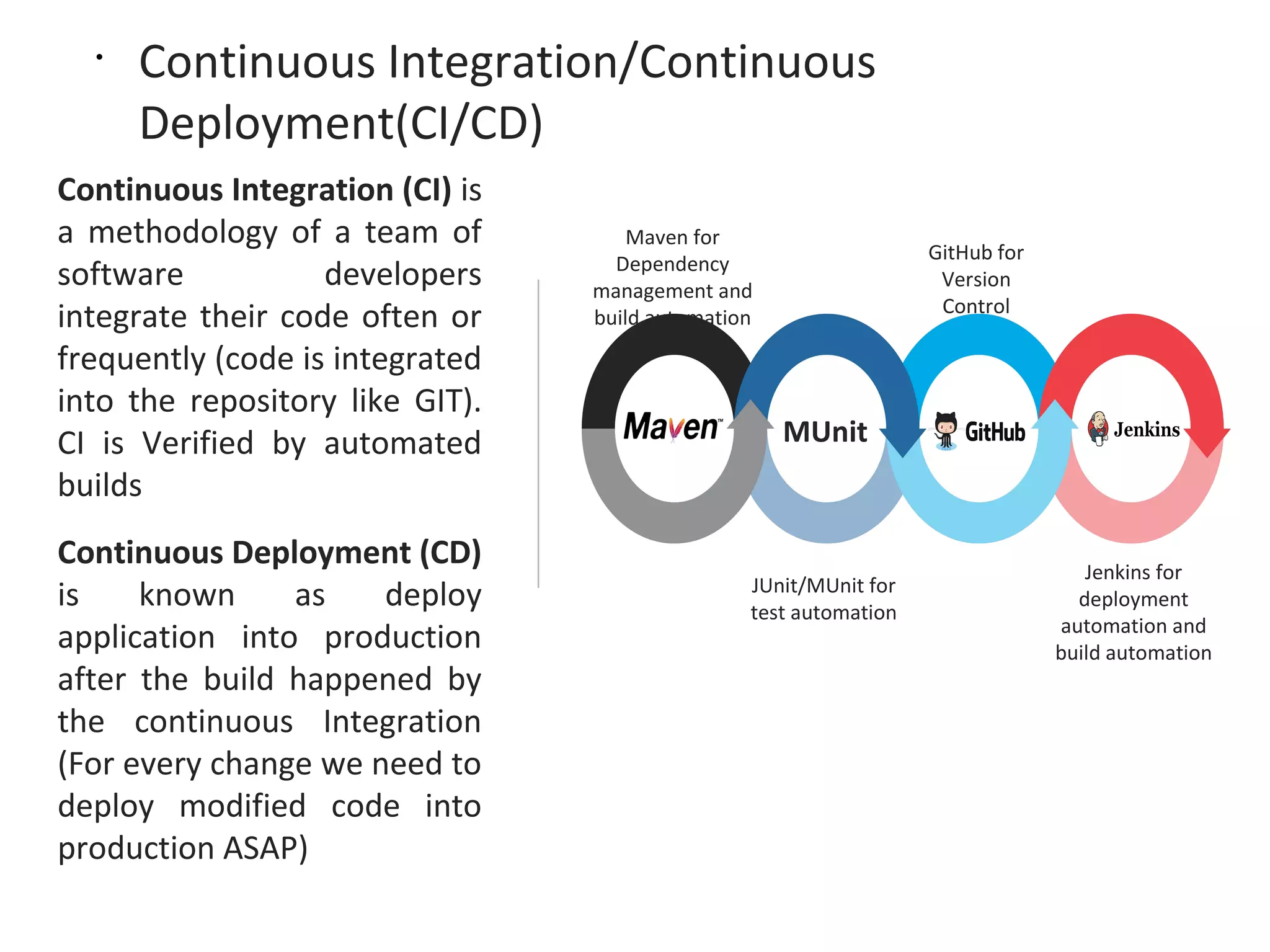
Continuous Integration (CI) is
a methodology of a team of
software developers
integrate their code often or
frequently (code is integrated
into the repository like GIT).
CI is Verified by automated
builds
Continuous Deployment (CD)
is known as deploy
application into production
after the build happened by
the continuous Integration
(For every change we need to
deploy modified code into
production ASAP)
GitHub for
Version
Control
Maven for
Dependency
management and
build automation
JUnit/MUnit for
test automation
Jenkins for
deployment
automation and
build automation
MUnit
•
High Level Architecture
Buil
d
Anypoint
Platform
Runtime Manager
API Manager
Exchange3rd Party Tools
Runtime
Platform
Deploy, Manage,
Scale
Developmen
t
Operations
CI/C
D
Comm
it
Mgmt
Agent
Ship
Prod
Stage
Test
Dev
Application
Building
BlockAnypoint
Studio
MUn
it
•
Importance of Continuous Integration and
Deployment
•
Why we need to use Continuous Integration?
⎻ To Automate the code build
⎻ To Make the code build self testing
⎻ To Keep the code build fast
⎻ Helps in Automate deployment of CD
• Why we need to use Continuous Deployment?
⎻ CD is a successful and repeatable methodology to deploy code
frequently
⎻ CD automated the steps of taking push in code and helps
making it run on the production servers
•
What is an API?
•
An API is an Application Programming Interface
•
API provides information like how to communicate with a
software components, which defines the operations and I/O
⎻ The operations are like “what we need to call ”
⎻ The input is “what we need to send with the call”
⎻ The output is “what we need to get back from the call”
• API is simple for developers to use, access and understand
and can be easily invoked
•
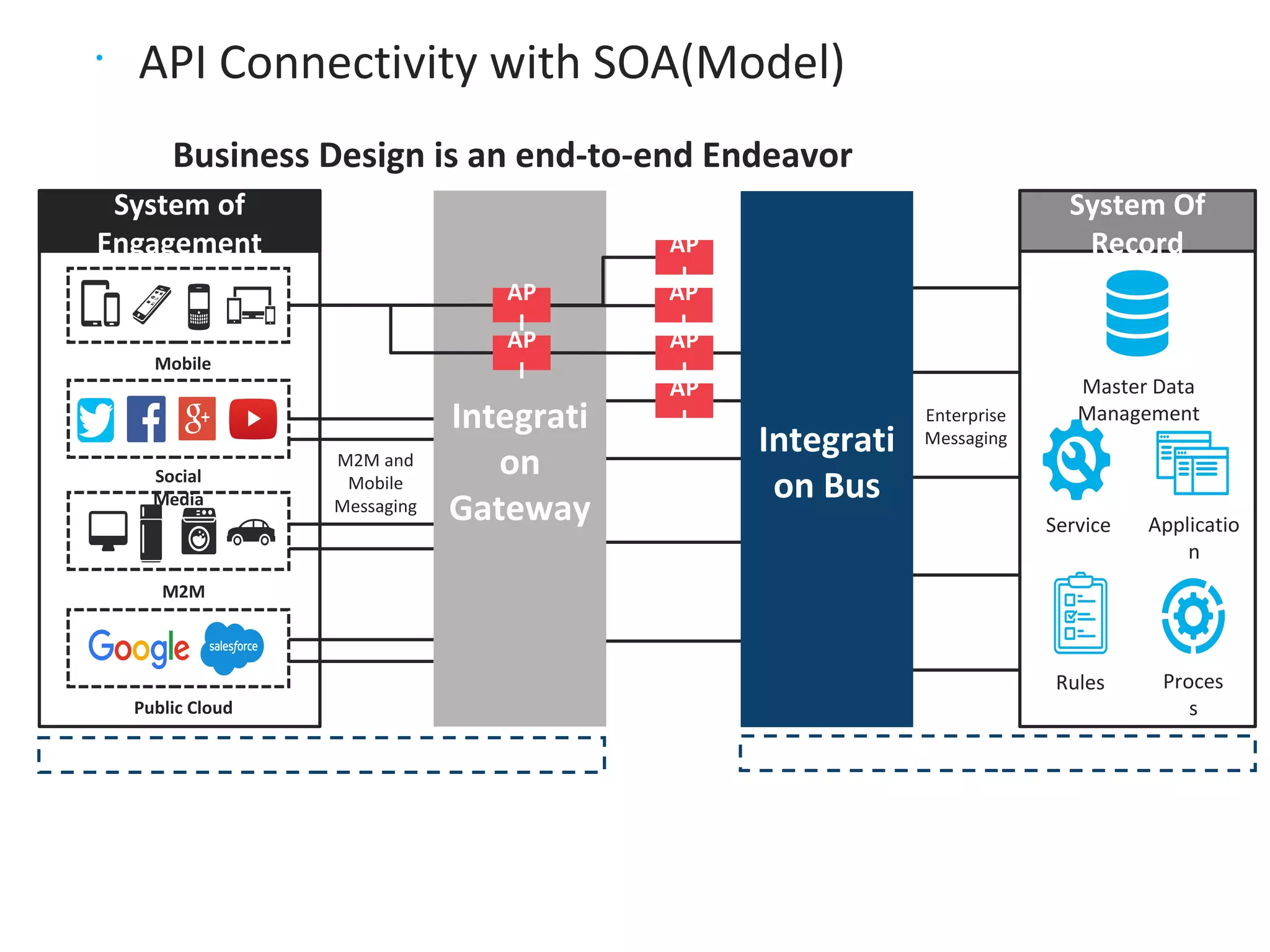
API Connectivity with SOA(Model)
System of
Engagement
Integrati
on
Gateway
System Of
Record
API Management SOA Gov
Mobile
Social
Media
Business Design is an end-to-end Endeavor
M2M
Public Cloud
Master Data
Management
Service Applicatio
n
Rules Proces
s
Integrati
on Bus
M2M and
Mobile
Messaging
Enterprise
Messaging
AP
I
AP
I
AP
I
AP
I
AP
I
AP
I
•
Benefits of Applying CICD on MuleSoft
•
Increase your code coverage
•
Deploy your code to production
•
Build stuff faster
•
Never ship broken code
•
Decrease code review time
•
Stop waiting to find out if your code’s going to work
•
Build repeatable processes
•
Spend less time debugging and more time adding features
â—Ź Thank you

CICD Mule

  • 1.
    Continuous Integration andContinuous Deployment Achieved through Mulesoft • Naveen Kavartapu • Integration Developer - MuleSoft
  • 2.
    • DevOps Overview andTools • Continuous Integration and Continuous Deployment • High Level Architecture • API Connectivity with SOA • Live Demo - CICD through Mulesoft Agenda
  • 3.
    • DevOps - Overviewand Tools DevOps is the collaboration and communication of both ”Software Development" and "Information Technology Operations” Minimize the IT Delivery Gap People Process Technology Why DevOps? ● Faster time to market ● Lower failure rate of new releases ● Shortened lead time between fixes ● Faster mean time to recovery CodePlan Monitor Operate ReleaseDeploy Test Build DevO ps Tools MUn it
  • 4.
    • Continuous Integration/Continuous Deployment(CI/CD) Continuous Integration(CI) is a methodology of a team of software developers integrate their code often or frequently (code is integrated into the repository like GIT). CI is Verified by automated builds Continuous Deployment (CD) is known as deploy application into production after the build happened by the continuous Integration (For every change we need to deploy modified code into production ASAP) GitHub for Version Control Maven for Dependency management and build automation JUnit/MUnit for test automation Jenkins for deployment automation and build automation MUnit
  • 5.
    • High Level Architecture Buil d Anypoint Platform RuntimeManager API Manager Exchange3rd Party Tools Runtime Platform Deploy, Manage, Scale Developmen t Operations CI/C D Comm it Mgmt Agent Ship Prod Stage Test Dev Application Building BlockAnypoint Studio MUn it
  • 6.
    • Importance of ContinuousIntegration and Deployment • Why we need to use Continuous Integration? ⎻ To Automate the code build ⎻ To Make the code build self testing ⎻ To Keep the code build fast ⎻ Helps in Automate deployment of CD • Why we need to use Continuous Deployment? ⎻ CD is a successful and repeatable methodology to deploy code frequently ⎻ CD automated the steps of taking push in code and helps making it run on the production servers
  • 7.
    • What is anAPI? • An API is an Application Programming Interface • API provides information like how to communicate with a software components, which defines the operations and I/O ⎻ The operations are like “what we need to call ” ⎻ The input is “what we need to send with the call” ⎻ The output is “what we need to get back from the call” • API is simple for developers to use, access and understand and can be easily invoked
  • 8.
    • API Connectivity withSOA(Model) System of Engagement Integrati on Gateway System Of Record API Management SOA Gov Mobile Social Media Business Design is an end-to-end Endeavor M2M Public Cloud Master Data Management Service Applicatio n Rules Proces s Integrati on Bus M2M and Mobile Messaging Enterprise Messaging AP I AP I AP I AP I AP I AP I
  • 9.
    • Benefits of ApplyingCICD on MuleSoft • Increase your code coverage • Deploy your code to production • Build stuff faster • Never ship broken code • Decrease code review time • Stop waiting to find out if your code’s going to work • Build repeatable processes • Spend less time debugging and more time adding features
  • 10.