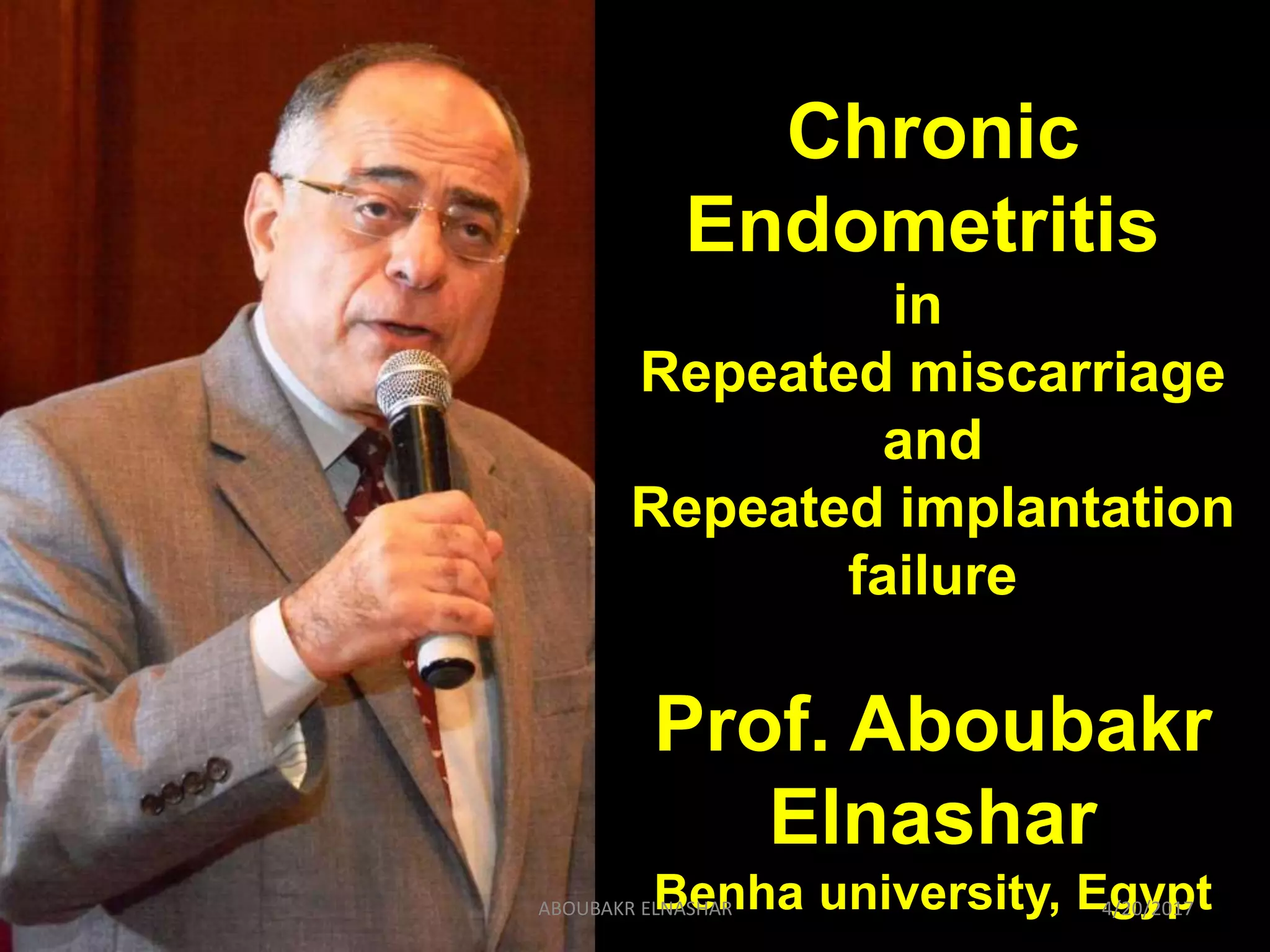
Chronic
Endometritis
in
Repeated miscarriage
and
Repeated implantation
failure
Prof. Aboubakr
Elnashar
Benha university, Egypt4/20/2017ABOUBAKR ELNASHAR
CONTENTS
1.Definitions
2.Clinical significance
3.Prevalence
4.Causes
5.Clinical picture
6.Diagnosis
7.Treatment
Conclusion
4/20/2017ABOUBAKR ELNASHAR
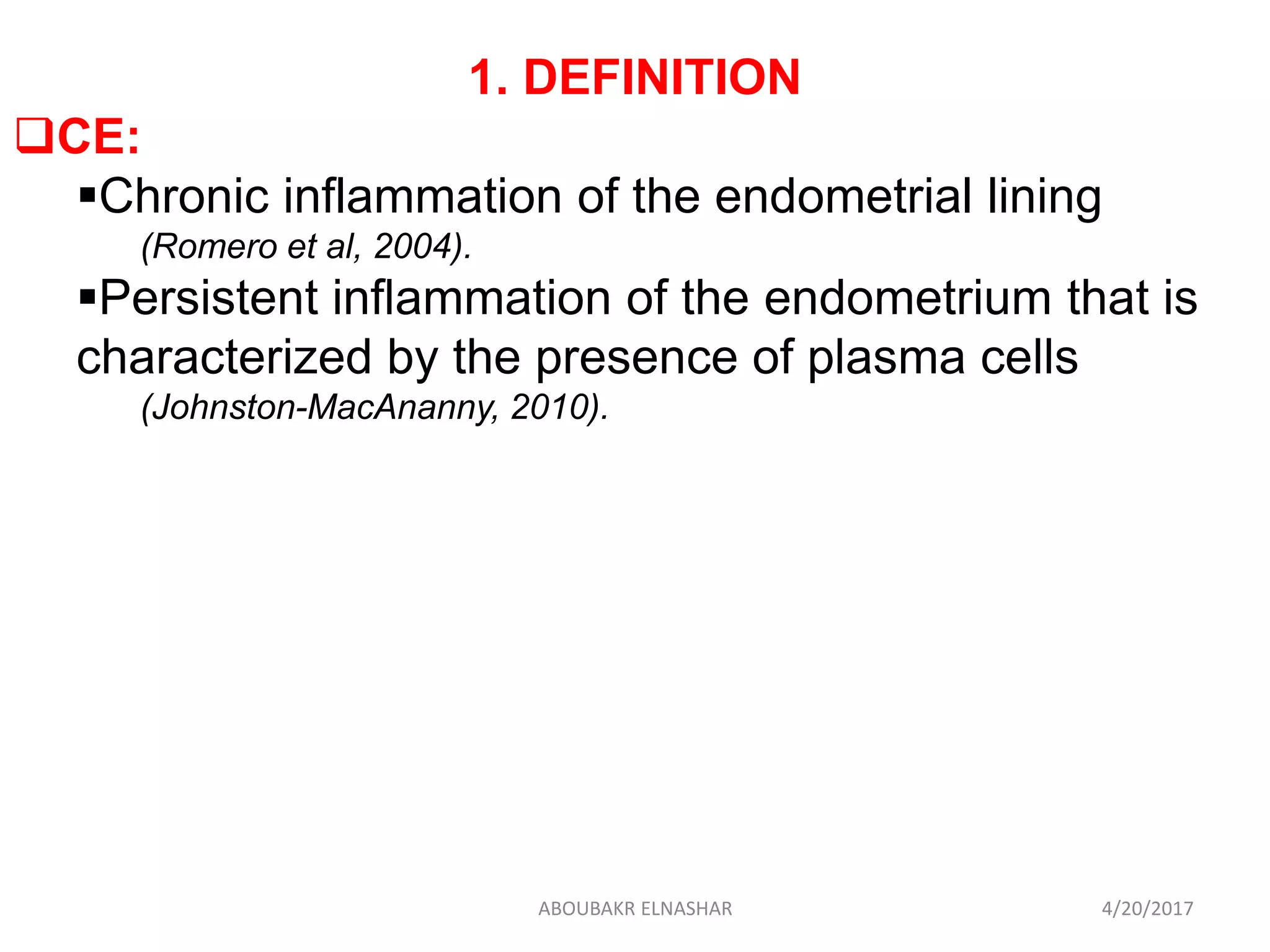
1. DEFINITION
CE:
Chronic inflammation of the endometrial lining
(Romero et al, 2004).
Persistent inflammation of the endometrium that is
characterized by the presence of plasma cells
(Johnston-MacAnanny, 2010).
4/20/2017ABOUBAKR ELNASHAR
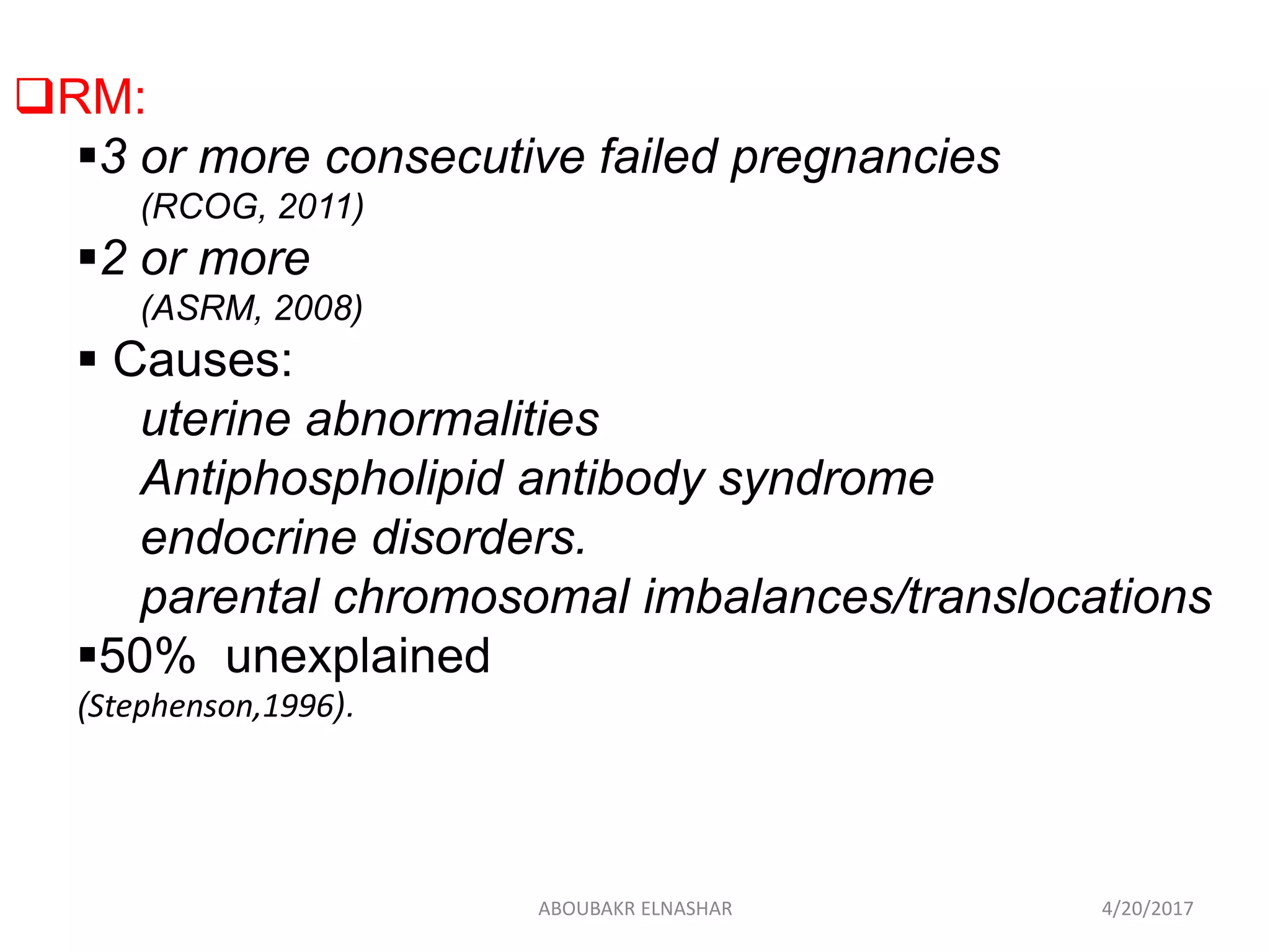
RM:
3 or more consecutive failed pregnancies
(RCOG, 2011)
2 or more
(ASRM, 2008)
 Causes:
uterine abnormalities
Antiphospholipid antibody syndrome
endocrine disorders.
parental chromosomal imbalances/translocations
50% unexplained
(Stephenson,1996).
4/20/2017ABOUBAKR ELNASHAR
RIF
Failure to conceive following
2 or 3 ET cycles, or
Cumulative transfer of 10 good quality embryos
(El-Toukhy and Taranissi, 2006).
Causes:
Embryonic
Maternal:
uterine anatomic abnormalities
thrombophilia,
non-receptive endometrium
immunological
(Salim et al., 2002).
Idiopathic
4/20/2017ABOUBAKR ELNASHAR
Recently, there has been increasing interest in the role
of CE in RM and RIF
Limited publications
The impact of CE on reproductive capacity:
controversial
4/20/2017ABOUBAKR ELNASHAR
2. CLINICAL IMPLICATION
1. Infertility:
 CE:
RM: 42.9% to 56%.
RIF: 30.3% to 66%
Infertile women: 2.8-9%
(Kasius et al, 2011, Viana et al, 2015) suggesting:
Correlation between CE and RM or RIF rather
than infertility
{create a suboptimal IU environment
hamper endometrial receptivity}
±cause infertility
{endometrium is characterized by an abnormal
pattern of lymphocyte: an aberrant endometrial
microenvironment }
(Matteo et al., 2009). 4/20/2017ABOUBAKR ELNASHAR
2. In RM:
CE is a frequent finding (42.9% to 56%).
Antibiotic tt: significantly higher rate of
successful pregnancies compared with women
who were not treated or
with persistent disease
(Cicinelli et al., 2014).
4/20/2017ABOUBAKR ELNASHAR
3. In RIF:
CE was identified in 30.3% to 66%
Women diagnosed with CE had lower IR
(11.5%) after IVF
(Quaas and Dokras, 2008).
4/20/2017ABOUBAKR ELNASHAR
Mechanism
Altered endometrial receptivity by
1. Abnormal infiltration of plasma cells
2. Secretion of IgM, IgG, and IgA antibodies
(Kasius et al, 2011).
3. Alteration in:
 Endometrial cytokine production
[Maybin et al, 2011],
 Secretion of paracrine factors
[Matteo et al, 2009, Di Pietro et al, 2013].
 Endometrial expression of genes
(Johnston-MacAnanny, 2010).
4. Delay differentiation of the EM in the mid-
secretory phase (out-of-phase morphology)
[Mishra et al, 2008].
4/20/2017ABOUBAKR ELNASHAR
3. PREVALENCE
Highly variable
RM: 42.9% to 56%.
RIF: 30.3% to 66%
(Johnston-MacAnanny et al, 2010; Cicinelli et al, 2015)
1. Small sizes of some studies
2. Difference in:
1. Ethnicities
2. Definitions of RM and RIF
3. Techniques used for diagnosis.
4. Histologic definition of CE
4/20/2017ABOUBAKR ELNASHAR
4. CAUSES
Infectious agents:
(Cicinelli et al, 2014).
Gonorrhea
Chlamydia
mycoplasma,
ureaplasma,
Escherichia coli,
Streptococcus spp.,
Staphylococcus spp.,
Enterococcus faecalis,
Yeast, and
Tuberculosis (Romero et al, 2004).
CE can result from retained tissue:
incomplete pregnancy loss or
retained placental tissue
(Haggerty et al, 2005).
4/20/2017ABOUBAKR ELNASHAR
5. CLINICAL PICTURE
Usually asymptomatic
Can present with
Chronic pelvic pain
Dyspareunia
Abnormal uterine bleeding
Persistent vaginal discharge
(Romero et al, 2004).
4/20/2017ABOUBAKR ELNASHAR
6. DIAGNOSIS
Different methods
Histology
H&E
IHC
Hysteroscopy
Culture
4/20/2017ABOUBAKR ELNASHAR
1. Histologic diagnosis using H&E
Gold standard for the diagnosis
(Kasius et al.,2011)
Time-consuming and difficult.
Low diagnostic rate (<10%)
[Kasius et al, 2011, McQueen et al, 2014]
±miss the diagnosis.
{normal presence of leukocytes in the
endometrium especially before
menstruation}
[Kasius et al, 2012].
± over diagnosis
{Plasma cells can appear morphologically
similar to other stromal cells and leukocytes}
(Greenwood, Moran, 1981).
4/20/2017ABOUBAKR ELNASHAR
For diagnosis:
one plasma cell in the endometrial stroma
(Johnston-MacAnanny et al 2011, Kasius et al, 2011; McQueen et al, 2014).
At least 5 plasma cells
(Bayer-Garner et al, 2004).
4/20/2017ABOUBAKR ELNASHAR
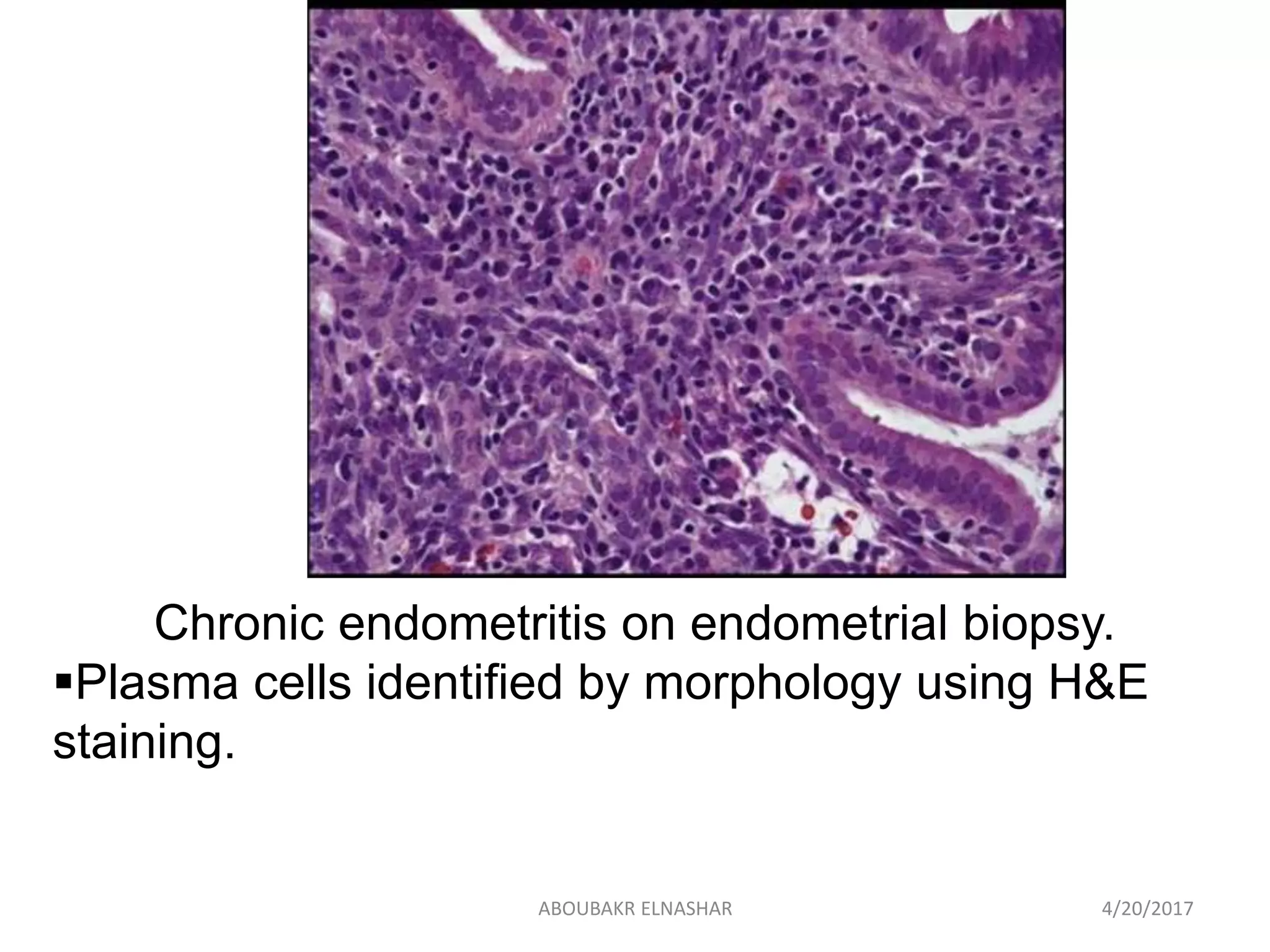
Chronic endometritis on endometrial biopsy.
Plasma cells identified by morphology using H&E
staining.
4/20/2017ABOUBAKR ELNASHAR
2. Immunohistochemistry (IHC)
with CD138 (syndecan-1)
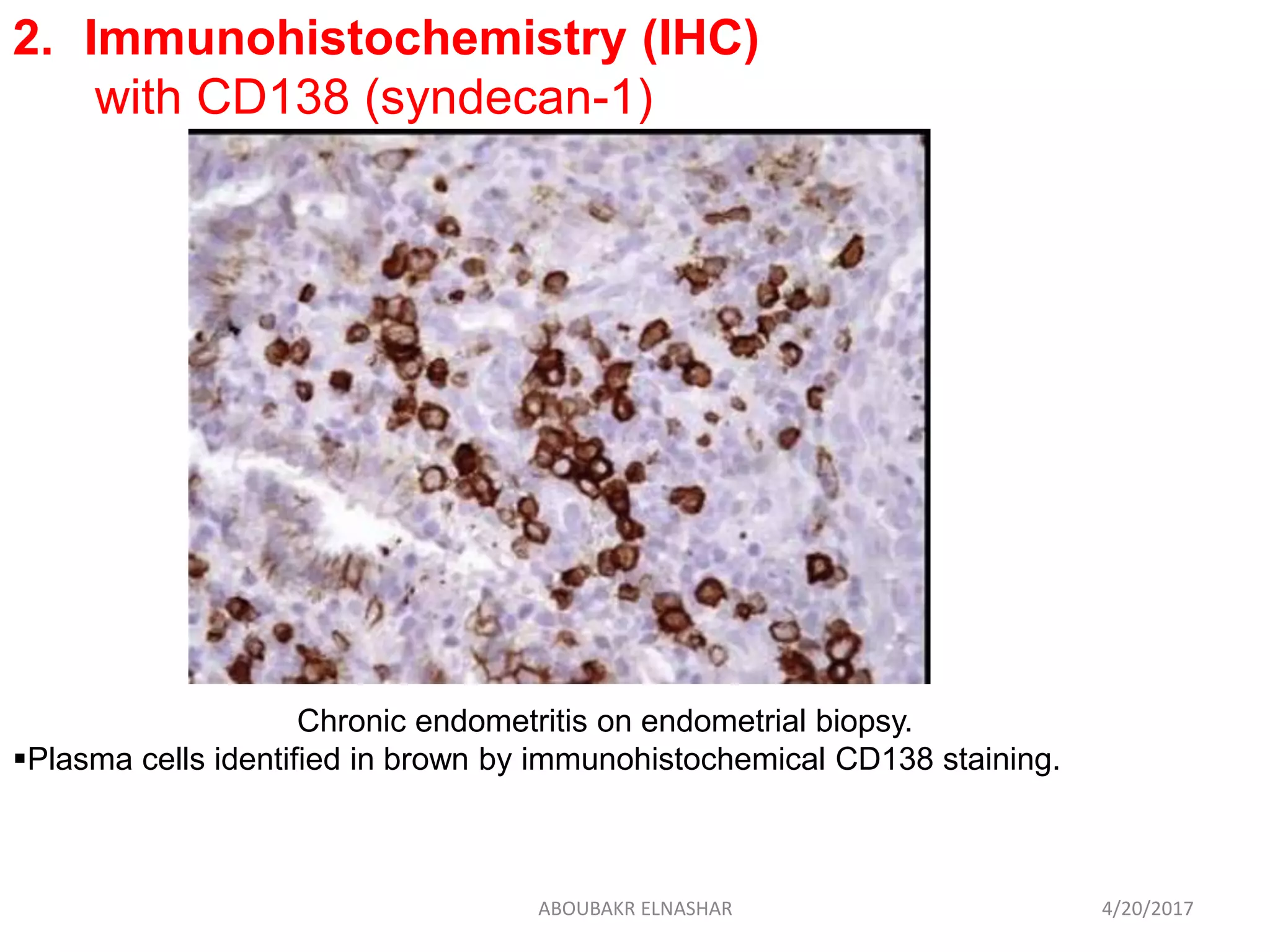
Chronic endometritis on endometrial biopsy.
Plasma cells identified in brown by immunohistochemical CD138 staining.
4/20/2017ABOUBAKR ELNASHAR
Higher sensitivity
56%, as compared to a 13%for H&E staining
[McQueen et al, 2015].
(Miguel et al, 2011)
More accurate:
(Bayer-Garner et al, 2001).
Reducing false-negative diagnosis
(McQueen et al.2014)
Not yet recommended in daily clinical practice
Not widely used for the diagnosis of CE
IHCH&E
100%75%Sensitivity
100%65%Specificity
4/20/2017ABOUBAKR ELNASHAR
3. Office Hysteroscopy
In the follicular phase (between D6 and 12) of the
menstrual cycle.
Diagnosis:
1. Mucosal edema,
2. Focal or diffuse endometrial hyperemia,
3. Micropolyps (<1 mm)
(Cicinelli et al, 2005).
4/20/2017ABOUBAKR ELNASHAR
Micropolyps
 identified in 50%-54% of patients with a
histologically confirmed CE
(Cicinelli et al, 2005; Bouet et al, 2016)
{inflammatory microenvironment}.
Biopsy:
1. Higher density of B cells and plasma cells
2. Lower density of natural killer cells
(Kitaya et al, 2012).
 This explains decreased endometrial receptivity in
CE: RM and RIF
4/20/2017ABOUBAKR ELNASHAR
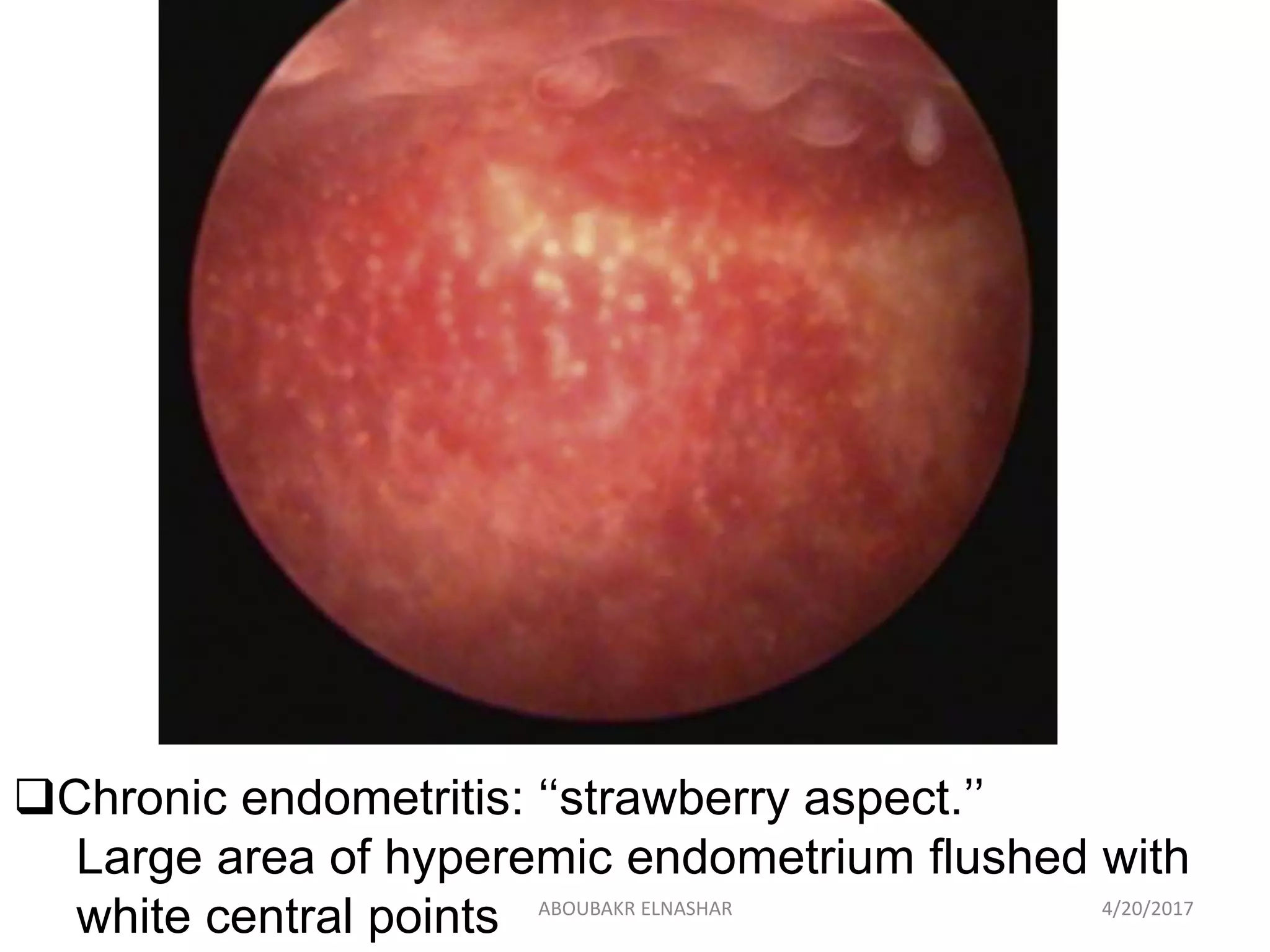
Chronic endometritis: ‘‘strawberry aspect.’’
Large area of hyperemic endometrium flushed with
white central points 4/20/2017ABOUBAKR ELNASHAR
Sensitivity:
40%
(Bouet et al, 2016).
much greater sens
Specificity
80%
(Bakas et al, 2014; Bouet et al, 2016)
dependent on the clinician's experience
Accuracy
93.4%
[Cicinelli et al, 2008,2010].
Normal hysteroscopy
relatively accurate predictor of successful pregnancy
after ART
[Cicinelli et al , 2015].
4/20/2017ABOUBAKR ELNASHAR
4. Culture:
Positive in 75% of histologically confirmed CE
Common bacteria:
Escherichia coli, Enterococcus faecalis
Streptococcus agalactiae: 77.5%
Mycoplasmae/Ureaplasma: 25%
Chlamydia: 13%
(Cicinelli et al, 2014).
Often a causal organism cannot be identified.
CE have no correlation with
Bacterial colonization of the EM or
Clinical presentation of PID
[Korrn et al, 1995; Andrews et al, 2005].
4/20/2017ABOUBAKR ELNASHAR
The recent view that
Uterine cavity is normally not sterile
Presence of micro-organisms does not mean
inflammation
(Cowling et al., 1992; Eckert et al.,2003).
It is not just the presence of infectious agent within
the internal genital tract
The most critical issue that determines the pathology
 interactions between:
infectious agents and
endometrial environment
(Eckert et al.,2003)
4/20/2017ABOUBAKR ELNASHAR
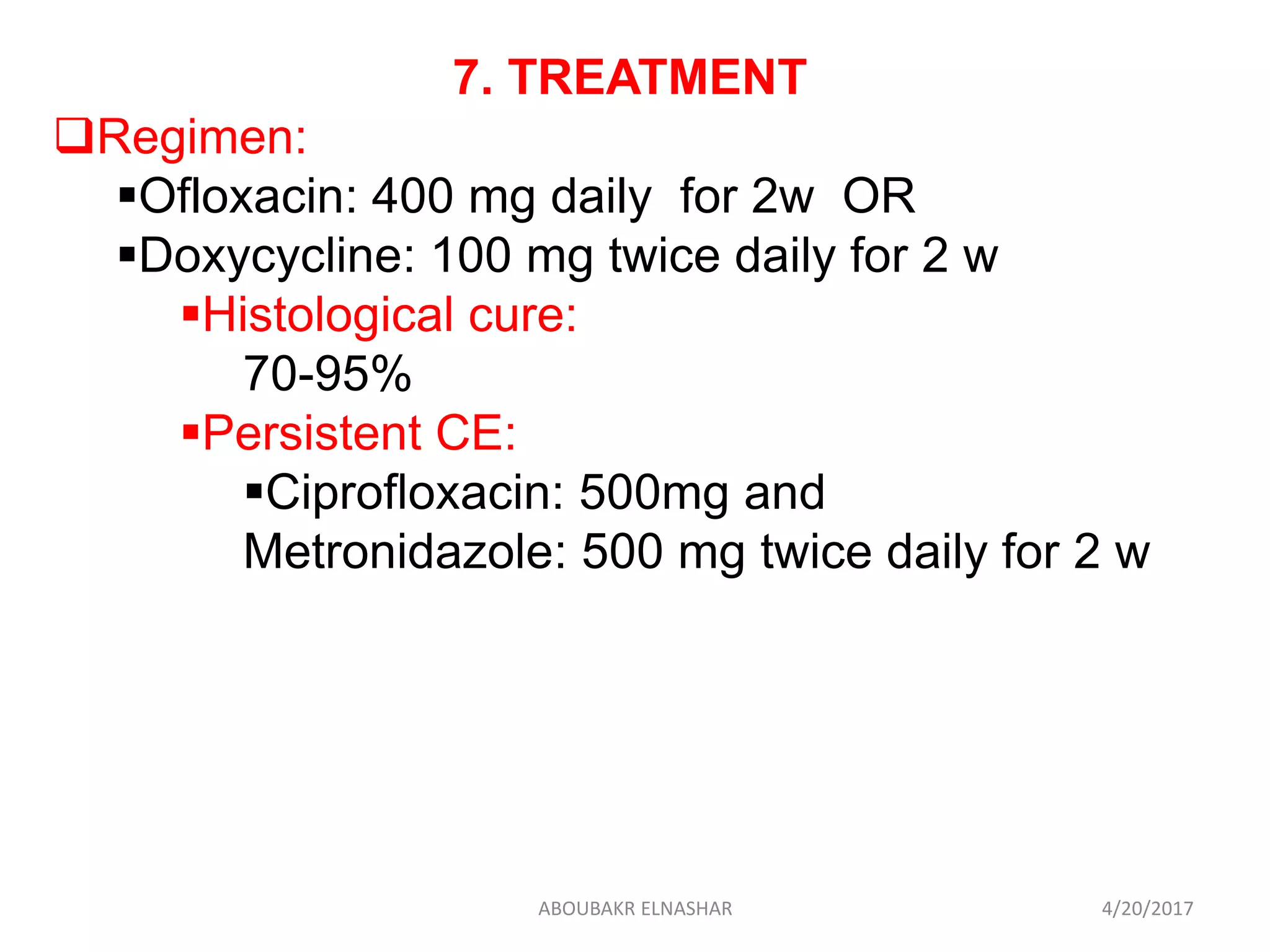
7. TREATMENT
Regimen:
Ofloxacin: 400 mg daily for 2w OR
Doxycycline: 100 mg twice daily for 2 w
Histological cure:
70-95%
Persistent CE:
Ciprofloxacin: 500mg and
Metronidazole: 500 mg twice daily for 2 w
4/20/2017ABOUBAKR ELNASHAR
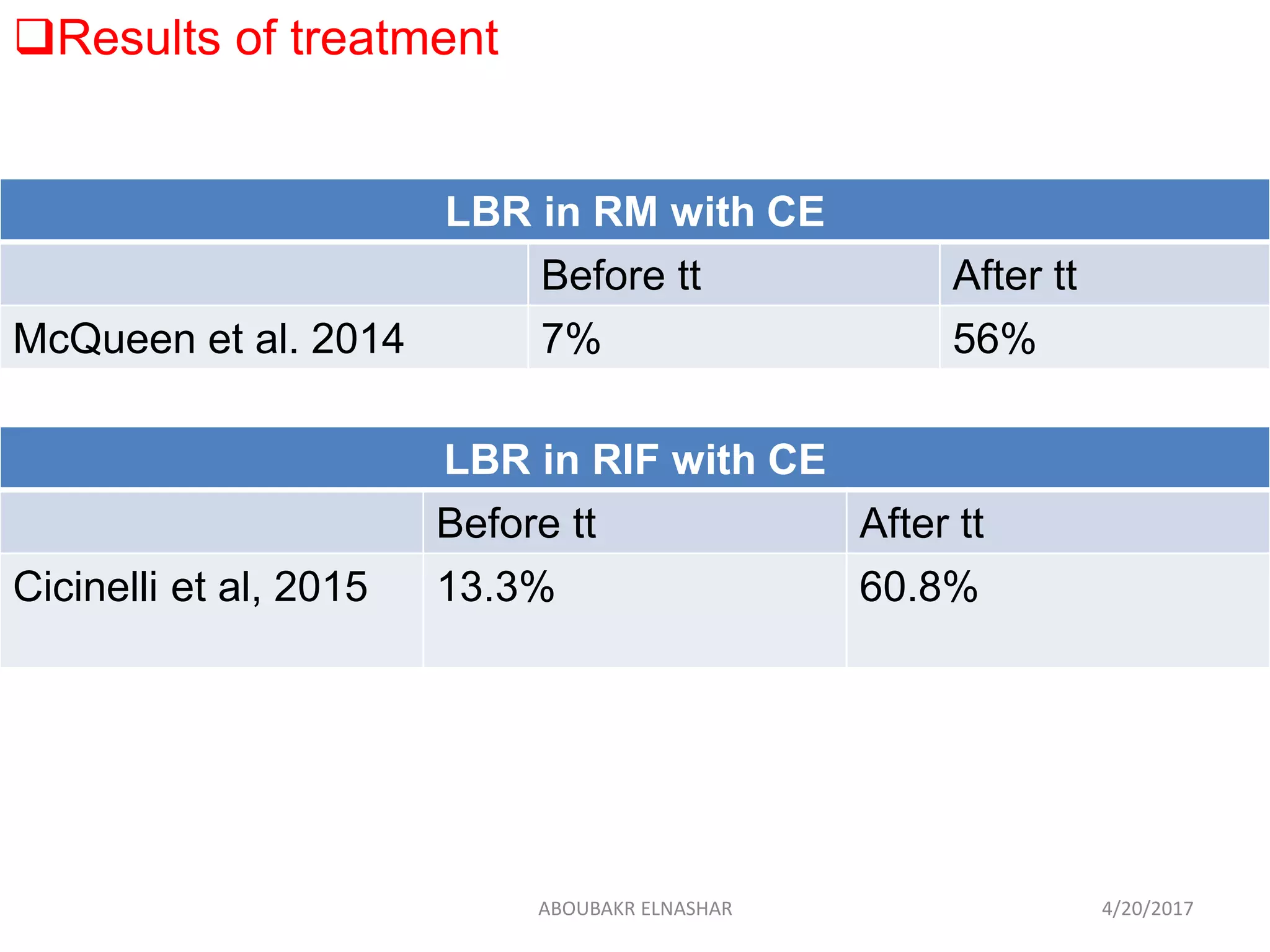
LBR in RM with CE
After ttBefore tt
56%7%McQueen et al. 2014
LBR in RIF with CE
After ttBefore tt
60.8%13.3%Cicinelli et al, 2015
Results of treatment
4/20/2017ABOUBAKR ELNASHAR
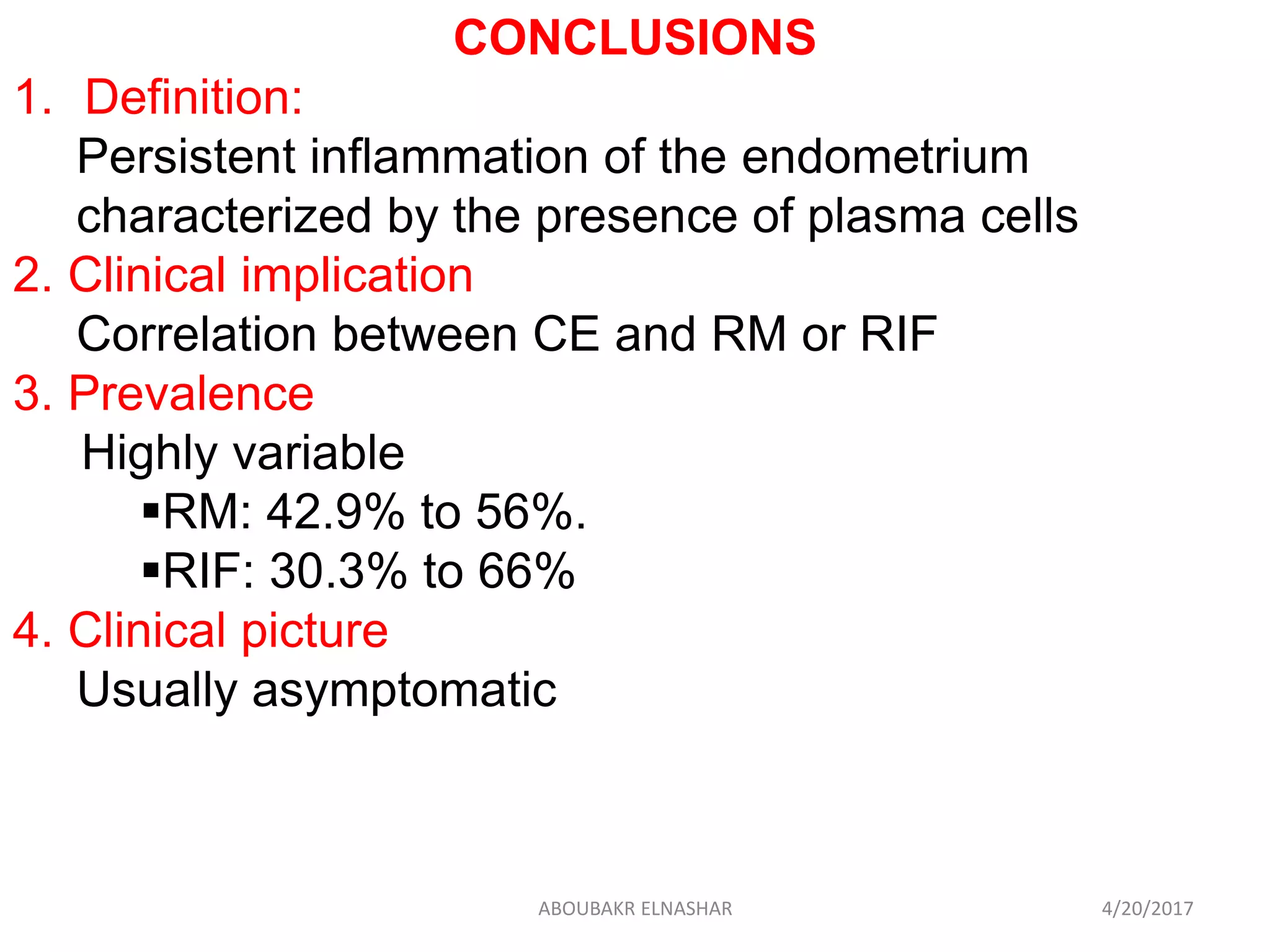
CONCLUSIONS
1. Definition:
Persistent inflammation of the endometrium
characterized by the presence of plasma cells
2. Clinical implication
Correlation between CE and RM or RIF
3. Prevalence
Highly variable
RM: 42.9% to 56%.
RIF: 30.3% to 66%
4. Clinical picture
Usually asymptomatic
4/20/2017ABOUBAKR ELNASHAR
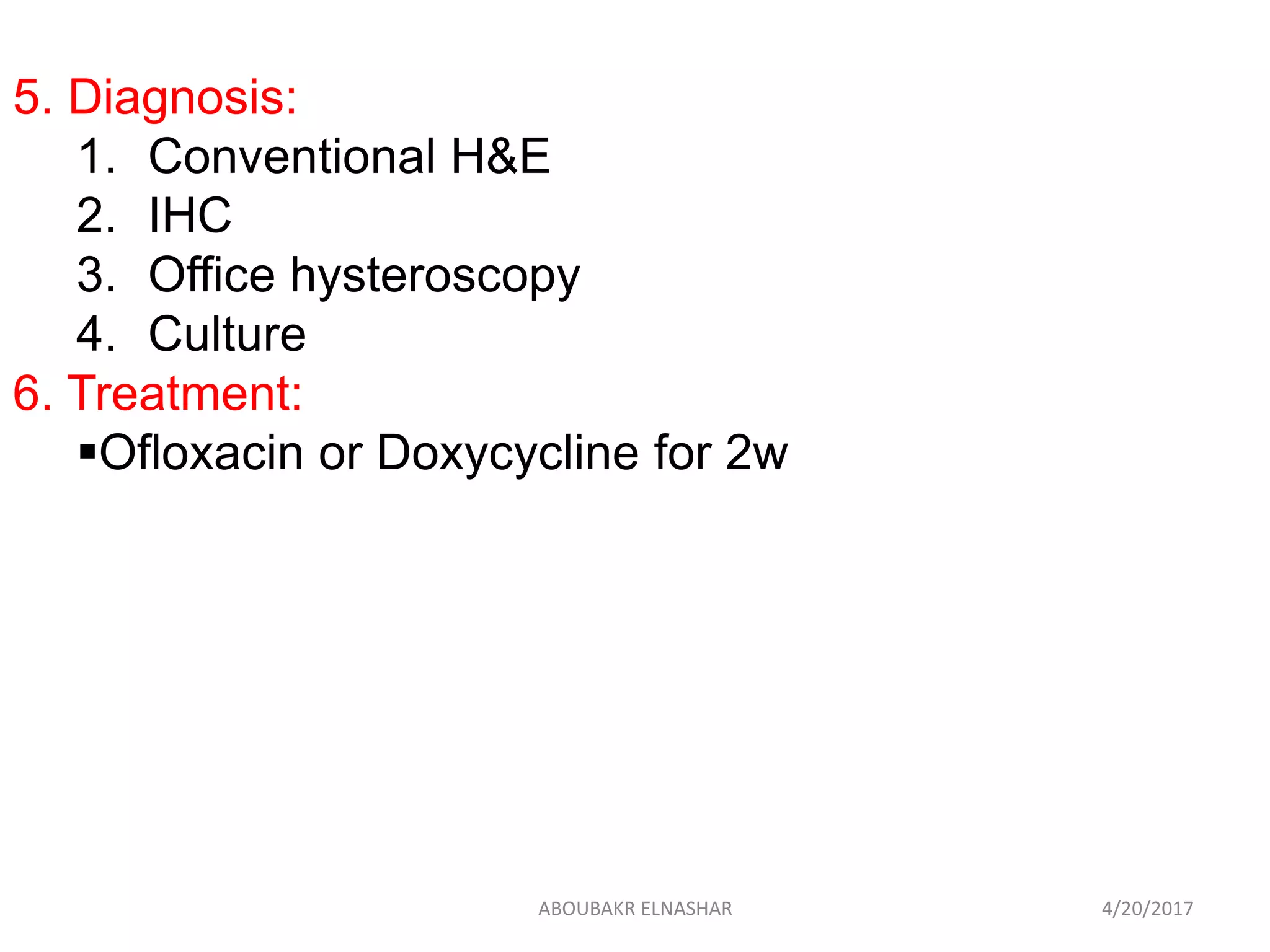
5. Diagnosis:
1. Conventional H&E
2. IHC
3. Office hysteroscopy
4. Culture
6. Treatment:
Ofloxacin or Doxycycline for 2w
4/20/2017ABOUBAKR ELNASHAR
You can get this lecture from:
1.My scientific page on Face book:
Aboubakr Elnashar Lectures.
https://www.facebook.com/groups/2277
44884091351/
2.Slide share web site
3. elnashar53@hotmail.com
4.My clinic: Althwara st, Mansura, Egypt
4/20/2017ABOUBAKR ELNASHAR

Chronic Endometritis in Repeated miscarriage and Repeated implantation failure

  • 1.
    Chronic Endometritis in Repeated miscarriage and Repeated implantation failure Prof.Aboubakr Elnashar Benha university, Egypt4/20/2017ABOUBAKR ELNASHAR
  • 2.
  • 3.
    1. DEFINITION CE: Chronic inflammationof the endometrial lining (Romero et al, 2004). Persistent inflammation of the endometrium that is characterized by the presence of plasma cells (Johnston-MacAnanny, 2010). 4/20/2017ABOUBAKR ELNASHAR
  • 4.
    RM: 3 or moreconsecutive failed pregnancies (RCOG, 2011) 2 or more (ASRM, 2008)  Causes: uterine abnormalities Antiphospholipid antibody syndrome endocrine disorders. parental chromosomal imbalances/translocations 50% unexplained (Stephenson,1996). 4/20/2017ABOUBAKR ELNASHAR
  • 5.
    RIF Failure to conceivefollowing 2 or 3 ET cycles, or Cumulative transfer of 10 good quality embryos (El-Toukhy and Taranissi, 2006). Causes: Embryonic Maternal: uterine anatomic abnormalities thrombophilia, non-receptive endometrium immunological (Salim et al., 2002). Idiopathic 4/20/2017ABOUBAKR ELNASHAR
  • 6.
    Recently, there hasbeen increasing interest in the role of CE in RM and RIF Limited publications The impact of CE on reproductive capacity: controversial 4/20/2017ABOUBAKR ELNASHAR
  • 7.
    2. CLINICAL IMPLICATION 1.Infertility:  CE: RM: 42.9% to 56%. RIF: 30.3% to 66% Infertile women: 2.8-9% (Kasius et al, 2011, Viana et al, 2015) suggesting: Correlation between CE and RM or RIF rather than infertility {create a suboptimal IU environment hamper endometrial receptivity} ±cause infertility {endometrium is characterized by an abnormal pattern of lymphocyte: an aberrant endometrial microenvironment } (Matteo et al., 2009). 4/20/2017ABOUBAKR ELNASHAR
  • 8.
    2. In RM: CEis a frequent finding (42.9% to 56%). Antibiotic tt: significantly higher rate of successful pregnancies compared with women who were not treated or with persistent disease (Cicinelli et al., 2014). 4/20/2017ABOUBAKR ELNASHAR
  • 9.
    3. In RIF: CEwas identified in 30.3% to 66% Women diagnosed with CE had lower IR (11.5%) after IVF (Quaas and Dokras, 2008). 4/20/2017ABOUBAKR ELNASHAR
  • 10.
    Mechanism Altered endometrial receptivityby 1. Abnormal infiltration of plasma cells 2. Secretion of IgM, IgG, and IgA antibodies (Kasius et al, 2011). 3. Alteration in:  Endometrial cytokine production [Maybin et al, 2011],  Secretion of paracrine factors [Matteo et al, 2009, Di Pietro et al, 2013].  Endometrial expression of genes (Johnston-MacAnanny, 2010). 4. Delay differentiation of the EM in the mid- secretory phase (out-of-phase morphology) [Mishra et al, 2008]. 4/20/2017ABOUBAKR ELNASHAR
  • 11.
    3. PREVALENCE Highly variable RM:42.9% to 56%. RIF: 30.3% to 66% (Johnston-MacAnanny et al, 2010; Cicinelli et al, 2015) 1. Small sizes of some studies 2. Difference in: 1. Ethnicities 2. Definitions of RM and RIF 3. Techniques used for diagnosis. 4. Histologic definition of CE 4/20/2017ABOUBAKR ELNASHAR
  • 12.
    4. CAUSES Infectious agents: (Cicinelliet al, 2014). Gonorrhea Chlamydia mycoplasma, ureaplasma, Escherichia coli, Streptococcus spp., Staphylococcus spp., Enterococcus faecalis, Yeast, and Tuberculosis (Romero et al, 2004). CE can result from retained tissue: incomplete pregnancy loss or retained placental tissue (Haggerty et al, 2005). 4/20/2017ABOUBAKR ELNASHAR
  • 13.
    5. CLINICAL PICTURE Usuallyasymptomatic Can present with Chronic pelvic pain Dyspareunia Abnormal uterine bleeding Persistent vaginal discharge (Romero et al, 2004). 4/20/2017ABOUBAKR ELNASHAR
  • 14.
  • 15.
    1. Histologic diagnosisusing H&E Gold standard for the diagnosis (Kasius et al.,2011) Time-consuming and difficult. Low diagnostic rate (<10%) [Kasius et al, 2011, McQueen et al, 2014] ±miss the diagnosis. {normal presence of leukocytes in the endometrium especially before menstruation} [Kasius et al, 2012]. ± over diagnosis {Plasma cells can appear morphologically similar to other stromal cells and leukocytes} (Greenwood, Moran, 1981). 4/20/2017ABOUBAKR ELNASHAR
  • 16.
    For diagnosis: one plasmacell in the endometrial stroma (Johnston-MacAnanny et al 2011, Kasius et al, 2011; McQueen et al, 2014). At least 5 plasma cells (Bayer-Garner et al, 2004). 4/20/2017ABOUBAKR ELNASHAR
  • 17.
    Chronic endometritis onendometrial biopsy. Plasma cells identified by morphology using H&E staining. 4/20/2017ABOUBAKR ELNASHAR
  • 18.
    2. Immunohistochemistry (IHC) withCD138 (syndecan-1) Chronic endometritis on endometrial biopsy. Plasma cells identified in brown by immunohistochemical CD138 staining. 4/20/2017ABOUBAKR ELNASHAR
  • 19.
    Higher sensitivity 56%, ascompared to a 13%for H&E staining [McQueen et al, 2015]. (Miguel et al, 2011) More accurate: (Bayer-Garner et al, 2001). Reducing false-negative diagnosis (McQueen et al.2014) Not yet recommended in daily clinical practice Not widely used for the diagnosis of CE IHCH&E 100%75%Sensitivity 100%65%Specificity 4/20/2017ABOUBAKR ELNASHAR
  • 20.
    3. Office Hysteroscopy Inthe follicular phase (between D6 and 12) of the menstrual cycle. Diagnosis: 1. Mucosal edema, 2. Focal or diffuse endometrial hyperemia, 3. Micropolyps (<1 mm) (Cicinelli et al, 2005). 4/20/2017ABOUBAKR ELNASHAR
  • 21.
    Micropolyps  identified in50%-54% of patients with a histologically confirmed CE (Cicinelli et al, 2005; Bouet et al, 2016) {inflammatory microenvironment}. Biopsy: 1. Higher density of B cells and plasma cells 2. Lower density of natural killer cells (Kitaya et al, 2012).  This explains decreased endometrial receptivity in CE: RM and RIF 4/20/2017ABOUBAKR ELNASHAR
  • 22.
    Chronic endometritis: ‘‘strawberryaspect.’’ Large area of hyperemic endometrium flushed with white central points 4/20/2017ABOUBAKR ELNASHAR
  • 23.
    Sensitivity: 40% (Bouet et al,2016). much greater sens Specificity 80% (Bakas et al, 2014; Bouet et al, 2016) dependent on the clinician's experience Accuracy 93.4% [Cicinelli et al, 2008,2010]. Normal hysteroscopy relatively accurate predictor of successful pregnancy after ART [Cicinelli et al , 2015]. 4/20/2017ABOUBAKR ELNASHAR
  • 24.
    4. Culture: Positive in75% of histologically confirmed CE Common bacteria: Escherichia coli, Enterococcus faecalis Streptococcus agalactiae: 77.5% Mycoplasmae/Ureaplasma: 25% Chlamydia: 13% (Cicinelli et al, 2014). Often a causal organism cannot be identified. CE have no correlation with Bacterial colonization of the EM or Clinical presentation of PID [Korrn et al, 1995; Andrews et al, 2005]. 4/20/2017ABOUBAKR ELNASHAR
  • 25.
    The recent viewthat Uterine cavity is normally not sterile Presence of micro-organisms does not mean inflammation (Cowling et al., 1992; Eckert et al.,2003). It is not just the presence of infectious agent within the internal genital tract The most critical issue that determines the pathology  interactions between: infectious agents and endometrial environment (Eckert et al.,2003) 4/20/2017ABOUBAKR ELNASHAR
  • 26.
    7. TREATMENT Regimen: Ofloxacin: 400mg daily for 2w OR Doxycycline: 100 mg twice daily for 2 w Histological cure: 70-95% Persistent CE: Ciprofloxacin: 500mg and Metronidazole: 500 mg twice daily for 2 w 4/20/2017ABOUBAKR ELNASHAR
  • 27.
    LBR in RMwith CE After ttBefore tt 56%7%McQueen et al. 2014 LBR in RIF with CE After ttBefore tt 60.8%13.3%Cicinelli et al, 2015 Results of treatment 4/20/2017ABOUBAKR ELNASHAR
  • 28.
    CONCLUSIONS 1. Definition: Persistent inflammationof the endometrium characterized by the presence of plasma cells 2. Clinical implication Correlation between CE and RM or RIF 3. Prevalence Highly variable RM: 42.9% to 56%. RIF: 30.3% to 66% 4. Clinical picture Usually asymptomatic 4/20/2017ABOUBAKR ELNASHAR
  • 29.
    5. Diagnosis: 1. ConventionalH&E 2. IHC 3. Office hysteroscopy 4. Culture 6. Treatment: Ofloxacin or Doxycycline for 2w 4/20/2017ABOUBAKR ELNASHAR
  • 30.
    You can getthis lecture from: 1.My scientific page on Face book: Aboubakr Elnashar Lectures. https://www.facebook.com/groups/2277 44884091351/ 2.Slide share web site 3. elnashar53@hotmail.com 4.My clinic: Althwara st, Mansura, Egypt 4/20/2017ABOUBAKR ELNASHAR