


ChristianityChoo Kar Kar 0315363
Hew Sin Qi 0315012
Low Chek Yee 0315266
Cheah Teck Wei 0315215
Chua Jiu Xin 0314025
Mak Mun Choon 0314928
Ngu Xian Loong 0314348
Preston Liew Ru Ping 0313822
Yap Kar Juen 0314025
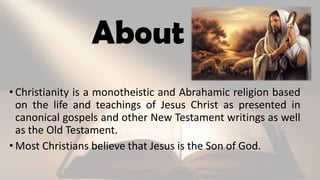
About
• Christianity is a monotheistic and Abrahamic religion based
on the life and teachings of Jesus Christ as presented in
canonical gospels and other New Testament writings as well
as the Old Testament.
• Most Christians believe that Jesus is the Son of God.
History• It begins with Jesus of Nazerth, a Jew who was
born in a small corner of the Roman Empire.
• Little is known of his early life, but around the
age of 30, Jesus was baptized by John the
Baptist and had a vision in which he received
the blessing of God.
• After this, Jesus began a ministry of
teaching, healing and mirable-working. He
spoke of the “ Kingdom of God” , condemned
religious hypocrites and interpreted the Mosaic
Law in new ways.
• He had 12 disciples who followed him and
helped him in this work.
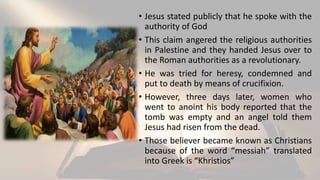
• Jesus stated publicly that he spoke with the
authority of God
• This claim angered the religious authorities
in Palestine and they handed Jesus over to
the Roman authorities as a revolutionary.
• He was tried for heresy, condemned and
put to death by means of crucifixion.
• However, three days later, women who
went to anoint his body reported that the
tomb was empty and an angel told them
Jesus had risen from the dead.
• Those believer became known as Christians
because of the word “messiah” translated
into Greek is “Khristios”
Characteristic
Festivals
• Christmas
• Good Friday
• Easter Sunday
• Shrove Tuesday and lent
Practices
• Most Christians attend worship services at church on
Sundays, which generally include singing, prater and a sermon.
• Most Christians churches have a special ritual for
ordination, designating and a person fit for a leadership
position in the church.
• At home, most practicing Christians pray regularly and many
read the Bible.
Holy book
• The holy book for Christians is called the Bible.
Main Teaching
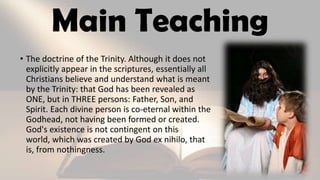
• The doctrine of the Trinity. Although it does not
explicitly appear in the scriptures, essentially all
Christians believe and understand what is meant
by the Trinity: that God has been revealed as
ONE, but in THREE persons: Father, Son, and
Spirit. Each divine person is co-eternal within the
Godhead, not having been formed or created.
God's existence is not contingent on this
world, which was created by God ex nihilo, that
is, from nothingness.
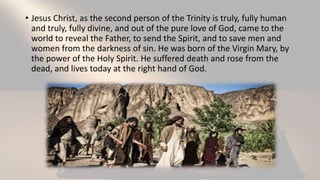
• Jesus Christ, as the second person of the Trinity is truly, fully human
and truly, fully divine, and out of the pure love of God, came to the
world to reveal the Father, to send the Spirit, and to save men and
women from the darkness of sin. He was born of the Virgin Mary, by
the power of the Holy Spirit. He suffered death and rose from the
dead, and lives today at the right hand of God.
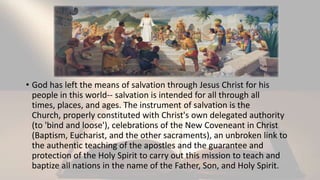
• God has left the means of salvation through Jesus Christ for his
people in this world-- salvation is intended for all through all
times, places, and ages. The instrument of salvation is the
Church, properly constituted with Christ's own delegated authority
(to 'bind and loose'), celebrations of the New Coveneant in Christ
(Baptism, Eucharist, and the other sacraments), an unbroken link to
the authentic teaching of the apostles and the guarantee and
protection of the Holy Spirit to carry out this mission to teach and
baptize all nations in the name of the Father, Son, and Holy Spirit.
Concept
• A belief in the existence of God.
• Christians believe in the Bible is
God’s Book.
• Christians believe that God spoke
through His prophets and gave them
this Book – the Bible.
Moral ValuesForgiveness
• Christians are expected to forgive other people when they are hurt by them.
The value of Christian forgiveness is special in that it is extended to even the
worst offenders, the one who are the most difficult to forgive. The reasons
Christians are expected to forgive others is because God has first forgive
them, for offenses that have greater eternal consequences than anything a
fellow human being could do to them.
Humility
• Christians humility begins with the realization that humans are insignificant
corollaries to God, who created them. Therefore, humans can make mistakes
and sometimes need correction. The value of humility prepares Christians to
accept criticism and learn from it.
Individualism
• Christianity promotes the idea of the absolute value of every
individual, based on each person’s special creation of God. This is very
different from a relative value of individuals, which compare individuals to
animals or to other people to establish value.
Inclusivity
• Christianity is based in part on Old Testament laws from ancient Judaism.
These laws emphasized God’s holiness and showed how humans should act
to be respectful to god and His holiness.
Generosity
• Generosity is a virtue in many different traditions, each for different reasons.
The Christian value of generosity is manifested in a desire to bless others
because of a deep satisfaction in God. Christians want to be generous by
giving money to the poor, but also generous in sharing with others
satisfaction in Jesus.
The End
Q u e s t i o
n s ? ? ?
T h a n k
Y o u ~

Christianity

  • 1.
    ChristianityChoo Kar Kar0315363 Hew Sin Qi 0315012 Low Chek Yee 0315266 Cheah Teck Wei 0315215 Chua Jiu Xin 0314025 Mak Mun Choon 0314928 Ngu Xian Loong 0314348 Preston Liew Ru Ping 0313822 Yap Kar Juen 0314025
  • 2.
    About • Christianity isa monotheistic and Abrahamic religion based on the life and teachings of Jesus Christ as presented in canonical gospels and other New Testament writings as well as the Old Testament. • Most Christians believe that Jesus is the Son of God.
  • 3.
    History• It beginswith Jesus of Nazerth, a Jew who was born in a small corner of the Roman Empire. • Little is known of his early life, but around the age of 30, Jesus was baptized by John the Baptist and had a vision in which he received the blessing of God. • After this, Jesus began a ministry of teaching, healing and mirable-working. He spoke of the “ Kingdom of God” , condemned religious hypocrites and interpreted the Mosaic Law in new ways. • He had 12 disciples who followed him and helped him in this work.
  • 4.
    • Jesus statedpublicly that he spoke with the authority of God • This claim angered the religious authorities in Palestine and they handed Jesus over to the Roman authorities as a revolutionary. • He was tried for heresy, condemned and put to death by means of crucifixion. • However, three days later, women who went to anoint his body reported that the tomb was empty and an angel told them Jesus had risen from the dead. • Those believer became known as Christians because of the word “messiah” translated into Greek is “Khristios”
  • 5.
    Characteristic Festivals • Christmas • GoodFriday • Easter Sunday • Shrove Tuesday and lent
  • 6.
    Practices • Most Christiansattend worship services at church on Sundays, which generally include singing, prater and a sermon. • Most Christians churches have a special ritual for ordination, designating and a person fit for a leadership position in the church. • At home, most practicing Christians pray regularly and many read the Bible. Holy book • The holy book for Christians is called the Bible.
  • 7.
    Main Teaching • Thedoctrine of the Trinity. Although it does not explicitly appear in the scriptures, essentially all Christians believe and understand what is meant by the Trinity: that God has been revealed as ONE, but in THREE persons: Father, Son, and Spirit. Each divine person is co-eternal within the Godhead, not having been formed or created. God's existence is not contingent on this world, which was created by God ex nihilo, that is, from nothingness.
  • 8.
    • Jesus Christ,as the second person of the Trinity is truly, fully human and truly, fully divine, and out of the pure love of God, came to the world to reveal the Father, to send the Spirit, and to save men and women from the darkness of sin. He was born of the Virgin Mary, by the power of the Holy Spirit. He suffered death and rose from the dead, and lives today at the right hand of God.
  • 9.
    • God hasleft the means of salvation through Jesus Christ for his people in this world-- salvation is intended for all through all times, places, and ages. The instrument of salvation is the Church, properly constituted with Christ's own delegated authority (to 'bind and loose'), celebrations of the New Coveneant in Christ (Baptism, Eucharist, and the other sacraments), an unbroken link to the authentic teaching of the apostles and the guarantee and protection of the Holy Spirit to carry out this mission to teach and baptize all nations in the name of the Father, Son, and Holy Spirit.
  • 10.
    Concept • A beliefin the existence of God. • Christians believe in the Bible is God’s Book. • Christians believe that God spoke through His prophets and gave them this Book – the Bible.
  • 11.
    Moral ValuesForgiveness • Christiansare expected to forgive other people when they are hurt by them. The value of Christian forgiveness is special in that it is extended to even the worst offenders, the one who are the most difficult to forgive. The reasons Christians are expected to forgive others is because God has first forgive them, for offenses that have greater eternal consequences than anything a fellow human being could do to them. Humility • Christians humility begins with the realization that humans are insignificant corollaries to God, who created them. Therefore, humans can make mistakes and sometimes need correction. The value of humility prepares Christians to accept criticism and learn from it.
  • 12.
    Individualism • Christianity promotesthe idea of the absolute value of every individual, based on each person’s special creation of God. This is very different from a relative value of individuals, which compare individuals to animals or to other people to establish value. Inclusivity • Christianity is based in part on Old Testament laws from ancient Judaism. These laws emphasized God’s holiness and showed how humans should act to be respectful to god and His holiness. Generosity • Generosity is a virtue in many different traditions, each for different reasons. The Christian value of generosity is manifested in a desire to bless others because of a deep satisfaction in God. Christians want to be generous by giving money to the poor, but also generous in sharing with others satisfaction in Jesus.
  • 13.
    The End Q ue s t i o n s ? ? ? T h a n k Y o u ~