What is Cholesterol?
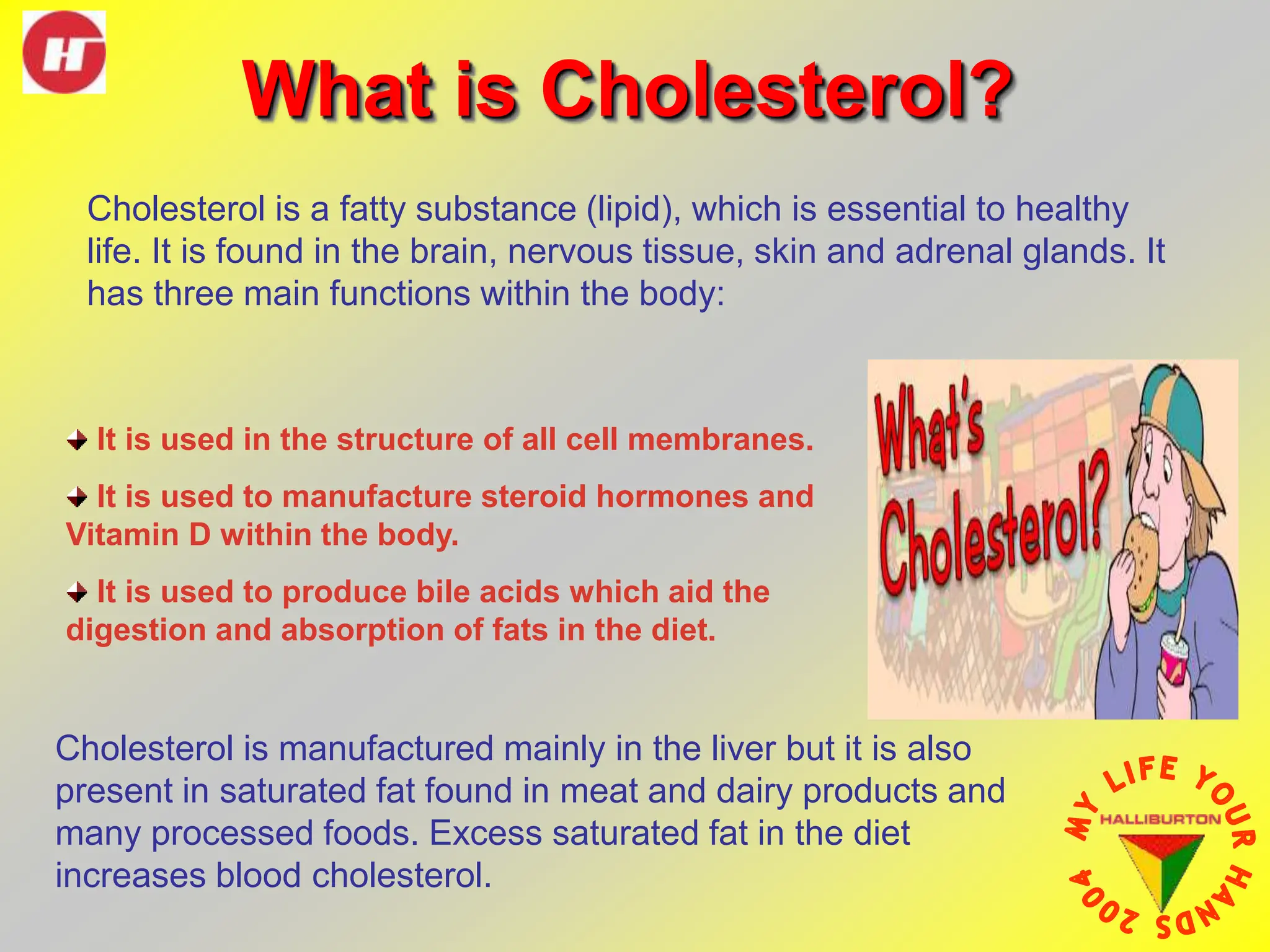
Cholesterol is a fatty substance (lipid), which is essential to healthy
life. It is found in the brain, nervous tissue, skin and adrenal glands. It
has three main functions within the body:
It is used in the structure of all cell membranes.
It is used to manufacture steroid hormones and
Vitamin D within the body.
It is used to produce bile acids which aid the
digestion and absorption of fats in the diet.
Cholesterol is manufactured mainly in the liver but it is also
present in saturated fat found in meat and dairy products and
many processed foods. Excess saturated fat in the diet
increases blood cholesterol.
Why is too much Cholesterol
harmful?
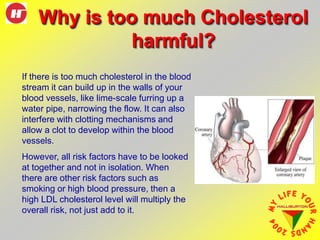
If there is too much cholesterol in the blood
stream it can build up in the walls of your
blood vessels, like lime-scale furring up a
water pipe, narrowing the flow. It can also
interfere with clotting mechanisms and
allow a clot to develop within the blood
vessels.
However, all risk factors have to be looked
at together and not in isolation. When
there are other risk factors such as
smoking or high blood pressure, then a
high LDL cholesterol level will multiply the
overall risk, not just add to it.
Cholesterol test
Total Cholesterol Level Risk of Heart Disease
3.4 – 5-0 mmo1/0 Acceptable/Low Risk
5.0 - 6-4 mmo1/0
Same Risk
6.5 – 7-7 mmo1/1 Moderate Risk
7.8 mmo1/1 and above High Risk
Genetic influence
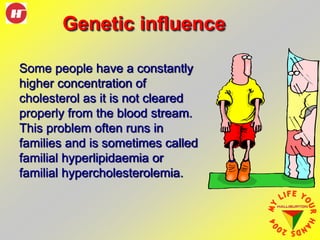
Some people have a constantly
higher concentration of
cholesterol as it is not cleared
properly from the blood stream.
This problem often runs in
families and is sometimes called
familial hyperlipidaemia or
familial hypercholesterolemia.
Who needs to have their
Cholesterol checked?
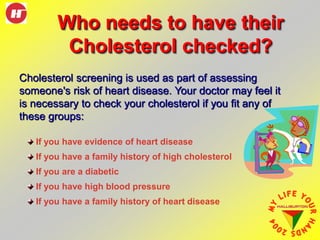
Cholesterol screening is used as part of assessing
someone's risk of heart disease. Your doctor may feel it
is necessary to check your cholesterol if you fit any of
these groups:
If you have evidence of heart disease
If you have a family history of high cholesterol
If you are a diabetic
If you have high blood pressure
If you have a family history of heart disease
What can I do to help myself?
Many people are initially advised to try and get their cholesterol down
themselves over a period of time.
Reduce your total fat – this means limiting the number of calories you take
in that comes from any fat.
Replace saturated fat with poly and mono unsaturated fat – this means
replacing fat from animals in meat and dairy products with oils and fish.
Increase your fruit and vegetables to five portions a day – this increases
your intake of fibre as well as A, C, and E Vitamins.
Increase your carbohydrates i.e. pasta, cereals, rice, bread – this will give
you the energy you need that used to come from fat.
If necessary, reduce your weight to the recommended level for your sex
and height.
Increase your physical activity and exercise – ideally exercising for 30
minutes 3-5 times a week.
Southern Gulf
PII Health & Safety Team

Cholesterol and how to self help oneself.ppt

  • 1.
    What is Cholesterol? Cholesterolis a fatty substance (lipid), which is essential to healthy life. It is found in the brain, nervous tissue, skin and adrenal glands. It has three main functions within the body: It is used in the structure of all cell membranes. It is used to manufacture steroid hormones and Vitamin D within the body. It is used to produce bile acids which aid the digestion and absorption of fats in the diet. Cholesterol is manufactured mainly in the liver but it is also present in saturated fat found in meat and dairy products and many processed foods. Excess saturated fat in the diet increases blood cholesterol.
  • 2.
    Why is toomuch Cholesterol harmful? If there is too much cholesterol in the blood stream it can build up in the walls of your blood vessels, like lime-scale furring up a water pipe, narrowing the flow. It can also interfere with clotting mechanisms and allow a clot to develop within the blood vessels. However, all risk factors have to be looked at together and not in isolation. When there are other risk factors such as smoking or high blood pressure, then a high LDL cholesterol level will multiply the overall risk, not just add to it.
  • 3.
    Cholesterol test Total CholesterolLevel Risk of Heart Disease 3.4 – 5-0 mmo1/0 Acceptable/Low Risk 5.0 - 6-4 mmo1/0 Same Risk 6.5 – 7-7 mmo1/1 Moderate Risk 7.8 mmo1/1 and above High Risk
  • 4.
    Genetic influence Some peoplehave a constantly higher concentration of cholesterol as it is not cleared properly from the blood stream. This problem often runs in families and is sometimes called familial hyperlipidaemia or familial hypercholesterolemia.
  • 5.
    Who needs tohave their Cholesterol checked? Cholesterol screening is used as part of assessing someone's risk of heart disease. Your doctor may feel it is necessary to check your cholesterol if you fit any of these groups: If you have evidence of heart disease If you have a family history of high cholesterol If you are a diabetic If you have high blood pressure If you have a family history of heart disease
  • 6.
    What can Ido to help myself? Many people are initially advised to try and get their cholesterol down themselves over a period of time. Reduce your total fat – this means limiting the number of calories you take in that comes from any fat. Replace saturated fat with poly and mono unsaturated fat – this means replacing fat from animals in meat and dairy products with oils and fish. Increase your fruit and vegetables to five portions a day – this increases your intake of fibre as well as A, C, and E Vitamins. Increase your carbohydrates i.e. pasta, cereals, rice, bread – this will give you the energy you need that used to come from fat. If necessary, reduce your weight to the recommended level for your sex and height. Increase your physical activity and exercise – ideally exercising for 30 minutes 3-5 times a week.
  • 7.