

APPROACH TO CHILD
WITH CHOLESTASIS
Presented By:-
Dr. Rizwan Gouri
Moderator:-
Col. Vandana Negi
1
History
 07 month old female infant
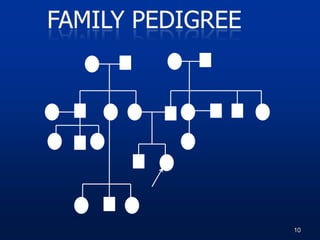
 2nd product of non consanguineous marriage
 R/O Leh
 Informant : Mother
 Reliability: Fair
2
History
 Brought by parents with c/o-
 Persistent jaundice since day 15 of life.
 Failure to thrive
 Developmental delay as compared to peer
group
3
Obstetrical history
 Born to P2002 mother
 Mother ’s blood group ‘AB’ +ve
 HBsAg, HIV, VDRL, TORCH serology - Negative
 1st child is 7 yr old male alive & well
 2nd spontaneous conception
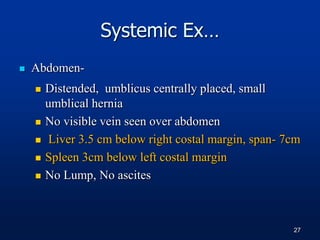
 Booked & supervised at SNM Hospital Leh
4
Obstetrical history
 No H/o
 Fever with rash
 Gestational Diabetes , Gestational Hypertension
 UTI, Prolonged Rupture Of Membranes
 Jaundice during antenatal period
 Delivered at SNM Hospital Leh at term
normally with B.Wt of 2.7 Kgs
5
Postnatal history
 Passed meconium within 24 hours of birth
 Developed neonatal jaundice on day 03 of life,
recovered with PT
 Day 15 of life re-admitted at SNM with increasing
jaundice
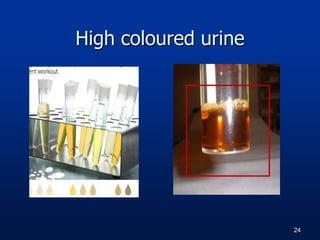
 Urine -high colored, stools - yellow in color
6
 No H/O:-
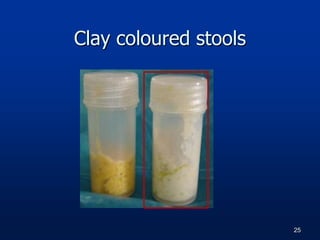
 Acholic stool
 Constipation
 Lethargy, Irritability, Seizures
 Poor feeding
 Prolonged bleeding
 Vomiting
7
Postnatal…
Postnatal…
 At 02 month of age Child was admitted at 153
GH and transferred to CH(WC)
 Taken to PGIMER Chandigarh, where child was
investigated
 No h/o hepatotoxic drug intake
 Immunization – Up to date
8
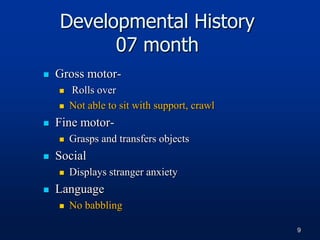
Developmental History
07 month
 Gross motor-
 Rolls over
 Not able to sit with support, crawl
 Fine motor-
 Grasps and transfers objects
 Social
 Displays stranger anxiety
 Language
 No babbling
9
10
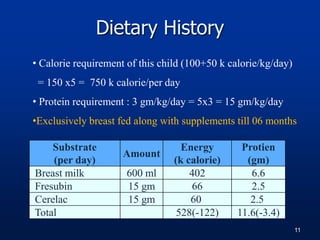
Substrate
(per day)
Amount
Energy
(k calorie)
Protien
(gm)
Breast milk 600 ml 402 6.6
Fresubin 15 gm 66 2.5
Cerelac 15 gm 60 2.5
Total 528(-122) 11.6(-3.4)
• Calorie requirement of this child (100+50 k calorie/kg/day)
= 150 x5 = 750 k calorie/per day
• Protein requirement : 3 gm/kg/day = 5x3 = 15 gm/kg/day
•Exclusively breast fed along with supplements till 06 months
Dietary History
11
Questions
12
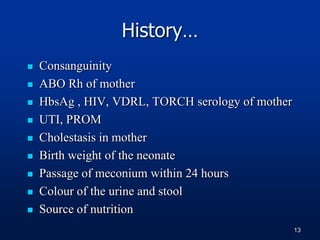
History…
 Consanguinity
 ABO Rh of mother
 HbsAg , HIV, VDRL, TORCH serology of mother
 UTI, PROM
 Cholestasis in mother
 Birth weight of the neonate
 Passage of meconium within 24 hours
 Colour of the urine and stool
 Source of nutrition
13
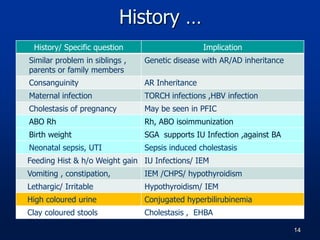
History …
History/ Specific question Implication
Similar problem in siblings ,
parents or family members
Genetic disease with AR/AD inheritance
Consanguinity AR Inheritance
Maternal infection TORCH infections ,HBV infection
Cholestasis of pregnancy May be seen in PFIC
ABO Rh Rh, ABO isoimmunization
Birth weight SGA supports IU Infection ,against BA
Neonatal sepsis, UTI Sepsis induced cholestasis
Feeding Hist & h/o Weight gain IU Infections/ IEM
Vomiting , constipation, IEM /CHPS/ hypothyroidism
Lethargic/ Irritable Hypothyroidism/ IEM
High coloured urine Conjugated hyperbilirubinemia
Clay coloured stools Cholestasis , EHBA
14
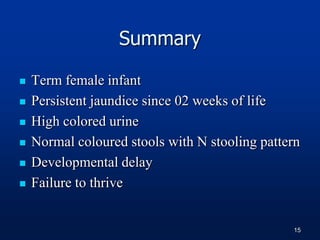
Summary
 Term female infant
 Persistent jaundice since 02 weeks of life
 High colored urine
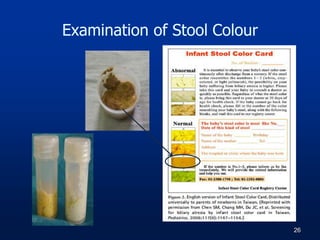
 Normal coloured stools with N stooling pattern
 Developmental delay
 Failure to thrive
15
Possibilities
16
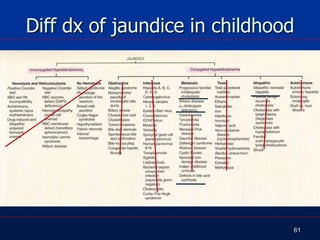
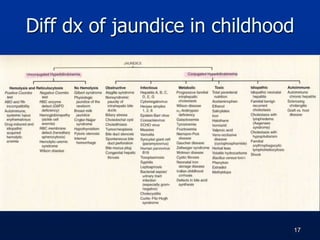
Diff dx of jaundice in childhood
17
Examination
18
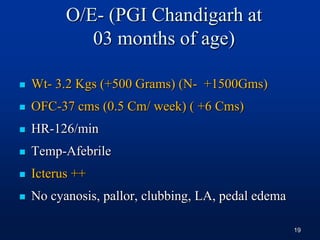
O/E- (PGI Chandigarh at
03 months of age)
 Wt- 3.2 Kgs (+500 Grams) (N- +1500Gms)
 OFC-37 cms (0.5 Cm/ week) ( +6 Cms)
 HR-126/min
 Temp-Afebrile
 Icterus ++
 No cyanosis, pallor, clubbing, LA, pedal edema
19
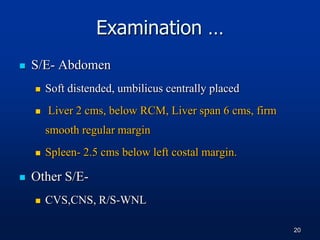
Examination …
 S/E- Abdomen
 Soft distended, umbilicus centrally placed
 Liver 2 cms, below RCM, Liver span 6 cms, firm
smooth regular margin
 Spleen- 2.5 cms below left costal margin.
 Other S/E-
 CVS,CNS, R/S-WNL
20
EXAMINATION: [AH(R&R)]
07 months
 Child is active, alert & oriented to mother
 Weight- 5.000 Kg (7.450 kg) < 3rd percentile
 OFC- 40 cm (44 cm) < 3rd percentile
 Length-58 Cms (66.10 cms) < 3rd percentile
21
 HR-108/min (90-120/min)
 RR-30/min (30-40/min)
 Temp-Afebrile
 Icterus++ up to soles
 No dysmorphic features
EXAMINATION: [AH(R&R)]
22
Examination
 Pallor
 Edema Nil
 Patechie
 No cataract, No K-F Ring
 No embryotoxon
23
High coloured urine
24
Clay coloured stools
25
Examination of Stool Colour
26
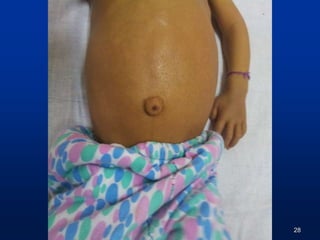
 Abdomen-
 Distended, umblicus centrally placed, small
umblical hernia
 No visible vein seen over abdomen
 Liver 3.5 cm below right costal margin, span- 7cm
 Spleen 3cm below left costal margin
 No Lump, No ascites
Systemic Ex…
27
28
Systemic Ex…
 CNS
 Child is fully conscious
 No evidence of encephalopathy
 No seizures
 No focal deficit
 CVS
 Respiratory System
NAD
29
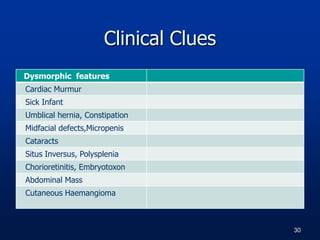
Dysmorphic features
Cardiac Murmur
Sick Infant
Umblical hernia, Constipation
Midfacial defects,Micropenis
Cataracts
Situs Inversus, Polysplenia
Chorioretinitis, Embryotoxon
Abdominal Mass
Cutaneous Haemangioma
Clinical Clues
30
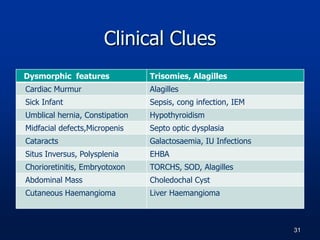
Dysmorphic features Trisomies, Alagilles
Cardiac Murmur Alagilles
Sick Infant Sepsis, cong infection, IEM
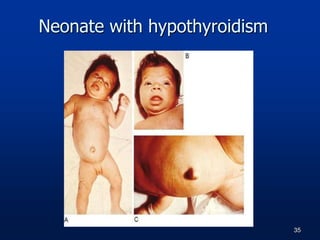
Umblical hernia, Constipation Hypothyroidism
Midfacial defects,Micropenis Septo optic dysplasia
Cataracts Galactosaemia, IU Infections
Situs Inversus, Polysplenia EHBA
Chorioretinitis, Embryotoxon TORCHS, SOD, Alagilles
Abdominal Mass Choledochal Cyst
Cutaneous Haemangioma Liver Haemangioma
Clinical Clues
31
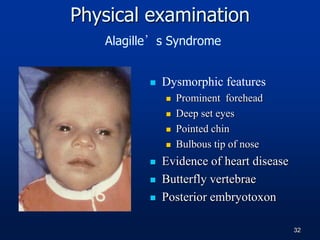
Physical examination
Alagille’s Syndrome
 Dysmorphic features
 Prominent forehead
 Deep set eyes
 Pointed chin
 Bulbous tip of nose
 Evidence of heart disease
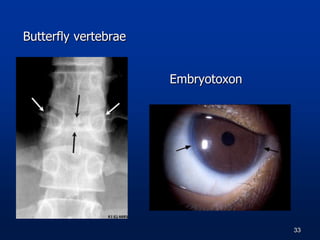
 Butterfly vertebrae
 Posterior embryotoxon
32
Butterfly vertebrae
Embryotoxon
33
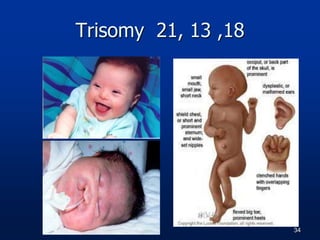
Trisomy 21, 13 ,18
34
Neonate with hypothyroidism
35
Summary
Term female infant with persistent jaundice since 02 weeks
of life, passage of high colored urine, normal coloured
stools with normal stooling pattern . Child has
developmental delay and failure to thrive.
On examination- Deeply icteric with hepatoplenomagaly.
36
Possibilities
37
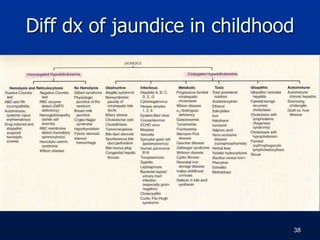
Diff dx of jaundice in childhood
38
(38%)
(04%)
(38%)
(64%)
(58%)
(08%)
(04%)
(02%)
(35%)
(53%)
(18%)
TORCH Infections (42%)
(06%)
(04%)
(07%)
suspected(33%)
(02%)
(09%)
Others (19%)
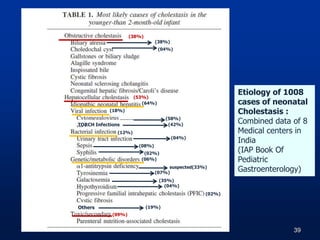
Etiology of 1008
cases of neonatal
Cholestasis :
Combined data of 8
Medical centers in
India
(IAP Book Of
Pediatric
Gastroenterology)
(12%)
39
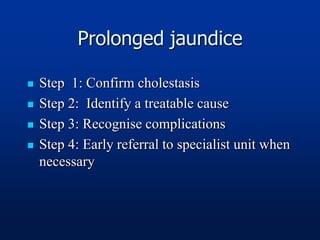
Prolonged jaundice
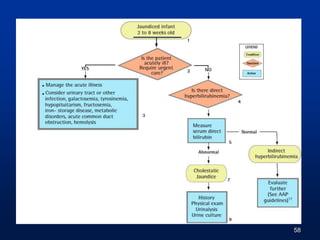
 Step 1: Confirm cholestasis
 Step 2: Identify a treatable cause
 Step 3: Recognise complications
 Step 4: Early referral to specialist unit when
necessary
41
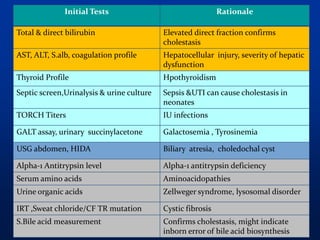
Initial Tests Rationale
Total & direct bilirubin Elevated direct fraction confirms
cholestasis
AST, ALT, S.alb, coagulation profile Hepatocellular injury, severity of hepatic
dysfunction
Thyroid Profile Hpothyroidism
Septic screen,Urinalysis & urine culture Sepsis &UTI can cause cholestasis in
neonates
TORCH Titers IU infections
GALT assay, urinary succinylacetone Galactosemia , Tyrosinemia
USG abdomen, HIDA Biliary atresia, choledochal cyst
Alpha-1 Antitrypsin level Alpha-1 antitrypsin deficiency
Serum amino acids Aminoacidopathies
Urine organic acids Zellweger syndrome, lysosomal disorder
IRT ,Sweat chloride/CF TR mutation Cystic fibrosis
S.Bile acid measurement Confirms cholestasis, might indicate
inborn error of bile acid biosynthesis
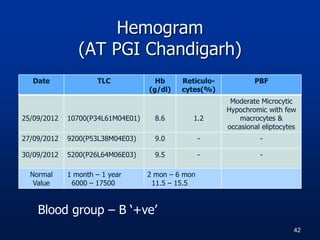
Hemogram
(AT PGI Chandigarh)
Date TLC Hb
(g/dl)
Reticulo-
cytes(%)
PBF
25/09/2012 10700(P34L61M04E01) 8.6 1.2
Moderate Microcytic
Hypochromic with few
macrocytes &
occasional eliptocytes
27/09/2012 9200(P53L38M04E03) 9.0 - -
30/09/2012 5200(P26L64M06E03) 9.5 - -
Normal
Value
1 month – 1 year
6000 – 17500
2 mon – 6 mon
11.5 – 15.5
42
Blood group – B ‘+ve’
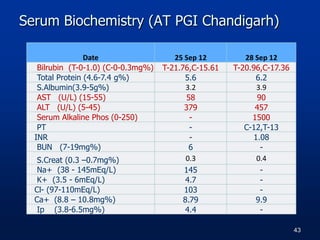
Serum Biochemistry (AT PGI Chandigarh)
Date 25 Sep 12 28 Sep 12
Bilrubin (T-0-1.0) (C-0-0.3mg%) T-21.76,C-15.61 T-20.96,C-17.36
Total Protein (4.6-7.4 g%) 5.6 6.2
S.Albumin(3.9-5g%) 3.2 3.9
AST (U/L) (15-55) 58 90
ALT (U/L) (5-45) 379 457
Serum Alkaline Phos (0-250) - 1500
PT - C-12,T-13
INR - 1.08
BUN (7-19mg%) 6 -
S.Creat (0.3 –0.7mg%) 0.3 0.4
Na+ (38 - 145mEq/L) 145 -
K+ (3.5 - 6mEq/L) 4.7 -
Cl- (97-110mEq/L) 103 -
Ca+ (8.8 – 10.8mg%) 8.79 9.9
Ip (3.8-6.5mg%) 4.4 -
43
Hemogram [AT AH(R&R)]
Date 27/01/13
Hb 11.3 gm/dl
TLC 8400cells/cmm P-28
L-57
PLT 2,30,000/cmm
Date 04/02/13
Hb 11.8 gm/dl
TLC 10,400cells/cmm P-84
L-10
PLT 2,03,00cells/cmm
Normal Value
TLC :1 mon – 1 yr
6000 - 17500
Hb : 11.5 – 15.5
g/dL
44
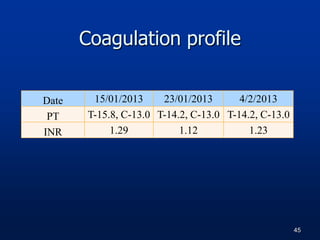
Coagulation profile
Date 15/01/2013 23/01/2013 4/2/2013
PT T-15.8, C-13.0 T-14.2, C-13.0 T-14.2, C-13.0
INR 1.29 1.12 1.23
45
Serum Biochemistry [AT AH(R&R)]
Date 27/01/2013 04/2/2013 15/02/2013
S. Bilrubin (T-0-1.0) (C-0-
0.3mg%)
T-17.7, C-10.5 T-31.2, C-22.0 T-21.8, C-11.7
ALT (15-55U/L) 349 1098 420
AST (U/L) (5-45) 114 425 116
Alkaline Phosphatase 1110 1387 1447
GGT (8-90IU/L) 48 - 36
Total Protein(4.6-7.4g%) 5.3 - 6.1
S.Albumin (3.9-5g%) 3.4 - 3.6
BUN (7-19mg%) 10 0.6 8
S.Creat (0.3 – 0.7mg%) 0.3 0.2 0.2
Na+ (138 - 145mEq/L) 139 136 140
K+ (mEq/L) (3.5 - 6) 4.2 5 4.4
46
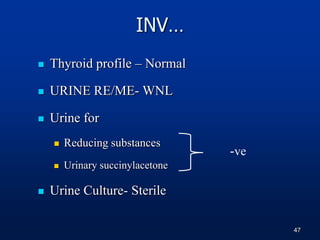
INV…
 Thyroid profile – Normal
 URINE RE/ME- WNL
 Urine for
 Reducing substances
 Urinary succinylacetone
 Urine Culture- Sterile
-ve
47
Neonatal Cholestasis
 Prolonged neonatal jaundice
[Jaundice that last longer than 14 days (term) or 21
days (premature babies)]
 Conjugated hyperbilirubinemia
 Conjugated bilirubin >1mg/dL if TB < 5mg/dL
 >20% Total Bilirubin if TB is >5 mg/dL
 High coloured urine with or without acholic stools
 Occurs in 1:2500 live births
48
Alpha 1 Antitrypsin
123 mg/dl (90.00-200.00)
[24/09/2012]
G6PD 2.00 U/g of Hb (>2.00)
Cystic Fibrosis (IRT) 21.40 ng/ml B (<70.00)
Other investigation
49
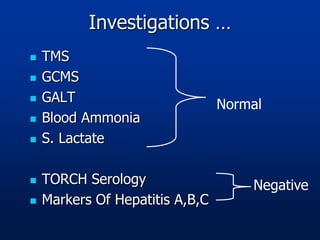
Investigations …
 TMS
 GCMS
 GALT
 Blood Ammonia
 S. Lactate
 TORCH Serology
 Markers Of Hepatitis A,B,C
Normal
Negative
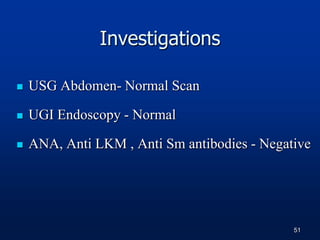
Investigations
 USG Abdomen- Normal Scan
 UGI Endoscopy - Normal
 ANA, Anti LKM , Anti Sm antibodies - Negative
51
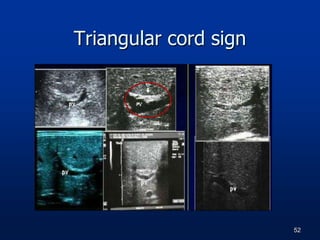
Triangular cord sign
52
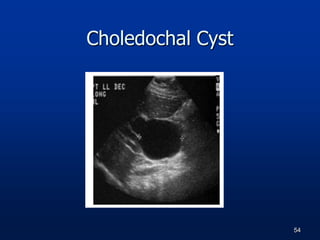
Choledochal Cyst
54
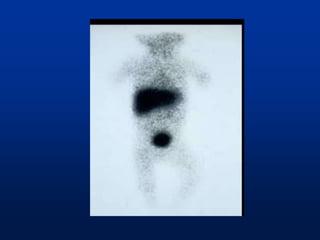
HIDA scan
 PGI Chandigarh: Date- (09/10/2012)
 Impaired heparocytes function with N bilio-enteric
drainage
 AH(R&R): Date- (21/01/2013)
 The scan findings are suggestive of poor heptocellular
function. However there is no evidence of biliary
obstruction seen.
55
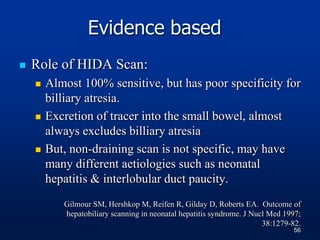
Evidence based
 Role of HIDA Scan:
 Almost 100% sensitive, but has poor specificity for
billiary atresia.
 Excretion of tracer into the small bowel, almost
always excludes billiary atresia
 But, non-draining scan is not specific, may have
many different aetiologies such as neonatal
hepatitis & interlobular duct paucity.
Gilmour SM, Hershkop M, Reifen R, Gilday D, Roberts EA. Outcome of
hepatobiliary scanning in neonatal hepatitis syndrome. J Nucl Med 1997;
38:1279-82.
56
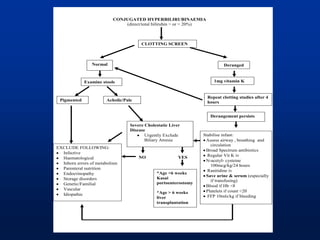
CONJUGATED HYPERBILIRUBINAEMIA
(direct/total bilirubin > or = 20%)
CLOTTING SCREEN
Normal Deranged
1mg vitamin K
i.v.
Repeat clotting studies after 4
hours
Stabilise infant:
Assess airway , breathing and
circulation
Broad Spectrum antibiotics
Regular Vit K iv
N-acetyl- cysteine
100mcg/kg/24 hours
Ranitidine iv
Save urine & serum (especially
if transfusing)
Blood if Hb <8
Platelets if count <20
FFP 10mls/kg if bleeding
Examine stools
Pigmented Acholic/Pale
EXCLUDE FOLLOWING:
Infective
Haematological
Inborn errors of metabolism
Parenteral nutrition
Endocrinopathy
Storage disorders
Genetic/Familial
Vascular
Idiopathic
Severe Cholestatic Liver
Disease
Urgently Exclude
Biliary Atresia
Derangement persists
YES
*Age <6 weeks
Kasai
portoenterostomy
*Age > 6 weeks
liver
transplantation
NO
58
59
Summary
 Term neonate with persistent jaundice since 02 weeks of
life, passage of high colored urine,
Normal coloured stools with N stooling pattern .
Developmental delay and failure to thrive. Deeply icteric
with hepatoplenomagaly.
 Conjugated hyperbilirubinemia, Deranged LFT, N- GGT,
HIDA S/O hepatoellular dysfunction. Coagulation profile
-N, IEM, IUI work up, markers of Hepatitis A,B,C&
workup for autoimmune hepatitis - Negative.
60
Diff dx of jaundice in childhood
61
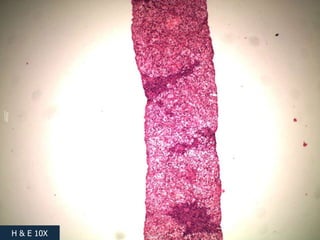
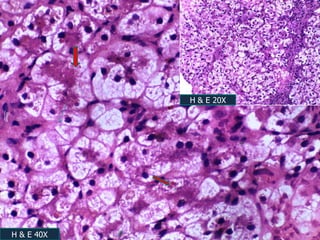
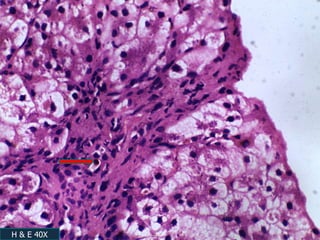
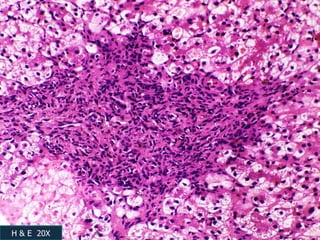
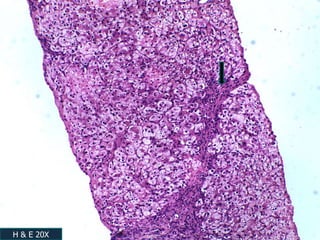
LIVER BIOPSY
B/529/13
H & E 10X
H & E 40X
H & E 20X
H & E 40X
H & E 20X
H & E 20X
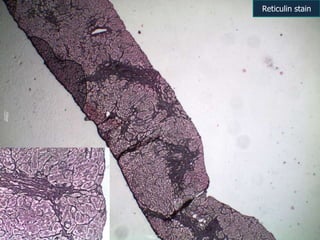
Reticulin stain
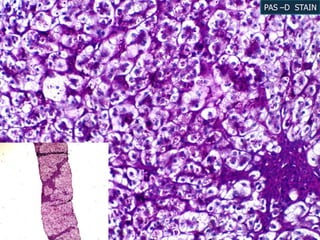
PAS –D STAIN
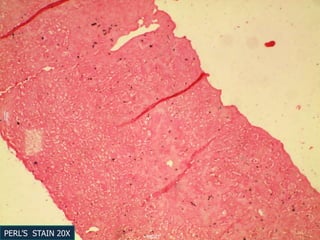
PERL’S STAIN 20X
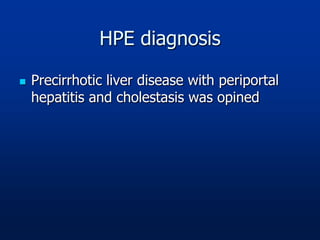
HPE diagnosis
 Precirrhotic liver disease with periportal
hepatitis and cholestasis was opined
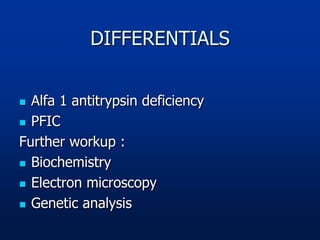
DIFFERENTIALS
 Alfa 1 antitrypsin deficiency
 PFIC
Further workup :
 Biochemistry
 Electron microscopy
 Genetic analysis
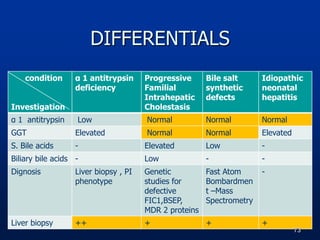
condition
Investigation
α 1 antitrypsin
deficiency
Progressive
Familial
Intrahepatic
Cholestasis
Bile salt
synthetic
defects
Idiopathic
neonatal
hepatitis
α 1 antitrypsin Low Normal Normal Normal
GGT Elevated Normal Normal Elevated
S. Bile acids - Elevated Low -
Biliary bile acids - Low - -
Dignosis Liver biopsy , PI
phenotype
Genetic
studies for
defective
FIC1,BSEP,
MDR 2 proteins
Fast Atom
Bombardmen
t –Mass
Spectrometry
-
Liver biopsy ++ + + +
73
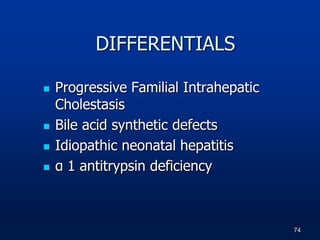
DIFFERENTIALS
 Progressive Familial Intrahepatic
Cholestasis
 Bile acid synthetic defects
 Idiopathic neonatal hepatitis
 α 1 antitrypsin deficiency
74
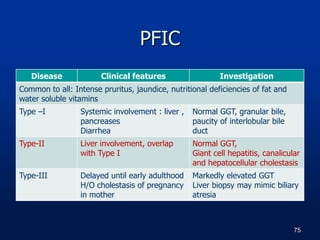
DIFFERENTIALS
PFIC
Disease Clinical features Investigation
Common to all: Intense pruritus, jaundice, nutritional deficiencies of fat and
water soluble vitamins
Type –I Systemic involvement : liver ,
pancreases
Diarrhea
Normal GGT, granular bile,
paucity of interlobular bile
duct
Type-II Liver involvement, overlap
with Type I
Normal GGT,
Giant cell hepatitis, canalicular
and hepatocellular cholestasis
Type-III Delayed until early adulthood
H/O cholestasis of pregnancy
in mother
Markedly elevated GGT
Liver biopsy may mimic biliary
atresia
75
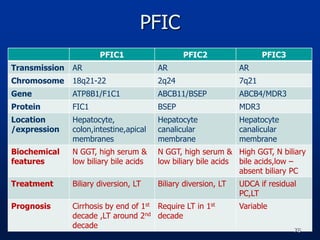
PFIC1 PFIC2 PFIC3
Transmission AR AR AR
Chromosome 18q21-22 2q24 7q21
Gene ATP8B1/F1C1 ABCB11/BSEP ABCB4/MDR3
Protein FIC1 BSEP MDR3
Location
/expression
Hepatocyte,
colon,intestine,apical
membranes
Hepatocyte
canalicular
membrane
Hepatocyte
canalicular
membrane
Biochemical
features
N GGT, high serum &
low biliary bile acids
N GGT, high serum &
low biliary bile acids
High GGT, N biliary
bile acids,low –
absent biliary PC
Treatment Biliary diversion, LT Biliary diversion, LT UDCA if residual
PC,LT
Prognosis Cirrhosis by end of 1st
decade ,LT around 2nd
decade
Require LT in 1st
decade
Variable
76
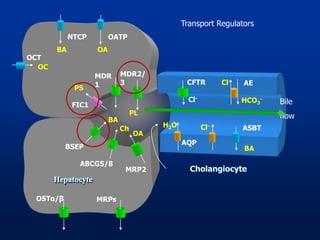
PFIC
PC
Hepatocyte
OCT
NTCP OATP
OC
BA OA
MDR2/
3
OA
MRP2
BSEP
BA
FIC1
MDR
1PS
Cholangiocyte
Cl-
AQP
BA
ASBT
AECl-
HCO3
-
H2O
CFTR
Cl-
Bile
flowPL
Ch
ABCG5/8
MRPsOSTα/β
Transport Regulators
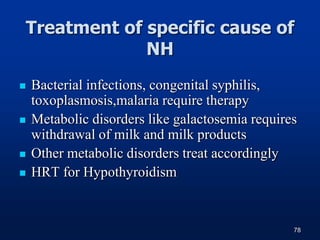
Treatment of specific cause of
NH
 Bacterial infections, congenital syphilis,
toxoplasmosis,malaria require therapy
 Metabolic disorders like galactosemia requires
withdrawal of milk and milk products
 Other metabolic disorders treat accordingly
 HRT for Hypothyroidism
78
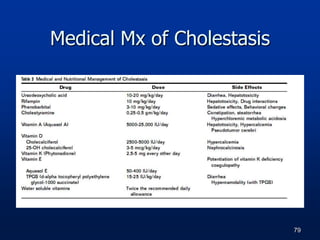
Medical Mx of Cholestasis
79
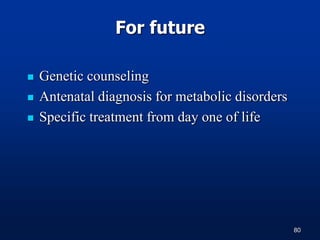
For future
 Genetic counseling
 Antenatal diagnosis for metabolic disorders
 Specific treatment from day one of life
80
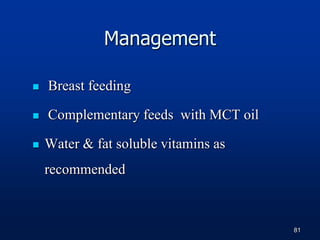
Management
 Breast feeding
 Complementary feeds with MCT oil
 Water & fat soluble vitamins as
recommended
81
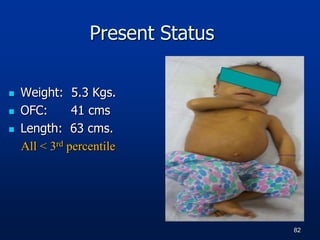
Present Status
 Weight: 5.3 Kgs.
 OFC: 41 cms
 Length: 63 cms.
All < 3rd percentile
82
Take home message
 Aggressively work-up neonatal cholestasis
 Early identification of cause cholestatic jaundice
enable optimal timing of medical and surgical
management.
 Pale Colour Stool : almost ALWAYS warrant further
investigations.
83
Thank you

Cholestasis 8

  • 1.
    APPROACH TO CHILD WITHCHOLESTASIS Presented By:- Dr. Rizwan Gouri Moderator:- Col. Vandana Negi 1
  • 2.
    History  07 monthold female infant  2nd product of non consanguineous marriage  R/O Leh  Informant : Mother  Reliability: Fair 2
  • 3.
    History  Brought byparents with c/o-  Persistent jaundice since day 15 of life.  Failure to thrive  Developmental delay as compared to peer group 3
  • 4.
    Obstetrical history  Bornto P2002 mother  Mother ’s blood group ‘AB’ +ve  HBsAg, HIV, VDRL, TORCH serology - Negative  1st child is 7 yr old male alive & well  2nd spontaneous conception  Booked & supervised at SNM Hospital Leh 4
  • 5.
    Obstetrical history  NoH/o  Fever with rash  Gestational Diabetes , Gestational Hypertension  UTI, Prolonged Rupture Of Membranes  Jaundice during antenatal period  Delivered at SNM Hospital Leh at term normally with B.Wt of 2.7 Kgs 5
  • 6.
    Postnatal history  Passedmeconium within 24 hours of birth  Developed neonatal jaundice on day 03 of life, recovered with PT  Day 15 of life re-admitted at SNM with increasing jaundice  Urine -high colored, stools - yellow in color 6
  • 7.
     No H/O:- Acholic stool  Constipation  Lethargy, Irritability, Seizures  Poor feeding  Prolonged bleeding  Vomiting 7 Postnatal…
  • 8.
    Postnatal…  At 02month of age Child was admitted at 153 GH and transferred to CH(WC)  Taken to PGIMER Chandigarh, where child was investigated  No h/o hepatotoxic drug intake  Immunization – Up to date 8
  • 9.
    Developmental History 07 month Gross motor-  Rolls over  Not able to sit with support, crawl  Fine motor-  Grasps and transfers objects  Social  Displays stranger anxiety  Language  No babbling 9
  • 10.
  • 11.
    Substrate (per day) Amount Energy (k calorie) Protien (gm) Breastmilk 600 ml 402 6.6 Fresubin 15 gm 66 2.5 Cerelac 15 gm 60 2.5 Total 528(-122) 11.6(-3.4) • Calorie requirement of this child (100+50 k calorie/kg/day) = 150 x5 = 750 k calorie/per day • Protein requirement : 3 gm/kg/day = 5x3 = 15 gm/kg/day •Exclusively breast fed along with supplements till 06 months Dietary History 11
  • 12.
  • 13.
    History…  Consanguinity  ABORh of mother  HbsAg , HIV, VDRL, TORCH serology of mother  UTI, PROM  Cholestasis in mother  Birth weight of the neonate  Passage of meconium within 24 hours  Colour of the urine and stool  Source of nutrition 13
  • 14.
    History … History/ Specificquestion Implication Similar problem in siblings , parents or family members Genetic disease with AR/AD inheritance Consanguinity AR Inheritance Maternal infection TORCH infections ,HBV infection Cholestasis of pregnancy May be seen in PFIC ABO Rh Rh, ABO isoimmunization Birth weight SGA supports IU Infection ,against BA Neonatal sepsis, UTI Sepsis induced cholestasis Feeding Hist & h/o Weight gain IU Infections/ IEM Vomiting , constipation, IEM /CHPS/ hypothyroidism Lethargic/ Irritable Hypothyroidism/ IEM High coloured urine Conjugated hyperbilirubinemia Clay coloured stools Cholestasis , EHBA 14
  • 15.
    Summary  Term femaleinfant  Persistent jaundice since 02 weeks of life  High colored urine  Normal coloured stools with N stooling pattern  Developmental delay  Failure to thrive 15
  • 16.
  • 17.
    Diff dx ofjaundice in childhood 17
  • 18.
  • 19.
    O/E- (PGI Chandigarhat 03 months of age)  Wt- 3.2 Kgs (+500 Grams) (N- +1500Gms)  OFC-37 cms (0.5 Cm/ week) ( +6 Cms)  HR-126/min  Temp-Afebrile  Icterus ++  No cyanosis, pallor, clubbing, LA, pedal edema 19
  • 20.
    Examination …  S/E-Abdomen  Soft distended, umbilicus centrally placed  Liver 2 cms, below RCM, Liver span 6 cms, firm smooth regular margin  Spleen- 2.5 cms below left costal margin.  Other S/E-  CVS,CNS, R/S-WNL 20
  • 21.
    EXAMINATION: [AH(R&R)] 07 months Child is active, alert & oriented to mother  Weight- 5.000 Kg (7.450 kg) < 3rd percentile  OFC- 40 cm (44 cm) < 3rd percentile  Length-58 Cms (66.10 cms) < 3rd percentile 21
  • 22.
     HR-108/min (90-120/min) RR-30/min (30-40/min)  Temp-Afebrile  Icterus++ up to soles  No dysmorphic features EXAMINATION: [AH(R&R)] 22
  • 23.
    Examination  Pallor  EdemaNil  Patechie  No cataract, No K-F Ring  No embryotoxon 23
  • 24.
  • 25.
  • 26.
  • 27.
     Abdomen-  Distended,umblicus centrally placed, small umblical hernia  No visible vein seen over abdomen  Liver 3.5 cm below right costal margin, span- 7cm  Spleen 3cm below left costal margin  No Lump, No ascites Systemic Ex… 27
  • 28.
  • 29.
    Systemic Ex…  CNS Child is fully conscious  No evidence of encephalopathy  No seizures  No focal deficit  CVS  Respiratory System NAD 29
  • 30.
    Dysmorphic features Cardiac Murmur SickInfant Umblical hernia, Constipation Midfacial defects,Micropenis Cataracts Situs Inversus, Polysplenia Chorioretinitis, Embryotoxon Abdominal Mass Cutaneous Haemangioma Clinical Clues 30
  • 31.
    Dysmorphic features Trisomies,Alagilles Cardiac Murmur Alagilles Sick Infant Sepsis, cong infection, IEM Umblical hernia, Constipation Hypothyroidism Midfacial defects,Micropenis Septo optic dysplasia Cataracts Galactosaemia, IU Infections Situs Inversus, Polysplenia EHBA Chorioretinitis, Embryotoxon TORCHS, SOD, Alagilles Abdominal Mass Choledochal Cyst Cutaneous Haemangioma Liver Haemangioma Clinical Clues 31
  • 32.
    Physical examination Alagille’s Syndrome Dysmorphic features  Prominent forehead  Deep set eyes  Pointed chin  Bulbous tip of nose  Evidence of heart disease  Butterfly vertebrae  Posterior embryotoxon 32
  • 33.
  • 34.
  • 35.
  • 36.
    Summary Term female infantwith persistent jaundice since 02 weeks of life, passage of high colored urine, normal coloured stools with normal stooling pattern . Child has developmental delay and failure to thrive. On examination- Deeply icteric with hepatoplenomagaly. 36
  • 37.
  • 38.
    Diff dx ofjaundice in childhood 38
  • 39.
    (38%) (04%) (38%) (64%) (58%) (08%) (04%) (02%) (35%) (53%) (18%) TORCH Infections (42%) (06%) (04%) (07%) suspected(33%) (02%) (09%) Others(19%) Etiology of 1008 cases of neonatal Cholestasis : Combined data of 8 Medical centers in India (IAP Book Of Pediatric Gastroenterology) (12%) 39
  • 40.
    Prolonged jaundice  Step1: Confirm cholestasis  Step 2: Identify a treatable cause  Step 3: Recognise complications  Step 4: Early referral to specialist unit when necessary
  • 41.
    41 Initial Tests Rationale Total& direct bilirubin Elevated direct fraction confirms cholestasis AST, ALT, S.alb, coagulation profile Hepatocellular injury, severity of hepatic dysfunction Thyroid Profile Hpothyroidism Septic screen,Urinalysis & urine culture Sepsis &UTI can cause cholestasis in neonates TORCH Titers IU infections GALT assay, urinary succinylacetone Galactosemia , Tyrosinemia USG abdomen, HIDA Biliary atresia, choledochal cyst Alpha-1 Antitrypsin level Alpha-1 antitrypsin deficiency Serum amino acids Aminoacidopathies Urine organic acids Zellweger syndrome, lysosomal disorder IRT ,Sweat chloride/CF TR mutation Cystic fibrosis S.Bile acid measurement Confirms cholestasis, might indicate inborn error of bile acid biosynthesis
  • 42.
    Hemogram (AT PGI Chandigarh) DateTLC Hb (g/dl) Reticulo- cytes(%) PBF 25/09/2012 10700(P34L61M04E01) 8.6 1.2 Moderate Microcytic Hypochromic with few macrocytes & occasional eliptocytes 27/09/2012 9200(P53L38M04E03) 9.0 - - 30/09/2012 5200(P26L64M06E03) 9.5 - - Normal Value 1 month – 1 year 6000 – 17500 2 mon – 6 mon 11.5 – 15.5 42 Blood group – B ‘+ve’
  • 43.
    Serum Biochemistry (ATPGI Chandigarh) Date 25 Sep 12 28 Sep 12 Bilrubin (T-0-1.0) (C-0-0.3mg%) T-21.76,C-15.61 T-20.96,C-17.36 Total Protein (4.6-7.4 g%) 5.6 6.2 S.Albumin(3.9-5g%) 3.2 3.9 AST (U/L) (15-55) 58 90 ALT (U/L) (5-45) 379 457 Serum Alkaline Phos (0-250) - 1500 PT - C-12,T-13 INR - 1.08 BUN (7-19mg%) 6 - S.Creat (0.3 –0.7mg%) 0.3 0.4 Na+ (38 - 145mEq/L) 145 - K+ (3.5 - 6mEq/L) 4.7 - Cl- (97-110mEq/L) 103 - Ca+ (8.8 – 10.8mg%) 8.79 9.9 Ip (3.8-6.5mg%) 4.4 - 43
  • 44.
    Hemogram [AT AH(R&R)] Date27/01/13 Hb 11.3 gm/dl TLC 8400cells/cmm P-28 L-57 PLT 2,30,000/cmm Date 04/02/13 Hb 11.8 gm/dl TLC 10,400cells/cmm P-84 L-10 PLT 2,03,00cells/cmm Normal Value TLC :1 mon – 1 yr 6000 - 17500 Hb : 11.5 – 15.5 g/dL 44
  • 45.
    Coagulation profile Date 15/01/201323/01/2013 4/2/2013 PT T-15.8, C-13.0 T-14.2, C-13.0 T-14.2, C-13.0 INR 1.29 1.12 1.23 45
  • 46.
    Serum Biochemistry [ATAH(R&R)] Date 27/01/2013 04/2/2013 15/02/2013 S. Bilrubin (T-0-1.0) (C-0- 0.3mg%) T-17.7, C-10.5 T-31.2, C-22.0 T-21.8, C-11.7 ALT (15-55U/L) 349 1098 420 AST (U/L) (5-45) 114 425 116 Alkaline Phosphatase 1110 1387 1447 GGT (8-90IU/L) 48 - 36 Total Protein(4.6-7.4g%) 5.3 - 6.1 S.Albumin (3.9-5g%) 3.4 - 3.6 BUN (7-19mg%) 10 0.6 8 S.Creat (0.3 – 0.7mg%) 0.3 0.2 0.2 Na+ (138 - 145mEq/L) 139 136 140 K+ (mEq/L) (3.5 - 6) 4.2 5 4.4 46
  • 47.
    INV…  Thyroid profile– Normal  URINE RE/ME- WNL  Urine for  Reducing substances  Urinary succinylacetone  Urine Culture- Sterile -ve 47
  • 48.
    Neonatal Cholestasis  Prolongedneonatal jaundice [Jaundice that last longer than 14 days (term) or 21 days (premature babies)]  Conjugated hyperbilirubinemia  Conjugated bilirubin >1mg/dL if TB < 5mg/dL  >20% Total Bilirubin if TB is >5 mg/dL  High coloured urine with or without acholic stools  Occurs in 1:2500 live births 48
  • 49.
    Alpha 1 Antitrypsin 123mg/dl (90.00-200.00) [24/09/2012] G6PD 2.00 U/g of Hb (>2.00) Cystic Fibrosis (IRT) 21.40 ng/ml B (<70.00) Other investigation 49
  • 50.
    Investigations …  TMS GCMS  GALT  Blood Ammonia  S. Lactate  TORCH Serology  Markers Of Hepatitis A,B,C Normal Negative
  • 51.
    Investigations  USG Abdomen-Normal Scan  UGI Endoscopy - Normal  ANA, Anti LKM , Anti Sm antibodies - Negative 51
  • 52.
  • 54.
  • 55.
    HIDA scan  PGIChandigarh: Date- (09/10/2012)  Impaired heparocytes function with N bilio-enteric drainage  AH(R&R): Date- (21/01/2013)  The scan findings are suggestive of poor heptocellular function. However there is no evidence of biliary obstruction seen. 55
  • 56.
    Evidence based  Roleof HIDA Scan:  Almost 100% sensitive, but has poor specificity for billiary atresia.  Excretion of tracer into the small bowel, almost always excludes billiary atresia  But, non-draining scan is not specific, may have many different aetiologies such as neonatal hepatitis & interlobular duct paucity. Gilmour SM, Hershkop M, Reifen R, Gilday D, Roberts EA. Outcome of hepatobiliary scanning in neonatal hepatitis syndrome. J Nucl Med 1997; 38:1279-82. 56
  • 57.
    CONJUGATED HYPERBILIRUBINAEMIA (direct/total bilirubin> or = 20%) CLOTTING SCREEN Normal Deranged 1mg vitamin K i.v. Repeat clotting studies after 4 hours Stabilise infant: Assess airway , breathing and circulation Broad Spectrum antibiotics Regular Vit K iv N-acetyl- cysteine 100mcg/kg/24 hours Ranitidine iv Save urine & serum (especially if transfusing) Blood if Hb <8 Platelets if count <20 FFP 10mls/kg if bleeding Examine stools Pigmented Acholic/Pale EXCLUDE FOLLOWING: Infective Haematological Inborn errors of metabolism Parenteral nutrition Endocrinopathy Storage disorders Genetic/Familial Vascular Idiopathic Severe Cholestatic Liver Disease Urgently Exclude Biliary Atresia Derangement persists YES *Age <6 weeks Kasai portoenterostomy *Age > 6 weeks liver transplantation NO
  • 58.
  • 59.
  • 60.
    Summary  Term neonatewith persistent jaundice since 02 weeks of life, passage of high colored urine, Normal coloured stools with N stooling pattern . Developmental delay and failure to thrive. Deeply icteric with hepatoplenomagaly.  Conjugated hyperbilirubinemia, Deranged LFT, N- GGT, HIDA S/O hepatoellular dysfunction. Coagulation profile -N, IEM, IUI work up, markers of Hepatitis A,B,C& workup for autoimmune hepatitis - Negative. 60
  • 61.
    Diff dx ofjaundice in childhood 61
  • 62.
  • 63.
    H & E10X
  • 64.
    H & E40X H & E 20X
  • 65.
    H & E40X
  • 66.
    H & E20X
  • 67.
    H & E20X
  • 68.
  • 69.
  • 70.
  • 71.
    HPE diagnosis  Precirrhoticliver disease with periportal hepatitis and cholestasis was opined
  • 72.
    DIFFERENTIALS  Alfa 1antitrypsin deficiency  PFIC Further workup :  Biochemistry  Electron microscopy  Genetic analysis
  • 73.
    condition Investigation α 1 antitrypsin deficiency Progressive Familial Intrahepatic Cholestasis Bilesalt synthetic defects Idiopathic neonatal hepatitis α 1 antitrypsin Low Normal Normal Normal GGT Elevated Normal Normal Elevated S. Bile acids - Elevated Low - Biliary bile acids - Low - - Dignosis Liver biopsy , PI phenotype Genetic studies for defective FIC1,BSEP, MDR 2 proteins Fast Atom Bombardmen t –Mass Spectrometry - Liver biopsy ++ + + + 73 DIFFERENTIALS
  • 74.
     Progressive FamilialIntrahepatic Cholestasis  Bile acid synthetic defects  Idiopathic neonatal hepatitis  α 1 antitrypsin deficiency 74 DIFFERENTIALS
  • 75.
    PFIC Disease Clinical featuresInvestigation Common to all: Intense pruritus, jaundice, nutritional deficiencies of fat and water soluble vitamins Type –I Systemic involvement : liver , pancreases Diarrhea Normal GGT, granular bile, paucity of interlobular bile duct Type-II Liver involvement, overlap with Type I Normal GGT, Giant cell hepatitis, canalicular and hepatocellular cholestasis Type-III Delayed until early adulthood H/O cholestasis of pregnancy in mother Markedly elevated GGT Liver biopsy may mimic biliary atresia 75
  • 76.
    PFIC1 PFIC2 PFIC3 TransmissionAR AR AR Chromosome 18q21-22 2q24 7q21 Gene ATP8B1/F1C1 ABCB11/BSEP ABCB4/MDR3 Protein FIC1 BSEP MDR3 Location /expression Hepatocyte, colon,intestine,apical membranes Hepatocyte canalicular membrane Hepatocyte canalicular membrane Biochemical features N GGT, high serum & low biliary bile acids N GGT, high serum & low biliary bile acids High GGT, N biliary bile acids,low – absent biliary PC Treatment Biliary diversion, LT Biliary diversion, LT UDCA if residual PC,LT Prognosis Cirrhosis by end of 1st decade ,LT around 2nd decade Require LT in 1st decade Variable 76 PFIC
  • 77.
  • 78.
    Treatment of specificcause of NH  Bacterial infections, congenital syphilis, toxoplasmosis,malaria require therapy  Metabolic disorders like galactosemia requires withdrawal of milk and milk products  Other metabolic disorders treat accordingly  HRT for Hypothyroidism 78
  • 79.
    Medical Mx ofCholestasis 79
  • 80.
    For future  Geneticcounseling  Antenatal diagnosis for metabolic disorders  Specific treatment from day one of life 80
  • 81.
    Management  Breast feeding Complementary feeds with MCT oil  Water & fat soluble vitamins as recommended 81
  • 82.
    Present Status  Weight:5.3 Kgs.  OFC: 41 cms  Length: 63 cms. All < 3rd percentile 82
  • 83.
    Take home message Aggressively work-up neonatal cholestasis  Early identification of cause cholestatic jaundice enable optimal timing of medical and surgical management.  Pale Colour Stool : almost ALWAYS warrant further investigations. 83
  • 84.

Editor's Notes

  • #2 Jaundice is a common clinical finding in neonates most of the times it resolves spontaneously. However discriminating between benign and serious causes of jaundice is a common task faced by most pediatricians. the principal issue is ability to distinguish between jaundice caused by underlying liver disease so that correct diagnosis can be made timely and treatment can be started.
  • #4 Since the illness started very early in life thus I will like to start my presentation from obstetrical history.
  • #11 This shows 03 generation pedigree tree of the family which shows that the index case is the only one suffering from Jaundice in the family.
  • #13 Any infant presenting with jaundicebeyond 02 weeks after birth should be immediately evaluated for cholestasis, a detailed history including antenatal ,natal , postnatal course, famHist can provide clues to diagnosis. Detailed history is essential for arriving at a diagnosis. What is the relavence of highlighted points in history
  • #18 A large number of disorders are known to cause neonatal jaundice, most common cause of neonatal jaundice is unconjugated jaundice. So at this juncture we do not weather it’s conjugated or unconjugated jaundice.
  • #25 It is imperative for the clinician to view the stool sample because the reports of stool colour by the parents are sometimes inaccurate and may change the course of your approach.
  • #26 It is imperative for the clinician to view the stool sample because the reports of stool colour by the parents are sometimes inaccurate and may change the course of your approach.
  • #30 A through examination of the infant may reveal clues to a diagnosis, such as a particular facial appearance in Alagille syndrome, trisomies and hypothyroidism
  • #39 An early determination of which jaundiced infant is cholestatic is most important part of workup.It is not possible to visually differentiate which jaundiced infant has unconjugated and who has conjugated hyperbilirubinemia. However for sake of simplifying approach we should prioritize our investigations based on most commonly known causes of cholestasis in India.
  • #42 Althoughcholestasis in neonates may be early manifestation of various potentially serious disorders, clinical manifestations of all are usually similar . Thus the evaluation of a jaundiced infant should follow a logical , cost effective ,multistep approach.
  • #59 Any infant presenting with jaundice beyond 2 weeks after birth should be immediately investigated for cholestasis for which fractionated s. bil levels to be checked. Once cholestasis is established further investigations to be done in stepwise manner to establish the specific cause of cholestasis. Firstinvestigations to be done to rule out conditions requiring immediate intervention like sepsis, IEM – Galactocemia, tyrocenemia, endocrinopathies : Hypothyroidism,storage disorders.GSD TypeIV.
  • #60 Then next step is to rule out BiliaryAtresia . It is important to rule out and establish diagnosis of biliaryatresia early because prognosis is better if infant undergoes surgical intervention&lt; 60 days of life.After BA has been excluded investigations should be done to rule out cause of intrahepaticcholestasis.Further investigations to be individualized to promptly establish diagnosis.
  • #77 PFIC has been mapped to chromosome …, results from defect in gene …, defective protein is…,